Markets have sharply repriced the September Federal Reserve meeting after Kevin Warsh’s Jackson Hole remarks. Fed funds futures now imply a 54% chance of a 25-basis-point hike, versus 45% for no change.
The shift followed Warsh’s message that inflation is not slowing fast enough and that the Fed still has work to do. In effect, investors took his comments as a signal that incoming data will need to argue against action rather than for it.
Friday’s August payrolls report is now the key catalyst. Traders are watching whether labor data remain firm enough to keep a hike in play, or weak enough to soften the case for a move.
Gold steadied after a sharp drop, while semiconductor shares and parts of the broader tech complex faced pressure. Treasury yields also moved as investors adjusted to the higher-for-longer rate path now being discussed by several banks, including Barclays.
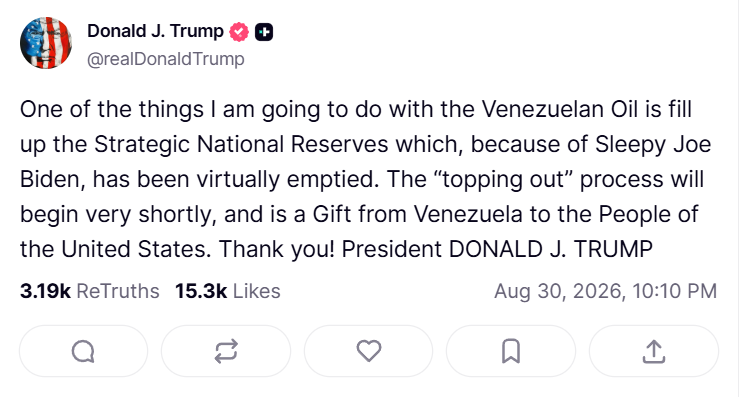
The latest remark ties the newly announced Venezuela arrangement to the U.S. reserve, while Caracas says the project spans 17 fields and keeps sovereignty in Venezuelan hands.
President Donald Trump said on Sunday that Venezuelan oil tied to the newly announced deal will be used to refill the Strategic Petroleum Reserve, calling it a “gift from Venezuela to the people of the United States.” It is the clearest domestic use Trump has outlined for the arrangement so far.
The broader deal had already been framed by Trump as giving the U.S. control over roughly 65 billion barrels of Venezuelan proven potential across 17 oil fields. Venezuela’s acting president Delcy Rodríguez has said the country retains ownership and sovereignty over its resources, while key details such as the operator, financing and ownership structure remain unclear.
For markets, the immediate read-through is to U.S. crude supply expectations and energy equities, especially Chevron and Exxon Mobil, as well as benchmark oil prices. The SPR held about 289.7 million barrels, or roughly 40% of its 700-million-barrel capacity, after years of drawdowns under both the Trump and Biden administrations.
The deal is not expected to lift Venezuelan output quickly; analysts have said the country’s aging oil infrastructure would require years and substantial investment to repair. That leaves the announcement more relevant to longer-term supply positioning than to near-term gasoline prices.
Multiple X posts say NVIDIA will invest $3.5 billion in MediaTek via convertible bonds, while the two companies deepen their AI partnership. MediaTek is also said to adopt NVIDIA’s NVLink Fusion and NVHBM technologies, broadening the collaboration from infrastructure to PCs, automotive and IoT.
The relationship did not start today. MediaTek’s own blog says the two companies have been working on the GB10 Superchip in DGX Spark, DriveOS for the Dimensity Auto portfolio, and IoT and datacenter applications, showing that the partnership had already moved beyond a single product line.mediatek.com
For investors, the key names are NVDA and MediaTek. The move further extends NVIDIA’s ecosystem strategy, following its March deal to invest $2 billion in Marvell and collaborate on NVLink Fusion, silicon photonics and networking.bloomberg.com
Any formal company announcement would be needed to confirm the final structure and timing of the investment. This report is based on X signals and public background sources.
Apple has completed its CEO handoff: Tim Cook stepped down on August 31, and John Ternus is set to take over as chief executive on September 1 while joining the board. Cook will stay on as executive chairman, with Apple saying he will continue to help on select company matters, including engagement with policymakers worldwide.apple.com
The transition was not a surprise move. Apple’s April succession announcement said the board unanimously approved the plan after a long-term process, and it highlighted Cook’s 2011-to-2025 tenure as one in which Apple’s market value rose from about $350 billion to more than $4 trillion, while annual revenue climbed from $108 billion in fiscal 2011 to over $416 billion in fiscal 2025.apple.com
For investors, the handoff is mainly about governance and strategy rather than a fresh operating update. MacRumors said Cook had already made his final earnings call as CEO on July 31, while Bloomberg reporting has centered the new chief’s first big test on AI execution and product cadence.macrumors.com
Apple also said Ternus has overseen hardware engineering work across iPad, AirPods, iPhone, Mac and Apple Watch. The market now shifts from the identity of the successor to whether the new leadership can sustain Apple’s hardware momentum and turn its AI ambitions into shipped products.
これまでの経緯
2026-07-31投稿3件 · 投稿者3人
Apple reported record Q3 revenue of $109.4B with iPhone sales up 22%, but a chip shortage has forced price hikes on Mac and iPad, and it was Tim Cook's final earnings call as CEO.
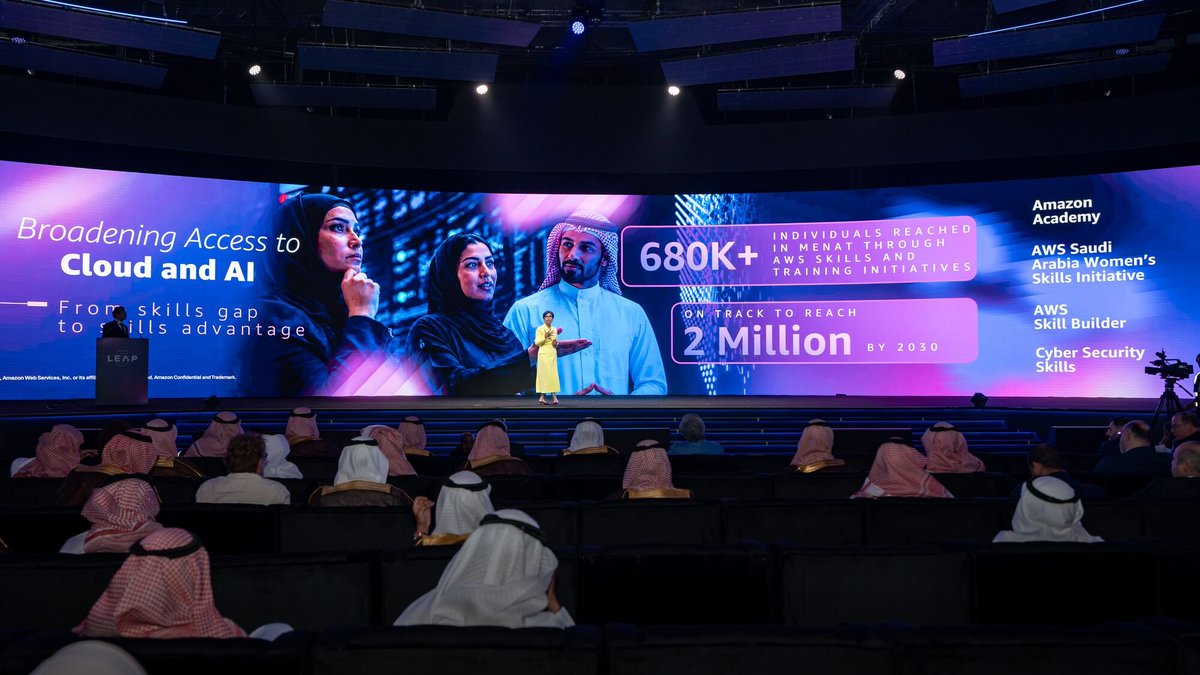
Amazon Web Services and Saudi PIF-backed HUMAIN said they are expanding their AI Zone plan in the Kingdom to as much as 50 MW of capacity, using Trainium chips and NVIDIA infrastructure. AWS also said its first cloud region in Saudi Arabia remains on track to launch in December 2026.
The move builds on a May 2025 announcement in which AWS and HUMAIN said they would invest more than $5 billion in AI infrastructure, AWS services, and AI training and talent development in Saudi Arabia. AWS had separately disclosed a $5.3 billion investment to develop the new Saudi region.
For Amazon, the Saudi buildout extends its cloud and AI footprint in the Middle East and deepens the pipeline for enterprise AI workloads. For investors tracking Nvidia, the latest updates keep demand for AI accelerators and related infrastructure in focus, though the companies have not broken out a separate revenue contribution from this project.
HUMAIN said the collaboration is intended to support Saudi Arabia’s Vision 2030 and broader AI-ecosystem goals. The companies framed the effort as part of a push to serve both local demand and customers across the wider region.
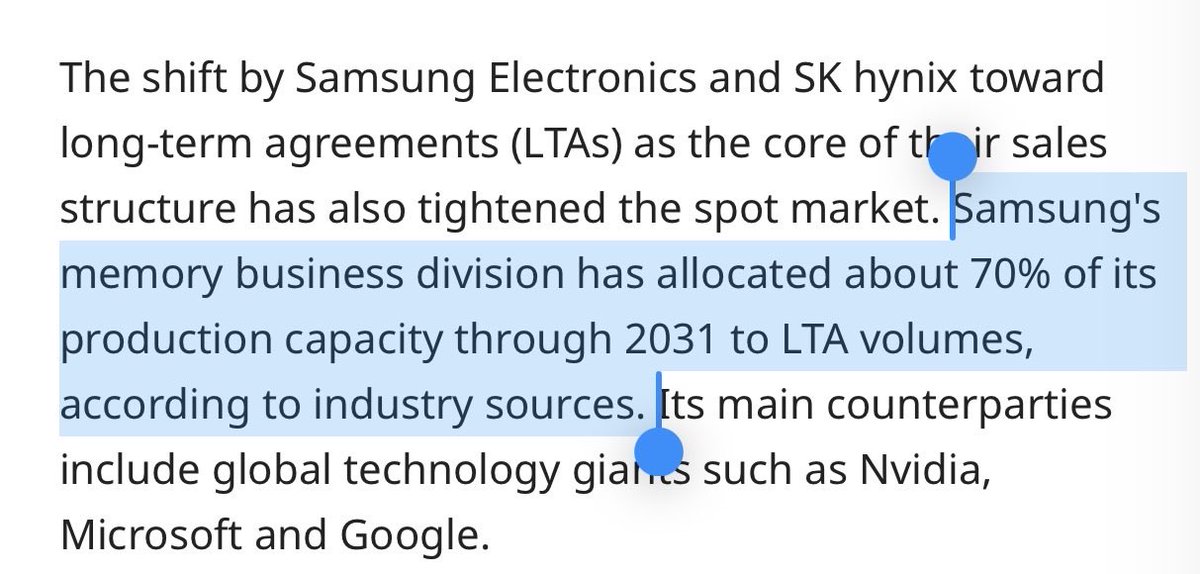
Multiple reports indicate Samsung Electronics has tied up roughly 70% of its memory production capacity through long-term agreements running into 2031, with NVIDIA, Microsoft and Google among the main counterparties. The latest social-media signal aligns with that reporting and points to a further shift from quarterly negotiations toward multi-year supply locking.
The backdrop is Samsung’s second-quarter earnings call, where the company said it plans to supply 60% to 70% of total capacity through long-term agreements. Korean media also reported that the company has completed deals with five major global data center operators and is in talks with five more AI customers, with some contracts reportedly structured around five-year terms and upfront payments.
For the market, the biggest implications are on Samsung Electronics, SK hynix and Micron, which are all competing for AI-memory demand, and on customers such as NVIDIA, Microsoft and Google that need secure supply for data centers. Korean media cited TrendForce data showing July DDR4 8Gb spot prices at $24 and HBM3E 36GB spot prices around $2,100, roughly four to five times contract pricing, highlighting how tight supply continues to widen the gap between spot and contract markets.
The public record so far supports Samsung’s stated long-term supply strategy, but not the full details of every contract. What is clear is that AI-related memory demand is forcing chipmakers and hyperscalers alike into longer commitments, larger deposits and more rigid supply planning.
これまでの経緯
企業動向
SpaceX launches NASA’s $4.3 billion Roman telescope on a 5-year mission英語原文
The Falcon Heavy mission starts Roman’s trip to L2, a key test for one of NASA’s flagship observatories.
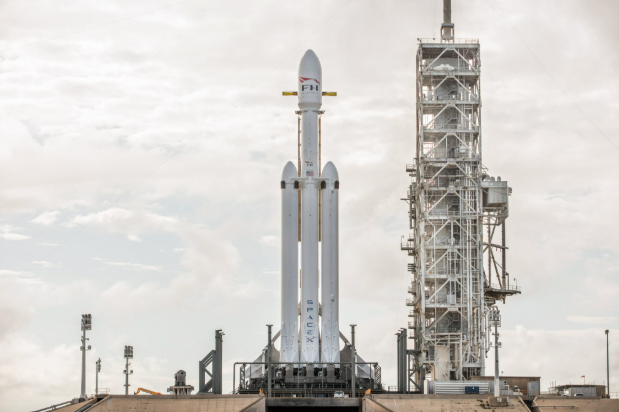
SpaceX launched NASA’s Nancy Grace Roman Space Telescope on Aug. 30 aboard a Falcon Heavy rocket, sending the flagship observatory toward the Earth-sun L2 region. Multiple reports said liftoff came at 7:26 a.m. Eastern, with both side boosters landing successfully and the center booster expended as planned.
Roman is a roughly $4.3 billion mission built around a 300-megapixel wide-field camera. SpaceNews and CBS News said the telescope will spend about 100 days traveling to L2, roughly 1 million miles, or 1.6 million kilometers, from Earth, with a planned five-year prime mission and fuel margin for longer operations.
For SpaceX, the launch reinforces Falcon Heavy’s role in high-value deep-space missions and adds to the company’s track record on complex NASA payloads. For SPCX, the news is mainly a credibility and execution signal rather than a direct financial catalyst tied to this single launch.
NASA says Roman’s wide field of view will let it survey the sky far faster than Hubble and build large catalogs of stars, galaxies and exoplanets. The next watchpoint is the spacecraft’s cruise and commissioning phase over the coming weeks, not the launch alone.
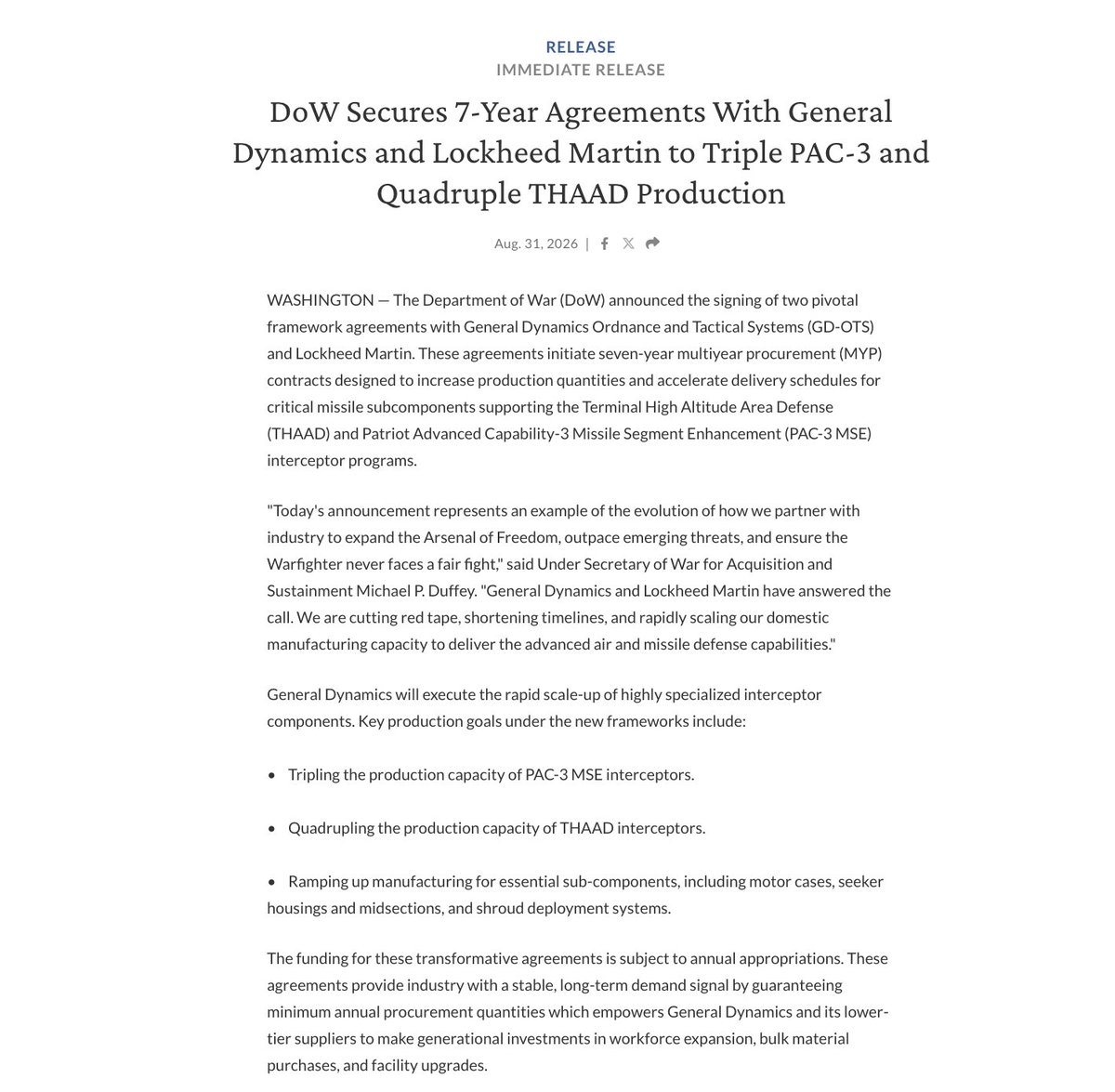
The Pentagon said on Monday it signed seven-year framework agreements with General Dynamics Ordnance and Tactical Systems and Lockheed Martin to raise production of components used in THAAD and Patriot missile interceptors. Reuters reported that the deals are aimed at improving delivery schedules for critical subcomponents rather than announcing a fully priced procurement package.
The move extends a broader push by the Defense Department to rebuild missile inventories after heavy demand on Patriot and THAAD interceptors. Earlier framework deals set goals to triple PAC-3 production capacity and quadruple THAAD-related component output, while officials have also pushed for a second supplier on key bottlenecks such as solid rocket motors.militarytimes.com defensescoop.com
For investors, the main tickers are Lockheed Martin and General Dynamics, which sit at the center of the supply chain for U.S. missile-defense production. The framework nature of the agreements matters: they can support future orders and factory investment, but they still depend on appropriations and follow-on contracts before translating into firm revenue.
The Pentagon has also signaled that these deals are meant to broaden the supplier base and reduce single-source risk. That makes the announcement relevant not only to prime contractors, but also to the wider network of propulsion and component suppliers tied to missile-defense output.
Russia’s largest lender, Sber, said it plans to accept Bitcoin, Ether and USDT as loan collateral once the Bank of Russia allows those assets to trade publicly. Deputy Chairman Anatoly Popov said the bank will adapt its products as the new legal framework takes effect.
The move comes after President Vladimir Putin signed Russia’s crypto law on Aug. 4, with core provisions starting Sept. 1. The Bank of Russia proposed Bitcoin, Ether and USDT for regulated exchange trading on Aug. 11, saying the tokens met criteria including market cap, trading volume and a five-year price history.
For Sberbank, the issue is less about retail adoption than corporate lending and custody. The bank already tested the model in a December 2025 pilot using self-mined crypto as collateral, and it is also building a digital asset depository.
The immediate market read-through is limited by the lack of disclosed loan terms. Still, the announcement points to a broader institutionalization of crypto within Russia’s banking system, especially for miners and companies holding digital assets.
Aon said on Monday it will acquire insurance brokerage USI Insurance from KKR in an all-cash deal valued at $17 billion. The company said it plans to fund the purchase with new debt and expects the transaction to close in the fourth quarter of 2026.
USI was bought in 2017 by KKR and another investor for $4.3 billion, underscoring how sharply the asset’s valuation has increased over the holding period. Aon said the deal will strengthen its position in the U.S. middle-market brokerage and employee benefits business.
For investors, the focus now shifts to financing, leverage and integration risk at Aon, while KKR stands to book a major exit. AON and KKR shares may trade on the details of the deal structure and the timeline to closing.
The transaction follows Aon’s 2024 acquisition of NFP and continues consolidation in the insurance brokerage sector. Further updates will depend on final regulatory approvals and closing conditions.
ONEOK said it has agreed to acquire Brazos Midstream’s Permian Midland Basin gas gathering and processing assets for $4.425 billion in cash. At the same time, it struck a $9 billion non-voting minority equity investment agreement with Apollo and affiliates.
This is not a fresh rumor but a formal step in a deal first surfaced on Sunday and then followed by Reuters and the WSJ. ONEOK said the acquisition is expected to close in the fourth quarter of 2026, while the Apollo investment is slated to close in the first half of September.
The company said the package will support about $5 billion of debt reduction and push leverage toward roughly 3.25 times debt-to-EBITDA. ONEOK also said the Brazos assets would more than double its Midland Basin processing capacity.
OKE is the main equity to watch because it is the acquirer, while APO matters as the capital provider in the financing structure. ONEOK said both transactions were unanimously approved by its board and remain subject to customary closing conditions, including HSR clearance.
Eli Lilly said it has agreed to acquire privately held Merida Biosciences for up to $2.875 billion in cash. The transaction includes an upfront payment and milestone-based consideration, and is intended to expand Lilly’s autoimmune and allergy pipeline.reuters.com
Merida is developing biologics designed to selectively degrade pathogenic autoantibodies, a mechanism the company says could address a range of immune-mediated conditions. Its lead asset, MER511, is in Phase 1 development for Graves’ disease and thyroid eye disease.wsj.com
For LLY, the deal adds another immunology asset to a portfolio that has been broadening beyond its blockbuster GLP-1 franchise. Investors will watch the strategic fit as Lilly continues a brisk M&A pace in 2026.reuters.com
The headline valuation was consistent across major outlets, with Reuters reporting up to $2.88 billion and the Wall Street Journal citing up to $2.875 billion. The figures refer to the same cash transaction and differ only by rounding.reuters.comwsj.com
Anthropic is reportedly telling prospective IPO investors that its total addressable market exceeds $30 trillion, while market chatter has also centered on a possible $2 trillion valuation and a fundraising plan of as much as $100 billion. On X, Polymarket odds for an Anthropic IPO closing above $2 trillion have climbed to 64%.
The backdrop is a broader wave of IPO prep reporting around the AI company. Reuters previously said Anthropic is forecasting roughly $190 billion to $200 billion in 2028 revenue, underscoring how aggressively Wall Street is being asked to model future growth.
For markets, the story matters because it could reset valuation expectations across AI software, cloud infrastructure and other late-stage tech names. Traders are also comparing Anthropic’s setup with SpaceX’s blockbuster listing, making the event a sentiment driver beyond the company itself.
The numbers remain provisional: the $30 trillion TAM, the $100 billion fundraising target and the roughly $2 trillion valuation are all based on reporting and market speculation rather than a final filing. Anthropic has not publicly confirmed those figures.
これまでの経緯
2026-07-02投稿4件 · 投稿者4人
企業動向🔥進行中
OpenAI buys tens of thousands of Macs as Apple’s Mac business gets a fresh AI tailwind英語原文
A new report says Apple’s desktops are being pulled into AI agent workloads, while AWS is also part of the rental chain.
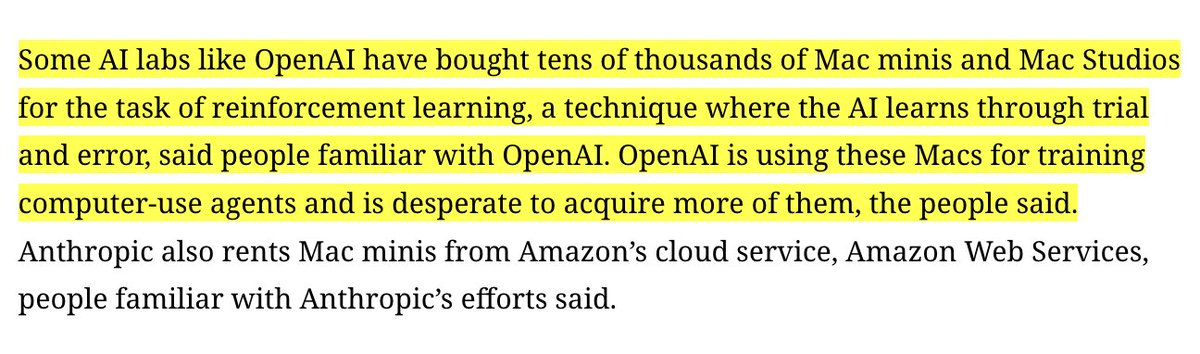
A new follow-up report says OpenAI has bought tens of thousands of Mac mini and Mac Studio units for reinforcement learning and computer-use agents, while Anthropic is renting similar Mac hardware through AWS. The claim has been widely amplified, but the sourcing still traces back to a single media report.
The backdrop is that Apple itself has acknowledged unusually strong demand for the Mac mini and Mac Studio. On its recent earnings call, the company said supply may take months to catch up, and it also flagged rising memory costs as a growing headwind for the business.
For investors, the development keeps AAPL in the AI hardware conversation and reinforces the case that Macs are becoming more relevant to local model work and agent development. AMZN is also in focus because AWS appears in the reported rental setup, adding another angle to the cloud-compute monetization story.
Apple recently refreshed both desktop lines with AI-focused positioning, underscoring how the company is using Macs as a showcase for on-device model workloads. Earlier reporting also said the Mac mini’s starting price had been raised to $799 from $599, reflecting tighter supply and stronger AI-driven demand.
これまでの経緯
2026-07-10
企業動向🔥進行中
BofA says Nvidia may be 50% undervalued as $81.6B revenue keeps the bull case alive英語原文
The call is based on a free-cash-flow framework rather than a standard P/E discount, keeping attention on Nvidia’s capital allocation and AI ecosystem spending.
Bank of America analyst Vivek Arya reiterated a bullish view on Nvidia and kept a $350 price target, arguing the stock could be undervalued by as much as 50% versus fair value. Recent reporting also shows Nvidia posted $81.6 billion in quarterly revenue, reinforcing the company’s growth momentum.
The “discount” is not showing up in the usual valuation multiples. Instead, the thesis hinges on a free-cash-flow sum-of-the-parts approach, with one report citing roughly $119 billion in trailing free cash flow and noting that a large share is being directed toward AI ecosystem investments rather than returned to shareholders.
For markets, the debate keeps NVDA at the center of AI capex trade, with spillover interest in chips, cloud infrastructure and data-center names tied to the buildout. Investors are weighing whether strong demand or capital allocation will matter more for the stock’s valuation.
There has been no fresh company response in the reporting cited here; the dispute is about valuation methodology and how Nvidia deploys its cash, not about the underlying revenue figures themselves.
これまでの経緯
2026-07-04投稿3件 · 投稿者3人
Posts discuss top US company market caps and business model analyses of Ondas and Gorilla Technology.
AMD said on Aug. 31 that the AI infrastructure it is building with Cisco and Saudi Arabia’s PIF-backed HUMAIN is now live in the Kingdom and already serving HUMAIN customers. The system runs on AMD Instinct MI355X GPUs, AMD EPYC CPUs and Cisco Silicon One-based AI networking.
The update matters because it confirms a shift from planning to production for one of the most visible sovereign-AI builds in the region. AMD also said the next phase is slated to begin in 2027 with up to 250 megawatts of AI infrastructure, with a target of up to 1 gigawatt by 2030.
For AMD and Cisco, the project ties their hardware stacks to a large-scale national AI program that could broaden their footprint beyond traditional cloud buyers. The market will likely watch AMD and CSCO shares for any read-through on AI infrastructure demand, though the companies have not disclosed contract value or revenue guidance tied to this deployment.
Earlier reporting had already framed the partnership as a larger Saudi AI initiative, but AMD’s latest newsroom note is the clearest confirmation that the first production systems are now online. The company did not provide fresh financial terms in the announcement.
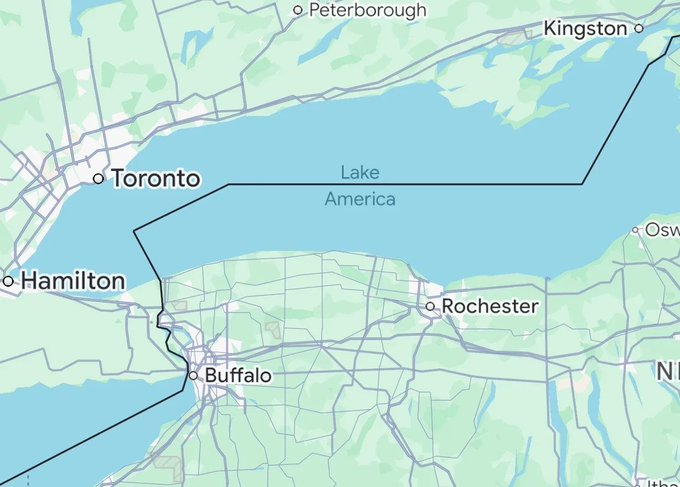
Google confirmed that U.S. users will see “Lake America” on Maps, while users in Canada will continue to see “Lake Ontario”; users outside the U.S. and Canada will see both names. The company said the update follows the U.S. Geographic Names Information System, or GNIS.
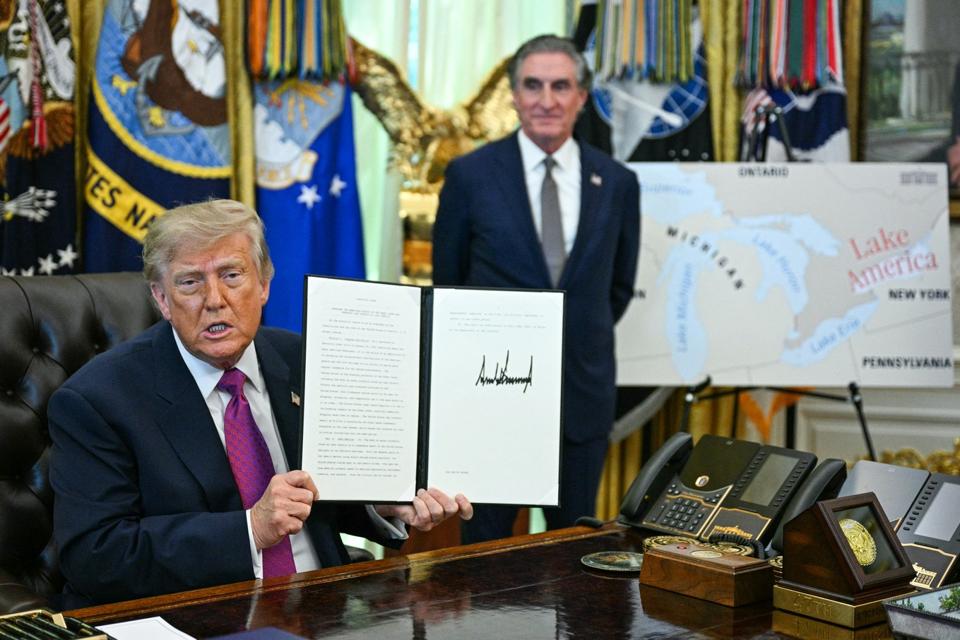
The move follows President Donald Trump’s late-August executive order directing the federal naming change. Canadian officials have rejected the new label, keeping the dispute framed as a cross-border political standoff rather than a cartographic consensus.
For Alphabet, the immediate financial impact is likely limited, but the episode keeps Google Maps in the public spotlight and underscores the operational role of official government naming sources. The market relevance is mostly indirect, with investors more likely to watch Alphabet’s core ad, cloud and AI businesses.
Canadian provincial officials and several U.S. local leaders have pushed back publicly. Ontario said it is reviewing websites that pull map data directly from Google Maps, while New York and Vermont officials said they would not adopt the new name.
これまでの経緯
2026-08-05投稿4件 · 投稿者4人
CIFR shares fell over 15%, while WULF's Q2 earnings showed HPC revenue reaching 71% of total sales.
企業動向
Burgum says Trump pressed Apple on Lake America as Google already moved英語原文
Apple is the next big tech platform in the naming fight after Google updated its maps in the U.S.
U.S. Interior Secretary Doug Burgum said Donald Trump has personally reached out to Apple over whether its maps will switch Lake Ontario to “Lake America.” Burgum added that Apple may make the change soon, according to follow-up reports based on his comments.
The dispute started after Trump signed an executive order directing federal agencies to use the new name in official U.S. records. Google has already updated Google Maps for U.S. users by reflecting the federal geographic database, while Canadian users continue to see Lake Ontario.
For Apple, the issue is less about fundamentals than product consistency and public optics around AAPL’s default Maps app. If Apple follows Google, it would align its U.S. map labels with the federal naming change while Canada and other regions may keep the old name.
Canadian leaders have rejected the rename and said they will continue to use Lake Ontario. The episode has become another cross-border flashpoint in an already tense U.S.-Canada trade and political fight.
The Information, as relayed by market wires, said China’s CXMT has begun small-scale production of HBM3E, a high-bandwidth memory used in AI processors. The same signal said Alibaba’s T-Head is already testing the chips, with a ramp targeted for 2027.
If confirmed, the move would mark another step for CXMT in advanced DRAM, though the company is still generally viewed as trailing Samsung, SK Hynix and Micron in HBM. Earlier reporting has also noted that CXMT lacks access to EUV tools under U.S.-led export controls, limiting its path to leading-edge scaling.
For markets, the main read-through is Alibaba’s BABA and China’s AI hardware supply chain, because HBM is a critical input for accelerators. Any improvement in domestic memory supply could ease sourcing constraints for Chinese chip designers and cloud operators.
There has been no public response from CXMT or Alibaba specifically addressing this HBM3E production-and-testing claim. The key questions now are customer qualification, yields and whether the company can actually scale output beyond trial volumes.
SK hynix reportedly weighs Intel for HBM4e base dies amid Japan fab review英語原文
Fresh reports say SK hynix is evaluating Intel for next-gen HBM base dies as it also reviews a Japan memory fab partnership and keeps expanding overseas capacity.
Fresh reports on Monday said SK hynix is considering Intel Foundry as a supplier for next-generation HBM4e base dies, a move that would diversify the company’s current sourcing options. The reports were based on unnamed sources, and SK hynix has not publicly confirmed any Intel deal.
The signal lands alongside broader overseas expansion plans. Separate reports say SK hynix is studying a memory-fab partnership in Japan, while its U.S. packaging project in Indiana carries a disclosed investment of $3.87 billion, or about 5.5 trillion won.
For the market, the key question is whether Intel can win a foothold in a more advanced part of the HBM supply chain. That would matter for Intel’s foundry business and for the competitive map around HBM manufacturing and packaging, including existing players such as TSMC.
Important caveat: today’s increment is only that SK hynix is said to be evaluating the option. It is not a confirmed contract, and the Japan fab discussion remains a separate expansion track rather than evidence that the Intel sourcing decision is finalized.
これまでの経緯
企業動向🔥進行中
Bernstein says Meta could overtake Google Search in ad revenue by end-2026 as Q2 gains nearly half of incremental digital ad dollars英語原文
The new call underscores how Meta’s ad automation and AI tools are reshaping the competitive balance with Alphabet’s core search ad business.
Bernstein said Meta is on track to surpass Google Search in advertising revenue by the end of 2026. The firm also said Meta captured nearly half of every incremental digital advertising dollar in the second quarter of 2026.
The call adds to a broader market debate over how AI-driven ad automation is changing the industry. Earlier industry forecasts cited by multiple outlets had Meta at about $243.46 billion in 2026 ad revenue versus Google at about $239.54 billion, but those were eMarketer projections rather than Bernstein’s latest note.
For investors, the setup keeps META and GOOGL in focus as the battle for ad dollars shifts between social discovery and search. The key questions remain whether Meta can sustain share gains and whether Google Search can defend its core monetization engine while investing in AI.
Neither Meta nor Alphabet has publicly confirmed Bernstein’s year-end overtake call. At this stage, it remains an analyst forecast rather than a reported company milestone.
これまでの経緯
2026-07-02投稿9件 · 投稿者9人
ASTS outlined near-term catalysts; Bernstein estimated Meta's ~20GW compute footprint; Zeta CEO claimed the 4th largest proprietary data cloud.
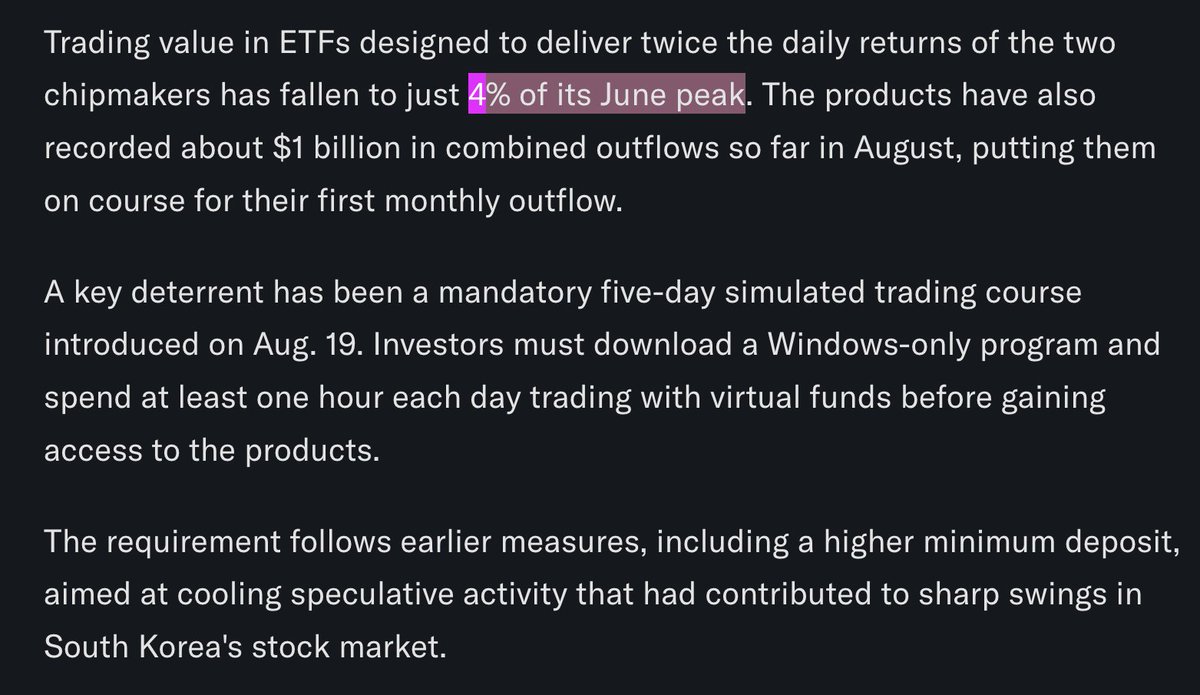
Leveraged ETFs tied to Samsung Electronics and SK Hynix have seen trading activity collapse. Bloomberg said turnover in the funds targeting twice the daily move of the two chipmakers has dropped to 4% of its June peak, with about $1 billion in combined outflows in August so far.bloomberg.com
The retreat follows a series of regulatory tightening steps in South Korea. Seoul Economic Daily reported that individual investors net sold 1.773 trillion won of 16 related leveraged and inverse products between July 31 and Aug. 28, after regulators raised the minimum deposit to 30 million won from 10 million won and introduced a five-day simulated-trading requirement for first-time users.en.sedaily.com
The unwind matters because these single-stock products had become a major source of market churn. Business Times said turnover in the chip-linked ETFs and the two stocks together once accounted for more than 80% of total market trading, while the pullback has helped cool volatility in the Kospi.businesstimes.com.sg
Yet the money may not be disappearing entirely. Seoul Economic Daily said retail demand is shifting into domestic index leverage and overseas leveraged funds, including ProShares Ultra QQQ, suggesting the crackdown is redirecting rather than eliminating speculative flows.en.sedaily.com
これまでの経緯
市場
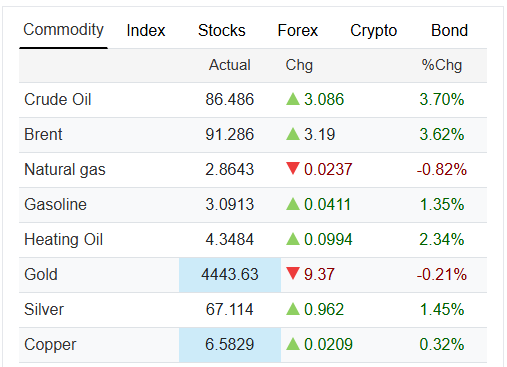
Brent nears $90 as CAKE gains premarket and traders watch inflation spillover英語原文
Middle East tensions are lifting crude and putting the market’s focus on how higher energy costs may filter into rates and consumer stocks.
Brent crude pushed back toward the $90 level in Asian trading, while WTI held in the mid-$80s. On X, traders framed the move as both a technical breakout and a possible input-cost shock for risk assets.
The backdrop is a renewed escalation in the Middle East. Public reporting said U.S. forces struck Iranian targets near the Strait of Hormuz over the weekend, and Iranian media reported retaliation, reviving concerns about shipping disruption and supply risk.
Higher oil prices usually ripple through transportation, gasoline and other energy-sensitive parts of the economy. But not every stock trades the same way: Fast Company reported that Cheesecake Factory (CAKE) was still trading higher premarket, highlighting how company-specific strength can offset macro pressure.
For now, the market is focused less on any single equity and more on the interaction between crude, inflation expectations and discount rates. If oil stays elevated, traders will keep watching whether higher energy costs start to reshape rate pricing and consumer-sector positioning.
市場
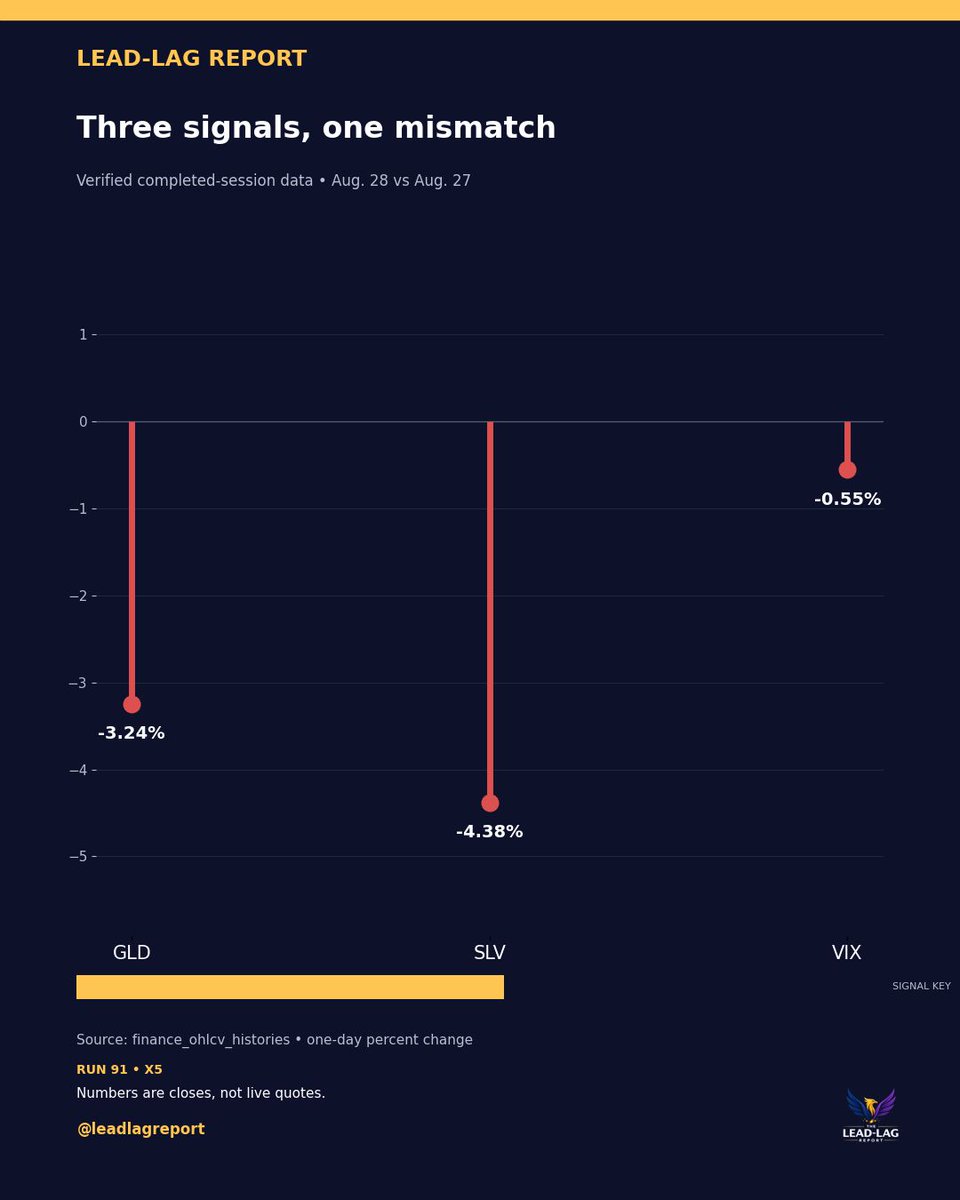
Spot gold slips below $4,400 as silver drops 4.38%英語原文
Markets keep repricing Fed odds after a hawkish Jackson Hole message.
Spot gold fell below $4,400 an ounce intraday, extending a sharp pullback after its recent rebound. X trading signals showed losses ranging from 1% to 3.24%, with spot gold quoted as low as $4,407.49 and briefly breaking the $4,400 mark.
The move comes after Fed Chair Kevin Warsh struck a hawkish tone at Jackson Hole, saying rate hikes remain on the table if inflation does not clearly and quickly return to 2%. Chinese financial reports said gold sold off immediately after the speech, while COMEX gold futures also slipped below $4,500.
Silver fell even harder, reflecting both higher-rate pressure and its stronger industrial character. Treasury yields and the dollar firmed, lifting the opportunity cost of holding non-yielding metals and pressuring bullion-linked ETFs and futures.
No new policy decision has been announced yet, and markets are now focused on upcoming U.S. inflation and labor data for the next read on September policy odds.
BitMine Immersion Technologies said it bought 53,501 more ETH over the past week, lifting its total holdings to about 5.9 million tokens. The company also said more than 5 million ETH is staked, with annualized staking revenue at roughly $335 million under its own figures.
The new update follows BitMine’s Aug. 24 disclosure, when it reported 5,847,611 ETH after adding 32,447 ETH in the prior week. That earlier filing also put the company’s total crypto, cash and strategic holdings at about $14.9 billion.
Using the company’s cited circulating supply of 120.7 million ETH, a 5.9 million-token position works out to just under 5% of supply. That keeps BitMine close to its self-stated goal of owning 5% of Ether’s total supply.
BMNR is the key ticker tied to the accumulation strategy, so traders often watch these weekly updates for changes in treasury size, staking income and liquidity. The latest numbers update the balance-sheet story, but do not by themselves change the company’s stated target or operating profile.
これまでの経緯
2026-07-06投稿7件 · 投稿者6人
Bitmine disclosed a weekly purchase of 42,197 ETH, lifting its total holdings to 5.74 million ETH worth over $10 billion.
Multiple X signals show Robinhood Chain generated $2.66 million in app revenue over the past 24 hours, ahead of Hyperliquid at $1.70 million and Ethereum at $1.27 million. Base ranked fifth at $438,000, according to the same snapshot.
The move comes after a stretch of strong public metrics for Robinhood Chain. Recent reporting said Uniswap’s tokenized stock trading on the chain hit $130 million in a single day, while cumulative volume passed $1 billion within roughly six weeks of launch.
For Robinhood (HOOD), the numbers help reinforce the market’s focus on its crypto and on-chain ecosystem rather than traditional brokerage activity alone. They also highlight which apps are capturing most of the chain’s economic activity, with Uniswap named among the main contributors in the X post.
There has been no separate official company statement attached to this 24-hour revenue snapshot in the materials reviewed. The figures should be treated as a platform-level activity readout, not as a direct measure of Robinhood’s consolidated earnings.
これまでの経緯
2026-07-02投稿9件 · 投稿者8人
Robinhood announced its Ethereum L2 mainnet launch and a perps partnership with Lighter.
企業動向
ウォルマートとE.l.f. Beauty、29億ドルの還付金を値下げに活用英語原文
Retailers are redirecting tariff reimbursements into promotions as stretched consumers stay choosy.
Several U.S. retailers are using tariff refunds as a fresh source of funding for price cuts. The latest reporting says Walmart, E.l.f. Beauty and Tractor Supply are among the companies lowering prices to support sales.
The backdrop is the federal refund of tariffs after a Supreme Court ruling invalidated parts of the levy regime. Publicly disclosed figures show Walmart has been eligible for about $2.9 billion in refunds, while E.l.f. Beauty said roughly $50 million of its refund was used to test lower prices across much of its assortment.
For investors, the key issue is how much of the refund gets passed through to shoppers versus retained as margin support. Walmart has said it will use the money for “price investments,” and E.l.f. has been experimenting with whether lower prices can lift unit demand.
Tractor Supply has not disclosed a refund amount in the materials reviewed, but its inclusion in the Wall Street Journal report suggests the pricing response is spreading beyond the biggest big-box names. That puts WMT, ELF and TSCO on the radar as consumers remain highly price-sensitive.
Germany’s Federal Statistical Office said on Monday that preliminary August consumer prices rose 2.9% from a year earlier, up from 2.8% in July. On a monthly basis, the consumer price index increased 0.2%. The EU-harmonized measure, HICP, also came in at 2.9% year on year, below the 3.1% forecast cited by market watchers.
Energy remained the main driver. German energy prices were up 10.5% in August, accelerating from 8.3% in July, while core inflation held at 2.4%. The readings suggest inflation pressure firmed again late in the summer, even as the broader disinflation trend in the euro area remains intact.
For markets, German inflation is closely watched for its implications for the euro, Bund yields and expectations for the European Central Bank’s policy path. As the euro zone’s largest economy, Germany often sets the tone for the bloc’s price data, especially when energy and core components move in different directions.
The latest figures were first reflected in financial news wires and Bloomberg-style market summaries, with final confirmation still pending. The key takeaway from the preliminary release is that both CPI and HICP moved to 2.9%, while remaining just below expectations.
Japan’s housing starts rose 8.2% year on year in July, down from a revised 18.6% increase in June, according to the Ministry of Land, Infrastructure, Transport and Tourism. The print still beat market expectations, which were centered around 7.6% to 7.9% growth.tradingeconomics.com mlit.go.jp
The breakdown showed a softer tone underneath the headline: owner-occupied homes rose just 0.4%, rental housing grew 10.0%, and built-for-sale homes increased 14.6%. At the same time, prefabricated starts fell 6.9% and two-by-four housing starts declined 8.5%, highlighting uneven momentum across construction segments.tradingeconomics.com
The data matter for the yen and Japan’s builders and real-estate shares because housing starts are a leading gauge of residential investment and domestic demand. For now, the signal points to continued recovery in activity, but at a notably slower pace than in June.tradingeconomics.com
A separate official release on Aug. 30 showed August housing starts fell 5.1% year on year to 66,823 units, underscoring how volatile the monthly series can be. That keeps traders focused on the broader trend rather than any single month.mlit.go.jp
Spain posted a €2.414 billion current-account surplus in June, up from €1.877 billion in April and in line with the fresh wire signal that put the actual figure at 2.41B. The reading comes from Spain’s monthly balance-of-payments release.
The current account captures trade in goods and services, income flows and transfers. In recent months, Spain has continued to show a surplus even as primary and secondary income balances have been a drag, while tourism has remained a key support.
For markets, the number matters for the euro, Spanish sovereign spreads and domestic banks because it speaks to external financing needs and the resilience of the country’s balance with the rest of the world. It is an economy-wide data point rather than a company-specific event.
No additional comment from the Bank of Spain was included in the sources reviewed.
SLB said on Monday it has signed an agreement to acquire Kelvion, a thermal-management and heat-exchange specialist, for $3.4 billion in cash. Bloomberg-related reports cited by the market put the transaction at $4.1 billion including assumed debt.
The deal extends SLB’s push beyond oilfield services into data-center infrastructure. In its recent earnings updates, SLB said its Data Center Solutions business grew rapidly and continued to gain traction as hyperscalers invest in AI infrastructure.
Kelvion would strengthen SLB’s position in data-center cooling, a critical component of the AI buildout alongside modular infrastructure, power systems and engineering services. Investors are watching whether SLB can translate those adjacent capabilities into a larger recurring revenue stream.
There is a valuation difference in the reporting: Reuters described the deal as $3.4 billion in cash excluding debt, while other outlets cited $4.1 billion including debt. SLB and Kelvion have both confirmed the agreement structure in public reporting.
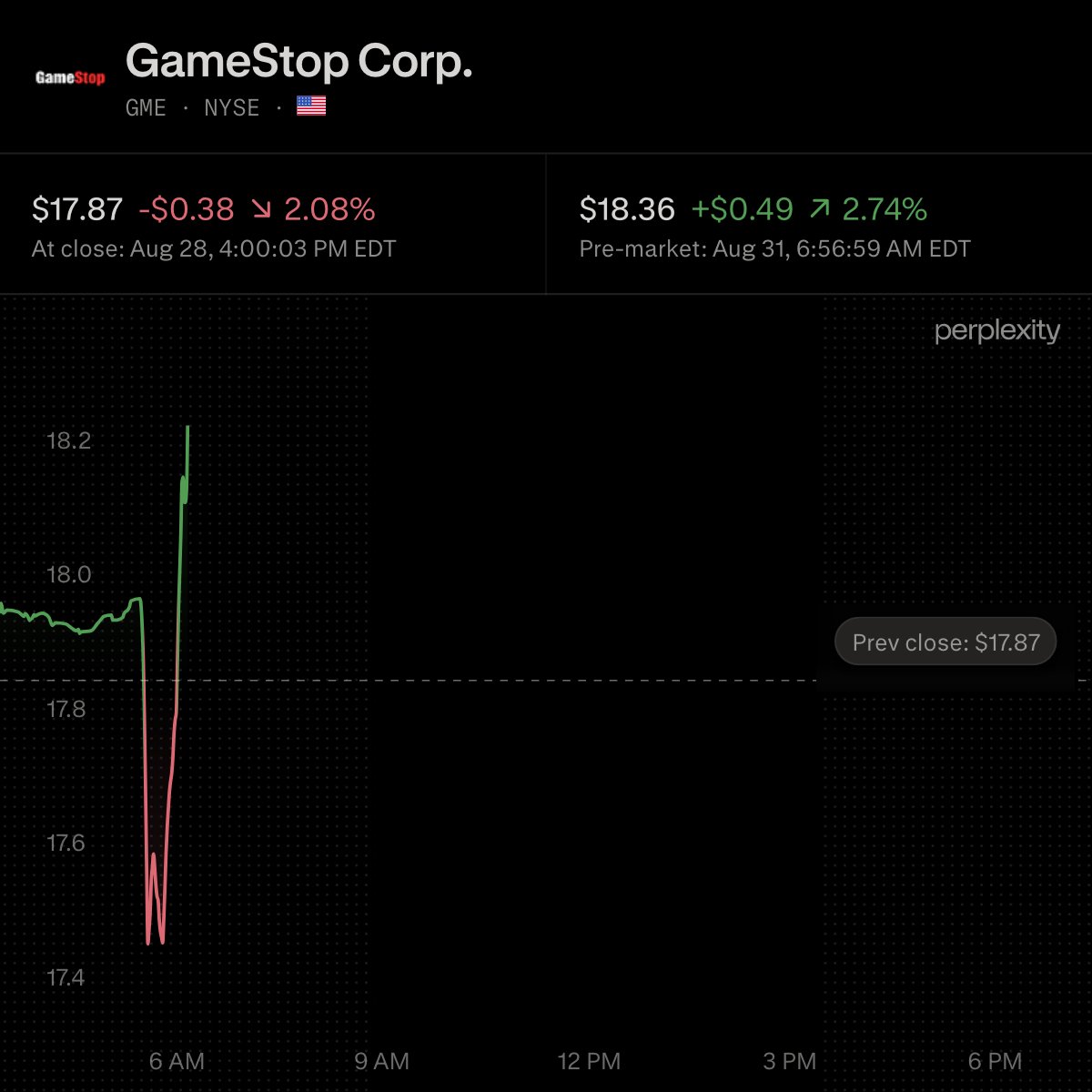
GameStop said in preliminary unaudited second-quarter results that net sales are expected to come in between $780 million and $800 million, down from $972.2 million a year earlier. Operating income is projected at $150 million to $170 million, up from $66.4 million, while net income is seen at $290 million to $310 million versus $168.6 million last year.
The company said the bottom line includes about $238 million of gain tied to eBay, partly offset by an approximately $75 million loss on digital assets. GameStop also disclosed that it directly owns 43.4 million eBay shares, which the company said are worth about $4.95 billion.
The update follows GameStop’s Aug. 30 announcement that roughly $358.4 million of a convertible notes exchange would be settled in cash instead of stock, reducing the potential dilution overhang. The weaker sales outlook reflects planned store closures, the sale of its French operations and a tough comparison against last year’s Nintendo Switch 2 launch.
Shares were higher in premarket trading after the update, with investors focusing on the stronger profit outlook, the cash settlement of the exchange and the eBay stake. The preliminary figures are unaudited and will be followed by the company’s full quarterly report.
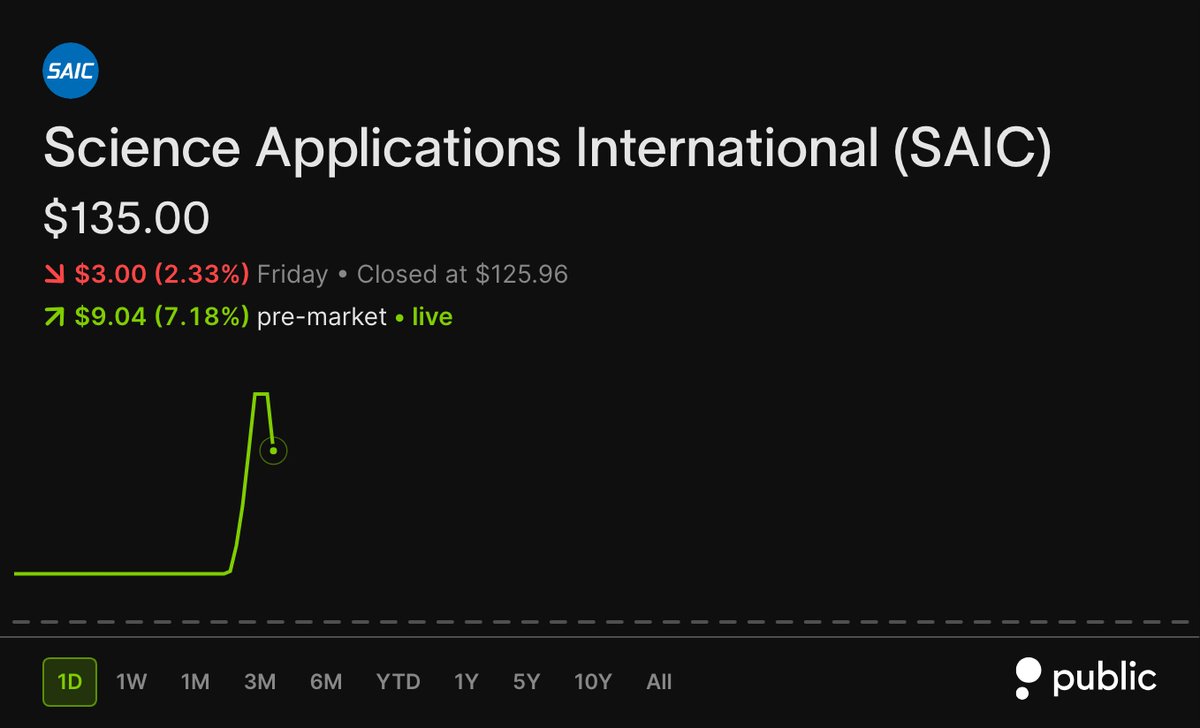
Science Applications International Corp. reported fiscal Q2 2027 revenue of $1.88 billion on Aug. 31, topping the $1.76 billion consensus estimate. Adjusted EPS came in at $3.01, above the $2.31 estimate, while management lifted FY27 revenue guidance to $7.2 billion-$7.3 billion and EPS guidance to $10.65-$10.75.
The update builds on SAIC’s earlier guidance reset in February, when it cut its FY27 revenue outlook to $7.0 billion-$7.2 billion after procurement delays and unfavorable award decisions. That earlier move had framed the company’s near-term growth debate around contract timing and pipeline conversion.
Investors are likely to focus on whether the stronger quarter and higher guide can support the shares of SAIC and other government IT and mission-integration peers. The key questions now are execution, backlog conversion and how much improvement is coming from margin rather than revenue acceleration.
So far, the market reaction is being driven by the earnings release and management’s updated outlook, with no competing corporate denial or correction disclosed in the materials reviewed. Further color will likely come from the company’s call and subsequent analyst notes.
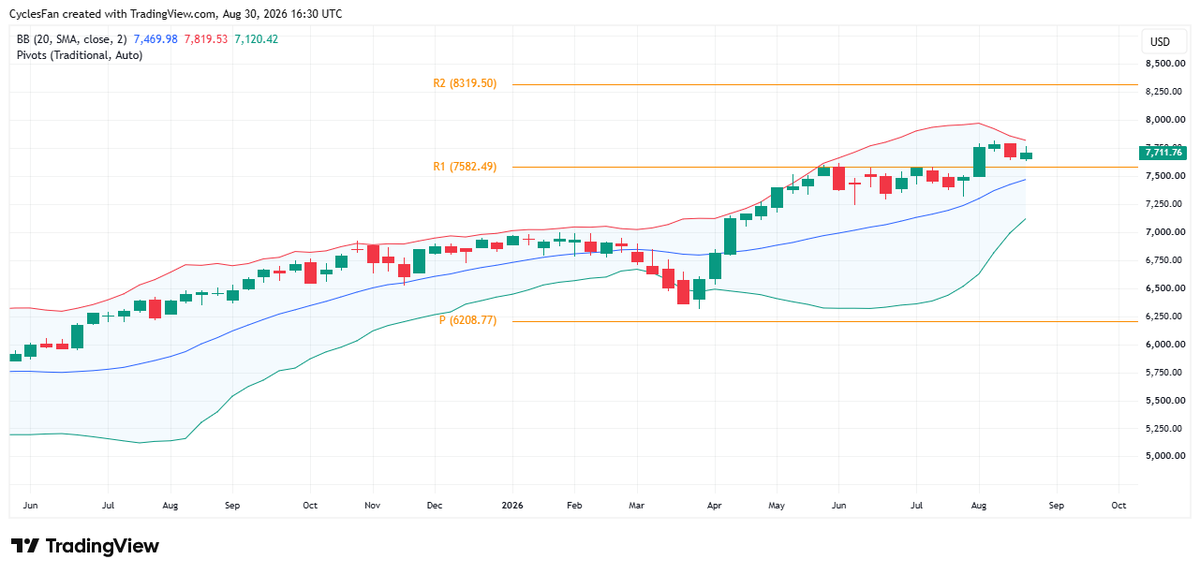
Pre-market and weekend trading chatter kept SPX centered around 7,720, with 7,725–7,730 flagged as the nearest pivot and 7,582 cited as the weekly close line to watch. Several traders also pointed to the 7,600–7,620 zone as former highs that may act as technical support.
The backdrop is SpaceX’s strong August run. Recent coverage said the stock climbed about 30% to 30.57% during the month and moved back above its IPO price, while the next notable catalyst is the Sept. 9 accelerated unlock, when 319 million early-release insider shares become eligible for sale.
For the market, that matters beyond one name. A sharper swing in SPCX could ripple through high-beta growth sentiment, while SPX staying above 7,600 would keep large-cap tech and AI-linked leadership in focus.
There has been no fresh corporate denial or formal comment tied to the short-term trading levels; investors are mainly repricing the stock around the unlock calendar and nearby chart levels.
Unimicron probe widens: 14 questioned, NT$15 million and NT$12 million bails set英語原文
Taiwan prosecutors say the PCB maker may have relabeled China-made boards as Taiwanese; the case matters for supply-chain compliance across chip packaging
Taiwanese prosecutors said on Aug. 29 they searched two Unimicron locations and questioned 14 employees and related parties over allegations that China-made PCB products were shipped back to Taiwan and relabeled as made in Taiwan. Prosecutors said the suspected conduct could amount to document forgery and false origin labeling.
The case sits inside Taiwan’s wider crackdown on “origin washing,” a practice that can be used to secure preferential tariff treatment. Reuters reported prosecutors questioned 18 people in total, while local reporting said the probe is still being expanded.
Unimicron is a major ABF substrate supplier in the semiconductor supply chain, with ties to customers including Nvidia and Intel. After the news, its shares in Taipei hit the 10% daily limit down; the company said it is fully cooperating and sees no material impact on operations so far.
Prosecutors later set bail for some executives, including NT$15 million for the general manager and NT$12 million for a vice general manager, according to local media. The investigation remains ongoing and no final wrongdoing finding has been announced.
The latest market update is a sharp pickup in crypto fund inflows. Cointelegraph, citing Bank of America data, said crypto funds took in $3.2 billion last week, the biggest weekly inflow since October 2025, while The Motley Fool reported that Mark Cuban remains unconvinced by Bitcoin’s roughly 25% August rally, arguing the move looks unsustainable and driven by a short squeeze.
That debate comes as Bitcoin has been trading against a backdrop of key overhead levels that analysts have repeatedly flagged near the low-$80,000 area. Earlier reports also pointed to onchain and cycle indicators turning more constructive, but traders remain split on whether the rebound is a true trend shift or just a technically driven bounce.
For market-linked names, the most direct read-through is to Coinbase (COIN), which typically benefits when crypto trading volumes pick up, and to other crypto-exposed stocks that trade on sentiment and liquidity conditions. If inflows keep accelerating, that can support risk appetite; if the move fades, volatility can quickly swing back the other way.
So far, the story is about data and interpretation rather than any official company or regulatory action. The X signal reflects that tension: bulls see improving participation, while bears still view the rally as a crowded positioning trade.
Michael Burry announced short positions on Micron, Nvidia, Applied Materials, and the SOXX ETF, claiming the AI chip bubble is about to break, while Samsung Foundry entered talks with Meta on third-generation MTIA mass production.
2026-07-07投稿14件 · 投稿者14人
Samsung overtook Nvidia as the world's most profitable company, though analysts noted its results fell short of expectations, signaling the end of easy AI trades; SpaceX was set to join the Nasdaq 100.
2026-07-27投稿15件 · 投稿者13人
China's CXMT was set for IPO the next day; Samsung reportedly struggled to secure large FC-BGA substrates; Nomura forecast DRAM as one of the largest profit pools; Micron pulled roughly 80% operating margins on commodity products.
2026-07-28投稿16件 · 投稿者16人
Semiconductors fell about 2.5% on China supply-chain headlines and AI financing concerns, though analysis suggested the panic was overblown regarding immersion DUV tools; Apple joined the $5 trillion market cap club.
2026-08-30投稿4件 · 投稿者4人
AI model prices collapsed while hardware costs remained high, widening the economic gap; Nvidia posted strong Q2 growth despite bottlenecks; Groq 3 LPX inference racks gained their first cloud customer.
2026-08-31投稿5件 · 投稿者4人
SK hynix and Micron struggled with top HBM4 speeds, while Samsung led in technology; Samsung allocated ~70% of memory capacity through 2031 to long-term deals; OpenAI's Jalapeño accelerator outperformed Nvidia Blackwell.
Michael Burry said big tech manipulates AI profits via depreciation choices; SemiAnalysis praised Meta's progress, calling it possibly the only world-class AI player across data, talent, and compute.
2026-07-30投稿22件 · 投稿者18人
Market weakness flagged after strong earnings for Google, Meta, and Microsoft; Meta traded 32% below its all-time high.
2026-08-04投稿23件 · 投稿者22人
DeepSeek launched V4 Flash, priced 99% below Claude Opus 4.8; big tech's off-balance-sheet obligations reported at $1.65 trillion.
2026-08-30投稿8件 · 投稿者8人
Ed Zitron's AI bear case was debunked in most claims; AI-run portfolios outperformed the market with top holdings revealed.
2026-08-31投稿14件 · 投稿者14人
Bernstein projected Meta to surpass Google Search ad revenue by end-2026; Meta captured nearly half of incremental digital ad dollars in Q2.
Hong Kong's leveraged SK Hynix ETF ballooned to $13B in 9 months, sparking concerns of a short-term memory stock pullback.
2026-07-07投稿44件 · 投稿者37人
Korea Exchange halted program selling as KOSPI crashed 5.7%, with Samsung and SK Hynix leading declines; Morgan Stanley said the memory trade is entering a normal cycle phase.
2026-07-28投稿48件 · 投稿者42人
South Korea halted trading for 20 minutes after KOSPI crashed 8%, wiping out $264B, as China supply-chain headlines and AI financing worries dominated.
2026-07-31投稿60件 · 投稿者43人
Asian markets rebounded sharply, with KOSPI surging 17.9% in its largest single-day gain ever, as Samsung and SK Hynix jumped over 20%.
2026-08-30投稿6件 · 投稿者5人
South Korea's leveraged chip ETF trading collapsed 95% from June peak, while a Qualcomm exec said Samsung and SK Hynix are collaborating on its HBC tech.
2026-08-31投稿7件 · 投稿者6人
SemiAnalysis said SK Hynix and Micron struggle with top HBM4 speeds, while Samsung allocated ~70% of memory capacity through 2031 to long-term agreements.