A federal jury in San Diego ordered Apple to pay $5.7 billion after finding that its iPhones and Apple Watches used patented haptic technology. The case centers on Taction Technology’s claims over Apple’s Taptic Engine.
The dispute dates back to 2021, when Taction first sued Apple. Reuters, cited in the social posts, said the award is the largest U.S. patent verdict to date.
The ruling puts AAPL in focus because Apple is the defendant and the financial exposure is substantial. Apple said it denies the allegations and plans to appeal the decision.
For investors, the immediate issue is the legal overhang rather than any operating update. The case adds another headline risk around one of Apple’s core hardware features.
Boeing said it has identified a software glitch in the 737 MAX that could cause an automated navigation feature to fail during landing. The company said the issue may increase pilot workload on approach.
The related reporting appeared on Sept. 26 in the newsroom material, with WSJ saying Boeing is preparing a procedure for pilots and a software fix. WSJ also said an FAA investigation could affect approval of new models.
The issue matters because it involves some automated approach functions on the 737 MAX and could delay deliveries of Boeing’s latest narrowbody models. The central party in the story is Boeing and its 737 MAX program.
Available reports describe Boeing as already working on the fix, but they do not provide a quantified scope of the impact. No additional figures were disclosed in the materials.
An X post citing the Financial Times says OpenAI is projecting revenue of about $350 billion by 2030, up from $36 billion this year. If accurate, that implies nearly a tenfold expansion in five years.
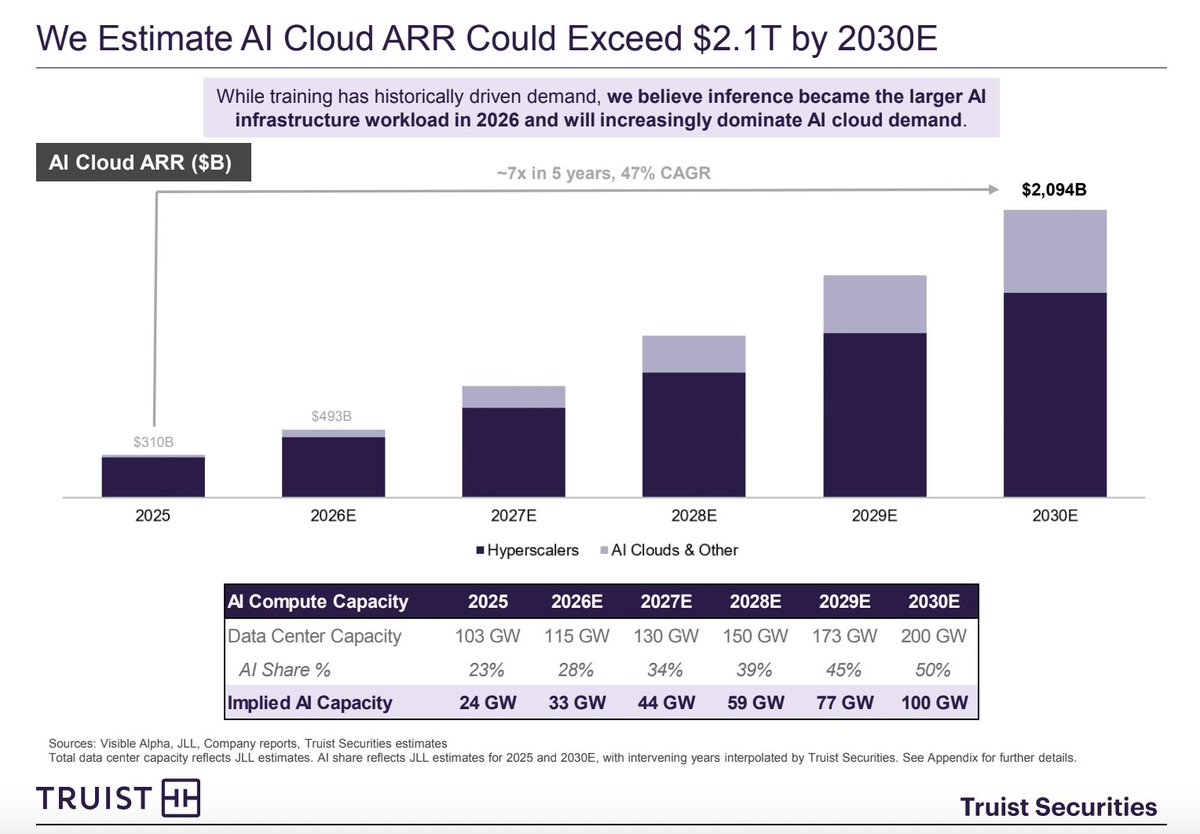
The same signal also cites Truist estimating AI cloud ARR could exceed $2.1 trillion by 2030, up from $310 billion in 2025. Recent coverage in the site’s news library on data-center infrastructure and AI spending points to a market still repricing the scale of compute demand.
That setup typically keeps Microsoft, Amazon, Google and Nvidia in the same market conversation, given their roles across cloud, enterprise AI and chip supply. For investors, the focus is less on any single company’s top line and more on whether capex and ARR assumptions can sustain current valuations.
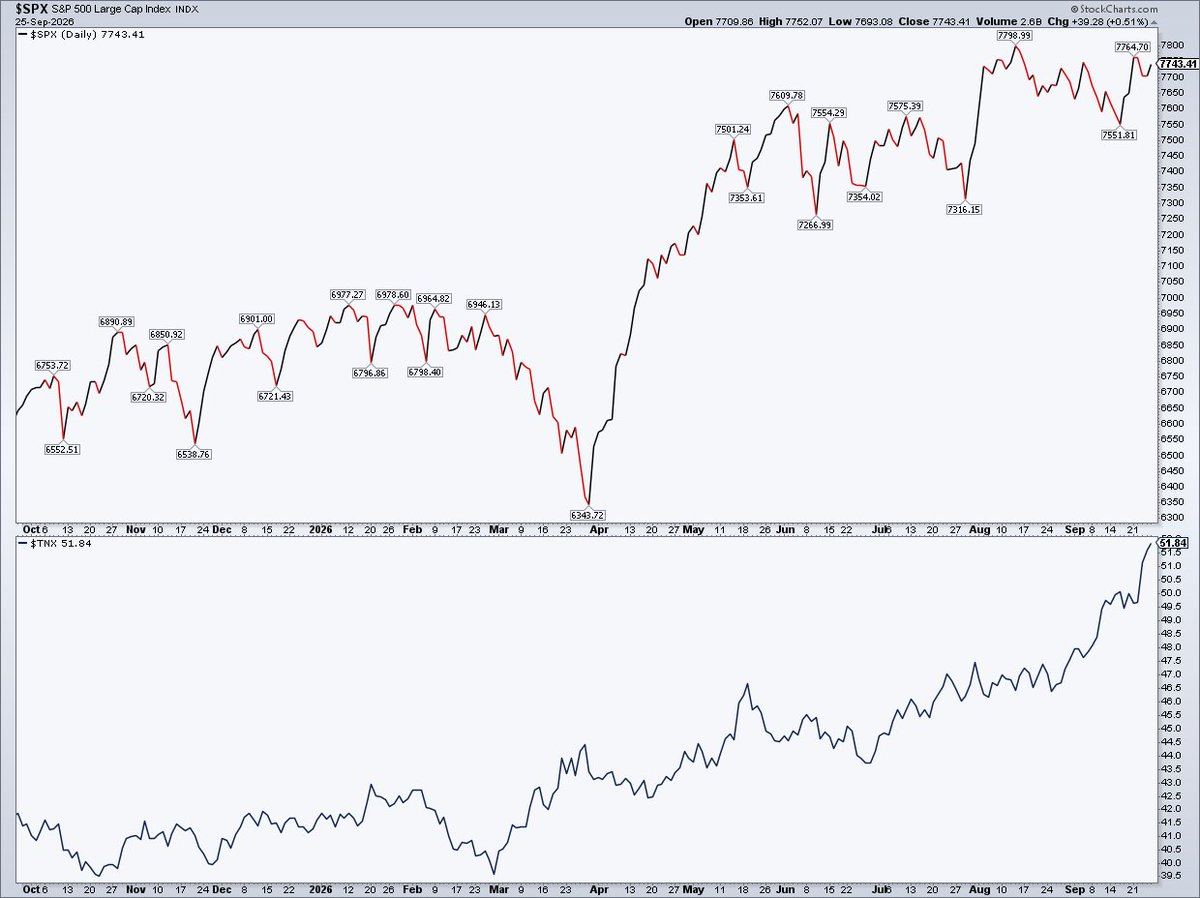
U.S. Treasury yields kept climbing, with the 10-year briefly moving above 5% last week and the 30-year trading near multi-decade highs. Fresh reporting suggests the move is not just a reaction to one data point, but a mix of higher oil prices, a still-restrictive Fed stance, and rising funding demand tied to AI infrastructure.
Axios said the latest leg higher has been driven mostly by real yields, pointing to a stronger growth outlook rather than a fresh burst of expected inflation. The Seoul Economic Daily, citing market data, reported the 10-year touched 5.22% and the 30-year reached 5.501%, while LA Times Now highlighted how AI-related corporate borrowing is adding to bond supply.
For markets, higher yields raise mortgage and corporate financing costs and pressure valuations for growth stocks and other long-duration assets. Recent trading in Meta bonds, where yields have widened further, shows how investors are repricing AI capital spending; at the same time, reported 30-year mortgage rates near the 7.5% area add fresh stress to housing and refinancing activity.
No single source disputes the rate levels themselves, but the explanation differs across reports: fiscal supply, AI capex, oil, and inflation expectations all feature in the debate. The key new development today is that investors increasingly seem to be treating a 5% yield regime as a durable backdrop rather than a short-lived spike.
これまでの経緯
2026-07-30
市場
NvidiaとAppleでS&P500の15%を構成英語原文
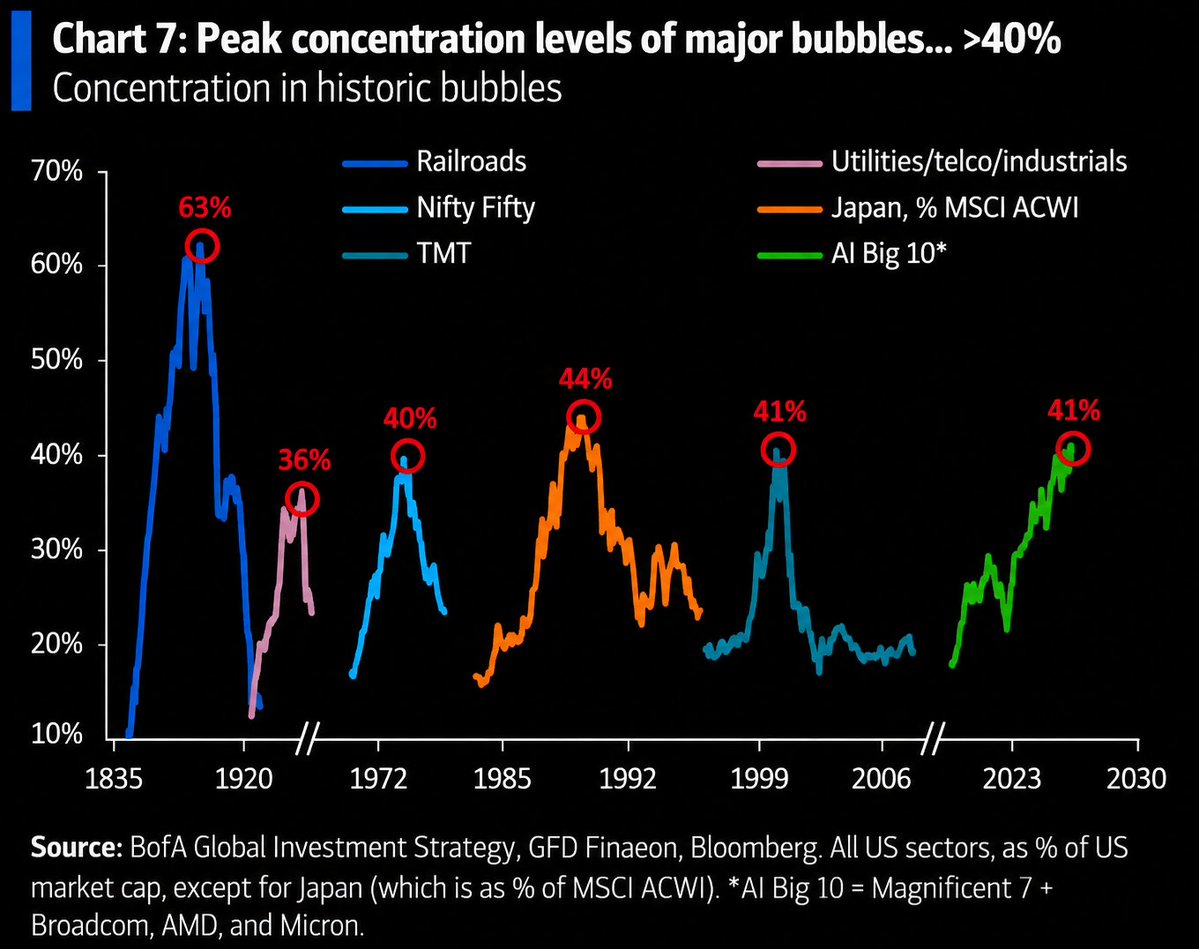
AI megacap concentration has climbed to a new high, with the “AI Big 10” cited at 41% of U.S. market cap
Fresh market chatter says Nvidia and Apple now account for 15% of the S&P 500 by market cap, with Nvidia at a record 8% and Apple at 7%. That places the two largest index members at an all-time high in combined influence.
The broader backdrop is rising concentration in U.S. equities, especially around AI-linked megacaps. Separate posts citing Bank of America data say the “AI Big 10” — the Magnificent Seven plus Broadcom, AMD and Micron — now represent 41% of the U.S. stock market.
Because the S&P 500 is market-cap weighted, moves in a handful of giant stocks can materially sway the index and passive funds tied to it. That is why traders continue to watch Nvidia, Apple, Broadcom, AMD and Micron as the key transmission channel for the AI trade.
The figures being circulated are not company announcements, but they do capture the market’s current concentration debate. The comparison most often invoked is the late-1990s dot-com era, when a much smaller set of leaders also dominated index performance.
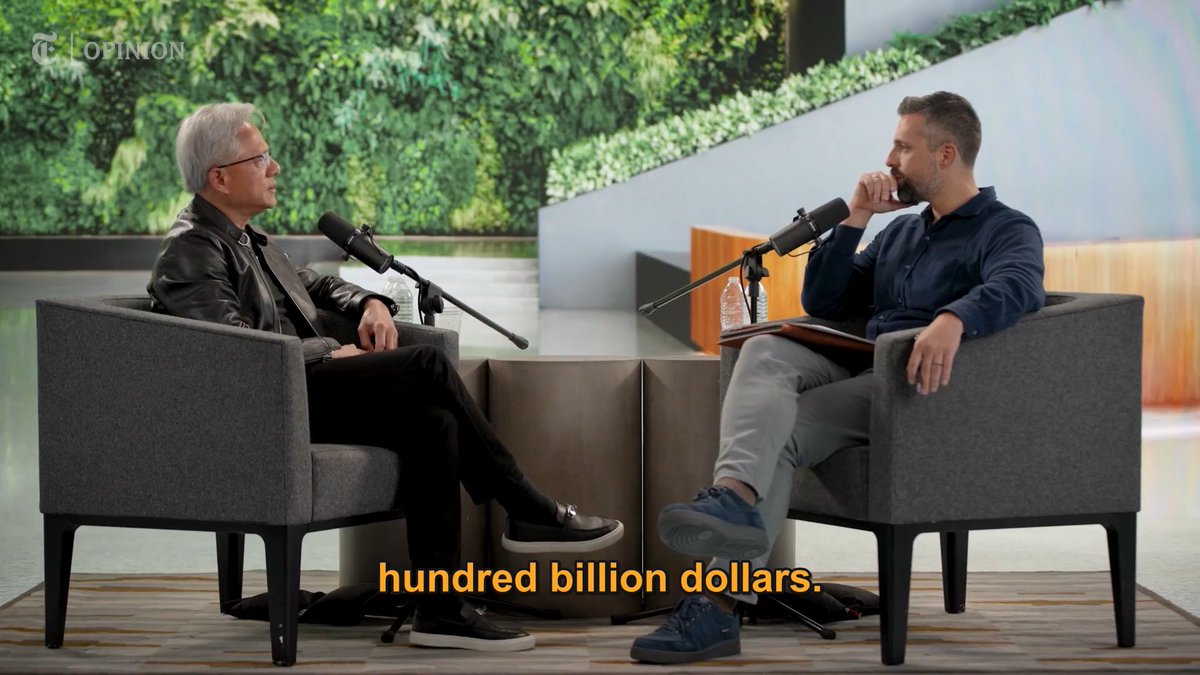
Nvidia CEO Jensen Huang said the company’s all-in investment across the AI ecosystem may exceed $100 billion. The comment is the key new development today, adding a broader framing around Nvidia’s capital commitment beyond a single partnership announcement.
The backdrop remains Nvidia’s planned collaboration with OpenAI. Reuters reported on Sept. 22 that Nvidia signed a letter of intent to deploy at least 10 gigawatts of Nvidia systems for OpenAI and said it would invest up to $100 billion in phases, with the first 1 gigawatt expected to come online in the second half of 2026. Reuters
Markets have already been reacting to the scale of the deal: Reuters said Nvidia shares rose as much as 4.4% after the announcement. Huang’s latest framing may help reinforce the narrative that Nvidia is not just selling chips, but helping finance the infrastructure required to deploy them at scale. Reuters
The bigger issue for investors is whether Nvidia can turn that spending into durable demand without intensifying concerns about circular capital flows. For now, the company’s OpenAI tie-up remains the clearest anchor for the broader AI infrastructure thesis, with other projects adding to the same theme.
これまでの経緯
2026-07-30投稿5件 · 投稿者5人
Microsoft reported strong Q4 FY2026 earnings with revenue, net income, and cash flow beating expectations, while OpenAI's CFO said July annualized revenue exceeded Q2 total.
企業動向
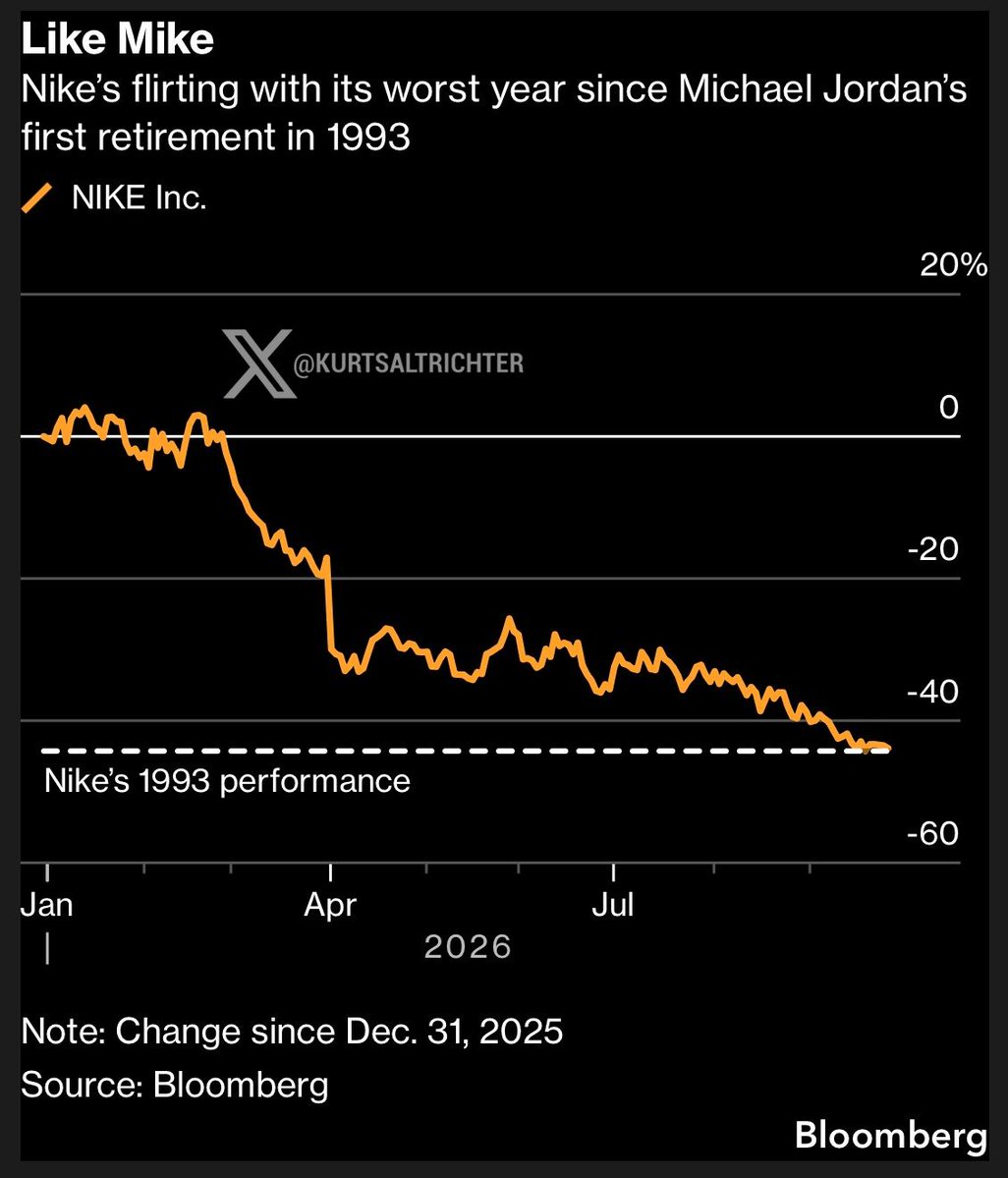
Nikeの時価総額は530億ドルとされる英語原文
New social signals point to a lower valuation and softer revenue, sharpening debate over Nike’s reset path.
Several X posts say Nike (NKE) is now worth about $53 billion, nearly 78% below its level five years ago. Another post says the company brought in $46.4 billion in revenue over the last year, down from a peak of $51.4 billion in fiscal 2023/24.
The numbers have revived the market’s focus on Nike’s slowing growth and valuation reset. Our newsroom’s recent coverage shows Bank of America cutting the stock to Underperform and lowering its price target to around $30.
One post also says Nike is trading near $35.75, a 12-year low, and has been removed from the S&P 100. For NKE, the debate is shifting from day-to-day price action to the timing of a recovery in channels, innovation and wholesale demand.
The material available here is mostly analyst and trader commentary rather than a fresh company disclosure. Even so, Nike remains the clear center of the story, with valuation, earnings and turnaround timing driving the discussion.
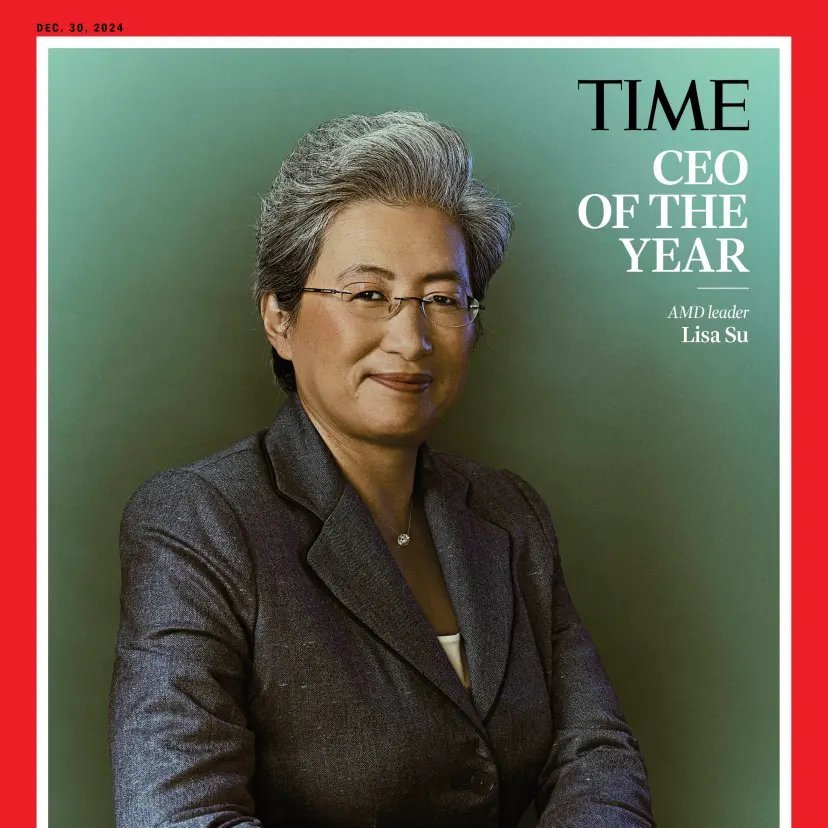
A cluster of posts on X today is highlighting Lisa Su’s tenure as AMD’s CEO and the company’s long-run market-cap expansion. The posts say she took over on October 8, 2014, when AMD was worth about $3 billion, and that the company is now valued at $1 trillion.
The discussion comes against the backdrop of recent coverage noting AMD’s $1 trillion valuation and framing the company’s AI-chip, server-CPU and inference-GPU opportunities. Other reports this week have also tied AMD’s move to the broader AI-chip competition.
For markets, the discussion is centered on AMD itself, with the stock at the core of the story. One repost on X also claims a $10,000 investment made when Su became CEO would be worth about $1.9 million today, though that figure is presented as a social-media claim.
This is mostly a retrospective narrative rather than a fresh company announcement. The new increment today is the social-media amplification around AMD’s long-term scale-up, alongside recent news coverage of its $1 trillion valuation.
これまでの経緯
2026-08-03投稿3件 · 投稿者3人
AMD CEO Lisa Su projected a $2T computing market by 2030, claimed its Venice CPU beats Nvidia's Vera by 20% without pricing, and Q2 earnings due next day.
企業動向
マスク氏、TeslaのOptimus家庭用ロボットに2万ドルの価格設定英語原文
The latest social post keeps Tesla’s humanoid robot narrative focused on pricing and everyday use cases.
A fresh signal on X says Tesla’s Optimus will handle “the one chore nobody wants to do” for $20,000. The post was amplified by Investing.com in a retweet of JesseCohenInv’s original message.
This comes as The Motley Fool reported that Elon Musk says Optimus could help make Tesla a $25 trillion company. That earlier report framed the robot as a central part of Tesla’s valuation story.
For markets, TSLA remains the key name to watch. Any new Optimus pricing or use-case chatter tends to feed directly into investor debate over Tesla’s long-term monetization story.
At this stage, the signal is social-post level rather than an official product update. No new financial disclosure or launch detail appears in the material provided.
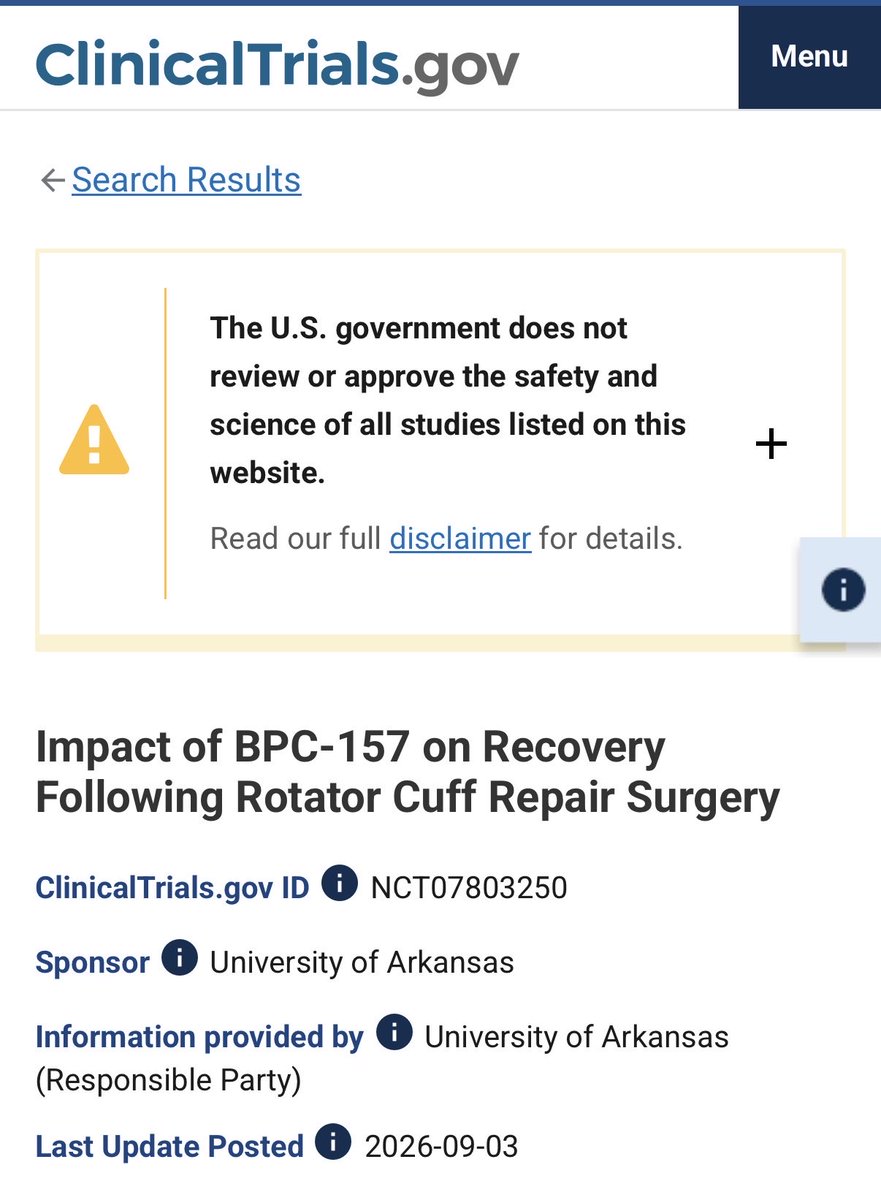
A newly registered study at the University of Arkansas is set to test BPC-157 in 20 patients recovering from rotator cuff repair. The randomized trial will compare daily subcutaneous BPC-157 injections with saline placebo over 90 days alongside standard rehabilitation, according to the trial listing and the X-posts citing it.
BPC-157 has drawn scrutiny for years because of its regulatory status and its association with wellness and telehealth offerings. Hims & Hers has faced separate legal and regulatory pressure this year over privacy and product practices, and the company previously said it would vigorously defend itself against FTC claims.investors.hims.com
For HIMS shares, the main significance is narrative: the study gives the peptide a more formal clinical backdrop at a time when the company remains under legal overhang. It does not, by itself, establish efficacy or change the regulatory outcome.
The trial is still at an early stage, so there are no results to verify yet. What is new today is the shift from online speculation to a registered human randomized trial, which could keep BPC-157 in focus for traders and telehealth investors alike.
これまでの経緯
2026-08-13投稿3件 · 投稿者3人
Rumors emerged that the FDA may move BPC-157 and TB-500 to Category 1 by end of October, with HIMS signaling readiness for a BPC launch.
市場
Zcash co-founder reiterates a $10,000 ZEC target as the token hits a record英語原文
The fresh bullish call comes after ZEC set a new high and as Grayscale’s Zcash product tops $1 billion in assets, keeping the privacy-coin trade in focus
Zcash co-founder Eli Ben-Sasson repeated a bullish view on X, saying ZEC has a very high chance of reaching $20,000 this cycle before framing $10,000 as a “conservative” target. The post landed as ZEC was surging to new highs, giving traders another headline to digest in an already fast-moving market.
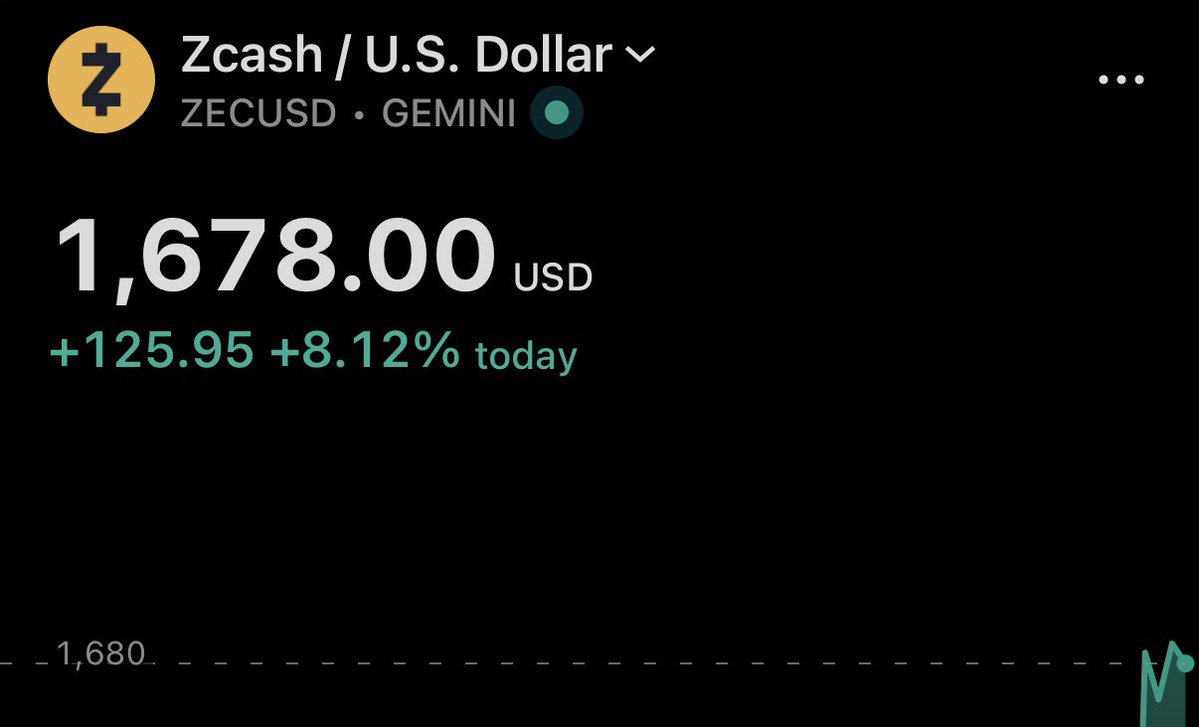
Separate reporting said ZEC traded as high as $1,697.45 on Sept. 27, marking a fresh all-time high. That move follows a roughly 102% gain over the past month and a run that has kept the token well above the $1,500 level.
The rally has also drawn attention to Grayscale’s Zcash vehicle, ZCSH, whose assets reportedly surpassed $1 billion. For market participants, the combination of a record price, a renewed founder call and strong fund inflows has reinforced Zcash as one of the cycle’s most closely watched crypto names.
Ben-Sasson’s targets are his personal views, not an official forecast from Zcash or Grayscale. There has been no indication from either organization that the price levels represent guidance or a formal valuation model.
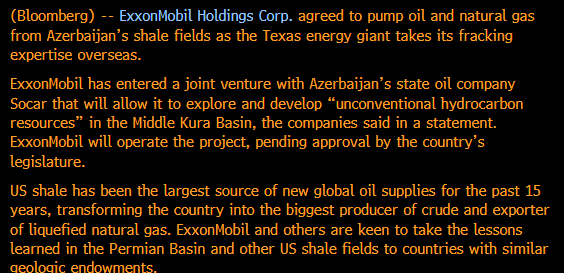
ExxonMobil has signed a production-sharing agreement with Azerbaijan’s state oil company SOCAR to explore and develop unconventional hydrocarbon resources in the Middle Kura Basin. According to APA, the participating interests will be split 50/50, with ExxonMobil serving as operator.
The agreement marks ExxonMobil’s latest push to export its U.S. shale expertise overseas. Bloomberg reported that the project still requires approval by Azerbaijan’s legislature, and that the legal and regulatory framework for such drilling is more complex than in the U.S.
For ExxonMobil, the deal adds an exploration storyline rather than an immediate production boost; for SOCAR, it opens a new onshore unconventional prospect. In market terms, the news is mainly relevant to XOM as a potential long-dated resource option, while also adding a new variable to Azerbaijan’s upstream portfolio.
Public details remain limited, with no announced drilling program, capex figure or production forecast. The signing was reported on Sept. 26 at the Second Azerbaijan International Investment Forum in Baku.
Viking Therapeutics is back in the spotlight after fresh market commentary pointed to the company’s VK2735 maintenance study. The signal highlighted retention of up to 97% of prior weight loss over three months, reinforcing investor focus on the drug’s low-frequency dosing profile.
The backdrop is Viking’s Sept. 22 top-line release, which said VK2735 supported weight maintenance on every-other-week and monthly regimens, with GI adverse-event rates similar to placebo. The company also reported 22% placebo-adjusted weight loss at week 33 after the weekly induction phase.
For markets, the key ticker is VKTX. The data continue to shape the stock’s valuation story by suggesting a potentially more convenient GLP-1/GIP option, and press reports said the shares jumped more than 30% after the readout.
Viking has said it plans to test oral maintenance dosing in the next part of the study, but the current discussion remains centered on top-line efficacy and tolerability, not a completed commercialization case.
これまでの経緯
2026-09-22投稿10件 · 投稿者9人
Viking released maintenance data for VK2735 showing most weight loss retained with less-frequent dosing, sending shares up 40% pre-market.
2026-09-23投稿4件 · 投稿者4人
VK2735 showed ~22% placebo-adjusted weight loss at week 33 with no plateau and placebo-like GI tolerability, driving shares up another 25-30%.
企業動向
オラクルの資金調達圧力が深刻化、CDSが230bpsに到達英語原文
New market signals are forcing investors to reassess Oracle’s credit profile and cash demands as it expands its AI data-center footprint.
Multiple X posts say Oracle’s 5-year credit default swap has surged to a record 230 basis points. The same signals say the business is still growing fast, citing Q1 revenue up 30%, OCI revenue up 121%, RPO of $664 billion, and FY27 revenue guidance of at least $90 billion.
The focus is increasingly on how Oracle is funding that expansion. One post says the company spent $28.5 billion on capex in Q1 and generated negative $5.4 billion in free cash flow; another report says Oracle has taken on lease commitments tied to its OpenAI push, including rent obligations even if power is not yet online.
The market response has been sharp. Oracle stock reportedly ran to $245 this year and then fell back to about $140, while another item says shares are down 53% over the past 12 months. The combination of weaker credit pricing and a falling share price suggests investors are re-evaluating the cost of Oracle’s capital-intensive AI buildout.
Our news file also carried follow-up coverage on Oracle’s data-center dispute and force-majeure questions, showing the story is still developing. No direct company response appears in the supplied materials; the points above are drawn from multiple posts and reports.
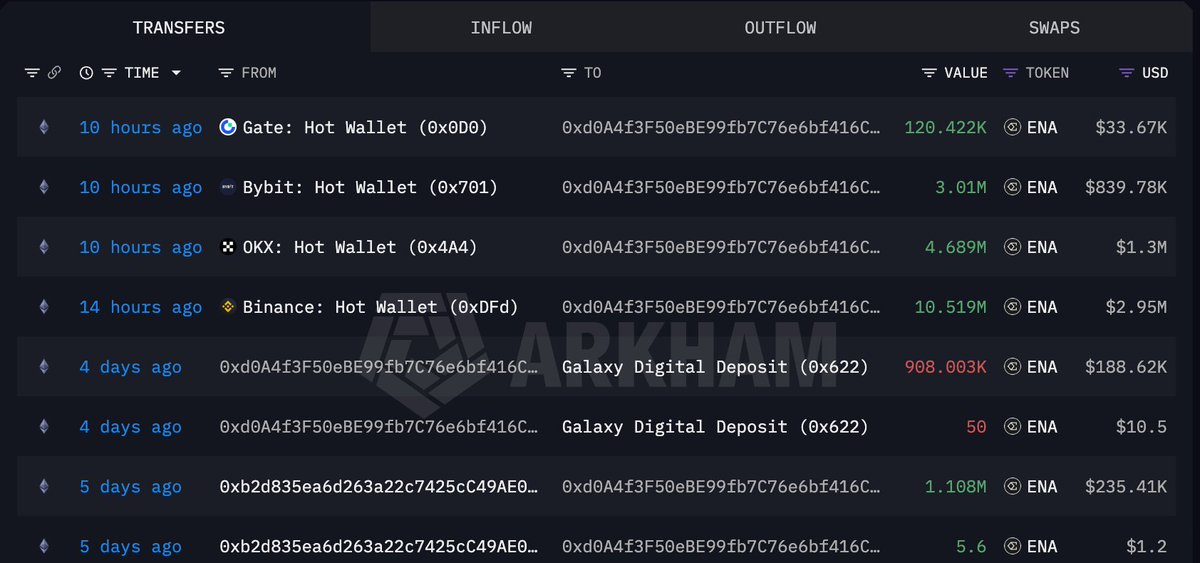
Lookonchain said wallet 0xd0A4 withdrew 18.34 million ENA, worth about $5.13 million, from Gate, Bybit, OKX and Binance today. Arkham also surfaced activity tied to the same address.
ENA is the token of the Ethena protocol, and large exchange withdrawals are often watched as a sign of portfolio reshuffling, custody moves or follow-on onchain activity. The transfer itself does not prove the destination or intent of the funds.
The same social-media signal also referenced another Lookonchain monitor item: an address suspected to belong to the Bitget hacker had withdrawn about $1.23 million from Binance roughly 11 hours earlier, including 257.6 ETH and 545,000 USDT before subsequent swaps and transfers. That adds to the broader backdrop of active wallet tracking in the market.
For traders, the immediate relevance is sentiment around ENA rather than any confirmed change in fundamentals. A clearer read would require either a confirmed attribution of the funds or a statement from the relevant parties.
On X, two traders posted that they were buying Dell Technologies again. One said the stock had come close to its 21-day moving average, while another said he entered on a breakout from the opening range.
The posts add a fresh layer of short-term trading interest after Dell’s latest earnings update, which showed record AI server orders and a large backlog. The market is also still parsing insider-sale disclosures, including Director Egon Durban’s Sept. 23 sale of 1,850 shares for about $1.01 million.
For investors, the focus remains whether Dell can convert its AI infrastructure demand into future revenue and margins. The stock’s move can also influence sentiment across the broader AI hardware complex, including servers, storage and GPU-linked suppliers.
There has been no public company response to the X posts. The new signal is mainly technical in nature: traders are reacting to a pullback and watching whether Dell can hold key moving-average support after its recent run-up.
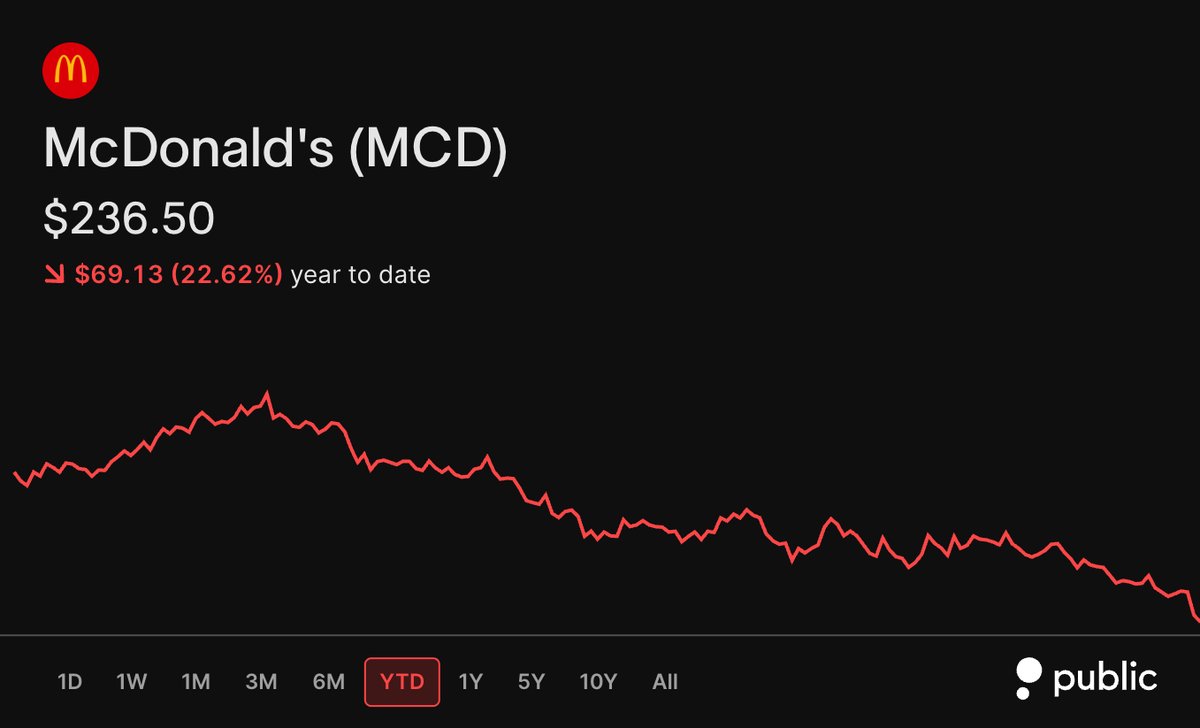
X posts from StockMktNewz and Kalshi Finance say McDonald’s (MCD) is currently on pace for its worst year since 2002. The signal frames the stock’s 2026 performance as a sharp break from its longer-run track record.
Recent coverage in the site’s news library has been focused on the same company under a broader operating slowdown. The Motley Fool said Burger King is outperforming McDonald’s in fast food, with same-store sales growth of 8.5% versus McDonald’s 0.8% in Q2 2026.
Another recent report noted that McDonald’s has shed a fifth of its value in 2026, even as its franchise model continues to generate billions in free cash flow. The company is also trying customer-facing fixes, including bringing back colorful PlayPlaces, in an effort to win back frustrated parents.
For the market, the issue is less about a single trading day and more about whether traffic, same-store sales and brand repair can stabilize sentiment around MCD. The new X signal mainly reinforces that the stock’s year-to-date trajectory has become a live market story.
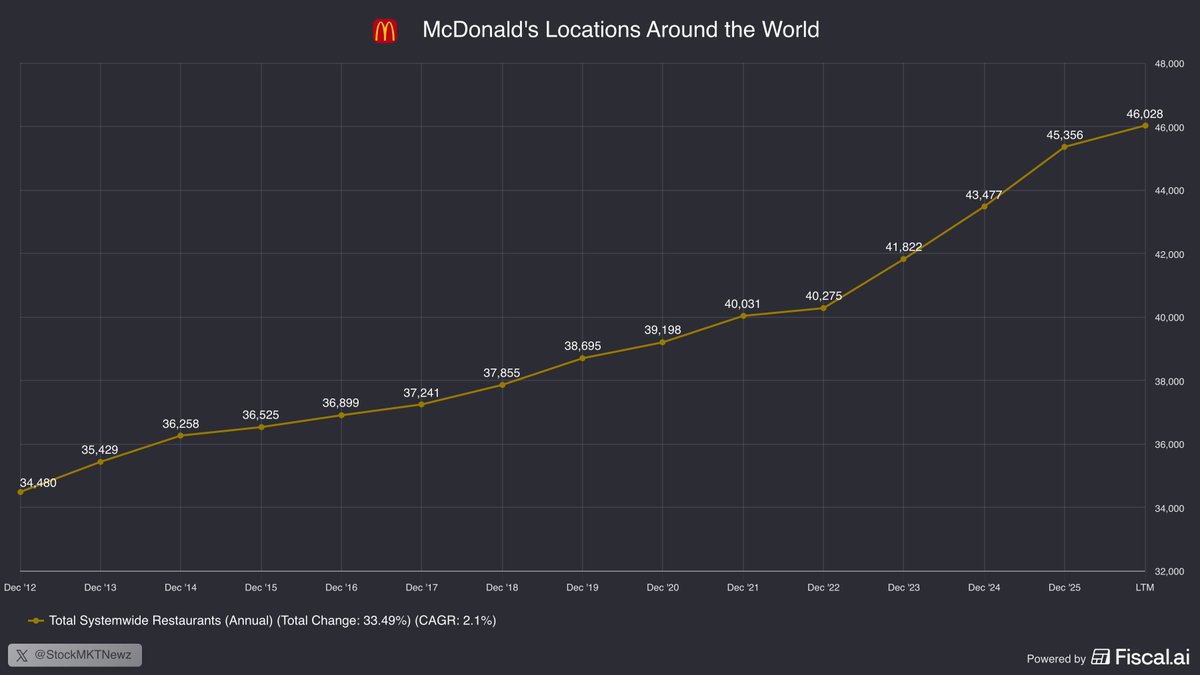
McDonald’s said its global restaurant count now exceeds 46,000, spanning more than 100 countries and markets. In the same update, the company outlined roughly $8.5 billion of NEXT partnering support through 2036, including about $5 billion by 2030 through rent relief and capital support.
The disclosure comes alongside McDonald’s NEXT strategy, announced on Sept. 23, which centers on restaurant modernization, technology deployment and operational improvements. The company says about 250 basis points of gross restaurant-level efficiency gains would translate into roughly $100,000 in annual cash-flow benefits for the average U.S. restaurant, with a payback period of around four years after partnering.
For investors, the significance for MCD is that the growth narrative is shifting toward a longer-dated operating reset rather than a quick sales fix. Market participants will be watching whether the spending package helps franchisees fund remodels and tech upgrades without adding too much strain to a system already under pressure from costs and softer traffic.
The X signal lines up with the company’s own count of more than 46,000 restaurants, and it adds a fresh data point for the scale of the system. This is a quantification of an already announced strategic overhaul rather than a new policy shift, but it gives the market a clearer way to gauge the scope of support on offer.
これまでの経緯
2026-09-23
市場
Micron、ナスダック100で5年間でトップの上昇率英語原文
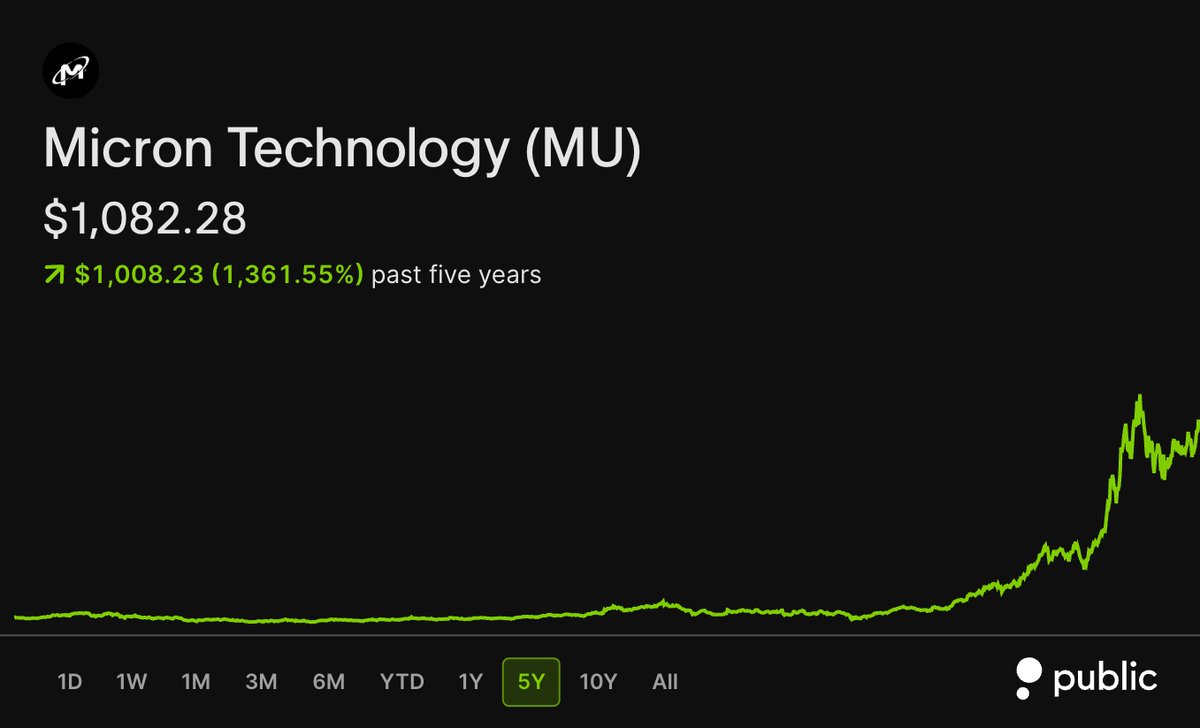
X traders say MU is now the best-performing Nasdaq 100 stock over five years, as new coverage keeps spotlighting its S&P 500 profit impact
Multiple posts on X say Micron (MU) is now the best-performing stock in the Nasdaq 100 over the past five years. One signal also puts the shares at $1,082.28.
The backdrop is a wave of fresh coverage in the past 48 hours that keeps Micron at the center of the AI-memory trade. MarketWatch said Micron is becoming increasingly important and could overtake Nvidia as the biggest driver of S&P 500 profit growth.
For the market, that keeps MU in the spotlight as a core AI and memory-cycle name, with spillover effects for peer chip stocks and the broader semiconductor trade. The company’s earnings report is already being framed as a market-moving event.
Based on the materials available here, the new element is the market chatter around Micron’s multi-year stock leadership, reinforced by recent coverage of its expanding earnings influence.
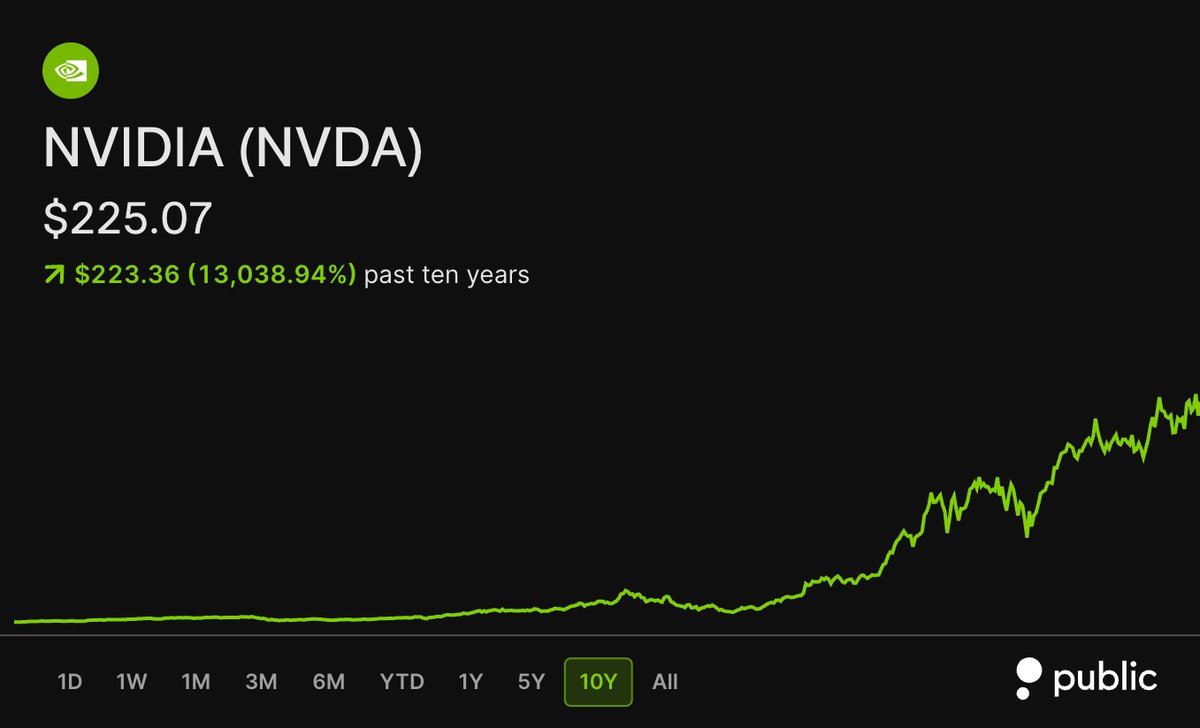
Multiple X accounts said Nvidia has been the S&P 500’s best-performing stock over the past decade, with NVDA quoted at $225.07 in the same signal. The post is new today and centers on the stock’s long-term performance profile.
Recent coverage in the site’s news archive has also kept Nvidia in view, including an article arguing the company fits Warren Buffett’s investment style. That adds to the market’s focus on its moat, valuation and compounding story.
For NVDA, the “best-performing over a decade” framing reinforces its status as a benchmark large-cap winner. For investors, the key question is whether the long-run growth narrative can continue from here.
No direct company response appears in the provided materials. Based on the supplied sources, the signal is about market perception rather than a fresh corporate announcement.
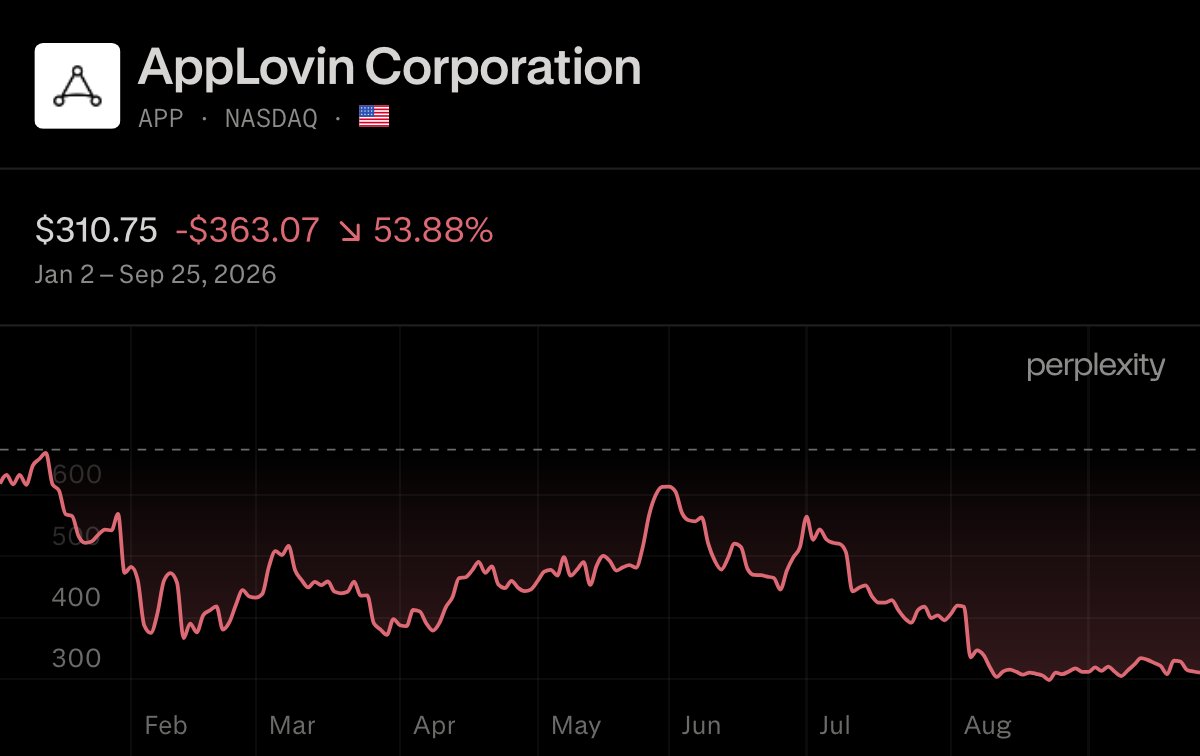
Multiple posts on X said AppLovin ($APP) is down 54% year to date, calling it one of the S&P 500’s worst performers this year. One of the posts also floated estimates of 30% annual revenue growth and 40% annual EPS growth.
Recent coverage in our news file shows the debate around AppLovin is still centered on its business model. On Sept. 27, The Motley Fool said the company’s mobile ad platform is showing strong advertiser returns and higher budget spend, while also flagging advertiser retention, unit economics and ad-cycle risk as items investors should verify.
There is also a Sept. 26 notice from Newsfile tied to a securities class action involving AppLovin. That adds a legal overhang to a discussion that already includes valuation, operating performance and stock volatility.
For now, the discussion is mostly about APP itself, rather than any broader sector move. The 3-4x-in-five-years comment is the post author’s estimate, not a company disclosure.
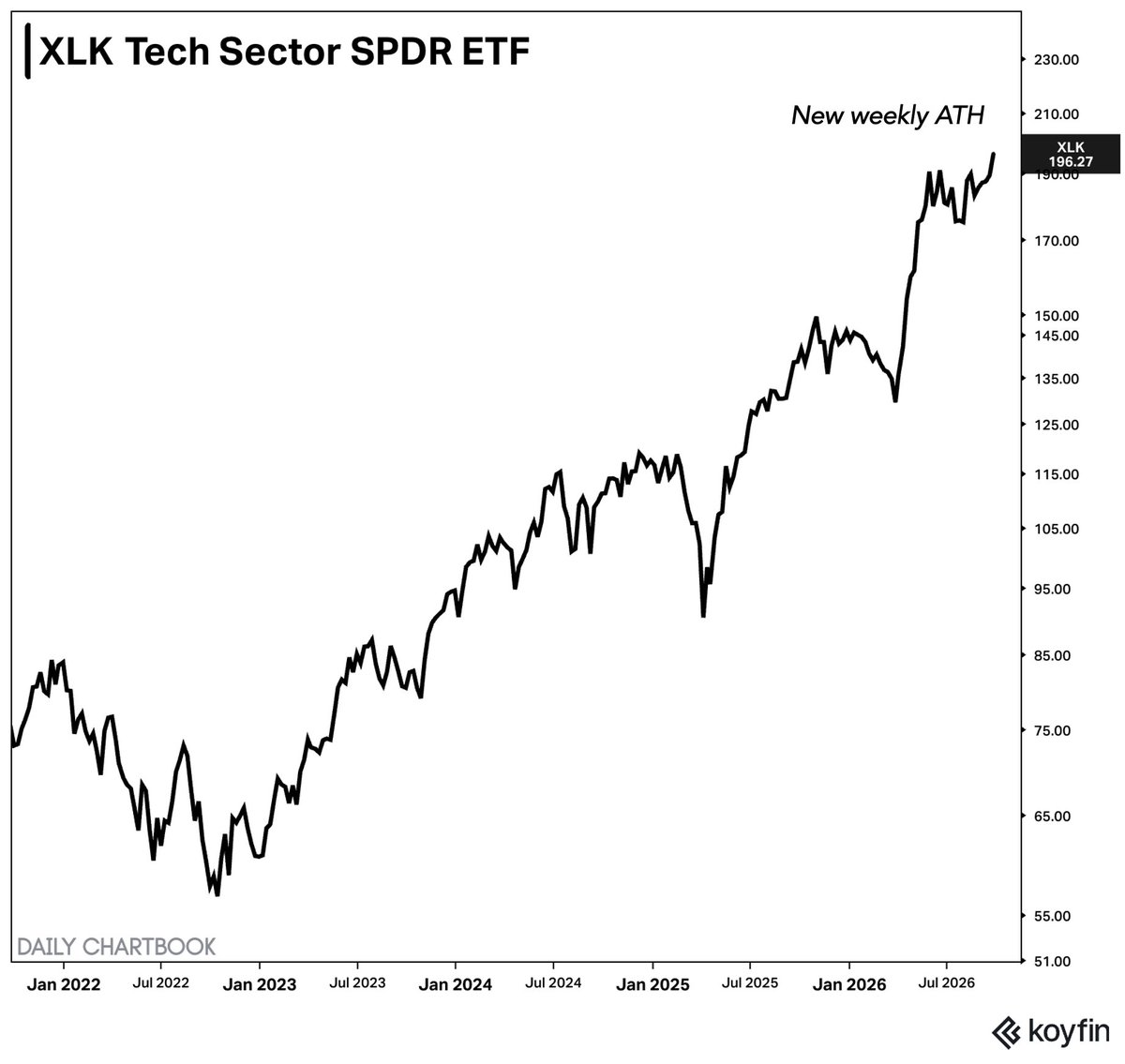
US technology stocks ended the week at the top of the leaderboard again, with the Technology Select Sector SPDR Fund (XLK) rising 3.52% for the week and closing at a new all-time high. X trading signals also showed that only 2.7% of stocks in the sector posted new 52-week highs, underscoring the narrow breadth behind the move.
That fits a broader pattern seen in recent market coverage: high rates and elevated Treasury yields have continued to pressure rate-sensitive groups, while investors keep rewarding AI- and cloud-linked mega-cap names with visible earnings, user growth and monetization progress. Recent reports also said technology outperformed financials and other cyclical groups over the week.
For the market, this keeps the spotlight on heavyweight names inside XLK rather than on a broad-based rally across the sector. It also means the durability of the move may hinge on whether the current earnings and capital-spending story can keep overpowering the headwind from rates.
A separate market recap said XLK gained 3.52% for the week through Sept. 26, while XLF fell 1.83%. Another report noted that technology was the best-performing sector again this week.
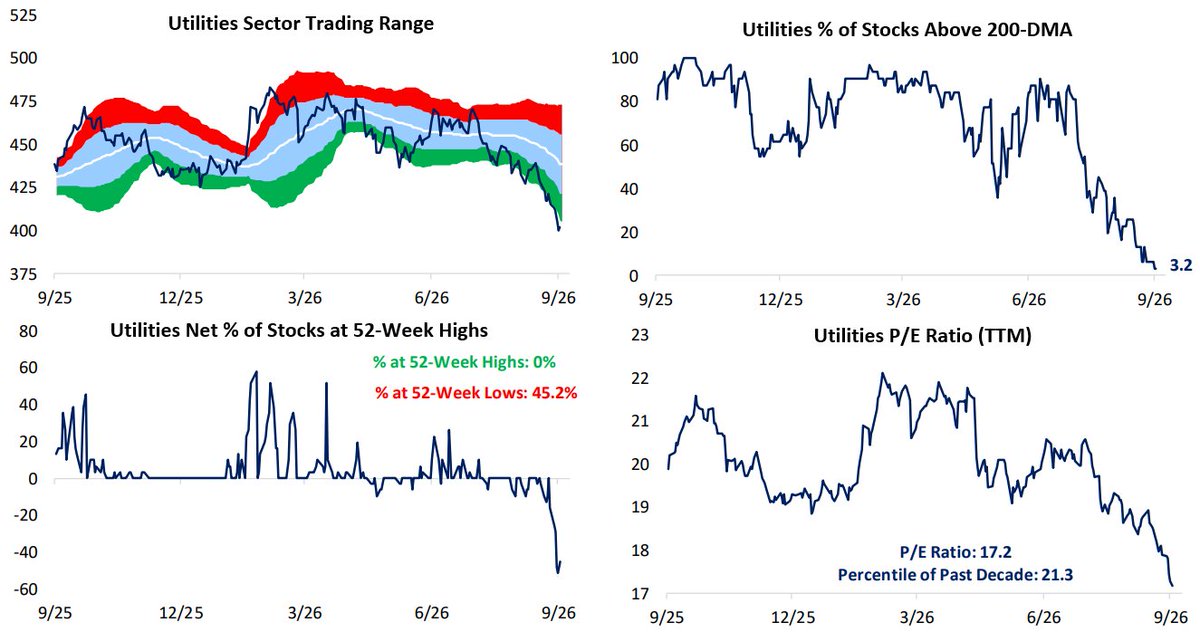
Fresh market signals show U.S. utilities remain under heavy pressure. Bespoke Investment said the Utilities sector ETF $XLU has only 3.2% of stocks above their 200-day moving averages and 45.2% of stocks at 52-week lows, while its P/E ratio stands at 17.2 times, placing it in the 21st percentile over the past 10 years.
The backdrop is a combination of rising rates and a broader repricing of defensive sectors. Earlier market reports said XLU had fallen nearly 20% from its year-to-date high and that its 14-day RSI had dropped to about 21, the weakest level in three years, underscoring a deeply oversold technical setup.
Holdings concentration matters here: NextEra Energy, Southern, Duke Energy and Constellation Energy are among the largest weights in XLU, so moves in those names have an outsized impact on the fund. MarketWatch put XLU’s total net assets at about $21.84 billion and its yield at 2.77% as of Sept. 4, highlighting how higher rates can blunt the appeal of dividend-heavy defensives.
For now, the story is less about a single catalyst than a sector-wide reset in how investors price utilities. With rates still elevated, the market continues to weigh income, defense and valuation against a backdrop of weaker technicals.
市場
ブラント氏が1984年の木材チャートを拡大、トレーダーは下抜けセットアップを再点検英語原文
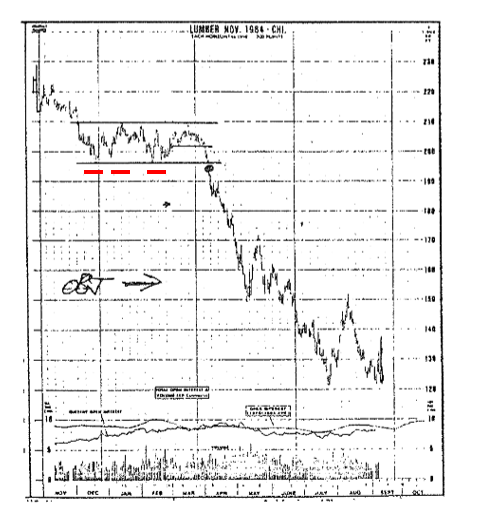
A TechCharts post uses an old lumber futures chart to frame a downtrend and consolidation pattern, and Brandt’s repost revived the discussion today
Peter Brandt reposted a TechCharts chart note that describes a prior downtrend followed by sideways consolidation with clearly defined boundaries, saying a pattern breakdown typically comes after at least three touches of the boundary. The post cites a 1984 lumber futures chart as the example and links the setup to a recent breakdown alert.
The update matters because Brandt’s repost gives fresh visibility to a technical setup that had already been circulating in market-charts circles. It also comes after separate third-party coverage of Brandt’s view that Germany’s DAX has been forming a broadening pattern, a setup he has associated with downside risk; that earlier post was reportedly deleted and is now preserved only via reprints.
For the market, the immediate ticker in the signal is DAKT, the code for Daktronics, but the story is mainly about chart interpretation rather than a new company-specific disclosure. Traders watching high-volatility names and indices may read the repost as another reminder that support and resistance levels remain the focal point.
So far, there is no new official response from the company mentioned in the signal. The verifiable update today is Brandt’s repost, not a fresh corporate announcement or regulatory filing.
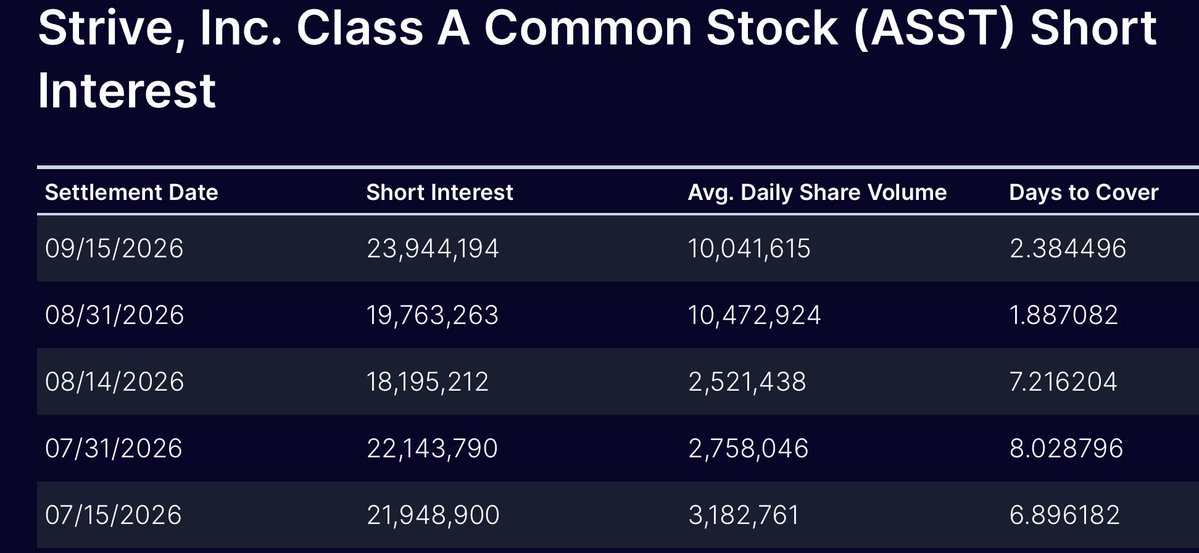
Nasdaq’s latest short-interest report, published on Sept. 24, shows Strive Inc. (NASDAQ: ASST) had about 18.2 million shares sold short as of the Sept. 15 settlement date, up from roughly 18.1 million shares at the end of Aug. 31. On a float basis, that is roughly a quarter of the shares available for trading.
The figure matters because it is the newest official short-interest snapshot, even though it is already more than a week stale by the time it hits the tape. Traders on X quickly seized on the data to argue that ASST remains a crowded short, keeping the stock in focus among speculative names.
For ASST, elevated short interest can amplify day-to-day volatility and shape how investors read liquidity and positioning. The conversation around the data centers on ASST itself; MSTR is not part of this event.
So far, Nasdaq’s report stands as the source of record for the Sept. 15 settlement date, and no correction has surfaced. The online discussion has focused on the short-interest print rather than on any company response.
An X post from ETFhearsay says Gator Capital Long/Short ETF has filed a merger or acquisition transaction, with a target effective date of Dec. 11, 2026. The post says the fee structure remains 3.01%, including a 1.00% management fee.
SEC filing materials for the Gator Capital Long/Short Fund show the ticker as GATRX and list total annual fund operating expenses of 3.01%, with management fees of 1.00%. The prospectus also describes an actively managed long/short and cash allocation strategy.
The development matters primarily for fund investors, because a merger or reorganization can affect share class mechanics, account processing and continuity of strategy. The current record does not show a direct equity-market impact on an underlying company.
For now, the verified facts are limited to the fund’s ticker, fee schedule and strategy disclosures. The X signal adds an unconfirmed filing-related update that should be checked against formal documents before treating it as settled.
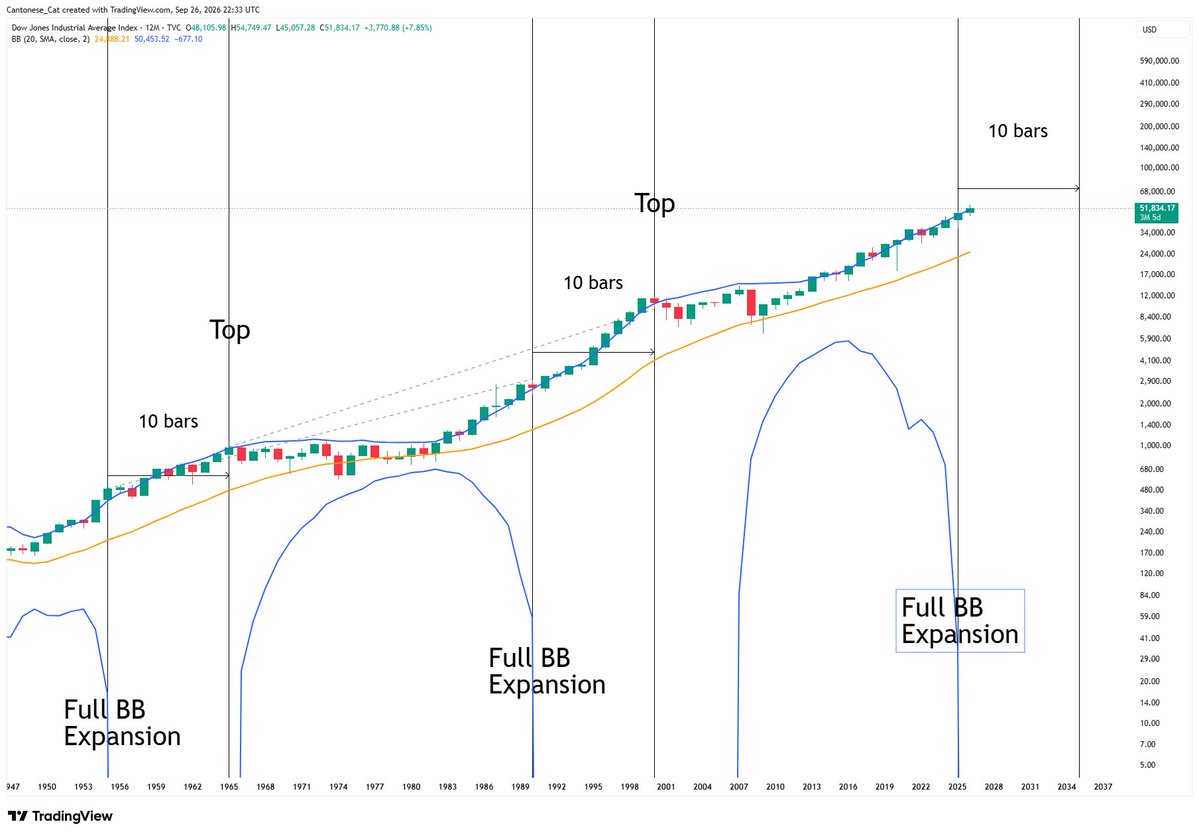
A trading post on X revived a yearly chart of the Dow Jones Industrial Average (DJI), arguing that a full Bollinger Band expansion has historically been followed by a long uptrend. That is a technical-analysis view, not a new official market disclosure.
The backdrop matters: U.S. stocks ended the week higher even after the 10-year Treasury yield briefly touched its highest level since 2007. On Friday, the Dow rose 479 points to 51,829, while the S&P 500 and Nasdaq also finished slightly higher.
The setup shows investors still balancing elevated rates against earnings strength and the AI trade. But the chart claim should be read as market commentary, not as a forecast.
There is no new company-specific catalyst behind the post; it is mainly a fresh social-media interpretation of the Dow’s long-term trend.
Micron Technology (MU) is heading into its fiscal fourth-quarter earnings report next Wednesday, and the stock is drawing fresh attention across social media and Wall Street. The latest X signal simply underscores how central the name has become this week.
Recent coverage has centered on the AI memory cycle. The Motley Fool reported that Citi raised its price target to $1,300, while UBS analyst Timothy Arcuri reiterated a $1,625 target, citing firmer DRAM pricing and persistently tight supply.
For Micron, the market usually reacts less to a simple beat than to forward guidance. Traders are also watching the broader HBM and memory supply backdrop versus SK Hynix and Samsung, which can spill over into AI hardware and memory-related equities.
For now, the pre-earnings tone remains constructive, but the real wildcard is management’s view on fiscal 2027 demand and pricing. If the company keeps reinforcing the tight-supply narrative, sentiment around MU and the broader memory trade could stay elevated.
X users are debating Jeff Bezos’s post-divorce image shift, calling it a transformation that will be studied for years. That is an opinionated reading of his public persona, not a new corporate event.
The broader context dates back to Bezos’s 2019 divorce from MacKenzie Bezos, after which his relationship with Lauren Sánchez and a much more visible social life drew sustained media attention.elpais.com A widely cited 2023 profile also noted that he stepped down as Amazon CEO in 2021, giving him more room to shape his public image.
For $AMZN, the discussion is largely reputational rather than operational. Recent investor filings cited in our news cache show institutions adding to Amazon positions, underscoring that the stock’s immediate narrative remains centered on fundamentals, not Bezos’s personal brand.defenseworld.net
No new disclosure suggests the branding debate changes Amazon’s business outlook in the near term.
これまでの経緯
2026-08-04投稿17件 · 投稿者16人
Jeff Bezos dumps $4 billion in Amazon stock, triggering market attention.
2026-08-05投稿9件 · 投稿者8人
市場🔥進行中
SpaceX関連のSPCXは引き締まった展開、2カ月の反発が注目集める英語原文
Fresh X chatter highlights a tight setup near the 21EMA, while a site report says the stock has recovered from its post-IPO slump over the past two months.
X posts say SpaceX-linked SPCX has turned “ridiculously tight” and continues to find support near the 21EMA. A separate post on the same day adds that the stock has recovered from its post-IPO slump, rewarding investors who bought near the summer lows.
The site’s own coverage over the past 48 hours points to the same name, with a headline about how a $1,000 investment in SpaceX stock two months ago is now worth more. Together, the signals frame SPCX as a rebound story that is still being actively tracked by traders.
For the market, SPCX is the central name here rather than a broad market backdrop. The new information is the renewed emphasis on technical tightness and support, which keeps the stock in focus as a tradable setup.
There is no denial or contrary company statement in the material provided, so the report can only reflect the public signals and the linked news coverage.
これまでの経緯
2026-07-30投稿26件 · 投稿者21人
SpaceX won a $1.6B Space Force contract, the Fed held rates with three dissents for a hike, and a FundaAI report highlighted SpaceX's 4GW compute buildout plan.
市場
DRKYの累計現金配当は14.1%に到達、SPYを13.1ポイント上回る英語原文
A social post today reprises the ETF’s launch-to-date performance, with public data corroborating its dividend stream and return profile.
A social post circulating today says VistaShares Target 15 DRUKMacro Distribution ETF, or DRKY, has paid 14.1% in cash since its Oct. 8, 2025 launch and finished 13.1 percentage points ahead of SPY. The message is a retrospective on the fund’s track record, not a new corporate action.
Public data partly supports the claim’s context: AssetsAnalyzer shows DRKY has returned 24.53% since Oct. 8, 2025 and 9.81% year to date in 2026. DividendInvestor says the fund declared a $0.2824-per-share dividend on Sept. 25, payable Sept. 29, while TradingView lists about $17.35 million in assets under management and a 14.45% dividend yield.
For the market, the headline mainly matters for DRKY and for comparison with other equity-income ETFs such as SPY, JEPI and JEPQ. Because the post refers to cumulative history, investors should treat it as a performance recap and not a fresh trading catalyst.
What is clear is that DRKY has kept distributing cash and remains a small, income-oriented ETF. The exact methodology behind the “14.1% cash” and “13.1 points” figures was not disclosed in the repost, so the fund’s announcements and performance pages remain the better reference point.
ETFIQ says that over the year to Sep. 25, 2026, the VistaShares Target 15 Berkshire Select Income ETF (OMAH) paid 14.4% in cash and finished 5.4 percentage points ahead of BRK-B. OMAH is built around Berkshire-related holdings with an options-income overlay.
The update matters because OMAH is not a plain Berkshire proxy. Its structure combines BRK.B exposure and related holdings with written options, which can support monthly cash distributions but also changes how investors should compare it with simply owning Berkshire shares.
For the market, the latest tracking reinforces the trade-off at the center of Berkshire-themed income products: higher cash flow versus capped upside and fee drag. That makes the comparison with BRK.B itself the key reference point for investors.
No objection from VistaShares to ETFIQ’s latest tracking was found in the materials reviewed. As with other option-income funds, both distributions and total return can shift with market conditions.
Nvidia agreed to provide over $100 billion in credit support for OpenAI's Ohio data center, while price cuts across leading AI models drew market attention.
2026-08-26投稿33件 · 投稿者31人
OpenAI's data center head left, marking the fourth senior executive departure, while its in-house chip reportedly showed 2x better performance per watt than Nvidia's Rubin.
2026-08-27投稿51件 · 投稿者36人
Nvidia reportedly in talks to acquire Hugging Face for $13 billion, while posting quarterly revenue of $96.2 billion and net income of $59.7 billion.
2026-09-26投稿3件 · 投稿者3人
OpenAI's former data center head joined Nvidia as VP, and Trump hosted Xi Jinping at a state dinner attended by top AI executives.
2026-09-27投稿3件 · 投稿者3人
Nvidia's CEO said total AI ecosystem investment may exceed $100 billion, while OpenAI's chip sparked controversy in benchmark comparisons with Nvidia.
2026-08-05投稿31件 · 投稿者22人
AMD reported Q2 2026 revenue of $11.5B (+50% YoY), data center revenue of $6.72B (+107%), and CEO said data center revenue will more than double in 2027.
2026-09-22投稿15件 · 投稿者13人
AMD's market cap hit $1 trillion for the first time, with Lisa Su's tenure since 2014 growing the company from $2B to $1T.
2026-09-23投稿4件 · 投稿者4人
After AMD reached $1T market cap, Jensen Huang and Lisa Su shared a public moment, sparking social media buzz.
2026-09-25投稿11件 · 投稿者8人
At the Trump-Xi state dinner, Lisa Su sat with tech leaders like Elon Musk and Jensen Huang, drawing widespread attention.
2026-09-27投稿3件 · 投稿者3人
Social media recapped AMD's stock performance under Lisa Su, calling it the second-best S&P 500 name over the past decade.
The first U.S. randomized controlled trial for BPC-157 was initiated, with the University of Arkansas registering a Phase 1 study in rotator cuff repair patients.
SpaceX reported earnings for the first time, Musk called the stock an insane opportunity around $100, and short interest hit 34% of float pre-earnings.
2026-08-05投稿190件 · 投稿者96人
911.5 million shares held by employees and early investors become tradable tomorrow, increasing float by 43%, and SpaceX partnered with Nvidia for a space datacenter payload.
2026-08-06投稿56件 · 投稿者39人
Lockup expiry news dominated, and Musk reportedly considered shutting down Jim Cramer's X account after Cramer advised buying SpaceX for kids.
2026-09-26投稿10件 · 投稿者8人
SpaceX's president sold over $50M in stock, the 100th Falcon 9 Block 5 launched a classified payload, and the market still values current business over future platform.
2026-09-27投稿3件 · 投稿者3人
Tesla and SpaceX delivered heavy execution in a week, UBS outlined SpaceX's revenue per GW range, and USSF-385 likely deployed Starshield-based spacecraft.