President Donald Trump personally greeted Chinese President Xi Jinping at Joint Base Andrews as Xi began a three-day state visit to Washington. Trump also said the next night’s state dinner would be a forum to discuss “super intelligence,” underscoring how central AI has become to the summit agenda.
The visit comes against a backdrop of prolonged U.S.-China friction over tariffs, advanced chips and broader geopolitical issues. U.S. Treasury Secretary Scott Bessent said the two sides agreed to extend their trade truce by two months, pushing the deadline beyond November 10.
Investors are watching the tech and financial sectors most closely, after reports said a large group of U.S. tech and banking executives would attend the White House dinner. Any fresh signals on AI, tariffs or export controls could matter for U.S. megacap tech, banks and China-linked assets.
For now, no formal deal details have been announced, and the trip appears geared toward keeping communication channels open at the highest level. The state visit also includes a formal dinner and a stop at the National Archives, highlighting the diplomatic symbolism around the talks.
U.S. Treasury yields extended their climb today, with the 10-year note touching 5.13% and the 30-year yield rising above 5.37%, briefly reaching 5.44% territory. At the same time, traders priced the odds of another Fed rate hike in October at roughly 64% to 68.6%.
The move came as crude oil rebounded and September U.S. PMI data surprised to the upside, while demand at the Treasury’s 5-year auction came in soft. Caijing, citing Cailian Press, said the S&P Global U.S. Composite PMI rose to 58.4, the highest since July 2021, and the auction cleared at a 5.033% yield, above the pre-auction level.
Rising yields translate into lower bond prices and higher borrowing costs for mortgages and corporate credit. The market is repricing the path of policy for longer, especially in rate-sensitive parts of the bond market.
Fed Governor Michael Barr said further policy adjustment may still be needed to bring inflation back to target in time. FedWatch data showed investors sharply increasing the odds of a 25-basis-point hike at the October meeting.
According to multiple reports citing Politico, the Trump administration is preparing a 90-day restriction on U.S. diesel exports. The White House has not announced a formal policy, and Energy Secretary Chris Wright said the administration is considering restrictions rather than an outright ban.
The stakes are high because the U.S. is a major diesel supplier to global markets. CNBC cited EIA data showing U.S. refiners produce about 5.3 million barrels a day of distillate fuels, while diesel exports are around 1.5 million barrels a day; the same reports said U.S. retail diesel prices have climbed above $6.50 a gallon.
Shares of U.S. refiners fell after the report, including Valero, Marathon Petroleum and Phillips 66. Traders are also watching for second-order effects: if export margins are squeezed, refiners could trim overall output, which would affect gasoline and jet fuel as well as diesel.
Overseas buyers could feel the tightest squeeze in Latin America and Europe. CNBC TV18 cited Brazil, the U.K., the Netherlands, Chile and Mexico as key recent buyers of U.S. diesel, while Capital Economics warned that a sudden loss of U.S. barrels would likely push prices higher globally.
U.S. new single-family home sales were running at a seasonally adjusted annual rate of 684,000 in August, above the 615,000 forecast and up from a revised 607,000 in July. The month-on-month increase was 6.4%.
The Census Bureau and the Department of Housing and Urban Development released the August New Residential Sales report, and FRED’s HSN1F series was updated with the same July and August figures. Both sources point to a rebound after July’s decline.
The report matters because it is one of the timeliest gauges of U.S. housing demand, especially while mortgage rates remain elevated. Housing-related stocks, including homebuilders and suppliers, tend to react to surprises in new-home sales because they can signal shifts in order flow and buyer traffic.
This is a national data release rather than a company-specific event, so there is no single corporate subject behind the move. Investors will typically pair it with inventory, price and mortgage-rate trends to assess whether the housing market is stabilizing or slowing further.
Australia’s unemployment rate rose to 4.6% in August from 4.5% in July, according to the Australian Bureau of Statistics. Employment still increased by 39,500 in the month, while full-time jobs fell by 6,300 and part-time work rose by 45,800. The participation rate also climbed to 67.1%.
The report matters because it shows a labour market that is still adding jobs, even as more people enter the workforce. That combination pushed the jobless rate higher and reinforced the view that labour supply is running ahead of hiring.
Market reaction was muted, with traders focusing on the Reserve Bank of Australia’s policy meeting next week. Media reports said the data were unlikely to materially change expectations for the decision, given inflation remains above the RBA’s target band.
The Confederation of British Industry said its September distributive trades survey showed a retail sales balance of -55, down from -48 in August and below the market forecast of -42. The broader total distributive sales balance also worsened to -36 from -27, pointing to a broader slowdown across the distribution sector.
Reuters reported that retailers cut orders to suppliers at the fastest pace since records began in 1983, while describing this month’s sales reading as the weakest since April. The survey attributed the deterioration to weak consumer sentiment.
For markets, the report is another sign that UK household demand remains fragile and that near-term retail activity is still under pressure. It does not by itself change policy, but it is the kind of data traders watch for clues on the durability of UK growth and inflation.
CBI’s Martin Sartorius said some firms blamed poor consumer sentiment for the weaker annual sales volumes. Investors will now look to official retail releases for confirmation of whether the slowdown is broadening beyond the survey data.
The U.S. current-account deficit widened to $246.0 billion in the second quarter of 2026, the Bureau of Economic Analysis said on Thursday. That was up from a revised $212.6 billion in the first quarter and slightly better than the roughly $257.4 billion deficit expected by market watchers.
BEA said the wider gap mainly reflected a larger deficit on goods, partly offset by narrower deficits on primary income and secondary income. Exports of goods and services, plus income received from abroad, rose to $1.44 trillion, while imports and income paid to foreign residents climbed to $1.69 trillion.
The agency also reported that the U.S. net international investment position stood at minus $22.42 trillion at the end of the second quarter, compared with minus $21.27 trillion at the end of the first quarter. The figures add to a broader picture of persistent external imbalance that investors track alongside trade flows and dollar demand.
Reuters also reported the BEA release, citing the same second-quarter deficit and the revised first-quarter figure. The data provide a fresh read on the U.S. external accounts after a quarter in which imports rose faster than exports.
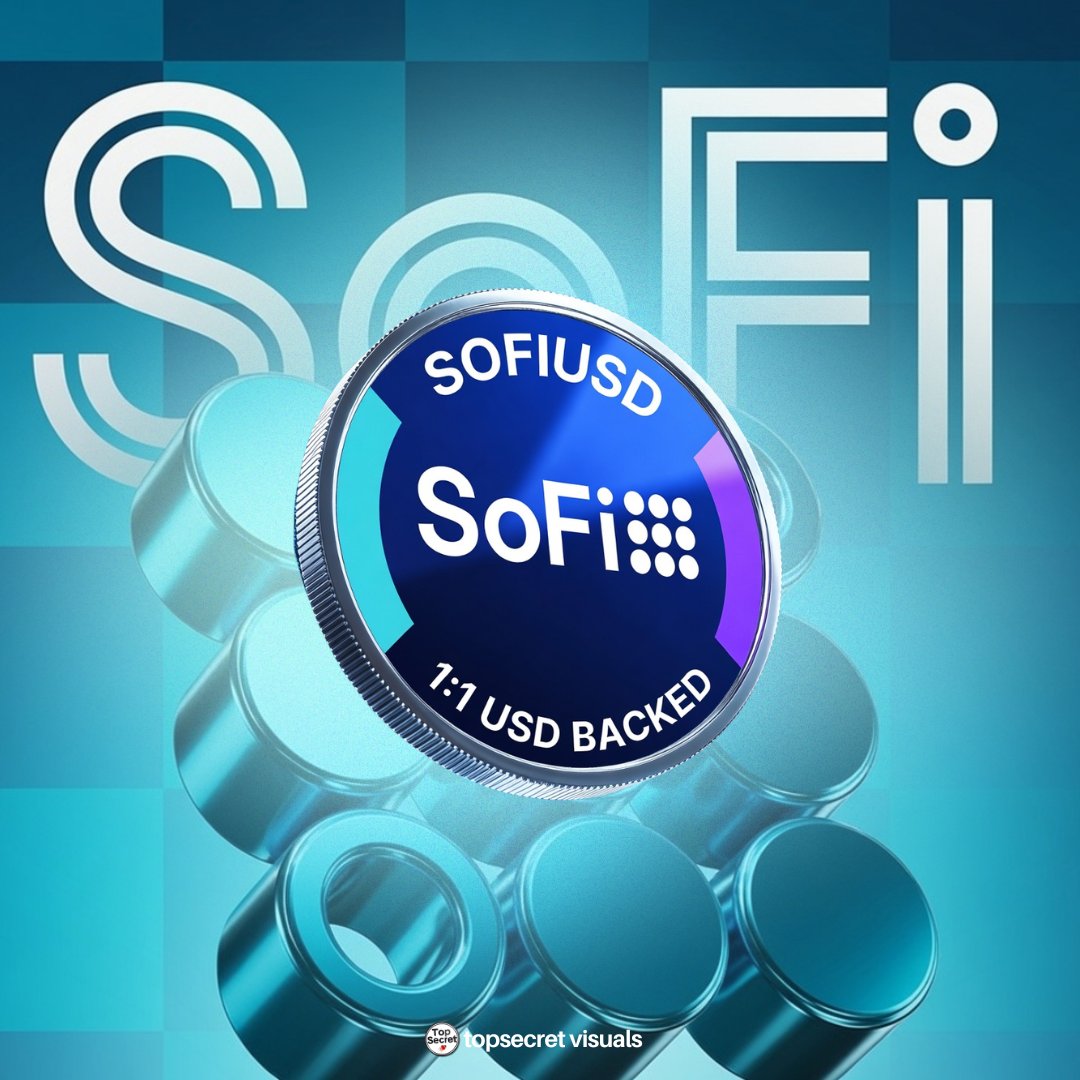
Mastercard and SoFi said they are putting $25 billion of card payments on the blockchain. X posts and later coverage indicate SoFi has started settling card transactions with stablecoin-based rails.
The update extends a theme that surfaced in the market on September 23, when Zacks and PYMNTS both reported that SoFi would use SoFiUSD to settle debit and credit card transactions through Mastercard’s network. It frames stablecoin settlement as a live payments use case, not just a crypto narrative.
For the stocks involved, SOFI is the direct operating party and MA is the network partner. The key market question is how this settlement structure may reshape SoFi’s card processing flow and broaden the use case for stablecoin infrastructure.
No denial from the parties appears in the provided material. Multiple X posts also describe SoFi as the first nationally chartered U.S. bank to go live with stablecoin settlement on Mastercard’s global network.
According to The Wall Street Journal, BlackRock is working with Ondo Finance to turn three investment portfolios into digital tokens that can trade onchain. The portfolios are described as model portfolios holding baskets of ETFs.
The X feed echoed the same development from multiple accounts, with posts saying BlackRock and Ondo have partnered around “intelligent portfolios.” The WSJ report in the site’s news library provides the clearest details and confirms the three-portfolio structure.
For markets, the development centers on BLK and ONDO because BlackRock is the asset manager behind the portfolios and Ondo is the tokenization partner. The immediate significance is the move from conventional portfolio packaging toward blockchain-based distribution.
No denial from either party appears in the supplied material. For now, the WSJ report and the X reposts are the only sources available in this package, so the original coverage remains the reference point.
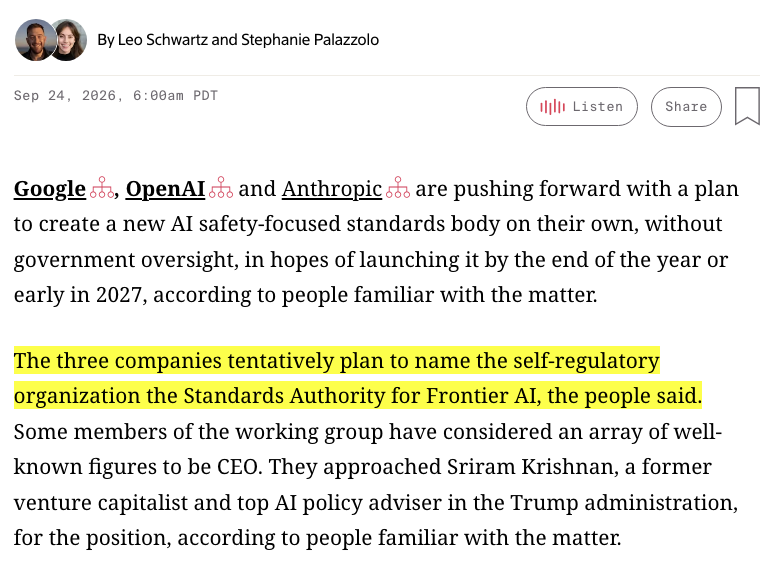
Multiple outlets reported that Google, OpenAI and Anthropic are moving ahead with plans to create an independent AI safety standards organization tentatively called the Standards Authority for Frontier AI. The reports also said the companies have approached Sriram Krishnan about serving as chief executive officer.
The latest coverage builds on earlier reporting from Sept. 15, when CNBC and Bloomberg said OpenAI had been in talks with Anthropic and Google on AI safety collaboration. Those discussions came amid rising industry concern over how to govern frontier models, with Google DeepMind chief Demis Hassabis previously floating the idea of a public-private standards body.
For investors, the main listed-name exposure is Alphabet, while OpenAI and Anthropic remain private companies. The significance of the story is less about an immediate policy change and more about whether the companies can turn recurring safety discussions into a formal industry institution.
The reports describe the effort as still being shaped, not finalized, and there has been no public joint announcement from the three companies confirming the full structure. Any future confirmation of the group’s name, leadership or mandate would be the key incremental development to watch.
사건 전개
2026-07-27게시물 10개 · 작성자 10명
Nvidia unveiled AI deals exceeding $750 billion, including a $500 billion+ partnership with SK Hynix's parent, while analysts questioned startups' reliance on big tech funding and infrastructure.
기업
Meta unveils $1,299 VR glasses, with Muse front and center영어 원문
The new 100-gram device moves power and compute into an external pack and puts voice-first interaction at the core.
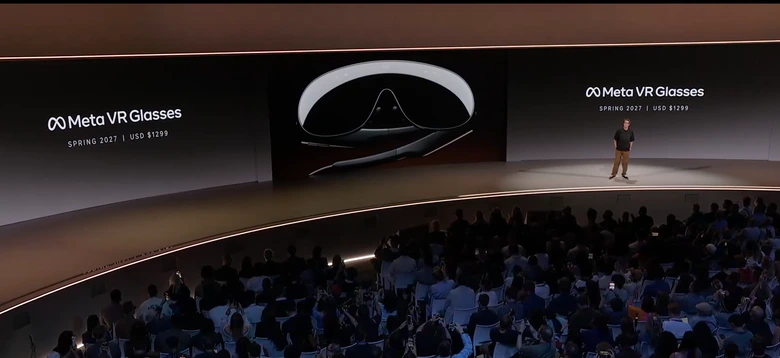
Meta unveiled $1,299 VR glasses that weigh about 100 grams, according to multiple X posts. The device shifts the battery and compute into an external pack and is described as a full VR headset in a glasses-style design with 5K display, full-color passthrough, and hand and eye tracking.
The launch fits into a broader Meta story already reflected in the news database. Business Insider’s recent coverage said Alexandr Wang has been heavily posting about Muse, suggesting Meta has been building attention around its personal agent and the interface layer around it.
For the market, META is the direct stock in focus. The posts also say the product is due to ship in spring 2027 and that Meta expects the hardware to be sold without a loss, which puts the company’s hardware economics back under the spotlight.
There is no separate newsroom item in the database on this launch, so the X signal is the primary source here. The repeated emphasis on voice interaction and turning flat surfaces into a keyboard suggests Meta is framing the product as an interface shift as much as a hardware update.
At Connect, Meta CEO Mark Zuckerberg said Muse has a “novel business model”: the company will offer a large amount of usage for free and later make money by taking a small fee from transactions completed through the assistant. The comments were picked up by multiple outlets today as the newest development around Muse.
The remarks add detail to Meta’s broader push to turn Muse into more than a conversational AI product. Reporting around the launch also said Muse connects to payment, retail, travel and workplace services, suggesting Meta wants the assistant embedded in commerce workflows rather than limited to chat.
For investors, the key ticker is META, because the update points to a potential monetization path tied directly to transactions instead of ads. The partner ecosystem spans names such as Stripe, PayPal, Walmart and Shopify, but Meta has not disclosed any revenue guidance from Muse yet.
Meta did not describe Muse as an ad-supported product; the company’s pitch focused on transaction fees. Separate coverage also discussed smart-glasses distribution, but the main fresh signal today is Meta’s explicit explanation of how Muse could eventually generate revenue.
Microsoft said on Sept. 23 that it will invest more than $10 billion across the United Arab Emirates, Saudi Arabia, Qatar and Kuwait through 2030, with a focus on cloud and AI infrastructure, digital resilience and workforce skills. The company said about $2 billion of that total is new spending.
The announcement came alongside a new Middle East framework unveiled during the U.N. General Assembly. Microsoft also said it plans to invest more than $400 million in subsea and terrestrial connectivity across the region by 2030 to improve network redundancy and keep traffic flowing during disruptions.
Reuters said the plan reflects Microsoft’s continued build-out of infrastructure and operations in the region, while CNA reported the company did not provide a country-by-country breakdown or project list. For investors, the news puts Microsoft, as well as the broader cloud, data-center and submarine-cable supply chains, back in focus.
In its blog post, Microsoft said the framework will initially cover the UAE, Kuwait, Qatar and Saudi Arabia, and will include digital resilience assessments, continuity planning and skills programs. The company framed the initiative as part of its long-term commitment to the region’s AI transformation.
Oracle has reportedly sent a force majeure notice tied to Project Jupiter, its New Mexico data center project linked to the Stargate AI buildout. The move centers on payment timing if the project misses its schedule.
The facility is described in the reports as a 2.45GW campus, with a planned 2028 opening. The delay is being attributed to power and permitting issues.
Shares of ORCL traded lower on the news, while BE was also mentioned in connection with the project’s fuel-cell infrastructure. The reports frame the issue as a contract and financing problem rather than a project exit.
The reporting says Oracle is not trying to walk away from the site, but wants to avoid extra costs if construction slips. No additional response from Oracle or Blue Owl was provided in the supplied materials.
TSMC is reportedly preparing wafer price increases of about 3% to 6% starting in January 2027, according to supply-chain sources cited by multiple outlets. The reports say 2nm and 3nm lines would see larger increases, while mature and specialty nodes would be priced case by case.
The backdrop is continued AI-driven demand, which has tightened capacity across both advanced and mature process lines. Reports say TSMC’s 8-inch utilization is above 100%, sub-45nm capacity is fully loaded, and order visibility has stretched to 2030.
If implemented, the move would raise costs for customers on advanced nodes and could ripple through the foundry, packaging and chip-design supply chain. Investors are watching TSMC as well as peers such as UMC and VisEra, plus AI-related suppliers tied to GPUs, ASICs, PMICs and MCUs.
TSMC declined to comment on pricing, reiterating that its pricing strategy is value-driven and that it will continue working closely with customers to deliver value.
Semafor reported that Paramount executives have discussed asking Elon Musk to become an equity investor in the company by joining a syndicate of investors. The discussion comes as Paramount prepares to combine with Warner Bros. Discovery and looks for fresh funding sources.
The report adds a new financing angle to an already active deal timeline. Our newsroom has previously reported that the Paramount–Warner Bros. Discovery merger moved forward after settlement of antitrust litigation with state attorneys general.
For markets, the message is most relevant to PSKY and WBD because it touches the capital structure around the transaction rather than the operating businesses themselves. The report does not specify any investment size, and it describes the Musk approach as a discussion rather than a completed deal.
No response from Paramount, Musk, or Warner Bros. Discovery was included in the signal. For now, the confirmed fact is limited to reported internal discussions about potential equity backers as the company works through post-merger financing plans.
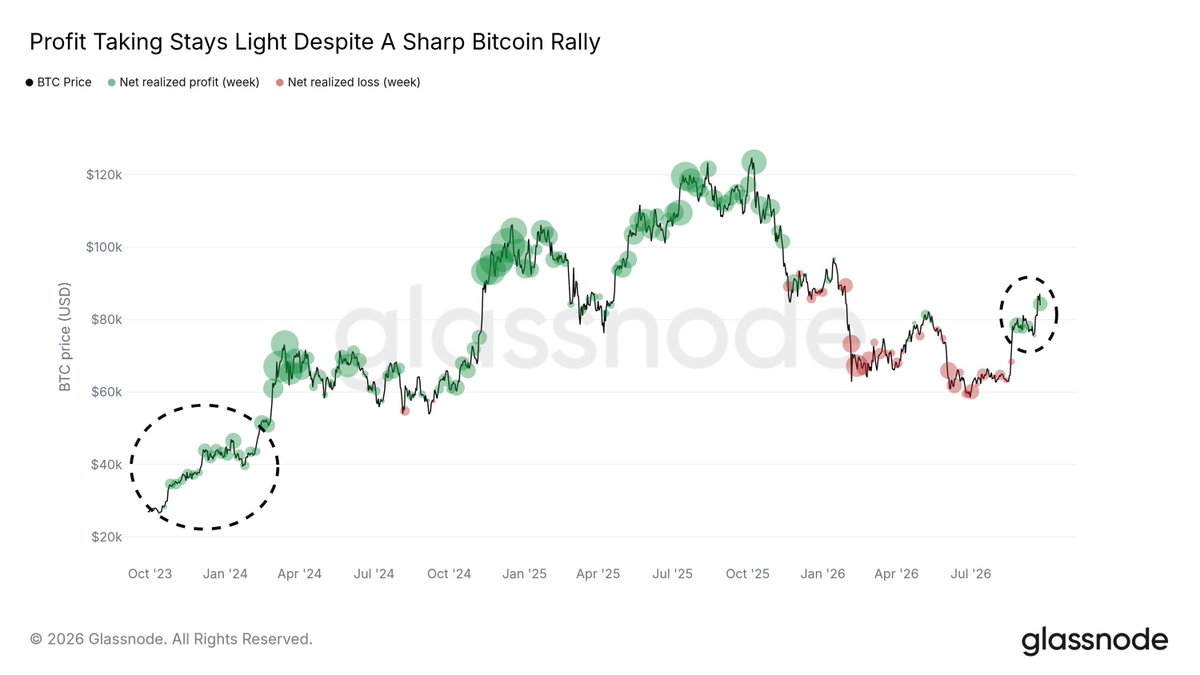
The newest incremental signal in Bitcoin is still flow-driven. Market reports cited by Cointelegraph and Bloomberg point to about $714.7 million of net inflows on Sept. 22 and $346.9 million on Sept. 23, after roughly $999 million the previous day; Glassnode-based coverage says spot Bitcoin ETFs have pulled in about $1.3 billion over the past five trading days.
That flow backdrop matters because Bitcoin is trading back inside Glassnode’s $84,000-$85,000 long-term holder supply cluster, with $77,000 still cited as the main downside reference. Separate reporting says wallets holding 100 to 1,000 BTC added 113,950 BTC since mid-July, lifting combined holdings to about 5.24 million BTC.
The market’s next test is whether ETF demand can keep offsetting higher real yields and the approaching quarterly options expiry worth about $15 billion, according to Bloomberg reporting. Bitcoin briefly slid to $83,500 on Sept. 23, underscoring that inflows alone have not fully neutralized the macro drag.
For crypto-linked assets, the immediate beneficiaries are the spot ETF complex and large-cap Bitcoin exposure, rather than a single altcoin. A separate ZEC rally mentioned in social posts appears to be a different trade and not the main subject of this Bitcoin flow story.
Multiple X posts on Thursday said Binance will list Hyperliquid’s HYPE for spot trading. Coinbureau said spot trading opens at 11:00 UTC, with deposits already live and withdrawals set to begin tomorrow.
The listing comes after a strong run for HYPE this week. Earlier reports said Hyperliquid launched manual lending with $269 million borrowed on day one, while HYPE broke above $90 to a record high; later coverage put the token near $96 and open interest at a record $8.8 billion.
A spot listing on a major exchange typically widens access and can deepen liquidity, which is why traders are treating the move as another sentiment boost for HYPE. The token is the native asset of Hyperliquid, so exchange distribution and trading activity are closely watched by the market.
As of now, the freshest evidence comes from social posts rather than a standalone Binance announcement in the materials provided. If confirmed, the listing would mark another step-up in HYPE’s availability on a major centralized venue.
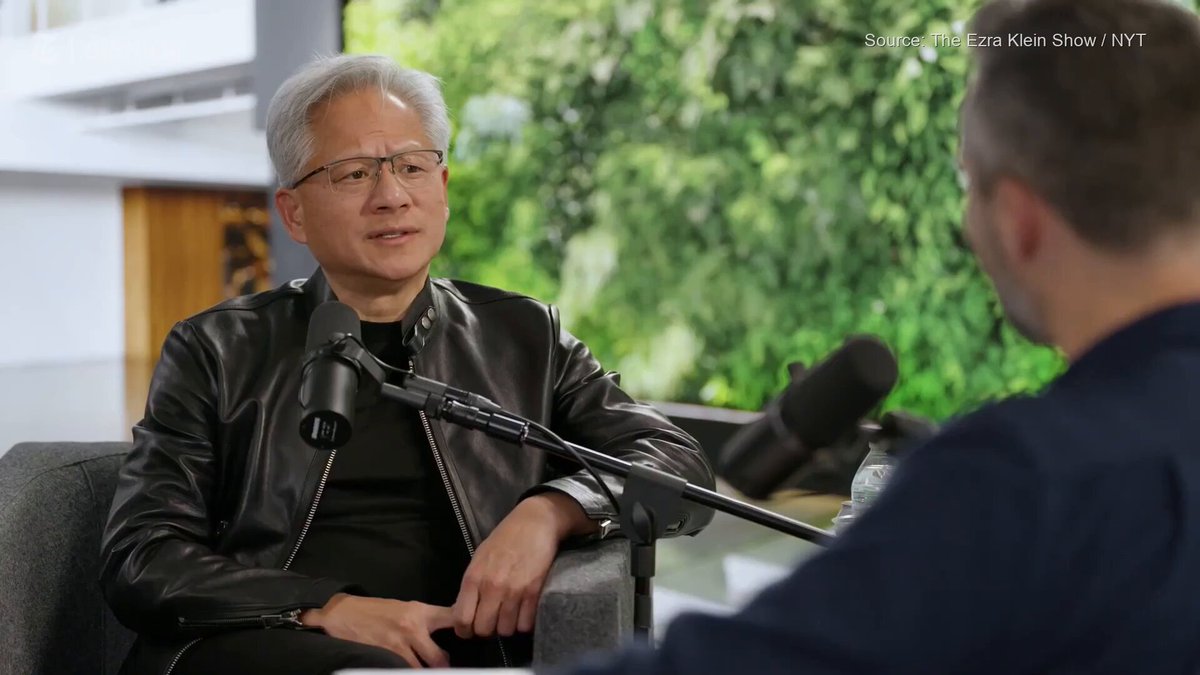
Nvidia CEO Jensen Huang said in a podcast conversation with Ezra Klein that AI labs should not ship products they cannot control. He went further, saying that if experiments truly cannot be contained, the labs should be shut down, while also dismissing apocalyptic AI warnings as unscientific.
The remarks extend a broader line Huang has taken in recent interviews. Reuters reported that he argued AI firms should not receive exemptions from antitrust or liability laws, and CBS News separately reported that he rejected claims of near-term AI extinction as “doomsday narratives.”
For investors, the comments matter because they touch Nvidia, OpenAI and Anthropic at the center of the AI buildout and its regulatory risk. Nvidia remains the key chip supplier behind much of the industry’s model training and deployment, so any shift in safety rules or liability standards can affect how quickly products move from labs to customers.
There has been no fresh public rebuttal from OpenAI or Anthropic to Huang’s latest formulation of the issue. The new information in today’s signal is not a new policy decision, but a sharper public warning from one of AI’s most influential hardware executives about control, containment and liability.
Anthropic said Claude autonomously uncovered a previously uncharacterized enzyme system in bacteriophage DNA, marked by CRISPR-like repeat arrays. The company has named it array-associated reverse transcriptases, or ART.
The finding is the first public result from Anthropic’s newly formed life sciences group and in-house wet lab. Anthropic said the search ran for about 21 hours across hundreds of Claude agents, and the work is being shared alongside a preprint rather than a peer-reviewed paper.
For markets, the significance is mostly strategic: it highlights Anthropic’s push into AI-assisted biology research rather than a validated therapeutic breakthrough. The announcement adds to investor attention on AI tools for scientific discovery, while leaving the practical value of ART unresolved.
Anthropic said it has not determined the system’s function and has not shown that ART can be turned into a gene-editing or medical application. Outside scientists have also cautioned against equating CRISPR-like repeats with the CRISPR technology platform used in biotech.
Starbucks plans to close about 250 North American stores this week, according to multiple reports. The company is also expected to take about $300 million in restructuring charges tied to the move.
The closures are part of a broader effort to reshape the company’s store base. One report said the affected locations represent about 1% of Starbucks’ roughly 18,000-store footprint across the U.S. and Canada.
The news is centered on SBUX, as investors weigh the impact of the closures and the associated restructuring costs. The move signals a push to improve operating efficiency by exiting underperforming cafes.
WSJ-linked reports said the initiative comes under CEO Brian Niccol as Starbucks works to streamline operations and boost profitability.
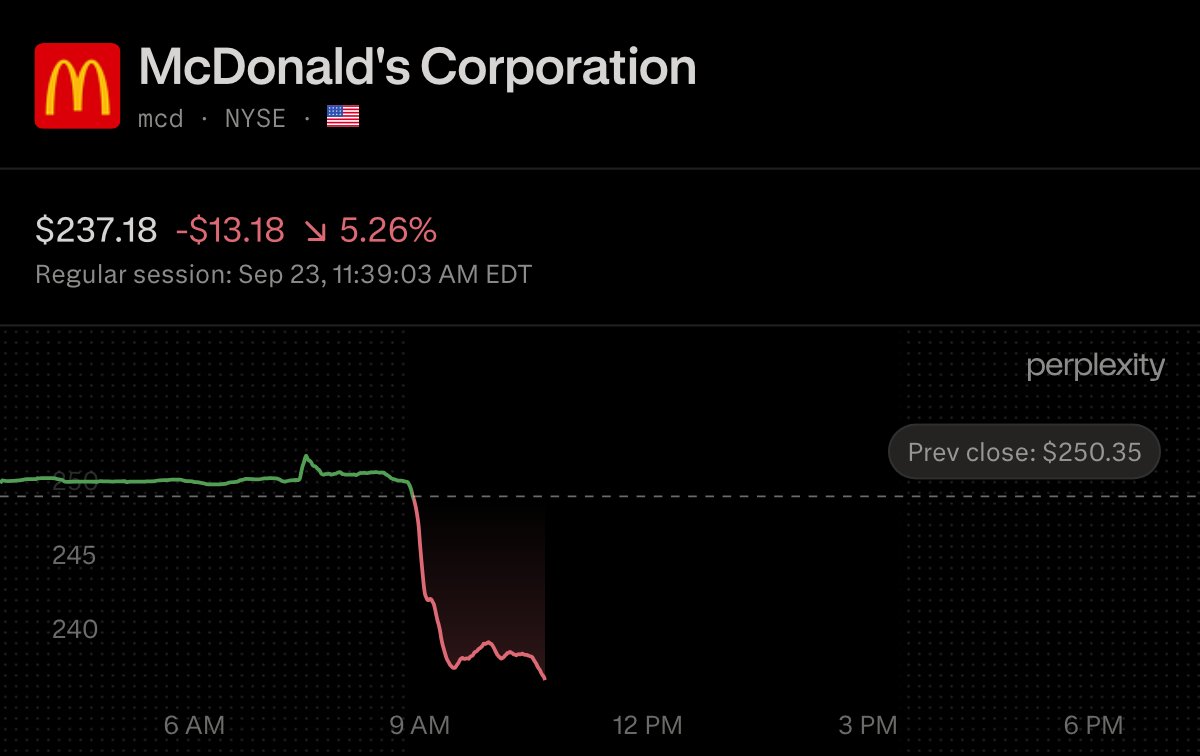
McDonald’s said its U.S. business was “slightly negative” in August and expects it to remain “slightly negative” in the third quarter. Market signals also showed the stock sliding further, with multiple sources describing it as trading back near October 2022 levels.
The key new information is the company’s latest read on the current quarter, not a backward-looking earnings recap. One signal also quoted the CEO from Investor Day as saying Q3 SSS is expected to be slightly negative and industry conditions remain challenging.
On the market side, MCD was described as extending losses and hitting a 52-week low. Zacks reported a closing price of $238.32, down 4.81% from the prior trading day, while The Motley Fool said the shares were trading near a 52-week low.
Taken together, the sources point to softer U.S. traffic and a cautious consumer backdrop. No other company is identified as a direct counterpart in the signal set, so McDonald’s remains the central subject of the report.
Multiple reports citing The Wall Street Journal say Amazon plans to build a new robotics manufacturing plant in Indiana with an investment of more than $100 million, aiming for an opening by 2028. The same reports say Amazon has already deployed more than 1 million robots across more than 300 sites, with robotics helping handle about 75% of customer orders.
The significance is that Amazon appears to be pushing automation further upstream, not just using robots in fulfillment. If the reported Austin facility also goes ahead, Amazon’s robot-manufacturing base would expand from two sites to four, tightening the link between production and deployment.
For investors, the focus is on capital spending discipline and the potential impact on operating efficiency. Robotics and warehouse automation are closely watched because they can shape fulfillment costs, margins and the pace of long-term network investment at AMZN.
At this stage, the main public detail comes from WSJ reporting echoed by other outlets, and Amazon has not added further specifics in the signal material. The investment size, timeline and robot-deployment figures all trace back to the same reporting set.
Qualcomm said it has renewed its global patent license agreement with Apple. Multiple X posts echoed the development, and one wire item said the agreement becomes effective on April 1, 2027.
The deal preserves one of Qualcomm’s most important licensing relationships and keeps Apple’s global patent arrangement in place. No financial terms were disclosed in the materials provided.
For the market, the key tickers remain QCOM and AAPL. The only confirmed change is the renewal itself; there is no disclosed price tag or quantified earnings impact in the source set.
Qualcomm is the named source for the renewal. No separate Apple comment appeared in the provided materials.
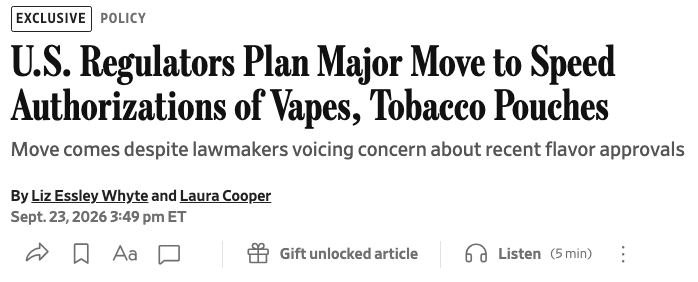
The U.S. Food and Drug Administration is expected to unveil steps in the coming days that could speed authorization of vaping products and nicotine pouches, according to a Wall Street Journal report cited by Reuters. The report says the agency may revisit a 2021 rule governing new tobacco-product applications and could simplify scientific-study requirements.
If adopted, the move would lower a key regulatory hurdle for products such as flavored vapes and nicotine pouches. FDA premarket review has long been the gatekeeper for legal U.S. sales, and changes to that process can affect how quickly compliant products reach retailers.
The news is most relevant for tobacco names such as Altria, as well as peers with exposure to vape and oral nicotine products. Investors will be watching whether the FDA follows the report with a formal proposed rule, how it handles the backlog of applications, and whether enforcement against unauthorized products is tightened at the same time.
Reuters noted it could not immediately verify the report, and the FDA did not immediately respond to a request for comment. An HHS spokesperson said the administration wants to keep nicotine out of kids’ hands, remove counterfeit vaping products, and provide safer alternatives for adults trying to quit smoking.
An FDA advisory committee voted in favor of Grail’s Galleri multi-cancer early detection blood test on Wednesday, marking a meaningful step forward in the company’s regulatory review. The latest reporting from X and the newsroom both point to the same development: committee support for the test’s approval path.
The test is designed to detect multiple cancers before symptoms appear, making it one of the most closely watched products in the multi-cancer screening space. Reuters reported that outside experts backed the test’s safety, but were split on the evidence supporting efficacy.
Investors are focusing on GRAIL (GRAL), since a premarket approval decision would directly shape the product’s commercial prospects. The Wall Street Journal said the FDA is expected to make its final ruling in the coming months, so Wednesday’s vote is an important step rather than the end of the process.
No fresh response or denial from Grail was included in the source material. For now, the key new development is the committee’s supportive vote, not a final approval.
Microsoft President Brad Smith said the company supports independent evaluators for artificial intelligence and argued that AI safety cannot be left to just one or two model companies. He said the industry needs layered safeguards involving model developers, software providers and, potentially, governments.
The remarks came alongside this week’s United Nations-related policy discussions in New York, where AI governance and system shutdown mechanisms have been a central topic for executives and policymakers. Bloomberg also reported that Smith pointed to Microsoft’s safety work with OpenAI through a joint safety board.
For investors, the comments reinforce Microsoft’s positioning in AI governance as well as its broader enterprise AI stack, where safety tooling and control layers can become part of the commercial offering. The discussion also comes as Microsoft continues to push forward with large-scale infrastructure commitments, including a planned 200-megawatt data-center capacity in the UAE.
Microsoft did not dispute the remarks. The public signal is about safety architecture and oversight, not a new product launch or financial guidance update.
Google DeepMind head Demis Kavukcuoglu said the company’s next flagship model, Gemini 4, is already in an early post-training stage and that an initial release is coming soon. Multiple reports also say the full model is expected before year-end.
The update extends Google’s Gemini roadmap after the 3.5 series, which earlier public reporting said focused heavily on coding and agentic workflows. Gemini 4 now appears to be the company’s latest push to narrow the perceived gap with OpenAI and Anthropic.
For Alphabet, the message matters because flagship-model progress can shape investor expectations for Gemini’s role in search, cloud, enterprise AI, and consumer apps. The company has not yet disclosed pricing, model size, or benchmark results, so the immediate significance is the timing and maturity of the release plan, not a product launch itself.
Google has not provided a fuller public rollout date or technical spec sheet yet. Compared with earlier delays around Gemini 3.5 Pro, this new signal is that the next-generation model has moved into a more advanced stage of development and is closer to release.
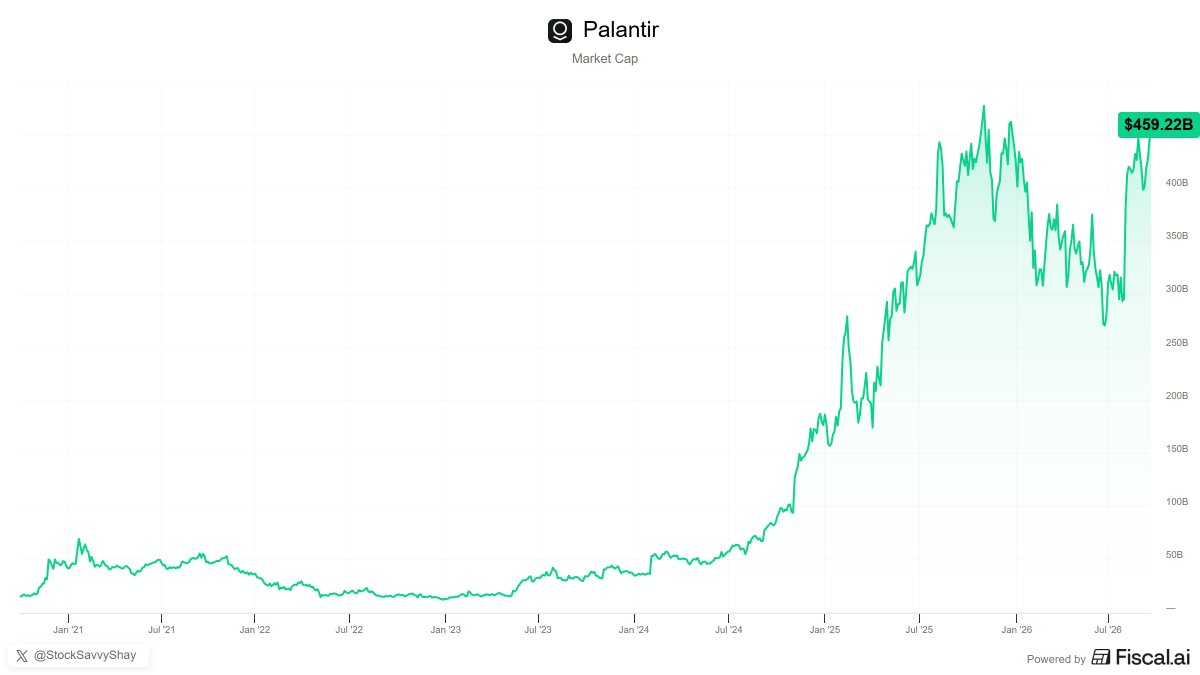
Several X posts say Palantir ($PLTR) is trading strongly, with one noting the stock is now less than 10% away from a $500 billion company and another saying it is breaking out to its highest price of 2026. MarketWatch separately said the stock is heading for its highest close of the year, calling the move a dramatic comeback.
Recent coverage in the site’s news library has focused on broader commentary around Palantir, including whether it could join the Dow Jones and how it fits the AI software investment narrative. Those stories do not add a new company announcement, so the fresh development today is the stock’s market performance.
The posts also mention AVAV, KRMN and KTOS moving alongside PLTR, suggesting a broader defense-related trade was in play during the session. On the provided material, that looks like a market read-through rather than a fundamental update on any of the companies.
There is no new response from Palantir or the other named companies in the supplied sources. Based on the evidence available here, this is best treated as a market recap rather than a company-event story.
Meta’s personal AI agent Muse remains in the spotlight. The X signal says daily active users rose to about 700,000 in 11 days, roughly 10 times the launch level, suggesting momentum has not faded after the debut.
That momentum lines up with recent Wall Street commentary. CNBC reported that JPMorgan sees Muse as having the potential to become one of the most widely used consumer AI applications since ChatGPT, while also noting early integration across thousands of apps; cnbc.com
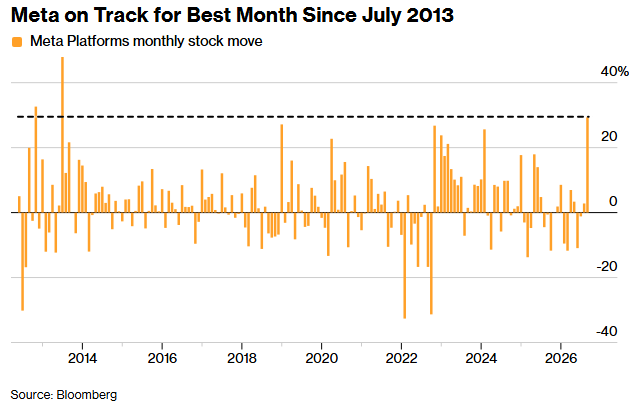
Meta’s stock has been one of September’s strongest large-cap moves, with media reports putting the monthly gain above 30%. The X feed also showed META opening more than 2% higher, keeping trading interest centered on whether Muse can turn user adoption into a durable revenue story.
The broader backdrop is a fast-growing debate over consumer AI agents and platform control. CNBC reported that Amazon asked Meta to remove Amazon from Muse’s shopping experience, underscoring friction around third-party agent access even as the product gains traction; cnbc.com
사건 전개
2026-07-30게시물 4개 · 작성자 4명
Meta's Q2 earnings call highlighted AI monetization paths including WhatsApp business messaging, subscriptions, and AI sales agents.
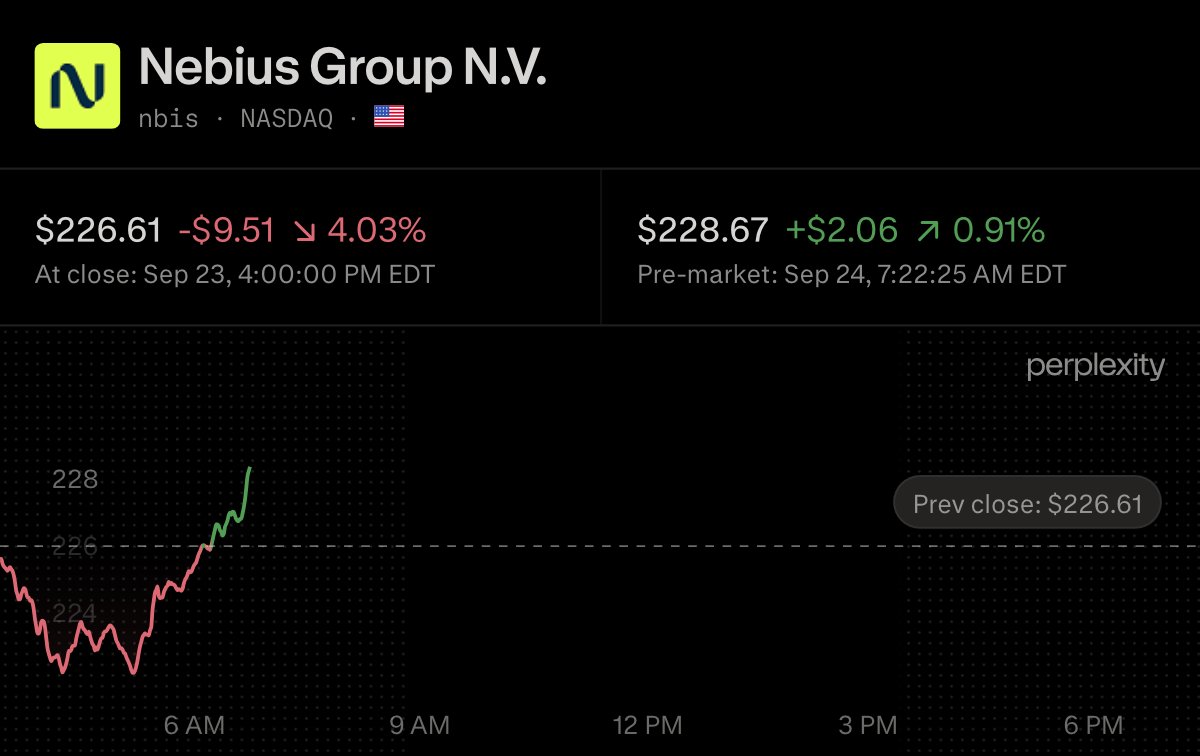
BNP Paribas Exane upgraded Nebius Group (NASDAQ: NBIS) to Outperform from Neutral and raised its price target to $399 from $260, according to reports circulating on Thursday. The call adds a fresh bullish catalyst for the AI infrastructure provider.
The upgrade follows a recent run of strong operating data and pricing actions at Nebius. The company reported quarterly revenue up 454% year over year to $582.3 million, while recent coverage also said it has raised GPU prices and is benefiting from large customer prepayments.
Market attention is also on the gap between individual broker targets and the broader consensus view. MarketBeat cited an average target of $241.80, while a separate FactSet summary put the median target at 288 yuan; BNP Paribas Exane’s $399 target sits well above both.
Nebius has not issued a fresh public response to the upgrade. For now, investors are watching whether stronger AI demand, higher pricing, and capital prepayments can keep supporting the company’s rapid expansion.
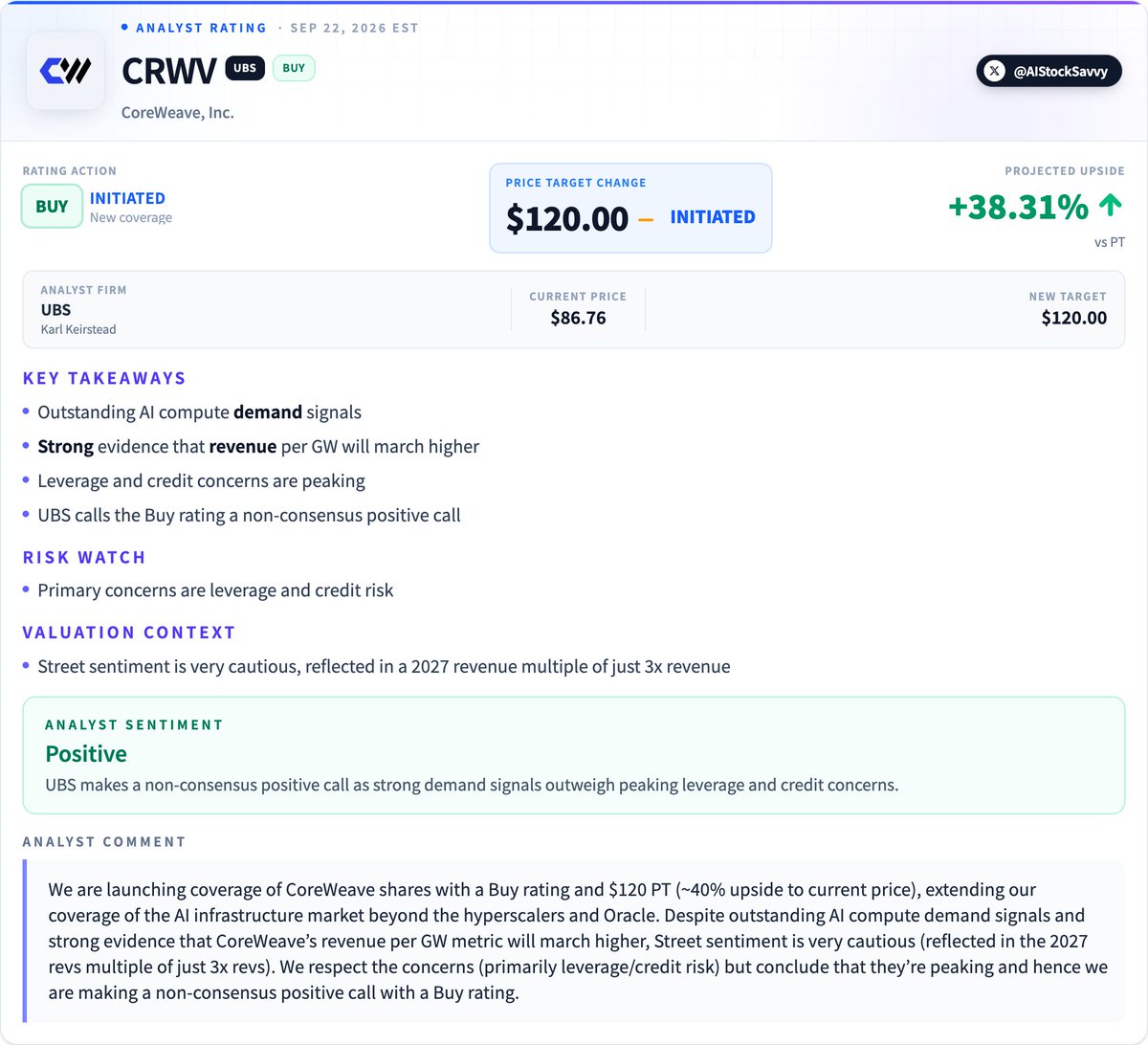
UBS has initiated coverage of CoreWeave (CRWV) with a Buy rating and a $120 price target. In coverage cited by Benzinga, the analyst said AI compute demand remains durable and revenue per GW is rising.
The new note lands amid a broader debate over CoreWeave’s leverage and credit profile. Multiple reports in the news flow frame the move as a reassessment of whether debt concerns have already peaked.
The stock is the clear focus of the market reaction, with commentary from Barron’s and MarketWatch centered on upside potential if demand for AI infrastructure holds up. The name in question is CoreWeave, not the broader AI trade.
Separately, CoreWeave said on Sept. 23 that it earned SemiAnalysis’ Platinum ClusterMAX rating for the third consecutive time. That backdrop adds another data point to the company’s positioning in the AI compute market.
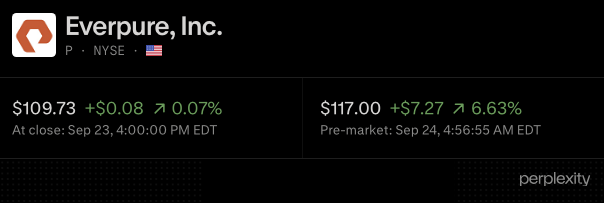
Everpure updated its long-term outlook at its 2026 analyst day, saying fiscal 2028 revenue should reach $7.0 billion to $7.3 billion. The range implies 39% to 45% year-over-year growth and comes in well above the $6.19 billion analyst estimate cited in the market feed.
The guidance extends a broader strategic shift toward AI infrastructure, modern data software and hyperscale deployments. A prior company report in the news desk also said those newer growth areas could account for about 20% of revenue by FY30.
Shares of Everpure were the main focus of the market reaction in the X posts, which said the stock jumped sharply intraday and traded higher premarket. Morgan Stanley analyst Erik Woodring reportedly kept an overweight rating and a $137 price target.
The new information is the revenue guide itself and the company’s framing of where future growth may come from. On its own, it does not establish a broader industry trend; it only shows that Everpure’s outlook is now materially above consensus.
TSMC is expanding its AI chip design partnerships with Synopsys and Cadence, according to multiple posts surfaced on X today. The new signals point to a broader collaboration around advanced AI and HPC chip design.
The published company materials tied to the same event show the scope of the effort: certified TSMC A14 EDA flows, AI-assisted engineering workflows, CoWoS support for multi-die designs, and unified multiphysics signoff flows. Cadence also said its UALink IP is silicon-proven on TSMC advanced nodes.
For the market, the main names in focus are SNPS, CDNS and TSM. The immediate significance is strategic rather than financial: the update reinforces how tightly the AI chip ecosystem is being built around TSMC’s advanced processes.
This is a company-collaboration story, not a reported earnings or guidance event. The X posts and the underlying press releases mainly confirm that the partnership scope has broadened across design automation, IP and advanced packaging.
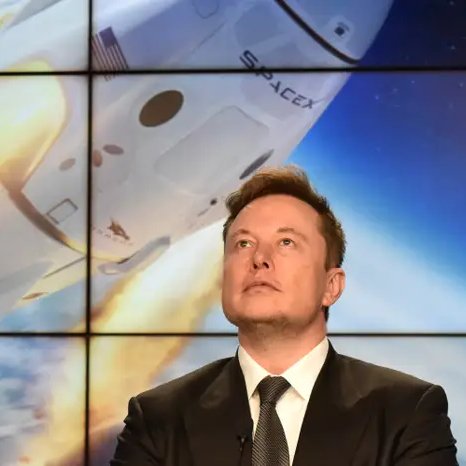
Breaking Defense reported that SpaceX has signed a contractual arrangement with the U.S. Space Force’s Joint Commercial Operations Cell to receive the Pentagon’s most detailed classified catalog of objects in orbit. In return, SpaceX is supplying data from its Stargaze star-tracking cameras. A Space Force official cited by the outlet said the data is restricted to internal use.
The backdrop is SpaceX’s growing in-house space-surveillance network. At the AMOS conference, SpaceX senior director Jon Herman said Stargaze uses about 30,000 star-tracking cameras on Starlink satellites, and that the company’s roughly 11,000 Starlink and Starshield satellites make about 20,000 maneuvers a day, including roughly 1,000 collision-avoidance burns.
For the market, the pact underscores SpaceX’s edge in orbital safety and space-domain awareness, a capability set that matters for both its own fleet and any external conjunction services it offers. The report also raised questions about whether highly classified data, even under an internal-use restriction, could indirectly improve products SpaceX provides to commercial operators.
SpaceX and the Space Force did not publicly comment on the arrangement. The deal’s start date and the exact limits on data usage remain unclear, and competitors in the space-tracking industry are watching for any sign that the new access changes how commercial collision-monitoring services are priced or delivered.
Geely Automobile Group introduced a new AI-powered charging system on Sept. 23, saying real-world tests on the Lynk & Co 10 and Zeekr 001 took just 4 minutes 30 seconds to rise from 10% to 70% charge, and 8 minutes 40 seconds to reach 97%.
At the center of the rollout is Xingrui PowerMind, an energy AI model paired with Geely’s fifth-generation charging station, which the company says can deliver up to 2,250 kW of peak power. Geely also said the system can forecast battery temperature up to 30 seconds ahead and keep average charging temperature below 55°C.
The announcement adds pressure to the race for ultra-fast EV charging in China, where BYD has already promoted a 1,500-kW flash-charging system. Geely’s figures put the company in direct comparison with its domestic rival and may draw more attention to charging infrastructure as a competitive front in the EV market.
Geely further said its pulse-restoration technology could extend battery cycle life by up to 20%, while its next-generation Ultra Short Blade Battery raises peak charging rate to 6C. The claims were reported by Geely and were echoed by multiple outlets, including Bloomberg and The Wall Street Journal-based coverage cited in market reports.
Darden Restaurants reported fiscal first-quarter results for the period ended August 30, 2026, with revenue of $3.2 billion and adjusted EPS of $2.05. Both figures came in slightly below Wall Street expectations, and the company reaffirmed its full-year adjusted EPS outlook of $11.10 to $11.35.
The update matters because Olive Garden and LongHorn Steakhouse remain the company’s key operating engines, and the quarter suggests profit pressure is still being shaped by softer sales momentum and costs. WSJ reported that profit slipped on higher expenses.
Shares fell after the report, with CNBC highlighting slower growth at Olive Garden. Zacks also flagged misses on both earnings and revenue, keeping investor focus on same-store sales trends and expense control.
Darden’s release confirmed the quarter’s results and declared a quarterly dividend, while reiterating its fiscal 2027 guidance. For now, the main debate centers on whether top-line growth can reaccelerate enough to offset margin pressure.
Disney is raising prices on several of its streaming subscriptions, with some users said to be notified as early as Wednesday. The Wall Street Journal said standalone Disney+ and Hulu plans will now cost $2.50 more a month, reaching $21.49.
The move extends a string of pricing actions across streaming. Our news desk also reported on Sept. 23 that Disney boosted prices on several streaming subscriptions, while Reuters said Bloomberg reported the increase on Disney+ and Hulu plans.
For investors, the focus is on Disney’s streaming monetization and the revenue mix of Disney+ and Hulu. DIS is the core ticker tied to the event, and price increases across the sector remain the broader backdrop.
No fresh company response was included in the materials provided. The new signal is the latest report that users are being notified of the higher prices.
Viking Therapeutics has priced its stock and convertible senior notes offering at a combined $500 million. On X, early posts cited a $400 million plan and later a split between $200 million of stock and $200 million of notes, but the latest filing update points to an upsized deal.
The company first disclosed proposed common-stock and convertible-note offerings on Sept. 23, according to the news archive, and followed up on Sept. 24 with the pricing announcement. That makes this a follow-through financing update rather than a fresh corporate event.
The ticker referenced in the social feed is VKTX, and the premarket move cited there was down 13.8%. For a clinical-stage biotech, the key market focus is the size and execution of the financing rather than a broader sector read-through.
The X thread also names J.P. Morgan and Morgan Stanley as the joint bookrunners. The company’s own press-release trail is the most reliable source in the material, while the earlier size references on X should be treated as pre-pricing estimates.
President Donald Trump disclosed in a new ethics filing that his accounts bought Strategy shares in July, including a purchase worth between $50,001 and $100,000. The filing also shows an earlier July 24 Strategy buy of $1,001 to $15,000, alongside a Coinbase purchase and sales of CleanSpark and MARA Holdings.
The disclosure is a follow-up to earlier reporting on Trump’s broader crypto-linked trading activity. Strategy is the largest publicly traded corporate Bitcoin holder, with about 846,000 BTC, according to the company’s latest reported holdings cited in coverage.
For markets, the filing keeps MSTR, COIN and bitcoin miner stocks in the spotlight because Trump’s trading overlaps with a White House that has been advancing crypto policy through regulators and Congress. The White House has said the president’s stock-and-bond portfolio is independently managed by third-party institutions.
The filing does not reveal exact share counts, execution prices or any remaining position. That limits what can be inferred about portfolio size, but it confirms another round of crypto-related activity in Trump’s July disclosure window.
Analysts estimated over 70% of Microsoft, Google, and Amazon's AI revenues come from Anthropic and OpenAI; Morgan Stanley planned to offload $15 billion in debt tied to a Google-backed Anthropic data center.
2026-09-14게시물 21개 · 작성자 18명
King Charles III convened leaders from Nvidia, Google, DeepMind, OpenAI, and Anthropic to discuss slowing AI development; commentators questioned Anthropic's CEO motives.
2026-09-19게시물 19개 · 작성자 17명
Anthropic, OpenAI, SpaceX, and Google were sued for alleged AI pacing agreements violating the Sherman Act; Trump planned to bring top AI executives to a state dinner with Xi Jinping.
2026-09-23게시물 12개 · 작성자 11명
The full executive list for the Trump-Xi state dinner was released, including Jensen Huang, Sam Altman, Sundar Pichai, Satya Nadella, and Elon Musk; Anthropic launched a cheaper Claude Opus 5.5.
2026-09-24게시물 12개 · 작성자 9명
Google, OpenAI, and Anthropic planned an independent AI safety standards body; Google said Gemini 4 is nearing release to close the gap with Anthropic and OpenAI.