Trump denies fresh Iran sanctions-relief reports as talks continue
U.S. and Iranian negotiators are still testing terms on sanctions and nuclear concessions, but Trump rejected claims that Washington had already offered relief.
Multiple outlets cited a U.S. official saying Trump was prepared to ease sanctions and release frozen Iranian assets if Tehran made concrete progress on its nuclear program. Trump later denied that the United States had offered sanctions relief or access to frozen funds to Iran.
The latest comments extend a broader standoff over Iran’s nuclear file, sanctions pressure and access to the Strait of Hormuz. Earlier reports said Tehran had floated a seven-day plan that would reopen the waterway and resume talks if Washington lifted its naval blockade, eased oil sanctions and released roughly $12 billion in frozen assets.
Energy markets reacted quickly, with the signal set indicating crude fell about 3.6% to 4% within 30 minutes of the headlines. For traders, the immediate question is whether the latest round of mediation can narrow the gap between sanctions relief and nuclear concessions, or whether the gap remains too wide.
Iranian Foreign Minister Abbas Araghchi said Tehran was still waiting for a definitive response through mediators. Trump, by denying the relief reports while keeping diplomacy open, left the talks active but unresolved.
US equities, Treasuries and gold all sold off in the same session as traders repriced the market around higher oil and higher rates. Intraday reports showed the S&P 500 down about 0.8%, the Nasdaq 100 down roughly 1.1% to 1.6%, the 10-year Treasury yield topping 5.2%, and Brent crude holding near $105 a barrel.marketwatch
The move was widely tied to the lack of progress in easing the US-Iran standoff. As crude stayed elevated, traders revived inflation concerns and pushed up bets on tighter-for-longer policy, reversing the brief relief-trade logic seen when oil risk premium had earlier come off.fxempire.com
Rate-sensitive growth stocks were hit hardest, with the Nasdaq 100 leading declines and chip shares under pressure. When oil lifts inflation expectations, it also weighs on the case for near-term easing, which is why long-duration assets such as tech and gold were both weaker.
For now, the market is still trading the same cross-asset story: no clear de-escalation, firmer oil, higher yields. The next big test is whether crude can stay pinned near current levels or whether Treasury yields keep pushing into fresh multi-year highs.financialjuice
Multiple outlets citing people briefed on the talks said Iranian officials are privately pessimistic about reaching an agreement with Washington before the U.S. midterm elections in November. The reports also said Foreign Minister Abbas Araghchi stayed in the U.S. after meeting with envoys tied to President Trump’s team, continuing discussions through intermediaries.
The latest round of diplomacy has centered on reopening the Strait of Hormuz, Iran’s nuclear program and possible sanctions relief. White House officials said no deal will be reached unless the nuclear issue sees concrete progress, while Trump has already dismissed Iran’s Hormuz proposal as unacceptable.
For markets, the talks matter most to crude and energy-linked assets, including the oil ETF $USO, because the Strait of Hormuz is a critical shipping lane for global oil flows. Ongoing deadlock can keep freight and energy risk premiums elevated.
Iranian state-linked reporting also pointed to additional meetings being discussed, though without direct U.S. attendance. The broader picture remains one of continued contact, but with limited evidence that the two sides are close to terms they can both accept.
AMD said on Sept. 28 that it has entered into a definitive agreement to acquire AI research lab World Labs in an all-stock transaction valued at about $8.2 billion. After closing, World Labs’ team will join AMD, and co-founder Fei-Fei Li will become executive vice president and chief scientist, reporting to CEO Lisa Su.
Founded in 2024, World Labs develops spatial-intelligence models that can generate, reconstruct and simulate interactive 3D environments from text, images and video, while also working on robotic learning and simulation. AMD said the deal will improve its understanding of emerging AI workloads and help shape its hardware, software and systems roadmaps.
The move highlights AMD’s effort to compete not only on AI accelerators, but also on the model layer that increasingly defines future compute demand. For AMD and Nvidia investors, the transaction underscores the growing importance of physical AI, robotics and simulation in next-generation infrastructure.
World Labs said the two companies had already been working together on model training and inference optimization using AMD GPUs before deciding to combine forces. Both companies said the transaction is expected to close by the end of 2026, subject to regulatory approvals and customary closing conditions.
Anthropic has filed for a U.S. IPO and, in its prospectus, warned that its AI technology could pose “catastrophic or existential risks to humanity,” including a scenario in which humanity could lose control over civilization entirely. Multiple reports said the filing spends substantial space on risk disclosures.
The warning fits a broader pattern at Anthropic, whose executives and safety researchers have repeatedly discussed the possibility that more capable AI systems could become difficult to control. The IPO document turns that debate into a formal disclosure for prospective investors.
For the market, the filing highlights the tension between AI growth narratives and governance concerns. There is no direct listed equity tied to Anthropic in the candidate set, but the disclosure is relevant to the wider AI supply chain and risk appetite across the sector.
The prospectus reportedly dedicates roughly 80 of 261 pages to risk factors, a sign that safety and governance issues are central to the offering story. Further details on valuation, size and timing have not yet been fully disclosed in the reports cited so far.
SpaceX’s Starship completed Flight 14 with a controlled splashdown in the Pacific Ocean. Multiple X posts say the vehicle came down on target, and SpaceX also published a new blog post on the flight.
The station news feed says the mission reached orbit for the first time and deployed 26 upgraded Starlink satellites. X signal text also notes that one Raptor vacuum engine shut down early on ascent, while Starship kept to its planned trajectory by using the remaining engines longer than expected.
For the stock story, the event centers on SpaceX and its ticker SPCX. Clear Street reiterated a Buy rating and a $217 price target, arguing that Starship capacity gains support Starlink growth despite the engine issue and the remaining splashdown milestone.
The reporting is not fully uniform on every detail, but it aligns on the core takeaway: Flight 14 is complete and now provides a new set of test results for Starship and Starlink investors to assess.
The Federal Aviation Administration said it will delay certification of Boeing’s 737 MAX 10 while it reviews a newly discovered software issue. The problem could interfere with the automated navigation system in certain missed-approach situations.
The latest update matches reporting in the site news library from Reuters and CNBC, both describing the FAA’s decision to hold up approval of the MAX 10. Reuters quoted FAA Administrator Bryan Bedford as saying the software problem will delay certification of the largest variant.
In market signals, Boeing shares were lower on the news. Polymarket cited a 6.9% drop, while WallStEngine said BA was down 6%.
The signals also said Southwest and United reportedly told Boeing they do not want deliveries with the flawed software. Bedford said he was not sure how long the delay would last, and that pilots remain in control during go-arounds.
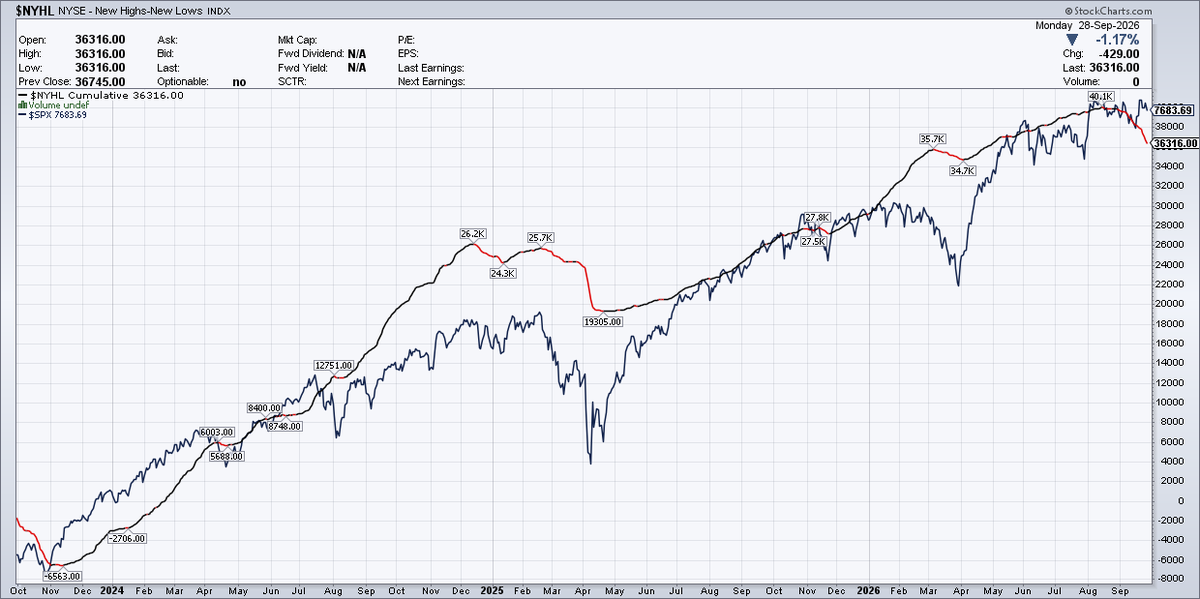
Several X posts on Tuesday flagged a further deterioration in S&P 500 breadth, including one claiming that 56% of index constituents are now trading below their 200-day moving average. Other posts said the S&P 500 remains near a 52-week high even as many member stocks sit far below their own peaks.
The broader backdrop is a market increasingly described as index-led rather than participation-led. Axios cited technical analyst Jason Goepfert on the rare combination of an index near record territory while new lows outnumber new highs, and Goldman Sachs recently said S&P 500 breadth has fallen to levels last seen around the dot-com era.
For trading and portfolio construction, the split matters because it highlights concentration risk: a handful of large-cap names can keep the benchmark elevated while equal-weight and small-cap gauges lag. Recent coverage also noted weaker performance in the S&P 500 Equal Weight ETF, underscoring that the problem is the market’s internal balance rather than the headline index level alone.
The signal remains a breadth warning, not a directional call. At this stage, the public evidence points to a narrower advance, with the main question being how many stocks are actually participating in it.
Michael Burry said he now believes the AI bubble may burst sooner than he first thought. The signal also says he has shifted part of his bearish exposure from common-stock shorts to put options for a shorter time horizon and more cost-effective leverage.
The key new development is the timing shift in Burry’s view. Recent coverage in the newsroom has otherwise pointed to strong AI-driven demand for memory chips, including Micron’s DRAM outlook and traders positioning for a sizable post-earnings move.
Marketwise, the names cited include Micron, Nebius, Palantir, SOXX and CAT, with Micron the most directly referenced stock. Because those tickers sit close to the AI and semiconductor trade, Burry’s latest comments may be read as another bearish signal for the group.
No company response is included in the source material. The tweet-based signal should still be treated as needing confirmation from filings or direct commentary.
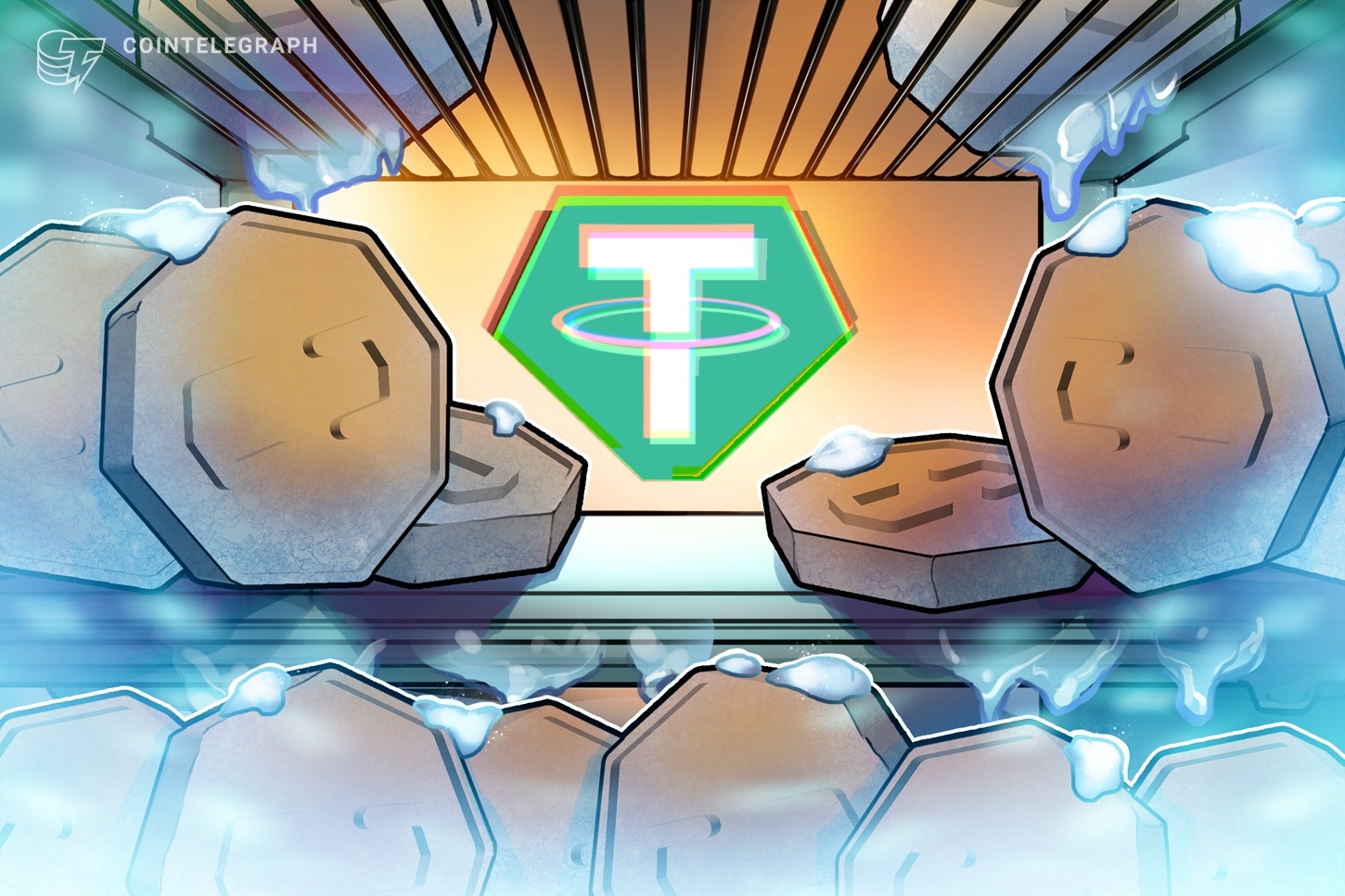
Tether says it helped freeze nearly $550 million in Iran-linked USDT
A Senate report says USDT is central to Iran’s shadow banking network, while Tether says it cooperated with U.S. and international authorities on freezes
A U.S. Senate investigative report released on Sept. 28 says Tether’s USDT has become a major tool in Iran’s shadow banking network. The report examined 846 wallets sanctioned or targeted for seizure over ties to Iran and its regional proxies, and said 84% transacted exclusively or nearly exclusively in USDT.
Tether pushed back by saying it has supported about $550 million in Iran-linked USDT freezes during 2026. In its statement, the company said it works in coordination with U.S. and international law enforcement and can act when authorities provide credible information.
The dispute matters because USDT is the largest dollar-backed stablecoin and a core source of liquidity across crypto markets. Any escalation in sanctions or compliance scrutiny could affect how traders and regulators view the stablecoin sector more broadly.
Blumenthal, who leads the Senate Permanent Subcommittee on Investigations on the Democratic side, called on the Treasury Department and the Justice Department to examine Tether’s anti-money-laundering and sanctions controls. Tether said it has already frozen more than 22 million USDT in over 40 cases referred by Israel’s NBCTF, underscoring its claim that it cooperates with law enforcement.
Strategy’s board approved a proposal on Sept. 24 to move STRC, STRF, STRK and STRD to a daily dividend record-date schedule, while keeping annual dividend amounts unchanged. The company filed a preliminary proxy with the SEC on Sept. 25 and set a special shareholder meeting for Oct. 28.
Under the proposed structure, every calendar day would become a record date and payment would follow on the next business day. Strategy’s materials say the change is designed to reduce the gap between entitlement and payment and, for STRC, help support trading near par.
If shareholders approve the plan, STRC would be first to switch, with an initial daily record date expected on Nov. 1 and the first payment on Nov. 2. STRF, STRK and STRD would follow in January 2027.
The proposal lands against a more volatile rates backdrop. Reuters said 2-year U.S. Treasury yields were up about 60 basis points in September, while AP reported the 10-year yield briefly reached 5.27%, levels that have weighed on equities and boosted attention on income products like Strategy’s preferred shares.
How this story unfolded
2026-08-014 posts · 4 authors
Company
Cboe, S&P Dow Jones explore tokenized options
X posts say the two firms are discussing a tokenized version of options, adding a new product angle to a long-running licensing relationship.
Multiple X posts today say Cboe and S&P Dow Jones Indices are exploring tokenized options contracts. This is the new development in today’s signal; it goes beyond the already-known licensing relationship between the two firms.
The partnership itself is longstanding. Cboe said in 2013 that it had extended its licensing deal with S&P Dow Jones Indices through 2033, and a 2022 SEC filing shows the agreement was later amended again, including provisions around the use of SPX and XSP as product tickers.cboe.com sec.gov
For the market, any move toward tokenized options would be watched most closely through Cboe’s index-options franchise, especially its flagship S&P 500 options product. But the public signal today only says the firms are exploring the idea; there is no official launch date, size estimate, or contract detail yet.
At this stage, the verifiable facts are the long-term licensing relationship and the continued SPX/XSP rights disclosed in filings. The tokenized-options angle remains a reported exploration, not a confirmed product announcement.
Citigroup and Coinbase Global are broadening their partnership to let Citi's institutional clients accept stablecoin payments. The move pairs Coinbase's payment rails and blockchain infrastructure with Citi's settlement layer.
The latest step builds on a wider push by large financial firms into new forms of digital money. The company materials cited in the feed indicate the collaboration also extends to virtual accounts and the bridge between digital and fiat payments.
The announcement matters for Citigroup (C) and Coinbase (COIN) because it ties a major Wall Street bank more closely to stablecoin-based commerce. It points to corporate payment use cases rather than a consumer crypto product.
Laura Shin cited the firms as saying the U.S. comes first, while neither company gave a launch date. No further implementation details were disclosed in the provided materials.
Goldman Sachs has made its Financial Square Treasury Instruments Fund, FTIXX, available to eligible U.S. institutional crypto firms through Lynq, a settlement network built on a private permissioned Avalanche Layer 1. The offering is being distributed as the existing traditional fund rather than as a tokenized product.
CoinDesk said the fund is roughly $100 billion, while Unchained cited Goldman’s latest monthly SEC filing showing about $105 billion in net assets at the end of August. Unchained also reported that Lynq has more than 30 institutional clients and over $89 million in assets on the network.
The move gives trading desks a way to park idle cash between trades in a Treasury fund and earn yield until they need liquidity again. Lynq said this is its first outside fund, and transactions are handled by SEC-registered broker-dealer tZERO Securities.
The setup keeps FTIXX inside its existing regulatory structure, unlike tokenized money funds from rivals such as BlackRock and Franklin Templeton. The access is limited to qualified U.S. clients, according to the reports.
NVIDIA on Sept. 28 unveiled its Open Agent Safety Platform, and CEO Jensen Huang used a CNBC appearance the same day to argue that AI can transform every industry only if people trust it is safe to use. He described rogue-agent risks as an engineering problem that can be solved, while positioning OpenShell and Sentry as new controls for agent runtimes and infrastructure.
The backdrop is a broader industry fight over AI-agent safety, model alignment and where the real enforcement layer should live. NVIDIA is trying to move that enforcement outside the model itself, giving enterprises hardware-adjacent tools for permissions, isolation, auditing and intervention.
For markets, the message is mainly about NVDA, with ARM and MSFT also appearing in the company’s ecosystem narrative. NVIDIA said more than 100 organizations are supporting the platform, including Microsoft, JPMorganChase, Anthropic, Palantir, Hugging Face and Salesforce, suggesting the safety stack is being framed as a broader industry standard rather than a one-off product demo.
Beyond NVIDIA’s own release, CyberScoop reported Huang calling AI safety a solvable technical problem, while The Washington Post said he favors company-led safety efforts over broader mandates. The key new development today is not the platform’s original debut, but Huang’s fresh public push to elevate safety as a core part of NVIDIA’s AI story.
Meta said today it is launching Muse for Small Business, describing Muse as one of the company’s most important products for the era of personal superintelligence. The move adds a small-business use case to the AI assistant’s positioning.
A Wall Street Journal report in the past 24 hours said a reviewer found Meta’s Muse AI agent “helpful and scary at the same time.” That earlier coverage framed the product around capability, data access and trust.
For investors, the update keeps META centered in the enterprise-AI conversation. The social-media company is now signaling a broader commercial path for Muse, alongside its consumer-facing rollout.
The news signal’s incremental value is the explicit small-business framing. The materials also mention a broader enterprise-AI business, but that point is presented as a media-reported claim and not as a separate confirmed company statement in the supplied sources.
Tesla has moved its Roadster event from October 1 to October 15, saying severe weather is forecast and that the demo can only be held outdoors. The company posted the update on X, turning a scheduled reveal into a two-week postponement.
The Roadster has been a long-delayed project since Tesla first showed the next-generation concept in 2017. This event had been expected to bring a fresh look at pricing, specifications and production timing for the car.
For Tesla (TSLA), the significance is less about the weather itself than about execution risk around a high-profile product demo. Reports also say the showcase may involve SpaceX-style cold-gas thrusters, making the event a closely watched test of Tesla's product narrative.
Tesla said additional details will follow, but it has not yet announced a new start time for the rescheduled event.
How this story unfolded
2026-08-1424 posts · 22 authors
Tesla stock rose over 3% on reports of an imminent 'flying' Roadster unveiling.
2026-09-13
Company
RTX lands a $20.7 billion AMRAAM contract
A five-year deal with two option years aims to ramp missile output and refill stockpiles
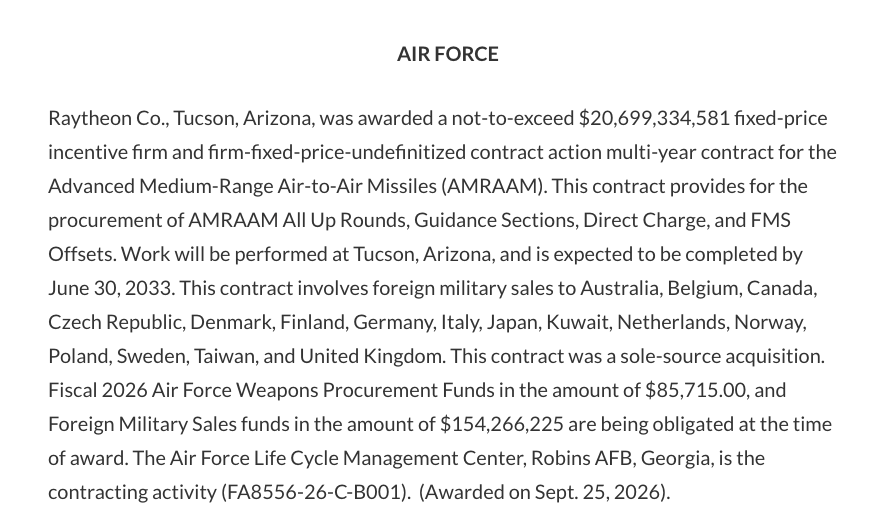
The Pentagon has awarded RTX’s Raytheon business a $20.7 billion multiyear contract for AMRAAM missiles. Reuters described it as a provisional multiyear award, while the WSJ said the deal runs for five years with two option years.
The award extends a story line that has been developing around AMRAAM production and U.S. stockpile replenishment. A company release carried by PR Newswire also described the agreement as a multi-year contract, suggesting the deal has now been publicly disclosed in full.
For investors, the headline matters most for RTX because the contract expands visibility for the Raytheon unit and reinforces the scale of its missile backlog. The reporting also says production is set to nearly double, putting execution, capacity and delivery timing in focus.
No additional company denial or correction appears in the provided material. Any further detail on how the contract is executed will have to come from official disclosures or later reporting.
Novo Nordisk will pay as much as $2.6 billion to license an experimental obesity pill from China’s Hengrui Pharma. Reuters and Bloomberg reported the transaction, and Hengrui’s own announcement identifies the asset as HRS-1596.
The deal comes as Novo continues to expand its obesity-treatment franchise. The company has long relied on Ozempic and Wegovy, so adding an oral candidate gives it another route in a market that remains central to its growth story.
The main market read-through is for NVO shares. Openoutcrier said the stock was down 0.9% premarket, suggesting investors were still weighing the economics of the licensing package.
Hengrui said the agreement covers global rights to the drug, while GlobeNewswire described HRS-1596 as a once-weekly oral GLP-1/GIP dual receptor agonist in phase 1-ready development.
Strategy bought another 1,665 bitcoin last week for about $142.7 million at an average price of $85,681, according to Arkham. The firm now holds roughly $71.24 billion worth of BTC.
The purchase extends Strategy’s long-running treasury strategy. A recent local report also noted the stock trading around $160.16 after the latest disclosure.
For the market, Strategy remains a key corporate demand gauge for bitcoin. The same batch of social posts also highlighted $2.4 billion in weekly Bitcoin ETF inflows, underscoring broader demand in regulated products.
Arkham said the company has spent about $63.95 billion on its bitcoin stack at an average cost of $75,437. It added that BTC is 11.4% above that average.
How this story unfolded
2026-08-0123 posts · 16 authors
Strategy authorizes the sale of up to $5 billion in Bitcoin, drawing market attention.
Company
Microsoft pivots Copilot toward enterprise, Oppenheimer raises target to $570
Multiple reports say Microsoft is refocusing Copilot on business users, with an analyst calling it an enterprise AI platform
Multiple reports say Microsoft has iced efforts to build a consumer AI product and is now focusing Copilot on business customers. Oppenheimer’s Brian Schwartz raised his price target to $570, saying the revamped Copilot is becoming “an AI operating system, not a chatbot.”
The shift fits with recent Copilot overhauls that aim to merge consumer and enterprise versions into a broader corporate AI stack. In the past 48 hours, Microsoft’s ecosystem also saw fresh partner activity, including a ClickHouse collaboration expansion around Fabric, OneLake interoperability and enterprise deployment flexibility.
For the market, the story reinforces expectations around Microsoft’s enterprise AI monetization and Azure-related growth, with MSFT as the main stock in focus. Another sign of that ecosystem buildout is Daivio’s launch on Microsoft Fabric, which adds a third-party AI analytics layer to the platform.
The main incremental detail in today’s signal is the analyst re-rating and the broader reporting that Microsoft is shifting Copilot’s emphasis toward business use. Microsoft has not been quoted in the provided material responding to the claims. The available evidence points to an enterprise-first Copilot strategy and its implications for AI commercialization.
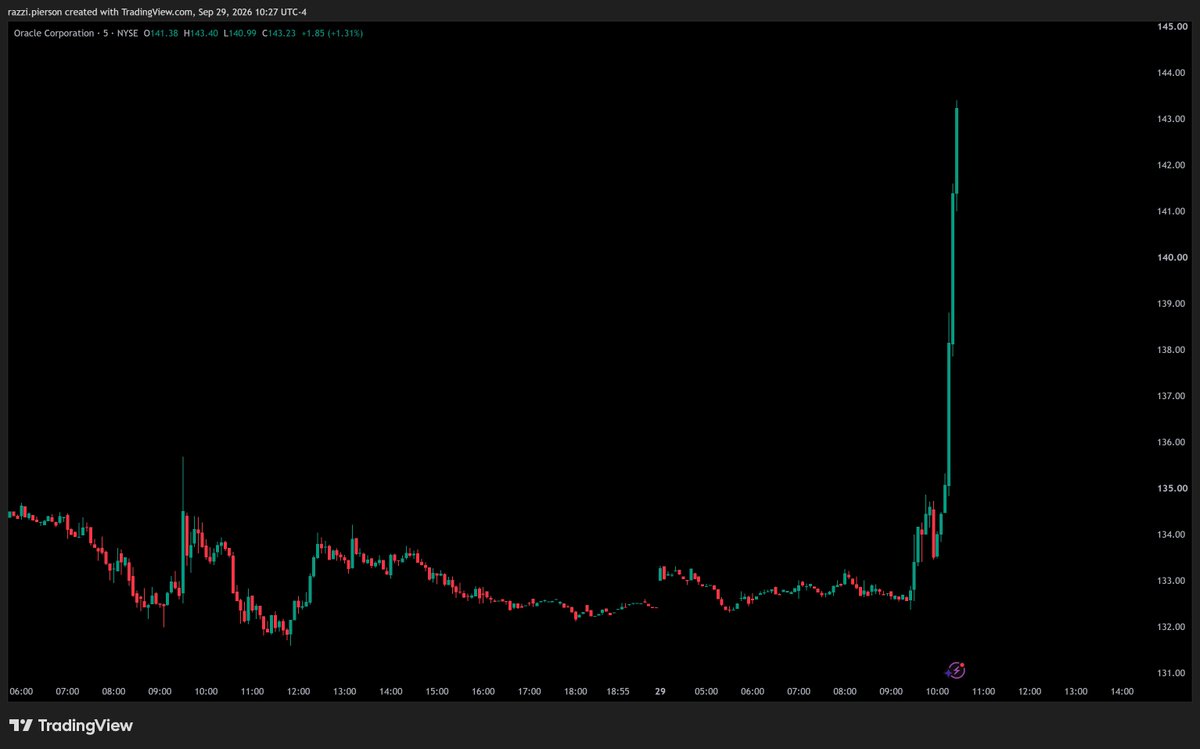
Multiple X signals say NetApp and Oracle are teaming up to bring ONTAP natively to Oracle Cloud Infrastructure, or OCI. One post describes the offering as a fully managed cloud storage service aimed at demanding AI and enterprise workloads.
The timing fits Oracle’s recent push in cloud infrastructure. A newsroom item on Sept. 28 said Oracle cloud infrastructure revenue surged 121% in the fiscal first quarter of 2027, underscoring the platform’s rapid expansion.
For investors, the announcement puts ORCL and NTAP in focus. If executed, the partnership would deepen OCI’s storage stack while giving NetApp a wider enterprise cloud distribution channel.
For now, the X posts are the latest public update on the collaboration, and the local news library does not show an earlier report on this specific deal.
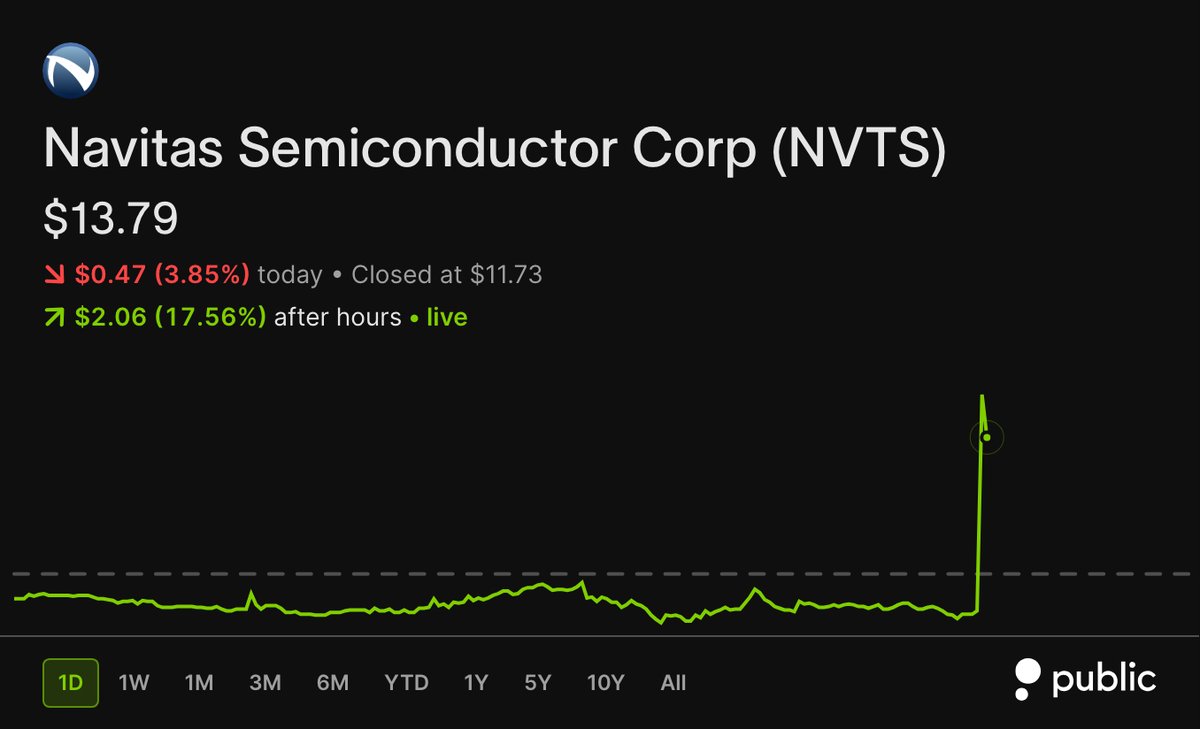
Navitas Semiconductor said on Sept. 28 that it won the U.S. Army’s ALATTIS program to develop next-generation 10 kV silicon carbide power semiconductor technology. The company said the Army Research Laboratory sponsors the prototype effort, which aims to develop, execute and validate a domestic manufacturing process for ultra-high-voltage SiC IGBTs and related PiN diodes.
The award adds a defense angle to Navitas’ high-voltage SiC portfolio. The company said its GeneSiC lineup already spans 650 V to 6.5 kV and cited earlier milestones including 6.5 kV SiC thyristors, 10–15 kV PiN diodes and 6.5 kV SiC MOSFETs.
Shares of NVTS reacted sharply to the announcement, with investing-site coverage citing a roughly 14.4% after-hours gain and an intraday peak move of about 21.7%. The market move suggests investors are focusing on Navitas’ positioning in ultra-high-voltage power electronics rather than any disclosed contract size, which the company did not provide.
The news also fed broader trading interest in AI power infrastructure names, but Navitas is the direct event driver here. Separately, no dollar value was disclosed for the ALATTIS award in the company release.
AstraZeneca said it will invest $2 billion in Summit Therapeutics as the two companies expand their partnership on cancer drugs. Multiple reports describe the move as a strategic equity investment tied to clinical collaboration.
The deal matters because it deepens AstraZeneca’s exposure to Summit’s oncology pipeline, including ivonescimab-related development. News reports in the company feed frame it as part of a broader effort to advance a leading cancer-drug combination strategy.
The market reaction centered on Summit Therapeutics, whose shares rose after the announcement. AstraZeneca shares were also reported to have hit a two-month high, underscoring investor interest in the oncology tie-up.
No material dispute was identified in the provided reports. The available signal indicates AstraZeneca disclosed the $2 billion investment and Summit confirmed the expanded collaboration.
AT&T has signed a multi-year agreement worth more than $3 billion with Corning. Corning will supply fiber and cable for AT&T’s U.S. network expansion.
The deal comes as AT&T continues to scale its broadband buildout to meet rising data demand. Reuters and The Wall Street Journal both reported that the agreement is tied to the carrier’s effort to expand its network footprint.
The announcement is most directly relevant to AT&T and Corning shares. The X signal also noted Corning was up 3.6% premarket, suggesting investors viewed the contract as a meaningful revenue catalyst for the company.
AT&T said its fiber households already use more than 1TB of data per month, and it sees that rising to 2.5TB by 2030 as streaming, cloud and AI increase usage.
Apollo Chief Economist Torsten Slok warned that widespread use of AI agents to manage cash could automatically move money out of checking accounts yielding about 0.1% and into accounts paying 3.3% to 5.0%. On X, several accounts framed the idea as an “agentic bank run.”
The broader issue is whether banks’ deposit inertia could be eroded if consumers let assistants optimize cash balances at scale. Citrini Research also said agentic AI could threaten bank reserves by making deposits more mobile.
In markets, the theme maps most directly to deposit-funded lenders and fintechs. Recent coverage in the site’s news library tied Truist Financial (TFC) to sticky-deposit exposure, while SoFi (SOFI) has drawn attention for its higher-yield deposit products and stablecoin push.
So far, the materials available point to a risk discussion rather than a confirmed event. No regulatory response or bank comment is included in the provided sources, and the reports do not say the scenario has already occurred.
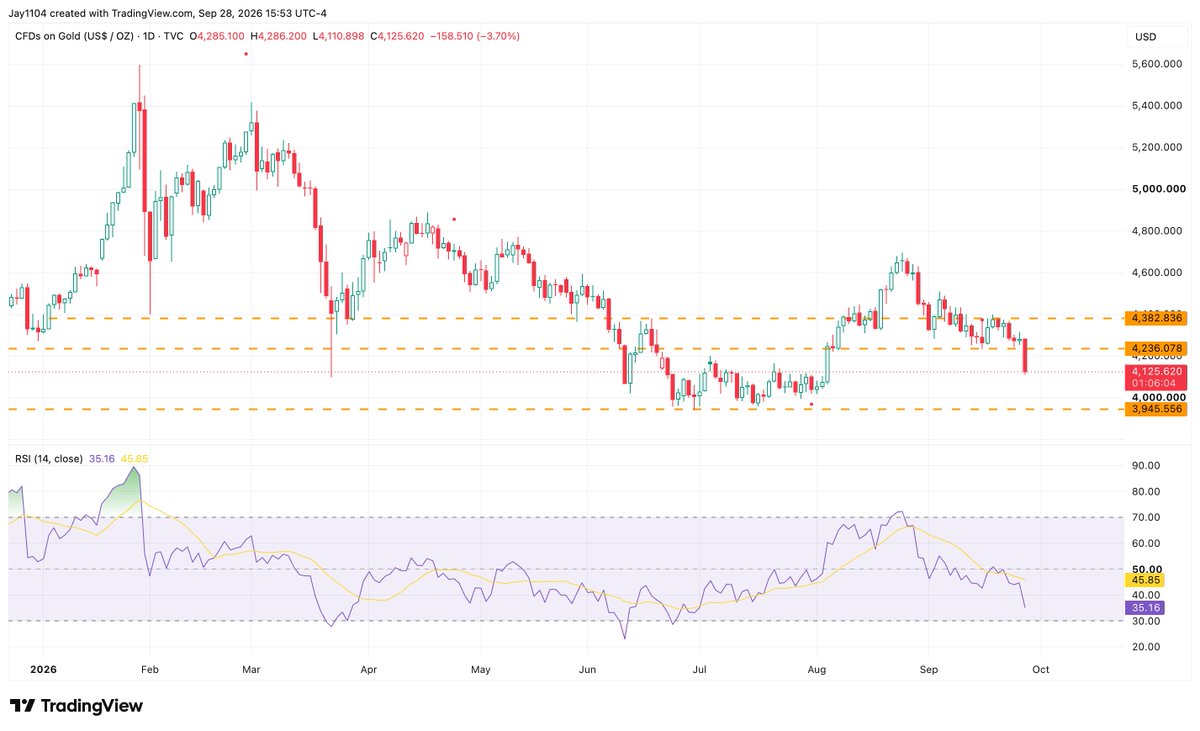
Gold extended its slide on Tuesday, briefly trading around $4,153 an ounce and hovering near a two-month low. The move came as the U.S. 10-year Treasury yield climbed to 5.22%, reinforcing bets that the Federal Reserve could raise rates again in October.
The latest price action fits a broader rate-driven repricing: higher yields raise the opportunity cost of holding non-yielding bullion, while firmer energy prices keep inflation expectations elevated. Several reports said the metal has already logged an unusually high number of 3.5%-plus daily drops this year.
Silver moved lower as well, with losses around 5% cited in market reports. Gold-linked assets such as GLD and miners were also under pressure as investors favored higher-return government bonds over precious metals.
Cross-checking the numbers, Investing.com put spot gold around $4,118 to $4,153 and said markets were pricing roughly a 70% chance of another Fed hike in October. Sina Finance reported gold near $4,150, a 3.2% daily drop, and said U.S. 10-year real yields had risen to about 2.85%, an 18-year high.
Switzerland’s KOF economic barometer climbed to 109.1 in September, above the market forecast of 106 and above the revised 107.5 reading for August. Multiple wire services published the figure today, making it the latest sign that Swiss short-term economic momentum has improved further.
The KOF barometer is compiled by the KOF Swiss Economic Institute and is widely used as a leading gauge of the Swiss business cycle. KOF says the indicator draws on a broad multi-sector dataset and is anchored to a GDP-based reference series, making it one of Switzerland’s key forward-looking macro releases.kof.ethz.ch
KOF’s August reading had already risen to 106.7, the strongest level since November 2021, while Trading Economics’ calendar shows September’s prior figure at 106.7 and the consensus at 105.8 before today’s 109.1 print.tradingeconomics.com For markets, the release tends to feed into the Swiss franc and cyclical equities, especially exporters and industrial names.
A reading above 100 signals activity above the medium-term average, though it does not by itself confirm a pickup in GDP. Investors will now watch official output, inflation and export data to see whether the improvement carries through.
The Bank of England’s August Money and Credit release showed UK M4 money supply rising 0.4% month on month, reversing July’s 0.3% decline. Mortgage lending came in at £4.41 billion, up from the revised £4.082 billion in July, according to the figures circulated in real time on X.
The monthly release is closely watched because it captures household borrowing, consumer credit and business finance conditions across the UK banking system. The latest batch also showed mortgage approvals at 54,918 in August and consumer credit at about £2.464 billion, suggesting credit flows remained active into late summer.
For markets, the data can feed into sterling, gilt yields and UK bank sentiment by shaping expectations for consumer demand and housing activity. Traders are also comparing the August readings with the Bank’s July report, which showed £4.3 billion of net mortgage borrowing, 56,100 mortgage approvals and £2.0 billion of consumer credit.
The Bank of England had previously said July net mortgage borrowing eased, while consumer credit edged up. Today’s X signal adds the August update, making this the latest incremental read on UK liquidity and household demand.
Chainlink rolled out CCIP 2.0 on Sept. 28, adding support for custom or third-party cross-chain verifiers on top of its default 16-operator committee. Under the new design, a transfer must be signed by the default committee and the added verifier before it can execute.
The upgrade lands months after Kelp DAO's roughly $292 million bridge loss in April, an incident widely blamed on a single-verifier setup. CoinDesk reported that Chainlink's former Risk Management Network no longer serves as a separate safeguard, making the optional verifiers the main new layer of redundancy.
For markets, the release reinforces the infrastructure case around LINK rather than delivering a direct financial metric. Chainlink said early supporters and partners include AWS, Google Cloud, Infosys and Nethermind, signaling a push toward institutional cross-chain settlement.
Chainlink said CCIP 2.0 is live for institutions and digital asset issuers. Both the company blog and CoinDesk confirm the default committee architecture and the optional CCV model as the upgrade's central feature.
How this story unfolded
2026-08-195 posts · 3 authors
Wyoming moved its Frontier Stable Token from LayerZero to Chainlink CCIP after a security review.
Company🔥Developing
Bitget says $388 million theft came from a third-party flaw
The exchange says attackers used high-level internal credentials, while some assets were frozen and ETH and USDT withdrawals resumed on schedule.
Bitget CEO Gracy Chen said the exchange’s roughly $388 million theft stemmed from a vulnerability in a third-party security product, not from compromised private keys. According to Chen, the flaw let attackers obtain high-level internal credentials and submit fraudulent withdrawal commands; she also said cold wallets were not affected and some assets have been frozen with help from industry participants.
The incident began on Sept. 24, when Bitget detected unauthorized transfers and temporarily halted withdrawals. Cointelegraph and Bitget’s later updates both say the exchange initially saw test transactions below risk thresholds before larger outflows followed, while any North Korea link remains only a preliminary line of inquiry and has not been confirmed.
Bitget has been restoring withdrawals in phases: ETH reopened on Sept. 29, with USDT slated for Sept. 30. Bloomberg reported roughly $463 million in net outflows over the 24 hours into Tuesday, underscoring how users are still rebalancing funds as the platform works through containment and remediation.
Bitget says its user protection fund will cover affected balances and that a formal security report is due this week. For the broader exchange sector, the key issue is not only loss prevention but also the resilience of third-party security controls and the pace of trust recovery after a major breach.
How this story unfolded
2026-09-25
Company
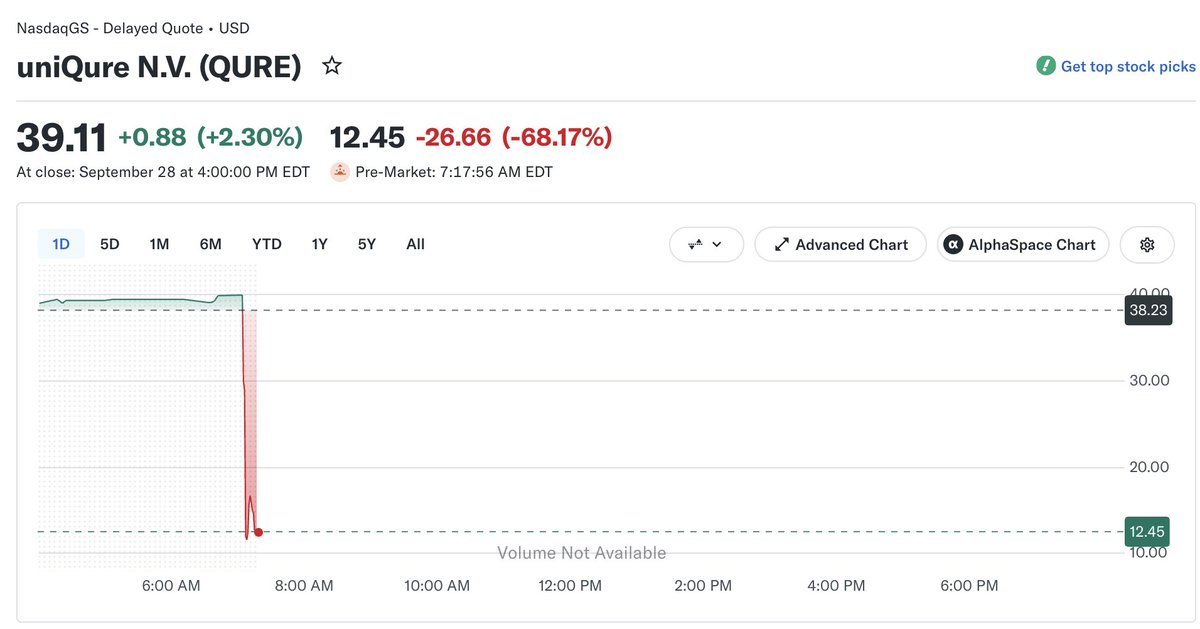
uniQure updates Huntington’s gene therapy data, but misses significance
48-month follow-up showed slower disease progression, yet the trial did not clear statistical significance, sending QURE lower premarket
uniQure said updated 48-month data for its Huntington’s disease gene therapy showed a slowdown in disease progression, but the result did not reach statistical significance. The update builds on earlier Phase I/II readouts for the same program.
This is the latest follow-up on a trial that had already produced prior 36-month data. The X signal also said serious brain inflammation occurred in 17% of high-dose patients, while missing data made the update harder to interpret.
The market reaction was immediate. Reuters said the shares fell after the company reported a 44% slowing in disease progression without statistical significance, while the X signal cited a roughly 47.8% premarket drop and Barron’s said the stock plunged 48%.
An X-post quoting the company said uniQure still believes the drug remains on track. For investors, the key issue is whether the updated efficacy profile can support the program after the latest readout.
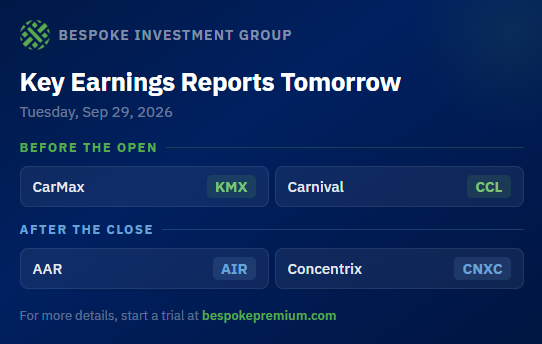
CarMax reported comparable used-vehicle sales that expanded more than expected, and the stock moved higher on the news. Bloomberg said the shares climbed after the company posted the better-than-expected reading.
This follows the company’s latest earnings update. Zacks said CarMax earned $1.16 per share, above the $0.68 consensus estimate, while Barron’s said revenue jumped 20%.
KMX is the direct market focus here, with investors reacting to the improved operating trend in the quarter. The stock had already been moving higher since May, according to Bloomberg, as the retailer tried to revive its business.
No additional company response was included in the materials provided. The key takeaway for the market is that the quarter’s sales and earnings beat gave the turnaround story fresh support.
Strategy disclosed that it bought 1,665 bitcoin for about $142.7 million between Sept. 21 and Sept. 27, at an average price of $85,681 per coin. The company also repurchased 1,534,530 STRC preferred shares for roughly $151.7 million during the same period.
The update came in a Sept. 28 8-K filing and was echoed in a post from executive chairman Michael Saylor on X. Strategy said it held 847,666 bitcoin as of Sept. 27, with an aggregate cost of about $63.95 billion and an average purchase price of $75,437 per bitcoin.
For investors, the weekly disclosure matters because it affects Strategy’s capital structure and the trading picture for MSTR and STRC. The company also said it had $5.02 billion in USD Reserve and $1.0 billion in USD Cash, underscoring the mix of stock sales and cash used to fund treasury activity.
Strategy said it generated $246.2 million in net proceeds from selling 1,469,165 MSTR shares in the period, with $142.7 million used for bitcoin purchases and $103.5 million directed to STRC repurchases. Saylor described the latest move on X as the company having acquired 1,665 BTC and repurchased about $152 million of STRC.
Deutsche Bank upgraded Netflix to Buy from Hold and cut its price target to $95 from $100. The bank said the streamer’s global scale, international production advantage and valuation now look attractive.
The X signal says Netflix has sold off in September, and one report notes the stock trades at roughly 18 times estimated 2027 earnings. Our news library also says Netflix is down 26% this year, framing the upgrade as a call to buy after weakness.
The move is centered on NFLX. Investors are still weighing slower growth against the company’s international expansion and platform strength, which Deutsche Bank said support its leadership position.
At the same time, our library notes that weakening U.S. engagement time remains a concern for some analysts. Deutsche Bank’s call does not remove that debate; it simply takes a more positive view on valuation and long-term positioning.
Fresh X-posts point to a split tape in QQQ-linked options: large put selling showed up alongside a $2.3 million GLD call LEAP, while other traders argued the Nasdaq-100 ETF is not topped yet but is late in its cycle. Several posts also framed the session as a retest of short-term moving averages rather than a clean breakout.
That comes against a backdrop of elevated prices. The Adaptivetrader’s Sept. 29 pre-market note said QQQ was less than 0.2% from all-time highs and put the first upside target near 750, while a Panews market brief said the Nasdaq Composite fell 1% on Monday as the 10-year Treasury yield climbed to about 5.27%.
The setup matters because QQQ remains the main proxy for mega-cap tech and AI sentiment, so changes in options flow can spill over into semiconductors, cloud software and other growth names. Monday’s broader weakness also came even after Nvidia disclosed a $150 billion increase to its buyback authorization, underscoring that corporate support alone has not offset rate pressure and risk reduction.
For today’s incremental signal, the key takeaway is not a directional call but a more cautious stance at high levels: traders appear to be balancing upside participation with protection and tactical hedging. That keeps QQQ at the center of the market’s short-term risk discussion.
Traders on X highlighted another session of deteriorating breadth, with far more new lows than new highs. The clearest signal was a post citing 47 new highs versus 483 new lows, alongside comments that the Russell 2000 had fallen to a fresh three-month low.
Independent reporting broadly matches that picture. EBC Financial Group said the S&P 500 closed Monday at 7,683.69, about 1.5% below its Aug. 13 record close of 7,798.99, while 27 constituents hit 52-week lows and only four made new highs. It also noted that the 10-year Treasury yield rose to 5.23% on Sept. 28, its highest since 2007.
That matters most for small caps and other rate-sensitive assets. Higher yields raise funding costs and pressure valuations, while the cap-weighted S&P 500 can still look relatively stable if a handful of mega-cap names hold up.
For now, the message from both the tape and the breadth data is the same: headline index levels are obscuring weakness underneath. Russell 2000 softness, rising new lows and higher long-end yields are reinforcing each other.
Strategy touted its year-to-date BTC buying versus selling, Standard Chartered called $63K BTC a screaming buy, and discussions centered on STRC's outlook.
2026-08-0317 posts · 13 authors
Strategy boosted its USD Reserve by $250M, repurchased $81M of STRC, and sold 1,638 BTC via ATM to raise cash.
2026-08-3115 posts · 14 authors
Strategy acquired 4,603 BTC for $370M, increased USD cash, repurchased $152M of STRC, and reduced net leverage to 0%.
2026-09-2520 posts · 17 authors
Strategy proposed daily dividends on STRF, STRC, STRK, and STRD, accruing every calendar day including weekends and holidays.
2026-09-288 posts · 8 authors
Strategy acquired 1,665 BTC and repurchased $152M of STRC, bringing total BTC holdings to 847,666.
2026-09-295 posts · 4 authors
STRC closed at $99.17, its highest since late May, while Strategy continued advancing its daily dividend upgrade proposal.
Bitget CEO confirmed the hack involved $351.6 million, cold wallets were unaffected, user funds covered by a $464 million protection fund, and North Korean hackers were suspected.
2026-09-2923 posts · 2 authors
In a live interview, Bitget CEO revealed test transfers below risk thresholds went undetected, and addressed insider-job, fund recovery, and user data safety questions.