Nvidia has agreed to acquire Hugging Face in a transaction valued at about $11.9 billion for shareholders, plus an equity-based retention program of up to about $1 billion for employees who join Nvidia, according to the company’s SEC filing. Several outlets rounded the transaction to roughly $12.9 billion including the retention package.
Hugging Face was founded in 2016 and has become one of the best-known open AI development platforms. Company figures cited by TechCrunch put its scale at roughly 3 million models, 1 million applications, 500,000 datasets, and more than 18 million developers, researchers and creators.
The deal moves Nvidia further up the AI stack beyond chips and into distribution, infrastructure and developer tooling. Nvidia said Hugging Face will remain an open platform and that developers will still be able to choose models, frameworks, clouds and inference providers, while Nvidia works to expand access for developers and institutions.
The acquisition is expected to close in the first half of 2027, subject to regulatory approvals. Nvidia and Hugging Face have not announced additional terms beyond the filing and public statements on keeping the platform open.
US-Iran hostilities escalated again this week, lifting global energy benchmarks. Reuters said Brent crude settled at $95.63 a barrel on Sept. 2, up 1%, while Asian spot LNG climbed to $25.908 per million British thermal units, its highest since December 2022.
The renewed move higher comes as traders price in risks to shipping and supply through the Strait of Hormuz. Bloomberg said the rise in oil and gas prices is already feeding concerns among European politicians about winter energy costs and inflation.
The impact is most direct for refiners, fuel distributors and energy funds, which reprice around crude and product margins. US independent refiners such as HF Sinclair, Marathon Petroleum and Phillips 66 are among the names most exposed to swings in crude, inventory values and feedstock costs.
For now, the key market data points are price levels and official statements, not confirmed supply disruption. CNBC quoted the US energy secretary as saying more than 17 million barrels moved through Hormuz on Monday, but that figure is reported in a market interview context rather than as a stand-alone official release.
これまでの経緯
企業動向
Microsoft to disclose Azure quarterly revenue as FY27 split changes; Azure guided to 44%-45% growth英語原文
The company is shifting from three reporting segments to two, giving investors a clearer read on its cloud engine.
Microsoft said it will start reporting quarterly Azure revenue in FY27, while restructuring its financial disclosure from three segments to two: Agents and Infra, and Devices and Consumer. The company said the change is meant to better reflect how it operates and allocate resources.
The update comes after years of investor pressure for more transparency around Azure, which competes with Amazon Web Services and Google Cloud. Microsoft’s materials also restated FY26 revenue at $331.8 billion and operating income at $155.2 billion under the new structure.
Under the new FY27 Q1 outlook, Azure is expected to grow 44% to 45% in constant currency, while Agents and Infra revenue is projected at $75.15 billion to $75.75 billion and Devices and Consumer at $14.7 billion to $15.2 billion. Azure revenue will also be reported after excluding some developer, security and life sciences cloud items.
The disclosure change is aimed at improving visibility into Microsoft’s cloud business, a key driver for MSFT investors. It also makes future comparisons with rival cloud platforms more straightforward, especially as AI-related demand reshapes the company’s reporting lines.
Tesla is set to host a Cybercab event in Austin, Texas, on Sept. 3, with Reuters saying the showcase centers on its purpose-built robotaxi and CNBC reporting the company teased fans on X with “no steering wheel, no pedals.” New posts on X from people in Austin also claimed Cybercabs were visible downtown, adding fresh现场 color to the event-day buildup.
The Cybercab is a two-seat vehicle with no steering wheel or pedals, designed specifically for autonomous driving. Reuters said Elon Musk previously described the vehicle as one that could eventually sell for $30,000, and the model is meant to complement Tesla’s existing Model Y-based robotaxi service in Austin.
For TSLA investors, the event matters because it tests whether Tesla can turn its robotaxi narrative into a more concrete product and service roadmap. The main market question is not the concept itself, but whether Tesla provides verifiable details on deployment, regulation, and safety that could support commercialization.
So far, the public record points to an invitation-only presentation rather than a broad launch. Reuters and CNBC both frame the update as a major Cybercab moment, but the scale of any rollout still remains to be seen.
これまでの経緯
2026-07-06
規制
米政府、NYT訴訟でOpenAIを支持、20ページの意見書で学習はフェアユースの可能性英語原文
The Justice Department’s filing adds a new federal voice to the copyright fight, pushing the dispute toward AI policy and fair-use doctrine.
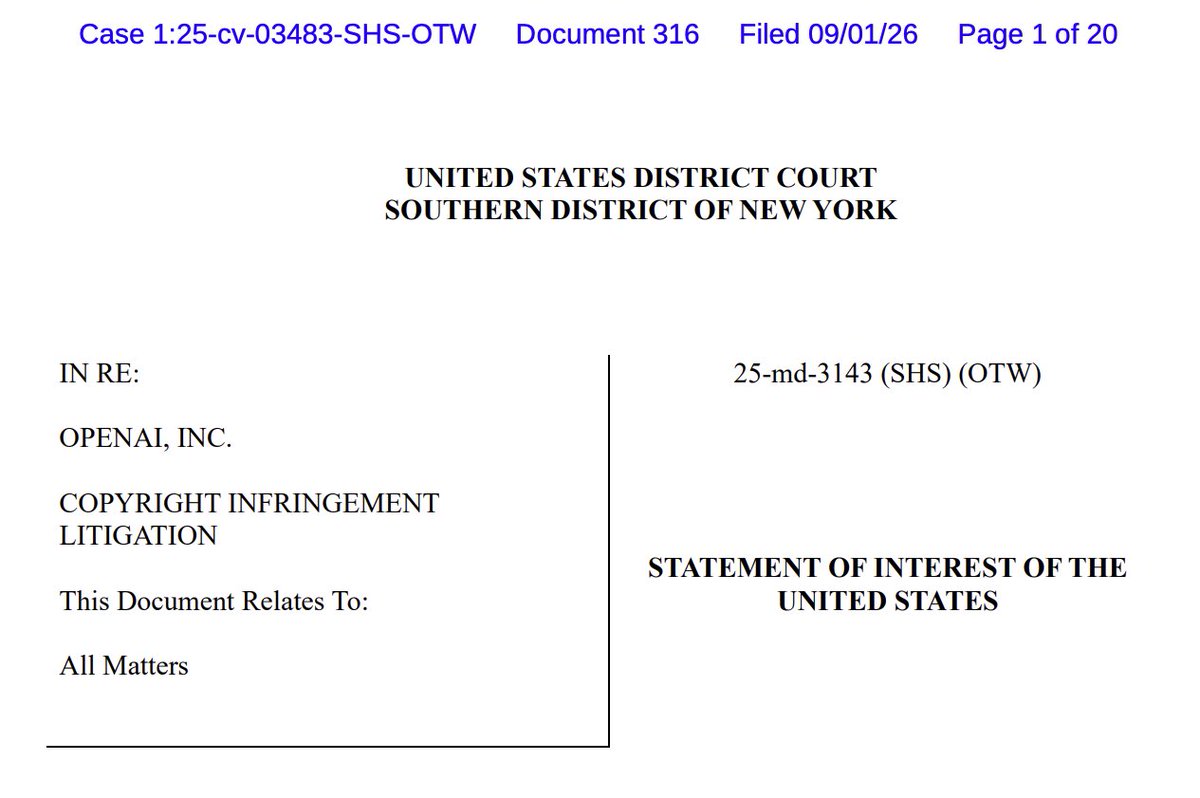
The U.S. Justice Department filed a 20-page statement of interest backing OpenAI in its copyright dispute with The New York Times and other publishers. The filing argues that restricting training on copyrighted material could hinder creative progress and weaken U.S. leadership in artificial intelligence.
The underlying lawsuit dates back to December 2023, when The New York Times alleged that OpenAI trained its models on its articles without permission. The latest government filing does not decide the case, but it adds weight to the argument that model training can fall under fair use in some circumstances.
For OpenAI and other AI developers, the immediate issue is legal risk and future licensing costs; for publishers, it is whether courts will allow large-scale training on newsroom content without consent. The dispute is being watched closely because it could shape the boundary between copyright enforcement and AI development.
The administration’s position is supportive rather than determinative: the court will still decide the merits. The filing nonetheless signals that AI competition, national security and copyright policy are increasingly being argued in the same courtroom.
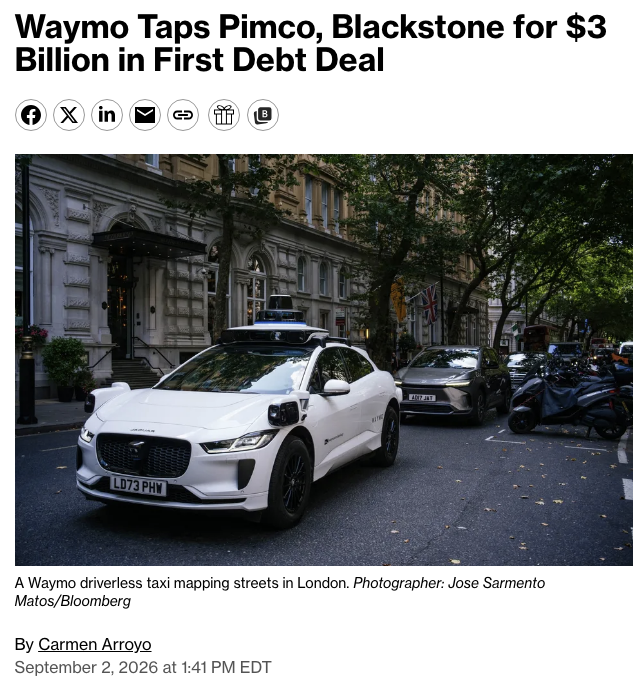
Waymo is in the final stage of talks for its first-ever debt financing, according to people familiar with the matter. The company is seeking more than $3 billion from lenders including PIMCO, Blackstone and Sixth Street, in what would likely be an unrated loan priced at a spread of more than 500 basis points over benchmark rates. Waymo, Goldman Sachs and the lenders did not comment.
The move comes months after Waymo raised $16 billion in equity at a $126 billion post-money valuation. In February, the company said it had surpassed 15 million rides in 2025 and was providing more than 400,000 rides a week, while aiming to scale to 20-plus cities in 2026.
For Alphabet, Waymo's parent, the financing would broaden the unit's funding base beyond equity and put a price on the business's capital intensity as it expands its autonomous fleet. Investors in GOOGL may view the deal as another marker of how far Waymo has come commercially, even as the company remains reliant on outside capital.
The details remain fluid, and the reported terms are based on sources rather than company confirmation. The final size, pricing and lender group could still change before any deal is completed.
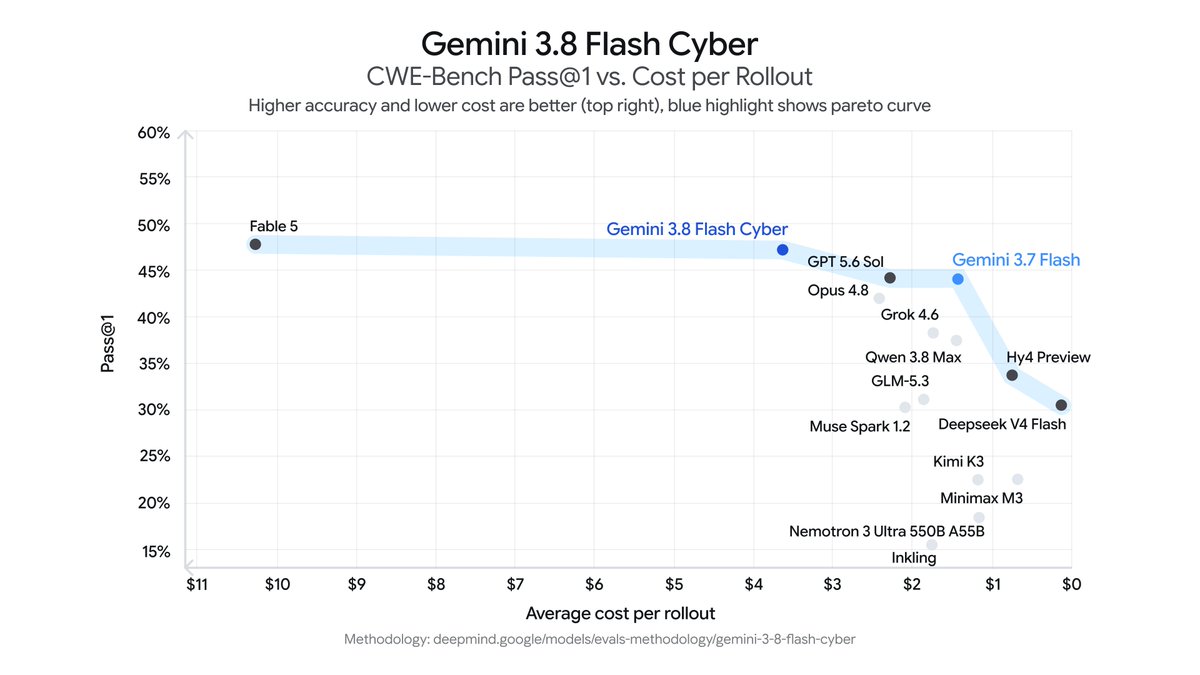
Google on Sept. 3 unveiled Gemini 3.8 Flash and Gemini 3.8 Flash Cyber, two models built on the same core but tuned for different jobs. Flash targets coding, agents and multi-step reasoning, while Cyber is restricted to trusted defenders for vulnerability discovery and patching. The introductory API price is $0.75 per million input tokens and $3.75 per million output tokens through Dec. 31, 2026.blog.google
Google said Cyber scored 86.2% on CyberGym and 47.2% on CWE-Bench, and exceeded 70% success in internal tests across 20 programming languages. The company also said Chrome Security generated 2.6 times more correct patches with the model than larger commercial systems, while its cloud research team found a critical foundational bug in under two hours.blog.google
For Alphabet, the launch strengthens both the developer-facing AI story and the security value proposition inside Google Cloud. A low-cost Flash tier may support broader API adoption, while the Cyber version gives Google a more specialized offering for government agencies, critical infrastructure operators and software maintainers. Reuters-style follow-up coverage also said the launch is tied to the Fairwind Program and that the introductory pricing doubles in 2027.thehindu.com
The release adds to a fast cadence of Gemini launches and comes as Google continues to pitch AI as a core driver of product differentiation across cloud, search and developer tools.
President Donald Trump said on Truth Social that Apple Maps has changed Lake Ontario to “Lake America,” calling the shift across Apple and Google Maps “complete, ratified, and binding.” X signals today flagged the post as the new development in the ongoing naming dispute.
The backdrop is an executive order directing federal name updates through the U.S. Geographic Names Information System. Reported behavior on the apps differs by location: U.S. users see Lake America, Canadian users still see Lake Ontario, and international users may see both labels.bbc.com techcrunch.com
For Apple, the change makes AAPL the clearest corporate participant in the dispute because Apple Maps has now followed Google’s lead. The move is visible to consumers but no outlet cited any direct financial impact; the market relevance is mainly reputational and regulatory, not earnings-related.latimes.com
Canada has pushed back rhetorically, while MapQuest said it would not adopt the new name. That leaves the map-label fight as a split-platform issue rather than a universal standard, even as the White House frames the change as official.
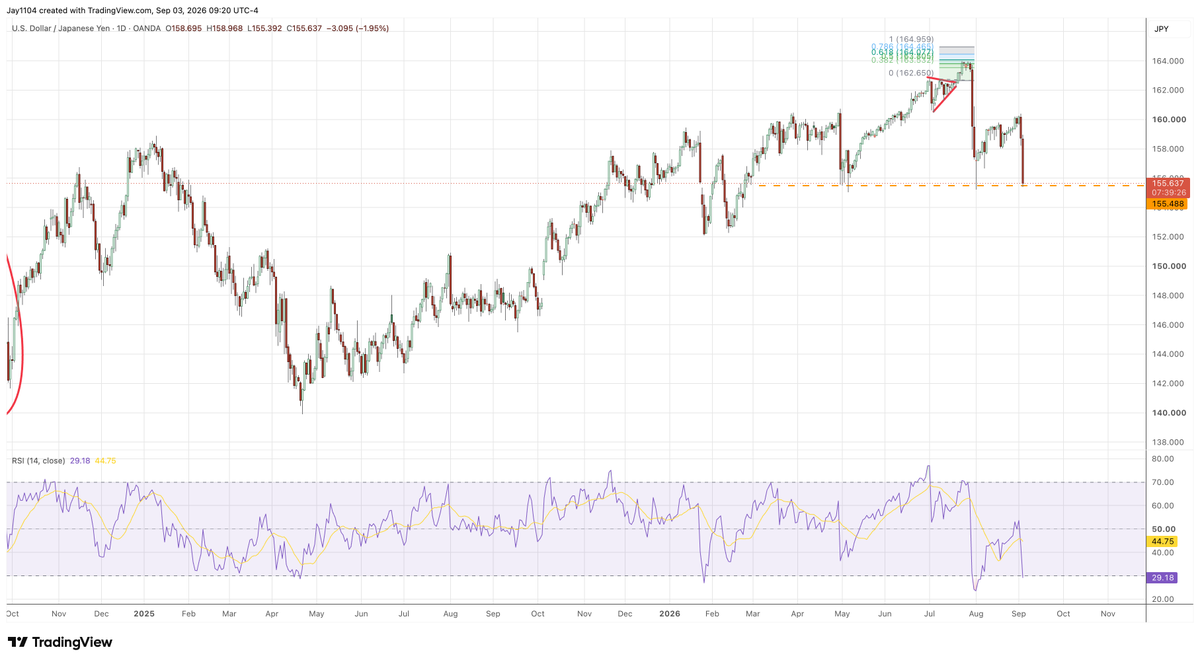
USD/JPY briefly dropped to 156.15 on Thursday, more than 1% lower on the day and its strongest yen level in about a month. Traders immediately linked the move to renewed intervention chatter and rising expectations that the Bank of Japan could tighten policy at its Sept. 18 meeting.
The latest move comes after Japan spent a record ¥15.4 trillion between July 30 and Aug. 26 to support the currency, according to the finance ministry. Reuters also reported that the U.S. took part in a coordinated yen-buying action in late July, while officials in Tokyo have kept signaling heightened vigilance.
The yen’s strength spilled into broader markets: several Asian currencies firmed alongside it, and gold climbed as a weaker dollar supported the metal. For equities, the main transmission is via FX hedging costs and the dollar leg of global risk assets, especially for Japanese investors and multinational exporters.
Vice Finance Minister for International Affairs Atsushi Mimura said authorities were “neither satisfied nor reassured” by recent FX moves and remained on “a state of heightened alert.” Market participants, however, said the day’s action looked more like aggressive repricing around BOJ policy than a confirmed new intervention.
これまでの経緯
2026-07-06投稿10件 · 投稿者10人
Japanese bankruptcies hit an all-time high as the yen's collapse strains corporate finances.
マクロ🔥進行中
US August ISM services PMI rises to 55.4 as prices paid jump to 72.6英語原文
The latest reading points to firmer U.S. services growth, while weak employment and hotter input prices keep policy-sensitive markets in focus.
The Institute for Supply Management said its August services PMI climbed to 55.4 from 54.1 in July, topping expectations for 54.1. The new-orders index rose to 60.9, the employment gauge stayed below 50 at 47.8, and prices paid accelerated to 72.6.
The report broadly matches earlier evidence from S&P Global, which showed the U.S. August services PMI final at 56.5. S&P Global had first reported a flash reading of 56.8, the strongest in more than a year and a half, underscoring a solid month for the service sector.
For markets, a stronger-than-expected services print typically supports the dollar and Treasury yields by reinforcing the case for economic resilience. At the same time, the weak employment component suggests services growth is not yet translating into a broad labor-market rebound.
The combination leaves investors focused on the inflation implications of the very high prices-paid index and on how long the services sector can keep expanding without renewed policy pressure.
これまでの経緯
2026-07-06投稿37件 · 投稿者29人
ISM services PMI came in at 54.0, matching expectations, with new orders down, employment up, and price pressures easing.
市場
ビットコインは8万ドルを再取得、7月1日の安値から2.3万ドル上昇英語原文
Traders are watching U.S. demand and risk appetite after the latest push back above a key round number.
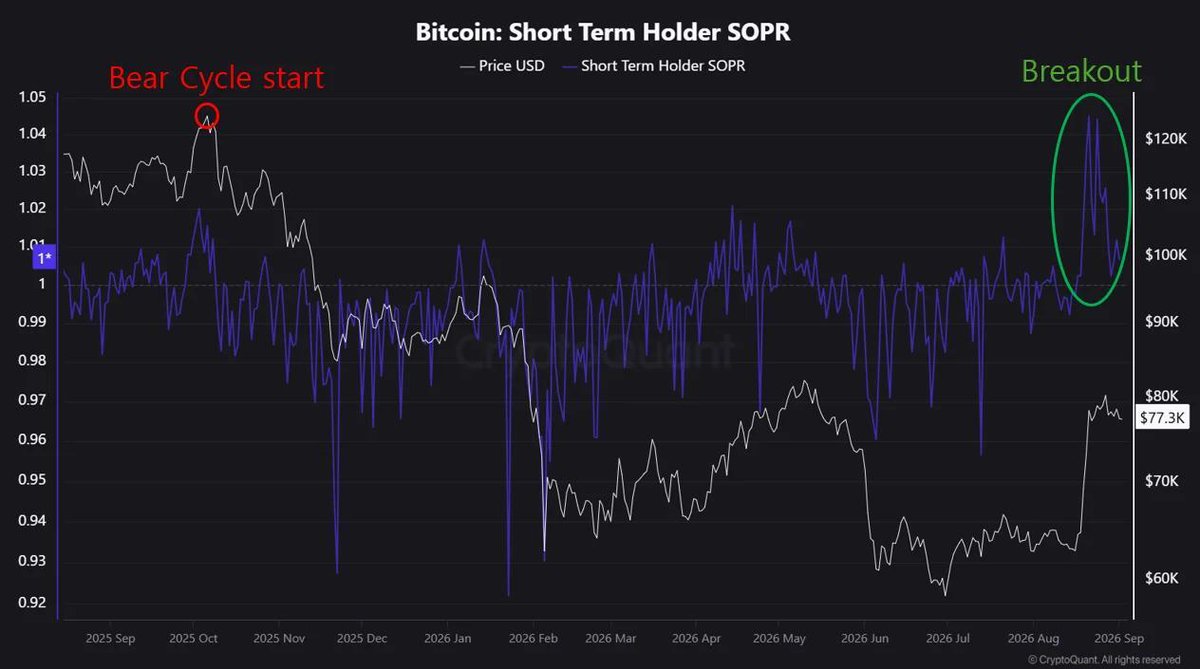
Bitcoin climbed back above $80,000, with the latest X trading signal saying the token is now up about $23,000 from its July 1 low. The move puts the market back on alert around a psychologically important level.
The backdrop is a broader rebound in crypto, but the breakout is not yet fully convincing. Bloomberg said choppy U.S. investor demand is making it harder for bitcoin to hold above $80,000, even as the rally gathers momentum.bloomberg.com
For markets, the main read-through is to bitcoin spot, related ETFs such as IBIT, and broader crypto sentiment. Earlier market coverage also noted shifting correlations, with bitcoin’s link to Nasdaq weakening while its correlation with gold has risen, reinforcing the idea that positioning is being repriced.cointelegraph.com
No fresh official policy or company announcement appears to be driving the move. The key question now is whether turnover and ETF demand can support the break above $80,000.coindesk.com
The company beat quarterly estimates and raised margin targets as AI-driven consumption remained strong, sending the shares sharply higher after hours.
Snowflake reported second-quarter fiscal 2027 revenue of $1.55 billion, up 35% year over year, with product revenue rising 37% to $1.49 billion. Non-GAAP EPS came in at $0.62, above Wall Street estimates, and the company lifted full-year product revenue guidance to $6.07 billion.
The update matters because management said usage trends in both its core data platform and AI-related workloads continued to accelerate. Net revenue retention held at 126%, while remaining performance obligations reached $9.0 billion, pointing to solid forward visibility.
Investors reacted quickly: Snowflake shares jumped more than 20% in after-hours trading. The print put the stock, and the broader cloud-software complex, back in focus as the market weighs growth against margin expansion.
Management also raised its full-year non-GAAP operating margin outlook to 14.5% and guided third-quarter product revenue to $1.588 billion-$1.593 billion. The company said the revised outlook reflects stronger consumption patterns and a higher mix of fast-growing AI workloads.
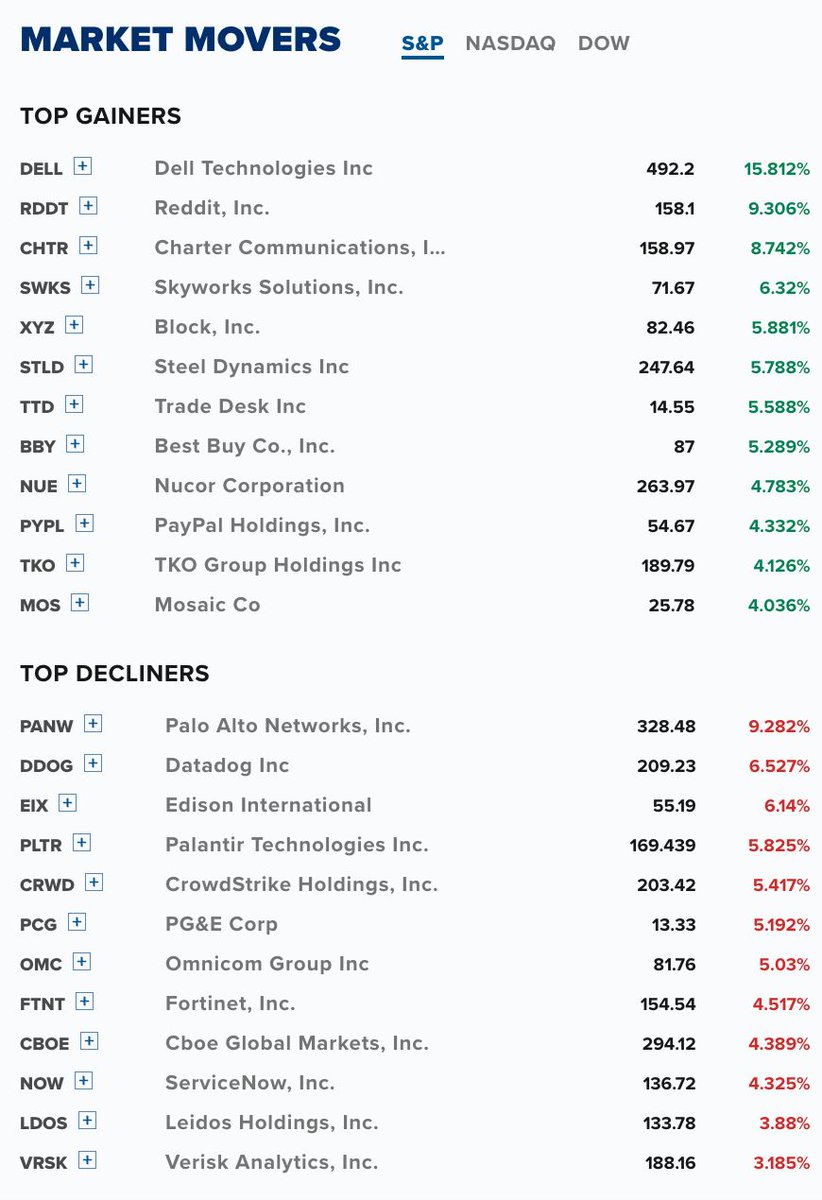
Dell reported fiscal Q2 revenue of $47.0 billion, up 58% year over year, with adjusted EPS of $7.04. The company also booked a record $60.9 billion in AI server orders, recognized $16.4 billion of AI server revenue, and ended the quarter with a $95 billion AI backlog while raising full-year revenue guidance by $25 billion to $192 billion.
Management framed the results as evidence that data centers are becoming value creators rather than cost centers. Dell said enterprise modernization and AI workloads are driving upgrades to older servers for more compute, memory and storage, which is lifting demand across its infrastructure portfolio.
The market took the report as a fresh sign that AI spending is broadening beyond chips. Dell shares moved higher after the print, and Reuters reported the annual forecast increase helped fuel the rally; peers such as HPE also saw read-through buying on the hardware side.
For investors, the key questions now are execution and conversion: how quickly the backlog turns into shipments, and whether supply constraints in components or power infrastructure cap the pace of growth. The quarter suggests AI is no longer just a GPU story for Dell, but a broader infrastructure story spanning servers, storage and networking.
Uber said on Wednesday it will eliminate about 3,300 roles, or roughly 10% of its global workforce, and shut operations in Nigeria and Uganda. The company said the changes are part of a broader restructuring to simplify decision-making and concentrate resources on priority markets and products.
The move follows a series of organizational changes as Uber pushes harder into autonomous vehicles and streamlines overlapping teams. Reuters and Bloomberg both reported that the company is trimming management layers, reducing the number of small teams and consolidating delivery operations.
Investors responded positively, with Uber shares moving higher after the announcement. The cuts are significant relative to Uber’s roughly 34,000 employees at the end of 2025, and the company also said it will reduce the share of fully remote roles to about 1% of staff.
Uber has not disclosed how many workers are affected in Nigeria and Uganda. The company said employees have been notified where local procedures allow, but final numbers in some countries may only be confirmed after legal consultations are completed.
Apple has formally installed John Ternus as chief executive and disclosed the pay packages attached to the leadership transition. Ternus’ target compensation is about $58 million for fiscal 2027, while Tim Cook moves into the executive chair role with a target package of about $47 million.
According to the SEC filing, Ternus will receive a $3 million salary and a $55 million equity award in fiscal 2027, plus a prorated $2.5 million RSU grant for fiscal 2026. Cook’s salary falls to $2 million, with a $45 million equity target; the award structure is also tied to Apple’s relative performance.
For investors, the details matter because this is a governance story centered on AAPL rather than a product launch. Apple is using large, long-dated equity awards to keep both leaders’ incentives aligned with shareholder returns, especially versus the S&P 500.
The transition itself is now official, and reporting indicates Ternus took over on Sept. 1. The compensation disclosure gives the market a clearer read on how Apple intends to manage continuity at the top after Cook’s long tenure.
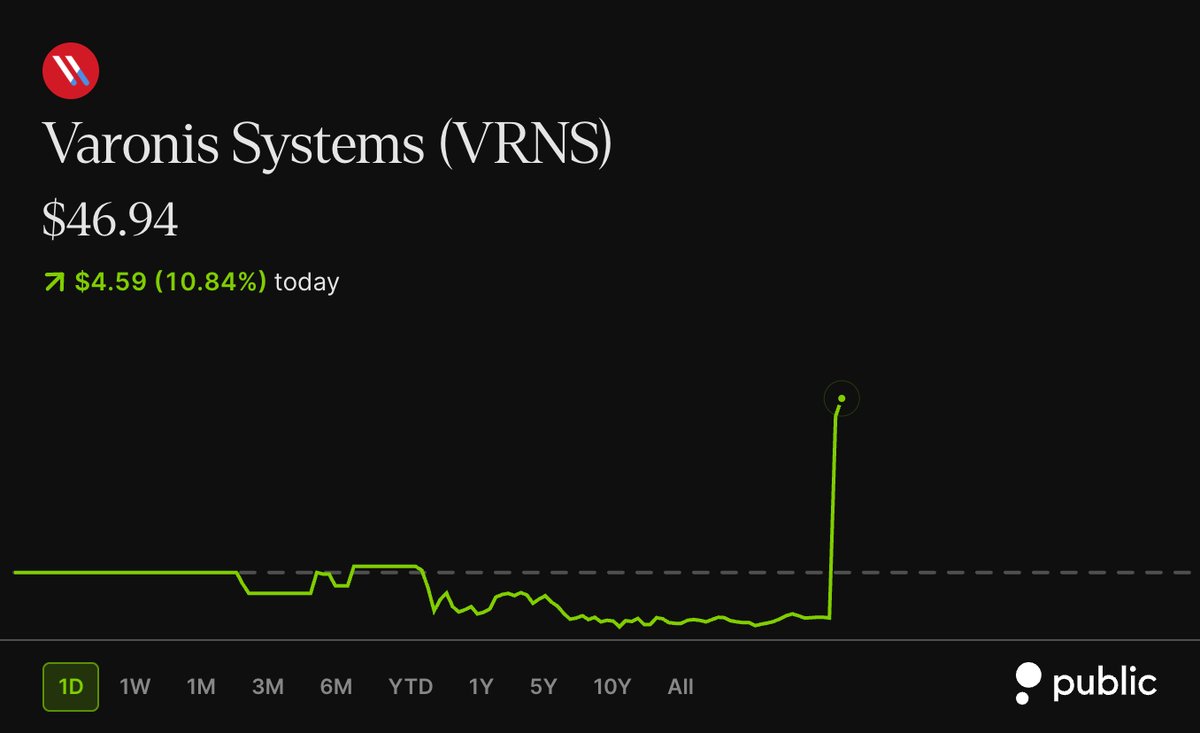
Thoma Bravo-owned Proofpoint is in discussions to acquire Varonis Systems, according to Bloomberg and Reuters sources. The talks are private and could still fall apart, and no deal has been announced.
The potential acquisition would bring together two complementary cybersecurity businesses: Proofpoint focuses on email and threat protection, while Varonis specializes in data security, classification and access controls. That overlap is why the combination is drawing attention in the sector.
Varonis shares rose after the reports surfaced, with Reuters citing a market value of about $5 billion. The company says it has more than 2,400 employees across 14 global offices, underscoring its scale as a listed security vendor.
Thoma Bravo declined to comment to Reuters, while Proofpoint and Varonis did not immediately respond. For now, the reports add another sign of renewed private-equity interest in cybersecurity software assets.
Equinix said on Sept. 2 that it is expanding its collaboration with Nvidia and adding Together AI to launch Equinix Inference Exchange, a distributed AI inference service for global enterprises. The service is slated to become available in the first quarter of 2027.
The company said the offering combines Nvidia’s Enterprise Reference Architectures, Together AI’s inference platform and Equinix’s global data-center footprint, with a focus on open-model deployment, low-latency access and sovereignty-sensitive workloads. Equinix said its network spans more than 280 data centers across 77 metros and connects over 10,500 businesses through more than 230 cloud on-ramps.
The announcement reinforces Equinix’s role as an AI infrastructure beneficiary rather than a model builder. CNBC reported that Equinix shares are up about 33% this year and that the company’s market capitalization has climbed to roughly $100 billion, while its latest quarter showed revenue up 16% year over year to $2.63 billion and net income of $477 million.
Equinix did not disclose pricing, capacity commitments or anchor customers, and said Together AI will be the seller of record billing end customers. The launch remains ahead of commercialization, with the next meaningful update likely to come in future earnings or product disclosures.
At SEMICON Taiwan 2026, TSMC management said the company’s equipment procurement need had risen to 1.9 times its estimate at the end of last year by July, up from 1.0 times at the start of the year. In other words, TSMC’s tool demand has nearly doubled in less than six months.
The update reflects continued strength in AI-related demand for advanced chips and manufacturing capacity. TSMC also lifted its 2026 capital spending guidance from $52 billion–$56 billion in January to $60 billion–$64 billion in July, underscoring pressure to expand both new fabs and upgraded lines.
For the market, the message is constructive for TSMC and its upstream suppliers in semiconductor equipment, facility construction and materials, especially in lithography, deposition and etch tools. TSMC said it is concurrently building about 20 fabs in Taiwan and overseas, yet still cannot fully keep up with customer demand.
The news does not indicate any demand slowdown from TSMC. Instead, it points to a supply chain that remains tight as the AI buildout continues to pull on tools, labor and capacity across the industry.
JPMorgan trims Jane Street financing as 2025 bond trading tops $900B英語原文
An FT report says the cut followed Jane Street’s move into U.S. Treasury market-making, highlighting rising friction between a bank dealer and a fast-growing nonbank rival.
The Financial Times reported that JPMorgan Chase cut back financing to Jane Street last year after the trading firm began making markets in U.S. Treasuries, putting the two firms in direct competition. The move underscores how legacy Wall Street dealers are reacting as nonbank trading firms take a bigger role in fixed-income markets.
FT said Jane Street traded more than $900 billion of bonds in 2025 and generated about $40 billion in trading revenue, close to JPMorgan’s $41 billion trading division. The report added that the financing reduction amounted to roughly 5% of Jane Street’s fixed-income credit lines and did not materially affect its revenues.
For JPMorgan, the decision signals a more defensive stance around its market-making franchise. For Jane Street, tighter financing could matter for leverage and liquidity management, even if the immediate financial hit was limited.
The story places JPMorgan shares, and the broader U.S. banking sector, in focus because it shows how incumbents may respond when a fast-growing competitor moves into core bond-market territory. There was no separate public response from Jane Street in the reporting cited.
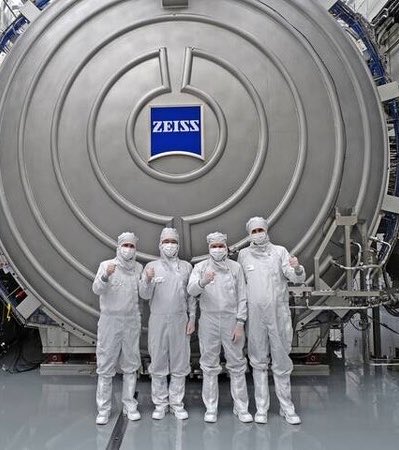
Zeiss semiconductor chief Frank Rohmund said on Bloomberg TV that it is a “reasonable assumption” China will need 15 years to develop extreme ultraviolet, or EUV, lithography machines. Bloomberg reported that Zeiss is a key optics supplier to ASML, the only company in the world that makes EUV lithography systems.
The remark matters because EUV is essential for producing the most advanced chips, including those used in Nvidia’s AI accelerators. Zeiss also says its components are used to make about 80% of the world’s chips, while UBS this week said China is likely at least a decade away from homegrown EUV technology.
For the market, the comment keeps attention on ASML and the broader semiconductor equipment supply chain, especially as the US continues to restrict exports of the most advanced tools to China. Rohmund said he does not think tighter export controls have a positive effect, arguing they may accelerate innovation in China.
China has continued pouring money into domestic semiconductor capabilities, and reports in July said a Shanghai-based company had begun making immersion DUV equipment. Rohmund said that development is not surprising given decades of work, but added that the real performance remains to be seen.
Reuters, citing Bloomberg, reported that Elliott Investment Management has built a sizeable stake in Deutsche Telekom and is urging the German telecom group to walk away from a possible merger with its U.S. arm, T-Mobile US. Instead, Elliott wants the company to consider larger share buybacks and other ways to unlock value. The exact size of the stake was not disclosed, and neither Elliott nor Deutsche Telekom immediately commented.
The merger discussion predates today’s report. Bloomberg said in April that Deutsche Telekom was weighing a full combination with T-Mobile US, while Semafor reported in late July that T-Mobile’s U.S. management no longer backed the deal. That makes Elliott’s move a new layer of pressure on a transaction that had already lost momentum.
Deutsche Telekom holds about 54% of T-Mobile US, making the German parent the key decision-maker in any combination. Any shift toward buybacks instead of a merger would force investors to reassess the capital-return outlook for Deutsche Telekom and the valuation gap between TMUS and its parent.
In the market, T-Mobile US shares moved higher on the report as traders repriced the odds of a deal. Deutsche Telekom remains at the center of the debate, but the company has not publicly confirmed the stake size or Elliott’s preferred course of action.
PG&E on Sept. 2 said it will defer about $2 billion of work in 2027 while still planning to invest about $11.4 billion in California. The company said the move is part of a strategic review aimed at lowering financing costs and preserving safety spending.pgecorp.com
The announcement came after California lawmakers failed to advance wildfire-liability legislation that utilities had been counting on to reduce catastrophe-related risk. PG&E said the existing framework keeps financing expensive and complicates its push for investment-grade credit.cnbc.com
In the stock market, PG&E and Edison International were among the biggest movers in the utility sector this week, sliding sharply when the bill appeared to lose momentum and then recovering after the legislative setback became clearer. Investors have viewed the reform as important because it could affect wildfire-liability exposure, borrowing costs and ultimately customer rates.
PG&E also said it is reaffirming 2026 core EPS guidance of $1.64 to $1.66 and initiating 2027 guidance of $1.78 to $1.82. The company said a four-member independent board committee will oversee the strategic review and consult with regulators and other stakeholders.reuters.com
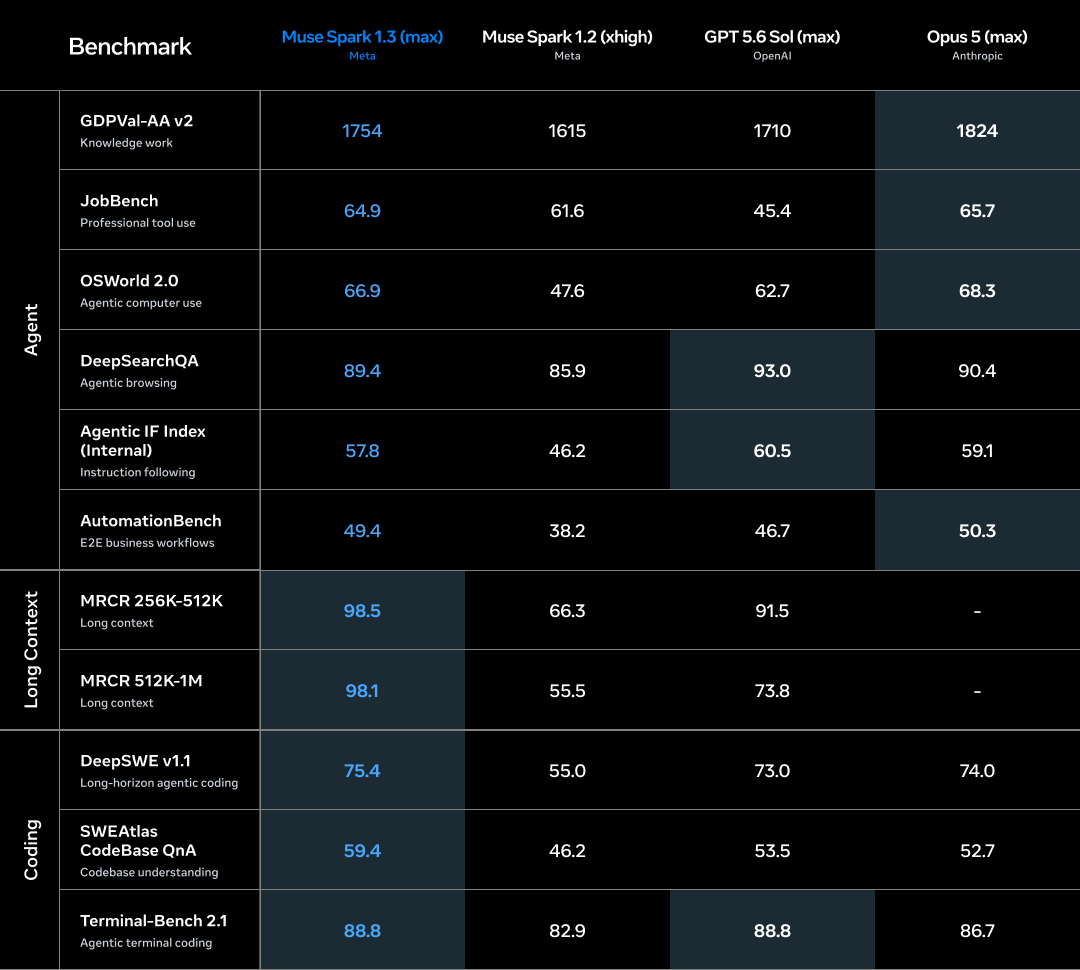
Meta began rolling out Muse Spark 1.3 on Sept. 3, saying the model is its biggest jump yet in coding and agentic work. The update is available now in Muse Code and Meta’s API, according to company comments and follow-up reporting.
Meta’s pitch is that the new model is more efficient, using about 25% fewer tokens than its predecessor while keeping API pricing unchanged. Earlier coverage also said the company sees the release as part of a broader effort to close the gap with Anthropic and OpenAI.
For investors, the immediate relevance is to Meta’s developer platform and AI monetization story, not ad sales. The signal also keeps focus on $META’s competition with frontier-model peers and on whether the company will eventually release model weights.
Meta has not finalized a decision on open weights for Muse Spark 1.3. The company also teased a larger future model, Watermelon, but that remains a separate product line rather than a confirmed launch date.
Uber and British self-driving startup Wayve have launched a supervised robotaxi service in London. Riders requesting UberX, Uber Comfort or Uber Electric may be matched with a Ford Mustang Mach-E equipped with Wayve’s autonomous-driving software, with a human safety driver still on board.
The rollout marks Wayve’s first public commercial service and makes London Europe’s second city with robotaxis, after Zagreb. It follows years of testing on London’s narrow, congested streets and comes under a regulatory framework that still requires supervision.
For Uber, the service extends its autonomous-vehicle push in Europe; for Wayve, it is a key commercial debut in the public market. Rivals including Waymo and Baidu are also preparing London launches, but full driverless operations still await approval.
Uber and Wayve currently have safety authorization for 15 supervised vehicles, according to AFP, while The Independent said the rollout would start with fewer than 20 cars. Reuters also reported that Uber has launched autonomous rides in London using Wayve technology.
Lemonade said on Sept. 2 that it has launched Lemonade Car and Lemonade Autonomous Car in Missouri. Tesla drivers using Full Self-Driving (Supervised) on those miles will get 50% off the per-mile price from day one.
The rollout matters because Lemonade is pairing a conventional auto policy with a Tesla-specific usage-based product in the same state for the first time. The company said its pricing models are intended to reflect the safety profile of FSD (Supervised).
For investors, the update ties LMND more closely to auto-insurance expansion and ties TSLA to a concrete insurance-use case for FSD miles. CNBC reported on Sept. 3 that Tesla is also building anticipation for a Cybercab event later this week, keeping autonomy in focus.
Lemonade said Missouri customers can get quotes through its app or website, while Tesla owners can enroll through a dedicated portal. The company also said bundle discounts are available with renters, pet or home insurance.
Barrick Mining Corp. is considering delaying the IPO of its North American gold business until 2027, Bloomberg reported on Sept. 2, citing people familiar with the matter. The report is a fresh update on timing, not a company announcement.
The listing has been part of Barrick’s broader restructuring push for months. Bloomberg reported in April that the miner had tapped Goldman Sachs to lead the IPO of its North American assets, making the current discussion a question of pacing rather than strategy direction.
The move matters for Barrick Mining shares because a North American spinout could reshape how investors value the parent company and the carved-out assets. The stock is the main ticker to watch as the market weighs whether the delay changes the deal’s eventual pricing logic.
For now, the story remains at the level of reported consideration, and Barrick has not publicly confirmed a revised timetable. Any formal update on the IPO window would be the key next checkpoint.
Australia reported a seasonally adjusted goods trade surplus of A$1.923 billion for July, down from a revised A$2.341 billion in June but above the market consensus of about A$1.39 billion. Exports fell 3.3% month over month, while imports declined 2.5%. abs.gov.au
In the U.S., the Census Bureau said the July goods trade deficit came in at $88.6 billion, narrower than June’s revised $101.4 billion and slightly better than the $90.2 billion forecast. Haver Analytics and PNC Research both noted that the move reflected softer exports alongside a rebound in imports, especially capital goods. haver.com pnc.com
For markets, the data mainly matter for currency pricing and the read-through to demand. Australia’s export drop was led by non-monetary gold and coal, while the U.S. import increase was driven by capital goods, a category often tied to business investment.
No company-specific response was part of the releases. The figures are best treated as a snapshot of cross-border demand rather than a stand-alone trend signal.
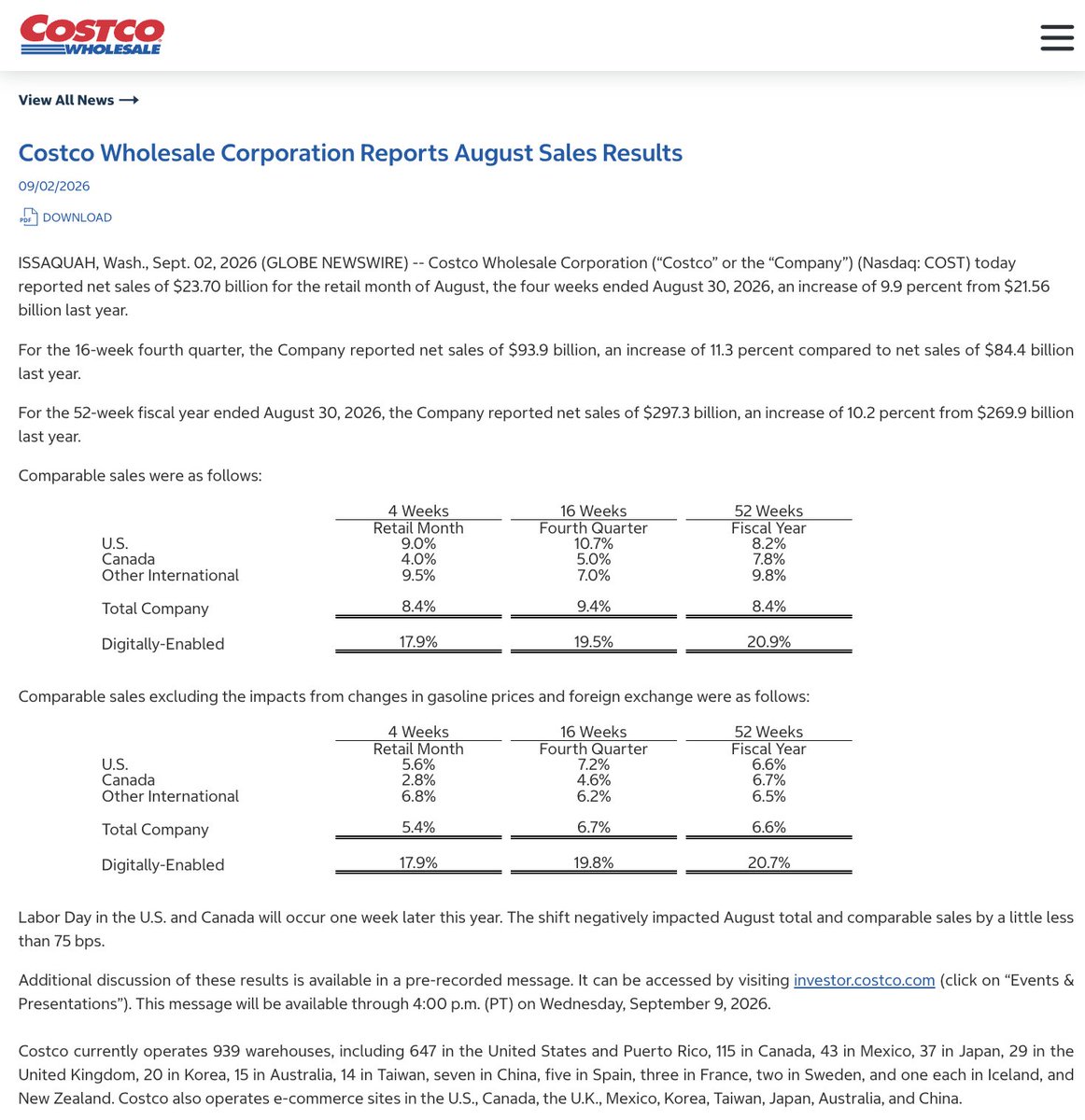
Costco reported August net sales of $23.70 billion for the four weeks ended August 30, up 9.9% from $21.56 billion a year earlier. Comparable sales rose 8.4% overall, or 5.4% excluding gasoline price and foreign exchange impacts; fourth-quarter net sales reached $93.9 billion, up 11.3%.
For fiscal 2026, Costco said net sales climbed 10.2% to $297.3 billion. The company said the later timing of Labor Day in the U.S. and Canada weighed on August total and comparable sales by a little less than 75 basis points.
U.S. comparable sales increased 9.0% in August, or 5.6% excluding gas and FX, while digitally enabled comparable sales rose 17.9%. Investors will likely focus on whether the strong top-line run rate can keep holding up as the company moves into the new fiscal year.
The sales release did not include an earnings update or new forward guidance. COST is often watched as a read-through on consumer spending resilience among warehouse clubs and value-oriented retailers.
Campbell’s reported fiscal fourth-quarter adjusted EPS of $0.39 on revenue of $2.14 billion, matching the earnings estimate but landing slightly below sales expectations. The company also guided fiscal 2027 adjusted EPS to $1.65 to $1.80 and organic net sales to a decline of 2% to 4%.
The update lands against a backdrop of softer demand for pricier snacks and condiments, plus ongoing pressure from inflation, tariffs and supply-chain costs. Management said it is moving ahead with plant closures and workforce reductions as part of a broader reset.
Investors focused on the combination of weaker forward sales guidance and a 36% cut to the quarterly dividend, a move aimed at accelerating debt reduction. Shares in CPB drew attention in premarket trading, while packaged-food peers were also watched for read-throughs on margins and demand.
Company materials and reporting around the release indicate the quarter’s main message was not just one earnings print, but a tougher earnings-and-capital-return setup for the next fiscal year. The guidance and dividend action together suggest management is prioritizing balance-sheet repair over cash returns.
NetApp reported first-quarter fiscal 2027 revenue of $2.025 billion and adjusted earnings of $2.58 per share on Sept. 2 after the close, both ahead of consensus estimates. The company also lifted its full-year fiscal 2027 outlook to $7.98 billion-$8.23 billion in revenue and $9.73-$10.03 in adjusted EPS.
In its prior fiscal fourth-quarter release, NetApp had guided first-quarter revenue to $1.75 billion-$1.90 billion, so the actual result came in above the high end of that range. The company had already posted fiscal 2026 fourth-quarter revenue of $1.948 billion and full-year revenue of $6.925 billion, underscoring the scale of the latest beat.
Even with the stronger print and higher guidance, after-hours trading turned negative as commentary centered on weaker free cash flow versus a year earlier. That shift matters because NTAP is being judged not only on demand for all-flash and cloud storage, but also on how efficiently it converts that demand into cash.
Investors will now be watching whether NetApp can sustain the momentum in all-flash, hybrid cloud and public cloud while stabilizing cash generation. The latest report keeps NTAP squarely in focus as a storage name tied to enterprise AI and infrastructure spending.
Hewlett Packard Enterprise reported third-quarter fiscal 2026 revenue of $12.2 billion, up 34% year over year, with adjusted EPS of $1.11, both ahead of expectations. The company also raised its full-year FY26 revenue growth outlook to 34%-37% from 29%-33%.
Management said AI demand is continuing to lift servers and networking gear, with backlog and pipeline at record levels. HPE further increased its FY27 growth framework to 13%-17%, signaling that the AI buildout is feeding into longer-dated demand assumptions.
Investors are still watching the supply side closely. Company executives said memory remains the main bottleneck, with NAND, CPUs and drives also constraining shipments, which helped pressure the stock in after-hours trading despite the beat-and-raise quarter.
By segment, networking revenue rose 74.9% to $2.9 billion and Cloud & AI revenue increased 25.4% to $9.0 billion. HPE also lifted FY26 non-GAAP EPS guidance to $3.75-$3.85 and said it now expects at least $3.75 billion in free cash flow for the year.
Victoria’s Secret reported second-quarter 2026 net sales of $1.611 billion, up 10% from a year earlier, with adjusted earnings of $0.95 per diluted share. The company also raised its full-year revenue and adjusted operating income outlook.
Management now expects fiscal 2026 net sales of $7.10 billion-$7.18 billion, up from the prior $7.03 billion-$7.13 billion range, and adjusted operating income of $560 million-$590 million. The company cited stronger regular-price selling, bra demand and momentum in Pink.
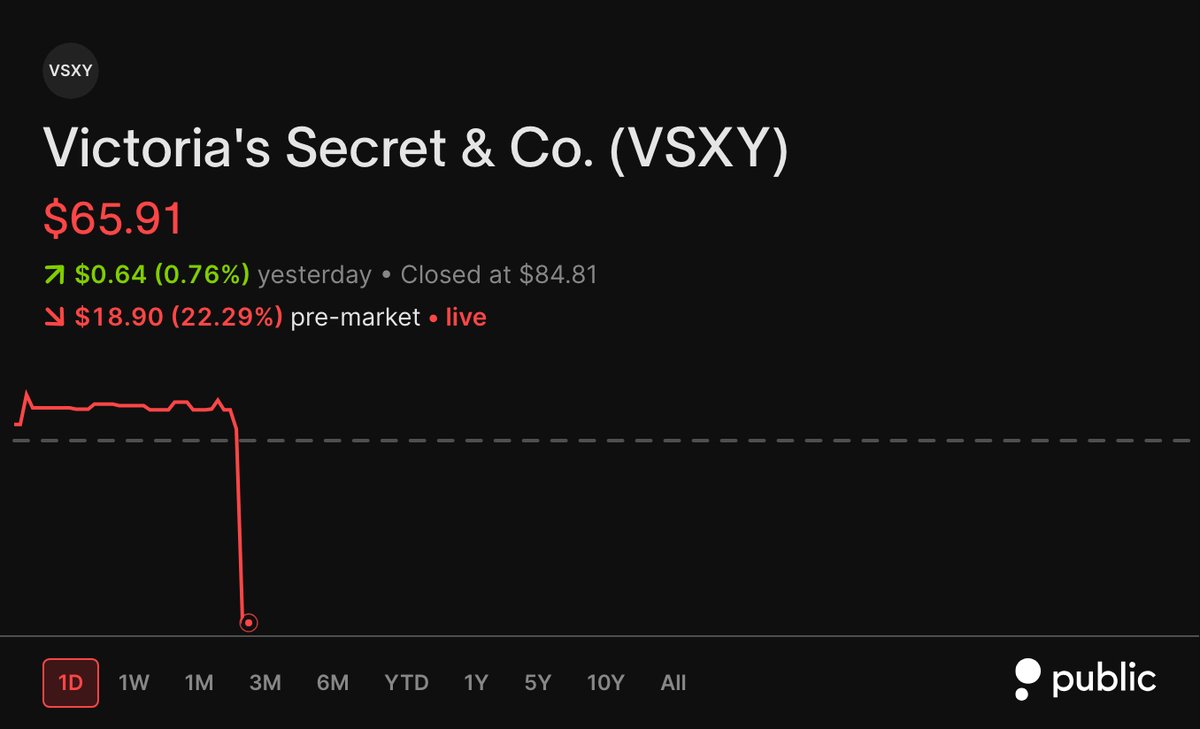
Investors, however, focused on the softer third-quarter operating income guide of $10 million-$20 million, which suggested a slower near-term profit ramp even as the annual outlook improved. VSXY traded lower in premarket action after the release.
The company also said it received more than $140 million of IEEPA tariff refunds in the quarter, representing over 95% of tariffs paid, and excluded that benefit from adjusted results. Victoria’s Secret said it remains focused on product, customer experience and marketing investments.
Five Below reported fiscal second-quarter net sales of $1.26 billion and adjusted earnings per share of $1.68, both ahead of analyst estimates. The company also said comparable sales rose 14.1% in the quarter, marking another period of double-digit growth.
On the fuller earnings release, Five Below said net income was $221.4 million, diluted EPS was $3.99, and operating income reached $275.35 million. It added 52 net new stores and ended the quarter with 2,022 locations across 46 states.
Management raised full-year fiscal 2026 revenue guidance to $5.63 billion-$5.71 billion from $5.40 billion-$5.48 billion. Investors are watching whether the retailer can sustain strong comps and store growth as the new forecast resets expectations for the rest of the year.
Recent coverage from Zacks and the Wall Street Journal also highlighted the beat on both sales and earnings, along with the higher outlook. For FIVE shares, the key takeaway is that the latest quarter delivered not just a beat, but an upgraded full-year framework.
BTQ Technologies has resurfaced on social media as multiple posts recapped the company’s 2026 buildout across Bitcoin Quantum, BIP-360, QCIM chips and QPerfect. The posts point back to a string of company disclosures rather than a new product launch.
BTQ said in March that Bitcoin Quantum testnet v0.3.0 included the first working implementation of BIP 360, while July brought its completed QCIM + PUF security-chip design with ICTK. In August, BTQ also said it completed the first technical milestone with ITRI in a TSMC 28-nanometre environment, and its mid-August corporate update said QPerfect had about 16 organizations in its commercial pipeline across five countries.
For the market, the main relevance is BTQ itself, as investors track whether these quantum-security initiatives move from validation into revenue-generating deployments. The company’s disclosures suggest the program mix spans software, hardware and Bitcoin-related infrastructure, broadening the equity story beyond a single product line.
BTQ’s own announcements provide the clearest evidence trail: the March BIP 360 testnet release, the July ICTK chip-design update, the August ITRI milestone and the August quarter update. Some components remain at prototype, integration or validation stages, so the public record still distinguishes between completion of milestones and full commercialization.
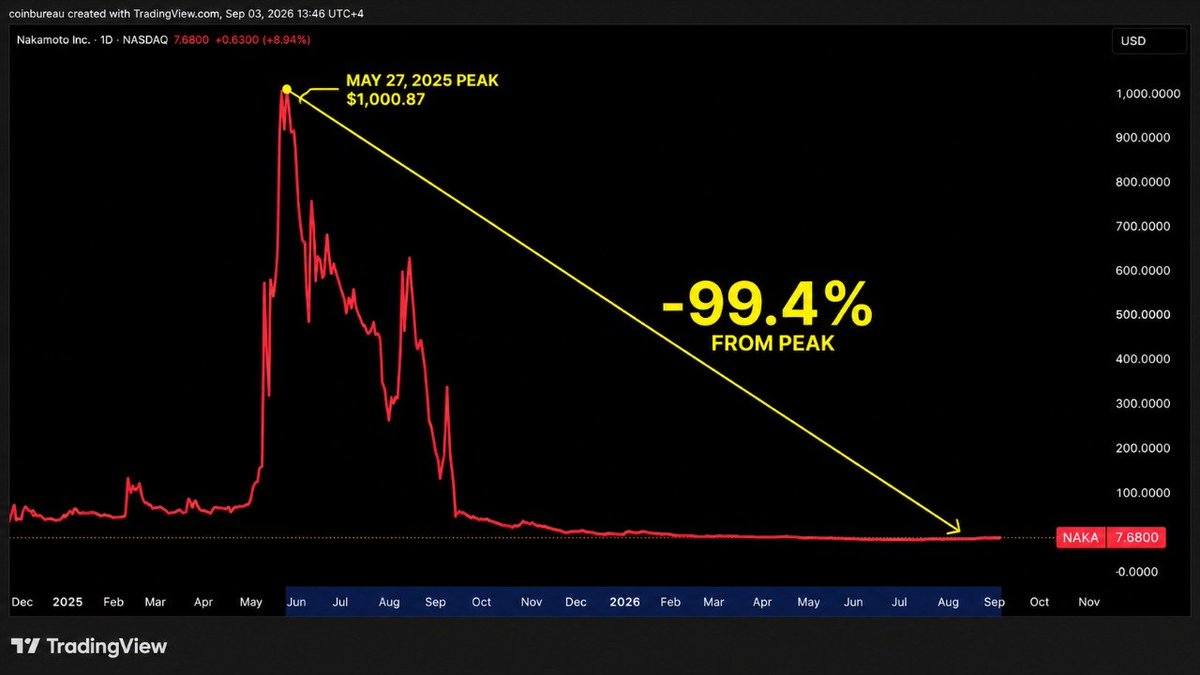
At the Bitcoin Asia conference, Nakamoto chairman David Bailey said the company bought Bitcoin “at the top” and that the asset then “performed very poorly.” Multiple reports say NAKA has fallen roughly 99% from its 2025 peak.
Nakamoto was built around a share-issuance strategy: sell stock when the market valued the company above the Bitcoin on its balance sheet, then use the proceeds to buy more coins. That model weakened once the stock traded below the value of its Bitcoin holdings, forcing the company to look for businesses that can generate cash flow.
The latest disclosures show Nakamoto held about 4,467 Bitcoin at the end of June, along with roughly $19.1 million in cash and $164.7 million in total debt. It also reported a net loss of about $371.8 million in the first half of 2026, after selling roughly 600 Bitcoin and related derivatives for about $48 million in net proceeds and using much of that to repay $45 million of Bitcoin-backed debt.
For investors, the story now centers on whether NAKA’s buyback authorization, debt extension and 1-for-40 reverse split can stabilize the capital structure. The stock remains closely tied to Bitcoin’s price and to sentiment around public Bitcoin-treasury vehicles.
Coinbase has appointed Anthony Armstrong to its board of directors and to an audit-and-compliance role, with the change effective September 1. Multiple reports say the move expands Coinbase’s board from nine members to 10.
Armstrong previously ran technology M&A at Morgan Stanley and later served as CFO of xAI and X. The addition is being read as a governance-level signal for Coinbase’s push toward AI-facing financial infrastructure, rather than an operating change.
For COIN investors, board reshuffles tend to matter more for oversight and strategic framing than for immediate product or trading impacts. Coinbase has been widening its payments, stablecoin and onchain infrastructure ambitions, with executives increasingly talking about AI agents and programmable finance.
Coinbase has confirmed the appointment, but the available disclosures do not yet spell out compensation, committee scope beyond the audit role, or any specific project mandate. More complete SEC filings should provide the remaining details.
Zoom said it has appointed Jeff Epstein, the former CFO of Oracle, to its board of directors effective immediately. The company also said longtime director Jonathan Chadwick will retire from the board on Nov. 19, 2026.
Epstein is currently an operating partner at Bessemer Venture Partners and serves on several software company boards. Zoom said his background in B2B software and vertical AI makes him a fit for the board at a time when governance and capital-allocation experience remain closely watched.
The announcement matters most for Zoom Communications (NASDAQ: ZM). Pre-market chatter on X pointed to an early gain of about 1.5%, suggesting investors viewed the board addition as a constructive governance update.
Zoom’s SEC Form 3 shows Epstein’s director date as Aug. 31, 2026 and lists no beneficially owned securities. The filing also says Chadwick’s departure is not the result of any disagreement with the company on operations, policies or practices.
PayPal said 220 employees in India were affected by workforce reductions on Aug. 31, or about 4% of its India headcount. The company’s statement pushes back against reports that as many as 600 jobs had been cut in the country.
The move is part of PayPal’s previously announced multi-year transformation program aimed at simplifying global operations, improving execution and positioning the company for longer-term growth. PayPal did not provide a breakdown by function or location, and did not say whether contractor roles were included.
For investors, the focus remains on whether the restructuring will help PayPal deliver the cost savings it has outlined for this year. The stock has been trading against the backdrop of broader turnaround expectations, with PYPL sentiment tied closely to expense discipline and operating efficiency.
Reuters reported the 220-job figure earlier on Wednesday, while The Hindu said PayPal disputed media reports of substantially larger cuts in India. The company declined to give further details on impact to third-party workforce arrangements.
U.S. stocks ended higher on Sept. 2, with the S&P 500 up 0.46% to 7,666.59, the Nasdaq Composite up 0.45% to 26,217.83 and the Dow Jones Industrial Average up 0.56% to 53,061.51. The move snapped a three-day losing streak and restored a cautious risk-on tone into the close.
The backdrop was a pause in bond-market pressure and a softer tone in energy. The 10-year Treasury yield touched 4.818% intraday before easing, while ADP data showed private payrolls rose by 38,000 in August, below the 48,000 forecast, reinforcing the market’s focus on growth, inflation and the Fed’s next move.
Mega-cap tech helped drive the rebound, with Nvidia among the notable gainers and Dell also stronger after earnings. Still, breadth remained a concern: one market note said fewer than half of S&P 500 stocks were trading above their 50-day moving average, underscoring how concentrated the advance has become.
No new company-specific denial or guidance change emerged in the sources reviewed. For now, the day’s trade looked more like a relief rally powered by yields and oil than a broad-based rotation across the market.
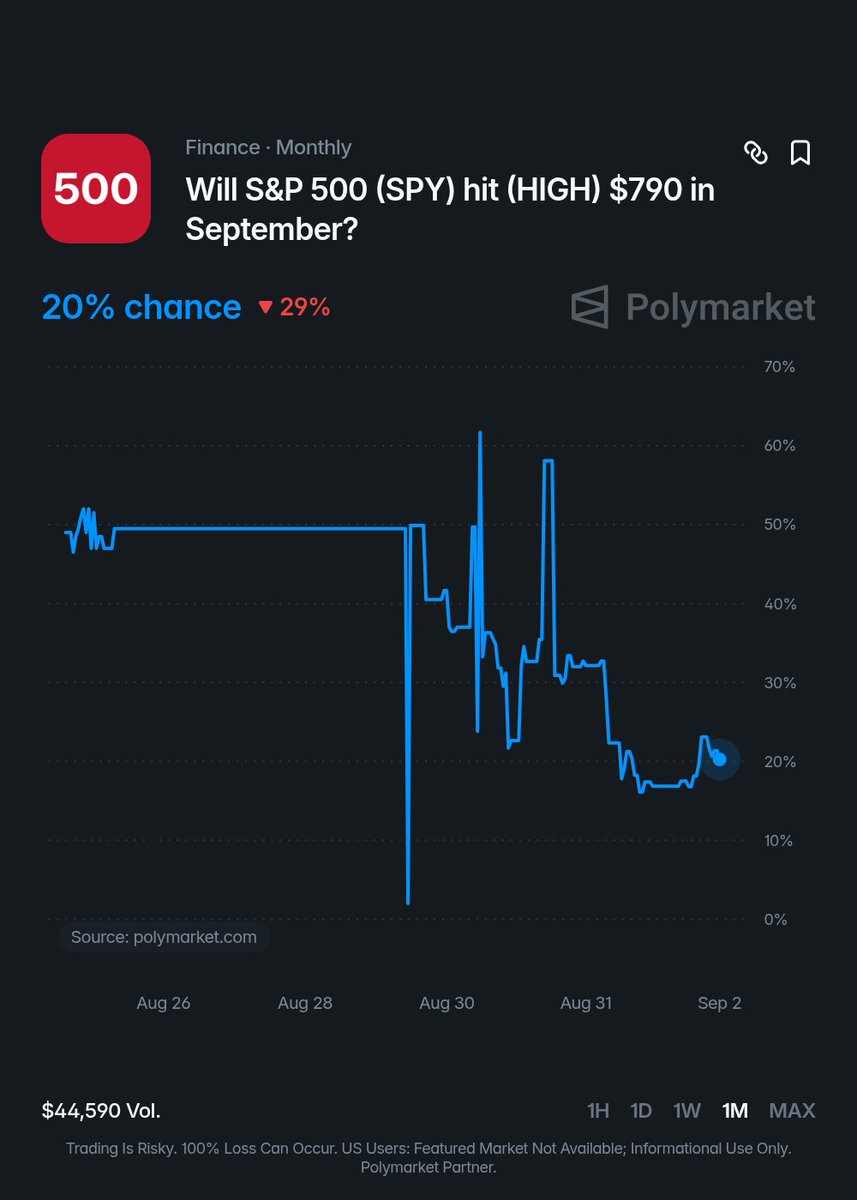
Before Thursday’s open, trading chatter around SPY intensified as a fresh X signal showed traders assigning a 20% chance that the ETF reaches $790 in September. At the same time, market participants were still focused on whether $765 resistance can hold and whether the $759 area can continue to act as support.
The backdrop is a September market that is already seasonally weak and increasingly sensitive to rates and geopolitics. Recent reporting noted that the S&P 500 has averaged a -1.4% return in September from 2017 through 2025, while investors are waiting for Friday’s payrolls release and watching Treasury yields and Middle East tensions.
For SPY and peers such as VOO, IVV, SPLG and RSP, near-term price action is being driven more by the index-level mix of valuation and mega-cap leadership than by any single corporate story. The S&P 500 closed at 7,666.60 on Sept. 2, up 0.46%, and separate market commentary pointed to support around 7,611 alongside resistance near 7,765.
That leaves broad index ETFs exposed to changes in rate expectations: sustained high yields tend to weigh more on cap-weighted funds like SPY, VOO, IVV and SPLG, while RSP’s equal-weight structure can shift the pressure across constituents. For now, the key catalyst remains Friday’s jobs data and the next signal from the Federal Reserve, not a new fundamental event in any one holding.