The Financial Times reported that Anthropic is close to finalizing key roles for Morgan Stanley and Goldman Sachs in its initial public offering, with a filing possible as soon as next week. According to the report, Morgan Stanley is in pole position for the lead-left role, while Goldman Sachs is expected to act as the stabilization agent.
The development adds fresh detail to a listing process that has been moving quickly in recent days. Separate reports say Anthropic is targeting a valuation of $2 trillion or more, and that the company is also close to arranging a $15 billion revolving credit facility ahead of the IPO.
For the market, the main listed beneficiaries are likely the banks tied to the deal, especially Morgan Stanley and Goldman Sachs, with JPMorgan, Citigroup and Barclays also mentioned as possible major participants. Investors will also watch the transaction as another test of demand for high-growth AI names.
Anthropic and the banks did not immediately comment to some outlets. The report also said the company is preparing a multi-city roadshow toward the end of September, with a New York listing eyed for late September or early October.
Nvidia has agreed to acquire Hugging Face for $12.93 billion, according to Nvidia’s announcement and multiple reports. Nvidia said Hugging Face will remain an open platform, with developers still able to choose the models, frameworks, clouds and inference providers they want.
Hugging Face has become a central hub for open-source AI models, datasets and applications. Nvidia said the platform serves more than 18 million developers, researchers and creators, and more than 200,000 companies, underscoring why the deal matters for the AI software stack as well as infrastructure.
For investors, the deal sharpens attention on NVDA and the broader AI infrastructure trade. The acquisition could strengthen Nvidia’s influence over how developers discover, evaluate and deploy models, while reinforcing demand around its GPU and CUDA ecosystem.
Nvidia said Hugging Face will continue to support open-source and open-weight models across the ecosystem, along with multi-cloud and multi-accelerator development. The company has not provided a detailed integration timetable, so the immediate focus is on the strategic intent rather than execution details.
これまでの経緯
2026-07-27投稿8件 · 投稿者8人
Nvidia launched the Open Secure AI Alliance with Microsoft, IBM, and 35+ others to build shared open-source tools against AI-driven cyberattacks.
規制
Tesla Cybercab faces NHTSA probe on first day after 45 vehicles, 1,000-unit certification review英語原文
The regulator is testing whether Tesla’s self-certification can support a steering-wheel-free robotaxi rollout in Austin.
The U.S. National Highway Traffic Safety Administration opened an investigation on September 4 into Tesla’s Cybercab, focusing on the process and technical data behind the vehicle’s certification. The probe came just hours after Tesla began putting the steering-wheel-free robotaxi on public roads in Austin, Texas.
The core issue is compliance: the Cybercab lacks a steering wheel, brake pedal, accelerator pedal and mirrors, yet Tesla said it self-certified the vehicle as meeting federal motor vehicle safety standards. NHTSA said existing standards remain in force, and it is examining the basis for Tesla’s view that certain rules do not apply.
The Cybercab matters because it is a key piece of Tesla’s robotaxi strategy. CNA cited Texas records showing 420 autonomous vehicles registered in the state as of Friday morning, including 45 Cybercabs, while the investigation news pressured Tesla shares lower in early trading.
Tesla has not immediately commented on the probe. NHTSA said it will review the certification process and related issues, including the extent to which Tesla determined specific standards were inapplicable to the vehicle.
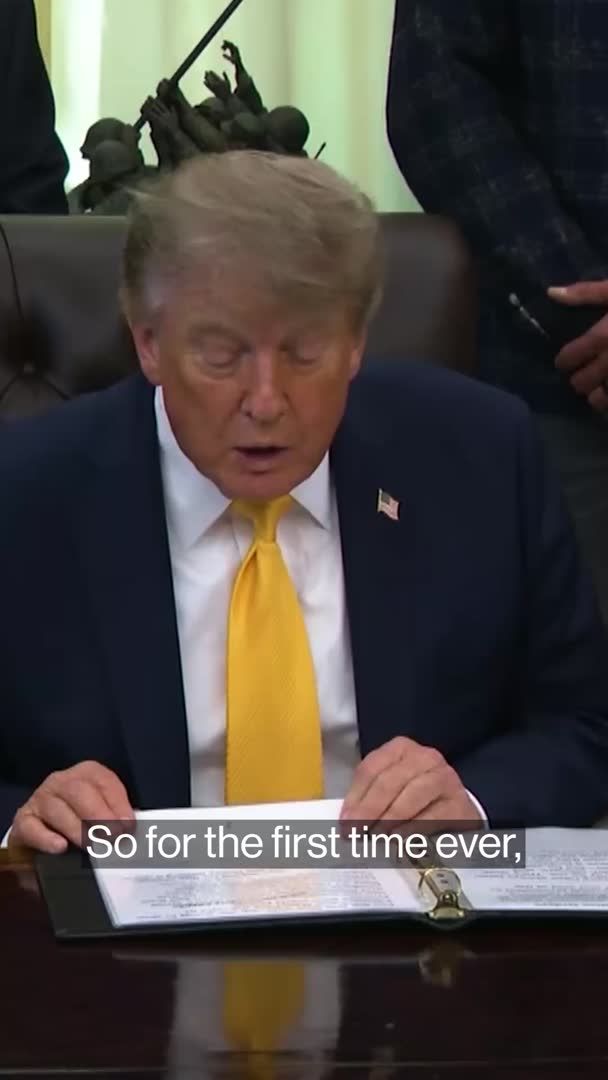
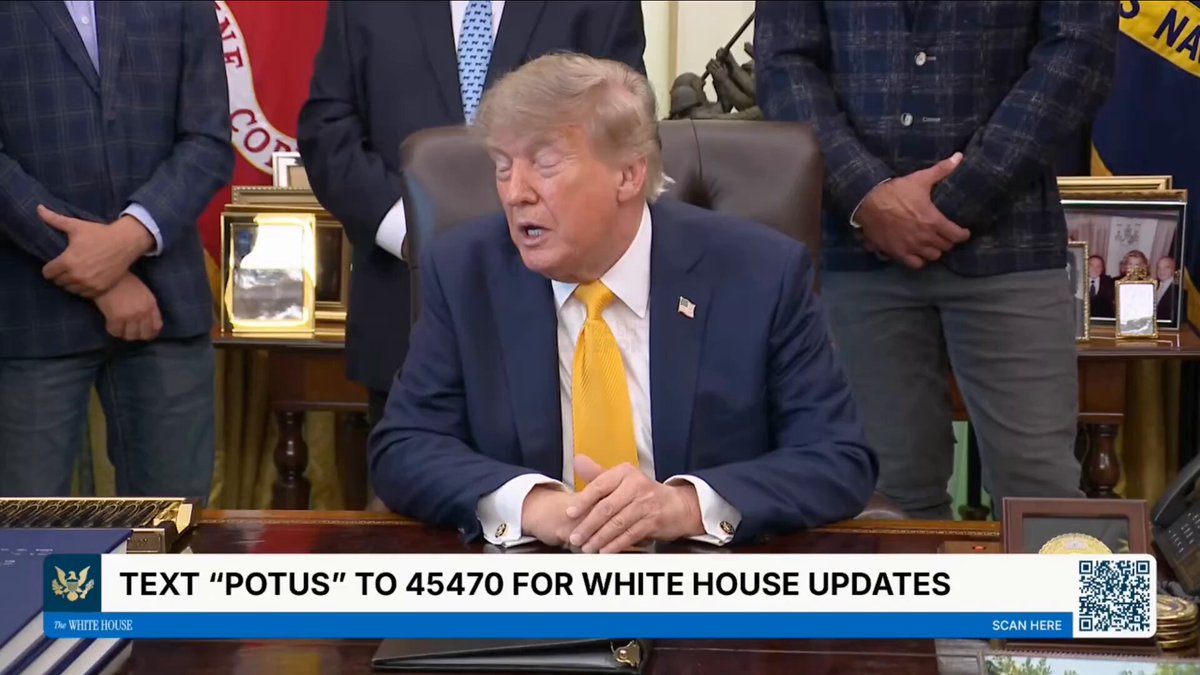
President Donald Trump signed two executive orders on September 4 aimed at the U.S. cattle industry. The centerpiece lets ranchers slaughter and process their own livestock and expand interstate sales, while the administration also moves on country-of-origin labeling, wolf protections and antitrust enforcement.
The orders build on the administration’s earlier push to ease beef costs and come as retail beef prices have hit record highs amid tight cattle supply, drought and wildfire-related constraints. Several reports noted that Trump had previewed the move before signing it at the White House.
Tyson Foods (TSN) is the most closely watched stock in the group because the policy explicitly targets the large meatpacking model dominated by the “big four” processors. JBS, Cargill and National Beef were also named, but the executive orders do not change the law immediately; they direct agencies to study, report and recommend next steps.
For investors, the key question is how quickly USDA and other agencies can streamline inspection and interstate-processing rules. The orders also instruct officials to review enforcement under the Packers and Stockyards Act, which keeps the focus on the concentration of power in meat processing.
マクロ
米ディーゼルが$5.85の最高値、56%上昇が貨物コストに波及英語原文
AAA’s latest reading marks a new high, underscoring how refinery outages are tightening fuel supply and pressure across the economy.
U.S. diesel prices climbed to $5.85 a gallon on Friday, setting an all-time high. That is roughly 56% to 60% above year-earlier levels, depending on the comparison date, and exceeds the previous record set in June 2022.
The move comes as conflict-linked disruptions continue to knock refineries offline and squeeze global fuel supply. CNBC said roughly 5 million barrels a day of refining capacity has been taken out, while about 8% of the diesel needed to meet global demand is now disrupted.
Diesel matters because it powers freight, agriculture, industry and heating, so higher prices tend to show up quickly in shipping and goods costs. Refiners and fuel producers such as VLO, MPC, PSX and DINO remain closely watched as tighter product markets can support margins even as consumers and shippers face higher costs.
So far, reporting has leaned on AAA data and comments from industry executives rather than new company disclosures. Investors are watching refinery utilization, export policy and security risks around shipping lanes for signs of whether supply can catch up.
President Donald Trump on Monday again made the case for data centers, saying states that want to “get rich” should approve them and warning that rejecting them means “poverty and crime.” He framed the issue as part of the AI race between the U.S. and China.
The comments extend the administration’s broad support for AI infrastructure and large-scale compute buildouts. Recent coverage has highlighted mounting local backlash over data centers, with communities citing electricity use, water demand, noise and the risk of higher utility bills.
For markets, the rhetoric reinforces the bullish policy backdrop for the data-center and AI infrastructure trade. Microsoft (MSFT) remains a key name tied to AI capex execution, while Nebius (NBIS) is also watched as an AI infrastructure exposure; investors are still focused on whether power, permits and grid buildouts can keep pace with demand.
Broader reporting says opposition is spreading in local politics as well. Polling cited by Forbes indicates roughly 70% of Americans oppose building an AI data center in their area, underscoring the gap between Washington’s AI push and neighborhood-level resistance.
これまでの経緯
2026-07-07投稿9件 · 投稿者9人
企業動向
Nscale seeks $3.5 billion ahead of IPO, including $1.5 billion convertible notes and $2 billion from Nvidia英語原文
The AI cloud company is testing investor appetite as it tries to finance growth before a New York listing
Nscale is in talks with investors to raise as much as $3.5 billion before a planned initial public offering, according to multiple reports. The package would include up to $1.5 billion of convertible notes and about $2 billion in financing from Nvidia.
The London-based AI cloud company has been trying to scale its data-center and GPU infrastructure aggressively. Reuters reported that Nscale was valued at $14.6 billion in March after a $2 billion Series C round, while Bloomberg says the company is now briefing investors on a much larger contracts book.
For markets, the key listed name is Nvidia, which is described as a potential funding source in the deal structure. The story highlights how AI infrastructure providers are tying financing, long-term compute contracts and chip procurement together ahead of a New York listing.
Nscale has not publicly confirmed the final terms, and deliberations are still ongoing. Goldman Sachs is said to be working on the raise, while Third Point is reported to be leading the convertible-note piece.
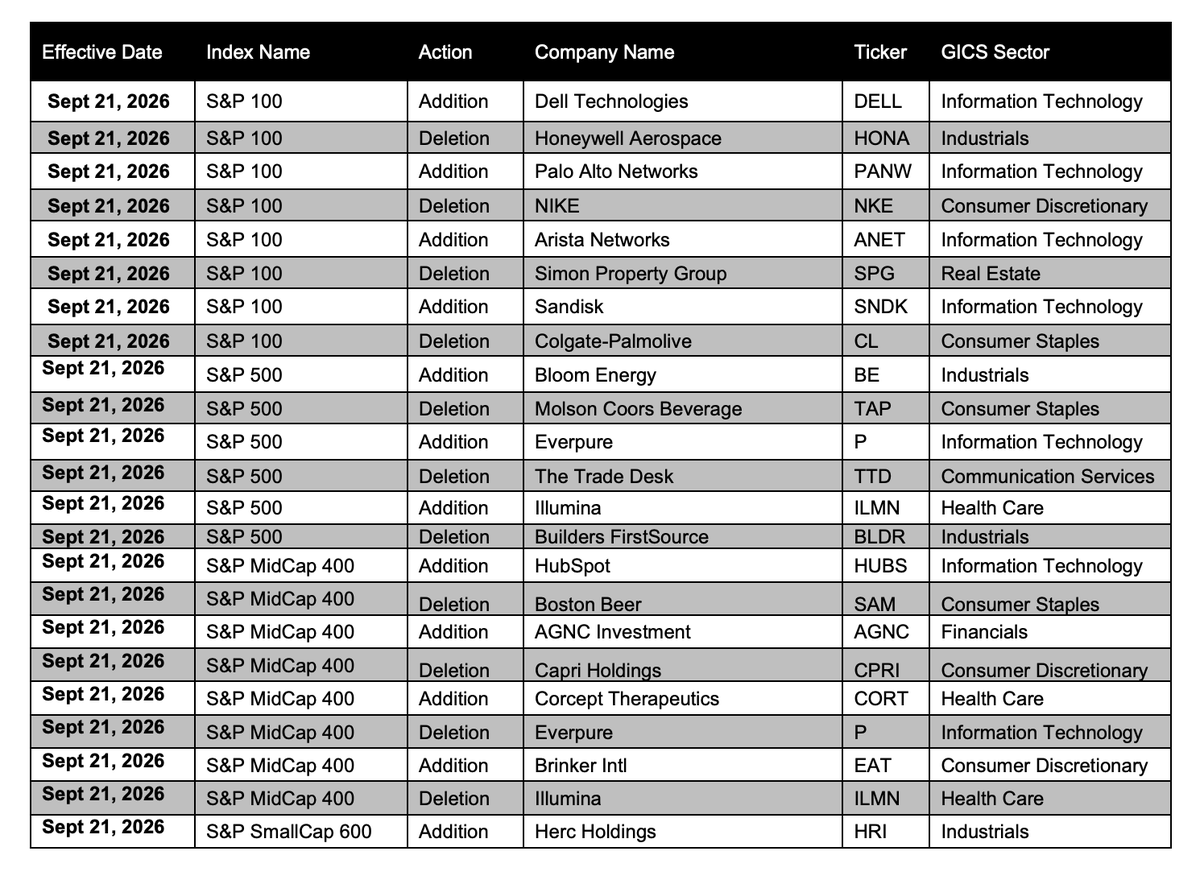
S&P Dow Jones Indices said on Sept. 4 that Bloom Energy, Illumina and Everpure will be added to the S&P 500 before the open on Sept. 21 as part of its quarterly rebalance. Molson Coors Beverage, The Trade Desk and Builders FirstSource will be removed at the same time.
The index provider said the changes are intended to keep each benchmark aligned with its market-cap range. The same announcement also included changes to the S&P 100, S&P MidCap 400 and S&P SmallCap 600.
For markets, the main focus is on passive-fund rebalancing, which can drive trading volume and short-term volatility around the effective date. Shares of the add-ons and deletions are likely to remain in the spotlight as index funds adjust holdings.
The update extends beyond the S&P 500: some names are moving into the S&P 100 and S&P MidCap 400, while others are shifting into the S&P SmallCap 600. That makes the quarterly review a broader index-structure event rather than a one-off change.
US spot Bitcoin ETFs have now posted three straight weeks of net inflows, with the latest week bringing in nearly $1 billion, according to Cointelegraph. The same report said Thursday’s daily haul reached $730.9 million, the biggest single-day inflow since mid-January.cointelegraph.com
The flow streak comes as Bitcoin slipped back under $80,000 after a brief rebound, with weaker risk sentiment following stronger-than-expected US jobs data and renewed debate over the Federal Reserve path.bloomberg.com CryptoQuant said the market still needs a decisive close above roughly $83,000 before a new bull market can be confirmed.
Among ETFs, BlackRock’s IBIT led Thursday’s buying with about $454 million in net inflows, or roughly 62% of the day’s total, according to the report.cointelegraph.com That concentration suggests institutional demand is still strongest in the largest and most liquid fund, even though spot BTC has not yet broken higher.
For equities tied to crypto exposure, the key takeaway is that ETF demand remains supportive, but not yet decisive. Traders will keep watching whether the inflow streak extends to a fourth week and whether BTC can reclaim the $81,000-$83,000 band that analysts describe as a critical resistance zone.
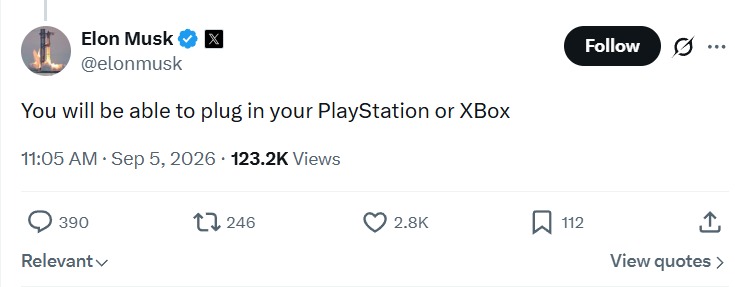
Elon Musk said on X that users will be able to plug a PlayStation or Xbox directly into a Tesla vehicle. Multiple posts and wire-style reports echoed the comment and tied it to the Cybercab, Tesla’s autonomous ride-hailing concept.
The background matters because Cybercab is being positioned around passenger utility rather than driving. Outside reports have described a 22-inch display in the cabin, making entertainment part of the product story instead of a side feature.
For markets, the comment puts Tesla (TSLA) at the center, while Sony (SONY) and Microsoft (MSFT) are only peripheral names through their console brands. At this stage, the statement reads as a product tease, not a disclosed partnership.
No new official response from Sony or Microsoft was visible in the reports reviewed. The language used in follow-up coverage remains conditional, suggesting a feature idea rather than a finalized commercial integration.
Strategy said on X that its net reserves stand at $52 billion after accounting for debt and preferred claims. The post was echoed by Michael Saylor, making the message the day’s key new disclosure rather than a new operating event.
The figure sits inside Strategy’s own “reserve capital” framework, not a standard accounting metric. Recent reporting cited about 845,050 BTC worth roughly $65.2 billion to $65.3 billion and about $6.7 billion in cash, while the company’s own briefing has put net reserve capital in the low-$50 billion range after senior claims are deducted.
For MSTR, investors are watching whether Bitcoin price swings could ever force liquidation of holdings to cover liabilities. The latest post mainly reinforces the company’s no-forced-sell narrative and its claim of near-zero leverage, which remains central to how the market prices the stock.
No contradictory company statement was found in the materials reviewed. The main debate remains methodological: whether Strategy’s reserve-capital yardstick leaves out claims that other analysts would treat as senior obligations.
The Wall Street Journal reported that U.S. negotiators used access to Nvidia’s advanced AI chips as leverage while working on a preliminary Armenia-Azerbaijan peace agreement last year. The report says the chip access was linked to Firebird’s planned AI data center in Armenia.
The significance is not just the hardware count, but the fact that export permissions and high-end compute were reportedly woven into peace diplomacy. Earlier coverage had already tied the project to a 100 MW-scale buildout in Armenia, making the chip question part of a broader economic package.
For Nvidia, the story underscores how its accelerators have become strategic assets beyond the tech sector. NVDA itself is not being reported as the direct mover here, but the narrative reinforces the company’s role in geopolitically sensitive supply chains.
As of now, the specific bargaining details are reported by the WSJ through people involved in the talks, and no new public denial or confirmation from the parties has changed that record. Any further official comment would matter because it could clarify whether this was a policy signal, a procurement issue, or both.
これまでの経緯
2026-08-08投稿3件 · 投稿者3人
FirebirdCloudAI announced the launch of the CIS region's largest AI factory in Armenia, powered by the NVIDIA DSX platform.
企業動向
Dangote Refinery clears $1.6 billion IPO for 4.1 billion shares英語原文
Nigeria’s securities regulator has approved the offer, putting a rare mega-cap industrial listing on track for September 14.
Nigeria’s Securities and Exchange Commission has approved the initial public offering of Dangote Petroleum Refinery and Petrochemicals FZE. The company plans to sell 4.1 billion shares at 525 naira each, a base transaction size of about $1.6 billion, with the book expected to open on Sept. 14.
The refinery is one of Africa’s largest industrial projects and currently has capacity of about 700,000 barrels per day, with expansion plans targeting 1.4 million barrels per day. The approval gives the deal clearer pricing and timing after weeks of market speculation.
U.S. refining names including Valero, Marathon Petroleum, Phillips 66 and Delek can remain in focus because investors often compare large new refining assets against listed peers when judging margins, capital intensity and valuation. A transaction of this size also adds a fresh reference point for global refining capacity growth.
Dangote has not issued a new comment beyond prior remarks that the fundraising is aimed at supporting expansion. The approval now moves the company from planning into execution, making investor demand the next key test for the offering.
Lululemon reported fiscal second-quarter net revenue of $2.415 billion, down 4% year over year, and adjusted earnings of $2.92 per share on September 4. The earnings beat did little to calm investors, as the stock fell to an eight-year low after the company also cut its full-year outlook again.
The quarter was flattered by $134.5 million in tariff refunds, but the underlying trends remained weak: global comparable sales fell 9%, and the company lowered full-year revenue guidance to $10.35 billion-$10.5 billion while trimming adjusted EPS guidance to $9.48-$9.73. Management pointed to softer traffic in North America and China Mainland, plus uneven response to new products.
The market reaction was swift, with LULU dropping roughly 17%-20% in intraday trading and options volume surging. Investors appeared more focused on shrinking comps, deeper discounting pressure and the company’s path back to growth than on the headline earnings beat.
Chief financial officer and interim co-CEO Meghan Frank said the company is working to strengthen product assortment, increase marketing and keep costs tight. Newly named CEO Heidi O'Neill is scheduled to take over on September 8, adding a leadership transition to an already difficult turnaround story.
Multiple posts on X say the U.S. FDA has granted accelerated approval to AstraZeneca’s Etcamah (camizestrant) for advanced breast cancer with an ESR1 mutation. The key new development today is the purported U.S. green light, after the company had been waiting on the FDA review cycle.
The drug’s regulatory backdrop is already substantial. AstraZeneca has said the FDA accepted the NDA, later extended the PDUFA date, and the SERENA-6 trial showed a 56% reduction in the risk of disease progression or death, with median PFS of 16.0 months versus 9.2 months for the comparator.
For AZN, the immediate market focus is whether a U.S. accelerated approval unlocks a faster launch path in a sizeable oncology indication. The read-through also matters for the broader CDK4/6 combination market, where commercial positioning and prescribing share can shift quickly once labeling is finalized.
At the same time, AstraZeneca has already secured EU approval for the same regimen, which strengthens the evidence base around the program. Investors will now be watching for formal confirmation from the FDA and the company’s next regulatory disclosure.
Reuters reported on Sept. 4 that Wacker Chemie is weighing whether to close its Charleston, Tennessee polysilicon plant after U.S. trade measures helped drive away its last two customers. The facility employs about 600 workers, and a decision is expected in the coming weeks.
The development follows a White House proclamation issued on Aug. 6 that set a price floor and tariffs on imported polysilicon ingots, wafers, cells and solar panels. Reuters said the rules treat products made abroad with polysilicon from anywhere the same, limiting any advantage for U.S.-made material.
The market reaction was modest but negative for Wacker, whose shares fell on Sept. 4, according to Reuters. The episode also matters for chip and solar supply chains more broadly, with investors watching names such as MU and NVDA for policy spillovers rather than direct exposure.
Wacker said it was too early to assess the policy's impact and that it was in active talks with the administration. After publication, the company said it had no plans to close the Tennessee site, while Reuters cited research suggesting U.S. polysilicon can cost up to four times more than imported material.
Grayscale’s latest readout puts tokenized equities back in the spotlight, saying the ecosystems tied to HOOD, BNB and SOL are leading the category as weekly spot volume approaches $3 billion and on-chain TVL tops $110 million. The figures were amplified on X today by multiple accounts citing the same note.
The tokenized-stock trade has been building for months. Earlier reporting said Solana handled roughly $5.8 billion in tokenized-equity volume in Q2, while Robinhood Chain, launched on July 1, quickly reached about $29.7 million in average daily trading volume.
The key market takeaway is the mismatch between fast-growing turnover and modest on-chain capital deployment. Grayscale said only about 5% of tokenized-equity activity is used in on-chain finance, suggesting the sector is still much more of a trading venue than a productive on-chain asset class.
For equities and crypto investors alike, HOOD, BNB and SOL are now the main tickers watching the tokenized-equity story. Robinhood is the newer entrant, while BNB Chain and Solana remain the established venues, but the bigger question is whether volume can translate into stickier on-chain use.
これまでの経緯
2026-07-09投稿5件 · 投稿者5人
Robinhood Chain launch sparks criticism over redundancy with Solana and liquidity fragmentation.
企業動向🔥進行中
CoreWeave brings first production Vera Rubin NVL72 online in 6.5 hours英語原文
Dell-delivered racks and CoreWeave validation mark a fresh step from launch-stage testing to deployed AI capacity.
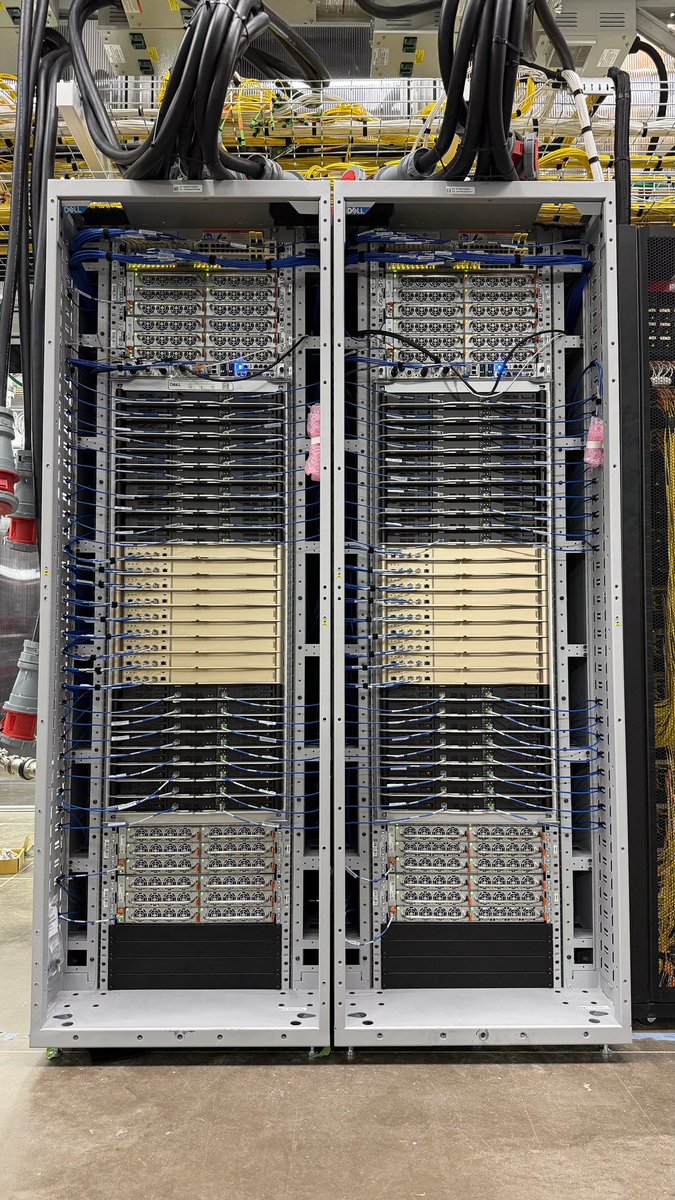
CoreWeave said it has received its first production NVIDIA Vera Rubin NVL72 racks and has brought the system online. The company had already announced on June 1 that it completed bring-up and validation of the platform, saying it was the first AI cloud provider to do so.
The NVL72 rack features 72 Rubin GPUs and 36 Vera CPUs connected by a 260 TB/s NVLink 6 fabric, with up to 3.6 exaFLOPS of inference capability per rack. CoreWeave also said the system went from delivery to production readiness in under 6.5 hours.
For Dell, the deployment underscores its role in turning NVIDIA’s newest architecture into ship-ready infrastructure. For CoreWeave, it reinforces its positioning as an AI cloud operator focused on fast hardware turn-up and capacity expansion.
The update is a positive read-through for CRWV, DELL and NVDA as investors watch how quickly next-generation AI racks move from validation into actual production use. Earlier claims about being “first” have varied across companies and reports, so the cleanest framing is that CoreWeave is among the earliest publicly disclosed production deployments.
これまでの経緯
2026-07-14投稿5件 · 投稿者4人
Discussions highlight IREN as undervalued amid UK data center demand, concerns on CRWV's decline, and GLXY's target upgrade.
企業動向
Apple set for Sept. 9 debut as Ternus’ first showlines a $2,000+ foldable英語原文
Bloomberg says the new CEO will host Apple’s biggest product slate in years, with the base iPhone 18 reportedly pushed to spring
Apple is set to hold its “Surprise and Shine” event on Sept. 9, with new CEO John Ternus taking the stage for his first major product launch. Bloomberg says Apple is expected to unveil the iPhone 18 Pro, iPhone 18 Pro Max and its first foldable iPhone, widely referred to as the iPhone Ultra.
The event matters because it appears to mark a reset in Apple’s release cadence. MacRumors and Macworld both report that the standard iPhone 18 may be delayed until spring 2027, while the foldable is described as a book-style device with a roughly 5.5-inch outer display and 7.8-inch inner screen.
Investors are watching AAPL for signs on pricing and upgrade demand, especially after reports that the foldable could start above $2,000. For suppliers, the focus will be on launch timing, display components and hinge-related parts, though Apple has not officially confirmed the rumored lineup.
For now, this is a preview of a product event rather than a confirmed sales or earnings catalyst. The market’s reaction will depend on what Apple actually announces on Sept. 9, not on the rumor set alone.
President Donald Trump said on September 4 that he would “probably” release more Trump coins after the initial $1 commemorative coins sold out within hours. He added that he does not run the operation and only heard that the coins were selling very well.
The comment lands in the middle of a broader Trump-branded money-making ecosystem that now spans physical collectibles and a Solana-based meme coin, $TRUMP. The key distinction is that Trump’s latest remark was about merchandise-style coins, not a new blockchain announcement.
For markets, the directly relevant ticker remains TRUMP, not SOL, because the new development is another signal about Trump-branded product demand rather than a fresh on-chain event. The U.S. Mint’s coin program itself is also notable: the coins carry a $1 face value, with 25-coin rolls priced at $61 and 100-coin bags at $154.50.
The Mint said 250,000 coins were struck on July 4 with a special privy mark and distributed randomly among the products sold online. Trump has not provided written details on timing or quantities for any additional release.
In a new interview, Voyager Technologies CEO Dylan Taylor said Starlab remains on track for a 2029 launch and that the program has cleared 27 NASA technical milestones. He added that the team has completed its critical design review and is awaiting formal NASA confirmation.
Starlab is the company’s flagship commercial space station program tied to NASA’s Commercial Low Earth Orbit Destinations effort. Taylor also framed the project as part of a broader push into in-space data processing, laser communications and lunar infrastructure.
For investors, the update keeps attention on Voyager Technologies (NYSE: VOYG), whose valuation story is increasingly linked to commercial space-station, space-compute and moon-infrastructure opportunities. The interview did not include any new funding, contract or revenue figures.
Voyager has also drawn in partners including Airbus, Mitsubishi, Palantir and Northrop Grumman, but the latest signal does not add any fresh deal terms. The next key watchpoint is NASA’s formal sign-off on the design review and any further milestone disclosures.
The outcome matters because pelacarsen was one of the most closely watched tests of whether lowering Lp(a) can translate into fewer cardiovascular events.
Novartis said on Sept. 4 that its Phase 3 Lp(a)HORIZON trial of pelacarsen did not meet the primary endpoint. The study was designed to test whether the drug could cut a composite of cardiovascular death, non-fatal myocardial infarction, non-fatal stroke and urgent coronary revascularization requiring hospitalization.
The trial enrolled 8,323 patients with elevated lipoprotein(a) and established cardiovascular disease. Novartis said pelacarsen still lowered Lp(a) levels, but the biomarker reduction did not translate into fewer cardiovascular events in the overall study population.
The readout is a setback for Novartis and its partner Ionis, and it also matters for the broader Lp(a) drug field. Reuters and Bloomberg reported that Novartis shares fell in after-hours trading after the announcement, while Ionis also weakened on the news.
Novartis Chief Medical Officer Shreeram Aradhye said the results were disappointing but scientifically important. Ionis separately disclosed the topline readout in an 8-K filing, underscoring the significance of the late-stage miss for the collaboration.
On Sept. 4, the most watched move in U.S. equities was the continued strength in semiconductors and mega-cap tech. Nvidia was reported to be up nearly 10% over the past month, with the stock adding billions in market value and staying near record territory.
The broader backdrop remains an AI-capex and earnings story. FactSet said analysts raised earnings estimates for S&P 500 companies for a second straight quarter, reinforcing the market’s focus on profitability rather than just spending.
Semiconductor shares again outperformed the index, with traders pointing to the SMH ETF up roughly 3% on the day. That helped keep Nvidia, Microsoft and Meta at the center of the market’s attention as investors rotated within tech rather than abandoning it.
For now, the debate is less about a single catalyst and more about whether AI demand and earnings revisions can keep supporting the recent leadership in the largest stocks. The day’s tape suggested that, at least in the near term, those names still have the market’s attention.
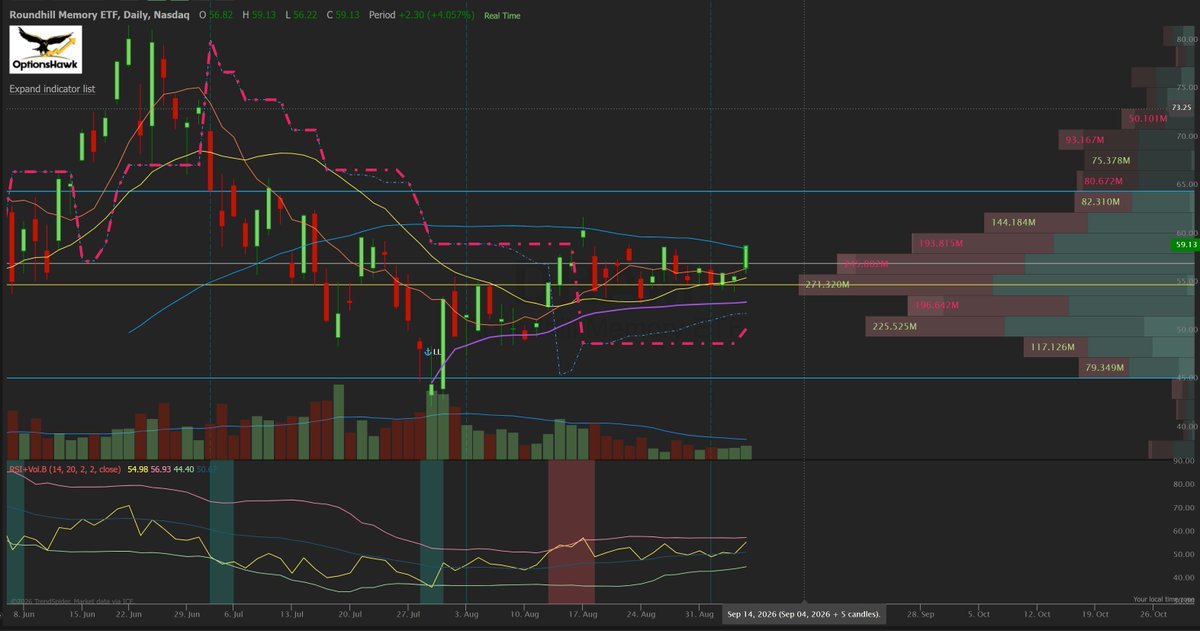
X posts from traders described $DRAM as a “monster breakout” and said the chart had cleared its recent base. The move landed alongside a broader rerating in memory stocks rather than a company-specific earnings release.
Fresh media reports added the fundamental backdrop: Micron is said to be pushing HBM monthly output toward about 100,000 wafers, up from roughly 40,000 to 50,000 wafers last year, while increasing the share of 12-layer HBM4. The same reporting said Micron jumped 6.1% on Sept. 4 to $1,016.59.
The market response matters because AI server demand is reshaping pricing across HBM, DRAM, NAND and enterprise SSDs. On the session, memory names including SanDisk, Seagate, Western Digital and Micron all posted strong gains, suggesting investors were buying the sector as a group.
Still, the capacity figures came from industry reporting rather than a fresh company filing, and the X signal itself was about price action, not new operational disclosure.
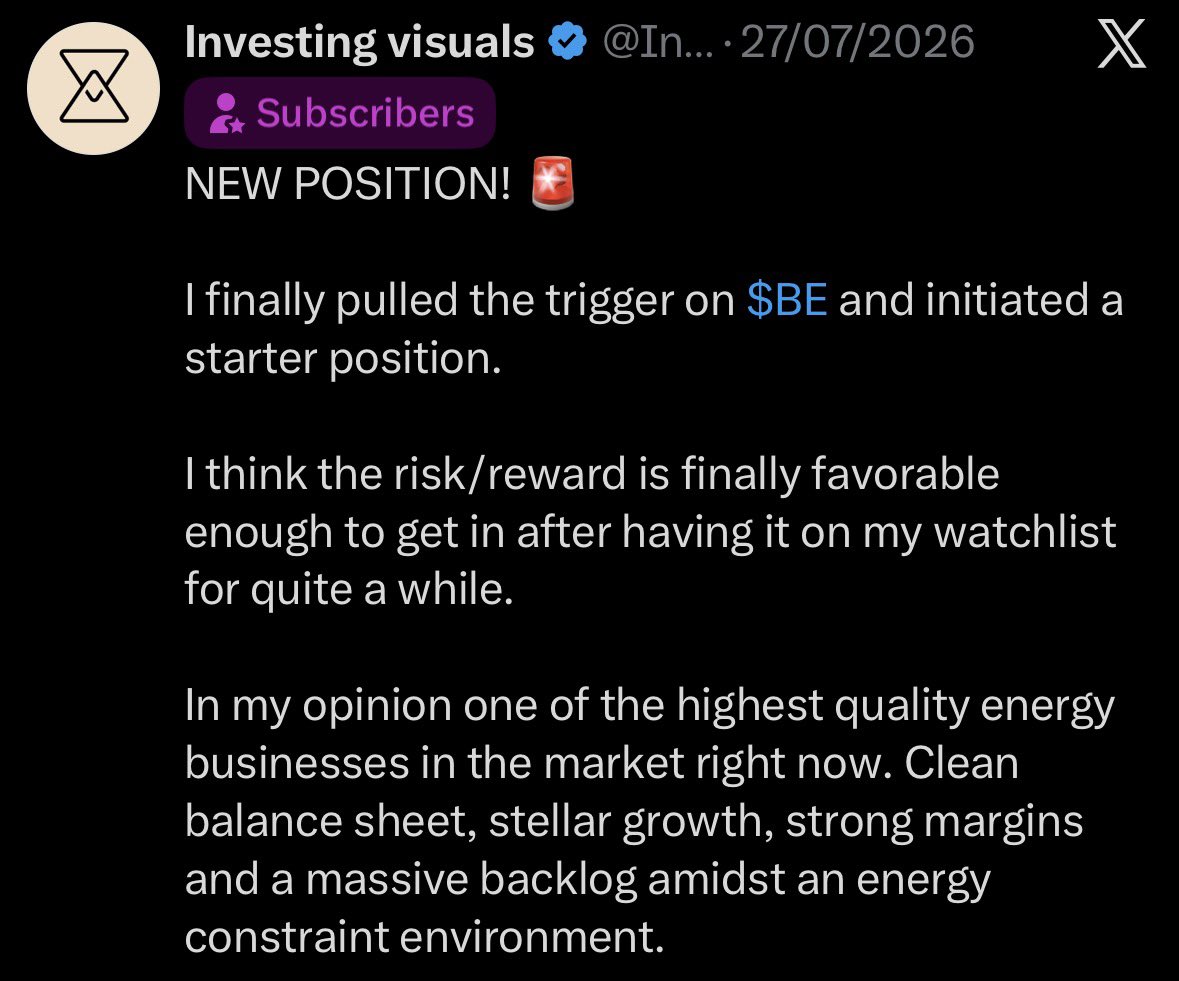
Bloom Energy (NYSE: BE) extended its rally on Friday as traders on X kept circulating buy-zone calls and $300 price targets. The latest push is tied to the company’s pending addition to the S&P 500, which has become the dominant catalyst for the stock.
The key development came on Sept. 4, when S&P Dow Jones Indices said Bloom Energy would join the S&P 500 along with Everpure and Illumina, effective before the open on Sept. 21. Bloomberg-style market coverage said BE closed regular trading at $252.87 and rose another roughly 6% to 6.6% after hours, adding about $4.94 billion in market value.
The move matters because index funds tracking the S&P 500 must buy new constituents, creating mechanical demand that traders often front-run. That has put BE at the center of a short-term positioning trade, while Cheniere Energy slipped after missing out on the index inclusion some investors had expected.
BE is not the only stock affected by the reshuffle, but it is the main market focal point in this tape. Illumina and Everpure are also joining the benchmark, while LNG is being treated as the main disappointment from the announcement.
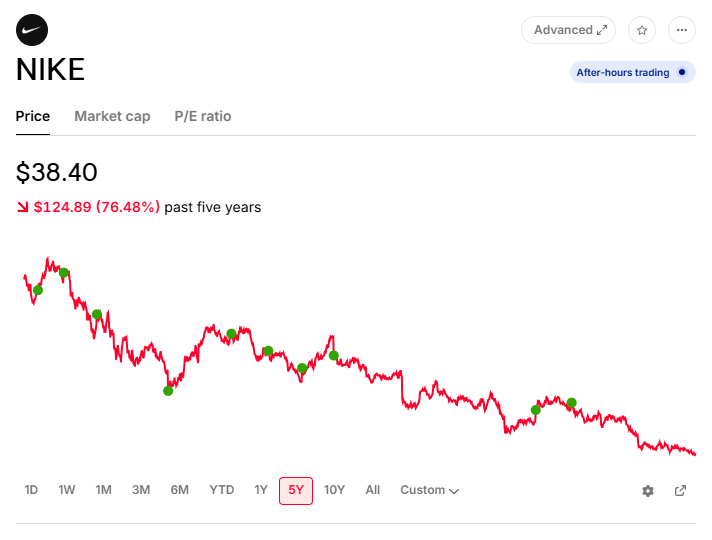
S&P Dow Jones Indices said Nike (NKE) and Colgate-Palmolive (CL) will be removed from the S&P 100 before the open on Sept. 21, 2026. Dell Technologies, Palo Alto Networks, Arista Networks and Sandisk will be added in their place.
The change is part of the index provider's quarterly rebalance, designed to keep the benchmark aligned with its target market-cap range. That makes the announcement relevant for passive funds and index-linked products that will need to adjust holdings.
For the market, the key near-term issue is the reweighting trade in the affected names rather than any change in business fundamentals. Nike and Colgate-Palmolive are the main tickers in this move, while the new entrants may see incremental index demand.
There was no company-specific response tied to the index move in the materials reviewed. Any trading impact will depend on how much capital follows the benchmark and how quickly funds complete their rebalances.
Baker Hughes U.S. rig count holds at 588 as oil rigs rise to 449英語原文
Weekly drilling data were flat on total count, but the mix shifted toward oil rigs and away from gas rigs. That matters for how traders read U.S. upstream activity.
Baker Hughes’ Sept. 4 weekly U.S. rig tally showed an unchanged total of 588 active rigs. The split shifted, however, with oil rigs rising to 449 and gas rigs slipping to 130, according to the market wires that carried the release.
The report is closely watched as a high-frequency gauge of drilling activity in the U.S. upstream sector. Baker Hughes’ previously posted week ended Aug. 28 showed 588 total rigs as well, but with 447 oil rigs and 132 gas rigs, underscoring that the latest update was a composition change rather than a move in the headline total.
For energy investors, the read-through is mostly about service demand and capital allocation, not immediate production. Oilfield-service names and large shale operators tend to be the main equities referenced when rig counts move, because rig additions or cuts can signal shifts in drilling budgets and basin-by-basin activity.
The newly circulated numbers were first amplified by several market-wire accounts on X. Baker Hughes’ public rig-count pages remain the primary reference point for the series, with the U.S. weekly release scheduled on the last working day of the week.
これまでの経緯
2026-07-09投稿4件 · 投稿者4人
Kazakhstan convened major oil firms targeting $25.5B FDI by end-2026, while iShares Nasdaq 100 ETF launched and Kodiak Gas Services secured a multi-year turbine deal with Baker Hughes.
企業動向
AMCとRobinhoodが株式トークンで対立、Aron氏が製品を非難し株価は21%上昇英語原文
The dispute underscores how tokenized stock exposure can mirror price action without conferring shareholder rights, while regulators have not issued a ruling.
AMC CEO Adam Aron sharply criticized Robinhood’s AMC-linked stock token, calling the practice “contemptible, outrageous, disgusting, detestable, inexcusable, vile,” and urged the brokerage to stop trading it. Robinhood pushed back, with chief legal officer Dan Gallagher saying the firm stands behind Stock Tokens.
The underlying issue is structure: Robinhood says the instrument is a debt security issued by Robinhood Assets (Jersey) Limited that provides economic exposure to AMC’s share price, not AMC equity itself. Its disclosures say holders receive no AMC voting, meeting, pre-emption or direct dividend rights, and the product cannot be offered to U.S. persons.
The argument has spilled into markets, with AMC shares at one point up about 21% in intraday trading as the feud drew attention. Robinhood shares were also in focus as the exchange highlighted the broader debate over tokenized stocks and how far issuers can challenge offshore products.
Aron has said AMC’s outside securities counsel will review whether the company can force Robinhood to stop, but no regulator has ruled on the dispute. For now, the fight remains a public clash over investor perception, trademark use and the legal limits of tokenized exposure.
Robinhood backs Stock Tokens as Tenev says tokenized U.S. stocks reach 120 countries英語原文
Tenev’s latest remarks keep the focus on tokenized equities, where compliance and shareholder-rights questions are colliding with Robinhood’s global access pitch.
Robinhood CEO Vlad Tenev said the company stands behind Stock Tokens and described tokenized U.S. equities as transferable onchain much like Bitcoin or other crypto assets. In a separate clip, he said the product gives people in more than 120 countries exposure to U.S. stocks.
The latest comments land amid a public clash with AMC CEO Adam Aron, who has demanded that Robinhood stop trading AMC-linked stock tokens. Robinhood has argued that the tokens are Jersey-issued products that provide economic exposure rather than direct share ownership.
The dispute has put Robinhood’s tokenization push in the spotlight and sharpened the debate over whether tokenized stock products can expand access without creating confusion over voting rights, dividends, or issuer control. For HOOD, the issue is now as much about product design and disclosure as it is about growth.
AMC has said it never authorized or endorsed the tokenized product, while Robinhood continues to defend the offering. The disagreement leaves tokenized equities as one of the most closely watched experiments in the crossover between traditional markets and blockchain infrastructure.
USA Rare Earth (USAR) filed a new Form S-3 on September 4, registering up to $1.25 billion of mixed securities and separately registering as many as 126.5 million shares for resale by existing holders. The company said it will not receive any proceeds from the resale shares.
The disclosure follows the company’s September 3 completion of its acquisition of Serra Verde, which was paid for with $300 million in cash and 126,849,307 USAR shares. The deal gave USAR full ownership of Serra Verde’s rare-earth mine and processing plant in Goiás, Brazil.
For the market, the new shelf and resale registration increase attention on future dilution, liquidity and potential trading volatility in USAR stock. The filing also notes that some resale shares remain locked up until December 2026 and March 2027, while others can be sold sooner.
USAR also disclosed that it raised about $1.5 billion through a private placement in January 2026. The new filing adds another layer to the company’s post-merger capital structure as investors assess how much stock could eventually come to market.
Google said on September 4 that its Lyria 3.5 music generation model is now available inside the Gemini app and through the Gemini API, alongside access via Flow Music, Google AI Studio and Google Vids. The rollout is global on web and mobile, expanding the model beyond its earlier, more limited surfaces.
The model is designed to generate higher-fidelity music from text or images, including full songs with verses, choruses and bridges at 44.1kHz stereo. Google also said it blocks requests for specific artist voices and copyrighted lyrics, and that every generated track carries a SynthID watermark.
For Alphabet (GOOGL), the move extends its generative-AI footprint into consumer and developer workflows, where music creation can become another built-in capability across its products. The update also increases competitive pressure on music-generation startups such as Suno and Udio, as well as on developers building AI creative tools.
Google’s public disclosure focuses on product capabilities, access points and IP safeguards. No additional financial guidance or monetization terms were disclosed in the announcement.
SpaceX is set to join the Nasdaq 100, triggering forced buying from index funds, while the Trump administration accepts a wider trade deficit in exchange for tariffs on market access.
2026-07-16投稿37件 · 投稿者31人
Trump slammed New York's halt on data center projects, calling them 'money machines' and urging the state to reverse course.
2026-08-04投稿36件 · 投稿者33人
Palantir released robust Q2 earnings with 93% YoY revenue growth, while the FCC drafted a ban on U.S. imports of Chinese data center devices.
2026-08-31投稿30件 · 投稿者27人
Trump issued a statement condemning anti-datacenter backlash in the U.S., saying China 'could not be happier' and warning against 'killing the golden goose.'
2026-09-04投稿12件 · 投稿者10人
Tesla launched steering-wheel-free Cybercab rides in Austin, and Trump declared 'data centers are fabulous.'
2026-09-05投稿9件 · 投稿者8人
Trump blasted Fed inflation fears, advocating lower rates to boost growth and cut debt, while reiterating that states seeking wealth should approve data centers.
Bitcoin ETFs bought over $500 million in three days, reversing massive outflows, with Ethereum ETFs also seeing significant daily inflows.
2026-08-21投稿19件 · 投稿者17人
Bitcoin ETFs saw weekly inflows of $1.6 billion, the highest in 10 months, with over $1 billion in net inflows during the last two days.
2026-08-24投稿22件 · 投稿者18人
Spot BTC and ETH ETFs posted their highest weekly inflows since October, with $1.92 billion into Bitcoin funds and price rallying from $64k to $77k.
2026-08-25投稿15件 · 投稿者14人
Thailand's SEC proposed regulations for Bitcoin and crypto ETFs, while the crypto market added $474 billion in market cap over the past week.
2026-09-04投稿12件 · 投稿者10人
UK's Hargreaves Lansdown granted 2 million clients access to Bitcoin ETFs, BlackRock's iShares Bitcoin ETF traded $3.6 billion in a day and saw a $730 million inflow.
2026-09-05投稿6件 · 投稿者5人
US spot Bitcoin ETFs recorded $730 million in daily inflows, the largest in nine months, with an additional $2.8 billion in the final 10 days of August.
IEA released monthly oil report, US Baker Hughes rig count published, and Baker Hughes received conditional EU approval for its $13.6 billion Chart acquisition.
2026-07-27投稿13件 · 投稿者10人
Baker Hughes reported Q2 results beating estimates with revenue $6.74B and orders $10.50B, while its premarket stock move was highlighted by CNBC.
2026-08-22投稿9件 · 投稿者6人
US energy firms cut rigs for the first time in four weeks, with total rig count at 588 and oil rigs down 3 to 452.
2026-09-04投稿5件 · 投稿者5人
International oil rigs excluding North America rose 5 m/m to 749 in August, US nonfarm payrolls released, and total rig count held at 588.
2026-09-05投稿6件 · 投稿者4人
US total rig count unchanged at 588, with oil rigs up 2 to 449 and gas rigs down 2 to 130.