The U.S. 10-year Treasury yield rose above 5% on Monday, with intraday trading reaching about 4.99% and marking its highest level since 2007. Multiple market feeds on X echoed the move as the benchmark crossed a closely watched threshold.
The latest leg higher comes as oil prices firm, inflation expectations improve, and traders lean into the idea of tighter-for-longer Fed policy ahead of this week’s meeting. Reuters said investors are also focused on rising term premium and heavy Treasury supply, while Bloomberg noted the move is adding pressure from Wall Street to Washington.
Higher Treasury yields are quickly filtering into mortgage rates and corporate funding costs. Bloomberg reported companies are debating whether to borrow now or wait, while TradingEconomics said the 10-year yield hit 4.99%, the highest since 2007.
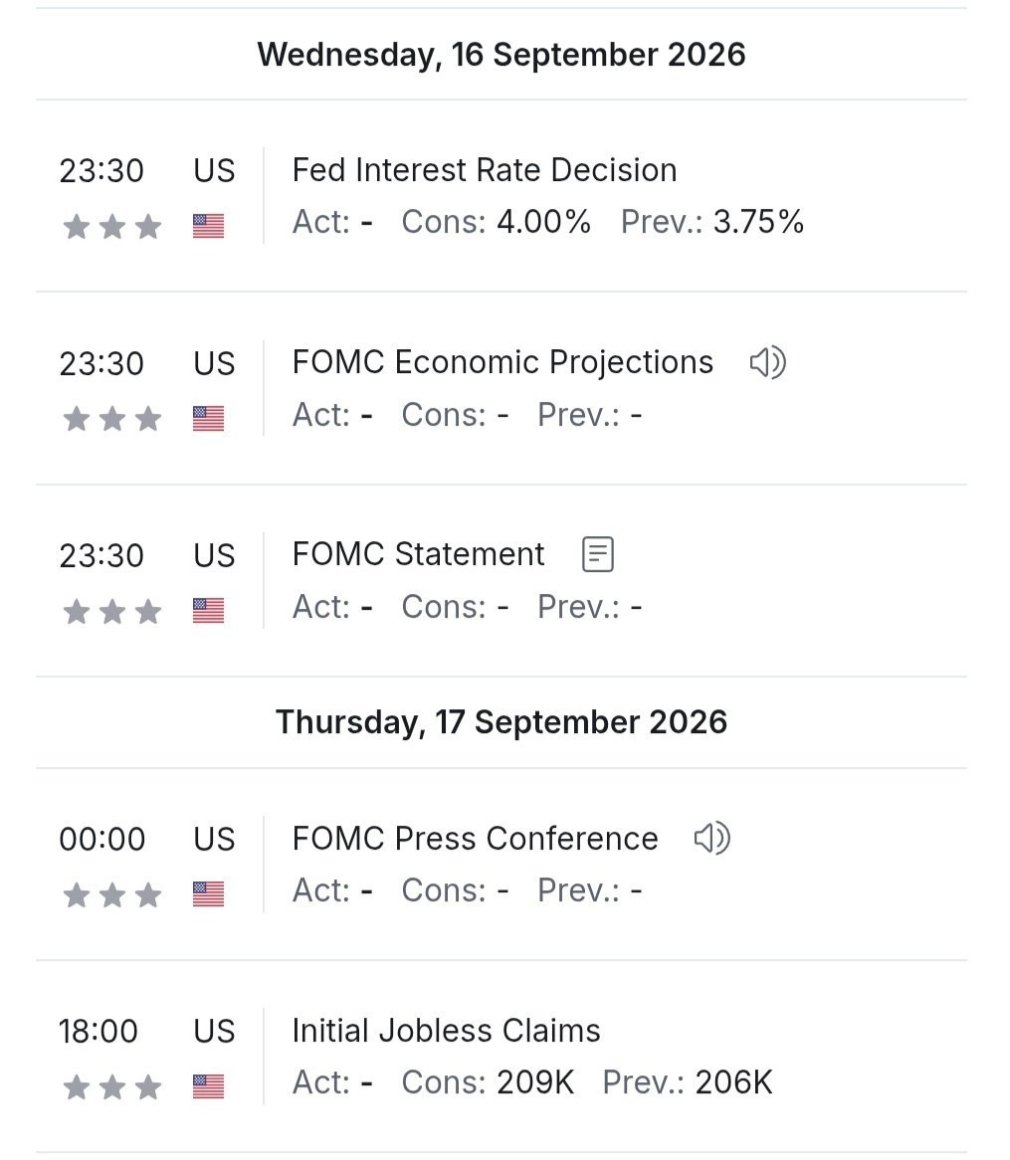
Markets now await the Fed decision and updated forecasts for clues on the policy path. If rate expectations remain elevated, volatility in rates and refinancing costs is likely to stay in focus.
A key Saudi oil pipeline damaged in a strike is expected to remain largely out of service for several weeks, according to officials cited by the Associated Press. The line is a major route for moving crude from eastern Saudi Arabia to the Red Sea export hub at Yanbu.
The East-West pipeline has recently carried about 4 million to 5 million barrels per day, or roughly 4% to 5% of global supply. Reuters reported that Saudi stocks at Yanbu could support exports for only five to seven days, while The Guardian said a prolonged outage could threaten up to 4% of world supply.
Oil markets are highly sensitive to disruptions in Saudi export infrastructure, and traders are watching repair timelines, stock drawdowns and alternate shipping routes. The immediate issue is not demand, but the reliability of a critical supply corridor linking Saudi production to seaborne exports.
Saudi officials had previously described the pipeline shutdown as precautionary and said specialist teams were assessing the damage. Several reports attributed the attack to Houthi forces, but those claims should be treated as reported allegations unless independently confirmed.
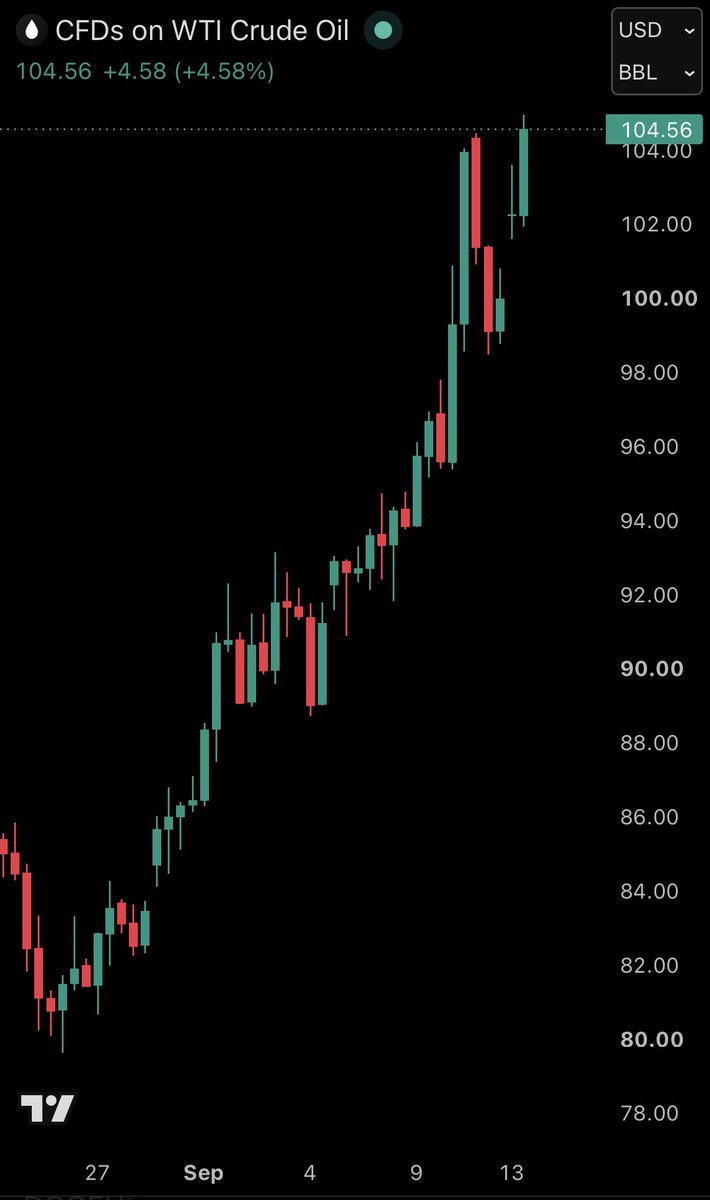
Saudi Arabia has temporarily shut its East-West oil pipeline after attacks, with satellite imagery showing fire damage around a pumping station. Brent crude traded near $108 a barrel and WTI moved above $103 as the market digested the disruption.
Also known as Petroline, the roughly 750-mile system links eastern Saudi oil fields to the Red Sea port of Yanbu and is a critical export route that avoids the Strait of Hormuz. Public reports put its design capacity at about 7 million barrels per day, making it one of the kingdom’s most important pressure valves for exports.
The immediate market impact is on global crude supply expectations rather than on any single listed company. Refiners in Asia and other buyers are watching cargo schedules closely, because a prolonged outage would tighten seaborne flows and keep prompt barrels in focus.
Saudi officials described the suspension as precautionary after multiple attacks, while U.S. Energy Secretary Chris Wright said the line should be back online soon. The extent of the damage and the repair timetable remain the key unknowns for traders.
Trump says Ukraine, Russia agreed to spare energy sites as U.S. diesel hits $6.06 a gallon英語原文
He blamed the diesel surge on the Russia-Ukraine war and urged Kyiv to stop striking refineries, even as supply shocks from the Gulf also tighten global fuel markets.
U.S. President Donald Trump said on Sunday that Ukraine and Russia had agreed not to target each other’s energy infrastructure, adding that he had asked Ukrainian President Volodymyr Zelenskyy to stop striking Russian diesel facilities and refineries. Reuters quoted Trump saying the attacks were “hurting the world,” while the White House did not immediately provide further detail.
The comments came as U.S. diesel prices kept climbing. Reuters and CNBC both cited AAA data showing the national average at $6.06 per gallon, a record high, with Ukraine’s drone campaign against Russian refining capacity and the broader Middle East disruption linked to the U.S.-Iran conflict tightening global fuel supplies.
Diesel is a critical input for trucking, shipping, mining and agriculture, so higher prices can ripple through freight and industrial costs. The news is most relevant to fuel retailers, transport operators and energy-market participants, though no company-specific guidance or earnings update was part of the reports cited.
The Kremlin welcomed Trump’s call for Ukraine to halt strikes on diesel facilities, but said the wider turmoil in energy markets is mainly driven by the Gulf conflict. There has been no independent public confirmation that Kyiv and Moscow have formally agreed to stop the attacks.
U.S. diesel prices rose to a record $6.20 a gallon on Monday, while U.S. crude futures climbed toward $105 a barrel. Multiple reports using AAA data and intraday market pricing confirmed the move, with diesel up about 78% over the past nine months.
The rally comes amid overlapping supply shocks and peak seasonal demand. NBC News said Saudi Arabia shut a key pipeline as a precaution, a Hormuz-related meeting was postponed, and Russian diesel exports remain constrained by the war in Ukraine.
For markets, diesel matters because it feeds directly into trucking, shipping, farming and industrial input costs. Shares and funds tied to tanker freight, including DHT Holdings (DHT) and the Breakwave Tanker Shipping ETF (BWET), have been among the names drawing attention as fuel and shipping bottlenecks tighten.
So far, there is no sign of a near-term pullback in diesel prices in the public reports. Investors are watching crude, diesel and refining margins closely for further spillover into inflation-sensitive sectors.
Goldman Sachs and JPMorgan have both shifted to expecting the Federal Reserve to raise rates by 25 basis points at this week’s meeting. Reuters said the move follows a hotter-than-expected August inflation reading and a renewed oil-price surge.
The backdrop is a clear erosion in confidence that inflation is gliding back toward target without more policy tightening. Reuters cited a broad reset in market and economist expectations, with the debate now centered on whether the Fed will move again this week.
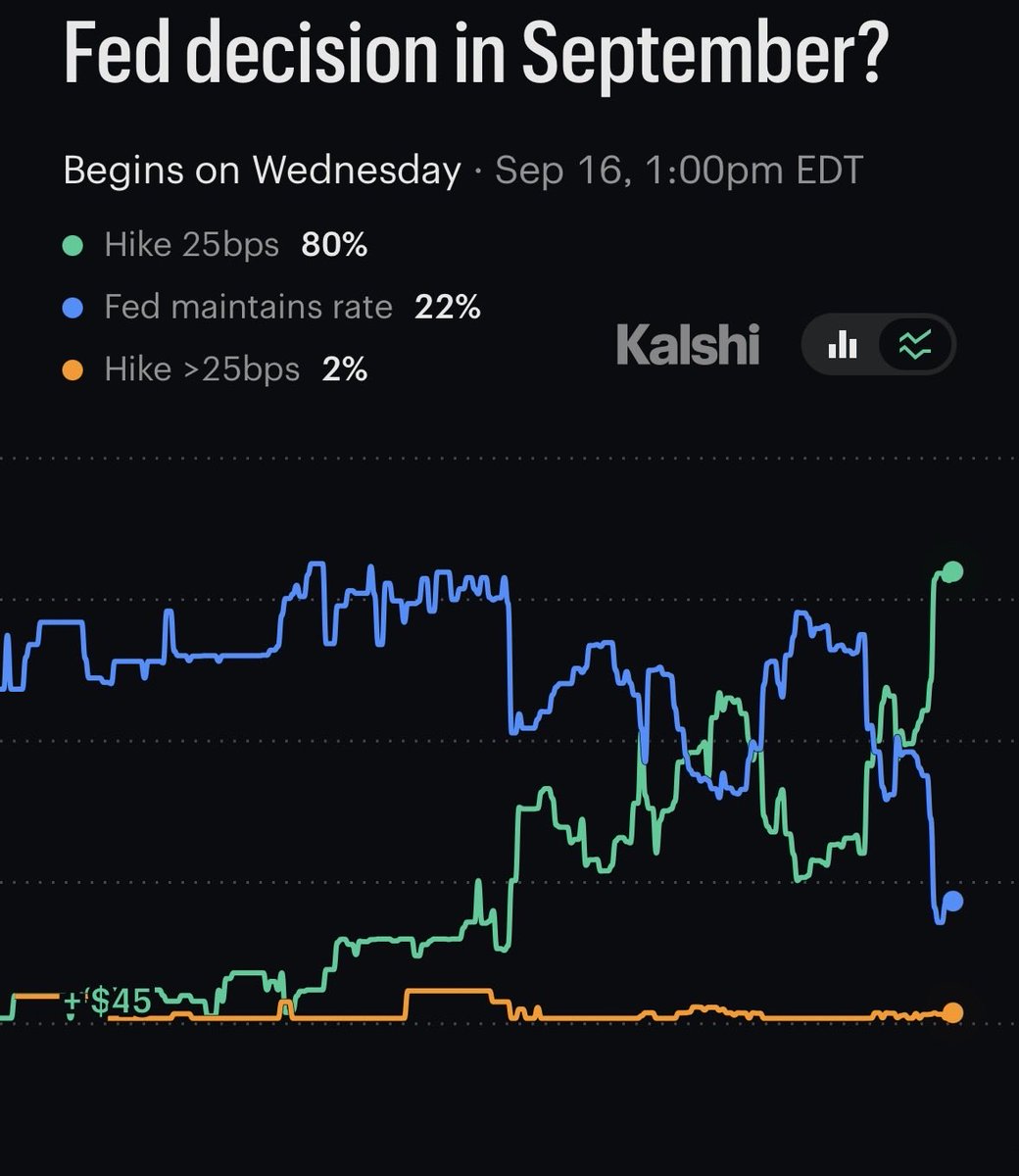
Markets are now pricing roughly an 86.7% to 87% chance of a quarter-point hike, according to CME FedWatch and Reuters. Kalshi’s odds for a 25-basis-point increase were around 80%, underscoring the shift in rate expectations.
Goldman abandoned its prior call for no change, while JPMorgan is now looking for quarter-point hikes in both September and December. Reuters also reported that a majority of economists surveyed after the inflation release expect a hike on Wednesday.
Anthropic CEO Dario Amodei over the weekend called for a slowdown in frontier AI capability development, and OpenAI CEO Sam Altman followed with support for a more measured approach. Investors took the messages as a fresh signal that the industry’s breakneck pace may face more scrutiny.
The debate comes as AI labs push to build more powerful models while contending with safety, compliance and external-audit demands. Bloomberg reported that the companies are weighing tighter safeguards after recent security breaches, setting up a potential clash with Wall Street, tech peers and the Trump administration.
Asian tech shares led the reaction on Monday, with the Nikkei 225 down about 2% at one point and SoftBank among the biggest losers. AI-related names tied to chips, compute and cloud infrastructure also came under pressure; premarket declines of about 6% in NBIS and CRWV highlighted how sensitive the group is to any suggestion of slower AI spending.
Altman said he welcomes a federal framework for frontier AI safety and stressed that “pacing” does not mean stopping progress. Amodei’s proposal calls for third-party evaluators with employee-like access, common safety standards and broader coordination among frontier labs.
The clearest new development is a practical one: external evaluators are being embedded inside the labs, turning safety rhetoric into a testable governance step.
Sam Altman and Dario Amodei have both said their companies will bring third-party evaluators inside their operations to review AI safety practices. The latest X discussions framed that as the only concrete new fact emerging from a busy 24 hours of AI debate.
The backdrop is Amodei’s Sept. 12 essay, We Must Pace the Frontier, and follow-up coverage from outlets including The Guardian and The Week. Those reports say Altman backed the idea and that Anthropic and OpenAI’s only clearly described shared move is allowing outside observers to verify safety work from the inside.
For markets, the significance is less about an immediate slowdown than about governance costs, development pace, and investor expectations for the frontier-model race. The issue touches Anthropic, OpenAI and outside evaluators such as METR, while also feeding comparisons with rivals including Gemini and xAI.
Neither company has denied the evaluator plan, but critics are split over whether it is genuine safety architecture or a form of regulatory capture. The fight now is over independence, scope and credibility, not over whether the labs are willing to keep talking about safety.
The Information reported that NVIDIA, Palantir and Booz Allen Hamilton are limiting their use of Anthropic models. The reports, echoed by several market-wire services, center on concerns about sensitive data exposure and the internal use of Claude-based tools.
The development comes as Anthropic is already under heightened scrutiny over safety and governance. On September 12, CEO Dario Amodei publicly called for the frontier AI industry to slow down, saying outside evaluators should be allowed to verify safety practices inside companies; Anthropic has also been navigating ongoing debates over how its models can be used in high-stakes settings. technode.global
For markets, the story matters most for NVDA and PLTR. Nvidia has been linked in prior reporting as a potential Anthropic IPO investor, while Palantir’s AI stack and government-facing workflows make it especially sensitive to model-security and compliance questions. Booz Allen Hamilton’s reported restriction highlights the same issue in defense-adjacent enterprise use cases.
No company has publicly confirmed the specifics in the reports. For now, the key question is whether more large customers follow suit, which would further test Anthropic’s enterprise momentum and the breadth of its deployments in sensitive environments.
According to the Financial Times, citing multiple people familiar with the matter, Anthropic told shareholders that adjusted operating income is expected to stay positive for a second straight quarter. The company also reportedly said gross margins are above 80% before revenue sharing with distribution partners and model-training costs.
The update adds a fresh profitability signal to a company that has been racing up the AI revenue curve. Reports cited by the FT say Anthropic posted $11.5 billion in Q2 revenue and reached a $65 billion annualized run rate by late July, while also preparing for a potential Nasdaq IPO that could value it at $2 trillion or more.
The development matters for AMZN, given Amazon’s role as a key cloud and distribution partner in Anthropic’s ecosystem. Investors are watching whether AI leaders can sustain improving economics while continuing to spend heavily on model training and infrastructure.
For now, the numbers come from the FT’s reporting and were not independently confirmed by Anthropic in the Reuters recap. The company had not immediately commented outside business hours, leaving the profitability and margin details dependent on the cited sources.
Nvidia CEO Jensen Huang is again pushing back on extreme AI doom narratives, calling claims that AI will wipe out humanity or half of U.S. jobs “complete nonsense.” The message was widely amplified today by finance-focused X accounts citing his July remarks.
This follows a July Axios interview in which Huang argued that warnings about AI’s capabilities had already gone far enough, and that public concern should be paired with solutions rather than fearmongering. The latest wave of reposts suggests the debate over how leaders talk about AI is still resonating.
For markets, the rhetoric matters because Nvidia sits at the center of the AI capex trade. In the past 48 hours, reports have said Nvidia could become a $1 billion anchor investor in Anthropic’s public listing, while another piece cited a SemiAnalysis projection that Nvidia could hold a massive cash cushion, underscoring how closely investors are watching its capital deployment and customer ties.
So far, Huang’s latest comments read as a renewed push to normalize AI adoption rather than a fresh policy pivot. Neither Nvidia nor Anthropic has issued a new statement specifically addressing today’s social-media circulation of the remarks.
これまでの経緯
2026-07-22投稿5件 · 投稿者4人
Market digests Kimi's impact as Jensen praises Chinese open-source models, while Anthropic moves into robotics.
企業動向
TSMC seen lifting 2nm to 110,000 wafers, 3nm to 210,000 by mid-2027英語原文
Supply-chain reports point to a fresh advanced-node expansion plan as AI chip demand keeps capex elevated.
Supply-chain reports say TSMC plans to lift monthly 2nm output from 90,000 wafers at end-2026 to 110,000 by mid-2027, a gain of about 22%, while 3nm capacity is set to rise from more than 180,000 wafers to 210,000, up over 16%. TSMC did not directly comment and said capacity-related matters should be based on company announcements.
The backdrop is still-strong AI chip demand. In its July earnings call, TSMC raised 2026 capex guidance to $60 billion-$64 billion and said roughly 70%-80% would go to advanced process technologies, adding that order visibility from major customers and cloud service providers extends to 2029-2030.
For investors, the message is about supply-chain beneficiaries as much as TSMC itself. The Taiwan foundry giant remains the key ticker, while advanced packaging and semiconductor equipment names may also draw attention if the expansion turns into actual orders and installations.
The reports also say TSMC is expanding 3nm capacity in Taiwan, Arizona and Japan, and is building out CoWoS advanced packaging with a 2028 target of 260,000 wafers per month. Those figures are from supply-chain reporting and have not been separately confirmed by TSMC.
企業動向
Microsoft unveils AI code of conduct for MAI models on Sept. 14英語原文
The company opened its first-party model rules for public consultation, underscoring human control, safety limits and governance as frontier AI debates intensify.
Microsoft published its Code of Conduct for first-party MAI models on September 14 and opened it for public consultation. The document sets behavioral limits for Microsoft AI Services and requires adequate human oversight, anomaly detection and intervention for autonomous systems.learn.microsoft.com
The release lands amid a wider industry debate over whether frontier AI development should be paced more deliberately. Reporting on the same day said Satya Nadella backed the need for embedded evaluators and wrote that AI that does not help humanity and remain under human control is not worth pursuing.livemint.com
For Microsoft, the announcement is more about governance and product boundaries than near-term financial disclosure. The key listed ticker is MSFT, while the broader AI ecosystem—including OpenAI, Anthropic and Google—serves as the backdrop for the governance push.cnbc.com
Microsoft’s policy text also spells out prohibitions on terrorism, malicious cyber activity and CBRN-related uses. That makes the document a concrete sign of how large model providers are formalizing safety rules as regulation tightens.learn.microsoft.com
The bill adds ethics rules and a stablecoin circuit-breaker before Tuesday’s procedural vote, putting crypto policy and bank competition back in focus.
Senate Republicans unveiled the final draft of the Digital Asset Market Clarity Act on Sept. 14, setting up a procedural vote Tuesday. The revised text is said to include 126 substantive changes requested by Democrats, along with new ethics restrictions and a Treasury-backed circuit breaker for payment stablecoins.lummis.senate.gov cnbc.com
The legislation would create a new U.S. framework for digital assets and divide oversight between the SEC and the CFTC. It faces a steep Senate hurdle: Democrats can filibuster unless at least seven of them join Republicans to reach the 60 votes needed for cloture.cnbc.com
Crypto-linked stocks and exchange platforms are the most exposed, with Coinbase, Circle and Robinhood likely to trade on any sign the bill is moving closer to passage. Coinbase also announced a Moov partnership to extend stablecoin capabilities to community banks, a move that may help answer lender concerns about deposit flight.zacks.com
Banking groups still want tighter language on stablecoin rewards, warning that such products could pull deposits away from traditional lenders. The revised text gives the Treasury secretary new authority to intervene if payment stablecoins trigger substantial community-bank withdrawals.euronews.com
これまでの経緯
規制
上院CLARITY法案採決と86.5%の利上げ確率で、ビットコインは変動の大きい週に英語原文
A procedural crypto bill vote collides with the Fed, the BOE and the BOJ, sharpening the market’s policy shock risk
The U.S. Senate is set to hold a procedural vote on the CLARITY Act on Sept. 15, with 60 votes needed to advance the bill to full debate. At the same time, markets are pricing roughly an 86.5% to 90% chance of a 25-basis-point Fed hike on Sept. 16.
The backdrop is a week packed with policy events: lawmakers are trying to move a clearer federal framework for crypto, while the Fed faces sticky inflation and renewed pressure on the rate path. On X, traders and market accounts are framing this as a pivotal week for crypto because the legislative and monetary-policy calendars overlap.
For markets, the immediate focal point is Bitcoin and crypto-linked equities, especially Coinbase, where sentiment can swing with regulation headlines and rate expectations. If the procedural vote advances and the Fed delivers a hike, traders may continue to reprice risk across higher-beta assets and growth stocks.
The broader calendar adds more event risk, with the Bank of England on Thursday and the Bank of Japan on Friday. That clustering of central-bank decisions and the Senate vote makes this a heavily event-driven week rather than a story about a single catalyst.
Grayscale filed a revised registration statement on Sept. 11 seeking to convert the Grayscale Litecoin Trust into a spot ETF and keep the LTCN ticker on NYSE Arca. The move is still contingent on approval of a pending 19b-4 application, so it is not an approval or a listing yet.
The product is an existing Litecoin trust, not a new fund. Public filings indicate the trust has long lacked a normal redemption mechanism, a structure that helped drive large premiums and discounts to net asset value over time; the revised filing adds ongoing creations and redemptions.
As of June 30, 2026, the trust held about 1.97 million LTC and reported net assets of about $82.3 million, with NAV per share at $3.39. Litecoin was trading around $54 in related market coverage, keeping LTCN, LTC and other crypto ETF peers in focus.
For now, the filing is a procedural step, not a green light. The next market-moving point is SEC action on the 19b-4 and any final listing approval by NYSE Arca.
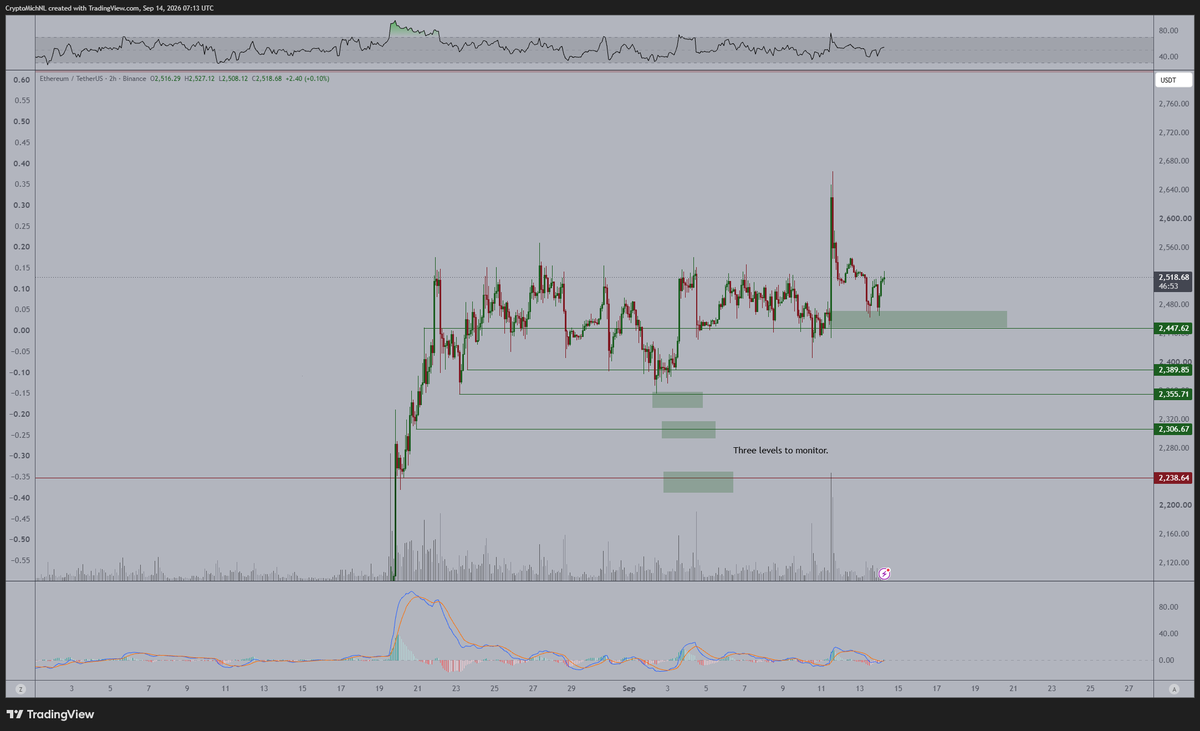
Ethereum is holding around the $2,460 area, with traders watching whether the token can reclaim $2,550 and keep the path open toward $3,000. On social media, the setup is being framed as a clean retest after a breakout, but that remains a market narrative rather than a confirmed move.
The broader backdrop is this week’s procedural Senate vote on the Clarity Act. Recent reporting says Republicans revised the bill’s ethics language to win support, while prediction markets have repriced the odds of passage higher, underscoring how tightly crypto traders are linking ETH to Washington policy.
A more concrete update came from Bitmine Immersion Technologies, which said its ETH holdings rose to 5.96 million tokens and its total crypto and cash holdings reached $15.8 billion. That makes BMNR one of the most exposed listed names to Ethereum’s price action, and a standout stock for investors trading the token’s beta through equities.
For now, the confirmed picture is a price holding pattern plus a major policy week, not a guaranteed breakout. The next catalyst is the Senate vote, while BMNR’s latest holdings disclosure adds another layer of institutional attention to Ethereum-linked equities.
Aon Plc has launched a seven-part U.S. dollar bond offering to help finance its planned acquisition of USI Insurance Services. Bloomberg reported the company is expected to sell about $13.5 billion of notes, with another $4 billion term loan possibly part of the funding package.
The financing follows Aon’s Aug. 31 announcement that it agreed to buy USI for $17 billion from KKR. Aon said at the time that the transaction would be funded with new debt and was targeting a fourth-quarter 2026 close, subject to regulatory approval and other customary conditions.
AON shares were indicated up about 1.7% premarket, suggesting investors are reacting to the financing step rather than a new change in the deal terms. The transaction would deepen Aon’s push into the U.S. middle market, where USI is one of the larger independent brokers.
Aon has said it expects leverage to be about 4.8 times at closing and to work that down to roughly 2.8 to 3.0 times over about 24 months. The company also said it does not expect to resume share buybacks in the near term, while continuing to prioritize its dividend.
これまでの経緯
2026-08-30投稿3件 · 投稿者3人
WSJ reported Aon was nearing a roughly $17 billion deal to buy insurance brokerage USI Insurance from KKR.
2026-08-31投稿13件 · 投稿者7人
Aon confirmed a $17 billion cash deal to acquire USI Insurance Services from KKR and other shareholders, with multiple outlets reporting.
企業動向
Oracle starts new layoffs as Ellison drops a $7.5 billion stock sale英語原文
The company is trimming costs while funding AI data centers, underscoring the tension between expansion spending and cash flow.
Oracle has begun another round of layoffs, according to a report by Business Insider, while co-founder Larry Ellison has canceled a planned sale of up to $7.5 billion worth of Oracle stock. The two developments arrived as fresh signals that the company is balancing cost cuts with heavy investment needs.
The latest moves come against the backdrop of Oracle’s aggressive spending on AI data centers. Investors have been watching how that capex burden affects debt financing, profitability and free cash flow, especially after earlier layoffs this year.
Shares traded lower premarket on the news, with traders focusing on whether the company’s AI buildout can keep pace with the capital it is consuming. Ellison’s decision to back away from the sale also adds a governance and valuation angle to the story.
Oracle has not yet disclosed the exact size of the new layoff round. Public reporting to date confirms the layoffs have started and the stock-sale plan has been withdrawn, but not the full financial terms of any new restructuring package.
Michael Dell’s DFO Management and Sequence Holdings have agreed to take Baldwin Insurance Group private in a cash deal valued at $7.7 billion. The offer price is $32.50 per share, according to multiple reports cited by Reuters and the Wall Street Journal.
The transaction was first reported on Sept. 13 and confirmed on Sept. 14, making it the latest step in a deal process that had been circulating in the market. Baldwin has expanded through acquisitions, including its merger with CAC Group earlier in 2026, which helped lift revenue.
BWIN is the most directly affected stock, as the company would leave public markets if the deal closes. DELL is being watched mainly because Michael Dell’s family office is the buyer, not because the transaction changes Dell Technologies’ core operations.
The reports said neither Baldwin nor DFO Management had commented at the time of the initial FT story. The deal still needs to clear customary regulatory and financing steps before closing.
JPMorgan upgraded IREN to Overweight from Underweight and raised its price target to $65 from $46. Publicly cited takeaways say the bank now sees IREN emerging as a top-tier neocloud provider, helped by its NVIDIA partnership, improving customer momentum and firmer AI infrastructure pricing.
The call lands against a backdrop of continued expansion at IREN. Recent follow-on reporting says the company lifted its 2026 annual recurring revenue outlook to $4.0 billion from $3.4 billion, with investors also focused on its Microsoft work, NVIDIA-related business and broader customer wins in the AI infrastructure buildout.
The rating change gave the stock a fresh catalyst and put the neocloud pricing debate back on center stage. Reports say industry pricing has moved from about $10-$15 per watt to $15-$20 per watt and higher, a setup that could also shape how peers such as CRWV and MARA are valued against IREN.
The full JPMorgan note has not been publicly released, so the market is relying on secondary summaries for now. Going forward, traders will be watching for more disclosure on contracts, financing and delivery timelines rather than treating the upgrade as a standalone fundamental reset.
Bank of America raised its year-end S&P 500 target to 7,400 from 7,100 and set a 12-month target of 7,800, according to a note from strategist Savita Subramanian. Even with the higher call, she said equities are “overdue for a pullback” and entering a seasonally weaker period.
BofA’s view is notable because it combines a more constructive longer-horizon forecast with a cautious near-term message. The bank said the S&P 500 has seen only one pullback of more than 5% this year, below its historical average, while a 10% correction typically happens about once a year.
The update matters for broad U.S. equity exposure, including SPY, VOO and IVV, because these vehicles are tightly linked to S&P 500 sentiment. Traders are also watching AI-related stock positioning and oil prices as the Federal Reserve meeting approaches, both of which can amplify short-term swings.
The new targets keep BofA on the bullish side of the Street for year-end, but not at the most aggressive end of forecasts. The firm’s message is that upside can still exist over time, even as the market may need to absorb a pullback first.
Axios reported that Netflix, Amazon and YouTube have formed a new streaming coalition. Coverage from multiple outlets described it as a new alliance aimed at standardizing audience measurement across streaming platforms.
The backdrop is a fragmented ad market where each service uses its own metrics, making it hard for brands to compare performance and allocate budgets efficiently. EKOTÜRK, citing Axios, said the group will be run by TechNet, suggesting the effort is as much about policy coordination as technical standards.
For the market, the development puts AMZN, GOOGL and NFLX into the same conversation around ad monetization and platform comparability. The immediate significance is less about revenue today and more about how future ad pricing, measurement, and industry lobbying may be shaped.
So far, the public reports do not include a formal charter, full membership list, or specific legislative targets. The confirmed new development is the coalition’s launch and its stated focus on measurement standards.
Micron’s Taiwan union at the Taoyuan plant has rejected the company’s latest package, which includes an NT$1 million cash appreciation bonus for eligible workers. The union says its real demand is a transparent 15% profit-sharing system rather than a one-off payout.
The dispute is not new. Reuters reported on Sept. 11 that Micron had offered Taiwan employees an NT$1 million bonus and total fiscal 2026 rewards equal to 35 to 68 months of pay for direct labor staff, while local media on Sept. 14 said the union formally pushed back and accused management of bypassing collective bargaining.
For investors, the issue centers on Micron’s Taiwan manufacturing footprint and the smooth flow of DRAM and HBM supply. Any prolonged standoff could draw attention to production timing, though talks are still ongoing and no strike action has been confirmed.
The union says the one-time bonus was announced unilaterally and amounts to about 4.4% of operating profit, well below its 15% target. Micron has said the package is the largest in its history and that it will keep communicating with workers.
BioNTech and OncoC4 said today that gotistobart extended median overall survival to 18.5 months, compared with 10.0 months for standard chemotherapy, in previously treated patients with squamous non-small cell lung cancer. The updated analysis comes from the PRESERVE-003 phase 3 trial, with data cut off on July 17 and a median follow-up of 25.4 months.
The patient population had already progressed after prior immunotherapy and chemotherapy, leaving limited treatment options and making docetaxel the established standard comparator in this setting. BioNTech said the safety profile remained manageable and consistent with prior reports, and the results were presented at the IASLC 2026 World Conference on Lung Cancer.
The update matters for BioNTech because oncology is a key part of its effort to offset declining COVID-vaccine sales. Reuters reported the trial showed a meaningful overall survival benefit, while BioNTech’s release said the program is being advanced with partner OncoC4.
BioNTech shares were indicated up about 6.2% premarket after the announcement. Investors are watching whether the survival signal can support the broader late-stage pipeline and strengthen the company’s push toward multiple cancer drug launches by 2030.
Elon Musk said on X that he is “highly confident” SpaceX will begin launching Nvidia NVL72 AI systems into space next year, with multiple posts and wires paraphrasing the timeline as 2027. The latest signal is the public framing of a space-compute push, not a formal contract announcement.
The backdrop is Nvidia’s expanding AI infrastructure footprint. Recent reporting has also linked Nvidia to a possible role as an anchor investor in Anthropic’s roughly $10 billion IPO, underscoring how central the chipmaker has become to the AI buildout.pymnts.com SpaceX, meanwhile, remains private and continues to attract trading attention around its stock mechanics and lockup discussions.fool.com
For the market, NVDA is the clearest equity link because the post points to a new use case for Nvidia hardware. SPCX is more of a sentiment and event-driven reference point unless SpaceX or Nvidia publishes concrete launch, partnership, or procurement details.
At this stage, the only confirmed development is Musk’s public statement. Neither SpaceX nor Nvidia has issued a formal announcement tied to the claim, so any operational timeline should be treated as unconfirmed until company-level disclosure appears.
Novo Nordisk said on Sept. 14 that it will use “Novo” as its day-to-day name, while keeping Novo Nordisk A/S as its legal corporate name. The company also unveiled a refreshed brand platform, “Lasting Health Starts Now,” alongside a new set of cultural principles.
The move comes as the Danish drugmaker faces intense competition in obesity treatments. Novo said the branding and culture changes are meant to improve focus, speed and recognition, and it plans to give a fuller strategic update at its Capital Markets Day in London on Sept. 21.
The announcement matters for NVO because the market is watching whether the company can regain momentum in the GLP-1 race against Eli Lilly. Reuters, CNBC and WSJ all reported the name change, underscoring that this is a formal corporate reset rather than a legal renaming.
Novo said its updated culture will still center on patient safety and ethics. It added that the new brand identity is intended to bring its science closer to everyday healthcare and make the company more recognizable in a crowded market.
Amazon said it has paused operations with 21 Air, the cargo carrier that operated the Sept. 6 Miami freight flight involved in a runway overrun that killed five people on the ground. Spokesperson Kelly Nantel said the company decided to pause the relationship after reviewing the circumstances and supporting the investigation.
The crash occurred when a Boeing 767 cargo jet overshot the runway at Miami International Airport and struck vehicles, leaving five dead and five injured. The NTSB has recovered the flight recorders and is still investigating; Reuters and the BBC both described the incident as part of Amazon’s air-cargo network.
For Amazon, the move is a commercial change in its contracted freight network rather than a regulatory action. Aerotime said Amazon buys lift from certificated cargo operators, while the operating certificate and FAA relationship sit with 21 Air.
The market focus is on AMZN’s logistics execution and partner risk, not on Boeing’s earnings. No official cause has been determined, and 21 Air has not publicly detailed its response to Amazon’s pause.
これまでの経緯
2026-07-17投稿4件 · 投稿者3人
Trump announced immediate declassification of election intelligence, citing China's 2020 activities; B. Riley upgraded AST SpaceMobile to Buy with $85 target; Mag 7 stocks fell in premarket.
企業動向
Samsung, SK Hynix reject KEPCO’s 250 trillion won prepayment plan英語原文
The chipmakers pushed back on an upfront power-payment plan meant to fund grid expansion for Korea’s semiconductor clusters.
Samsung Electronics and SK Hynix have rejected Korea Electric Power Corp.’s proposal that they prepay electricity bills to help finance new power-grid construction. Reuters, citing a document submitted to a lawmaker, said KEPCO had asked the two chipmakers to make a combined 25 trillion won upfront payment.
The plan was tied to power infrastructure for Korea’s semiconductor mega-clusters, including projects in Yongin and the southwest Honam region, as well as related AI data-center buildout. KEPCO was seeking an alternative to issuing more debt as grid investment needs rise with chipmaking and AI demand.
For the market, the headline matters most for SK Hynix and for KEPCO’s funding outlook. If the utility cannot secure large upfront payments from major industrial customers, it may have to lean more heavily on KEPCO bonds and other borrowing.
The companies declined to comment publicly. A company official told Reuters the two chipmakers saw it as difficult to accept such a large prepayment, citing uncertainty over the long-term durability of semiconductor demand.
The People’s Bank of China said on Sept. 14 that aggregate social financing rose by CNY23.91 trillion in the first eight months of 2026, while new yuan loans increased by CNY10.44 trillion. Broad money supply M2 grew 7.5% year on year at the end of August, underscoring continued but moderate monetary expansion.
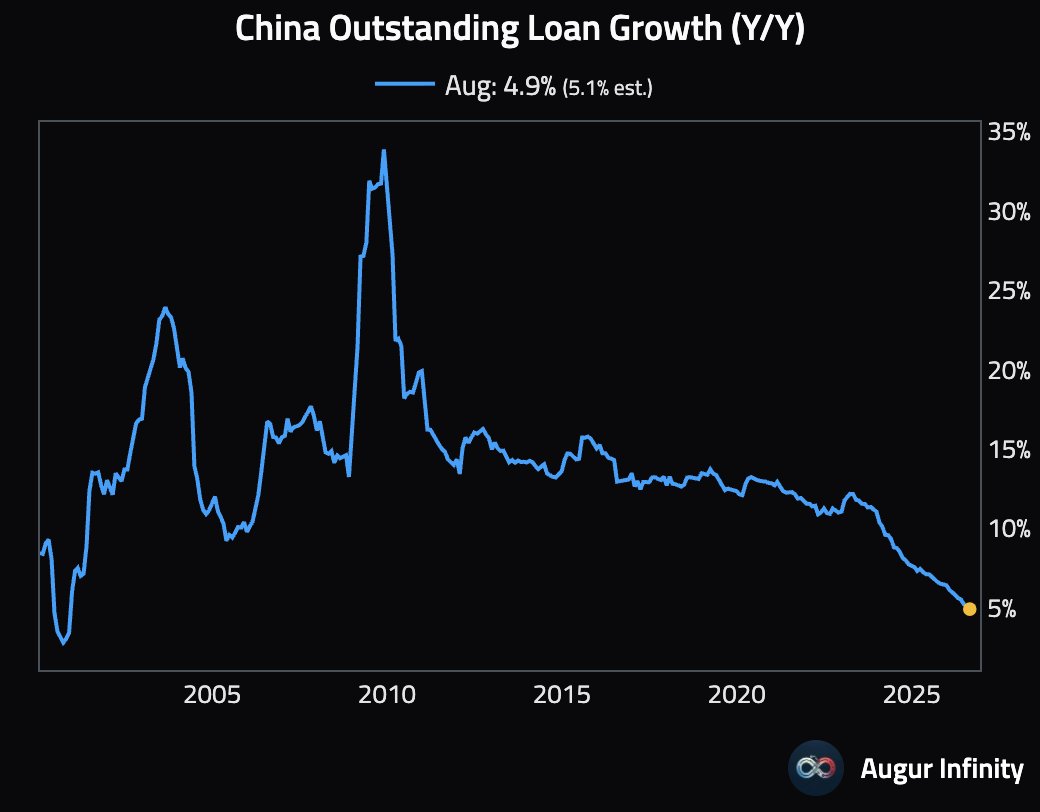
The central bank also reported that financing to the real economy in yuan totaled CNY10.23 trillion, with government bond issuance contributing CNY8.77 trillion and corporate bond net financing reaching CNY2.79 trillion. At end-August, outstanding yuan loans stood at CNY282.35 trillion, up 4.9% from a year earlier.
The release is closely watched by banks, developers and bond investors because it helps frame the pace of credit demand and liquidity conditions in the months ahead. Bank shares, property-linked stocks and the onshore bond market are the main channels most likely to react to the data print.
The PBOC did not announce any new policy measures alongside the monthly statistics. Market participants will now look to fourth-quarter lending momentum and fiscal support for further clues on growth traction.
Statistics Canada’s advance estimate shows Canadian manufacturing sales fell 0.4% in July, weaker than the 0.2% decline expected by economists. June was revised to a 0.3% increase, up from the initial 0.1% reading.
The move comes after Statistics Canada reported June manufacturing sales at C$78.824 billion, up 0.1% month over month and 14.5% from a year earlier. That report highlighted strength in chemicals, transportation equipment and petroleum products, underscoring how quickly the sector can swing month to month.
For markets, the data can feed into Canadian dollar trading and rate expectations, while also affecting sentiment around industrial names tied to chemicals, metals, auto parts and transportation equipment. Because the July figure is only an advance estimate with a lower-than-normal response rate, traders will treat the final release as the key follow-up.
Statistics Canada has not added any separate commentary on the July estimate. Investors will now look for the final monthly report to see whether the decline is confirmed and how much of it reflects temporary volatility versus a broader slowdown.
Japan’s Ministry of Economy, Trade and Industry said final July industrial production fell 0.2% month on month, revised from an initial 0.1% increase. Year-on-year growth was also trimmed to 3.9% from 4.1% in the flash reading.
The release follows June’s stronger rebound, when revised industrial production rose 1.9% month on month and operating conditions improved more sharply. July’s softer print suggests the factory sector lost momentum after that bounce.
Industrial output is closely watched for clues on demand across machinery, electronics and autos, sectors that are important for Japan’s exporters and manufacturing supply chain. The data itself is a macro readout rather than a company-specific event, but it can still sway sentiment around Japanese industrial names.
Investors will now look to the next round of production and orders data for evidence on whether July was a one-off pullback or the start of a broader cooling trend.
Sweden’s Statistics Sweden said on Sept. 14 that August consumer prices rose 0.3% year on year and fell 0.3% month on month, matching the flash estimate and market expectations. The CPIF, the Riksbank’s preferred inflation measure, was unchanged at 0.7% year on year, while CPIF-XE eased to 0.5%.
The flash CPI released on Sept. 7 had already pointed to the same headline reading, so today’s publication mainly confirms the preliminary numbers with full official details. Statistics Sweden noted that CPIF excludes mortgage-rate changes, which is why it is used as the central bank’s target variable.
For markets, the print matters most for Swedish rates, the krona and interest-sensitive sectors, rather than any single stock. Traders will use the confirmation to reassess the pace and timing of further policy moves by the Riksbank.
There is no company-specific event here; the key takeaway is the inflation backdrop rather than an earnings or regulatory story.
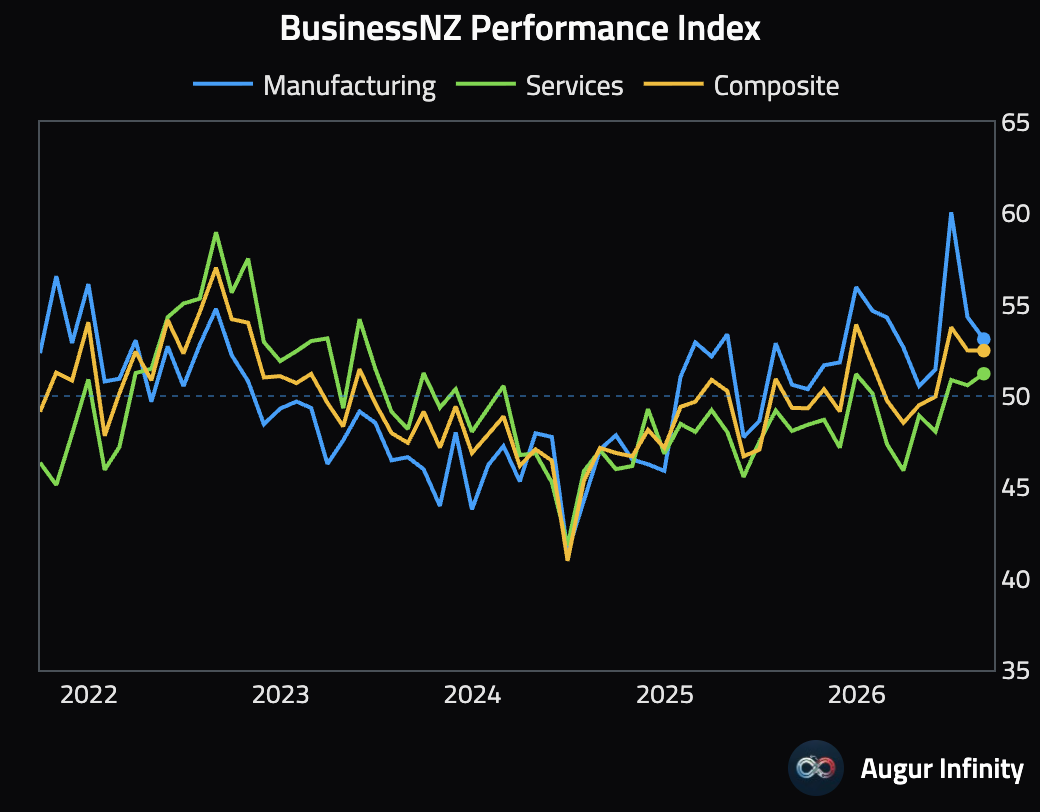
New Zealand’s BNZ-BusinessNZ Performance of Services Index rose to 51.2 in August from 50.6 in July, marking a third straight month above the 50 line. The reading indicates services activity is still expanding, albeit only modestly.
The latest breakdown showed New Orders/Business at 55.2, while Employment and Activity/Sales were both 49.4 and Supplier Deliveries came in at 49.0. BusinessNZ described the recovery as fragile, and BNZ said the three-month moving average has climbed to 50.9, its strongest since July 2023.
For markets, the print is mainly relevant for the New Zealand dollar and front-end rate expectations, though it is generally seen as a second-tier release on its own. A broader improvement in the PMI-style activity complex would matter more for how the RBNZ assesses domestic demand.
Respondent sentiment remained soft, with negative comments still elevated and centered on cost of living pressures, interest rates and election uncertainty. The headline was also the strongest since September 2023 and matched December 2025, underscoring a slow but uneven recovery.
Strategy said on Sept. 14 that it did not buy or sell any Bitcoin between Sept. 8 and Sept. 13, and that its holdings remained about 845,050 BTC as of Sept. 13. The company also said it repurchased 1,420,467 shares of STRC for $139.3 million using USD Cash.
The filing extends a capital-allocation shift that has put more emphasis on preferred-stock liability management than on adding to the Bitcoin treasury. Strategy said its preferred repurchase program still had about $1.05 billion of capacity available after the week’s buyback.
For investors, the update matters most for MSTR and Strategy’s preferreds — STRC, STRK, STRD and STRF — because the company is using cash to reduce future dividend obligations. Bitcoin exposure stayed unchanged, but the latest disclosure shows where the next dollar is being deployed.
Strategy’s filing also said its USD Reserve stood at $5.10 billion and USD Cash at $1.30 billion as of Sept. 13. The company reiterated that the reserve is meant to support preferred dividends and debt interest, while cash can be used for broader Bitcoin treasury purposes.
これまでの経緯
2026-07-20投稿3件 · 投稿者3人
Strategy announced a $225 million increase in its USD Reserve, with BTC holdings at 843,775.
企業動向🔥進行中
Strive、BTCを469枚追加、保有銘柄は25,000枚に、SATAは10億ドル突破英語原文
The latest buy was funded entirely by SATA, keeping Strive’s bitcoin treasury expansion in focus.
Strive CEO Matt Cole said on X that the company bought 469 bitcoin last week for about $36.6 million, at an average price of $77,954 per coin. The purchase lifted Strive’s total holdings to 25,000 BTC.
The new disclosure builds on earlier treasury moves by Strive. A prior report said the firm bought 1,375 BTC on Sept. 4, bringing holdings to 24,531 BTC, underscoring how quickly the company has been scaling its bitcoin position.
The market is watching the financing side as closely as the treasury data. Cole said 100% of the capital came from SATA, whose notional outstanding has now topped $1 billion, while STRC was also seen trading above $100 in premarket.
No contrary company statement was found in the referenced reporting. The latest figures were repeated by multiple outlets after Cole’s X post.
これまでの経緯
2026-07-20投稿5件 · 投稿者4人
Strive acquired 21 BTC at an average cost of ~$63,221.
2026-08-20投稿7件 · 投稿者6人
SATA hit $100, reopening Strive's ATM window for the first time since June 17, resuming accumulation.
規制
UAE Pass Avalanche claim unverified as 11M-user digital vault remains blockchain-based英語原文
Official materials confirm blockchain in the vault, but no public filing names Avalanche as the protocol layer
Social posts on Sept. 14 claimed the UAE will integrate Avalanche into UAE PASS and its Digital Vault. Current reporting says that claim remains unverified: neither the UAE government nor Avalanche Labs has publicly published documentation confirming Avalanche as the underlying protocol.
What is confirmed is that UAE Pass, launched in 2018, serves more than 11 million registered users and connects to over 15,000 services from more than 350 providers. Its digital vault is described in official materials as being powered by blockchain technology, but that wording does not identify a specific blockchain.
For AVAX traders, the distinction matters. A confirmed national-identity integration would be a major enterprise narrative; an unverified social-media claim is not the same thing and should be treated as such until official disclosure appears.
Avalanche’s UAE footprint is real but separate: the Avalanche DLT Foundation was incorporated in Abu Dhabi’s ADGM on Dec. 15, 2025, and the project has also worked with local fintech partners on tokenization initiatives. Those facts support regional presence, not proof of UAE PASS integration.
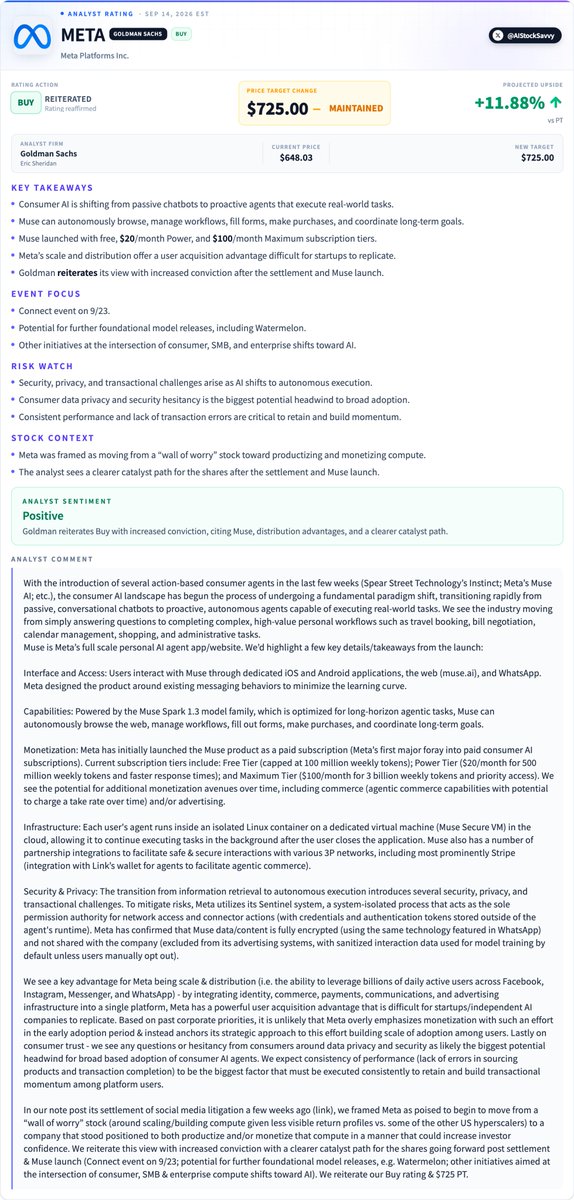
Goldman Sachs reiterated a Buy rating on Meta Platforms and kept its 12-month target price at $725, according to reports published Monday. The firm argues that Muse is pushing consumer AI from chatbots toward task-completing agents.
The latest debate follows Meta’s recent launch of Muse, which has drawn attention for early traction and for a pricing ladder that includes free access, a $20 monthly tier and a $100 monthly tier. The product is designed to help users shop, book travel and complete routine web tasks.
For investors, the bigger question is how Meta turns its social distribution into AI revenue. Analysts are increasingly focused on the company’s reach across Facebook, Instagram and WhatsApp, which could help it monetize consumer AI faster than model-only startups.
Meta has not issued a fresh public comment on the new bullish note. The market discussion so far has centered on broker research and early product feedback rather than company guidance.
これまでの経緯
2026-07-30投稿4件 · 投稿者4人
Meta reported Q2 2026 earnings with revenue up 28% but EBIT and net income down, as analysts discussed monetization options beyond ads.
2026-08-10
企業動向
Nvidia adds CUDA-Q Logical as Fermilab says 5 months can shrink to 3 weeks英語原文
The new layer extends NVIDIA’s quantum software stack into fault-tolerant design, with the near-term significance centered on workflow speed and ecosystem reach.
NVIDIA was flagged by multiple market wires on Monday for expanding its open-source CUDA-Q platform with CUDA-Q Logical, a new layer aimed at fault-tolerant quantum computing. The addition is meant to help researchers co-optimize algorithms, error correction and hardware requirements in one workflow.
The move builds on NVIDIA’s broader quantum software push. In March 2026, the company introduced cudaq-realtime, a runtime API for microsecond-latency callbacks between GPUs and quantum controllers, while NVIDIA’s developer site says CUDA-Q integrates with 75% of publicly available QPUs and covers error correction, algorithms and accelerated simulation.
For investors, the story is less about immediate hardware revenue and more about NVIDIA deepening its platform role across the quantum stack. Market chatter around the release also highlighted Fermilab’s claim that development time fell from five months to three weeks, plus another team’s 1,000-logical-qubit model, underscoring the software-efficiency angle that could matter for NVDA and quantum hardware partners alike.
No formal company quote on CUDA-Q Logical was included in the wire snippets cited by traders, so the claim set should be treated as a developing software-stack update pending fuller technical disclosure.
Apple reported June quarter revenue of $109.4B, up 16%, with iPhone up 22%; Amazon CEO said AI demand is still early-stage, AWS accelerated for fifth straight quarter; KOSPI surged 17% intraday.
2026-08-20投稿11件 · 投稿者11人
Moderna and Merck's personalized mRNA cancer vaccine with Keytruda slowed melanoma recurrence in late-stage trial; Amazon Prime Air to expand drone delivery to nearly 500 US cities; Bloom Energy received positive commentary.
2026-09-07投稿25件 · 投稿者15人
An Amazon cargo plane crashed at Miami airport, killing five after overrunning the runway and bursting into flames; all runways closed; tweets also listed monopoly and duopoly companies.
2026-09-10投稿6件 · 投稿者6人
US diesel average hit new all-time high, heading toward $6 per gallon; Mag 7 stocks mixed, JPMorgan upgraded Meta; VistaShares DRKY ETF holdings disclosed with Natera as top weight.
2026-09-14投稿13件 · 投稿者10人
Amazon paused operations with cargo carrier 21 Air after the Miami crash; Nvidia fell 2.3% as AI leaders called for slower development of advanced models; Mag 7 stocks were mixed.
Meta announced open-sourcing its most powerful AI model Muse Spark 1.2 and unveiled Muse Glimmer, a model that runs locally on PCs.
2026-09-09投稿105件 · 投稿者68人
Meta launched Muse, a personal agent, with early usage far exceeding projections, sending shares up over 5% premarket.
2026-09-10投稿61件 · 投稿者46人
Meta faced backlash for taking over the Muse band's Instagram handle, while JPMorgan upgraded the stock to Overweight.
2026-09-13投稿12件 · 投稿者10人
Meta positioned Muse as a 'business in a box' that autonomously runs products, marketing, and ads, with it being called the best agent implementation.
2026-09-14投稿10件 · 投稿者10人
Muse received overwhelmingly positive reviews, drawing comparisons to early ChatGPT, with expectations it will be the first AI assistant to reach 1 billion users.