Markets are heavily pricing a 25-basis-point Fed hike at today’s meeting. Reuters said the odds are above 90%, while X posts point to prediction-market probabilities ranging from 86% to 93% on Kalshi and Polymarket.
The backdrop is persistent inflation, firmer energy prices and a Fed that has kept rates unchanged since July 2023. Reuters cited personal consumption expenditures running at a 3.7% annual pace in both June and July.
If the decision lands as expected, investors will quickly shift from the headline move to the dot plot and the post-meeting statement. Reuters said attention is centered on how Chair Warsh frames the first policy move of his tenure, with rates-sensitive assets such as bonds, the dollar, gold and growth stocks likely to react most to the guidance.
The key distinction is between market odds and the actual policy outcome. A hold would be a notable surprise against today’s pricing, while a hike would leave the statement and projections as the main market-moving details.
The U.S. Senate failed to advance the CLARITY Act after the bill fell short of the 60 votes needed to move forward. Reporting and market signals point to a 41-vote bloc against the procedural motion, making this a clear cloture failure rather than final passage.
The vote came after two days of heightened attention around the bill, with crypto executives and traders watching for a regulatory framework that would split oversight between the SEC and CFTC. A Reuters-style market note and prior coverage had already framed the Senate test as a pivotal moment for digital-asset rules.
The reaction was immediate across crypto-linked assets. Market signals said roughly $300 million of crypto longs were liquidated within 20 minutes, while Robinhood shares slid more than 7% as investors repriced policy-sensitive exposure to retail trading and token activity.
For now, the setback stalls the market-structure bill but does not fully close the door on another vote. Prediction-market pricing also cooled sharply, with one widely cited gauge putting the odds of year-end enactment at 7%.
On Tuesday, the 10-year U.S. Treasury yield briefly moved above 5%, its first time at that level since 2007. Market signals also showed Japan’s 10-year yield touching 3.04%, with France’s 10-year yield rising to 4.5% and other major developed markets at multi-year highs.
Reuters reported that borrowing costs across major economies have climbed to levels last seen during or after the financial crisis, with the average G7 10-year yield reaching 4.285%, the highest since mid-2008. In contrast, market commentary on China says government borrowing costs remain near record lows, highlighting a sharp divergence in global rate regimes.
Higher long-end yields typically pressure duration-sensitive assets, refinancing conditions and leveraged sectors such as housing and mortgage-related securities. The signal set also pointed to iShares MBS ETF (MBB) hitting a fresh 52-week low, underscoring stress in mortgage-backed assets as rates stay elevated.
So far, the coverage centers on the market impact of rising yields rather than any official intervention. Investors are watching upcoming debt auctions and central-bank communication for signs of whether long rates continue to test higher levels.
The Trump administration is preparing a $2.8 billion arms package for Israel that would include 40,000 heavy bombs, according to multiple reports. The proposed deal breaks down into 20,000 MK-84s and 20,000 BLU-117s, with 20,000 I-2000 penetrator warheads also reported by some outlets.
The munitions are among the most destructive in the U.S. arsenal. The Biden administration paused one shipment in 2024 over concerns about civilian casualties in Gaza, and the current package has already been informally shared with congressional committees, though it is not final.
For defense contractors, the news keeps attention on names such as Lockheed Martin and RTX, which could benefit from renewed ordnance demand and related procurement flow. The move is more relevant as a sign of U.S.-Israel defense ties than as an immediate earnings catalyst.
Israel’s embassy had not commented at the time of reporting. U.S. officials said pending foreign arms sales go through the appropriate process and declined to comment further on the deal.
Bloomberg and Reuters reported on Sept. 15 that Nvidia CEO Jensen Huang is expected to attend President Donald Trump’s state dinner for Chinese President Xi Jinping on Sept. 24 at the White House. The reports cited people familiar with the matter, while Nvidia and the White House had not immediately commented.
The backdrop is the ongoing U.S.-China standoff over advanced AI chips and export controls, an issue that has repeatedly put Nvidia at the center of policy talks. Huang has also publicly argued for looser restrictions, making his appearance at a high-level diplomatic event especially notable.
For markets, the key issue is Nvidia’s exposure to China and whether any thaw in dialogue could eventually affect chip access. NVDA remains bound by U.S. export rules, so investors are watching the diplomacy for signals, not policy change.
At this stage, the only verified development is the reported plan for Huang to attend; the final guest list has not been formally announced. Nvidia and the White House have not provided a new official statement on the matter.
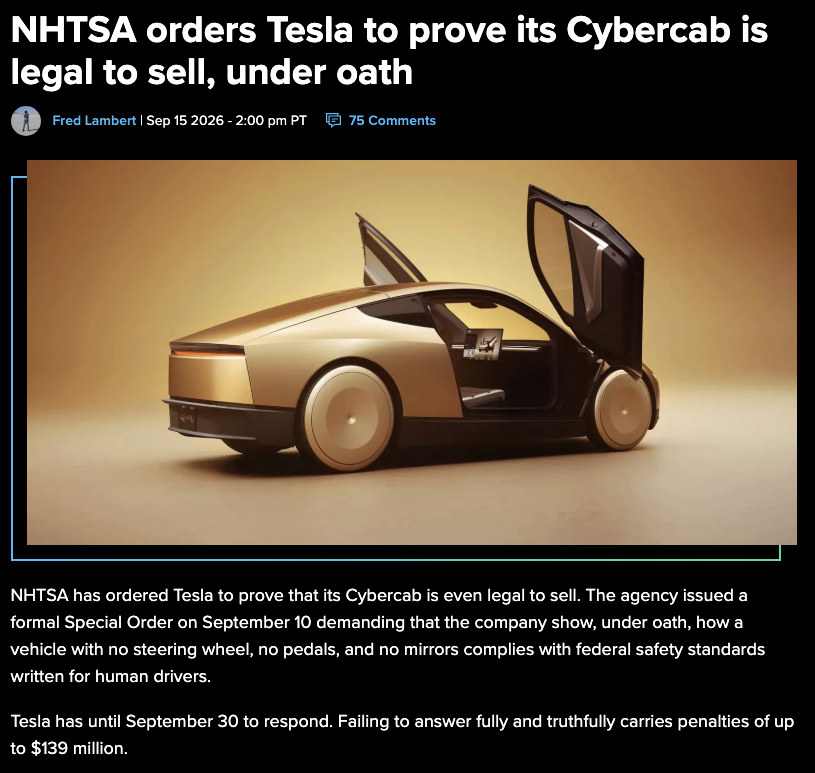
The National Highway Traffic Safety Administration has ordered Tesla to explain by Sept. 30 how its wheel- and pedal-free Cybercab complies with federal safety standards. Reports say the agency is specifically asking whether temporary human-driving controls were used as part of the vehicle’s certification basis.
The request extends an Audit Query NHTSA opened on Sept. 4 into Tesla’s self-certification of the Cybercab. NHTSA said existing federal safety standards remain in force while it reviews the technical data and processes Tesla relied on to determine which FMVSS requirements may not apply to an automated vehicle.
For investors, the issue lands squarely on TSLA because Cybercab sits at the center of Tesla’s robotaxi and autonomy thesis. Regulatory uncertainty could affect the timing and economics of deployment, while any adverse finding would add another compliance hurdle for the company’s autonomous-vehicle ambitions.
So far, NHTSA has not announced a recall, civil penalty or noncompliance finding. Reuters-reported reporting indicates the order carries penalties of up to about $139 million if Tesla fails to respond fully and truthfully.
これまでの経緯
2026-07-19投稿3件 · 投稿者3人
Tesla produced 245 Cybercabs in one day at Giga Texas, with estimated output of about 49 per hour, sparking attention.
地政学
CBO、イラン戦争の費用は380億ドル、迎撃ミサイルは最大3分の2減少英語原文
The new congressional estimate also says the conflict will lift U.S. inflation and keep energy costs elevated.
The Congressional Budget Office said on Sept. 15 that U.S. combat operations against Iran have cost about $38 billion through Aug. 1, including $21.7 billion to replace expended munitions. The estimate covers operational, logistical and sustainment costs, plus the economic effects of higher energy prices.
CBO said the war has heavily drained missile defense interceptors, with inventories likely down by between one-half and two-thirds since June 2025. The agency also said rebuilding those stocks could take at least five years, given low production rates and long manufacturing lead times.
On the macro side, CBO projects the conflict will add 0.5 percentage point to year-over-year PCE inflation in the first quarter of 2027. Higher oil and refined-fuel prices are expected to keep pressure on transport costs and consumer prices more broadly.
The report is a fresh official snapshot of the war’s direct fiscal and economic toll, and it follows previous media coverage highlighting oil-market disruption and rising Treasury yields. No single public company was identified as a direct beneficiary in the CBO letter.
SpaceX has officially targeted Sept. 22 for Starship Flight 14, with a 75-minute launch window opening at 8:15 a.m. ET. The mission is billed as Starship’s first attempt to reach orbit, and SpaceX says it plans to deploy 26 Starlink V3 satellites on the flight.
That makes the launch a key step in Starship’s development program. In SpaceX’s mission description, the vehicle is expected to complete about six orbits over nearly 10 hours before a planned splashdown in the Pacific west of Chile, while also testing heat-shield upgrades and booster modifications.
For investors and industry watchers, the main implication is the pace of Starlink capacity growth and the maturity of SpaceX’s reusable launch system. SpaceX says each V3 satellite can add about 1 Tbps of capacity, so the mission would add 26 Tbps if completed as planned.
The schedule remains subject to regulatory approval, and SpaceX has stressed that developmental launch timing is dynamic. No further public confirmation has been given on whether all test objectives will be pursued if the launch date shifts.
Amazon Web Services said in a fresh status update that it cannot restore access to its Bahrain cloud facility and one of three data-hosting zones in the UAE after damage sustained during the Iran war. Reuters, Bloomberg and The Wall Street Journal all reported the disclosure, which suggests some data stored exclusively in the affected sites may not be recoverable.
The underlying disruption dates back to the spring conflict in the Middle East. AWS said the damage in Bahrain spanned multiple Availability Zones and exceeded the resilience threshold its regional and multi-AZ services were designed to withstand, while recovery work continues across the wider UAE region.
For markets, the issue is less about AWS’s own revenue than about customer business continuity across finance and other sectors that rely on Gulf data residency. Amazon (AMZN) is the main listed company tied to the event, and the disclosure highlights geopolitical risk in cloud infrastructure planning.
AWS said it has notified authorities in Bahrain and the UAE and has been helping customers move to alternate regions or restore operations from backups where available. The company said a Bahrain update is due in early 2027, while the UAE will be updated in the coming months.
これまでの経緯
規制
Robinhood engineers face fraud charges over $50,000 crypto-futures trades英語原文
U.S. prosecutors say the pair used confidential token-listing information to trade Hyperliquid perpetuals before announcements.
Federal prosecutors in the Southern District of New York on Tuesday charged two Robinhood employees with commodities fraud and wire fraud over alleged trading tied to confidential crypto-listing information. The defendants are Hefu Chai and Huaisong “Jerry” Xiang, according to the Justice Department filing.justice.gov
The complaint says the two had access to nonpublic details about which tokens would be added to Robinhood Crypto and when those listings would go live. Prosecutors allege they used that information to buy related perpetual futures on Hyperliquid before public announcements, doing so on at least ten occasions and generating more than $50,000 each.justice.gov justice.gov
The case puts a compliance spotlight on Robinhood’s crypto arm and its internal controls around sensitive listing decisions. It also lands as HOOD remains a closely watched stock after fresh August operating metrics and a broader market selloff on Sept. 15 weighed on sentiment.zacks.com fool.com
The Justice Department says the criminal counts carry maximum penalties of 10 years for commodities fraud and 20 years for wire fraud. The charges are allegations, and the filing does not by itself establish guilt.
SK hynix said no confirmed arrangement has been made regarding reported talks with Intel over U.S. memory-chip production, pushing back on a market-moving media narrative. The company said it is reviewing investment and acquisition options, but that no specific plan has been finalized.
The latest denial lands against a broader backdrop of U.S. pressure on Asian chipmakers to deepen domestic manufacturing. SK hynix already has a U.S. HBM packaging project in Indiana, which has made any further move toward front-end production in the U.S. a closely watched topic.
Intel and SK hynix shares both reacted to the reports, underscoring how sensitive investors are to any signal about the fate of Intel’s delayed Ohio campus and SK hynix’s U.S. footprint. For Intel, the site remains an important capital project; for SK hynix, the question is how to expand capacity while protecting economics.
Intel has not commented on media speculation about future business arrangements, while reiterating that it remains committed to Ohio. SK hynix’s latest statement keeps the story in the realm of exploration rather than a completed deal.
これまでの経緯
2026-07-22投稿21件 · 投稿者16人
企業動向
Apple weighs 2029 enterprise servers with M8 Ultra and NVLink Fusion英語原文
The Information says Apple is exploring self-run AI inference servers and Nvidia networking for private deployments
The Information reported that Apple is considering a return to the enterprise server market with an AI-focused system built around its own M-series chips. The proposed setup would also discuss using Nvidia’s NVLink Fusion networking technology to connect the chips, with configurations of two or four M8 Ultra processors mentioned in the report.
The move fits a broader pattern in Apple’s AI infrastructure push. Recent reporting has said Apple aims to mass-produce its own AI server chips in the second half of 2026 and bring new data centers online in 2027, while also exploring chip acquisitions to strengthen server performance.
For markets, the update keeps AAPL and NVDA in focus for different reasons. Apple’s internal server buildout would signal greater control over AI inference, while Nvidia remains central to the networking and data-center ecosystem that Apple may still tap.
Apple has not publicly confirmed the reported plan, and the details remain at the proposal stage. The timing, architecture and any partnership terms could still change as the project develops.
CoreWeave said it has linked hundreds of NVIDIA Rubin GPUs into a single scale-out cluster on CoreWeave Cloud, aimed at large agentic AI training and inference workloads. The company said it first validated Rubin at the single-rack level before moving to the multi-rack setup.
The update adds fresh evidence that NVIDIA’s Vera Rubin platform is moving from roadmap to deployment. Public material around Rubin has emphasized higher bandwidth, more memory, and lower-latency infrastructure for long-context, tool-using AI systems.
For investors, the main read-through is to CRWV and NVDA. CoreWeave gains another proof point for its AI-cloud footprint, while NVIDIA gets a live showcase for Rubin adoption that could support the broader AI infrastructure trade.
CoreWeave did not disclose new commercial terms in this update, and NVIDIA has framed Rubin primarily as a platform expansion story rather than a customer-by-customer order announcement.
Novo Nordisk and Anthropic said they will work together to speed drug discovery, with Anthropic’s models and Claude Science to be used across research and development as well as software engineering. The companies said the collaboration will focus on drug discovery problems identified by Novo’s scientists and computational teams.
The announcement builds on Novo Nordisk’s broader AI strategy. In April, the drugmaker also unveiled a partnership with OpenAI to apply advanced AI across drug discovery, manufacturing, supply chain and commercial operations, underscoring how aggressively it is embedding AI into core workflows.
For markets, the story matters mainly for Novo Nordisk and the AI-drug-discovery theme rather than near-term revenue. Investors will be watching whether AI tools translate into faster target identification, better experiment design and lower development costs over time.
The companies did not disclose financial terms, timelines or specific drug programs. Anthropic CEO Dario Amodei has argued that AI can compress biomedical progress, but that is a strategic ambition rather than a promise about this partnership’s results.
Grab said it will buy a 60% controlling stake in Atome Financial for $1.49 billion in cash, with the remaining 40% to be acquired about two years later under a performance-linked structure. The company expects the transaction to close by the third quarter of 2027 and to consolidate Atome into its financial-services segment.
The acquisition gives Grab a bigger push into consumer lending, BNPL and digital lending. In its announcement, Grab said Atome operates across Singapore, Malaysia, the Philippines, Indonesia and Thailand, serves about 25 million cumulative transacted users, and should help lift Financial Services adjusted EBITDA to $500 million by 2028, with a combined gross loan portfolio of more than $6 billion.
Investors reacted negatively to the announcement, with CNBC reporting that Grab shares fell 3.64% on Nasdaq. The deal adds another major capital commitment to Grab’s growth strategy, making execution, credit quality and integration progress key watchpoints from here.
Grab CFO Peter Oey told CNBC that consumer lending is the company’s “next frontier,” framing Atome as a way to accelerate Grab’s financial-services buildout. Grab also said it will keep Atome’s management team in place after closing.
Google on September 15 introduced Gemini 3.8 Live and Gemini 3.8 Live Extended Thinking, its newest voice-first AI models. The company says the system is built for real-time conversation, background tool execution and visual understanding, with Extended Thinking scoring 82.6 on Artificial Analysis’ Speech to Speech Quality Index and supporting 97 languages plus a context window of up to 128K tokens.
The release marks one of Google’s most aggressive pushes yet into speech AI, shifting the focus from simple voice interaction to agents that can keep talking while they work. Google says the models can call tools and APIs asynchronously, and that they are already available through Gemini API, Google AI Studio, Search Live and select Workspace products.
For investors, the update underscores Alphabet’s push to monetize AI across both consumer search and productivity software. It also raises the competitive bar for OpenAI, Anthropic and a wide field of voice-agent startups, especially as Google packages the models directly into Search and Workspace rather than leaving them as developer-only tools.
The details have been confirmed by Google’s own blog post and model card, with outside reporting backing the launch date, benchmark score, language coverage and pricing. Google has not disclosed adoption figures yet, so the market will be watching developer uptake and product rollout next.
A new market estimate puts Anthropic’s annualized revenue run rate at about $74.3 billion in the second quarter, up roughly 14 times from a year earlier. The updated figure, circulating on X and in follow-on coverage today, is higher than the $65 billion run rate Bloomberg reported in August.
The number matters because Anthropic is preparing for an IPO, and revenue momentum is central to how investors will price the company. Bloomberg had said the company’s run rate reached $65 billion by the end of July, up from about $9 billion at the end of last year.
If the higher estimate holds, it strengthens the growth story around Anthropic and keeps attention on comparable high-valuation private tech names. For public-market traders, the broader read-through is to AI-adjacent assets and premium-valued private listings such as SpaceX/SPCX.
Anthropic has not publicly confirmed the $74.3 billion figure. The best-anchored reference point remains Bloomberg’s reported $65 billion run rate as of late July.
これまでの経緯
2026-07-20投稿3件 · 投稿者3人
Meta reportedly negotiates a $10B AI compute deal with Anthropic, while Foxconn lands a SpaceX AI server order.
企業動向🔥進行中
Payward eyes HYPE perpetual futures via Bitnomial, with HYPE near $84.50英語原文
The Kraken parent’s proposed U.S. derivatives route would put Hyperliquid-linked perpetuals inside a CFTC-regulated venue, pending approval.
Bloomberg and other outlets reported that Kraken parent Payward is in advanced talks with Hyperliquid Labs to offer Hyperliquid-linked perpetual futures to U.S. traders through Bitnomial, the CFTC-regulated derivatives venue Payward acquired this year. The proposal still needs regulatory clearance, and neither side has disclosed the contract list or launch timetable.
The discussion builds on Payward’s May acquisition of Bitnomial, which gave it exchange, clearing and brokerage infrastructure under the U.S. derivatives regime. Kraken has already used that setup to roll out perpetual futures for eligible American clients in June.
The token has remained in focus after the report. Multiple outlets said HYPE traded around $84 to $84.50 after the news, and some coverage noted a strong run since early August, though no single catalyst has been established for the full move.
Payward and Hyperliquid have not confirmed whether HYPE itself will be among the listed products. For now, the proposed structure would route U.S. activity through Bitnomial rather than open direct access to Hyperliquid’s permissionless platform.
これまでの経緯
2026-09-01投稿12件 · 投稿者11人
HYPE surged nearly 50% as Hyperliquid reportedly held talks with Kraken's parent Payward to enter the US market.
企業動向
JPMorgan、ステーブルコインの機関需要は弱いと指摘、1億ドルのMONYが展開開始英語原文
The bank’s latest remark contrasts with its push into tokenized money funds, underscoring a cautious view on stablecoin adoption among institutions.
JPMorgan said it does not see much institutional demand for stablecoins, according to a fresh market signal circulating on Tuesday. The remark is the newest data point in the bank’s view of how quickly token-based finance will be adopted by large clients.
The comment comes as JPMorgan has also been moving ahead with tokenization products. Recent reporting said its MONY tokenized money market fund was launched on Ethereum with $100 million of seed capital, highlighting that the bank is still testing blockchain-based financial rails even as it questions demand for stablecoins themselves.
For markets, the message is most relevant to JPMorgan Chase and its asset-management and payments franchises, where adoption assumptions can shape revenue expectations. It also matters for listed names tied to stablecoin infrastructure and on-chain settlement, which tend to trade on the pace of institutional uptake.
JPMorgan has not yet provided a fuller public explanation attached to the remark. Earlier reporting on MONY said the product would be aimed at qualified investors and run through JPMorgan Asset Management.
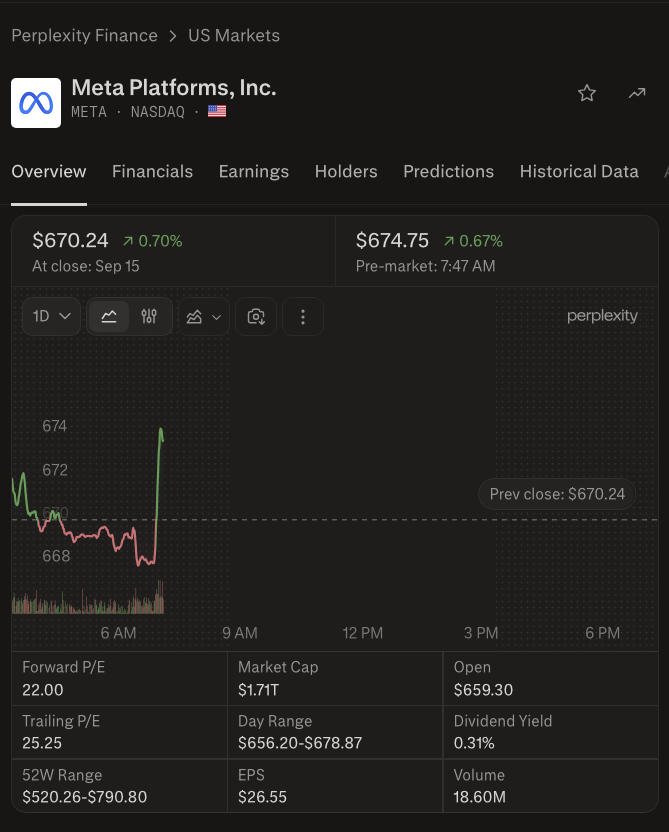
Meta CEO Mark Zuckerberg said on X that he does not think the AI industry needs a coordinated pause. Instead, each lab should slow down on its own when safety requires it, and alignment is becoming a competitive advantage because users will not trust misaligned AI agents.
Zuckerberg pointed to Meta’s decision to delay the Muse release for several months to strengthen safety and security. Reuters reported that he also said most of Meta’s compute is directed toward serving people rather than recursive self-improvement.
For markets, the message matters most for META, as investors continue to weigh the pace of AI product rollout against safety and liability risk. It also echoes Nvidia CEO Jensen Huang’s recent pushback against a broad slowdown in frontier AI.
The latest comments do not amount to a policy shift or a product announcement. They instead reinforce Meta’s position that safety should be handled company by company, not through an industry-wide freeze.
Multiple reports citing The Information say Meta is preparing to launch a camera-free pair of smart glasses code-named Luna this fall. The device is said to include six microphones and speakers, with a possible reveal at Meta Connect next week and shipments targeted for October.
The move comes as Meta’s existing Ray-Ban smart glasses have faced persistent privacy criticism over recording features. The Verge reported that the camera on the flagship frames has fueled a backlash, including restrictions in some venues, while Meta has also tried software changes to prevent tampering with the recording indicator light.
If the report proves accurate, investors will watch how far Meta can push its AI wearables strategy without relying on a camera. For $META, Luna would broaden the product line, but it would also test whether voice-first glasses can gain traction in the market.
Meta has not publicly commented on the report. The launch timing, feature set and commercial terms remain unconfirmed until the company speaks at Connect or otherwise makes an official announcement.
Ed Yardeni lowered his year-end S&P 500 target to 7,900 from 8,400 and cut his forward P/E assumption to 18.6 from 19.8, saying the recent backup in bond yields has lifted downside risk over the next three to six months.yardeniquicktakes.com Wells Fargo also trimmed its year-end S&P 500 target, to 7,700 from 7,950, in a separate note released the same day.reuters.com
The common backdrop is a rise in Treasury yields, with the 10-year note moving toward the 5% threshold. Yardeni kept his 2027 EPS forecast at $425 and shifted what had been an 8,400 year-end target into mid-2027, signaling a valuation reset rather than a wholesale abandonment of the bull case.yardeniquicktakes.com
Wells Fargo’s Ohsung Kwon argued the market is entering the late innings of the cycle, where multiple compression tends to weigh on returns. He also turned more cautious on technology and more constructive on healthcare, citing data-center backlash and election-related policy risk as potential headwinds for tech shares.bloomberg.com
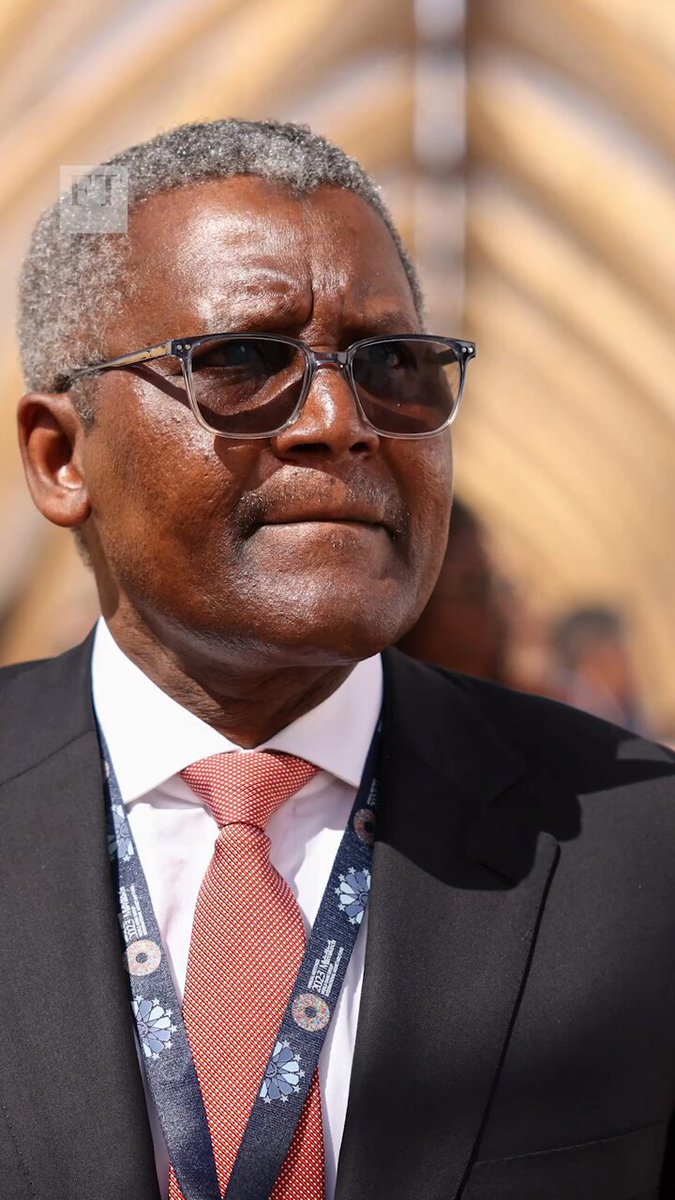
Dangote Petroleum Refinery and Petrochemicals FZE has launched a Nigerian IPO for 4.1 billion new shares priced at ₦525 each, aiming to raise about ₦2.15 trillion, or roughly $1.6 billion. The minimum subscription is 10 shares, equal to ₦5,250.
The timing matters because the refinery has ramped up product exports this year, with Reuters reporting it became a key supplier of jet fuel to Europe in the second quarter amid disruptions to Middle East flows. That has sharpened investor attention on the refinery’s scale and cash-generation prospects.
The deal is being watched as a major test for Nigeria’s capital market and for pricing large energy infrastructure assets in Africa. At the offer price, the refinery’s implied equity value is about ₦65.2 trillion, or roughly $47.6 billion, which would place it among the most valuable listed companies linked to Nigeria.
Early demand appears strong, with reports that some Nigerian investing apps briefly struggled after the offer opened. Dangote has framed the sale as a wider ownership opening rather than a change in control.
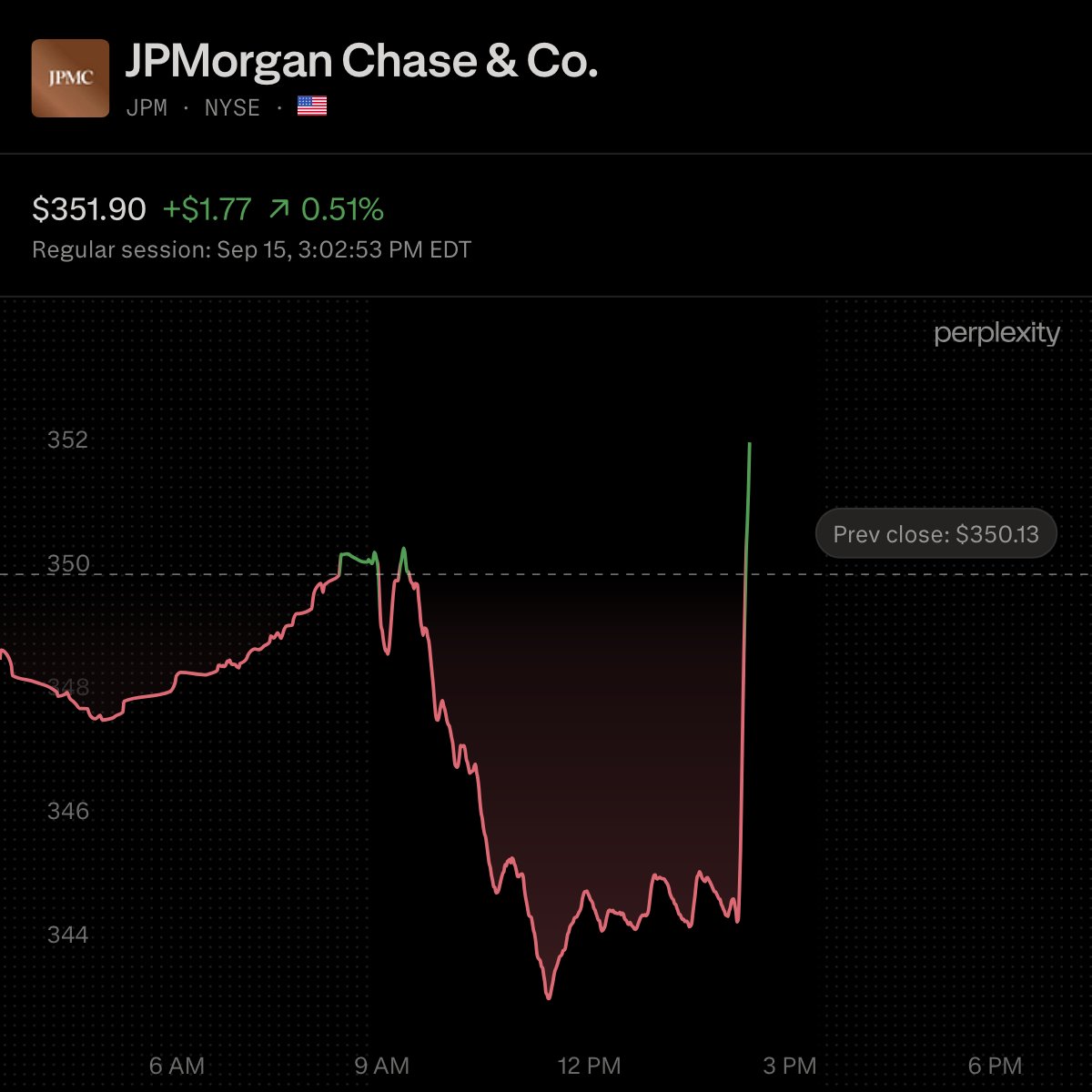
JPMorgan Chase co-president Doug Petno said the bank expects third-quarter investment banking fees and trading revenue to rise in the mid-to-high teens, with Reuters citing a range of 15% to 19%. Bloomberg reported the same call on Tuesday, noting the guidance was delivered at Barclays’ Global Financial Services Conference.
The outlook marks a sharp contrast with Bank of America’s earlier tone this week. BofA CEO Brian Moynihan said investment banking fees are expected to fall at least 10% year over year in the third quarter, while sales and trading revenue should be roughly flat.
The backdrop is JPMorgan’s unusually strong second quarter: investment banking fees reached $3.21 billion, up 28% from a year earlier, while investment banking revenue was $3.9 billion, up 45%. Markets revenue rose 35% to about $12.1 billion, highlighting the strength behind the new guidance.
For markets, the comments mainly reinforce JPMorgan’s position as the key read-through for Wall Street dealmaking and trading activity. Reuters said JPMorgan shares reversed earlier losses and rose about 1% after Petno’s remarks, as investors reassessed the outlook for the bank’s capital-markets franchise.
The UK Office for National Statistics said consumer price inflation rose 3.1% year on year in August, up from 2.9% in July. Core CPI held at 2.6% and services inflation remained unchanged at 3.4%, in line with expectations and suggesting the underlying pace of price growth was steadier than the headline number implied.
The main driver was transport, led by motor fuels. ONS said average petrol prices climbed 9.1 pence to 161.3 pence per litre, the highest since November 2022, while diesel rose 14.2 pence to 181.8 pence per litre.
For markets, the release matters because it feeds directly into pricing for sterling, gilts and the Bank of England's next policy steps. The fact that core and services inflation did not accelerate further may temper concern about persistent domestic price pressure, even as headline inflation remains elevated.
Producer price data released alongside CPI showed mixed upstream pressure, with input prices up 6.1% year on year and output prices up 3.7%. That keeps the focus on whether higher fuel costs broaden into other parts of the inflation basket in coming months.
New Zealand June current account deficit narrows to NZ$1.67 billion; annual gap falls to 3.2% of GDP英語原文
Stats NZ’s latest external accounts show a smaller-than-expected quarterly deficit and a lower net international liability position, easing pressure on New Zealand’s external balance.
New Zealand’s current account deficit came in at NZ$1.67 billion in the June quarter, smaller than the NZ$2.6 billion forecast. On an annual basis, the deficit narrowed to NZ$14.6 billion, equal to 3.2% of GDP, while the seasonally adjusted quarterly deficit was NZ$3.8 billion.
The release extends a run of revisions and improvements in the country’s external accounts. Stats NZ said annual revisions reduced the previously estimated deficit, mainly through the primary income balance, and Westpac noted the year-ended deficit was revised down from 3.6% of GDP to 3.2%.
New Zealand’s net international liability position also improved, falling to NZ$178.3 billion, or 39.0% of GDP, from NZ$191.7 billion and 42.5% in the March quarter. Net external debt stood at NZ$225.7 billion, equivalent to 49.4% of GDP.
For markets, the data matter because they feed into views on the New Zealand dollar, funding conditions and the country’s external resilience. Investors will now watch whether higher energy-import costs and broader income flows change the trajectory in coming quarters.
Intel climbed about 2.2% in intraday trading Tuesday to $99.32, with traders focusing on its 49% stake in Altera and the prospect of a renewed capital-market move. Earlier reporting said Altera had confidentially filed for an IPO, keeping the asset in the spotlight. gurufocus.com
Altera was once part of Intel’s portfolio of programmable-chip businesses before Intel sold a majority interest while retaining a minority stake. If an independent listing advances, investors would likely revalue Intel’s remaining holding and reassess the company’s efforts to monetize non-core assets.
The stock move reflects balance-sheet and asset-value speculation more than a broad semiconductor rerating. The chatter comes as the market is already focused on policy risk and shifting positioning across the chip supply chain. gurufocus.com
Neither Intel nor Altera has publicly confirmed a detailed timetable for a listing in the latest reporting.
X rolled out its U.S. Cashtag Partner Program on Sept. 15, allowing users to tap a supported Cashtag, review price data and related posts, and then press “Trade” to continue to a partner brokerage. The launch partners are Coinbase, Kraken, Gemini, Interactive Brokers and Moomoo.
The move builds on Cashtags that X first introduced on April 14, 2026, when the feature began giving U.S. and Canadian iPhone users access to stock and crypto symbols directly on-platform. The new program adds a brokerage handoff on top of the existing price-chart and conversation experience.
For markets, the practical implication is a more direct distribution channel for brokers and asset platforms that are already active in retail trading. Crypto cashtags are routed mainly through Coinbase, Kraken and Gemini, while stocks and ETFs are handled chiefly by Interactive Brokers and Moomoo.
X said Cashtags are meant to narrow the gap between a timeline ticker and the market itself. Moomoo separately said the partnership turns X market discovery into a path to trading on its platform; X had previously said its Cashtag pilot generated an estimated $1 billion in global trading volume within three days of launch.
Amazon is reportedly preparing a major expansion of its same-day delivery network, codenamed Project Mercury. The plan would lift the company’s U.S. same-day fulfillment footprint to more than 1,000 locations by 2031, up from roughly 85 sites today, and set aside $6.8 billion for U.S. same-day hubs in 2026-27.
The move underscores how central logistics remains to Amazon’s retail model. Faster coverage for everyday items such as groceries, household goods and over-the-counter medicines would deepen Amazon’s challenge to Walmart’s store-density advantage in quick, local shopping.
For markets, the key read-through is higher capital intensity and potential pressure on near-term margins and free cash flow as the network is built out. AMZN is the core stock in focus, while WMT is the main competitive reference point because the plan explicitly targets same-day shopping speed.
The report is based on internal planning documents and people familiar with the matter, and Amazon has not publicly confirmed the full scope. Investors will watch for any formal update on capex and network rollout to see how much of the plan is reflected in upcoming guidance.
A rare intra-quarter warning signals that rising fuel and drayage expenses are weighing on a carrier whose second-quarter results had still been growing.
J.B. Hunt said on Sept. 16 that third-quarter earnings are expected to fall 5% to 10% sequentially from the second quarter. The company pointed to roughly $25 million in higher drayage-driver costs, including hiring, sign-on and retention bonuses, alongside elevated diesel prices.
The update is notable because it came outside the normal earnings cycle, giving investors a fresh read on margin pressure in trucking and intermodal before the next quarterly report. J.B. Hunt had reported stronger second-quarter revenue and profit growth in July, so the new warning suggests costs are moving faster than the company had expected.
Shares of JBHT fell in after-hours trading as investors reassessed near-term earnings power across the freight group. The warning matters beyond one company because J.B. Hunt is a bellwether for pricing, capacity and cost trends in U.S. transportation.
Management has not framed the warning as a structural demand problem, but as a cost-driven hit to the quarter. For the market, the key question is whether the pressure is temporary fuel timing or a broader operating-margin reset that could spill over to other trucking names.
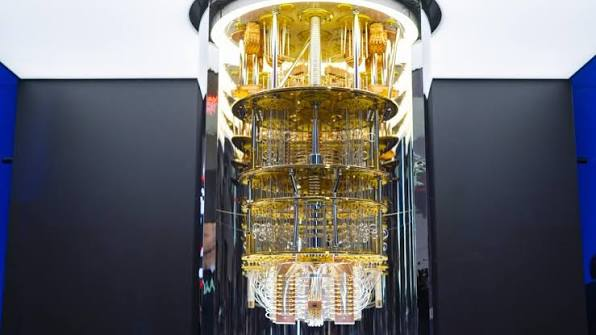
IBM subsidiary Anderon has finalized a $1 billion CHIPS and Science Act award with the U.S. Department of Commerce, marking a formal step for its Albany, New York quantum wafer manufacturing plan. Anderon said the funding will support R&D and manufacturing capabilities for 300mm quantum wafers.
The move follows the May announcement of a letter of intent, when IBM and the Commerce Department said the government would provide $1 billion in CHIPS incentives and IBM would contribute another $1 billion in cash to the new company. That earlier announcement framed Anderon as America’s first pure-play quantum foundry.
For IBM, the deal sharpens the company’s quantum roadmap and turns a previously proposed package into a signed agreement. The development matters for IBM shares mainly because it reinforces the company’s long-dated industrial and technology buildout rather than changing near-term earnings.
IBM said Anderon will initially focus on superconducting qubit and supporting electronics wafers, with room to expand into other quantum modalities later. The project is positioned as a U.S.-based supply chain buildout for quantum wafers and remains subject to execution milestones going forward.
Nokia said it is widening AI-RAN trials with operators across North America, Europe, Asia-Pacific and the Middle East, moving the initiative from early evaluation into lab and live field testing. The new group includes A1 Group, Chunghwa Telecom, du, e&, Mobily, stc, TPG Telecom and Zain Saudi.
The platform combines Nokia’s anyRAN software with NVIDIA’s Aerial RAN Computer. Nokia said the system has already delivered more than 20% improvements in spectral efficiency, extending a broader push to position AI-RAN as a software-driven path toward AI-native 5G and 6G networks.
For investors, the announcement keeps Nokia (NOK) at the center of the telecom AI-RAN narrative and reinforces NVIDIA (NVDA) as a deeper infrastructure participant beyond chips alone. Still, the company did not disclose contract value, deployment scale or revenue contribution, so the update reads more like technical momentum than a financial inflection point.
The disclosure also builds on earlier evaluations and pilot work with other operators, including NTT DOCOMO and several carrier trials previously announced by Nokia. What matters next is whether the technology converts into broader fleet deployments, capex commitments or commercial terms with measurable financial impact.
Citi on Sept. 16 reiterated its Buy rating on Meta Platforms and left its price target at $800, while adding the stock to a 90-day upside catalyst watch. The firm said it is looking ahead to Meta’s Connect conference on Sept. 23, where updates on AI products and broader product strategy are expected.
The call extends Citi’s bullish stance on Meta and comes as analysts focus on products such as Muse, along with Meta’s eyewear strategy and a wider rollout of AI use cases. Publicly available research summaries also indicate the watch period runs through mid-December.
For the market, the key issue is whether Connect can deliver enough product detail to sustain sentiment around META and its AI investment case. The note also keeps attention on how investors value Meta’s ad business, Reality Labs spending and the potential monetization of newer AI offerings.
There has been no separate response from Meta to the latest Citi note. The new development is the placement on the catalyst watch list, not a change to the Buy rating or price target.
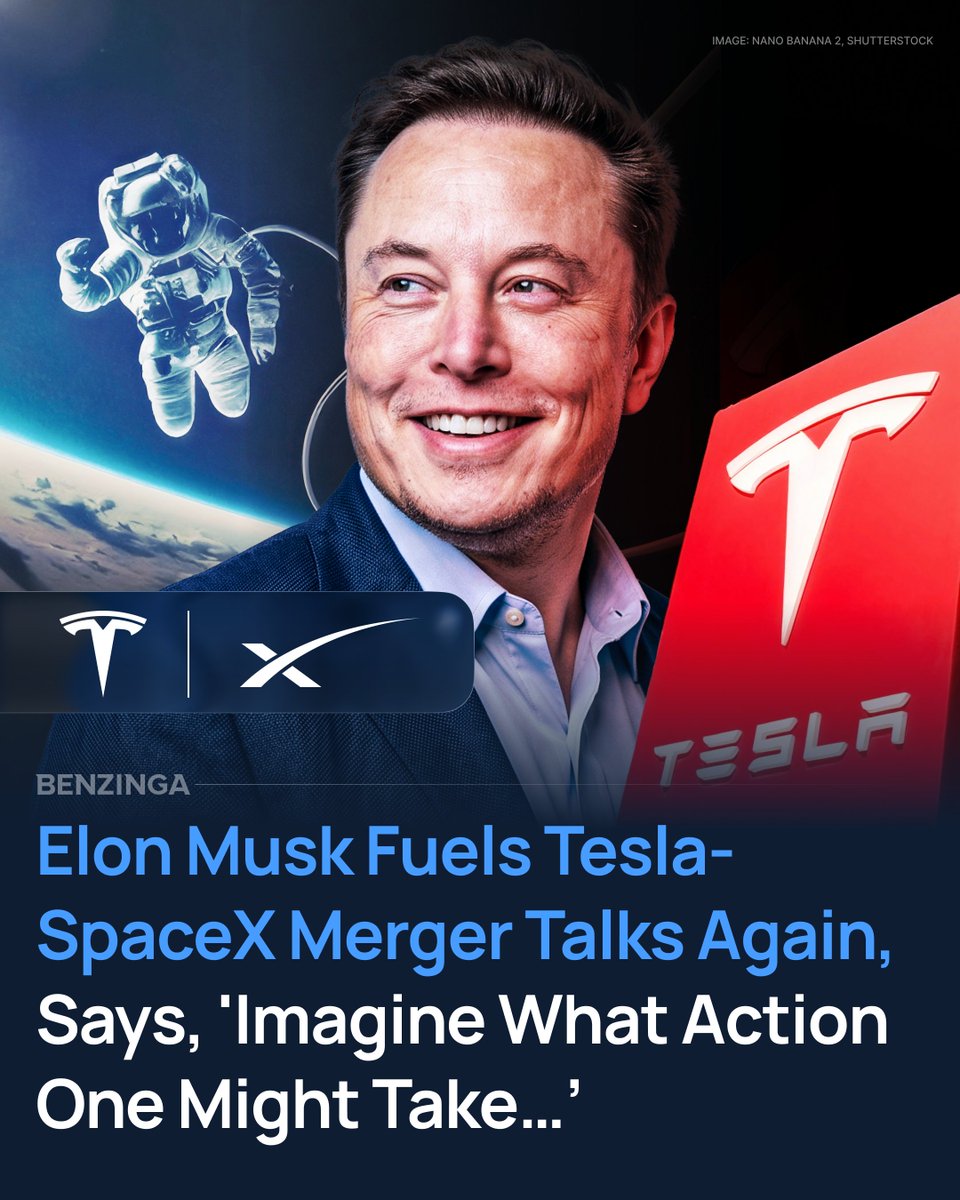
Elon Musk once again raised the prospect of Tesla and SpaceX remaining separate companies while speaking at the All-In Summit, responding to a question about the structure with “great question.” Bloomberg reported that Musk pointed to the companies’ extensive cooperation, but did not confirm any merger plan.
The latest comments follow earlier remarks that Tesla and SpaceX are increasingly intertwined across batteries, AI, satellite connectivity and chipmaking. Other reports say the two companies already have commercial and equity links, and that Terafab has emerged as a central collaboration point.
For markets, TSLA is the primary stock to watch. Any future corporate combination would likely force investors to reassess governance, valuation and how SpaceX-related assets or optionality might be reflected in Tesla’s share price, even though SpaceX itself is not publicly traded.
As of now, Musk has not disclosed a timetable, exchange ratio or board process, and the remarks should be read as continued speculation rather than a transaction announcement. Follow-up coverage has treated the comments as another signal that the idea remains on the table, not evidence that a deal is underway.
Blockfusion said on Sept. 16 that it signed a 15-year anchor lease with CoreWeave for capacity at its Niagara Falls, New York AI data center campus, with two five-year renewal options. The company said the deal converts a prior non-binding letter of intent into definitive agreements and also includes an expansion arrangement.
The project dates back to a July disclosure, when Blockfusion said it had signed an LOI with an unnamed AI customer for up to 300MW of critical IT capacity, anchored by 85MW of guaranteed take-or-pay load. DCD reported at the time that the 85MW tranche could generate about $2.8 billion in lease revenue over the initial 15-year term, or roughly $5.4 billion if both renewal options are exercised.
For CoreWeave, the agreement adds another long-duration third-party capacity commitment as it continues to scale its AI infrastructure footprint. For Blockfusion, it marks another step in its pivot from crypto mining toward AI and HPC infrastructure, with the Niagara Falls campus positioned as a liquid-cooled conversion site.
Blockfusion has not disclosed the full commercial terms of the definitive lease in the latest announcement. The broader takeaway is that the earlier LOI has now been translated into binding contracts, a meaningful milestone for a project that had already been framed as a major multi-phase campus expansion.
Factory said it has raised $200 million in a new financing round at a $5 billion valuation, more than tripling its price tag from earlier this year. The company said the capital will support research, product development and global go-to-market efforts.
The startup builds AI coding agents for enterprise engineering teams, including tools that generate code, run tests, review changes and route tasks across models. Factory has also said its platform is used by hundreds of thousands of developers and can be deployed in cloud, on-premises or air-gapped environments.
Reuters reported that Blackstone, Khosla Ventures, Sequoia Capital and Insight Partners backed the round, while Factory's own announcement also named Evantic Capital, Sound Ventures, NEA, Mantis VC and Clearlake. The deal adds another data point to the market's repricing of agentic software infrastructure and enterprise AI workflow tools.
Factory previously disclosed a $150 million Series C at a $1.5 billion valuation in April 2026, after a $50 million Series B last September. The company says it is focused on governance, security and model routing rather than a single coding model, a positioning that investors appear willing to fund aggressively.
これまでの経緯
2026-08-27投稿4件 · 投稿者4人
NVIDIA reported Q2 FY2027 revenue of $96.2B (+106% YoY) with 75% gross margin, while CFO guided FY2028 revenue up ~70% under supply constraints.
企業動向🔥進行中
ブルックフィールド、リライアンス・ワールドワイドを1株$3.38で買収、評価額29億ドル英語原文
RWC enters a go-shop period as the binding scheme deal heads toward shareholder and court approval
Brookfield Asset Management has agreed to acquire Reliance Worldwide Corp. in an all-cash transaction priced at US$3.38 per share, valuing the Australian plumbing supplier at about US$2.9 billion. Reliance said its board recommends the offer.
The deal follows a sequence of earlier approaches disclosed by Reliance: Brookfield made non-binding proposals in April and May, then lifted its offer to A$4.75 a share in early August. On the company’s own exchange-rate assumption, the US$3.38 cash price translates to about A$4.75 a share.
For investors, the key point is that the transaction has moved from talks to a signed scheme implementation deed, but it still needs shareholder, court and regulatory approvals. Reliance also granted a go-shop period through Oct. 15, allowing it to seek competing bids.
Brookfield said implementation is expected in the first quarter of 2027, assuming conditions are met. The agreement also includes a ticking fee and break-fee provisions, underscoring that the process is now in its formal closing phase.
これまでの経緯
2026-08-18投稿5件 · 投稿者3人
Brookfield agreed to buy Reliance Worldwide for A$4.1 billion, and the company posted FY figures, withholding final distribution and suspending buyback.
市場
CrowdStrike、時価総額2,500億ドル目前、株価は5年高値、2日で88%上昇英語原文
The AI-security trade keeps gaining traction, with cyber names leading and software peers moving unevenly around Dreamforce.
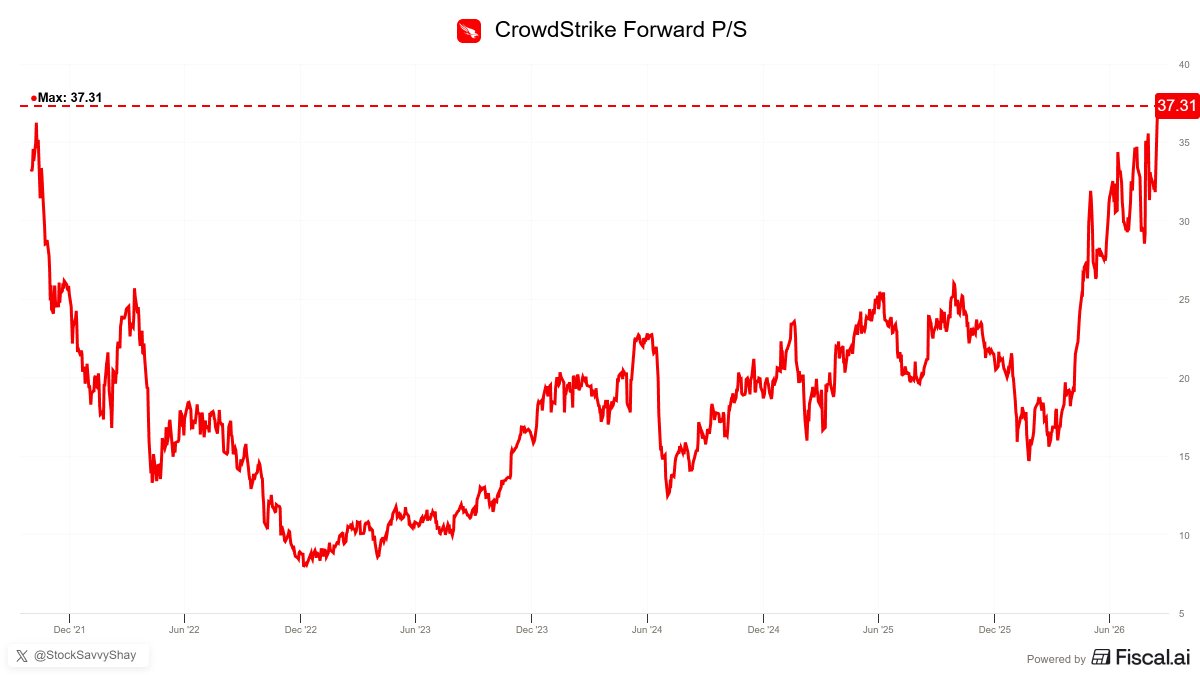
CrowdStrike (CRWD) kept drawing aggressive buying on Wednesday, with traders on X saying the stock had reached its highest valuation in five years and had risen 88% in two days. The move reinforced its position as the clearest beneficiary of the market’s AI-security rotation.
The broader backdrop is a renewed debate over the risks created by fast-moving AI adoption. Recent coverage has quoted cyber executives and analysts arguing that autonomous AI agents can widen the attack surface and increase demand for security tools, while Palo Alto Networks’ Nikesh Arora said roughly $1 trillion of legacy security infrastructure needs modernization.
In the tape, CRWD and Palo Alto Networks (PANW) have been the standout cyber names, while Salesforce (CRM) is also in focus as Dreamforce showcases AIforce and expanded Agentforce features. Other software names have been less consistent, showing that investors are separating AI-security beneficiaries from the rest of the software group.
The key verification point is that CRWD’s strength is consistent with recent market reporting on AI-driven cybersecurity demand, although the roughly $250 billion market-cap figure appears to be a trading-room estimate rather than an official disclosure. Today’s incremental signal is the intensity of the move, not a fresh company announcement.
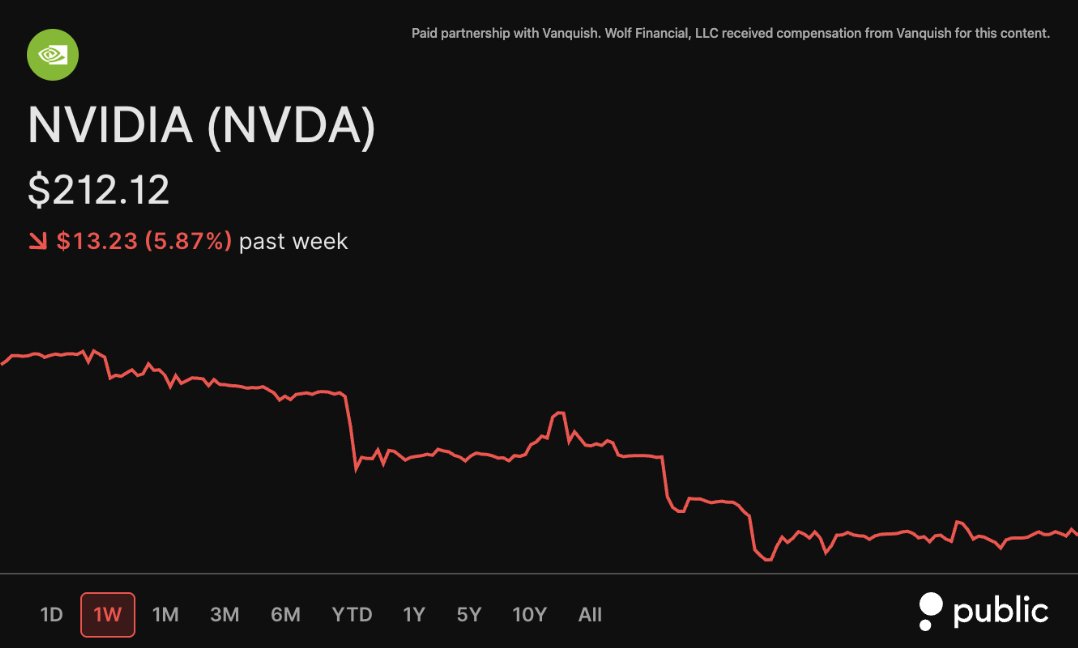
Nvidia fell about 6% over the past week, even as the stock remains one of the market’s most closely watched AI bellwethers. X signals amplified the debate, with one Benzinga item framing the move as a dip-buying setup and a TheStreet clip featuring a bullish case for staying in NVDA.
The backdrop is still formidable: Nvidia’s latest quarter generated $96.2 billion in revenue, up 106% from a year earlier, and the company guided third-quarter revenue to $108 billion, plus or minus 2%. That leaves investors weighing whether AI infrastructure spending can keep supporting triple-digit growth.
The stock’s pullback matters beyond one name because Nvidia is the reference point for AI hardware sentiment. When NVDA wobbles, it often ripples through semis and AI infrastructure plays that trade on the same capex expectations.
So far, there is no fresh company denial or revised guidance in the public reports cited here. The next key test remains whether upcoming results and customer spending confirm that the AI buildout is still intact.
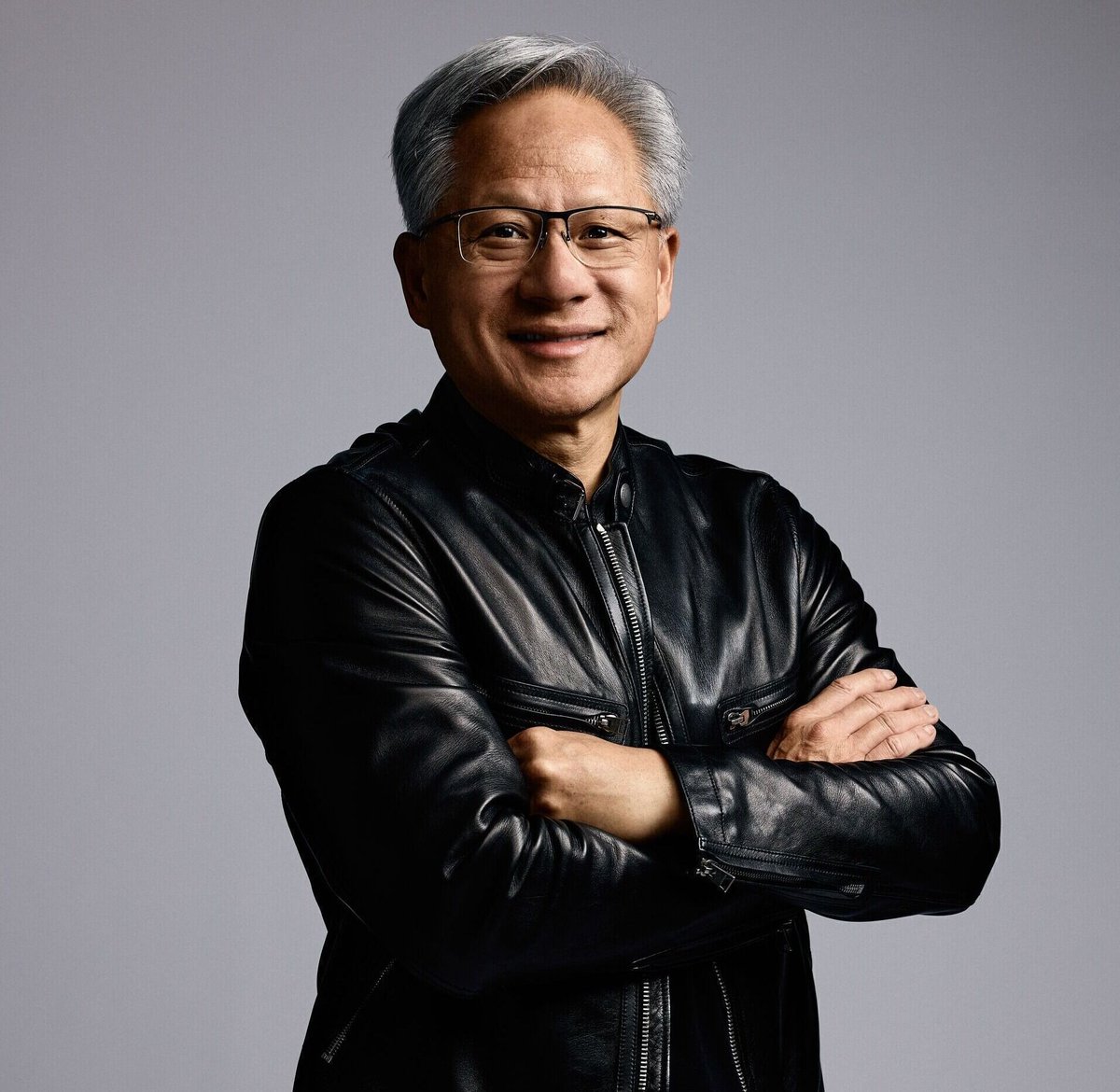
Nvidia CEO Jensen Huang said on Sept. 15 that the AI industry does not need new laws or regulations to manage safety, arguing that companies should hold back products until they are confident they are safe to ship. He framed the choice between speed and safety as a false one.
The remarks, made at a Salesforce event, extend a stance Huang has repeated before: safety is an engineering problem, while market forces and company discipline should do the policing. That puts him at odds with leaders of frontier AI labs who have pushed for tougher guardrails.
For investors, the debate matters because Nvidia sits at the center of the AI hardware boom. Any shift in the pace of AI deployment or the regulatory backdrop can affect demand expectations across chips, cloud infrastructure and model training spend, even if Huang himself argues the market will keep innovation on track.
BBC reported that OpenAI and Anthropic have recently been discussing industry-wide safety standards, underscoring the split between chipmakers and model developers over whether voluntary norms are enough.
Austin downtown saw numerous steering-wheel-free Cybercabs, and the Robotaxi app interface details were revealed ahead of the launch.
2026-09-04投稿93件 · 投稿者52人
Tesla officially started offering Cybercab rides to the public, with early riders sharing experiences and a fleet purchase interest form introduced.
2026-09-05投稿33件 · 投稿者24人
Ride reviews reported 3 hours costing $92.51 compared to Uber, while NHTSA opened a probe into vehicles without steering wheels, sparking debate.
2026-09-15投稿4件 · 投稿者4人
A report highlighted a Cybercab turning a 10-minute Austin trip into a 70-minute detour, while Samsung's Taylor fab reportedly started operations early.
2026-09-16投稿9件 · 投稿者9人
NHTSA ordered Tesla to prove the Cybercab's legality under oath, questioning if it can temporarily add human controls to meet safety standards.
South Korean media reported SK Hynix is in talks to acquire Intel's Ohio fab for U.S. memory chip production.
2026-07-23投稿10件 · 投稿者10人
Semafor reported Intel seeks an operating partner for its Ohio campus, with SK Hynix denying outright acquisition rumors as talks remain preliminary.
2026-07-29投稿10件 · 投稿者8人
Focus shifted to sharp monthly declines in memory and chip stocks, with SK Hynix down 47% and Intel 33%, amid mentions of leveraged fund stress.
2026-08-31投稿12件 · 投稿者10人
Korean media exclusively reported SK Hynix considers outsourcing next-gen HBM base die production to Intel to diversify foundry suppliers.
2026-09-12投稿3件 · 投稿者3人
Hedge fund Situational Awareness began working with Clear Street to rebuild its portfolio, with large positions in SK Hynix and other AI-related stocks.
2026-09-16投稿43件 · 投稿者32人
SK Hynix and Intel confirmed they are in talks to produce memory chips together in the U.S.