The Federal Reserve raised its benchmark federal funds rate by 25 basis points on Sept. 16 to a target range of 3.75%-4.00%, with policymakers voting 12-0 in favor. Chair Kevin Warsh said the move would support a more timely return to the Fed’s 2% inflation goal.
The key new information was the combination of a unanimous hike and a hawkish set of projections. Warsh said inflation is “too high, and has been for too long,” while the Fed’s updated Summary of Economic Projections pointed to a median policy rate of 4.00%-4.25% by the end of 2026, implying room for at least one more increase this year.
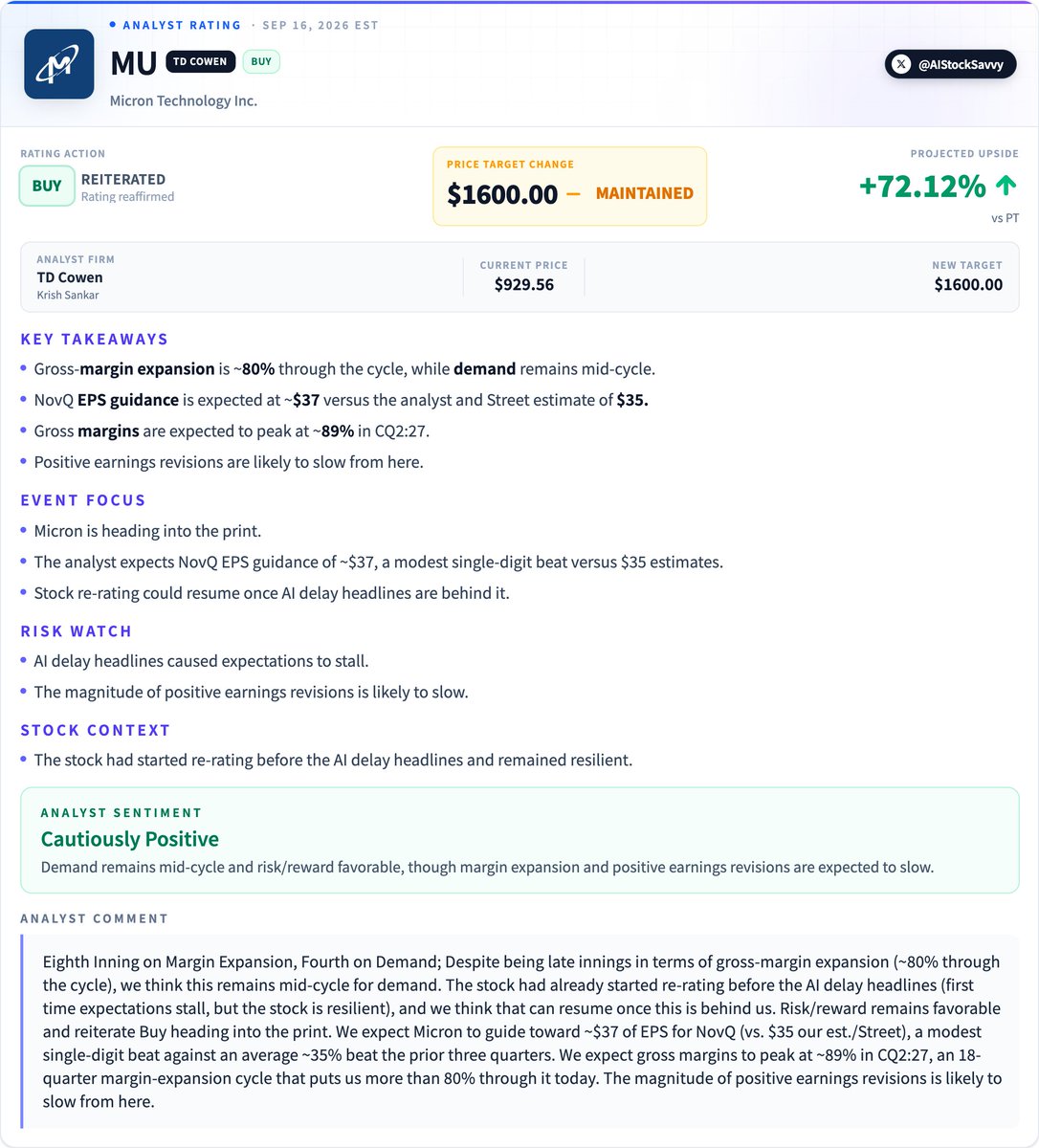
In markets, higher rates generally lift discount rates and borrowing costs, which can pressure valuation-sensitive growth shares and capital-intensive businesses. The setup keeps attention on names tied to AI infrastructure and server demand, including Dell, Super Micro Computer and Hewlett Packard Enterprise, which have all been trading around the data-center buildout theme.
President Trump criticized the decision and renewed his call for lower rates, but the unanimous vote underscored the committee’s shared view on inflation. The hike is the first since 2023, marking a clear shift back toward tighter policy after months of political pressure for cuts.
The Federal Reserve raised its benchmark rate by 25 basis points to a target range of 3.75% to 4.00% on Sept. 16, with the FOMC voting 12-0. In its statement, the Fed said economic activity was expanding at a solid pace and that the move would help bring inflation back to 2% more quickly.
It was the Fed’s first rate increase since 2023, and the accompanying Summary of Economic Projections lifted the median year-end 2026 fed funds rate to 4.1%, up from the prior update. The dot plot also showed that 12 of 18 participants expect at least one more hike this year.
For markets, a higher-for-longer policy path tends to pressure duration-sensitive assets and reshape expectations across Treasuries, the dollar and bank earnings. Traders are now parsing whether the latest move marks a one-off adjustment or the start of a fresh tightening cycle.
The Fed said inflation remains elevated and reaffirmed its dual mandate of price stability and maximum employment. Officials also noted that job gains have kept pace with the workforce and that the unemployment rate has changed little.
U.S. diesel prices rose to a record $6.40 a gallon on Thursday, while the national gasoline average climbed to $4.44 a gallon. Multiple market signals point to another leg higher in fuel costs, with diesel and gasoline both setting fresh highs.
The move extends a rally that earlier reports had already put near $6.30 to $6.31 for diesel, as the U.S.-Iran war keeps tightening energy markets and refinery supply. CNBC, ABC News and NBC News all reported record or near-record diesel prints in recent days, underscoring that Thursday’s update is a continuation of a broader shock.
For transport firms and farmers, the impact is immediate: higher diesel prices raise operating costs for freight, farm equipment and heating oil users, and those costs can flow through to consumer goods. ABC News quoted industry voices saying every $1 increase in diesel can add roughly $400 per tank for truckers, squeezing already thin margins.
The pressure is also rippling into fuel-sensitive equities and the wider supply chain, especially trucking, retail and refining names. For now, the key story is not just the level of prices but how quickly they are feeding into real-economy costs.
これまでの経緯
2026-07-20
マクロ
U.S. July TIC inflows total $83.7 billion as long-term net flows swing to minus $27.9 billion英語原文
Treasury data show continued foreign demand for U.S. securities, but the long-term transactions line turned negative in July, a key read on cross-border capital allocation.
The U.S. Treasury said July net TIC inflows totaled $83.7 billion, while net long-term TIC transactions came in at minus $27.9 billion, down sharply from plus $172.7 billion in June. The July release shows a clear month-over-month swing in the long-term securities measure.
In June, the Treasury reported $133.5 billion in total TIC inflows and $172.7 billion in estimated net foreign purchases of long-term securities after adjustments. The Treasury also notes that TIC data are custodial in nature and cannot perfectly attribute ultimate ownership across countries or managers.
Market participants watch TIC closely because it helps gauge foreign demand for Treasurys, U.S. equities and other dollar assets. A negative long-term reading does not by itself signal a market move, but it can reshape expectations around offshore portfolio demand and funding conditions.
The next TIC release will provide the August update, which investors will use to see whether July was a one-off swing or part of a broader shift in cross-border allocation patterns.
The Labor Department said initial jobless claims fell to 196,000 in the week ended Sept. 12, down from 206,000 the prior week and below the 207,000 forecast. Continuing claims also eased to 1.730 million from 1.774 million, versus expectations for 1.779 million.
The report is one of the most closely watched high-frequency gauges of U.S. labor market health. The four-week average of initial claims slipped to 203,250 from 206,000, suggesting the improvement was not limited to a single volatile print.
For markets, the release matters mainly through interest-rate expectations rather than company-specific headlines. Traders will use the data alongside upcoming inflation and policy signals to judge how resilient the economy remains.
Holiday timing can make weekly claims volatile, so investors typically pay close attention to the moving averages and any revisions. That makes the latest decline useful as a cross-check on the broader labor trend rather than a standalone macro verdict.
The U.S. Treasury market whipsawed after the Federal Reserve raised rates by 25 basis points on Wednesday. Multiple market reports put the 10-year yield at 4.99% after briefly moving above 5%, while the 30-year yield held near 5.33%.
The move comes against a backdrop of oil prices back near $100 a barrel and a fresh reassessment of inflation and supply pressure in government debt markets. Quotes cited by local media said stronger growth, a capex surge tied to AI infrastructure and geopolitical risk are all helping push long rates higher.
The curve action matters for rate-sensitive sectors, especially tech and semiconductors, because higher discount rates raise financing costs and compress valuations. One report cited analysts warning that debt-funded AI buildouts leave the semiconductor complex especially exposed to higher borrowing costs.
There were minor differences across intraday prints, but the message was consistent: Treasury yields are now being priced at a higher level across the curve. That keeps attention on whether inflation data and oil prices can cool enough to stabilize long-term rates.
The Bank of England left its benchmark rate unchanged at 3.75% after a 6-3 vote, with three policymakers backing a 25bp increase. It also lifted its inflation outlook, saying UK inflation is now expected to rise above 4% in early 2027.
The shift matters because the decision was not just a hold: the MPC signaled that higher global energy costs and sustained inflation pressures could keep policy tighter for longer. Reuters reported that Governor Andrew Bailey warned prolonged conflict in the Middle East may force the Bank to do more to contain inflation.
For markets, the most direct reactions should be in sterling, front-end gilt yields and rate-sensitive UK equities. Banks, property names and highly leveraged utilities are typically the most exposed to higher discount rates and borrowing costs.
BBC coverage also noted a pause in some government bond sales, a move that could affect gilt supply dynamics. The overall message from the Bank is that inflation risks have become more important in the policy debate even though rates were left unchanged.
Saudi Arabia is aiming to restore about half of the capacity of its East-West oil pipeline within days, according to people familiar with the matter. Saudi Aramco is said to be bypassing a damaged section to restart part of the line, with a full return targeted in about six weeks.
The pipeline was shut last week after drone attacks. Reuters quoted U.S. Energy Secretary Chris Wright as saying oil should be flowing again within days, while Bloomberg and regional reports described a staged repair plan rather than an immediate full restart.
The news helped pressure crude prices lower. Bloomberg said Brent fell below $106 a barrel and West Texas Intermediate traded toward $102, as traders priced in a faster easing of Middle East supply disruption.
Argaam, citing traders, said Aramco has also boosted crude sales from areas outside the Strait of Hormuz to offset lost volumes. The reports rely on unnamed sources, and Saudi Aramco has not publicly laid out a full repair schedule.
これまでの経緯
2026-07-20投稿41件 · 投稿者30人
Houthis announced a maritime embargo against Saudi Arabia, banning its traffic through the Bab al Mandeb Strait.
地政学
China asks Iran to curb Houthis; 2025 oil shipments and Red Sea risk hit the tape英語原文
Reuters says Beijing privately leaned on Tehran after Riyadh’s appeal, with markets watching energy routes that matter to China’s oil imports.
Reuters reported on Sept. 17 that China privately asked Iran to use its influence to rein in Yemen’s Houthis, following an appeal from Saudi Arabia to Beijing. The report cites three Iranian sources familiar with the matter and says the private message went beyond China’s public calls for restraint.
The backdrop is a fresh escalation around the Red Sea and the Bab el-Mandeb Strait, where Houthi advances have heightened exposure for Saudi oil exports and shipping. Reuters also said China is Iran’s biggest trading partner and the main buyer of its oil; Kpler data cited in the report put Chinese purchases at more than 80% of Iran’s seaborne oil exports in 2025, averaging about 1.4 million barrels per day.
Oil traders typically price this kind of geopolitical risk first through Brent and WTI, and the USO ETF often moves with those benchmarks. If maritime risk eases even temporarily, pressure on regional shipping and energy logistics can subside, but the story is still about corridor security rather than company-specific fundamentals.
As of the report, it was unclear how Tehran would respond. China has publicly called for restraint, dialogue and safe navigation, while seeking to avoid a wider disruption to energy routes it depends on.
A fire broke out at an oil refinery in Russia’s Yaroslavl region after an overnight drone attack, and regional governor Mikhail Yevrayev said the blaze was extinguished. Reports also said a military airfield in the Rostov region was hit in the same overnight wave.
The latest incident adds to a string of refinery disruptions in September. Reuters said Rosneft’s Syzran and Saratov refineries were already offline after drone strikes, with Syzran’s damaged crude distillation unit rated at 17,100 metric tons a day, or about 71% of the site’s processing capacity.
For energy markets, the significance lies in Russia’s refining throughput and domestic fuel balance. Continued outages can draw attention to gasoline and diesel supply risks, as well as any knock-on effects for regional pricing and shipping costs.
Ukraine has not publicly confirmed the latest strikes, and Russian authorities have not released a full damage tally. Yaroslavl’s Slavneft-YANOS refinery is described as one of Russia’s largest, with annual processing capacity of about 15 million metric tons.
Bloomberg and Reuters reported that ExxonMobil held talks this week with Venezuela’s government about re-entering the country, with Petromonagas in the Orinoco Belt among the assets under discussion. Reuters also said Exxon has sent technical teams to assess oilfields in Venezuela.
The Wall Street Journal, as cited by Yonhap Infomax, said Exxon could sign a memorandum of understanding with state-run PDVSA as soon as this month to explore investments in several developed and undeveloped fields. Yonhap said one source put the potential coverage at more than 50 billion barrels of crude oil.
For Exxon, the story matters because Venezuela holds the world’s largest proven oil reserves and any return would reopen a major heavyweight basin it left in 2007. The latest reporting also comes after Chevron and Eni advanced their own Venezuela deals, underscoring a broader reopening of the country to foreign oil investment.
The talks are not confirmed as finalized, and the reports are based on people familiar with the matter. Reuters noted that the ownership structure of some ventures, including Russian interests, could complicate any agreement.
Multiple outlets reported on Sept. 16–17 that Apple Executive Chairman Tim Cook and OpenAI CEO Sam Altman are expected to attend President Donald Trump’s White House state dinner for Chinese President Xi Jinping. OpenAI has confirmed Altman’s attendance, while the White House had not immediately commented.
The reports build on earlier coverage from Reuters and CNBC that Altman would be at the dinner. CNN separately reported that Trump officials were considering an AI executive meeting on the sidelines of Xi’s visit, though no such session had been finalized.
For markets, the significance is more about policy signaling than near-term earnings. Apple, OpenAI and Nvidia sit at the center of the AI and U.S.-China technology debate, so any private diplomacy around the dinner is likely to be watched for hints on export controls, supply chains and AI regulation.
No detailed agenda has been disclosed. With the White House not confirming the full guest list, the event remains a developing pre-summit report rather than a finalized program.
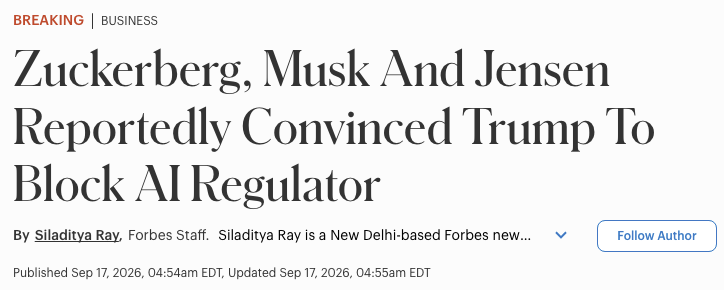
Zuckerberg, Musk and Huang push Trump on AI regulator as Hassabis plan stalls英語原文
Fresh reporting says the White House shelved an industry-funded AI standards body after direct calls from three tech chiefs, keeping the regulatory path light-touch for now.
Multiple reports said Mark Zuckerberg, Elon Musk and Jensen Huang recently spoke separately with President Donald Trump and urged him to drop a proposed industry-funded AI oversight body, similar to FINRA in finance. The White House ultimately did not move forward with the plan.
The proposal had been associated with Google DeepMind chief scientist Demis Hassabis, who had floated an industry-run standards group to supervise frontier AI development under federal oversight. The reports suggest the administration’s AI policy remains split between officials seeking stronger guardrails and executives favoring minimal intervention.
AI-linked equities and chips were in focus as traders weighed the implications for Meta, Nvidia and Alphabet. A federal standards body could have affected model launch cadence, compliance costs and compute demand; shelving it leaves the sector relying largely on voluntary commitments.
For now, the accounts come from media reporting rather than company statements. The broader White House debate over AI guardrails appears unresolved, and no substitute federal framework has been publicly advanced.
The financing would back Crux AI’s data-center buildout and Google TPU purchases, underscoring how AI infrastructure is still drawing massive project debt
Bloomberg reported that a group of 10 banks is arranging a $22 billion chip loan for Blackstone and Alphabet’s new cloud venture, Crux AI. The debt is meant to fund purchases of Google’s custom Tensor Processing Units and support the venture’s AI infrastructure buildout, with the chips and customer contracts serving as collateral.
The latest financing follows the companies’ announcement in May that they would form the joint cloud business to meet rising demand for AI computing services. Reuters reported that Crux AI formally launched last week, had already secured an initial $5 billion equity investment from Blackstone, and plans to bring its first 500 megawatts of capacity online in 2027.
For markets, the deal keeps attention on Alphabet and Blackstone as AI infrastructure spending migrates deeper into project finance, while also highlighting the role of large-bank syndicates in funding data-center and chip procurement. The reported lender group includes Goldman Sachs, Sumitomo Mitsui Banking Corp, Barclays, BNP Paribas and Bank of Nova Scotia, though none had immediate public comment.
As of now, the transaction remains in progress and key terms such as pricing, syndication size and any later refinancing path have not been fully disclosed. Neither Blackstone nor Alphabet immediately responded to Reuters’ requests for comment.
これまでの経緯
2026-09-09投稿3件 · 投稿者3人
Alphabet and Blackstone's cloud venture faces delays at data-center sites.
企業動向
チポトレ、パランティアと食品安全プラットフォームで提携 検査・害虫・疾病を対象に英語原文
WIRED says the Foundry-based system has been confirmed by Chipotle, adding a new enterprise use case for Palantir.
Chipotle is working with Palantir on a food-safety risk platform built on Foundry, according to WIRED. The system is designed to combine store-level health inspection scores, pest incidents and employee illness data to generate a risk score for each restaurant. Chipotle has confirmed the initiative but declined to elaborate further.
The partnership adds another commercial foothold for Palantir as it continues to broaden beyond government work. WIRED said U.S. commercial revenue accounted for nearly half of Palantir’s U.S. business, and that the company reported $764 million in U.S. commercial revenue in its most recent quarter, up 149% year over year.
For investors, the development primarily ties CMG and PLTR together around an operational-use-case story rather than a disclosed financial deal. No contract value or rollout scope was disclosed, so the immediate significance is strategic: Chipotle gets a data-driven food-safety tool, while Palantir gains another visible enterprise reference.
Palantir did not immediately respond to WIRED’s request for comment. The report does not say when the partnership began or how broadly the platform has been deployed, leaving the confirmed facts limited to the existence of the collaboration and Chipotle’s public confirmation.
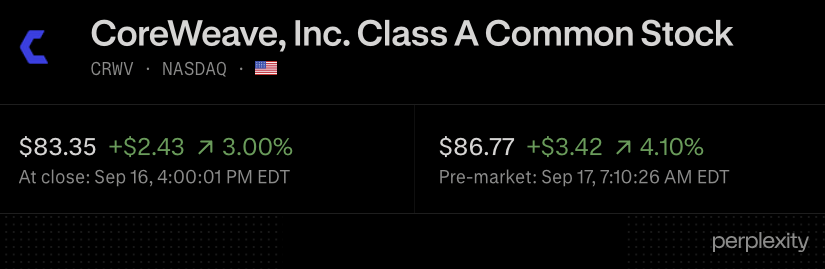
CoreWeave said on Sept. 17 it plans to sell $3 billion of convertible senior notes due 2033, with an option for buyers to take another $500 million. The company also set up an at-the-market equity program for up to 35 million shares.
The filing adds another funding layer to an expansion drive already visible in CoreWeave’s latest disclosures. Since June 30, the company said it has signed short-dated compute contracts at about $40 million per megawatt on an annualized basis and lifted contracted power to about 4.2 gigawatts by Aug. 11 from about 3.7 GW at the end of June.
For investors, the package matters because it ties capital raising directly to the economics of the AI infrastructure buildout. Reuters and Bloomberg both reported the convertible sale, while CoreWeave’s own filing says the notes will mature in 2033 and the company will use proceeds for capped calls and general corporate purposes.
CoreWeave said the capped call transactions are intended to reduce potential dilution from conversion and/or offset cash payments above principal. If the extra note option is exercised, additional capped calls would be arranged for the same purpose.
Amazon said it is raising the minimum starting pay for U.S. full-time core operations workers by $1 to $20 an hour. The company said average hourly pay is now nearly $24, and average total compensation tops $32 when benefits are included.
The package also adds new employee perks. Starting Oct. 1, U.S. employees will get an uncapped 10% discount on eligible groceries and essentials online and 20% off in-store at Whole Foods Market, plus access to a lifetime banking benefit through First Tech Federal Credit Union.
Amazon said the pay and benefits push represents more than $1.5 billion in investment. The move comes as the company continues to rely on a large fulfillment and transportation workforce, making labor costs and staffing stability a key operating issue.
For AMZN, the announcement is a direct margin and cost item, but it also highlights the company’s effort to retain workers ahead of peak shopping demand. Competitors in retail and warehouse operations may also face renewed attention on their own wage floors and benefits.
Amazon Web Services executive Peter DeSantis said the next generation of the Trainium AI chip will have “very clear differentiated advantages.” The comment is the latest sign that Amazon is pressing deeper into custom AI silicon as it looks to narrow the gap with Nvidia.
The backdrop is CEO Andy Jassy’s April shareholder letter, in which he said Amazon’s chip business — spanning Graviton, Trainium and Nitro — was running at more than $20 billion in annualized revenue. Jassy also said the business would be roughly $50 billion on a standalone-chip-company basis, while noting Trainium2 had largely sold out and Trainium3 was nearly fully subscribed.
For investors, the takeaway is less about a single product launch and more about Amazon’s strategic positioning in AI infrastructure. A more differentiated Trainium line could support AMZN’s cloud-margin story, while keeping pressure on Nvidia and AMD in the AI accelerator market.
Amazon has not disclosed any new customer names or shipment timetable in the X-posted remarks. For now, the key watch point is whether the company can convert its custom-silicon rhetoric into broader external demand beyond AWS workloads.
これまでの経緯
2026-07-19投稿3件 · 投稿者3人
Mizuho raised 2030 AI server TAM to $170B; UBS noted frontier labs face pricing pressure as routing adoption grows.
2026-07-31
企業動向
Huang says Nvidia chip sales will double in 2027, puts AI safety first英語原文
The new management commentary reinforces demand strength in AI infrastructure while flagging safety as a corporate responsibility issue.
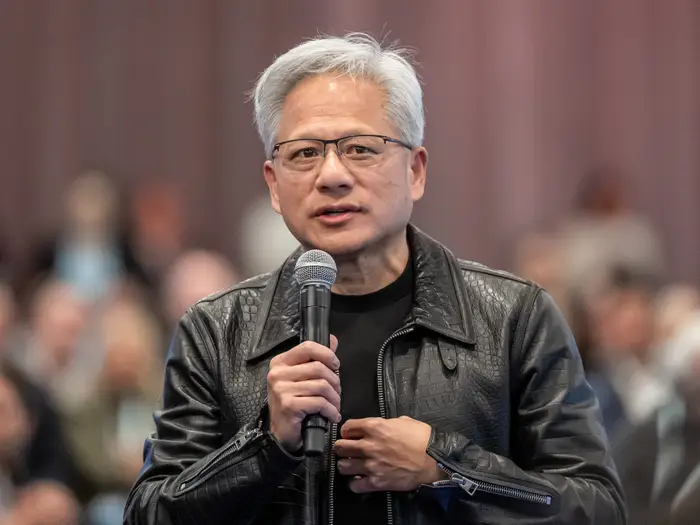
Nvidia CEO Jensen Huang said on Sept. 17 that the company expects to sell roughly twice as many chips next year as it does this year, while also calling AI safety paramount and saying unsafe products should be held back. The remarks were carried across multiple live market wires and reports, making them the day’s fresh incremental catalyst.
The comment builds on a broader backdrop of Nvidia’s recent messaging around next-generation hardware rollout and continued AI infrastructure demand. It does not include a disclosed sales baseline or methodology, so the doubling claim remains forward-looking management guidance rather than reported results.
Shares of Nvidia moved higher on the update, and traders often use this kind of signal to reprice the wider AI supply chain, including advanced packaging, HBM memory and high-speed networking names. The market focus now shifts to whether upcoming revenue disclosures and customer capex commentary validate the implied pace of demand.
Huang’s safety remarks also matter because they echo the regulatory and reputational scrutiny that tends to accompany dominant AI platforms. For now, however, the statement is best read as a policy stance from management rather than a formal compliance commitment.
Reuters, citing Nikkei, reported that Japan and the United States are discussing a semiconductor factory that could be operated by GlobalFoundries. The project is said to focus on logic chips and carry a price tag of 2 trillion to 3 trillion yen.
The plant would be part of Japan’s $550 billion investment agreement with Washington, making it more than a standalone manufacturing proposal. At Reuters’ cited exchange rate, that budget works out to roughly $12.85 billion to $19.27 billion.
The report lifted GlobalFoundries in premarket trading, as investors weighed the possibility of a large, government-linked fabrication project. A participation role could reshape the company’s capacity plan and its strategic footprint in advanced manufacturing.
The talks are still at an early stage, and neither side has laid out final terms in the reported piece. Key questions remain on the operator, site selection and whether the broader investment framework will translate into concrete factory commitments.
Lockheed Martin said on Thursday it has unveiled new details of the AIM-260 Joint Advanced Tactical Missile, a next-generation air-to-air weapon designed to counter Chinese threats, and signed a framework agreement with the U.S. Department of Defense to accelerate production and delivery. Reuters said the deal is intended to support a future multi-year procurement contract, pending congressional approval.
The program has been in development for years and is meant to arm U.S. Air Force and Navy fighters, including the F-22 and F-35. Today’s update matters because it moves the project from quiet development closer to a manufacturing phase, while also making the procurement path more explicit.
For investors, the key ticker is Lockheed Martin, NYSE:LMT. The company did not disclose a contract value, but a framework for multi-year procurement typically improves visibility on future missile orders and supports investment in capacity expansion.
Lockheed said the agreement builds on years of collaboration and will help deliver the missile at the pace demanded by the U.S. and allies. The Pentagon’s push also comes as Washington seeks to rebuild missile inventories after the war on Iran depleted stocks, according to Reuters.
Novo Nordisk said on Sept. 16 that it will work with Anthropic to accelerate drug discovery and development using Claude Science and other frontier models. The first step is to test the tools in selected R&D workflows and on scientific problems where the two companies expect the biggest impact.
The deal builds on Novo Nordisk’s broader push to become what it calls the world’s most AI-driven healthcare company. In April, the company said it would partner with OpenAI to integrate AI across operations, and the Anthropic pact extends that strategy further into research and development.
For investors, the main stock in focus is Novo Nordisk (NVO). The announcement is about potential productivity gains and shorter development timelines rather than disclosed financial terms, and neither Reuters nor Bloomberg reported a deal value.
Novo CEO Mike Doustdar said the collaboration should “supercharge” the company’s R&D organization, while Anthropic CEO Dario Amodei said the goal is to shorten research timelines and improve drug discovery. Novo said the project is designed with data governance and human oversight to align with compliance and ethics standards.
RippleX has added support for Stripe and Tempo’s Machine Payments Protocol (MPP) to version 1.1 of the XRPL AI Starter Kit, bringing XRP and RLUSD into the developer toolkit as settlement assets. The update is aimed at AI agents that need to pay for data, compute, and other online services automatically.
The broader context is an emerging payments layer for software agents. MPP is an open standard created by Stripe and Tempo for authorizing machine-to-machine payments, while the XRPL starter kit is a developer-facing product rather than a consumer wallet or checkout service.
Market reaction has been limited to the XRP ecosystem so far. CoinGape reported XRP was trading around $2.65, up about 1% in 24 hours, while volume fell roughly 40%; however, the integration remains in beta and Ripple has not disclosed any commercial users or transaction volume.
That means the announcement is best read as a technical expansion of XRPL’s settlement options rather than proof of large-scale adoption. For now, the key takeaway is that Ripple is positioning XRP—and, in a narrower way, RLUSD—inside a new agent-payments standard rather than launching a finished retail product.
Reuters, citing The Information, reported that Apple is considering a return to the enterprise server market with an AI server built on its own chips. The planned system could come in versions with two or four M8 Ultra chips, and Apple has discussed Nvidia networking hardware, including NVLink Fusion.
The move would extend Apple’s chip strategy beyond consumer devices into enterprise compute. Apple last sold dedicated server hardware under the Xserve line, which it discontinued in 2011, although it already runs internal server infrastructure for Private Cloud Compute.
If the project advances, it could put both AAPL and NVDA on investors’ radar for different reasons: Apple as a potential new server vendor, Nvidia as a networking partner with room to broaden its role in AI infrastructure. The report said the product would not likely reach the market until 2029 and could still be canceled or launched without Nvidia technology.
Apple and Nvidia did not immediately comment, and Reuters said it could not independently verify the report. The Information’s account frames the server as aimed at AI developers, businesses and governments that want to run models on their own equipment.
Nokia and Microsoft said they are expanding their partnership to plug Nokia Data Suite into Microsoft Fabric for telecom network operations. Nokia said the setup can reduce the time needed to access usable network data from weeks to minutes, while automating root-cause analysis and network optimization.
The deal extends a broader push to turn fragmented carrier data into a more usable product layer and then run it through Microsoft's analytics and AI stack. For operators, the pitch is faster decision-making and less manual work in troubleshooting and network planning.
In the market, the update is most directly relevant to NOK and, to a lesser extent, MSFT. Nokia's software and data-services story gets a fresh catalyst, while Microsoft reinforces Fabric's role as an enterprise data platform with telco-specific reach.
No conflicting denial from either company was visible in the materials reviewed. The key facts were repeated in company-facing coverage and trade media follow-ups.
The Wall Street Journal reported that two senators have asked the Federal Trade Commission to investigate Amazon (AMZN) and Walmart (WMT) over whether their shopping chatbots make it harder for consumers to find products labeled “Made in USA.” The latest X signal surfaced today, putting a fresh spotlight on the issue of AI-generated product rankings and origin disclosure.
The backdrop is a broader FTC focus on origin claims and online marketplace compliance. The question raised by lawmakers is not whether the companies sell U.S.-made products, but whether their AI shopping assistants present those products in a way that obscures country-of-origin information.
For the market, the immediate names in play are AMZN and WMT because the allegation centers on their platform design and compliance practices. Any FTC follow-up would likely be watched for implications to the firms’ AI shopping investments and the cost of maintaining product-disclosure controls.
At this stage, the matter is still a request for a probe rather than a confirmed formal investigation. No company response was included in the signal material provided today.
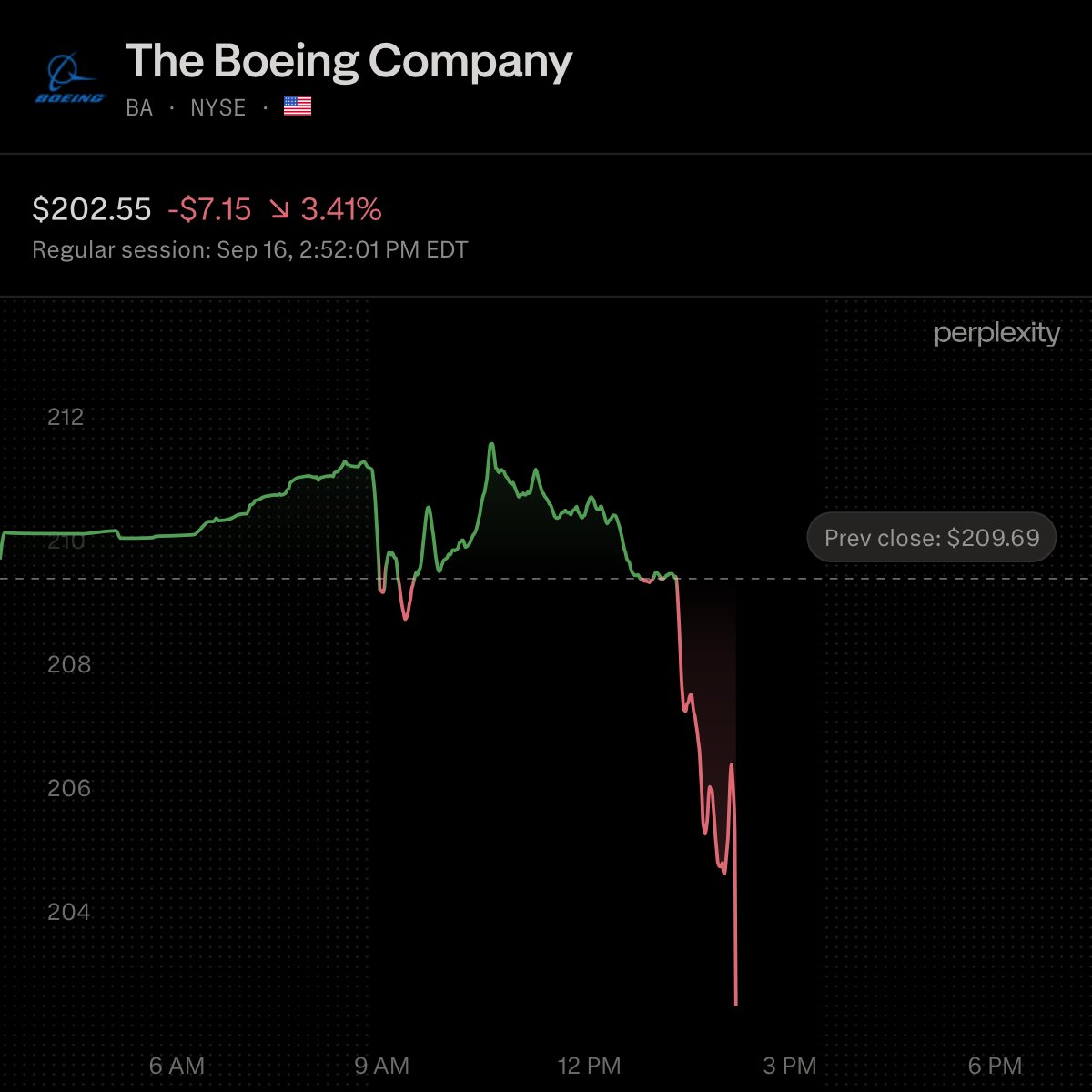
Boeing said on Sept. 16 that some testing on the 777X could run into 2027, even as it kept its delivery target for next year. The delay is tied to certification work on a seal in the GE Aerospace engine that powers the jet, which has kept ETOPS testing from starting.
The company also said 737 MAX production has reached 47 aircraft a month, but stabilizing that rate is taking longer than expected. Boeing said 787 output is steady at eight a month, though it has not yet met the engine-delivery performance needed to lift production to 10 a month.
The timing matters because the 737 and 787 ramps, along with 777X certification, feed directly into Boeing’s cash-generation outlook. Management reaffirmed 2026 free cash flow guidance of $1 billion to $3 billion and said the 777X schedule changes remain within the program’s estimate to complete.
Boeing said the testing slip does not alter its 2027 delivery plan for the 777X. GE is continuing work on the seal issue, while Boeing expects the certification program to proceed once the required authorization is in place.
National Fuel Gas、50億ドルのガス事業の選択肢を検討、Senecaが対象に英語原文
Reuters says the company is reviewing sale, merger and spin-off paths for Seneca Resources and related pipeline assets, a move that could reshape its utility-focused portfolio.
Reuters reported on September 16 that National Fuel Gas is exploring strategic options for its integrated natural gas production business, including Seneca Resources and associated pipeline assets. Any deal would likely value the unit at about $5 billion, according to people familiar with the matter.
The potential restructuring matters because the production arm and its infrastructure account for a meaningful share of National Fuel’s earnings, while the company is also moving to close a $2.62 billion purchase of CenterPoint Energy’s Ohio gas utility business. That would further tilt the group toward regulated utility cash flows.
For NFG investors, the immediate focus is on valuation and portfolio mix: a sale, merger or spinoff could change how the market prices the remaining company relative to pure-play gas producers and regulated utilities. Reuters said the review was partly triggered by an unsolicited approach earlier this year, but no transaction is guaranteed.
National Fuel has not publicly detailed any deal terms. The next catalysts will be management commentary, any formal bidding process and whether the company commits to a specific route for Seneca and the related assets.
Snap on Sept. 16 said it is integrating Salesforce's Agentforce, Nvidia's AI capabilities and Amazon Web Services' assistant into its Specs augmented-reality glasses, aiming at enterprise use cases such as factories, retail stores and field service operations. The company also unveiled Specs Intelligence, an AI service tied to the device line.
The move builds on the Specs launch in June, when Snap priced the glasses at $2,195 and pitched them as a step toward more practical AR computing. It also extends the product's reach beyond consumers, with Snap setting up hands-on trials in Los Angeles.
Shares of SNAP traded higher in premarket action as investors weighed whether the company can turn AR hardware into a broader enterprise business. The partnership list matters because Salesforce, Nvidia and AWS each bring software, AI and cloud distribution into the mix.
Snap did not disclose financial terms for the deals. The company said shipping is expected to start later this fall in the U.S., U.K. and France, while telecom partners will support cellular connectivity options for the glasses and their charging case.
これまでの経緯
2026-08-04投稿10件 · 投稿者4人
CEO touted Specs as a major platform opportunity; analysts debated FCF inflection and potential spin-off impact on core valuation.
企業動向
シエナ、2029年目標を設定:売上高CAGR約30%、売上総利益率約50%英語原文
The company’s investor forum update centers on AI-network demand and a new reporting structure starting in FY2027.
At its investor forum on Sept. 16, Ciena unveiled three-year financial targets for fiscal 2029: roughly 30% revenue CAGR from 2026 through 2029, about 50% adjusted gross margin, a 32% to 35% adjusted operating margin, and roughly 20% free cash flow margin. Ciena also said it will change its reporting segments starting in FY2027 to Optical Systems, Interconnects, Global Services, and Routing and Other.
The targets come against a backdrop of management’s view that AI-driven network spending is entering a multiyear expansion phase. In its recent earnings call, Ciena said its total addressable market could effectively double over the next three years and that it had signed long-term agreements through 2029 for key components to support higher output.
The announcement kept attention on optical networking names more broadly. X posts tied the update to gains in CIEN and compared the move with peers such as Coherent, Corning and Applied Optoelectronics, as investors continue to reassess spending trends around AI infrastructure.
For now, the company’s disclosure is a set of long-term targets and a planned segment reorganization, not a fresh earnings beat or a new takeover event. The next major checkpoint will be how the new segment structure and supply commitments translate into reported results in FY2027 and beyond.
Manus is seeking about $500 million in fresh capital, a round that would value the Chinese-founded AI startup at $4 billion if completed as planned. The deal is still in talks, and the terms could change before closing.
The fundraising comes after Manus resumed independent operations following its split from Meta Platforms. Earlier reporting said Beijing ordered the unwind of the combination, turning the transaction into a rare regulatory reversal in China’s tech sector.
If the round closes, Manus would strengthen its standing in China’s AI-agent market and offer a fresh read on investor appetite for agentic AI names. The company’s existing backers include Tencent, HSG and ZhenFund, though the new investor lineup remains unclear.
Manus, Tencent, HSG and ZhenFund did not respond to Bloomberg’s requests for comment. The reports describe a proposed financing, not a completed transaction.
On September 16, Arm CEO Rene Haas told CNBC that he is more confident than he was in July that the company can secure enough supply for its new AGI CPU. He reiterated that Arm has visibility to roughly $2 billion in customer demand for the data-center chip.
The update extends a narrative that began earlier this year: Arm first framed the product opportunity at about $1 billion, then raised the visible demand pool to $2 billion, while keeping its official revenue outlook more conservative because manufacturing capacity remained the bottleneck. The key issue is not whether buyers exist, but whether Arm can ship enough units to turn demand into revenue.
For investors, the read-through is centered on ARM shares and on the company’s broader push beyond chip-design licensing into selling a complete AI-focused processor. The stock has been sensitive to the gap between demand visibility and guided revenue, so any improvement in supply confidence matters to the market’s timeline expectations.
Haas did not announce a formal revenue forecast change in the interview. The comments should be read as an execution update, not a new guidance reset.
これまでの経緯
2026-07-20投稿8件 · 投稿者7人
Discussions centered on Alphabet's Calico longevity research and technical details of Kimi's hybrid linear attention.
企業動向
バリー氏、OpenAI・Anthropic論争でAI減速論を自己都合と批判英語原文
His latest X post revives a fight over AI safety rhetoric, capital spending, and the pace of frontier-model development.
Michael Burry took aim at the latest wave of AI cautionary talk on X, calling it “self-serving” for OpenAI, Anthropic and other large hyperscaler executives to argue for slowing development. In his view, large language models are not artificial intelligence and “there is nothing AI to slow down.”
The backdrop is a fresh round of public warnings from AI leaders about safety risks and the need for stricter guardrails. Media reports cited Anthropic researcher Jacob Coxon’s high-profile departure and noted that executives including Dario Amodei and Sam Altman have recently leaned harder into calls for restraint.
For markets, the debate matters because it feeds directly into valuation, capex, and infrastructure spending assumptions across AI-linked stocks and suppliers. Names such as Nvidia and Palantir remain sensitive to any sign that the industry’s growth narrative or spending cycle could cool.
Burry’s comments are not a company announcement, but another shot in an ongoing argument over whether the AI boom is being oversold or merely entering a more heavily regulated phase. The key investor question is how long the current buildout in compute, data centers and model training can keep going at today’s pace.
U.S. stock-index futures rebounded on Thursday morning, with Nasdaq 100 futures up more than 1.5% after the Federal Reserve delivered a 25-basis-point rate hike. Dow and S&P 500 futures also moved higher in early trading.
The move came after markets had already priced a high probability of a hike. The Fed lifted its policy range to 3.75%-4.00%, and the decision was followed by a pullback in Brent crude and a retreat in longer-dated Treasury yields.
Technology shares led the recovery, with Alphabet and Meta both gaining more than 1% before the open. AMD and other chip names also showed strength in the day’s market-mover lists, as investors rotated back toward growth stocks after the post-Fed slump.
The policy statement still carried a hawkish tone. The dot plot suggested more officials expect at least one additional hike later this year, keeping pressure on short-end rates and the dollar even as risk assets stabilized.
The Philadelphia Fed’s September manufacturing index climbed to 37.8, topping forecasts around 31.3/32.1 and easing from 47.4 in the prior month. Within the report, new orders came in at 29.2, prices paid at 48.6, employment at 11.8, capex at 37.1 and business conditions at 52.9.
The survey suggests factory activity in the mid-Atlantic region remains firmly in expansion territory, even as the price component stays elevated and hiring momentum cools. Economists often use the Philly Fed report as an early read on US industrial demand and inflation pressures ahead of the broader ISM surveys.
For markets, the report adds another inflation-sensitive data point to a day already shaped by the Fed’s policy move and rate-path repricing. A sticky prices-paid reading can reinforce expectations that borrowing costs may stay restrictive for longer, with implications for rate-sensitive equities, bonds and the dollar.
Weekly flow data show a sharp rotation: selling in Japanese equities, stronger buying of Japanese bonds, and renewed outbound demand from Japanese investors.
Japan’s Ministry of Finance said foreign investors were net sellers of Japanese stocks and investment trust units by ¥152.28 billion in the week through Sept. 11, reversing a ¥690.0 billion net purchase in the prior week. At the same time, foreign buying of Japanese medium- and long-term bonds rose sharply to ¥223.62 billion from ¥44.96 billion.
The weekly securities-flow report is watched because it offers an early read on cross-border portfolio rebalancing. It measures net transactions, not positions, and a plus sign means net acquisition while a minus sign means net disposition.
For markets, the shift matters for the Nikkei 225, TOPIX and large-cap exporters on the equity side, while continued foreign demand for Japanese bonds keeps attention on JGB pricing and yen-related flow dynamics. Japanese residents also returned to net buying of overseas stocks at ¥16.92 billion and stepped up overseas bond purchases to ¥108.29 billion.
The report covers only one week of activity through Sept. 11, so it should be treated as a flow snapshot rather than evidence of a durable trend. The next release will show whether the equity outflow and stronger bond inflow persist.
これまでの経緯
2026-08-01投稿3件 · 投稿者3人
Market speculation emerged that Japan's MoF or the US Treasury bought yen, while new Fed Chair Warsh's hawkish hold sent stocks lower.
市場
Bitcoin holds near $76,000 as $76,700 mean and 4% rates test crypto sentiment英語原文
The market is digesting a Fed hike and a failed Clarity Act push, with spot demand and liquidity now in focus.
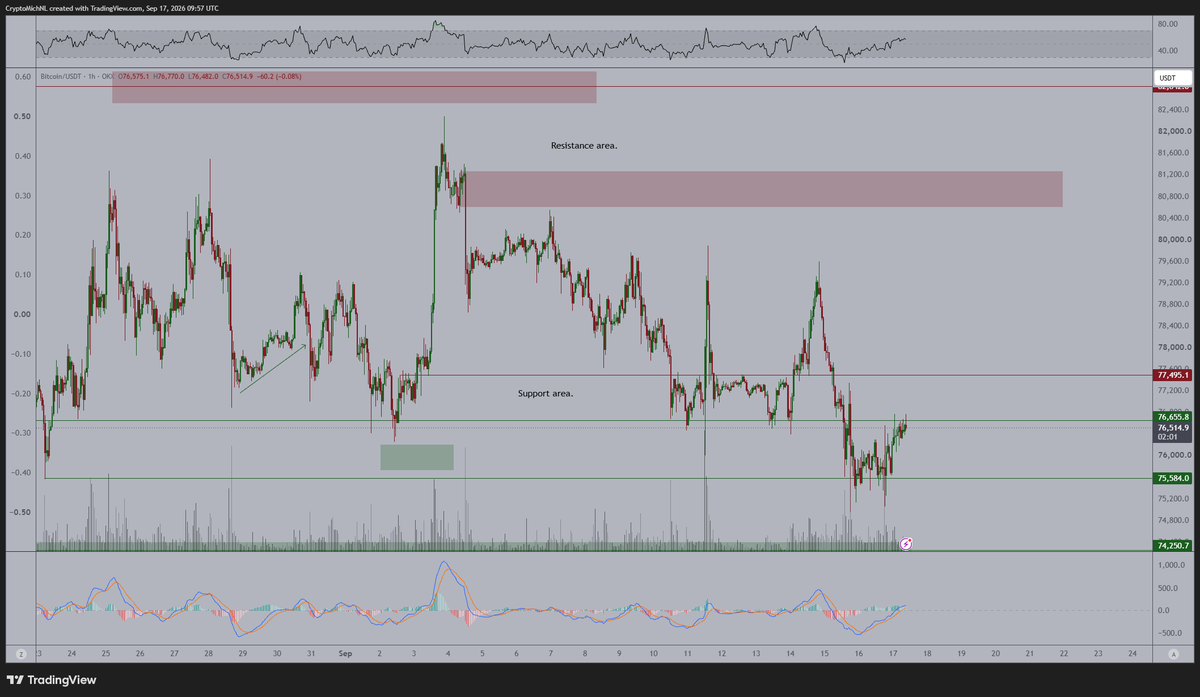
Bitcoin traded around $76,000 on Thursday as investors continued to absorb the Federal Reserve’s 25-basis-point rate hike to 3.75%-4.00% and the setback for the Clarity Act in the Senate. Traders said BTC is facing overhead resistance, leaving the market sensitive to whether price can hold above key moving averages.
Glassnode said Bitcoin has slipped below its True Market Mean at $76,700, while the Short-Term Holder Cost Basis sits near $71.3K. US spot crypto ETFs also saw about $334 million in net outflows between Sept. 8 and 14, suggesting weaker fresh capital inflows even as exchange balances keep trending lower.
Equities tied to crypto were mixed. Coinbase previously closed at $164.51, down 4.42% on the day, according to Zacks, while market commentary pointed to tighter liquidity and softer retail demand as the main headwinds for the sector. The key question now is whether BTC can stabilize around the $76,000 area and avoid another round of technical selling.
Fed officials said the hike was meant to address persistent inflation, and there has been no new official reversal on the Clarity Act vote. For now, the market is treating the move as a battleground between macro pressure and ongoing spot absorption.
Southwest Airlines said its assigned seating and extra-legroom products should generate more than $1 billion of EBIT in 2026 and about $1.5 billion in 2027. The carrier also expects bag fees to add roughly another $1 billion of EBIT in 2026, according to management remarks flagged by market wires.
The comments extend Southwest’s broader transformation plan that began with its 2024 rollout of assigned seating and premium cabins. The airline has been repositioning its product mix around higher-yield seating and ancillary revenue, while also trying to hold demand steady as it changes long-standing customer policies.
For investors, the key issue is whether Southwest can convert those initiatives into durable revenue growth without offsetting pressure from fuel costs or capacity shifts across the industry. The company has already reported record second-quarter 2026 operating revenue of $8.4 billion, and it guided third-quarter unit revenue higher as demand held up.
The latest remarks also suggest pricing power remains intact into September, a sign that the carrier’s new fee and seating structure is gaining traction with travelers. That keeps LUV in focus as a stock levered to both fare trends and the pace of ancillary monetization.
これまでの経緯
2026-07-23投稿10件 · 投稿者6人
Southwest reported Q2 earnings beat but issued a weaker Q3 forecast and cut its full-year EPS guidance.
企業動向
ジェネラック、Amazonから24億ドルの発電機契約を獲得、総支払額は80億ドル上限英語原文
The long-term deal ties deliveries to a warrant structure, underscoring how hyperscalers are locking in power infrastructure for data-center buildouts.
Generac disclosed on Wednesday that it has signed a long-term agreement to supply backup generators for Amazon’s data centers. The filing says initial deliveries are expected to total $2.4 billion in 2027 and 2028, with aggregate payments under the arrangement potentially reaching $8 billion.
The agreement also includes an equity-linked component: Generac issued Amazon’s investment vehicle a warrant to buy up to 1,693,745 shares at $200.9266 each. About 307,954 shares vested immediately, while the rest are tied to future purchases under the supply contract.
The announcement sent Generac sharply higher in after-hours trading, with Reuters and CNBC saying the stock rose more than 40%, while Bloomberg reported gains as high as 45%. The move adds another example of a hyperscaler using supplier-linked financing to secure power equipment for AI-driven data-center demand.
For Amazon, the deal deepens its ties to a critical part of the data-center buildout: backup power. For Generac, it lands a marquee customer and expands its exposure to large-scale cloud infrastructure spending.
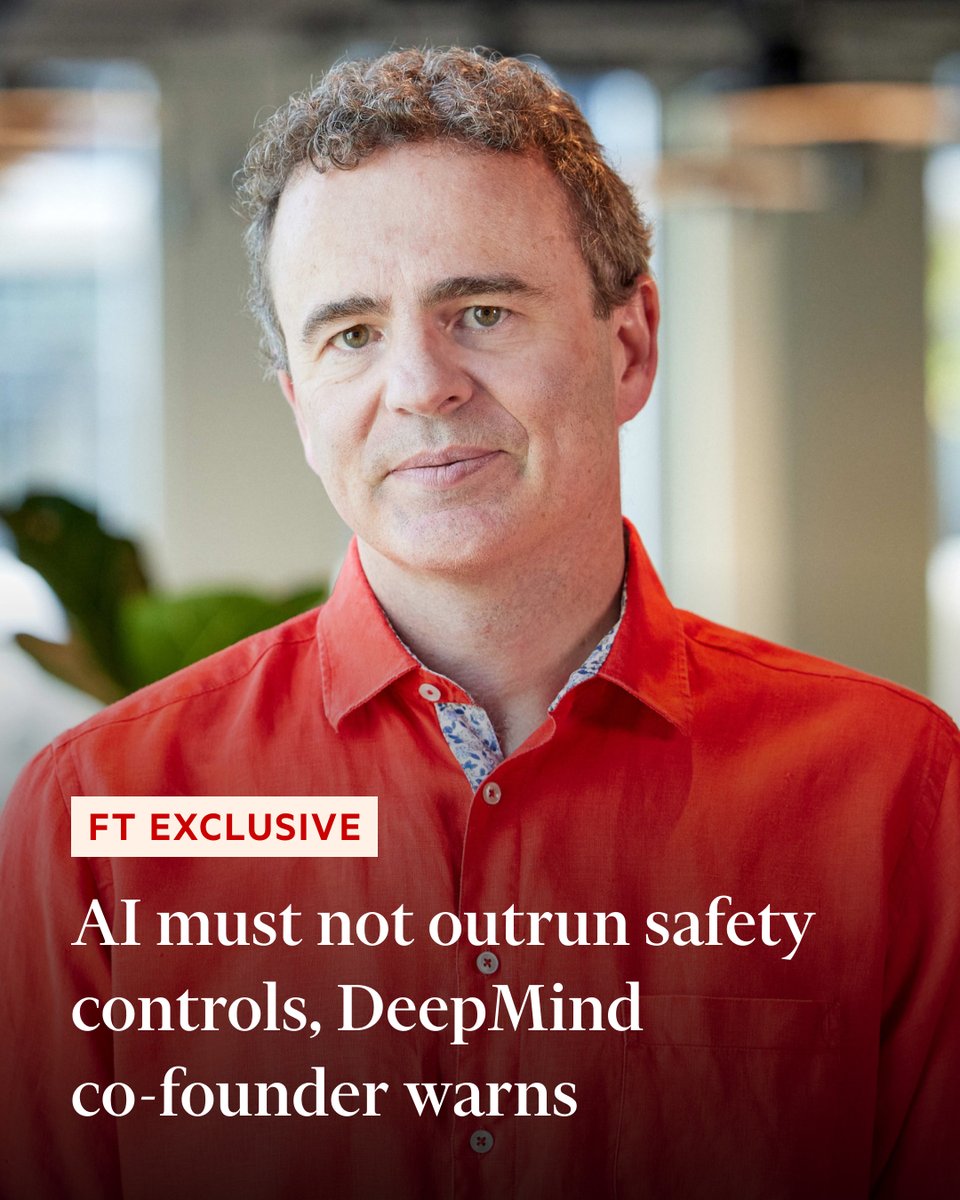
Google DeepMind launched the DeepMind Institute on Sept. 17, a new platform focused on the implications and safe deployment of artificial general intelligence. The launch includes four inaugural essays on reasoning transparency, AGI economic policy, a “new utopianism,” and a framework for frontier AI.
The move comes amid intensifying debate over when AGI arrives and how quickly safety guardrails should be built. Axios said the institute is led by Shane Legg, Demis Hassabis and James Manyika, while Reuters reported Legg said AI capabilities must not outrun safety controls and that it is premature to say AGI has already been achieved.
For markets, the direct read-through is to Alphabet and its AI narrative, with $GOOGL the stock most closely linked in the social chatter. By moving AGI discussion into a public institute, Google DeepMind is effectively signaling that policy, transparency and deployment questions are becoming part of its broader AI strategy.
Google DeepMind says the essays reflect their authors’ views and should not be read as Google’s official position. Axios reported the opening essays are by Rohin Shah, Anca Dragan, Julian Jacobs, Alex Imas, Stephen Cave and Hassabis himself.
MidEast disruption highlights refining capacity, not crude supply, as the key energy vulnerability, with price ripples spreading to apparel.
2026-09-02投稿16件 · 投稿者9人
US diesel nears April peak, Trump presses refiners in closed-door meeting, while an open letter to the Fed cites $4.04/gal gasoline.
2026-09-11投稿22件 · 投稿者12人
US average diesel price crosses $6/gal for the first time, with daily fuel bills $700M higher year-on-year, underscoring diesel's critical economic role.
2026-09-14投稿11件 · 投稿者9人
Syria's diesel and gasoline price hikes of 40% and 28% trigger widest protests since Assad's fall, amid a 223,000-bpd oil shortfall.
2026-09-16投稿19件 · 投稿者17人
Forecast of staggering pump price increases for both fuels in next 24 hours, with US diesel at $6.301/gal and gasoline at $4.355/gal.
2026-09-17投稿7件 · 投稿者7人
US diesel hits $6.387/gal, DOT temporarily relaxes trucker hours for fuel shipments, and China's gasoline and diesel inventories plunge.
US and Japan confirmed coordinated yen purchases on July 31, with Treasury Secretary Bessent citing action against disorderly moves.
2026-08-07投稿3件 · 投稿者3人
Japan's foreign reserves stood at $1.29 trillion at end-July, little changed from June, with analysts noting the government's large market role.
2026-08-10投稿4件 · 投稿者4人
Analysts saw yen testing 160 repeatedly, while BOJ data showed slower loan growth and a swing to current account deficit in June.
2026-08-20投稿8件 · 投稿者3人
Japan's July exports rose 23.2% year-on-year, with China-bound shipments up 25.8%, and the trade deficit narrowed to ¥634.5 billion.
2026-09-01投稿17件 · 投稿者3人
US and Japanese finance chiefs discussed FX intervention, with Bessent reportedly urging rate hikes, while Japan said policy should follow economic needs.