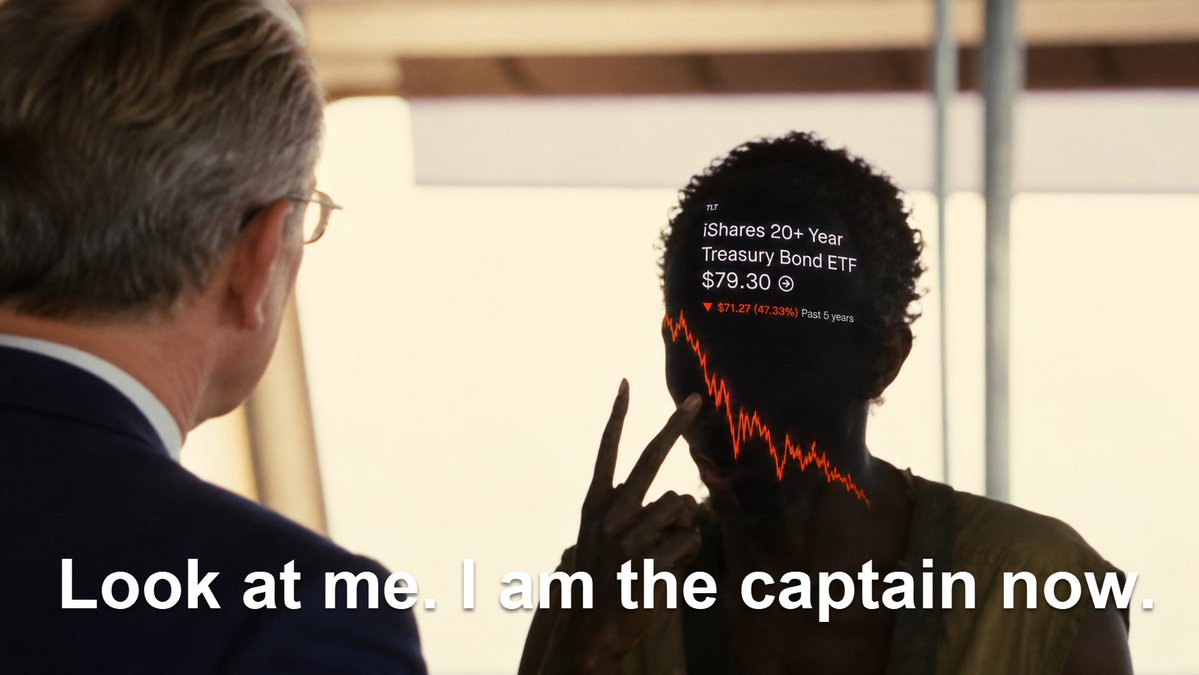
The U.S. 10-year Treasury yield climbed above 5.20% on Friday, its highest level since 2007. At the same time, the average rate on a 30-year fixed mortgage rose to 7.45%, the highest since 2023, underscoring how the bond selloff is reaching household borrowing costs.
The move comes amid a broader rout in global bond markets, with higher oil prices, sticky inflation expectations and heavy government borrowing all cited by traders and strategists. The latest reports also point to pressure from AI infrastructure spending and a shift in expectations for the Federal Reserve.
Rising long-end yields matter because they feed directly into valuations for interest-rate-sensitive assets, including high-multiple technology shares, while also raising financing costs for companies and the U.S. government. In housing, higher mortgage rates translate into bigger monthly payments and weaker affordability.
There has been no fresh policy response from the Federal Reserve or the Treasury tied specifically to this latest move. For now, investors remain focused on whether the 10-year and 30-year yields can hold above these new thresholds.
これまでの経緯
2026-08-01
地政学
トランプ氏、中国自動車メーカーの米国工場建設を歓迎すると発言英語原文
NBC says the White House is weighing a softer line as Trump meets Xi, a possible shift against tariffs above 100% and a 2025 data-security rule.
Trump said he would “welcome” Chinese automakers building vehicles in the United States, according to the latest wave of market-wire alerts. NBC separately reported that he is considering allowing Chinese EV production in the U.S. while meeting with Xi Jinping.
The remark lands against an existing wall of restrictions. The material says Chinese automakers are effectively shut out by tariffs above 100%, and a 2025 rule bars Chinese-connected passenger vehicles over data-security concerns.
For investors, the story matters most to U.S. automakers and EV leaders, including Ford, GM and Tesla, because any easing could reshape future competition and supply-chain assumptions. Recent coverage in the site’s news base also put GM and Tesla executives at a Trump-Xi dinner, while Reuters said GM and Ford have been losing U.S. market share this year.
For now, the only confirmed new development is Trump’s openness to the idea. The materials do not include a finalized policy change, only a potential shift under discussion.
According to Reuters, Energy Secretary Chris Wright has contacted several major U.S. refiners in recent days to gauge support for a voluntary reduction in diesel exports. The move is being floated as an alternative to a short-term export ban while the Trump administration looks for ways to cool domestic fuel prices.
The debate comes as U.S. diesel prices have climbed to about $6.52 a gallon and inventories sit roughly 13% below the five-year seasonal average, according to AAA and the EIA. Industry executives argue that restricting exports could quickly clog storage and force refiners to cut runs, which would pressure gasoline and jet fuel supply as well.
Refiners are likely to be the first stocks in focus because exports are a key outlet for surplus U.S. diesel, especially on the Gulf Coast. Reuters said Marathon Petroleum, Valero, Chevron and ExxonMobil were contacted, while more than 30 business and manufacturing groups urged the White House not to limit diesel and other fuel exports.
The administration says it is still weighing several options and that President Trump will make the final decision. For now, the market is focused on whether the policy path becomes a ban, a quota or a voluntary arrangement with refiners.
Reuters reported that the Federal Reserve is preparing a proposal to raise the asset thresholds that trigger stricter oversight of large banks. Under the reported plan, the top tier could move from $700 billion to about $960 billion, while some requirements now triggered around $100 billion could shift closer to $150 billion. Reuters
The move would effectively rebase the framework for the first time in years, with officials said to be weighing inflation and nominal economic growth as the benchmark. Reuters said the proposal echoes remarks made in January by Fed Vice Chair for Supervision Michelle Bowman, while some stress-test and enhanced prudential requirements would still require congressional changes. Reuters
Investors are likely to focus on midsize lenders near the current thresholds, including U.S. Bancorp, PNC, Capital One and Truist, which would gain more room to grow before crossing into tougher supervision. Western Alliance, Zions and Pinnacle Financial Partners could also avoid or delay some requirements, and the change could give fresh support to bank M&A if it becomes formal policy. Reuters
A Fed spokesperson declined to comment, and the plan has not been officially announced. Reuters also cited S&P Global Market Intelligence data showing only 33 bank and thrift acquisitions were announced over the past decade among banks with $50 billion to $700 billion in assets, underscoring how regulatory thresholds have weighed on dealmaking. Reuters
Goldman Sachs now expects Amazon, Alphabet, Microsoft, Oracle and Meta to lift AI infrastructure spending to $1.2 trillion in 2027, according to multiple news wires citing the firm’s research. The figure marks a fresh round of attention on how fast the largest U.S. cloud platforms are still scaling their AI buildouts.
The new call lands against Goldman’s earlier August note saying global AI investment will exceed $1 trillion in 2026, while U.S. hyperscaler capex could be substantially larger over the 2026-2027 window. That earlier work also framed AI spending as a long-cycle investment theme rather than a short-lived burst.
For markets, the number matters because it feeds directly into capex guidance, free-cash-flow forecasts and valuation multiples for AMZN, MSFT, GOOGL, META and ORCL. A higher spending path also keeps investors focused on the pace of AI monetization, as well as on the data-center, storage, power and networking suppliers that sit behind the buildout.
So far, the $1.2 trillion figure is being circulated as Goldman’s research view rather than a company-by-company disclosure. Meta has separately guided to as much as $145 billion in capital expenditure for 2026, underscoring how large the AI spend cycle already is.
これまでの経緯
企業動向
Blue Origin raises $10 billion at a $140 billion valuation英語原文
Bezos adds $2 billion as the company’s first outside funding round surfaces revenue, staff and 2030 targets
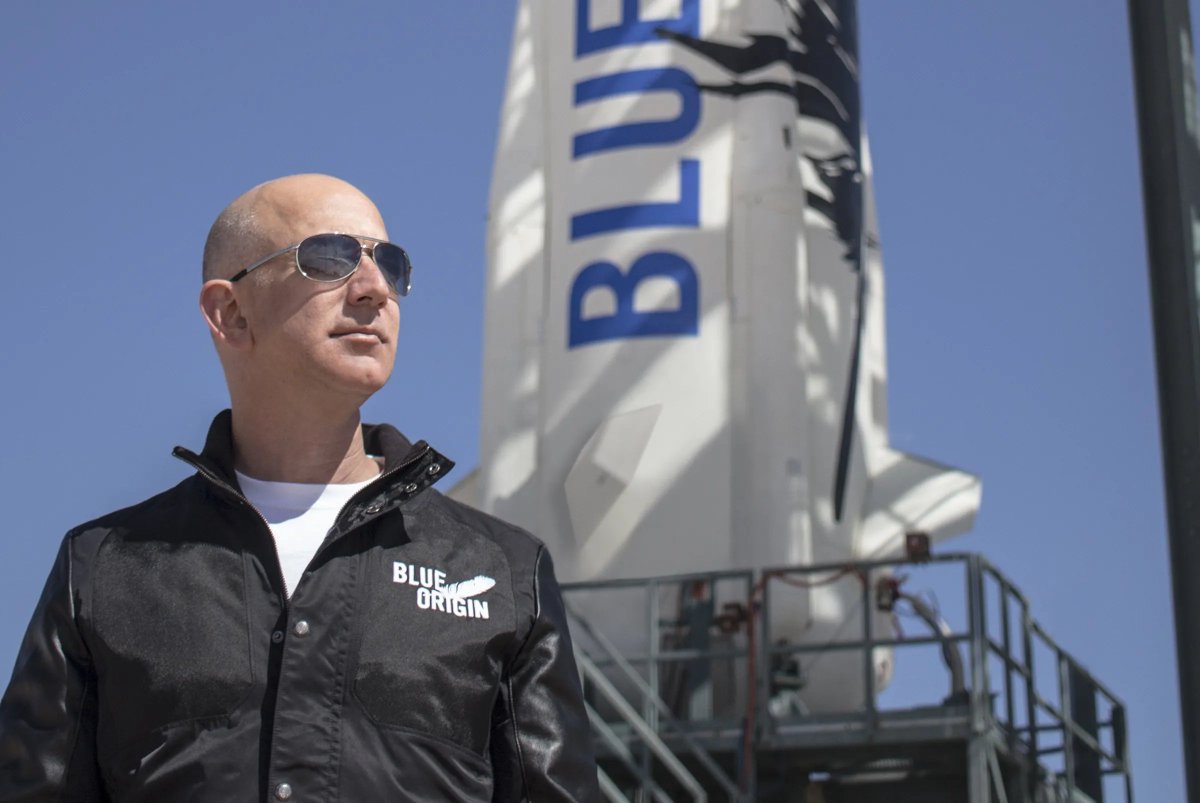
Blue Origin has raised $10 billion in its first outside funding round, valuing Jeff Bezos’s space company at about $140 billion, according to a Wall Street Journal report. Bezos is adding another $2 billion, taking his total investment in the company to roughly $30 billion since founding it in 2000.
The financing also gave a rare look at Blue Origin’s finances and ambitions. The company said revenue was about $800 million in 2025, expects about $1.4 billion in 2026, and is projecting more than $30 billion by 2030.
Blue Origin has about 15,000 employees and has completed three New Glenn missions. Launches were suspended after a vehicle exploded on a Florida launchpad in May, and future growth is expected to come from launch services, satellite communications and an AI satellite network.
For markets, the main read-through is to the private-space sector and Bezos’s capital commitment rather than Amazon’s operating business. The funding gives Blue Origin more resources to compete with SpaceX across launches, satellites and government space programs.
The Information reported that Tesla has increased Optimus production roughly tenfold in recent months, with output now running at several hundred robots per week. Managers are also said to be working toward a production line capable of making more than 1,000 robots a week by the end of the year.
The new detail in today’s signal is the combination of scale-up progress and manufacturing friction. According to the report, the robot’s intricate hands and supplier readiness remain the hardest parts of the ramp.
For TSLA, the update matters because Optimus is a key part of the company’s broader automation story. Investors will likely focus on whether Tesla can turn the production target into sustained volume while keeping reliability and supply-chain execution intact.
The Information also said V3 units are still being kept internal for training before outside deployment. Tesla has not publicly responded in the materials provided.
Akamai Technologies has struck a seven-year, $11.6 billion agreement with Anthropic to support the AI company’s growing CPU workloads. The contract includes expansion options that could lift the total commitment to roughly $20 billion.
The deal extends Anthropic’s push to secure more infrastructure capacity as demand for compute rises. For Akamai, the agreement deepens its exposure to AI infrastructure demand and puts its cloud offering in the spotlight.
Shares of AKAM drew market attention after the announcement, with investors focusing on the size of the contract and the potential upside from the expansion provisions. The agreement also adds another large customer relationship to Akamai’s cloud business mix.
Some reports say the arrangement includes warrants and initial build-out spending by Akamai, though those details are not fully consistent across the available materials. What is clear is that the companies have agreed to the seven-year, $11.6 billion commitment with a path toward a much larger deal.
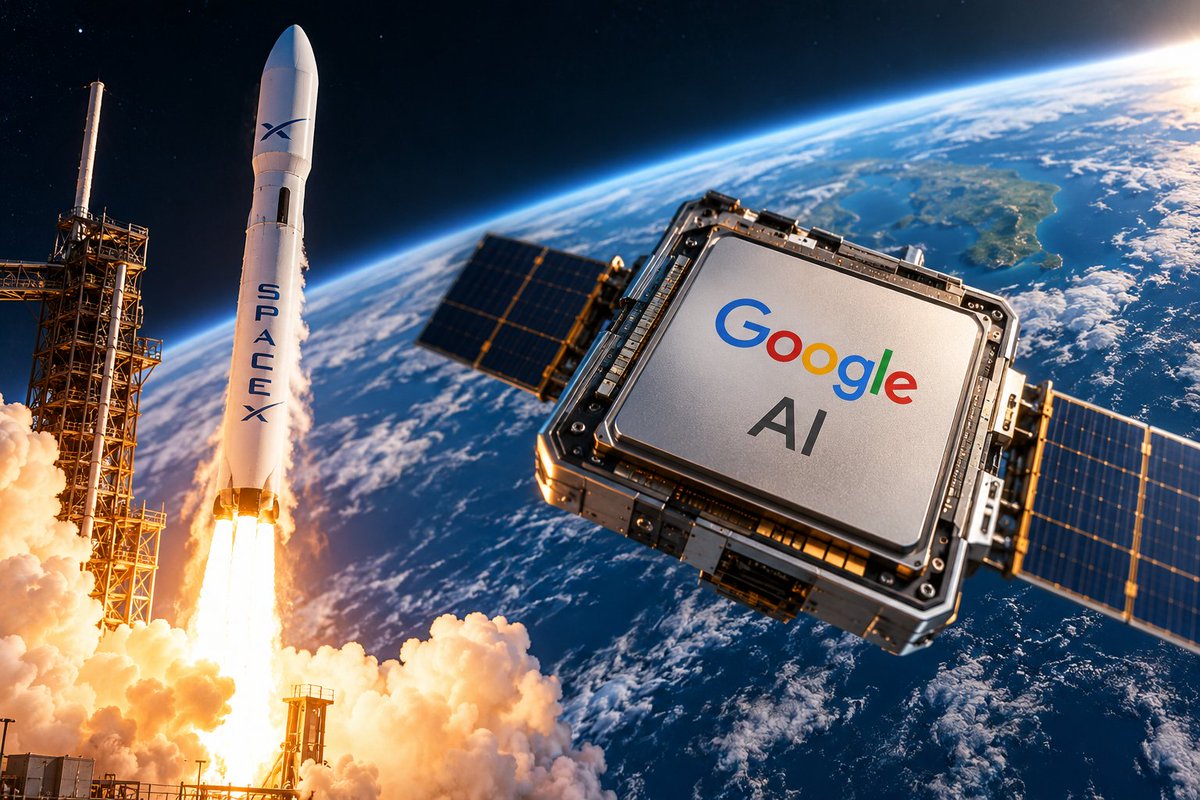
Google said it will launch a prototype satellite next week aboard SpaceX’s Transporter-18 rideshare mission to begin the first in-orbit test of Project Suncatcher, its effort to see whether AI computing hardware can operate in space. The mission will evaluate how Google’s Tensor Processing Units perform under launch vibration, radiation and thermal stress.
The project is part of Google’s broader push to explore space as a possible home for large-scale AI infrastructure. Google has said it has already tested TPUs in proton-beam and thermal-vacuum environments on the ground, but the orbital flight is meant to provide the real-world data needed before any larger deployment.
The test adds a new chapter to the space-compute narrative for Alphabet, SpaceX and Planet. Alphabet is trying to prove its custom AI chips can survive outside Earth’s atmosphere, SpaceX remains the launch partner for a high-profile experimental payload, and Planet is supplying the satellite platform for the prototype.
Google said the satellite is expected to carry four TPUs, and the company plans to use the flight to study radiation exposure and heat dissipation in orbit. The company has not framed the mission as a commercial deployment, but as an early engineering test that will inform future designs.
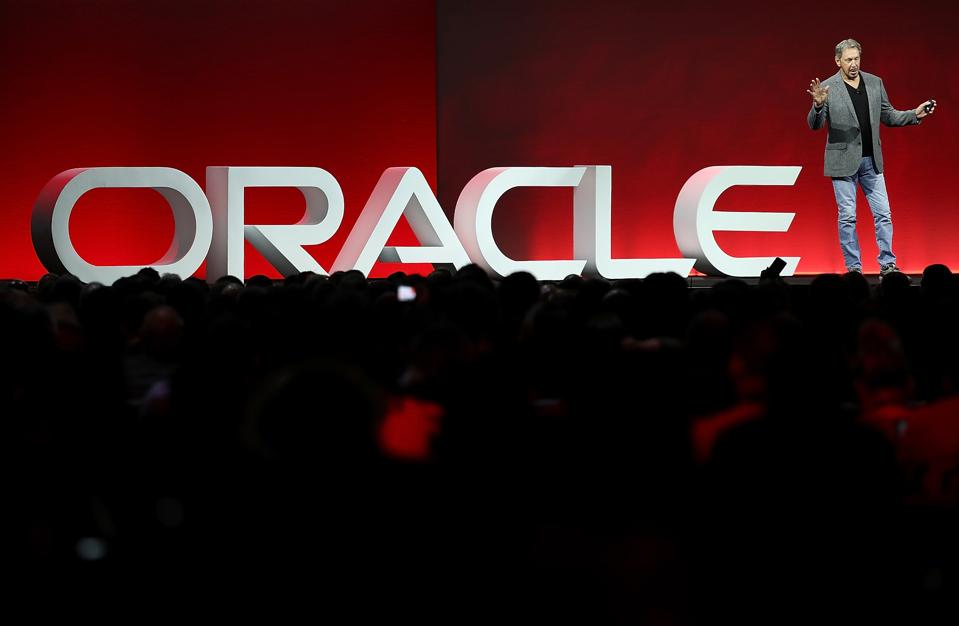
Multiple X posts say Oracle has issued a force-majeure notice tied to Project Jupiter. The company is also being quoted as saying the project is still on track, with the language framed as a contractual dispute rather than a sign of cancellation or delay.
Recent coverage in the newsroom’s database tracks the same story line. Bloomberg’s Ed Ludlow said Oracle is moving to protect itself from rising costs and from regulatory and local-opposition pressure around the New Mexico data center.
The market reaction has been concentrated in Oracle shares, with Blue Owl also cited as a related party in the project’s financing structure. Arm was mentioned as trading lower in sympathy, reflecting spillover sentiment rather than being the core subject of the notice.
For now, the confirmed development is the notice itself, not a cancellation. The open question in the reporting is whether this is mainly legal positioning or the first clear sign of deeper project stress.
Nscale’s latest financing package has grown to $3.36 billion, according to multiple reports, after Third Point led a $2.36 billion convertible note tranche and Nvidia separately committed another $1 billion. The funding is expected to arrive in mid-November.
The AI cloud provider has already filed for a New York Stock Exchange listing. In its SEC filing, Nscale said it generated $140.6 million of revenue in the first half of 2026 and lost $1.02 billion, while disclosing $103.4 billion of total contract value as of Aug. 31, with about $2.6 billion active.
The new money deepens Nvidia’s financial ties to one of its customers and infrastructure partners at a time when investors are scrutinizing AI capital loops. Nscale’s business model centers on buying Nvidia chips, deploying them in data centers and selling compute capacity to customers such as Microsoft and Anthropic.
The key new development today is the larger funding amount and the reported mid-November timing. Earlier SEC disclosures and follow-up reports had already outlined Nscale’s IPO plans and Nvidia’s $1 billion commitment, but the latest wave of wire-style reports lifts the total round size to $3.36 billion.
これまでの経緯
2026-08-27投稿10件 · 投稿者10人
Jensen mentioned CoreWeave and Nebius but omitted IREN, drawing market attention.
企業動向
Microsoft turns Copilot into a work OS with Code and Autopilot英語原文
Nadella says the app now spans models, form factors and tasks in one workspace
Microsoft on Sept. 25 unveiled a redesigned Copilot app built around three main experiences: Home, Code and Autopilot. The company is also embedding Word, Excel and PowerPoint directly into Copilot, positioning the product as a single workspace for chat, collaboration, coding and agent-like tasks.
The update marks a sharper push beyond a chatbot into the center of enterprise workflows. Reuters reported that Microsoft is adding usage-based pricing for more advanced capabilities, while keeping the broader app tied to Microsoft 365 subscriptions and workplace licenses.
For investors, the shift matters because it ties Copilot more closely to Microsoft’s core productivity franchise and could broaden monetization across enterprise AI. The move also puts Microsoft in more direct competition with Anthropic and other AI platform players, while raising the importance of security controls such as permissions, audit logs and isolated execution environments.
The new features are largely rolling out through an early test program, and Microsoft has not given a general-availability timeline. The company says the goal is to make Copilot a unified productivity system rather than a stand-alone assistant.
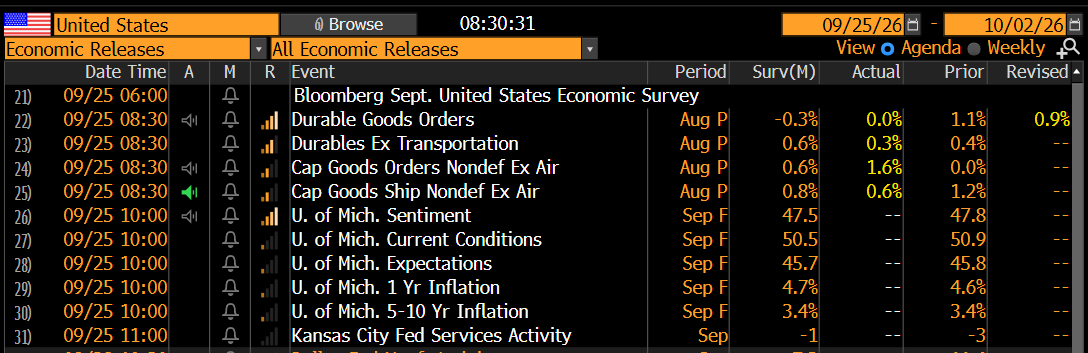
The U.S. Census Bureau said August durable goods orders were unchanged month over month, after a 1.1% rise in July. Durable goods orders excluding transportation rose just 0.1%, while core capital goods orders increased 0.3%, both below expectations.
Durable goods data are watched as a proxy for business spending on equipment and other long-lived items. In July, nondefense capital goods orders rose 2.0%, so the August figures suggest a clear slowdown in the underlying pace of investment demand.census.gov
The market impact is most relevant for industrials, tech hardware and semiconductor equipment suppliers, which tend to trade on corporate capex cycles. The standout offset was nondefense capital goods orders excluding aircraft, which rose 1.6%, a sign that parts of underlying demand remained firmer than the headline implied.newsquawk.com
Investors will likely pair the release with upcoming revisions and other capex indicators to judge whether business investment is merely choppy or losing momentum. UBS has recently argued that U.S. capex appetite is recovering from low levels, with non-AI investment showing early signs of stabilization, which makes this month’s report especially important as a read on the margin of that recovery.wallstreetcn.com
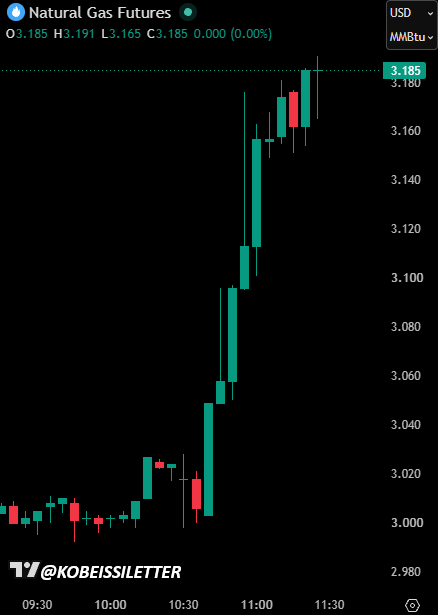
U.S. natural gas futures climbed as much as 5% in intraday trade after reports of a pipeline issue in the United States. Multiple market posts on X later put the gain above 6% at the peak, pointing to a sharp short-term supply shock.
The move came after the U.S. Energy Information Administration reported a 53 billion cubic foot increase in storage for the week, above the 50.73 billion cubic foot consensus estimate, taking inventories to 3.35 trillion cubic feet.
The combination of a still-elevated storage backdrop and an unexpected supply disruption tends to amplify Henry Hub volatility. The main market read-through is to U.S. natural-gas exposure, including the UNG ETF and futures-linked trading vehicles.
No further details on the pipeline issue were available in the cited reports. Traders are now watching repair timing and any follow-up evidence of tighter near-term balances.
Strategy’s board has approved submitting a proposal to shareholders that would make every calendar day a dividend record date for STRF, STRC, STRK and STRD, with any declared dividend payable on the next business day. The company says the change would not alter dividend rates, total regular dividends or its overall payment obligations.
The proposal was disclosed in an 8-K filed on Sept. 24 and a preliminary proxy filed on Sept. 25. Strategy said a special shareholder meeting is expected on Oct. 28, with a record date of Sept. 25; if approved and effective, the first payment under the new schedule would be Nov. 2, 2026 for STRC and Jan. 4, 2027 for STRF, STRK and STRD.
The four preferred series are STRF at 10.00%, STRK at 8.00%, STRD at 10.00% and STRC, a variable-rate series. Investors are focusing on the operational shift to daily record dates, while Strategy emphasizes that the economic terms of the securities would remain unchanged.
The change still depends on shareholder approval, the filing and effectiveness of amended certificates of designation, and declaration by the board or an authorized committee. For now, the company is describing a distribution-mechanics update rather than a repricing of the preferred securities.
Multiple X posts citing The Information say Chris Malone, OpenAI’s former head of data centers, has joined Nvidia as vice president of its DSX Platform. The platform helps customers design and build AI data centers around Nvidia’s infrastructure.
The posts add that Malone left OpenAI in August after joining the company in early 2025. The move highlights continued talent circulation across the AI infrastructure stack.
For investors, the relevant ticker is NVDA. The DSX Platform sits squarely in Nvidia’s AI data center strategy, so a senior infrastructure hire is likely to draw attention to the company’s ecosystem push.
No response from OpenAI was included in the materials provided, and the X posts did not add further details.
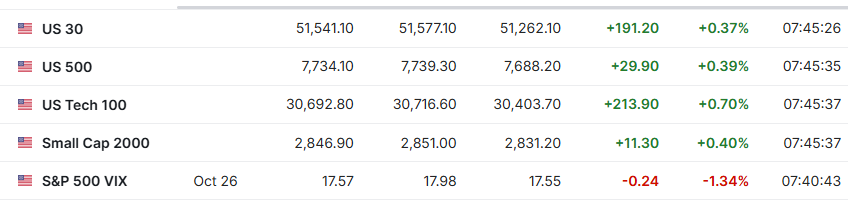
European and U.S. equity futures moved higher on Friday as crude oil pulled back and Treasury yields steadied from recent highs. The move followed market reports that talks involving the U.S. and Iran could help reopen the Strait of Hormuz, calming some of the supply-risk premium in energy markets.
The backdrop has been a sharp run-up in both oil and long-dated yields, with investors worried about inflation and tighter financial conditions. Bloomberg-linked reporting cited Brent easing to roughly the high-$90s to low-$100s a barrel and the 10-year Treasury yield drifting back toward 5.18%-5.19% after a two-session jump.xtb.com swissinfo.ch
That combination tends to support equity valuations, especially for growth and technology names, which are more sensitive to discount-rate moves. Pre-market chatter pointed to stronger Nasdaq futures, with chipmakers and megacap tech stocks among the beneficiaries.
There has been no official joint confirmation of a deal, so the market move is best read as a relief rally driven by headlines rather than a settled policy outcome. Traders will keep watching crude, Treasury yields, and inflation expectations data for confirmation.
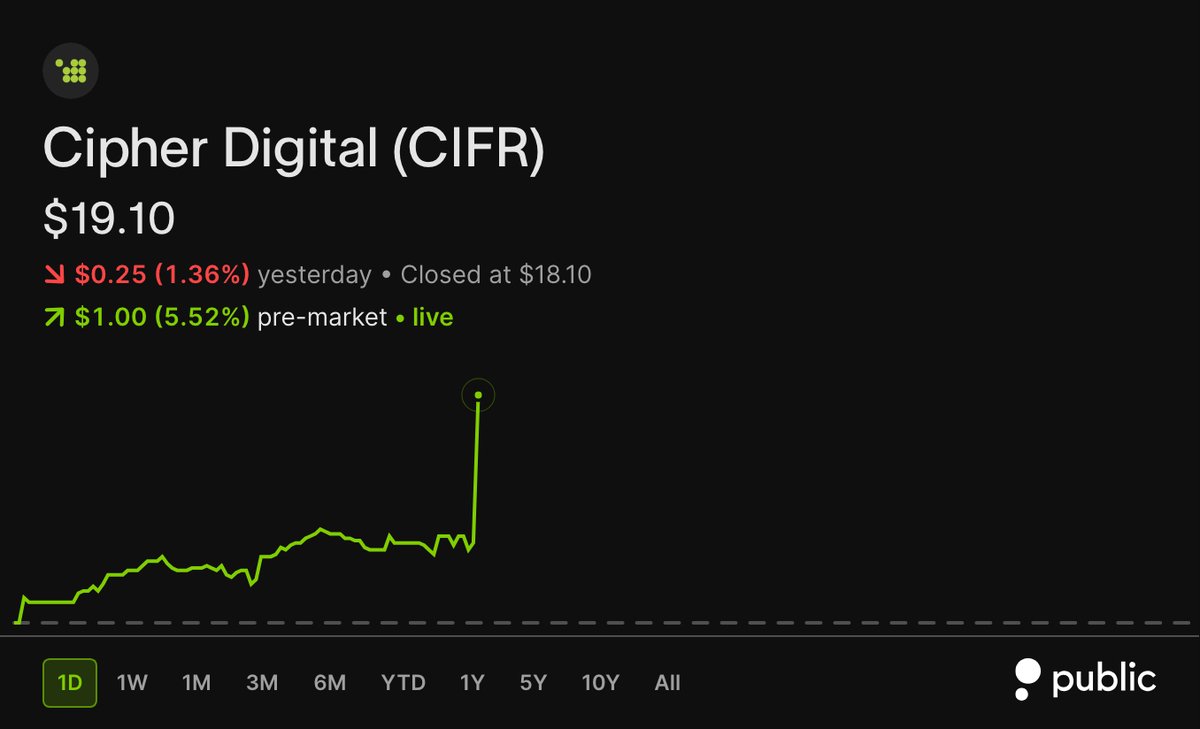
Cipher Digital said it has extended the contracted life of its Barber Lake data center from 10 years to 20 years, lifting total contracted revenue to more than $9 billion. The company also said a binding 10-year follow-on commitment adds roughly $5.2 billion of incremental revenue.
The same development appears in the newsroom record, which matches the X signal and confirms the scale of the revenue uplift. N1 specifies that the additional 10-year term contributes about $5.2 billion in contracted revenue.
For investors, the key question is execution: the new capacity is expected to come online from Q4 2026 through Q1 2027. That keeps CIFR in focus as the market watches how quickly the Barber Lake buildout converts into revenue recognition.
No denial from the company or counterparties was included in the supplied material. The update remains centered on Cipher Digital and the Barber Lake facility.
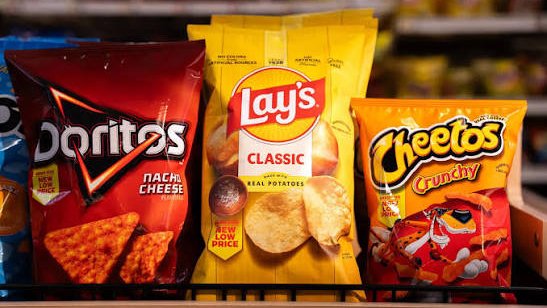
PepsiCo plans to raise prices on select chips, sodas and dips at the end of this year or in early 2027, according to Bloomberg. A company spokesperson said the increases on some chip brands will be in the low-to-mid single-digit percentage range and still below pre-cut levels earlier this year.
The change comes after PepsiCo cut prices by as much as 15% on key snack brands such as Lay’s and Doritos in an effort to boost demand. Even so, the company’s North American food business posted a 2% revenue decline in its most recent quarterly results, underscoring the pressure from a strained consumer and a tougher retail backdrop.
PepsiCo shares fell after the report. For investors, the key question is whether the company can restore sales momentum without giving back too much on affordability, especially as retailers remain selective about passing through price increases.
PepsiCo declined to comment on specific hikes for dips and soda, but said it is balancing lower prices where it can with long-term financial health.
Costco reported fiscal fourth-quarter total revenue of $95.7 billion, above the $94.86 billion consensus in the materials. EPS came in at $6.75 versus expectations of $6.53, while net income was $3.0 billion and operating income $3.8 billion.
The same earnings release was covered across the news flow cited in the newsroom library, including Reuters, Zacks and MarketWatch. Those reports frame the quarter as a beat on resilient demand and note that tariff refunds boosted profit.
For investors, COST is the key ticker in focus after the beat. CNBC cited Goldman Sachs as expecting a sharp move higher in the stock, while Bloomberg and MarketWatch highlighted the tariff-refund benefit as a point to watch when assessing earnings quality.
The quarter covered 16 weeks, and the materials also say comparable sales grew 6.7%. No separate management response appears in the provided sources beyond the reported results.
Ethena said it is extending USDe’s backing strategy into Binance tokenized stocks and equity perpetual futures. The protocol is keeping the same delta-neutral framework it uses in crypto: spot-like collateral on one side, perpetual-futures hedges on the other.
This marks the latest step in Ethena’s reserve diversification push. Previous reporting said the protocol’s risk committee had already approved tokenized-equity basis trades, while Binance stock perpetual open interest had topped $2.9 billion and stock basis trades had averaged 3.56% annualized over the past six months.
For markets, the update puts USDE and ENA in focus. USDe’s yield engine is moving beyond crypto funding rates toward equity-related basis trades, while ENA remains the key token linked to the protocol’s strategy execution and reserve design.
The details currently come from media reporting on Ethena’s disclosure, with Binance named as the exchange partner. The key point is a concrete expansion of USDe’s mechanism rather than a speculative rumor.
The Financial Times reported that Goldman Sachs has collected more than $200 million in prime-brokerage and financing fees this year from Leopold Aschenbrenner’s Situational Awareness, making the AI hedge fund one of the bank’s highest-fee clients. This is a fresh disclosure about the economics of the relationship, not a new market blowup story.
Situational Awareness was founded by former OpenAI researcher Leopold Aschenbrenner in 2024 and previously drew attention for its aggressive AI-focused positioning before a sharp reversal in AI stocks forced a major de-risking earlier this summer. Earlier reports said the fund sold much of its public-equity book to Citadel as losses mounted.
For Goldman, the fee haul underscores how prime brokerage can remain highly profitable even when a client’s trades become volatile. For the market, it highlights the scale of leverage still attached to AI-themed positioning and keeps GS at the center of the story, alongside AI-related equities and hedge-fund counterparties.
Neither Goldman nor Situational Awareness has publicly disputed the fee figure in the reports cited. Because this is a follow-up on an already widely reported unwind, the new angle is the size of the financing revenue rather than the liquidation itself.
これまでの経緯
2026-07-27投稿11件 · 投稿者6人
Goldman Sachs said the Clarity Act's chances dim, BitMEX will close as crypto consolidates into five big players, and it flagged upside risks to gas prices.
市場
Hyundai projected to top Ford in U.S. Q3 sales for the first time英語原文
Cox Automotive says Hyundai Motor Group is on track to edge Ford in U.S. quarterly sales as hybrids gain share.
Cox Automotive projects Hyundai Motor Group will outsell Ford in the U.S. in the third quarter, marking the first time the South Korean automaker has moved ahead of the Detroit rival on a quarterly basis. Cox’s forecast pegs Hyundai Motor Group at 511,421 units versus Ford at 504,172.
The forecast comes as U.S. buyers continue to favor more fuel-efficient vehicles, especially hybrids, while Ford and other Detroit automakers have a thinner lineup in that segment. Reuters reported that GM and Ford have lost more U.S. market share than any other automakers so far this year, according to Cox.
For Ford, the projection underscores pressure on sales mix and market share as it works through production issues tied to key pickup models and a relatively limited hybrid portfolio. For Hyundai, the call reflects stronger U.S. momentum across Hyundai, Kia and Genesis rather than a single-model boost.
The numbers are still forecasts, not official sales results, so the ranking change remains dependent on final third-quarter deliveries. If confirmed, it would be a notable shift in the U.S. auto leaderboard rather than a broad market shock.
Meta unveiled its next-generation VR glasses at Connect 2026, saying the glasses weigh about 100 grams and will sell for $1,299.99 when they reach market in spring 2027. The headset uses a split design: the display and sensing hardware sit on the face, while compute, battery and storage move to an external module carried in a pocket or clipped at the waist.
The pitch is about making VR more wearable without giving up premium display specs. Reported specifications include a 5K micro-OLED display, 37 pixels per degree, Dolby Vision and Dolby Atmos support, plus USB-C connectivity for PC use and external video input.
For markets, the clearest direct exposure remains Meta itself, as Reality Labs continues to be the company’s hardware bet. Apple’s Vision Pro is the obvious comparison point, but it is not the subject of the announcement; the contrast mainly underscores how far Meta pushed weight and cost down by moving the power pack off the face.
The newly disclosed details come from Meta’s launch presentation and subsequent reporting, while Meta has not published shipment targets or sales guidance. For now, the product looks like another step in Meta’s effort to turn VR into a more everyday computing form factor.
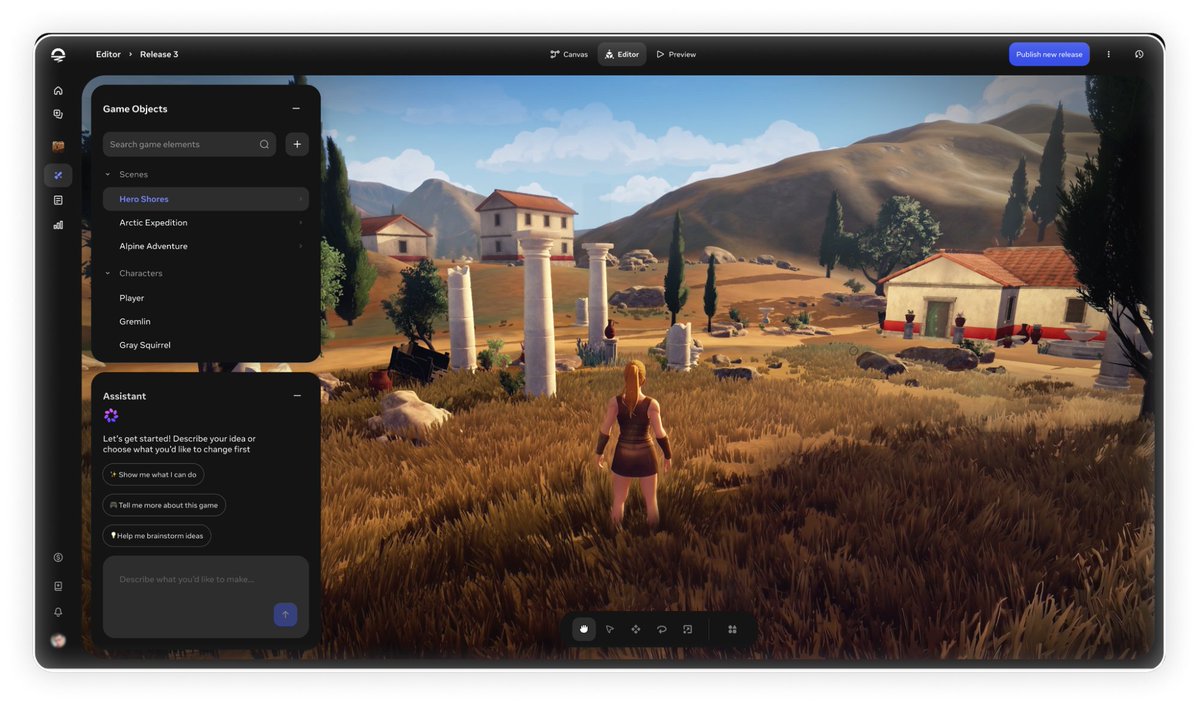
Meta unveiled Horizon Create and Horizon Studio at Meta Connect, two AI-powered tools that let users build 2D and 3D games from text prompts. Horizon Create is a mobile app, while Horizon Studio runs in a browser and offers more granular controls; Meta said both are entering early access with a waitlist now open.
The launch is designed to plug creation directly into Meta’s own distribution channels. Games made with either tool can become eligible for native distribution on Facebook, Instagram and Horizon, giving Meta a tighter loop between content creation, publishing and recommendation.
For META, the near-term market relevance is about adoption, engagement and whether the tools can expand Horizon’s creator ecosystem. Meta did not provide revenue guidance or monetization figures, so investors will likely focus on product rollout speed and whether the games actually attract and retain users.
Meta also said recommended distribution will depend on whether games are engaging, stable and culturally relevant, which means eligibility does not guarantee reach. The company’s broader bet is that easier game creation can increase the volume of playable content across its social surfaces.
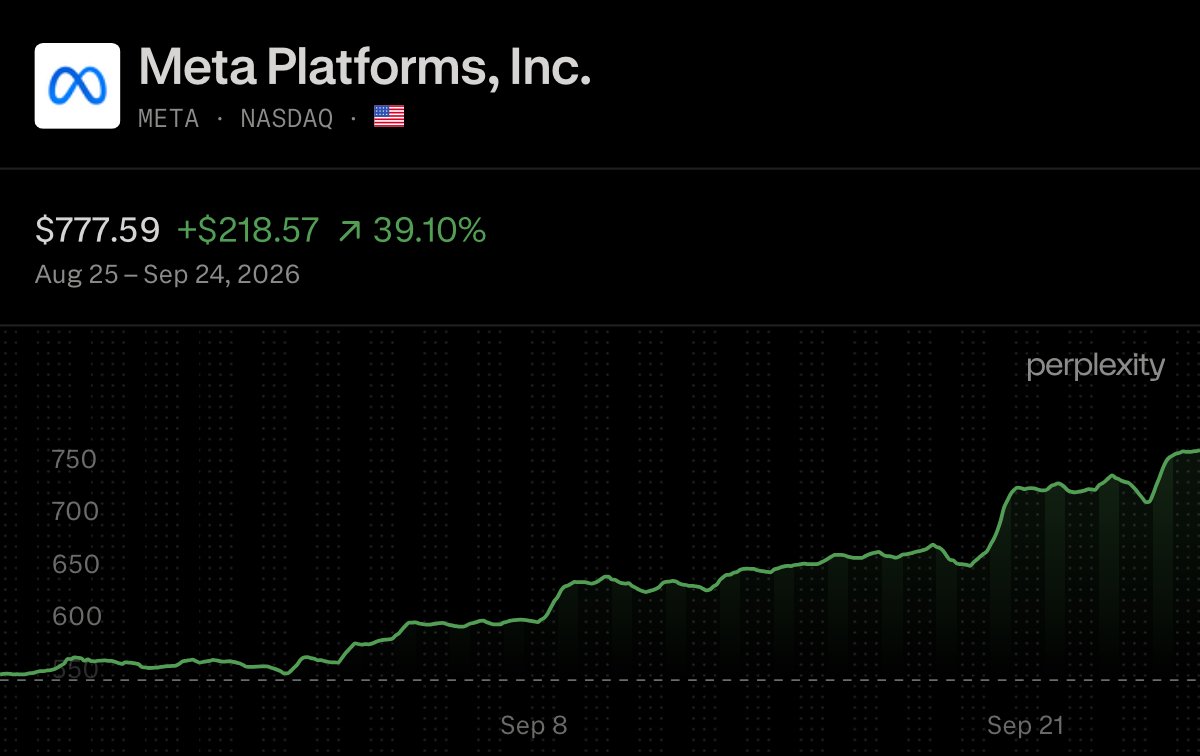
Canaccord raised its price target on Meta Platforms to $950 and kept a Buy rating. The X signal says the move is supported by Muse topping 2.5 million downloads in two weeks and expanding to glasses, Mac and dedicated hardware.
The update centers on Muse’s widening distribution. Canaccord said that reach could create multiple AI monetization paths, including subscriptions and what Mark Zuckerberg described as “a small fee from transactions.”
For the market, the issue is whether META can gain a fresh AI valuation tailwind. The signal points to a higher analyst estimate, not a new earnings release or company guidance update.
No separate same-event report appears in the site’s last-48-hour news cache; the verifiable details here are the analyst call and the Muse download/distribution data relayed in the X post.
ARK Invest and Securitize said on Sept. 24 that they are tokenizing the ARK Venture Fund (ARKVX) on Ethereum. Eligible investors will receive a blockchain-based representation of fund interests rather than direct ownership of portfolio companies such as OpenAI, Anthropic, Stripe or Databricks.
ARKVX is an actively managed interval fund, not an ETF. The tokenized structure changes how investors hold and transfer fund interests, but it does not put the underlying private-company shares onchain.
The move ties ARKVX more closely to Ethereum and the tokenized-securities infrastructure being built by Securitize. Public reporting put the fund at roughly $1.3 billion in assets and its net asset value at about $60.50 on Sept. 23, 2026, versus near $20 at launch in 2022.
Separately, SEC relief approved on Sept. 21 allows a tokenized share class that may trade on ATS venues once available, but there is no indication trading has already started. Securitize will handle issuance and investor onboarding, while ARK remains the portfolio manager.
Iridium Communications shareholders have approved the company’s acquisition by Rocket Lab, according to posts on X and a company repost confirming the vote. Rocket Lab CEO Peter Beck said the two sides are excited about what they can build together.
This is a new step in a transaction that was already in motion. A GlobeNewswire release in the newsroom database dated 2026-09-24 said stockholder approval marked an important milestone toward completion of the deal.
The update matters most for $IRDM and $RKLB. With shareholder approval in hand, investors are now watching the integration path for the satellite communications and space launch businesses.
The materials also say the deal is expected to close by mid-2027. No additional terms or consideration details were provided in the signal set.
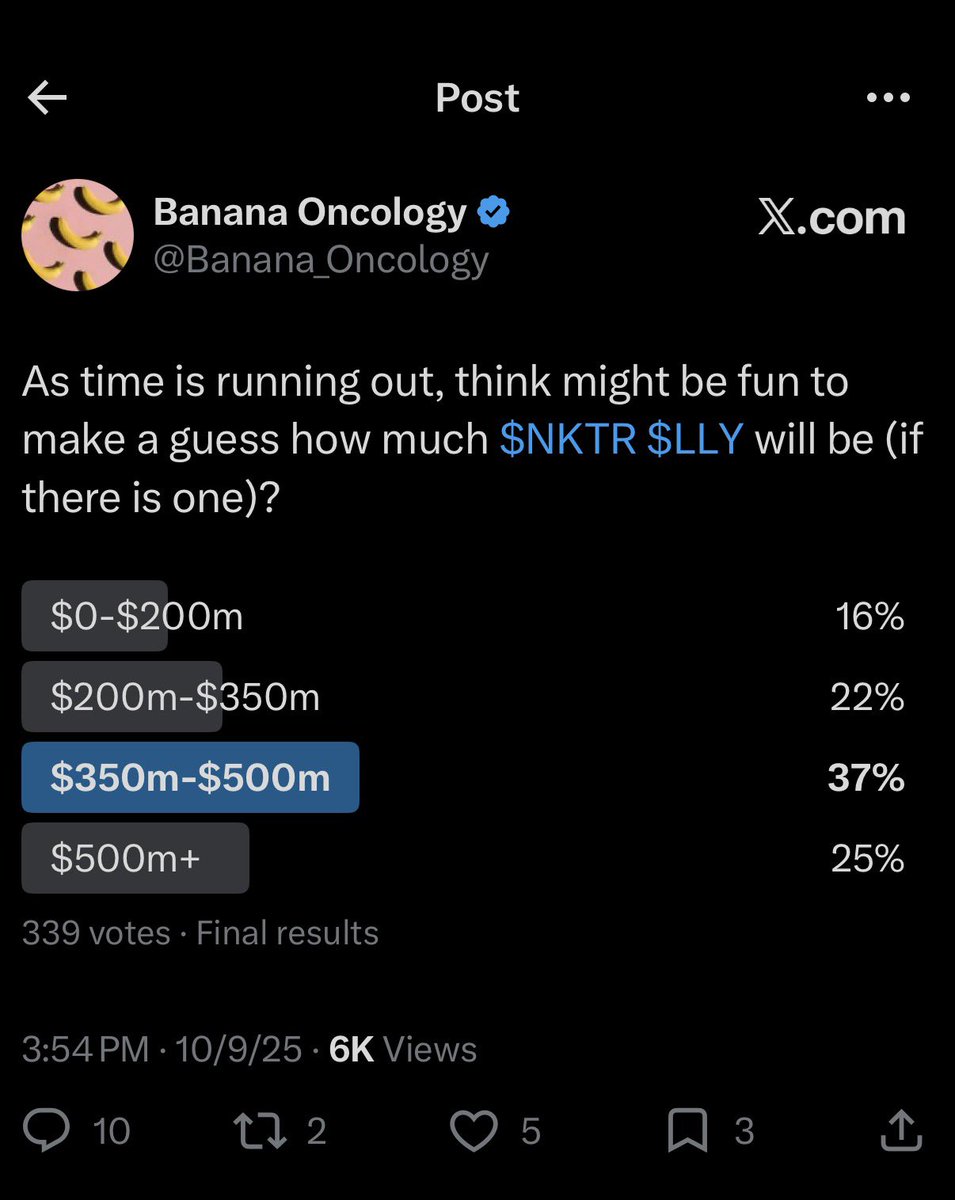
X signals indicate that the lawsuit between NKTR and Eli Lilly has reached a jury verdict, with NKTR awarded $90 million in damages. One post says the jury found Lilly breached the implied covenant of good faith and fair dealing.
The dispute is not new; it stems from an earlier legal fight between the two companies. Another signal says New York’s 9% prejudgment interest could lift the final amount, while a separate market post cites Law360 and describes the verdict as $90 million.
For the market, the ruling matters most for NKTR and Lilly directly: NKTR stands to receive cash compensation, while Lilly faces the financial and reputational impact of the decision. The exact take-home figure remains disputed in the X thread because of different references to interest, fees and taxes.
No full company response was included in the materials. One X user also noted that the actual award appears to have missed earlier social-media expectations by a wide margin.
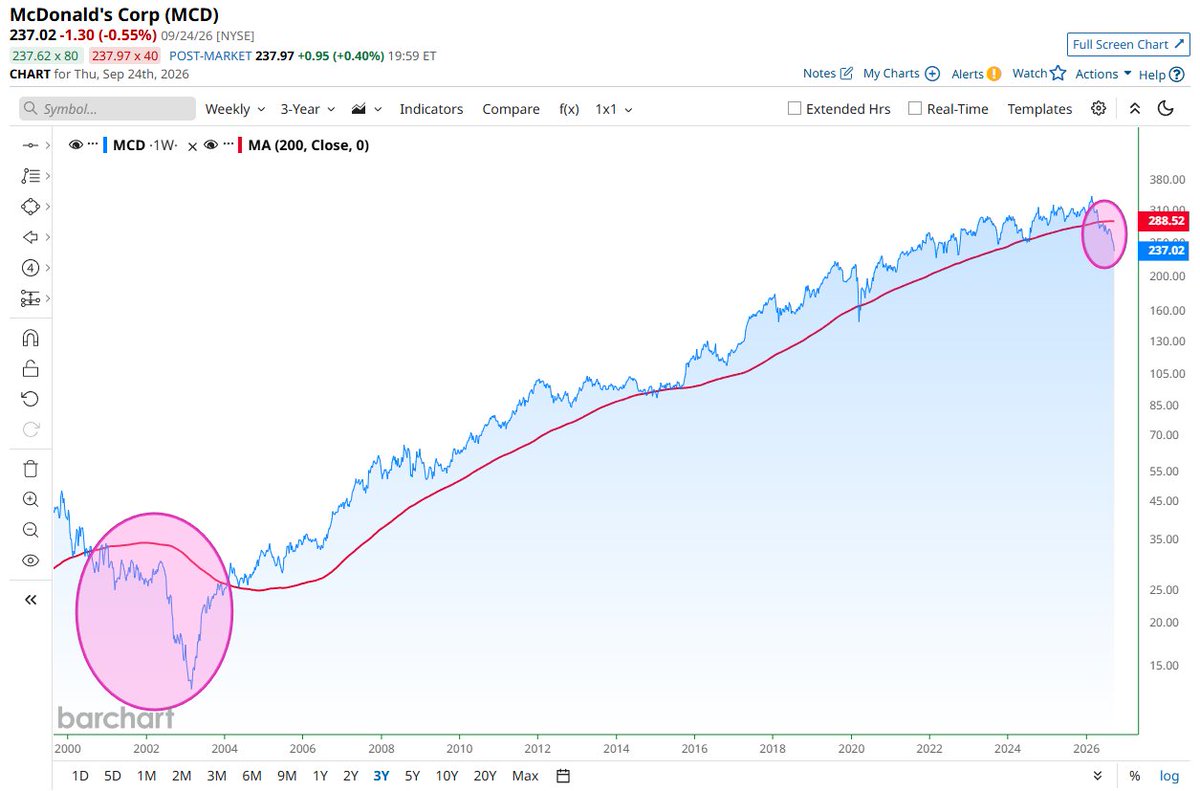
McDonald’s (MCD) fell on Wednesday. Barchart said the stock is now trading below its 200-day moving average by the widest margin since the aftermath of the dot-com bubble.
The move followed the company’s investor day, according to Schwab Network. Its coverage pointed to McDonald’s new growth strategy and the market’s read-through from analysts’ reaction.
Recent coverage in the site’s news library has centered on McDonald’s NEXT strategy, including restaurant modernization, AI-enabled operations and franchisee support. Another report described management’s comments at the event as notably cautious on conditions ahead.
The market impact appears concentrated in MCD itself. Schwab Network also said the post-event move sparked an options-trade example around the stock, but the provided materials do not indicate a broader sector spillover.
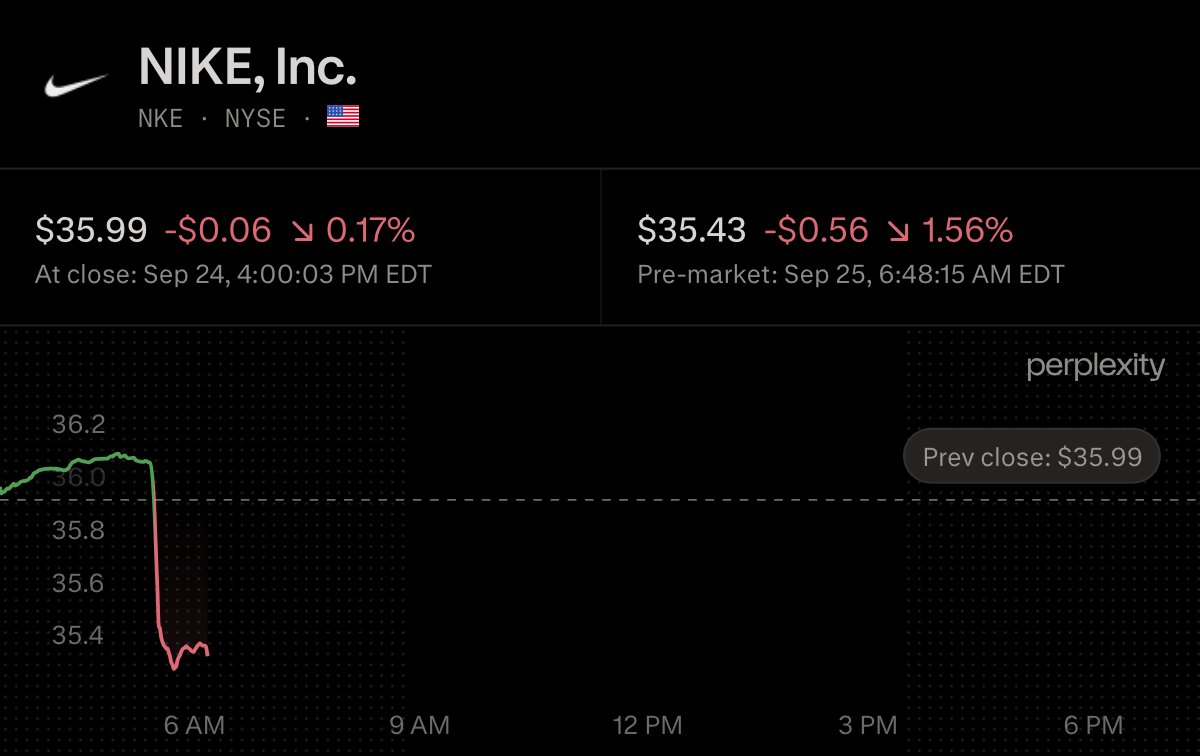
Nike fell after Bank of America turned more cautious on the stock. According to 247WallSt, the bank said the turnaround for the sneaker giant will arrive a full fiscal year later than expected and set a $30 price objective.
The move lands in the middle of an already weak earnings setup. Recent coverage in the site’s news feed said Nike’s Q1 outlook still points to declining sales pressure, while Benzinga noted the company is scheduled to report first-quarter results after the close on Oct. 1.
Nike is the key affected name here. The day’s X chatter about “buying the dip” suggests traders are still debating the pullback, but no new company response was included in the signal.
For now, the incremental update is the fresh downgrade view and $30 target, which sharpen the market’s focus on Nike’s pace of recovery and upcoming print.
Bank of America downgraded Nike (NKE) to Underperform and cut its price target to $30 from $47. The firm said Nike’s innovation story is still being overshadowed by pressure in its classics business.
The move lands just ahead of Nike’s upcoming first-quarter fiscal 2027 report. Our recent coverage noted that consensus expectations point to another quarter of declining sales.
BofA said it no longer expects a spring recovery and now sees sales declines continuing through FY27. It also trimmed FY27 and FY28 EPS estimates by 11% and 12%.
Nike shares fell in premarket trading after the note, with the report also citing worsening channel and macro pressures. No company response was included in the material provided.
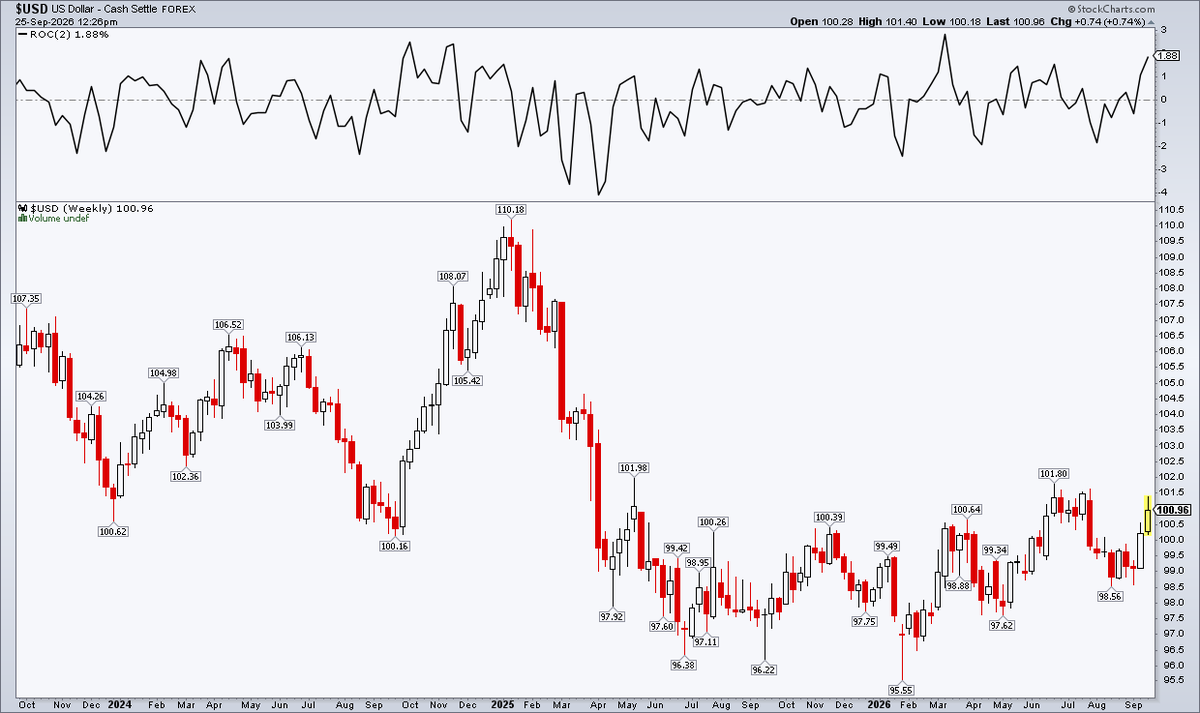
The U.S. dollar is extending its rebound and is on track for its strongest two-week stretch in six months, according to Reuters. The move marks the greenback’s first back-to-back weekly gain in more than three months, with the euro slipping to a two-month low at $1.1370 and sterling near a three-month trough.
The backdrop remains a sharp rise in U.S. Treasury yields and growing bets that the Federal Reserve may need to tighten again. Bloomberg said the dollar spot index has climbed about 2% over the past two weeks to a two-month high, while other reports cited the benchmark 10-year Treasury yield moving above 5.2%.
For markets, the immediate impact is on major FX pairs and rate-sensitive assets, as investors price in a wider U.S. yield advantage. The move does not hinge on a single company or stock, but on broader macro repricing across currencies and bonds.
The rally is being framed by stronger U.S. data, hawkish Fed commentary and elevated yields rather than a fresh policy decision. Reuters and Bloomberg both point to the same core driver: a stronger rate narrative that continues to support the dollar.
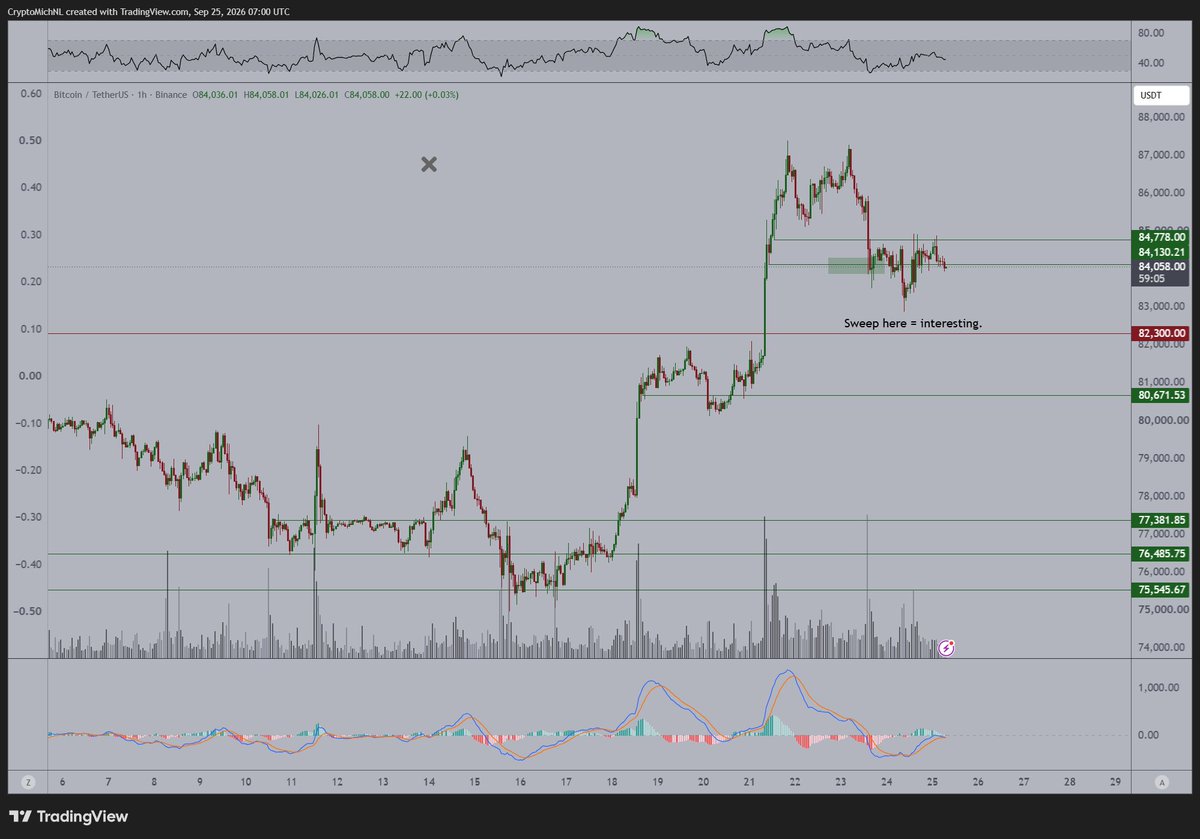
X posts today showed renewed attention on Zcash and Bitcoin’s short-term setup. wliang argued that ZEC often advances after consolidation, while cryptomichnl said Bitcoin may struggle to continue unless it reclaims $84,700; tedpillows pointed to a possible dip into the $78,000-$79,000 area, and another post framed $85,300 as the level needed to confirm a stronger uptrend.
The broader market backdrop is still noisy. A CoinEdition report said Bitcoin was rejected near $87,000 and slipped back to about $84,300, while FXEmpire cited U.S. 10-year Treasury yields around 5.22% and roughly $15.9 billion in Bitcoin options expiring on Sept. 25.
ZEC is also attracting outsized speculative interest. Bankless said Zcash’s market cap topped $26 billion last week, and TokenPost reported an anonymous trader holding about $117.84 million in leveraged BTC and ZEC longs on Hyperliquid, including a 12,700-ZEC long worth about $19.69 million.
For now, the new information is mostly about positioning and trader sentiment rather than a fresh fundamental catalyst. The market is watching whether ZEC can extend its post-consolidation strength and whether BTC can hold the broader $80,000-$85,000 band.
UK GfK consumer confidence rose to -13 in September from -14 in August, beating the market forecast of -16. It was the strongest reading since August 2024, according to the survey released on Friday.
GfK said households became more upbeat about both personal finances and the broader economy. Consumer insights director Neil Bellamy warned, however, that rising inflation, energy and fuel costs could start to erode the recovery.
The survey offers a modest tailwind for the UK consumption outlook, even as other sentiment gauges remain mixed. For sterling and UK retail-linked assets, the report matters because consumer confidence is often treated as a leading indicator for spending.
Reuters reported that economists had expected a drop to -16, while GfK’s actual reading came in one point better than August and well above consensus.wtaq.com The Guardian also cited GfK as saying the index has now improved for three straight months.theguardian.com
Spain’s statistical office INE said final second-quarter national accounts showed GDP rose 0.7% from the previous quarter, matching market expectations and edging up from 0.6% in Q1. On a year-on-year basis, GDP increased 2.6%, down 0.1 percentage point from the earlier flash estimate.
The breakdown showed domestic demand adding 1.1 percentage points to quarterly growth, with household spending up 1.2%, government spending up 0.5% and gross fixed capital formation rising 1.7%. External demand remained a drag, subtracting 0.5 percentage point from quarterly GDP growth.
For markets, the reading mostly reinforces Spain’s relative growth resilience in the euro area, which can matter for Spanish sovereign bonds and the euro. Equity-wise, investors may keep an eye on consumer, construction and investment-linked sectors, but the confirmed print leaves little fresh surprise for trading.
The release also broadly matched the tone of earlier reporting around the flash and consensus views, with the main nuance being the slightly softer year-on-year pace versus expectations. That makes the update more of a confirmation than a catalyst.
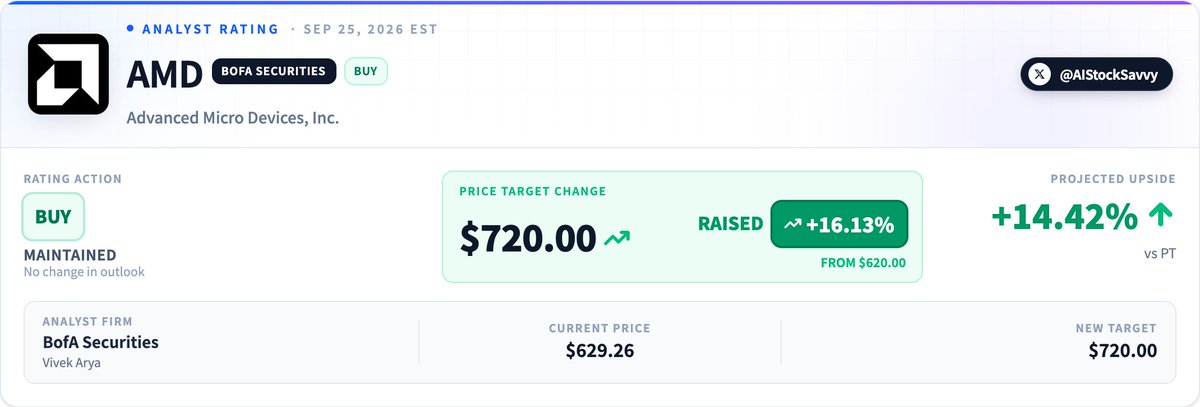
Bank of America Securities kept its Buy rating on Advanced Micro Devices (AMD) and raised its price target to $720 from $620. The move was echoed by multiple market-wire accounts in today’s social feed.
AMD has already been a major market story this year. A 247wallst report in the site’s news database said the stock was up 189% year to date and had crossed into the trillion-dollar club.
The new target may feed into valuation debates and trading sentiment around AMD, which remains the main subject of the update. No direct company response was included in the provided materials.
For now, the signal is centered on AMD’s own stock story rather than on a broader sector call. The existing rally is the backdrop, but the incremental news is the fresh target-price revision.
In a new interview, the Nvidia chief argued that AI systems should not be released unless they can be safely controlled, sharpening the debate over frontier-model guardrails.
Nvidia CEO Jensen Huang said AI companies should not release systems they cannot safely control, adding that labs should shut down if their experiments cannot be contained. He made the remarks in an interview with Ezra Klein and compared AI safety to autonomous vehicles.
The comments add a fresh public marker to the long-running debate over frontier AI risk. Huang’s framing focused on operational control and containment rather than calling for a new regulatory regime.
For markets, the remarks matter most for Nvidia and the broader AI infrastructure trade, though the signal itself did not include any new revenue, shipment, or product data. Recent local coverage also shows continued investor attention around Nvidia holdings and AI demand, but those reports are separate from this interview.
No additional response from Nvidia was included in the materials provided. The news here is the CEO’s explicit line on when AI experiments should stop.
MGM Resorts International is discussing a bid for Barry Diller’s People Inc. The move comes just after People withdrew its proposal to buy MGM, flipping the direction of the takeover talks.
The broader deal thread began in June, when People first offered to acquire a majority stake in MGM. After months of discussions, People pulled back on September 23, and the latest reporting suggests MGM is now considering a counter-move.
Shares of MGM fell sharply on the news, with multiple market posts citing declines of roughly 9% to 10%. The reaction reflects the swing in takeover expectations rather than a fresh earnings or operating update.
For now, the reported MGM-to-People approach remains a discussion, not a confirmed offer. People has already withdrawn its MGM proposal, which is the key confirmed change in the story so far.
これまでの経緯
2026-08-04投稿4件 · 投稿者4人
Palantir reported strong Q2 earnings with 93% revenue growth, while a shareholder pressured People to abandon its MGM takeover bid.
投稿6件 · 投稿者6人
The 30-year Treasury yield hit 5.23%, its highest since 2007, with mortgage rates climbing in tandem.
2026-08-18投稿9件 · 投稿者7人
AI corporate borrowing pushed up rates economy-wide, with the 30-year yield at 5.29% and borrowing costs at crisis highs across multiple countries.
2026-08-20投稿11件 · 投稿者11人
Market focus shifted to the Treasury potentially shortening debt maturities to counter rising long-term rates.
2026-09-16投稿13件 · 投稿者12人
The 10-year yield broke above 5% and the 30-year touched 5.4%, with multiple economic thresholds hitting multi-decade highs.
2026-09-24投稿19件 · 投稿者16人
The 30-year yield rose to 5.44%, the highest since 2004, as a Fed official signaled more rate hikes.
2026-09-25投稿15件 · 投稿者13人
The 10-year yield surged 26 basis points in two days to 5.2%, with mortgage rates seeing a sharp one-day jump.
BlackRock, Fidelity, Schwab, Goldman Sachs, and Franklin Templeton, managing over $30 trillion, jointly endorsed the CLARITY Act.
2026-08-11投稿94件 · 投稿者64人
Nvidia announced agreements with six major private capital firms to raise over $500 billion for customers to buy its AI chips.
2026-08-13投稿58件 · 投稿者42人
Goldman Sachs said half of big tech's record profits were inflated, institutions dumped Nasdaq futures at a record pace, and it acquired NEOS including its Bitcoin ETFs.
2026-09-11投稿55件 · 投稿者43人
SpaceX's CFO announced a new AI compute deal generating $1.11 billion monthly revenue starting Dec 1, at the Goldman Sachs conference.
2026-09-24投稿25件 · 投稿者20人
Goldman Sachs projected surging AI debt, warned AI servers could trigger blackouts, and China hit record gold imports.
2026-09-25投稿29件 · 投稿者21人
DTCC launched tokenization for $114 trillion in assets, and Goldman Sachs projected AI capex to reach $1.2 trillion by 2027.
Nvidia announced a $500 billion financing effort with Apollo, Blackstone, BlackRock, Goldman Sachs, KKR, and Brookfield to help customers buy its chips.
2026-08-13投稿58件 · 投稿者42人
Goldman Sachs was accused of admitting half of big tech's profits are made up, institutions dumped a record $21.6B in Nasdaq futures, and it acquired NEOS including its Bitcoin ETFs.
2026-09-11投稿55件 · 投稿者43人
SpaceX's CFO announced a new AI compute deal generating $1.11B monthly revenue starting Dec 1, 2026, speaking at the Goldman Sachs Communacopia conference.
2026-09-24投稿25件 · 投稿者20人
Goldman Sachs projected AI company debt to surge, warned AI servers could trigger localized blackouts, and China hit a record gold import level.
2026-09-25投稿8件 · 投稿者8人
Goldman Sachs saw nearly 70% upside for Nubank post-US launch, and earned over $200M in prime brokerage fees from an AI firm this year.