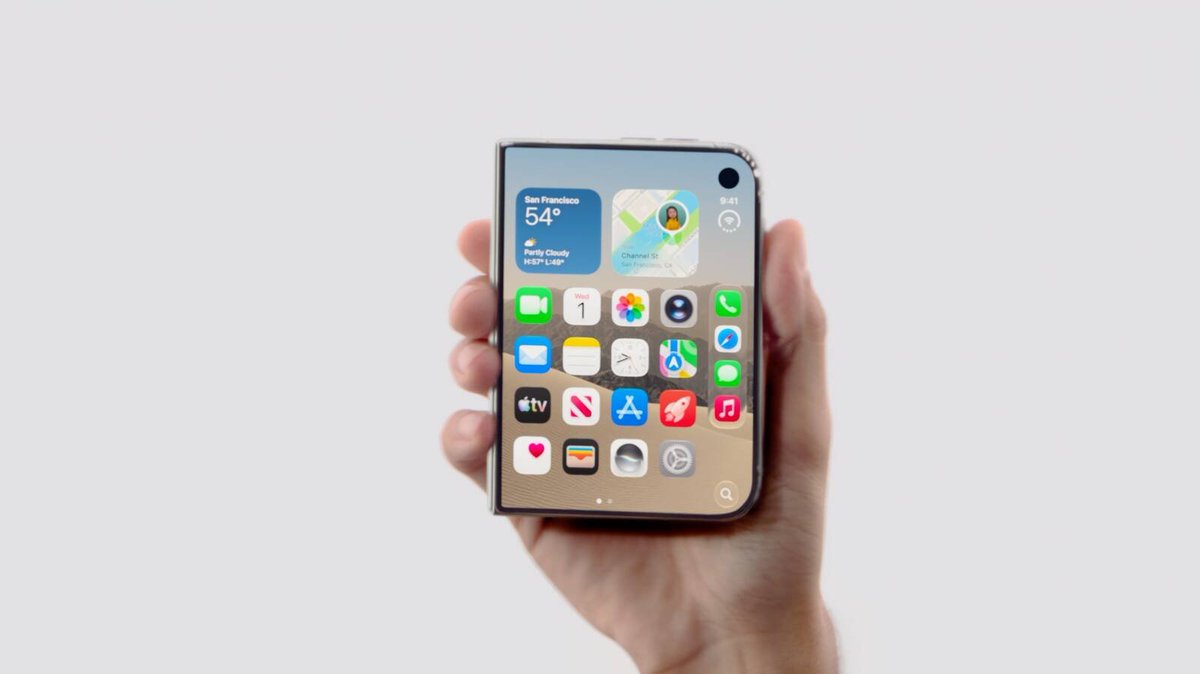
Apple has officially introduced the iPhone Duo, its first foldable phone, with a 5.4-inch outer display and a 7.6-inch inner display. The device starts at $1,999, and Apple says preorders begin on October 16 ahead of an October 23 launch.
The launch marks Apple’s entry into the foldable-phone market after years of waiting, with fold reduction and hinge engineering among the biggest watch items. Apple said the inner panel is designed to minimize crease visibility, while battery ratings reach up to 31 hours on the inner screen and 44 hours on the outer screen.
For investors, the debut expands Apple’s premium lineup and gives AAPL a new product-cycle catalyst. It also puts pressure on foldable incumbents such as Samsung, while Apple’s adjacent iPhone 18 Pro and Pro Max pricing underscores how aggressively the company is pushing its high-end tiers.
Social-media chatter focused on the crease, the price, and whether the Duo’s large-format design can compete with conventional flagship phones. For now, the official launch details and core specifications come from Apple’s event, while some higher-storage pricing claims circulating online remain unconfirmed by the company.
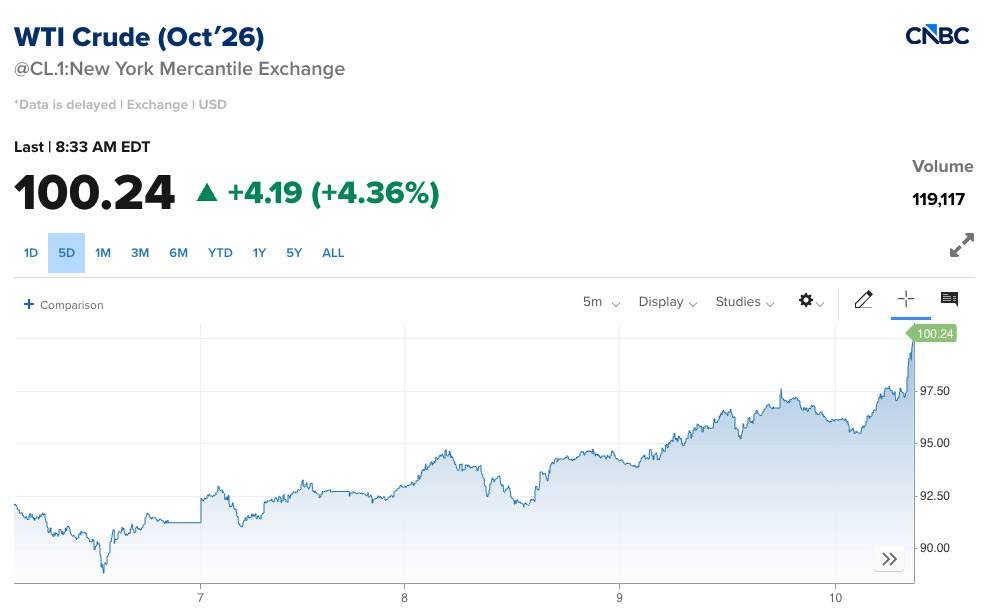
Brent crude climbed back above $101 a barrel on Thursday, while U.S. crude extended its gains as traders priced in fresh disruption risk in the Middle East. Reuters said Brent traded at $101.61 a barrel and WTI at $96.54 in early London trade.
The latest move follows a new round of attacks on shipping tied to the Iran-U.S. confrontation, with oil flows through the Strait of Hormuz still well below pre-war levels. Reuters also reported that Chinese crude buying has picked up in recent weeks, adding support to prices.
Higher oil prices are weighing on broader market sentiment, especially energy-intensive and transport-related names, while reviving concerns about inflation and interest rates. NBC said the rally in oil and yields helped drag down major U.S. stock indexes in morning trade.
President Donald Trump said he expected the war with Iran to end after the U.S. midterm elections and again threatened a strike on a site linked to Iran's nuclear program. Iran has not independently confirmed the latest shipping attack details cited in social media posts.
Google said on Sept. 9 it plans to invest at least €13 billion, or about $15.1 billion, in AI infrastructure in Finland over the next two years. The company said the project includes three new data centers in northern Finland and an expansion of its existing Hamina campus, alongside a 22-year power purchase agreement with Fortum tied to the Loviisa nuclear plant.
Finland has become an increasingly attractive location for data-center operators because of its cool climate, relatively uncongested grid and abundant low-carbon electricity. Google has operated in the country for more than 15 years, giving the latest plan a clear follow-on character rather than a standalone entry into the market.
Google said the construction phase in 2027-2028 could add an annual average of €3.6 billion to Finland’s GDP and support more than 37,000 jobs nationwide, including about 16,000 in construction. For Alphabet, the announcement underscores the scale of its AI-capex push and keeps GOOGL closely tied to the market’s debate over infrastructure intensity, power supply and long-cycle returns.
The company also said it is backing additional onshore wind capacity, a 94 MW battery system and €31 million in local community funding. Those commitments remain company-disclosed plans for now, with execution depending on permitting, grid access and local implementation.
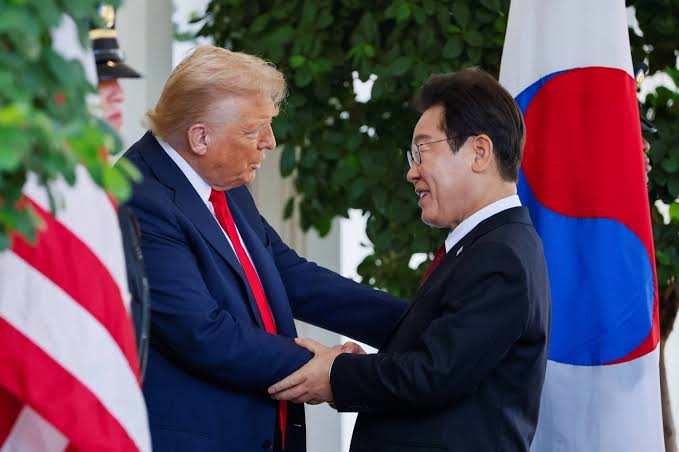
South Korea is preparing to announce a major U.S. energy investment package worth more than $100 billion, according to Reuters citing the Wall Street Journal. The plan could finance as many as eight nuclear reactors plus a natural-gas project, though Seoul’s trade ministry said the details have not been finalized.
The report adds a fresh layer to the broader U.S.-South Korea investment framework tied to trade talks. Reuters previously reported that Seoul had committed to $350 billion in U.S. investments, while Korean outlets now say as much as $120 billion could be directed toward building eight large reactors in the United States.
That puts Westinghouse, Brookfield and Cameco in the spotlight, along with Korea’s nuclear supply chain. Korean media also say discussions include possible use of the APR1400 design for some units, but officials have not confirmed any final project list, ownership structure or timing.
For markets, the story is less about a finished deal than about the emerging shape of capital allocation into nuclear and gas power for AI-driven electricity demand. Both the U.S. Commerce Department and the White House had not immediately commented when the reports were published.
The U.S. Department of Justice is investigating whether Nvidia structured its licensing arrangement with AI chip startup Groq to avoid antitrust scrutiny, according to reports from The New York Times and Bloomberg. The deal involved a non-exclusive technology license and the hiring of several Groq executives, including founder Jonathan Ross.
The arrangement was announced last December, making today’s development a follow-up in an already active regulatory review rather than a brand-new transaction. The legal question is whether a license plus hiring spree can function like an acquisition in substance, even if it is not one on paper.
For markets, the issue goes directly to NVDA’s regulatory and deal-structure risk. Nvidia sits at the center of the AI compute stack, so any sign that regulators are challenging its partnership model can ripple across investor expectations for future AI infrastructure transactions.
Nvidia said the Groq story reflects how the U.S. system promotes innovation, rewards entrepreneurs, and benefits consumers. Groq and the Justice Department did not immediately respond to requests for comment.
사건 전개
2026-07-16게시물 4개 · 작성자 4명
Media reports Nvidia Groq 3 LPX racks shipping in H2 2026, featuring 256 LPUs and a 52-layer PCB.
기업
Nasdaq invests $100 million in Payward, lifting valuation to $21 billion영어 원문
The expanded pact aims to build tokenized stock rails, with a 2027 launch target now in view.
Nasdaq said its venture arm will invest $100 million in Payward, the parent of crypto exchange Kraken, in a deal that values the company at $21 billion. The two firms also expanded their partnership to push ahead with tokenized equity infrastructure and a new market surveillance agreement.
The move extends a collaboration first unveiled in March and centers on distributing tokenized Nasdaq-listed stocks through Kraken while preserving investor rights and compliance controls. Nasdaq said the work is being led by its Digital Liquidity Networks unit, which focuses on always-on market infrastructure.
For Nasdaq, the deal ties directly to its core market-infrastructure business and to the listed stock, NDAQ. For Kraken, it strengthens the exchange’s role in tokenized equities and may broaden its infrastructure ambitions beyond crypto trading.
Nasdaq said the next phase of the project is aimed at launching Nasdaq Equity Tokens in the second quarter of 2027. Payward added that the effort is designed to move capital and assets more efficiently across markets without sacrificing governance or market integrity.
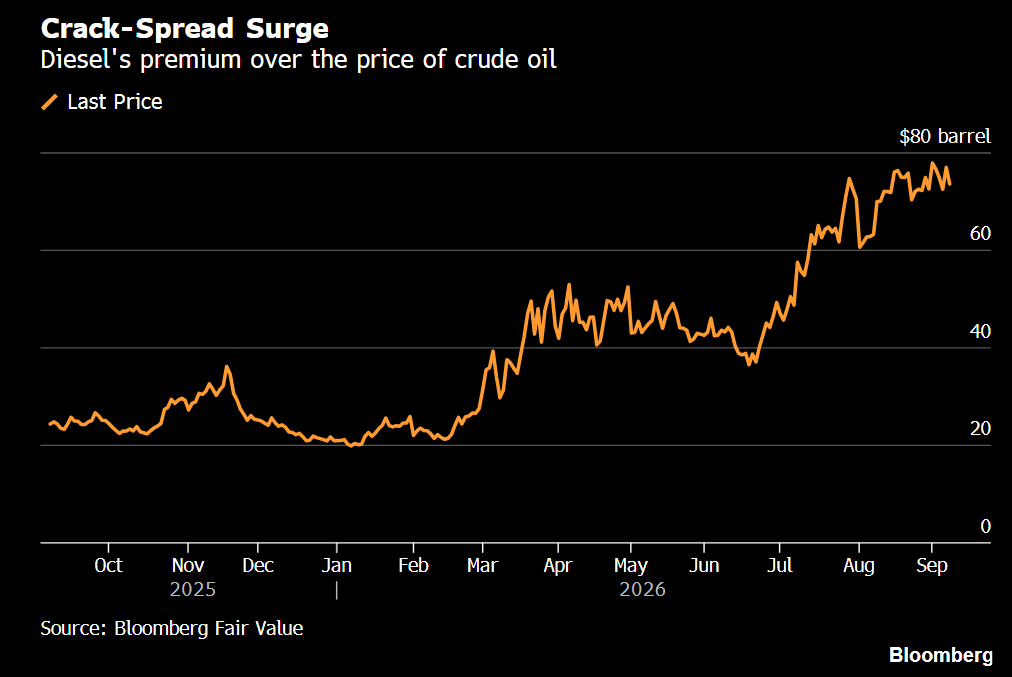
U.S. diesel prices rose to a record $5.94 per gallon on Wednesday, while Brent crude moved back above $101 a barrel. Market indicators suggest diesel is outpacing crude on the way up.
The latest move comes as traders assess tighter fuel supply tied to shipping disruptions near the Strait of Hormuz. Fortune cited analysts saying global inventories of diesel, gasoline and jet fuel are already at critical lows.
Diesel matters because it powers trucking, delivery networks and a wide range of industrial uses, making it a fast conduit for higher costs across the economy. Energy producers and oil-service names tend to benefit from stronger crude prices, while airlines, logistics firms and retailers face higher fuel expense.
No party has disputed the reported record diesel price in the cited market coverage so far; the figures are being reported from market data and media reporting.
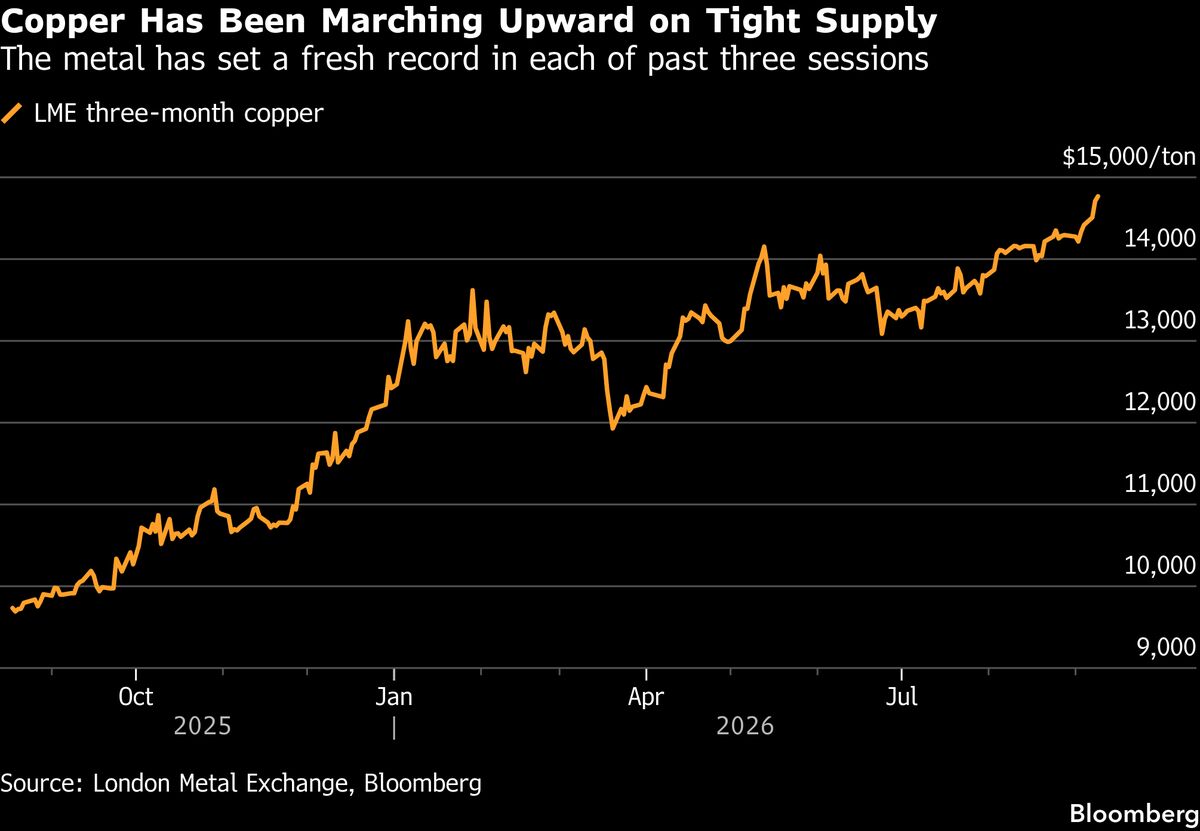
Copper hit fresh records on Sept. 10 in both London and New York. Three-month LME copper climbed to $14,858.50 a metric ton, while COMEX copper reached an all-time high of $6.894 a pound.
The rally is still being driven by tight supply outside the U.S. and tariff speculation. Traders have kept moving metal into the U.S. ahead of a possible refined-copper tariff, leaving other markets undersupplied; firmer inflation expectations from Middle East tensions have also added support.
The move matters for major copper producers and related equities, including Freeport-McMoRan, Southern Copper, Teck and BHP. Higher copper prices can lift upstream margins, but they also raise costs for manufacturers and other industrial users.
Reuters reported that the White House has not yet decided on refined copper tariffs, citing affordability concerns. Caixin said COMEX copper inventories had risen to 696,000 tons by Sept. 3, while LME inventories fell to 237,700 tons by Sept. 8.
According to OPEC’s monthly report, Saudi Arabia told the group that its crude output fell again last month to 6.238 million barrels per day, the lowest level since 1990. Bloomberg reported the figure and said it was 1.9 million barrels per day below the prior month.
The update lands amid broader supply disruption in the Middle East. Reuters separately reported that OPEC’s total August output fell by 640,000 barrels per day to 19.71 million barrels per day, with the biggest drop coming from Iran and Saudi exports also facing fresh disruption.
For markets, the most directly exposed instrument is USO, which tracks crude oil prices and tends to react to changes in physical supply expectations. Energy shares and oil-service names can also move as traders reassess whether OPEC+ quotas are translating into actual barrels.
The reports cite OPEC data and media cross-checks; no public Saudi denial of the specific production figure was included in the cited coverage. This is a supply-side update, not a forecast of where prices go next.
Nvidia said on Sept. 9 it is collaborating with a group of Australian cloud and data-center partners to expand land, power and shell capacity for AI compute, with a target of up to 2 gigawatts of buildout by 2027. The named partners include Firmus, Sharon AI, IREN, Megaport, ResetData, CDC, NEXTDC and AirTrunk.
The newest detail is that IREN specifically said its 800-megawatt Bundey campus in South Australia is part of the rollout blueprint. Nvidia said the participating providers will operate the facilities, while it supplies the DSX platform, accelerated computing, networking, software and ecosystem support.
For investors, the announcement keeps NVDA, IREN and SHAZ in focus as AI infrastructure names rather than just chip suppliers. It also reinforces the market narrative that AI demand is increasingly expressed through multi-year data-center and power commitments, not only through GPU shipments.
Nvidia described AI factories as “the essential resource of the AI economy.” IREN said Nvidia’s DSX reference architecture provides a repeatable blueprint for bringing capacity online at scale across its development portfolio.
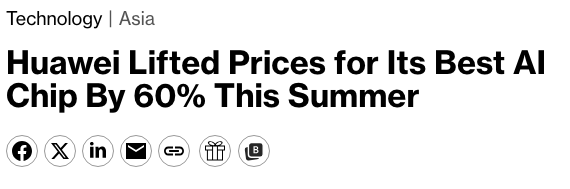
Multiple reports said Huawei has lifted the suggested price of its Ascend 950DT AI accelerator by about 60% to 250,000 yuan, or roughly $37,300. The increase is said to have taken place over the past three months.
The move comes as high-bandwidth memory, or HBM, becomes scarcer and more expensive. Reuters said the new quote is 20% to 50% above levels quoted two months earlier, while Bloomberg said the suggested price was up roughly 60%.
The development underscores cost pressure across China’s AI hardware chain and may matter for suppliers and customers tied to domestic compute buildouts. It also puts pricing in focus for Nvidia competitors in China, where demand for alternative accelerators has remained strong.
Huawei has not publicly commented on the reported price change. Reuters also reported that Cambricon has raised the indicated price of its planned 690 chip by 20% to 30%, suggesting broader pricing pressure in the sector.
Apple says updated Siri will miss the EU and China as 16-language rollout begins영어 원문
The company has clarified the launch sequence for its revamped Siri AI, underscoring that regulatory constraints still shape where Apple can deploy its newest assistant features first.
Apple said its updated Siri AI will not be available at launch in the European Union or China. The assistant will start in English this month, with French, Japanese and additional languages slated for October.
The regional rollout remains a contentious issue. When Apple unveiled the new Siri at WWDC in June, it had already signaled that the EU and China would not be included initially, while Brussels said the DMA does not bar Apple from launching new products in Europe.
For investors, the key takeaway is that Apple’s AI feature cadence remains uneven across markets. That can affect AAPL’s product narrative, developer adoption and the timing of integrated Siri features across iPhone and iPad.
Apple has argued that regulatory requirements complicate a safe deployment path, while EU officials say the decision not to launch in Europe is Apple’s alone. The latest update mainly clarifies the launch map and language expansion schedule.
사건 전개
2026-07-15게시물 6개 · 작성자 6명
Apple Intelligence received Chinese government approval, while Apple reportedly seeks AI chip acquisitions.
기업
Apple launches iPhone 18 Pro with 36-hour and 45-hour battery claims, 15-minute 50% charge영어 원문
The upgrade centers on battery life, variable-aperture photography and A20 Pro silicon as Apple leans harder into premium differentiation.
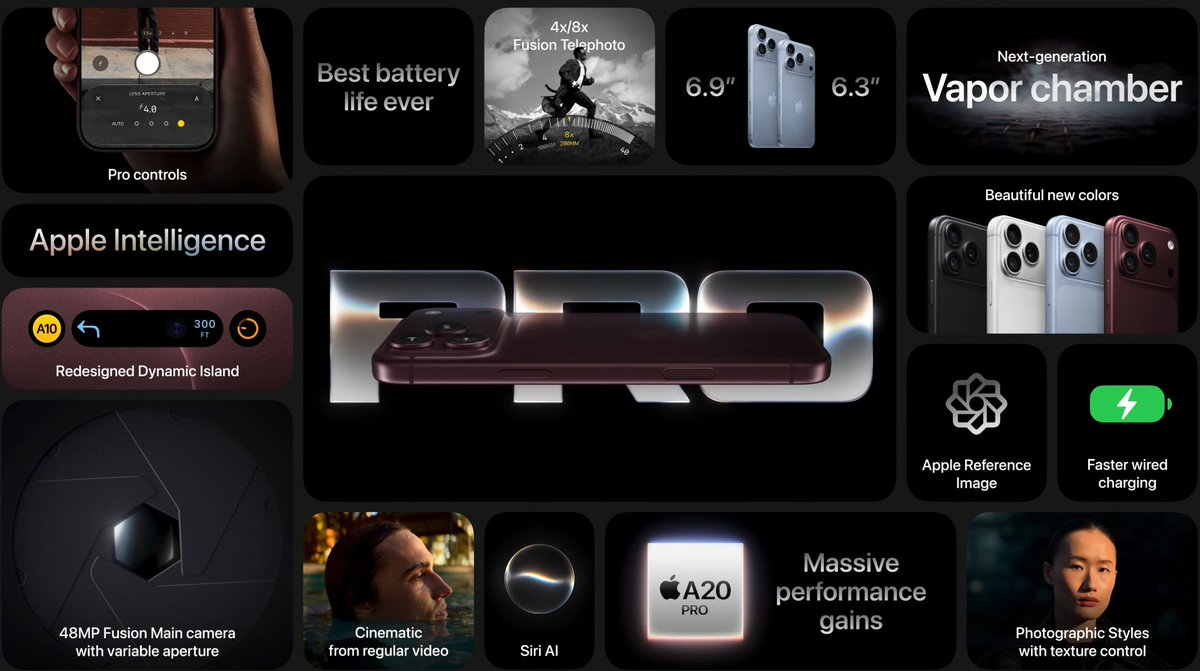
Apple introduced the iPhone 18 Pro and iPhone 18 Pro Max at its “Surprise and Shine” event, with battery life and charging speed as the headline upgrades. Reported specs from the launch put the Pro at up to 36 hours of video playback and the Pro Max at up to 45 hours, while Apple says a 15-minute charge can reach 50%.
The launch extends Apple’s push to keep the Pro line visibly ahead of the standard models. Beyond the A20 Pro chip, Apple is highlighting a variable-aperture main camera, a larger vapor-chamber cooling system and tighter integration with Apple Intelligence and Private Cloud Compute.
For investors, the announcement matters because AAPL still depends heavily on iPhone upgrade cycles and premium-tier mix. Any evidence that battery life, camera quality and on-device AI can justify higher-end pricing tends to matter not only for Apple shares but also for suppliers tied to the flagship refresh.
At this stage, the information is based on Apple’s event presentation and follow-up coverage rather than a post-launch correction. The core figures that were repeatedly confirmed are the 36-hour and 45-hour battery claims, the 15-minute-to-50% charging claim and the A20 Pro branding.
Apple unveiled the iPhone 18 Pro and iPhone 18 Pro Max on Sept. 9, setting U.S. starting prices at $1,199 and $1,299, respectively. Both models now start with 256GB of storage, and Apple added a 2TB configuration for the first time.
The launch lands against a backdrop of broader 2026 price increases across Apple’s product lines, as the company has been navigating a global memory shortage. That context makes the Pro lineup’s pricing a key signal for how Apple intends to balance premium positioning with component cost pressure.
For investors, the main takeaway is Apple’s ability to hold the high end of the iPhone lineup while adding higher-capacity tiers that can support average selling prices. AAPL remains the focal stock, while memory and handset-supply names will be watched for any read-through from demand and mix shift.
Apple said pre-orders begin on Sept. 12, with availability starting Sept. 18. The company also highlighted upgrade-plan pricing and trade-in offers as it looks to soften the impact of the higher sticker price.
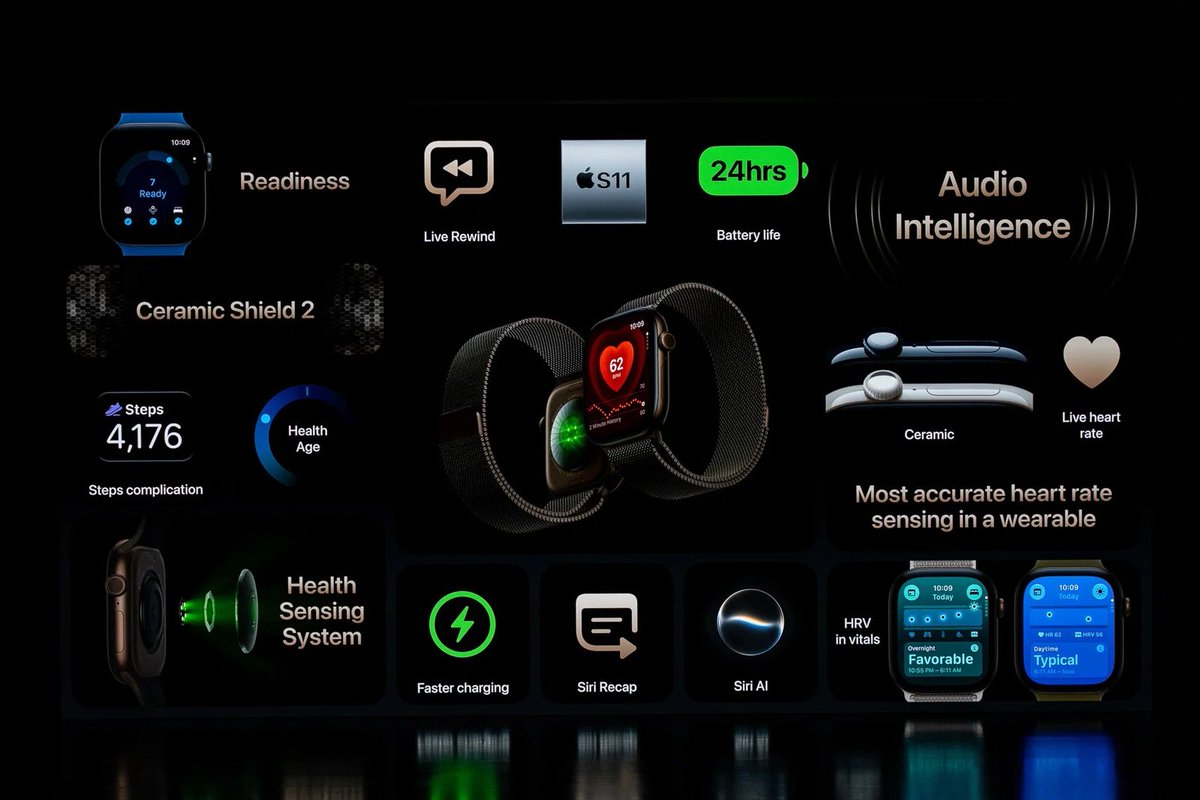
Apple unveiled the Apple Watch Series 12 and Apple Watch Ultra 4 on Sept. 9, adding new health-focused features including Health Age, Readiness, higher-frequency HRV sampling and new audio tools such as Live Rewind and Siri Recap. Preorders are open now, with both watches set to reach stores on Sept. 18; pricing starts at $399 for Series 12 and $799 for Ultra 4.theverge.com
The bigger story is Apple’s push to turn the Watch into a health analytics platform rather than a simple sensor device. Reporting from MacRumors says the new Health app will use Apple Intelligence for personalized guidance, while Health Age will combine watch metrics with broader biomarker data; Apple also plans to offer a Quest blood panel in the U.S. covering more than 50 biomarkers for $119 later this year.macrumors.com
For investors, the launch reinforces AAPL’s wearables and services thesis and raises the bar for competitors in smartwatches and digital health. The immediate watch will be whether the new sensors and software can justify premium pricing and drive adoption once the redesigned Health app rolls out later this year.tomsguide.com
Taiwan Semiconductor Manufacturing Co. said September 10 that August consolidated revenue rose to NT$514.81 billion, up 10.1% from July and 53.3% from a year earlier, setting a new monthly record. For January through August, revenue reached NT$3.38687 trillion, up 39.3% year over year.
The update extends TSMC’s run of strong sales momentum, helped by continued demand for chips used in AI applications. In its second-quarter earnings call, the company said AI-related demand remained “extremely robust,” and investors have been watching whether advanced-node capacity can keep pace with orders.
The revenue print matters for TSMC’s Taiwan-listed shares and U.S.-traded ADRs because monthly sales are often treated as an early read on quarterly performance. It also matters for AI chip customers such as Nvidia and AMD, whose supply chains depend on TSMC’s fabrication capacity and packaging throughput.
TSMC did not announce any new guidance or commentary on supply constraints in the monthly filing. The fresh data mainly reinforces the market’s focus on AI-driven demand rather than signaling any new corporate event.
Hunter Biden denied that he or his team profited from LAPTOP’s launch, saying the team’s allocation was locked and that no tokens were sold from their side. He blamed the sharp move on insufficient liquidity and sniper bots.
In a follow-up update, the project said there was no presale and no allocation to investors or influencers. It also said 4 million tokens, or 0.4% of supply, will be used as liquidity incentives on Aerodrome, and 10 million tokens, or 1% of supply, are slated to be burned in the first week.
Market data highlighted how extreme the debut was: CoinGecko showed LAPTOP around $0.8562 after the crash, while earlier reporting cited an intraday high near $190.81 and an FDV around $144 billion with roughly $48,000 in liquidity. Those figures reflect price discovery in an extremely shallow pool, not capital actually invested.
Trading analytics suggested the damage was broad, with Bubblemaps saying most wallets lost money and only a small set of traders turned a profit. The foundation’s X account suspension added to the communication disruption after launch.
Britain’s defence ministry said it has spent nearly $40 million on SpaceX satellite services, including about £13 million on Starshield and £16.5 million on Starlink. The ministry also said the UK now has roughly 1,000 Starshield terminals and 500 Starlink terminals.
The disclosure makes Britain the first country outside the U.S. to publicly acknowledge using Starshield. Reuters reported that the UK began using Starlink in mid-2022, started using Starshield airtime with existing Starlink terminals in 2024, and later bought dedicated Starshield terminals.
For SpaceX, the update underscores the growing importance of its government and national-security business, which is priced well above standard Starlink offerings. The ministry said Starshield plans in Britain include a £5,500-a-month 5TB package and a £25,000-a-month unlimited option, versus lower-cost Starlink business plans.
SpaceX did not respond to questions about which countries can access Starshield. The UK defence ministry said it turned to Starshield after SpaceX restricted Starlink to morale, welfare, recreation and training uses.
사건 전개
2026-08-05게시물 9개 · 작성자 7명
SpaceX reported Q2 2026 earnings with revenue of $7.81B, up 92% YoY, and a narrowed net loss of $541M, both beating estimates.
2026-09-10게시물 2개 · 작성자 2명
기업🔥진행 중
SpaceX reshuffles data-center team as 1.4 GW buildout faces a slower pace영어 원문
The Information says the company is reallocating staff from rocket and Starlink units; the move matters because AI compute delivery is tied to major customer contracts.
The Information reported that SpaceX is restructuring the team responsible for building and operating its data centers, including moving employees from its rocket and Starlink businesses into the unit. The report suggests the company’s expansion pace may be easing, though SpaceX has not publicly commented.
The backdrop is a rapid push into AI infrastructure. Earlier disclosures put SpaceX’s online capacity at roughly 1.4 GW, while the company has aimed to surpass 2 GW by year-end, underscoring how aggressively it has been scaling the business.
The market significance comes from the customer base: SpaceX’s data-center operations are tied to long-dated compute commitments with Google and Anthropic. Any delay in new capacity reaching service could affect revenue timing and raise execution risk across the platform.
For now, the new information is about organization and buildout strategy, not a formal change in demand or contracts. Investors will be watching whether the reshuffle translates into slower deployments or simply a reallocation of engineering talent.
사건 전개
2026-08-05게시물 12개 · 작성자 10명
SpaceX announced a partnership with Nvidia to design Starmind satellite datacenter payloads and disclosed over $295 million in Tesla Megapack purchases for Q2.
2026-08-13
기업
Meta reportedly loses Andrew Tulloch after $1.5 billion, 11-month AI hiring saga영어 원문
Semafor says the researcher is leaving after Muse’s launch, extending the scrutiny on Meta’s expensive AI talent push.
Meta is reportedly losing AI researcher Andrew Tulloch, with Semafor citing a person briefed on the matter who said he delayed his departure until after the company launched its open-source model family and Muse assistant. The report lands after earlier coverage that put Meta’s hiring pitch for Tulloch at as much as $1.5 billion over six years.
That saga dates back to 2025, when Meta was said to have tried to buy Thinking Machines Lab and then moved directly on Tulloch. Meta disputed the headline compensation figure at the time, calling it “inaccurate and ridiculous,” but Tulloch still joined Meta in October 2025.
For Meta, the issue is less about an immediate financial hit than about the credibility of its AI talent strategy. Tulloch worked in TBD Lab inside Meta Superintelligence Labs, and his exit adds to a string of personnel changes around the company’s AI push.
As of now, neither Tulloch nor Meta has explained the reason for the departure, and his next move is unknown. Thinking Machines Lab previously said he had chosen “a different path for personal reasons.”
Meta has acquired Swedish AI startup Stilla.ai to support development of Meta Business Agent, according to Axios. The startup said on its own site that it is joining Meta, while financial terms were not disclosed.axios.com stilla.ai
Stilla was founded in 2024 and raised $5 million in pre-seed funding when it emerged from stealth in January 2026. Axios also said Meta has said more than 1 million businesses now use Business Agent, underscoring the scale of the commercial messaging push the company is building on.axios.com
For Meta, the deal is another step toward embedding AI into merchant conversations on WhatsApp, Messenger and Instagram. The company has been working to make those chats more useful for transactions, support, and sales workflows, which keeps META in focus as a business software and platform story as much as an ad-tech one.axios.com
Neither side disclosed a purchase price. Stilla’s post confirmed the combination, but did not add more detail on integration timing or economics.stilla.ai
Salesforce has held talks to acquire Listen Labs, an AI customer research startup, for about $2 billion, according to Business Insider. The report says the discussions are ongoing and no deal has been finalized.
Listen Labs was founded in 2023 and uses AI to automate customer interviews and qualitative research for enterprise clients. Its customers include Microsoft, Google, Anthropic and Nestlé, and TechCrunch reported the startup had been pursuing a $125 million Series C at a $1.5 billion valuation after earlier raising at a $500 million valuation.
If completed, the acquisition would add a customer-insight layer to Salesforce’s agent strategy, especially around Agentforce and sales workflows. For CRM investors, the headline is less about revenue contribution today and more about whether Salesforce keeps paying up for AI capabilities that can be sold into its installed base.
Neither Salesforce nor Listen Labs has confirmed the talks publicly, and the terms could still change or the discussions could fall apart. The report remains a deal rumor until the companies disclose more.
기업🔥진행 중
Amazon opens ChatGPT ads to U.S. brands as OpenAI hits a $1 billion annualized ad run rate영어 원문
The deal marks a clearer monetization step for ChatGPT and gives Amazon advertisers a new conversational placement
Amazon has partnered with OpenAI to let selected U.S. brands run ads in ChatGPT, according to CNBC. The ads will appear as text or images beneath ChatGPT responses, and Amazon said campaign setup will be handled by its ad platform while OpenAI controls ad delivery decisions.
The move comes after OpenAI began selling sponsored placements in ChatGPT in February. CNBC said OpenAI’s ad business recently reached a $1 billion annualized revenue run rate, and OpenAI previously said ChatGPT had 900 million weekly active users.
For markets, the immediate relevance is to AMZN’s advertising reach and to broader sentiment around OpenAI’s monetization. Adobe was mentioned in separate reports about ChatGPT ad restrictions for competing AI products, but that remains a reported policy issue rather than a confirmed revenue hit.
Neither company disclosed pricing, inventory volume or rollout timing beyond the initial U.S. brand pilot. The partnership underscores how quickly ChatGPT is moving from an engagement platform to a paid media channel.
사건 전개
2026-08-01게시물 3개 · 작성자 3명
Amazon completed a $50bn investment in OpenAI for a ~5% stake, while DoorDash's CEO said it chose its AI side in 2021.
실적
Oracle heads into earnings with 11% options swing and $638B backlog영어 원문
AI spending, debt and backlog conversion are in focus as traders wait for proof that contracts can turn into cash
Oracle is set to report fiscal Q1 2027 results after Thursday’s close, and options markets are pricing an implied move of about 11% around the release. Traders are also paying up for calls relative to puts, signaling elevated demand for upside exposure into the print.
The backdrop is a company that entered earnings with a $638 billion remaining performance obligation as of May 31, 2026, while cloud infrastructure revenue rose 93% in the prior quarter. At the same time, Bloomberg reported that investors are questioning Oracle’s heavy debt load as it funds a broad AI infrastructure buildout.
For markets, the report matters beyond ORCL. The earnings call will be watched for backlog conversion, capex plans and financing detail, which could ripple across AI infrastructure names and the broader software-and-cloud trade.
So far, the key debate is not whether Oracle has demand, but whether it can convert that demand into cash flow without adding too much financing strain. That makes this one of the most closely watched earnings releases in the sector this week.
Ramp says top 1% firms cut AI spend nearly 10% in August, to $7,205 per employee영어 원문
The latest corporate spending data shows AI budgets are starting to diverge among heavy users, a shift that matters for model pricing and infrastructure demand.
Ramp’s latest AI index shows spending eased among the biggest users of artificial intelligence in August. The top 1% of firms by AI spend cut per-employee outlays by nearly 10%, to about $7,205, according to the data tracked by the corporate spending platform.
The reading comes as AI token prices have been falling and customers have been shifting toward cheaper, increasingly capable models. Ramp economist Ara Kharazian has argued that token usage is starting to behave more like a commodity, with businesses switching between providers when the economics improve.
For markets, the trend matters for AI model makers and the infrastructure trade. Slower spending growth could pressure revenue assumptions for OpenAI, Anthropic and other providers, while also feeding into expectations for demand across the Nvidia-linked compute supply chain.
The new data does not prove demand is collapsing. But it does suggest that enterprise buyers are getting more selective, and that lower prices may be altering how quickly AI spending converts into revenue growth.
Elon Musk said on X on Sept. 9 that AI plus robots will “more than double the global economy in less than 10 years.” The comment marks a more aggressive version of his earlier view that AI could lift global GDP by 20% to 30%, according to multiple reports that cited the post.
The backdrop is Anthropic’s extreme growth scenario, which the company described as a conditional model rather than a forecast. Musk has argued that the scenario becomes plausible only if humanoid robots reach mass production, extending the AI story from software into physical automation.
For markets, the statement keeps Tesla TSLA at the center of the “physical AI” trade, alongside investors’ broader interest in AI infrastructure and robotics. Tesla’s Austin Robotaxi program also remains in focus after reports that 45 Cybercabs were added to the fleet, giving the narrative a more tangible operating milestone.
Musk did not announce new guidance or a new product timeline in the post. The immediate question for investors is whether Tesla’s robotaxi and humanoid-robot plans can move from headline ambition to scale execution.
Multiple X posts and a Benzinga-linked tracker update indicate Michael Burry said on Sept. 9 that he is covering part of his shorts and cutting bearish exposure to Nvidia (NVDA) and CoreWeave (CRWV). The update also said he sold his December 2026 NVDA and PLTR puts, while leaving his 2027 PLTR and QQQ puts unchanged.
This does not amount to a full reversal. Earlier reporting showed Burry still maintaining longer-dated bearish positions and repeatedly criticizing AI capex, GPU financing and valuation excesses, while describing the coming months as an “interesting market this fall.”
For markets, the immediate read-through is sentiment rather than fundamentals: NVDA, CRWV, PLTR and QQQ are the names most directly tied to the adjustment. In CoreWeave’s case, recent contract wins and its volatile, retail-heavy trading profile raise the cost of staying short, even as Burry’s broader skepticism about AI infrastructure remains intact.
The verifiable takeaway is narrower than the social-media framing: Burry appears to be de-risking near-term exposure and preserving longer-dated downside bets. That makes this a portfolio-management update first, and a thesis change second.
Japan’s Ministry of Finance weekly securities flow data showed foreign investors bought a net ¥690.0bn of Japanese stocks in the week to Sept. 5, up sharply from ¥35.9bn the week before. Foreign investors also bought a net ¥449.6bn of Japanese bonds, down from ¥509.1bn previously.
On the outbound side, Japanese investors bought a net ¥111.9bn of foreign bonds, reversing the prior week’s ¥824.0bn net selling, while they sold a net ¥481.6bn of foreign stocks. The figures underscore how choppy Japan’s weekly cross-border portfolio flows remain.
For markets, stronger foreign buying into Japanese equities can support liquidity and sentiment in large-cap financial, export and cyclically sensitive names, while the swing in Japanese bond flows remains relevant for the yen and global duration pricing. Because the series is volatile week to week, traders usually treat it as a flow indicator rather than a standalone trend signal.
The latest print lines up with multiple fast-news wires and with the MOF’s weekly securities flow release. Investors will watch whether the next update confirms sustained foreign demand for Japan assets or merely a one-week repositioning.
Canada plans to present a pitchbook of 167 projects to global institutional investors at next week’s Canada Investment Summit, according to Bloomberg. The package spans data centers, advanced manufacturing, liquefied natural gas, ports and dozens of mines, with the total described as tens of billions of Canadian dollars.
The move fits Ottawa’s broader effort to court private capital for large-scale domestic investment. Canada’s own industry data show private capital has already been deployed widely across the country, while infrastructure investors have been expanding into energy transition, digital infrastructure and transport assets.
In the market, the clearest read-through is for Canada-linked digital infrastructure names such as HIVE Digital Technologies and Hut 8, which investors often use as proxies for domestic AI and compute buildout themes. HIVE’s latest disclosure that BUZZ HPC surpassed $1 million in average daily revenue is adding to that narrative.
For now, the key new information is the scale and breadth of the proposed investor pitch, not a finalized funding deal. The government has not yet detailed individual project commitments, so the event should be read as a capital-marketing step rather than a signed investment package.
TotalEnergies and its partners plan to invest $10 billion in Angola’s oil sector over the next five years, Chief Executive Patrick Pouyanné said in Luanda. The spending is intended to help sustain production across the company’s Angolan portfolio.
The announcement builds on Reuters reporting from Sept. 9 about the same investment plan and comes a day after Reuters said TotalEnergies had flagged a new oil discovery in Angola and signed agreements for two new exploration blocks. Reuters said TotalEnergies produces about 450,000 barrels per day in Angola, or more than 40% of the country’s output.
For investors, the key ticker is TTE, with the focus on capital intensity, reserve replacement and the company’s role as Angola’s largest oil operator. TotalEnergies also said it is developing the $6 billion Kaminho project, due to start production in 2028, while Angola continues efforts to hold national output near 1 million barrels a day.
TotalEnergies said it had signed two new exploration licences for offshore Block 17 and Block 32 in partnership with Exxon Mobil. The company also plans an artificial-intelligence geoscience initiative to support exploration in Angola’s offshore basins.
Angola’s oil and gas regulator ANPG, ExxonMobil and partners in Block 15 said on Sept. 9 that they had made a new offshore discovery at the Vicango East-01 well. Publicly available details indicate the well is roughly 370 km northwest of Luanda and was drilled in about 940 meters of water by the Valaris DS-9 rig.
The announcement adds to Block 15’s long exploration record. ANPG’s website carried the same disclosure on Tuesday, and industry reporting has described the block as having produced a string of discoveries over time, underscoring its importance to Angola’s upstream sector.
For ExxonMobil, the news reinforces the company’s exploration footprint in Angola and keeps attention on future reserve additions rather than immediate production changes. For investors, the key missing pieces remain the commerciality, recoverable volumes and any development timetable, none of which have been disclosed so far.
ANPG has not published a reserve estimate or startup schedule yet. Reuters reported the joint announcement, but did not provide further technical or financial details on the find.
Michael Dell told a Goldman Sachs conference that PC replacement demand should accelerate as older machines reach the end of their useful lives. He also said AI is opening up “enormous” development capacity, accelerating new features and capabilities across the company’s portfolio.
The comments follow Dell’s latest earnings release, which showed fiscal second-quarter revenue up 58% to $47 billion and non-GAAP EPS of $7.04. Dell also lifted full-year revenue guidance to $192 billion and guided fiscal third-quarter revenue to a midpoint of $49 billion.
AI remains the key growth engine. Dell said it booked $60.9 billion in AI orders in the quarter and ended with a $95 billion AI backlog, while broader server, storage and PC revenue also grew strongly.
For investors, the remarks reinforce Dell’s dual narrative: AI infrastructure demand on one side and a potential PC refresh cycle on the other. That keeps DELL in focus, along with server, storage and PC supply-chain peers.
기업
AMAT says services grow over 20% and packaging tops 70%영어 원문
Applied Materials updated investors on AI-driven demand at Goldman Sachs, with services and advanced packaging emerging as the fastest-growing pockets.
Applied Materials CEO Gary Dickerson said at Goldman Sachs’ Communacopia + Technology Conference that the company’s services business is growing more than 20% year over year, with service margins up 180 basis points. He also said advanced packaging is expected to grow more than 70% this year.
The comments extend a series of guidance upgrades already made this year. Earlier public remarks showed Applied raising its 2026 revenue-growth outlook from above 20% in February to above 30% in May, and more recently toward about 40% growth, as AI-related demand accelerates across the business.
For investors, the update keeps AMAT squarely in the AI infrastructure trade, especially through advanced packaging and service revenue. The read-through also matters for other semiconductor equipment names and for memory and packaging suppliers tied to data-center buildouts.
Dickerson also said Applied has more than 37,000 chambers connected to AI-enabled servers in the field and that advanced packaging is expected to generate $2 billion to $3 billion in revenue at the midpoint of its forecast range. The company did not name specific customers.
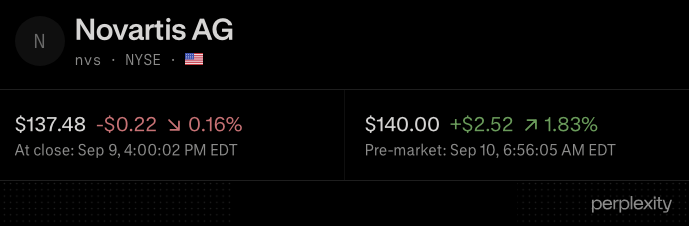
Artisan Partners, one of Novartis’ major shareholders, is publicly pressing for a board shake-up and tighter oversight of dealmaking. David Samra said successive chairmen had not done enough on acquisitions, sharpening the governance debate around the Swiss drugmaker.
The push comes after Novartis suffered two closely watched clinical setbacks this week, including a late-stage failure in a muscle-wasting program tied to its Avidity deal and disappointing results for pelacarsen. Reuters reported that the selloff wiped nearly $30 billion off Novartis’ market value.
Investors are now looking beyond the individual trial readouts and into how Novartis evaluates acquisitions, structures board accountability and designs compensation. That makes the shareholder campaign a potentially broader test of confidence in the company’s capital-allocation framework.
Novartis said its financial guidance was unchanged and reiterated that it remains disciplined in capital allocation, balancing internal investment, bolt-on deals, dividends and buybacks. The company also said its pipeline remains broad.
AeroVironment reported fiscal first-quarter revenue of $480.5 million, beating the $456 million consensus estimate, while adjusted EPS came in at $0.59 versus $0.25 expected. The company also said funded backlog reached $1.5 billion, up 37% year over year.
The latest results build on a strong prior quarter. In fiscal Q2 2026, AeroVironment posted $472.5 million of revenue, later finished fiscal 2026 with $1.9768 billion in annual revenue, and issued fiscal 2027 revenue guidance of $2.125 billion to $2.225 billion.
For investors, the key questions remain order visibility and post-acquisition execution. AVAV is the central stock in this story, and the BlueHalo acquisition continues to shape both the revenue mix and the profitability profile as defense-drone demand stays elevated.
Company releases and follow-up reports have confirmed the headline figures and guidance, with no reported denial of the quarter’s results. The market debate now centers on valuation and operating leverage rather than the numbers themselves.
Macy’s reported second-quarter 2026 net sales of $4.9 billion, up 1.1% from a year earlier, and adjusted earnings per share of $0.63, ahead of Wall Street expectations. The department store chain also raised its full-year outlook for sales and profit on Sept. 10.
The strongest momentum came from its upscale banners. Bloomingdale’s posted 11.3% comparable-sales growth, its best second-quarter sales volume on record, while Bluemercury rose 6.2%. Overall comparable sales increased 2.7%, marking a fifth straight quarter of gains.
Investors welcomed the update, with Macy’s shares up about 5% in premarket trading after the release. The company’s upgraded guidance points to net sales of $21.675 billion to $21.825 billion and adjusted EPS of $2.15 to $2.35 for fiscal 2026.
Macy’s also said it had received $116 million in expected tariff refunds, including $98 million in the quarter and $18 million after quarter-end. Management said about $20 million of that total will flow through to full-year EPS, while the rest will be reinvested in the business.
American Eagle Outfitters reported fiscal second-quarter revenue of $1.38 billion, up 8% year over year, with total comparable sales rising 6%. But the market focused on a softer core-brand performance: American Eagle comparable sales fell 1%, even as Aerie comparable sales climbed 19%.
The company said it is still clearing older inventory with discounts, while inventory costs rose 14% from a year earlier, including incremental tariff effects. Reuters also reported that management expects current-quarter gross margin to be flat versus a year earlier.
Shares were indicated down about 14.4% premarket in the X signal, while Reuters reported a drop of more than 11% in premarket trading after the company guided to a flat gross-margin outlook. American Eagle reiterated its annual sales forecast and raised fiscal 2026 operating income guidance to $540 million-$550 million, inclusive of a net tariff refund benefit.
The read-through matters for apparel retailers broadly because the results point to uneven consumer demand, heavier discounting and higher inventory pressure. For AEO specifically, investors are weighing strong Aerie momentum against a slower recovery at the namesake brand.
The UK publicly acknowledged adopting SpaceX's Starshield military satellite services with nearly $40 million in spending, becoming the first non-U.S. country to do so.