Brent crude climbed above $100 a barrel on Sept. 9 for the first time since July, while West Texas Intermediate traded around $94. Several live market reports showed Brent pushing through $99 before clearing the round-number threshold.
The move comes as tensions in the Middle East escalate again, with traders reassessing the risk of disruption to oil flows and shipping lanes. Reuters said concerns centered on the Strait of Hormuz and the Red Sea, both critical routes for global crude movement.
Higher crude prices tend to ripple through airlines, transport, chemicals and consumer goods, while also lifting energy shares and adding pressure to inflation expectations. CNBC reported that the latest breakout put oil markets back at the center of macro and sector trading.
So far, the reports focus on the price move and the geopolitical backdrop rather than any single company-specific catalyst. Market participants are watching whether supply conditions deteriorate further in the days ahead.
Brent crude futures briefly climbed above $100 a barrel on Wednesday, the highest level since July. Multiple reports citing U.S. military statements said American forces destroyed five Iranian oil tankers overnight after an attack on a U.S. warship.
The move comes amid a broader deterioration in Middle East security, with earlier attacks by Iran-backed Houthis on Saudi energy facilities and repeated strikes around key shipping lanes adding to supply concerns. Traders are now weighing the risk that crude flows through the region could be disrupted further.
Energy equities and fuel-intensive industries are likely to remain sensitive to every new headline in the Gulf. Reuters reported Brent at $100.07 a barrel and WTI at $94.73, while market commentary from CNBC said the escalation is lifting the odds of a sustained move into triple-digit crude.
The U.S. account says five vessels were destroyed and no American personnel were hurt. Any additional response from Iran was not immediately confirmed in the reports reviewed.
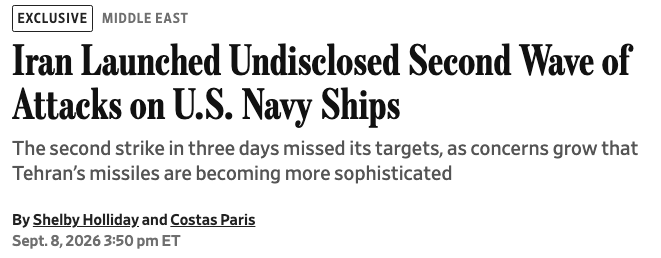
The Wall Street Journal reported that Iran launched a second, previously undisclosed attack on U.S. Navy ships on Monday, including against destroyers, but did not hit any American vessel. The U.S. military has not publicly acknowledged the strike so far.
The report extends a fast-moving maritime tit-for-tat. Reuters said Iran’s Revolutionary Guard also claimed missile strikes on a U.S.-used base in Jordan and attacks on 10 ships, while U.S. Central Command said it had destroyed five Iranian oil tankers in response.
Markets tend to react quickly to any escalation around the Strait of Hormuz, with crude oil and tanker-shipping names typically most exposed. After the latest reports, oil prices firmed as traders weighed the risk of further disruptions to energy flows.
Jordan’s military said it intercepted 18 of 20 ballistic missiles, with no casualties. WSJ, citing U.S. officials, said no U.S. ships were hit in either the weekend strike or Monday’s second wave, underscoring how close the exchange has been without confirmed damage to U.S. vessels.
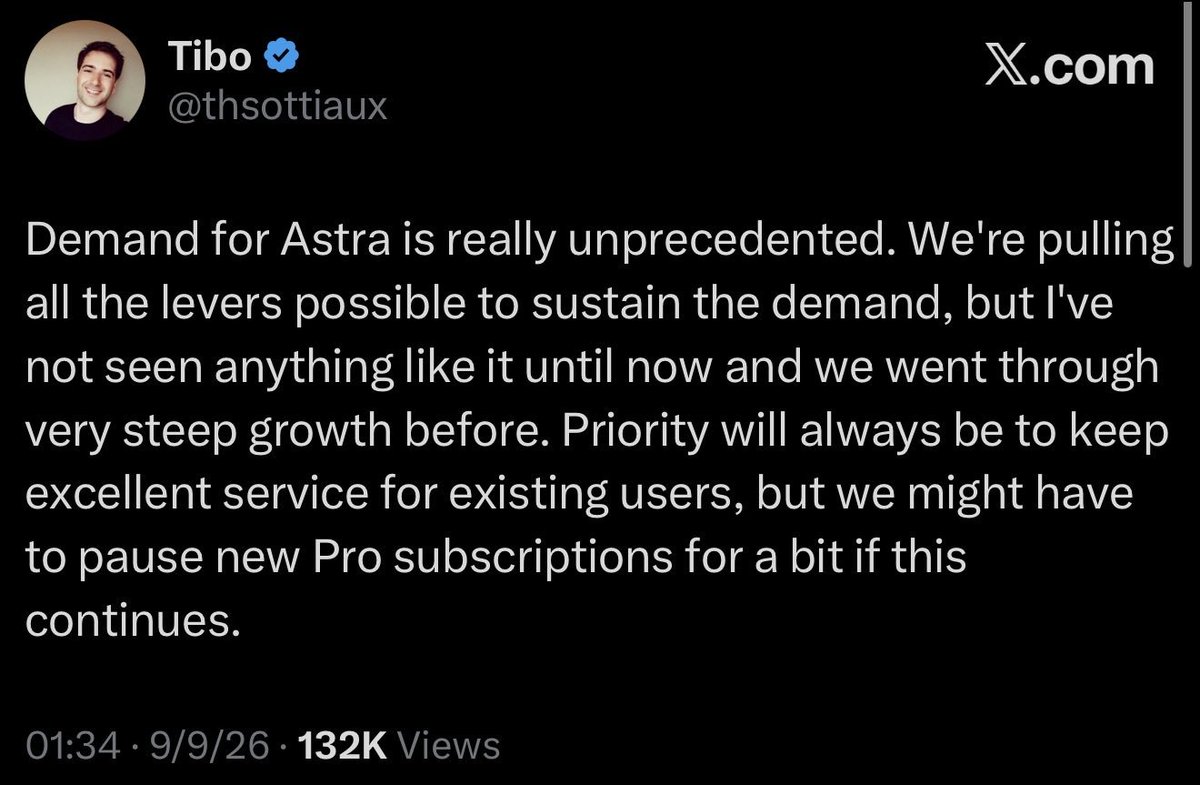
OpenAI core product lead Thibault Sottiaux, known as Tibo, said on X that demand for GPT-6 Astra has been “unprecedented” and that the company is deploying all available resources to keep up. He added that if growth continues, OpenAI may temporarily suspend new Pro subscriptions.
The model itself is not new, but the warning is. By flagging a possible pause in new paid signups, OpenAI is signaling a supply-side strain rather than a product-launch moment, pushing attention back to inference capacity, memory bandwidth and data-center power.
The market read-through centers on AI infrastructure names, especially Micron (MU) and the broader HBM/server DRAM supply chain. Investors are also watching whether OpenAI’s prioritization of existing users translates into tighter demand for GPUs, storage and electricity.
OpenAI’s stated position remains limited to protecting service quality for current users; no formal suspension has been announced. The market is reacting to a conditional warning, not a confirmed policy change.
OpenAI says 10,000 agents solved Navier-Stokes in 88 hours영어 원문
The company says a new model produced a proof and verified it in Lean, putting frontier AI capabilities back in the spotlight for researchers and investors alike.
OpenAI said today that an unreleased next-generation model, working with roughly 10,000 AI agents, produced a proof for the Navier–Stokes Millennium Prize problem in 88 hours. The company also said the result was formally verified in Lean, though the claim remains a company disclosure pending broader independent review.
The Navier–Stokes problem is one of the Clay Mathematics Institute’s seven Millennium Prize Problems and asks whether smooth 3D fluid flows can develop singularities in finite time. What makes the announcement notable is not a prize award, but the combination of multi-agent coordination, long-horizon reasoning and formal verification in a single benchmark case.
For markets, the immediate read-through is to the AI compute and platform complex, with investors likely watching Microsoft MSFT, Nvidia NVDA and Alphabet GOOGL for any spillover into model demand, infrastructure spending and developer adoption. These names are often the first to trade on major frontier-AI headlines, especially when they imply larger training and inference budgets.
OpenAI has not, in the material at hand, published a full paper, code repository or outside validation package. Some follow-up reports say the company denied using other researchers’ work, but the claim is still best viewed as a major technical announcement rather than a settled mathematical result.
Multiple reports say Apple is poised to unveil its first foldable iPhone at its Sept. 9 product event, with pricing expected to top $2,000. Bloomberg put the device at roughly $2,000, while Reuters said Apple is widely expected to introduce a pricey folding phone in Cupertino.
The launch would mark Apple’s entry into a segment long led by Samsung and Huawei, and it would give new CEO John Ternus his first marquee product moment. Bloomberg also said the company’s summer rally has lifted expectations heading into the event.
Investors are watching AAPL for signs that a premium foldable can extend Apple’s product cycle without sacrificing margin discipline. A price around $2,000 would place the device at the very top of the smartphone market.
Apple has not publicly confirmed the foldable iPhone’s specs or final pricing. Until the company speaks, the reports remain pre-launch indications rather than official product details.
Multiple crypto outlets reported that Hunter Biden’s $LAPTOP token sold off sharply after launch, with Coin Bureau saying it fell from nearly $200 to $4.36 in the first hour, a 97.8% drop. Other trackers said the token was down close to 99% within two hours of trading.
Biden publicly confirmed the memecoin ahead of its Sept. 9 debut on Base. Prior disclosures said the token has a fixed supply of 1 billion, with 35% unlocked at the token generation event, 20% earmarked for airdrops, and 30% tied to a pre-programmed mechanism; the whitepaper also says it has not been approved by any EU competent authority.
The trading backdrop appears thin. Reports said the official Aerodrome pool held about $83,000 in USDC and the Uniswap pool roughly $380,000, leaving the token vulnerable to outsized moves on limited size.
Biden’s project says 30% of supply is linked to 30 real-world outcomes, with tokens burned if a listed prediction resolves “yes” and donated to charity if it resolves “no.” Those disclosures come from the project and media coverage, and do not amount to a recommendation or a valuation view.
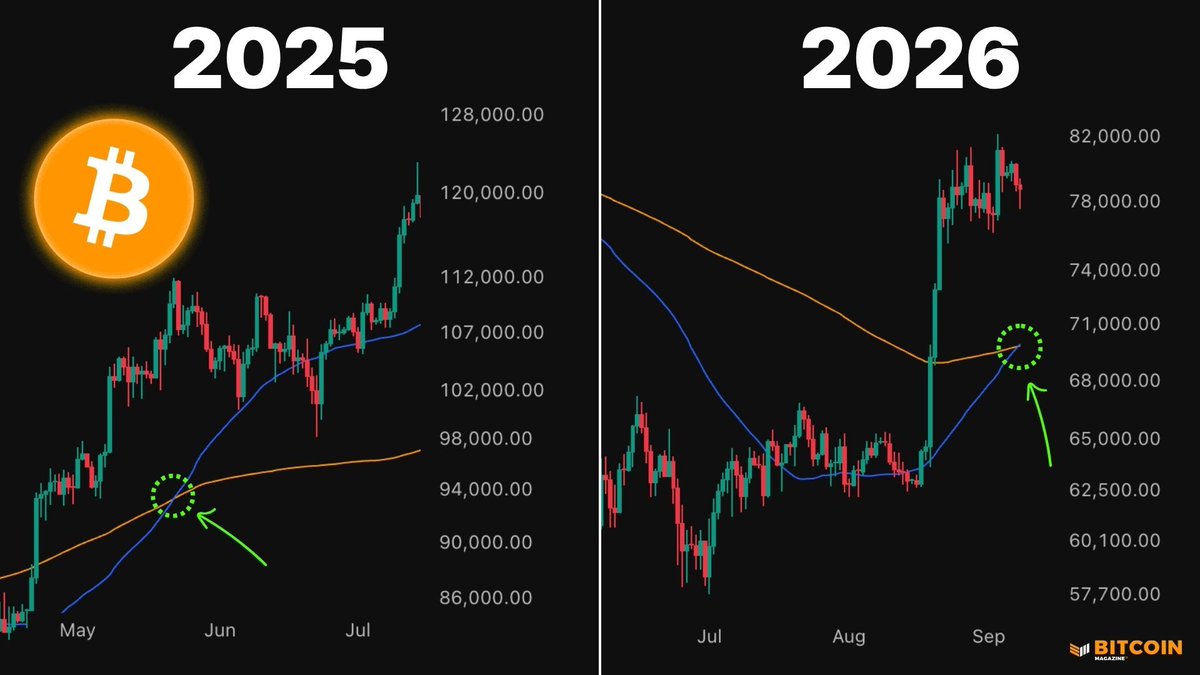
Bitcoin has flashed a golden cross, with the 50-day average moving above the 200-day average, according to multiple crypto-market reports published on Sept. 9. The setup is being paired with roughly $3.8 billion in net inflows into U.S. spot Bitcoin ETFs over the past three weeks.
The signal matters because traders often treat a golden cross as a medium-term trend confirmation. But it is also a lagging indicator: since 2012, Bitcoin has logged 12 such crosses, with an average three-month gain of 24.9%, while only a minority stayed intact for a full year.
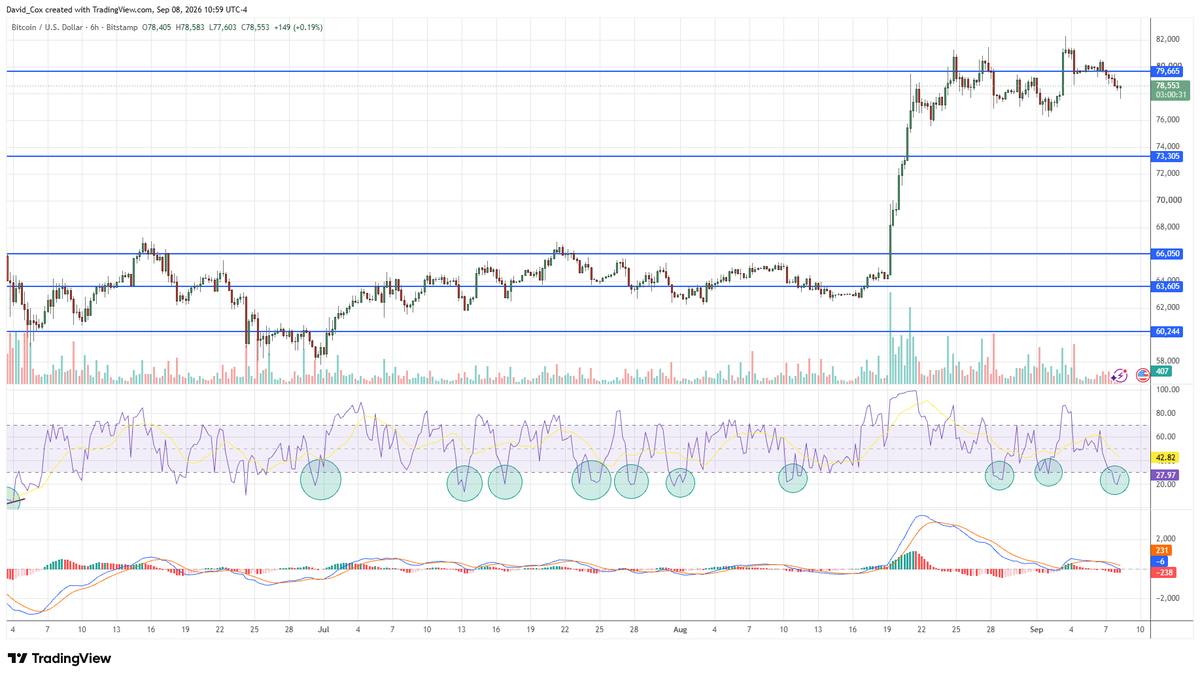
ETF flows are the biggest market backdrop to watch, especially for products such as IBIT. At the same time, Bitcoin was still trading around the high-$70,000s on Sept. 8, showing that rate-hike odds and short-term selling pressure remain part of the story.
No source cited a denial of the moving-average crossover itself, but there are small wording differences across reports on whether the signal is a 50-day EMA or 50-day moving average. The fund-flow and price data are the most consistently corroborated pieces across the reporting.
사건 전개
2026-07-13게시물 4개 · 작성자 4명
A trader warns Bitcoin could fall to $54K if $60K breaks, while debates emerge over node costs versus hard drive price declines.
규제
Block seeks OCC trust charter for Bitcoin and stablecoin custody영어 원문
The Jack Dorsey-led company is trying to bring digital-asset custody under a federal framework, pending approval.
Block said it has applied to the U.S. Office of the Comptroller of the Currency to create Builders Bank & Trust, an uninsured national trust bank focused on custody and fiduciary services for Bitcoin, stablecoins and other digital assets. The proposed entity would not take deposits or make loans, according to the company statement.
The filing adds Block to a growing list of crypto and fintech firms pursuing national trust charters. Public reports say the same regulatory lane has also drawn Circle, BitGo, Ripple, Kraken parent Payward and Zerohash, underscoring the industry’s push for a single federal supervisory framework rather than a patchwork of state licenses.
Bitcoin’s reaction was muted, with reports putting the token near $78,900 at session highs before easing toward about $78,000 on Sept. 8. That limited move suggests investors viewed the filing as an application, not an approval, leaving the OCC decision as the real near-term milestone.
Block said Lee Woolley, its digital asset strategy lead, would become president and CEO if the charter is granted. The company also said the proposed bank would build on its digital-asset work and experience with Square Financial Services.
U.S. Bank has completed an initial live test of its proprietary dollar-backed stablecoin, USBDC, in a cross-border payment between its North American and European operations. Multiple crypto and finance accounts said the transfer ran on the Stellar network and remained connected to the bank’s compliance framework.
The move extends U.S. Bank’s previously disclosed work on stablecoins and tokenized payments. Earlier reporting from American Banker and PYMNTS said the bank was already testing stablecoin issuance and related controls such as asset freezes and transaction reversals, while treating blockchain as an alternative payment rail.
For the market, the headline puts a bigger spotlight on Stellar’s institutional payments pitch and on the broader race among banks to build stablecoin infrastructure. Any eventual commercialization could benefit payments, custody and compliance vendors, but U.S. Bank has not given a timetable for a broader rollout.
So far, the new evidence is mostly coming from social-media reposts of the same event, rather than from a full bank release. What is clear from prior reporting is that U.S. Bank had already been exploring Stellar because of its compliance-oriented features and bank-grade settlement design.
사건 전개
2026-07-12게시물 7개 · 작성자 7명
Custodia Bank petitioned the Supreme Court over Fed payment access denial, while Europe sought private credit risk disclosures that the US rejected.
매크로🔥진행 중
U.S. Treasury lifts buyback size to $6 billion before 10-year auction영어 원문
The expanded September 10 operation marks a bigger-than-expected step in Treasury’s effort to steady the long end of the curve and manage longer-dated supply.
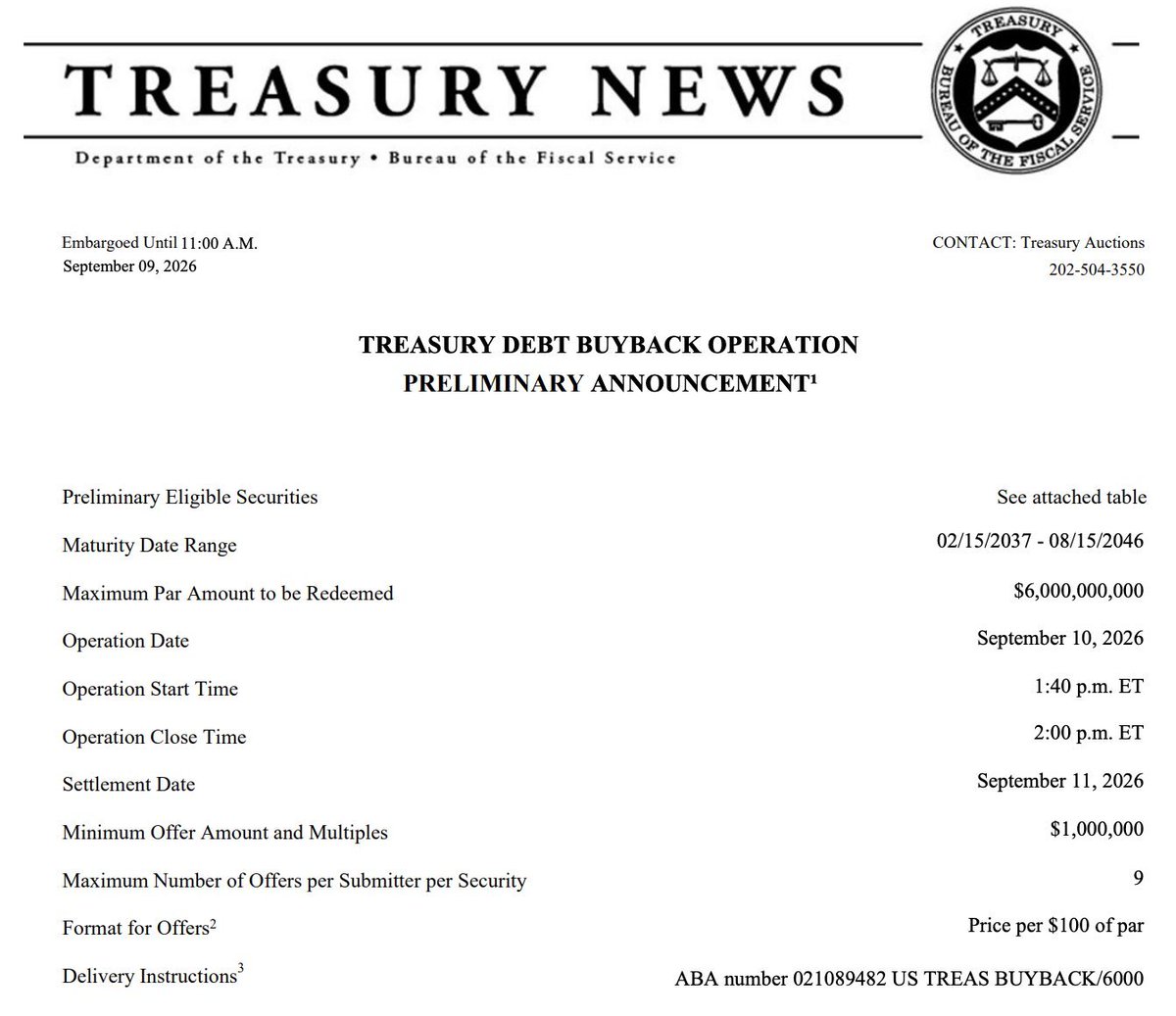
The U.S. Treasury said it will conduct a buyback operation of up to $6 billion in 10- to 20-year securities on September 10. That is above the previously familiar $4 billion cap and comes ahead of this week’s 10-year and 30-year auctions.
The move extends Treasury’s recent push to use buybacks as a tool to ease pressure on the long end of the curve. Treasury Secretary Scott Bessent previously said the program could be larger than $4 billion and argued that longer-dated yields were not reflecting fundamentals.
For the bond market, the size matters because it affects net supply in the 20-year-plus sector. Larger buybacks generally support prices at the long end, while a smaller-than-expected operation could disappoint traders and keep focus on yields.
Treasury has not yet provided additional detail on whether the program will be further expanded or how the repurchases will be funded. Investors will be watching the operation’s impact on IEF and other long-duration rate-sensitive assets.
사건 전개
2026-07-13게시물 5개 · 작성자 4명
Reports emerged that Treasury Secretary Bessent was fielding calls to run for South Carolina's Senate seat, alongside discussion of global asset tokenization.
시장🔥진행 중
U.S. 10-year yield closes at 4.7942% as $58 billion 3-year auction clears at 4.474%영어 원문
Treasury yields kept rising after August payrolls, with firmer oil prices and heavy supply adding pressure to duration.
U.S. Treasury yields extended their climb on Tuesday, with the 10-year note ending New York trading at 4.7942%, the 2-year at 4.3915% and the 30-year at 5.2518%. The market was still digesting Friday’s August nonfarm payrolls report, which showed 162,000 jobs added versus expectations for 56,000.
Oil prices added to inflation anxiety, with Brent briefly topping $99 a barrel and WTI trading above $94 intraday. The Treasury Department also sold $58 billion of 3-year notes at a 4.474% high yield, the highest since June 2024, with a bid-to-cover ratio of 2.72.
Short- and intermediate-dated Treasuries bore the brunt of the selloff, while investors looked ahead to this week’s PPI and CPI releases and upcoming 10-year and 30-year auctions. The move came alongside broader global fixed-income pressure, including a record-high 30-year gilt auction yield in the UK.
Market participants cited a mix of stronger labor data, rising energy prices and supply digestion as the main drivers of the move. The result left the 10-year yield near the 4.8% area and kept attention fixed on whether upcoming inflation data will confirm the latest repricing in rates.
사건 전개
2026-07-13
기업
Meta launches Muse: App Store No. 4 in under 24 hours, with $300,000 bug bounties영어 원문
The personal AI agent can handle emails, travel and shopping, while Meta pairs the launch with stronger security controls to address privacy questions.
Meta unveiled Muse on Sept. 8 as a personal AI agent that can take actions across apps and the web, including sending emails, booking travel, filling out forms and making purchases with user approval. The product is built to keep working after the app is closed and will extend to Meta AI glasses.
The launch lands amid persistent concerns over AI-agent privacy, reliability and prompt-injection risks. Reporting from Bloomberg and CNBC framed Muse as part of Meta’s broader push into consumer AI while the company simultaneously rolled out a public bug bounty program for critical security flaws.
X posts said Muse reached No. 4 on the App Store within less than 24 hours and that early usage was running well above Meta’s test cohorts. That kind of consumer traction matters for Meta’s stock because successful AI agents could deepen engagement across its apps, commerce surface and identity graph, but any security failure would raise regulatory and reputational risks.
Meta has not disclosed final user adoption or monetization metrics for Muse. Still, the company’s decision to pair the launch with a dedicated secure environment and a six-figure bounty program suggests it is treating safety as central to the product rollout.
Google said it will invest at least €13 billion ($15.1 billion) in Finland over the next two years, its largest single investment in Europe. The plan covers AI infrastructure, data centers, grid upgrades, and clean-energy and battery projects.
The move underscores how Finland has become a favored location for data centers thanks to cold weather, abundant low-carbon power, and grid advantages. Google also disclosed a 22-year power purchase agreement with Fortum, plus support for 629 MW of new onshore wind capacity and a 94 MW battery system to help balance the grid.
For Alphabet, the spending reinforces its push to expand AI capacity behind products such as Gemini, Search, Maps, and YouTube. For investors, the focus is on how rising capital expenditure may affect near-term margins, while energy partners such as Fortum gain a longer-term demand anchor.
Google said the project is expected to support local jobs and economic activity during construction and beyond. The company called it its largest investment in Europe to date.
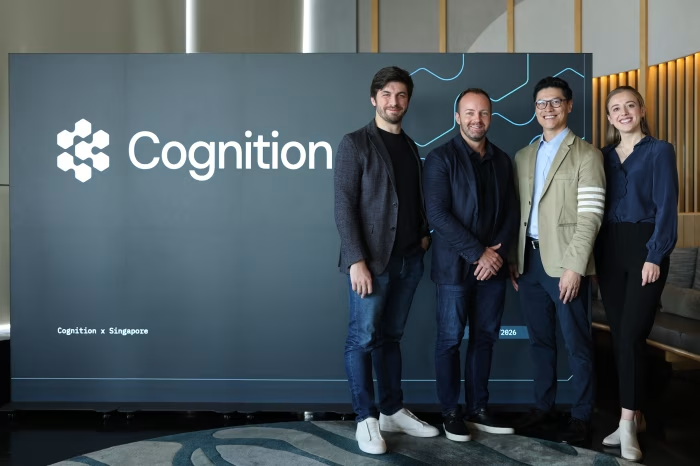
AI coding startup Cognition AI said on September 8 that it raised more than $2 billion in fresh funding at a $48 billion valuation. The round was led by Andreessen Horowitz, Accel, Founders Fund, General Catalyst and Avenir, according to the company and multiple reports.
Cognition said its annualized run-rate revenue climbed from $492 million in May to nearly $900 million by the time of the new deal. That figure is company-reported and unaudited, but it highlights how aggressively investors are still backing AI coding tools.
The funding keeps attention on the AI software race, where investors are comparing Cognition with rivals such as Cursor and watching whether the category can support multiple large winners. Nvidia’s participation also reinforces the close capital ties between AI infrastructure and application-layer startups.
Cognition said major customers include Mercedes-Benz, NASA, Goldman Sachs and Citi. Bloomberg and TechCrunch reported that the company’s earlier May round valued it at $26 billion, underscoring how quickly its valuation has risen this year.
사건 전개
2026-08-20게시물 3개 · 작성자 3명
SpaceX reportedly attempted to acquire AI coding startup Cognition, ultimately pursuing a $60B deal for Cursor instead.
기업🔥진행 중
Pelosi’s August Bloom Energy buy drew fresh attention as BE joins the S&P 500 on Sept. 21영어 원문
X chatter focused on the newly resurfaced trade and the index upgrade, keeping Bloom Energy at the center of an AI-power rally narrative.
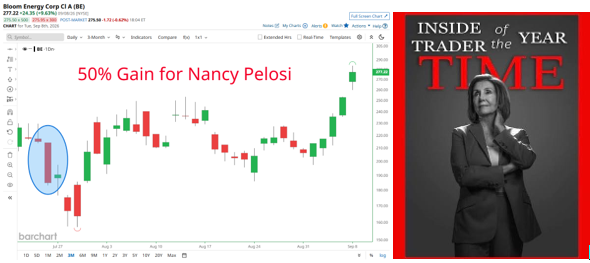
New X posts say Nancy Pelosi’s household trade in Bloom Energy (NYSE: BE) is back in the spotlight after S&P Dow Jones Indices confirmed the stock will join the S&P 500 on Sept. 21. Some posts also pointed to a newly discussed August filing and estimated a fresh $6 million buy, though the underlying disclosure on the record dates back to late July.
The earliest public trail for the trade line goes to a House periodic transaction report filed on Aug. 21, which disclosed purchases on July 24 and July 28, including common stock and call options. On Sept. 4, S&P Dow Jones Indices announced Bloom Energy would be added to the benchmark on Sept. 21.
Bloom Energy has become one of the market’s most-watched AI power names, as investors trade the theme of on-site electricity for data centers. Zacks also flagged BE as part of last week’s leveraged-ETF rally tied to AI infrastructure and data-center power stocks, underscoring how quickly the name has migrated from niche fuel-cell story to momentum trade.
Bloom Energy has not issued a fresh response on Pelosi’s trade specifically. For now, the market story is about the S&P 500 addition, the earlier disclosure timeline, and whether the stock’s recent surge leaves room for more volatility around the index event and pending litigation notices.
사건 전개
2026-08-24
시장🔥진행 중
Bloom Energy tops $280, gains more than 11% on S&P 500 inclusion영어 원문
The index move could trigger passive buying as investors continue to price BE as an AI power infrastructure play.
Bloom Energy shares briefly climbed above $280 on Tuesday, rising more than 11% as the market kept reacting to the company’s addition to the S&P 500. S&P Dow Jones Indices said Bloom Energy will join the index before the open on Sept. 21.
The move comes amid a broader rerating of Bloom Energy as an AI data-center power supplier rather than only a fuel-cell maker. The company said second-quarter revenue topped $1 billion for the first time, and it lifted full-year revenue guidance to $3.9 billion-$4.2 billion.
For trading, the S&P 500 inclusion matters because index funds and other benchmark-tracking vehicles typically need to buy the stock to reflect the new composition. That helps explain why BE has stayed in focus alongside other AI infrastructure names.
Earlier coverage also noted that BE had already rallied sharply this year, with one report putting its 2026 gain at roughly 183% and its Tuesday intraday price at $278.86. The latest jump extends that momentum rather than starting a new catalyst on its own.
사건 전개
기업
Dow weighs exit from $20 billion Aramco chemicals venture영어 원문
Bloomberg says Dow is reviewing a portfolio overhaul as industry weakness drags on; the move could reshape a key Middle East exposure
Dow is considering an exit from its roughly $20 billion chemicals partnership with Saudi Aramco, according to a Bloomberg report on Sept. 9. Reuters also carried the story, saying the U.S. company is exploring options as it works to reshape its portfolio amid a prolonged downturn in the industry.
The venture sits under the Sadara Chemicals umbrella, a project that has already appeared in Dow’s financial disclosures. In its first-quarter 2026 filing, Dow recorded a $292 million pretax charge tied to the fair-value change in its Sadara guarantee liability.
The market reaction was immediate: Dow shares were indicated up about 3.5% premarket. Investors are watching whether any separation from the joint venture would change Dow’s exposure to future capital needs, contingent liabilities and earnings volatility.
For now, the report remains a sourced consideration rather than a confirmed transaction. Neither Dow nor Saudi Aramco had publicly detailed a deal structure or timing in the cited reports.
Qualcomm CFO Akash Palkhiwala said the company expects to begin recognizing revenue from Amazon in the December quarter and expressed “very high confidence” in roughly $5 billion of data-center revenue in fiscal 2027. Multiple live reports also said chips are already in production and purchase orders are in hand.
The update matters because it moves Qualcomm’s data-center strategy from customer wins to execution. Amazon’s role is especially important: hyperscaler demand is a major test of whether Qualcomm can turn custom AI silicon into a meaningful business beyond mobile and automotive.
For investors, the immediate focus is on QCOM’s ability to convert the pipeline into recurring revenue and on AMZN’s continued use of custom silicon across cloud infrastructure. The disclosure also suggests Qualcomm’s AI revenue mix could diversify faster if deployment and qualification stay on schedule.
So far, the details appear to come from the CFO’s remarks rather than a standalone joint filing, and neither company has publicly laid out full contract terms in the cited reports. The market will be looking for more granularity on order size, shipment cadence and whether the Amazon deal is part of Qualcomm’s broader multi-year data-center target.
Amazon has launched its first sterling bond sale, a four-part offering with maturities from three years to 19 years. Deal terms reported by multiple outlets indicate the company is seeking at least £3 billion and expects to price the bonds later on Wednesday.
The move adds another currency to Amazon’s financing toolkit. Reuters reported this is Amazon’s first sterling debt sale, while LSEG-based reporting cited by The Hindu BusinessLine said hyperscalers have already issued more than $200 billion of debt this year, more than double the full-year total in 2025.
For AMZN shares, the bond sale is not a direct earnings event, but it reinforces how much external funding is being used to support AI infrastructure spending. Investors will compare Amazon’s borrowing trajectory with peers such as GOOGL, META, MSFT and ORCL, especially if overseas issuance keeps rising.
So far, there has been no company rebuttal to the reported transaction details. The key near-term read-through will be final pricing, spread levels and how heavily the book is subscribed.
AWS said OpenAI’s GPT-6 Astra is now available on Amazon Bedrock, while OpenAI is also introducing new enterprise plugins for ChatGPT Work that extend the model’s browser-use capabilities across common business applications. The update matches multiple real-time market signals posted today.
The backdrop is AWS’s Sept. 8 announcement, which said Astra can be accessed through Bedrock APIs and configured for use in ChatGPT Work and Codex. Follow-up reporting framed the rollout as three parallel access tracks: direct Bedrock calls, configuration inside OpenAI products, and enterprise plugins.
For markets, AMZN remains the key ticker to watch because the announcement reinforces AWS as an enterprise AI distribution layer. If customers start deploying Astra in production, investors will likely keep an eye on cloud usage, AI tooling adoption, and broader demand for inference services.
AWS did not disclose pricing, regional availability, or quota details in the announcement, so the operational rollout still needs follow-up confirmation. For now, the headline is less about a model benchmark and more about another enterprise distribution channel coming online.
Citigroup plans to launch a blockchain-based cross-border payment service for Japanese companies by the end of 2026, allowing instant foreign-currency transfers even at night and on holidays. Shahmir Khaliq, Citi’s global head of services, disclosed the plan in comments reported by Nikkei.
The service is set to connect Citi operations in the US, the UK, Singapore, Hong Kong and Ireland. Citi says it would be the first foreign financial institution to offer this type of service to corporate clients in Japan, using tokenized deposits to shorten settlement cycles and reduce the need for pre-funding around weekends and holidays.
For Citigroup (NYSE: C), the move extends a push to commercialize tokenized deposits in corporate payments. Reuters-cited reporting says Citi moves about $6 trillion in funds daily, while tokenized deposit volume has reached roughly $1 billion a day, underscoring the scale of the bank’s payments franchise.
Citi has already been testing the model through Citi Token Services and related blockchain infrastructure work with SWIFT. Separate reports said DBS recently completed a weekend US-dollar international settlement with Citi, adding another proof point for the product’s corporate-use case.
Reuters reported on Aug. 12 that Google co-founder Sergey Brin has been urging key AI staff to go all in on Gemini, pushing for faster execution, less bureaucracy and greater emphasis on recursive self-improvement. The report comes after Google’s Aug. 5 overhaul of its DeepMind leadership, which elevated Koray Kavukcuoglu and moved Demis Hassabis into a chair role.
The significance is that Google’s organizational changes are now tightly linked to its model-race strategy. Reuters said internal testing had shown the next flagship Gemini release was delayed by two months because performance, including coding, was still trailing rivals, while DeepMind’s autonomy has continued to narrow as more work moves under Google’s commercial structure.
For investors, the story keeps the focus on GOOGL and whether AI investment can translate into product and cloud monetization. Reuters said Alphabet shares fell 4% on the day the shakeup was announced, and the market will continue to watch whether Gemini adoption and Google Cloud demand improve as the company scales up infrastructure.
Google did not comment on Brin’s informal influence, but Reuters quoted a spokesperson saying Kavukcuoglu now has final say on major DeepMind decisions. The report portrays Brin as a powerful, if unofficial, force in steering model training priorities and resource allocation.
사건 전개
규제
Duffy presses Ford over CATL and Geely ties; F falls 4.2%영어 원문
The U.S. Transportation Department is putting fresh pressure on Ford’s China-linked supply chain and overseas partnerships.
U.S. Transportation Secretary Sean Duffy sent Ford CEO Jim Farley a public letter on Tuesday saying he had “profound concern” about Ford’s ties to Chinese companies. He singled out Ford’s licensed battery technology from CATL and the automaker’s joint venture with Geely in Spain, framing the issue around manufacturing integrity, supply-chain exposure and reliance on foreign-adversary technology.
The backdrop predates this week’s letter. Ford’s CATL licensing deal was first announced in 2023, and the company has said it intends to use that battery technology in energy-storage systems. The latest move reads as a broad escalation of scrutiny over an already-established set of China-related business links.
Investors marked the stock down by about 4.2% to 4.3% on Tuesday as they weighed possible regulatory and geopolitical costs. Any tougher restrictions would mainly matter for Ford’s battery supply, overseas vehicle programs and the economics of its joint-venture structure.
Ford responded that Duffy’s letter contained factual errors and called it a misleading attack on a company it says has done more for U.S. manufacturing than nearly any other. The dispute now centers on whether those China ties are a strategic necessity or a national-security liability.
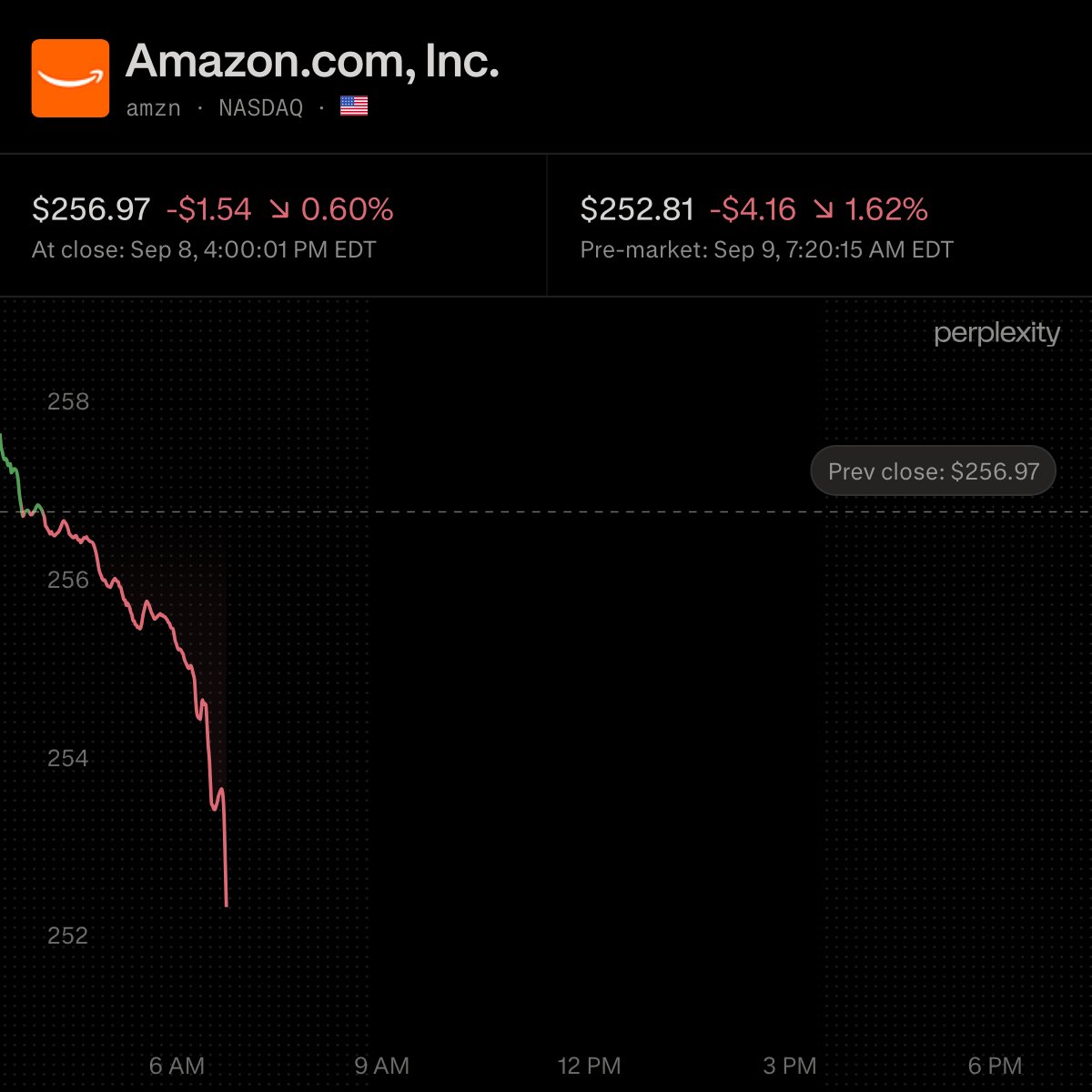
Amazon was hit Tuesday with a proposed nationwide class action in New York accusing the company of systematically discriminating against pregnant warehouse employees, including by denying chairs, bathroom breaks and leave for prenatal appointments, and in some cases firing workers, Reuters reported.reuters.com The complaint was brought by four former warehouse workers and seeks to represent pregnant Amazon workers nationwide.abetterbalance.org
The case lands against the backdrop of the Pregnant Workers Fairness Act, which requires employers to provide reasonable accommodations for pregnancy, childbirth recovery and related conditions. A Better Balance said the EEOC had already found reasonable cause in February 2026 to believe Amazon systemically violated the law in connection with plaintiff Jennifer Hatch’s discrimination charge.abetterbalance.org
Amazon disputes the allegations. Fox Business quoted a company spokesperson saying Amazon approved more than 99.9% of pregnancy-related accommodation requests over the past year, while adding that the company reviewed the individual cases referenced in the suit.foxbusiness.com
For investors, the immediate relevance is a potential increase in legal and reputational risk around warehouse operations rather than any disclosed change to Amazon’s business outlook. The focus now is on whether the case broadens into a larger class action and how much it could add to compliance and settlement costs if the claims advance.
Rocket Lab said on Sept. 8 that it has released IMM Apex, a space-grade solar cell with 31.5% beginning-of-life conversion efficiency, 40% lower cell mass and no germanium substrate. The company described it as a mechanical and electrical drop-in replacement for its heritage germanium-based products.
Rocket Lab says the IMM line has been validated for more than a decade and has powered missions including NASA’s Ingenuity Mars Helicopter. The company also said the new cell is available now and is intended for satellite and other space applications at multi-hundred-kilowatt manufacturing scale.
For investors, the announcement adds to Rocket Lab’s space-systems narrative rather than changing the near-term debate around its launch business. The stock has recently been moving on Neutron progress and earlier test setbacks, so the solar-cell launch is mainly a product and supply-chain story.
Public materials do not separately confirm the 32% figure circulating on social media; Rocket Lab’s own disclosure states 31.5% efficiency.
IREN and CRWV extend retail momentum on +30% and +40% gains영어 원문
X traders are highlighting fresh gains in IREN and CoreWeave-linked trades, underscoring how fast-moving names remain in focus amid elevated volatility and options activity.
On September 9, multiple X users posted realized gains tied to IREN and CoreWeave (CRWV), with one trader saying IREN had rebounded about 30% from support and another claiming roughly 600% gains on CRWV options. Separate posts also referenced AEHR after a 32% run in four trading sessions and CYPH after a move of more than 40%.
These posts are trader commentary rather than company disclosures, but they line up with recent market chatter around high-beta names. A recent GuruFocus item said IREN closed at $46.93 on September 8 after a 5.0% rise, while other coverage has pointed to unusually active options trading in CRWV.
For the market, the immediate implication is continued attention on IREN, CRWV, AEHR and CYPH from momentum traders and options participants. CoreWeave in particular has remained in the spotlight thanks to separate reports on institutional position changes and unusually large call volume.
There is no company confirmation for the profit figures cited in the X posts. They should be read as self-reported trading results, not verified performance metrics.
Chime to buy Stride for $590 million as Q3 revenue guide rises to $705 million영어 원문
The deal folds Chime’s banking infrastructure in-house, while the company also lifted near-term guidance and outlined post-closing balance-sheet limits.
Chime Financial said it has signed a definitive agreement to acquire Stride Bank for $590 million in cash. After closing, Stride will be renamed Chime Bank and operate as a wholly owned subsidiary of Chime.
The company said the transaction should be immediately accretive to earnings per share and generate more than $100 million in net synergies. Chime also said the purchase will be funded from cash on hand, with no incremental capital contribution, and raised third-quarter guidance to $705 million in revenue and $117 million to $120 million in adjusted EBITDA.
The deal marks a strategic shift for Chime, which has long relied on partner banks to provide core banking infrastructure. Chime said it will consolidate banking activities at Stride and keep assets below $10 billion for the foreseeable future.
Chime shares rose about 11% in premarket trading after the announcement, according to Reuters. The transaction still needs approval from the OCC and the Federal Reserve, with closing expected in the first half of 2027.
Uber COO buys 70,000 shares for about $5.31 million as stock trades near $73영어 원문
The purchase is Uber’s second disclosed open-market insider buy in six months, adding a new data point as the company expands grocery delivery and eyes more M&A.
Uber President and COO Andrew Macdonald bought 70,000 shares of Uber stock on the open market for about $5.31 million, based on a reported execution price of $75.83 a share. The transaction is the key new development surfaced in today’s X signal and marks Uber’s second disclosed open-market insider purchase in six months.
The buy comes as Uber remains in the spotlight for both operating momentum and strategic expansion. In the past 48 hours, reports also pointed to progress on a potential Delivery Hero deal and to a new Uber Eats partnership with Wakefern Food Corp. to broaden grocery delivery in the U.S. Northeast.
Investors often read insider buying as a confidence signal from management, but it does not by itself change Uber’s operating outlook. For UBER shares, the market will still focus on execution in mobility, delivery, margins, and any deal integration risk.
What can be verified now is the size of the purchase, the reported price, and Uber’s stock trading around $73. Earlier insider-buy chatter in February 2026 can be treated as context, but the current story is the September buy by Macdonald.
Reddit CEO Steve Huffman said at Goldman Sachs’ Communacopia + Technology Conference that the company sees a few hundred thousand unattributed new app downloads every day. He also said Reddit added about 1 billion new posts and comments in the last quarter, roughly 4% of its corpus.
The comments extend Reddit’s latest push to grow direct users and improve retention rather than rely on search referrals. Huffman said Reddit and Google remain in active negotiations, adding that search platforms need Reddit because users search for it by name.
For investors, the remarks keep attention on RDDT’s traffic mix, advertising monetization and licensing revenue. Reddit has said Google’s AI Overviews have made search traffic more unpredictable, increasing the importance of converting casual visitors into direct users.
Reddit also said in its Q2 update that weekly reach topped 500 million people and daily reach exceeded 130 million, while new app-user retention improved 50% year over year. The new conference remarks provide additional color on both user acquisition and content growth.
ServiceTitan reported fiscal second-quarter revenue of $292.8 million, up 21% year over year, and adjusted earnings per share of $0.40, both ahead of consensus. Shares fell in after-hours trading after the release.
The new detail in this update was a leadership change in sales: Chief Revenue Officer Ross Biestman will move into an advisory role after the company’s Pantheon event, and Rikus Pretorius will take over as CRO in the fourth quarter. Management also said it now expects more than 700 enrolled Max locations by the end of the fiscal year.
The company guided fiscal third-quarter revenue to $285 million-$287 million, slightly below some analyst estimates, even as it raised full-year revenue guidance to $1.139 billion-$1.144 billion and non-GAAP operating income to $152 million-$154 million. That mix of stronger annual outlook and softer near-term sales guidance appeared to weigh on sentiment.
ServiceTitan also said non-GAAP free cash flow reached $50.5 million and gross transaction volume totaled $26.8 billion in the quarter, up 17% from a year earlier. The company framed the results as evidence that AI and its Max offering are helping improve execution and efficiency.
Chewy reported second-quarter fiscal 2026 net sales of $3.33 billion and adjusted EPS of $0.36, broadly matching Wall Street expectations. Adjusted EBITDA came in at $226.7 million, with margin expanding to 6.8%.
The more important takeaway was the guidance update. Chewy said active customers rose to 21.7 million, up 3.8% year over year, while it raised full-year net sales guidance to $13.46 billion-$13.57 billion and adjusted EBITDA guidance to $481 million-$489 million.
Ahead of the release, consensus had centered on about $3.32 billion in revenue and $0.36 in EPS, and several analysts had trimmed price targets. The report matters mainly for CHWY, which serves as a read-through on pet e-commerce demand and operating leverage.
Chewy said the quarter benefited from continued customer growth and stronger efficiency. The company had previously scheduled its fiscal second-quarter results announcement and conference call for Sept. 9 before the market open.
Signet Jewelers reported second-quarter adjusted EPS of $2.19 on revenue of $1.53 billion, both topping expectations, and lifted its full-year guidance. The company also raised its outlook for adjusted EBITDA and adjusted operating income, underscoring a stronger-than-expected quarter.
The update builds on Signet’s June first-quarter report, when it had already increased its fiscal 2027 outlook after a sales and margin rebound. That backdrop matters because Signet operates in one of the clearest test cases for consumer demand under record gold prices and still-elevated discretionary spending pressure.
Shares of SIG moved sharply higher before the open as investors digested the beat and the guidance hike. For the retail and jewelry group, Signet remains a key read-through on bridal demand, price pass-through, and how much commodity inflation consumers can absorb.
In its prior quarter, Signet reported $1.6 billion in sales and adjusted EPS of $1.56, while the latest full-year adjusted EPS range was raised to $10.45-$12.15 from $9.20-$11.00. The company said second-quarter results reflect continued operating discipline and stronger-than-expected profitability despite a challenging cost backdrop.
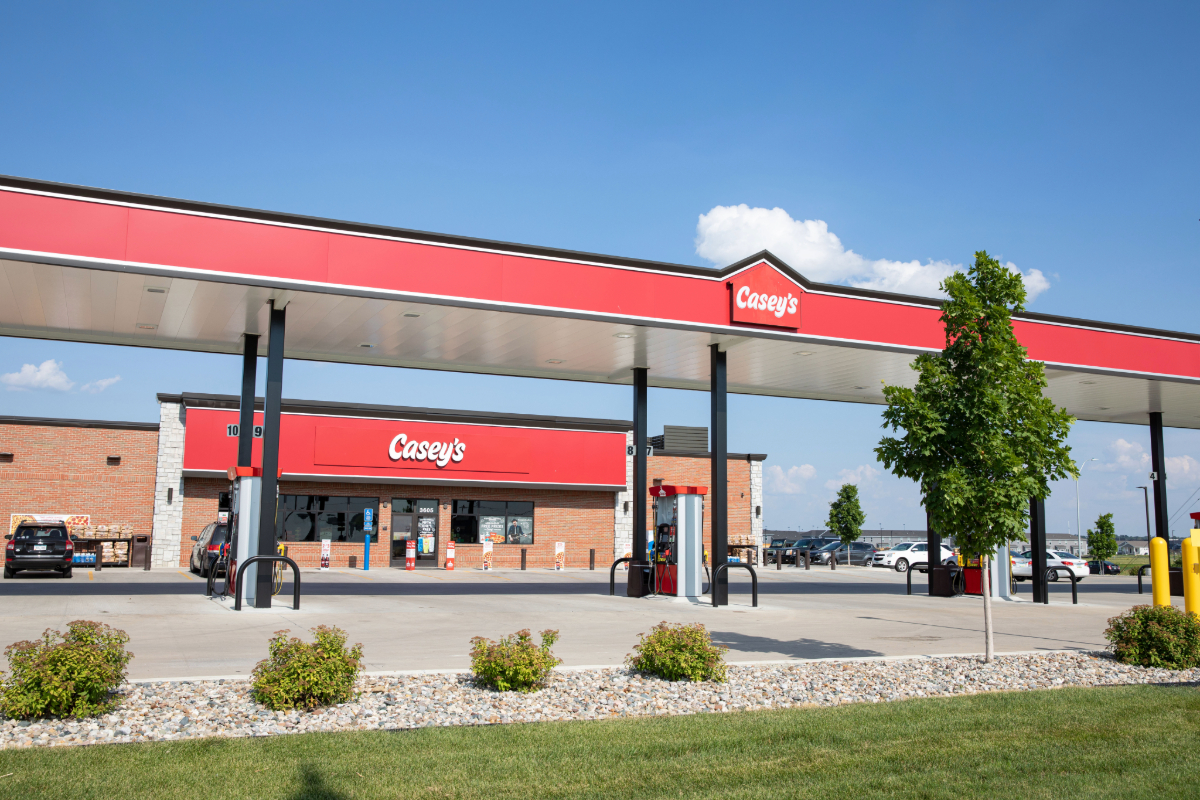
Casey’s General Stores reported fiscal first-quarter earnings of $7.37 per share on revenue of $5.68 billion, both ahead of estimates. The company also reaffirmed its FY27 outlook, including EBITDA growth of 8% to 10% and capital spending of about $800 million.
The headline beat was offset by a softer read on operating momentum. Casey’s said inside same-store sales rose 3.2%, and traders quickly honed in on the pace of growth rather than the size of the earnings surprise.
CASY shares were lower in after-hours trading, with multiple X posts citing declines of about 3.48% or more. For the convenience-store group, the reaction shows how investors are weighing the quality of growth against an unchanged full-year guide.
Casey’s did not lift guidance on the print, keeping the market’s attention on whether same-store sales, fuel volumes and internal growth can stay resilient through the rest of the year.
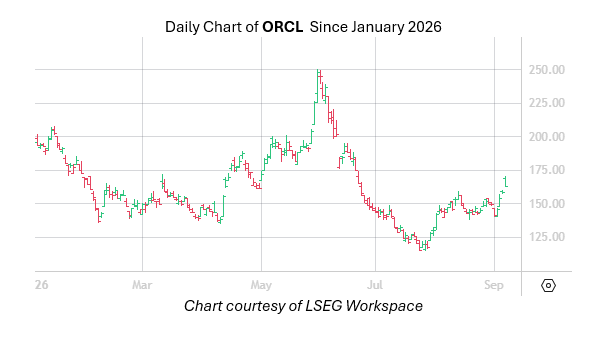
Oracle will report fiscal first-quarter 2027 results after the close on Sept. 10. The stock rose to $162.93 on Sept. 8, helped by a fresh wave of bullish analyst commentary ahead of earnings.
Oppenheimer, Mizuho and Guggenheim all lifted their price targets, to $275, $320 and $400 respectively. Investors are also watching whether renewed enthusiasm around the OpenAI ecosystem and Oracle’s cloud expansion can translate into stronger guidance.
For the market, Oracle has become a key read-through for AI infrastructure spending, cloud demand and financing needs. That makes the print important not only for ORCL itself, but also for traders looking at linked vehicles such as the 2x inverse ETF ORCZ.
So far, the debate centers on growth versus capital intensity rather than a confirmed post-earnings outcome. Oracle has not reported yet, and the numbers will need to validate the bullish case.
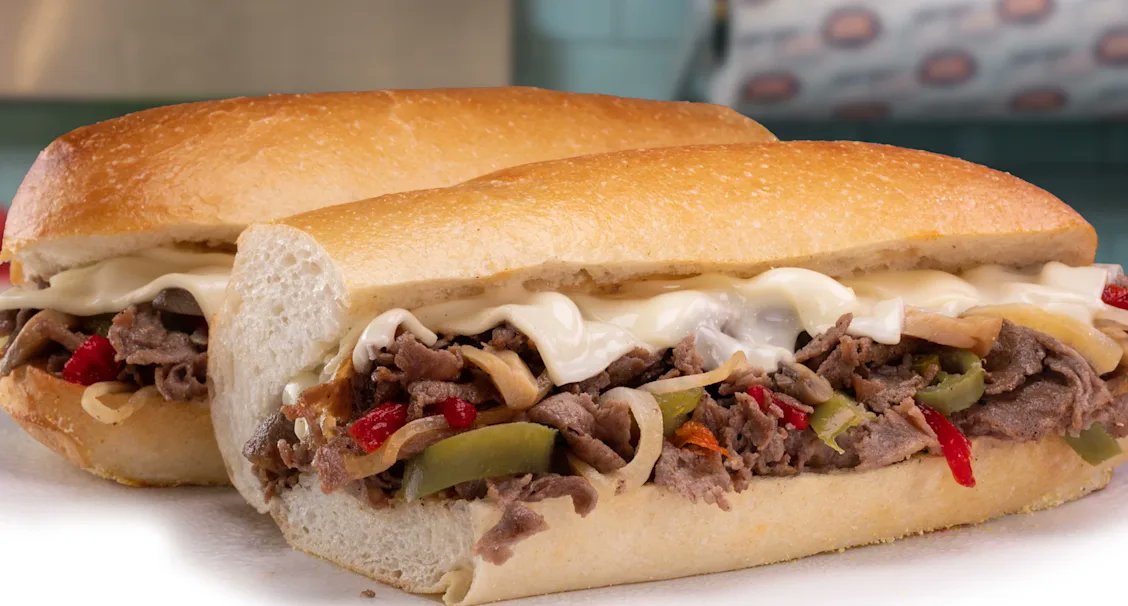
Jersey Mike’s Subs Inc. reported second-quarter revenue of $208 million for the period ended June 28, 2026, up 10% from a year earlier. Same-store sales rose 2.3%, and the company said it opened 83 new stores, bringing the system to 3,378 locations.businesswire.com
The results are the company’s first earnings release since its late-July IPO, when it priced shares at $23 and raised about $1 billion. Jersey Mike’s also guided to 2.5% to 3.0% same-store sales growth for fiscal 2026, at least 8% net unit growth and at least 20% adjusted EBITDA growth.reuters.com
The stock did not get much of a lift from the report. Barron’s said the debut earnings failed to revive the share price, and the X signal noted premarket trading around $20.68, below the IPO price, as investors weighed whether traffic-led growth can keep up.barrons.com
Management said same-store sales were primarily driven by higher transactions rather than pricing. That detail matters because the market has been rewarding restaurant chains that can show durable traffic growth, not just menu-price inflation.
France’s industrial production fell 0.4% in July from June, according to Insee, missing the 0.2% rise expected by economists. Manufacturing output declined 0.8% month on month, while total industrial production was down 0.5% year on year and manufacturing output fell 2.0% year on year.
The report showed broad weakness across manufacturing, including transport equipment (-3.8% month on month), other industrial products (-0.6%), food and beverages (-0.8%) and electrical/electronic/information equipment (-0.3%). By contrast, mining, energy and water output rose 3.8% on the month, helped by higher electricity consumption during the heatwave.
For markets, the release matters for French cyclicals and for broader euro-area growth expectations. Investors will likely watch autos, machinery, chemicals and refining names for signs that softer summer production could filter into earnings and order books.
Insee also said second-quarter industrial output was still up 1.9% year on year, with manufacturing up 1.1%, which suggests the July decline followed a relatively firmer Q2. No company-level response is involved; this is a macro data release.
Fresh market data show only about 43% of S&P 500 constituents trading above their 50-day moving average, the weakest reading since April 7. Several X posts pointed to the same deterioration in breadth as the index held near highs.
Context from recent market-technical updates shows the decline has been building for weeks. StockCharts said the share of S&P 500 members above the 50-day average fell from roughly 80% at the end of June to about 50% by late September, while History of Market reported 74.5% above the 200-day average on Aug. 24 and ChartRow put the figure at 70% on Aug. 20.
The message for equities is not a clean bullish or bearish call, but a narrower rally led by a smaller set of large-cap names. The weakness is most relevant for the S&P 500 and the broader NYSE/Nasdaq breadth gauges because it reflects participation, not just index level.
No single company is the subject here. This is a market-structure update on U.S. equities, with technology, financials and other major sectors all part of the breadth picture.
Kalshi’s latest market puts the odds of Bitcoin hitting $100,000 this year at 25%. That pricing comes as BTC has slipped back to the $77,000 area after briefly reclaiming $80,000 earlier in the rally.news.kalshi.com
The odds are from a prediction market, so they reflect trader positioning rather than a forecast with certainty. Separate Kalshi coverage said the contract for Bitcoin crossing $100,000 again had looked stronger earlier in the year, but the latest move lower shows sentiment has cooled.kalshi.com
For markets, the immediate impact is mostly in crypto sentiment and high-beta sentiment trades tied to Bitcoin. Traders in the X posts pointed to nearby levels around $74,000, $82,700 and $83,000, underscoring how closely the tape is being watched for short-term confirmation rather than a guaranteed breakout.
The 25% figure and the nearby price levels use different frameworks: one is a market-implied probability, the other is spot-price trading. Taken together, they suggest that a year-end return to six figures is still being treated as a low-conviction bet rather than a consensus case.
사건 전개
2026-08-03게시물 3개 · 작성자 3명
A Kalshi trader opened a $100k long on Bitcoin, Reuters traced Iranian sanctions funds to Binance, and New York sued Kalshi.
Jim Cramer said he would sell all his Bitcoin, departing SEC Commissioner Hester Peirce gave an interview, and traders debated BTC's odds of reclaiming $100k.
2026-08-07게시물 3개 · 작성자 3명
A Kalshi trader opened a $100k short on Bitcoin, market odds on regulatory clarity were questioned, and Kalshi promoted legal perps trading.
2026-08-14게시물 3개 · 작성자 3명
Kalshi sought $750M at a $40B valuation, Delio's CEO got 15 years for fraud, Metaplanet launched a bitcoin bond, and a $1.4M short was opened.
2026-08-26게시물 5개 · 작성자 4명
Analysts highlighted $83,000 as key for Bitcoin, a bearish divergence appeared on the 4H chart, and Kalshi perps hit $5.5B volume in two weeks.
2026-09-03게시물 4개 · 작성자 4명
Bitcoin neared the $83,000 level, Kalshi sought approval for a WTI oil perp, and the CFTC asked to dismiss CME's lawsuit.
2026-09-09게시물 1개 · 작성자 1명
Bitcoin saw a daily golden cross but spot demand declined, with a weekly close above $83,000 potentially driving a year-end rally to $100k.