DeitaOne and FirstSquawk both cited a Financial Times report saying SpaceX is seeking $4 billion in financing to buy Nvidia chips. FirstSquawk also said SpaceX credit risk hit a fresh high after the report.
The newsroom archive shows the same $40B chip-buying theme surfaced in a separate item on Oct. 7, suggesting the story has been circulating across outlets over the past 48 hours.
In the market, DeitaOne said $SPCX fell 1.5% on the report. FirstSquawk framed the move through the lens of rising credit risk, which kept attention on SpaceX financing expectations.
At this stage, the confirmed details in the provided materials are limited to the financing figure and the intended chip purchase. Further transaction terms were not provided in the sourced items.
Paramount completed its acquisition of Warner Bros. Discovery on Tuesday, closing a $110 billion transaction. The combined company will operate under the Skydance name.
The deal caps months of controversy around one of Hollywood’s biggest media combinations. News reports in the past 48 hours had already pointed to the integration process and the management reset that would follow closing.
For markets, the most directly relevant tickers are PSKY and SKYD, which are tied to the newly combined company and the deal narrative. X posts also noted that Skydance executives acknowledged layoffs will be coming, underscoring that cost cuts and restructuring are now part of the story.
Questions around editorial independence remain part of the backdrop. In a separate report, David Ellison told Anderson Cooper that the company would ‘never interfere,’ reflecting continued scrutiny over the merger’s implications for news operations.
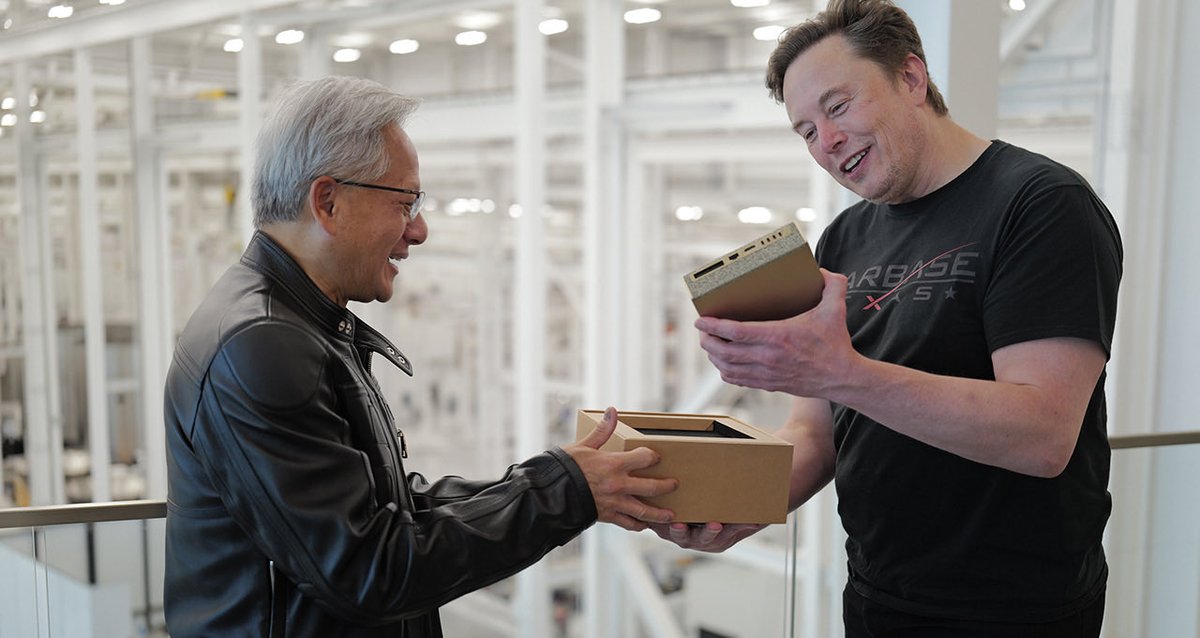
SpaceX is seeking about $40 billion in financing to buy Nvidia AI chips, according to the Financial Times. The report said Apollo Global Management is expected to lead the deal, with roughly $10 billion in bank loans and $30 billion in investment-grade debt, and that the transaction could close in 2027.
The reported plan underscores how expensive AI infrastructure has become as companies race to secure processors and build computing capacity. It also comes after Nvidia partnered in August with Apollo, BlackRock, Blackstone, Brookfield, Goldman Sachs and KKR on financing platforms aimed at mobilizing more than $500 billion for AI infrastructure.
Markets reacted quickly to the report. SpaceX shares fell about 1% in after-hours or premarket trading, while Nvidia edged higher, suggesting investors saw the financing as another sign of persistent demand for Nvidia’s chips.
The information has not been publicly confirmed by SpaceX, Apollo or Nvidia. Bloomberg, citing people familiar with the matter, said the discussions are still at an early stage and could still fall apart without a deal.
Google and Constellation Energy have struck a 20-year nuclear power purchase agreement. Multiple reports say the contract covers 3,590 megawatts, including 890 megawatts of new nuclear capacity.
The deal is structured around extending and upgrading existing nuclear assets rather than starting from scratch. It is expected to drive more than $4.3 billion of investment to upgrade 11 reactors across PJM, the largest U.S. power grid.
The market reaction has been broad across nuclear-linked names. Constellation shares advanced, while Reuters noted Australian uranium miners also rallied as investors reassessed long-term electricity demand from AI data centers.
The announcement underscores how hyperscalers are seeking long-dated power supply for data-center expansion. For now, the disclosed focus is the Google-Constellation partnership and the related reactor upgrades.
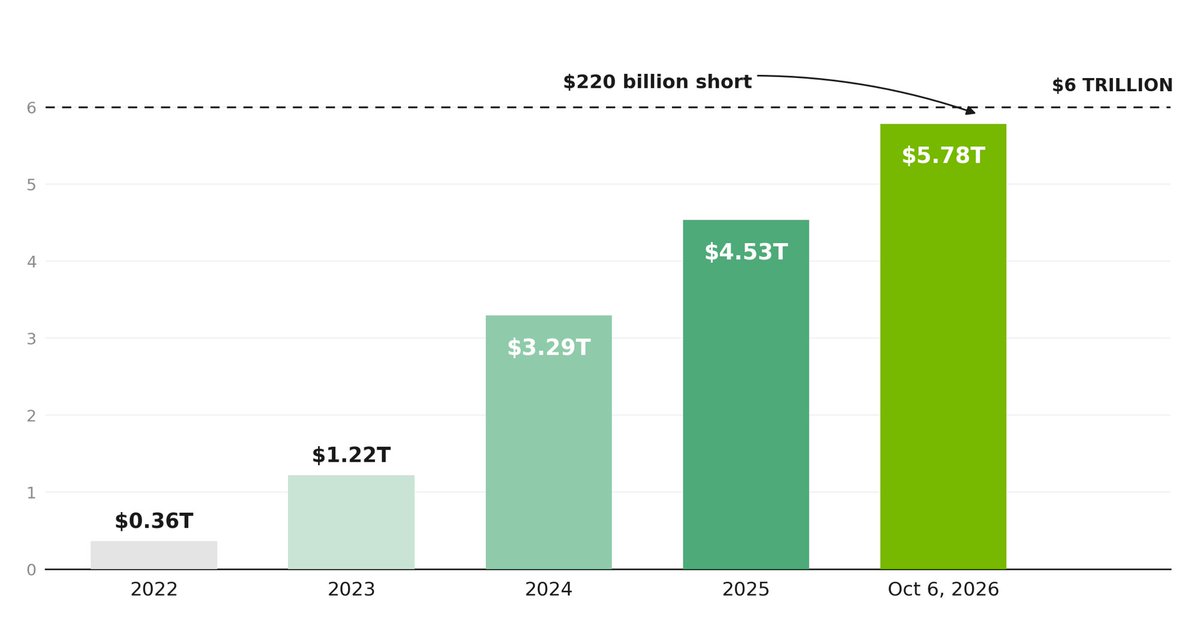
Multiple X signals say Nvidia closed at a record $239.24 today, giving the company a market value of $5.78 trillion and leaving it about 3.8% shy of $6 trillion. One post said the stock traded near $242 intraday, putting the chipmaker within range of a historic valuation milestone.
This sits on top of an ongoing market narrative already reflected in local coverage. Finbold’s N2 says Nvidia’s valuation reached $5.776 trillion, while Zacks’ N4 frames the move as Nvidia “marching toward” a $6 trillion market cap, indicating the same event stream is being tracked across outlets.
The move matters for the wider market because Nvidia remains a key AI bellwether and a heavyweight driver of the Nasdaq. X posts also point to renewed demand for AI chips and the company’s $150 billion buyback as supporting factors behind the rally.
There was no new product announcement in the posts, and no fresh company comment appeared in the material provided. The latest update is therefore about market valuation momentum rather than operational news.
JPMorgan CEO Jamie Dimon said AI has increased cyber risk tenfold, calling cybersecurity the bank’s biggest threat. It is the clearest new warning yet from the firm’s top executive about how AI is expanding the attack surface for financial institutions.
Dimon also said governments “can’t borrow endlessly and spend endlessly,” warning that rising debt could push yields and credit spreads higher. The comments tied AI security concerns to a broader macro backdrop of fiscal strain and market-sensitive funding conditions.
For JPMorgan, the message keeps investor attention on risk management and technology spending as the bank heads toward its next earnings update. Site coverage shows the lender is due to report next week, with earnings growth expectations and operating performance in trading and investment banking in focus.
A separate Benzinga signal said Dimon linked the 10-fold jump in cyber risk to Anthropic’s Mythos model and called the threat “real.” That same item noted JPMorgan is investing in Anthropic and helping finance its AI expansion.
A bipartisan House panel said Webull’s links to China create a national security risk and raised questions about U.S. investor data. The stock, BULL, fell sharply in response, with posts citing losses of roughly 20% to 31%.
The new headlines build on an ongoing congressional review of the brokerage. Investors.com said the platform was tied to the Chinese government in “structural ways,” while CNBC framed the issue as a national-security concern.
BULL was the direct market casualty. Some posts also pointed to HOOD as a potential beneficiary if scrutiny around Webull keeps intensifying, though that remains a market read, not a confirmed outcome.
No formal response from Webull was included in the materials provided. A separate law-firm notice in the news library says it is investigating potential securities claims involving Webull, adding a legal overhang to the story.
Finland’s Licensing and Supervision Agency, LVV, has notified Google subsidiary Tuike Finland Oy to stop work tied to two data centers until the required environmental impact assessments are completed. The X reports say the order applies to two planned projects in Finland.
The step comes about a month after Google committed to invest 15 billion dollars in AI infrastructure in Finland. The projects are part of that broader Finland expansion plan, which was previously described as running through 2028.
GOOGL is the core ticker here because Google is the company directly affected by the regulatory notice. The immediate market relevance lies in the potential delay to its Finland data-center buildout.
No formal response from Google was included in the material provided. The verified development is the halt order itself and its link to Google’s Finland infrastructure push.
Intel Chief Executive Lip-Bu Tan said the company will continue working with Elon Musk on Terafab, according to Bloomberg. The statement comes after investors had speculated that Taiwan Semiconductor Manufacturing could end up playing a larger role in the chipmaking project.
Musk later clarified on X that Terafab will be built and run by his team, and that TSMC could at most sublease part of the facility. Intel signed on as Terafab’s development partner in April, making the company a key named participant in the effort.
The project is described as a massive advanced-manufacturing push with an initial investment of $16.8 billion and potential total spending of up to $119 billion. That backdrop matters for Intel because the venture has become one of the most visible external opportunities for its foundry business.
Shares of Intel firmed in overnight trading after Tan’s comments, while TSMC’s ADR eased in premarket trade. The latest remarks suggest the market is still parsing the boundaries of any TSMC involvement, but Intel remains positioned as a continuing partner for now.
How this story unfolded
Markets
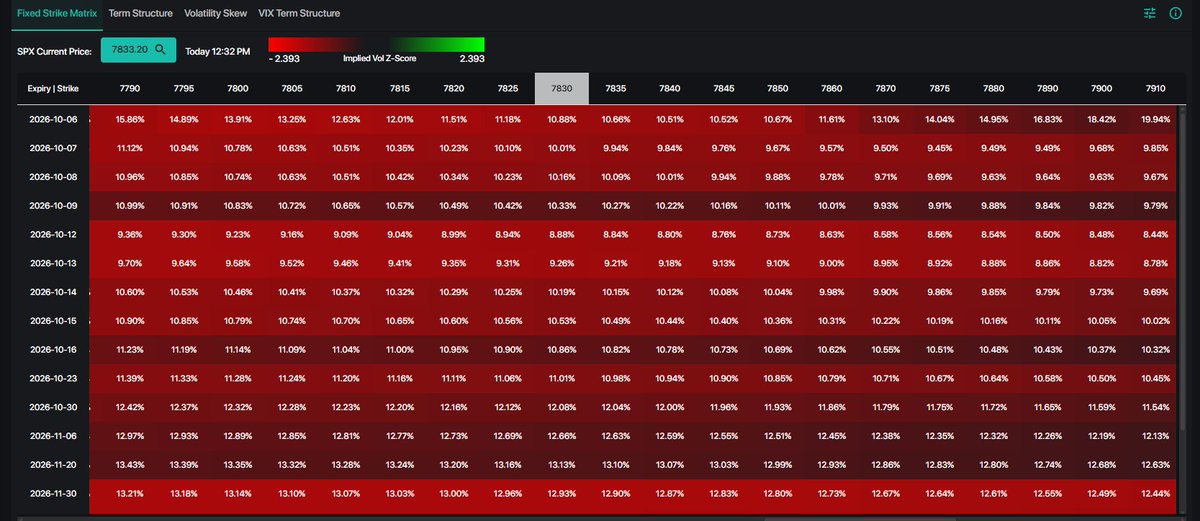
S&P 500 closes at a record as the index tops 7,800
The rally extends, but commentary points to a narrowing advance and weaker breadth beneath the headline high.
The S&P 500 closed at a record high on Oct. 6, according to the posts and wire updates in the signal set. Charlie Bilello said the index moved above 7,800 for the first time and logged its 28th all-time high of the year; Kobeissi Letter said the index has added $13.5 trillion in market cap since the March 30 bottom.
The broader market backdrop was also positive. Unusual Whales said both the S&P 500 and the Nasdaq closed at record highs, while Cointelegraph noted the S&P 500 posted its first record closing high since Aug. 13.
Still, the advance appears increasingly concentrated. Business, citing John Authers, said the rally has become narrower, with small-cap and value stocks continuing to lag.
This is primarily a market story rather than a single-company event, so no core ticker is assigned from the candidate list.
Marvell Technologies CEO Matt Murphy said the company’s implied data-center revenue could top $30 billion by 2028, according to CNBC-linked reporting cited in multiple market signals today. That is the new incremental takeaway from Marvell’s Investor Day coverage.
The same set of signals said Marvell expects about $20 billion in total FY2028 revenue, with a longer-term plan calling for $70 billion to $90 billion in FY2031 revenue. Another cited comment put the AI market opportunity at roughly $400 billion by 2030.
Shares of MRVL drew a strong reaction in trading, with one report saying the stock rose as much as 11% intraday after the Investor Day buzz. The market is treating the update as a fresh read-through on Marvell’s data-center and AI infrastructure growth profile.
The key point for investors is not just the headline number, but the pace implied by Marvell’s forward targets. Further detail from the company would be needed to see how those revenue milestones are broken down across products and end markets.
Nikkei reports that TSMC and other Taiwanese chipmakers are increasing AI-related spending in the United States and Southeast Asia. The report says the move is aimed at building supply chains for rising AI computing demand.
The signal points to a broader overseas push by Taiwan’s semiconductor industry rather than a single-company move. It also lands amid continued market focus on AI infrastructure, chips, and the software and equipment needed to build them.
For markets, the key names in scope include TSMC, along with AMD and Intel as adjacent AI-chip plays. Any further confirmation of overseas capacity spending could keep attention on supply-chain positioning and execution.
The X signal does not include fresh dollar amounts or company responses beyond the report itself. As presented, it adds another data point to the ongoing buildout of AI supply chains abroad.
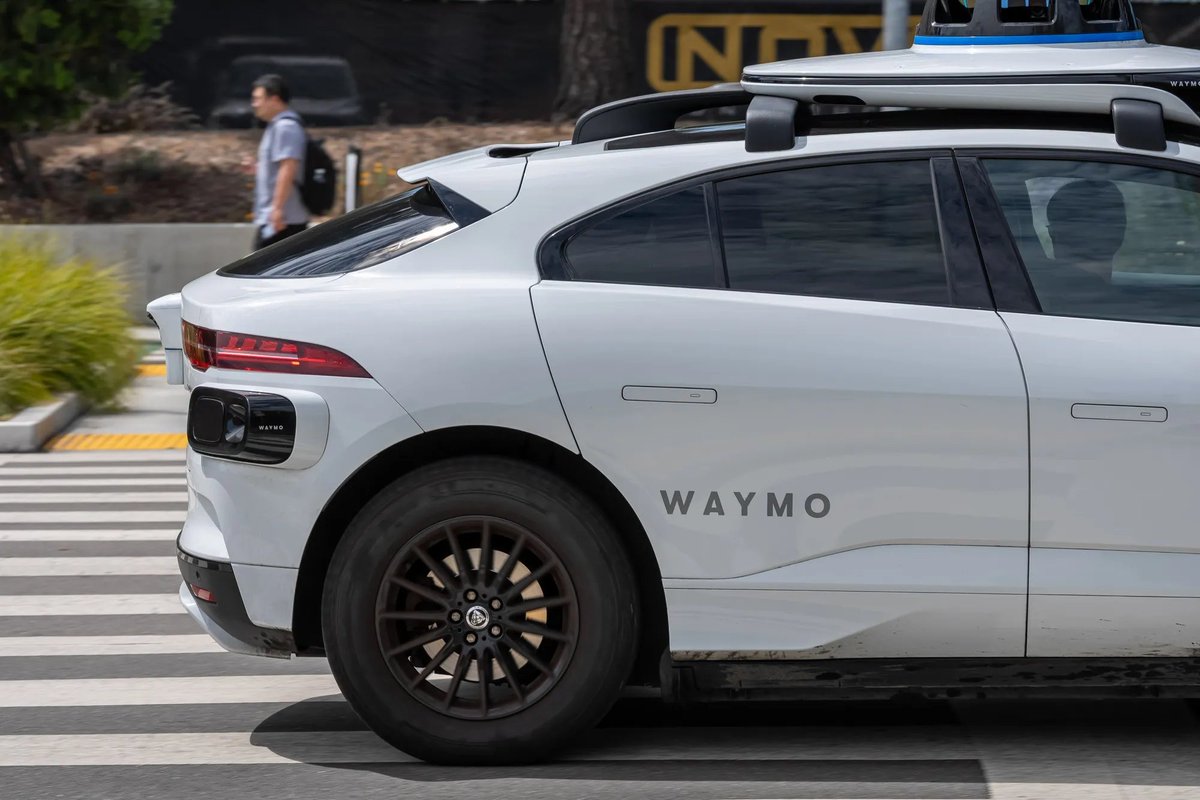
Bloomberg reported that Alphabet’s Waymo has increased the size of its inaugural private debt financing to $5 billion, up from an earlier target above $3 billion. The loan is said to be arranged by Goldman Sachs and backed by investors including PIMCO, Blackstone and Sixth Street, with pricing at 5.25 percentage points over benchmark rates.
The move marks a notable shift for Waymo, which has largely funded growth with equity. Earlier this year, the company reportedly closed a $16 billion round at a $126 billion post-money valuation, underscoring how capital-intensive its robotaxi expansion has become.
For markets, the story is mainly about Alphabet’s capital intensity and Waymo’s spending needs rather than a new earnings release. The debt raise points to financing for fleet growth and AI-related compute costs as the company pushes further into domestic and international markets.
Waymo and the participating lenders have not publicly commented on the reported terms, while multiple outlets have echoed Bloomberg’s account. That leaves the $5 billion size and the 5.25-point spread as the key details to watch once the transaction formally closes.
Anduril said it will invest $3.7 billion to build a new shipyard facility, Arsenal-2, in Baltimore County, Maryland. In parallel, the U.S. Navy awarded the company a contract worth up to $2.9 billion, bringing the total announced commitment to $6.6 billion.
The move comes as the Navy looks to expand the industrial base for Virginia-class submarines. Anduril said the site will initially make components such as torpedo tubes before expanding into larger modules and hull sections; Maryland officials said the project is expected to create more than 3,100 permanent jobs.
For the market, the significance is strategic rather than stock-specific: Anduril is moving deeper into the high-barrier submarine supply chain, broadening its defense manufacturing footprint beyond drones and software. The announcement also highlights continued U.S. efforts to accelerate undersea production capacity.
Anduril and Maryland first announced the project on Oct. 6, with later reporting adding more detail on contract structure, output-linked payments and phased production plans. The company said it is taking on most of the execution risk, with payments tied to demonstrated production outcomes.
Anthropic said on Tuesday that Claude for Google Workspace has entered public beta for all paid Claude plans. The add-on lets users open Claude in a sidebar inside Google Docs, Sheets and Slides, while new beta connectors also let Claude create and edit Google files from its chat interface.
The update pushes Claude deeper into document workflows. In Docs, it can make minor formatting-preserving edits or larger rewrites as reviewable changes; in Sheets, it can write formulas, build pivot tables and charts; and in Slides, it can generate new slides that match an existing deck and check layouts for problems.
For investors, the move further ties Anthropic to Google’s productivity stack and keeps Alphabet at the center of the enterprise AI office race. Google already has Gemini embedded across Workspace, so Claude’s new role looks more like added distribution and feature competition than a replacement of existing AI tools.
Anthropic said the add-on is available through the Google Workspace Marketplace and can be deployed by admins through Google Admin console, while Team and Enterprise customers need an owner or primary owner to enable the connectors. Existing Google sharing permissions still govern access to linked files.
Regulation
U.S. government moves over $103 million in crypto, BNB draws focus
Arkham-tracked wallets show 833.599 BTC and 40,285 BNB were rerouted; no official sale confirmation has emerged.
Blockchain trackers showed U.S. government-linked wallets moved about $103 million in crypto over roughly nine hours on Oct. 7. The BTC portion, 833.599 coins, was routed through unlabeled addresses and then into Arkham-labeled Coinbase Prime deposit wallets, while 40,285 BNB was sent through a separate multi-hop path.
The tokens appear to come from previously seized assets. Reporting traced the BTC to the Potapenko/Turogin forfeiture case and the Bitfinex hack case, while the BNB was linked to Alameda Research seizures; none of the coverage includes an official statement saying the assets were sold.
Coinbase Prime matters because it is the institutional custody and trading venue selected by the U.S. Marshals Service for managed digital assets. But a transfer to that venue does not by itself prove liquidation, and commentators cited in the reporting stressed that a transfer is not the same as a sale.
The move comes with the U.S. government still holding roughly $27.5 billion in crypto, all from enforcement actions. With no formal disposal notice yet, the clearest read is that government-controlled wallets shifted custody rather than disclosed a completed sale.
Winklevoss Asset Services filed a preliminary S-1 with the U.S. SEC on Oct. 6 for a spot Zcash ETF that would list on Nasdaq under the ticker WINK. The trust says it will hold ZEC directly, and the prospectus notes that shares will not be sold until the registration statement becomes effective.sec.gov
The filing names Gemini Trust Company as custodian, sets a 0.25% annual sponsor fee and says the fund will price its NAV using a 60-minute time-weighted average benchmark. Winklevoss Capital Fund, through affiliates, also indicated a nonbinding interest in buying up to $100 million of shares.sec.gov
The move adds another entrant to the U.S. spot Zcash ETF race. Reporting on the filing says Grayscale’s ZCSH is already trading, while Bitwise has also filed for a Zcash ETF, making Winklevoss the third issuer to pursue the product.theblock.co
For ZEC, the immediate market relevance is straightforward: a new potential regulated wrapper can alter how investors access the token, while the listed ZCSH and the proposed WINK fund become direct fee and structure comparables. The filing itself does not guarantee approval or launch, and the interest from Winklevoss Capital is explicitly nonbinding.cointelegraph.com
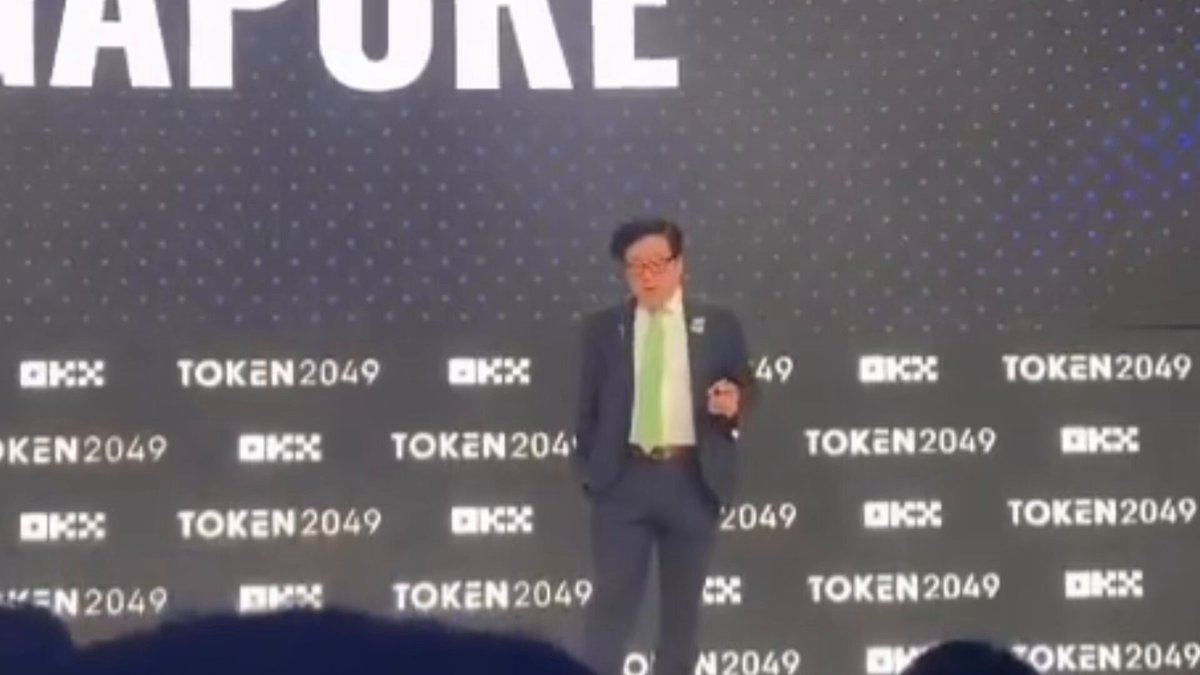
BitMine Chairman Tom Lee said at Token2049 in Singapore that the company will stop buying ether once its holdings reach 5% of ETH’s circulating supply. He said the firm needs about 100,000 more ETH to reach the threshold and described it as a hard cap.
The comment comes after BitMine spent more than a year building an Ether treasury strategy launched in June 2025. In its latest update, the company said it held 6,016,414 ETH, or about 4.9% of the 122.1 million tokens in circulation, worth roughly $15.5 billion at the time of the update.
For the market, the key issue is whether BitMine is about to lose its role as a consistent source of ETH demand. CoinDesk said the company has bought ETH every week since the strategy began, and BMNR shares remain closely tied to investor views on the treasury strategy and Ether exposure.
Lee also framed the decision as a capital-allocation move, saying the company would no longer need to raise funds to keep buying ETH once the cap is reached. That leaves BitMine’s current pace of accumulation as the focus for traders watching both Ether and BMNR.
How this story unfolded
2026-08-173 posts · 3 authors
BitMine bought $18.9M in ETH last week, raising its holdings to 4.8% of Ethereum's total supply.
Macro
PBOC adds 740,000 ounces of gold in September, extending buying streak to 23 months
Official data also show China’s FX reserves slipped in September as the dollar strengthened and asset prices fell
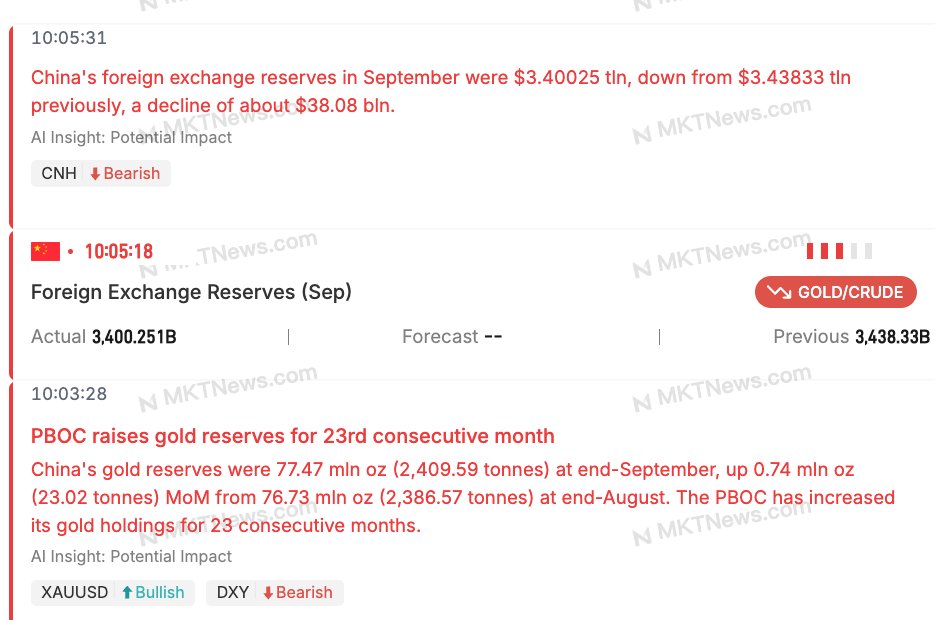
China’s central bank increased its gold reserves by 740,000 ounces in September to 77.47 million ounces, according to data released Wednesday. That marks the 23rd straight month of purchases by the People’s Bank of China.
The same data showed China’s foreign-exchange reserves at about $3.4003 trillion at the end of September, down roughly $38.1 billion from a month earlier. The State Administration of Foreign Exchange said the drop reflected currency translation and asset-price changes as the U.S. dollar index rose and global markets weakened.
The gold data will be watched closely by bullion traders and investors in precious-metals ETFs, especially after a volatile month for prices. A sustained central-bank buying trend is typically seen as an important source of official-sector demand for gold.
Reuters also reported that the value of China’s gold reserves eased to about $323.5 billion at month-end, despite the higher holdings, because bullion prices fell in September. That provides additional context for why reserve values can move differently from physical holdings.
The Mortgage Bankers Association said U.S. mortgage applications fell 4.2% in the week ended Oct. 2, narrowing from a 6.0% drop the week before. The average 30-year fixed mortgage rate rose to 7.49% from 7.30%, its highest level in nearly three years.
MBA said refinancing activity dropped 8% week over week, while purchase applications fell 2%. In Reuters’ reporting, MBA deputy chief economist Joel Kan said few homeowners have an incentive to refinance at these levels and higher borrowing costs are pushing many prospective buyers to the sidelines.
The data matters for U.S. housing lenders, mortgage servicers and rate-sensitive homebuilding names because weekly MBA prints are a fast read on financing conditions. It also reinforces the broader macro narrative that elevated Treasury yields are still feeding through to mortgage costs and housing affordability.
MBA also reported that the refinance share of total activity fell to 37.0% from 38.3% a week earlier, while the ARM share held steady at 10.3%. The average rate on jumbo 30-year mortgages increased to 7.39% from 7.27%.
Japan’s Ministry of Health, Labour and Welfare said on Oct. 7 that average cash earnings in August rose 3.8% from a year earlier to ¥311,364, while real wages increased 1.5%. It was the eighth straight month of gains in inflation-adjusted pay.
The numbers matter because wage growth continued to outpace the ministry’s reference consumer-price measure, which rose 2.2% in August. That keeps Japan’s household purchasing power on a firmer footing after a long stretch of weak real income growth.
For markets, the report feeds into expectations around Bank of Japan policy and the yen, while also supporting the case for a gradual improvement in domestic demand. It is a macro release rather than a company-specific event, so no single stock is directly in focus.
The latest print was consistent across wire services and local reporting, which all cited 3.8% nominal wage growth, 1.5% real wage growth and average cash earnings of ¥311,364 for August.
CoreWeave said it is entering India through a partnership with AdaniConneX, marking its first data-center buildout in the country. The plan calls for 240 MW of capacity at Navi Mumbai, with an option to scale to 480 MW, and initial capacity is targeted for mid-2028.
Business Wire’s company announcement confirms the India entry and the AdaniConneX collaboration. The X posts point to the same event line and frame it as CoreWeave’s first Indian data-center project.
For CRWV, the market focus is on securing power now while retaining flexibility on GPU generation and deployment timing later. The move also gives CoreWeave exposure to India’s broader AI infrastructure buildout, though no standalone financial guidance was provided in the materials.
Further details on capex, rollout timing and how much of the optional capacity is eventually exercised remain to be seen in later disclosures.
Micron Technology's Taoyuan union in Taiwan said on Wednesday it had secured authorization from members to strike. The union said 1,994 of 2,012 valid ballots backed the move, or 99%, and no strike date has been set yet.
The dispute centers on Micron's bonus structure. The union is pushing for a permanent profit-sharing plan that would allocate 15% of operating profit to employees on a quarterly basis, while rejecting the company's one-time package for Taiwan staff.
The labor conflict comes as AI-driven demand keeps the memory-chip market tight, making Taiwan an important production hub for Micron's DRAM and HBM chips. Micron employs about 15,000 people in Taiwan, and the Taoyuan and Taichung unions together represent most of that workforce.
Micron said it respects employees' legal rights and will keep talking through existing dialogue and mediation channels. Negotiations with the Taichung union continue, and Taiwan's labor ministry has urged both sides to bring forward concrete proposals.
First National Bank (FNB) said on Oct. 6 that it has launched a Crypto Investing feature for customers on its share-trading platform. The bank says clients can buy bitcoin, ether, XRP, Solana and USDT, with trades starting at R10, and that the assets will remain ringfenced inside the FNB ecosystem.
FNB’s own announcement was published on Oct. 5 and frames the move as a response to customer demand for alternative investments. Bloomberg also reported that FNB, the banking arm of FirstRand, is among the latest major South African lenders to enter crypto trading through a partnership with VALR.
The immediate market significance is distribution: a large retail bank is putting crypto access in front of its customer base through existing investment products. That matters for VALR’s reach, and for the five tokens offered, because the bank is positioning the service as a regulated, bank-led entry point rather than a transferable wallet service.
FNB said it will provide educational material to help clients understand volatility and risk, and it did not disclose trading volumes or fees. The bank also said crypto assets cannot be transferred in or out of the platform.
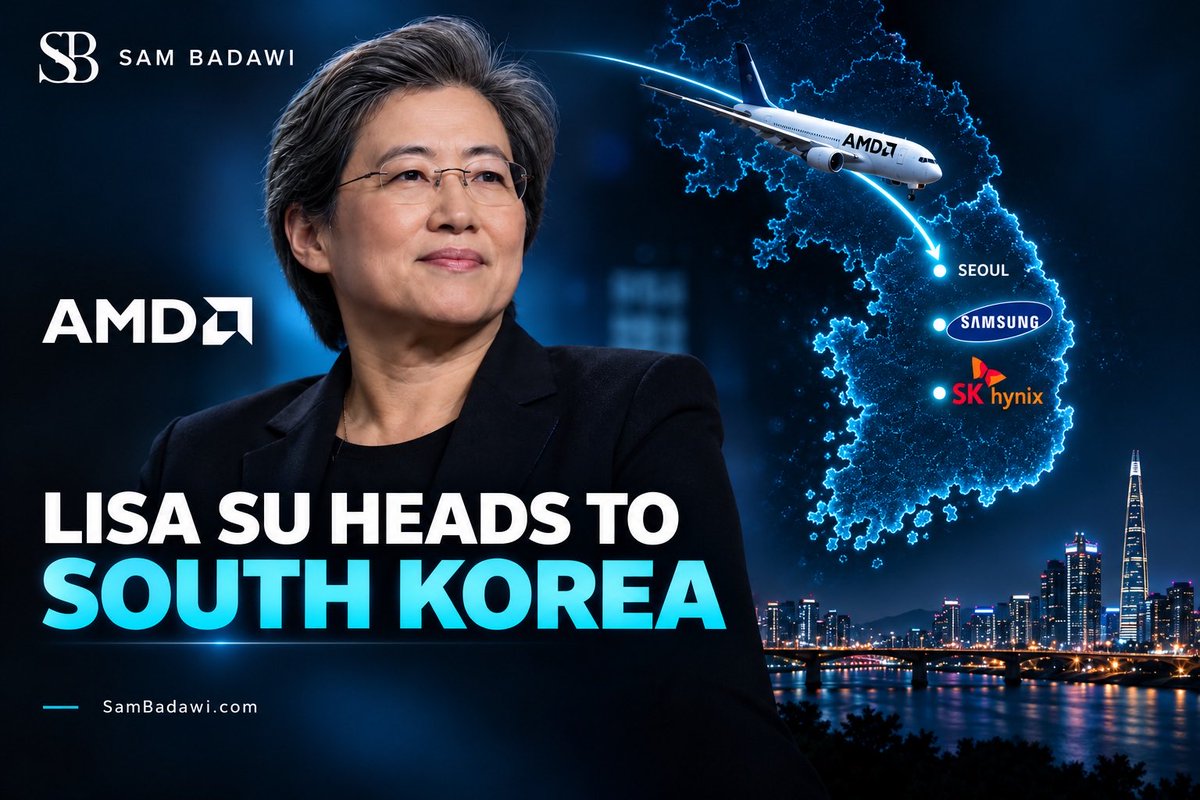
AMD CEO Lisa Su met Samsung Electronics semiconductor chief Jun Young-hyun in Seoul on Wednesday and said the two companies will keep exploring cooperation in memory chips and contract manufacturing. She also met SK hynix leadership the same day and described semiconductors as a “team sport.”
The meeting extends engagement that began in March. Earlier reports said AMD had named Samsung a preferred HBM4 supplier for its next-generation Instinct MI455X accelerator, while potential collaboration beyond memory into foundry services has remained under discussion.
For AMD, Korean memory makers are key to scaling AI chip supply. For Samsung, any move beyond HBM into foundry would deepen its role in the AI semiconductor chain and give investors another angle to watch.
Su did not confirm any foundry order from Samsung, saying AMD is still looking at opportunities. Samsung has also signaled that the relationship could span multiple product generations, not just one cycle.
How this story unfolded
2026-08-124 posts · 3 authors
Cantor maintained Overweight ratings on Micron, SanDisk, and SK Hynix, forecasting a decade-long memory supply shortage and viewing recent pullbacks as a buying opportunity.
Company
FICO to cut about 15% of workforce as AI rollout deepens
Employees are expected to be notified this week as the company simplifies operations and folds AI more deeply into product development.
Fair Isaac Corporation, better known as FICO, plans to eliminate about 15% of its workforce. The move is part of a broader effort to integrate AI more deeply into product development and simplify operations, with notices to employees expected this week.
The update follows Reuters' Oct. 6 report on the same restructuring plan, making today's X signal a follow-up with more execution detail rather than a new event. It also comes amid heightened attention on FICO's business changes and market scrutiny.
For investors, FICO remains the clear focal point. The company is trying to show that cost reduction and operational streamlining can help offset restructuring pressure, while the market continues to assess what the layoffs say about the pace and scale of its AI push.
No new company response was included in the materials beyond the reported restructuring plan. The X signal also cited an estimate of roughly 500 to 600 affected employees, though that figure was not confirmed by FICO in the provided sources.
API weekly report shows 2.1 million-barrel U.S. crude draw
Market reports citing the API said U.S. crude and gasoline inventories fell last week, while Cushing and distillate stocks rose, setting up Wednesday’s EIA release.
Multiple market wires on Tuesday said the American Petroleum Institute’s weekly survey showed a 2.1 million-barrel draw in U.S. crude inventories for the week ended Oct. 2. Gasoline stocks fell by 1.4 million barrels, while Cushing crude inventories rose 866,000 barrels and distillate stocks increased 461,000 barrels.
The API is an industry survey and typically lands before the Energy Information Administration’s official weekly petroleum status report. Because the two reports use different samples and methods, they often diverge in size and sometimes even direction.
The numbers matter for crude benchmarks and fuel-refining names because traders use the API as an early read on supply-demand balances. The bigger confirmation test now is the EIA report, which is generally treated as the authoritative weekly inventory count.
Markets also parsed the smaller Reuters-cited figure of a 2.09 million-barrel crude draw and a 1.37 million-barrel gasoline decline, which is close to the headline API read. That keeps the focus on whether the official EIA release validates the private survey.
Wells Fargo raised its price target on Meta to $1,000 from $796, citing the viral Muse AI agent as a potential driver of a major new product cycle. The call comes from a new note highlighted in social posts and media coverage on Oct. 6-7.
Recent coverage in the newsroom archive had already framed Muse as a key extension of Meta’s consumer strategy. One report also described the broader backdrop as heavier AI infrastructure spending and legal costs weighing on near-term profits.
For META, the update matters because Wells Fargo also said Meta may keep more AI compute in-house as Muse scales. That led the bank to remove 500 MW of expected 2027 capacity resales, worth roughly $5 billion in high-margin revenue.
No direct response from Meta was included in the source material. Based on the available reports, the story is about a revised monetization outlook for Muse and its implications for Meta’s AI spending and 2027 estimates.
Multiple X posts citing Bloomberg say Apple is preparing to launch a smart doorbell, smart lock, thermostat and security cameras co-developed with LG Electronics. One post says the devices are set to be introduced on October 13.
A matching item in the site news library from TechCrunch on October 6 reported that Apple is partnering with LG on a smart lock, thermostat and doorbell. The latest wave of posts adds the camera lineup and a more specific debut date.
For AAPL, the reports point to Apple extending its hardware ecosystem deeper into the smart home category. Investors are likely to focus on whether the LG tie-up can help Apple ship a broader connected-home lineup.
No direct response from Apple or LG appears in the provided materials, and the reports remain at the rumor level. Details such as pricing, availability and launch scope were not disclosed.
Tempus said Tuesday it has expanded a multi-year collaboration with Moderna and Merck to support the potential commercialization of intismeran autogene. The work includes sequencing, tumor and blood sample collection, and sample logistics tied to each patient.
The therapy in focus is intismeran autogene, also identified as V940/mRNA-4157, an individualized neoantigen therapy tested with KEYTRUDA. For Tempus, the update underscores a deeper role in the treatment-development and commercialization workflow.
The announcement puts TEM, MRNA and MRK directly in play. For Moderna and Merck, the collaboration adds another operational layer around a pipeline asset that has remained in focus across recent market coverage.
Tempus framed the arrangement as an expanded multi-year collaboration and did not disclose financial terms in the materials provided. Based on the available reports, the key new information is the scaling of support services around patient-specific treatment logistics.
Aehr Test Systems said on Oct. 7 that it won about $6 million in follow-on production orders from its lead hyperscale customer for package-level burn-in of a next-generation AI processor. The package includes additional Sonoma high-power systems, burn-in modules, custom sockets and software enhancements, with deliveries spread over the next six months.
The order relates to the second AI processor from the same customer to use Aehr’s Sonoma platform for production burn-in. Aehr said the program is moving beyond initial production into capacity expansion ahead of an expected ramp in calendar 2027.
For Aehr, the announcement points to not only system shipments but also recurring demand for consumables and software tied to the burn-in install base. The equipment will be deployed at an OSAT partner in Taiwan, while the customer’s first processor on Sonoma is already in high-volume production, according to the company.
Aehr also said it remains in detailed discussions with the customer about reliability qualification and burn-in requirements for future higher-power AI devices. The customer was not named in the release.
Ondas said on Tuesday that it secured more than $165 million in new orders from the second half of August through Oct. 1. Including roughly $105 million in orders it had already disclosed earlier in the third quarter, the company said orders since June 30 now exceed $270 million.accessnewswire.com
The company said the orders span multiple geographies and product categories across its defense portfolio, including counter-UAS, loitering munitions, ISR, ground robotics and AI-enabled command and control. Ondas also highlighted progress on ULTRA and IonStrike, while pointing to a previously announced $56 million ESAD award tied to a European loitering-munition program.accessnewswire.com
For investors, the key issue is conversion: third-party coverage said Ondas ended June with about $613 million in backlog and management lifted its 2026 revenue target to $525 million-$550 million. That keeps attention on whether the enlarged order book turns into recognized revenue over the next several quarters.stocktwits.com
Ondas CEO Eric Brock said ULTRA and IonStrike have captured strategically significant orders and are moving through customer validation milestones. The company did not disclose the customers behind the new orders in this announcement.
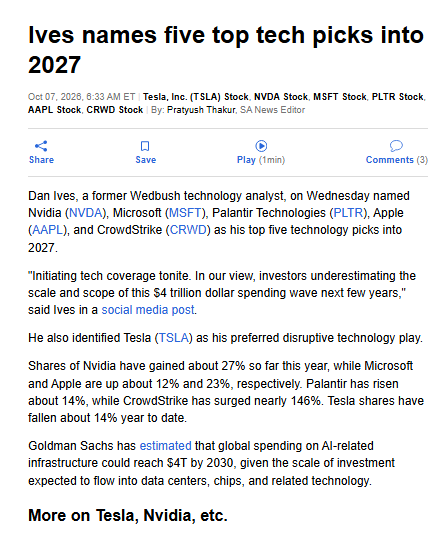
Dan Ives said in today’s X signal that his top five tech plays going into 2027 are Nvidia, Microsoft, Palantir, Apple and CrowdStrike. The update is a fresh public signpost of his current positioning preferences.
Recent coverage in the site’s news library shows Apple remains an active market story across several lines of business. N1 says iPhone sales rose by more than 22% in the first three quarters of fiscal 2026, while N4 says Apple is reportedly working with LG on smart home devices.
The list matters because it points directly at NVDA, MSFT, PLTR, AAPL and CRWD, giving traders a live read on which names one prominent tech bull wants to own. Apple and CrowdStrike also have fresh company-specific coverage in the news library, which makes the signal feel tied to ongoing stock narratives rather than a generic commentary.
Ives did not attach a price target or deeper rationale in the signal itself, so the takeaway should remain limited to the newly named watchlist.
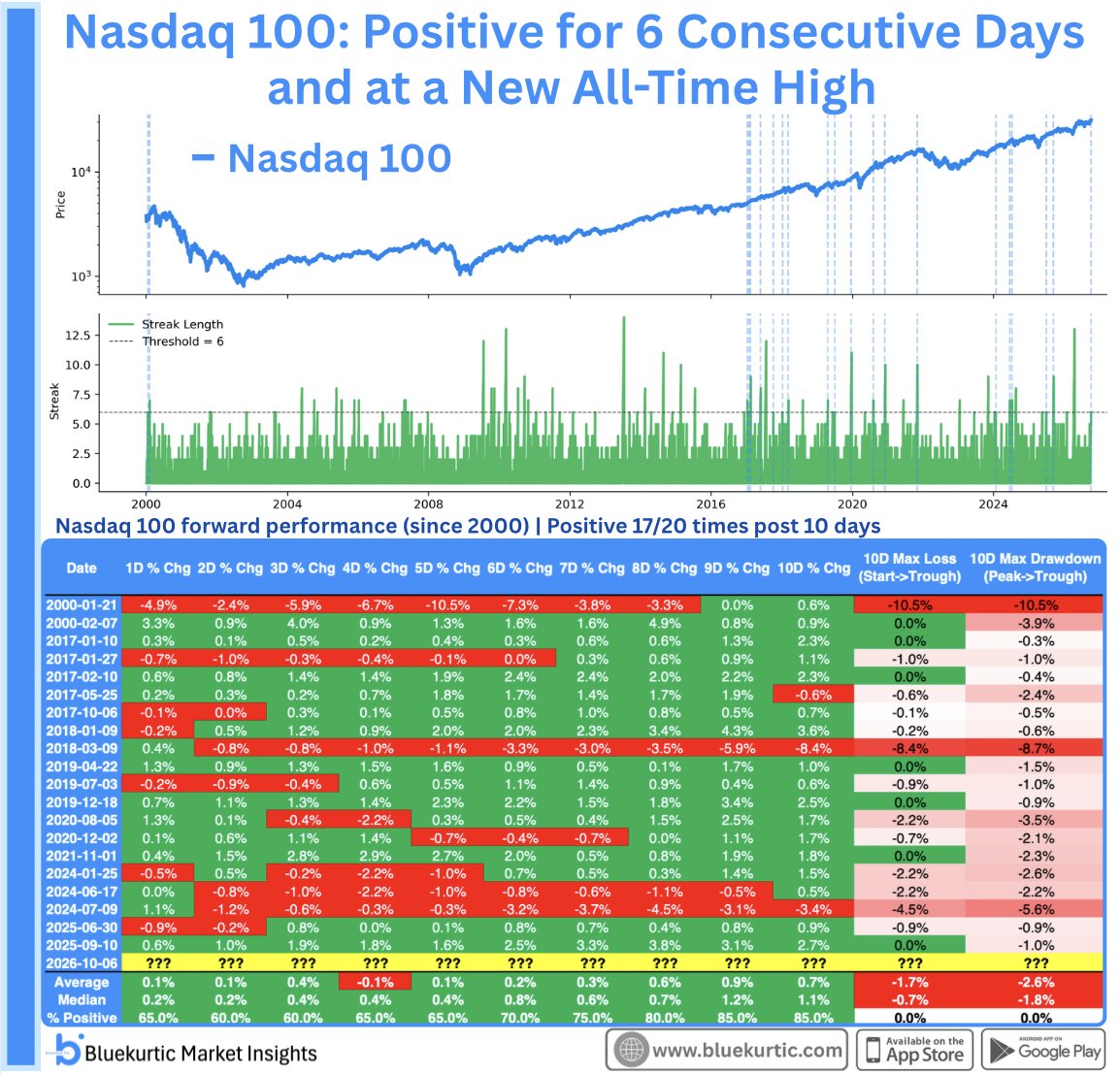
Signal posts on X say the Nasdaq 100 ETF QQQ has now closed green for six straight sessions. Market reports on Oct. 7 also place QQQ at a fresh record close of 759.66 on Oct. 6.
The move fits a broader tech-led advance: Adalytica said QQQ was more than 9% above its 50-day moving average of 719.24, while its RSI sat at 83.0, a level typically associated with overbought conditions. The same reports cited record highs in the S&P 500 and Nasdaq.
The rally continues to concentrate around large-cap tech and AI-linked names, including Nvidia, Apple and Microsoft. Semiconductor and utility trades have also been pulled into the theme, but QQQ remains the clearest barometer of the risk-on move.
There is no new corporate catalyst in the signal itself; this is mainly a continuation story. With momentum extended, market participants are now watching for whether the index can keep grinding higher or begin to consolidate.
X posts on Wednesday pointed to renewed weakness in the Russell 2000 ETF, with traders saying IWM faded back toward the day’s lows and underperformed SPY. One post described it as IWM’s third-worst day versus SPY since April 2025, with the ratio hitting fresh 10-month relative lows.
The broader backdrop remains rate-sensitive and risk-off. A market report on Oct. 7 said U.S. equities opened lower, with IWM down 1.16% in early trade, SPY off 0.6%, QQQ down 0.86%, and VXX up 1.77% as investors braced for the Fed minutes and higher-for-longer rate talk.
Semiconductor shares were also softer, with SMH down 1.74% in the same morning session, while TSLA drew technical-failure commentary on X after a trendline break and failed back-test. Separately, a technical note said Russell 2000 was pressing around its 200-day moving average, underscoring how closely traders are watching support.
For now, the market signal is about relative weakness rather than a single catalyst. Small caps, high-beta tech and volatility products are all being used as read-throughs on rates, positioning and near-term risk appetite.
Bitcoin slipped back below $84,000 today, matching a cluster of bearish order-book chatter on X. Bitfinex Alpha said BTC printed an intraday low of $83,524 on Oct. 7, close to the Oct. 1 low of $83,218.bitfinex.com
The move comes against a backdrop of a heavy cost-basis band built around this zone. Bitfinex Alpha said roughly 1.72 million BTC, or 8.6% of circulating supply, was accumulated between $84,000 and $86,500, while Glassnode said new asks were stacked around $86,500-$86,750 and bids were most concentrated near $81,000-$81,250.glassnode.com
Derivatives were hit hard as price broke the lower end of the range. Bitfinex Alpha estimated $510.6 million in total crypto futures liquidations over the past 24 hours, including $417.6 million in longs, while Cointelegraph cited CoinGlass data showing roughly $550 million in long liquidations.cointelegraph.com
For listed equities, the read-through is mainly sentiment-driven for bitcoin-linked names and exchanges, not a company-specific catalyst. For now, the market is still focused on whether BTC can reclaim the mid-$80,000 area or remains vulnerable to another test of the lower end of the range.
Penguin Solutions (NASDAQ: PENG) reported fiscal fourth-quarter net sales of $566.7 million, above the $519.9 million consensus estimate. Adjusted EPS came in at $1.00, ahead of the $0.77 estimate.
On a year-over-year basis, Q4 net sales rose 68%. Adjusted operating income reached $89.8 million, up 129%, while adjusted EBITDA was about $93 million, up 115%. Full-year FY2026 revenue totaled $1.73 billion, with adjusted EPS of $2.8.
The results were framed around AI infrastructure and data-center demand in the company’s release and in follow-up coverage. In the current coverage set, PENG is the primary ticker; Dell (DELL) appears only as a related AI-server peer mentioned in the news flow.
Several X posts used slightly different rounded figures for the same quarter, but they point to the same reported earnings package. No source in the provided material says the company disputed the numbers.
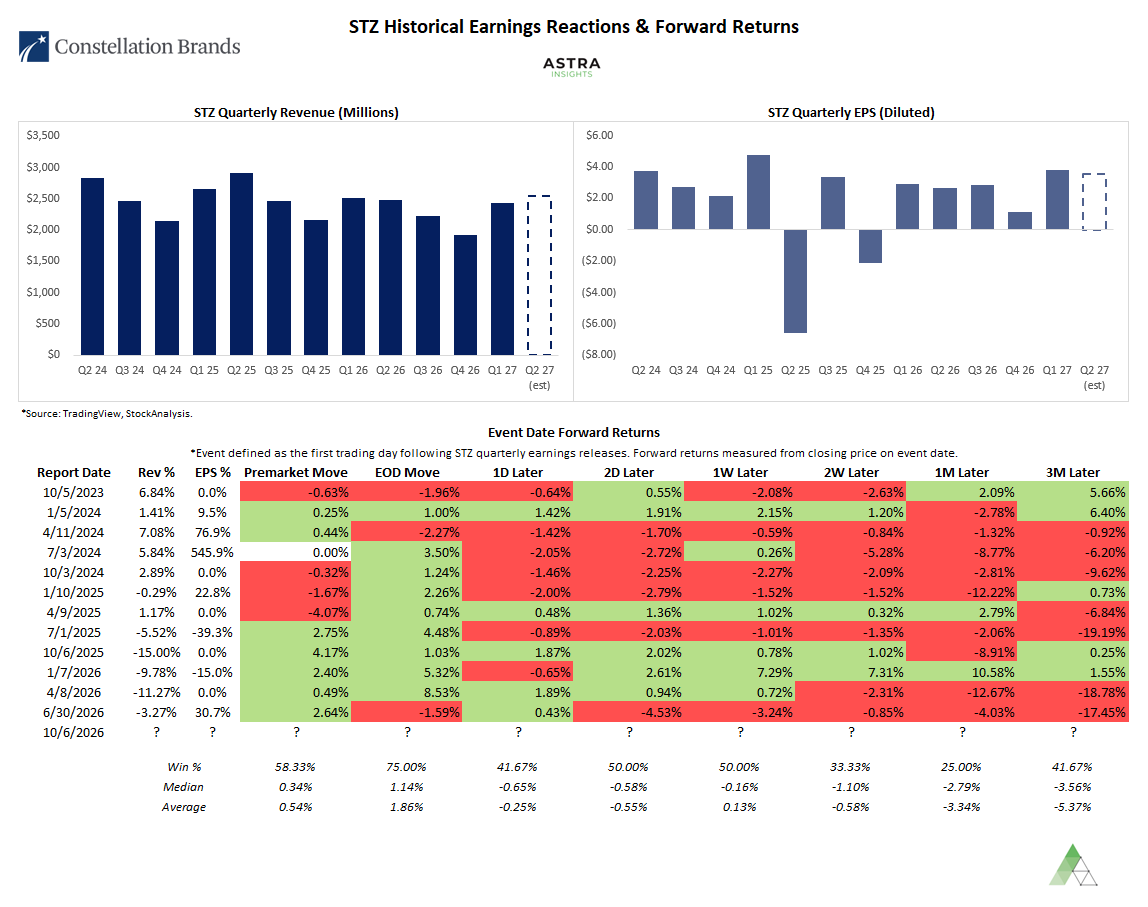
Constellation Brands will report earnings after the close. The latest X signals and our news file both center on the same event, with investors focused on the company’s beer, wine and spirits businesses.
In the latest quarter on file, Constellation Brands posted earnings of $3.74 per share, ahead of the Zacks consensus estimate of $3.62. WSJ also reported that beer sales rose 5% and wine and spirits sales rose 17%, setting a high bar for tonight’s update.
Pre-market chatter has already turned cautious, with one signal citing a 1.6% decline in STZ and questioning the durability of beer demand. Another trader note put the options-implied move at around plus or minus 5.75%, suggesting the market expects a meaningful reaction after the numbers.
The X feed also includes commentary on the company’s positioning and an example options trade, but those are market views rather than new facts. For now, the main incremental catalyst is the earnings release itself.
Switzerland’s foreign currency reserves rose to CHF 770.5 billion in September, up from CHF 770.1 billion in August, according to the latest release. The figure matches the value flagged by several real-time market wires tracked on X.
The September reading follows a previously reported increase to CHF 770.1 billion in August from CHF 768.1 billion in July, which marked a third straight monthly gain at the time. That earlier release provides the immediate backdrop for today’s update.fxstreet.com
For FX markets, reserve data is often watched as a proxy for SNB intervention and safe-haven flows. The franc had already softened ahead of the release, with traders also weighing broader dollar strength and geopolitical risk.tmgm-asia.com
More broadly, the franc remains sensitive to euro-area fiscal worries and shifts in U.S. rate expectations. Keeping reserves above CHF 770 billion underscores the SNB’s still-large balance-sheet footprint in the FX market.
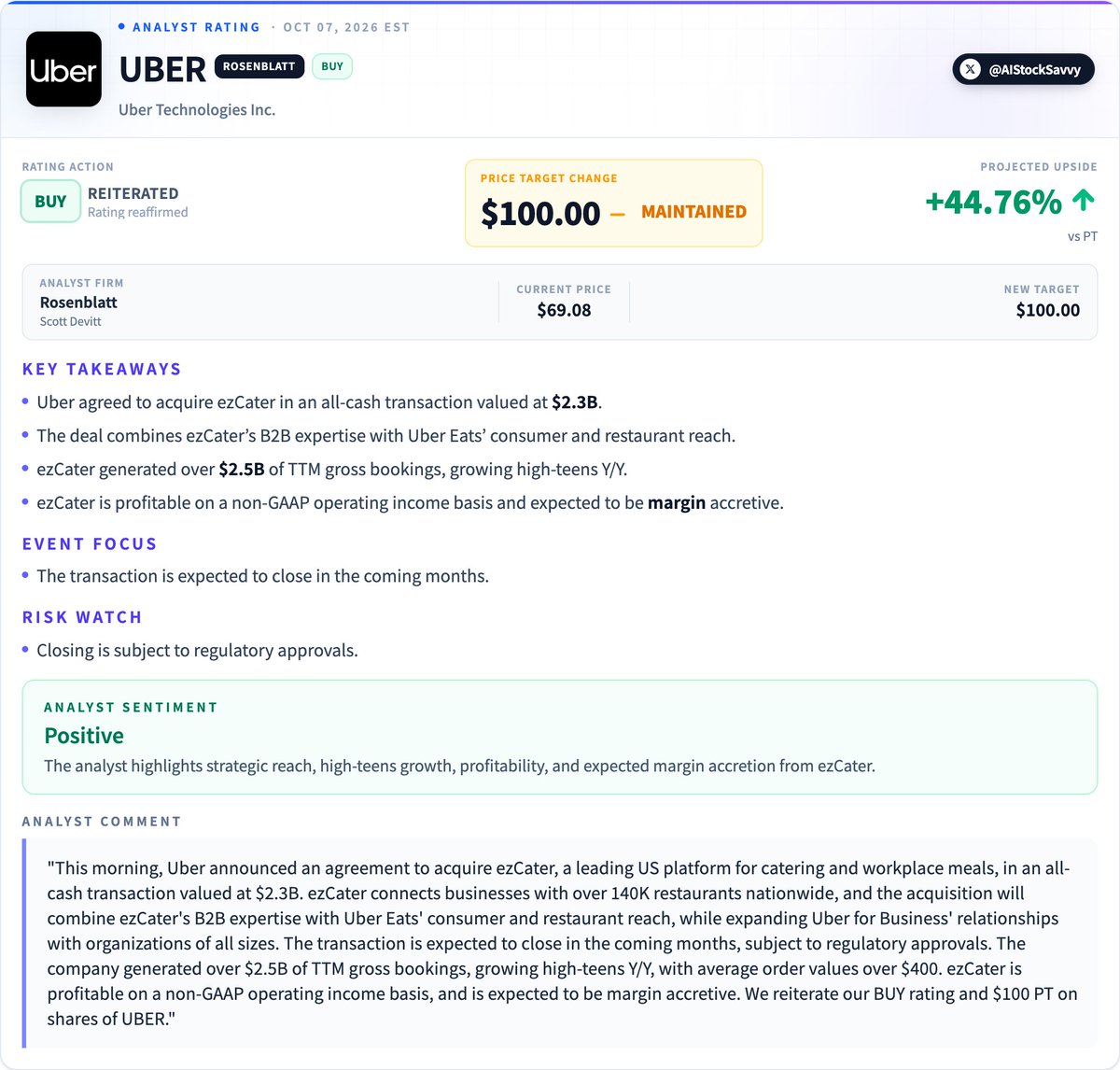
Uber Technologies drew fresh bullish calls on Tuesday, with BTIG and Rosenblatt both reiterating Buy ratings and setting a $100 price target. BTIG said the Delivery Hero and ezCater deals could add more than $66 billion to bookings and lift pro forma EPS by about 5%, while Rosenblatt said ezCater would expand Uber’s B2B reach and add a profitable, margin-accretive business.
The commentary follows Uber’s recently announced agreement to acquire ezCater for $2.3 billion. Coverage in the news library shows the company has framed the transaction as a way to expand Uber Eats into workplace catering and higher-value delivery use cases.
For the stock, the focus remains on UBER and whether the acquisition can broaden Uber’s delivery ecosystem. The $66 billion bookings estimate and the roughly 5% EPS accretion cited in the X posts are analyst projections, not company guidance.
No separate response from Uber to the analysts’ remarks appears in the supplied material, though the acquisition itself has been corroborated by multiple reports in the news library.
CNBC featured SK Hynix's AI memory facility, highlighting HBM as a key bottleneck, while Applied Materials' earnings confirmed broadening AI infrastructure investment.
2026-08-264 posts · 4 authors
Samsung raised 4nm and 5nm wafer prices with regional variations, while pre-earnings sentiment suggested limited upside catalyst for Nvidia despite expected revenue beat.
2026-09-034 posts · 4 authors
Hot Chips talks highlighted leading-edge wafers as a scarce input, and Morgan Stanley estimated Nvidia's share of TSMC CoWoS allocation is declining.
2026-10-063 posts · 3 authors
AMD CEO Lisa Su planned a South Korea visit for supply-chain talks with Samsung, stating AMD would substantially increase CPU/GPU supply in 2027 for AI demand.
2026-10-0718 posts · 13 authors
Lisa Su met Samsung's semiconductor chief in Korea to discuss HBM supply and foundry orders, as AMD seeks to secure HBM4 for its MI450 ramp.