The Federal Reserve’s September minutes showed unanimous support for the 25-basis-point hike that lifted the fed funds target range to 3.75%-4.00%. The minutes also indicated that most officials thought another increase by year-end could be appropriate.economymiddleeast.com wallstreetcn.com
That view was reinforced by a fresh comment from Fed Governor Christopher Waller, who said additional hikes may be needed if data come in as expected, while stressing that the pace does not have to be consecutive.cnbc.com
The inflation backdrop remains sticky. Search results cited August PCE inflation at 3.4% year over year, with core PCE also at 3.4%, still well above the Fed’s 2% target. In rates markets, the 10-year Treasury yield rose to 5.322% and the 30-year yield to 5.705% ahead of Thursday’s $22 billion long-bond auction.cnbc.com
For equities, the immediate impact is on rate-sensitive sectors such as high-duration technology, real estate and utilities, where higher Treasury yields can pressure valuations and financing conditions. The broader takeaway is that the market is repricing the Fed path rather than reacting to a company-specific catalyst.
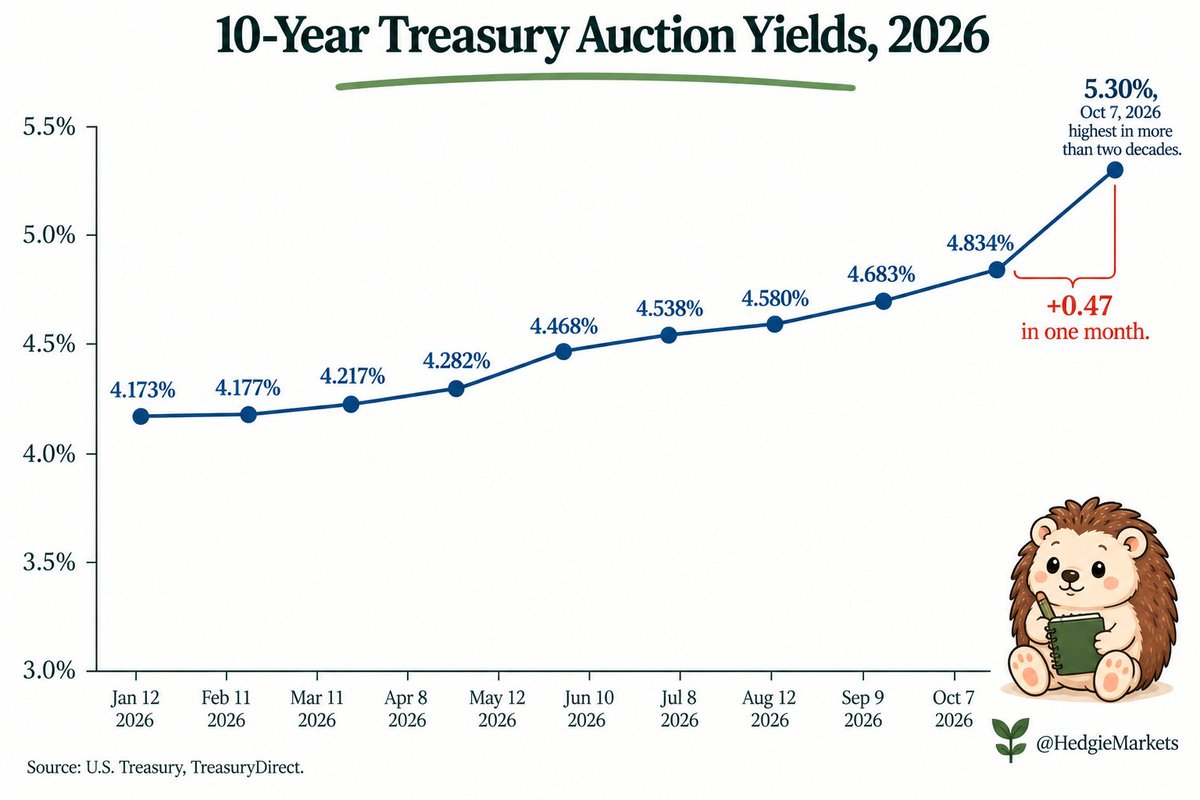
The U.S. Treasury sold $39 billion of 10-year notes on Wednesday at a high yield of 5.30%, below the prevailing market level at the bid deadline. Demand was strong: the bid-to-cover ratio rose to 2.77, indirect bidders took 80.3% of the issue, and primary dealers were left with just 2.5%.
The auction mattered because it came with the benchmark 10-year yield near multi-decade highs and the 30-year yield trading at its highest level since 2002. Investors have been watching whether elevated yields, alongside concerns about fiscal deficits and inflation persistence, would eventually draw in enough real-money demand.
On the same day, the Treasury said it will increase its buyback operation to as much as $6 billion on Thursday, targeting less liquid 10- and 20-year securities. The department also said future buybacks will be at least $4 billion, underscoring its effort to keep the long end of the Treasury market functioning smoothly.
Yields eased after the auction, with the 10-year note pulling back from an intraday peak and the 30-year bond off its highs. The move may provide some relief across rate-sensitive assets, but the core message from the day was stronger demand for duration rather than a change in the interest-rate outlook.
The International Energy Agency said member countries agreed to accelerate oil-stock releases announced in March and to prioritize diesel where possible. The agency said roughly 100 million barrels from the March collective action have yet to reach the market.
The move extends the IEA’s 400 million-barrel emergency supply programme launched in March, which was designed to counter disruptions and higher prices following turmoil in the Middle East. The IEA said governments still hold about 1.1 billion barrels of publicly controlled emergency oil stocks, including more than 200 million barrels of diesel.
Oil markets responded because diesel is a key refined product for trucking, freight and industry, and tighter supply has been a major concern. The main trade-linked ticker in this signal is USO, as traders viewed the IEA’s comments as a near-term buffer for crude and products.
IEA Executive Director Fatih Birol said members backed completing the March release “as soon as possible” and prioritizing diesel stocks to the extent possible. The European Commission said EU members want the planned releases kept within the March-approved volume.
U.S. equity futures turned lower on Thursday as oil prices jumped and Treasury yields climbed, with the 10-year yield trading near 5.36%, its highest since 2002 in market reports. The move hit risk assets broadly, including stocks and bonds, in early trading.
The catalyst was a fresh oil spike tied to renewed Middle East tensions and concern over U.S. hurricane-related supply disruption. Market reports also noted Brent crude trading around $104 a barrel at one point, while Asia technology shares weakened after Samsung Electronics’ results came in below expectations.
The selloff was most visible in equity futures and chip-related names, as investors worried that higher energy costs could feed inflation and keep the Federal Reserve on a tighter policy path for longer. That pressure is being felt across semiconductors and other rate-sensitive sectors.
So far, this is a market-driven repricing rather than a company-specific shock. The key question for traders is how long the oil-and-yields combination can keep weighing on the index-heavy growth trade.
The National Hurricane Center said at 3 a.m. UTC Thursday that Tropical Storm Isaias was centered at 22.9N, 91.9W in the Gulf of Mexico with maximum sustained winds of 60 knots, or 70 mph, and was moving east-northeast at 8 knots. The agency said the system is expected to strengthen and make landfall along the northern U.S. Gulf Coast late Friday or early Saturday.
The storm has already prompted hurricane warnings and storm-surge alerts for parts of the central Gulf Coast. Forecasts cited by multiple outlets point to 3 to 7 inches of rain, higher local totals, dangerous surf and rip currents, and the possibility of isolated tornadoes in coastal areas.
The key market focus is Gulf Coast energy infrastructure, including offshore oil platforms, crude production and refinery operations. Bloomberg and other wire reports said some offshore output has already been halted temporarily, a development traders will watch for any broader impact on U.S. crude and fuel supply.
The latest official guidance comes from the NHC, which continues to update the storm track and intensity forecast. State emergency actions, evacuation orders and school closures are beginning to build across parts of Florida, Alabama and Mississippi.
Broadcom is arranging more than $50 billion in financing for a custom artificial-intelligence chip it is developing with OpenAI, according to a WSJ-reported update echoed by multiple market feeds. The financing talks are reportedly still in the early stages, and Apollo and Blackstone are among the firms approached.
The report extends an already developing story around Broadcom’s OpenAI-linked custom chip effort. Coverage in the news library from Fool and GuruFocus today also tracks the financing plan, indicating this is now a live market narrative rather than a one-off rumor.
For investors, the main ticker is AVGO, with the headline centered on how Broadcom would fund and scale chip capacity for a large AI customer. The story also reinforces how capital-intensive the AI infrastructure buildout has become.
The reporting says discussions remain early and leaves room for changes in size or structure. No public response from OpenAI is cited in the material provided.
San Francisco’s Board of Supervisors unanimously approved a 45-day temporary moratorium on new data centers on Oct. 6. The urgency ordinance immediately pauses approvals for new builds and expansions while the Planning Department reviews potential impacts.
The move reflects growing local pushback over data centers’ electricity use, water consumption, noise, and broader neighborhood effects. City filings define data centers broadly as facilities housing computing infrastructure for processing, storing, or distributing electronic data.
The main market relevance is for cloud and AI infrastructure operators with assets or plans in San Francisco, including projects already in the pipeline. Reporting says the pause will affect the NOVVA site in Bayview and a proposed Dogpatch project that has not yet broken ground.
Officials will use the 45-day review period to assess energy, water, air quality, land use, and community concerns, and the moratorium could be extended if the city finds significant environmental impacts. Further hearings are expected after the review concludes.
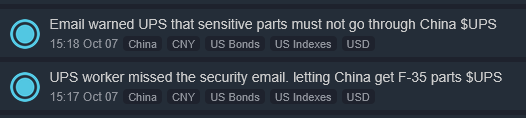
Bloomberg, citing a person briefed on the matter, reported that parts from an F-35 stealth fighter jet were routed through Hong Kong after a UPS employee missed an email warning not to send the shipment that way. The report frames the episode as a logistics mistake involving sensitive defense hardware.
The F-35 program sits at the center of U.S. and allied defense supply chains, so even a routing error draws scrutiny. The issue matters because it highlights how a routine shipping process can collide with export-control and security requirements when defense-related components are in transit.
At this stage, the public account rests on reporting from a person briefed on the incident, and a full official explanation has not been laid out in the signal. Any later company, regulatory or contractual response would determine whether the story remains a one-off operational lapse or becomes a broader compliance issue.
Samsung Electronics America said Samsung Wallet will begin supporting USDC in the last week of October for eligible U.S. Galaxy users. The feature will let users send funds to compatible crypto wallets abroad or to eligible bank accounts in more than 60 countries, with recipients able to receive local currency.
The service is powered by Bastion for custody and compliance infrastructure, with Coinbase Prime Vault used as a sub-custody layer. Samsung said Solana and Sui will provide blockchain network support, while USDC is the first stablecoin supported and transfers to external compatible wallets will not carry a Samsung fee.
The announcement builds on Samsung’s earlier July disclosure that it planned to add stablecoin capabilities to Samsung Wallet. Today’s reports from CoinDesk, Decrypt and the Solana Foundation add the operational details that were previously missing, including the 82 million-device rollout scope and the 60-plus-country bank transfer reach.
For crypto markets, the story is less about a token price catalyst than about distribution: a major handset maker is turning stablecoin rails into a mainstream payments feature. Samsung also said future use cases could include online and tap-to-pay stablecoin payments, though any expansion will depend on local regulation.
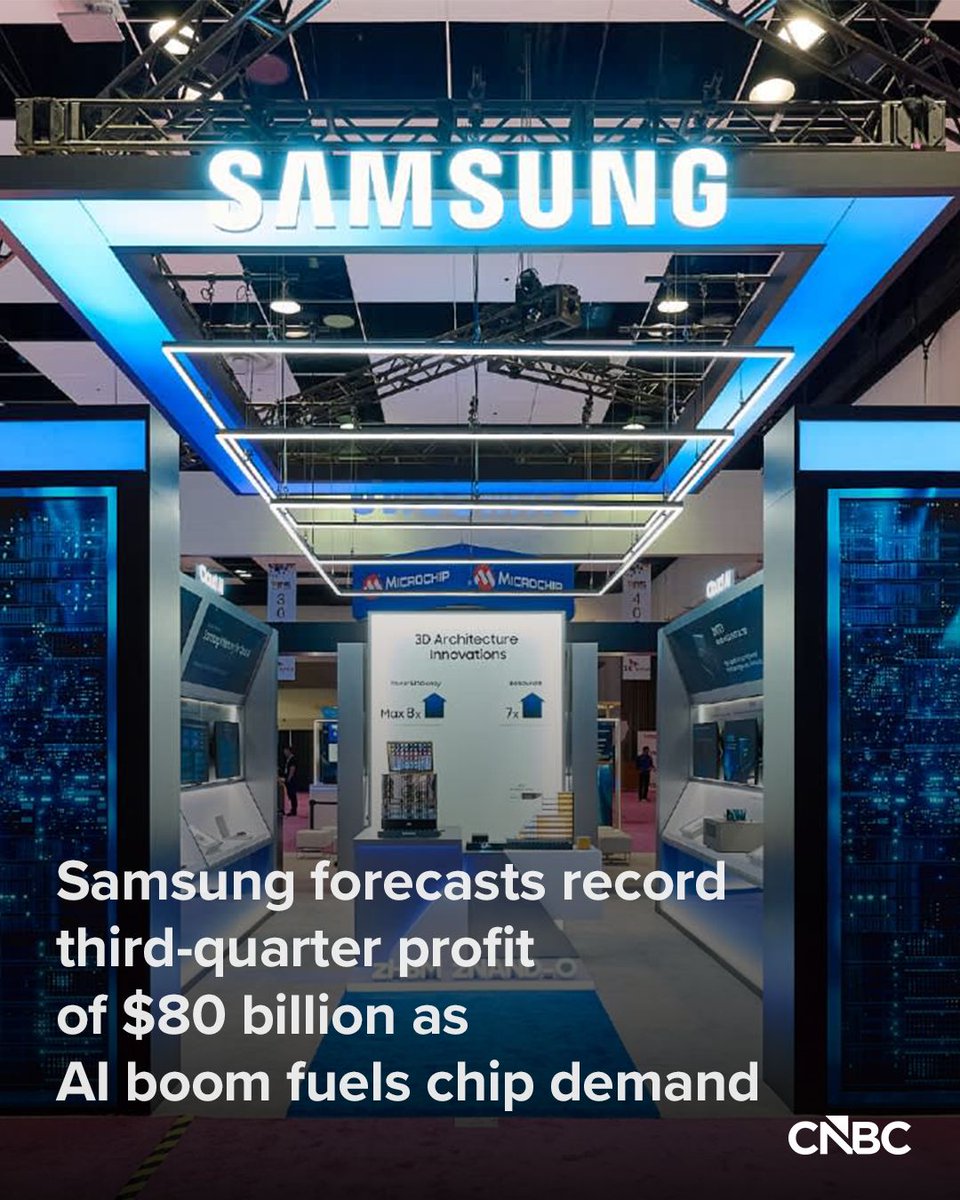
Samsung Electronics said preliminary third-quarter operating profit reached 107.4 trillion won, or about $80.2 billion, while revenue came in at 195 trillion won, about $145.6 billion. The company said demand tied to artificial intelligence continued to power its chip business.
The figure marks Samsung’s first quarter above 100 trillion won in operating profit and comes after another record quarter earlier this year. Media reports said the result also came in slightly below some of the highest market expectations, even as the underlying memory cycle remained exceptionally strong.
The update is likely to keep attention on memory-chip peers and suppliers, including Micron and SanDisk, as investors gauge how long pricing power can last. As the world’s largest memory-chip maker, Samsung is often treated as a read-through for DRAM and NAND conditions across the sector.
Samsung said it will publish its full earnings later this month, including a division-by-division breakdown. That should give a clearer view of how much of the profit came from chips versus mobile and consumer electronics.
A bipartisan House Select Committee on China said digital investment platform Webull is tied to the Chinese government in “structural ways” and presents a national security risk. X posts circulating today show the market treating the finding as a fresh pressure point for BULL, which fell nearly 30% at one point.
This is not the first time the issue has surfaced. The local news library shows follow-up coverage from Oct. 7 on the same congressional investigation, while CNBC said Webull has 28 million global users and that the panel shared its findings exclusively with the network.
The immediate market impact centered on BULL, while Public was seen launching a 3% match for customers transferring out of Webull. Social posts also suggested other brokerages could respond with similar promotions, though that remains commentary rather than confirmed action.
Webull pushed back, saying the report contains “significant inaccuracies” and drew “unsupported conclusions,” according to CNBC. For now, the record in hand is a dispute between the committee’s national-security framing and Webull’s denial of the report’s accuracy.
Wells Fargo faces HUD probe over Black homeownership efforts
The bank is under scrutiny over whether its homeownership push for Black and other minority borrowers ran afoul of fair-lending rules, with shares sliding on the report.
U.S. Housing and Urban Development officials are investigating whether Wells Fargo violated fair-lending laws while trying to boost homeownership among Black Americans, according to reports cited by Bloomberg and the WSJ. The probe is the latest development in a long-running scrutiny of mortgage access and fair-lending practices.
The issue sits at the intersection of housing policy, compliance, and bank lending programs aimed at expanding access for Black and minority borrowers. A recent report in this newsroom also said federal housing officials had opened a review of programs designed to raise Black and minority homeownership.
Markets reacted quickly to the headline risk. Bloomberg said Wells Fargo shares fell nearly 2% after the report, as investors weighed possible compliance costs and regulatory uncertainty.
No new formal response from Wells Fargo was included in the materials provided. At this stage, the reported investigation remains an allegation and has not been publicly resolved.
Wolfspeed said it has received a conditional loan commitment of up to $1.5 billion from the U.S. Department of War, issued through the Office of Strategic Capital. The company described the facility as a 30-year arrangement supporting domestic wide-bandgap supply chain development.
Business Wire and Reuters both reported the same Oct. 7 announcement, making this a fresh confirmation of the financing package rather than a separate development. The loan is tied to U.S. silicon carbide production, a key part of Wolfspeed’s manufacturing footprint.
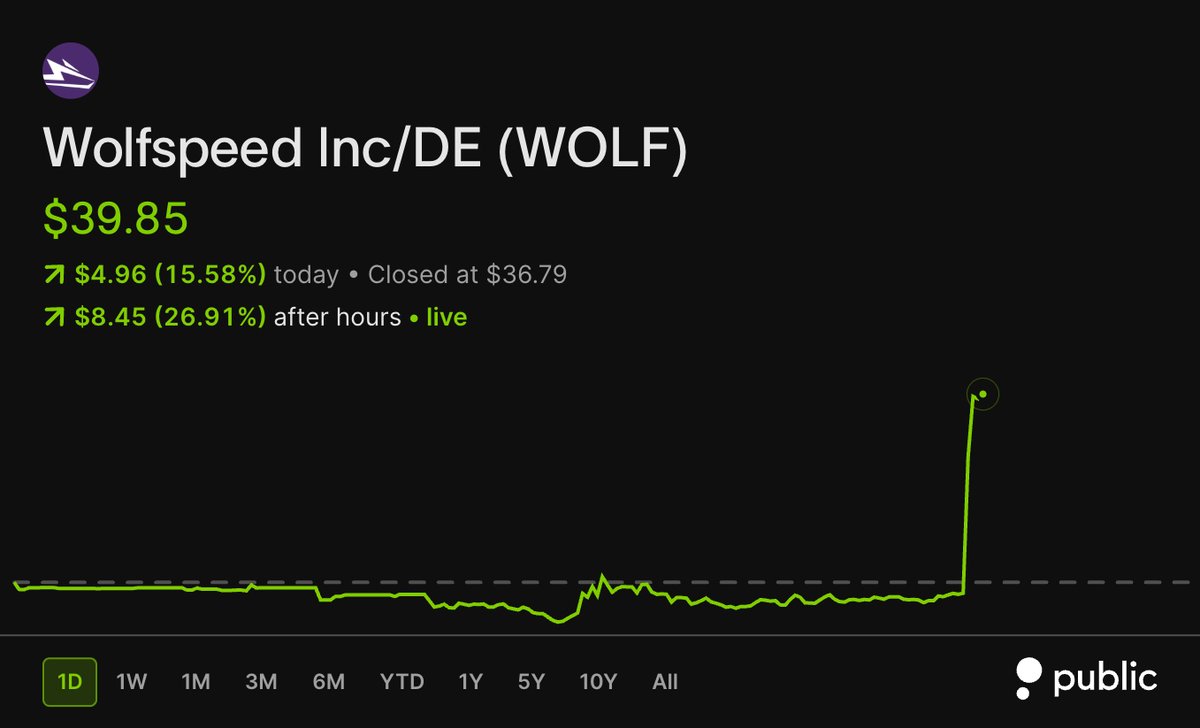
Shares in WOLF moved sharply higher in after-hours trading according to posts on X, with some accounts citing gains of roughly 15% to 26%. The funding drew attention because it targets silicon carbide, gallium nitride epitaxy and radiation-hardening capabilities.
The commitment remains conditional, and the materials do not describe it as a closed transaction. No other named company is presented as the primary subject of the event.
A CNBC report, cited by multiple market wires, says President Trump’s August financial disclosure shows he bought $5 million to $25 million of Meta shares on Aug. 21 and added exposure to SpaceX debt. The filing also lists 517 securities transactions in August, with total value ranging from $74 million to $273 million.
The disclosure matters because Trump is the sitting U.S. president and both Meta and SpaceX sit close to major policy and regulatory files. Any personal investment in those names tends to draw attention for potential conflicts, even when the holdings are reported through a public filing rather than announced as a policy move.
For markets, the immediate focal points are Meta, SpaceX-related debt and AMD, which the filing says Trump sold in August for $1 million to $5 million. The news is primarily a disclosure story: it changes what investors know about the portfolio, not the underlying businesses’ operations.
The White House has previously said third-party managers independently handle the president’s portfolio. That explanation was given in response to earlier reporting on Trump’s trades and remains the relevant backdrop to this filing.
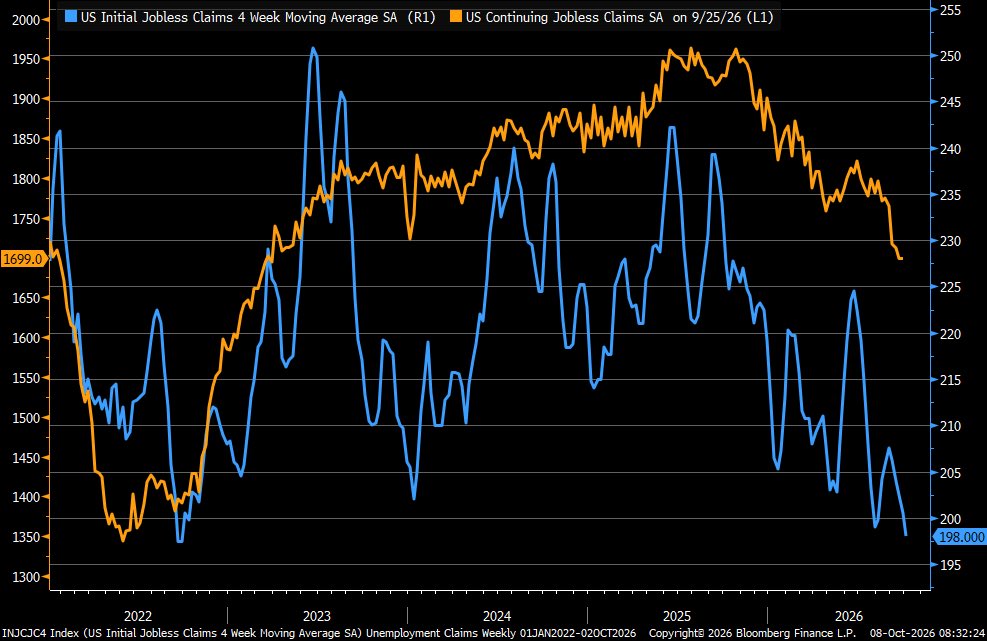
The Labor Department said initial jobless claims fell by 2,000 to 197,000 in the week ended Oct. 3, below expectations for 200,000. The prior week’s figure was revised up to 199,000, while continuing claims rose 17,000 to 1.716 million in the week ended Sept. 26.
The report extends a pattern of low layoffs and subdued hiring that has defined the U.S. labor market in recent months. Reuters and AP both noted that claims have remained near historic lows, even as September payroll growth slowed sharply.
For markets, weekly claims are a high-frequency read on labor momentum and can influence Treasury yields, the dollar and rate expectations. Investors will likely weigh the data alongside the Fed’s latest minutes and upcoming inflation and employment reports.
There is little controversy over the headline numbers: major outlets are all citing the same Labor Department release. The next confirmation points will be continuing claims, the monthly jobs report and inflation data, which will show whether this week’s reading is part of a broader trend.
Rivian received a $1 billion term loan from Volkswagen Group, according to multiple X posts. The facility was funded in full on Oct. 7 and carries a fixed 6.03% interest rate over 10 years.
The loan is secured by Rivian’s 50% stake in the joint venture and is described as non-recourse. In that structure, Rivian does not guarantee the debt, and the lender’s claim is limited to the collateral if the borrower defaults.
The latest filing-level detail comes alongside recent market coverage of Rivian’s deliveries and share performance in the company news flow. For investors, the key point is the financing terms tied to the Volkswagen partnership rather than a standalone equity raise.
The available signal set is consistent across sources on the amount, maturity and rate. No contrary statement appears in the provided news library materials.
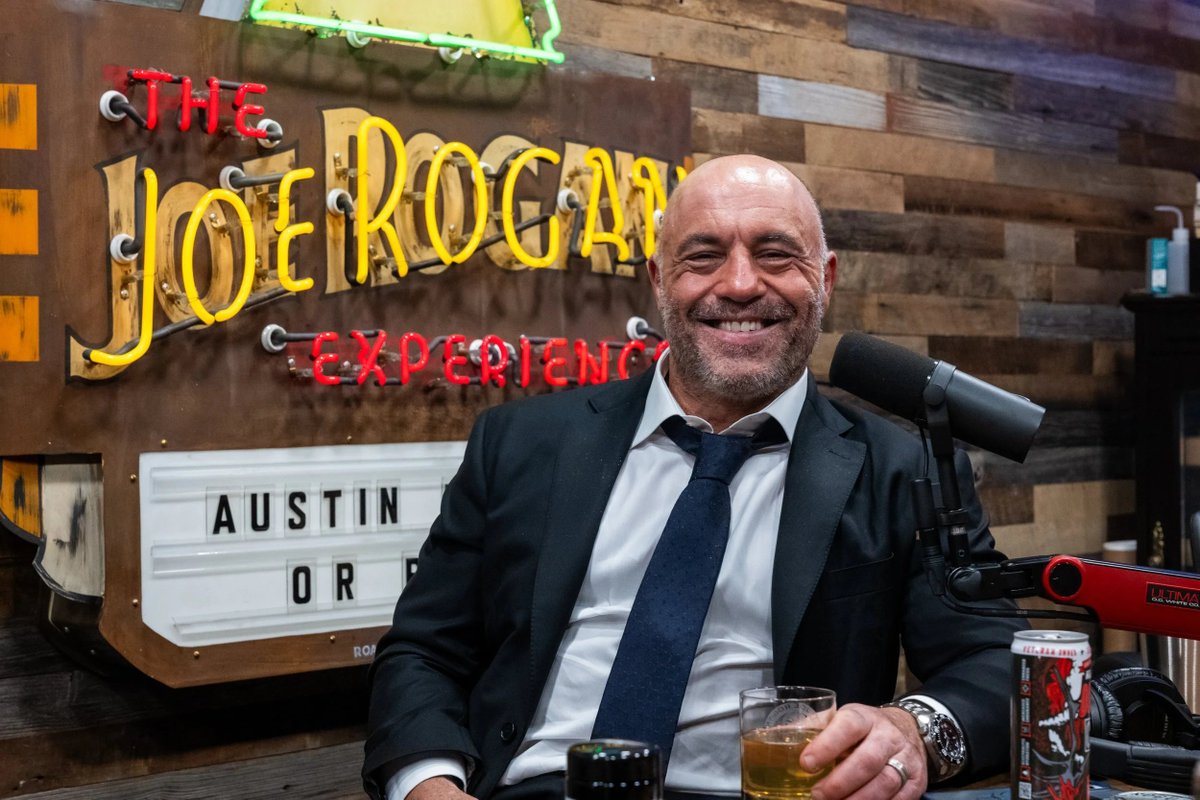
Spotify has renewed its multiyear agreement with podcaster Joe Rogan, keeping The Joe Rogan Experience under its licensing umbrella. WSJ says the deal also covers ad sales for the show.
Reuters said Spotify signed a new multiyear licensing agreement on Thursday, extending a partnership that began in 2020. WSJ added that Rogan’s show remains the No. 1 podcast in U.S. listenership.
The news is directly relevant to Spotify (SPOT), since Rogan’s program is one of the platform’s most important content properties. Investors will likely continue to focus on what the arrangement means for content economics and ad monetization.
Public signals in the provided material all point to the same development: Spotify has re-upped with Rogan on terms reported to be similar to the prior deal. No further company response is included in the source set.
Google Cloud unveiled Gemini Agent at its 2026 Gemini at Work event, positioning it as a universal agent for enterprise work. The product is described as able to handle tasks across documents, email, and business systems, while dynamically routing work to sub-agents when needed.youtube.com financialjuice.com
The move builds on Google’s broader enterprise-agent strategy around Gemini Enterprise, A2A and A2UI, where the company has been emphasizing orchestration, model choice, and workflow integration. That framing suggests Google is trying to make its AI stack a front door into day-to-day business operations.a2uicatalog.ai
For markets, the launch puts $GOOGL more directly against Microsoft, Meta and OpenAI in the race to own enterprise AI workflows. Investors will likely focus on whether Google can turn agent capabilities into incremental demand across Workspace, Cloud and other enterprise products.
The key verified claim today is the product positioning itself as a “universal agent for work” with dynamic sub-agent creation, echoed by multiple wire-style reports and Google-related session materials.financialjuice.com firstsquawk.com
Microsoft on Wednesday disclosed pricing and availability for its new Surface Laptop Ultra, with a starting price of $2,599. The machine is built around Nvidia chips and is designed to run AI agents locally on the device rather than in the cloud.
Bloomberg and Reuters both reported that Microsoft is positioning the laptop as a high-end AI PC, and CNBC confirmed the starting price. Microsoft also said the device can outperform a comparable Apple model on some AI tasks, putting the product squarely into the premium laptop competition.
For Microsoft, the launch extends the Surface line into the next wave of AI hardware. For Nvidia, it broadens the company’s reach beyond data centers and into consumer PCs, giving MSFT and NVDA a new narrative around on-device AI adoption.
So far, the public details are centered on pricing, availability and product capabilities rather than financial guidance. Investors will likely focus next on how much demand the new model can generate and whether it creates a meaningful new channel for Nvidia chips.
Multiple X wires say Nvidia ($NVDA) has committed $1 billion over the next five years to advance U.S. science. The messages from deitaone and FinancialJuice, alongside a curated post, all point to the same newly surfaced commitment.
The significance is broader than a typical product update: it ties Nvidia’s capital deployment to research and the U.S. science ecosystem. The signal set does not disclose any specific programs, beneficiaries, or implementation timeline beyond the five-year window.
For markets, this is best treated as a company-development headline rather than a financial or regulatory event. The local news database shows recent NVDA coverage focused on valuation and stock commentary, but it does not add further detail on this commitment.
Company
Vance Accuses Microsoft of Abusing H-1B Visa System
The vice president publicly singled out Microsoft, tying the criticism to US job cuts in his remarks.
US Vice President JD Vance publicly accused Microsoft of abusing the H-1B visa system, saying the company has done so more than any other firm in America. Wire reports also said he linked the criticism to Microsoft reducing US workers.
This is a new public escalation in the debate over Microsoft’s hiring and visa practices, not a new earnings or strategy update. The latest items in the site’s news library over the past 48 hours focus instead on Microsoft’s AI spending, bullish analyst coverage, and investor activity.
For the stock, the immediate significance is reputational: MSFT is back in the spotlight on labor and immigration issues. The available material does not show a market move or a regulatory response yet.
As of the current signal set, Microsoft remains the central company in the story, with the H-1B visa system as the issue under scrutiny.
Jeff Bezos said in a Fox interview that he has personally invested $28 billion in Blue Origin. Several X-wire style posts repeated the comment, including his remark that Blue Origin will eventually go public.
The statement matters because it puts a headline figure on the founder’s long-running backing of the space company. It also arrives alongside a separate signal that Blue Origin raised $10 billion from outside investors for the first time, although the provided material does not add detail on that financing.
For markets, the only directly relevant ticker is AMZN, since Bezos is Amazon’s founder and the name most closely tied to the broader corporate story. Still, the signal is about Blue Origin’s funding and potential exit path, not Amazon’s operations.
What can be verified from the supplied material is the dollar amount and the IPO remark from the Fox interview. No other underlying terms or transaction details are established in the sources here.
A Microsoft executive said Meta Platforms’ Muse will soon arrive on Windows. The remark extends the assistant’s footprint beyond phones, the web and WhatsApp, adding Microsoft’s desktop operating system to the mix.
The update matters because it shows Meta continuing to push the same agent across more user surfaces. In that setup, Windows becomes another place where Muse can carry context, while Microsoft positions Copilot alongside it.
For investors, the signal ties directly to META and MSFT. The same X post also said Copilot features powered by hybrid intelligence are rolling out over the coming months, underscoring how both companies are expanding their AI assistant strategies on the PC.
No separate response from Meta was included in the source material. The immediate news value is the fresh Windows placement, not a new product launch date or deeper technical detail.
Disney has confirmed that Disney+ will stream the 2027 Super Bowl. It will be the first time the event is carried on Disney’s streaming platform.
Recent coverage in the news library points to the same development: WSJ reported that U.S. subscribers will be able to stream the game on Disney+, while CNBC said Disney confirmed the upcoming Super Bowl will be available on its streaming service. Bloomberg also reported that Disney+ will stream the 2027 game.
The announcement adds a major live-sports title to Disney’s streaming lineup. For DIS, the key market question is how much the marquee event can broaden reach and deepen engagement on Disney+.
No additional company comments were included in the material. The available reports are consistent in saying Disney+ will host the first Super Bowl stream on Disney’s platform.
Firmus Grid Ltd. has closed the books on its initial public offering, and people familiar with the deal say bankers are now weighing whether to cut the price or pull the transaction altogether. The company has not yet disclosed a final price or structure.
The IPO had been marketed at A$11 a share, implying a valuation of A$43.7 billion, or about US$30.4 billion. Earlier reporting said the deal was set to raise about US$5.5 billion, making it one of Australia’s largest listings in years.
Investor hesitation has centered on valuation, debt and the capital intensity of building data centers and securing power supply. Bloomberg also reported that shares of backer Maas Group Holdings fell as much as 30% intraday in Sydney as speculation grew over whether the listing would proceed.
Firmus has not commented publicly on the final outcome. The latest reports suggest the market is still waiting for a clear decision on pricing and execution.
American Airlines has officially said it will install SpaceX’s Starlink across its entire mainland fleet of more than 1,030 aircraft. That is up from a previously announced plan covering 500 planes, and installations are set to begin in early 2027.
The update points to a broader commercial rollout rather than a limited fleet trial. The material says Starlink’s aviation terminal can deliver speeds of up to 1 Gbps and support streaming, gaming and real-time communications.
For the market, the direct read-through is to American Airlines $AAL, while Starlink remains the key product at the center of in-flight connectivity competition. Investors will likely watch the pace of retrofits and whether other airlines feel pressure to match the onboard experience.
No contradictory response is included in the provided material. The latest signal adds scope and timing to an already announced airline connectivity deal, but it does not include pricing or financial terms.
Viatris has agreed to acquire Pacira BioSciences in a $1.65 billion cash deal, according to multiple reports and company materials. Pacira shareholders are set to receive $36.50 per share.
The deal centers on Pacira’s non-opioid pain franchise. Viatris said the acquisition advances its innovative medicines strategy and strengthens its position in non-opioid pain therapies.
Shares of Pacira reacted sharply in premarket trading, with X posts citing a 44.0% gain. Viatris is the other key stock tied to the transaction.
Separately, a shareholder-fairness review has already surfaced through a law-firm inquiry referenced in the news flow. The transaction’s terms, including the cash price, are consistent across the cited reports.
Shell said third-quarter refining margins are now expected to reach $42 a barrel, up from $24 in the second quarter. The company also raised its integrated gas production outlook.
The guidance follows Shell’s earlier move to lift its Q3 gas output forecast. Reuters, cited in the site’s news library on October 7, said integrated gas production was expected at about 740,000 to 780,000 barrels of oil equivalent per day.
For investors, the update matters because it feeds into Shell’s third-quarter earnings and cash flow expectations. Proactive Investors reported that RBC trimmed its profit forecast after the trading update, while lifting its cash flow estimate.
The X post also said Shell expects lower refinery utilization and about $2.5 billion of emissions-certificate payments brought forward into Q3. That points to stronger margins alongside higher near-term costs.
PepsiCo ($PEP) reported third-quarter 2026 results with net revenue of $25.27 billion and adjusted EPS of $2.34, both ahead of estimates. Organic revenue rose 3.1% in the quarter.
The bigger signal for investors was the full-year outlook. PepsiCo said it now expects fiscal 2026 organic revenue growth of about 3%, while core EPS growth is projected at 2.5% to 3.5%.
That combination leaves the debate centered on whether the company can sustain growth momentum going forward. The market focus naturally falls on PEP because the report and guidance directly shape the stock’s earnings narrative.
The latest coverage from the newsroom points to the same takeaway: the quarter itself was solid, but the guidance is what will drive the next round of scrutiny. For now, the confirmed facts are the results and outlook PepsiCo has put on record.
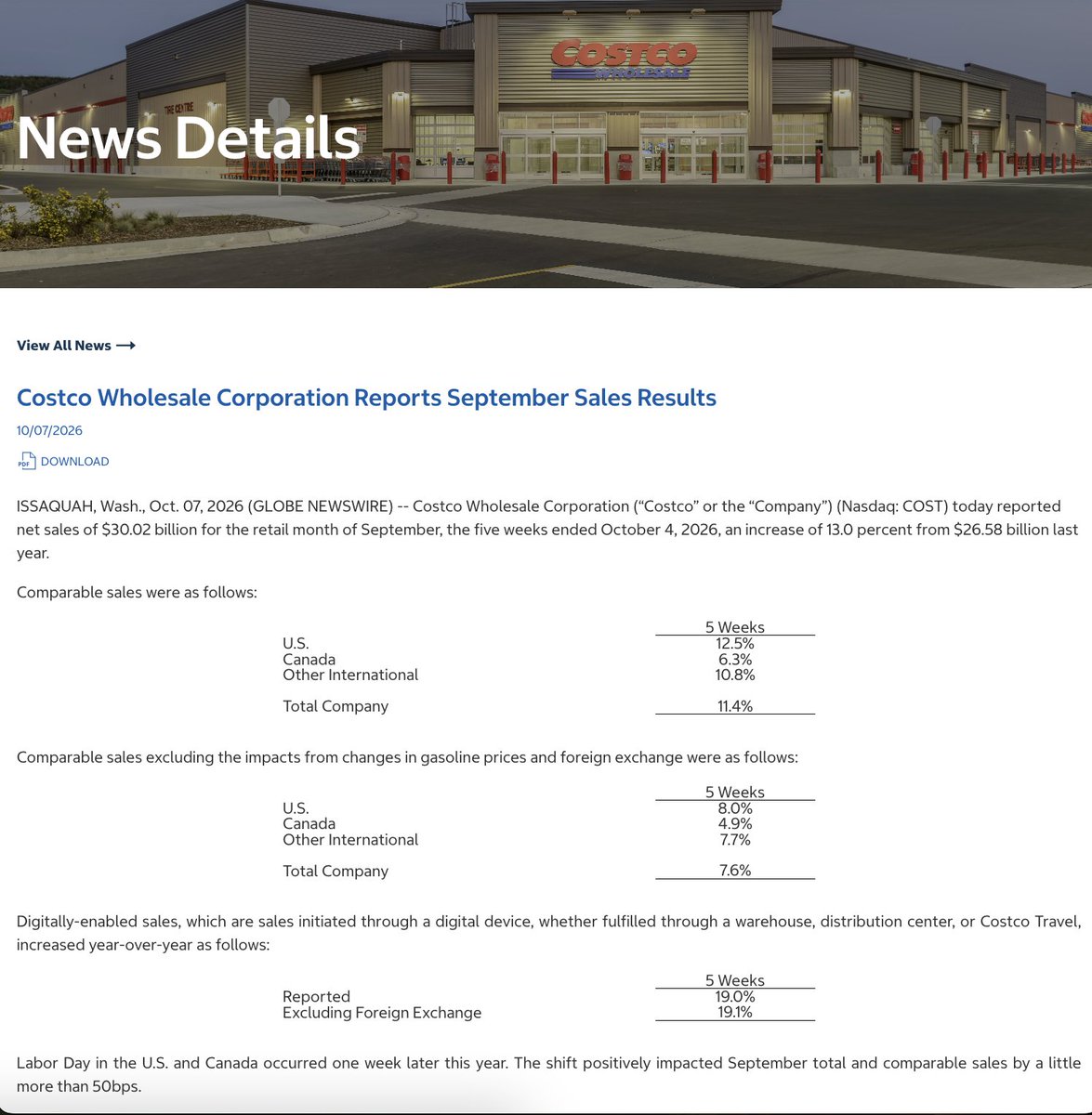
Costco reported September sales of $30.02 billion, up 13% from the same month last year. That is the key new data point in today’s signal.
Recent coverage in the site’s news feed has centered on Costco’s broader investment case, including a dividend-growth profile and ongoing debate around its growth-stock status. One report also noted strong parking-lot traffic, while flagging tariff headwinds and margin pressure.
For markets, the update is primarily relevant to COST and to how investors gauge demand resilience at a large membership-based retailer. The sales figure alone does not resolve questions around profitability.
Barron’s said the September rebound looks good on paper, but suggested there is more to the story. Any fuller read-through will depend on the company’s next earnings update or management commentary.
DA Davidson lifted its price target on Micron (MU) to $3,000 from $2,100 and kept a Buy rating on the shares. The firm said meetings with Micron’s investor relations team helped sharpen its view of investor sentiment and the questions surrounding the name.
The new signal is an analyst re-rating rather than a company announcement. It follows recent coverage tying Micron to AI-driven memory demand, making this the latest step in an ongoing analyst debate over the stock’s demand backdrop.
For the market, the update matters because it directly affects valuation expectations for MU. A higher target from a sell-side firm can influence trading sentiment even without any change in company guidance.
No new response from Micron was included in the materials provided. The $3,000 target was also described in other coverage as a Street-high call.
Goldman Sachs upgraded Palantir to Buy from Neutral and kept its $230 price target. Multiple reposts said analyst Gabriela Borges argued that the company’s forward-deployed engineer (FDE) model has been refined enough to automate parts of it with AI FDEs, while revenue is near $8 billion and growing about 100%.
The new wrinkle is that Goldman is no longer just leaning on Palantir’s AI narrative. It is framing FDE as a competitive moat that could be amplified by AI, alongside expansion into sovereign AI, custom applications and specialized industries.
The stock has already been firm: one report in the newsroom database said Palantir was up 2% to about $198 on Oct. 8 after the upgrade. That keeps Palantir at the center of the debate over which enterprise AI names can turn product hype into durable growth.
No company response was included in the items provided. The upgrade itself was attributed to Goldman Sachs and widely echoed across market wires and social posts.
Isomorphic Labs said to seek fresh funding at a valuation of at least $40 billion
Bloomberg’s report follows the startup’s participation in a $1.8 billion Biohub biology-data push, underscoring investor appetite for AI drug discovery
Bloomberg reported that Alphabet’s Isomorphic Labs is in early talks to raise new capital at a valuation of at least $40 billion. The report is the day’s key incremental development, signaling that investor demand for AI drug-discovery assets remains strong despite the company having no approved drugs on the market.
The timing comes just days after Isomorphic Labs joined Meta and Google DeepMind in a $300 million commitment to Biohub’s Virtual Biology Initiative. Biohub said the broader cross-sector program totals $1.8 billion and is designed to build the datasets and tools needed for a “virtual cell” capable of predicting how cells respond to drugs and genetic changes.
For Alphabet and Meta, the immediate market relevance is narrative rather than earnings-driven. Alphabet gains another high-profile AI-healthcare angle through Isomorphic Labs, while Meta’s involvement reinforces its push into frontier-science infrastructure beyond social media and advertising.
Bloomberg’s fundraising report remains preliminary, and no deal has been announced. Reuters separately confirmed the Biohub initiative’s $1.8 billion scale and the $300 million contribution from Meta, Google DeepMind and Isomorphic Labs.
Kalshi has filed a proposal with the Commodity Futures Trading Commission for an oil-linked futures contract that never expires, according to the company. The proposed contract is tied to the West Texas Intermediate benchmark.
The filing comes after CME Group suspended its plan to launch a 24/7 crude oil contract. That earlier move, reported in the market library, left the market watching whether another venue would step into the same niche.
For investors, the key listed name is CME Group, which had been the most visible exchange involved in the 24/7 oil-trading effort. Any progress on Kalshi’s proposal would keep the focus on product design and regulatory approval rather than on the original exchange timetable.
So far, the available material shows only that Kalshi has submitted a proposal. There is no approval decision in the sources provided, and no contrary company denial appears in the feed.
How this story unfolded
2026-08-215 posts · 4 authors
CFTC held its first Innovation Advisory Committee meeting with 43 members including major exchange CEOs, where CME's CEO clashed with Selig and Kalshi.
2026-10-073 posts · 3 authors
Kalshi filed a proposal for perpetual WTI crude contracts with the CFTC, days after CME withdrew its 24/7 oil futures plan, with others stepping in.
Company
Ring launches its first smart lock with a hand-crank backup
The $249 device extends Amazon’s Ring security line into locks and targets battery-dead lockouts
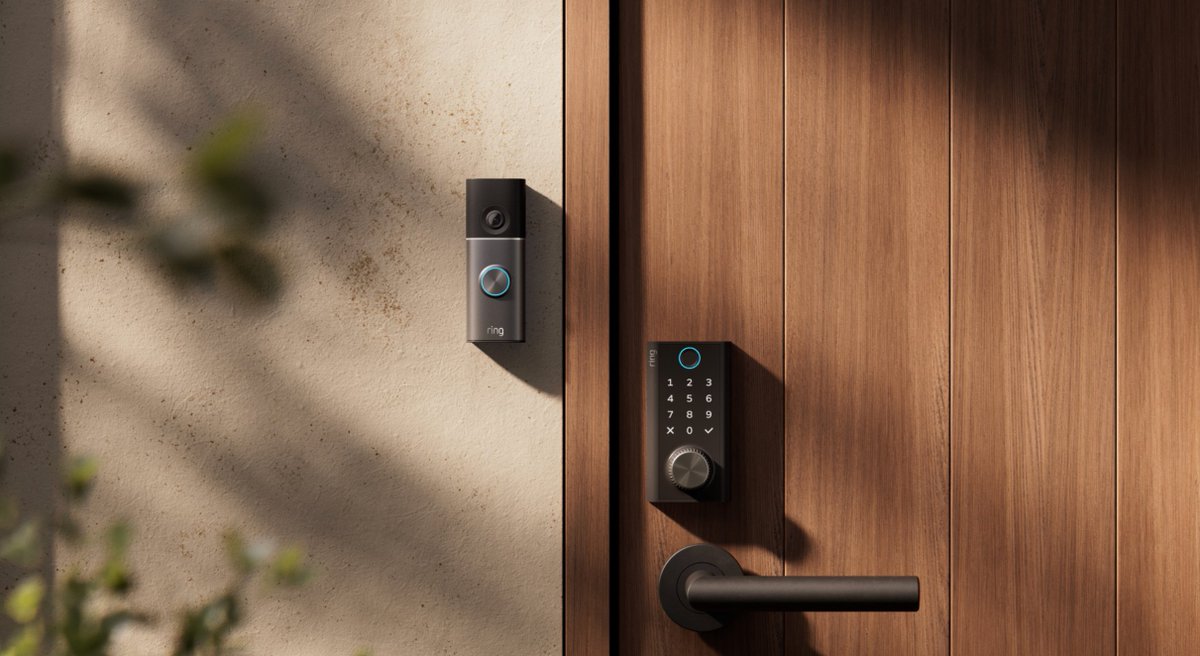
Amazon-owned Ring has unveiled its first smart lock, the Ring Smart Lock, priced at $249 and slated for U.S. release in early 2027. Its headline feature is a built-in power dial that can generate enough emergency power to unlock the door when the battery runs out.
The lock supports fingerprint access, a backlit keypad, the Ring app and Alexa. Amazon says it works with the Ring ecosystem and Amazon Sidewalk, and fits a standard single-cylinder deadbolt without extra wiring.
For Amazon, the launch broadens Ring from cameras and doorbells into door hardware, deepening the home-security platform. Investors are likely to watch AMZN for any sign that the product can drive ecosystem stickiness more than near-term revenue.
Pricing and timing were independently corroborated by The Verge and TechCrunch, while Amazon’s own announcement confirmed the hand-powered recharge concept. No sales targets were disclosed.
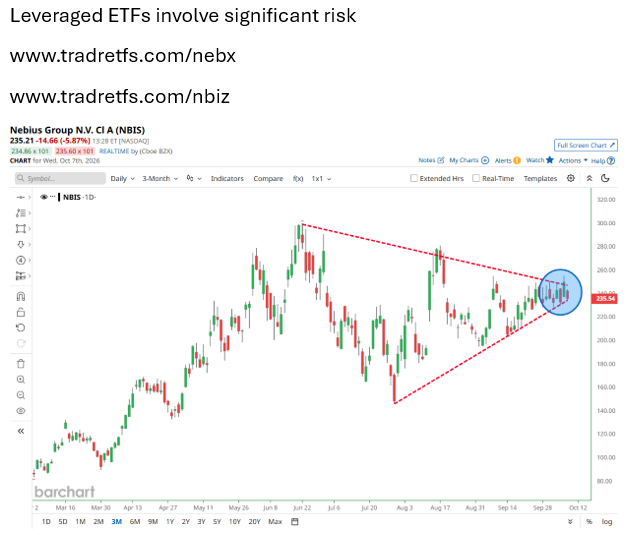
Nebius Group (NBIS) traded lower on October 8 after a sharp recent run, with one intraday snapshot showing the stock at $225.27, down 5.01%, while another market page showed a close at $237.15, off 5.09%. The takeaway is the same: the AI cloud name was still digesting gains near recent highs.
The new catalyst is Rosenblatt Securities’ initiation of coverage on Nebius with a Buy rating and a $304 price target. Rosenblatt said the company should benefit from demand for AI training and inference, and cited 3.5GW of contracted capacity.
The broader setup remains tied to Nebius’s latest reported results, which helped fuel investor attention. A market write-up cited second-quarter revenue of $582.3 million, up 454% year over year, and adjusted EBITDA of $236.2 million; another source put the stock’s 52-week high at $299.86.
For traders, NBIS remains one of the most volatile names in the AI infrastructure trade, where valuation, contracted capacity and delivery timing all matter. The stock is also often viewed alongside CoreWeave in the same neocloud bucket, making coverage changes and price action important for the group.
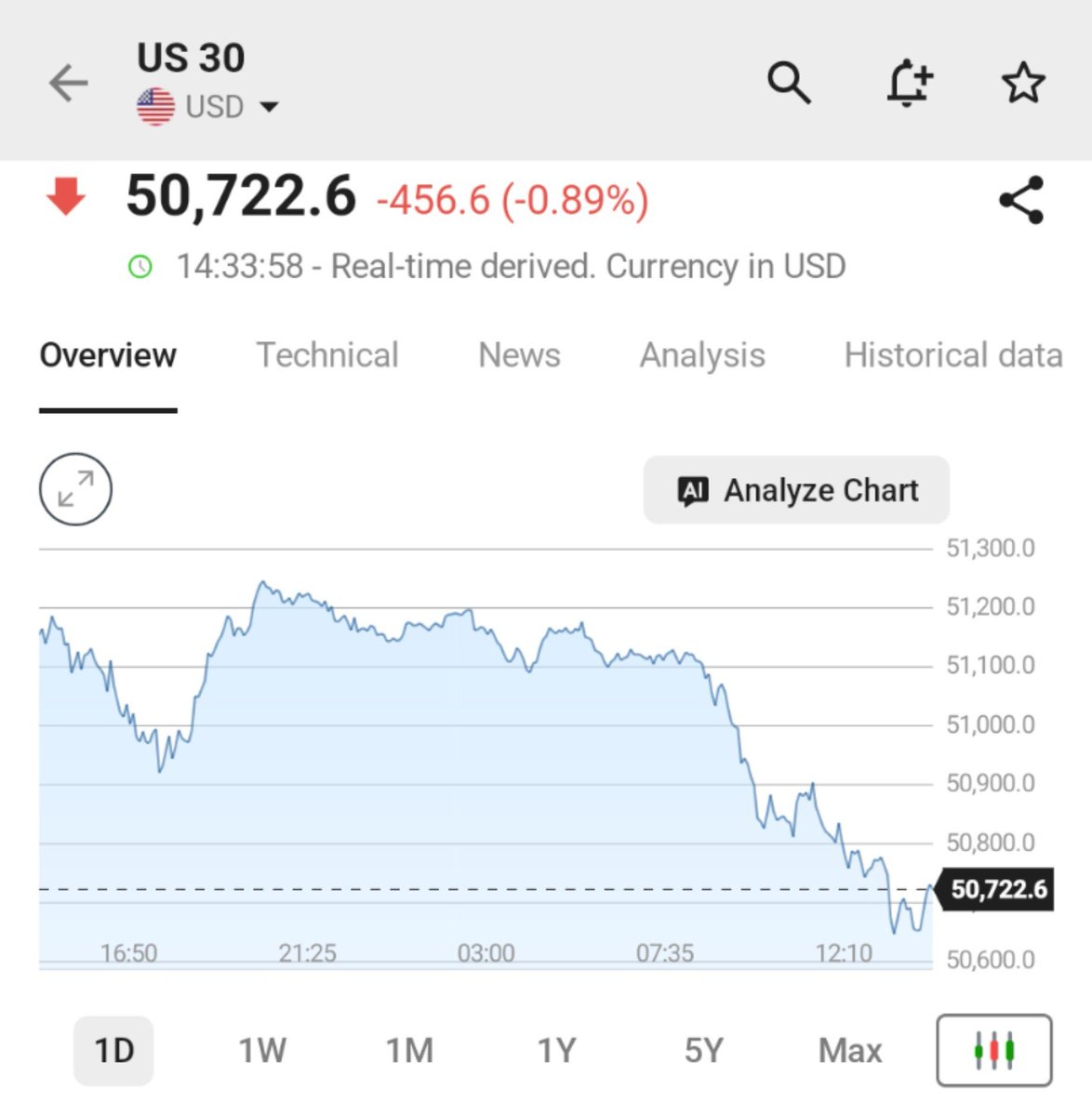
U.S. stocks closed modestly lower on Wednesday, with the Dow, S&P 500 and Nasdaq all finishing in the red. The S&P 500 and Dow snapped four-session winning streaks, while the Nasdaq posted its first decline in six trading days.
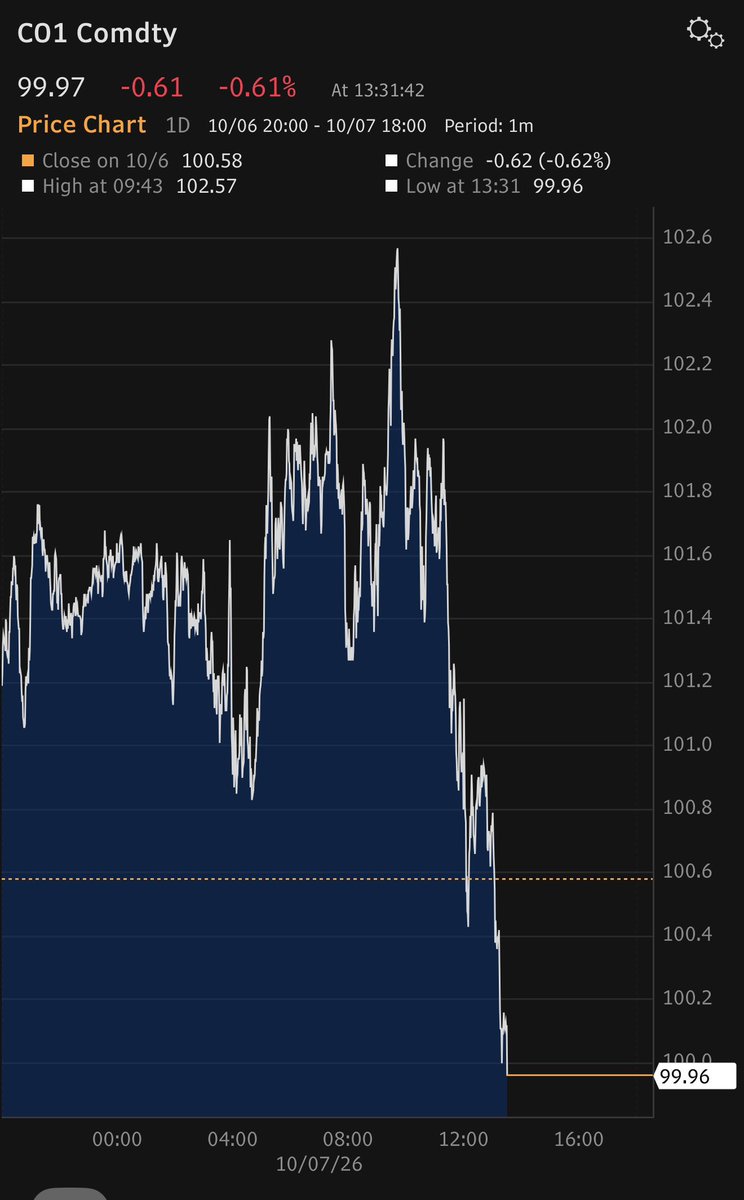
The move came as long-dated Treasury yields climbed again and Brent crude traded above $100 a barrel, reviving worries about inflation and debt supply. Later, a strong $39 billion sale of 10-year Treasuries helped yields ease from their highs and allowed stocks to recover part of their intraday losses.
Small caps underperformed, with the Russell 2000 falling 1.3%. In the S&P 500, industrials, housing and homebuilders were among the weakest groups, reflecting the strain from higher rates; chip stocks also slipped.
The Dow fell 341.11 points to 51,180.17, the S&P 500 lost 17.18 points to 7,801.75, and the Nasdaq dropped 61.19 points to 27,538.69, according to the market close cited by Reuters. Investors are still weighing whether higher energy prices and a rising term premium will keep borrowing costs elevated.
U.S. consumer credit rises $8.28 billion in August, missing forecasts
The Fed’s G.19 report showed revolving credit turning negative while nonrevolving lending still expanded, underscoring a split in household borrowing trends.
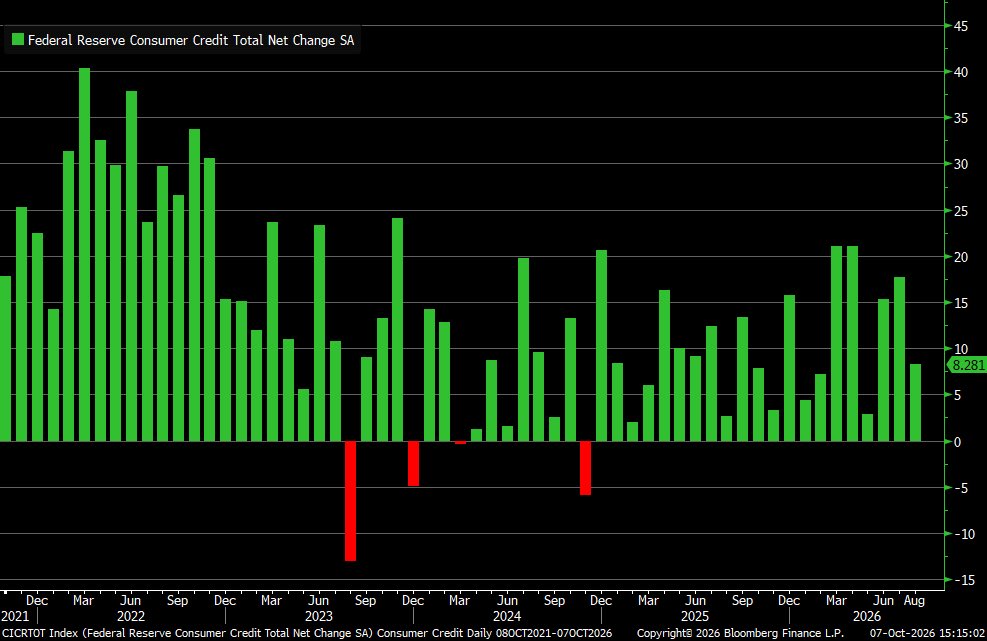
The Federal Reserve said U.S. consumer credit rose by $8.28 billion in August, below the $15 billion consensus forecast, after a revised $17.74 billion increase in July. On an annualized basis, total consumer credit grew 1.9% in August.
Revolving credit fell at a 4.2% annual rate, while nonrevolving credit increased 4.1%. The report also showed the average APR on accounts assessed interest at 22.36% and the average 60-month new-car loan rate at 7.54%.
The data is watched as a gauge of household borrowing appetite and financial stress, particularly in credit cards and auto lending. For markets, the read-through is more about the consumer and retail backdrop than an immediate rate-path shift.
Separate coverage cited a $4.8 billion drop in revolving credit and a $13.1 billion gain in nonrevolving credit for August. Investors will now look to retail sales, delinquency trends and bank lending standards for confirmation of whether the softer credit growth is broadening out.
Germany’s Federal Statistical Office said on Oct. 8 that seasonally adjusted exports fell 0.8% in August from July to €137.6 billion, while imports rose 0.9% to €118.1 billion. That left the trade surplus at €19.5 billion, down from a revised €21.6 billion in July.
On a year-over-year basis, exports were up 6.2% and imports increased 5.5%. By destination, exports to the United States fell 6.3% month on month to €13.5 billion, while shipments to China rose 4.7% to €5.9 billion; imports from China climbed 11.0% to €16.8 billion.
The report points to firmer import demand but softer export momentum in Europe’s largest economy, a mix that matters for German industrial names and broader euro-area trade sentiment. Autos, machinery and other export-heavy sectors are typically the most sensitive to the monthly trade data.
Destatis said the figures are provisional and seasonally adjusted data should not be compared directly with unadjusted nominal numbers. Trading Economics and FXStreet both carried the same release figures, helping confirm the headline readings.
Zeta Global introduced AthenaOS at Zeta Live 2026 and said it is working with Fireworks to launch an Athena Inference Model built on NVIDIA Nemotron. The company says the system is designed to reorganize apps, data and workflows around business objectives.
The update matters because it links several recent AI moves into a clearer product roadmap, from acquiring data assets to building a proprietary intelligence layer and embedding models into enterprise workflows. Social posts circulating today frame the announcement as another step in Zeta’s shift from marketing technology toward an enterprise AI platform.
For markets, the most relevant tickers are ZETA and NVDA. Zeta’s AI-platform narrative could sharpen its product differentiation, while the use of NVIDIA Nemotron keeps the launch tied to Nvidia’s enterprise AI ecosystem; however, the publicly available detail so far comes mainly from the company event and follow-on coverage, not from a filing or financial disclosure.
Further details on the Fireworks partnership and the commercial rollout of AthenaOS will need to come from subsequent company disclosures or more formal documentation.