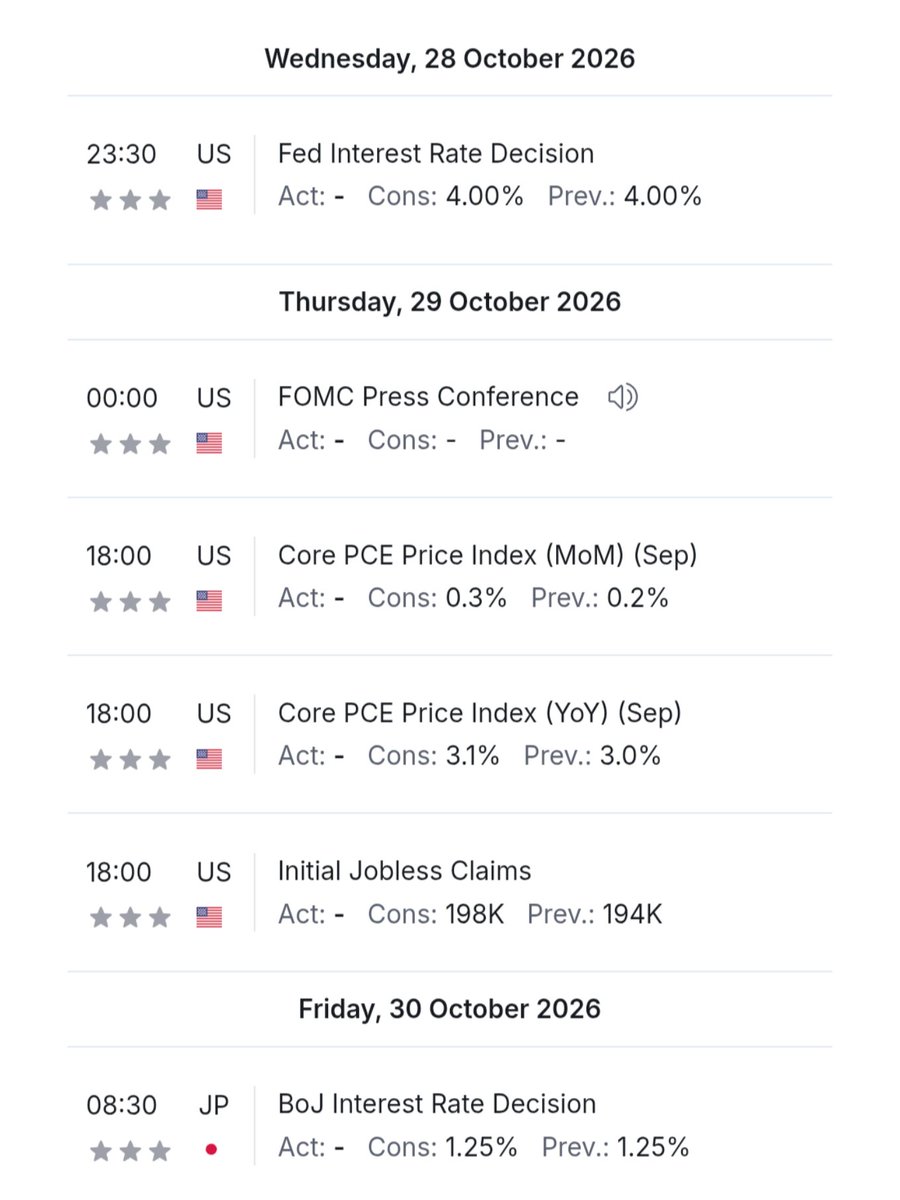
The Federal Reserve will announce its rate decision on Wednesday, with Microsoft and Alphabet reporting after the close the same day, according to multiple X signals. Amazon and Intel follow on Thursday, when third-quarter GDP and core PCE data are also due, and the Bank of Japan decides on Friday.
The prevailing expectation is a hold. X account moninvestor said rates are expected to stay in the 3.75%–4% range, with a December hike priced near 80%, while treasurybonds1 put the October 28 odds at 92.2% hold, 7.8% hike and 0% cut. Yardeni flagged Fed Chair Warsh's guidance as crucial.
In our news library, fool.com reported on October 24 that Big Tech earnings will determine how AI stocks move next, while 247wallst noted Big Tech is pouring $700 billion into AI. The contrast between earnings and AI capex is the main variable for tech pricing this week.
Microsoft, Alphabet, Amazon and Intel are the reporting companies this week, and their results and guidance will feed directly into AI-sector sentiment. The rate probabilities cited above come from X accounts, not official data.
Elon Musk said Ukraine's military used Starlink for offensive drone strikes in violation of its terms of service, and SpaceX reportedly closed the loophole last week. He said Starshield remains under U.S. government control.
Ukraine's military said Starlink service restrictions have been lifted and service is working again. The slowdown in the drone communication system had hampered Kyiv's ability to defend itself against Russian strikes; Ukraine said drones using the Pentagon-funded Starshield service were back to normal, according to The New York Times.
SpaceX investor Ross Gerber said he was "disgusted" with Musk over the slowdown and warned governments may lose trust, calling it "strategically horrendous." SpaceX went public in June and its shares have lost 29% of their peak value.
The episode shows satellite connectivity has become a geopolitical lever rather than just a product: Washington says access is restored, while Kyiv says connections keep dropping.
Audi confirms first U.S. plant in Georgia at about $4 billion, 200,000-unit capacity
Audi has imported all U.S.-market vehicles from Europe and Mexico; local assembly aims to cut tariff and currency exposure and add North American capacity
Audi said in a media release on Oct. 25 that it will build its first U.S. production site in Georgia, planning to invest around $4 billion and create roughly 4,500 jobs, with designed annual capacity of up to 200,000 vehicles. Construction is scheduled to begin in 2027 and production in the early 2030s, focused on premium SUVs for North American customers. President Donald Trump announced the plan first at a campaign rally in Perry, Georgia, on Oct. 24; Reuters, citing a U.S. official, said the plant is expected to assemble the Audi Q7, Q8 and Q9.
The backdrop is Audi's reliance on imports from Europe and Mexico for the U.S. market. Reuters reported that Trump's auto tariffs cost Audi 1.2 billion euros ($1.4 billion) last year, and that Audi sales have fallen for two consecutive years, sliding 7% in the first half of 2026 and down 16% in the U.S. this year. Audi said North America would become a third major pillar of its global production network alongside Europe and China, reducing exposure to trade and currency risks.
For Volkswagen, the move extends its North American manufacturing footprint. Reuters, citing the U.S. official, said Audi also plans to build 25,000 vehicles a year in neighboring South Carolina, with some assembled by VW's Scout Motors at a $2 billion plant under construction in Blythewood.
On the numbers, Audi's release and several outlets put the investment at around $4 billion, while Bloomberg and Seeking Alpha reported $4.2 billion; this article uses the company's figure of about $4 billion. Audi CEO Gernot Döllner called it a long-term investment "because we believe in the American market."
US forces in the Middle East are preparing for a possible new round of strikes on Iran, according to Bloomberg and The Wall Street Journal on Oct. 24, including a third aircraft carrier strike group and about 10,000 additional sailors and Marines sent toward the Gulf, plus replenishment of standoff land-attack missiles and bunker-buster bombs. The reporting says the moves give commanders more options; the decision rests with the White House.
The conflict is now in its ninth month, far from the administration's initial expectation of a matter of weeks. Reports say US officials have repeatedly signaled a possible resumption of strikes after the Nov. 3 midterm elections, while Israel's prime minister has made confronting Iran central to his own reelection campaign. Iran said its air defenses downed a US drone and vowed to respond to any violation of its territory.
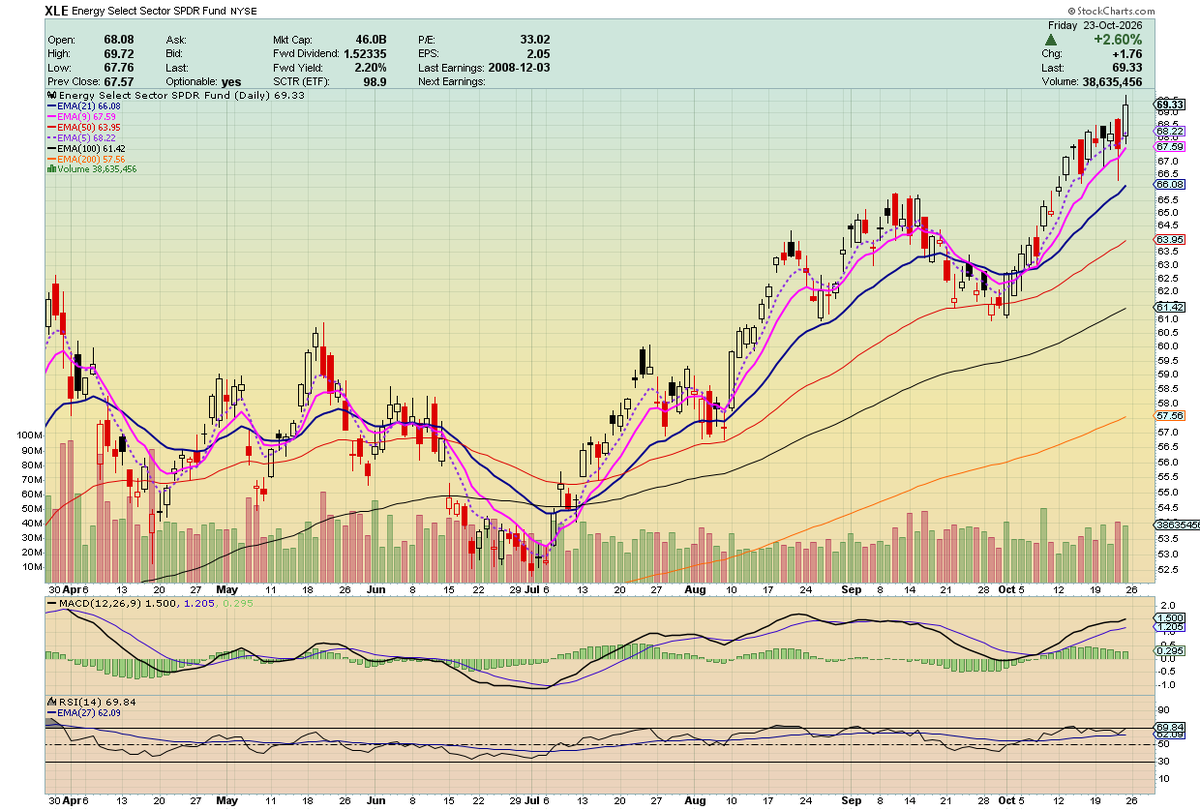
For markets, escalation risk feeds directly into energy prices and risk premia: crude-linked products such as USO and the energy sector ETF XLE are most sensitive to any disruption around the Strait of Hormuz. Iran's parliament speaker also urged a national campaign to cut gas consumption by at least 10% ahead of winter, a sign Tehran is bracing for prolonged confrontation.
The troop movements and strike preparations come from officials cited by media; the Pentagon declined to comment on hypothetical operations. Iran's account of the downed drone has not been confirmed by the US side and should be treated as a unilateral claim.
How this story unfolded
Geopolitics
Iranian officials confirm to NYT that Tehran is preparing attacks on US diplomats
A US intelligence memo says lethal plotting has reached advanced stages as Washington trims staffing at Middle East missions
Two Iranian officials, one a member of the Islamic Revolutionary Guard Corps, told The New York Times that Tehran is preparing to target US diplomats and government personnel, arguing that US and Israeli strikes that killed dozens of Iranian officials and some relatives made Americans "fair game." The account corroborates US intelligence warnings.
The remarks follow an October 23 memorandum from Director of National Intelligence Jay Clayton to Secretary of State Marco Rubio warning that Iranian lethal plotting against US citizens overseas had "reached advanced stages." The memo did not identify targets or methods, and US officials cautioned that Tehran's ambitions have often exceeded its operational reach.
Washington has adjusted its posture: the State Department placed the US Embassy in Saudi Arabia under ordered departure and cut staff further in Lebanon, the UAE, Qatar and Jordan, posts already on restricted operations status. The US military has also quietly scaled back troop presence at regional bases.
For markets, the development bears on the geopolitical risk premium embedded in crude, with WTI (CL) the most directly sensitive instrument. The reporting sets no timeline for any operation, and assessments of Iran's actual capability remain contested, so no price direction should be inferred.
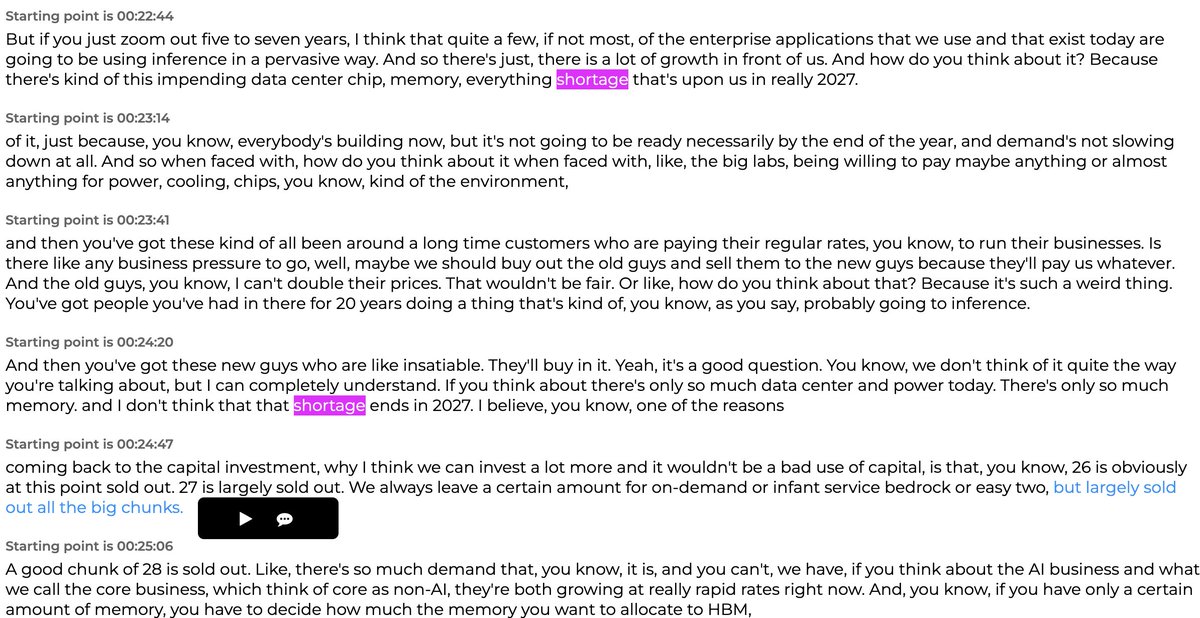
Amazon CEO Andy Jassy said AWS capacity is sold out for 2026, largely sold out for 2027, and that a good chunk of 2028 is already booked, even with $220 billion of capex planned for 2026. He framed the sold-out schedule as evidence that "this is NOT what a bubble looks like."
On memory supply, he said there is "only so much memory" and that he does not think the shortage ends in 2027, a remark that bears on Micron, SK Hynix and Samsung.
Local coverage notes AWS has already sold "a good chunk" of 2028 capacity, while raising the question of who exactly is doing the booking. Amazon's quarterly cash capital spending reached about $53 billion, topping AWS revenue of $42 billion.
The comments were read as a bullish data point on AI compute demand, with discussion centered on AMZN and memory-linked names, even as some institutional holders trimmed AMZN positions in recent filings.
The AI boom is increasingly running on circular money, with chipmakers and cloud giants investing in or lending to AI companies that then use the funds to buy chips and computing power from the same companies, according to Bloomberg. Some investors say the structure reminds them of 2008.
Finance accounts on X relayed the report and cited Broadcom (AV) among recent examples, though the relayed text cuts off at the list and provides no transaction figures or full case details.
Coverage in the past 48 hours shows the debate over AI capex sustainability intensifying: one analysis argues that as AI labs burn cash, the real question is which suppliers get paid, with hundreds of billions of dollars at stake.
Broadcom filings show several institutions trimmed stakes in the third quarter, including AMG Asset Management Group (down 19.8%) and Eagle Rock Investment Company (down 1.8%). The materials do not establish any link between those sales and the circular-funding report.
TS Lombard首席宏观策略师Dario Perkins在10月22日发布的《Wargaming the AI Crash》报告中推演:若AI投资热潮退潮,标普500指数可能下跌30%,科技股下跌40%,合计蒸发约20万亿美元市值,科技股权重将退回ChatGPT推出前水平。报告同时估算信用损失约1250亿至1900亿美元,并认为美国更可能陷入接近1990年或2001年式的温和衰退,而非2008年式危机。
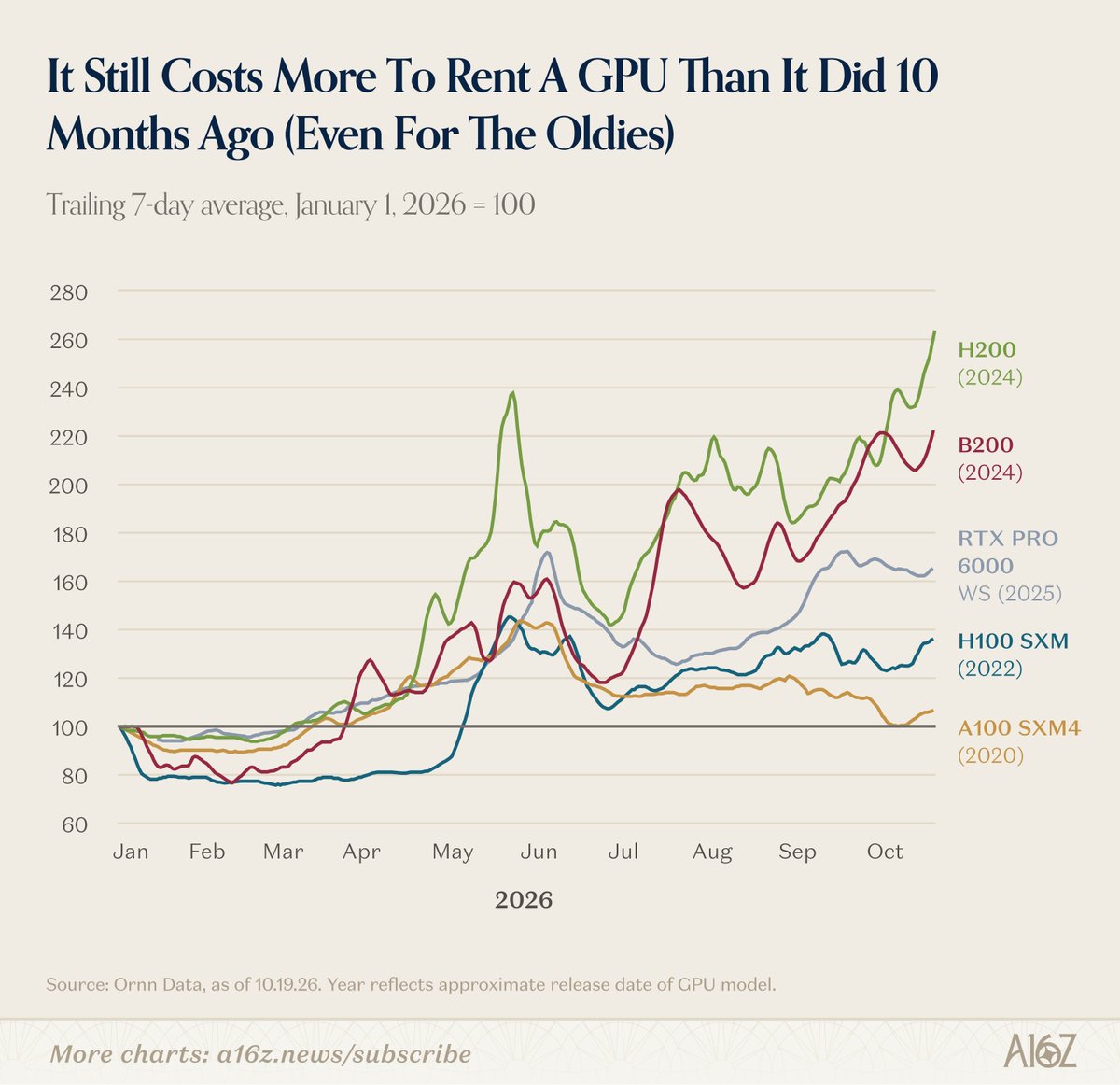
A GPU rental tracker published by venture firm a16z puts H200 rental rates about 160% above the start of the year, roughly 2.6x the level ten months ago. On the same basis B200 is up about 120%, RTX PRO 6000 about 65% and H100 about 35%. a16z also says H200 rents sit 143% above a standard six-year depreciation line, with B200 at 111%, H100 at 54% and the roughly six-year-old A100 still 9% above it.
The reading runs against market data from earlier this year. In late May, reports citing the Ornn Compute Price Index said H200 spot rates fell about 40% in three weeks, from $7 to roughly $4 per GPU-hour, as Hopper supply normalized and demand moved to Blackwell. Silicon Data's standardized H200 index stood at $3.48 per GPU-hour on Oct 24, up 5.1% over seven days, while the same page's FAQ cites a current reading of $3.10 — the two figures on one page do not agree.
If rental rates are indeed rising, the direct beneficiaries are neocloud operators that book revenue per GPU-hour — NBIS, CRWV and IREN are named in the posts. For NVDA, firm residuals on older chips mean installed capacity keeps generating cash, but it also complicates the claim that scarcity is confined to the newest generation.
Methodology matters: Silicon Data's index is a standardized spot and neo-cloud rate, while a16z's premium is measured against straight-line six-year depreciation; the two are not directly convertible. Nvidia CEO Jensen Huang has called neocloud demand "off the charts" while noting the sector lacks working capital, according to a CNBC interview.
Company
Kalshi Pegs 70% Odds on Musk's $3.7 Trillion Tesla-SpaceX Merger
A prediction-market post puts 70% odds on a Tesla-SpaceX combination by 2028, with no company filing or regulatory document in our newsroom to confirm a deal
Accounts tied to prediction market Kalshi posted on X that Elon Musk will merge Tesla and SpaceX in a $3.7 trillion deal, attaching a 70% probability that it happens before 2028. The claim was amplified by accounts including stocksnipa, which framed it as the odds of a SpaceX (SPCX) and Tesla (TSLA) merger rising to 70%. No company announcement, SEC filing or deal terms appear in the source material.
Coverage in our newsroom over the past 48 hours centers on institutional positioning and earnings rather than a transaction: N1 and N2 record Five Oceans Advisors cutting 2,116 Tesla shares and Fifth Third Wealth Advisors adding 2,838 shares, while N3 shows Anderson Hoagland & Co. opening a new SpaceX stake in the third quarter. N4 has CFRA's Garrett Nelson discussing Tesla results and whether a merger is needed. None confirms a combination.
The tickers most directly exposed to the speculation are Tesla (TSLA) and SpaceX (SPCX). N5 notes SpaceX revenue rose 161% in the third quarter with net profit of $4.4 billion, and that Musk expects $500 billion to $1 trillion in sales next year — context for the merger debate, not evidence of a deal.
As of publication, the material contains no response from Tesla, SpaceX or regulators on a merger. Kalshi's 70% is a prediction-market price, not deal progress; absent an official document, the report should be treated as unconfirmed market chatter.
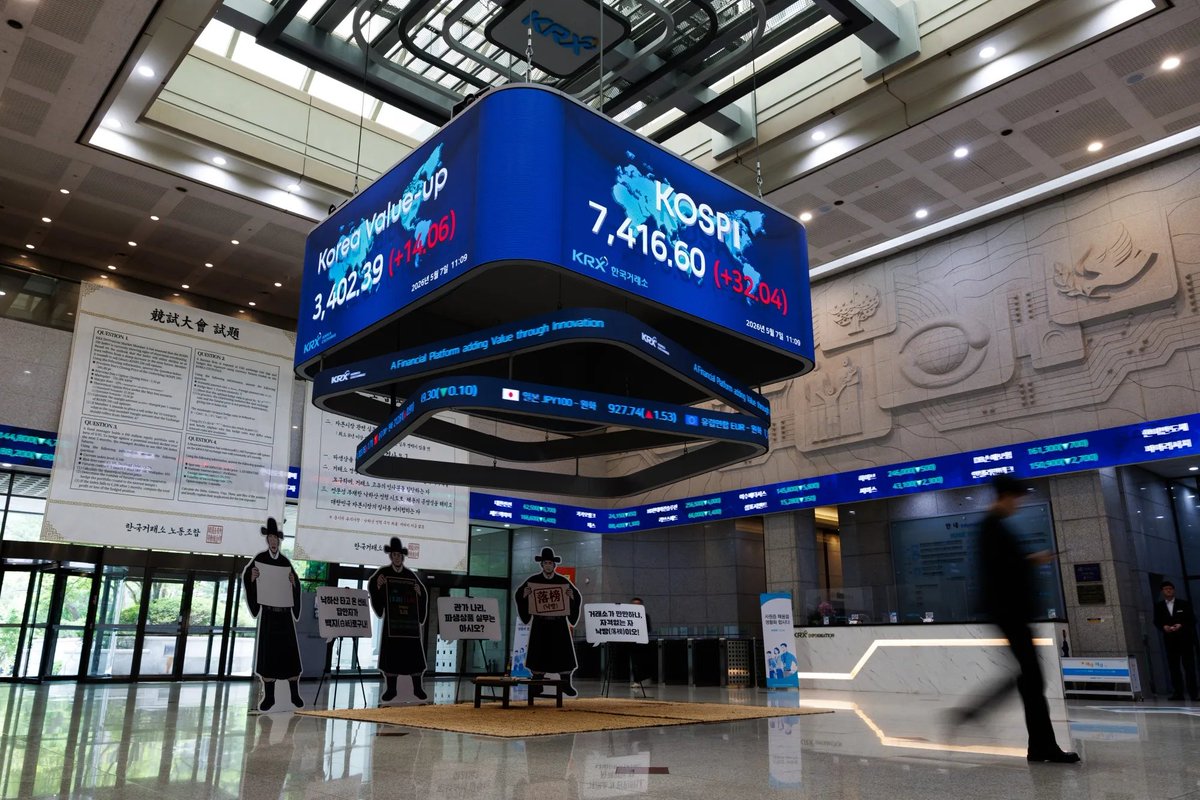
Goldman Sachs strategists led by Timothy Moe lowered their 12-month Kospi target to 9,000 from 12,000, a 25% cut and the first major downgrade after repeated hikes this year. The bank said the benchmark's more than 35% drop from its June peak required more conservative valuation assumptions.
The Kospi's heavy weighting in memory chipmakers Samsung Electronics and SK Hynix has made it a proxy for the AI trade. Concerns over the sustainability of massive AI infrastructure spending, rising financing costs and uncertain returns have spread selling across the broader Korean market.
Goldman argues the market is pricing in an excessively pessimistic outlook. The Kospi's 12-month forward price-to-earnings ratio has fallen to about four, the lowest among 18 major markets tracked by Bloomberg since 2006. Semiconductor valuations imply a 65% decline in sector earnings in 2027, while non-memory stocks, roughly half the index, trade at 7.6 times forward earnings. The revised target still implies more than 60% upside from current levels.
Alongside the lower index target, Goldman continues to favour power, industrials, corporate governance-related names and companies benefiting from a domestic recovery and the spread of Korean pop culture.
Figures were cross-checked against investing.com, mk.co.kr and cls.cn.
Seventy-six S&P 500 companies have reported so far, with 62 beating EPS expectations and 48 topping revenue estimates, according to Seeking Alpha tallies. Year over year, 60 of those companies grew EPS and 64 grew revenue. A separate Seeking Alpha scoreboard put the beat rate at 82% with 79% posting year-over-year earnings growth.
Industrials stood out: 17 of the 20 industrial companies that reported this week beat EPS estimates, per a Seeking Alpha sector scorecard tracked against the Industrial Select Sector SPDR Fund (XLI). Reporting density rises sharply from here, with MarketWatch putting roughly 36% of the index on this week's calendar.
Meta Platforms (META) anchors the week, reporting Wednesday after the close; StreetStats puts the company at 3.2% of 2026 S&P 500 earnings. Netflix, AT&T, Lam Research and Texas Instruments also report, and communication services — about 10.5% of 2026 index earnings — carries a heavier share of its sector EPS into this week.
Beat rates and growth rates are different measures. StreetStats shows a 33.2% EPS growth contribution for the index in 2026, but sector dispersion is wide, with industrials and energy contributing far less than information technology. The 76-company sample covers roughly one-seventh of the index and is not yet representative of the full quarter.
How this story unfolded
2026-08-26
Company🔥Developing
Tesla's Texas Robotaxi Registry Hits 970 Vehicles After 43 Cybercabs Added in a Day
The Texas DMV's public AV list is the only dated, checkable gauge of Cybercab ramp-up as Tesla closes in on Waymo's fleet size
Tesla's registered robotaxi fleet in Texas reached 970 vehicles on Oct. 25, including 463 Cybercabs and 507 Model Ys, according to the Texas Department of Motor Vehicles' public automated-vehicle registry. The company added 43 Cybercabs in a single day, in batches of 11 (to 433) and 32 (to 465).
The list is filed by Tesla Robotaxi, LLC under AV permit AV8313426653583; Texas requires operators to register every autonomous vehicle they put on public roads. Registration is not the same as active service: the records do not show operating cities, trip volumes or whether a safety monitor is aboard.
Cybercab registrations have climbed from 319 on Oct. 9 to 463, a gain of 144 in about two weeks, while the total fleet grew from 739 to 970. The jump follows Tesla's Oct. 21 earnings call, where it said Cybercab deliveries to customers would begin by year-end.
Waymo's Texas registration stands at roughly 1,207 vehicles, still ahead of Tesla. For TSLA holders, the registry is currently the only dated, independently checkable read on autonomy progress.
How this story unfolded
2026-08-284 posts · 4 authors
Tesla Cybercabs were spotted testing in Manhattan and Malvern, PA, drawing attention.
Company
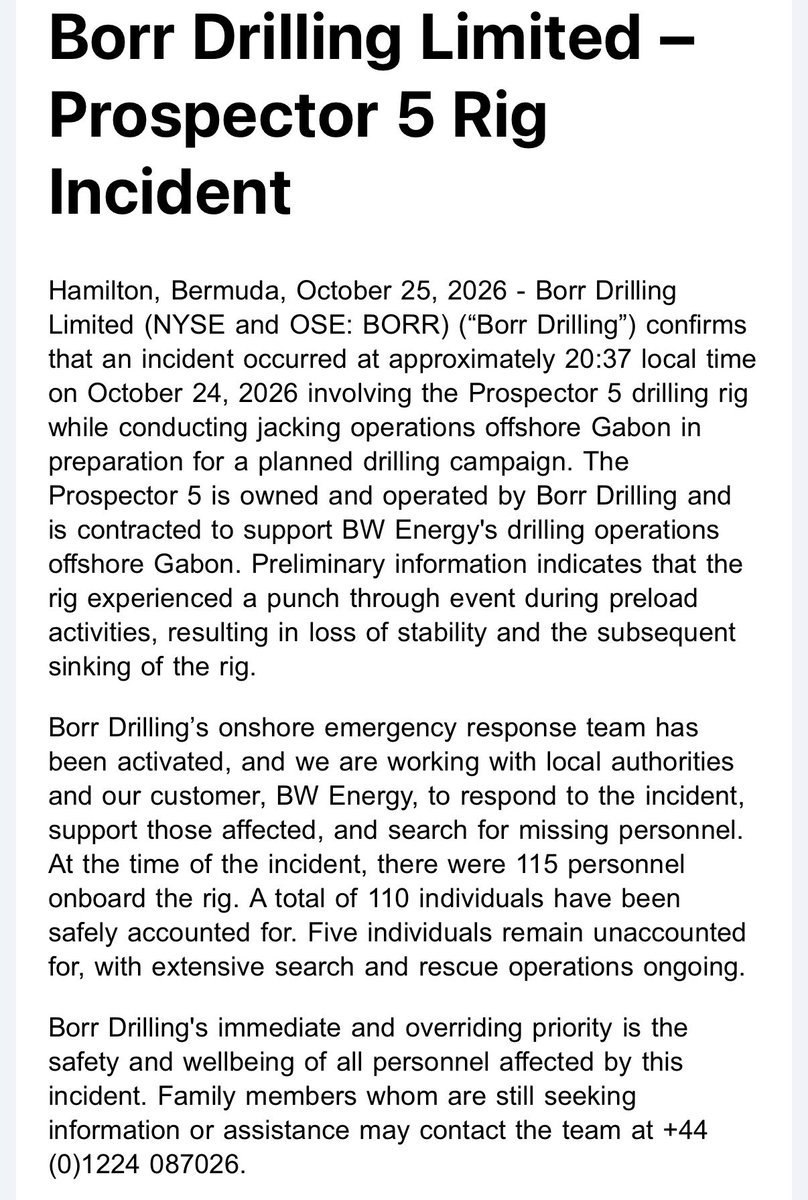
Borr Drilling's Prospector 5 sinks off Gabon; one dead, four missing
The jack-up was in preload work for BW Energy's Dussafu campaign and had not begun drilling; Gabon ordered a technical probe
Borr Drilling confirmed that its jack-up rig Prospector 5 sank offshore Gabon at about 20:37 local time on 24 October 2026 while conducting jacking operations in preparation for a drilling campaign on the Dussafu Marin licence. Preliminary information indicates the rig suffered a punch-through event during preload activities, causing a loss of stability. Of the 115 people on board, 110 were safely accounted for and five were initially unaccounted for.
Reuters, citing Sylvain Mayabi Binet, secretary general of Gabon's National Organization of Petroleum Employees, reported that one of the five, an Indian national, was found dead, leaving four missing — three Gabonese nationals and one other expatriate. Gabon's Ministry of Petroleum and Gas said it activated a crisis unit, ordered the navy to reinforce search and rescue, and ordered a technical investigation.
The rig is owned and operated by Borr Drilling and was contracted to support BW Energy's operations offshore Gabon; it had not yet begun drilling. BW Energy holds a 73.5% working interest in the Dussafu Marin licence, with Panoro Energy holding 17.5%. BW Energy said production at its MaBoMo facility was shut down under standard procedure ahead of drilling, with no reported damage to the facility and no accidental discharge of harmful substances.
Borr Drilling CEO Bruno Morand said the company is deeply concerned for those unaccounted for and that its immediate priority is supporting search and rescue and the welfare of personnel involved. Borr Drilling trades on the NYSE and Oslo Børs under BORR; the effect on its Gabon campaign and rig assets will depend on the technical investigation.
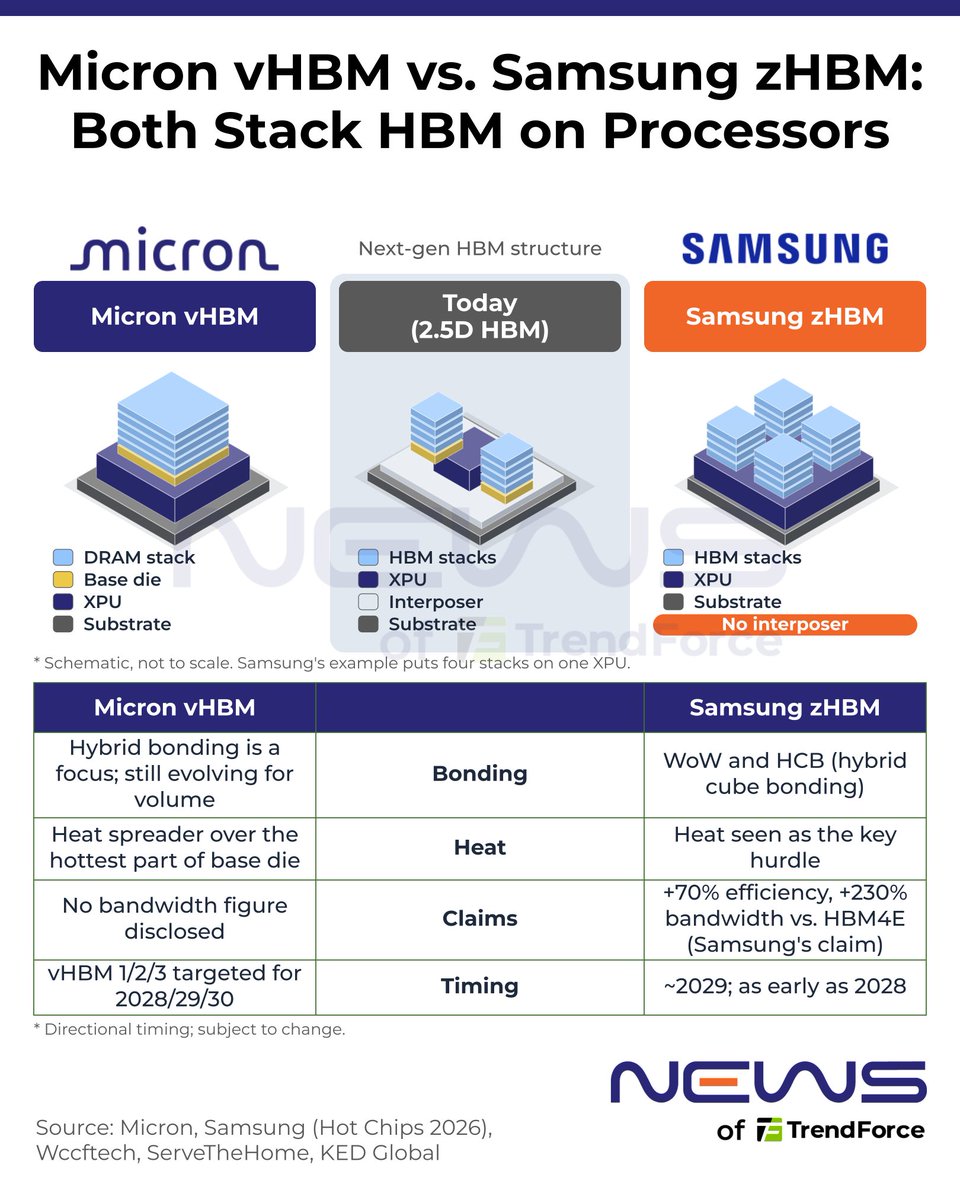
Micron laid out a roadmap at its 21 October technology webinar: first-generation vertical HBM (vHBM1) is targeted for volume production in 2028, with three generations planned through 2030 and HBM4E, HBM5, HBM5E and HBM6 landing in 2027, 2028, 2029 and 2030 respectively. President and CTO Scott DeBoer said the company does not see memory supply and demand coming back into balance.
Unlike Micron, which keeps a base die and stacks DRAM directly on the compute die via hybrid copper bonding, Samsung's zHBM drops the 2.5D interposer, with commercialization eyed for about 2029 and as early as 2028. Micron named no customers, volumes or prices for vHBM and said timing and performance targets are directional and subject to change.
The binding constraint is heat. BNP Paribas analyst Karl Ackerman wrote that vertical HBM inhibits processor cooling, which is why he expects it to be used alongside standard HBM rather than replace it; Micron's own slides list advanced thermals and thermally aware design as conditions. If the roadmap holds, hybrid bonding toolmakers and foundries supplying base dies would see order books shift before memory makers do.
SK hynix holds more than 50% of AI server HBM share, and together with Samsung more than 85%; the two report third-quarter results on 28 and 29 October, with attention on any comment about stacking memory on logic. Micron's 12-high 36GB HBM4 entered volume production in March 2026 and runs above 2.8TB/s, accounting for roughly 10% of current advanced AI accelerator shipments.
How this story unfolded
Company
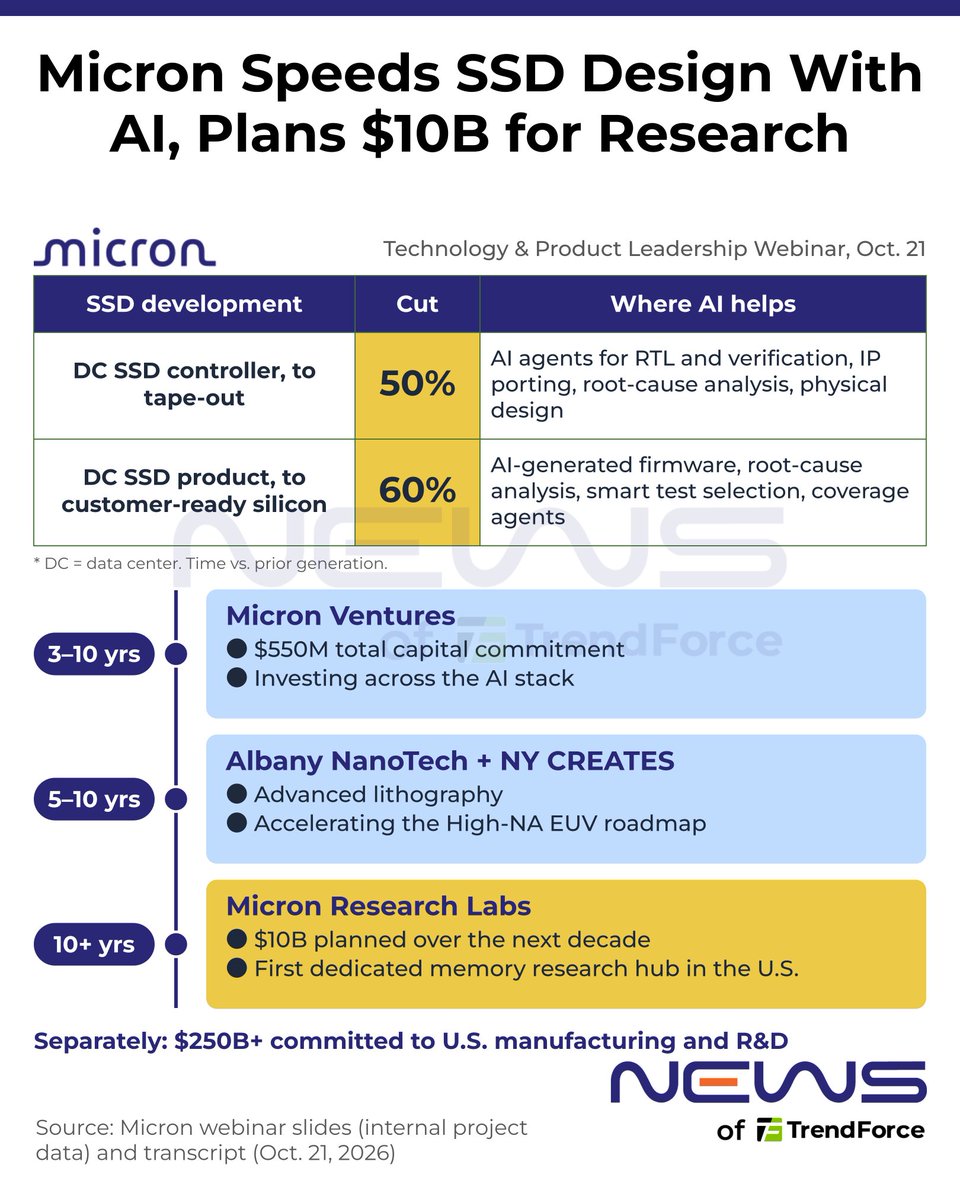
Micron says AI halves data center SSD controller design time
Company also plans $10B over a decade for its first dedicated U.S. memory research hub
Micron (NASDAQ: MU) said AI has cut design time for its data center SSD controllers by 50% and product development time by 60% versus the prior generation, according to posts circulating on X. The claim points to AI being applied inside the chip development workflow.
The company also plans to spend $10 billion over the next decade on Micron Research Labs, described as its first dedicated U.S. memory research hub. The commitment spans a ten-year horizon, framing it as a long-term R&D and footprint decision.
For investors, faster design cycles could affect product cadence and R&D cost structure across memory suppliers; Micron's exposure spans multiple parts of the memory chip industry. Recent coverage in our news library focused on institutional stake changes and memory margins, not on these AI or lab plans.
The 50% and 60% figures and the $10 billion plan are Micron's own statements; the materials contain no independent verification or further company detail.
Anza, Solana's core engineering firm, activated the Alpenglow consensus protocol on mainnet-beta at slot 459,653,000 at roughly 14:00 UTC on Oct. 21, cutting transaction finality from about 12.8 seconds to roughly 150 milliseconds and retiring TowerBFT, which had run since March 2020. Anza described the change as the largest blockchain upgrade since Ethereum's Merge; the design was published in May 2025 and went through red teaming, penetration testing and migration rehearsals.
In the same week, J.P. Morgan Asset Management made its tokenized money market funds MONY and JLTXX available on Solana to qualified U.S. investors through Morgan Money on Oct. 22, after previously offering them on Ethereum. The JLTXX factsheet cited $628.48 million in fund assets as of Sept. 30, and Securitize said Solana is now its largest network with about $1.10 billion in tokenized assets.
For public equities, the read-through is to tokenization infrastructure rather than to Apple or Meta fundamentals: Sunrise and Backpack listed 1:1 redeemable tokenized shares including TSLA, NVDA, AAPL and AMZN on Solana this week, and Kamino cited more than $50 million in tokenized-stock supply.
Those tokens are broker-issued on-chain claims and are separate from 13F position changes and insider sales reported in N1, N4 and N5; the two should not be read as corroborating each other. Anza said further changes such as Rotor have no confirmed release date, and wallets, fees and app interfaces are unchanged, though network dashboards may show lower transaction counts because validator votes are no longer recorded as transactions.
Company🔥Developing
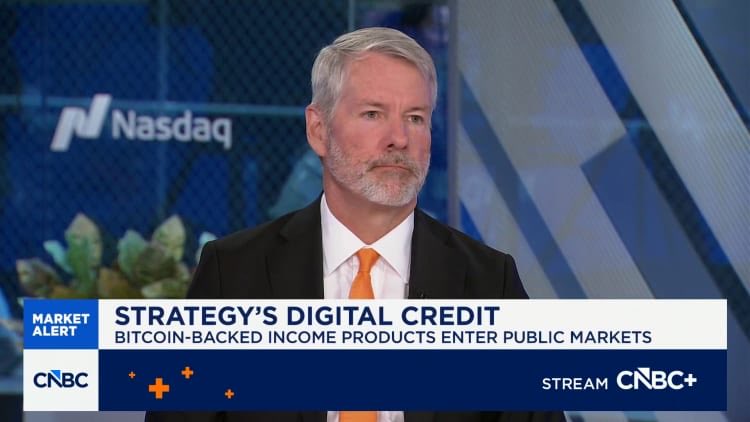
Saylor Says Digital Credit Framework Is Delivering as STRC Buybacks Support MSTR
Strategy's largest preferred has traded at $97-$99 since late August; repurchase authorization raised to $3 billion
Strategy executive chairman Michael Saylor said on X on October 24 that the Digital Credit Capital Framework launched four months ago "is delivering," crediting programmatic STRC buybacks with strengthening the company's credit markets and supporting MSTR. He said the company manages its entire capital structure to create long-term shareholder value.
STRC is Strategy's largest preferred issue and the centerpiece of its "digital credit" product line. According to Barclays' notes from a mid-September global funding services conference featuring Strategy CEO Phong Le, STRC has traded between $97 and $99 since late August, up from roughly $90 at the time of second-quarter results, with management focused on the $100 level.
Company buybacks have driven the move. In an October 19 Form 8-K, Strategy disclosed repurchasing $193 million of STRC, acquiring 267 bitcoin, and raising its digital credit securities repurchase program to $3 billion. Barclays also noted that the company's dollar reserves now cover roughly three years of dividends, up from about six months.
The comments come amid pronounced volatility in digital asset markets. Strategy is the largest corporate holder of bitcoin, and its preferred stock pricing is closely tied to the value of its bitcoin reserve; whether STRC can hold near $100 once the repurchase authorization is exhausted is the key question for holders.
How this story unfolded
Company🔥Developing
TeraWulf lifts revolver to about $400 million with Morgan Stanley as agent
Bitcoin miner turned AI data center developer gains letter-of-credit headroom for Kentucky power deals
TeraWulf signed Amendment No. 1 to its senior secured revolving credit agreement on October 23, raising total commitments from $250 million to approximately $400 million, a roughly 60% increase, with Morgan Stanley Senior Funding continuing as administrative and collateral agent. The amendment also removes a prior $150 million sublimit on letters of credit and adds an uncommitted $150 million accordion that requires additional lender participation.
The original revolver was dated May 7, 2026 and matures in April 2030. In an October 5 disclosure, the company said it would expand contracted power at its Muskie Data Campus in Kentucky from 500 megawatts to 1 gigawatt, pulling forward the second 500 MW tranche to 2029, and flagged the need for more revolver capacity to support letters of credit tied to long-term utility partnerships.
TeraWulf runs bitcoin mining alongside high-performance computing. Its Justified Data Campus in Hawesville, Kentucky, is under a 20-year lease with Anthropic covering about 401 megawatts of critical IT capacity. Morgan Stanley was also sole bookrunner on a $3.2 billion senior secured notes offering by subsidiary WULF Compute and is administrative agent on a separate $500 million 364-day bridge facility.
WULF closed Friday at its lowest weekly level in at least six months, with Stocktwits reporting a decline of more than 60% since June. Defense World puts the consensus target price from 26 brokerages at $32.52.
How this story unfolded
2026-10-16
Company
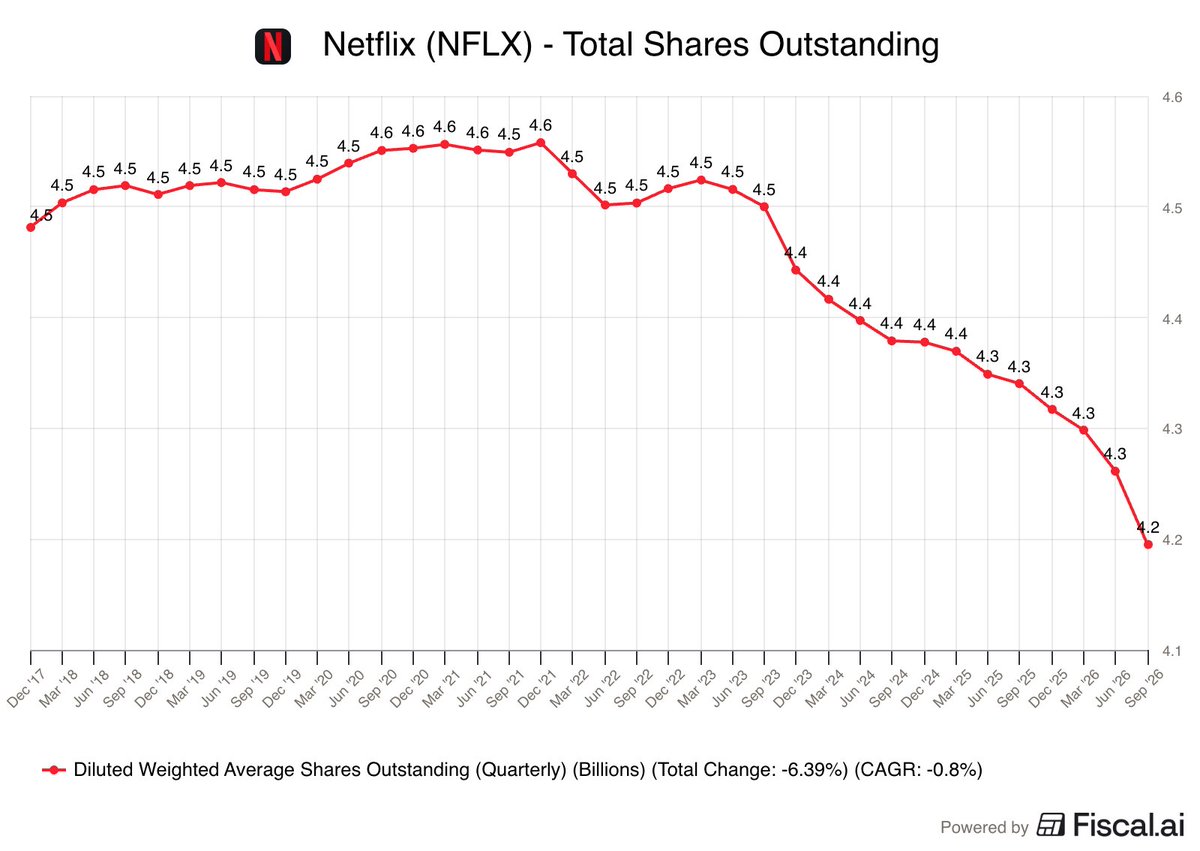
Netflix Buys Back Over 3% of Shares in 12 Months, $22.3B Left on Authorization
With the stock roughly halved from its high, the pace of buybacks is drawing investor attention
A market signal circulating on X says Netflix has repurchased more than 3% of its shares over the past 12 months and has $22.3 billion remaining under its current share repurchase authorization.
The buyback disclosure comes as the stock sits roughly 50% to 51% below its high. According to our newsroom's recent reports, shares fell another 6% right after third-quarter results, and the company is cutting 1,000 jobs in its largest workforce reduction since 2022.
The remaining authorization matters to NFLX holders because buybacks affect per-share metrics and are read as a signal of how management views the current valuation.
The 3% figure and the $22.3 billion balance come from the X signal; our newsroom archive does not include the underlying company filing, so execution details still need confirmation from Netflix.
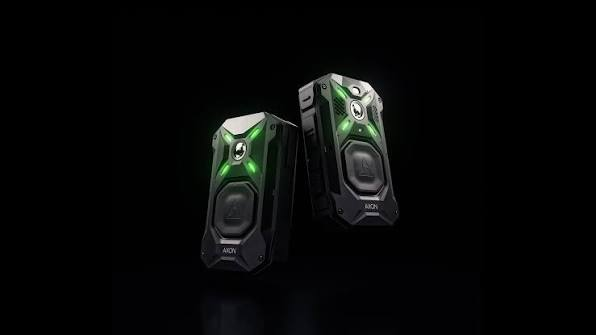
Axon launches Body 5 with 25x AI processing power, 20% more battery life
The new body camera adds on-the-spot license scanning and real-time translation in its Pro version, pushing Axon deeper into AI-assisted public safety hardware.
Axon (Nasdaq: AXON) announced the Axon Body 5 on October 24, its next-generation body-worn camera. Posts on X describe 25x the AI processing power of its earlier body cameras and 20% more battery life than the previous generation, along with enhanced video and improved connectivity.
The Pro version scans a driver's license on the spot and carries real-time translations through four additional front-facing speakers. Axon's press release frames the device as a next-generation camera built for the AI era, emphasizing intelligence for public safety use.
Body 5 is an iteration of Axon's core hardware line, where AI compute and battery life weigh heavily in agency purchasing decisions. Separate 13F filings show Citizens Financial Group RI and Fifth Third Wealth Advisors LLC both sharply increased their AXON positions in the third quarter, though the materials do not establish a link to the launch.
Axon did not disclose pricing or availability for Body 5 in the provided materials, and Pro-version specifics should be read against the official release. The X descriptions are broadly consistent with the company announcement, with no material discrepancies.
The International Judo Federation said it awarded Jensen Huang, Nvidia's founder and CEO, an honorary black belt during a meeting with IJF President Marius Vizer in Astana on Oct. 24. The federation also presented him with its Code of Judo, citing shared values of perseverance, respect and continuous improvement.
The ceremony took place during Huang's first visit to Kazakhstan. According to the Kazakh president's office, President Kassym-Jomart Tokayev met Huang at the Akorda palace on Oct. 23 and awarded him the first-degree Order of Dostyk, with talks centered on developing AI and positioning the country as a global hub for physical AI.
For Nvidia, the trip is part of government-relations and ecosystem outreach rather than a direct driver of results. Investor attention remains on AI infrastructure demand and financing: reports this week flagged a plan to use 400,000-plus Vera Rubin chips at a large data-center cluster, while other coverage examined Nvidia's growing role as a backer of AI compute buildouts.
NVIDIA's newsroom confirmed the honor in a social post, while the IJF said the black belt symbolises respect, commitment and belonging to the international judo family.](https://ortcom.kz/en/novosti/1792767599)``
Markets🔥Developing
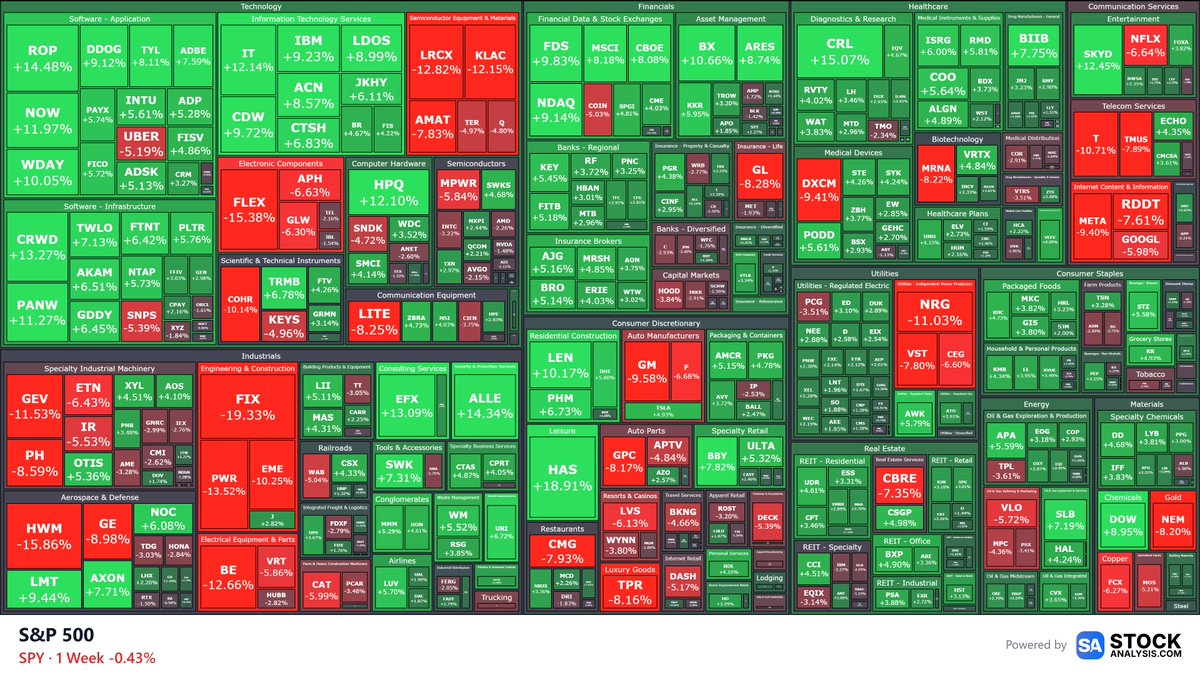
S&P 500 slips 0.47% for the week, yet nearly 350 constituents beat the index
Equal-weight gauge and Russell 2000 outperform as money rotates from AI heavyweights into health care, financials and small caps
The S&P 500 fell 0.47% last week and the Nasdaq Composite lost 0.71%, but breadth improved sharply beneath the surface: nearly 350 S&P 500 constituents outperformed the index and the average stock gained more than 1%, according to Duality Research. The equal-weight S&P 500 (RSP) rose 1.13% and the Russell 2000 added 2.00%, both ahead of the cap-weighted benchmark.
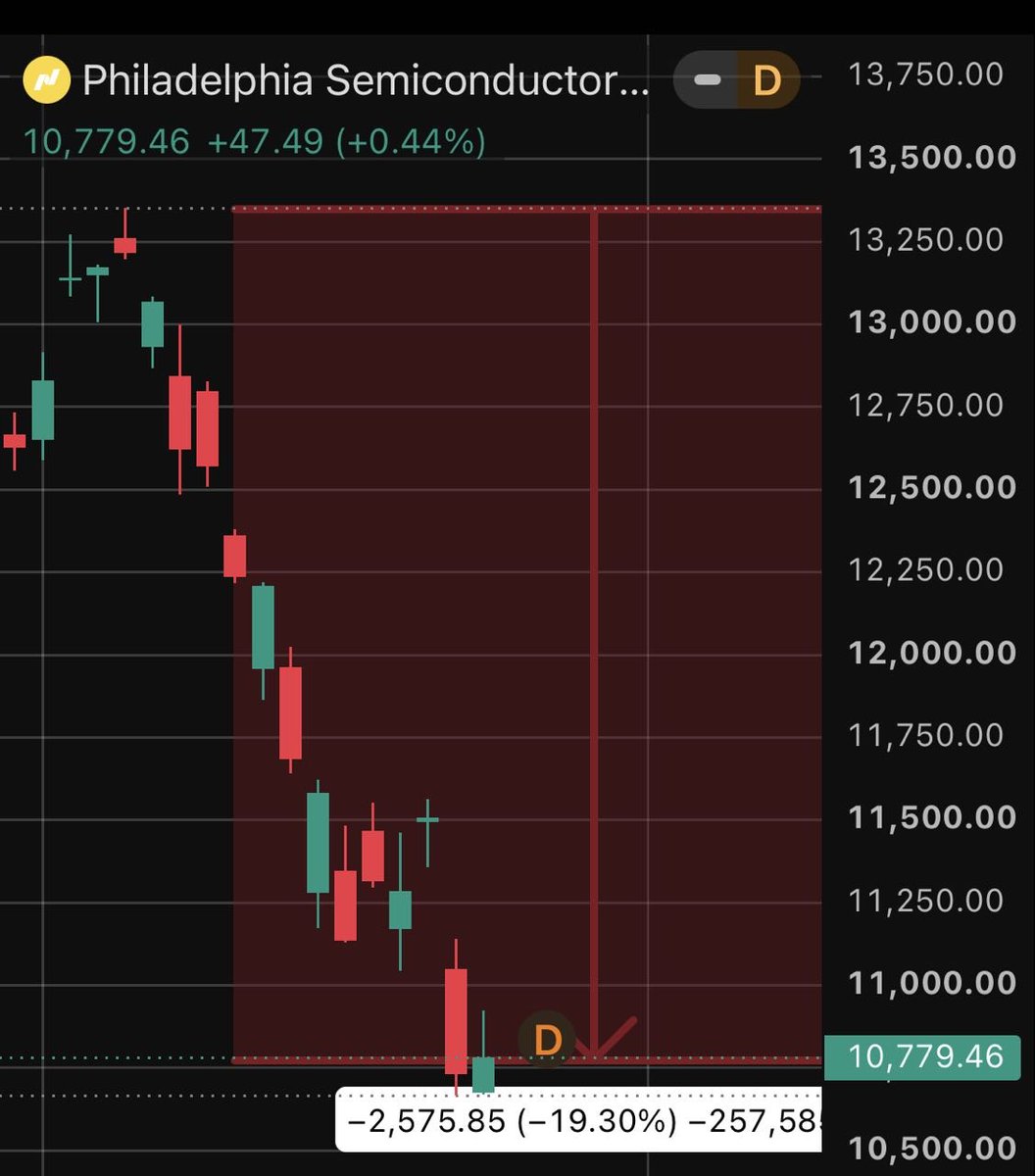
The gap reflects index concentration. The top 10 S&P 500 names, all AI-related, account for roughly 41% of the index, and tech and communication services lagged again. The Philadelphia Semiconductor Index fell 6.79% on Thursday and the Nasdaq dropped 2.60% that day, after Meta detailed a further AI capital-spending plan and Tesla cut its capex guidance, reviving questions about returns on AI investment.
Money moved into rate-sensitive and defensive areas. The 10-year Treasury yield fell 10 basis points to 4.99% over the week, health care and financials strengthened, and American Express fell 3.68% after saying it will cut about 5% of its global workforce, roughly 3,500 positions. Small caps benefited from the pullback in yields.
On valuation, Yardeni and Goldman Sachs data show the S&P 500 P/E has fallen to 18.4x from a peak of 23.2x a year ago, a de-rating of about 20%. The Nasdaq 100 trades near 22x, close to the Russell 2000, while the equal-weight S&P 500 P/E has risen to 16x and consumer staples valuations sit at more than a decade high.
US equities diverged sharply this week. The PHLX Semiconductor Index fell 3.21% over the five sessions, its third straight weekly decline and the longest losing streak since November last year, while storage-chip and semiconductor-equipment gauges dropped roughly 3.3% and 2.1% respectively. Software names moved the other way, gaining about 4.7% as investors rotated out of hardware.
The selling pressure centered on tech hardware. Meta's quarterly report raised the low end of its 2026 capital-spending range to between $135 billion and $145 billion and showed negative free cash flow, prompting investors to reassess the payoff timeline for AI infrastructure spending.
At the index level, the S&P 500 slipped about 0.5% to 7,623.68 and the Nasdaq Composite fell 0.7% to 25,955.34, while the Dow Jones Industrial Average added 0.4% as industrials and utilities held up.
Attention now turns to earnings from Alphabet, Microsoft and Amazon next week, where capex guidance will shape whether the AI trade stabilizes. The Federal Reserve also issues its policy statement, with markets widely expecting no rate change ahead of the midterms.
iShares Semiconductor ETF (SOXX) drew $5.4bn in the week to Oct 23, 2026, the largest net inflow among 2,261 US ETFs with daily flow figures, according to ETF data provider ETFIQ. The inflow equaled 13.61% of the fund's net assets at the start of the window. VanEck Semiconductor ETF (SMH) added $2.5bn, and Direxion Daily Semiconductor Bull 3X ETF (SOXL) took in $2.4bn over three of four trading days from Oct 19 to Oct 22.
Across the same 2,261 funds, net inflows totaled $17.4bn for the week. On the outflow side, iShares Russell 2000 ETF (IWM) lost $2.4bn, SPDR Gold Shares (GLD) shed $2.3bn and iShares Core S&P 500 ETF (IVV) gave back $2.1bn. By issuer, iShares collected $57.4bn across 446 funds in the month to Oct 23, ahead of State Street at $29.4bn and ProShares at $1.5bn among three issuers counted for the full month.
Single-day estimates point the same way. On Oct 21, SOXX was estimated to take in $1.30bn, or about 2.99% of assets, while IVV shed an estimated $1.24bn, IWM $928.9m and Utilities Select Sector SPDR (XLU) $703.8m. Holdings-based estimates also showed ETFs trimming about $500.4m of Meta Platforms and $244.7m of Apple that day.
ETFIQ computes daily flows as the change in shares outstanding multiplied by the prior day's net asset value per share. Its daily coverage spans 2,261 of the 4,800 ETFs it tracks, about 58% of US ETF assets; another 2,325 funds report only monthly via SEC Form N-PORT, with August 2026 the latest filed month. Estimates from different data providers use different methods, so single-day figures are not directly additive to weekly totals.
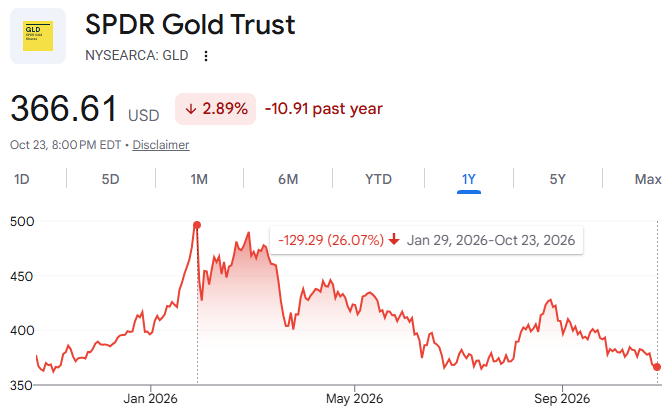
Crypto analyst Michaël van de Poppe said on X that he is bullish on Bitcoin and bearish on gold, and plans to rotate crypto profits back into scarce assets such as gold and silver over the coming years. He flagged $3,200 as a first gold entry level, with $2,500 seen as possible.
The call lands as precious metals weaken. Incrementum's weekly recap put gold at $3,995.52 for the week of Oct. 23, down 4.07%, while Bespoke noted that gold's more than 30% rally from November to January has fully round-tripped and the metal is now down year-over-year.
The Bitcoin-to-gold ratio is drawing attention too. Bespoke pegged the last six months at roughly +5% for Bitcoin and -15% for the gold ETF GLD; Mike McGlone, citing a Bloomberg report, noted that Bitcoin (divided by 20) first crossed above the per-ounce gold price in 1Q21 during Fed easing and now looks to be breaking down.
Market impact runs along two tracks: flows into gold ETFs such as GLD, where Katusa Research notes a daily RSI of 33 near oversold but a price still below the 100-day moving average; and crypto risk appetite, where prior analysis argued Bitcoin trades as a high-beta risk asset when rates are high and liquidity tight. These are analyst views, not directional calls.
Dan Ives, partner at Yorkville Ives, said in a podcast conversation aired Oct. 22 that global memory chip demand has grown roughly 30% over the past four to six weeks, citing what he saw on a trip to Korea. He also argued that every $1 of AI capital spending generates a $5-6 multiplier across the tech ecosystem, and said Wall Street may be underestimating tech earnings growth over the next 12-18 months by 15% to 25%.
Ives has repeatedly stressed that hyperscaler capex is real, with data centers under construction and chip orders in hand, and expects Alphabet, Microsoft and Amazon to confirm a massive capex path in results next week. He characterized debt concerns around names such as CoreWeave and Oracle as overstated, saying the obligations look less dramatic when weighed against order backlogs.
The comments contrast with a jittery tape: AI-linked shares have seen sharper swings as investors grow more sensitive to financing costs and credit risk. The Dan IVES Wedbush AI Revolution ETF (IVES) is up about 20% year to date and has outperformed the S&P 500, though the report notes cooling momentum and elevated volatility.
Caveats apply: the demand growth and multiplier figures are Ives' own estimates, not company disclosures. A potential Tesla-SpaceX combination remains only under evaluation by a SpaceX board special committee, which said no determination has been made and no agreement is assured.
Meta settled a $16.68B youth-safety lawsuit, with Evercore calling the risk largely resolved, shifting focus to AI capex.
2026-10-1965 posts · 52 authors
Semiconductor index rose 2.7% after eight straight down days, with a heavy earnings week ahead for Meta, Tesla, and others.
2026-10-21107 posts · 69 authors
Earnings season intensified with Netflix and SpaceX reporting, Tesla rose 1.3% on Musk's SpaceX merger endorsement, and Nvidia gained 2%.
2026-10-22256 posts · 139 authors
Meta's Q3 revenue beat but EPS missed, with shares swinging from +5% to -7%, a ~$240B market cap swing.
2026-10-2413 posts · 13 authors
Polymarket launched a revshare program, while CEO comments stressed AI compute shortages through 2027-2028, and institutional confidence weakened.
2026-10-258 posts · 4 authors
Amazon CEO said memory shortages persist past 2027, while Linde and Goldman calls highlighted sector differentiation on financing and contract quality.
Morgan Stanley set a 463% upside target for TeraWulf, but the stock kept falling, with Anthropic revealed as anchor tenant on a 20-year, 401MW lease at its Kentucky campus.
2026-10-253 posts · 2 authors
Morgan Stanley backed a $400M credit line for TeraWulf, up from $250M, while the stock fell 44% this quarter.
S&P 500 intraday range narrowed to 0.46%, near December lows, while analysts debated whether Nvidia could support tech stocks.
2026-10-0248 posts · 40 authors
AI infrastructure firms now account for 40% of S&P 500 market cap, with Nvidia alone exceeding the Russell 2000, highlighting AI's market dominance.
2026-10-1548 posts · 42 authors
Bank stocks fell over 5% in two days to a 4-month low, SPY volume hit its lowest since 2005, and tech and semiconductor indices dropped together.
2026-10-2348 posts · 41 authors
Nearly 60% of S&P 500 components are in a bear market while the index nears record highs, and the 10-year Treasury yield plunged 18 bps in a day.
2026-10-2428 posts · 25 authors
US stock market value hit 350% of M2 money supply, highest since the dot-com bubble; S&P and Nasdaq closed at 3-month lows, with Brent above $117.
2026-10-2514 posts · 12 authors
Market breadth improved with 61% of S&P 500 stocks above their 50-day average, while TS Lombard warned an AI spending collapse could drop the index 30%.