Anthropic has filed publicly with the SEC for an IPO, a major milestone ahead of the first-ever listing of a frontier AI model company. The filing lets the public analyze the company's financials for the first time, showing both how much money it is making and what it is potentially losing. Bloomberg described the deal as potentially a record IPO.
Much of Asia may find it nearly impossible to get a piece of the blockbuster offering, according to Bloomberg, sending some investors into proxy bets. CNBC reported that investors are split on the deal, with some calling it "speculative fiction" and others a "generational moment."
Bloomberg reported that after a punishing week for the AI trade, Wall Street took a close look at Anthropic's books and generally liked what it saw, calming nerves around the listing. The filing also warns that the company's product could be catastrophic for humanity, raising questions about how its handpicked trustees balance rapid AI growth against catastrophe concerns.
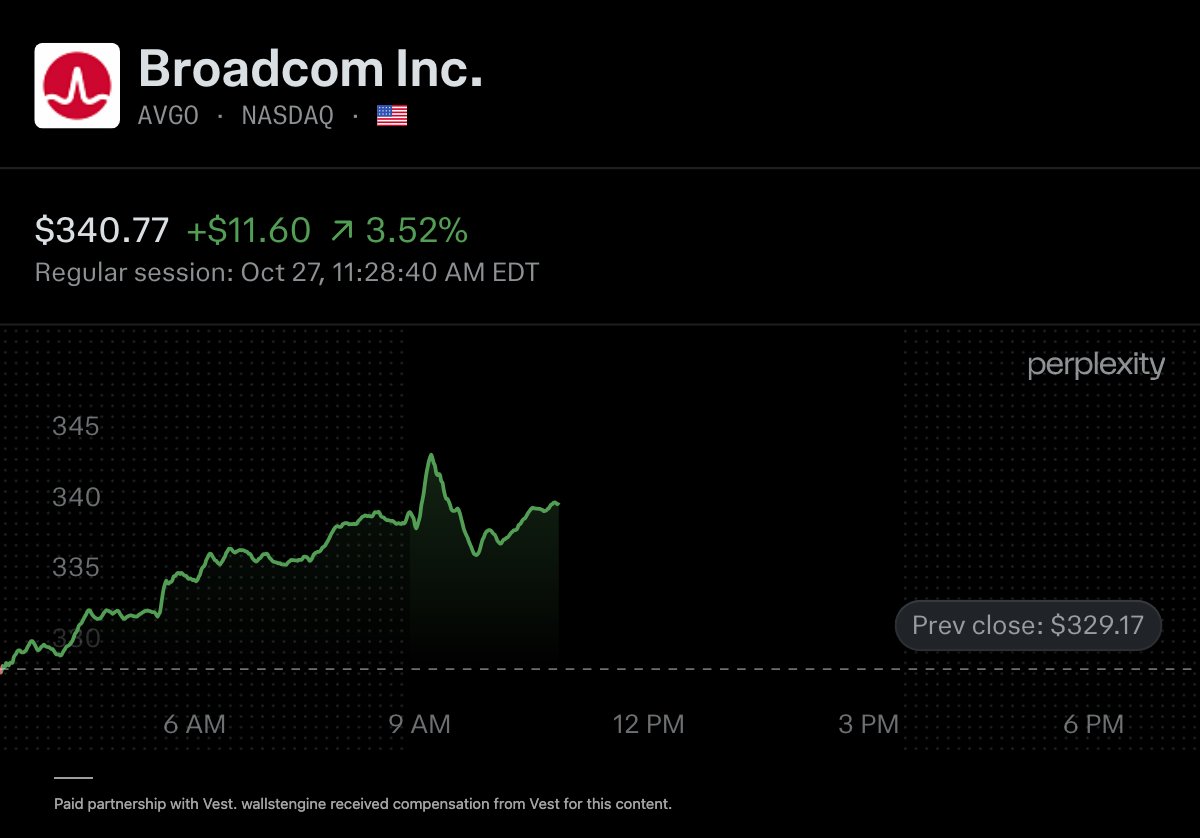
Investopedia noted that Anthropic is asking investors not to treat its stock as "purely transactional" and examined how the company behind Claude makes money. Separately, a $63 billion debt financing deal for Anthropic to buy Broadcom AI chips lifted the chipmaker's shares on Tuesday.
Brent crude rose 1.62% to $115.70 a barrel and WTI gained 1.34% to $101.20 in early Asian trade on Oct. 28, after a nearly $2 drop the previous day on hopes for peace talks. Renewed Houthi attacks on a Saudi Arabian refinery revived supply fears.
The rally built through late October. Brent traded at $114.73 a barrel on Oct. 23, up 0.9% after a 4% jump the prior session, while WTI stood at $100.75. Deadly attacks in Saudi Arabia fuelled concern that a full-scale regional conflict could further choke off global energy supplies. Shipping crude from the Middle East Gulf to Asia on a large tanker had climbed above $37 a barrel by mid-October, more than five times its pre-war level.
ING said traders are bracing for renewed U.S.-Iran hostilities after the Nov. 3 midterm elections, and that the market's risk premium could start to erode if the vote passes without new strikes. Qatar and Pakistan are attempting mediation, capping Brent near $115 for now.
On Wall Street, the S&P 500 fell 0.5% on Oct. 23 for a second straight weekly loss, the Dow dropped 1.2% and the Nasdaq slipped 0.2%, with rising oil prices weighing on nearly three of every four S&P constituents. Mohamed El-Erian warned oil could surge to $150 a barrel if the Iran conflict widens and disrupts tanker traffic through the Strait of Hormuz and the Red Sea.
How this story unfolded
Boeing falls 10% to $169 as Q3 net loss and delivery target cut hit shares
Commercial airplanes posted a $697M operating loss; 737 deliveries now seen below the ~500 target, marking the stock's worst day since April 2025
Boeing reported third-quarter 2026 results before the bell on Oct. 27: revenue of $24.19 billion beat the $23.84 billion estimate, while adjusted core EPS came in at a loss of $0.34 versus an expected loss of $0.21. Free cash flow was $464 million. The commercial airplanes unit posted an operating loss of $697 million and a -6.5% operating margin, against 6.2% in defense and 18.3% in global services.
The company also cut its 2026 aircraft delivery outlook, saying it now expects to fall short of its target of roughly 500 737 deliveries this year. Boeing attributed the slower ramp to the 737 MAX and 787 Dreamliner programs taking longer than expected, partly due to engine supply issues. Commercial airplanes revenue fell 3% year over year to $10.7 billion, while defense, space and security revenue rose 15% to $7.9 billion.
Boeing shares fell about 10% to $169, an 18-month low, wiping roughly $15 billion of market value in a single session — the stock's biggest daily drop since April 2025. The wider jet-unit loss outweighed positive free cash flow and a record backlog.
Boeing said the 737-7 achieved amended type certification from the FAA in the quarter and the 737-10 received certification in October. The company did not provide a detailed timeline for recovering the delivery shortfall in the materials reviewed.
SK Hynix reported third-quarter revenue of KRW 104.62tn and operating profit of KRW 83.33tn, with an operating margin of roughly 80%, a record high. The company also announced roughly KRW 100tn (about $75bn) in shareholder returns for 2026.
Dollar figures circulating on X (revenue of $78.9bn, operating profit of $62.8bn) diverge sharply from the won-denominated disclosure and should be treated as secondary to the company's own numbers. DRAM and NAND average selling prices rose about 28% and 25% quarter on quarter, driving the margin expansion.
The read-through lands on the memory complex, with Micron (MU) and SanDisk (SNDK) framed against SK Hynix's results. Asian tech stocks rallied on the report.
Fourth-quarter guidance points to mid-20s percentage DRAM bit growth and mid-single-digit NAND growth sequentially. Net profit of KRW 39.5tn came in below the KRW 55.4tn consensus, the rare miss in the release.
The US and Russia are discussing a potential return by American oil companies to the Russian market as part of broader negotiations to end the war in Ukraine, the Financial Times reported. People familiar with the matter said the White House and the Kremlin have suggested a joint venture involving US and Russian oil companies could be revived off Sakhalin in Russia's Far East once the war ends, and have also discussed bringing US majors into a plan to resume Russian oil sales to Europe via the Druzhba pipeline.
US special envoy Steve Witkoff discussed the proposals with President Vladimir Putin in St Petersburg in early September, and photographs of his notebook during a Moscow visit last week showed the words "Business Deals," according to the report. A US official said economic proposals would be part of a comprehensive peace framework, that nothing has been finalized, and that the ventures would not begin until the conflict is over.
Other ideas under discussion include restoring US airlines' access to Russian airspace, titanium production and supply cooperation, a sale of Lukoil's international assets to US-linked investors, Novatek participation in an Alaska LNG project, resumed gas supplies to Europe via remaining Nord Stream pipelines, and transferring management of the Zaporizhzhia nuclear plant to a US entity.
The report said many of the deals have little chance of succeeding given Putin's intransigence on ending the war and US corporate caution. ExxonMobil, which held a 30% stake in Sakhalin-1 before Russia confiscated it, said it is negotiating compensation but has no plans to resume operations in the country. European diplomats have said they oppose easing sanctions before the war ends.
Google DeepMind announced Genie 4 on October 27, a real-time interactive world model that generates 3D scenes with physics, ambient sound and character dialogue from text prompts. Users can steer a simulation in natural language, changing weather, moving the camera or introducing new people and objects, while Gemini 3.8 Flash acts as a guiding agent that evaluates each frame to keep the world coherent.
Genie 4 is the first DeepMind world model to generate audio natively, covering ambient sound such as wind and surf as well as interactive speech that adapts to user input. The company says the model sets a new bar for physics realism, including aerodynamics and collisions, and for natural human movement; sessions run about two minutes, up from one minute in Genie 3.
Access is limited for now: Genie 4 is a research preview for trusted testers and is coming soon to Google AI Ultra subscribers through Project Genie, plus early access partners on the Gemini API and AI Studio. Developer pricing has not been disclosed; AI Ultra plans start at $100 a month. DeepMind cautions that visual detail and object permanence can drift as simulations run longer, and that complex physics, audio accuracy and long-term consistency remain open research problems.
For GOOGL, the launch carries no near-term revenue, but it positions world models as infrastructure for robot and agent training, pre-visualization and game prototyping, adding a compute-heavy use case to the Gemini ecosystem.
Broadcom (AVGO) and Anthropic have finalized a $63 billion financing deal covering roughly 1.7GW of Anthropic's planned AI compute capacity, using Broadcom's XPU accelerators and networking systems, with deliveries starting in 2027. A separate financing vehicle will purchase the Broadcom equipment.
Broadcom shares rose on the news. An X post cited a 3.5% gain, while a news-library report (N2) recorded a 1.5% rise in early Tuesday trading, reflecting different points in the session. Broadcom is a key supplier tied to Anthropic's custom AI chip and infrastructure spending.
One analyst view holds that Anthropic's IPO is de-risking the bull case for Broadcom. A separate X post cited annual EPS growing from $8.06 (LTM) to $30.38 by FY2028, with the stock about 30% below its all-time high; those figures come from the X signal, not company guidance.
Recent 13F filings show mixed institutional moves: Gibbs Wealth Management raised its stake by 41.6% in the third quarter, Capital City Trust cut its position by 3.1%, and Farmers & Merchants Investments added 1.8%.
Meta Platforms' expanded $25 billion share sale ended about five times oversubscribed and priced at $625 per share, according to Bloomberg. That implies demand of roughly five times the available shares.
The deal was increased from $22.5 billion, with Morgan Stanley and Goldman Sachs as joint book-running managers. More than half of the shares went to long-only and existing investors, while the 15 largest allocations accounted for roughly 70% of the offering.
The sale is part of Meta's nearly $98 billion AI spending push. The heavy concentration among a small group of holders leaves the post-deal ownership structure worth watching, while the completed raise reduces funding uncertainty around Meta's AI capital expenditure.
In our newsroom's recent coverage, analysts remained bullish on Meta after it announced a $95 billion equity financing plan but raised questions about the scale of its investment. The subscription figures come from people familiar cited by Bloomberg; Meta did not comment in the materials reviewed.
Oracle and Google plan to bring Google's custom AI chips to Oracle Cloud Infrastructure starting in 2027, which would make Oracle the first hyperscale cloud provider outside Google to offer TPUs. Google's eighth-generation TPU 8t is described as targeting nearly 3x higher compute performance per pod.
In the same set of announcements, Oracle said it is integrating ChatGPT and Codex into its applications and adding Google TPUs, OpenAI's Jalapeño chip and Cerebras hardware to its cloud infrastructure. It also outlined an expanded collaboration with Intel for enterprise and agentic AI workloads on OCI.
The moves come as Oracle shares have fallen 24% over six months, according to Zacks, even as cloud growth accelerates and the company cites a record $664 billion backlog with raised fiscal 2027 guidance. Access to multiple chip suppliers is seen as a factor in converting that backlog into cloud revenue.
The details above come from announcements summarized in social media posts and from reports carried in this site's news library; neither Oracle nor Google offered further comment in the material reviewed.
The U.S. Department of Energy's Office of Energy Dominance Financing announced on Oct. 27 a conditional loan commitment of up to $5 billion to Constellation Energy for uprates and modernization at eight nuclear plants in Illinois, Maryland and Pennsylvania. Energy Secretary Chris Wright announced the funding at the Byron generating station in Illinois.
According to DOE and the company, the projects are expected to add nearly 1.1 gigawatts of capacity, enough to power more than 930,000 homes, and support over 10,000 project-related jobs. The facilities involved are Braidwood, Byron, Clinton, Dresden, LaSalle and Quad Cities in Illinois, Calvert Cliffs in Maryland and Limerick in Pennsylvania.
The commitment is conditional: Constellation must satisfy technical, legal, environmental and financial conditions before definitive financing documents are signed and funds are disbursed, and the company said it does not by itself represent a decision to proceed at every facility. Constellation's earlier 20-year agreements with Google and Amazon have underpinned more than $7 billion of investment and roughly 1,080 megawatts of added nuclear capacity.
Constellation shares rose on the news, closing at $258.98, up 2.57%, according to Zacks. Axios reported that the Trump administration has now conditionally approved nearly $30 billion in nuclear-related financing.
Robinhood reported third-quarter 2026 revenue of $1.42 billion, up 12% year over year and a record, but below the $1.43 billion consensus. Earnings per share came in at $0.51, also short of estimates. Net income was $476 million, down 14% year over year, while adjusted EBITDA rose 9% to $808 million.
Transaction-based revenue reached a record $867 million, up 19% year over year. Options brought in $399 million (+31%), equities $121 million (+41%), event contracts $173 million (up more than sixfold) and crypto $120 million, down 55%. The company said it now has 14 businesses generating more than $100 million in annualized revenue.
Shares fell after hours following the report; N2 in our newsroom database described a drop of nearly 8%, while X posts cited a decline of more than 4%. Robinhood narrowed its full-year adjusted operating expense and stock-based compensation outlook to $2.68 billion-$2.75 billion.
Separately, about 200,000 customers have opened AI-powered trading accounts generating over $1.6 billion in notional volume, according to X posts, and the company announced a partnership with Ripple. Those figures have not been independently verified by our newsroom.
Nelson Peltz's Trian Fund Management, leading a group of investors that includes Flynn Group, BlueFive Capital and Sixth Street, submitted a nonbinding offer on Wednesday to take Wendy's private at $7.35 per share in cash, according to a regulatory filing and multiple media reports.
Based on 194 million fully diluted shares, the proposed price implies about $1.43 billion in equity value; several outlets described the deal as roughly $1.4 billion. Trian said a buyout could revive the burger chain's business.
Wendy's shares rose about 15% on Wednesday. The stock has fallen roughly 25% over the past five years, according to The Wall Street Journal, and investors are now focused on whether the board and shareholders will engage with the offer.
The proposal remains nonbinding, and no timetable for next steps has been disclosed.
Apple introduced 14-inch and 16-inch touchscreen MacBook Pro models at its "Pro and tell" event in Los Angeles on October 28. The laptops feature OLED displays, retain the M5 Pro and M5 Max chips, and add a reinforced hinge, Dynamic Island, thinner bezels and a lighter body. Pre-orders opened at 10:10 a.m. Pacific Time, with availability potentially as early as November 6.
The launch caps a week of PC updates: an OLED iPad mini arrived Monday, followed by an M6 iMac and an entry-level 14-inch MacBook Pro on Tuesday. The touchscreen models mark Apple's first Mac with direct touch input, a shift from its long-held position against touch-enabled laptops.
Pricing is the key variable. Bloomberg reported Apple has discussed charging $2,899 for the 14-inch touch model, implying a starting price of at least $3,399 for the 16-inch version — roughly $400 above comparable M5 Pro models. Apple raised Mac prices across the board in June 2026, including a $300 increase on MacBook Pro. Existing mini-LED models will remain on sale as a lower-cost option.
For Apple, the launch is a demand test: after a foldable iPhone validated appetite for $2,000-plus devices, the company is probing whether touchscreen laptops can command similar premiums. Investors in AAPL will watch whether the new models lift holiday-quarter PC revenue.
Apple said it is aware of an issue affecting the inner display on a small number of iPhone Duo units and urged affected customers to contact AppleCare for a replacement. Users have posted images of cracks along the centre crease and bright lines on the display, with some reporting a crunching sound when unfolding the device. Apple did not say how many units are affected and said it is not recalling the product.
The Duo is Apple's first foldable iPhone, starting at $1,999 in the US and £1,999 in the UK, rising to £3,199 for the most expensive configuration. It was unveiled by new chief executive John Ternus, who took over from Tim Cook in September, and represents the biggest iPhone redesign in almost two decades. Repair platform iFixit believes a failing hinge component is cracking the screen rather than the panel itself.
The timing is awkward: 247wallst.com framed the episode against Apple's roughly $5 trillion valuation, though Apple has disclosed no sales or failure-rate figures, so the financial impact cannot yet be quantified. Institutional position changes in Apple shares reported by defenseworld.net are unrelated to the display issue.
Francisco Jeronimo of IDC told the BBC that some faulty-device images may have been AI-generated and caution is warranted before conclusions about the full production run, while adding that even Apple faces a steep learning curve in foldables. Apple says affected units exhibit the defect quickly. A further 28 markets are due to launch the device on Oct 30, increasing pressure on Apple to clarify its warranty position.
Texas Department of Motor Vehicles records show Tesla's authorized robotaxi fleet at 1,080 vehicles, including 573 Cybercabs and 507 Model Ys, the first time the steering-wheel-free model is the majority. The prior day's roster stood at 1,051 vehicles, with 544 Cybercabs, after a single update added 81.
Cybercab joined the fleet in September, with the first units registered on Aug 31. In early October the registry showed roughly 319 Cybercabs against 420 Model Ys, a gap erased in about four weeks. Tesla said on its third-quarter earnings call that it plans to add Cybercabs in Dallas next month; the vehicle currently operates only in Austin.
The DMV data covers vehicles authorized for robotaxi operations, not whether they are carrying paying riders, and Tesla has not published an official fleet count. Waymo's Texas registry stands at 1,207, leaving a gap of 127 vehicles. TSLA closed about 4% higher on Tuesday.
Lars Moravy, Tesla's VP of vehicle engineering, said the company is building at the rate the robotaxi service needs. Management also said it aims to deliver Cybercabs to fleet customers by year-end rather than placing all of them in its own fleet.
How this story unfolded
2026-08-305 posts · 4 authors
Tesla's Robotaxi fleet estimated at 900+ cars, Cybercab event set for Sept. 3, Semi rollout Sept. 24; OpenAI VP says L5 autonomy 5-10 years away.
Markets
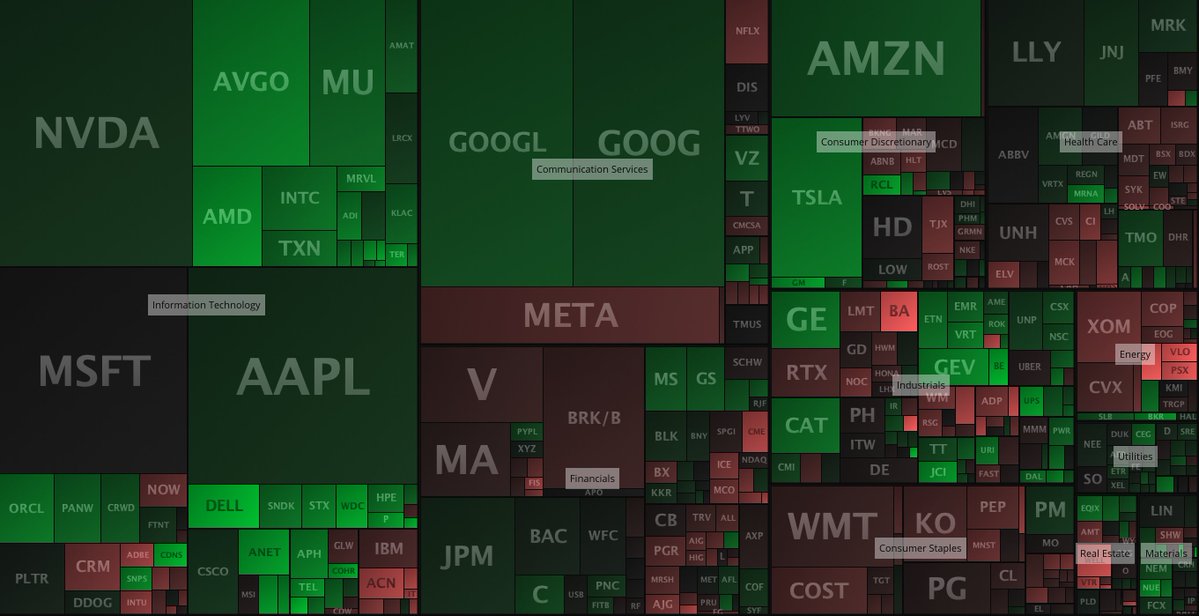
Nasdaq 100 climbs 1.3% as chip index adds 3.6% in second straight tech rally
AI trade steadies before Microsoft and Alphabet earnings and the Fed decision; Meta's $25 billion share sale was five times oversubscribed
US stocks closed higher as the tech rally extended into a second session, with the Nasdaq 100 up 1.3% and the semiconductor index gaining 3.6% while the VIX fell. Investors added AI exposure ahead of results from Microsoft and Alphabet and the Federal Reserve's rate decision.
The immediate trigger was blockbuster results from SK Hynix, which Reuters cited among the factors lifting sentiment in the sector. Meta's $25 billion share sale drew five times the demand, and Oracle expanded its AI partnership with OpenAI using Cerebras chips, reinforcing the view that AI capex spending is still running.
Meta sat at the center of both the financing and AI narratives, while the chip index's 3.6% move signaled a rotation back into high-beta technology. The Fed meeting, the penultimate of the year, added to positioning flows before the decision.
Claims circulating on social media that $500 billion to $550 billion of market value was added in a single day appear only in a Kalshi post and a personal account, with no wire-service or newsroom confirmation, and are not used here.
Earnings
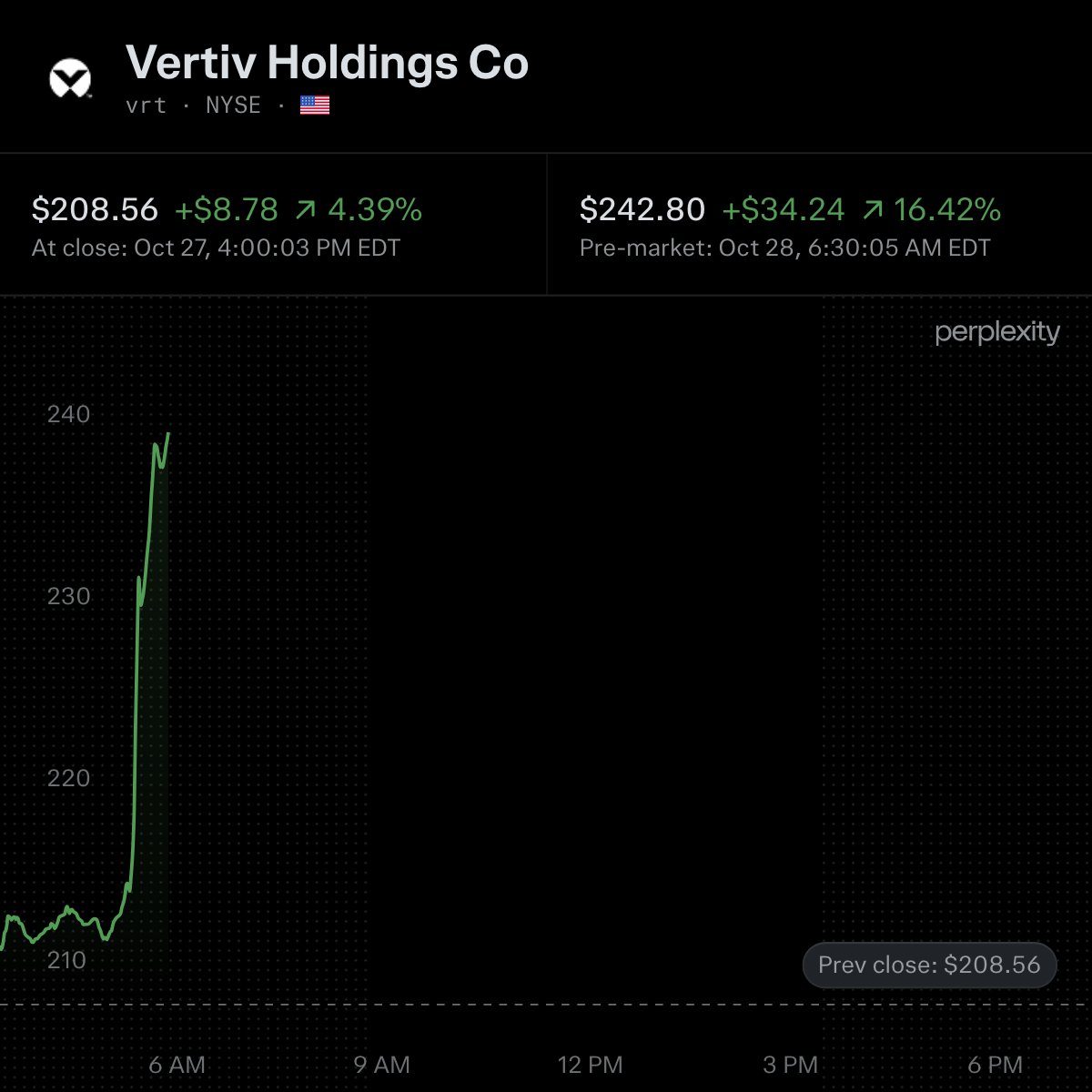
Vertiv Beats Q3 Estimates, Raises Full-Year Outlook as Organic Orders More Than Double
AI data center power and cooling demand accelerates; CEO calls it the largest infrastructure buildout and says it is speeding up
Vertiv (VRT) reported third-quarter results that beat expectations on revenue and profit and raised its full-year outlook. Organic sales grew 55% year over year, adjusted operating margin expanded, and organic orders more than doubled from a year earlier. The stock rose roughly 15% to 16% in premarket trading.
CEO Giordano Albertazzi said, "We are in the middle of the largest infrastructure buildout and it's accelerating," tying the growth to AI data center demand for power and cooling infrastructure.
The read-through lifted peers: nVent Electric (NVT) and Modine (MOD) rose in premarket trading, while FLEX also surged on its own results. Separately, GE Vernova (GEV) reported quarterly earnings of $4.81 per share, beating the Zacks Consensus Estimate of $4.03, and raised guidance while acquiring Trench Group.
Some market commentary framed Vertiv's results as an upbeat signal for the AI trade ahead of Big Tech earnings.
Seagate Technology reported first-quarter fiscal 2027 revenue of $4.2 billion, above the $4.14 billion consensus, with adjusted earnings per share of $7.68 versus expectations of $7.42 to $7.44. Gross margin came in at 57.8% and free cash flow reached $1.5 billion, which the company described as its highest ever.
The outlook drew more attention: second-quarter revenue guidance of $4.8 billion, plus or minus $100 million, topped the $4.53 billion consensus, while adjusted EPS guidance of $9.20, plus or minus $0.20, came in well above the $8.58 expected.
The results reflect continued data-storage demand tied to the artificial-intelligence infrastructure buildout. Zacks noted EPS of $2.61 a year earlier, implying revenue growth of roughly 58% to 60% year over year.
Despite the beat, Seagate shares fell 6.9% in after-hours trading, with one report noting the stock sits nearly 27% below a peak reached about a month ago. The ticker in focus is Seagate Technology ($STX).
Amphenol (NYSE: APH) reported third-quarter 2026 net sales of $10.2 billion on October 28, up 65% year over year and above the roughly $9.5 billion consensus. Organic sales rose 37%, adjusted EPS came in at $0.80, up 74%, and adjusted operating margin reached 29.7%, up about 270 basis points. Orders were $12.2 billion with a book-to-bill of 1.19:1.
The gap between 65% total growth and 37% organic growth reflects the company's run of acquisitions over the past two years; finsee noted that acquisition-related debt has been rising alongside the top line. Organic growth also beat the roughly 30% consensus, indicating that demand for connectors and fiber-optic interconnect in end markets such as data centers and defense is accelerating on its own, not just through consolidation.
Management guided fourth-quarter adjusted EPS to $0.81-$0.83 and full-year sales to $36.9-$37.1 billion, above the roughly $35.6 billion consensus. For the broader electronic-components group, the outlook is a read on data-center capex and industrial demand; Amphenol shares are up about 18% year to date versus roughly 13% for the S&P 500.
The company's release called it a record third quarter and paired the results with a dividend increase and a new three-year, $4 billion repurchase authorization. Buyback execution will depend on market conditions.
Visa reported fiscal fourth-quarter net revenue of $12.1 billion and adjusted earnings per share of $3.48, both above analyst estimates. Net income was $6.0 billion, up 18% year over year.
Service revenue was $5.3 billion, up 14%, while data processing revenue reached $6.2 billion, up 16%; international transaction revenue rose 8% to $4.1 billion. The company raised its dividend 16% to 78 cents per share and said cross-border volume rose 14% at constant FX, with total processed transactions of 74.2 billion.
The CEO called it record net revenue and the strongest growth in more than 15 years excluding the post-pandemic recovery. Despite the beat, the stock fell about 1% to 2% after hours; one social media account estimated roughly $14 billion of market value was erased, a figure not confirmed by the company or exchange data.
Visa's official earnings release and call transcript were published, providing sources for further verification.
Anthropic PBC has picked JPMorgan Chase & Co. (NYSE: JPM) to lead US sales of shares to individual investors in its potentially record-setting IPO, according to people familiar with the matter cited by Bloomberg. The company has weighed allocating roughly 15% to 20% of the total IPO shares to retail buyers, though talks are ongoing and the figure could change. JPMorgan CEO Jamie Dimon is expected to take part in the bank's retail outreach campaign.
Anthropic publicly filed for its IPO on Monday, with Goldman Sachs and Morgan Stanley leading the offering. Bloomberg has previously reported that investors have indicated a valuation range of $1.4 trillion to $1.5 trillion, with a possible ceiling of $1.75 trillion. Citigroup will coordinate retail distribution outside the US, covering investors in Australia, Canada, Japan, the UK, Switzerland and some European Economic Area countries.
JPMorgan also led the retail effort for SpaceX's $86.2 billion IPO, which drew more than $100 billion in individual investor demand, a precedent for the current mandate. For the bank, the role secures a distribution channel into one of the largest tech listings in recent years; for Anthropic, a broader retail base could reduce reliance on institutional allocations.
The listing comes as AI developers seek large-scale funding to support costly model development and infrastructure expansion. Anthropic and JPMorgan did not publicly comment on the report, and the retail allocation and final valuation remain subject to the prospectus and later pricing.
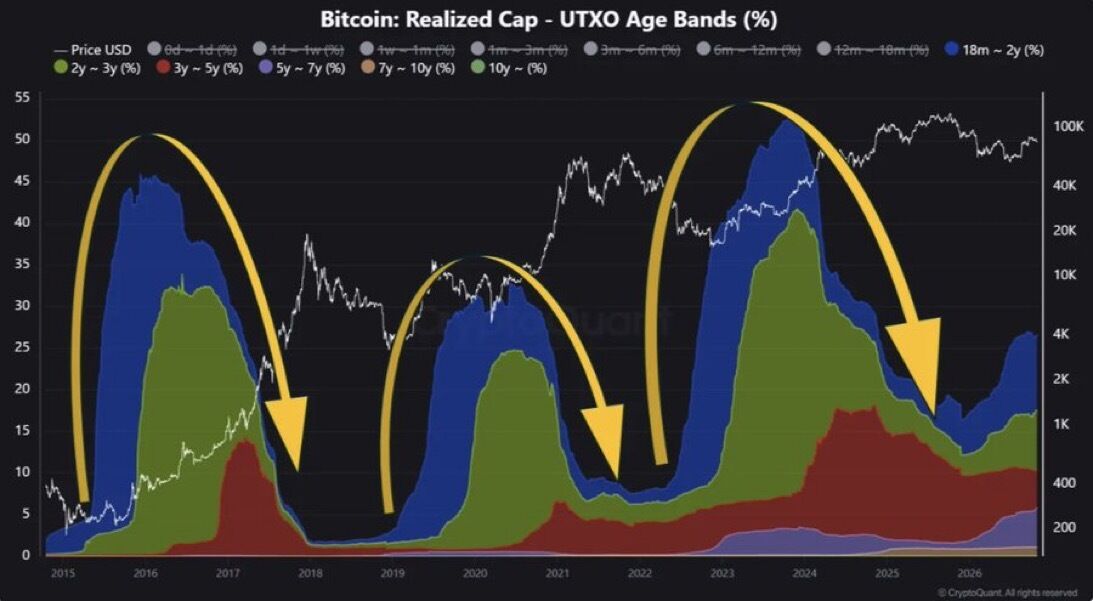
Hyperliquid's largest traders have turned net short Bitcoin for the first time since March, according to a Galaxy Digital-owned analytics firm Glassnode post dated Oct. 27. The cohort had previously built longs near the market bottom before reversing last week. Glassnode framed the shift as ambiguous: the traders may be positioning ahead of a deeper pullback, or may be exposed to a short squeeze if Bitcoin rebounds.
Bitcoin held near $80,000 with minimal movement over the past day. In its Oct. 21 report "Swept and Refilled," Glassnode identified the two largest modeled liquidation clusters near $85,000 and $87,000, after a band around $80,000 was cleared on Oct. 15. Forced closures of shorts could accelerate a move toward $87,000, the firm said, though sellers had placed a large block of spot orders between $86,500 and $87,500. A liquidation band near $79,600 remained below the market.
On-chain settlement makes large Hyperliquid fills visible in real time. A public whale tracker logged multiple eight-figure BTC short opens and closes between Oct. 26 and Oct. 28, including a roughly $28.97 million short opened near 00:48 UTC on Oct. 28 and an $11.83 million short opened at 01:15 UTC. The tracker notes that whale flow describes crowding, not direction.
Macro catalysts sit directly ahead: the Federal Reserve's policy decision is scheduled for Oct. 28, followed by September personal income and outlays and the advance estimate of third-quarter GDP on Oct. 29. Glassnode put the True Market Mean, its reference for the average cost basis of active investors, at approximately $77,600, with the average cost of coins held by six- to 12-month buyers near $86,700.
Coinbase said on Oct. 28 that it has not suffered a data breach, attributing the exposure of customer contact information to a security incident at third-party analytics provider Amplitude. In a post from its support account on X, the Nasdaq-listed exchange said the incident affected a "small subset” of Coinbase customer contact data, among other Amplitude clients, and that it found no evidence of unauthorized access to its own systems. Customer funds remain safe, it said.
The exchange did not disclose how many customers were affected or which contact fields were exposed. An anonymous X account claimed attackers obtained data on more than 70,000 users, a claim reshared by SlowMist chief information security officer 23pds; Coinbase has not confirmed any figure. Coinbase said it is notifying affected customers by email as required by law and reporting the event to regulators.
Exposed email addresses and phone numbers can still fuel phishing and social-engineering attacks even without passwords, private keys or funds being compromised. The disclosure lands a day before Coinbase reports third-quarter results; the incident occurred after the quarter closed on Sept. 30, so any cost would more likely show up in fourth-quarter results.
The incident came alongside data-breach disclosures at South Korean financial firms. Daishin Securities said personal information of 38,490 customers, including names, email addresses and mobile phone numbers, was hacked. Bithumb said an unauthorized outside party accessed an internal mobile groupware system used by staff and reported it to the Korea Internet & Security Agency, adding that its trading system and customer crypto assets were not reachable through the breach.
Bloomberg reported that anxiety is building on Wall Street over the debt financing behind AI data centers and chips, as tech giants raised tens of billions of dollars this week while still needing trillions more over coming years.
The concern lands just before a heavy week of hyperscaler results. CNBC said investors are watching Oracle, Alphabet and Amazon updates for signs on AI-related spending and financing.
Cash-flow pressure is already visible in third-party projections: one market account estimated Q4 2026 free cash flow at about positive $1.7 billion for Microsoft, negative $6.2 billion for Alphabet, negative $8.9 billion for Amazon and negative $11.2 billion for Meta. These are forecasts, not company guidance.
Amazon reports third-quarter results after the U.S. close on Oct. 29. The Zacks consensus calls for revenue of about $202.11 billion and EPS of $2.01, against company guidance of $197-202 billion in sales and $22.5-26.5 billion in operating income. Investors are focused on AWS growth and a 2026 capex plan of roughly $220 billion.
How this story unfolded
Company🔥Developing
Fitch keeps SpaceX at BBB+ as $40 billion GPU lease stays outside debt metrics
Lessor is an Apollo-managed entity; chips are Nvidia Vera Rubin; lease-adjusted leverage becomes a supplemental measure
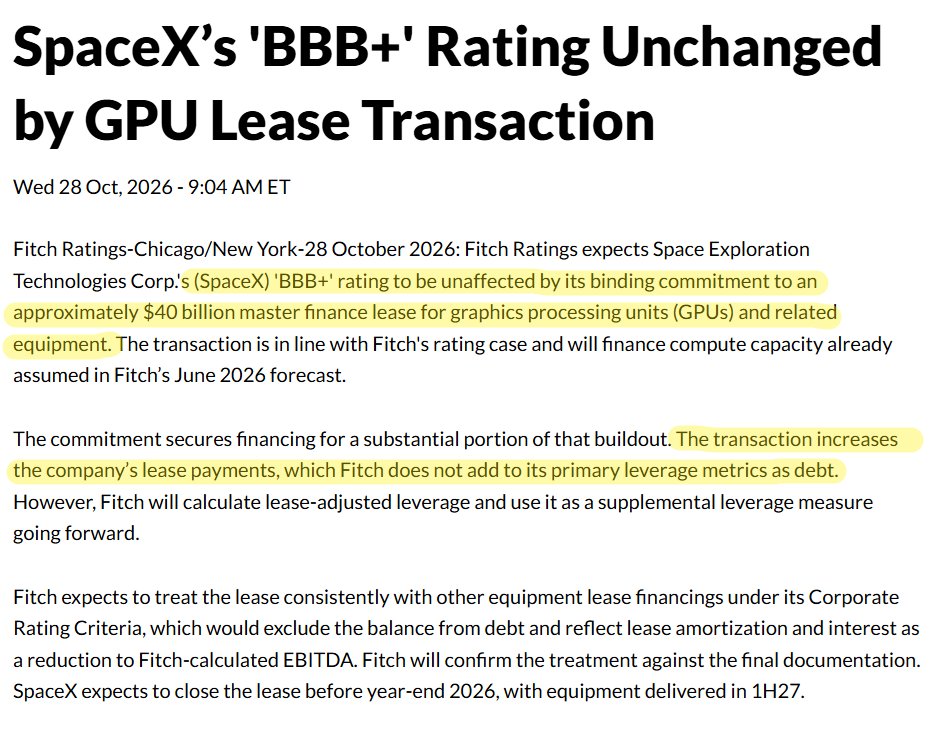
Fitch Ratings said Wednesday that Space Exploration Technologies Corp.'s BBB+ rating is unchanged by the company's binding commitment to an approximately $40 billion master finance lease for GPUs and related equipment. The lessor is an entity managed by Apollo Global Management, and the equipment is next-generation Nvidia Vera Rubin chips for SpaceX's terrestrial compute buildout; closing is expected before year-end 2026, with deliveries in the first half of 2027.
The agency said the transaction fits its June 2026 rating case and that lease payments are not added to debt in its primary leverage metrics. Fitch will instead calculate lease-adjusted leverage as a supplemental measure and treat the lease like other equipment lease financings, excluding the balance from debt and deducting lease amortization and interest from Fitch-calculated EBITDA. SpaceX's Oct. 26 Form 8-K said each lease schedule runs about five to five-and-a-quarter years, with rent payable quarterly in advance covering one-twentieth of each tranche's financed cost plus a fixed annual rate on the outstanding balance, for aggregate principal payments of roughly $40 billion.
Fitch also disclosed that one Super Intelligence customer accounted for 34.5% of consolidated revenue in the third quarter of 2026 and 24.2% year-to-date, up from below 10% a year earlier; cloud services contracts typically run three years but either party can terminate on 90 days' notice. Nameplate compute reached 1.7 gigawatts at Sept. 30, 2026, versus 0.6 gigawatts a year earlier, and Fitch's rating case assumes average nameplate compute of 5.0 gigawatts in 2027 and 9.5 gigawatts in 2028.
SpaceX held $89.9 billion of cash, cash equivalents and short-term marketable securities at Sept. 30, 2026, plus full availability under a $5.0 billion revolver. Total debt was $38.0 billion with no material principal payments due until July 15, 2031. Fitch forecasts EBITDA leverage of 1.5 times at end-2026, falling to about 1.0 times in 2027.
Earnings
Equinor Q3 adjusted operating income doubles to $12.35bn on energy price surge
Middle East conflict and a tight European gas market lift realizations; company targets about 4% output growth in 2026
Equinor said third-quarter adjusted operating income doubled to $12.35 billion from $6.2 billion a year earlier, beating analyst estimates. The company attributed the result to energy prices driven higher by conflict in the Middle East and a European gas market that remained tight.
Realized prices rose sharply: European gas averaged $20.0 per MMBtu versus $11.4 a year ago, while liquids fetched $92.3 a barrel versus $64.9. Production grew 2%, and adjusted net income tripled to $2.86 billion from $932 million, marking its best quarter since late 2022.
The company said it targets production growth of about 4% in 2026. Higher output combined with stronger realizations underpinned the earnings increase.
Peers BP, Chevron and ExxonMobil are all scheduled to report before the bell on Friday, with consensus pointing to a strong quarter across the integrated majors.
Phillips 66 reported third-quarter 2026 adjusted earnings per share of $14.08 on Wednesday, ahead of estimates ranging from $11.97 to $12.08 and up from $2.97 a year earlier. Adjusted pretax income came in at $7.14 billion, above the $6.26B estimate.
By segment, refining posted adjusted pretax income of $6.1 billion, midstream $702M, chemicals $311M, marketing and specialties $245M, and renewable fuels $245M. Reuters reported that higher refining margins drove the beat, with ongoing tensions in the Middle East boosting demand for US fuel.
The company also reported refining utilization of 98% and solid midstream volumes. Midstream adjusted pretax income of $702M came in slightly below the $720.7M estimate, while chemicals at $311M topped the $216.8M estimate.
The results were released before the opening bell on Wednesday, Oct. 28.
The American Petroleum Institute reported a 2.031 million-barrel draw in U.S. commercial crude inventories for the week ended Oct. 23, against a forecast build of 800,000 barrels and a prior-week draw of 4.931 million barrels. Cushing stocks fell 453,000 barrels, reversing a 936,000-barrel build.
Refined products moved the other way: gasoline inventories rose 2.39 million barrels after a 2.577 million-barrel draw, and distillates added 380,000 barrels versus a 2.6 million-barrel decline the week before. According to OilPrice, commercial crude stocks have fallen more than 58 million barrels over 28 weeks, with the Strategic Petroleum Reserve slipping to 282.6 million barrels.
API figures are typically read as a precursor to the EIA's official weekly report. A crude draw paired with product builds leaves open both a tighter-supply and a softer-demand reading. WTI traded near $99.87 a barrel after the release; energy equities and the United States Oil Fund (USO) will look to the EIA data for confirmation.
The figures are an industry estimate; the EIA's official statistics are the final reference, and single-week API numbers should not be extrapolated.
Bloomberg Column: Brazil Vote Exposes Prediction-Market Odds as a Pricing Trap
Polymarket and Kalshi put Bolsonaro near 80% before Lula won; Jonathan Levin warns against treating such odds as asset-pricing inputs ahead of US midterms
Bloomberg Opinion columnist Jonathan Levin argued on Oct. 28 that Brazil's election result was shocking only because investors took Polymarket and Kalshi betting odds at face value. Both platforms had priced conservative candidate Flávio Bolsonaro at roughly 80% before incumbent Luiz Inácio Lula da Silva won the runoff.
Kalshi's own retrospective shows Lula took the Oct. 25 runoff 51.79% to 48.21%, three weeks after losing the first round 47.03% to 45.16% — the first candidate to pull off such a reversal since direct elections returned in 1989. On runoff night, Kalshi's Bolsonaro contract fell from about 60% to 13% in roughly an hour, with CME real futures following.
The cash market reaction was severe. The real slid nearly 8% intraday on Monday, its biggest one-day decline since 1999, according to the Wall Street Journal, while the Ibovespa closed down 13.88% after falling as much as 17.3% and tripping a circuit breaker — its worst session since March 2020. Kalshi noted banks and domestic-facing companies fell hardest while exporter Vale rose 4.0%, a split pointing to repricing of the interest-rate path rather than the commodity cycle.
Levin's central point is that when prediction-market contracts are small and illiquid, their signal can mislead more than inform, and mapping such odds directly onto equity, bond and currency pricing multiplies the cost of error. He ties the lesson to the upcoming US midterms, where district-level contracts typically carry far less liquidity than a presidential race.
Brazil's Finance Ministry blocked access to Polymarket and Kalshi in April and issued a broader online gambling ban in September, meaning odds moves in the decisive runoff window were driven almost entirely by non-Brazilian users. Traditional polls never showed such a gap: a Datafolha survey on Oct. 22 had the two candidates level.
Sources:
Company
GM plans hybrid SUV output at Michigan plant in gas-electric pivot
Surging gasoline prices have lifted hybrid demand, prompting GM to widen its gas-electric lineup
General Motors plans to build hybrid sport utility vehicles at a plant in Michigan, according to Bloomberg and Reuters. The move is part of a push to offer more gas-electric models, which have sold more briskly as gasoline prices soared this year.
Reuters described the plan as an exclusive and framed it as a strategic pivot away from electric vehicles. Bloomberg reported that production would begin at the Michigan plant later this year, without specifying a date.
Separately, GM has drawn investor attention for moving its stock listing to Nasdaq from the New York Stock Exchange. According to 247wallst.com, GM shares rose 5% to $79.93 on that news. The hybrid SUV plan and the listing move are separate storylines: one concerns product mix, the other index eligibility and trading.
GM has not provided further detail on the hybrid SUV plan. The reports did not disclose specific models, a production timetable or investment figures.
American Electric Power reported third-quarter 2026 revenue of $6.83 billion, above the roughly $6.55 billion consensus and up 14% year over year. Operating earnings per share came in at $2.23, also ahead of estimates and up 24% year over year; GAAP EPS was $2.18, according to the company release.
The company guided full-year 2026 operating EPS to the high end of the $6.25-$6.55 range or above, and said it was expanding its capital plan and raising its growth outlook. For 2027, it guided adjusted EPS of $6.75-$7.05.
For utilities, a larger capital plan generally points to future rate-base growth, which is why the beat drew attention beyond the headline numbers. In the same energy tape, Expand Energy reported third-quarter adjusted EPS of $1.46, ahead of consensus.
Some wire summaries described the full-year operating EPS outlook as at least $6.25-$6.55 and GAAP EPS of $6.11-$6.41, down from a prior $6.16-$6.46. The company release frames the operating figure as at or above the high end of the range.
GSK reported third-quarter 2026 turnover of £8.9bn, ahead of the £8.86bn consensus, with adjusted EPS of 54.6p versus an expected 50.3p. The company reaffirmed its full-year guidance: turnover growth of 3%-5% CER and core operating profit and core EPS growth of 7%-9% CER.
Specialty Medicines brought in £3.9bn, up 15% CER, while Vaccines fell 2% CER to £2.6bn. Shingrix revenue of £780m and Arexvy revenue of £195m both came in below estimates. The quarterly dividend was held at 17p per share, in line with expectations.
Reuters reported that GSK beat quarterly sales and profit expectations on demand for specialty medicines, supporting CEO Luke Miels' push to accelerate growth. The company said 2026 core EPS growth would land at the lower half of its 7%-9% range, with vaccines remaining a drag.
GE HealthCare also reported third-quarter results the same day, with revenue of $5.5bn and adjusted EPS of $1.34, both above estimates, and raised its full-year adjusted EPS guidance to $4.95-$5.05.
Boston Scientific (NYSE: BSX) reported third-quarter 2026 net sales of $5.138 billion, up 1.5% year over year and above the $5.05 billion consensus. Adjusted EPS came in at $0.73, in line with estimates but down 3% from $0.75 a year earlier, while GAAP EPS was $0.40, a 22% decline.
The company guided full-year 2026 adjusted EPS to $3.16-$3.18, below the $3.23 consensus, with reported net sales growth of about 4.25% and organic growth of about 3.75%. The quarterly results matched expectations, but the below-consensus annual profit outlook is the focal point for investors.
Biogen also reported the same day, posting third-quarter adjusted EPS of $2.62 against a $2.06 estimate and revenue of $2.80 billion, and raised the low end of its full-year adjusted EPS guidance to $12.20. The contrasting results from a device maker and a biotech offer a useful read-across for the sector.
Some figures in the X signal, including the GAAP EPS decline and full-year sales growth rates, come from a single wire post and have not been independently cross-checked against the newsroom library; the company's official release remains the authoritative source.
WM (NYSE: WM) reported third-quarter 2026 results on Oct. 27: revenue of $6.846 billion, up 6.3% year over year and above the $6.81 billion consensus; adjusted EPS of $2.15, missing the $2.18 analyst estimate by $0.03; GAAP diluted EPS of $2.05 versus $1.49 a year earlier. Adjusted operating EBITDA rose 5.8% to $2.121 billion, while the margin compressed to 31.0% from 31.1%.
Revenue growth was driven by core price of 5.8% and Collection and Disposal yield of 3.4%, along with higher volumes in recycling and renewable energy. Margin pressure came from higher fuel costs and increased risk management expenses, which more than offset favorable price-to-cost spread in Collection and Disposal and contributions from Healthcare Solutions, where revenue grew 3.7% and operating EBITDA rose more than 30%.
Through the first nine months, net cash from operations was $4.87 billion, up 12%, and free cash flow was $3.01 billion, up more than 42%. WM returned $957 million to shareholders in the quarter through $580 million of buybacks and $377 million of dividends. The company affirmed full-year guidance: revenue at the high end of $26.275 billion to $26.475 billion, adjusted operating EBITDA of $8.15 billion to $8.25 billion, and free cash flow at the high end of $3.75 billion to $3.85 billion.
Shares fell about 2.2% in after-hours trading following the EPS miss. CEO Jim Fish said results were in line with expectations, citing the price-to-cost spread in Collection and Disposal and growing contributions from healthcare and sustainability businesses.
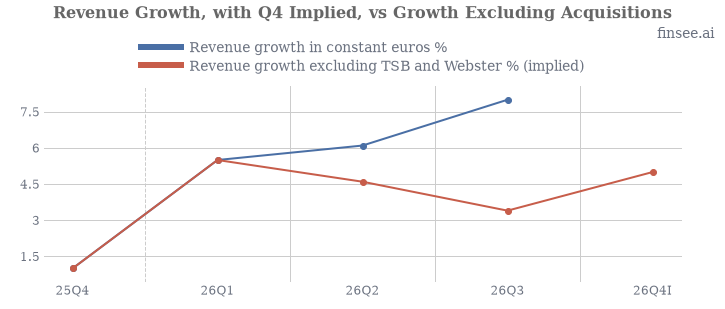
Banco Santander reported third-quarter net income of €3.43 billion on 28 October, broadly in line with the €3.41 billion consensus, in the first set of results to consolidate Webster Financial. Net interest income came in at €11.83 billion against an €11.95 billion estimate, while loan-loss provisions of €3.49 billion exceeded the €3.36 billion expected.
The lender reiterated its 2026 guidance, saying it is comfortably on track to meet targets. The first half had already been the group's best ever, with second-quarter profit of $3.8 billion, more than 12 million net new customers year-on-year, a 3 percentage point efficiency gain and underlying ROTE of 15.6%.
Santander UK was the weak spot: pre-tax profit for the first nine months fell 5.8% to £1.158 billion, hit by a charge for historical motor finance commission payments and higher restructuring costs, with further cost cuts planned. At group level, profit excluding one-offs rose about 12% year-on-year to €3.8 billion, though the capital buffer narrowed.
Investors are focused on the capital and cost drag from acquisitions including Webster and TSB, and on residual risk from UK motor finance provisions. Santander trades in both New York and Madrid, leaving the shares sensitive to deviations in net interest income and provisions.
ADP reported first-quarter fiscal 2027 revenue of $5.5 billion, up 6% year over year and above estimates of roughly $5.47 billion to $5.48 billion. Adjusted earnings per share came in at $2.77, up 13% year over year and ahead of expectations.
Adjusted EBIT was $1.5 billion, up 12%, with a margin of 26.8%, up 130 basis points year over year. Employer Services revenue was $3.69 billion, in line with estimates, while PEO Services revenue of $1.81 billion topped expectations of $1.78 billion.
The company raised its fiscal 2027 outlook, guiding to revenue growth of about 6%, adjusted EPS growth of 10% to 12% and adjusted EBIT margin expansion of 70 to 90 basis points. It still expects Employer Services new bookings growth of 4% to 7% for the year.
The results follow ADP's weekly employment data, which showed U.S. private employers added an average of 16,750 jobs per week in the four weeks to October 10, a separate measure of labor demand that investors track alongside the company's payrolls business.
Numerous steering-wheel-less Cybercabs spotted in downtown Austin; Robotaxi app interface revealed with vehicle location and RGB light matching.
2026-09-0493 posts · 52 authors
Tesla officially launched public Cybercab rides; first rides completed; fleet purchase interest form introduced.
2026-09-0533 posts · 24 authors
User spent $92.51 on 3 hours of Cybercab rides, cheaper than Uber; TxDOT exec praised accessibility; NHTSA opened probe into no-steering-wheel certification.
2026-10-2711 posts · 4 authors
F1 weekend saw 50+ Cybercabs in Austin with 1,250 sightings; Houston geofence expanded to Austin's size; Tesla revealed line robot naming and wireless comms design.
2026-10-286 posts · 3 authors
Cybercab surpassed Model Y in Texas robotaxi registrations at 544; 81 added in one day, totaling 546.
Piper Sandler reiterated Overweight on Amazon with a $320 target, AWS announced its first Saudi cloud region for December, and 2026 capex hit a record $220 billion.
2026-09-0125 posts · 20 authors
Reports emerged that the FTC is preparing a lawsuit against Amazon over allegedly manipulative ad pricing.
2026-10-2021 posts · 19 authors
Morgan Stanley named Amazon a top pick with a $350 target, TorchNeuron was announced, and AWS leadership said free cash flow would stay negative for years.
2026-10-2420 posts · 17 authors
CEO Jassy said AWS capacity is sold out through 2027 and largely booked for 2028, amid a wave of hacking attempts causing emergency shutdowns.
2026-10-2713 posts · 13 authors
Anthropic filed for IPO with investors poised for nearly $1 trillion in proceeds, and analysts modeled AWS Q3 revenue growth at 40.9% YoY.
2026-10-287 posts · 6 authors
Jassy said AWS capacity is sold out through 2028 with shortages persisting, Oracle sought FedRAMP Class D across clouds, and Amazon bought 10,000 Sep 2027 $300 calls.
SpaceX reportedly seeks $40B in Apollo-led financing, including $10B bank loans and $30B investment-grade debt, to fund Nvidia chip purchases.
2026-10-089 posts · 9 authors
Reports confirm Apollo and banks are in talks to finance SpaceX's $40B Nvidia GPU purchase, with Oracle and Broadcom also seeking similar AI chip debt deals.
2026-10-237 posts · 7 authors
SpaceX finalizes a $40B debt raise with the lowest-rated tranche at ~8.3% interest, led by Apollo and Goldman Sachs, at higher costs than prior financing.
2026-10-2629 posts · 25 authors
SpaceX officially announces a $40B master finance lease for GPUs and related equipment with an Apollo-managed entity, the largest GPU financing ever, with deliveries starting in early 2027.
2026-10-2711 posts · 11 authors
SpaceX signs a binding commitment for the $40B Apollo-led GPU financing, with Pimco buying $4B of the A2 tranche and Goldman Sachs as sole structuring agent.
2026-10-283 posts · 3 authors
Fitch confirms SpaceX's BBB+ credit rating remains unchanged despite the $40B Nvidia GPU lease, which coincided with Broadcom and Meta's AI capital moves on the same day.