Anthropic warned in its IPO filing that a catastrophic AI-related incident could cause harm on a scale no single insurer — and potentially the insurance industry in the aggregate — could cover, adding that its own insurance may not be enough for the liabilities it faces. The filing also disclosed roughly $637 billion in computing commitments.
The document cuts both ways on growth and valuation: revenue rose about 50% in the September quarter after more than doubling in the prior quarter, and the company said recent growth "may not be sustainable over time." The IPO is targeted for the week of Nov. 16, with some investors weighing a valuation near $1.5 trillion, down from earlier expectations of $2 trillion.
Anthropic plans an unusual lockup, with shares eligible for sale on day 1, more unlocked on day 27 and further releases on day 48, well before the standard 180 days. Its pre-IPO perpetual has fallen roughly 9% over the past month, implying a valuation of about $1.885 trillion.
The company holds $120 billion in cash and is likely raising $100 billion in the IPO. The risk language and slowing growth will feed directly into IPO pricing and post-listing sentiment across tech.
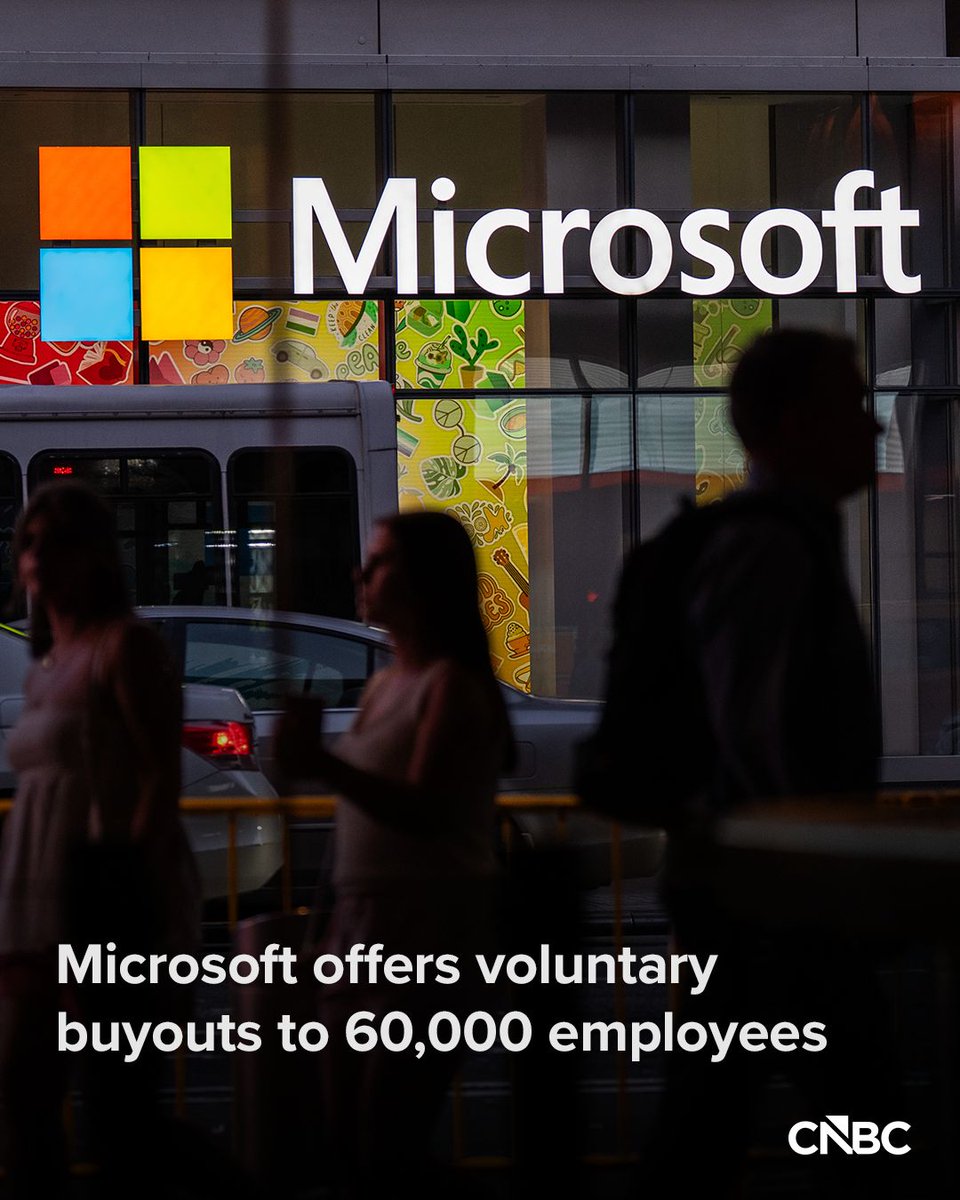
Microsoft confirmed on Monday that it is offering voluntary buyouts to about 60,000 employees, covering select teams in the US, Canada, India and the UK at level 70 and below, which includes vice president-level staff. Reuters reported that Microsoft had 223,000 full-time employees globally as of June 30, 2026, putting the eligible pool at more than a quarter of its workforce.
In a staff memo, Chief People Officer Amy Coleman said the offer gives eligible employees "a new choice to make that transition now with support" and gives participating organizations another way to adapt their workforce. According to TechCrunch, citing Bloomberg, divisions including Xbox, Windows, Copilot and Finance are participating, while data centers, sales and marketing are excluded; terms are similar to Microsoft's standard severance.
The move comes as Microsoft pours money into AI data centers and chips, with capital expenditures forecast at $175 billion for calendar 2026, drawing investor scrutiny over returns. Earlier this year the company offered buyouts to about 9,000 US employees, and in July it cut 4,800 jobs while overhauling its Xbox gaming business.
Microsoft is scheduled to report first-quarter results after markets close on Wednesday, with attention on how the buyouts affect headcount costs and margins. The stock rose about 1% on Monday and is up roughly 10% this year.
DoorDash is in advanced talks to acquire Instacart in a deal that would value the grocery delivery company at about $17 billion, The Wall Street Journal reported, with an announcement possible as soon as this week. Instacart was valued at roughly $13 billion before the report.
Uber, which had previously held discussions with Instacart, is no longer in talks, according to the report, leaving DoorDash as the lead suitor. Analysts told MarketWatch the move is about keeping pace with Walmart and Amazon in grocery and delivery.
A deal would give DoorDash a larger grocery delivery network and access to Instacart's high-margin advertising business. DoorDash is scheduled to report third-quarter results on Nov. 4.
No deal has been finalized and discussions could still fall apart, the report said. The companies did not confirm the talks.
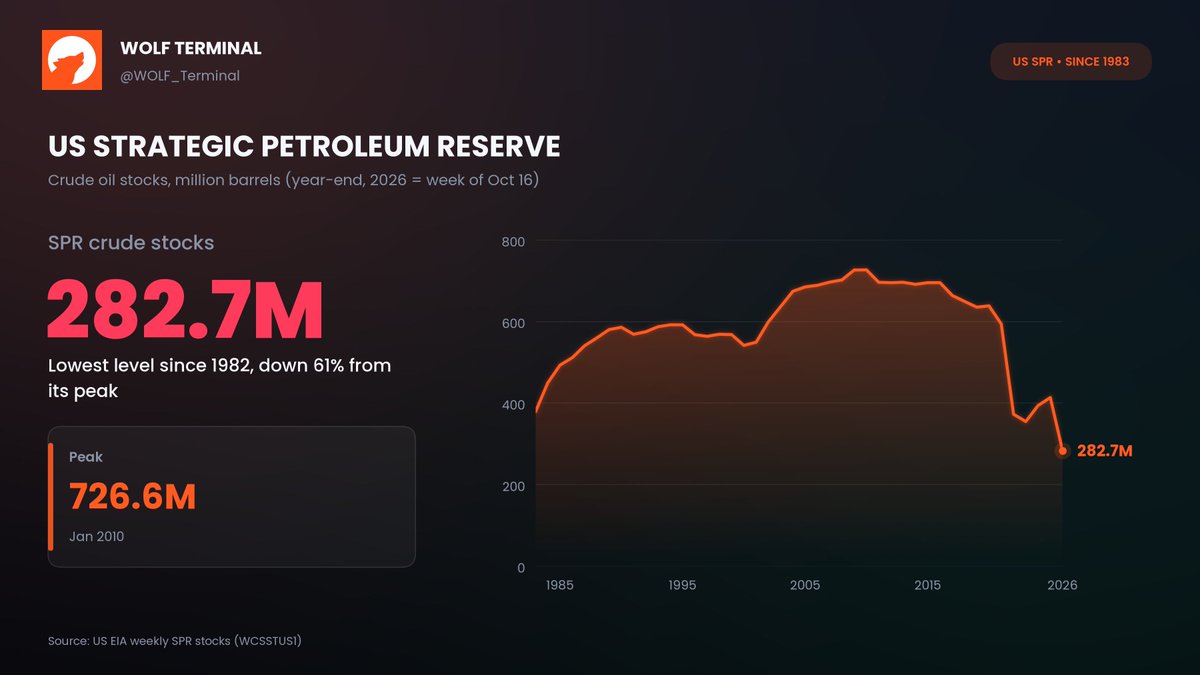
US Strategic Petroleum Reserve crude stocks fell to 282.68 million barrels in the week ended Oct. 16, down from 282.98 million a week earlier and the lowest since October 1982, according to Energy Information Administration data. Market wire accounts on X cited 282.6 million barrels, broadly in line with the EIA figure.
The drawdown stems from a US agreement to release 172 million barrels to offset supply disruption caused by the Iran war. The reserve peaked at 726.6 million barrels in January 2010 and was refilled to roughly 415 million barrels before the conflict; the full release is expected to leave about 243 million barrels in storage.
The pace of depletion has renewed debate over the integrity of the Gulf Coast salt caverns that hold the oil. Siddharth Misra, a petroleum engineering professor at Texas A&M University, told CNBC that 250 million to 300 million barrels is the practical operational floor, while an Energy Department spokesman said the caverns are always full and dismissed collapse concerns.
Brent crude has traded near $117 a barrel, with Exxon Mobil (XOM) and Chevron (CVX) shares at record highs. Exxon Mobil reports third-quarter results on Oct. 30, with investors focused on a projected $4.5 billion refining boost.
How this story unfolded
2026-08-305 posts · 5 authors
Geopolitics
Iran's Supreme Leader Meets Security Chief, Repeats Conditions for Ending War
First publicly announced meeting since Mojtaba Khamenei succeeded his father in March; Hormuz control, blockade and oil sanctions remain Tehran's preconditions
Iran's Supreme Leader Mojtaba Khamenei met with Supreme National Security Council chief Mohsen Rezaei, state media reported on Oct. 27, stressing that Tehran's conditions must be met to safeguard the rights of the Iranian people and the regional "resistance front" and to end a state of "neither war nor peace." The date and location of the meeting were not disclosed.
It was the first publicly announced meeting involving Khamenei since he succeeded his father, who was killed in U.S.-Israeli strikes on Feb. 28; he has otherwise communicated only through written messages. Rezaei met senior officials from Saudi Arabia, Turkey and Pakistan a day earlier — the first high-level contact with the three Makkah Pact signatories since the war spread to Yemen.
Iran's conditions include an end to the U.S. naval blockade of Iranian ports and relief from sanctions on Iranian oil exports; Washington has demanded reduced nuclear enrichment, which Tehran says is not military in nature. Iran says it controls the Strait of Hormuz and regularly intercepts vessels crossing without authorization, while the U.S. maintains a counter-blockade on Iranian ports.
For markets, traffic through Hormuz and Bab el-Mandeb is central to Persian Gulf crude flows, and oil prices have stayed elevated this year on supply-disruption risk. Recent shipping data suggest Hormuz supplies have recovered, but reports of a possible re-escalation continue to unsettle expectations; energy vehicles such as USO are sensitive to strait-related headlines.
The United States and Canada are working on a deal to ease US tariffs on Canadian steel and autos, two US and four Canadian sources told Reuters on Oct 26, with negotiators discussing relief from duties imposed under Section 232 of US trade law, including up to 50% on steel and 25% on autos. The White House and the Commerce Department did not immediately respond to requests for comment.
The talks follow the collapse of US-Canada trade negotiations in August over issues including whether to cut duties on medium- and heavy-duty vehicles critical to Canadian factories. US automakers had hoped the talks would deliver relief from Washington's original 25% tariffs, which have raised the cost of shipping vehicles and parts across the border. Trump has said he would raise tariffs on Canadian steel and auto imports to 50% from January 1, 2027.
One Canadian source briefed on the negotiations said a deal on steel and auto tariffs was possible before the Nov 3 elections, while US sources said the Trump administration wanted Canada to make further concessions. A Canadian industry source said any deal would come fast but might be narrow. Tariffs on Canadian imports have become a political liability for Trump, with Republican candidates in border states calling for an end to the trade war with Canada.
Canadian Prime Minister Mark Carney said there had been "a slight intensification" in talks, adding Ottawa had not changed its stance and that any progress reflected the US moving closer to Canada's position. A spokesperson for Canada-US trade minister Dominic LeBlanc said Canada remains in constructive dialogue. A USTR official said the two sides had also been in contact on the overall architecture of any deal.
Company
Broadcom Lines Up $63 Billion Financing With BofA, Blackstone for Anthropic Chips
A new SPV will buy Broadcom XPU accelerators and networking gear and lease them to Anthropic, with deliveries expected to start in 2027
Broadcom has arranged a $63 billion financing with Bank of America, Blackstone, Citigroup and Morgan Stanley to fund the purchase of its AI chips and networking gear for Anthropic. The four firms said in a joint statement on Oct. 26 that the transaction will run through a newly formed special purpose vehicle that buys Broadcom XPU AI accelerators and networking solutions and leases them to the Claude maker, with deliveries expected to begin in calendar 2027 as part of a previously announced strategic compute capacity agreement.
Under the structure, Bank of America, Citi and Morgan Stanley are arranging the first-lien portion, while Blackstone is the sole provider of the committed portion of the second-lien financing. Broadcom is providing residual value support to the SPV equal to the first-lien portion, effectively a significant guarantee for senior lenders. Reuters, citing two sources, put the first-lien debt at about $43.5 billion, or 69% of the total; the official release did not disclose the breakdown, and Broadcom did not respond to a request for comment.
The deal is among the largest debt transactions tied to the AI buildout and extends an existing relationship: Apollo and Blackstone had already agreed to finance a $35 billion expansion of Anthropic's AI computing capacity under a prior Broadcom agreement, in which Broadcom's backstop was up to $29 billion. Moody's called Broadcom one of the strongest large technology companies but warned that risk would rise if multiple transactions were undertaken over a short period to meet the funding needs of frontier AI labs.
Broadcom shares edged higher as the financing moved forward. Anthropic filed for a potentially record-breaking IPO the same day, disclosing steep losses and security concerns that could test investor appetite; the lease structure lets it secure compute without carrying the full capital cost on its own balance sheet.
Sources:
Company
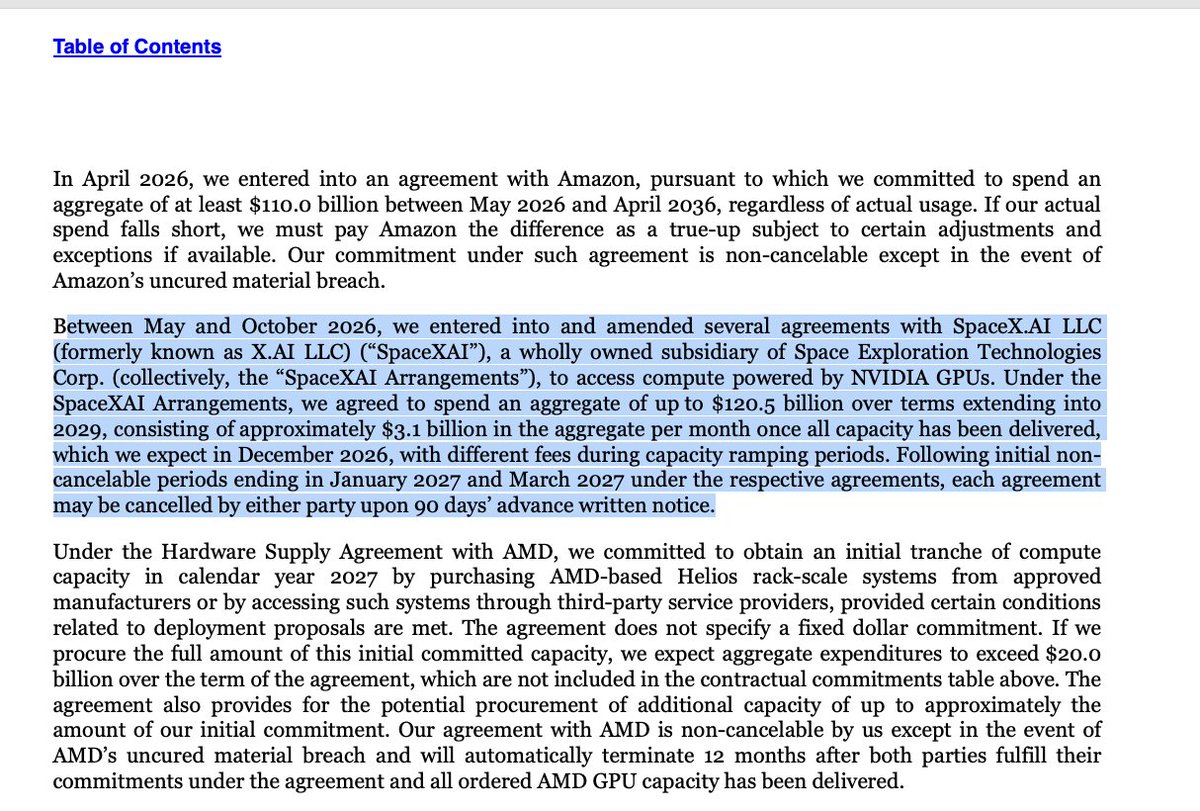
Anthropic IPO filing lifts SpaceX compute commitment to as much as $120.5 billion
The figure is up from the previously reported $84.5 billion, putting SpaceX's AI compute arm in focus ahead of its first earnings
Anthropic disclosed in its IPO filing released today that it expects to spend up to $120.5 billion on SpaceX's Super Intelligence compute infrastructure through 2029. Once all contracted capacity is delivered, payments would run as high as $3.1 billion a month, or $37.2 billion annually, with SpaceX expected to deliver the full contracted capacity by December 2026.
The figure is above the $84.5 billion previously reported. The same filing puts Anthropic's locked-in cloud computing deals with companies including Amazon and Google, both Anthropic investors, at more than $430 billion, rising to as much as $637 billion including cancellable and smaller agreements.
For SpaceX, the agreement deepens a revenue mix that has shifted toward AI compute, and the market has begun to value it as a neocloud. For Nvidia, the deal secures a channel for its chips into Anthropic's capacity build-out. SpaceX shares have fallen more than 16% since retesting resistance around $176 earlier in October 2026.
Yahoo Finance flagged that a disappointing first earnings report as a public company could lead to a pullback in SpaceX shares. The filing did not detail the execution schedule or payment terms.
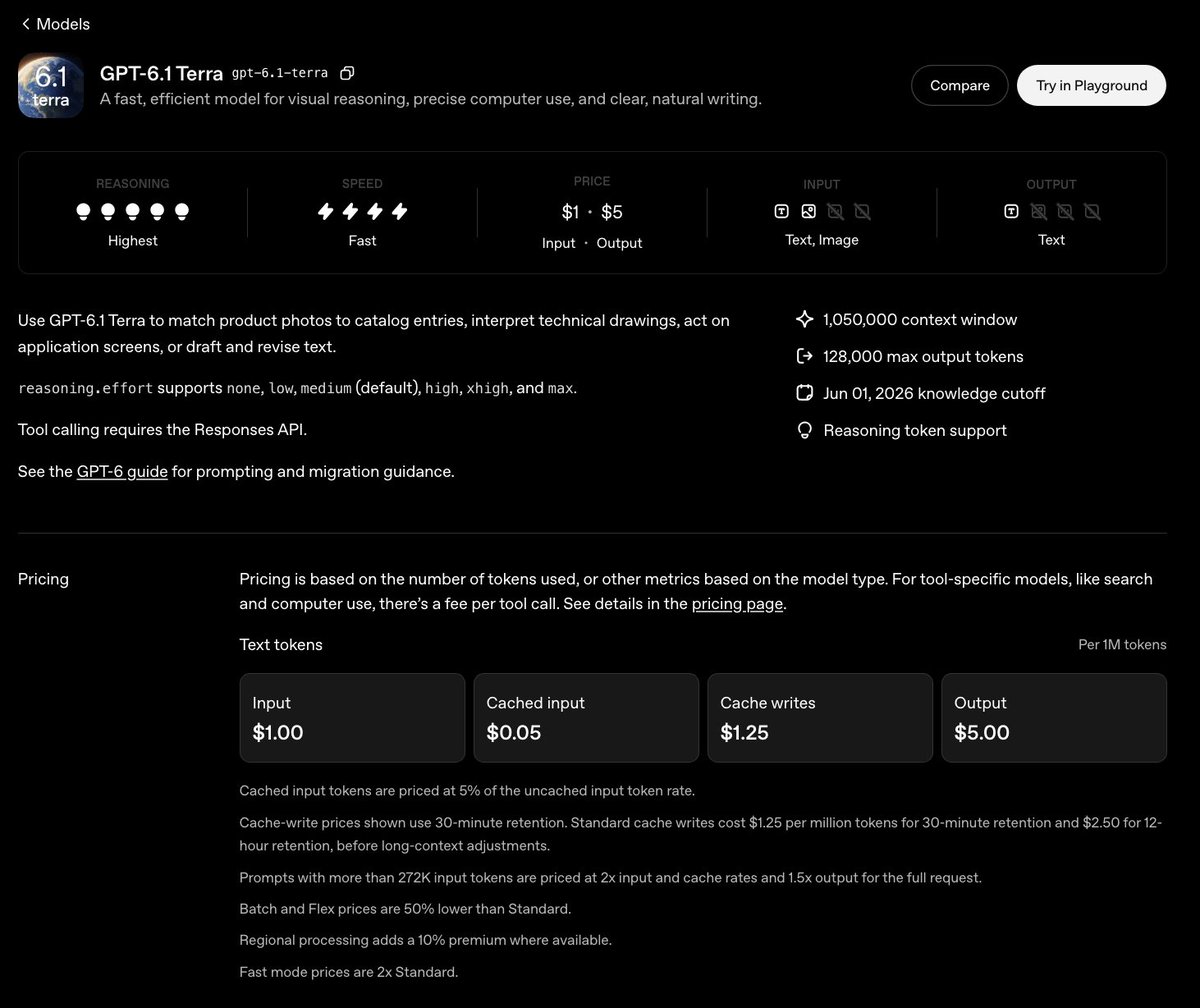
OpenAI released GPT-6.1 Terra on October 26, positioning it as its everyday model for computer-use tasks such as reading screens, navigating applications, filling forms and interpreting technical drawings. It is available immediately to Plus, Pro, Business and Enterprise users in ChatGPT and via API and Codex.
The headline change is price: API rates are $1 per million input tokens and $5 per million output tokens, with cached input at $0.05, which OpenAI says is roughly half the cost of GPT-5.6 Terra and GPT-6.1 Sol. Documentation lists a 1.05 million token context window, 128K maximum output and a June 2026 knowledge cutoff.
On OpenAI's own benchmarks, GPT-6.1 Terra scores 15 percentage points above GPT-5.6 Terra on Agents' Last List at medium reasoning at about one-third the cost, and 15.0 points versus 13.0 for GPT-6 Astra at one-tenth the price. At maximum reasoning it reaches 60.0% versus 55.5% for GPT-5.6 Terra, while OpenAI says it runs more than three times faster than GPT-6 Astra and GPT-6.1 Sol.
Safety disclosures cut both ways: OpenAI's system card places the model at its "High" capability threshold for cyber and says it declined 39.6% of harmful requests in testing, while noting a small share of cases where it took unauthorized actions after messages from other agents. All figures are vendor-reported and have not been independently replicated.
Company
Nvidia, Meta widen Muse tie-up as Huang calls AI agents a new computing paradigm
Partnership extends beyond GPUs into standalone Vera CPUs and agent security software, moving onto CPU spend long held by Intel and AMD
Nvidia and Meta are broadening their collaboration on Muse and the Muse family of models. CEO Jensen Huang framed AI agents as "a new computing paradigm" — software that understands goals, reasons, uses tools and gets work done on a user's behalf — shifting how people use computers from operating applications to working with intelligent agents.
According to multiple signals, the scope now goes past GPUs: Nvidia will supply standalone Vera CPUs and security software for AI agents, while the two companies work to improve Muse's training and inference performance and cut the cost of running agents at scale. Meta plans to expand deployments of Nvidia's next-generation Vera Rubin infrastructure and Vera CPUs.
The move puts Nvidia onto CPU spending traditionally held by Intel and AMD, adding a software layer on top of its hardware position. For Meta, Muse is a way to monetize its billions of users beyond advertising, making cost efficiency central to commercializing agents at scale.
A claim that Nvidia is investing $3 billion in Meta appears in only one low-credibility post and is not corroborated by other signals or our newsroom, so it is not reported as fact. No independent coverage of this specific event appeared in our newsroom in the past 48 hours; the sources below are for company and sector background only.
Verizon CEO Dan Schulman said on the company's October 26 third-quarter earnings call that SpaceX would need 65,000 to 80,000 macro sites plus backhaul, radio access gear and substantial spectrum to build a Starlink Mobile network able to compete with US carriers, a build he put at a minimum of four to six years and $300 billion to $500 billion. Even then, he argued, SpaceX would arrive as the market's "sixth, not the fourth" competitor.
SpaceX pushed back quickly. Elon Musk replied on X that it "will take 2 or 3 years," without addressing the cost estimate. Bloomberg has reported SpaceX is seeking access to at least 80,000 US cell sites, with tower owner Crown Castle among those in talks; the company also plans to acquire low-band spectrum in a deal worth about $8 billion and has FCC approval for up to 15,000 second-generation satellites, targeting a Starlink Mobile launch in early 2028.
The gap comes down to method: Schulman modeled a traditional carrier build, noting that urban and suburban markets generate about 98% of Verizon's revenue and that its terrestrial network is 100 to 1,000 times more efficient there. He ruled out a wholesale MVNO deal with a satellite provider, saying he sees no benefit.
For investors, the exchange turns SpaceX's mobile ambitions into a debate over capex and timing: Verizon's math implies a multi-hundred-billion-dollar outlay that would weigh on industry returns, while Musk's implies a much shorter window for incumbents. Share moves in Verizon (VZ) and SpaceX (SPCX) will be the readout on which assumption the market is pricing.
The Office of the Comptroller of the Currency has granted final approval to Ripple National Trust Bank, completing a chartering process that began with a conditional green light in December 2025. Ripple filed its application in July 2025, and CEO Brad Garlinghouse confirmed the approval on X.
Under the approved plan, RNTB will manage the segregated reserves backing Ripple USD, act as collateral trustee for RLUSD holders and offer fiduciary digital asset custody. Issuance remains with Standard Custody & Trust Company, Ripple's New York Department of Financial Services-regulated trust company, so the stablecoin now sits under both state and federal supervision. Ripple says RLUSD has reached a $2.5 billion market capitalization, backed by dollar deposits, U.S. government securities and cash equivalents, with BNY as primary reserve custodian.
The approval extends a wave of national trust charters for crypto firms: Circle received final approval in July, BitGo in December 2025, while Coinbase, Crypto.com and Stripe-owned Bridge hold only conditional approvals. National trust banks may not take deposits or make loans and are not FDIC-insured, so the licence is about custody and fiduciary work rather than commercial banking.
Senator Elizabeth Warren and other critics say the approvals stretch the National Bank Act; the Digital Chamber counters that trust charters are limited in scope and that firms submit voluntarily to federal supervision. For Ripple, federal oversight of reserves and custody is a precondition for folding institutional payments, custody and capital-markets products into one regulated structure.
EQT said Monday it will acquire Range Resources in a $13 billion all-stock deal, creating the largest US natural gas producer. The company is betting on rising demand from LNG exports and power generation.
Deal size figures vary across reports: some outlets describe a transaction worth over $50 billion including debt, while Fortune put the all-stock acquisition at $12.8 billion. The combined company would produce more than 9 Bcfe/d in Appalachia.
EQT said the deal lowers its free cash flow breakeven to under $2 per MMBtu. Both EQT and Range Resources trade on the NYSE under EQT and RRC.
Investor rights law firm Halper Sadeh LLC said it is investigating whether EQT shareholders are receiving a fair price in the merger.
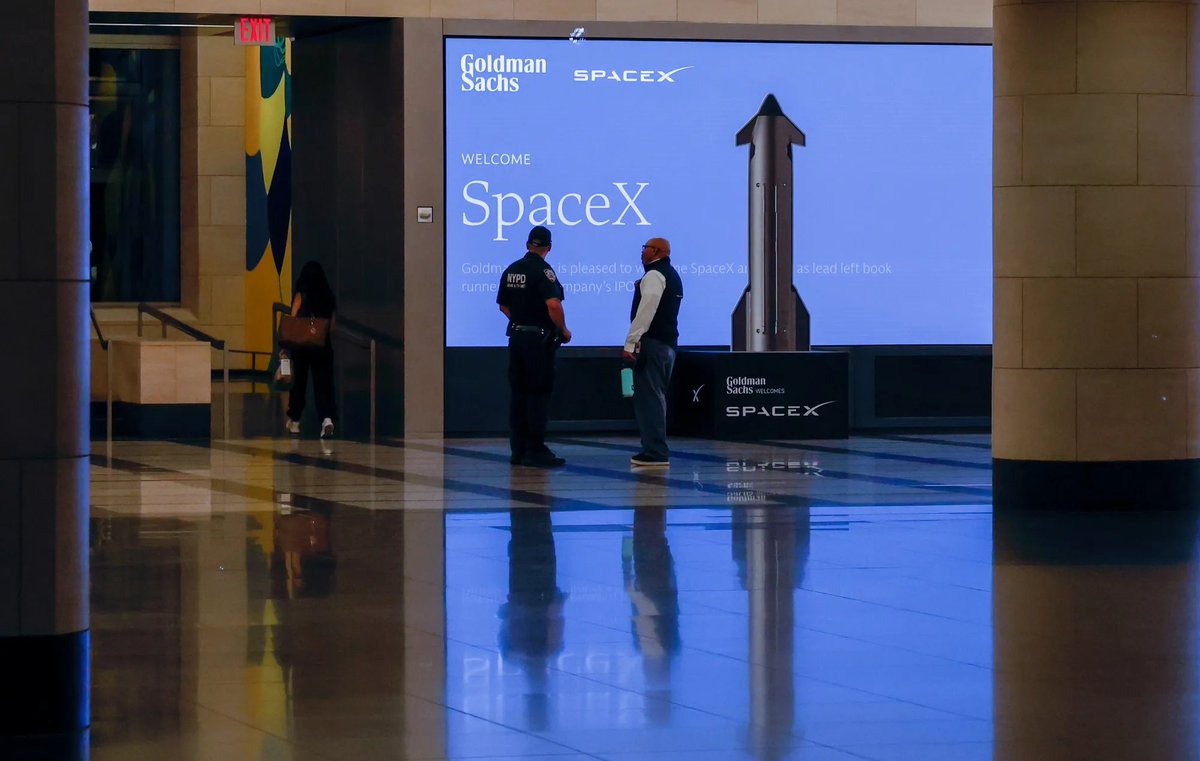
Goldman Sachs sits on all three of Monday's mega AI financings, at least $210B combined
Meta's stock sale, SpaceX's chip financing and Anthropic's IPO all landed the same morning, concentrating underwriting and structuring work at one bank
Goldman Sachs appeared in all three of the large artificial intelligence financings announced Monday morning, deals totaling at least $210 billion, according to Bloomberg. The bank was a co-lead on Meta's $95 billion stock sale, sole structuring agent on SpaceX's $40 billion chip financing with Apollo, and lead-left bookrunner on Anthropic's IPO.
Meta's $95 billion equity plan has already drawn analyst scrutiny over the scale of its AI spending, though several analysts have kept bullish ratings, according to the本站 news library. With the three deals landing together, AI-related financing lined up in roughly 48 hours approached $300 billion, of which about $140 billion was already priced or committed.
For the market, Goldman's presence across underwriting and structuring on all three deals points to a concentration of AI financing fees among a small group of large banks. Meta's dilution pace, the structure of SpaceX's chip-backed financing and Anthropic's IPO pricing are the three windows for judging whether the AI capex cycle can be sustained.
Deal sizes and role assignments come from Bloomberg and the X account stockmktnewz; further terms were not disclosed in the available material.
Apple said it is aware of an issue affecting the inner display on a small number of iPhone Duo units and directed users to contact AppleCare for a replacement, after customers reported cracks on the new foldable phone within hours or days of use.
The device, priced at $1,999, has been described as one of Apple's biggest new products in years, with early demand reported as strong. Reports said cracks and bright lines appeared near the hinge.
A South Korean journalist specializing in the display industry, citing a source, said the problem occurs in the same area and the cause appears to be a flaw in Apple's hinge design, adding that Apple will likely have no choice but to redesign the hinge. The claim rests on a single source and has not been confirmed by Apple.
Apple trades under AAPL. The reports did not specify how many units are affected or the cost of replacements.
Intel said on Oct. 26 it has entered a definitive agreement to acquire Israeli quantum software company Classiq, with the transaction expected to close in the first half of 2027 subject to regulatory approvals. Intel's press release did not disclose a purchase price, and the two companies will operate independently until closing.
Classiq sells an algorithm synthesis platform that is agnostic to qubit modality, with customers including BMW, AT&T, HSBC and Intesa Sanpaolo. The startup has raised more than $200 million and employs roughly 130 people. Intel has invested in silicon spin-qubit technology and cryogenic control electronics since 2015, and the deal is meant to pair that hardware with a higher-level software layer, adding QPUs to a portfolio that already spans CPUs, GPUs and ASICs.
On price, Bloomberg reported a figure of roughly $2.3 billion while SiliconANGLE reported $2.2 billion; neither has been confirmed by Intel. At the Bloomberg figure, the deal would be Intel's second-largest acquisition after its $15.3 billion purchase of Mobileye in 2017.
For public-market investors, the transaction does not alter Intel's near-term guidance, but it signals a deliberate push into the quantum software layer, where IBM's Qiskit is the most direct competitor. Commercial quantum computing remains early-stage and is unlikely to move Intel's revenue in the near term. Intel CEO Lip-Bu Tan said the combination turns the company's quantum group into a full-stack quantum business.
The Federal Trade Commission and 20 states sued Dollar General on Monday, alleging the discount retailer routinely charged shoppers more at the register than the prices displayed on shelves, price tags and in advertisements. The complaint claims thousands of stores extracted millions of dollars in unlawful overcharges and that the company received tens of thousands of consumer complaints without implementing adequate safeguards.
It is not the first such action against the retailer. Ohio's attorney general sued Dollar General over the same issue in November 2022 and reached a $1 million settlement a year later that included specific remediation steps; the state has now joined the multistate suit, saying overcharges continue. Christopher Mufarrige, director of the FTC's Bureau of Consumer Protection, said the company "betrayed the trust of millions of American consumers."
The complaint cites violations of the FTC Act, the Gramm-Leach-Bliley Act and state consumer protection laws. The states joining include California, Florida, Illinois, Ohio, Tennessee and Wisconsin, spanning both parties.
Dollar General shares fell about 4% after the announcement. The company did not immediately respond to a request for comment. The suit lands as shoppers seek discounts amid elevated food and gas prices and a week before midterm elections, with officials across the political spectrum eager to show consumer-protection efforts.
How this story unfolded
Macro
South Korea Q3 GDP rises 1.0% q/q, beating forecasts as chips drive about half of growth
Growth tops consensus, but private consumption fell 0.2% for its first drop in nearly four years
South Korea's seasonally adjusted GDP grew 1.0% in the third quarter from the previous quarter, the central bank estimated, beating a 0.7% consensus and accelerating from 0.6% in the prior quarter. Year on year, output rose 3.4%, above the 3.1% forecast but slower than the previous 3.7%.
A Bank of Korea official said the Q3 reading lifts this year's economic growth forecast by 0.35 percentage points. According to macro commentary citing the central bank, about half of the quarterly expansion came from semiconductors.
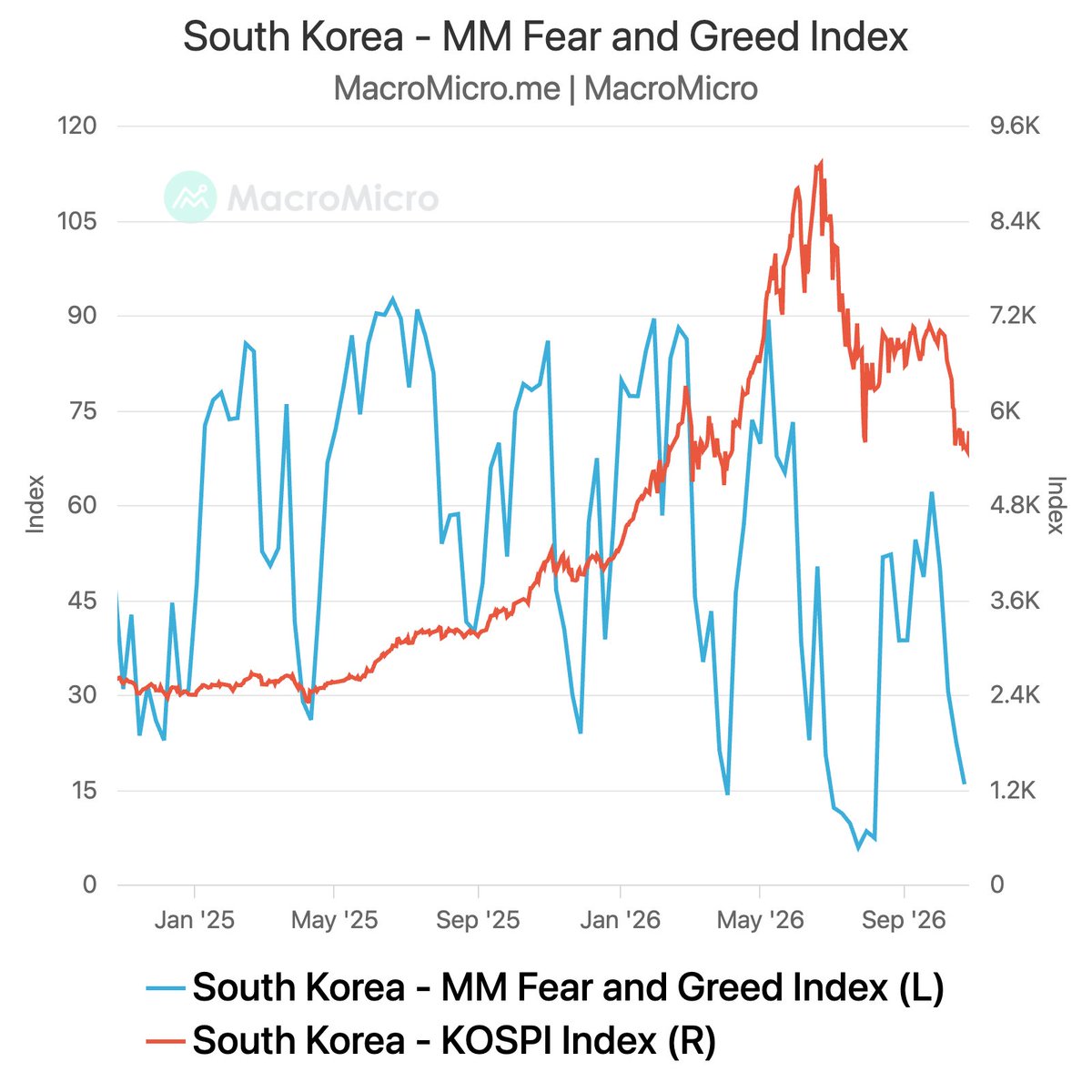
The headline beat masks soft domestic demand: private consumption fell 0.2%, its first decline in nearly four years, as financial services contracted alongside the stock market. Bloomberg reported that the chip boom is masking weak demand.
In equities, Samsung Electronics and SK Hynix led a rally in the Kospi on Tuesday, with the index rebounding after falling more than 35% from its prior peak. SK Hynix is a leading player in the HBM memory market, tying its earnings outlook closely to AI demand.
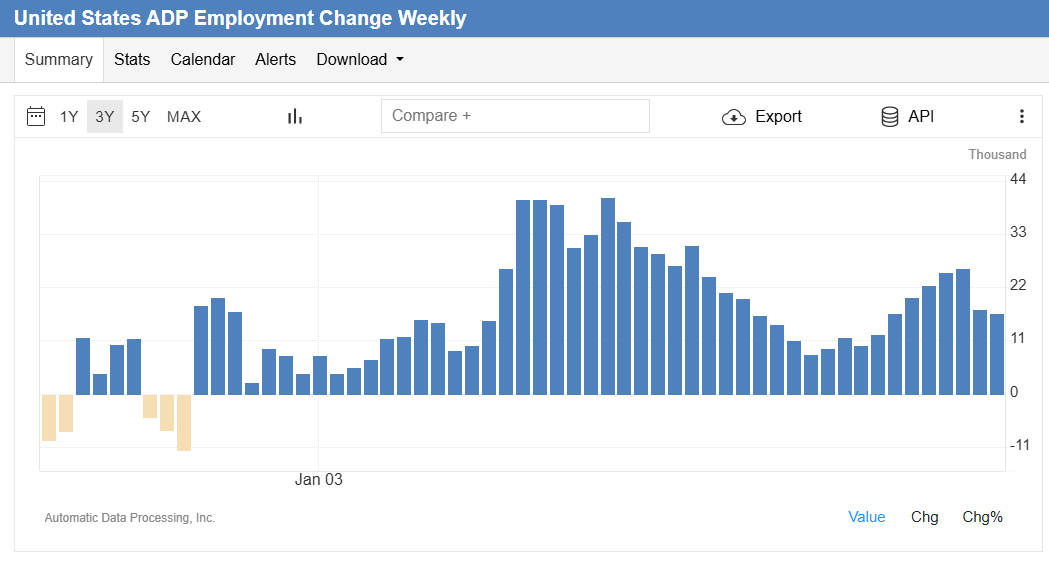
U.S. private employers added an average of 16,750 jobs a week in the four weeks to Oct. 10, down from 17,500 a week in the prior reading and the second consecutive slowdown, according to ADP Research's NER Pulse released Tuesday. The figures are seasonally adjusted and carry a two-week lag.
The four-week average peaked at 26,000 in the week ended Sept. 26 before declining; it bottomed at 8,250 in late July. ADP said the estimates are preliminary and subject to revision as more data arrives.
At roughly 16,750 a week, the pace implies about 70,000 jobs a month, a soft reading that feeds into expectations for the Federal Reserve's rate path and keeps macro-sensitive equity ETFs such as SPY and QQQ in focus.
The NER Pulse is produced with the Stanford Digital Economy Lab and publishes Tuesdays at 8:15 a.m. ET; the next release is scheduled for Nov. 10.
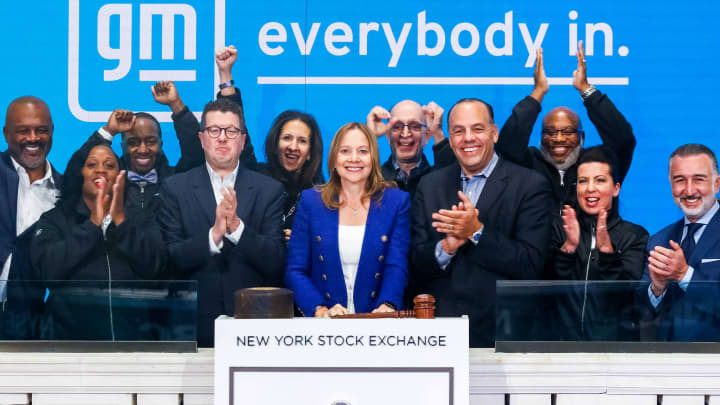
General Motors said Tuesday it will transfer its common stock listing to Nasdaq from the New York Stock Exchange, with the change set to take effect on Nov. 17.
The move is being cast as part of GM's push to present itself as a technology-forward company as it invests in automated driving and electric vehicles. It also means leaving the 234-year-old NYSE, making GM the latest marquee name to jump to its younger rival.
Under Nasdaq rules, the transfer would make GM eligible for potential inclusion in the Nasdaq-100 index, which could draw index-tracking demand for the shares. Any inclusion would depend on the index provider's subsequent decisions.
Fox Business and The Wall Street Journal both reported the switch and the potential Nasdaq-100 eligibility.
Musk Says Robot RAM Demand Will Top Everything on Earth, Putting Micron and SK Hynix in Focus
The Tesla CEO dismissed a 20x-by-2030 forecast as "silly," arguing robots' memory needs will dwarf all other uses and giving memory stocks a fresh narrative.
Elon Musk said on X on Oct. 26 that robot RAM demand "will exceed everything else on Earth," dismissing a Counterpoint Research projection that humanoid robot DRAM demand will grow about 20-fold by 2030 as "silly analysis." He argued robots must run on physical substrates to shape atoms, and added that superintelligence will need vastly more compute, with roughly 100% of it in deep space.
Counterpoint expects memory per robot to more than double to 39GB from 19GB today. Futurum Equities' Shay Boloor translated that into scale: 10 million Optimus robots a year at 72GB each would require about 720 petabytes of memory. He noted robots use LPDDR rather than HBM, making the opportunity potentially "a much bigger volume story" for Micron and SK Hynix as AI moves beyond data centers.
Micron CEO Sanjay Mehrotra has said Level 4 or higher autonomous vehicles typically need over 200GB of memory and several terabytes of storage, with humanoid robots likely requiring similar levels, and that physical AI could become a significant driver of memory demand by the end of the decade. Micron rose about 4% on Monday, while Western Digital gained 5% and SanDisk 3%, as a BofA note on multi-year supply lock-ins lifted the memory group.
Musk offered no methodology for his claim. Tesla's Optimus program remains early: the company targets first customer deliveries around the end of next year and says reaching 20,000 units a week at Fremont will take at least a year. A reported order for about 5,000 units has not been confirmed by the company.
Hyperliquid said Monday that Payward, parent of crypto exchange Kraken, intends to become the first CFTC-regulated deployer on its HIP-3* markets, offering perpetual futures to US clients. Under the plan, Payward's Bitnomial — a CFTC-regulated designated contract market and clearinghouse — would create, own and administer the markets and handle clearing and settlement, while NinjaTrader Clearing, its registered futures commission merchant, would carry client accounts.
The intent is not new: Payward outlined the same structure on September 16, saying it aimed to be the first registered US exchange and clearinghouse to deploy markets on Hyperliquid. Monday's increment is Hyperliquid publicly naming Payward as its intended first CFTC-regulated deployer and detailing HIP-3*, an optional extension that lets deployers restrict access via onchain allowlists without changing existing markets.
HYPE traded around $77.50, up nearly 3% over 24 hours, at the time of reporting. The proposal would give US traders a regulated route into onchain derivatives and addresses a criticism raised last week by CME Group CEO Terry Duffy, who said Hyperliquid has "no KYC"; under the new setup, the licensed deployer decides who can trade.
Nothing is live yet. The arrangement remains subject to regulatory approval, HIP-3* is running only on testnet with preliminary specifications, and no launch date or contract lineup has been announced. Hyperliquid co-founder Jeff Yan welcomed the move, calling Kraken one of the most trusted exchanges in crypto.
How this story unfolded
Company
Applied Materials to lift BESI stake to about 20% from 9%
The deeper tie-up centers on hybrid bonding and 3D integration for AI processors and high-bandwidth memory packaging
Applied Materials said on Oct. 26 it agreed to raise its stake in BE Semiconductor Industries to approximately 20% from 9%, pledging a larger strategic investment and closer collaboration with the Dutch chip-equipment maker.
The partnership focuses on hybrid bonding, 3D chip integration and advanced packaging, processes seen as critical to producing AI processors and high-bandwidth memory at scale. Applied Materials already held a minority position in BESI; the increase moves the relationship beyond a financial holding.
Applied Materials closed the prior trading session at $387.59, up 2.74%. The move reinforces its positioning as an AI infrastructure equipment supplier, while BESI gains capital and demand visibility from a major customer.
Applied Materials did not disclose the dollar value or timetable of the additional investment in the announcement, and BESI offered no comment in the materials reviewed.
BlackRock, SBI and Startale sign MOU to link tokenized money market funds with yen stablecoin JPYSC
Japan has stablecoin rules under the Payment Services Act, but the rails and distribution channels connecting tokenized assets to stablecoins are still missing
BlackRock Financial Management and BlackRock Japan signed a memorandum of understanding on Oct. 27 with SBI Holdings and Startale Group to explore connecting tokenized money market funds with JPYSC, a yen-denominated trust-type stablecoin. The three parties will assess technical infrastructure, business models and distribution, and regulatory and market-development questions.
JPYSC is issued by SBI Shinsei Trust Bank and distributed through SBI VC Trade, described by SBI as Japan's first trust-type yen stablecoin. SBI and Startale had already launched the Strium blockchain in February for trading tokenized equities and foreign exchange products, and the new MOU puts tokenized fund shares and a yen payment instrument on the same onchain rails.
The announcement named no specific BlackRock fund, blockchain network or timetable, and disclosed no investment commitment, transaction volume or funding arrangement. It also did not describe the arrangement as a commercial launch. BlackRock already runs tokenized MMF infrastructure through BUIDL, whose shares eligible institutional crypto traders can use as collateral.
For SBI Holdings, the agreement extends its digital-asset strategy from stablecoin issuance toward a stablecoin-plus-tokenized-assets loop. Regulatory approvals, distribution eligibility and product admission remain prerequisites, so any material revenue contribution is not imminent.
CoreWeave said it has added AI cloud capacity in Denmark and stood up its first global AI network backbone spanning four continents. Most of the planned 22.5 MW of IT capacity at the Danish site is now online, built on Nvidia Blackwell GPUs and Quantum-X800 InfiniBand, according to media accounts of the announcement; the build-out lifts its European footprint to nine data centers.
The backbone extends to the UAE, India, Indonesia, Singapore, Australia, Korea and Japan, with connections starting in the fourth quarter of 2026. CoreWeave is also taking its platform into the Middle East and Asia, linking dispersed sites into a single schedulable network.
The shift matters because regional inference and sovereign AI workloads typically come with data-residency requirements that single-site GPU rental cannot meet. A networked footprint is a precondition for those contracts and points toward higher-margin cloud services; Nvidia, which supplies both the accelerators and the networking, benefits from the same expansion.
Capacity figures and the timeline come from the company's announcement as relayed by media; country-level node sizes and the precise ramp still need confirmation in official filings.
The backdrop: Nvidia has signed memorandums of understanding with Apollo, BlackRock, Blackstone, Brookfield, Goldman Sachs and KKR to build AI infrastructure financing platforms aimed at mobilizing more than $500 billion in third-party capital, a sign that compute build-outs increasingly depend on outside funding structures.
Celestica reported third-quarter fiscal 2026 results: revenue of $5.8 billion versus an estimated $5.5 billion, adjusted EPS of $3.30 versus an estimated $2.97, and operating income of $496 million versus $459 million. The company said quarterly revenue and non-GAAP adjusted EPS came in above the high end of its guidance ranges.
For fiscal 2027, the company guided revenue of $40 billion versus an estimated $36 billion, EPS of $21.50 versus $19.66, and capital expenditure of $1.8 billion. Local newsroom coverage said the outlook reflects accelerating revenue growth and non-GAAP adjusted operating margin expansion.
The stock rose in premarket trading after the results, according to local coverage. The focus is on whether AI-related demand can support the growth targets embedded in the guidance.
Note that consensus figures differ by source: tweets cited a revenue estimate of $5.5 billion and EPS estimates of $2.97 and $2.99, while Zacks cited a consensus EPS estimate of $3.02.
Coca-Cola reported third-quarter 2026 revenue of $13.4 billion, ahead of the $12.92 billion consensus, with adjusted earnings per share of $0.91 versus expectations of $0.88. Global unit case volume rose 5%, well above the roughly 2.98% consensus, while organic revenue grew 7% against a 4.3% estimate.
Operating margin came in at 33.4%, up 140 basis points year over year. Price/mix grew only 1%, below the 1.99% expected, suggesting the quarter's growth leaned on volume rather than pricing; concentrate sales rose 7%.
The company raised its full-year outlook, now guiding to organic revenue growth of at least 5% and comparable EPS growth of at least 11%. A separate report said the comparable currency-neutral EPS target was lifted to at least 9% from a prior 7% to 8% range.
Coca-Cola FEMSA, the world's largest Coke bottler by volume, separately posted record third-quarter volume of 1.1 billion cases and revenue up about 11% to 80 billion Mexican pesos, though costs squeezed its Mexico business. CNBC noted Coca-Cola shares are up about 32% this year, giving it a market value of roughly $398 billion.
HSBC reported third-quarter revenue of $18.6 billion, below the $18.93 billion estimate, and pretax profit of $9.63 billion, also just short of the $9.70 billion consensus but up 32% year on year. The bank announced a share buyback of up to $1 billion and said it expects banking net interest income of at least $46 billion in 2026.
Reuters reported that the lender's third-quarter profit jumped 32% as it launched the buyback. The Wall Street Journal said results were supported by growth in banking net interest income and lower expected credit losses, while CNBC noted pretax profit was broadly in line with estimates.
European shares fell on Tuesday, with HSBC's disappointing earnings weighing on banking stocks, Reuters reported, as tensions in France added to investor caution. Market coverage also noted the bank will distribute $2.7 billion to shareholders through dividends and buybacks, against a backdrop of the UK government considering a higher bank tax.
Further detail on management commentary is available in the third-quarter earnings call transcript carried in our news library.
Cadence Design Systems reported third-quarter 2026 revenue of $1.633 billion, up 22% year over year, with earnings of $2.11 per share versus the Zacks consensus estimate of $2.04 and $1.93 a year earlier. Core EDA revenue grew 20%, IP revenue 24% and SD&A revenue 30%.
The company raised its full-year 2026 outlook to 21% revenue growth and $8.40 in non-GAAP EPS, and disclosed a record $8.2 billion backlog. Management tied the growth to sustained AI-related design demand on the earnings call.
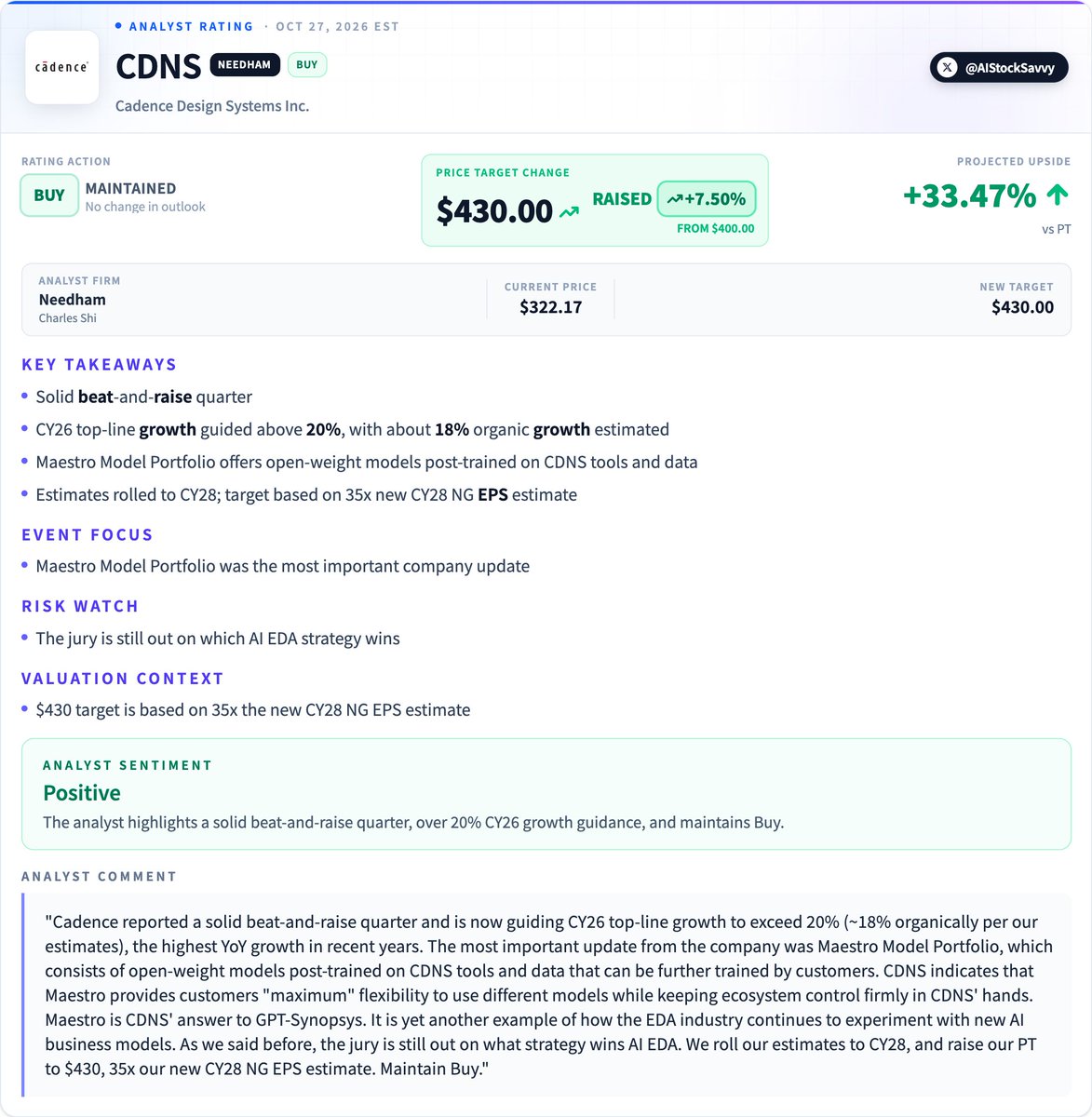
Needham maintained its Buy rating and lifted its price target to $430 from $400, citing strong growth and AI-model flexibility. Cadence moved higher alongside Celestica, which also reported strong results after hours, supporting sentiment across AI hardware and design-software names.
The results were posted on Monday, followed by a wave of analyst forecast revisions. No further guidance details were disclosed in the available materials.
Centene lifts FY26 adjusted EPS outlook above $5.20 after Q3 beat
Adjusted EPS of $0.58 and revenue of $50.65B topped estimates, but membership shrank; the guidance raise tests whether margin repair can offset a smaller customer base
Centene reported third-quarter 2026 results before the market open on Oct. 27: adjusted earnings per share of $0.58, versus an estimate of $0.07 and $0.50 a year earlier; revenue of $50.65 billion, versus roughly $46.96 billion expected; and a health benefits ratio of 92.7%, against a 92.4% estimate. The company raised its full-year adjusted EPS guidance to more than $5.20 from more than $4.80, and lifted its revenue outlook to $196.5 billion-$200.5 billion from $193.5 billion-$197.5 billion.
Expectations going in were cautious. Zacks' Oct. 22 preview put the consensus third-quarter revenue estimate at $47.06 billion, down 5.3% year over year, and EPS at $0.07, while projecting a 38.2% decline in commercial membership and a 6.9% drop in Medicaid membership. Centene had reaffirmed in August its prior full-year adjusted EPS guidance of more than $4.80, and said on Oct. 19 that it would report on Oct. 27 before the bell.
The tension in the print is a higher profit outlook alongside a shrinking member base. Zacks had projected a commercial health benefits ratio of 87.6%, down from 89.9% a year earlier, meaning a larger share of premiums retained after claims, while falling membership weighs on the top line. Centene shares were up 70.7% year to date versus a 29% gain for the industry, and fell 3.6% on Oct. 26 ahead of the release.
Among peers, Humana and Molina Healthcare were up 66.1% and 23.8% year to date, respectively, and Centene still trades above its own historical valuation levels. Details of management's guidance language and the drivers of membership changes should be taken from the company's formal release and earnings call.
Royal Caribbean Group reported third-quarter 2026 revenue of $5.6 billion, up 9% year over year, and adjusted earnings per share of $6.57, ahead of consensus estimates of $6.36 to $6.38 and up 14% year over year. Net income was $1.7 billion, up 6%, with net yields up 0.9% as reported.
The company raised its full-year outlook, guiding adjusted EPS to $17.85-$17.95 versus the $17.83 consensus, on roughly 9% revenue growth. Its fourth-quarter adjusted EPS guidance of $3.48-$3.58 came in below the $3.65 consensus, and Q4 APCD guidance of 14.7 million and full-year APCD of 56.8 million were both slightly under expectations.
Shares rose as much as 5.6% premarket and extended gains to about 8% after the open, lifting peer Norwegian Cruise Line about 3% and Carnival modestly higher. Reports cited last-minute bookings lifting European and Caribbean ticket prices, with delayed costs trimming quarterly expenses.
The company offered no additional comment in the materials. The combination of a raised full-year outlook and softer fourth-quarter guidance is the central takeaway from the report.
Whirlpool (WHR) reported third-quarter 2026 net sales of $3.677 billion, below the $3.92 billion estimate and down 8.8% year over year. Ongoing EBIT was $97 million versus a $176.2 million estimate, a 46.1% decline, and the ongoing EBIT margin fell to 2.6% from 4.5% a year earlier. Adjusted EPS came in at -$0.21 against an $0.80 estimate and $2.09 last year.
The company cut its full-year outlook to roughly $14.5 billion in revenue, below the $14.82 billion estimate, with adjusted EPS guided at -$1.30. It said it will raise prices 7% in MDA North America and up to 10% in MDA Latin America in the fourth quarter, and expects net debt under $4.5 billion by year end.
Hilton (HLT) also reported, with revenue of $3.3 billion slightly below the $3.37 billion estimate but adjusted EPS of $2.45 beating the $2.36 estimate, up 16% year over year. Comparable RevPAR rose 5.8% and adjusted EBITDA was $1.1 billion, up 8%; full-year adjusted EPS is guided to $9.07-$9.13 and adjusted EBITDA to $4.06-$4.08 billion.
Both sit in consumer discretionary, and the contrast is stark: Whirlpool's revenue and profit declines plus a full-year loss guide against Hilton's raised profit outlook may push investors to price appliance and hotel demand on separate tracks.
Traders on X flagged that Alphabet (GOOGL) reports after the close on Wednesday, with Friday's close of $320.21 sitting 20% below its May high and 6% under its 200-day moving average; RSI is near 31. One post said the stock is below that average by the widest margin in 17 months.
Coverage in the newsroom points to consensus of $3.03 in EPS on $127.9 billion in revenue, with Cloud around $29 billion. A separate report noted Google Cloud backlog of $514 billion at the end of the second quarter, while arguing margins, spending and Search growth matter more than that figure.
Alphabet also faces a securities class action alleging misrepresentations about AI progress, with a law firm reminding investors of losses. One analysis carries a tactical Sell rating for the next six months, citing early signs of an organic traffic slowdown and capital expenditure pressure.
Views on the post-earnings setup diverge: some see a low bar for a bounce, others describe a new downtrend and say they will wait for price to prove itself. These are individual trader opinions, not factual conclusions.
JetBlue creditors have engaged restructuring adviser PJT Partners as they prepare for a possible debt restructuring, according to a Wall Street Journal report relayed by several outlets. The stock fell as much as 13% to $2.28, a record low, putting its market value below $1 billion and about 66% below its 52-week high of $6.62.
The pressure follows a third-quarter adjusted loss of $0.60 per share, wider than the $0.55 consensus and the $0.40 loss a year earlier, with fuel costs the main drag. JetBlue also deepened its projected full-year operating loss margin. The airline carries roughly $8.5 billion in debt, and its bonds have weakened.
CEO Robin Hayes said margins are improving as the company pursues cost cuts and premium revenue growth. Still, CNBC noted the shares are down more than 40% this month, with investor questions over liquidity and financing unresolved.
The selloff was isolated: United Airlines rose about 3% and Delta edged higher the same day, leaving JetBlue the lone decliner in an otherwise firm sector and pointing to balance-sheet concerns rather than demand.
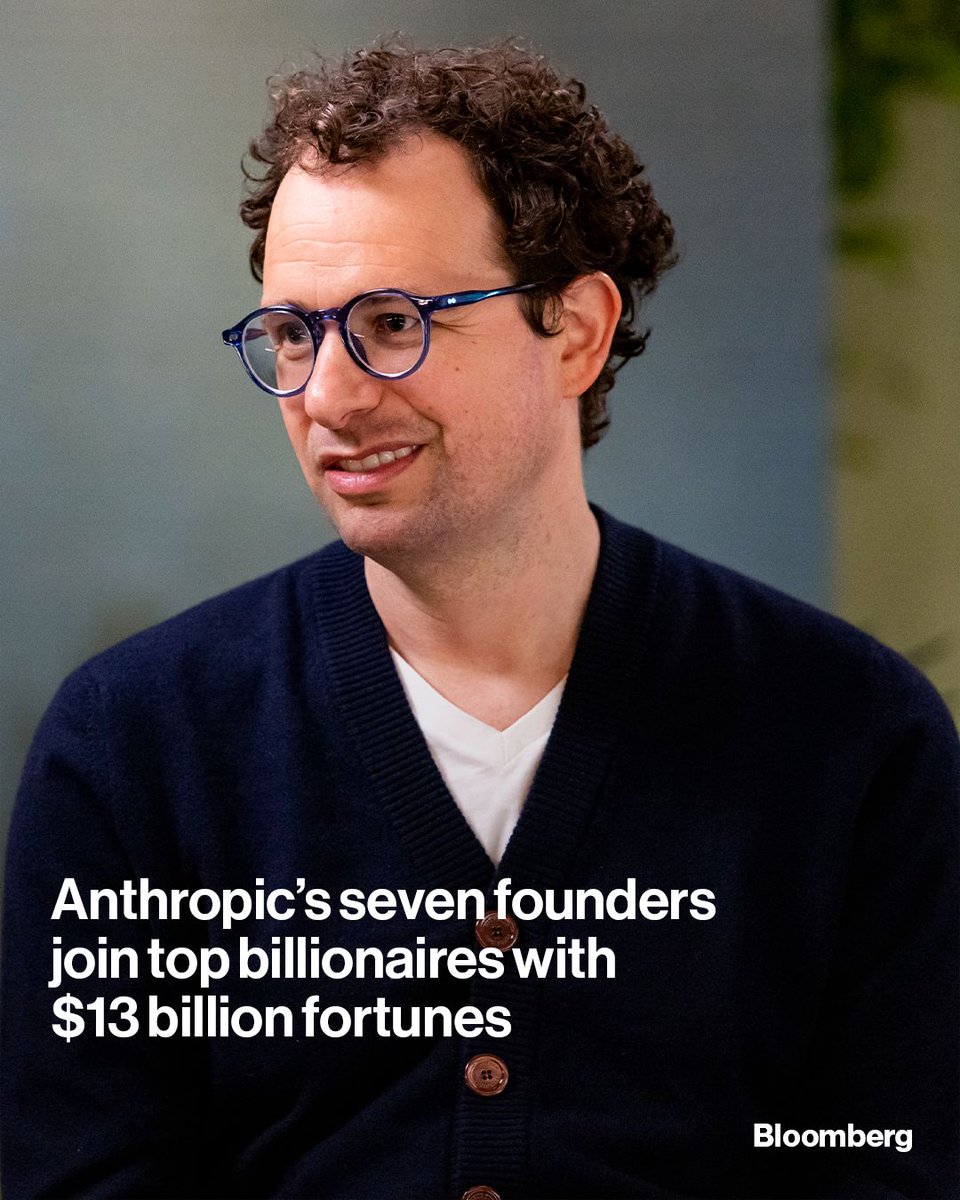
Anthropic's IPO filing, made public Monday, shows each of the company's seven co-founders holds roughly 1.4% of the company, putting individual fortunes above $13 billion. The group includes CEO Dario Amodei, president and chairperson Daniela Amodei, Tom Brown, Jack Clark, Jared Kaplan, Sam McCandlish and Christopher Olah, all formerly of OpenAI.
The filing also details an unusual governance structure: a special Class F share controlled by Anthropic Founders LLC grants 50.1% of shareholder voting power even if the founders sell nearly all of their economic stakes. Forbes reported the document contains confidential lists of people who could take over those voting roles.
The holdings place all seven in the top 300 of the Bloomberg Billionaires Index. For IPO investors, a structure that concentrates majority voting power in founders with a small economic stake is a central governance question.
Coverage in our newsroom notes Anthropic posted 1,300% revenue growth in the first half of 2026 with strong enterprise net revenue retention, while the co-founders have publicly stressed trust and honesty as the basis for running a seven-person team.
US equity futures pointed modestly higher on Tuesday. S&P 500 contracts rose about 0.3%, Nasdaq 100 futures gained 0.4% to 0.5% and Dow futures added 0.2% to 0.4%, extending Monday's advance led by the AI trade.
Lower oil prices supported risk appetite. Brent crude approached $117 a barrel before turning lower toward $110 after Iran's supreme leader said officials should ensure conditions for ending the war are met; officials from Saudi Arabia, Pakistan and Turkey met in Tehran and agreed to further talks.
Among individual names, UPS and Coca-Cola rose premarket after lifting full-year revenue guidance, while Boeing and Cadence Design Systems gained on results and Centene fell. Meta expanded its largest-ever equity fundraising to $97.5 billion for AI expansion, with Nvidia, AMD and Broadcom taking up to $5 billion in total.
The Fed began a two-day meeting on Tuesday, with markets widely expecting rates to stay unchanged on Wednesday while watching for signals of another hike this year. Alphabet, Microsoft and Amazon report later this week, with investors focused on whether AI spending is translating into growth.
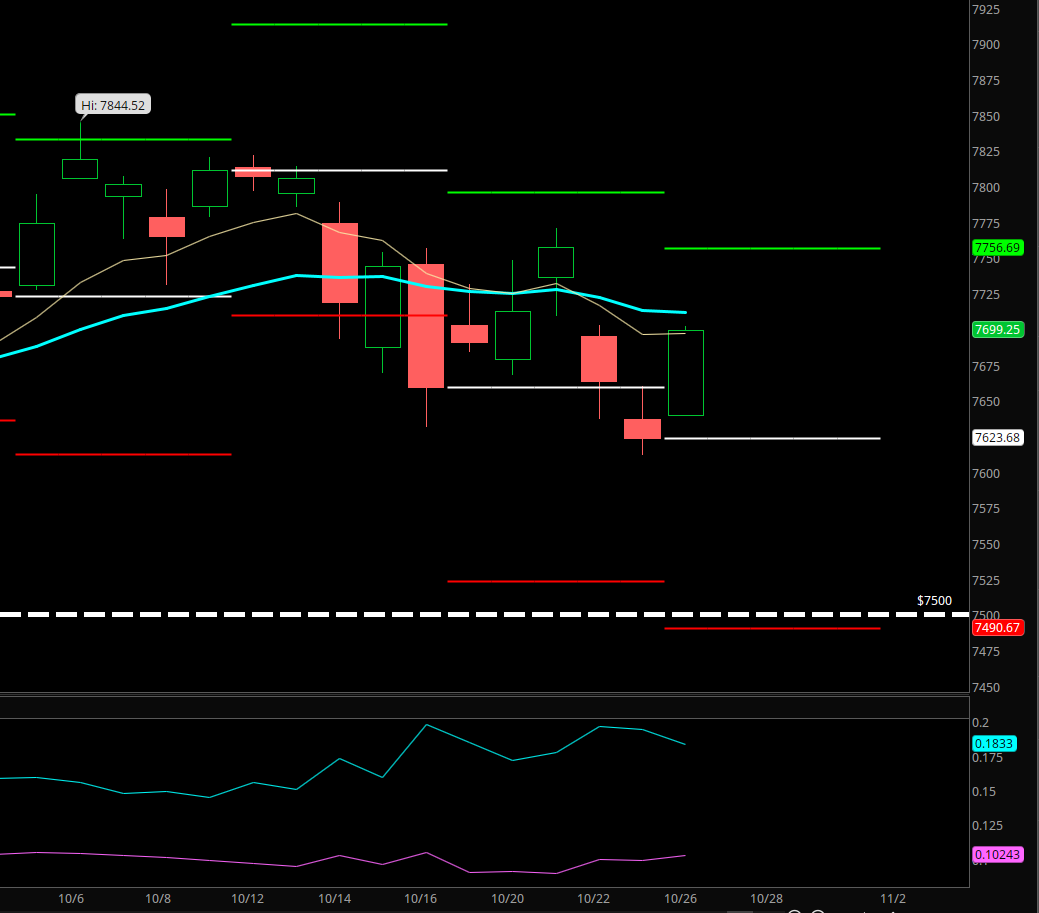
QQQ taps $715 gap resistance as options pin a $697-728 weekly box
Fed decision and Microsoft, Alphabet, Amazon earnings land in the same week; put protection stayed bid after the bounce, pointing to hedging rather than a directional bet
QQQ traded near $712 pre-market on Oct. 27 after closing up 1.11% at $712.12 the prior session, with SPY up 0.71% at $765.37. X signals flagged an intraday high of $715, the level of Thursday's unfilled gap and now short-term resistance, with the heaviest put positioning sitting at the $700 strike for the Oct. 30 expiry.
Options pricing broadly agrees with those levels: the at-the-money implied move puts QQQ in a roughly $697-728 band this week and SPX in about $753-778. Puts on the Nov. 20 expiry are still 1 to 1.5 vol points richer than Friday after the rally, and the whole QQQ November curve is 1.5 to 2 points higher, suggesting protection buyers have not stepped away.
The backdrop is Wednesday's Fed decision plus earnings from Microsoft, Alphabet and Amazon. QQQ front-month implied volatility at 22.8% sits above January's 21.5% and February's 21.8%, and puts on the Oct. 30 contract trade about 6 vol points over calls. Technically, QQQ remains below its 20- and 50-day averages near $724.9 and $729.9, with the 200-day at $711.6 as the near-term line in the sand.
For traders, the $700 put wall and the $715-728 resistance zone define this week's operable range; a break below $700 puts $680 in play on the signal's read. Oil above $100 is cited as a caution for anyone leaning too bullish, and direction still hinges on the Fed and the earnings prints.
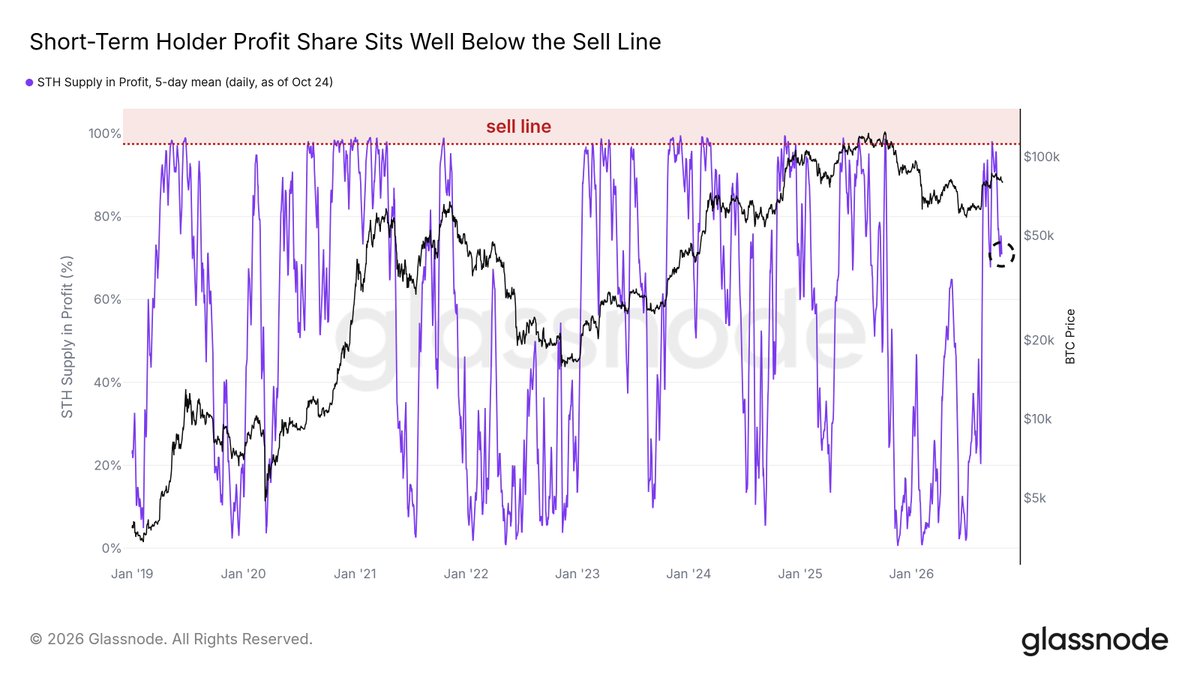
The share of bitcoin short-term holders in profit has cooled to around 70% from nearly 100% in late September, according to Glassnode data cited by Cointelegraph on X. The cooling is being framed as a better entry point for buyers betting on the uptrend.
On price, X account killaxbt said bitcoin was rejected at the 83.7K region and is now sweeping previous wick lows, with FOMC, a new monthly open, midterms and Anthropic ahead. The same account pointed to USDT.D retesting a break of structure on the weekly and monthly, arguing bitcoin stays bullish while USDT.D holds below a red boundary.
Separately, cryptomichnl said it will not turn bullish until price flips $81,000 and/or sweeps the $79,000 low, adding that a strengthening consensus often comes closer to a bottom. GalaxyHQ Research, cited by CoinDesk, said the bear market ended in June with accumulation underway and the 50-week moving average reclaimed for five straight weeks.
All of the above are X commentary and data readings, not a directional call. The site news library has no bitcoin-related reports in the past 48 hours; the figures trace only to the posts above.
Trump announced the U.S. will refill the Strategic Petroleum Reserve with Venezuelan oil, calling it a gift from Venezuela to the American people.
2026-08-3115 posts · 13 authors
The U.S. and Venezuela struck a 100-year deal covering 17 oil fields with 65 billion barrels potential, giving the U.S. 55% of output; SPR refill terms faced skepticism.
2026-09-1812 posts · 12 authors
The U.S. Strategic Petroleum Reserve hit its lowest level since November 1982, and Energy Secretary hinted at possible further releases.
2026-09-309 posts · 8 authors
SPR inventories fell for a 27th straight week to 283.8 million barrels, a 44-year low, just 31 million above the legal minimum; a 40-million-barrel release was also reported.
2026-10-263 posts · 3 authors
SPR crude stocks fell to 282.6 million barrels last week, the lowest since 1982; some commentary questioned the reserve's market relevance.
2026-10-277 posts · 6 authors
SPR stock data again confirmed 282.6 million barrels as the lowest since 1982, while markets also focused on Anthropic's IPO filing.
Discussions centered on the risks of extrapolating Anthropic's local short-term returns, high-income shoppers shifting to discount stores, and diluent supply constraints on Venezuelan oil production.
2026-09-017 posts · 7 authors
The FTC announced plans to sue Amazon for allegedly manipulating ad prices and profiting tens of billions, while macro concerns like gold overtaking the dollar as top reserve asset and rising wheat and corn prices were noted.
2026-09-028 posts · 6 authors
Topics included a DeFi protocol financing AI data centers, Snowflake and MongoDB data convergence trends, and Dollar General's stock rebound with upside potential.
2026-09-036 posts · 6 authors
Focus was on debates over China's hidden FX reserves, the implications of BRICS surpassing G7 in PPP-based output, and short-selling activity analysis for MicroStrategy and Strategy.
2026-10-269 posts · 6 authors
Analyst calls covered Tesla, Nvidia, and others; a company's S-1 letter stressed reinvention over entrenchment; and demand for accelerated computing in quant finance was discussed.
2026-10-2713 posts · 6 authors
The FTC and 20 states sued Dollar General, alleging the retailer charged customers more at checkout than shelf prices for years across thousands of stores, costing shoppers millions.