Binance recorded $3.64 billion in net outflows after partially reopening withdrawals on Sunday. The exchange said it processed $4.65 billion in withdrawals and $1.01 billion in deposits between 06:00 and 15:30 UTC on Nov. 1, a net figure equal to 2.1% of its $171 billion in total assets based on proof-of-reserves data as of Oct. 28.
The resumption followed a $6.3 billion theft last week that the FBI attributed to North Korean hackers operating as TraderTraitor. Binance has said it will absorb the loss rather than pass it to users, and that it has covered about 95% of the affected amount through its corporate treasury, SAFU fund and futures insurance fund; the remaining 5% consists of less liquid tokens.
Third-party trackers diverge: DefiLlama showed more than $3.5 billion in net outflows, while one report put the 24-hour figure at $5.8 billion. Binance did not comment on DefiLlama's data. Stablecoin issuer Circle said it had frozen more than $1.1 billion in USDC tied to the incident, up from the $800 million-plus its CEO cited on Friday.
Binance co-CEO Yi He said the priority is ensuring a secure environment. Founder Changpeng Zhao wrote on X that "98% choose to stay!" and that most outflows came in the first hours after withdrawals resumed. Analysts told Reuters the outflow was fairly modest, though security concerns may slow institutional allocation to crypto.
Marvell (MRVL) has agreed to acquire optical networking maker Lumentum (LITE) in an all-stock transaction with an implied enterprise value of about $115 billion. Lumentum holders will receive 4.5 Marvell shares for each LITE share, leaving existing Marvell shareholders with roughly 67% of the combined company.
CEO Matt Murphy framed the deal as a once-in-a-generation opportunity, saying AI bandwidth demand is pushing traditional copper links to their limits and driving a shift toward optical connectivity. Lumentum's indium phosphide lasers already power Nvidia optical switches, and posts said its capacity is sold out through early 2029.
At the size described in the posts, the transaction would be the largest semiconductor acquisition ever announced, exceeding Qualcomm's $47 billion bid for NXP and Nvidia's $40 billion bid for Arm combined; both of those deals ultimately fell apart. Marvell expects more than $1 billion in annual cost synergies and first-year accretion to adjusted EPS.
Coverage in our news library from the Wall Street Journal put the deal at $80 billion, a clear discrepancy with the $115 billion cited across the X posts; this article follows the $115 billion figure while flagging the gap. Ademi LLP and Halper Sadeh LLC have separately opened investigations into whether the 4.5-share ratio fairly values Lumentum.
Secretary of State Marco Rubio told reporters over the weekend that President Trump has not decided on military action against Iran but "would prefer to do it peacefully." Iranian Foreign Minister Abbas Araghchi said a deal remains possible if Washington shows goodwill, while Supreme Leader Mojtaba Khamenei ordered the armed forces to answer any threat with an "immediate, impactful and geographically unrestricted response."
Iran and Qatari mediators held a third consecutive day of talks, with Tehran signaling a deal is still reachable if demands are implemented tangibly, according to Al Jazeera. The diplomacy is running alongside reported US preparations for possible military action after the November 3 midterm elections.
Brent crude futures fell more than 6% to about $106.54 a barrel, while WTI dropped below $100 to as low as $97.35, a decline of as much as 7% on the session. Nasdaq 100 futures rose more than 1% at the same time, as energy longs unwound and investors rotated back into growth names that had been pressured by the war-risk premium.
Tamas Varga of PVM Oil Associates said continued attacks on ships and refineries in the Middle East and on civilians in Ukraine offer little confidence in a lasting ceasefire. OPEC+ kept its December output targets unchanged on Sunday, leaving the US-Iran track as the main swing factor for crude.
Iranian President Masoud Pezeshkian said on Nov 2 that the supreme leader has granted the government "certain authorities" regarding negotiations, adding that Tehran will try to resolve the problem through dialogue. The remarks were carried by state broadcaster IRNA and the semi-official ISNA, and relayed by Reuters.
Pezeshkian also said war serves no one's interest but that military pressure will not force Iran to surrender. He did not specify which issues the mandate covers or whether it extends to direct contact with Washington, leaving the practical scope of the opening unclear.
Markets read the headline as a de-escalation signal: crude fell sharply, with WTI touching $97.12 a barrel, down about $5 on the day, while the dollar weakened and US equity futures, Treasuries and spot gold rose. Lower energy prices ease input costs for airlines and transport firms while weighing on oil and gas producers.
Washington has not publicly responded to the Iranian statement, and there is no further information on whether or when talks might take place.
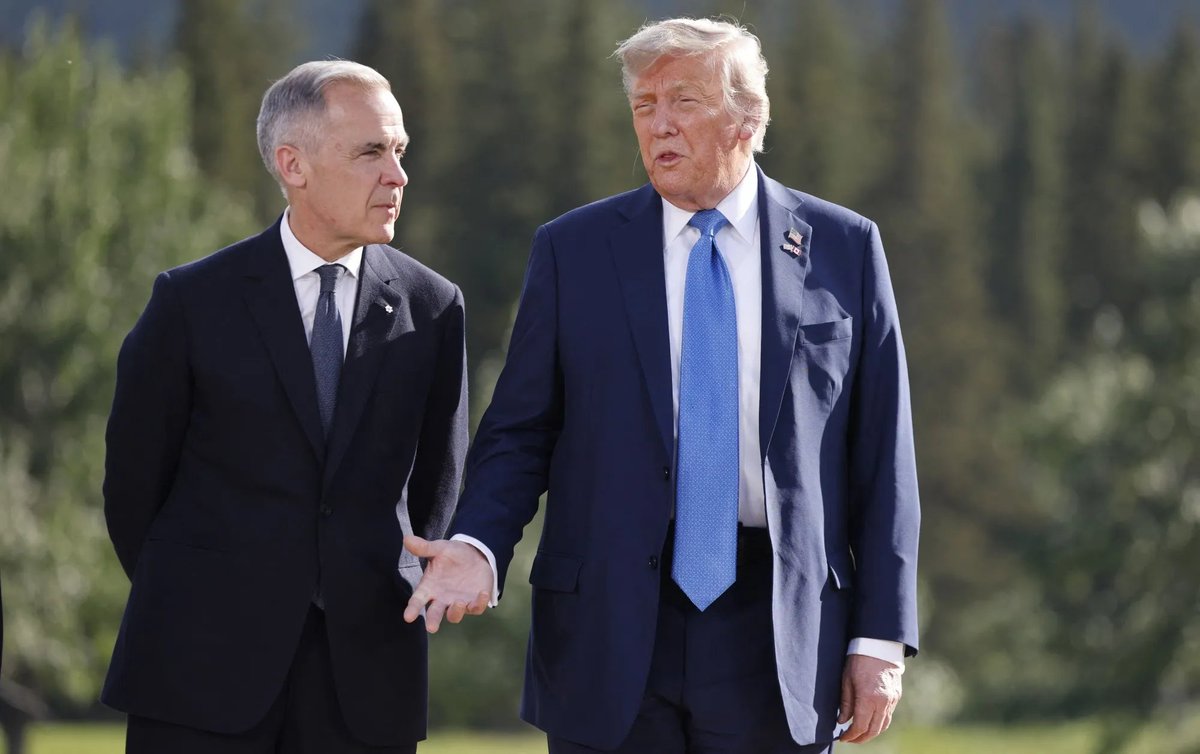
President Donald Trump told reporters in Iowa on Sunday that Washington and Ottawa have "the concept of a very good deal" and are "very close" to an agreement. Canadian Prime Minister Mark Carney said the same day that he had a "good conversation" with Trump and that negotiators would work "in the coming weeks" to deliver a mutually beneficial deal; his office confirmed the call took place Saturday.
The talks follow an August breakdown in which Trump imposed 50 per cent tariffs on a range of Canadian goods, banned imports of other Canadian products and signed an executive order to rename Lake Ontario. Tariff relief on Canadian steel and automobiles is on the table, though no details have been released.
Trump said the scope includes the Keystone XL pipeline, which he said Canada would pay for "all of it." The project would carry roughly 800,000 to 830,000 barrels per day from Alberta's oil sands to the Cushing, Oklahoma hub and Gulf Coast refineries. Canada, the world's fourth-largest oil exporter, sends more than 90 per cent of its crude production to the United States, making pipeline terms more consequential for Canadian energy producers and midstream operators than the steel and auto dispute.
No text or tariff schedule has been published. A spokesperson for Dominic LeBlanc, Canada's minister responsible for US trade, declined further comment Sunday beyond Carney's remarks. The trade dispute has become an issue in northern border states including Michigan and Maine ahead of Tuesday's US midterm elections.
How this story unfolded
Company
SpaceX in talks to buy Boost Mobile or lease its network in US wireless push
After being turned down by Verizon and others, a Boost deal would let SpaceX skip years of tower buildout
SpaceX is in talks with EchoStar over a potential acquisition of Boost Mobile or an agreement to use its wireless network, according to The Washington Post, as Elon Musk pursues a full-fledged US cellphone service. Boost Mobile has roughly 7 million subscribers and leases its 5G network and billing systems from AT&T and T-Mobile.
The report says Musk approached executives at Verizon and other carriers in recent months seeking network access, and the Boost option is seen as a back door into a US wireless market the Post values at $235 billion. SpaceX has already bought about $11 billion of spectrum licenses from EchoStar and in October agreed to pay $8 billion to Grain Management for up to 14 megahertz in the 800 MHz band for its planned Starlink Mobile service.
Investors are watching whether a resale arrangement would sharpen competition with the three national carriers. When the October spectrum deal surfaced, Verizon fell nearly 9%, AT&T nearly 10% and T-Mobile more than 13%. T-Mobile CTO John Saw has argued SpaceX remains spectrum-starved relative to incumbents, with indoor coverage and buildout costs posing hurdles.
Neither SpaceX nor EchoStar immediately responded to requests for comment. CNBC's Jim Cramer said on X that a Boost deal would give SpaceX the network reach to compete with major US carriers.
President Trump said he would be willing to offer protective pardons to Elon Musk and close aides if Democrats take control of Congress after the midterm elections. According to Bloomberg, Trump said "I would if I needed to, sure," and agreed with Musk's warning about a Democratic sweep, saying "I think he's not wrong."
The remarks land just before the midterms. Musk is chief executive of both Tesla (TSLA) and SpaceX (SPCX), companies that depend heavily on federal contracts and regulatory approvals, making the political backdrop directly relevant to their operating environment.
On markets, the signal names Tesla factories and SpaceX directly, but the materials provide no share-price or valuation figures, so no reaction can be quantified. Coverage in the past 48 hours centered on SpaceX's AI business: AI sales rose 830% to $7.6 billion in the third quarter, while Pershing Square's Bill Ackman said Musk's AI compute buildout may require $1 trillion.
Trump also said of preemptive pardons that he "would not even think about it." All of the above comes from his public remarks; no specific legal proceeding or formal document has been cited.
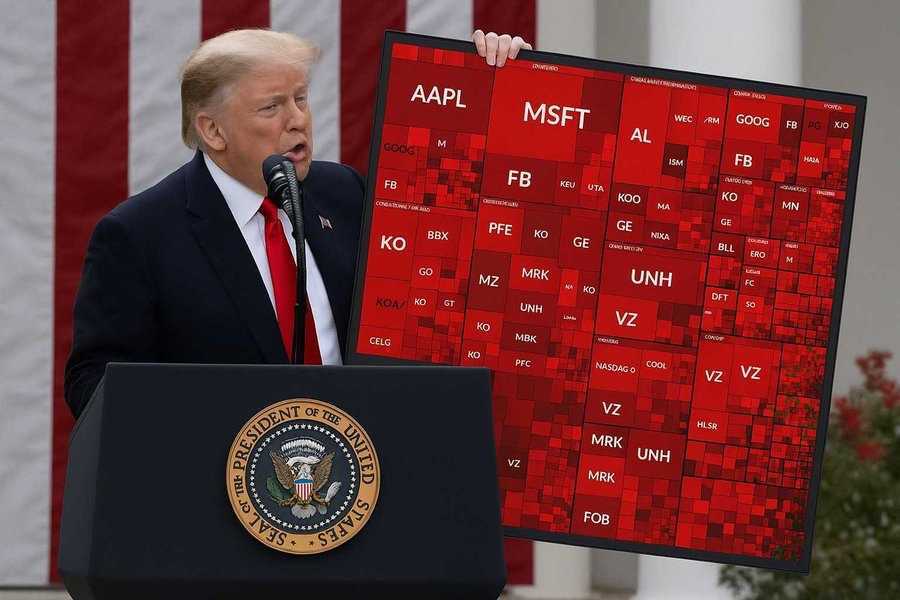
A long-awaited burst of volatility hit Wall Street late last week after disappointing earnings from technology giants compounded anxiety around the AI-driven rally. Bianco Research pegged Friday's move as the seventh-largest sell-off in the past two years, coming after a gain of more than 500% since ChatGPT's November 2022 release, with the all-time high set on October 6 — less than a month earlier.
The stress extended beyond equities. The Market Ear reported that the cost of protecting the debt of numerous US technology heavyweights against default hit fresh record highs on Friday, while market watchers described money rotating out of the AI trade and into other sectors; Seeking Alpha tied a REIT comeback to cracks in AI names.
Amazon shares fell after its latest earnings report, though several analysts stayed constructive: Seeking Alpha noted Q3 operating income rose 61% year over year and AWS revenue growth accelerated to 39%, with backlog commitments of $578 billion, and Phillip Securities upgraded the stock to Buy from Accumulate on November 1, lifting its price target to $330 from $320.
More broadly, CNBC said the oil, AI and bond trades all shifted over the past month, and The Economist reported that the US and China are racing to secure minerals critical to AI and other technologies, a windfall for the few places with ready deposits.
How this story unfolded
Earnings
Estée Lauder lifts FY2027 outlook as Q1 sales reach $3.72bn on fragrance strength
Organic sales rose 6% with fragrance up 20% and China up 9%, as the company cuts promotions in favor of brand investment
Estée Lauder reported fiscal first-quarter net sales of $3.72 billion on Nov. 2, up 7% year over year and above the roughly $3.65 billion consensus. Adjusted EPS came in at $0.72 versus an expected $0.51, and adjusted operating margin expanded 480 basis points to 12.1%. Organic net sales grew 6%, led by a 20% organic gain in fragrance and 4% growth in skin care.
The company raised its fiscal 2027 guidance: organic sales growth is now seen at 4% to 5.5%, up from 3% to 5%, and adjusted EPS at $3.20 to $3.45, up from $3.10 to $3.35. CEO Stéphane de La Faverie said the company is cutting promotions and increasing consumer-facing brand investment, aiming to be "less reliant on promotion overall everywhere around the world."
By region, organic sales in the Americas rose 4% after a 2% decline a year earlier, while mainland China grew 9%, matching the prior-year rate. Luxury fragrance brands including Le Labo, Tom Ford and Jo Malone London drove growth alongside The Ordinary; makeup revenue of $1.05 billion fell slightly short of the $1.07 billion estimate, and the company expects the category to return to growth next quarter.
Shares rose about 4% to 5% in premarket trading to roughly $113, and are up about 4% year to date, trailing the S&P 500's roughly 11% gain. The company declared a quarterly dividend of $0.35 per share payable Dec. 15.
US stock futures rose in Sunday night trade. S&P 500 futures gained 0.3% and Nasdaq futures added 0.4%, with the VIX falling, according to figures cited by First Squawk and Investing.com. Bloomberg reported the advance was led by technology shares as falling oil prices offered relief after a bruising week for the AI trade.
The move follows a sharp selloff in technology stocks. Bloomberg reported that Wall Street is bracing for more wild days in stocks after the tech rout, while copper rebounded from its lowest close in a week as the tech slump subsided and oil pulled back, easing fears around global growth.
The week is packed with catalysts: a busy earnings slate, jobs data and the midterm elections. According to the newsroom, AMD, Apple and MercadoLibre all report quarterly results this week, and commentary from AMD, Arista and Supermicro on AI infrastructure demand is seen as key to shaking off Friday's rout.
In options, SpotGamma noted that puts now scan as rich and would require sharp realized downside to justify their prices, particularly once this week's events pass.
SPY traded near $758 in Monday pre-market action, edging up from Friday's $755.72 close after the S&P 500 fell 1.77% to 7,580 and the Nasdaq dropped 2.86% in a session that saw the Philadelphia Semiconductor Index lose more than 7%. Social signals flagged the break below the $760 level, with order flow leaning bearish.
The selloff centered on the gap between AI capital spending and monetization: Alphabet shed market value, Amazon's free cash flow turned negative, and Nvidia, Meta and TSMC all weakened technically. QQQ closed Friday at $690.49, down 3.47% and lower for a third straight week.
Positioning is split. Traders reportedly steered roughly $1 billion into the triple-leveraged Nasdaq ETF TQQQ after the 3.5% drop, the fifth-largest one-day inflow on record. In options, SPY sits in positive gamma with the flip at $756, a regime that tends to pin price rather than extend moves.
The week brings midterm elections and job openings on Tuesday, the October employment report on Friday, and earnings from Apple, AMD, Qualcomm and more than 100 S&P 500 companies. The 200-day moving average at $752.82 marks the key structural level for SPY.
Tempus AI (NASDAQ: TEM) reported third-quarter 2026 revenue of $411.5 million, up 23% year over year and above the roughly $409 million consensus. Adjusted EPS came in at $0.07 versus expectations of a $0.08 loss, and adjusted EBITDA reached $25.6 million.
By segment, diagnostics revenue was $303.5 million, up 20%, while data and applications revenue rose 33% to $108.1 million. The company attributed the acceleration to 32% unit growth in its oncology business.
Tempus raised its fiscal 2026 revenue guidance to a range of $1.60 billion to $1.61 billion, above the $1.59 billion consensus, and guided adjusted EBITDA to about $65 million.
The stock rose between 2.5% and 3.7% in premarket trading after the release. Coverage also noted that growth in the company's inherited-disease screening business nearly stalled, a soft spot within the otherwise faster-growing portfolio.
Oracle ($ORCL) kicked off a $10 billion, six-part high-grade dollar bond offering on Nov. 2, returning to the debt market. Bloomberg reported the sale comes just days after the company told investors it would limit additional debt to that same $10 billion through FY2030, effectively front-loading its entire borrowing plan.
Some X posts also referred to a common stock offering of the same size, but the newsroom library and the Bloomberg report confirm only the bond portion; the equity sale is not treated as fact here.
Oracle shares fell about 4% to $125.43 in morning trading, while CoreWeave rose about 2% and Microsoft held steady. The financing of AI-related capital spending is back under investor scrutiny; a separate report noted an investor who reinvested Oracle dividends over the past year would be sitting on a loss of almost 50%.
Oracle has already contracted capacity to customers including Meta, Nvidia and OpenAI, and the funding needs behind that expansion form the backdrop to the bond sale.
Ed Yardeni of Yardeni Research said on Nov. 2 that the recent selloff in AI-linked equities is letting air out of a bubble rather than signaling a broader crash, and argued the pullback may offer an entry point into semiconductor stocks. He put the sector's forward P/E at about 13.5x versus roughly 18.5x for the S&P 500.
The remarks follow a brutal October. The Philadelphia Semiconductor Index fell more than 16%, its sharpest correction since July 2025, while the iShares Semiconductor ETF (SOXX) lost 17.1% and closed at $471.51 on Oct. 30 below its 200-day moving average. Intel plunged 28.6% that day and AMD fell 10.9%.
Valuation measures differ by index: LSEG put the S&P 500 Semiconductors Index forward P/E at 14.7x on Oct. 30 versus about 33x a year earlier, while MarketScreener cited 17x for the Philadelphia SOX, 1.5 standard deviations below its five-year median of roughly 23x. FactSet has the S&P 500 forward multiple at 18.7x.
Yardeni Research said analysts expect semiconductor earnings to grow 114.3% in 2026 and 77.9% in 2027, and noted $2.5 trillion in combined remaining performance obligations at Microsoft, Oracle, Amazon and Alphabet. It also flagged financing and delivery of AI infrastructure as the main hurdle to converting those contracts into revenue.
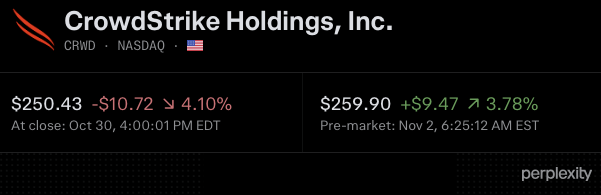
CoreWeave and CrowdStrike said they are expanding their partnership to secure mission-critical AI workloads at scale, according to multiple X wire posts carrying the tickers CRWV and CRWD.
CRWV traded up 2.8% premarket following the announcement, per openoutcrier. CoreWeave provides AI cloud infrastructure, while CrowdStrike supplies AI-native security software, placing the tie-up at the intersection of compute and security.
The move comes as CrowdStrike widens its enterprise reach: Ignition Technology will bring its Falcon platform to European SMBs, and at least one analyst turned bullish on the stock Monday, according to本站 news library reports.
Financial terms, the scope of coverage and a rollout timeline were not disclosed in the available materials, and neither company offered further comment in those reports.
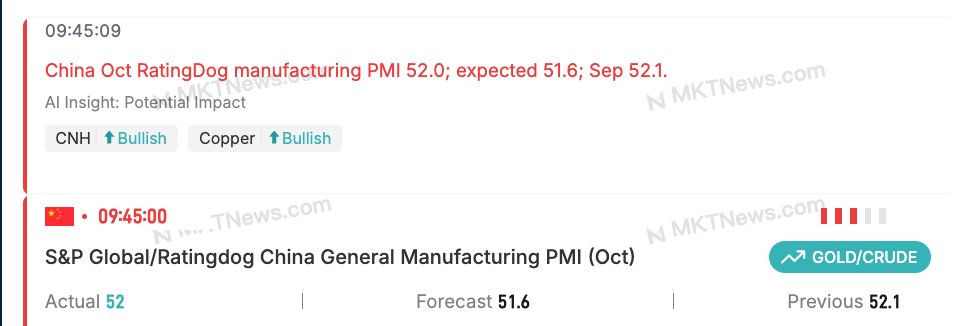
The seasonally adjusted RatingDog China General Manufacturing PMI came in at 52.0 in October 2026, down marginally from 52.1 in September but above the 51.6 consensus estimate, according to data released by RatingDog and S&P Global on November 2. The reading marked the 11th consecutive month above the 50.0 no-change mark, the longest streak of improving manufacturing health since mid-2021. Survey responses were collected between October 12 and 22.
Manufacturing output expanded at the fastest pace in six months, supported by a solid increase in new work. Total new orders rose for the 17th straight month at a pace broadly in line with September. New export orders increased for a fourth consecutive month, with firms citing greater volumes of new business from clients in Asia, Europe and Africa, though the rate of expansion eased to a three-month low. Purchasing activity grew at the strongest rate in eight months, stocks of purchases rose further, and supplier delivery times shortened for the first time since February.
On prices, output charges fell for the second time in three months as intense competition pushed firms to discount, while export charges declined for the first time in nearly a year. Average input prices rose for the 16th consecutive month on higher metals and fuel costs, though the rate of inflation softened from September. Job creation was only marginal, and backlogs of work accumulated for a ninth month. Business confidence remained positive but slipped to a nine-month low.
The official manufacturing PMI, released the same day, fell to 49.3 from 50.1 in September, missing expectations and diverging from the private gauge. The RatingDog survey covers a panel of around 650 manufacturers weighted toward private, smaller and more export-oriented firms, while the official index has a broader sample. Yao Yu, founder of RatingDog, said the fourth quarter opened with steady manufacturing expansion, faster output growth and strong new order inflows, while cost pressures, price competition and softer confidence warrant attention.
Sources:
Company🔥Developing
Morgan Stanley cuts Coinbase to Underweight, slashes price target to $120 from $258
The downgrade follows a roughly $6bn Binance hack and cooling crypto trading; Morgan Stanley cut its 2027 revenue forecast by 28%, setting up a split with BTIG's Buy rating
Morgan Stanley analyst Michael Cyprys downgraded Coinbase (COIN) to Underweight from Equalweight on Nov. 2 and cut his price target to $120 from $258, implying about 16% downside from Friday's close. Cyprys said "confidence in the earnings recovery has deteriorated," citing weaker trading trends, a softer revenue outlook and uncertainty in crypto markets after the Binance hack.
The call followed Coinbase's third-quarter report last Thursday: revenue of $1.22 billion, down 35% year over year and just short of the $1.22 billion consensus, with transaction revenue down 44% to $590 million. Coinbase disclosed about $165 million of fourth-quarter transaction revenue through Oct. 25, a pace that implies roughly $607 million for the quarter, about 11% below consensus.
Morgan Stanley cut its 2027 revenue forecast by 28% and its adjusted EBITDA estimate by 47%, with 2028 cuts of 18% and 25%, and lowered its valuation multiple to 12x from 20x. COIN fell more than 10% on Friday to an intraday low of $136.90, its weakest since February 2024, and was down about 2% in early Monday trading near $140.
Views on Wall Street are split. BTIG kept a Buy rating and a $240 target, arguing the roughly $6 billion Binance breach could push investors toward platforms with stronger security and custody, potentially benefiting Coinbase. Of 41 analysts covering the stock, 26 rate it Buy or Strong Buy, according to LSEG data.
How this story unfolded
Company
Altman Makes Surprise Korea Stop, Meets 50 Samsung Presidents as HBM Talks Intensify
Memory suppliers gain leverage as HBM sells out; no new agreements announced and Korea data center budgets remain unsettled
OpenAI CEO Sam Altman made an unannounced visit to South Korea over the weekend, meeting about 50 presidents from Samsung Electronics and its finance and biotechnology affiliates at a roundtable in Yongin on Oct. 31. South Korean media reported he then had lunch in Seoul with SK Group Chairman Chey Tae-won, attended by executives from SK hynix and SK Telecom; SK hynix told CNBC it could not confirm the reported meeting.
The trip builds on Stargate agreements signed in October 2025, under which Samsung and SK outlined projected demand equivalent to 900,000 DRAM wafer starts per month — a production target, not a binding order. Samsung said last week its 2027 HBM supply is sold out, while SK hynix said production through 2029 is effectively accounted for and that customers are requesting more than twice the volume it can supply.
Tight supply is shifting bargaining power toward chipmakers. TrendForce forecasts HBM's blended average selling price will rise 121% in 2027 from 2026, reflecting tight supplies and a larger share of HBM4. Higher memory costs could inflate OpenAI's infrastructure budget as it develops custom accelerators with Broadcom; Samsung signed a memorandum with Broadcom in July covering up to $200 billion (about 267 trillion won) in memory and foundry cooperation through 2030.
No new agreements were announced after the visit, and neither side confirmed discussions of chip pricing or investment commitments. Investment budgets and construction schedules for planned AI data centers in Korea remain unsettled, leaving open whether the partnerships convert into firm supply contracts.
Sources:
Company
Deutsche Bank lifts CrowdStrike to Buy, raises price target to $300
Analyst Brad Zelnick argues the market underappreciates how AI will expand cybersecurity demand and calls the $565B 2034 market estimate conservative
Deutsche Bank analyst Brad Zelnick upgraded CrowdStrike (NASDAQ: CRWD) to Buy from Hold and raised his price target to $300 from $240, according to TipRanks and multiple market accounts.
Zelnick's case rests on the view that the market has not yet appreciated the extent to which AI will expand the cybersecurity market. He described CrowdStrike's $565 billion 2034 market estimate as conservative and pointed to a "tsunami of cyber demand." Other reports said he expects AI-driven demand and consolidation to help the company exceed its FY30 ARR target ahead of schedule.
The upgrade landed alongside news that Ignition Technology will bring CrowdStrike's AI-native security to European SMBs, putting CRWD among the notable Monday analyst upgrades.
The market-size estimate and ARR target are forward-looking views from the analyst and company, not reported results, and remain subject to verification in future earnings.
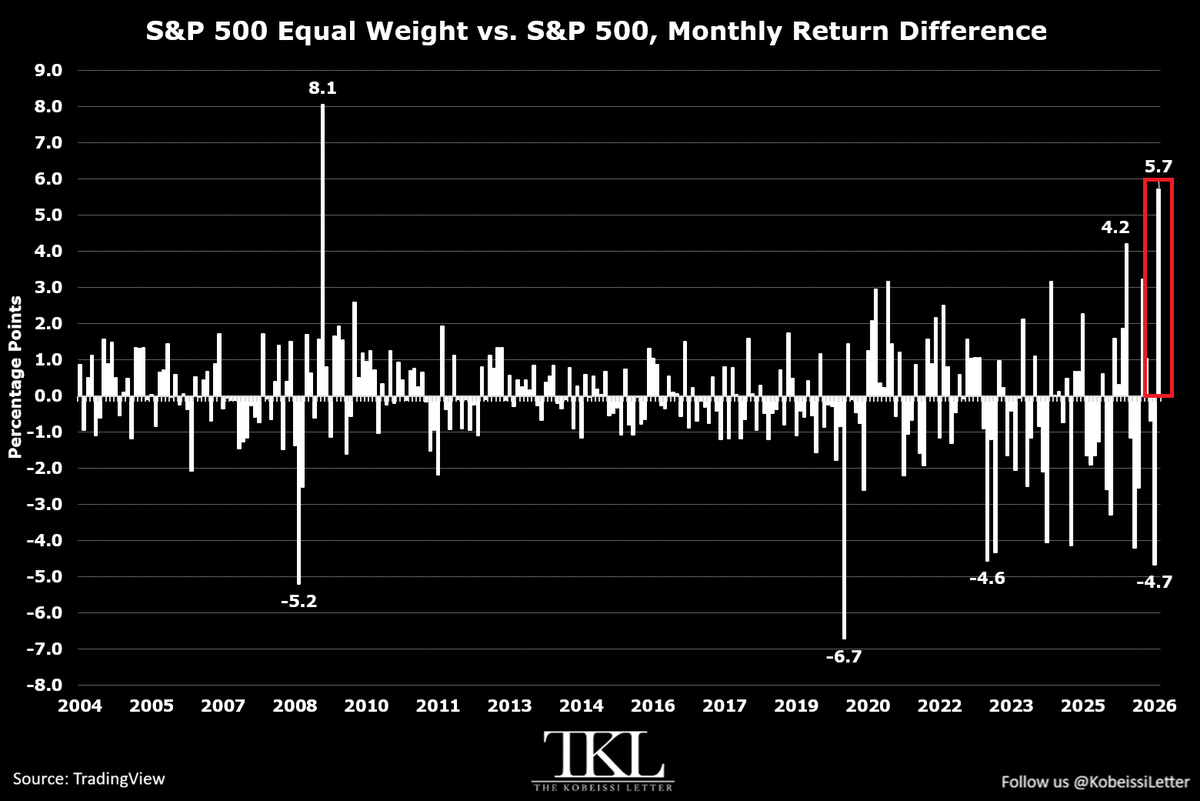
The S&P 500 Equal-Weight Index rose about 4.8% in October while the cap-weighted S&P 500 fell roughly 0.9% to 1%, a outperformance of about 5.7 to 5.9 percentage points. According to Bespoke Investment Group, that was the widest monthly edge for equal-weight since April 2009 and the second-largest since 1990.
The swing followed September, when the cap-weighted index led equal-weight by 4.6 percentage points. The roughly 10-point reversal between the two months was the largest monthly move in either direction since at least 1990, Bespoke said. Before October, equal-weight had beaten cap-weight by five points or more in a month only four times since 1990: April 1999, December 2000, November 2002 and April 2009, the last two shortly after major market lows.
Sector performance was sharply split: energy, consumer staples, health care and utilities each gained more than 9% in October, while technology and communication services both fell more than 8%. The equal-weight S&P 500 ETF is RSP. The style gap was similarly wide, with the Russell 1000 Value Index leading its growth counterpart by about 10 percentage points, the widest since February 2001, tracked by IWD and IWF.
Tesla and Samsung Oppose New US Tariffs on Vietnamese Goods as Probe Deadline Nears
Washington may propose new tariffs on Vietnamese goods this month; submissions show businesses split, with Vietnam a key node in Samsung's phone and Tesla's supply chains.
The US review of possible new tariffs on Vietnamese goods is entering a critical stretch. Submissions to the US government reviewed by Reuters show businesses split: Tesla and Samsung oppose the new tariffs, while others have called for penalties.
With the probe deadline nearing, Washington could propose new tariffs on Vietnamese goods this month. Vietnam is a major manufacturing base for Samsung phones and other consumer electronics, and a node in parts of Tesla's supply chain, so the tariff outcome directly affects both companies' cost structures.
For Tesla, any new tariff could raise the cost of components sourced from Vietnam; for Samsung, it bears on pricing and margins for phone exports to the US. The split in submissions also signals that the final policy remains uncertain, leaving supply-chain firms to prepare for multiple scenarios.
The positions come from corporate submissions to the US government; whether tariffs are imposed and how broadly they apply still depends on the investigation's conclusions and official decisions.
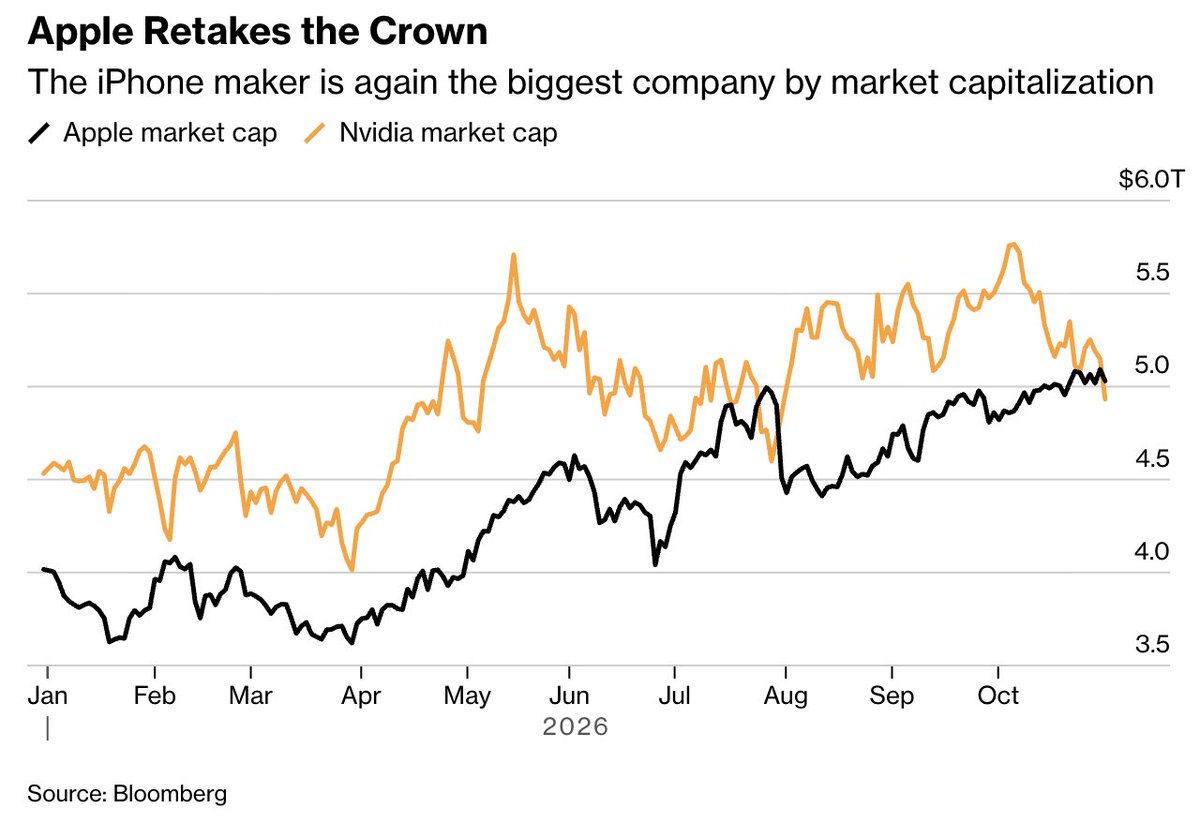
Apple (AAPL) has overtaken Nvidia (NVDA) to reclaim the title of the world's most valuable company by market capitalization, according to multiple X accounts including Cointelegraph and Barchart. The AI-focused account the_ai_investor tied the shift to the selloff that followed big tech earnings.
The change in ranking comes just before Apple reports. Benzinga notes Apple will post fiscal fourth-quarter results after Monday's closing bell, days after passing Nvidia. Reuters reports that new CEO Ternus faces his first earnings test as memory costs surge.
Broader market tone is mixed: Investopedia reports stock futures pointed higher Monday morning after the leading indexes plunged Friday, with some tech names poised to rebound. The Apple-Nvidia market-cap contest has become a closely watched gauge of rotation within tech.
Neither Apple nor Nvidia has publicly commented on the ranking change. Investors will focus on Ternus's remarks on the earnings call and how Apple addresses memory cost pressure.
Tower Semiconductor reported third-quarter 2026 revenue of $526 million, up 33% year over year, with gross profit of $179 million nearly double the prior-year $93 million. Adjusted net profit was a record $120 million at a 23% net margin, with basic EPS of $1.06 and diluted EPS of $1.05. Operating cash flow was $185 million against $191 million of net property and equipment investment.
The company guided fourth-quarter revenue to about $600 million, plus or minus 5%, implying 36% year-over-year and 14% sequential growth and roughly $2 billion for the full year, a $2.4 billion annualized run rate. CEO Russell Ellwanger said infrastructure demand in SiPho and SiGe is driving high-speed connectivity growth, targeting an $1.1 billion annualized SiPho run rate in Q4 — five times 2025 SiPho revenue — with the Japan 300mm buildout ahead of schedule and customer contracts extended through 2029.
The stock had fallen about 42% from its June peak to last Friday, leaving a market capitalization near $18.9 billion, before rising roughly 8% in premarket trading after the release. Silicon photonics capacity is becoming a watched variable across the AI data-center optical supply chain.
Note the adjusted-EPS discrepancy: the company's release shows $1.05 diluted adjusted EPS, while the X signal cited $1.15; treat the company filing as the reference. Heavy capital spending also weighs on free cash flow.
Japanese stocks fell on Nov. 2, with technology shares hit by a steep selloff in their U.S. peers, and Kioxia's profit outlook drawing attention, Bloomberg reported. A separate market wire said Asian stocks were set to fall, tracking Friday's sharp decline in U.S. technology shares.
The backdrop is Alphabet's third-quarter report. According to the newsroom, Alphabet shares fell more than 10% after results as search revenue slowed and heavy capital spending weighed on free cash flow; another report said the stock slipped more than 13% after hours as revenue and EPS both missed estimates.
Alphabet dropped out of the $4 trillion club after a record $505 billion drawdown. The selloff deepened concerns that the AI-driven rally may have run too far, spilling over into Japanese and Asian technology names.
Bloomberg flagged Kioxia's profit outlook as a focus in the Japanese decline, though the materials did not provide specific guidance figures.
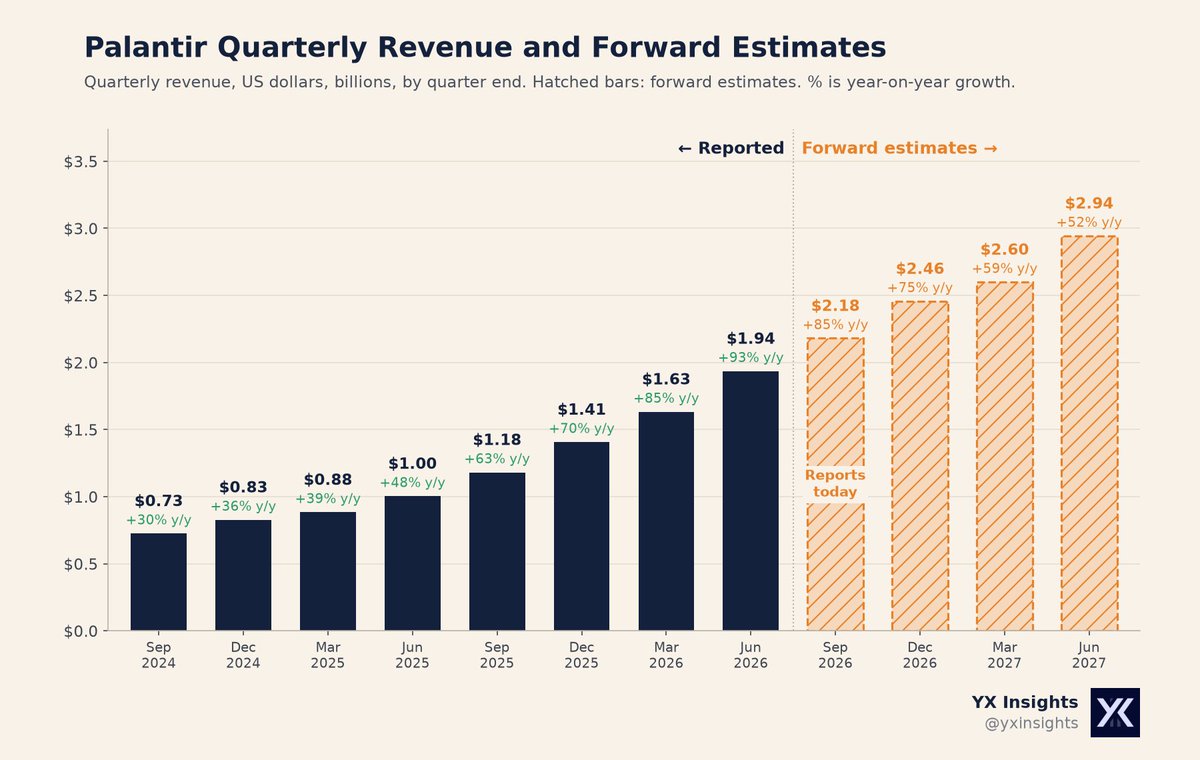
Palantir reports third-quarter results after the U.S. market close on Nov. 2. According to previews circulating on X, the consensus revenue estimate is $2.18 billion, up about 85% year over year, with EPS expected at $0.41; the company's own guidance was $2.160 billion to $2.164 billion, and the market wants a clear beat.
Analysts also expect U.S. commercial sales to grow 133% in the third quarter, down from 150% in the prior quarter. The full-year revenue guide of $8.15 billion is the number investors are watching.
The report lands amid a sell-off in AI stocks. Palantir shares fell sharply Friday and broke key support as investors weighed whether its AI growth can justify its valuation, with one report putting its price-to-earnings ratio at 165 times.
Separately, The Guardian reported that Palantir's AI technology is unused or little used by 29 NHS trusts said to be benefiting from it, with a senior health official calling the gap “very misleading.”
Tesla's official Robotaxi account said rides opened in Fort Worth, Texas, at 6 a.m. CT on Nov. 2, with a service area of roughly 143 square miles centered on downtown and reaching toward Saginaw and Benbrook. Rides are fully unsupervised, with no human safety monitor in the vehicle. It is Tesla's first new robotaxi city in about three months and its fourth in Texas, after Austin, Dallas and Houston.
Across seven unsupervised markets, geofences total about 831 square miles: Austin 272, Houston 254, Fort Worth 143, Dallas 81, Miami 31, Orlando 26 and Tampa 24. Fort Worth was not on the list of four 'coming soon' cities Tesla published on Oct. 21, which named Las Vegas, Phoenix, Jacksonville and San Antonio.
On the fleet side, Texas DMV data put Tesla's registered autonomous vehicles at 1,244 as of Nov. 1, up 40 from 1,204 and 15 behind Waymo's 1,259, split between 573 Cybercabs and 671 Model Ys. On its Q3 2026 earnings call, Tesla said Cybercab rides would begin in Dallas this month and that it aims to run Robotaxi around the clock by the end of 2026.
For $TSLA, Fort Worth is a modest zone on its own, but combined with Dallas it puts roughly 224 square miles of the Metroplex under service, and the coming Dallas Cybercab launch makes North Texas the densest cluster of its autonomous commercial rollout. Geofence sizes and vehicle counts come from third-party trackers rather than Tesla's own disclosures, so actual availability should be checked against the app.
Trump Says US Will Review China Spy Allegations Around Nvidia's Jensen Huang 'Very Closely'
The New York Times reported a Singapore-based Megaspeed executive with ties to Huang was assessed as a Chinese intelligence asset; Nvidia and Beijing deny wrongdoing
President Donald Trump said on Oct. 31 that he has "always found Jensen Huang to be very aboveboard" but called the situation "a very complex issue," adding that his administration would look at the allegations "very closely." Asked whether the Nvidia CEO would remain on the President's Council of Advisors on Science and Technology, Trump said he would "like to say yes" unless "we find out something to the contrary."
The New York Times reported that U.S. officials assessed a Singapore-based executive at data center firm Megaspeed, who had close dealings with Huang, as a Chinese intelligence asset who passed information to Beijing. The report said Trump was briefed on the findings about a year ago but decided against acting. Nvidia said Megaspeed is "no different than many other regional cloud customers" and that diversion allegations were "thoroughly investigated and debunked last year." China's government dismissed the report as unfounded speculation.
Nvidia shares closed down 4.22% at $4.22 lower at $204.22 on Friday — closing at $204.22 — and edged up 0.3% to $205.25 after hours. Senator Elizabeth Warren has pressed Huang and Nvidia's board to testify before the Senate Banking Committee on China sales, adding political pressure ahead of the company's mid-November earnings.
Huang, who was born in Taiwan, traveled with a group of U.S. tech CEOs accompanying Trump on his Beijing trip in May and has lobbied for wider access to the Chinese market for Nvidia chips. No official finding has been announced; the matter remains an allegation that the company and Beijing deny.
How this story unfolded
Markets
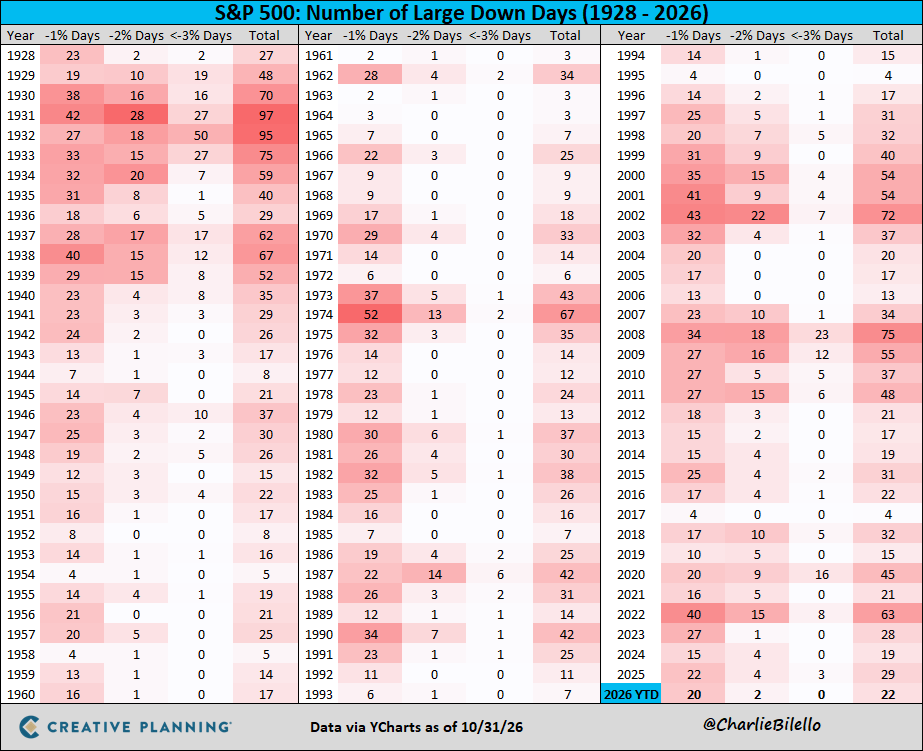
S&P 500 drops 1.8% Friday, its 22nd 1%+ decline of the year
SOXX sits 28% below its June high yet remains up over 50% this year; the pullback is still within historical norms
US stocks closed a third straight losing week on Friday. The S&P 500 fell 1.82% to 7,580.07, slipping below its 100-day moving average; the Nasdaq Composite dropped 2.86% to 25,437.00, its largest one-day decline since June; and the Dow lost 1.09%. The Philadelphia Semiconductor Index fell 7.2%, its worst session since June 23.
According to Charlie Bilello, Friday marked the S&P 500's 22nd decline of more than 1% this year. The average year since 1928 has seen 29 such drops, putting the current volatility in a normal historical range. Semiconductors led the selloff: the iShares Semiconductor ETF (SOXX) closed at $471.51, about 28% below its June 22 high of $655.95, and fell 17% in October alone, though it is still up more than 50% year to date.
Intel fell about 29% Friday, its worst day since 1974, after guiding fourth-quarter revenue to $15-16 billion versus estimates near $17 billion. Nvidia slipped 4.2% to $204.64. SOXX saw $1.54 billion of outflows Friday, cutting assets to $48 billion.
The market is heading into midterm elections, major tech earnings and the jobs report. Some technical analysts say the S&P 500 has triggered a head-and-shoulders top, but that view came without verifiable index levels or downside targets and should be treated as opinion.
German retail sales fell 1.5% in nominal terms and 2.0% in real terms month-on-month in September, Statistics Office data showed on Nov 2, against expectations of a 0.4% gain and after a 1.2% rise in August. Year-on-year real sales dropped 2.3%, versus a 0.4% decline previously.
Alexander Krüger, chief economist at Bethmann HAL, called it a "data shock to start the week", saying the fallout from the Iran war is reaching consumption data with a lag and a weaker labour market is curbing spending. Germany's economy grew 0.2% quarter-on-quarter in Q3, but uncertainty among firms and consumers remains elevated.
Dutch retail sales rose 2.7% year-on-year in September, down from 3.8%, while Swiss real retail sales grew 1.6%, down from 3.2%. EUR/USD traded at 1.1185 at the European open, up 0.2%, as Brent crude fell more than 2% below $110, partly offsetting the German figures.
Attention now turns to the US midterm elections, the ISM manufacturing and services PMIs and Friday's nonfarm payrolls; in the eurozone, services PMI and consumer inflation data are due on Wednesday.
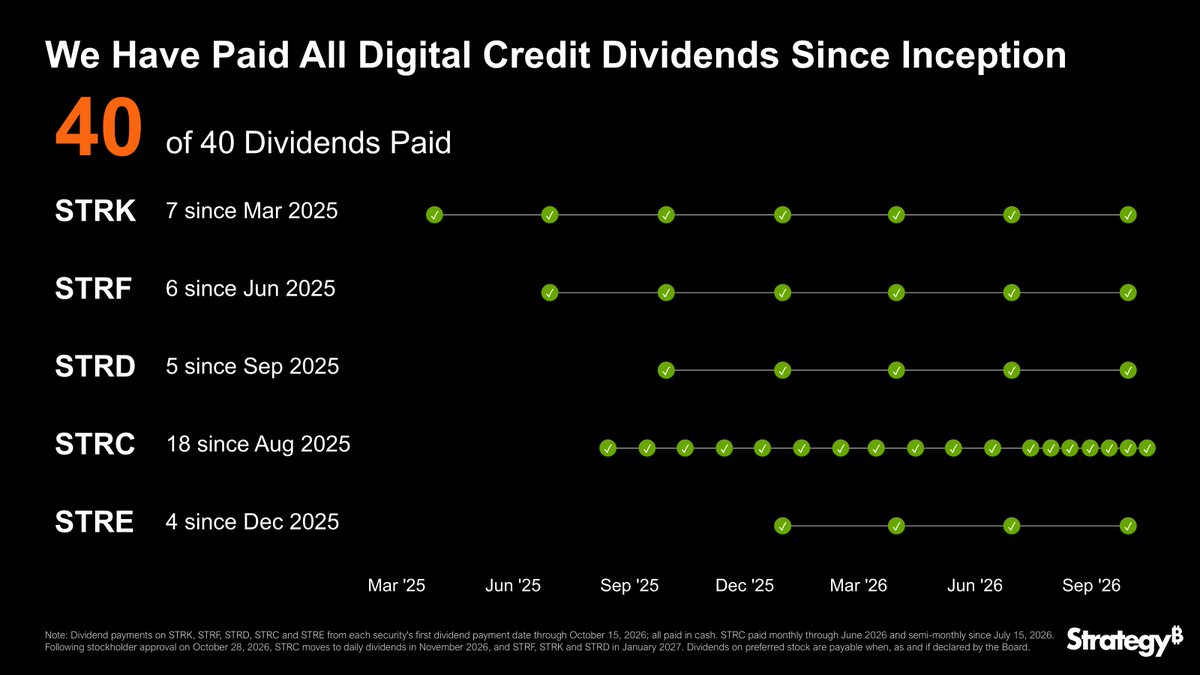
Strategy activated daily dividends on its STRC preferred stock at 12:01 a.m. Eastern Time on Nov. 1, with the first record date falling that day and the first $0.03-per-share payment due Monday, Nov. 2. The company said it has paid every dividend on its Digital Credit securities since issuance.
The change follows an Oct. 28 special shareholder meeting that approved amended certificates of designation. STRC's 12.00% annual rate on its $100 stated amount — $1.00 per share for November — is now split into daily accruals of $0.03 or $0.04, with weekend and holiday amounts bundled to the next business day; the previously declared Nov. 15 semi-monthly dividend will not be paid. STRF, STRK and STRD follow on Jan. 1, 2027. Filings state the amendment does not change any series' dividend rate or Strategy's overall payment obligations.
Alongside the dividend shift, Strategy disclosed it bought 811 BTC for $65.5 million at an average of $80,846 between Oct. 26 and Nov. 1, and repurchased 2,092,035 STRC shares for $208.2 million from USD Cash, cutting that balance to $132.7 million. The company said it holds 849,327 BTC acquired for $64.08 billion.
Chief executive Phong Le cast daily dividends as a step toward a "tokenized, 24/7/365 financial system." Two overhangs remain: MSCI publishes its list of companies affected by its single-asset rule on Nov. 11, and Mizuho kept an Outperform rating and $165 target on MSTR while flagging a 3.7% year-to-date decline in Bitcoin per share.
How this story unfolded
事件🔥Developing
Circle freezes over $1.1 billion in USDC tied to Binance hack
The stablecoin issuer's block on tainted tokens follows Binance's roughly $6.3 billion breach and is central to efforts to recover stolen funds.
Circle confirmed on Nov. 2 that it has frozen more than $1.1 billion in USDC linked to the Binance security incident, up from the more than $800 million its CEO Jeremy Allaire cited on Oct. 30.
The freeze follows Binance's disclosure of a roughly $6.3 billion theft last week. The exchange said the breach may have involved a compromised DevOps engineer's laptop that let an attacker reach a service container and submit unauthorized withdrawals, and that it found no evidence of leaked private keys. Binance said it would absorb losses through its SAFU fund and corporate resources.
After withdrawals resumed on Nov. 1, Binance processed $3.64 billion in net outflows between 6 a.m. and 3:30 p.m. UTC, equal to 2.1% of its $171 billion in total assets. The episode also highlights the issuer-control model behind centralized stablecoins: Circle can blacklist addresses, which aids recovery but concentrates compliance power with the issuer.
Tether reportedly froze about $1.567 billion in USDT, though some reports put the figure at $975.1 million, a discrepancy that has not been resolved. Blockchain analytics firms TRM Labs, Elliptic and Chainalysis attributed the attack to the North Korean group TraderTraitor; Binance and law enforcement have not publicly confirmed that attribution.
How this story unfolded
2026-09-2219 posts · 19 authors
Binance announced a $100M strategic investment in Circle and a five-year commercial agreement to expand USDC access in emerging markets.
Markets
Whale Moves 1.49M SOL to Exchanges in 10 Days, Then Spends $62.97M on 27,553 ETH
On-chain tracker Lookonchain flags heavy SOL deposits to six venues alongside fresh ETH accumulation; exchange inflows are not proof of sales
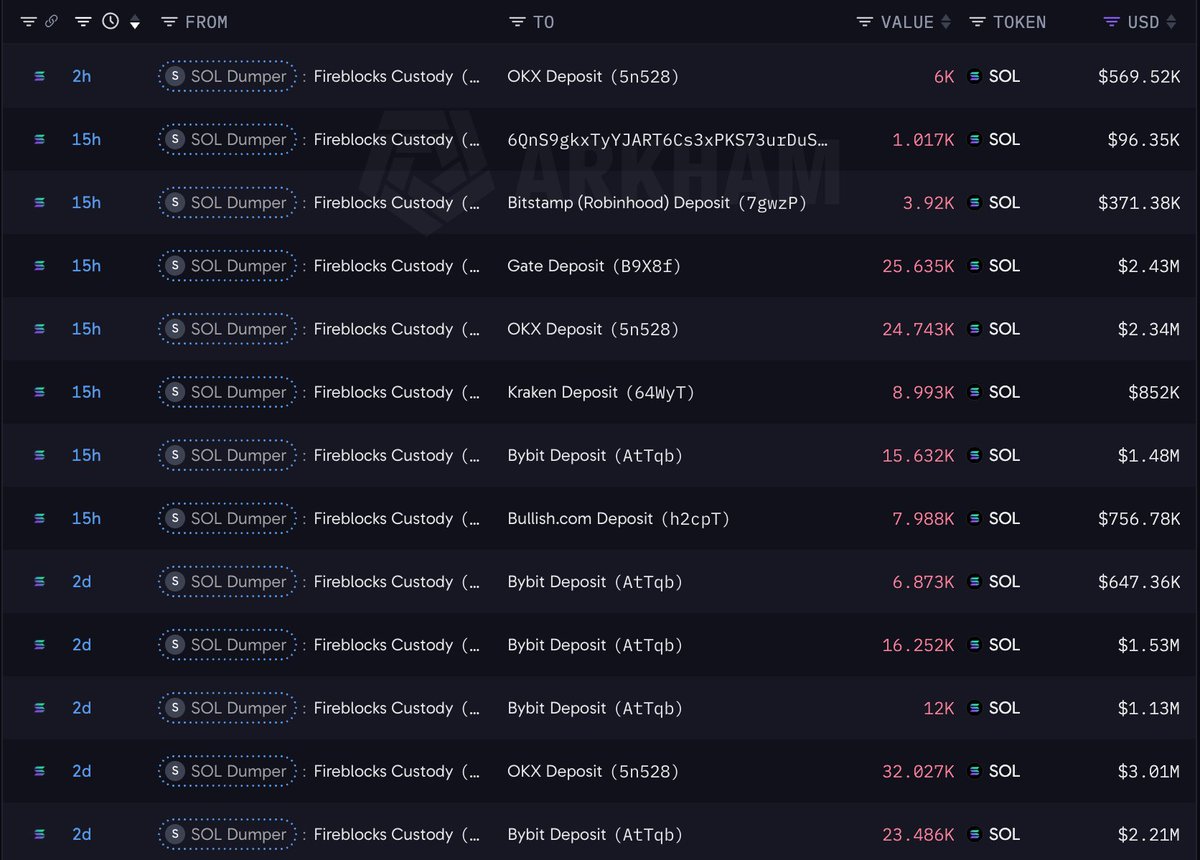
A single whale address deposited 1.49 million SOL, worth about $148.77 million, into multiple exchanges over the past 10 days, according to on-chain tracker Lookonchain. The transfers originated from a Fireblocks custody address and landed on Bybit, OKX, Kraken, Gate, Bitstamp and Bullish, including 32,027 SOL (about $3.01 million) to OKX and 25,635 SOL (about $2.43 million) to Gate.
In a follow-up, Lookonchain said the same whale spent $62.97 million on 27,553 ETH over five hours at an average price of $2,286. A separate address, 0x9EcA, used $37.96 million in USDC to buy 16,658 ETH at an average of $2,279 and was still buying. Deposits to exchanges do not by themselves confirm that a sale has been completed.
SOL has been under pressure: Solana spot ETFs recorded five consecutive trading days of net outflows from Oct 26 to Oct 30 totaling about $71.5 million, per SoSoValue, while cumulative net inflows stand at $1.47 billion and total net assets fell to $1.40 billion. SOL traded near $94.29, down 7.01% over seven days and 20.96% over 30 days.
Coverage differs on the window: one account described roughly $150 million of SOL deposited over two weeks, versus Lookonchain's 10-day, $148.77 million figure. A separate report that Binance moved 2 million SOL from cold to hot wallets describes routine exchange treasury operations, with no evidence linking it to the whale address.
Solana Mobile confirmed that an attacker gained unauthorized access to its dApp publishing portal and altered parts of the dApp Store, including the App Spotlight and Quests interfaces. A third-party submission called "SKR Claim" was promoted in the featured slot for about an hour, asking users to enter their seed phrases before it was taken down.
The company said it fixed a vulnerability that let links reach apps before they were fully published, and is removing the app from devices where it was installed. Solana Mobile reiterated that it will not ask users for seed phrases or crypto assets, and that claiming an airdrop does not require connecting a wallet.
A seed phrase is the master credential for a wallet: anyone who obtains it can import the wallet and drain its assets, with no reversal. The failure sits in the official distribution layer rather than the Solana protocol, so the exposure is limited to Seeker device users rather than SOL holders at the chain level.
For Solana, mobile hardware and its dApp Store are part of its differentiation story, and a compromise of the publishing pipeline undercuts default trust in official channels. The open questions are how completely devices are cleaned and whether the company discloses how many users were affected.
Bernstein and Goldman Sachs are pitching high-bandwidth flash (HBF) as the answer to AI's memory wall: stacked NAND holding model weights and the KV cache, with HBM reserved for the hottest data. Bernstein's October pricing puts HBM at about $20/GB versus $0.30/GB for enterprise flash, a gap of roughly 67 times.
Goldman analyst James Schneider sized the opportunity at $40 billion to $150 billion by 2030, depending on whether HBF reaches 15% or 50% of AI chips, and estimated it could cut inference throughput costs by about 30%, worth several hundred billion dollars in cloud capex savings. Bernstein rates Sandisk Outperform with a $3,000 target and estimates each HBF gigabyte consumes about 6.5 times the wafer of ordinary flash.
The gating factor is Nvidia. The HBF consortium formed under the Open Compute Project in February 2026 and issued its first spec in August, with Sandisk, SK hynix, Google, Tenstorrent and Meta aboard; Nvidia is not, and its Rubin, Rubin Ultra and Feynman parts carry no HBF. Bernstein also flags that HBF cannot be swapped out and suits read-heavy inference only.
On its October 30 earnings call, Sandisk said its first HBF die had taped out with samples due next year, while stating HBF is not included in its long-term financial model. Goldman favors Sandisk, SK hynix and Samsung, and rates Micron Neutral given its DRAM focus.
Morgan Stanley initiated coverage on Coinbase with a $250 price target, implying ~43% upside as the platform expands beyond crypto.
2026-09-143 posts · 3 authors
Morgan Stanley reiterated an Equal Weight rating and $250 target on Coinbase, citing expansion into equities, commodities, and prediction markets; over 200 US firms and groups were referenced in broader discussions.
2026-11-027 posts · 7 authors
Morgan Stanley downgraded Coinbase to Underweight, slashing its price target from $258 to $120 (a 53% cut), citing weaker trading trends and deteriorated confidence in earnings recovery.