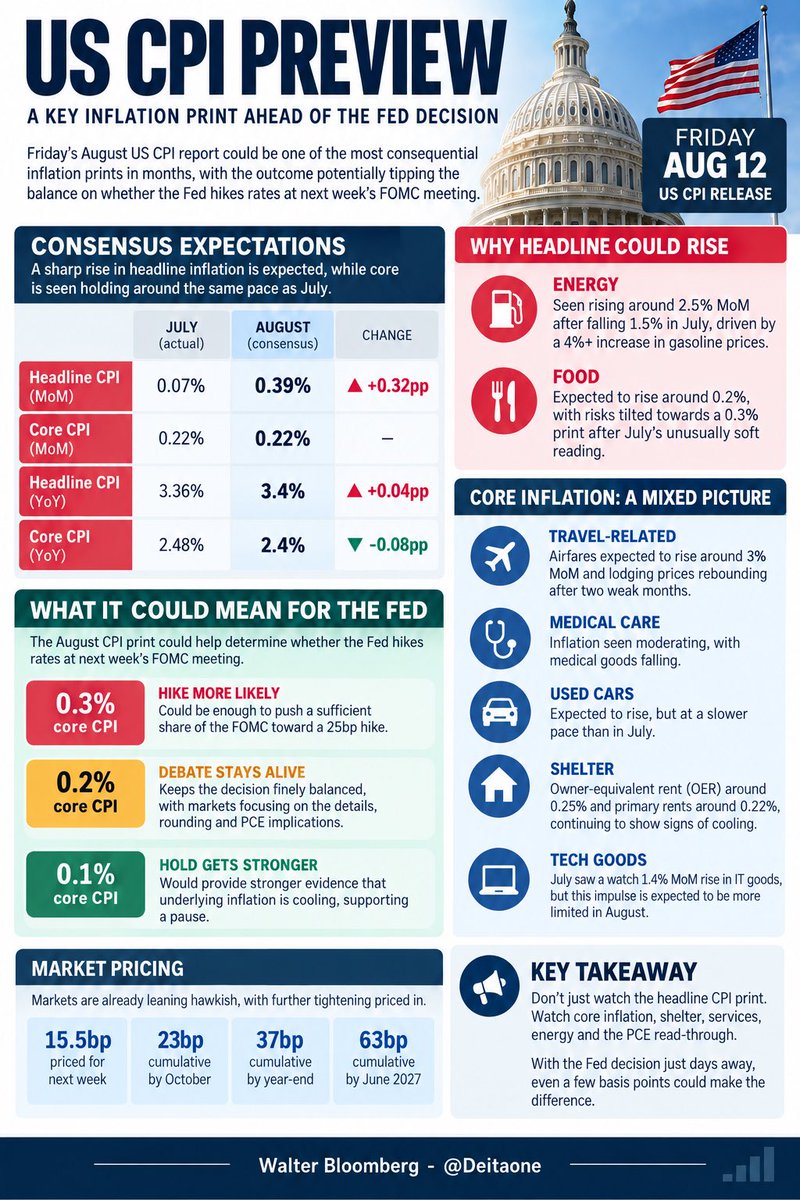
US August consumer prices rose 3.4% year over year, while core CPI increased 2.4%, both in line with expectations. On a monthly basis, headline CPI climbed about 0.4%, and Treasury yields moved higher after the release, according to the X signal and Reuters-linked coverage.
The report matters because it lands just ahead of the Sept. 16 FOMC meeting and helps define whether policymakers still have room to stay patient. With energy prices elevated and services inflation still sticky, traders have been watching for any sign that disinflation is stalling.
In markets, a firmer CPI print can push Treasury yields higher and pressure rate-sensitive equities, especially large-cap growth names and other duration-heavy stocks. The repricing in September hike odds to 79% suggests investors are now placing more weight on policy tightening risk than they were before the release.
The data did not deliver a major upside surprise, but it was enough to keep the hawkish narrative alive. Attention now shifts to fed-funds futures, the two-year yield and any pre-meeting comments from Fed officials that could either reinforce or soften that view.
The U.S. August consumer price index is due tonight, with economists widely expecting headline CPI to rise 0.4% month over month and core CPI to come in between 0.2% and 0.3%. The key market question is whether the core reading rounds to 0.2% or 0.3%, a distinction that could shape expectations for the Federal Reserve’s September 15–16 meeting.
The report matters because it is the last major inflation release before the Fed decision. It comes after a hotter-than-expected August PPI reading, with headline producer prices up 5.4% year over year, while oil prices have moved back above $100 a barrel, keeping inflation pressure firmly in focus.
Markets have already leaned hawkish: rate futures imply roughly a 70% chance of a 25-basis-point hike, while Treasury yields remain elevated. A softer core print would likely ease pressure on bonds and mega-cap growth stocks; a firmer result near 0.3% would reinforce the case for tighter policy and keep volatility elevated across equities and gold.
So far, the debate is centered on the data itself rather than any fresh Fed communication. Traders will be watching the CPI release, then the immediate move in yields, the dollar and major indexes such as the S&P 500 and Nasdaq.
The U.S. Treasury selloff intensified on Sept. 11, with the 10-year yield pushing toward 5.00% and the 30-year yield rising to 5.38%. The move matched market chatter on X and was echoed by multiple news reports tracking the bond rout before fresh CPI data.
The backdrop is a jump in U.S. oil prices above $104 a barrel and an inflation backdrop that has kept traders bidding up odds of a Federal Reserve rate increase next week. Reuters-reported pricing put the chance of a 25-basis-point hike in the roughly 70% to 85% range, depending on the session and source.
Higher yields are tightening financial conditions across markets. They matter most for equity valuations and borrowing costs, which is why rate-sensitive sectors such as megacap tech, levered companies and rate-dependent real estate names tend to react quickly to moves in the 10-year.
The Treasury Department’s latest buyback also failed to calm the market, with only about $5.2 billion of bonds repurchased versus a $6 billion cap. Separate reports said the 10-year touched 4.99% and the 30-year briefly reached 5.424%, both multi-year highs.
Average U.S. 30-year fixed mortgage rates climbed back above 7% on Thursday, hitting 7.07% according to Mortgage News Daily data cited by multiple outlets. CNBC said it was the first move above 7% since May 2025.
The move came as the 10-year Treasury yield rose to about 4.92%, while oil prices advanced and wholesale inflation readings came in firmer than expected. Because mortgage rates tend to track Treasury yields, the jump in bond yields fed directly into home financing costs.
For homebuyers, the impact is immediate: higher rates mean larger monthly principal-and-interest payments and weaker affordability. CNBC said a buyer financing a $430,000 home with 20% down would pay $244 more per month than at the end of February.
Weekly data also showed the average 30-year fixed rate at 6.76% in Freddie Mac’s survey, up from 6.71% a week earlier and the highest since June 2025. The Mortgage Bankers Association said mortgage applications fell 2.7% in the week ended Sept. 4.
The Wall Street Journal, citing U.S. and Middle Eastern officials, reported that Iran has resumed producing ballistic missiles in underground facilities using stockpiled components. The report says Tehran is assembling both liquid-fuel and solid-fuel missiles, though at lower volumes than before the war.
The significance is not the mere existence of missile production, but the fact that Iran appears able to reconstitute part of its arsenal after earlier strikes on missile infrastructure and industrial sites. The report also says damage to chemical plants and solid-fuel inputs is still constraining full restoration.
Markets are watching the geopolitical spillover first through oil. A separate Reuters-style market note in our news library said crude above $105 has weighed on U.S. equities, helping push the Dow, S&P 500 and Nasdaq down 0.4% as traders price in energy inflation and regional supply-risk.
The report has not been matched by an official Iranian confirmation. For now, the key question for traders is whether the news stays a headline risk or turns into a broader repricing of Gulf shipping, insurance and defense-related assets.
NVIDIA and Palantir said at AIPCon 11 that they are deploying a sovereign AI stack inside NVIDIA’s own supply chain. The system combines Nemotron open models with Palantir Foundry, AIP and Ontology to help with materials allocation, constraint detection and decision support.
The update matters because it turns a long-discussed partnership into a concrete operational use case. Public materials say the stack is already being used to improve visibility across NVIDIA’s supply chain and to help planners reduce waiting time for critical components.
For investors, the story supports both tickers for different reasons. NVDA gains another showcase for its AI infrastructure and software ecosystem, while PLTR reinforces its pitch as an enterprise operating layer for sensitive industrial workflows.
The companies also pointed to benchmark data from the deployment: the fine-tuned Nemotron 3.5 Lightning model reportedly reached 86.7% accuracy on a supply-allocation task, versus 55.5% for Nemotron 3 Ultra. That makes the announcement more than branding; it is being presented as a measured workflow improvement.
The company’s latest quarter adds fresh evidence that AI infrastructure bookings are still outrunning supply, keeping investors focused on execution and cash burn.
Oracle reported fiscal Q1 2027 revenue of $19.3 billion and adjusted EPS of $1.92, both ahead of expectations. The company also said remaining performance obligations climbed to $664 billion, underscoring the scale of contracted future demand.
The result extends Oracle’s recent pivot toward AI-driven cloud infrastructure growth. Investors have been watching whether its aggressive buildout can convert large orders into durable revenue without pressuring margins and free cash flow.
ORCL traded higher after the release, while sentiment around AI infrastructure and cloud names improved more broadly. The key market question now is whether Oracle can keep delivering on the backlog while funding the data-center expansion needed to serve it.
Oracle also raised its full-year guidance, which management framed as reflecting continued demand strength. Based on the current reporting, this is primarily a company earnings story rather than a regulatory or M&A event.
Bloomberg, citing people familiar with the matter, said Microsoft plans to lift its global data-center capacity to more than 38 gigawatts by 2032, from roughly 12 gigawatts today. The report also said AI-specific compute would grow from about 2 gigawatts to roughly one-third of total capacity.
The plan extends Microsoft’s broader push to address persistent compute shortages tied to AI demand. Reuters previously reported that the company had walked away from roughly 2 gigawatts of data-center projects in the U.S. and Europe, underscoring how quickly capacity assumptions can change.
For investors, the headline matters because a buildout of this size would likely keep pressure on capex, power access, server supply and chip demand. Microsoft is competing with other hyperscalers, including Amazon and Google, which are also ramping AI infrastructure spending.
Microsoft has not confirmed the 38-gigawatt target in a press release or filing. For now, the figure should be treated as a reported planning goal rather than a project-by-project rollout schedule.
OpenAI has temporarily paused new sign-ups for its $200 ChatGPT Pro plan after demand for Astra, its latest AI capability, overwhelmed capacity. Product lead Thibault Sottiaux said the move is meant to preserve service quality for existing users.
Astra was launched on Sept. 3, and OpenAI had already warned earlier this week that demand was unusually strong. Friday’s step turns that warning into an operational restriction, including on some upgrades into the top-priced tier.
For investors, the key issue is not just product buzz but infrastructure strain: high-intensity AI usage can quickly run into compute limits. The development keeps attention on OpenAI’s ecosystem partners and rivals, including Microsoft and other cloud/AI infrastructure providers.
OpenAI said current Pro subscribers are not affected and that lower-priced plans and the API remain available. The company added that it is working to add capacity as fast as possible, but it has not provided a timeline for reopening the tier.
これまでの経緯
2026-08-01投稿7件 · 投稿者7人
An internal version of OpenAI's Astra model reportedly solved 10 major open problems in mathematics and quantum computing.
The latest shipment update underscores Blackwell ramp-up momentum as investors track whether AI infrastructure demand keeps translating into delivered systems.
Nvidia CEO Jensen Huang said Grace Blackwell shipments increased 27% month over month. The claim surfaced today in a cluster of real-time wire reports and media follow-ups, making it the key new data point in the AI-chip name.financialjuice.com firstsquawk.com
Blackwell sits at the center of Nvidia’s AI data-center push and is being deployed in rack-scale systems for cloud providers and other infrastructure buyers. Nvidia has previously said demand for Blackwell products exceeds supply, so shipment growth remains a closely watched proxy for execution.fool.com
For the market, the update keeps attention on Nvidia itself as well as AI server, liquid-cooling, and power-infrastructure suppliers such as Vertiv. A separate report also cited Huang reiterating roughly 70% revenue growth for the next fiscal year, reinforcing the debate around the durability of AI capex.fool.com
The 27% figure is being widely relayed by wires and trade coverage, but we did not find a directly verifiable Nvidia primary-source page in the available search results that independently confirms the exact number. If Nvidia later provides a fuller official disclosure, that should be treated as the authoritative source.
OpenAI launched ChatGPT for Financial Services on Sept. 10, a finance-specific version of its enterprise product built around GPT-6 Astra. The system comes with native access to data from LSEG News, PitchBook, Daloopa and Crunchbase, and is aimed at investment bankers and equity research teams.openai.com reuters.com
The company said Morgan Stanley and Evercore served as design partners, helping shape features such as source citations, spreadsheet-style analysis and formatted pitchbook output. CNBC reported the tool is meant to handle work historically done by junior bankers, including company research, financial analysis and presentation drafting.cnbc.com
For the market, the launch underscores OpenAI’s push to sell enterprise AI deeper into financial workflows and highlights the role of data providers in that stack. It also points to closer integration with existing subscriptions from vendors such as S&P Capital IQ, FactSet, Bloomberg and Moody’s, although OpenAI said access is limited to eligible financial institutions.fortune.com
OpenAI said customer data is not used to train models by default and that the product includes enterprise security and governance controls. The company also said compliance teams can export logs through its compliance platform for audit and investigation workflows.openai.com
Apple unveiled its first foldable phone, the iPhone Duo, on Sept. 9 with a starting price of $1,999. New market chatter says analysts still see nearly 6 million units sold by year-end, with a potential 25% share of the global foldable market.
That instantly puts Apple into China’s most crowded premium handset battleground. Existing foldable rivals there include Huawei, Xiaomi, Honor, Oppo and Vivo, so the first real test is whether buyers accept Apple’s price premium over domestic alternatives.
There is also fresh supply-chain color around the hinge. A report circulating on X says Taiwan’s Shin Zu Shing is only supplying “golden samples” for the foldable hinge as production remains unstable, underscoring that ramp-up remains a key watch item after the launch.
Apple shares and the broader foldable ecosystem remain the main market focus. For investors, the issue is no longer whether Apple entered foldables, but whether AAPL can turn a $1,999 device into a scalable product rather than a niche premium showcase.
Senate Republicans have circulated an updated version of the CLARITY Act ahead of the chamber’s Sept. 15 procedural vote, according to multiple X posts and trade-press reports. The new draft is said to run roughly 630 pages and includes revisions to DeFi and traditional-finance provisions.
The bill would set the division of oversight between the SEC and CFTC for digital assets, and it needs 60 votes to advance in the Senate. Earlier reporting showed the House passed the measure 294-134 in July 2025 before sending it to the Senate, while current negotiations are still centered on DeFi rules, stablecoin yield language and ethics provisions.
Crypto-linked markets are watching the vote closely because the bill could reshape compliance costs and the U.S. regulatory framework for tokens such as XRP, as well as for listed exchanges that depend on clearer market-structure rules. Benzinga cited prediction-market pricing that put the bill’s odds of passage at about 16%, underscoring how uncertain the vote remains.
Coinbase CEO Brian Armstrong has argued that clearer rules could still emerge even if the bill falls short, while Sen. Cynthia Lummis said the revised text includes more than 100 Democratic changes. Those comments highlight that the latest draft is another negotiating step, not a final deal.
これまでの経緯
2026-07-13投稿20件 · 投稿者17人
President Trump urges the Senate to pass the Clarity Act, citing the late Senator Lindsey Graham as a supporter.
企業動向
米国防総省、フルイドスタックに50億ドルの融資を検討、政府支援のAIインフラ資金調達を試行英語原文
WSJ says the proposed deal is still under discussion and could expand Pentagon credit support into the AI data-center supply chain.
The Wall Street Journal reported, citing people familiar with the matter, that the Pentagon is discussing a roughly $5 billion loan to AI cloud-computing startup Fluidstack through the Department of Defense’s Office of Strategic Capital. Reuters later relayed the report and said the talks remain ongoing, with no announced deal.
If approved, the financing would be aimed at shoring up the U.S. data-center supply chain and manufacturing capacity rather than paying for a single new AI facility outright. The backdrop is a broader U.S. push to treat compute, power and critical infrastructure as national-security assets, with the Office of Strategic Capital already active in deals tied to rare earths and drones.
For markets, the main read-through is to the AI infrastructure ecosystem: data-center builders, power equipment suppliers and cloud-compute vendors could all be watched more closely if public credit enters the funding stack at this scale. Alphabet and Nvidia are not direct parties to the proposed loan, but they remain central names in the broader AI-capex trade.
Neither the Pentagon nor Fluidstack has publicly confirmed the terms, and the report should still be treated as a financing discussion rather than a closed transaction. Key details to watch, if the talks advance, include maturity, collateral, covenant structure and which projects would qualify for proceeds.
Kalshi is planning to seek regulatory approval to launch perpetual futures tied to single stocks, according to a Wall Street Journal report. The names cited in the report include Tesla, Apple and Nvidia, and the move would represent a new step beyond the company’s event-contract roots.
The timing comes just after Kalshi said it had received CFTC approval and launched perpetual futures on gold and silver. That follows earlier progress on crypto perpetuals, underscoring the company’s push to bring a crypto-native trading structure into U.S. regulated markets.
If approved, stock perps would add a new leveraged, non-expiring trading tool for highly traded equities such as TSLA, AAPL and NVDA. The market relevance lies less in immediate price impact than in whether regulators allow a product design that has mostly lived offshore and in crypto venues.
For now, the key fact is that Kalshi is seeking permission, not selling the product yet. Any rollout would still require regulatory clearance and further disclosure on margin, funding and contract mechanics.
AI-first ARR surged more than 150% and operating cash flow set a quarterly record, sharpening focus on monetization as the company lifts full-year targets.
Adobe reported Q3 FY2026 revenue of $6.76 billion, up 13% year over year, with GAAP diluted EPS of $4.62 and adjusted EPS of $6.13. The company also said total ARR ended the quarter at $27.5 billion and operating cash flow reached a quarterly record of $2.52 billion.
The key incremental data point is AI scale. Adobe said AI-first ARR rose more than 150% from a year earlier and monthly active users across its creativity and productivity solutions topped 1 billion, signaling that AI features are increasingly embedded in its subscription ecosystem.
Management raised FY2026 revenue guidance to $26.576 billion-$26.626 billion and adjusted EPS guidance to $24.45-$24.50, while Q4 revenue guidance was set at $6.80 billion-$6.85 billion. The stock will likely stay focused on whether AI adoption can translate into sustained top-line acceleration and higher recurring revenue.
For now, the earnings report strengthens Adobe’s position in the software competition around AI-enabled workflows. Investors are watching whether Acrobat, Creative Cloud and other products can convert usage momentum into durable monetization through subscriptions and enterprise spending.
SpaceX Chief Financial Officer Bret Johnsen said at the Goldman Sachs Communacopia + Technology Conference that the company closed another AI hosting deal earlier this month. The contract is worth about $1.11 billion per month, or roughly $13.3 billion annualized, with billing set to begin on Dec. 1, 2026.
The announcement extends SpaceX’s push to monetize its AI infrastructure buildout. Recent coverage has framed the company’s compute business as a major contributor to its broader goal of reaching a $100 billion annualized revenue run rate, while also noting that many of its compute agreements have short initial terms and exit rights.
For investors, the news matters most for SPCX’s valuation narrative and for AI infrastructure names such as Nvidia, which can benefit from sustained demand for GPUs and related systems. But the deal is not the same as a full-year booked revenue stream; it is an annualized figure based on a contract that has not yet started billing.
SpaceX did not disclose the customer’s identity. The key takeaway from the conference is that the company continues to add large compute commitments, but the durability of those revenues will depend on execution and renewals after the initial contract window.
CNBC, citing people familiar with the matter, said Leopold Aschenbrenner’s Situational Awareness hedge fund has become active again in the options market. The fund is reportedly buying call options of “some significance” in CoreWeave, SanDisk, Bloom Energy and AMD.
The development follows a difficult stretch for the once-hot AI hedge fund. CNBC reported in late July that the firm was forced to unwind all of its public stock positions after steep losses, and subsequent coverage said the fund had been heavily concentrated in AI memory and infrastructure names before that pullback.
The stocks mentioned all sit in different parts of the AI trade. CRWV is tied to AI cloud infrastructure, SNDK and BE are linked to storage and data-center power demand, while AMD remains a major chip rival in the AI accelerator race. The report points to renewed risk-taking in the same thematic basket, though it does not reveal final direction or size beyond the description of the call activity.
There has been no public response from the fund or the companies named in the report. For now, the new information is the reported re-entry into options, while the earlier liquidation remains the key backdrop for interpreting the move.
これまでの経緯
企業動向
Morgan Stanley sees Tesla Semi software revenue at $17 billion on 82,000 trucks英語原文
A new note lifts the autonomous trucking case by pricing Semi software at up to $1.00 per mile, sharpening the valuation debate around Tesla's commercial truck push.
Morgan Stanley said Tesla's Semi could generate about $12,000 to $18,000 a month per truck from autonomous driving software alone, assuming a subscription fee of $0.85 to $1.00 per mile and 18,000 miles driven per month. The firm estimated that 82,000 Semis on the road by 2040 could translate into $17 billion in software revenue and roughly $7.5 billion in incremental EBIT.
The note frames Semi as more than an electric truck project, casting it as a physical-AI and software-subscription opportunity. Morgan Stanley reiterated its Equal-weight rating on Tesla, kept a $400 price target, and lifted its bull-case valuation to $840, saying the Semi opportunity alone could be worth $20 a share.
The view matters for TSLA because it reinforces a new earnings narrative around recurring software revenue, not just vehicle sales. It also puts pressure on traditional freight names such as Knight-Swift, Werner, J.B. Hunt and Schneider National, especially with diesel prices recently near $6 a gallon, which increases the relative appeal of electrified trucking.
Still, the projection is scenario-based rather than a confirmation of current revenue. Tesla's Semi production ramp, along with regulatory and operational hurdles in autonomous trucking, remains the key execution question ahead.
Meta’s new personal AI agent Muse is giving Wall Street a fresh reason to lean in. JPMorgan upgraded Meta to overweight from neutral and raised its price target to $820 from $640, citing signs of progress in consumer-focused AI applications. marketwatch.com
Muse is designed to help users research products, handle tasks and assist with purchases, and Meta says it will initially roll out free to U.S. adults. Fortune reported that the agent can connect to users’ social activity and shopping context, and can complete checkout with final approval through Stripe Link. fortune.com
For investors, the relevance is broader than Meta alone. META is a meaningful holding in ETFs such as XLC, SOCL, FDN and IGPT, so changes in sentiment around Muse can spill over into fund flows and the wider large-cap tech complex. marketwatch.com
Privacy remains the key swing factor. Meta says users can control app connections, disconnect services at any time and opt out of model training, but the product still asks consumers to trust the company with more personal data in exchange for better recommendations. fortune.com
At Goldman Sachs’ Communacopia + Technology Conference, Nvidia CEO Jensen Huang pushed back hard on former Anthropic researcher Jacob Coxon’s warning about AI risks, calling the remarks “deeply untrue” and describing them as wrong and arrogant, according to attendees cited in later reports. This is the newest public development in the dispute.
Coxon’s criticism came after his resignation from Anthropic, where he warned that AI labs are “racing to self-improving superintelligence & gambling with our lives.” Huang countered by leaning on his familiar pro-AI stance, arguing that the industry’s safety work is substantial and that the technology’s economic upside remains intact.
For investors, the debate keeps Nvidia’s demand story in sharp focus. Huang reiterated his view that AI infrastructure spending could reach $3 trillion to $4 trillion by 2030 and that Nvidia can still grow revenue about 70% year over year; reports also said NVDA shares fell about 5.5% over three sessions through Thursday.
The exchange matters beyond rhetoric because Nvidia sits at the center of the AI buildout, supplying chips for data centers and broader AI infrastructure. Any shift in how investors weigh safety concerns versus spending momentum can affect sentiment around NVDA and the wider AI supply chain.
Reuters reported that Silver Lake- and Intel-backed chipmaker Altera is preparing an initial public offering that could raise more than $2 billion, with a confidential filing possible in the coming weeks and a listing potentially as early as this year. The report said Barclays, Citi, JPMorgan and Morgan Stanley have been tapped as underwriters, though the lineup order has not been finalized.
The move follows Altera’s carve-out from Intel. Intel bought Altera for about $16.7 billion in 2015, then sold a 51% stake to Silver Lake last September in a transaction valuing the company at $8.75 billion; Intel kept the remaining 49%.
For investors, the deal is likely to keep Intel (INTC) in focus as the company continues to lean on asset sales and capital raising. It also adds a new test case for the semiconductor IPO market, with Altera’s programmable-chip business serving data centers, telecom networks, industrial equipment and defense systems.
Altera, Barclays, JPMorgan, Morgan Stanley and Silver Lake declined to comment, while Citi and Intel did not immediately respond, Reuters said. The timing, size and terms of any offering could still change.
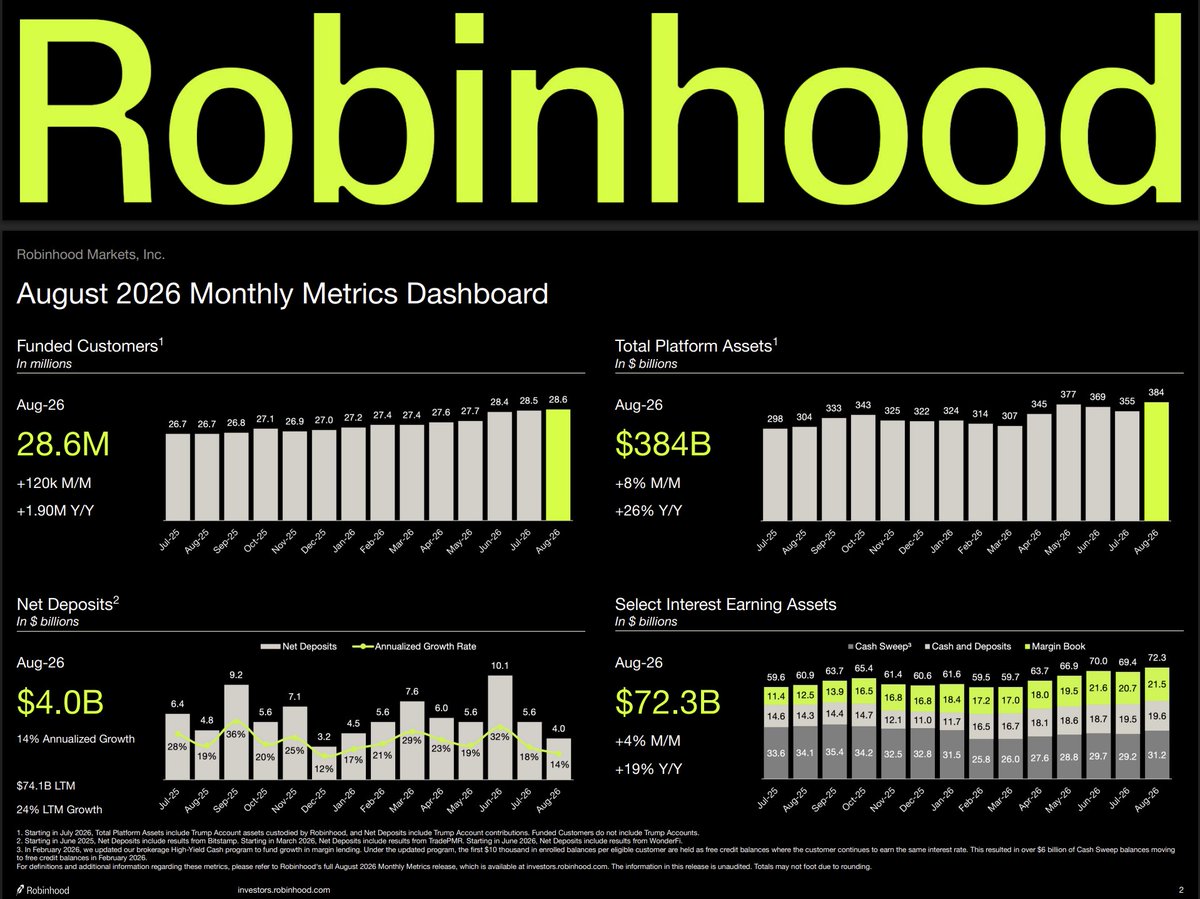
Robinhood on September 10 reported August operating data showing 28.6 million funded customers and $384 billion in total platform assets. Net deposits came in at $4.0 billion for the month, while the company said its 12-month net deposit growth rate was 24%.
The update extends a strong run for the brokerage platform. Robinhood’s July metrics had already shown $355 billion in total platform assets and 28.4 million funded customers, suggesting August added another step up in scale.
For markets, the data matter most for HOOD and for sentiment around Robinhood’s newer revenue engines, including event contracts, options and crypto trading. Recent reporting also said Robinhood routed select football event contracts through a Crypto.com-linked regulated venue, underscoring how prediction markets remain part of the growth story.
Robinhood’s August disclosure is a monthly business update rather than new guidance. Separate reports cited about $17.5 billion in crypto trading volume and $4.7 billion in event-contract trading volume in August, reinforcing the pace of activity across its non-stock products.
Uber CEO Dara Khosrowshahi bought 141,000 shares of Uber common stock on Sept. 10 at a weighted-average price of $70.9642, spending about $10.0 million. After the transaction, his direct holdings rose to 1,367,100 shares.
The filing, disclosed today, is the latest incremental development in a broader insider and sentiment story around Uber. Multiple reports say it is his first open-market purchase of Uber shares since May 2022.
The move comes as Uber has been expanding its autonomous-vehicle partnerships and European footprint, including Spain’s first national permit for testing WeRide autonomous vehicles on public roads. With the stock still below its earlier peak, investors are likely to focus on UBER rather than LYFT as the main market reaction point.
This is primarily a UBER-specific catalyst driven by management ownership changes, not a fundamental update on Lyft or the wider ride-hailing group.
Micron said on Sept. 11 that its direct labor employees in Taiwan will receive total fiscal 2026 rewards equal to 35 to 68 months of pay, with a minimum cash compensation of NT$1.7 million. The company also said Taiwan employees who joined before Aug. 29, 2025, will receive an NT$1 million cash bonus.
The announcement comes after unions representing roughly two-thirds of Micron’s Taiwan workforce signaled support for a strike. Reuters reported that Micron has about 15,000 employees in Taiwan, underscoring the island’s role as a key manufacturing hub for the memory-chip maker.
For investors, the news keeps Micron MU in focus as AI-driven memory demand boosts profits and raises pressure for a bigger employee share. The package also sits alongside a broader industry debate, with peers such as Samsung Electronics, SK Hynix and TSMC facing similar calls for profit-sharing.
Micron described the payout as part of a record fiscal-year reward package, while media reports differed on the exact cash phrasing used in English and Chinese local translations. The confirmed common thread is a newly announced Taiwan compensation plan with cash and equity components tied to an extraordinary year.
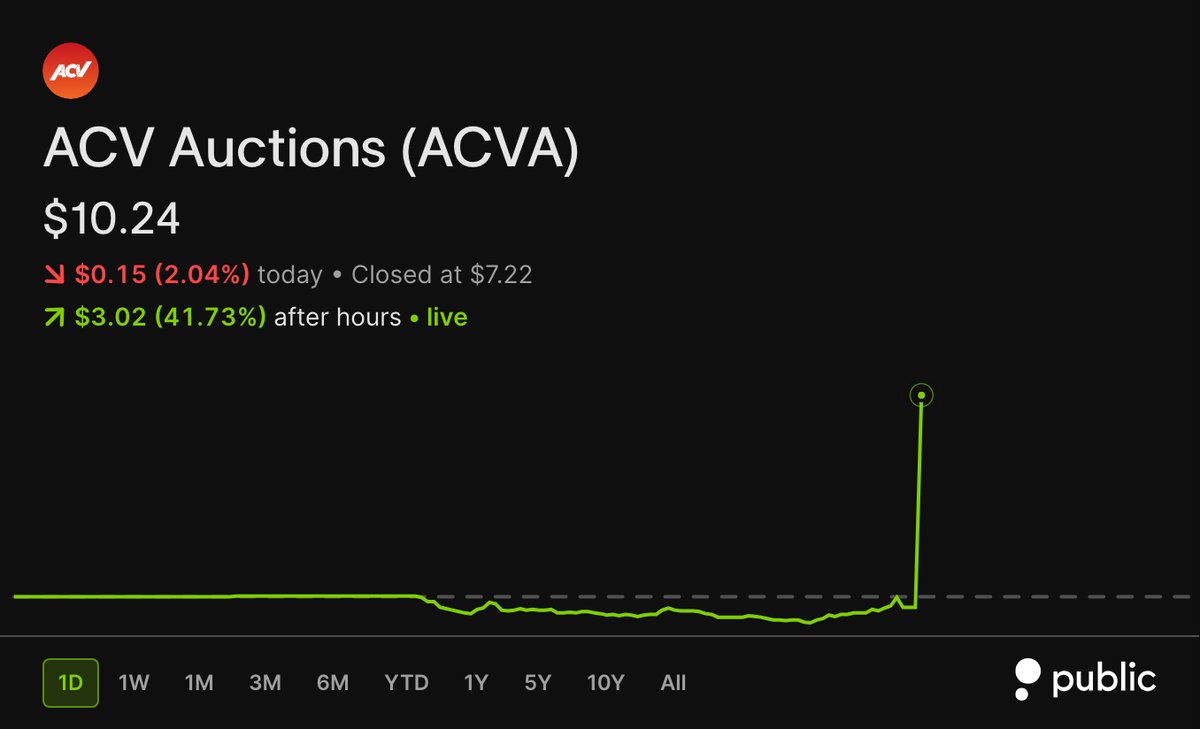
ACV Auctions said in an 8-K filing on Sept. 10 that it entered into a merger agreement with Copart. Under the deal, Copart will launch an all-cash tender offer at $10.50 per share for all outstanding ACV stock, followed by a merger at the same price.
Reuters and Bloomberg both said the transaction values ACV at roughly $1.9 billion, or close to $2 billion in equity value. ACV also said the offer price represents about a 45% premium to its Aug. 10 close, and Copart said the deal is not subject to a financing condition.
ACVA shares jumped more than 40% after the announcement, highlighting how investors repriced the company around the takeover premium. For Copart, the acquisition extends its vehicle auction franchise into dealer-to-dealer wholesale remarketing and broadens its reach in the vehicle lifecycle.
The transaction still requires standard closing conditions, including a majority tender, HSR clearance and the absence of any blocking injunction. Both boards approved the deal unanimously, and Copart said it expects to close by year-end 2026.
Copart reported fourth-quarter fiscal 2026 revenue of $1.152 billion, above the consensus estimate of $1.144 billion, but adjusted EPS came in at $0.35 versus expectations of $0.38. The results were released after the close on Sept. 10.businesswire.com
The company has long been known for its salvage-vehicle auction network and for expanding its platform and international footprint. Recent coverage also highlighted Copart’s proposed $1.9 billion acquisition of ACV Auctions, a move aimed at widening its used-vehicle marketplace reach and data capabilities.zacks.com
Market reaction leaned positive despite the earnings miss, with reports citing a 16.91% move higher in after-hours trading. Investors appear to be focusing on the strategic rationale of the ACV deal and on whether scale can offset the quarter’s earnings shortfall.businesswire.com
Copart has not publicly contradicted the basic details of the earnings release or the reported acquisition framing; the next key questions are execution, integration, and valuation.
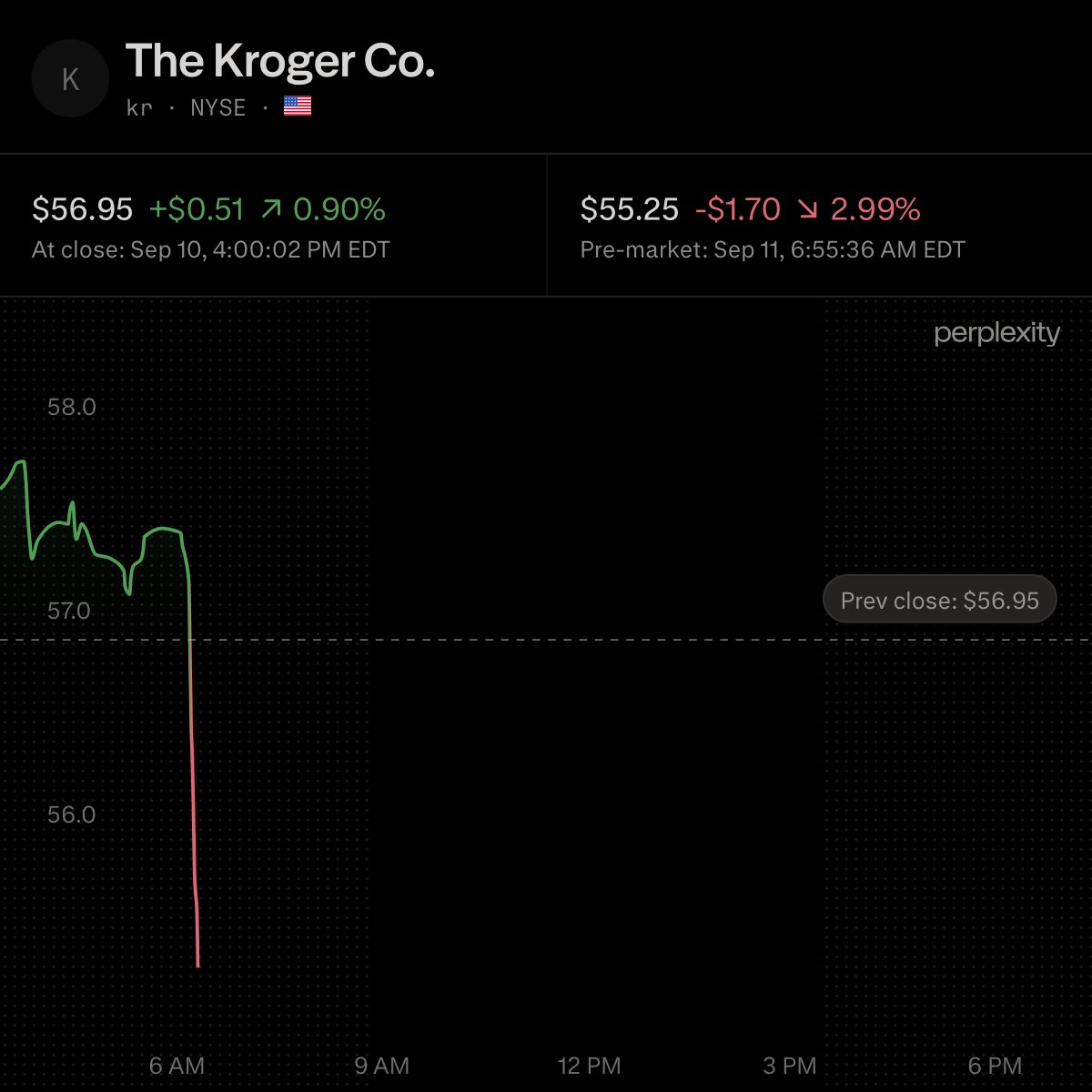
Kroger reported fiscal Q2 adjusted earnings per share of $1.09, topping the Street’s $1.05 estimate, while revenue came in at $34.6 billion and was broadly in line with expectations. The company also cut its full-year identical sales ex-fuel outlook to 0.2% to 0.8% from 1% to 2%.
The sales downgrade comes against a backdrop of cautious U.S. consumer spending. Reuters said the lower forecast underscores softer demand even in everyday essentials, while Kroger said inflation and selective shopping behavior are still weighing on performance.
Shares of KR softened in premarket trading as investors looked past the EPS beat and focused on the weaker sales trajectory. The market’s attention is now on whether the revised comp-sales outlook will affect sentiment around the stock and the company’s near-term growth narrative.
Kroger left its full-year adjusted EPS guidance at $5.10 to $5.30 and guided capital spending to $3.8 billion-$4.03 billion. Management said it will continue using pricing, promotions and supply-chain efficiency to support margins.
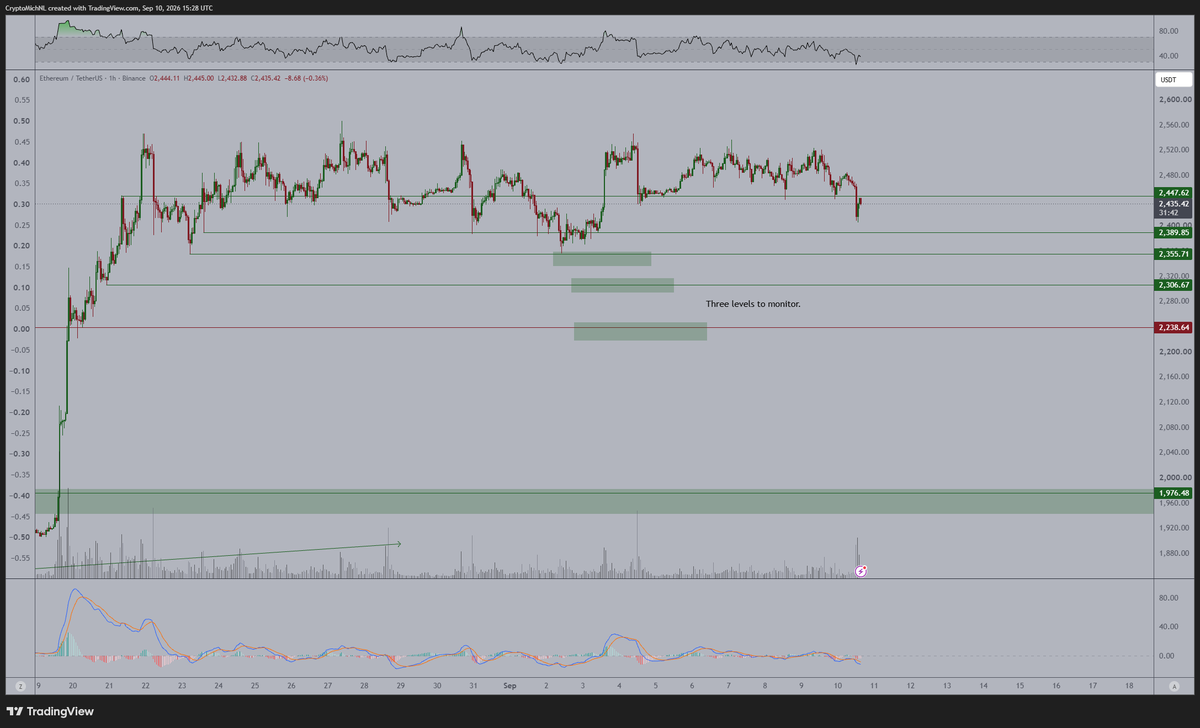
On X, several traders and chart-watchers highlighted a fresh relative-strength bid in Ether versus Bitcoin. The recurring signals were an improving ETH/BTC chart, a successful defense of the $2,400 area, and a daily Bollinger Band squeeze in ETH dominance that some said is resolving higher.
The backdrop matters because Ether has already shown resilience through recent macro-driven volatility. Separate market coverage said ETH briefly dipped to around $2,400 before rebounding, while technical analysis cited a recent peak near $2,564 and described the setup as a bull-flag-like consolidation with $2,350-$2,360 as the key support zone.
That has implications for ETF flows, derivatives, and crypto beta plays tied to Ether. Bitget said ETH’s long/short ratio has climbed to 2.6179, a sign of crowded longs, while spot Ethereum ETFs have continued to see sizable daily inflows in some sessions, suggesting institutional demand has not disappeared.
For now, today’s fresh signal is less about a new catalyst than a continued shift in relative strength toward ETH. The risk is that crowded positioning can amplify both upside and sudden liquidation moves if price fails to hold the important support band repeatedly referenced by traders and analysts.
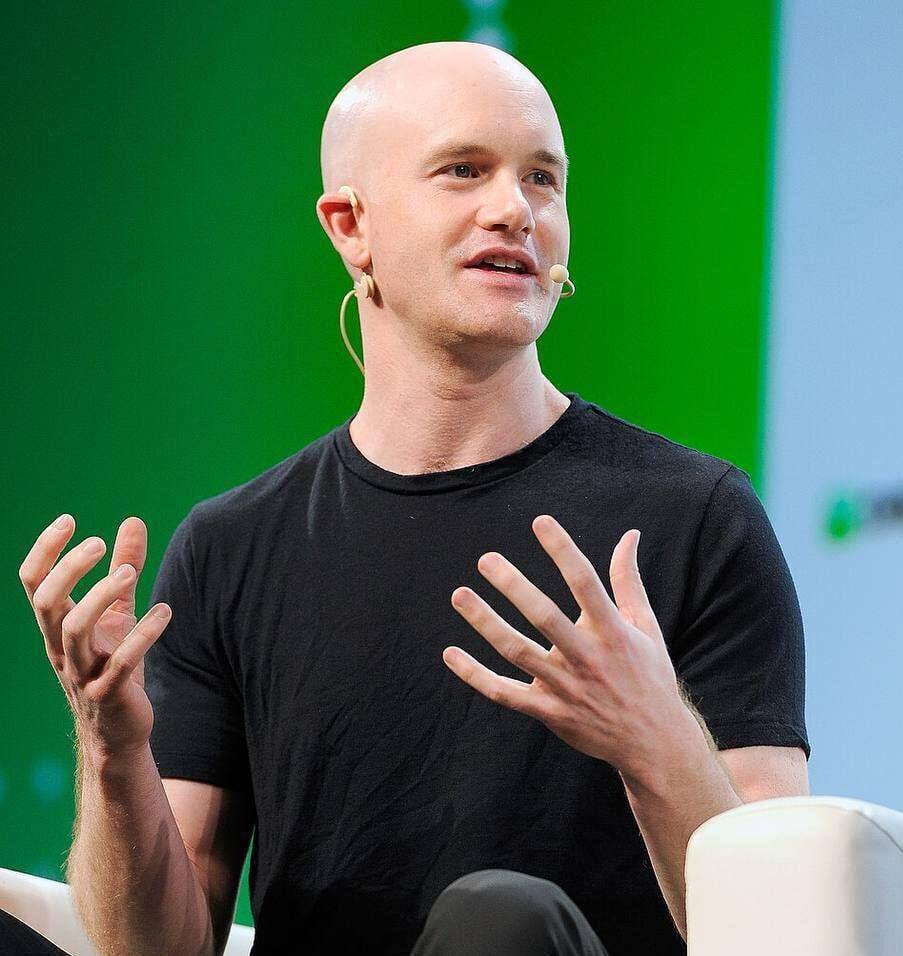
Coinbase CEO Brian Armstrong told CNBC that $400,000 Bitcoin by 2030 remains a “reasonable target,” and said he believes the current cycle has already bottomed. Multiple reports also said he expects Bitcoin to trend higher over the next one to two years.
His comments revive the market’s focus on Bitcoin’s four-year cycle and on Washington’s next move on crypto legislation. Armstrong said the Senate vote on the CLARITY Act, scheduled for Sept. 15, looks likely to pass, while regulatory clarity could still come through the SEC and CFTC even if the bill stalls.
For Coinbase, clearer rules would matter across trading, custody and future businesses such as tokenized equities and perpetual futures. The stock often trades alongside shifts in Bitcoin sentiment and U.S. policy expectations.
Armstrong’s price call should be read as a view, not a factual forecast, while Bitcoin was trading around $77,000 to $78,000 at the time of the interview.
Hunter Biden said in a video posted to X that his $LAPTOP memecoin briefly jumped from $2.39 to $316 a token in the opening seconds, implying a peak market value of about $316 billion. The token then lost most of that value in a rapid reversal that left traders and analysts parsing what happened on launch day.
The project has denied allegations of a rug pull, saying the team’s tokens remain locked and that Biden did not personally profit. Reporting from Cointelegraph and CoinMarketCap says the team blamed insufficient liquidity and sniper bots, while also pointing to plans to add liquidity incentives and burn part of the supply.
Cross-checks show that headline numbers vary by source and timestamp: TheStreet cited Biden’s $316 billion figure, while other outlets reported a peak around $110 billion or even lower intraday valuation snapshots. The common thread is the same: LAPTOP saw extraordinary first-day volatility, with thin liquidity and fast traders amplifying the move.
The episode has drawn attention to LAPTOP itself and to the mechanics of meme-coin launches, rather than to any listed equity. The key issue now is whether the project can deepen liquidity enough to avoid another violent price dislocation, and whether on-chain data supports its explanation for the crash.
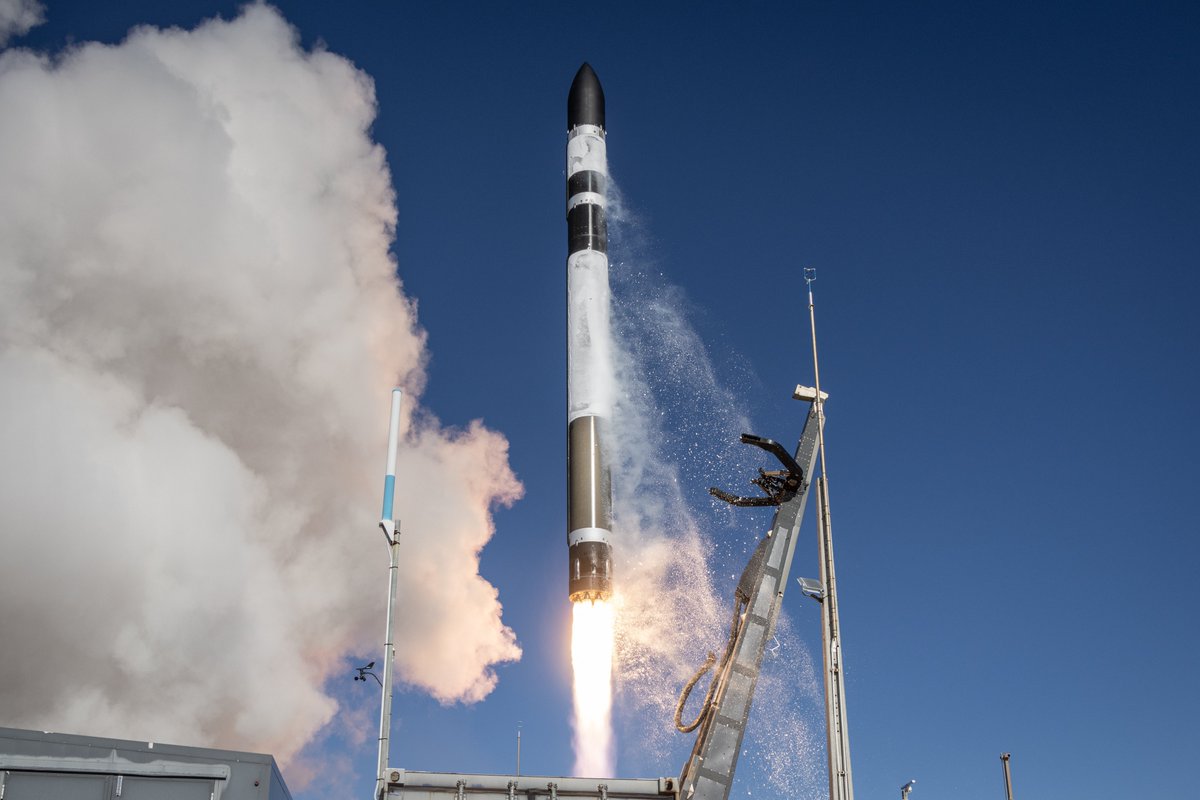
Rocket Lab said on September 11 that it completed its 16th Electron launch of 2026 and its 95th Electron mission overall. The mission lifted off from Launch Complex 1 in New Zealand at 3:28 p.m. NZST and deployed a single Earth observation satellite for a confidential customer.
The update matters because Electron remains the company’s flagship small-launch vehicle, and launch cadence is a key measure of operational execution. Rocket Lab also said another Electron mission is scheduled before the end of the month, keeping attention on its ability to sustain a high-frequency flight rate.
For investors, the launch record keeps the focus on RKLB’s ability to turn launch volume into recurring revenue and broader space-systems growth. The stock is also being watched for progress on Neutron, Rocket Lab’s next larger rocket, which sits alongside Electron in the company’s long-term commercialization story.
Rocket Lab did not disclose the customer for the latest flight. Public statements confirm the mission was successful and that the company has now logged 95 Electron missions in total, leaving it five flights shy of the 100-mission mark.
これまでの経緯
2026-07-14投稿8件 · 投稿者7人
Rocket Lab completed a full-duration burn of the Archimedes second stage engine, while markets reacted to Trump's announcement of a 20% fee on cargo through the Strait of Hormuz.
企業動向
Skild AI hits $100 million run rate in 10 months, with 60+ customers and hundreds of robots deployed英語原文
The milestone underscores how physical AI is moving from demos to paid deployments, with Nvidia-linked infrastructure and product launches adding context
Skild AI said on Sept. 10 that it has reached a $100 million annual recurring revenue run rate, about 10 months after it began commercial deployments. The company also said its general-purpose robot “brain” is now running on hundreds of robots across more than 60 companies.
The announcement lands alongside fresh product and partnership context. Nvidia said Skild’s new S1 model can learn previously unseen, long-horizon tasks from a single video demonstration, while Skild has also described work with Nvidia and Foxconn on industrial robot deployments.
For public markets, the significance sits mostly in the robotics and AI infrastructure narrative rather than a direct hardware read-through. Nvidia remains one of the key names linked to the ecosystem, using Skild’s progress to highlight its physical AI platform and deployment stack.
Still, the public disclosures do not include customer names or contract values, so the quality of the revenue is not fully visible yet. Bloomberg and Nvidia both referenced the $100 million run rate and the 60-plus deployment count, but neither detailed how much revenue comes from pilots versus recurring production use.
MSA Safety is getting fresh visibility around the 25th anniversary of 9/11. On Sept. 11, the NYSE highlighted the company in a commemorative event, while a new aviation-maintenance product launch was reported a day earlier.
The timing matters because 9/11 remembrance often puts safety, security and emergency-response companies back in the public eye. MSA Safety’s business spans personal protective equipment and industrial safety, and its recent A1X WinGrip vacuum anchor launch ties into aircraft maintenance use cases.
For investors, the immediate effect is mainly attention rather than a new financial disclosure. MSA is the only core ticker in this signal, and any market impact would likely depend on follow-up details such as customer adoption, orders or management commentary.
At this stage, there is no new earnings guidance or hard financial update in the signal. The verified fresh items are the Sept. 10 A1X launch and the Sept. 11 NYSE commemorative appearance.
The UK posted a goods trade deficit of £20.965bn in July, narrower than June’s £23.007bn and better than the £22.4bn market forecast, according to the Office for National Statistics. Excluding precious metals, the visible goods balance was a £21.427bn deficit, compared with a £21.045bn deficit previously.
ONS said goods imports rose £1.3bn to £55.3bn in July, while goods exports increased £0.9bn to £33.9bn. The improvement came largely from a rise in exports to both the EU and non-EU countries, even as non-EU imports climbed and EU imports slipped.
The release matters for views on UK net trade, the current account and near-term GDP revisions, though month-to-month trade data can be volatile. ONS also noted that precious metals can distort the underlying trend, so investors usually focus on the broader run rate rather than one monthly print.
For markets, the data can feed sterling sentiment and move UK rates expectations at the margin, but the reaction is often modest unless it meaningfully shifts the growth picture. The key takeaway is that July’s trade gap improved, but it remains sizable by historical standards.
New Zealand's BusinessNZ-BNZ manufacturing PMI came in at 53.1 for August, down from 54.3 in July but still above the 50 expansion threshold and the survey's long-run average of 52.5. The release said the sector has now expanded for 14 consecutive months.
Within the survey, new orders rose to 54.9, production was 54.2 and employment held at 50.0. The government release said food and beverage, textiles and clothing, and non-metallic mineral products all moved back into growth, while all four regions expanded for the first time since March.
The print matters for the New Zealand dollar and local rate expectations because PMI is a high-frequency gauge of factory activity, orders and hiring. Traders often read it alongside services and quarterly activity data to judge whether momentum is broadening or just volatile month to month.
Both the official release and market wires matched on the key number, 53.1 versus 54.3 previously. The main difference was emphasis: the official note highlighted broader-based growth, while market commentary focused on the slowdown from July.
The S&P 500 fell for a fourth straight session on Thursday, its first such streak since June. SPY also slipped below its 50-day moving average, while the equal-weight ETF RSP continued to lag the cap-weighted index.
The move comes just ahead of the August U.S. CPI report, with oil prices and Treasury yields having climbed recently and sharpened sensitivity to inflation and Federal Reserve policy. Reuters reported Thursday's close at 7,591.75 for the S&P 500, down 0.58%, while the Nasdaq lost 0.65% and the Dow fell 0.60%; Brent briefly traded above $107 a barrel.
Breadth has also weakened. Traders on X flagged that 64% of S&P 500 components are already below their 50-day lines, while industrials ETF XLI was said to have broken below its 200-day average and small caps in IWM were testing an important swing low. Those shifts matter because they suggest weakness is no longer confined to a few mega-cap names.
For now, the immediate focus remains the CPI print and the Fed's upcoming policy meeting. The latest posts are best read as an update on technical damage and internal market structure, not a company-specific development.
Rocket Lab won a $266 million U.S. Air Force contract for launches in Alaska, while Tesla Diner introduced a hotdog served in a Starship rocket box.
2026-08-10投稿25件 · 投稿者21人
Rocket Lab was highlighted among the most anticipated earnings releases this week, with media coverage focusing on Peter Beck's profile and the critical importance of Neutron's success.
2026-08-11投稿96件 · 投稿者48人
Rocket Lab unveiled GHOST, a deployable launch site concept, and reported a record Q2 2026 quarter, with the earnings call held the same day.
2026-09-10投稿5件 · 投稿者5人
The Rocket Lab community showed strong engagement, with an intrinsic valuation model released, while the company introduced a new solar panel technology for satellites.
2026-09-11投稿14件 · 投稿者11人
Rocket Lab launched its 95th Electron mission successfully, and Raymond James initiated coverage with an Outperform rating and an $80 price target.