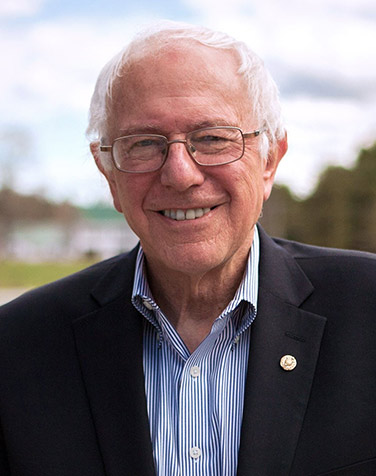
Sen. Bernie Sanders and Rep. Greg Casar on Sept. 3 unveiled the Ban Artificial Superintelligence Act, a proposal that would permanently outlaw the development and deployment of “artificial superintelligence” while temporarily pausing advanced AI development until a new federal regulator sets safety rules. The draft also includes penalties of up to 20 years in prison for violations and a possible “corporate death penalty” for companies.
The latest detail is the more complete policy architecture released by Sanders’ office: the bill is aimed not only at systems that exceed human intelligence, but also at models that could overthrow governments or subvert shutdown commands. Reporting from multiple outlets said the full text has not yet been released, but the legislation clearly centers on frontier-model training, testing, deployment and international coordination.
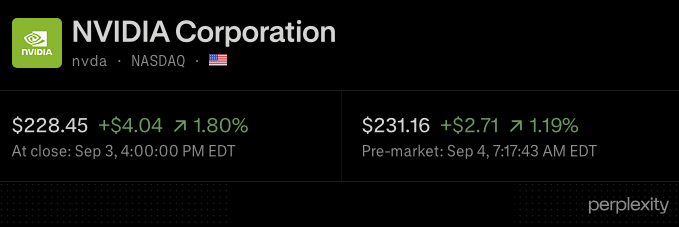
For markets, any move toward this kind of legislation would primarily hit companies building or enabling frontier AI, including compute providers, cloud platforms and model developers. Nvidia is not a direct target of the bill, but as the key GPU supplier in the AI build-out, investors would likely reassess demand assumptions if Washington tightens the rules around advanced AI development.
Sanders and Casar say the measure is designed to prevent AI systems that humans cannot control and to push allied countries toward common standards. Because the bill is still only a proposal, the next focus is whether it gets committee consideration and how broad any exemptions or enforcement carve-outs might become.
The U.S. Labor Department reported on Sept. 4 that nonfarm payrolls rose by 162,000 in August, far above market expectations of about 55,000 to 56,000. The unemployment rate held at 4.1%, while average hourly earnings increased 0.3% on the month and 3.1% from a year earlier.
The report marks a sharp rebound after July’s 23,000 decline in payrolls. Reuters had surveyed economists expecting a much softer 56,000 gain, and Trading Economics showed the same consensus; CNBC also reported the 162,000 increase and unchanged jobless rate.
For markets, the stronger-than-expected print shifts attention toward inflation, wage trends and whether the Federal Reserve keeps rates steady later this month. Treasury yields, the dollar and rate-sensitive equities may all react as investors reassess the balance between labor-market resilience and policy easing odds.
The report also showed 127,000 private-sector jobs added and 35,000 government jobs gained. Labor-force participation was 61.6%, slightly above the 61.5% consensus, reinforcing the view that the labor market remains firmer than many forecasters had anticipated.
The U.S. economy added 162,000 nonfarm payrolls in August, far above the 55,000 consensus, while the unemployment rate held steady at 4.1%. Average hourly earnings rose 0.3% month over month and 3.1% year over year, with the workweek edging up to 34.4 hours.
That is a notable upside surprise versus the pre-report backdrop, where economists had expected only a modest rebound after July’s downwardly revised 23,000-job decline. Trading Economics had flagged a consensus estimate of 56,000 jobs, and preview coverage highlighted a labor market that had been cooling but still stable.tradingeconomics.com ebc.com
For markets, the stronger print tends to push Treasury yields and the dollar higher while pressuring rate-sensitive equities, including parts of technology and other long-duration assets. Investors will now focus on whether the report changes expectations for the Fed’s September meeting and on upcoming inflation data.
The wire also showed private payrolls rising 127,000, government payrolls up 35,000 and labor-force participation at 61.6%, underscoring a labor market that remains firmer than many had anticipated. The next key test will be whether the strong headline is confirmed by revisions and followed by softer inflation readings.
Nvidia has agreed to acquire Hugging Face for $12.9303 billion. The company said the first six digits of the purchase price map to Unicode code point U+1F917, the 🤗 emoji, making the deal price a built-in Easter egg.
The transaction was first reported on Sept. 3 and subsequently confirmed by both companies. In its announcement, Nvidia said Hugging Face will remain an open platform for the broader AI ecosystem, with developers still free to choose models, frameworks, clouds and inference providers.
The deal has drawn investor attention because it pushes Nvidia further into the AI software stack and deeper into the open-model ecosystem. Needham reiterated a Buy rating on NVDA and kept a $300 price target, while framing the move as consistent with Nvidia’s plan to keep Hugging Face hardware-agnostic.
Hugging Face said its founders initiated talks with Nvidia over the summer and that the process moved quickly. Nvidia said the platform serves more than 18 million developers, hosts over 3 million models and 500,000 datasets, and will continue supporting open-source and open-weight models after the acquisition closes.
Tesla has begun offering Cybercab rides in limited areas of Austin, Texas, according to reports tied to the company’s Thursday launch event. The two-seat vehicle has no steering wheel or pedals, and customers can book rides through Tesla’s Robotaxi app.
The Cybercab was first unveiled in October 2024, and Tesla has been teasing the rollout on X in the days leading up to the launch. Publicly shared guide materials also disclose specs such as 20.2 cubic feet of rear cargo space and a 16.5-inch step-in height.
For TSLA investors, the key question is whether the robotaxi project is moving from demo mode to a repeatable commercial service. Reports say Tesla had 45 Cybercabs registered in Texas, a number that will be watched closely as the company tries to expand driverless operations.
That said, the launch appears to be geographically limited, and state rules still require human supervision for some vehicles. The early rollout adds a concrete operating signal to Tesla’s autonomous-ride narrative, but it does not yet establish a broad citywide service.
사건 전개
2026-07-16게시물 3개 · 작성자 3명
Investors focused on Optimus Gen 3 production status, ~$2,500 quarterly pre-tax profit per Cybercab, and a 300-500 Cybercab trigger point.
기업🔥진행 중
Tesla launches Cybercab rides in Austin; TSLA jumps 5.4% to $376.37영어 원문
The wheel-free robotaxi has moved from tease to limited service, putting Tesla’s autonomy push and regulators back in focus.
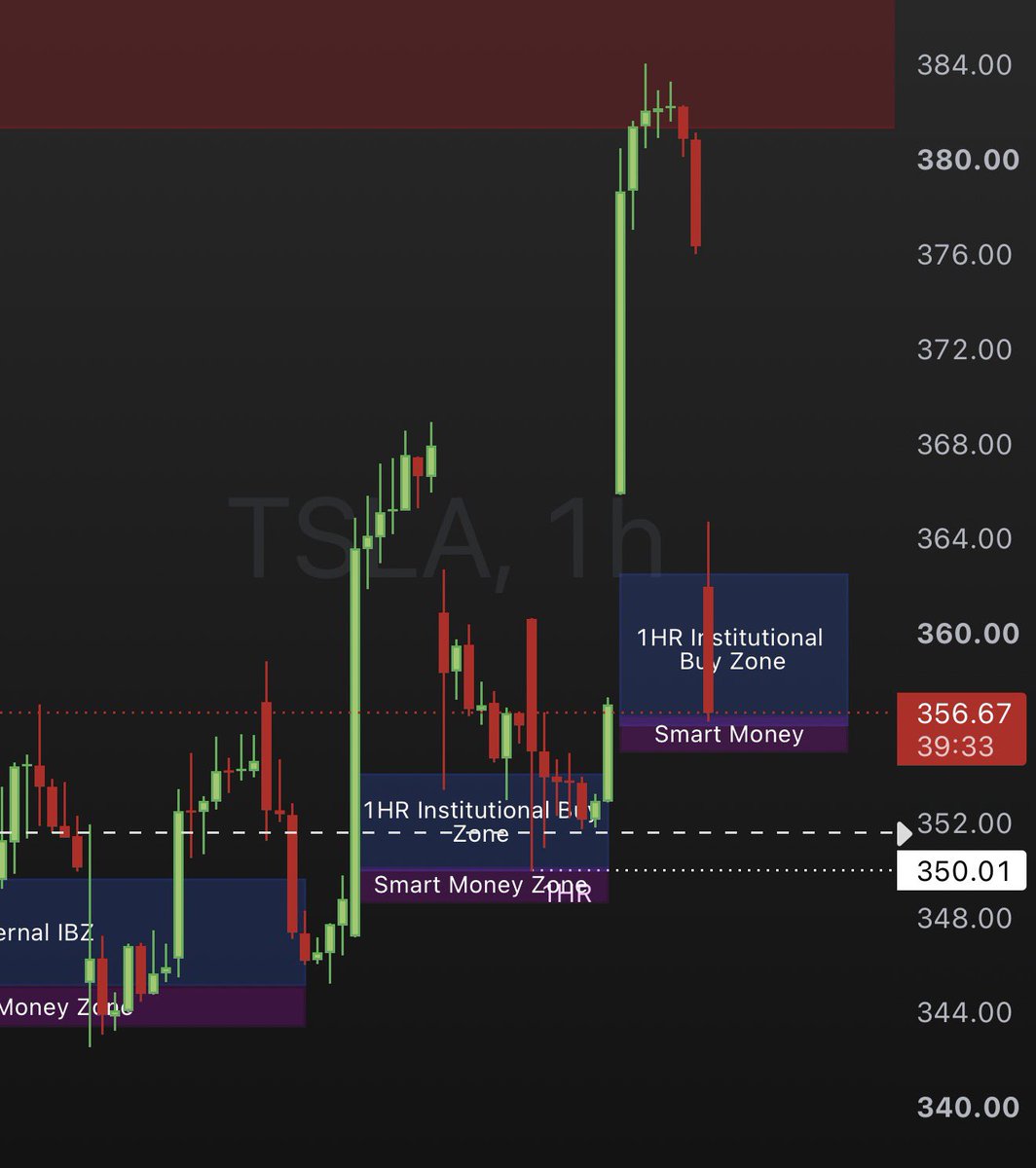
Tesla has started offering Cybercab rides in limited parts of Austin, and TSLA closed Thursday up 5.4% at $376.37. The company’s website says customers can hail the vehicle through its robotaxi app, while some trips may be assigned to a Model Y depending on availability.
The move builds on Tesla’s long-running robotaxi pitch that accelerated after last year’s “We, Robot” event. CNBC reported that Tesla teased the rollout on Sept. 3 with a post highlighting the car’s “no steering wheel, no pedals” design, and separate reporting said roughly 45 Cybercabs had been registered in Texas, underscoring the rollout’s small scale.
Investors treated the launch as another proof point for Tesla’s autonomy story, helping drive shares and option activity. But the National Highway Traffic Safety Administration said it is in contact with Tesla and is evaluating the rollout, a reminder that the vehicle’s wheel-free design sits uneasily with existing safety rules.
Tesla has not publicly detailed a broader deployment schedule. For now, Cybercab has crossed from concept into limited operation, but the bigger test will be whether it can scale under a workable regulatory framework and deliver reliable service.
Bloomberg reported on Sept. 4 that DeepSeek plans to deploy at least 160,000 Huawei Ascend 950DT chips at a new data center in Inner Mongolia, according to people familiar with the matter. The move would build one of the largest known Chinese AI-accelerator clusters.
The report follows Bloomberg’s July 30 story that DeepSeek was aiming for 1 gigawatt of compute in Ulanqab, with a mix of self-built capacity and leased power. Earlier reporting also indicated DeepSeek’s training workloads still rely mainly on Nvidia chips, while Huawei chips are more geared toward inference.
If carried out, the project would be a notable sign of China’s push to localize AI infrastructure at scale. For markets, the main watchpoints are Nvidia’s exposure to Chinese high-end GPU demand and Huawei’s ability to supply and support a much larger domestic accelerator ecosystem.
No formal response from DeepSeek or Huawei was included in the reporting reviewed here. The key next variables are financing, delivery timing, and whether supply-chain bottlenecks slow execution.
사건 전개
2026-07-07게시물 8개 · 작성자 8명
DeepSeek is reportedly developing its own inference chips and hiring chip engineers to reduce reliance on Nvidia and Huawei, dragging Nvidia lower premarket.
지정학
China rare earth suppliers halt U.S. shipments: 3 sources, Sept. 24 agenda영어 원문
Reuters says some Chinese suppliers are refusing to ship even after export licenses, putting rare earth licensing back on the U.S. agenda before Xi’s Sept. 24 visit.
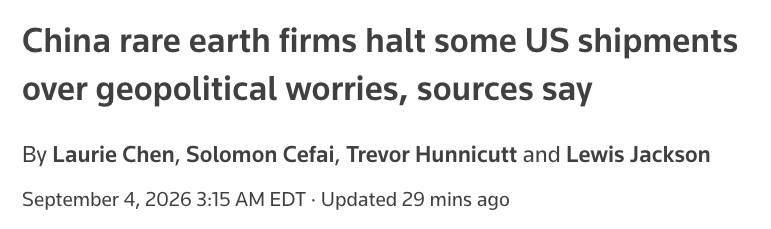
Reuters reported on Sept. 4 that three sources said some Chinese rare earth suppliers are now refusing to ship to U.S. customers even after receiving export licenses, out of fear of repercussions from Beijing. The issue has climbed onto the U.S. agenda ahead of President Xi Jinping’s Sept. 24 visit, according to a source familiar with the matter.
The move follows a broader pattern of tight controls and informal caution. Reuters said some suppliers have been holding back since early August, after China sanctioned the U.S.-based Responsible Business Alliance, while U.S. officials have continued pressing Beijing to keep rare earth export licensing flowing under prior understandings.
The market reaction has been concentrated in U.S. rare earth names rather than in the broader metals complex. Schaeffers Research said MP Materials rose 4% in premarket trading to $55.80 after the Reuters story, and other related names including CRML, USAR and UUUU were cited by traders.
Reuters also noted that U.S. shipments of yttrium are still only about half of 2024 levels despite a pickup this year, and that some U.S. firms have waited more than six months for mineral licenses. China’s foreign ministry said it remains committed to maintaining global critical mineral supply chains.
Uber is pressing lawmakers in Washington, D.C. and New Jersey to slow the rollout of driverless ride-hailing and require platforms to operate a so-called hybrid network of robotaxis and human drivers. The move puts Uber in direct tension with Waymo, one of its key autonomous vehicle partners.
The company’s lobbying marks a shift from simply hosting AV services on its app to trying to shape the rulebook itself. TechCrunch said the D.C. proposal includes a $0.15-per-mile tax, while WIRED reported that Uber-backed language in New Jersey would have required human drivers to handle 85% of rides for three years.
For Uber (UBER), the stakes are about whether it remains the central marketplace for rides if robotaxi operators can run their own apps. TechCrunch reported that Waymo now delivers more than 500,000 rides per week across 11 cities, underscoring how quickly a standalone robotaxi model could compete for the same trips.
Uber says it supports autonomous-vehicle adoption, but argues current policy proposals are unworkable and fail to address worker concerns. WIRED quoted the company describing the New Jersey language as a compromise, even as it continues to argue in D.C. that ride-hail platforms should remain part of any AV rollout.
사건 전개
2026-07-25게시물 42개 · 작성자 33명
FT reports Waymo is considering ending its robotaxi partnership with Uber amid disagreements over service quality and regulation, with plans to launch independently in Austin and Atlanta in January 2028.
규제🔥진행 중
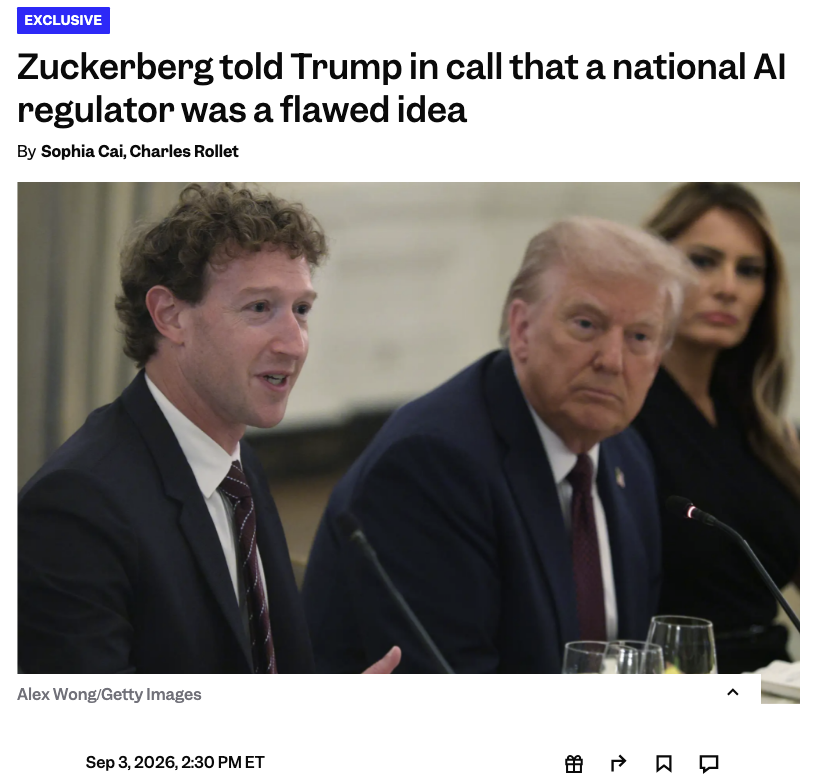
Zuckerberg pushes back on a U.S. AI regulator as Meta faces a 30-day review debate영어 원문
White House is weighing a FINRA-style watchdog for frontier models, a move that could shape release timing and compliance costs for Meta and rivals.
Business Insider reported that Meta CEO Mark Zuckerberg told President Donald Trump in a private call in mid-August that he opposed creating a national AI regulator. The idea under discussion would set up an independent body to test advanced models for risk before broader deployment.
The debate comes on top of earlier White House moves. Reuters reported on Aug. 4 that the Trump administration told AI developers it would not subject open-weight models to voluntary safety testing, while Bloomberg reported on July 17 that officials were exploring a FINRA-like AI watchdog model.
For investors, Meta is the clearest read-through because its Llama line sits in the open-model camp. A tougher pre-release review regime could affect launch timing and compliance burdens not only for Meta, but also for closed-model leaders including OpenAI, Google and Anthropic.
Neither the White House nor Meta has publicly laid out a final policy. Still, the reporting shows top tech executives are trying to shape the contours of U.S. AI oversight before any formal framework is locked in.
사건 전개
2026-07-09게시물 15개 · 작성자 12명
Zuckerberg posted on X for the first time in three years to unveil a new AI model, while his data center was linked to deadly bacteria in a city's water system.
시장
Bitcoin reclaims $80,000 and tests $82,000 as 6-day extreme flows flash caution영어 원문
Waller’s dovish signal extended the rally, but CryptoQuant says money flows have stayed extreme for six straight days.
Bitcoin climbed back above $80,000 on Sept. 4 and briefly traded above $82,000, extending the previous day’s momentum. Multiple X signals tied the move to a more dovish tone from Federal Reserve Governor Christopher Waller.
Background reporting puts the intraday high in a tight range around $82,016 to $82,108, while Yahoo Finance said BTC rose above $81,000 as Treasury yields eased. Fidelity Digital Assets cautioned that the rally alone does not confirm the bear market has ended. Meanwhile, Cointelegraph cited CryptoQuant analyst Axel Adler Jr. as saying Bitcoin’s money inflows and outflows have been extreme for six straight days — a pattern that has previously preceded drops in this cycle.
The move also lifted crypto-linked equities, with Coinbase, Robinhood and Strategy among the names mentioned in coverage. Spot Bitcoin ETF inflows, short covering and softer U.S. yields were also cited as supporting factors.
For now, the key issue is whether these flows stabilize or keep signaling overheated conditions. Market participants are watching ETF demand, inflation prints and the Fed’s September meeting for the next macro cue.
Jane Street has signed a roughly $13 billion, five-year cloud agreement with Crusoe for access to advanced GPU clusters used in AI training and inference, according to multiple reports. The new deal comes on top of Jane Street’s earlier commitment of about $6 billion for CoreWeave cloud services, plus a $1 billion equity investment in the company.
The new contract extends a broader pattern in AI infrastructure: demand for compute is being locked up through large, multi-year commitments. CoreWeave disclosed in April that Jane Street’s package included both the $6 billion cloud commitment and the $1 billion equity stake, while CoreWeave itself has also been signing other multi-billion-dollar customer deals.
For investors, the main listed name in focus is CRWV, while the ripple effects can also reach chip and optical-interconnect suppliers that benefit from rising AI datacenter capex. These contracts improve revenue visibility for neocloud operators, but they also imply heavy financing and buildout needs to deliver capacity over several years.
Crusoe and Jane Street have not added much public detail beyond the reported deal value and term. The latest reports are best read as a new disclosure in an ongoing AI-cloud spending spree, rather than a standalone one-off event.
Lululemon reported second-quarter fiscal 2026 net revenue of $2.415 billion, down 4.4% year over year, while diluted EPS came in at $2.92. The company said the quarter included a $0.86-per-share benefit from tariff refunds, which helped support profitability.
The bigger market focus was the outlook. Lululemon cut full-year FY26 revenue guidance to $10.35 billion-$10.5 billion and EPS guidance to $9.48-$9.73, while also guiding third-quarter revenue to $2.29 billion-$2.32 billion and EPS to $0.93-$0.98.
Regionally, North America revenue fell 8% and comparable sales declined 9%, while international revenue rose 4%. Gross margin improved to 60.5%, aided by $134.5 million in tariff refunds, but investors focused on slowing demand in the core market.
After the report, the stock sold off sharply in after-hours trading, with media reports citing declines of roughly 15% to 18%. The company also said it repurchased 2.7 million shares for $330 million and opened nine net new stores during the quarter.
Citi sees iPhone 18 Ultra above $2,000, Pro models up about $200영어 원문
Apple’s Sept. 9 event is shaping up into a pricing reset for its premium iPhone line, with foldable-launch expectations and supply-chain read-throughs drawing fresh attention.
Citi now expects Apple to unveil the iPhone 18 lineup on Sept. 9, led by its first foldable model, likely called the iPhone Ultra, with a starting price above $2,000. The bank also sees the iPhone 18 Pro and Pro Max each rising by roughly $200 versus prior models, alongside A20 2nm chips, Apple-designed modems and camera upgrades.
The pricing debate has widened because other recent reports point in the same direction. TrendForce said the foldable iPhone could start at $2,099 to $2,299 in the U.S., with top configurations potentially topping $3,000, while Tom’s Guide cited carrier leaks and prior Bloomberg commentary that place the launch price near $1,999.
If Apple pushes premium iPhone pricing higher, investors will likely focus on how much of the extra cost can be passed through versus absorbed. That matters for AAPL itself and for key suppliers including TSMC, Foxconn, Samsung Display and LG Innotek, which are tied to the new devices’ component mix.
Apple has not officially confirmed those price points. For now, the numbers come from analyst notes and leak-driven reports, and the company’s actual launch pricing will only be settled at the Sept. 9 event.
Microsoft said on Sept. 3 that Xbox cloud gaming will move to monthly time caps starting in November. Under the new structure, Game Pass Ultimate will include 15 hours, Premium 10 hours and Essential 5 hours of cloud play per month, with extra time available for purchase.
The company said the change reflects rising costs as cloud gaming usage and session length increase. Microsoft also said the new limits will affect about 4% of Game Pass subscribers, while players will still be able to buy timed cloud access through the Xbox Store for eligible games they own.
For investors, the shift is a pricing-model change inside Microsoft’s Xbox division, and it may offer a read-through on how the company is trying to monetize cloud gaming more tightly. CNBC reported the current monthly prices of $22.99 for Ultimate, while Ars Technica noted Microsoft previously said Xbox Cloud Gaming streamed 500 million hours in fiscal 2025, underscoring how heavily a small group of users drives usage.
Microsoft has not disclosed pricing for extra hours yet, saying it will provide more details before the limits take effect in November.
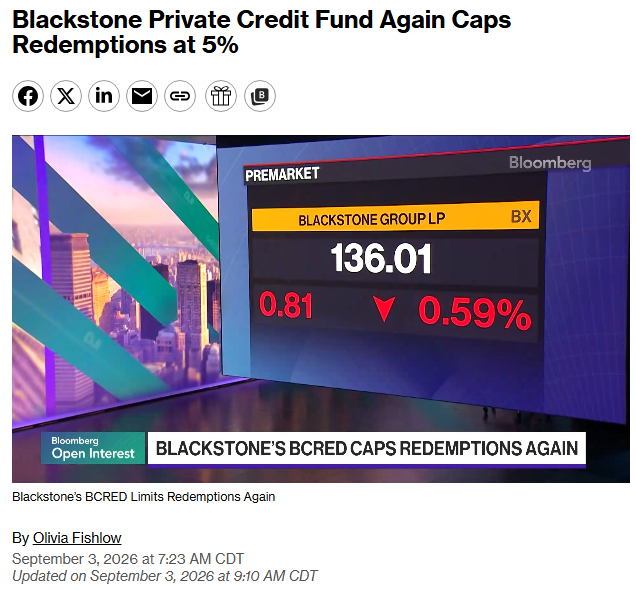
Blackstone’s flagship private credit fund, BCRED, again limited redemptions to 5% of shares after investors sought to withdraw about 10% in the third quarter. The move means the fund is honoring only half of the requests, matching the prior quarter’s treatment.
The latest step follows a second-quarter round in which requests totaled about $4.5 billion and Blackstone filled roughly half, leaving a backlog that was resubmitted in part this quarter. Reuters and Bloomberg both reported that the fund remains the largest of its kind and that withdrawal pressure has stayed elevated across private credit vehicles.
Blackstone said BCRED still has more than $17 billion of available liquidity, including cash and undrawn borrowing capacity. It also said investors who requested liquidity in Q2 and Q3 will have received an estimated 75% of what they asked for within about 90 days.
Shares of Blackstone traded higher after the update, while investors continue to watch whether redemption pressure and soft marks in parts of the private credit market will keep weighing on nontraded BDC flows. The issue matters because BCRED is a bellwether for wealth-channel demand in private credit.
S&P 500 gains 1.06% and nears a record as SPY’s 2026 odds stay at 57%영어 원문
Falling Treasury yields and softer Fed hike bets are helping keep the rally intact, with broad market positioning still centered on large-cap U.S. equities.
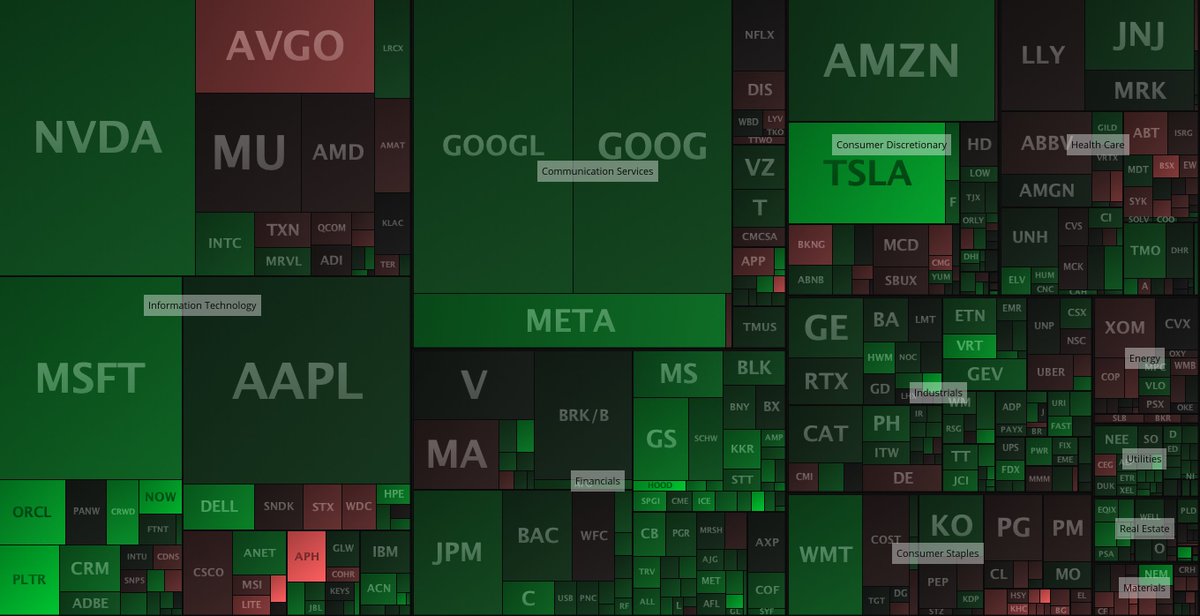
The S&P 500 rose 1.06% on Thursday and finished less than 1% below a fresh record high. X-tracked market commentary also said the index added about $700 billion in market value during the session.
The move came as Treasury yields eased and bets on a September Fed hike faded, improving risk appetite. Market watchers also noted that the S&P 500’s 12-month moving average has flashed a buy signal for 16 straight months, alongside a sharp rise in leverage.
In the ETF complex, SPY and QQQ remain the main vehicles tied to the move. Nasdaq Dorsey Wright’s August 21 update showed SPY at 762.60 with its 200-day moving average at 707.13, still marked in a positive trend and buy mode.
That backdrop helps explain why large-cap U.S. equities continue to dominate positioning even as gold and bitcoin gain relative interest. The market is still repricing yields, Fed policy and mega-cap tech leadership rather than signaling a clean break from the current trend.
Netflix has raised subscription prices in Germany and Austria, with increases of up to €2 per month. In Germany, the Premium plan now costs €21.99, the Standard ad-free plan €15.99 and the ad-supported tier €6.99.
The increase extends Netflix’s recent European pricing strategy. Reports indicate the company last raised prices in Germany in April 2024, and the latest change also adjusts add-on member fees while the basic ad-free plan is being phased out.
Citi estimates the hike could lift ARPU by about 24% in Germany, 15% in Austria and roughly 1.5% company-wide. For NFLX, investors will watch whether higher revenue per user offsets any churn risk, while streaming peers may face renewed scrutiny over pricing power.
Netflix has not publicly disputed the price changes. The updated pricing has been reflected on the company’s local market pages and is already in effect, or rolling out through transition periods, for some customers.
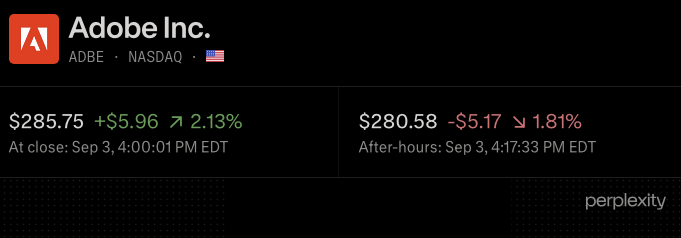
Adobe said on Thursday that Anil Chakravarthy will become its next president and chief executive officer, effective Dec. 1, 2026. Shantanu Narayen will move to the role of executive chair on the same date.businesswire.com
The leadership change comes as Adobe is trying to push its AI strategy deeper into the core of its business. In fiscal 2025, Adobe reported revenue of $23.77 billion, up 11% year over year, and said total annualized recurring revenue reached $25.20 billion, with AI-influenced ARR topping one-third of the book of business.sec.gov
For investors, the move keeps the succession inside Adobe’s existing leadership bench rather than bringing in an outside CEO. Chakravarthy has led the company’s customer experience organization for six years and previously served as CEO of Informatica, with earlier senior roles at Symantec and VeriSign.cnbc.com
Adobe did not frame the change as a strategic reversal. Instead, the board described it as the next phase of the company’s long-running digital-experience and AI push, a transition that will be watched closely by ADBE shareholders and by competitors across enterprise software and creative tools.wsj.com
Fresh reports say NVIDIA’s RTX Spark Windows PCs are set to begin shipping in October, with two N1X configurations on tap. The higher-end model is said to pair a 20-core Grace CPU with a 6,144-core Blackwell GPU and up to 128GB of unified memory, while a lower-tier version would use an 18-core CPU, a 5,120-core GPU and up to 32GB of memory.
That adds specificity to NVIDIA’s earlier fall launch guidance and extends the company’s broader pitch for on-device AI agents. NVIDIA’s own materials say RTX Spark is built around 1 petaflop of AI performance, up to 128GB of unified memory and a Windows Agent Framework partnership with Microsoft.
For the market, the main significance is that Blackwell is moving beyond data centers and into Windows PCs, tying NVDA more closely to the PC ecosystem and MSFT’s Windows platform. If the rollout proceeds as described, OEMs including ASUS, Dell, HP, Lenovo, Microsoft Surface, MSI, Acer and GIGABYTE could all be part of the first wave.
Pricing has not been disclosed, and there are no independent benchmark results yet. What is now verified is the October shipment window, the two reported N1X tiers and the top-end 128GB memory figure.
Oura has filed for a U.S. initial public offering and plans to list on Nasdaq under the ticker OURA. Its newly public S-1 shows nine-month revenue of $1.21 billion through June 30 and net income of $60.8 million.
The filing also shows how quickly the business has scaled. Oura said it sold more than 3.6 million rings over the past year and now has about 5 million paid members, with roughly 85% weighted-average 12-month membership retention.
For public markets, the listing will put a spotlight on subscription-linked wearables and the consumer health data model behind them. Investors will also be watching the company’s growth path after prior reports said annual revenue rose from about $500 million in 2024 to around $1 billion in 2025.
The filing comes as Oura continues to expand beyond hardware into software, clinical evidence and employer and payer partnerships. The company has also faced a proposed class-action suit over sleep-tracking accuracy, which it has said it will defend against in the appropriate legal forum.
Samsara reported fiscal Q2 revenue of $508.4 million, up 30% year over year, and adjusted earnings of $0.20 per share, both ahead of Wall Street expectations. Ending ARR reached $2.125 billion, with net new ARR of $134.1 million.
The update mattered because the beat came with stronger forward guidance: Q3 revenue of $514 million to $516 million and FY2027 revenue of $2.043 billion to $2.047 billion. Management also said adoption of its latest AI features has increased more than 4x over the past two months.
Shares of IOT moved higher after the release, as investors reacted to the combination of faster growth, fourth straight quarter of GAAP profitability, and improved outlook. The result also keeps Samsara in focus as a benchmark for connected-operations software and industrial IoT demand.
In its shareholder materials, Samsara said large customers continued to drive momentum, with ARR above $1 million crossing $500 million. The company also flagged higher device inventory and supply-chain costs as it scales to meet demand.
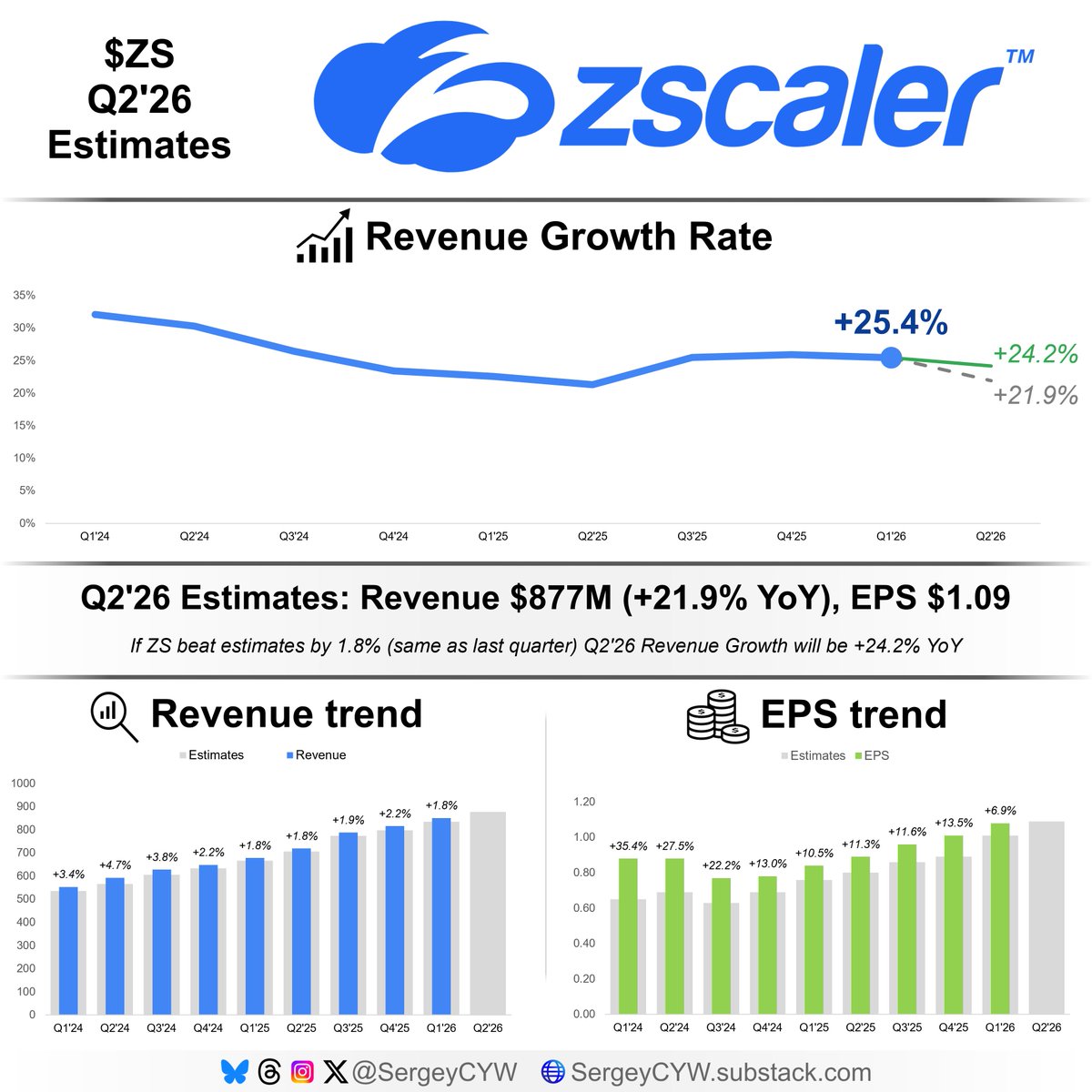
Zscaler reported fourth-quarter fiscal 2026 revenue of $898.2 million and adjusted EPS of $1.19, both ahead of estimates. ARR reached $3.77 billion, while adjusted operating income came in at $218.4 million, implying a 24% margin.
The update extends a run of solid execution for the cloud-security company. In its prior fiscal third quarter, Zscaler posted 25% revenue growth to $850.5 million and 25% ARR growth to $3.525 billion, then raised full-year guidance.
Investors were also focused on fiscal 2027 guidance. Zscaler sees revenue of roughly $3.91 billion to $3.94 billion and adjusted operating income of $924 million to $932 million, suggesting management still expects healthy demand ahead.
Shares rose in after-hours trading as the market digested the beat-and-raise report. The stock will likely remain sensitive to ARR growth, margin expansion and how the new outlook stacks up against peers in cybersecurity.
DocuSign reported second-quarter revenue of $875.7 million for the period ended July 31, up 9% year over year, alongside adjusted EPS of $1.16 and free cash flow of $295.8 million. The company said Intelligent Agreement Management, or IAM, accounted for 15.1% of total ARR.
The incremental update is the higher outlook: DocuSign raised fiscal 2027 revenue guidance to $3.499 billion-$3.507 billion and lifted expected ARR growth to 8.5%-9.0%. It also said IAM should represent about 18%-19% of total ARR exiting Q4.
Investors are watching the print as a read-through on enterprise software demand and on DocuSign's AI-led workflow push. The combination of a beat, stronger cash generation and an upgraded guide tends to feed into valuation sentiment for DOCU and other SaaS names.
Management said the improvement was driven in part by accelerating IAM adoption and that the revised guidance reflects the quarter's outperformance. The company also highlighted continued share repurchases and margin discipline in its prepared remarks.
Planet Labs reported second-quarter fiscal 2027 revenue of $116.052 million, ahead of consensus around $104 million, while adjusted EPS came in at $0.02 versus expectations for a $0.02 loss. The company also said adjusted EBITDA was $13.9 million and non-GAAP gross margin was about 59%.
The print extends the company’s recent growth streak, with revenue up 58% year over year. But management’s guidance for the next quarter called for revenue of $101 million to $105 million, below Wall Street’s prior expectations, even as full-year revenue guidance of $430 million to $441 million remained broadly in line with estimates.
For investors, the mix of a clean beat and softer outlook matters more than the headline beat alone. Planet’s stock, PL, has been trading on the balance between fast top-line growth, government-contract momentum and the pace at which that demand turns into recognized revenue and durable profitability.
The first public reports on this earnings line appeared on 2026-09-03, and Friday’s follow-up coverage mostly confirmed the same core numbers. Business Wire published the company’s results, while Zacks and 247WallSt cross-checked the revenue, EPS and guidance figures.
Asana reported second-quarter fiscal 2027 revenue of $216.4 million and adjusted EPS of $0.10 on September 3, both ahead of expectations. The company also raised its full-year revenue outlook to $858.5 million-$863.5 million.
The update continued a run of improving profitability metrics. Asana said non-GAAP operating margin reached 10% and dollar-based net retention was 97%, reinforcing the view that operating efficiency is still improving even as growth moderates.
The market reaction was negative, with the stock falling about 14% in after-hours trading. Investors appeared more focused on third-quarter revenue guidance of $212.5 million-$214.5 million, which implies growth of roughly 8%-9%, below the quarter just reported.
The stock move reflects a familiar earnings pattern: a beat on headline numbers is not enough when the forward growth rate looks less exciting. For ASAN, the key debate now is whether margin gains and free-cash-flow strength can offset slower top-line momentum.
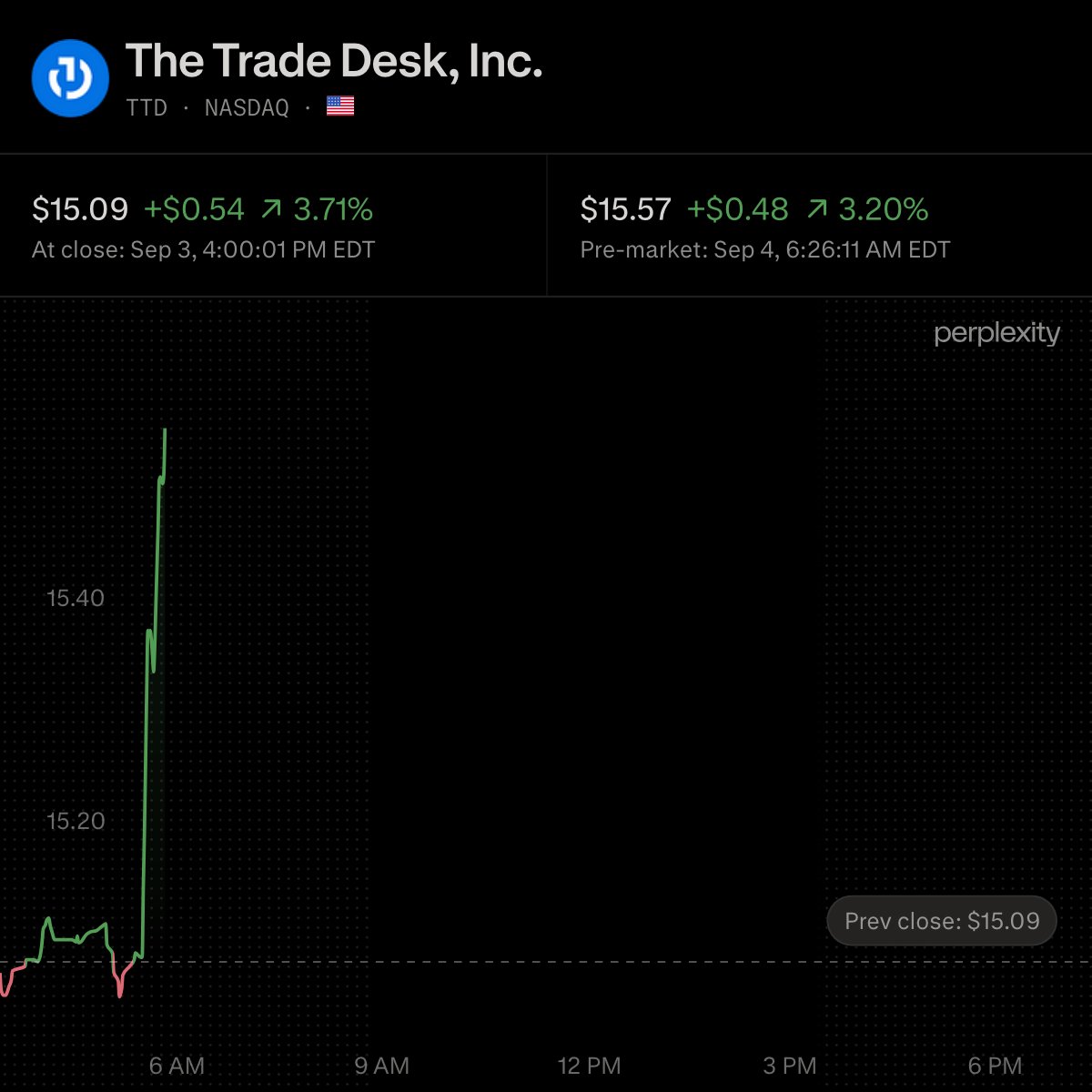
The Trade Desk said it will eliminate about 15% of its workforce and expects the restructuring to be substantially completed in the third quarter of 2026. The company said the move is meant to redirect resources toward higher-priority growth areas and improve operating efficiency.
The update came in a new Form 8-K filed with the SEC and was echoed in a company note published on its own news site. Trade Desk estimated cash restructuring charges of $39 million to $51 million, mostly severance and benefits, partly offset by roughly $4 million to $5 million in stock-based compensation reversals.
Shares of TTD moved higher in early trading after the disclosure as investors focused on management’s attempt to streamline the organization. The filing also suggested the cut could affect more than 500 employees, based on the company’s reported 3,843 full-time workers as of Dec. 31, 2025.
The company did not provide a breakdown by region or role. The announcement comes against a backdrop of slower recent growth, keeping attention on how quickly the restructuring can be executed and booked in the quarter ahead.
Volkswagen’s supervisory board has unanimously approved a sweeping restructuring that includes another 50,000 job cuts, pushing total planned reductions to 100,000. The company says the move is meant to restore competitiveness as it grapples with weaker demand, technological change, Chinese rivals and tariff pressure.
The latest step builds on reductions already under way and marks one of the most far-reaching overhauls in the automaker’s 89-year history. VW still has not settled the future of four German plants — Emden, Hanover, Neckarsulm and Zwickau — whose existing models are set to phase out over the next decade.
Investors welcomed the decision: Volkswagen shares rose 7.9% in Frankfurt, while U.S.-listed receipts climbed about 9% at one point, according to Reuters. The market appeared to view the unanimous vote as a sign that management has secured enough labor and shareholder backing to keep the turnaround on track.
CEO Oliver Blume said the company is taking responsibility for its workforce and industrial jobs worldwide. Labor representatives, however, said no plant closures have been agreed and that compulsory layoffs remain ruled out through 2030 under existing arrangements.
Nikkei reported that Subaru and other Japanese aerospace parts makers are teaming up on joint deliveries from subcontractors to cut transportation costs and workloads across the aircraft assembly supply chain. Nippon Express is set to support the new delivery network.
The move comes as Boeing is lifting production, and a separate announcement on Sept. 3 added more evidence of supply-chain activity around the 787 program. Albany Engineered Composites said it reached an agreement with Boeing to keep making about 300 unique composite fuselage frames for the Dreamliner, including sections 41, 43 and 47.
For investors, the immediate read is about execution rather than demand. Coordinated logistics among Japanese suppliers and a renewed contract for a key composite part both point to Boeing’s effort to keep the 787 ramp supplied, while also highlighting the importance of upstream delivery performance for BA.
Boeing did not issue a fresh standalone comment on the Nikkei report in the materials reviewed. Albany, meanwhile, said the renewal extends a partnership that has lasted more than a decade and supports the 787 production ramp.
SoFi and Payward announced a partnership on Sept. 3 that connects banking and digital asset markets. Under the deal, Payward will join SoFi Exchange Network (SEN), list SoFiUSD on Kraken, and route SoFi crypto order flow through Kraken Prime.
The backdrop is a broader push by both companies into adjacent financial infrastructure. SoFi says it has 15.8 million members, while Kraken has been building out prime brokerage and institutional services as it looks beyond spot crypto trading.
For investors, the clearest listed-equity link is SoFi Technologies (NASDAQ: SOFI), because the partnership touches its stablecoin distribution, execution stack and bank settlement rails. The companies also said Kraken institutional clients will gain access to SEN for 24/7 USD settlement, underscoring the focus on always-on liquidity.
Neither side has disclosed the initial trading pairs, liquidity levels or a launch timetable for qualified custody, which was described only as a possible future expansion. There was no official statement tying the agreement to any specific move in SoFi shares.
AMC CEO Adam Aron took to X to blast Robinhood’s AMC stock token, calling the product “contemptible, outrageous, disgusting, detestable, inexcusable, vile.” He said AMC had no connection to the offering and asked outside securities counsel to review it, escalating a dispute that has now spilled into public markets.
The fight centers on whether tokenized stocks blur the line between price exposure and actual ownership. Robinhood’s own disclosures say its Stock Tokens are debt securities issued by a Jersey entity, provide economic exposure only, and do not give holders rights against AMC or other underlying companies.
The market reaction was immediate: AMC rose about 4.9% in premarket trading and at points was reported higher by as much as 20%, while Robinhood slipped roughly 1% to 2%. The move underscores how retail-favorite names can still swing on headlines tied to tokenization, even when the underlying shares are not directly changing hands.
Robinhood CEO Vlad Tenev responded by asking what the concern was, while AMC reiterated that it never authorized the product and wants it stopped. The public clash appears to date back to Aron’s Sept. 3 post on X, making Friday’s reaction the latest chapter in an ongoing dispute over tokenized equities.
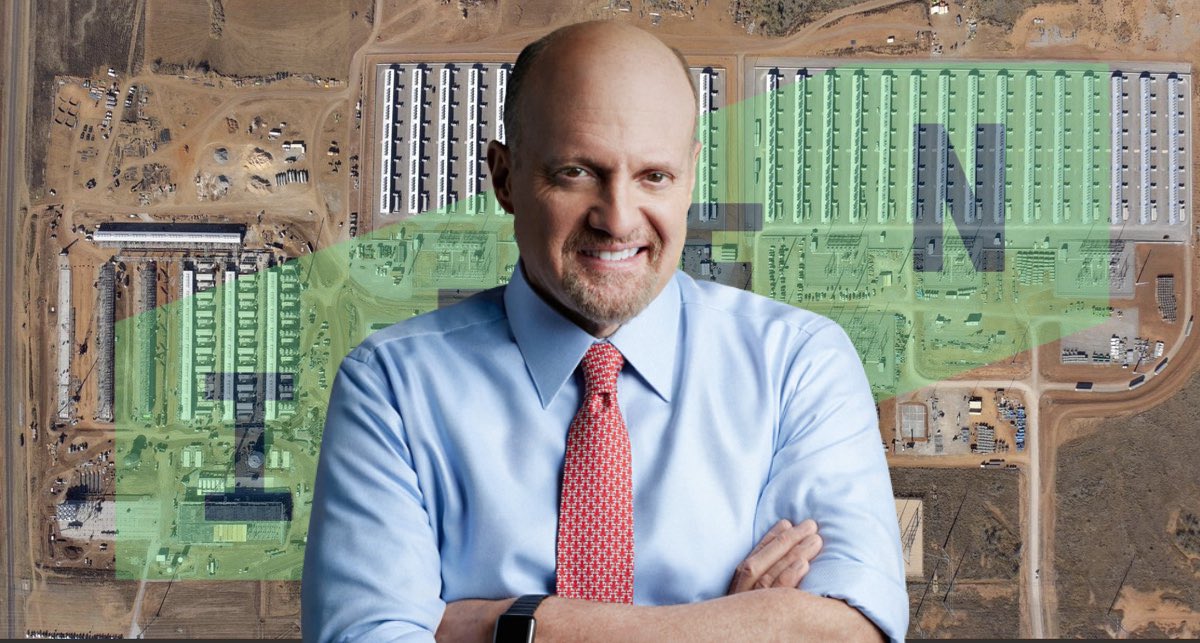
Multiple X posts said Jim Cramer, when asked about IREN, replied: “If you’re going to do neoclouds, the only one I like is CoreWeave.” The key new development is not a company filing, but a direct, explicit preference for CRWV over IREN in the neocloud group.
That comment lands against a backdrop of recent coverage focused on CoreWeave’s heavy interest burden and IREN’s continued shift from bitcoin mining toward AI cloud infrastructure. In other words, investors have been weighing growth, capital intensity and financing costs across the neocloud cohort for days.
In the market, CRWV, IREN and NBIS are often traded as a basket of AI infrastructure names, so a high-profile call like this can influence relative sentiment even without new corporate disclosure. The X signal also cited closing prices of $41.65 for IREN and $210.63 for NBIS.
So far, the public record reflected in the available materials shows commentary about CoreWeave’s relative appeal, not a fresh company response from IREN or CRWV.
사건 전개
2026-07-06게시물 5개 · 작성자 4명
Jim Cramer recommended buying a surging space stock, sparking debate over his inverse indicator effect.
시장🔥진행 중
Zcash tops $1,000 as 4.86 million shielded ZEC marks a record영어 원문
Privacy demand and the new Grayscale spot ETF are drawing fresh attention to ZEC price discovery and derivatives positioning
Zcash (ZEC) broke above $1,000 on Sept. 4 and set a fresh all-time high, with some market reports putting the intraday high around $1,017. The move extends a sharp rally that pushed the privacy coin into new price discovery territory.
The backdrop is rising demand for Zcash’s privacy features and the launch of Grayscale’s U.S. spot Zcash ETF on NYSE Arca. Earlier reporting also showed shielded supply climbing to 4.86 million ZEC, or 28.76% of total supply, underscoring stronger use of the network’s private-transaction tools.
Derivatives trading amplified the move. CoinDesk cited liquidation data showing about $36.6 million in ZEC leveraged positions were wiped out over 24 hours, including roughly $34.5 million in shorts, while open interest rose to about 2.3 million ZEC, worth roughly $2.3 billion.
The broader crypto tape helped too, with Bitcoin trading above $81,000 and the total crypto market cap rebounding to about $2.82 trillion, according to market reports cited by BloomingBit. That stronger backdrop gave traders more room to bid up higher-beta assets like ZEC.
사건 전개
2026-08-22게시물 8개 · 작성자 6명
SEC filing confirms Grayscale Zcash Trust will convert to the first ZEC ETF on August 25.
매크로
Japan July household spending falls 3.6%, rises only 0.5% mom영어 원문
The weak reading extends an eight-month slump and feeds into the Bank of Japan’s assessment of demand and inflation pass-through.
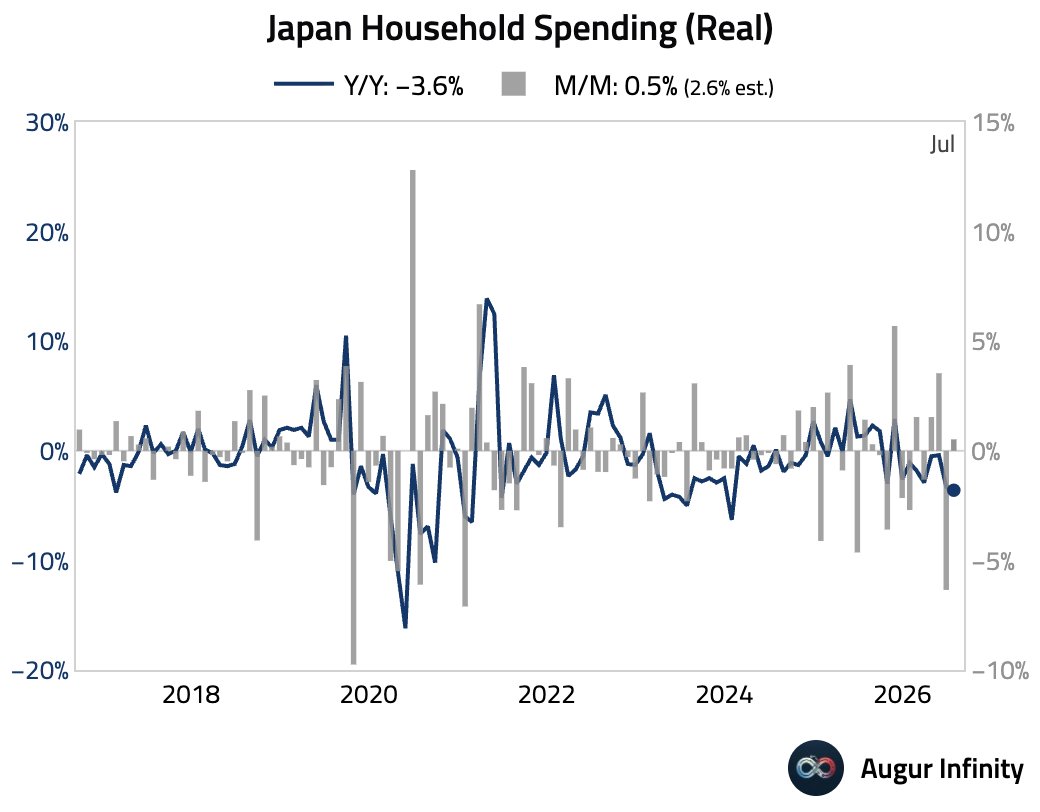
Japan’s household spending fell 3.6% from a year earlier in July, according to the Ministry of Internal Affairs and Communications, a sharper drop than the 1.6% forecast and worse than June’s -3.3%. On a seasonally adjusted basis, spending rose just 0.5% month on month, also short of the 2.6% consensus.
The data point extends an eight-month run of year-on-year declines and comes as price pressures remain elevated. Reuters said Tokyo core inflation accelerated for a third straight month in August, underscoring persistent cost pressure on households.
For markets, the release matters because private consumption is a key input for the Bank of Japan’s policy debate. A softer spending trend can weigh on expectations for tighter policy, while also keeping a lid on confidence around domestic-demand-sensitive assets.
Reuters and Nikkei both reported the same government figures, while other outlets echoed the 3.6% year-on-year decline and 0.5% month-on-month increase. No new policy response was announced alongside the data.
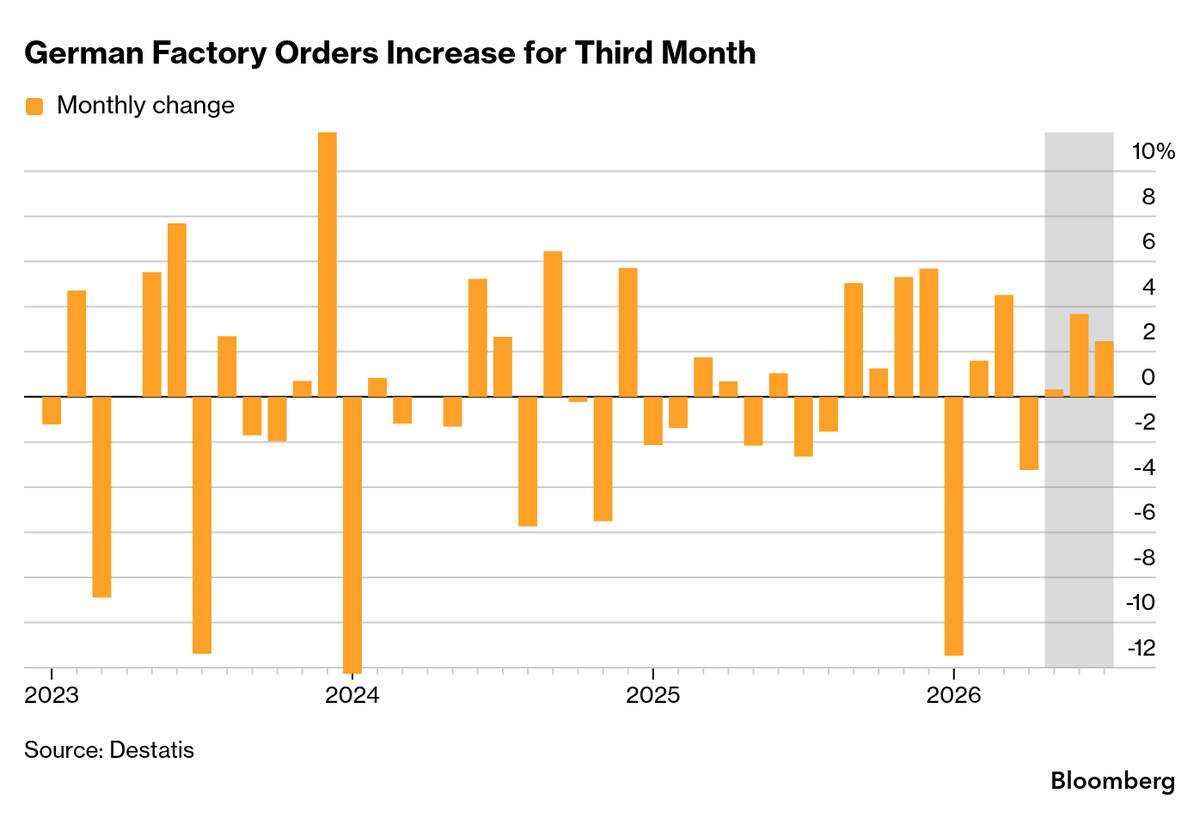
Germany’s factory orders rose 2.5% in July from June, the Federal Statistical Office said on 4 September, beating the 0.3% consensus. Year on year, orders were up 13.1%, and June was revised to a 3.7% monthly gain.
The headline improvement was driven almost entirely by a surge in other transport equipment — including aircraft, ships and rail vehicles — which jumped 126.4% on the month. Excluding large orders, however, new orders fell 1.4%, and the three-month comparison excluding big-ticket items was also weaker.
By category, capital goods rose 2.4% and intermediate goods 4.3%, while consumer goods declined 4.8%. Domestic orders increased 9.1%, but foreign orders fell 2.1%, with non-euro-area demand down 10.1% and autos down 12.5%.
The release matters mainly for Germany’s industrial cycle and export-heavy manufacturers, as well as broader European cyclicals that track German demand. The key follow-up will be whether stronger order books show up in production and revenues in coming months.
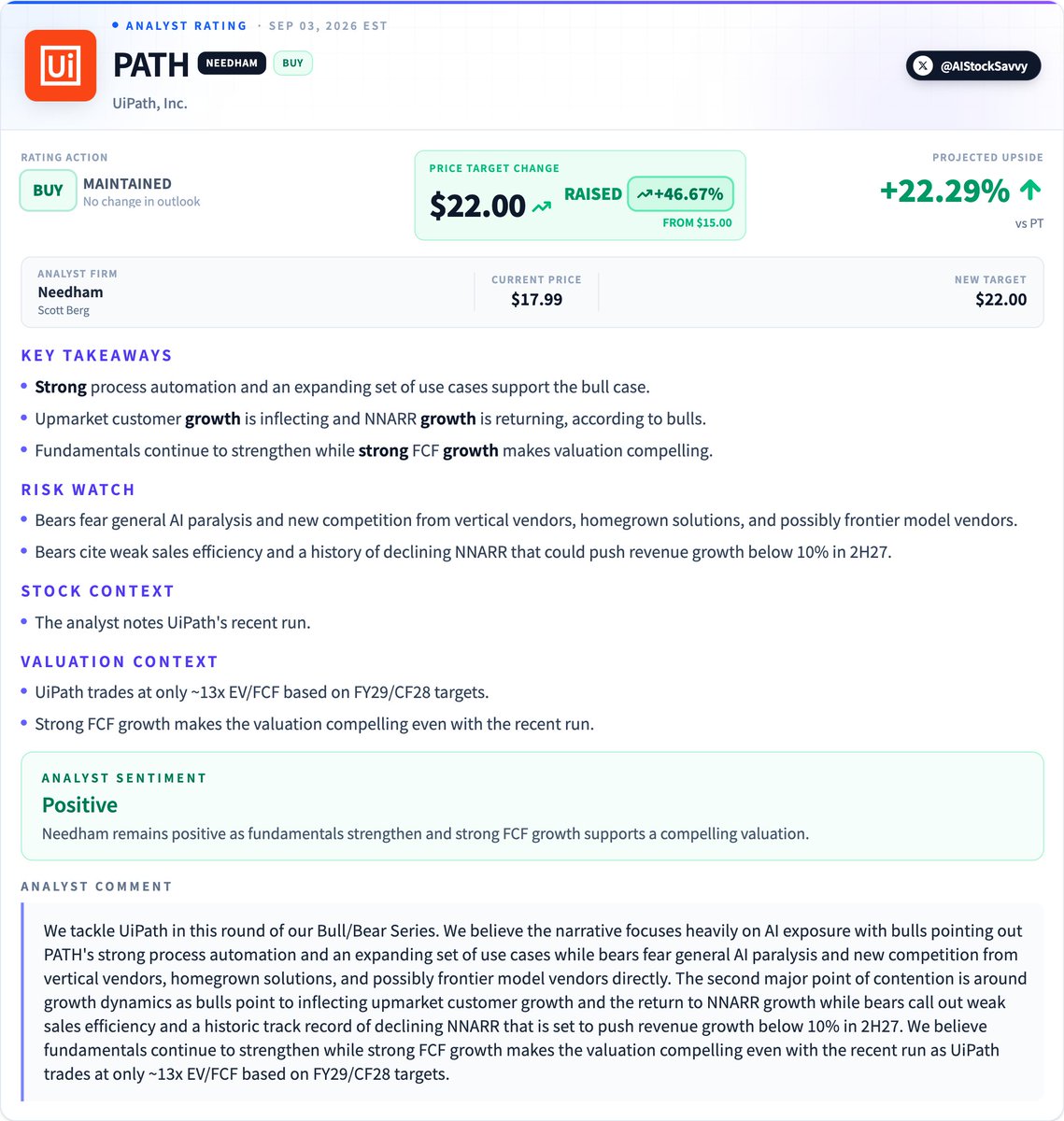
UiPath reported fiscal second-quarter 2027 revenue of $410 million, up 13% year over year, with adjusted EPS of $0.15, exactly in line with consensus. The company also posted its fourth straight quarter of GAAP profitability, with GAAP operating income of $32 million and adjusted operating income of $89 million.
Management said AI was present in 18 of the top 20 deals, underscoring a shift toward larger enterprise engagements that combine automation, orchestration and AI workloads. ARR reached $1.938 billion, up 12%, and the company raised full-year fiscal 2027 revenue guidance to $1.789 billion-$1.794 billion.
Investors are focusing on whether the earnings beat and raised outlook can support further multiple expansion after a strong recent run in PATH. The stock moved higher in after-hours trading as the market parsed the balance between in-line EPS, stronger sales, and continued margin improvement.
UiPath also announced a finance leadership transition: Ashim Gupta will move fully into the COO role, and Hitesh Ramani will become CFO. Management framed the change as planned and low-risk, emphasizing continuity across finance and operations as the company scales.
Smith & Wesson tops with $112.6 million sales, $0.06 EPS영어 원문
The gun maker’s first-quarter release showed 32.3% revenue growth and a 28.7% gross margin, while investors weigh the sustainability of a tariff-driven boost.
Smith & Wesson Brands reported fiscal first-quarter net sales of $112.6 million, up 32.3% from a year earlier, and GAAP diluted EPS of $0.06 versus a loss of $0.08 in the prior-year quarter. Gross margin came in at 28.7%.
The company’s earnings release, issued on Sept. 3, said gross margin benefited by roughly 260 basis points from $2.9 million in tariff refunds, a non-recurring tailwind. Management also reaffirmed its full-year fiscal 2027 revenue-growth target of about 5% to 7%.
The stock has been a focus for traders as they digest the report and the company’s outlook. Investors are looking at whether the quarter marks a durable recovery in demand and profitability, or whether part of the margin improvement will fade once the tariff refund benefit rolls off.
Management said demand remained solid in both consumer and professional channels and guided second-quarter sales to run about 10% above last year. The board also authorized a quarterly dividend of $0.13 per share, payable Oct. 1 to shareholders of record on Sept. 17.
Ambarella reported fiscal Q2 revenue of $108.1 million, up 13.2% year over year, and non-GAAP EPS of $0.18. Non-GAAP net income came in at $8.2 million, while the company guided fiscal Q3 revenue to $115 million-$124 million, with a midpoint of $119.5 million.
The earnings release and call were first published on Sept. 3, and follow-up coverage on Sept. 4 highlighted the company’s record edge-AI revenue and sequential growth in both Auto and IoT. Management also said rising memory prices and tight supply could affect customer output, even though Ambarella does not buy or resell memory itself.
Shares of AMBA saw elevated volatility after the print, with market coverage pointing to a negative reaction despite the beat. For semiconductor investors, the setup matters because Ambarella’s results are often read as a signal for edge-AI demand, automotive chip adoption and margin resilience.
Ambarella also announced a seven-year distribution agreement with Macnica and a separate engagement with Capgemini to broaden its indirect channel and enterprise reach. Those moves underscore the company’s push to expand its edge AI and Physical AI footprint beyond direct sales.
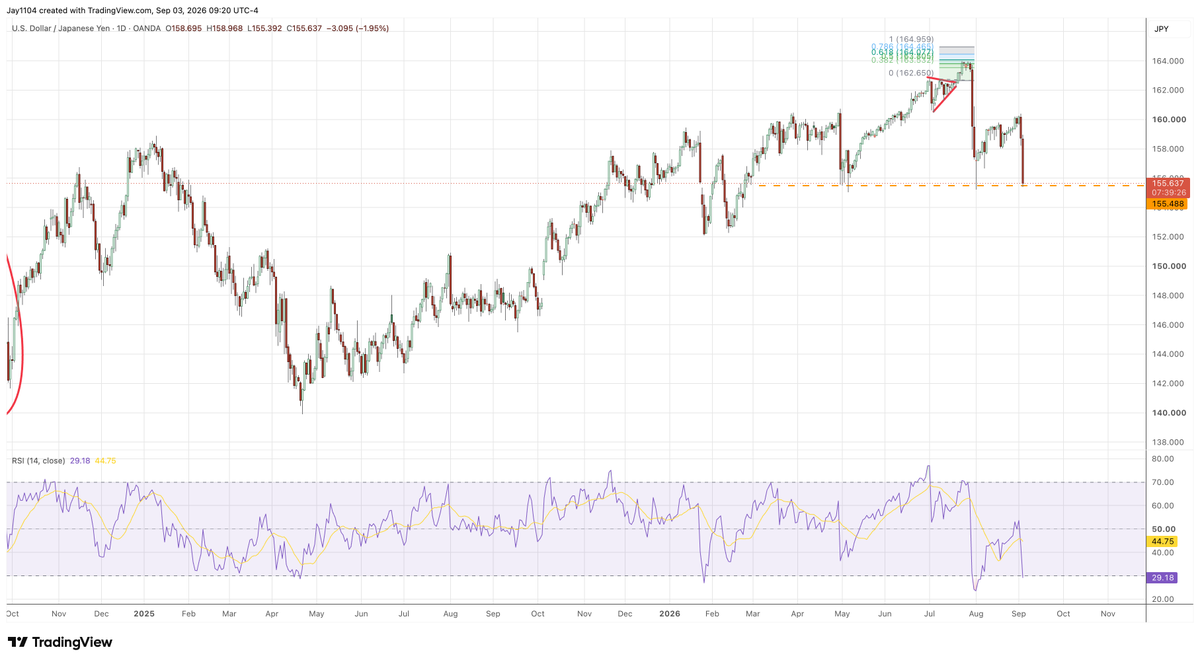
The dollar weakened on Thursday, with the Bloomberg Dollar Spot Index down 0.6% in its worst session in more than two weeks. The yen surged as much as about 2% against the greenback, pushing USD/JPY down to 155.25 and back toward the area that followed Japan’s July intervention. The move came after Fed Governor Christopher Waller said inflation appeared to be easing.
The broader backdrop is a fast reset in policy expectations on both sides of the Pacific. Market pricing now puts a September BoJ hike near 75%, while September Fed hike odds have fallen to roughly 48% to 50% after Waller’s comments. Traders are also trying to determine whether Tokyo has stepped in to slow the yen’s decline, but there has been no official confirmation of fresh intervention.
For markets, the immediate impact is in FX and rates rather than a single stock. A firmer yen typically matters most for Japan’s exporters and other currency-sensitive sectors, including autos and electronics, while a weaker dollar can also feed through to global asset allocation and Treasury yields. Friday’s U.S. payrolls report will be the next key driver for USD/JPY.
So far, the yen’s rise has been described by market participants as suspected intervention watch rather than a confirmed official operation. Japanese officials have said they are closely monitoring recent moves, but the evidence so far remains market-based rather than official. This leaves the pair’s behavior around 155 as the main focus going into the U.S. data release.
Media coverage expands, highlighting DeepSeek's in-house chip effort to bypass Western restrictions, with Huawei already capturing 50% of China's AI chip market.
2026-07-23게시물 5개 · 작성자 5명
DeepSeek founder Liang Wenfeng says the firm works closely with Huawei and expects to secure about 16,000 Huawei AI chips, with AI coding lowering development barriers.
2026-07-24게시물 3개 · 작성자 3명
Liang Wenfeng says domestic chips' hardware and ecosystem are fine, only capacity is an issue, and claims Huawei is only two years behind Nvidia with comparable workloads.
2026-09-04게시물 5개 · 작성자 5명
DeepSeek plans to deploy at least 160,000 Huawei Ascend 950DT chips at its Inner Mongolia data center, creating one of the largest domestic AI accelerator clusters.
Analysts downplay the financial impact of a potential Waymo-Uber split, noting Waymo represents a tiny share of Uber's revenue, while others highlight Google's own massive distribution channels via Maps and Android.
2026-07-27게시물 3개 · 작성자 3명
Benzinga covers the Waymo-Uber breakup report as Uber shares hit 52-week lows, compounded by Musk's earlier statement that he won't use other autonomous services.
2026-07-31게시물 3개 · 작성자 3명
Commentators draw parallels to Amazon's strategy, suggesting Waymo will use Uber for distribution then leave; Bloomberg reports on London black cab drivers facing the robotaxi challenge.
2026-09-03게시물 7개 · 작성자 6명
Uber and Wayve launch London's first commercial robotaxi service, beating Waymo to the UK market, using Ford Mustang Mach-E vehicles with safety drivers initially.
2026-09-04게시물 6개 · 작성자 6명
Tesla opens Robotaxi interest registration, seen as a warning to Waymo, Uber, and Lyft; analysts predict Tesla and Waymo will form a duopoly that disrupts transportation within a decade.
Zuckerberg urged the US not to ban Chinese AI models, warned against concentrated superintelligence, while Meta shares hit a record nine-day losing streak.
2026-07-30게시물 43개 · 작성자 30명
Meta's earnings showed 28% revenue growth to over $60B, but shares remained pressured; Zuckerberg noted compute offers exceeded costs, drawing market attention.
2026-08-10게시물 24개 · 작성자 22명
Zuckerberg announced personal AI agents and open-weight model Muse Glimmer, while being thrown into a lake by a UFC champion.
2026-09-03게시물 4개 · 작성자 3명
Zuckerberg released Muse Spark 1.3, but Reuters reported his plan to replace employees with AI was shelved amid staff revolt.
2026-09-04게시물 5개 · 작성자 5명
Zuckerberg told President Trump in a private August call that he opposed creating a national AI regulator.