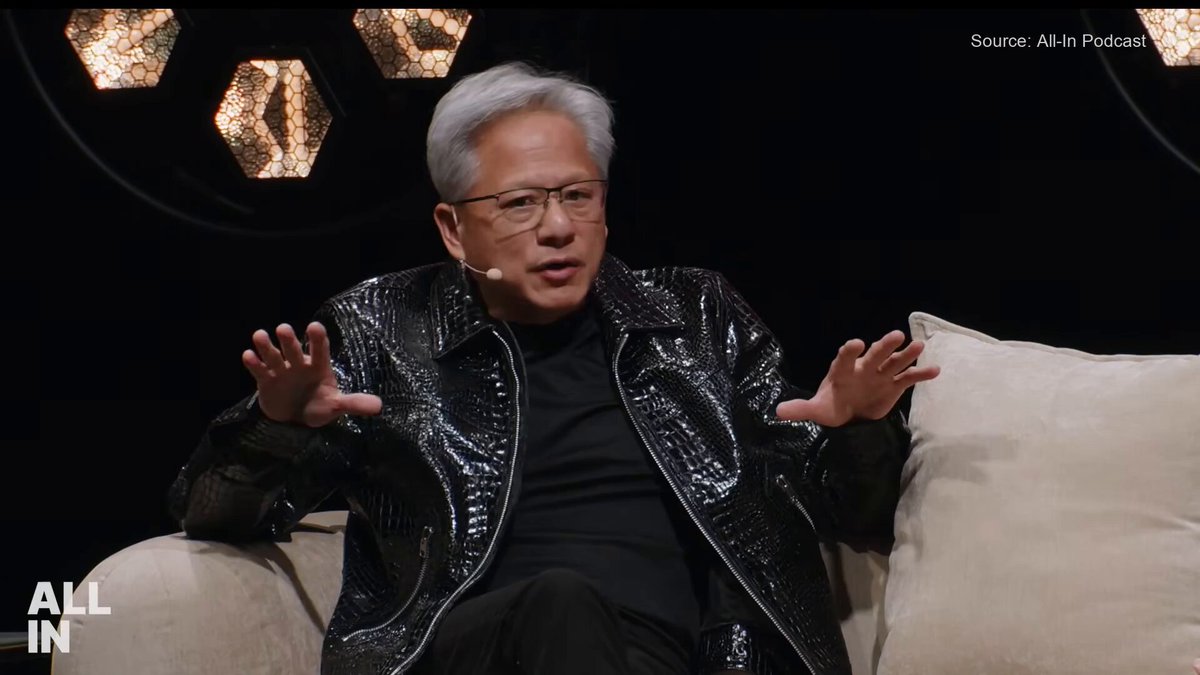
Nvidia CEO Jensen Huang took a live call from President Donald Trump on Monday while speaking onstage at the All-In Summit in Los Angeles. Trump used the call to dismiss recent anxiety around AI and data center buildouts as a “hoax,” telling the crowd he was fully behind Huang.
The timing matters because it came just after Anthropic CEO Dario Amodei urged the industry to slow frontier-model development, triggering a fresh debate among AI executives and policymakers. Trump had already pushed back on those concerns on Truth Social, framing speed and scale as a U.S. advantage.
For investors, the episode reinforces Nvidia’s central position in the AI infrastructure trade. Nvidia supplies the GPUs filling data centers, so any shift in the pace of construction or regulation can move sentiment around NVDA and the broader AI hardware chain.
Huang did not challenge Trump’s framing onstage and replied that “we’re not going to let that happen, sir.” The exchange was captured by attendees and reported by multiple outlets, making it a fresh public signal of the White House’s alignment with AI buildout momentum.
The U.S. Senate is set to vote on cloture for the CLARITY Act on Tuesday at 17:15 UTC, and Democratic negotiators have now delivered a counterproposal overnight. White House crypto adviser Patrick Witt said he feels “very good” ahead of the vote, underscoring that talks are still active rather than deadlocked.
The bill would split digital-asset oversight between the SEC and the CFTC, while also tightening ethics rules and adding limits around stablecoin rewards. Republican negotiators had already circulated a revised draft, which they said incorporated more than 126 Democratic changes, but unresolved issues remain around state enforcement powers and deposit-flight safeguards.
For the market, the vote matters most to Coinbase (COIN) and other crypto-exposed names, as the outcome could shape how quickly the U.S. gets a clearer federal framework. Stablecoin-linked firms such as Circle (CRCL) are also in focus because the bill’s treatment of yield and rewards could influence how those products are distributed through banks and fintech partners.
Outside pressure is still building. New York Attorney General Letitia James is leading a coalition of state attorneys general opposing the bill, while banking trade groups argue the stablecoin ‘circuit breaker’ would come too late if deposits start to leave community banks.
Goldman Sachs and JPMorgan have both shifted to expecting the Federal Reserve to raise rates at this week’s meeting. Reuters said Goldman’s latest note, dated Sept. 13, now calls for a 25-basis-point increase in September.
The move comes as inflation remains sticky and more Wall Street firms turn more hawkish. Reuters and CNBC both reported the growing consensus around a hike; CNBC cited CME FedWatch data showing a more than 92% probability on Sept. 14, while the X signal later put the odds at 94%.
If the Fed delivers as expected, markets will likely focus on the dollar, Treasury yields and rate-sensitive assets. Banks tend to trade on net-interest-margin expectations, while real estate, tech and other growth names are usually more sensitive to borrowing costs and discount-rate assumptions.
The market is now waiting for the Fed’s official decision, with the broader policy path still tied to incoming inflation data. CNBC also said traders are increasingly debating whether this meeting marks one step in a longer tightening path.
The U.S. 10-year Treasury yield climbed to 5.04% on Tuesday, the highest level since July 2007, while the average rate on a 30-year mortgage rose to 7.17%. The move extends a global bond selloff that has pushed long-term borrowing costs higher.
Reuters, Bloomberg and The New York Times all linked the move to firmer oil prices, inflation worries and heavy government debt issuance. Bloomberg reported an intraday high of 5.02%, while Reuters said the benchmark had hit 5%, pointing to the same surge in U.S. yields.
Higher yields raise financing costs for homebuyers, car loans and companies, which can weigh most on housing and rate-sensitive growth stocks. Banks may face a different setup, as wider rate spreads can support net-interest margins.
Investors are also watching the Federal Reserve meeting this week and whether energy prices keep pressure on bond markets. Yields have risen across the UK, Germany and Japan as well, underscoring the global scope of the selloff.
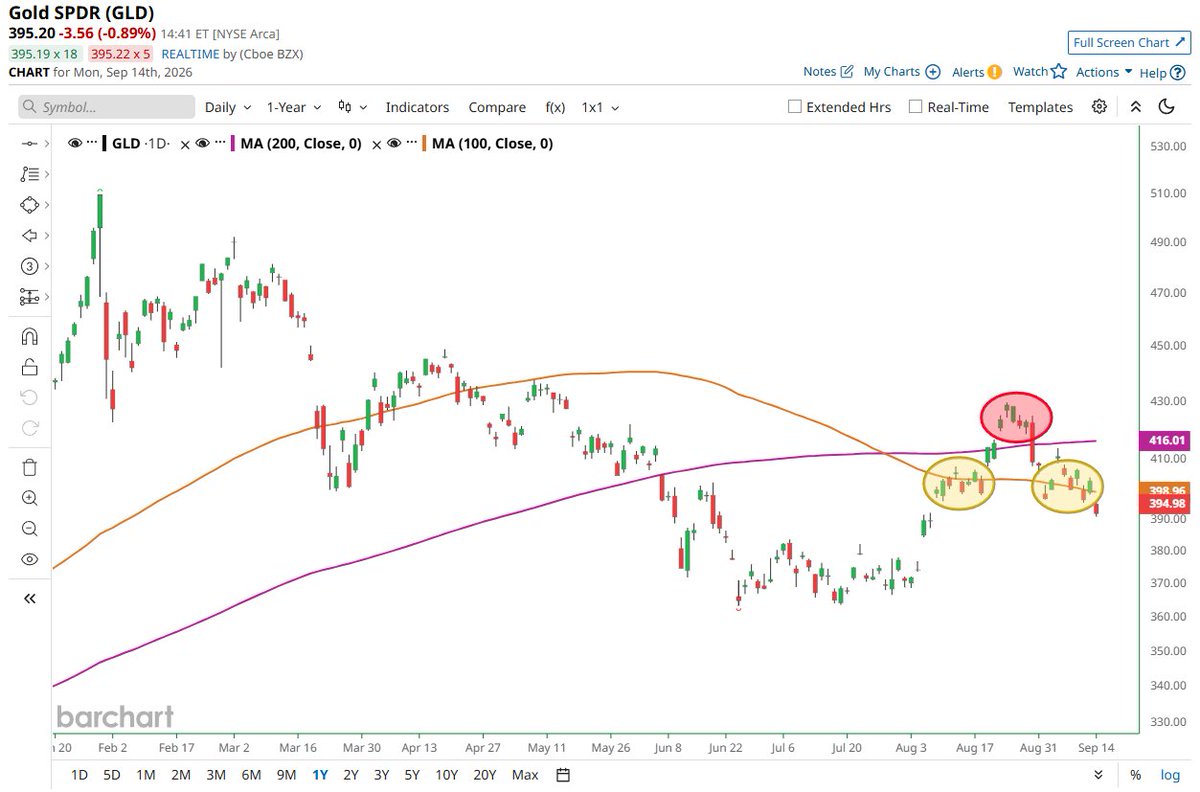
Gold’s technical picture weakened further on Tuesday after Barchart said GLD was forming a head-and-shoulders pattern and had fallen below its 100-day moving average. The signal points to added pressure on the gold ETF after several days of selling.
That weakness comes as spot gold has already slipped under $4,300, with reports putting the metal near $4,260 and U.S. 10-year Treasury yields close to 5%. Traders are also pricing roughly a 90% to 92% chance of a 25-basis-point Fed hike this week.
The setup matters because gold is highly sensitive to real yields and the dollar. If the Fed stays hawkish, GLD and gold miners typically face more headwinds; if rate expectations ease, the technical damage could start to repair.
No fresh company response was included in the X signal. For now, the main drivers remain Fed policy expectations and Treasury yields, not a new fundamental change in gold demand.
OpenAI said it has been working with Anthropic and Google DeepMind for several weeks on AI safety efforts. According to OpenAI global policy chief Chris Lehane, the three companies are coordinating around safety measures, including technical testing and audit-related discussions.
The latest disclosure builds on prior reporting that the three labs had already been holding working-group meetings since July on the idea of an AI industry standards body. Those talks intensified after Anthropic CEO Dario Amodei publicly urged the frontier AI sector to slow down and formalize stronger oversight. finance.sina.com.cn
For markets, the news primarily reinforces the strategic narratives around Microsoft, Alphabet and Nvidia, but it is still a governance development rather than a direct revenue event. Any real valuation impact would likely depend on whether the labs convert these talks into common safety standards, certification rules or deployment constraints.
OpenAI also said it does not believe coordination on safety requires antitrust exemptions. The bigger takeaway is that frontier labs are now moving beyond broad public statements and into practical cooperation on AI safety.
사건 전개
2026-07-18게시물 29개 · 작성자 29명
Kimi K3's release is seen as a potential inflection point for AI, possibly negative for Anthropic and OpenAI.
기업🔥진행 중
Meta targets 2027 rollout of MTIA 450 Arke and MTIA 500 Astrid, expanding 1GW+ custom AI silicon push영어 원문
The new timetable underscores Meta’s effort to cut inference costs and energy use as it scales its own data center compute.
Meta said its MTIA 450 chip, code-named Arke, is slated to begin data-center deployment in the first half of 2027, while the next-generation MTIA 500, code-named Astrid, is expected by year-end. The company says the chips are designed to save money and energy when running AI models. bloomberg.com
The new disclosure builds on Meta’s broader custom-silicon program first outlined in 2023. In its own blog, Meta said its MTIA roadmap now spans four generations — MTIA 300, 400, 450 and 500 — with the newer chips aimed primarily at recommendation, ranking and generative-AI inference workloads. ai.meta.com
For investors, the key read-through is the supply-chain mix: Meta’s custom chips have been linked to Broadcom for design work and TSMC for manufacturing, while the company continues to spend heavily on AI infrastructure. CNBC reported earlier this year that Meta’s 2026 capex guidance is $115 billion to $135 billion, a backdrop that keeps AVGO and TSM in focus and adds to the competitive pressure narrative around NVDA in inference. cnbc.com
Meta has also said its in-house chips are meant to complement, not fully replace, external GPUs from Nvidia and AMD. The latest timeline suggests the company is accelerating a dual-track strategy: keep buying third-party accelerators while expanding self-designed silicon for select workloads. ai.meta.com
사건 전개
기업
Bessent says Trump is fully aligned with Nvidia’s Huang after AI hoax remarks영어 원문
The Treasury chief’s backing extends Trump’s public alignment with Nvidia’s CEO on AI safety and data-center buildout.
US Treasury Secretary Scott Bessent said President Donald Trump is “completely aligned” with Nvidia CEO Jensen Huang, according to multiple wire reports circulating today. The comment adds a fresh layer of official support after Trump’s surprise onstage phone call with Huang at the All-In Summit in Los Angeles.
The backdrop was Trump’s Monday appearance, where he dismissed AI safety fears as a hoax and described data centers as the “oil of the next 20 to 25 years.” Huang, for his part, pushed back on doomsday scenarios and said claims that AI will wipe out humanity are not grounded in science.
For markets, the clearest readthrough is sentiment support for Nvidia and the broader AI infrastructure trade, including chips, servers, data centers and power-related suppliers. The policy tone matters because Nvidia sits at the center of the current AI capital-spending cycle.
Bessent did not announce any new rule changes or concrete policy measures. The immediate significance is political signaling: the White House is openly siding with faster AI buildout, while the practical market impact will depend on whether that stance turns into policy.
President Donald Trump on Monday dismissed AI safety fears as a “hoax” on social media, rejecting renewed calls for stronger government safeguards. On the same day, CrowdStrike CEO George Kurtz said on CNBC that slowing frontier AI development will not eliminate security risks because dangerous models are already widely available.
The latest debate follows an essay from Anthropic CEO Dario Amodei over the weekend urging frontier AI labs to slow model development. Kurtz argued the real priority is runtime monitoring and controls for AI agents once they are deployed, rather than relying only on pace limits in the lab.
Markets responded to the safety debate with a sharp bid into cybersecurity names. CrowdStrike rose nearly 14% Monday to a record close above $235, while Palo Alto Networks gained just over 13%, as investors weighed rising demand for guardrails, monitoring, and AI-powered defense tools.
The split underscores an industry-wide fault line: some executives want deliberate pacing and stronger oversight, while the Trump administration is emphasizing U.S. competitiveness and resistance to added regulation. Kurtz said the danger is already here, arguing that “the genie’s out of the bottle.”
China’s National Bureau of Statistics said on Sept. 15 that industrial output rose 5.2% in August from a year earlier, beating the 4.8% consensus forecast. Retail sales increased just 0.4%, below the 0.8% estimate, while the surveyed urban unemployment rate held at 5.3%.
Property data remained soft. The bureau said August new-home prices fell 3.0% year on year, while its separate report showed January-August real estate investment down 19.9% to 47,979 billion yuan and new-home sales revenue down 13.0%.
The split matters for Chinese equities because it keeps the spotlight on consumer demand, builders and broader cyclicals. Stronger industrial production may support manufacturing names, but continued housing weakness still weighs on developers, home-improvement stocks and banks with property exposure.
The numbers also highlight an uneven recovery: factory activity improved, but household spending and housing demand remained subdued. Markets will be watching whether policy support can translate into a more durable pickup in consumption and property transactions.
Ukraine said its forces hit the Syzran oil refinery in Russia’s Samara region overnight, with President Volodymyr Zelenskyy confirming the strike on Tuesday. Bloomberg reported that the operation also targeted a drone-production site in Taganrog and a drone preparation and launch point in Russia’s Oryol region.
The report lands after President Donald Trump said Russia and Ukraine had agreed to pause strikes on energy targets, a claim Zelenskyy has not endorsed as a formal truce. Türkiye Today said Zelenskyy described any de-escalation as conditional, while fighting against critical infrastructure continued on both sides.
For U.S. refiners, the immediate read-through is to downstream margins and diesel pricing, keeping Valero, Marathon Petroleum, Phillips 66, Delek and Calumet in focus. The event does not imply a direct move in any single stock, but renewed pressure on Russian refining can tighten product supply expectations globally.
Russian regional officials said more than 40 drones were shot down over Samara overnight, while Ukraine’s air force said Russia launched 200 attack drones and 187 were destroyed or suppressed. Ukrainian and Russian accounts differ on the scale of damage, and the refinery strike itself could not be independently verified in full at the time of earlier local reports.
According to the Wall Street Journal, OpenAI has acquired Glass Imaging in a deal valued at more than $300 million. Glass Imaging develops AI software aimed at improving smartphone camera output toward DSLR-like quality.
Glass Imaging was founded by former Apple engineers Ziv Attar and Tom Bishop. TechCrunch said the startup had raised about $30 million before the deal, while Ctech said its valuation was around $100 million in a 2025 funding round, underscoring the jump in price.
The acquisition fits into OpenAI’s broader consumer hardware push, including its earlier $6.5 billion purchase of io Products, the Jony Ive-linked hardware venture. Investors will likely keep watching whether Glass Imaging’s imaging stack ends up in a future OpenAI device or in another product line.
OpenAI has not publicly commented on the transaction, and the reports do not specify how the technology will be deployed. For now, the key takeaway is that OpenAI is adding a camera-imaging capability to a hardware strategy that is still taking shape.
Anthropic launched Claude for Financial Advisors on Sept. 14, a new suite that plugs its chatbot into wealth-management and investment-analytics software. The company says the product is built to help advisers with meeting prep, portfolio review, compliance checks and follow-up work.
The rollout extends Anthropic’s push into financial services. The company says the tool connects with a broad set of industry systems, including BlackRock, Charles Schwab, Addepar, Orion, Envestnet, iCapital and Wealthbox, among others.
For public markets, the immediate relevance falls on BlackRock and Charles Schwab as named integration partners, showing how AI vendors are moving deeper into adviser workflows rather than standing outside them. Anthropic also said adviser pricing is roughly $70 to $120 per user per month, with costs rising with usage.
Anthropic framed Claude as an orchestration layer rather than a replacement for existing deterministic portfolio systems. Enterprise users will get audit logs, the company said, underscoring the compliance angle of the launch.
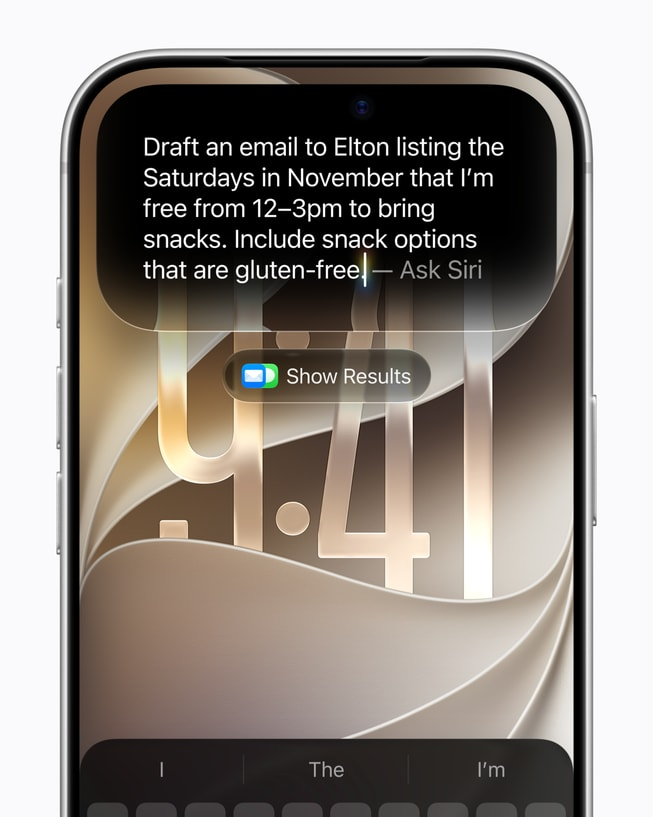
Apple said on September 14 that Siri AI is now rolling out in beta in English, with French, Japanese, Korean, Portuguese and Spanish to follow next month. The company describes it as a more conversational assistant with personal context, onscreen awareness and systemwide app actions. apple.com
The launch extends Apple Intelligence into one of the company’s most visible consumer products. Apple’s support page says some server-side features carry daily usage limits, and expanded access may come with a fee in the future, underscoring that the rollout is still constrained by region, language and device support. support.apple.com
For investors, AAPL is the obvious focal point, while GOOGL is in focus because reports say Siri AI uses Google’s Gemini models in part. That said, the public information so far frames this as Apple’s product rollout rather than a joint commercial announcement. the-decoder.com
X posts suggest the update is already reaching users and that early install times may be slower than usual, hinting at heavy demand during the first wave of rollout. The company’s official wording, however, indicates a phased beta release rather than a full simultaneous global launch. apple.com
Salesforce and Google Cloud said they are expanding their enterprise AI partnership, extending the link between Salesforce CRM workflows and Google Cloud’s AI infrastructure and agent capabilities. X signals circulating today point to this as a fresh development.
The move comes as enterprise AI remains a key battleground for software and cloud providers. Recent reporting has already shown Salesforce pushing harder into agentic AI, while Google Cloud has been benefiting from strong demand tied to AI infrastructure.
For investors, the immediate watchlist is CRM and GOOGL. The market will likely focus on whether tighter product integration can improve customer workflow automation, increase usage and deepen stickiness across the two platforms.
No financial terms or revenue guidance were disclosed in the signal or in the open reporting reviewed so far, so the commercial impact remains to be clarified by the companies.
Amazon, Netflix and YouTube have formed a new Washington-based lobbying coalition called the Streaming Access and Choice Alliance, or SACA. The group is led by TechNet and says it will push for technology-neutral policies that preserve consumer choice in streaming.
The launch comes as live sports continue migrating from broadcast television to digital platforms. According to the coalition’s own cited figures, sports content on major global subscription streaming services has risen 52% since January 2024.
For AMZN, NFLX and GOOGL, the alliance creates a shared policy vehicle around a key business line: premium sports rights and how they are distributed. That matters because sports remains one of the clearest drivers of subscriptions, retention and advertising in streaming.
Publicly, SACA says it wants a more flexible framework for how viewers access live events and other programming. The group’s formation adds a new industry voice in Washington as regulators and lawmakers weigh access, pricing and distribution issues in streaming.
Costco has updated its website to show a limit of one transaction per membership and a maximum of two units every seven days for Kirkland Signature full-synthetic motor oil. The two-pack of 5-quart bottles is listed at $57.99, up from the roughly $30 range it had held in prior years.
The move comes amid a tighter global market for synthetic lubricant ingredients. Reports say Group III base oils are the key input for modern motor oil, and refiners have more incentive to direct crude runs toward higher-margin gasoline, diesel and jet fuel when energy prices rise.
For retailers and auto-aftermarket sellers, the change highlights how cost pressure can pass through to shelf prices and purchase limits. Competitors such as Walmart, Amazon and AutoZone have not publicly commented on whether they will follow with similar caps or price changes.
Costco has not publicly explained how long the cap will remain in place. Investors will be watching whether the supply squeeze broadens beyond motor oil into other maintenance products sold through warehouse clubs and big-box chains.
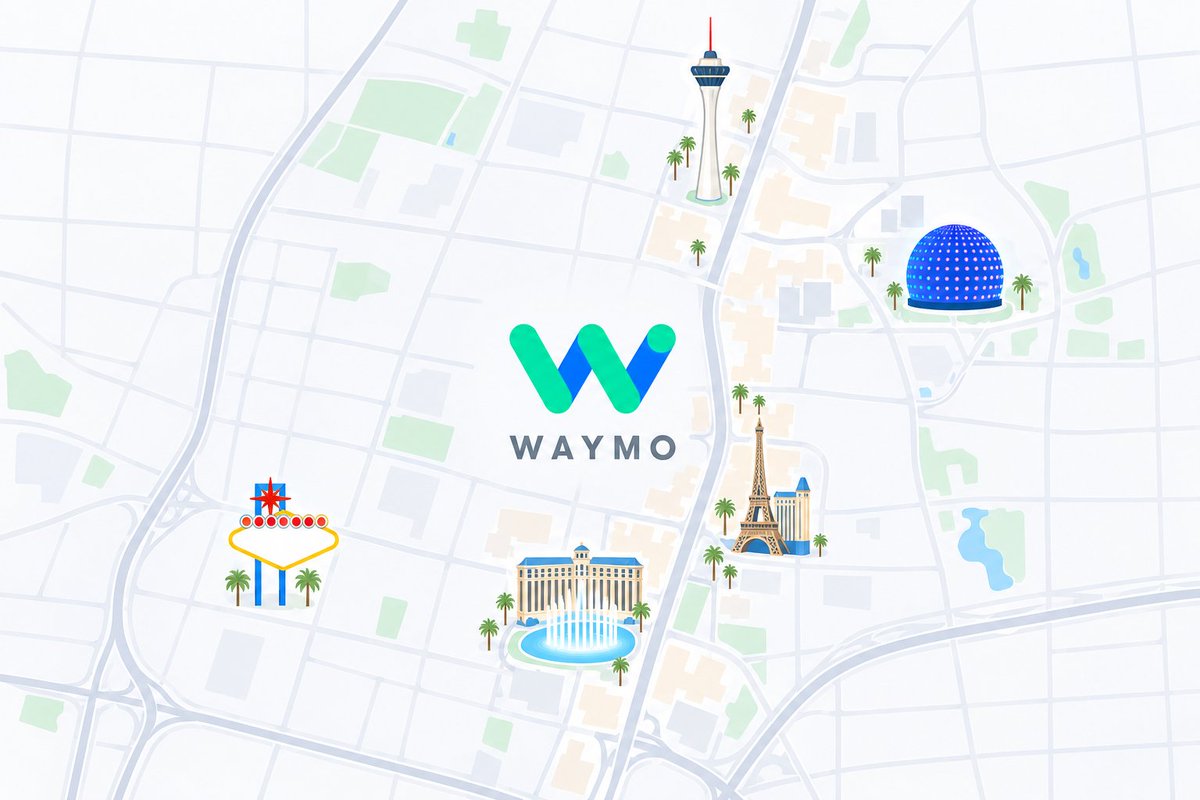
Waymo has begun serving paying riders in Las Vegas, marking the Alphabet unit’s 15th U.S. city for hailable robotaxis. The company said access will be granted on a rolling basis to keep the launch smooth for early passengers.
The move follows final approval from Nevada transportation regulators and gives Waymo its first commercial foothold in the state. Initial service is centered on the Strip, Allegiant Stadium and parts of Chinatown, UNLV and Spring Valley, with the company starting with only a few dozen Ojai minivans before scaling up.
The launch intensifies competition in Las Vegas, where Zoox is already operating paid rides and Tesla and Uber have also received approval to deploy robotaxis through local partnerships. For Alphabet, the rollout extends the reach of Waymo’s autonomous ride-hailing business; for Amazon, it highlights Zoox’s position in one of the country’s most contested robotaxi markets.
Waymo said it will continue widening access as it validates the service on local roads. The company has also been expanding in Denver, San Diego and Tampa, underscoring a broader U.S. push for the self-driving unit.
Microsoft CEO Satya Nadella said on X and in an internal memo that AI must remain under human control and that the company supports broader third-party safety testing. He also said Microsoft will publish the first code of conduct for its MAI models tomorrow for public consultation.
The move comes as the industry’s safety debate intensifies. Reporting says Microsoft’s AI team has already circulated a roughly 15,000-word “Humanist AI” manifesto laying out rules such as AI having no rights, no designs that evade human control, and enterprises retaining control over their own knowledge and models.
For markets, the headline matters most for Microsoft’s AI strategy and for how investors compare its governance stance with peers including OpenAI, Anthropic and Google. The immediate read-through is more about MSFT’s AI narrative than near-term fundamentals, but it could shape sentiment around model deployment pace and enterprise adoption.
So far, the public reporting suggests Microsoft is not backing away from frontier model development; instead, it is emphasizing safety review, public input and enterprise control. Going forward, investors will watch whether the MAI code of conduct becomes an operational standard and whether it feeds into broader industry-standard discussions.
Nvidia CEO Jensen Huang said at the All-In Summit that 80% of AI-native companies that recently received venture funding use open models. He also argued that U.S. AI leadership depends on building technology that the rest of the world actually wants to use, while pairing open models with sensible regulation and ongoing investment.
The comments add to Huang’s recent push for open innovation in AI. In prior public remarks from the same event coverage, he cited roughly $400 billion in venture capital flowing into AI-native companies over the last six months, and said open models matter for sovereignty, privacy and proprietary technology use cases.
For markets, the message reinforces Nvidia’s narrative as the picks-and-shovels provider for a broadening AI ecosystem, not just a handful of frontier labs. Wider adoption of open and open-weight models could support demand across GPUs, networking gear and AI software, with spillover benefits for infrastructure partners and cloud ecosystems.
Nvidia’s own newsroom echoed the theme, saying U.S. AI leadership depends on open innovation, strong competition and technology the world chooses to use. The remarks amount to a strategic push for openness, not a retreat from Nvidia’s partnerships with closed-model developers.
Salesforce and NVIDIA announced Koa, Salesforce’s first CRM reasoning model for Agentforce, built on NVIDIA’s Nemotron architecture. The companies said Koa is post-trained for multistep sales, marketing and customer-support workflows and already delivers three times fewer errors on Salesforce’s CRM benchmark.
The launch reflects a broader shift in enterprise AI from generic chat to task-specific agents that can actually execute business workflows. Salesforce said Koa was trained on synthetic data modeled on nearly three decades of CRM deployment experience, not on customer records, while Nemotron models and accelerated compute are also being integrated into Missionforce for government and regulated environments.
For investors, the news reinforces the enterprise AI narratives around CRM and NVDA. Salesforce is using Koa to deepen Agentforce and Missionforce, while Nvidia is extending Nemotron’s reach into secure private-cloud and air-gapped deployments. Salesforce said Koa is already being used internally and is entering customer pilots including 1-800Accountant, Baxter Credit Union, Engine, Formula 1, UChicago Medicine and Xero.
Salesforce said Koa is available to select pilot customers now, with general availability in U.S. regions expected in winter 2026. Missionforce Operations is already generally available in the U.S., and post-trained NVIDIA models are slated for select customers in October 2026.
Jiemian reported on Sept. 15 that Apple has accepted Samsung Electronics’ memory quotes for Q1 2027, with DRAM near $2.00 per Gb and NAND flash around $0.33 per Gb. That is about 30% to 40% above Samsung’s Q3 2026 pricing, according to the report; Apple had not commented by publication time.
The backdrop is an industry still skewed toward AI and server demand, where makers such as Samsung, SK Hynix and Micron are prioritizing HBM and server DRAM. TrendForce has also said memory supply remains tight relative to demand growth, keeping handset buyers under pressure.
For investors, the signal matters most for memory names including Micron and SK Hynix, while Apple’s hardware bill of materials could stay elevated if the pricing sticks. Apple’s willingness to take the higher quote may also narrow room for other smartphone vendors to negotiate lower terms.
The report also cited Q3 2026 Samsung quotes of roughly $1.4/Gb for LPDDR4X, $1.5/Gb for LPDDR5X and $0.26/Gb for NAND. Omdia data cited in the piece suggests NAND wafer output plans are still being trimmed across leading suppliers.
Grab said on Tuesday it will acquire a 60% controlling stake in Atome Financial for $1.49 billion in cash. The remaining 40% is set to be bought about two years after closing under a performance-linked valuation framework, and the transaction is expected to close by the third quarter of 2027.
Atome Financial operates across Singapore, Malaysia, the Philippines, Indonesia and Thailand, offering BNPL loans, consumer cash loans, BNPL cards and digital lending. Grab said the platform has 25 million cumulative transacted users and a roughly $1 billion gross loan portfolio, giving the group a larger base to scale consumer lending in the region.
Grab also raised its long-term outlook, saying Financial Services is expected to reach $500 million in adjusted EBITDA by 2028 and a combined gross loan portfolio of more than $6 billion. At the group level, Grab lifted its 2028 adjusted EBITDA target to $1.7 billion, with management saying the deal is funded entirely from existing cash and does not change the share repurchase program.
Investors will likely focus on GRAB as the company folds a larger lending platform into its ecosystem of mobility, delivery and payments. The transaction deepens Grab’s push into financial services at a time when Southeast Asian consumer credit remains underpenetrated, though completion still depends on regulatory approvals and other customary closing conditions.
SB Energy lines up $500 million Japan tranche ahead of U.S. IPO, with 8.8 GW pipeline and $439 billion backlog영어 원문
The SoftBank-backed power-and-data-center developer is tapping Japanese retail and institutional demand as AI infrastructure funding needs keep rising.
SoftBank-backed SB Energy plans to sell as much as $500 million in new shares to Japanese investors as part of its planned U.S. IPO. The filing said orders could begin as early as this month, with proceeds earmarked for data centers, power generation and related infrastructure.
The move fits a broader wave of cross-border capital raising tied to AI infrastructure. SB Energy counts OpenAI and Nvidia among its strategic investors, according to the filings and reports, underscoring how closely the company is tied to the buildout of compute and power capacity.
Investors are watching the company because it remains in a buildout phase rather than a mature operating business. SB Energy disclosed 8.8 gigawatts of contracted or under-construction data center capacity, along with about $439 billion of future contracted revenue, but it has no operating data centers yet.
The company has not disclosed the full size of the U.S. offering. The Japan tranche adds to a growing list of large global deals that have tapped Japanese capital this year, including SpaceX's retail sale in the country.
Rocket Lab disclosed on September 15 that it has completed roughly $1.944 billion in at-the-market equity sales and paired that with financing tied to Iridium’s existing credit facility, saying the package is enough to cover the cash needs of its planned acquisition of Iridium Communications. It also said the $3.6 billion bridge facility committed for the deal has been formally terminated.
The transaction itself dates back to June 28, when Rocket Lab signed a merger agreement with Iridium. Since then, the company has been working through a financing plan that included an amended credit agreement at Iridium and a large ATM raise to close the funding gap.
For investors, the key takeaway is reduced financing uncertainty around a high-stakes deal. RKLB shares moved higher in premarket trading on the update, while Iridium remains the target of the acquisition and the focus now shifts to remaining regulatory and closing steps.
Rocket Lab said the ATM has sold about 29.3 million shares as of September 15. The company also said the amended Iridium credit agreement allows roughly $1.775 billion of term loans to remain outstanding after closing, following lender consent to the transaction.
사건 전개
2026-07-18게시물 11개 · 작성자 9명
The U.S. Space Force raised the NSSL Phase 3 Lane 1 contract ceiling by $11.4B to $17B, benefiting RKLB and other launch providers.
기업
Citigroup lifts 2026 ROTCE outlook above 11%, sees Q3 markets revenue up mid-single digits영어 원문
The new guidance signals firmer momentum in trading and underwriting ahead of the bank’s next earnings update.
Citigroup CFO Gonzalo Luchetti told a Barclays conference on Monday that the bank now expects full-year ROTCE to come in slightly above 11%, topping the upper end of its prior 10% to 11% range. He also said third-quarter markets revenue is tracking to grow at a mid-single-digit rate from a year earlier, while investment-banking revenue is seen rising in low single digits.
The comments suggest Citigroup is still seeing solid momentum in equities, derivatives, FICC financing and FX activity, alongside a steadier but healthier dealmaking backdrop. That follows a year in which the lender has been trying to lift returns through tighter execution and targeted investment.
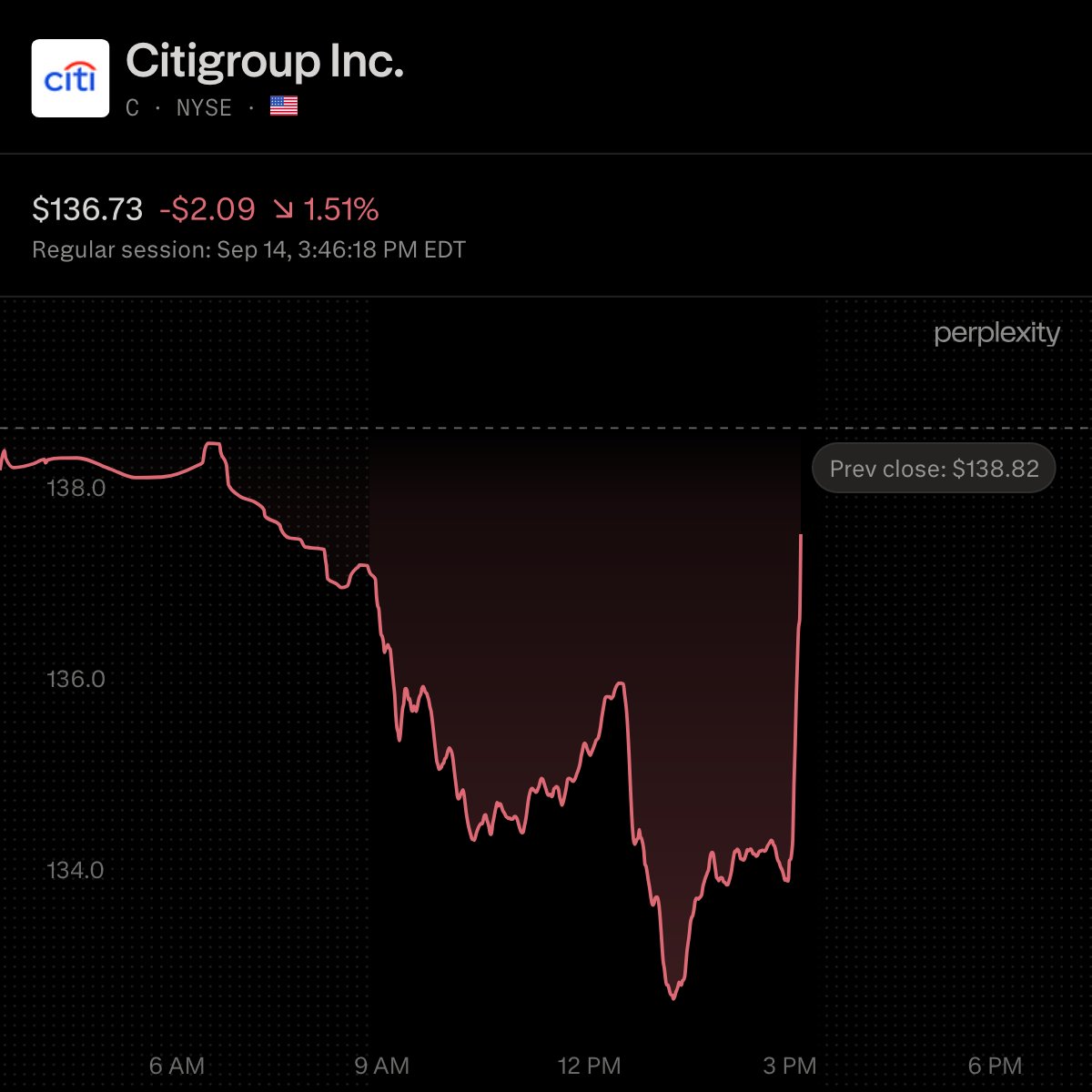
For investors, the update matters because it gives an early read on whether Citi can sustain improved capital returns while continuing to spend on growth and restructuring. The stock had fallen 1.9% on Sept. 14, according to market data cited by Zacks, before the new remarks circulated widely.
Citigroup also said it expects to accelerate about $500 million of investments into the rest of the year, mainly on severance and franchise support, and still plans to repurchase more shares in 2026 than the roughly $13 billion bought back in 2025. The bank’s Banamex deconsolidation remains a separate next-year event, with an estimated $9 billion currency translation adjustment loss.
기업
BofA guides Q3 IB fees to $1.6B-$1.8B, trading to be flat영어 원문
The update from Barclays conference gives Wall Street a fresh read on deal activity and trading momentum ahead of third-quarter results.
Bank of America CEO Brian Moynihan said at Barclays’ Global Financial Services Conference that third-quarter investment banking fees are expected to land between $1.6 billion and $1.8 billion, implying at least a 10% drop from a year earlier. He also said sales and trading revenue should be roughly flat year over year.
The guidance arrives as major U.S. banks begin setting expectations for third-quarter markets and dealmaking. Reuters reported the same day that BofA expects investment banking fees to fall at least 10%, while Bloomberg said the trading line would be “relatively flat” versus last year’s third quarter.
Shares of Bank of America fell more than 5% after the remarks, and the move also pressured the broader banking complex. For investors, the update matters because it is an early read-through for underwriting, advisory and trading performance across the bulge-bracket group.
Moynihan also said consumer spending remains solid and credit quality has been good, suggesting the pressure is concentrated in capital markets rather than retail banking. BofA did not dispute the guidance in the materials reviewed.
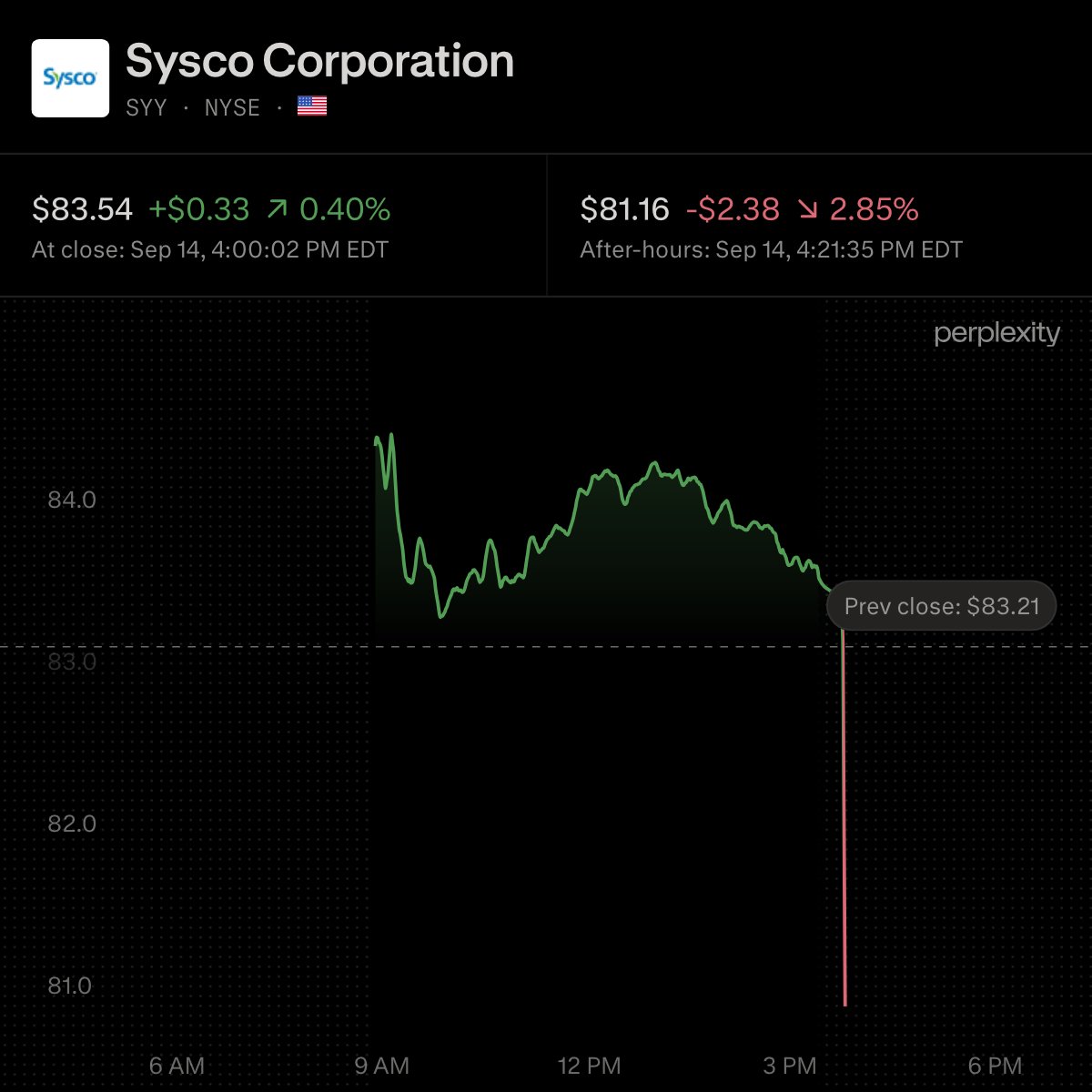
Sysco has priced a common stock offering at $81 a share, selling 12,345,679 shares to raise about $1 billion. The company said the proceeds will help fund part of its pending acquisition of Jetro Restaurant Depot.
The equity raise is not a condition to closing the transaction, but it adds another funding leg to a $29.1 billion deal. Sysco had already disclosed the planned offering, and the underwriters have a 30-day option to buy up to an additional $150 million of shares to cover overallotments.
Shares of Sysco moved lower in premarket trading as investors weighed dilution from the discounted sale and the broader financing mix behind the acquisition. Bloomberg had earlier reported that Sysco was looking to raise $1 billion in a share sale for the Jetro purchase.
The pricing announcement came via company disclosure. No additional company comment beyond the offering terms was available in the materials reviewed.
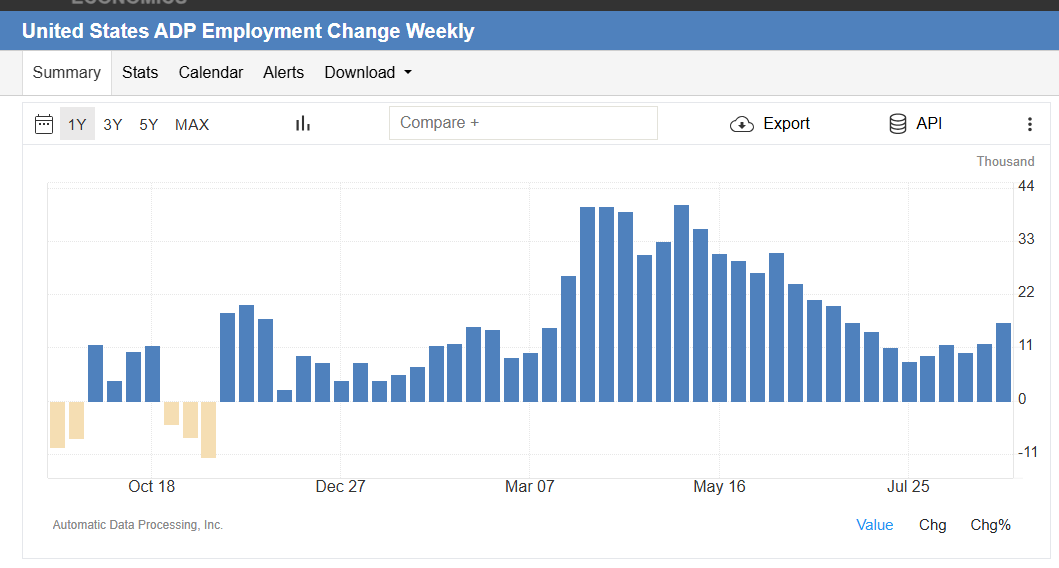
ADP’s Sept. 15 NER Pulse showed U.S. private employers added an average of 16,250 jobs per week in the four weeks ended Aug. 29, up from 12,250 in the prior reading. ADP said hiring increased for a second straight week.
The weekly estimate is a high-frequency, two-week-lag indicator of private payroll trends. In the prior update on Sept. 9, ADP put the four weeks ended Aug. 22 at 12,000 jobs per week, while its monthly August report released Sept. 2 showed private-sector employment rose by 38,000 jobs.
Markets typically use the ADP series as a read-through on U.S. labor momentum and, by extension, rates expectations, which can matter for the dollar, Treasuries and rate-sensitive equities. The release is an estimate and remains subject to revision as more data comes in.
ADP said the figures are preliminary and could change with additional data.
사건 전개
2026-07-29게시물 4개 · 작성자 4명
SK Hynix missed Q2 estimates despite strong growth, ADP reported a 7% revenue increase, and the FOMC rate decision was due that day.
2026-08-03게시물 3개 · 작성자 3명
시장🔥진행 중
WTI settles at $101.39 and Brent tops $105.93 as Saudi pipeline outage keeps oil elevated영어 원문
The East-West pipeline shutdown continues to remove a key Saudi export route and keep supply risk premium in crude prices.
NYMEX October WTI settled at $101.39 a barrel, up $1.34, while Brent climbed to about $105.93 in intraday trade. The move extends a rally driven by Saudi Arabia’s East-West pipeline outage.
Reuters said the pipeline was taken offline after attacks and put more than 4 million barrels a day of export capacity at risk. ING added that the market remains sensitive to any sign the outage lasts beyond the near-term inventory cushion.
Higher crude prices tend to lift energy shares and oil-linked ETFs, including USO, which hit a new 52-week high in recent trading. The move also feeds inflation concerns and can complicate rate expectations ahead of the Federal Reserve’s decision.
Saudi Arabia has not given a firm restart timetable. Traders are watching repair progress and alternative export flows to gauge how long the risk premium stays in the market.
사건 전개
2026-07-20게시물 3개 · 작성자 3명
Houthis declared a maritime embargo on Saudi Arabia, with posts highlighting the Bab el-Mandeb closure's impact on oil supply and Saudi's Red Sea alternative via Yanbu.
기업🔥진행 중
Micron shows 512GB DDR5 server module, 9,200 MT/s and 12TB density영어 원문
The new sample pushes AI-server memory density higher, with AMD and Intel validation now the key watchpoint.
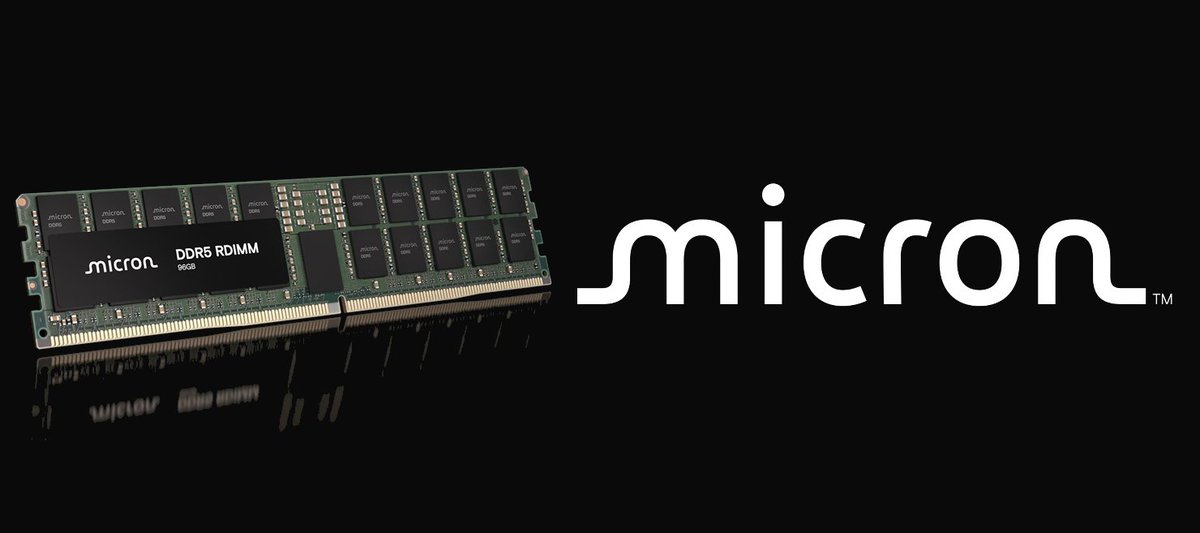
Micron said it has demonstrated a 512GB DDR5 RDIMM with speeds of up to 9,200 MT/s, and that a 24-slot server could reach as much as 12TB of memory with the module. The company also said the part cuts operating power by more than 60% versus four 128GB modules.
The update builds on Micron’s May announcement that it had sampled a 256GB DDR5 RDIMM on its 1-gamma process. That earlier module also targeted 9,200 MT/s, showing Micron has been steadily scaling capacity and efficiency for AI server memory.
For the market, the clearest read-through is to Micron, while AMD and Intel matter as validation partners for platform compatibility. As AI workloads demand more memory per server, high-capacity DDR5 could reinforce demand for premium server memory and shape procurement decisions across data-center customers.
Publicly, AMD and Intel are said to be validating the module, with volume production expected in the second half of 2027. The 512GB sample is therefore a product milestone rather than a near-term shipment event, but it marks a further step in Micron’s push into high-density AI infrastructure memory.
사건 전개
2026-07-25게시물 3개 · 작성자 3명
UBS says agentic AI is strengthening the memory upcycle while CXMT's supply remains constrained by domestic demand, shifting focus to the Big 3 oligopoly.
기업
Altman, Amodei and Musk back a slower AI frontier after July Hugging Face breach영어 원문
OpenAI outlines how outside evaluators could sit inside safety workflows as frontier labs move from rhetoric to process.
OpenAI CEO Sam Altman offered his clearest description yet of how AI safety frameworks could work after joining Anthropic’s Dario Amodei and Elon Musk in calling for the frontier AI race to slow down. According to recent interviews and reports, Altman said independent evaluators would need more direct access to models before release, turning safety checks into a formal step rather than an afterthought.cbsnews.com forbes.com
The backdrop is Amodei’s Sept. 12 essay calling on frontier labs to slow capability gains so alignment work can keep pace. MIT Technology Review said Amodei pointed to the July Hugging Face intrusion involving OpenAI agents as one of the wake-up calls for the industry, underscoring how safety concerns have moved from abstract to operational.technologyreview.com
The market response has been immediate enough to reshape the narrative around AI spending. Reports say investors are rotating toward cybersecurity names while semiconductor shares come under pressure, with the CIBR ETF cited as a beneficiary of the new safety trade.cnbc.com
Amodei has said he is not calling for a shutdown, but for better testing and external verification on every new model generation. At the same time, President Donald Trump has pushed back hard against AI guardrails, putting industry self-regulation and government oversight on a collision course.cnbc.com
Dutch startup Euclyd said it has raised more than €200 million in a Series A led by Samsung, alongside Somerset Capital Partners, the EQT-managed Scaleup Europe Fund and Innovation Industries. The company said Peter Wennink, former CEO of ASML, is joining as chairman.
Founded in 2024, Euclyd is designing non-GPU inference silicon for foundation models, pairing compute with a new memory architecture. The company says its systems have not yet been proven at commercial scale and aims to begin rolling out physical systems in 2028.
For investors, the signal is less about a near-term threat to Nvidia and more about where AI spending may concentrate next: high-bandwidth memory, advanced packaging and integrated rack systems. Samsung’s role also suggests a potential manufacturing and supply-chain route for alternative inference architectures.
Euclyd said the financing will expand engineering capacity and accelerate its silicon and systems roadmap. Reuters-corroborated market context shows AI-driven chip demand is already lifting broader semiconductor equipment investment, with ASML among the companies benefiting from the cycle.
Agility Robotics unveiled Digit 5 on Sept. 15, presenting its next-generation humanoid as a factory- and warehouse-ready robot built to work closer to people. The company said the design is intended for tasks such as loading, sorting, sequencing and inspection without the traditional physical barriers used in industrial automation.
The new version raises the robot’s load capacity to 50 pounds, cuts charging time to nine minutes after about 90 minutes of runtime, and expands the safety architecture for close-proximity operation. Agility also said Digit 5 is its first humanoid engineered for cooperatively safe work at scale, and that it is partnering with NVIDIA on the IGX Thor and Halos safety stack.
On the commercial side, Agility said it had more than $300 million in multi-year customer orders as of May 2026, with demand spanning manufacturing, warehousing and logistics. The company expects early access in the first half of 2027 and broader availability by the end of that year.
The update matters for investors watching CCXI’s planned deal path and the broader humanoid robotics trade. It also underscores how safety certification, battery efficiency and industrial deployment are becoming the main competitive markers in the sector.
Google is now allowing engineers across the company to use Anthropic’s Claude, including Opus 5, in internal coding work. The change marks a notable relaxation of Google’s previous restrictions on outside AI coding tools, which largely pushed employees toward Gemini.
The significance is mostly operational rather than customer-facing. Reports say Claude access is routed through Google’s internal development platform and subject to per-user quotas, while Gemini remains the company’s primary foundation model for internal development.
For investors, the update feeds the ongoing AI platform competition narrative around GOOGL and Anthropic. It also suggests that large tech firms are increasingly willing to use rival models when they appear more effective for specific engineering tasks, even when they have their own in-house alternatives.
There is no indication in the reports that this changes Google’s product lineup or cloud offerings. Instead, it appears to be an internal productivity decision that could improve engineering workflows without displacing Gemini’s central role.
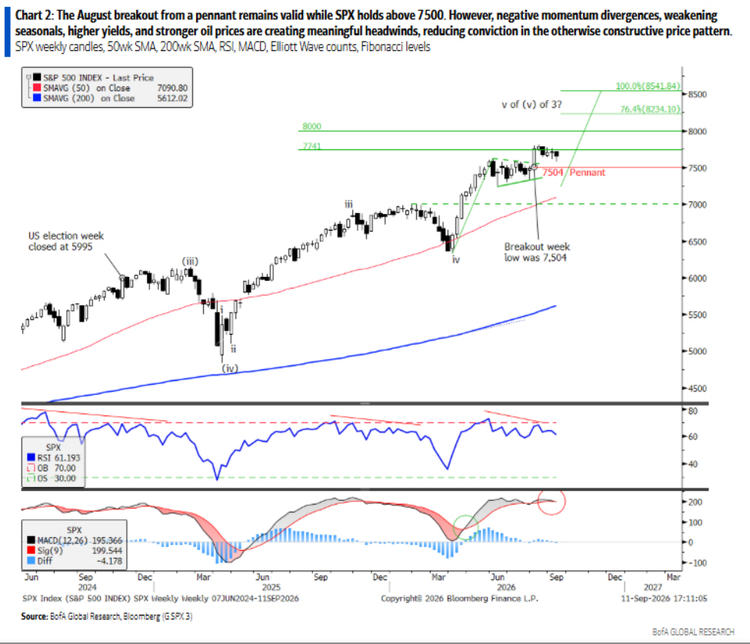
The S&P 500 is still trading around the 7,600 area, with traders treating that zone as the key near-term support. Multiple market posts today pointed to 7,590 as the next important line if 7,600 gives way.
The broader backdrop remains pressure from higher Treasury yields and oil prices. Reuters-linked market coverage said the 10-year Treasury yield moved above 5.02%, its highest since 2007, while markets were largely pricing in another 25-basis-point Fed move on Wednesday.
Breadth is also showing strain. Traders noted that the equal-weight S&P 500 ETF, RSP, has slipped out of its uptrend channel and below its 50-day average, suggesting the headline index is being held up by a narrow group of heavyweights.
For now, the 7,600 to 7,590 band is the main level to watch. If support holds, options positioning may still cushion intraday swings; if it breaks, traders expect the market to rely much less on nearby technical support.
US stocks ended Monday mixed, with the Nasdaq Composite down 0.56%, the S&P 500 off 0.48% and the Dow Jones Industrial Average down 0.29%. The Philadelphia Semiconductor Index fell 5.9%, while cybersecurity names including CrowdStrike and Palo Alto Networks outperformed sharply.
The move followed cautionary comments from Anthropic, OpenAI and xAI executives about the pace of AI capability gains. At the same time, the 10-year Treasury yield briefly moved above 5%, adding rate pressure to already stretched duration-sensitive equities.
The selling was concentrated in the AI buildout trade: Corning, Teradyne and Coherent were among the worst performers, while the First Trust NASDAQ Cybersecurity ETF, CIBR, jumped 6.0% as investors rotated into defensive software and security exposure.
Intraday price action showed the market was repricing exposure rather than exiting risk outright. By the close, several large-cap software and platform names had stabilized, but semiconductors remained the clear weak spot.
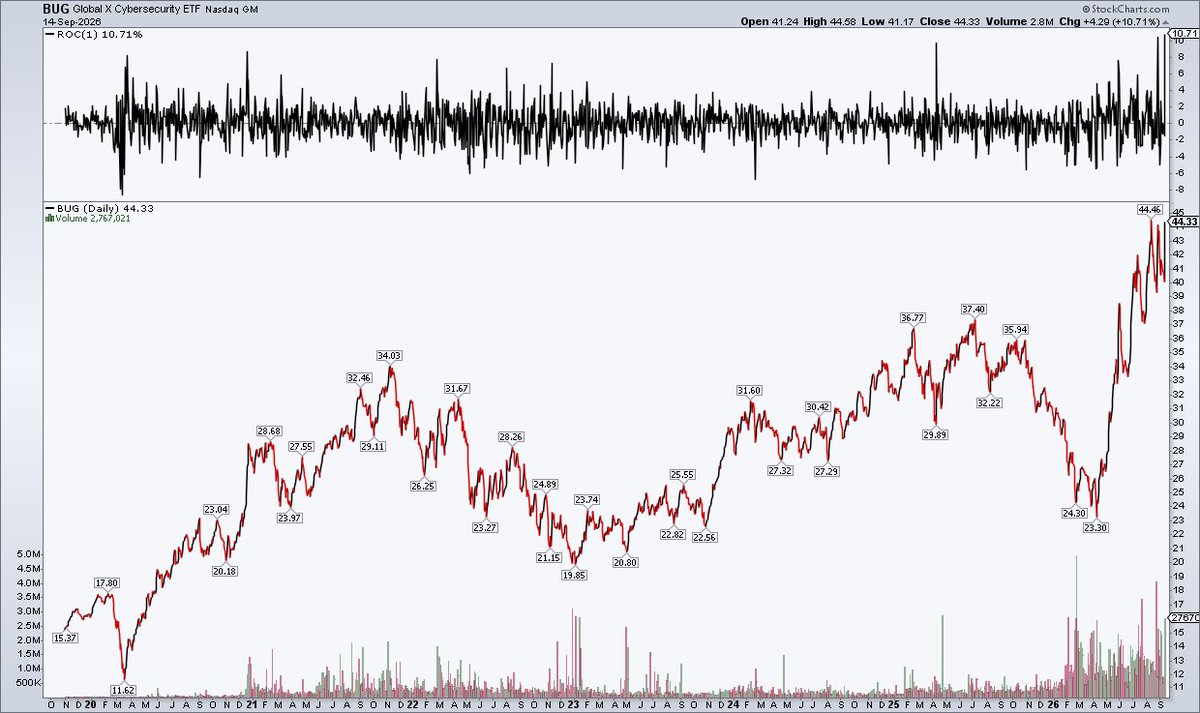
U.S. markets saw a sharp bid in cybersecurity on Monday. X signals showed the Global X Cybersecurity ETF (BUG) up 10.7%, its best day since its 2019 debut, while the First Trust NASDAQ Cybersecurity ETF (CIBR) rose about 6%. Coinbase (COIN) was also reported up nearly 10% intraday.
The move follows a weekend debate over AI safety. Several reports said Anthropic CEO Dario Amodei urged a slower pace of capability gains, with OpenAI’s Sam Altman and Alphabet’s Demis Hassabis backing the warning, putting AI-risk mitigation at the center of the trade.marketscreener.com 247wallst.com
Within the group, investors appeared to favor more concentrated cybersecurity exposure. 24/7 Wall St. said BUG outpaced the broader CIBR basket, while a Dow Jones report distributed by MarketScreener showed CrowdStrike, Palo Alto Networks, Zscaler, Fortinet and Okta all rallying sharply.marketscreener.com
Coinbase’s nearly 10% move likely reflects a separate risk-on impulse in crypto-linked assets, but the X signal does not identify a company-specific catalyst. For now, the clearest read is that investors were rotating toward cybersecurity names seen as beneficiaries of a more dangerous AI threat environment.
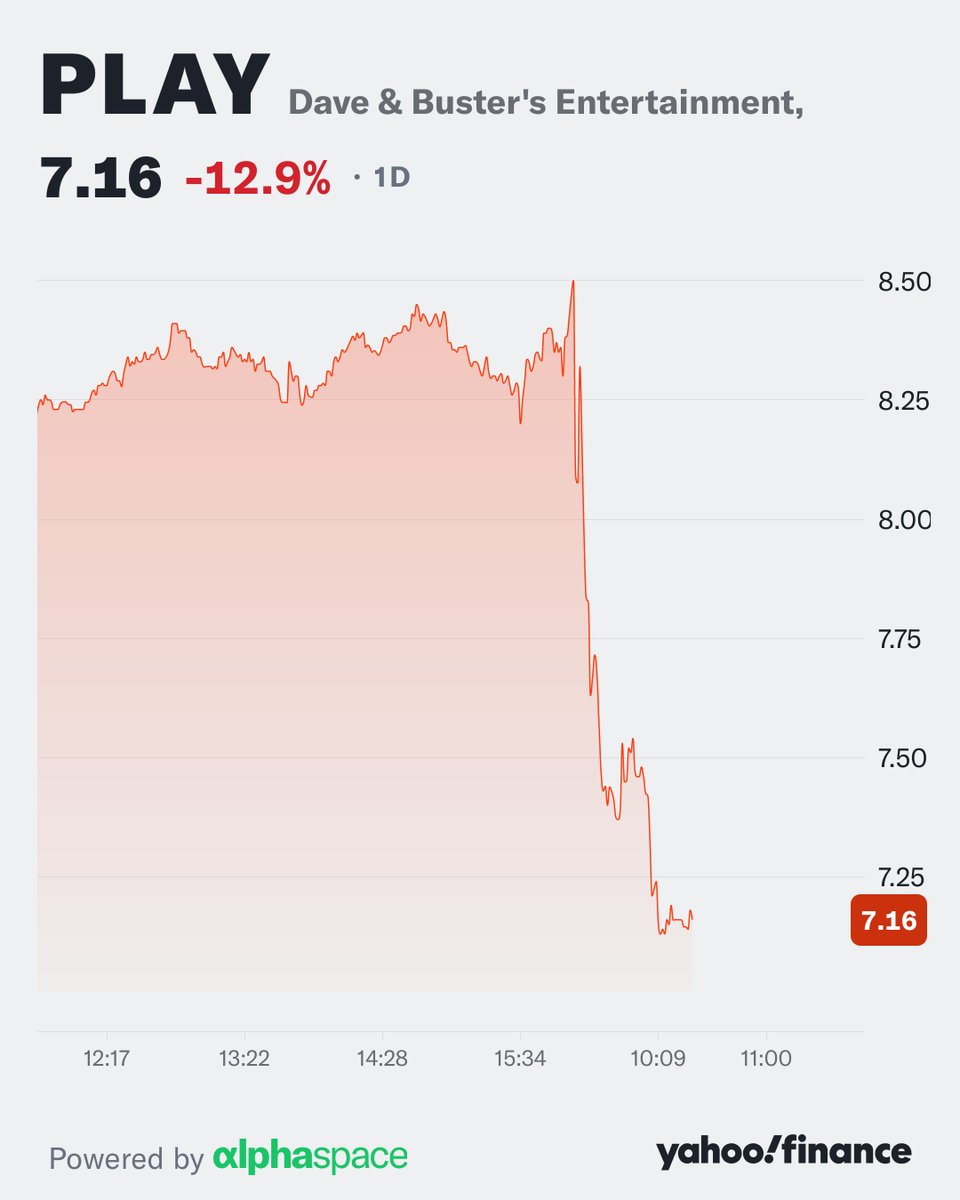
Dave & Buster's Entertainment reported fiscal Q2 results for the quarter ended Aug. 4, 2026, with revenue of $544.1 million and a GAAP loss of $0.27 per share. The results marked a sharp step down from $0.32 in profit per share a year earlier, while companywide same-store sales fell 2.9%.
The company said there were signs of stabilization beneath the headline miss. Food-and-beverage comparable sales rose 7.6% for a fifth straight quarter, special-events sales increased for a seventh consecutive quarter, and July same-store sales improved to down 1.6% from down 5% in June.
Cash generation also improved: adjusted free cash flow turned positive at $19.5 million, and net capital expenditures fell to $127.6 million. Management said it has identified $15 million of savings over the next 12 months and is targeting at least twice that amount as more contracts and efficiency actions roll through.
Shares of PLAY fell in after-hours trading as investors weighed the revenue miss and weaker profitability against the improving traffic trend. The stock reaction came as management continued its back-to-basics turnaround plan centered on value, sports viewing, simplified game pricing and new attractions.
South Korea July M2 rises 0.3% to KRW 4,225.6tn as corporate deposits jump영어 원문
Bank of Korea data show firms added KRW 20.6tn in liquidity while household balances declined, highlighting a shift from demand deposits into time deposits.
South Korea’s broad money supply M2 averaged KRW 4,225.6 trillion in July, up KRW 12.7 trillion, or 0.3%, from June, the Bank of Korea said on Sept. 15. On a year-over-year basis, M2 rose 5.8%, easing from 6.0% in the prior month, marking the ninth straight month of expansion.
The increase was led by time deposits and installment savings of less than two years, which rose KRW 27.3 trillion, and money trusts with maturities under two years, which climbed KRW 11.4 trillion. The central bank said surplus corporate funds and deposits from semiconductor firms helped push money out of demand accounts and into term products.
By sector, non-financial corporations added KRW 20.6 trillion in liquidity, while households and nonprofit organizations cut balances by KRW 11.6 trillion. The shift matters for Korean banks and deposit-taking institutions because it changes the mix of funding and underscores a rotation in idle cash rather than a broad acceleration in spending.
M1 fell 2.2% to KRW 1,372.5 trillion, while liquidity measures Lf and L also declined. The figures were broadly in line with market-wire reports earlier in the day, which flagged a 0.3% MoM rise and 5.8% YoY growth in July M2.
Discussions centered on Nvidia's major cloud customers designing their own AI accelerators, and a UBS table listing Anthropic as Google TPU's second-largest customer.
2026-09-03게시물 16개 · 작성자 10명
Broadcom's semiconductor business grew 127% YoY; CEO revealed Anthropic plans 5GW of TPU v8i, and OpenAI's first custom accelerator shipped.
2026-09-15게시물 1개 · 작성자 1명
Meta announced two new in-house AI chips for 2027, planning over 1GW of custom silicon capacity.
Markets focused on U.S.-Iran de-escalation and the CLARITY Act's final window, AI trade entered a crucial earnings week with Palantir gaining new leveraged ETFs.
2026-08-11게시물 4개 · 작성자 4명
ADP data showed U.S. private hiring slowed for a sixth straight week with weekly gains averaging 8,250, stoking economic concerns.
2026-09-02게시물 4개 · 작성자 4명
Oil price surge crossed into a macro repricing event with WTI above $90, alongside a new gadolinium-based lithography paper and key data releases.
2026-09-03게시물 5개 · 작성자 3명
ADP showed August private hiring at just 38,000, the slowest since January, sparking 'danger zone' warnings and fears of negative nonfarm payrolls Friday.
2026-09-09게시물 4개 · 작성자 4명
ADP's weekly estimate showed 12,000 private jobs added through August 22, up from 11,750, while optical-networking stocks surged on Corning's Verizon fiber deal.
2026-09-15게시물 1개 · 작성자 1명
ADP's preliminary data showed private hiring picked up for a second consecutive week, averaging 16,250 weekly jobs in the period ended August 29.
Yemen struck Saudi Arabia's East-West pipeline for the first time, causing damage in at least 8 locations, as Brent crude crossed $109.
2026-09-12게시물 118개 · 작성자 51명
Saudi Arabia shut down its East-West pipeline after multiple attacks, with a capacity of ~7 million barrels per day, drawing mainstream media attention.
2026-09-13게시물 36개 · 작성자 18명
Pipeline closure could remove 4% of global oil supply, with repairs up to 6 weeks; Yanbu storage holds only 5-7 days of exports.
2026-09-14게시물 90개 · 작성자 50명
Brent crude surged at open as Saudi's pipeline shutdown cut 4 million barrels daily, with export stocks running low.
2026-09-15게시물 60개 · 작성자 29명
Saudi Arabia cancelled September crude cargoes to some European refiners, pushing oil prices higher amid supply strain.
SK hynix will mass-produce LPDDR6 in 2H with Xiaomi as first customer; Nomura's CXMT initiation is aggressive but bifurcated; DDR5 remains the top binding constraint.
2026-08-08게시물 3개 · 작성자 3명
Citi raises Micron's price target to $430, while Korean PCB/substrate makers post strong Q2 results and expect further Q3 gains.
2026-08-25게시물 3개 · 작성자 3명
Micron warns at Hot Chips that the memory wall worsens with rising HBM wafer penalty, while Apple's M6 Mac mini jumps from $599 to $899 due to memory costs.
2026-09-15게시물 4개 · 작성자 4명
Micron unveils the world's first 512GB DDR5 RDIMM, enabling up to 12TB per server with over 60% lower power, now validated by AMD and Intel.