The United States has begun imposing 50% tariffs on selected Canadian imports, covering roughly $20 billion of goods. Ottawa said it will respond dollar for dollar and suspended trade talks with Washington.
The move follows several days of late-stage negotiations in Washington, after the Trump administration delayed the duties by three days to give both sides time to finalize a deal. The sticking points were reported to include metals, autos, dairy and alcohol.
For markets, the pressure falls most directly on Canadian exporters and cross-border supply chains in steel, aluminum, auto parts, dairy and consumer goods. The Canada ETF [EWC] and other trade-sensitive names may see renewed attention as higher tariff costs feed uncertainty across North American manufacturing.
Canadian officials said the U.S. terms were unfair, while U.S. officials had said a deal was close before the talks collapsed. Based on the reporting, this is the formal implementation of a delayed tariff package rather than the start of the dispute itself.
U.S. Treasury Secretary Scott Bessent said the department will increase the size of long-dated bond buybacks, lifting the cap to at least $4 billion per operation. Reuters reported that the move followed a surge in 30-year Treasury yields to their highest level since 2007, briefly calming the long end before yields rebounded.
The backdrop is a federal debt load that has crossed $40 trillion, with investors still worrying about deficits, inflation and the government’s funding needs. Strategists cited in Reuters and CNBC said buybacks can signal support to the market, but they do not solve the structural fiscal problem.
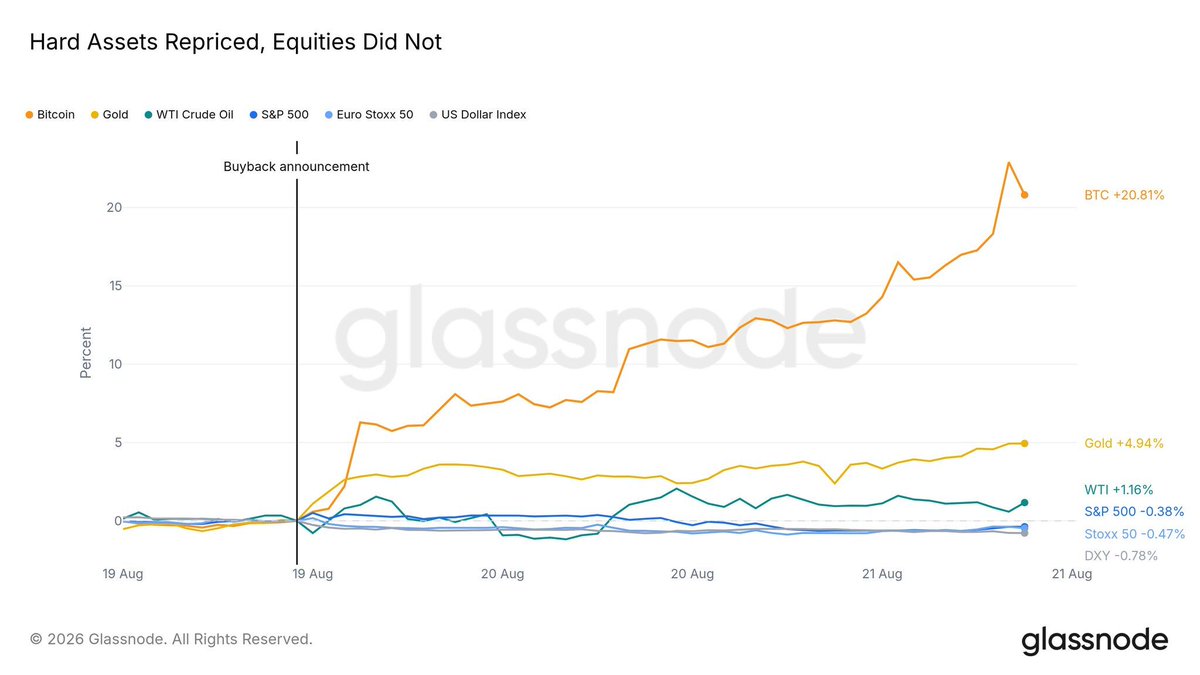
Market pricing has since swung again: long-term yields have retraced much of the post-announcement drop, the dollar has softened, and gold and bitcoin have both rallied. Bloomberg-linked market reports and crypto coverage said bitcoin gained about 21% after the announcement, reinforcing the “dollar-debasement” trade.
Bessent has said Treasury may increase buybacks further and that the department has a larger toolkit beyond this operation. For now, investors are watching whether the government leans more heavily on market-support tools, or whether that simply shifts the adjustment into the dollar and other assets.
Moderna and Merck said on Wednesday that their personalized mRNA cancer vaccine, intismeran, delivered positive results in a phase III trial in high-risk melanoma. Used alongside Merck’s Keytruda, the therapy kept patients longer alive without recurrence or metastasis than Keytruda alone.
The study enrolled about 1,100 patients who had surgery to remove advanced melanoma, according to reporting cited by multiple outlets. It is the first positive late-stage result for an mRNA cancer vaccine, a milestone that supporters say offers proof of principle for personalized cancer immunotherapy.
The announcement gave Moderna’s shares a sharp lift and renewed attention on the company’s post-Covid pipeline, while Merck stands to benefit from extending Keytruda’s reach. Still, the vaccine is personalized and complex to manufacture, and the companies have not yet released the full dataset.
The firms said more detailed findings will be presented later at a medical conference. Regulators would still need to sign off before any wider use, even as analysts watch whether the platform can expand beyond melanoma to other tumors.
China’s market regulator said Tesla will recall about 2.98 million vehicles in the country over safety risks tied to emergency door release identification after a severe crash or power loss. The fix will consist mainly of warning labels and an over-the-air software update to help drivers and rescuers find the handles faster.
The move lands amid a broader regulatory sweep: Reuters said Tesla and eight other automakers are recalling roughly 4.3 million vehicles in China this week over related door-handle concerns. China has also said it plans to ban concealed exterior door handles from 2027, underscoring a wider shift in vehicle-safety standards.
For investors, Tesla is the direct exposure point, while other EV makers using similar flush-handle designs may face tougher scrutiny in the world’s largest auto market. The recall could also amplify attention on TSLA’s China sales mix and its product-design choices.
Tesla has not publicly contested the recall action in the materials reviewed. Chinese regulators said the affected vehicles include Shanghai-made Model 3 and Model Y units as well as imported Model 3, Model X and Model S cars.
Broadcom debt talks grow to $70 billion-$100 billion for AI chip financing
CNBC says the proposed SPV-backed package has expanded from an earlier $60 billion-plus range, underscoring how aggressively AI infrastructure is tapping debt markets.
Broadcom is now in talks to raise roughly $70 billion to $100 billion in debt for an AI chip financing deal, according to CNBC citing people familiar with the matter. Bloomberg had earlier reported the company was seeking more than $60 billion, with the structure potentially split between senior and junior tranches through a special-purpose vehicle.
The financing is expected to support Anthropic and other AI companies, building on a June arrangement in which Broadcom, Apollo Global Management and Blackstone helped finance about $35 billion of Anthropic-related compute expansion. That earlier platform was designed to support more than 20 gigawatts of compute capacity by 2028.
For markets, the headline keeps attention on AVGO and on credit investors tied to AI infrastructure, while also highlighting the scale of capital being funneled into data centers and custom chip buildouts. The broader backdrop includes Nvidia’s recently disclosed plan to provide up to $105 billion for an OpenAI data center in Ohio, another sign that AI capex is being increasingly financed through debt-like structures.
Broadcom, Apollo and Blackstone had not immediately commented on the Bloomberg report. The deal remains fluid, with both size and tranche mix still subject to negotiation.
How this story unfolded
Company🔥Developing
Microsoft receives first Vera Rubin systems as Nvidia pushes 10x platform into Azure
Satya Nadella called it “delivery day,” turning Nvidia’s Rubin production claim into a visible Microsoft deployment milestone.
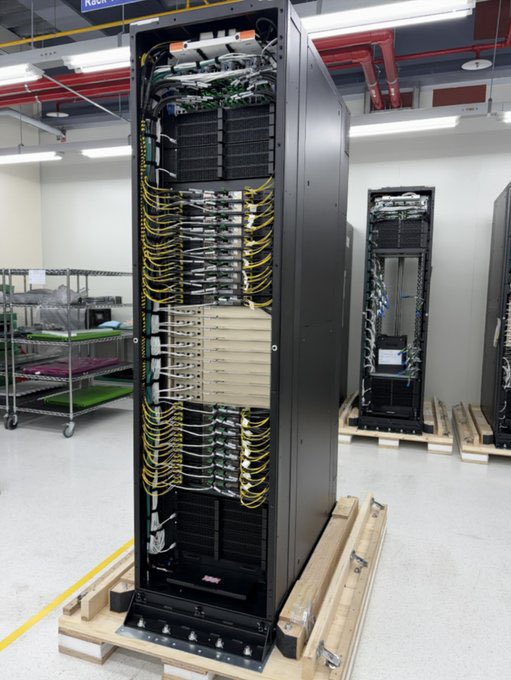
Microsoft CEO Satya Nadella said on X that the company’s data centers are seeing the “first production Vera Rubins” arrive, calling it “delivery day.” Nvidia amplified the post, underscoring that the Vera Rubin platform has moved from full-production talk to real shipments at Microsoft sites.
Vera Rubin is Nvidia’s next-generation rack-scale AI platform for hyperscale cloud and AI factory deployments. Nvidia has previously said Rubin systems are already running with partners such as CoreWeave, and that the platform is designed to deliver materially higher throughput per megawatt and lower token costs than the prior generation.
For investors, the news reinforces the AI infrastructure buildout story for MSFT and NVDA. Microsoft is adding tangible evidence for Azure’s next-wave AI capacity, while Nvidia gains another high-profile customer milestone as it monetizes the Rubin ramp across cloud and server partners.
The announcement appears to be a first-delivery milestone rather than a broad commercial rollout. That makes the update important mainly as execution proof: the Rubin transition is no longer just a production roadmap item, but is now visible inside Microsoft’s data-center footprint.
A fresh round of reporting is sharpening the debate over whether mega-cap tech’s AI infrastructure spree can earn its keep in a higher-yield world. Bloomberg’s latest commentary argues that the revenue uplift investors are counting on may not arrive quickly enough to justify the scale of spending now underway. bloomberg.com
The backdrop is still enormous capex. A recent Motley Fool report said Alphabet and Amazon are together planning about $420 billion of AI infrastructure spending in 2026, with Alphabet at $195 billion to $205 billion and Amazon at $220 billion. fool.com
That scale is feeding concerns across the AI supply chain. Hardware and networking vendors, memory names like Micron (MU), and optical-component suppliers such as Lumentum (LITE) remain tightly linked to the pace of data-center buildouts and could see sentiment swing with any sign of slower orders or tighter financing conditions.
For now, the story is about scrutiny rather than a formal reversal: investors are asking whether AI capex will translate into enough incremental revenue before debt costs and return expectations bite. The latest coverage adds fuel to that question, but it does not amount to a company-specific warning or a new disclosure.
Michael Burry updated his positions on X, saying he opened a new short in CoreWeave (CRWV) and added to shorts in Micron (MU), the semiconductor ETF SOXX and Palantir (PLTR). The move is the day’s new signal and shows his bearish stance now spans the AI chain from infrastructure to chips to software.
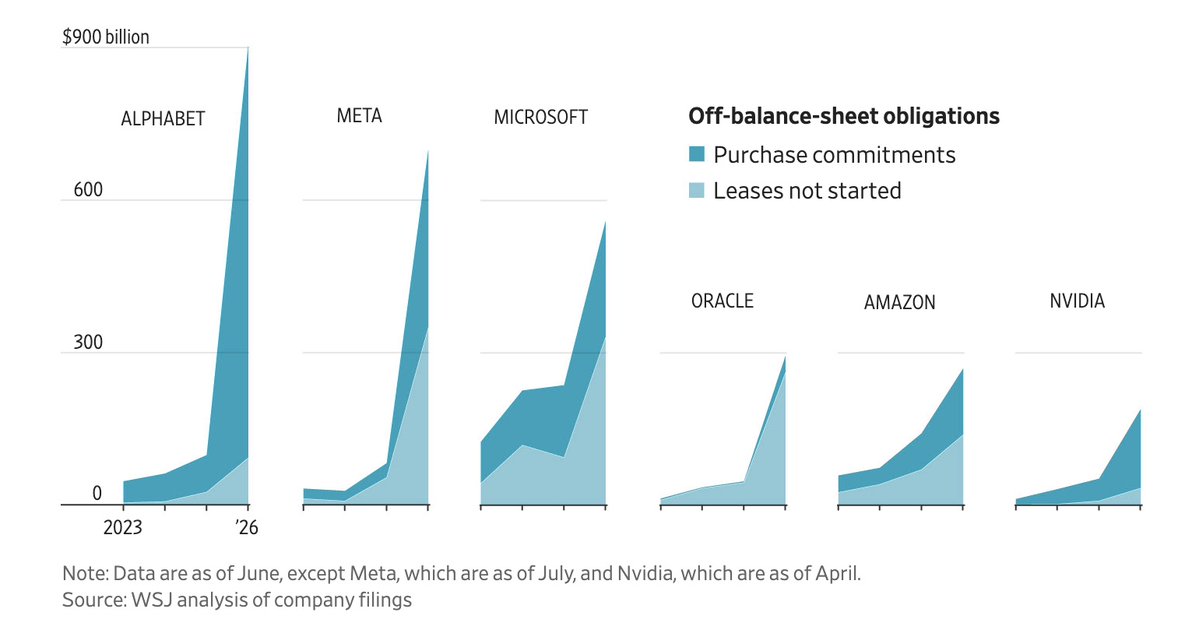
The backdrop is a string of public warnings from Burry about AI spending and accounting assumptions. Recent reporting tied his comments to about $3 trillion in off-balance-sheet commitments among major tech names, including roughly $1.2 trillion in not-yet-started leases and $1.9 trillion in purchase commitments; Alphabet alone disclosed $811 billion in purchase and contractual commitments.
For the market, the names matter because they map onto different parts of the AI trade. CoreWeave is a high-profile AI infrastructure player, Micron and SOXX sit in the semiconductor complex, and Palantir is one of the sector’s best-known software winners, so Burry’s latest disclosure puts pressure on sentiment across multiple AI-linked pockets.
The update comes from Burry’s own X post; none of the companies named in the signal had publicly responded to the position changes at the time of writing. It reads as an extension of his earlier bearish AI positioning rather than a separate standalone event.
How this story unfolded
Markets
Kalshi sees Bitcoin at $90,000 as BTC still hovers near $77,000
The latest odds show traders leaning bullish, even as liquidations and sharp intraday swings keep the rally fragile.
Kalshi traders are now forecasting Bitcoin to finish the year at $90,000, according to the latest market signal shared on X. At the same time, CoinBureau reported that $477 million of crypto longs were wiped out in the past hour as BTC slipped back to around $77,000.
The move comes after a powerful run that pushed Bitcoin as high as $79,500 before today’s reversal. Earlier reporting from CoinDesk said the broader crypto rally had already triggered about $3 billion in short liquidations, underscoring how heavily the latest surge was driven by positioning.
The price action has spilled into crypto-linked equities and treasury plays. Recent coverage cited Canaan up more than 25%, while Strive and Metaplanet each gained more than 16% as Bitcoin climbed, with Coinbase also drawing strong momentum in the sector.
That mix of bullish prediction-market sentiment and heavy liquidation suggests traders are still fighting over the same rally. The market is treating Bitcoin less like a stable breakout and more like a fast-moving trade that can swing sharply in either direction on fresh flows.
The U.S. Justice Department said on Aug. 21 that TikTok, ByteDance and affiliated entities agreed to pay $400 million to resolve litigation over alleged violations of the Children’s Online Privacy Protection Act. Under the deal, TikTok will pay $300 million immediately, with another $100 million due if a court vacates an earlier consent decree tied to Musical.ly.
The case centered on allegations that TikTok collected personal information from children under 13 without parental consent. The DOJ said TikTok has made significant changes since the complaint was filed in 2024, including to ownership, management, compliance functions and privacy practices.
For public markets, the settlement is mainly a regulatory-risk marker for social-media platforms rather than a direct listed-equity event, since ByteDance is private. It also keeps pressure on peers such as Meta, where youth-safety and privacy controls remain a recurring policy and legal focus.
The DOJ described the resolution as one of the largest recoveries ever obtained in a COPPA case. The department also said the claims were allegations only and that no liability determination was made.
Bloomberg reported on Aug. 21 that Apple is cutting jobs across its Siri and Vision Pro teams, with more than 200 roles affected. The affected work spans 3D video, immersive video and gaming, according to the report echoed by several market-news wires.
This is the latest incremental sign of Apple’s ongoing reorganization rather than a definitive exit from Vision Pro. Earlier reporting has pointed to Apple reshuffling its spatial-computing roadmap while putting more emphasis on AI and future device categories.
For AAPL, the market takeaway is about capital allocation and product mix. Investors will likely watch whether Apple keeps trimming headset-adjacent content teams while redirecting talent toward AI features and wearable hardware.
Apple has not publicly commented on the report. For now, the verified fact is the workforce reduction itself; the long-term product conclusion remains unconfirmed.
The Dutch Data Protection Authority has fined Uber €825 million over the company’s use of automated systems to suspend or deactivate driver accounts between 2020 and 2022. The regulator said the process did not provide sufficient transparency or human review.
The case originated with a complaint in France and was handled in the Netherlands because Uber’s European headquarters are there. Reuters said the penalty could be the second-largest ever under the EU’s GDPR, behind Meta’s €1.2 billion fine in 2023.
For Uber, the ruling puts its driver-management and platform-compliance practices back under scrutiny, with the main listed subject being UBER. The company said it disagrees with the decision and will appeal.
The Dutch authority said people should not be subject to decisions made solely by automated processing when the consequences are significant. Uber said it has review and appeal processes for drivers and called the fine disproportionate.
Tesla’s Nevada robotaxi story took a notable turn after follow-up reporting said the company is now cleared for up to 5,000 autonomous vehicles in Clark County. That marks a sharp jump from the earlier interim order that limited Tesla to 10 vehicles under a narrow geofence.
The backdrop is Tesla’s June filing with Nevada regulators, which asked for authority to run as many as 5,000 vehicles in the first 12 months. The initial July approval was far more restrictive, with a 45 mph cap, airport restrictions and human supervision requirements, according to reports and regulator records.
For TSLA, the significance is less about immediate fleet size and more about whether Tesla can turn robotaxi into a scalable commercial service. The news also puts Tesla back into the competitive frame with operators such as Zoox and Waymo in the U.S. autonomous-ride market.
Tesla has not provided a fresh public comment on the latest reported permit change. The key point for investors is that the Nevada clearance described in the latest coverage is no longer the 10-car placeholder, but a much larger operating authorization.
How this story unfolded
2026-06-285 posts · 4 authors
Official Tesla documents reveal Cybercab's active hood and pressurized air canisters, while discussions highlight AI as a potential growth area.
2026-07-23
Company
Musk says SpaceX is aiming for 30-plus Starship launches a day by 2030
The latest X post adds a fresh target to SpaceX’s launch push, against a new U.S. policy that seeks 1,000 annual launch and reentry operations by 2030.
Elon Musk said on X that SpaceX is aiming for more than 30 Starship launches per day by 2030, which works out to more than 10,000 launches a year on an annualized basis. He framed the goal as tiny compared with commercial aviation, underscoring just how aggressive the cadence target is.
The comment comes as the Trump administration has rolled out a new national space transportation policy that seeks at least 1,000 U.S. launches and reentries annually by 2030. Separate reporting also says the FAA relayed SpaceX’s higher launch ambitions after a meeting with company leadership, placing Musk’s post in a broader policy-and-permitting context.
There is no public equity ticker for SpaceX, but the update matters for launch-market and satellite-internet expectations, especially around Starship reusability and Starlink deployment. Any sustained increase in cadence would ripple through launch providers, spacecraft suppliers and the broader commercial space ecosystem.
For now, the statement is an ambition, not an execution update. SpaceX has not laid out a public timetable for reaching that daily rate, and the policy backdrop does not remove the licensing, infrastructure and reliability hurdles ahead.
Bitwise CEO Hunter Horsley said on X that the Bitwise Solana Staking ETF, BSOL, brought in more than $20 million of net inflows this week. The comment adds a fresh data point to a product that has already been drawing steady demand.
BSOL is not a brand-new listing. Public reports from earlier this month showed that U.S. Solana spot ETFs had already amassed roughly $1.16 billion in cumulative net inflows, with BSOL accounting for about $900 million of that total.
For Bitwise, the continued inflows help reinforce BSOL’s lead in the Solana ETF category. For the broader market, the numbers suggest that investors are still using listed funds to gain exposure to SOL rather than waiting on the sidelines.
There has been no new regulatory setback or product cancellation tied to Horsley’s post. The update is best read as a fresh inflow check-in, not as a forecast on SOL’s price action.
Solana traders kept the $100 level in focus on Saturday. Polymarket showed a 58% chance that SOL will reclaim $100 by the end of August, while an X-trading account said the token is testing the $95 area.
The latest chatter builds on a sharp weekly move: SOL is up about 25% over seven days and briefly touched $93.39. The rally also came after the U.S. Treasury said it would raise the size of its liquidity-support buyback operations for longer-dated Treasuries from $2 billion to at least $4 billion, while U.S.-listed spot SOL ETFs logged $14.58 million of net inflows on Thursday, the strongest daily reading since late July.
That mix of price momentum and fund flows has made SOL one of the more closely watched high-beta crypto names this week. Reports said the token has reclaimed its 50-day, 100-day and 200-day moving averages, with traders now watching the $95 and $100 levels as the next reference points.
For now, the Polymarket odds and social-media calls reflect positioning rather than confirmation. Whether the move extends will likely hinge on whether ETF inflows and broader crypto risk appetite stay firm.
Bankers for Anthropic are reportedly discussing an IPO that could raise more than $100 billion and value the AI company at roughly $2 trillion. That is the new incremental detail in today’s reporting; Anthropic itself has not publicly confirmed terms or pricing.
The backdrop is a surge in business momentum. Bloomberg said Anthropic’s annualized revenue run rate topped $65 billion by the end of July and that second-quarter preliminary revenue exceeded $11.5 billion, while Reuters reported that some bankers and investors are anchoring valuation discussions to a 2028 revenue forecast of roughly $190 billion to $200 billion.
If such a deal materializes, it would reset the benchmark for mega-IPOs and sharpen comparison across the AI sector. The discussion also highlights how public-market pricing could spill over to peers and to the banks involved, including Morgan Stanley, Goldman Sachs and JPMorgan.
Anthropic has not immediately commented, and the structure, size and timing of any offering could still change. For now, the story is being driven by reported banker conversations, investor briefings and unusually fast revenue growth rather than any formal pricing announcement.
How this story unfolded
2026-06-254 posts · 4 authors
Discussions centered on potential overvaluation of AI-linked assets post-SpaceX IPO and Robinhood users receiving SpaceX shares.
Company🔥Developing
Anthropic hires Google chip veteran as hardware push deepens
Amir Salek’s move to Anthropic adds fresh evidence that the Claude maker is building a custom-silicon effort.
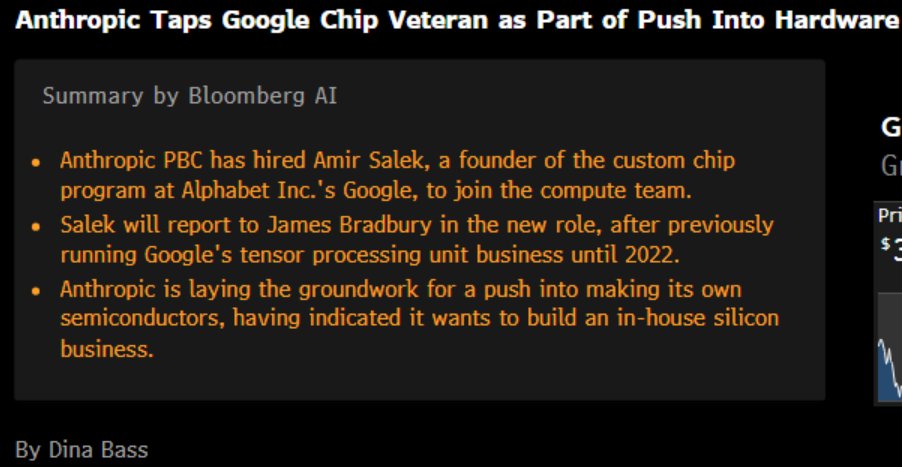
Multiple reports say former Google chip executive Amir Salek is joining Anthropic’s compute team, adding a high-profile hire to the company’s effort to move from buying AI capacity to designing more of its own hardware. Anthropic has not publicly detailed the appointment, but the move fits its recently confirmed custom-silicon push.
The hiring follows Anthropic’s August confirmation that it is building an in-house chip design team to co-design hardware and models for Claude. The company said it will still rely on AWS, Google, Nvidia and AMD for compute, framing custom silicon as an addition to, not a replacement for, its current supply base.
For Google-parent Alphabet, the development is more about strategic signaling than an immediate revenue hit. Anthropic remains a large TPU and cloud customer, but a stronger in-house chip effort could reshape how future AI infrastructure spending is allocated across partners.
Reports earlier this month also pointed to preliminary Samsung discussions around manufacturing. The new hire adds another data point that Anthropic is assembling the people and infrastructure needed for a longer-term hardware strategy.
How this story unfolded
2026-06-235 posts · 5 authors
Blackstone announced a $30B AI data center investment in Japan, xAI's massive compute commitments were revealed, and debates on sovereign vs. imported AI emerged.
Company🔥Developing
AAOI eyes another $600 million ATM as capacity buildout intensifies
The proposed financing underscores how costly the race to add U.S. optical-module capacity has become as AI demand keeps outpacing supply.
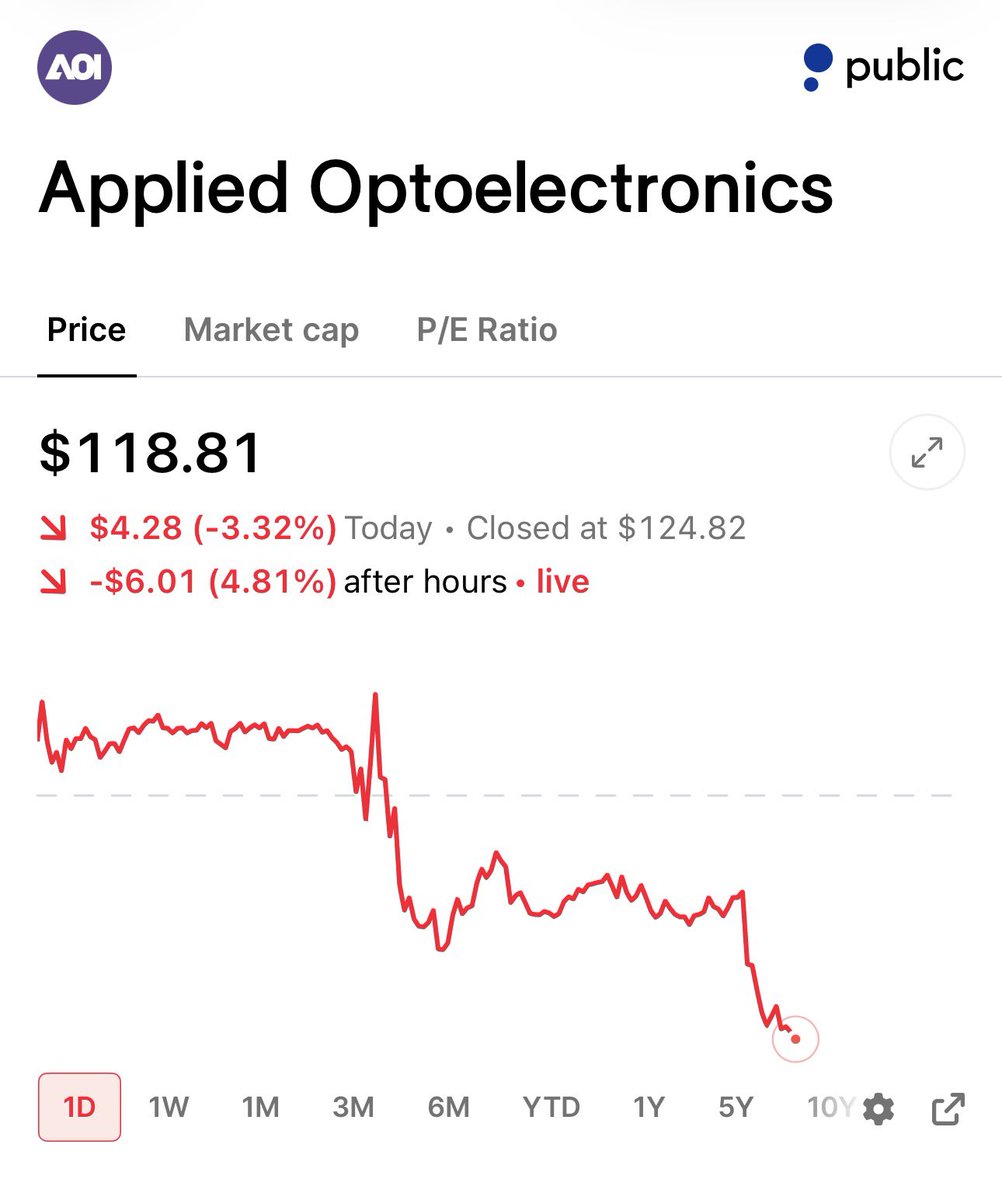
Applied Optoelectronics was widely circulated on X today as having filed another $600 million at-the-market equity offering to help fund its capacity expansion. If confirmed, the move would add fresh financing to a buildout that is already central to the company’s AI networking strategy.
Last week, AAOI said in its second-quarter results that demand for 800G and 1.6Tb products is expected to outpace production capacity through mid-2027. The company also said total manufacturing capacity is approaching 200,000 units per month and that it expects to reach about 650,000 units per month by year-end.
Investors have been focused on whether the company can scale production fast enough to capture AI data-center demand while managing dilution and capital intensity. The latest market chatter keeps AAOI in focus as one of the most direct beneficiaries of the optical-transceiver upgrade cycle.
For now, the financing claim remains a social-media signal in the materials provided, not a separately confirmed corporate statement. The company’s filings and earnings release do, however, make clear that expansion spending will remain elevated.
How this story unfolded
2026-08-074 posts · 3 authors
AAOI rallied from post-earnings low to $140.32, with management expecting full qualification of 1.6T products by a hyperscaler within weeks.
Company
Walmart to add Tap to Pay on Aug. 24, roll out to all U.S. stores by year-end
Apple Pay and Google Pay are set to enter Walmart checkout lanes, filling a long-missing gap in the retailer’s payment lineup.
Walmart said Friday it will begin adding Tap to Pay at select Walmart stores and Sam’s Club locations on Aug. 24, with contactless payments planned for all U.S. stores and clubs by the end of 2026 and fuel stations by mid-2027. The company said eligible contactless cards, phones and smartwatches will be supported, along with digital-wallet use for eligible Walmart, Sam’s Club and OnePay cards.
The move marks a notable shift for Walmart, which has long resisted Apple Pay and Google Pay in favor of its own checkout tools. TechCrunch and Modern Retail both reported that Apple Pay and Google Pay are included in the rollout, while Walmart’s announcement describes the addition as a broader Tap to Pay option.
For investors, the change adds a new consumer-facing use case for WMT and extends Apple’s payment footprint in physical retail. It also gives Google Pay more in-store reach at one of the country’s biggest merchants, making the rollout relevant to both the retail and payments ecosystems.
Walmart framed the update as a customer-choice initiative rather than a replacement for its existing payment stack. The company said Walmart Pay and Sam’s Club Scan & Go will remain available alongside the new contactless options.
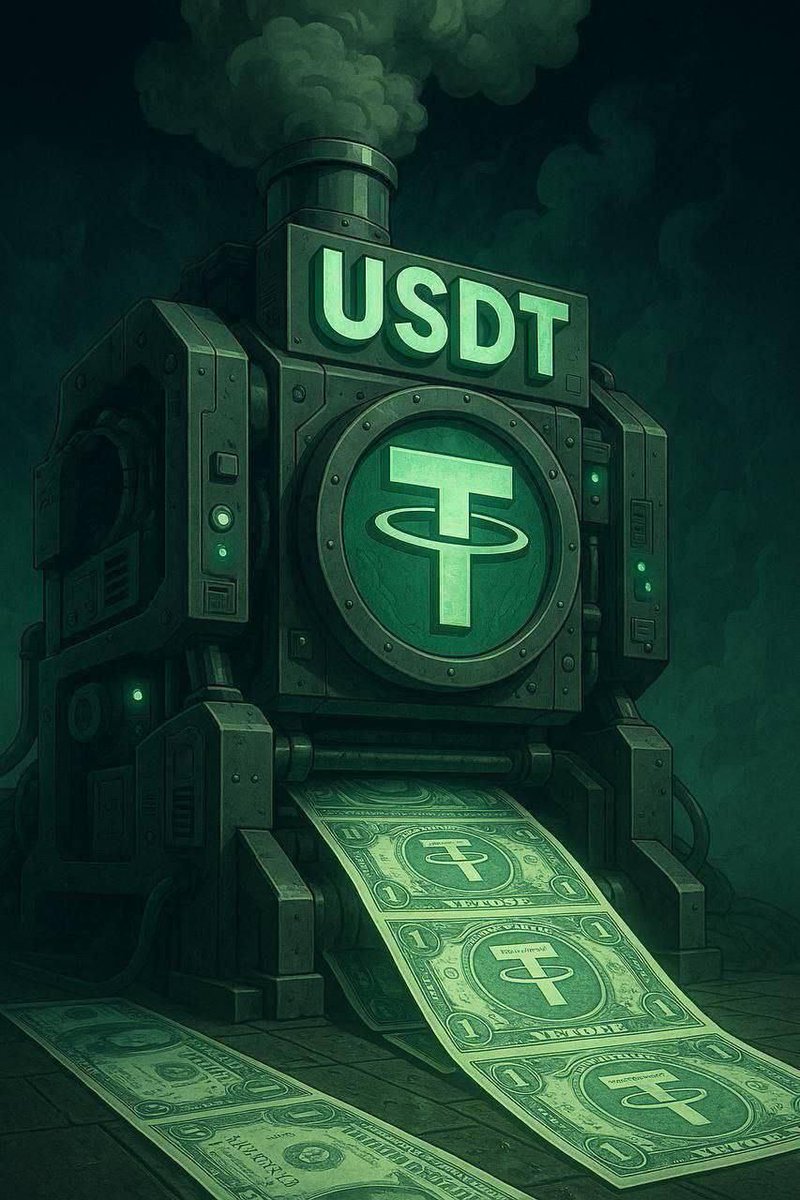
On-chain signals showed Tether minted $3 billion of USDT within roughly an hour, then burned $2 billion shortly after. X posts circulated the move as a liquidity-management event, but Tether has not publicly explained the purpose of this latest sequence.
Tether mint-and-burn activity typically happens at the treasury level and is often associated with exchange funding, redemptions, or cross-chain cash management. We also cross-checked prior Whale Alert disclosures showing $1 billion USDT mints from Tether Treasury on Ethereum, including two separate $1 billion mints in April.
For markets, changes in USDT supply can affect available dollar liquidity across crypto exchanges and help shape trading depth in BTC, ETH and other majors. A larger flow from Tether into venues such as Binance is usually read as a sign of rising market activity, though it does not indicate price direction.
The same X thread also mentioned a Bitcoin whale sending another 3,000 BTC to Binance, adding to the day’s large-flow backdrop. That transfer is a separate flow and should not be treated as evidence of a direct link to Tether’s mint-and-burn sequence.
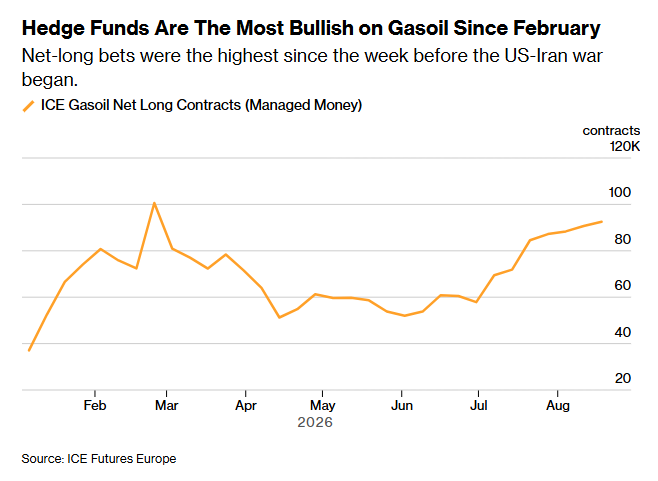
Bloomberg said hedge funds cut short-only positions in European diesel to the lowest level in more than two years while adding fresh bullish wagers. The move comes as diesel markets remain tight and product cracks stay elevated.
Recent background reporting points to persistent pressure on distillates, with refinery outages and shipping disruptions keeping supply constrained. AGBI said Middle East refinery disruption has pushed diesel margins to record highs, while market commentary also flagged tight European winter conditions.
The price signal matters for refiners and fuel-linked equities, including Marathon Petroleum, Valero, Phillips 66 and HF Sinclair, because stronger diesel cracks can support refining margins. At the same time, higher diesel costs feed through to freight and broader inflation expectations.
No company-specific response was cited in the reporting. The key development is a shift in positioning toward European diesel, not a new corporate action.
Solana’s mainnet slot time has been reduced from 400 milliseconds to 350 milliseconds, marking the network’s first-ever slot-time cut. Multiple reports point to the change, and Solana’s own upgrade materials describe it as the first step in a staged latency-reduction rollout.
The move is part of SIMD-0525, which lays out three more 50-millisecond steps to 300ms, 250ms and ultimately 200ms. Solana Media says the rollout is tied to Agave 4.2 feature activations, underscoring that the network is advancing through a phased upgrade path rather than a one-shot switch.
For markets, lower slot times matter most for latency-sensitive use cases such as HFT, on-chain order books and DeFi, where faster confirmation can improve execution quality. At the same time, validators, SDKs and off-chain services must adapt to the new timing parameters to avoid mismatches with legacy 400ms assumptions.
The latest step is a live mainnet change, but the 200ms target remains a roadmap item implemented in stages. That leaves SOL’s ecosystem performance narrative in focus as the network continues testing whether faster slots can hold up under real traffic.
Markets
FCX hits record high as $3 million call flow lands on $80 strike
Copper strength and a fresh options print put Freeport-McMoRan back at the center of the metals trade.
Freeport-McMoRan (NYSE: FCX) reached a new all-time high on Friday, according to trading signals posted on X. The same signals highlighted unusual bullish options activity: a December 18 $80 call reportedly traded for more than $3 million in premium, with traders pointing to roughly 65% gains since the prior day.
The move comes on top of a solid quarterly report. Freeport said second-quarter adjusted earnings were $0.74 per share, ahead of the $0.62 consensus, while revenue came in at $7.03 billion, above expectations. The company also guided to about $8.3 billion in operating cash flow for 2026 and roughly $4.3 billion in capital spending.
FCX remains a key proxy for copper sentiment, and recent coverage has emphasized tighter copper fundamentals and stronger mining-stock momentum. That has kept Freeport, copper ETFs and peer miners in focus as investors rotate into the metals trade.
For now, the latest incremental news is the combination of a record price print and a notable call purchase, which can amplify near-term trading interest. FCX is the central name in the move, with copper prices providing the broader backdrop and options activity adding fuel to the stock’s visibility.
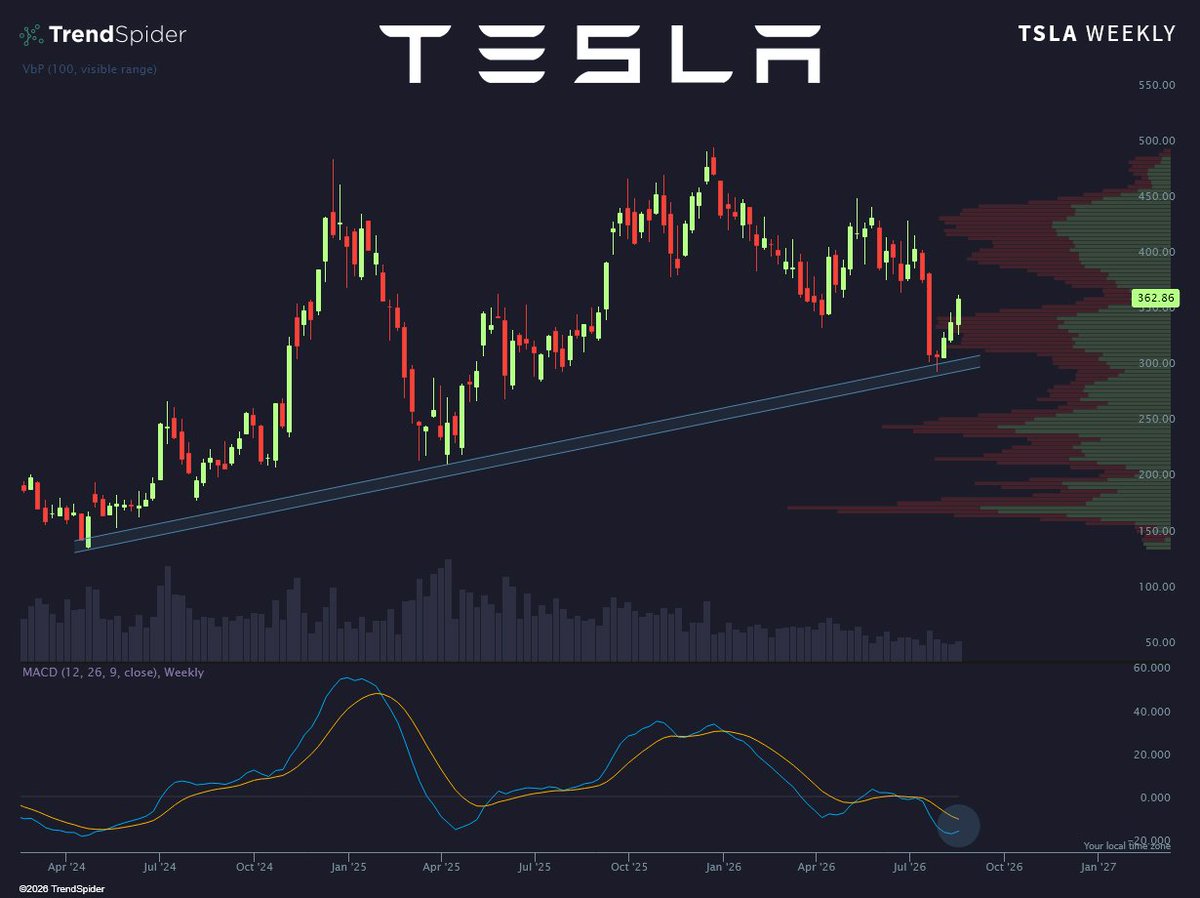
Tesla has regained the $337 support area, and traders are now watching $351.62 as the next key level with a $370-$400 zone back in focus. On X, bullish short-term calls and gap-fill chatter have added to the momentum-sensitive setup.
The backdrop is a volatile post-earnings tape: Tesla sold off after July results, then recovered part of that decline as reports tied Cybercab and other autonomy plans to Austin deployment preparations. That has kept the robotaxi narrative alive even as investors continue to debate fundamentals.
For TSLA, the market impact is less about a fresh corporate announcement than about positioning. Short-dated call buying can amplify moves in either direction, while the autonomy story continues to influence how traders frame Tesla’s premium valuation.
Technical notes from recent coverage put the main reference points at $337 support, $351.62 resistance and an unfilled gap around $373. Separate reports say Tesla is preparing Cybercab-related infrastructure in Austin, but the company has not issued a new official short-term price catalyst.
How this story unfolded
2026-06-286 posts · 3 authors
Tesla published the First Responders Guide for Cybercab, detailing active hood, pressurized air canisters, and the absence of steering wheel and pedals.
Macro🔥Developing
Baker Hughes U.S. oil rigs fall to 452, total rig count to 588
The latest weekly tally points to softer drilling activity in the U.S., a closely watched gauge for oilfield service demand.
Baker Hughes said U.S. oil rigs fell to 452 as of Aug. 21, down 3 from the prior week, while the total U.S. rig count slipped to 588, down 5. U.S. gas rigs eased to 127, also down 1 week on week.
The company’s rig count is widely used as a high-frequency indicator of drilling activity in the oil and gas sector. Baker Hughes says the series has been followed for decades by journalists, analysts and policymakers as a barometer for demand in drilling-related services.
For oilfield service names, weekly rig moves matter because they feed expectations for drilling, completion and equipment demand. That includes companies such as Baker Hughes, Halliburton and SLB, although this signal itself is a macro data release rather than a company-specific announcement.
Baker Hughes also reported 588 rigs in the U.S., 216 in Canada and 1,096 in the international count for July. Rigzone and Petroleum News both matched the U.S. headline figures, including 452 oil rigs and 127 gas rigs.
How this story unfolded
2026-06-275 posts · 5 authors
US oil rig count rose by 7 to 440, drawing market attention.
2026-07-0313 posts · 5 authors
US oil rig count reached 445, with total rigs up to 580.
Markets
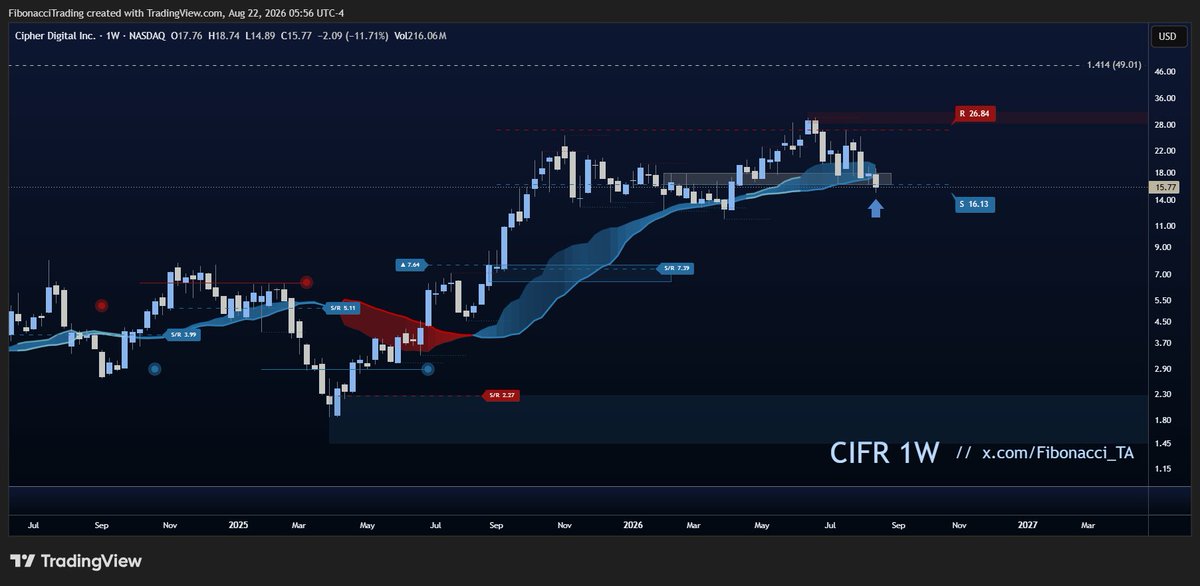
CIFR holds $15.77 after a 40%+ slide from $26.84
Traders on X are debating whether $15.60 is a real support line as the post-earnings selloff keeps driving the tape.
Cipher Mining’s shares were discussed on X after the stock finished the week around $15.77, with traders flagging $15.60 as a near-term support level. One post said the stock was still absorbing volume at support, while another watched a dip to $14.89 before a rebound attempt.
The move extends the company’s post-earnings decline. Reporting earlier this month showed second-quarter bitcoin-mining revenue of $24.8 million, down 43% year over year, and the stock had already fallen sharply from the $24 area after earnings.
For investors, CIFR remains a battleground between mining fundamentals and the company’s AI/HPC leasing story. That makes the stock especially sensitive to any shift in cash-flow expectations, execution pace, or technical levels.
No fresh company statement was cited in the social-media posts, so the new information here is the market’s read on price action rather than a new corporate disclosure.
AT&T Chief Operating Officer Jeff McElfresh publicly highlighted that AST SpaceMobile has received FCC approval to test on Grain Management’s 800 MHz spectrum. The temporary authority runs for 30 days and allows non-commercial testing with up to 100 commercially available handsets.
The spectrum detail matters: Grain’s 800 MHz holdings sit next to the 850 MHz low-band spectrum owned by AT&T and Verizon, which makes them a useful fit for satellite-to-smartphone coverage planning. As background, the FCC expanded AST’s satellite license in April to a 248-satellite constellation for commercial direct-to-device service.
For investors, ASTS remains one of the key names tied to the U.S. carrier-led D2D buildout, with AT&T and Verizon among its early strategic partners. The latest attention also comes as AT&T, T-Mobile and Verizon continue shaping their satellite spectrum strategies, keeping AST’s partnership model in focus.
AT&T has also recently reiterated support for AST SpaceMobile’s direct-to-device effort. The new development is less about booked revenue than about a fresh public signal that AST’s testing path is becoming more tightly linked to the carriers’ spectrum architecture.
How this story unfolded
2026-06-239 posts · 8 authors
AST SpaceMobile announced the orbital launch of BlueBirds 11, 12, and 13 in the first half of August.
Company🔥Developing
Cathie Wood adds 205,031 SpaceX shares as SPCX trades near $134
ARK’s latest buy extends a run of SpaceX accumulation even as analysts remain split on valuation.
X-posts indicate that Cathie Wood and Ark Invest bought 205,031 shares of SpaceX today. The trade was framed around roughly $28 million in value, adding another visible dose of demand for the newly listed stock.
This is not ARK’s first recent purchase of SpaceX. Public reports show the firm added shares on Aug. 5 and Aug. 7 as well, after SpaceX’s post-earnings pullback and amid debate over capital spending and lockup-related supply.finance.yahoo.com fool.com
SpaceX remains a volatile name. Finbold said the stock moved from about $115 on July 22 to roughly $134 on Aug. 21, about a 16% gain in a month, while DZ Bank on Aug. 21 initiated coverage with a Sell rating and a $100 target, underscoring the split between buyers and skeptics.finbold.com 247wallst.com
For now, the key point is the flow: ARK is still buying SpaceX in size, making SPCX the focal ticker for investors tracking how institutional demand is interacting with a newly public, still highly debated name.
How this story unfolded
2026-06-234 posts · 4 authors
Ark Invest bought 210,121 SpaceX shares after a 16% drop, disclosing ETF holdings.
2026-07-09
Markets
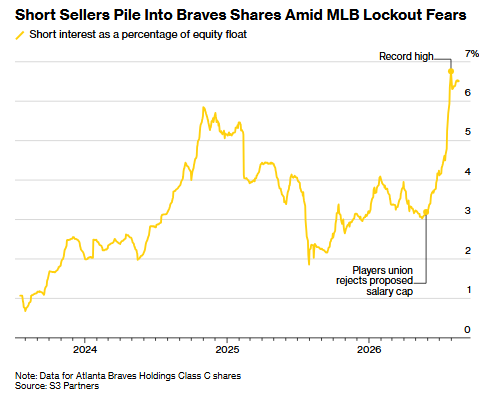
Atlanta Braves BATRK short interest hits 6.8%, triples in 12 months
MLB labor talks are back in focus as traders pile into the only publicly traded U.S. team stock tied to the dispute.
Atlanta Braves Holdings’ BATRK has seen its short interest climb to 6.8% of float, roughly triple the level of a year ago, according to S3 Partners data cited in recent reporting. At current prices, that represents about $170 million in bearish bets, the highest since the company was spun off from Liberty Media in 2023.
The move comes as MLB labor negotiations with the players’ union remain tense ahead of the current collective bargaining agreement’s Dec. 1, 2026 expiration. Public reporting says the league’s proposed hard salary cap and the union’s counter-demands on minimum pay and free agency remain far apart.
BATRK is one of the few U.S. public equities that directly tracks MLB team economics, so it often becomes a trading proxy for labor risk. Braves Holdings also reported second-quarter 2026 revenue of $305 million, underscoring how the stock is tied to on-field activity, media rights and event-driven cash flow.
The setup has attracted both bearish and bullish positioning. Reporting also notes that long-only and hedge-fund ownership has risen, showing the stock is being used to express opposing views on how the coming labor cycle will affect sports-asset valuations.
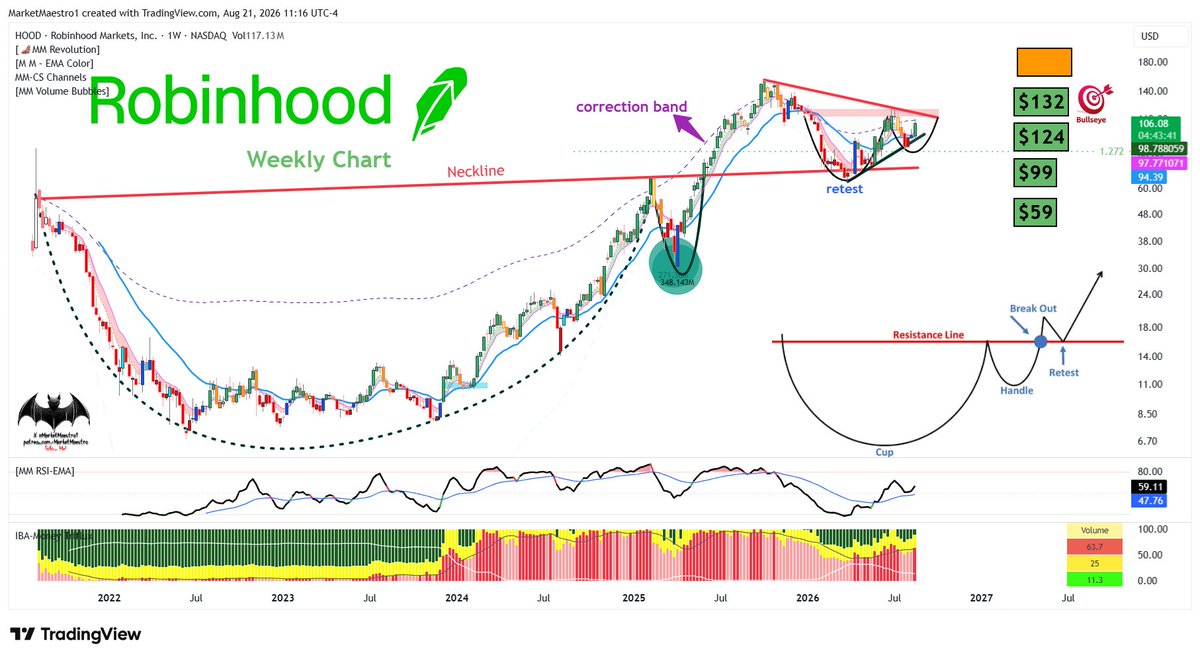
Robinhood Markets is back on traders’ screens after a fresh technical post on X flagged HOOD as a breakout setup and said the stock had moved into a correction band. The timing matters because the stock just surged 13.70% last Friday, reviving momentum interest in the name.
The broader backdrop is still the same: Robinhood has been benefiting from improving sentiment around crypto regulation. Recent market coverage said the company’s share price jumped about 14% on Friday as Washington turned more crypto-friendly, and that CEO Vlad Tenev has pushed regulators to approve tokenized stocks.
For the tape, this is mainly a momentum story rather than a new fundamental release. That keeps HOOD in focus for traders watching continuation patterns, while also spilling over into sentiment for brokerages and crypto-linked trading names.
So far, the latest incremental development is a re-marking of the stock’s technical structure, not a new company announcement. No fresh corporate response was included in the X signal, so the message is best read as a trading setup update rather than a fundamental verdict.
Palantir shares kept drawing attention on X after traders said the stock was still powering to fresh highs late in the session. The new discussion is less about the earnings release itself and more about whether the post-report strength can sustain.
The backdrop is the company’s early-August earnings update, which showed second-quarter revenue of $1.94 billion, up 93% year over year, and a full-year 2026 revenue guide of about $8.15 billion. Palantir also guided U.S. commercial revenue to grow at least 134%, reinforcing the market’s focus on growth durability.
PLTR remains the direct event stock here. Recent coverage also continues to place Palantir among the AI/SaaS leaders, which keeps valuation debates front and center as investors compare it with other software names.
No new company announcement surfaced in the X signal itself; the incremental development is the market’s continued reaction to the prior earnings beat and raised outlook. For now, the stock is trading on how long that momentum can last, not on fresh fundamental news.
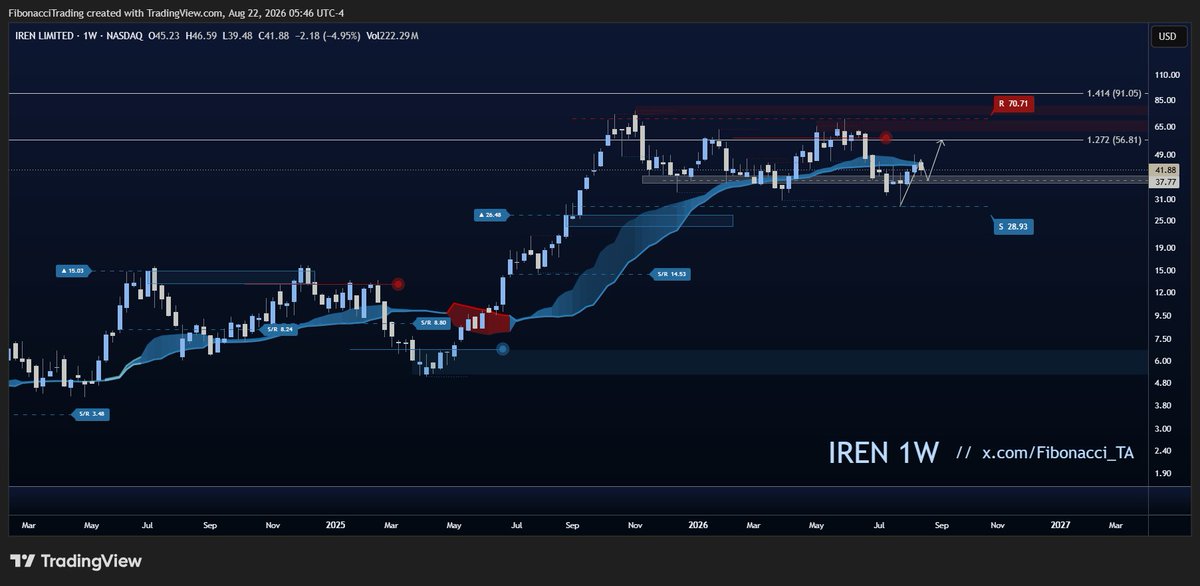
IREN ended the week at $41.88, pulling back from a recent high near $49 and printing a bearish weekly candle. Technical traders on X said the move follows a near-straight-line run from about $28, with price stalling at the momentum cloud and easing back.
The backdrop is the company’s recently accepted Horizon 1 deployment for Microsoft: a 50MW AI cloud buildout at Childress, Texas, under a five-year $9.7 billion cloud-services agreement. Public reports say Horizon 1 is the first of four 50MW phases, with a combined 200MW of critical IT load when completed.
For the stock, the headline is less about new corporate news than about how the market digests a major execution milestone. IREN also has a higher 2026 AI Cloud annualized revenue target of more than $4 billion, so traders are watching whether the current pullback forms a higher low or extends further.
The move is keeping IREN in focus among AI infrastructure names, but the near-term debate is centered on execution cadence and whether the remaining Microsoft phases stay on schedule. NVIDIA also featured in the story, after testing the deployment and granting Exemplar Cloud status.
How this story unfolded
2026-07-013 posts · 3 authors
Investors sought risk views on NBIS above $200, IREN turned flat YTD with disclosed progress, and NBIS reported ~$50B backlog.
Markets
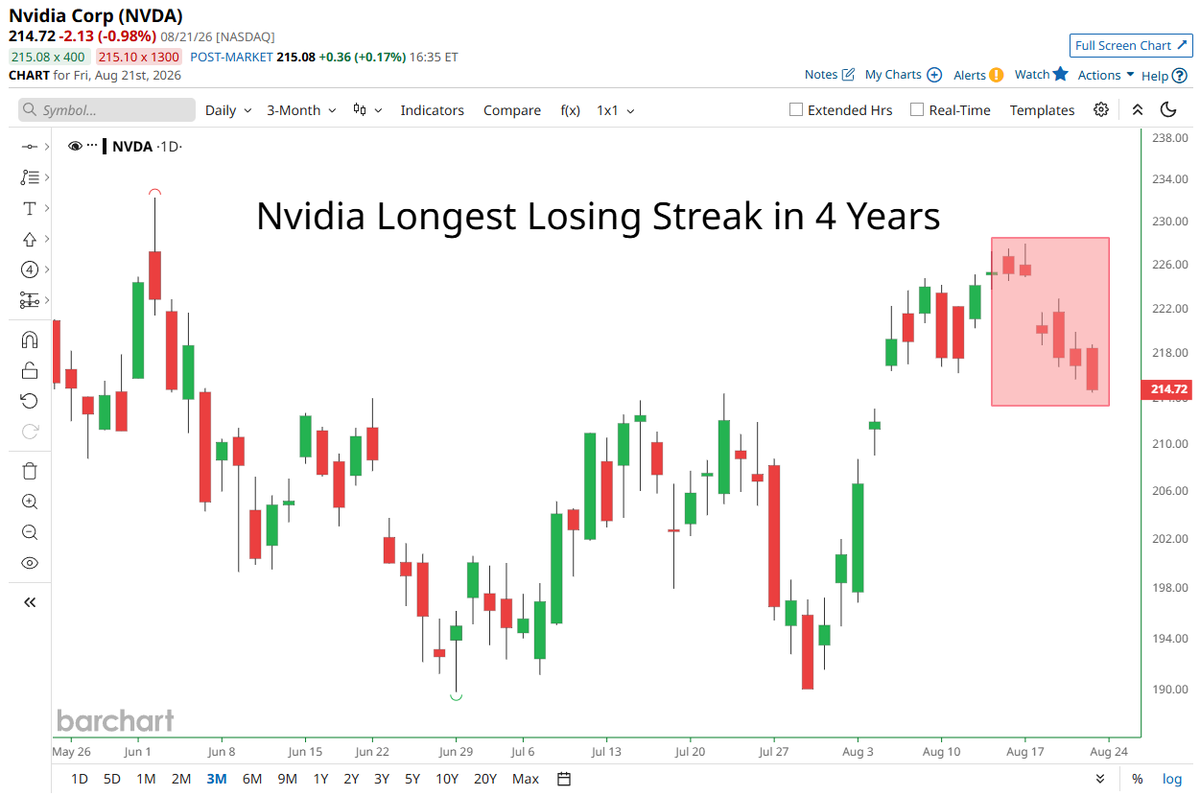
Nvidia logs 6-day losing streak, its longest in 4 years
The stock’s slide lands just days before Aug. 26 earnings, where investors will look for fresh guidance on revenue, margins and China.
X posts from multiple market accounts indicate that Nvidia has fallen for six straight trading days, its longest losing streak in about four years. TrendSpider added that since the start of the AI boom, NVDA has never posted more than seven consecutive red sessions.
The move comes ahead of Nvidia’s fiscal second-quarter earnings report on Aug. 26. The company’s May guidance called for revenue of $91.0 billion, plus or minus 2%, while Wall Street’s consensus is close to $91.9 billion, putting the market squarely on alert for another beat-and-raise update.
Any near-term trading pressure matters beyond Nvidia itself because NVDA is a bellwether for AI semiconductors and the broader Nasdaq complex. Morningstar still values the shares at $280, underscoring how sharply sentiment has split between concerns about valuation and confidence in long-term AI demand.
Recent reports have also pointed to limited H200 shipments to China, but Nvidia’s prior outlook did not assume any China data-center compute revenue. That leaves the earnings call as the key venue for management to update investors on China, gross margin and the Blackwell ramp.
Michael Burry shared a Seth Klarman quote and posted a chart showing Palantir's price and volume declining.
2026-07-0137 posts · 30 authors
Michael Burry disclosed his first short on Caterpillar and added shorts on Tesla, Nvidia, and Applied Materials.
2026-08-0747 posts · 36 authors
Michael Burry commented on differences in market circuit breakers and government intervention, sparking debate about his identity and views.
2026-08-1369 posts · 54 authors
Michael Burry posted a Bloomberg circular financing chart, criticized Nvidia's $500 billion deal, and added to shorts on Nebius and Micron.
2026-08-216 posts · 5 authors
Michael Burry promoted charity Little Wishes, TheStreet reported his interest in Nvidia rival Etched, and Real Vision said the AI cycle is again hurting his shorts.
2026-08-226 posts · 6 authors
Michael Burry disclosed a new short on CoreWeave and added to shorts on Micron, SOXX, and Palantir.
Musk rules out partnerships with ride-share providers, confirming direct bookings via Tesla's app, while FSD V15 and 380,000 miles without incidents are highlighted.
2026-07-2414 posts · 13 authors
Tesla's earnings disappoint Wall Street, with analysts demanding tangible results for robotics and robotaxis, amid disputes over a Model Y being misidentified as a robotaxi.
2026-08-1813 posts · 12 authors
NHTSA data shows zero crashes for Model Y robotaxis, Tesla plans 80 wireless chargers in Austin, and Cybercab launch preparations are reported.
2026-08-205 posts · 3 authors
JPMorgan leaves Fremont tour with a positive view, noting Tesla's deliberate restraint on Model Y fleet growth to focus on Cybercab, while Musk's attention shifts to AI.
2026-08-219 posts · 8 authors
Tesla receives Nevada's Autonomous Vehicle Network Company permit, enabling paid robotaxi service in Las Vegas, with plans for additional mission control centers.
2026-08-221 post · 1 author
Tesla's stock rises as the company prepares for its robotaxi push.
Alphabet's Q2 beat with 24% revenue growth, EPS surged on investment gains, and market focused on potential CapEx hikes' impact on semis.
2026-07-3128 posts · 25 authors
Citadel bought Situational Awareness's portfolio, Amazon and Google's net income largely from AI investment paper gains, and OpenAI/Anthropic drove 28% of Google Cloud revenue.
2026-08-0532 posts · 28 authors
Blackstone lent billions to Anthropic for Google chip rentals, Anthropic confirmed in-house chip development, and analysts noted most AI revenue for major clouds comes from Anthropic and OpenAI.
2026-08-215 posts · 4 authors
AT&T shifted 40% of AI workloads to open-source models, China's Kimi ranked third globally, and Anthropic's ARR acceleration drew attention.
2026-08-225 posts · 4 authors
Google chip veteran Amir Salek joined Anthropic's compute team as the company pushes into in-house silicon.
Tesla announced engineering tests of the first production Cybercab have begun in Austin, with no steering wheel or pedals.
2026-07-2325 posts · 19 authors
Tesla shared a Cybercab production line photo at Giga Texas, updated annual capacity to over 125,000 units, and discussed Semi self-driving timeline.
2026-08-1820 posts · 18 authors
Tesla filed permits for 80 wireless chargers at a new Robotaxi hub in Austin, and reportedly told staff it is gearing up for a public Cybercab launch.
2026-08-199 posts · 7 authors
Tesla officially announced a Cybercab Launch Event in Austin, with Robotaxi rides from Aug 17-23 offering chances to win attendance.
2026-08-216 posts · 3 authors
Tesla stated at a Nevada Transportation Authority meeting that public Cybercab rides in Austin are imminent, and highlighted braille and grab points for accessibility.
2026-08-223 posts · 2 authors
Tesla sent official invites for the Cybercab Launch Event on September 3rd, with a blind community member giving positive testimony about the vehicle.