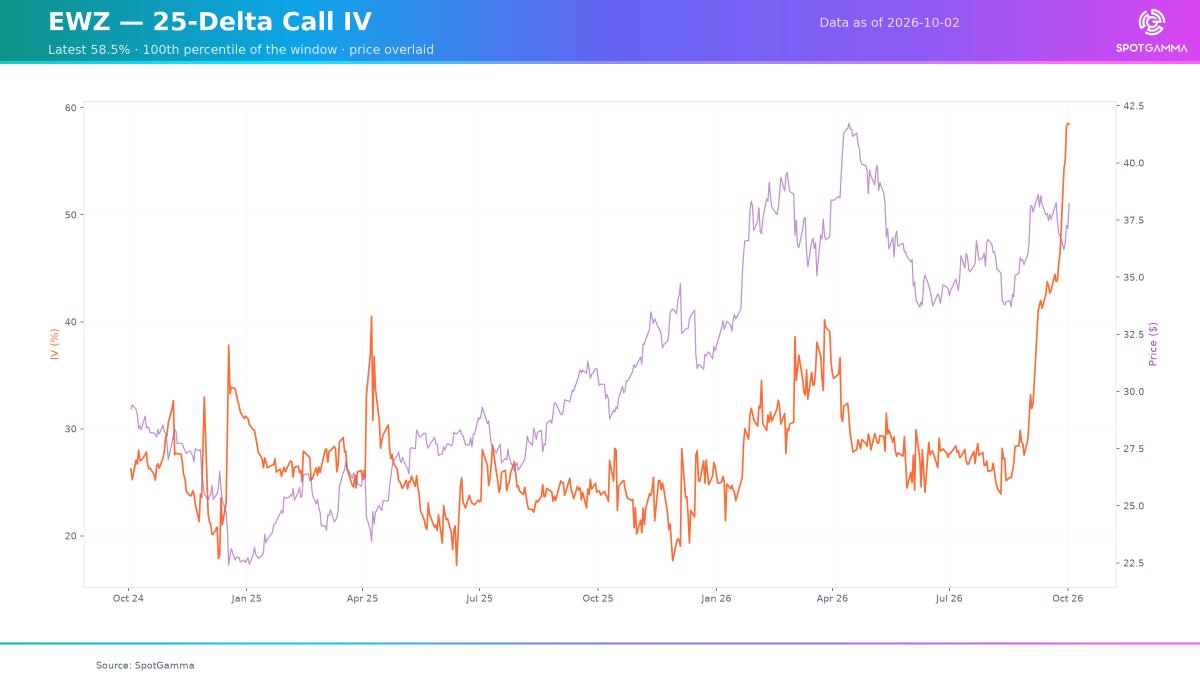
Brazil’s presidential election went to a runoff after Senator Flávio Bolsonaro took 47.03% of the vote in the first round, ahead of President Luiz Inácio Lula da Silva’s 45.16%. The result, based on official vote counting and widely reported by multiple outlets, was a surprise relative to pre-election polling.
The first-round outcome also underscored the strength of Brazil’s right-wing bloc. Bolsonaro’s Liberal Party (PL) posted strong results in congressional and gubernatorial races, reinforcing conservative leverage in Brasília ahead of the October 25 runoff.
Markets are watching closely because the vote can shape expectations for fiscal policy, regulation and Brazil’s external stance. Bloomberg reported that Brazilian assets were set to benefit from Bolsonaro’s stronger-than-expected showing, reflecting investors’ view that the runoff could mark a more business-friendly policy path.
For now, the only confirmed political development is that neither candidate cleared the 50% threshold and the race will be decided on October 25. Any claim about the eventual winner remains speculation, not fact.
The Institute for Supply Management said its September non-manufacturing PMI fell to 54.9 from 55.4 in August, below the 55.0 consensus. The services sector is still expanding, but at a slightly slower pace. The report showed employment improved to 50.1, while new orders eased to 59.8 and prices paid climbed to 74.0.
The data matters because services make up more than two-thirds of U.S. economic activity and are closely watched for signs of domestic demand and sticky inflation. Reuters said strong demand continues to strain supply chains and push up input costs, while the ISM prices index reached its highest level since July 2022.
For markets, a high prices-paid reading tends to reinforce concern that inflation will stay elevated, keeping rate-sensitive assets focused on upcoming data. At the same time, resilient services activity supports the broader growth narrative, which can matter for Treasury yields, the dollar and sectors exposed to input-cost pressure.
The cross-checked readings were consistent across the wire reports and Reuters coverage, with the main shift being a modest slowdown in the headline PMI and a renewed rise in price pressures.
The market’s main focus this week is the Federal Reserve’s September meeting minutes, scheduled for release on Oct. 7 at 2:00 p.m. ET. Traders on X and macro watchers alike are flagging the document as a key source of clues on the policy path ahead.
The backdrop matters: CNBC said last week’s trading was dominated by higher yields and higher oil, though stocks bounced on Friday after a weaker-than-expected September jobs report pushed yields lower. With a relatively light calendar otherwise, the minutes stand out as one of the few events likely to shape expectations.
For markets, the minutes can move Treasury yields, the dollar and rate-sensitive sectors, while also influencing near-term swings in the S&P 500 and Nasdaq. A more hawkish tone would likely pressure high-valuation growth shares; a calmer read could shift attention back to third-quarter earnings.
Other notable releases this week include ISM services PMI, ADP weekly employment, initial claims and the University of Michigan sentiment survey, making the minutes part of a broader macro-heavy stretch.
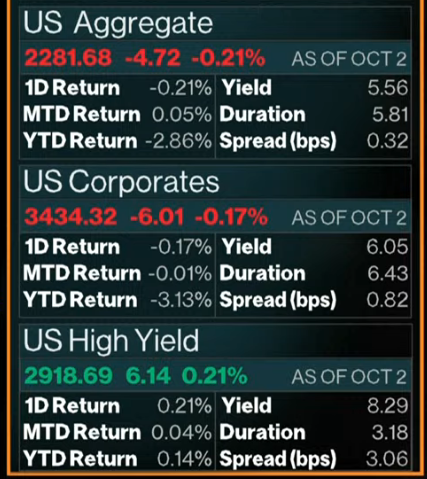
The 10-year U.S. Treasury yield briefly touched about 5.30% on Friday afternoon before easing back to around 5.26%. Traders on X framed the move as another sign that long-end rates are staying elevated despite softer economic data.
Recent U.S. payrolls added just 29,000 jobs, well below expectations, yet the bond market still did not rally in a lasting way. CNBC cited TD Securities saying the Treasury market is not in a fiscal breaking point, but investors remain uneasy about deficits, borrowing needs and the persistence of restrictive policy.
For equities, higher long yields mainly work through valuation pressure, especially for long-duration growth stocks and other rate-sensitive sectors. Bond funds, mortgage borrowers and leveraged companies also face a tougher financing backdrop if 10-year yields remain above 5%.
Market watchers are also digesting the Fed’s September 16 rate hike and the coming Treasury refunding and auction supply. The key question is not whether the economy is collapsing, but why weak data has not been enough to bring borrowing costs down.
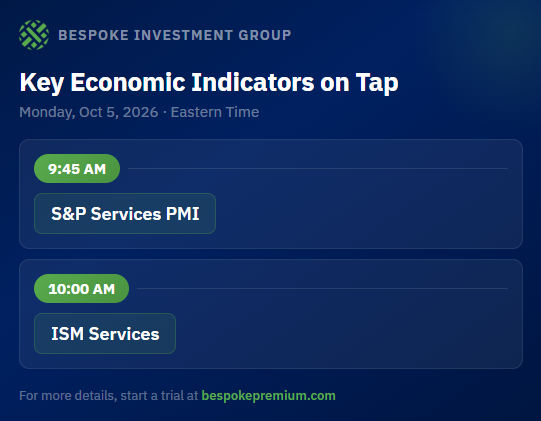
The U.S. will release the September ISM Services PMI at 10:00 a.m. ET, with the consensus at 55.7 versus 55.4 previously. At 9:45 a.m. ET, S&P Global will publish its final U.S. services and composite PMI readings, making today the main macro data point for markets.
Investors are focusing less on the headline alone and more on the employment and prices components. ISM's latest published services report showed an expansionary 54.9 in September, while the prior month stood at 55.4, keeping attention on whether service-sector momentum is still firm and whether price pressures remain sticky.
The prints can matter for Treasury yields, the dollar and rate-sensitive equities, including semiconductors such as Marvell Technology. Stronger-than-expected services data, especially on prices or employment, would reinforce the market's attention on Fed policy and valuation pressure across growth stocks.
X traders and market calendars are treating the releases as today's key event, with several previews highlighting the same watch items. No new company-specific development has displaced the macro focus this morning.
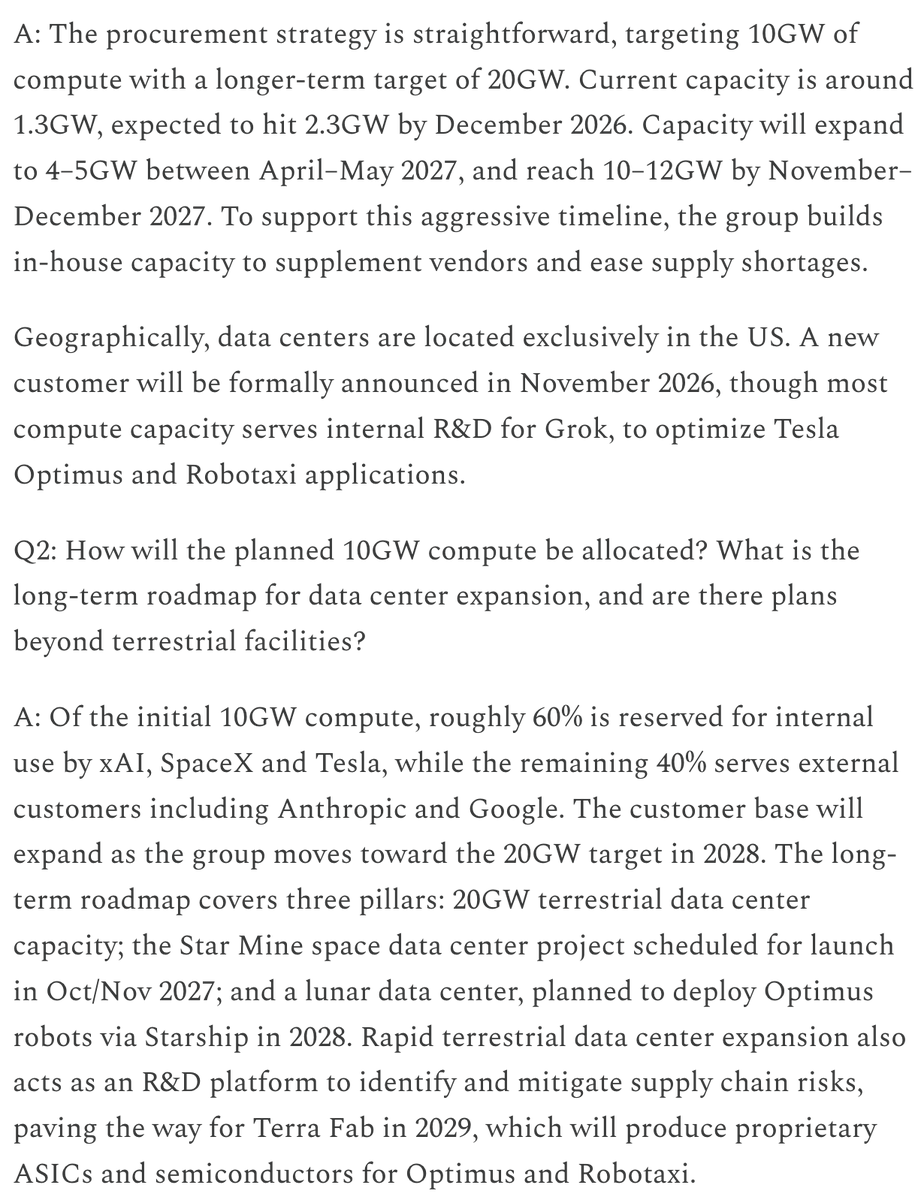
SpaceX’s 10GW compute split seen as 60% internal, 40% external
A new claim on X says most of SpaceX’s 10GW capacity is reserved for in-house demand, with the rest sold to outside customers. If accurate, it would underscore how the company is prioritizing its own AI buildout.
A new claim circulating on X says SpaceX allocates about 60% of its 10GW compute capacity to internal demand and 40% to external customers. The post came from jukan05 and was amplified by livesquawk, but the company has not publicly confirmed the split.
The signal lands as investors continue to digest SpaceX’s rapid AI expansion. Recent reporting said SpaceX disclosed $2.6 billion of AI revenue in the second quarter, $7.8 billion in total revenue, and a much larger AI capital-spending program, while Starlink subscriptions reached 12 million.
If the 60/40 split is correct, the key question is whether SpaceX is prioritizing its own products, models and data-center buildout over selling capacity to customers. For the stock, the issue is less the ratio itself than what it implies for monetization, capex intensity and the pace of revenue recognition.
For now, the only hard fact is that the market is still weighing SpaceX’s AI and Starlink growth story; the 60/40 compute allocation remains an unverified X-side claim that needs further confirmation.
Morgan Stanley analyst Adam Jonas said that when he asked a room of 40 clients who owned SPCX, “not a single hand went up.” The comment surfaced today through an investor-note excerpt circulating on X and is the latest datapoint shaping the SpaceX valuation conversation.
Jonas’s broader view is that SpaceX should not be valued only as a rocket and connectivity company. He argued that the company’s interlinked businesses — including AI and compute — matter together, while concerns around Grok, Starlink Mobile spectrum access, and Starship testing are already partly priced in.
Earlier reporting said Morgan Stanley reiterated an Overweight rating and a $300 price target on SpaceX, calling the stock “cheap and getting cheaper” on a growth-adjusted basis. Those reports also cited consensus assumptions of 4.1 GW at $17.60 per watt, versus recent short-term neocloud deals priced at roughly $30 to $50 per watt.
For the market, that keeps SPCX, the AI compute theme, and the broader Starlink/space ecosystem in focus. The latest signal is not a company announcement, but it reinforces how investors are still debating whether SpaceX’s next leg of value comes from launch, connectivity, or compute monetization.
Elon Musk said on X that SpaceXAI will be renamed SpaceXSI, replying to a user with: “Yes, we will make that change.” He did not provide a timetable or say whether the shift would be a legal name change or a branding update.
The comment comes after President Donald Trump signed an executive order on September 29 directing federal agencies to use “super intelligence” and “SI” instead of “artificial intelligence” and “AI” in official communications. Reuters also reported Trump had previewed the terminology shift in remarks at the UN General Assembly.
SpaceX is the central public-market reference point here, with shares trading under ticker SPCX. Reuters-linked reporting said the company’s X account had not yet been renamed when the story was published, and no formal announcement had been issued.
For now, the key takeaway is confirmation, not completion: Musk said the change is coming, but the company has not laid out execution details. That leaves the branding move as the latest follow-through on Washington’s terminology push rather than a finalized corporate reset.
Former Anthropic researcher Jacob Coxon is set to testify at a New York City Council hearing on artificial intelligence on Monday, marking a public step into the city’s policy debate after he left the company last month. CNBC reported that senior representatives from Anthropic, OpenAI, Google and Meta are also scheduled to appear under oath.
The hearing is being framed as part of New York lawmakers’ push to tighten AI safeguards. NBC New York reported that the council is considering 10 proposals tied to safety, accountability and a whistleblower incentive program.
For investors, the event keeps GOOG/GOOGL and META in the regulatory spotlight, while also drawing attention to OpenAI and Anthropic’s governance practices. The immediate issue is not product revenue but policy risk: lawmakers are pressing companies to explain model behavior, safety controls and possible legal liabilities.
Bloomberg previously reported that Coxon had warned advanced AI could become too powerful for humans to control. Reuters, citing that report, said it could not immediately verify the account, so the clearest confirmed development today is his scheduled testimony rather than the broader claims around his departure.
Taiwanese media reported that AMD CEO Lisa Su arrived in Taiwan today for a supply-chain tour centered on TSMC and key manufacturing partners. The trip is described as an effort to secure more advanced-node, testing, packaging, and substrate capacity, with a brief media appearance expected tomorrow.
The visit builds on AMD’s broader AI-supply-chain push in Taiwan. Earlier reporting said AMD’s next-gen Venice EPYC processor has moved into production on TSMC’s 2-nanometer process, while its cooperation with TSMC also spans advanced packaging such as SoIC-X and CoWoS-L.
For investors, the immediate question is whether AI-chip demand can be converted into shipments on schedule. That makes AMD and TSMC the key tickers to watch, along with the broader AI-hardware chain tied to substrates, packaging, and server assembly.
So far, the reporting remains at the level of supply-chain meetings and capacity discussions, with no new order-size disclosure. Any further confirmation from AMD, TSMC, or downstream suppliers would matter for the timing of second-half deliveries.
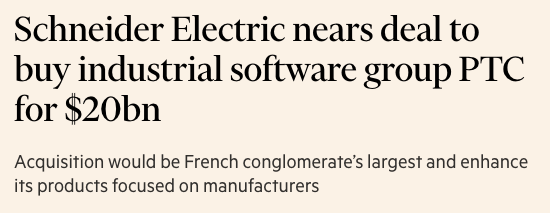
PTC and Schneider Electric’s takeover saga has a fresh update. Bloomberg said Schneider Electric disclosed that it is acquiring U.S. engineering software maker PTC at an implied enterprise value of $23.7 billion, while follow-up coverage in the news library says PTC has now signed a definitive agreement and shareholders will receive $205 in cash per share.
The deal had already surfaced a day earlier in reporting from Reuters and the Financial Times as a transaction nearing completion. The news library also shows PTC’s market value at about $15.63 billion before the latest reports, underscoring the size of the premium being discussed.
For the market, PTC is the direct name to watch, with the stock and valuation narrative centered on the buyout price. The reports point to a major industrial-software combination, which is why the transaction is drawing attention beyond the two companies involved.
The numbers cited across the material include $205 per share in cash, a 42% premium, and a $23.7 billion enterprise value. While the exact wording differs by outlet, the reporting is aligned on the same Schneider Electric-PTC transaction.
C.H. Robinson Worldwide has agreed to acquire RXO in a stock-and-cash transaction valued at about $5.8 billion. Multiple reports in the news cache point to the same deal, which would bring the two logistics companies under one roof.
The move links two companies operating in freight brokerage and third-party logistics. Investors are focused on how the combination could reshape competition and valuation in the sector.
In premarket trading, RXO was up 23.0% and C.H. Robinson was up 10.7%. While BusinessWire and Barron’s pointed to an implied value of $5.8 billion, the Wall Street Journal described the deal as about $5 billion, indicating a valuation discrepancy across reports.
There was no denial from either party in the material provided. The reports frame the announcement as a completed agreement rather than a preliminary approach, making transaction terms and integration plans the next points to watch.
Strategy said it bought another 334 bitcoins for $28.7 million at an average price of $85,839. The company said its total holdings rose to 848,000 BTC as of Oct. 4.
The update arrived alongside fresh Q3 earnings signals. Both the X posts and the newsroom materials point to a sharp improvement in the paper value of Strategy’s digital-asset book as Bitcoin rallied.
The main market impact is on MSTR, since Strategy’s Bitcoin holdings and digital-asset gains are central to the stock’s financial profile. The company also said it sold 92,894 MSTR shares, raising $15.7 million to help fund the purchase.
Strategy and related posts also said the company recorded a $21 billion gain on digital assets in Q3 and returned to profitability. That backdrop explains why this purchase is being read as part of a broader quarter-end reset rather than a standalone trade.
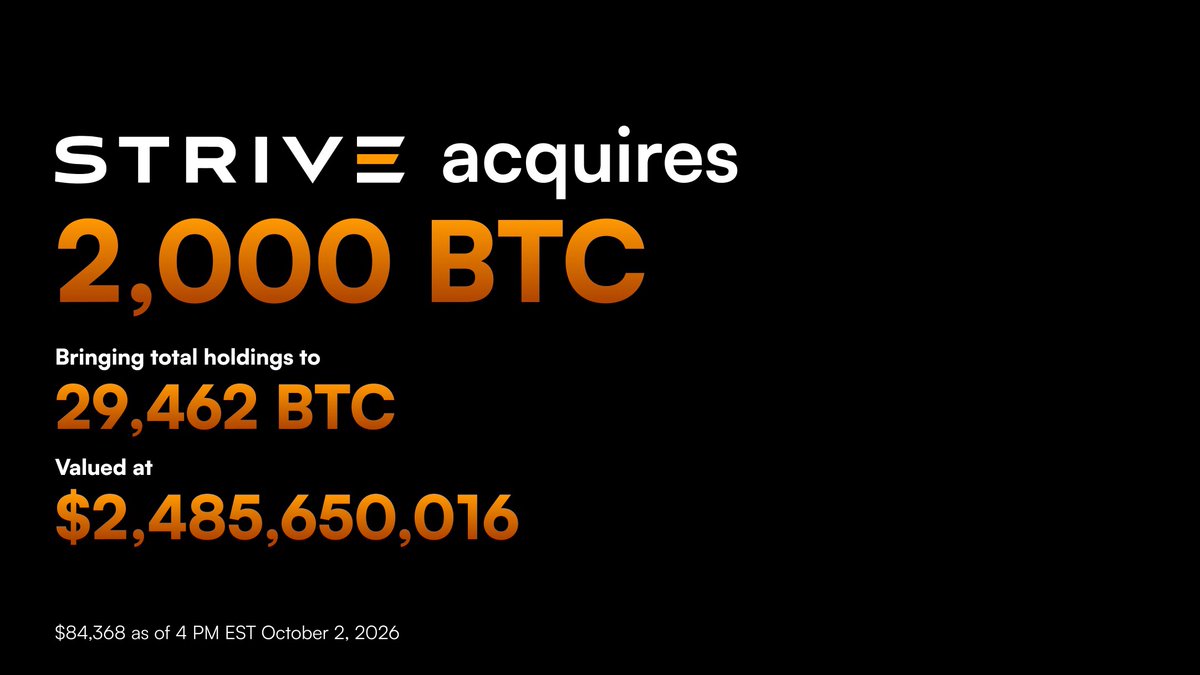
Strive disclosed on Oct. 5 that it bought 2,000 bitcoin between Sept. 28 and Oct. 2 at an average price of about $84,422 each, for roughly $169 million including fees and expenses. The purchase lifted its total bitcoin holdings to 29,462.
The company’s Form 8-K also updated its balance-sheet and financing metrics. As of Oct. 2, Strive reported $284.7 million in cash and cash equivalents, about $50.2 million of STRC stock at fair value, and a new repurchase facility of up to $500 million for SATA.
Investors are focused on how the company is funding the strategy and what it means for the preferred-stock layer. The filing showed 12.94 million SATA shares outstanding as of Sept. 30, rising to 13.50 million by Oct. 2, while CEO Matt Cole said on X that 61.5% of the capital raised came from SATA and $56.7 million came from warrant exercises.
The disclosures line up with the week’s increase in bitcoin holdings and the capital structure changes around SATA. Strive also said it intends to remain debt-free, keeping attention on preferred-stock issuance and any future repurchases under the newly announced facility.
Huawei said on Monday it has reached a broad multi-year patent license agreement with Qualcomm covering artificial intelligence, 5G, computing and networking. Reuters reported that Qualcomm will become a net payer to Huawei for the first time under the arrangement.
The deal centers on cross-licensing intellectual property tied to chips and communications technology. Multiple posts on X also cited coverage of LogicFolding chip architecture, near-packaged optics, and more than 680 Huawei patents.
For Qualcomm, the agreement affects its patent costs and technology positioning; for Huawei, it expands the monetization of its IP in 5G, AI and chip-related technologies. The market will likely focus on the companies' licensing balance rather than product shipments.
Both companies have confirmed a multi-year patent licensing framework, but no deal value was disclosed in the available material. The claim that Qualcomm will pay Huawei for the first time is reflected in several contemporaneous reports and X posts.
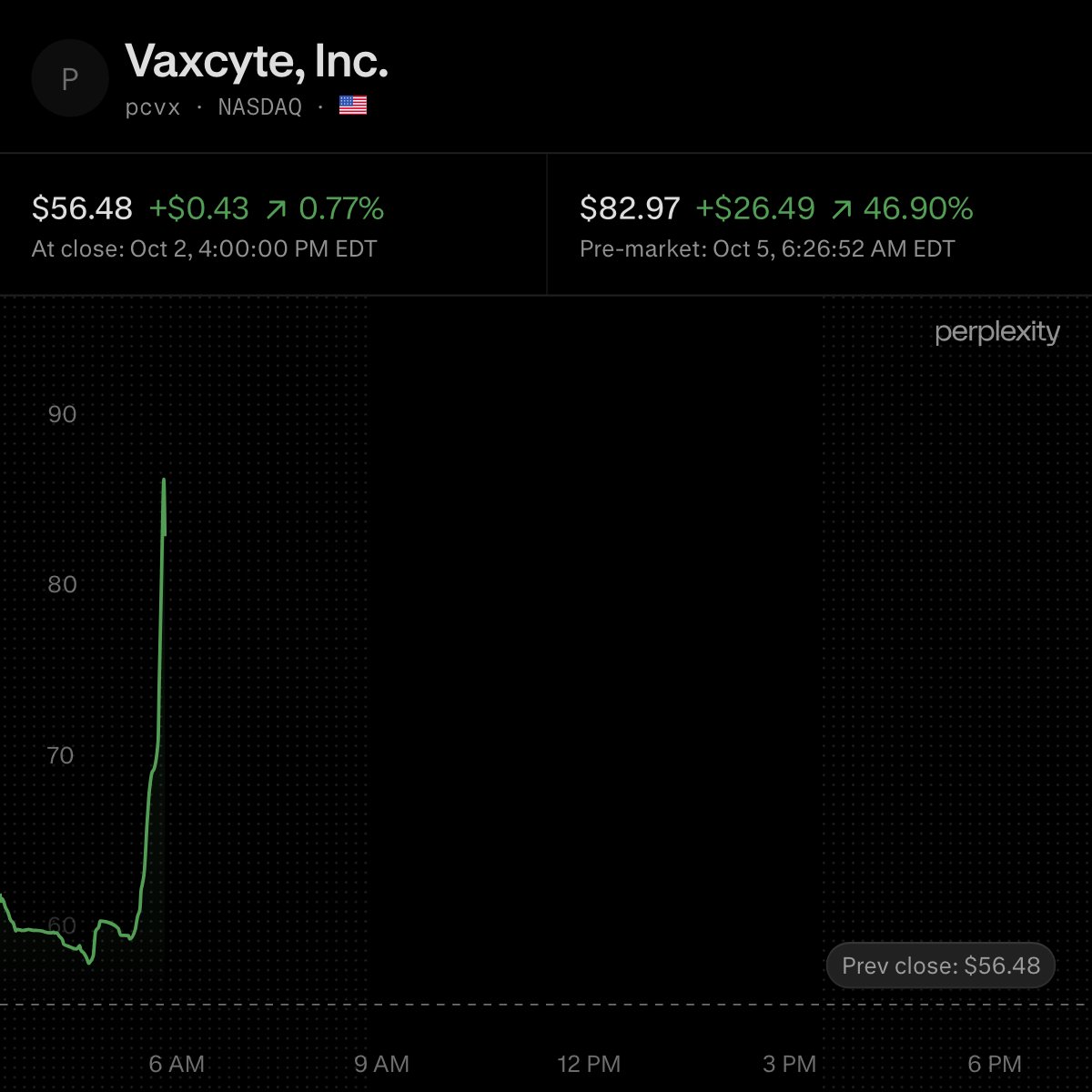
Vaxcyte said VAX-31 met all prespecified primary endpoints in the pivotal adult Phase 3 OPUS-1 trial. The company said the 31-valent pneumococcal conjugate vaccine candidate achieved noninferiority across all 32 serotype comparisons, with safety similar to PCV20 and PCV21.
The release follows a prior company notice that Vaxcyte would present topline OPUS-1 data on October 5. The news also comes with the next program milestone still ahead, as OPUS-2/3 data are due in the first half of 2027.
The immediate market reaction centered on PCVX, with Benzinga saying the stock hit a new 52-week high after the positive topline readout. In the materials provided, Vaxcyte is the clear event driver, while Prevnar 20 and Capvaxive serve as the comparator vaccines.
No conflicting company denial appears in the supplied materials. For now, the key new information is that the adult Phase 3 program delivered positive topline results, with fuller data still to come.
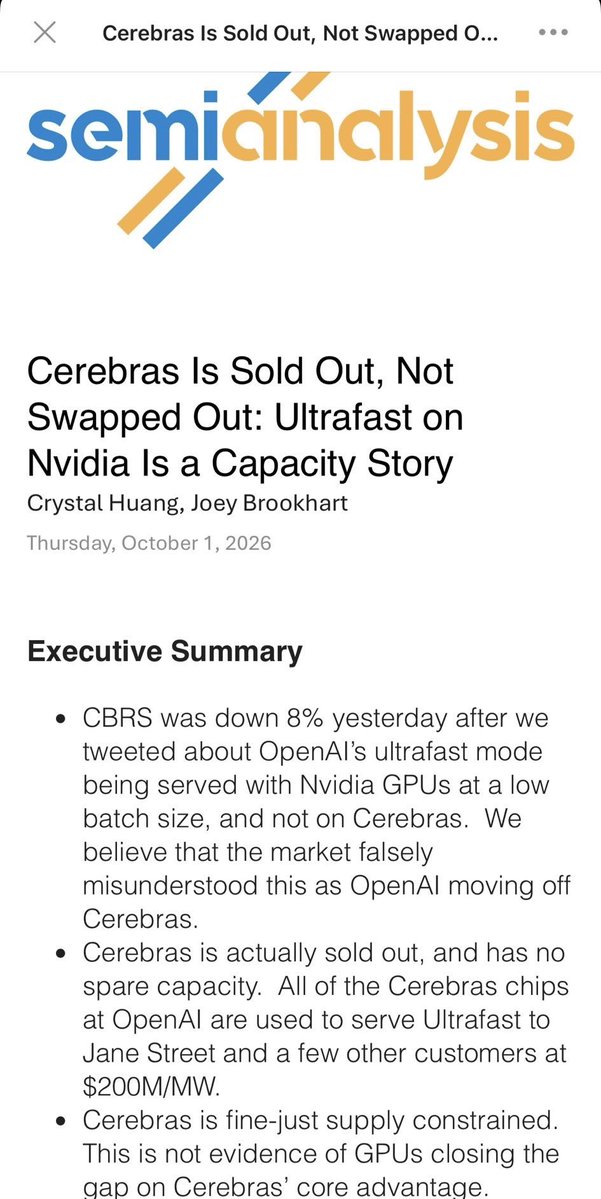
X posts circulating on Tuesday say Cerebras is fully sold out and has no spare capacity left. The same posts claim all Cerebras chips at OpenAI are being used to serve Ultrafast for Jane Street.
That adds a new layer to the same story line covered by Barron's and Invezz, both of which tied Monday’s rebound in Cerebras stock to comments by OpenAI CEO Sam Altman. The earlier reporting framed the move around investor reassurance; the X signal now points to supply constraints.
If accurate, the key issue is not just sentiment around the stock, but how much capacity Cerebras can still allocate to customers. For CBRS, the market will be watching whether existing commitments leave any room for new demand.
The latest details come from social posts rather than formal company disclosure. The broader event line, however, is clearly centered on Cerebras and its OpenAI-linked usage.
Cerebras shares moved higher on Monday, rising more than 6% in premarket trading. The immediate catalyst was Sam Altman’s renewed description of Cerebras as a “close partner.”
The move extends a story that has already drawn attention from multiple outlets in the site’s news library. Barron’s and Invezz both followed Altman-related comments and the stock’s rebound earlier in the day.
For the market, CBRS was the direct beneficiary of the headline, with traders treating Altman’s remarks as a fresh endorsement of the partnership. The signal matters because it comes from an OpenAI chief executive reiterating support for the chipmaker.
No new financial terms or transaction details were included in the available material. The focus remains on the public reaffirmation of the relationship rather than any fresh operational disclosure.
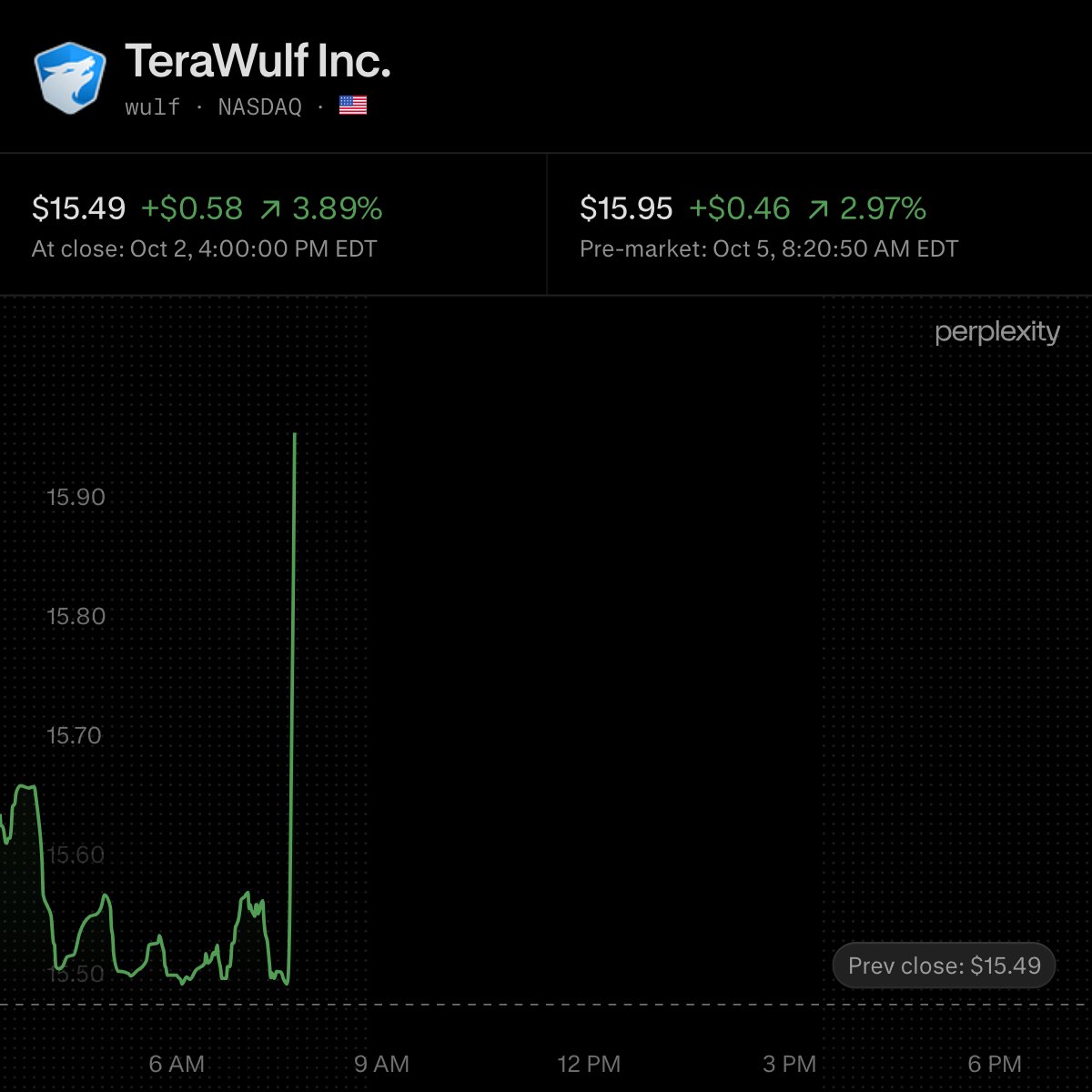
TeraWulf said its Muskie data campus now has 1 GW of contracted power, up from 500 MW. The company also moved the second 500 MW phase forward to 2029 from 2030, while the first 500 MW is expected to begin ramping in 2028.
The update expands the project’s locked-in power base for AI/HPC use. In the company’s filing as reflected by the newswire coverage, Kentucky Power finalized an amended agreement, and the release highlighted $100 million in customer benefits.
For the market, the development matters most for $WULF because secured power is a core input for AI infrastructure monetization. One X post also framed the new 1 GW as potentially supporting about $2.4 billion in annual revenue based on an Anthropic lease reference, but that figure is presented as an estimate in the post.
TeraWulf said it is also evaluating expansion at Muskie to as much as 2 GW over time. The newswire headline and deck both point to strong customer interest behind the accelerated timeline.
Hewlett Packard Enterprise (HPE) is back in the spotlight on X today, with TrendSpider saying the stock is up 170% this year and has broken to new highs on a $1.2 billion AI order. The underlying catalyst is HPE’s late-September disclosure of a $1.2 billion order from Vultr for AMD Helios AI Rack by HPE systems.
The move builds on HPE’s September 2 fiscal third-quarter report and subsequent networking investor-day updates, which had already strengthened investor sentiment. Company and media reports say fiscal third-quarter revenue reached $12.2 billion, up 34% year over year, while AI systems orders rose more than 30% sequentially to $2.4 billion.
For the market, HPE’s rally continues to matter beyond one stock because it reinforces the AI infrastructure trade across servers, networking and related hardware. Today’s X signal is not a fresh corporate announcement, but it shows traders are still reacting to the same order flow and guidance reset that pushed HPE into the spotlight last week and last month.
At this point, the verifiable drivers remain the announced order and earlier guidance changes, not any new company statement. Any further upside or follow-through would depend on additional disclosure around Helios shipments, customer additions or execution details.
How this story unfolded
2026-09-30
Earnings
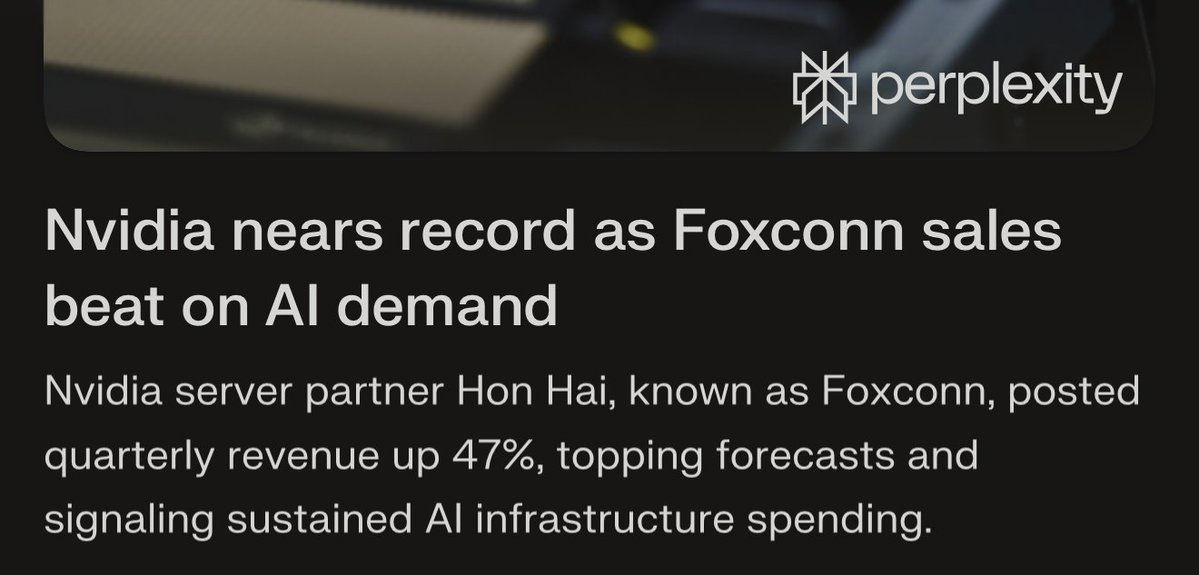
Foxconn posts US$95.4 billion in Q3 revenue on AI server demand
The company said AI-related operations should keep growing in Q4, underscoring demand in Nvidia’s server supply chain.
Foxconn reported third-quarter revenue of US$95.4 billion, up 47% year over year and above expectations. The company said AI server demand was the main driver.
The update matters because Foxconn is Nvidia’s biggest server maker, making the reading a key supply-chain signal for the AI hardware buildout. Multiple posts on X also highlighted September revenue growth of 38% and estimates near US$89 billion.
For markets, the headline is likely to keep attention on NVDA-linked manufacturing capacity and AI infrastructure demand. Investors will also watch whether Foxconn can sustain the pace of AI-related operations into the fourth quarter.
Foxconn said AI-related operations are expected to keep growing in Q4. No contrary statement from another party appears in the provided material.
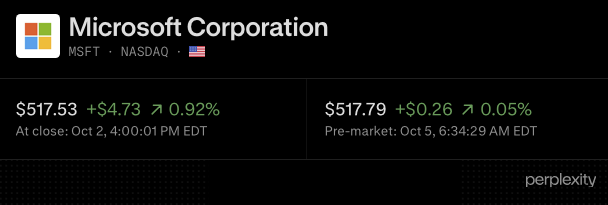
Melius upgraded Microsoft to Buy from Hold and set a $665 price target. The firm said enterprises want a secure wrapper that can route models to the right task and govern AI agents.
The call comes as worries about AI risk rise across the market. Melius argued Microsoft is positioned at the center of the enterprise AI stack because it can combine security, governance, and model routing.
For investors, the note keeps attention on MSFT and on the company’s cloud and AI monetization story. Melius also said Azure growth could accelerate to above 50% by fiscal Q4 2027.
No Microsoft response was included in the source material. The update is an analyst call rather than a company announcement.
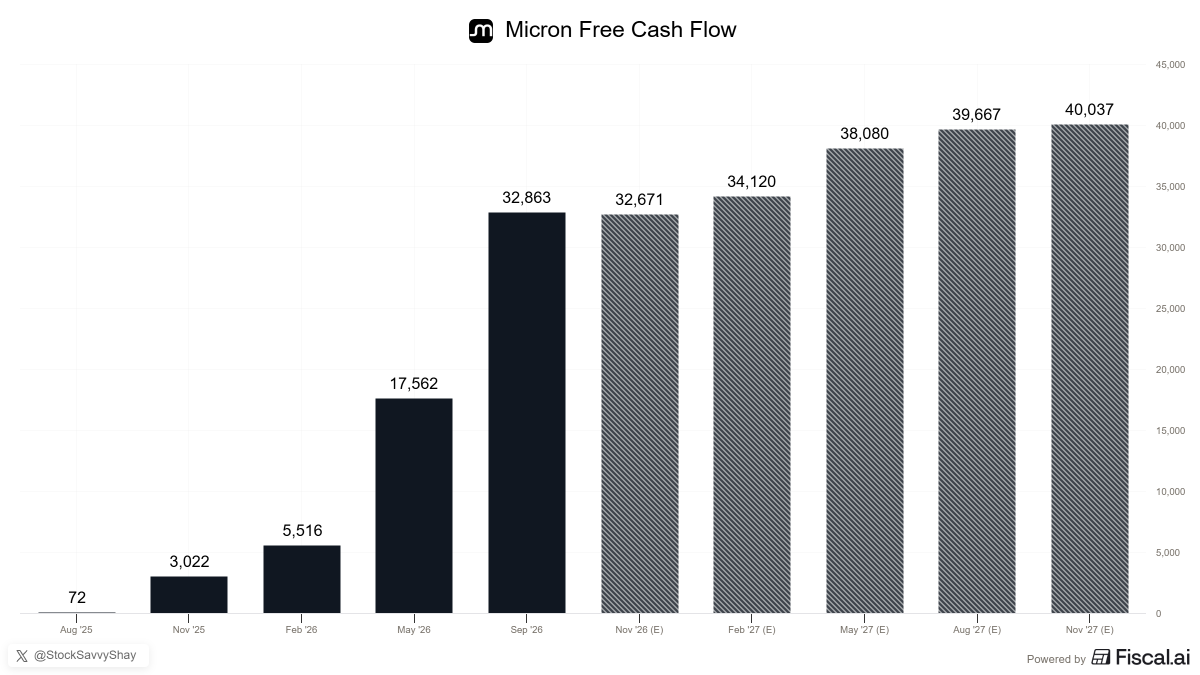
Multiple posts on X point to December 9 as the date when Micron’s CHIPS Act-related buyback restrictions are set to lapse. One post says the timing could open the door to a potentially larger share repurchase program, while a Yahoo Finance-linked post echoes the same calendar date.
The reason the date matters is Micron’s capital-return framework. The posts cite the company’s earlier stance that capital returns should rise over time, with a long-term goal of returning 100% of excess cash to shareholders.
Our recent coverage has also kept Micron in focus, from reaction to its latest earnings report to broader debate over AI-related demand. For MU, investors will now watch whether the expiration of those restrictions changes the company’s capital-allocation flexibility.
What is confirmed in the materials is the date focus and the broader capital-return context. The claim of a “potential massive buyback” remains a reposted market narrative in the signal, not a fresh company announcement in the provided sources.
Multiple posts on X said TSMC’s Taiwan-listed shares hit a new all-time high today. The signal was first posted by jukan05 and then reposted by livesquawk.
Recent coverage in the site’s news library frames TSMC as a core AI infrastructure name. One article called it the Wall Street “ultimate AI picks-and-shovels” play, while another focused on its Q3 earnings preview.
That keeps attention on TSM, especially as investors continue to treat TSMC as a key supplier in the AI buildout. The move is notable because it marks a fresh price milestone, not a new corporate event.
From the material available here, the only verified fact is the all-time-high print in Taiwan-listed shares. The broader AI and earnings context comes from the recent coverage, not from the X post itself.
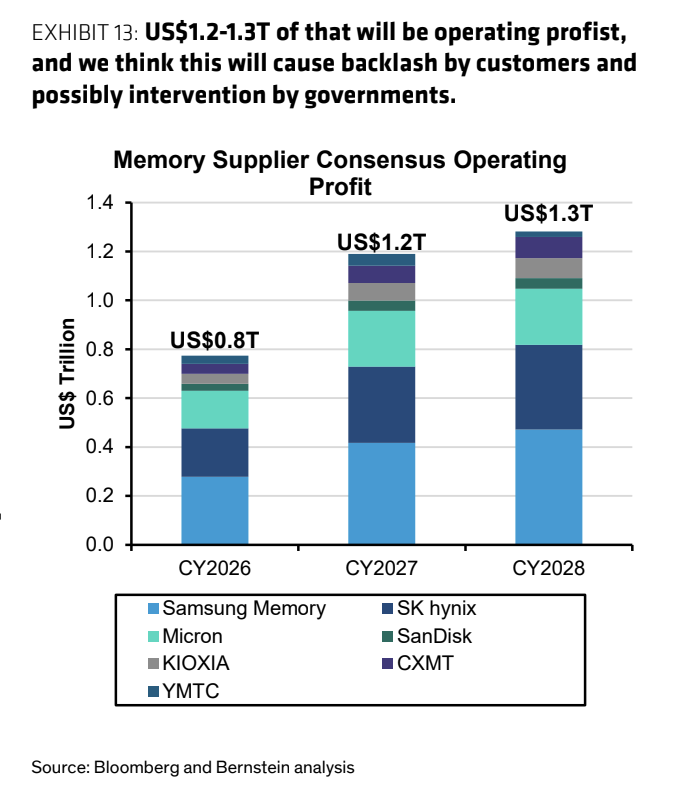
Bernstein, in a follow-up note after Micron’s latest earnings release, said consensus operating profit for memory suppliers could rise to $1.3 trillion in calendar 2028, up from $800 billion in 2026. The claim has been widely amplified on X, where traders focused on the scale of the implied profit expansion across DRAM, NAND and HBM.
The broader backdrop is a series of bullish analyst calls on the memory cycle. Recent reports say Bernstein expects conventional DRAM and NAND shortages to persist through 2027, with normalization only beginning in 2028, while Micron’s latest guidance reinforced the view that pricing remains firm.bitget.com nai500.com
For investors, the biggest beneficiaries are Micron, Samsung Electronics and SK Hynix, which sit at the center of the current memory upcycle discussion. The debate is now shifting from whether prices are rising to how long the shortage lasts, how much of supply gets locked into long-term contracts, and how much cash can be returned to shareholders.
It is worth noting that the numbers being circulated are analyst estimates, not company disclosures. Still, the latest reports underscore that the market is treating memory not as a short-lived spike, but as a cycle with unusually strong earnings power.gmt8press.com
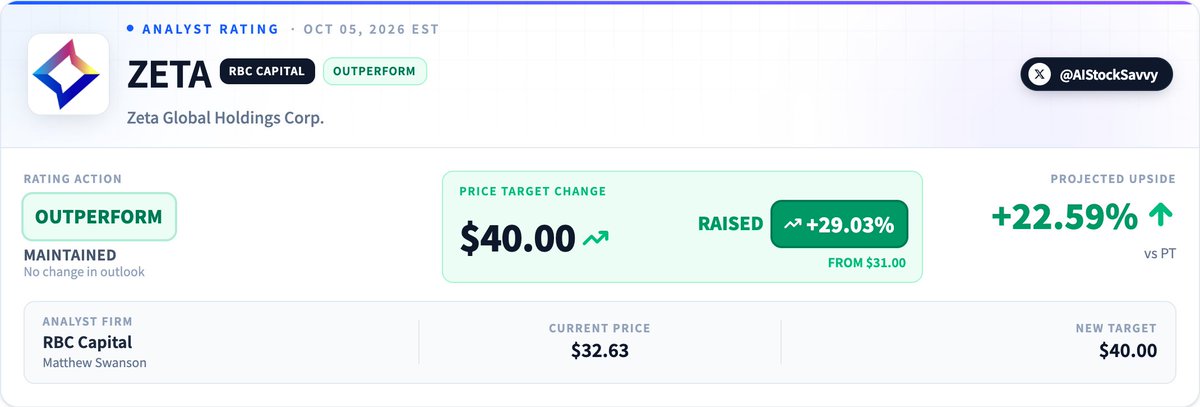
RBC Capital raised its price target on Zeta Global Holdings to $40 from $31 and kept an Outperform rating, according to multiple trade-press reports on Monday. The move follows a non-deal roadshow with management, where investors focused on strategic partnerships and the Athena AI platform.
RBC said those drivers appear to be underrepresented in current guidance and in Zeta’s 2030 outlook. That puts fresh attention on whether the company can convert partner traction and AI adoption into a stronger long-term revenue and earnings profile.
The stock responded positively to the note. Zeta last closed at $32.63, and the new $40 target implies about 22.6% upside from that level, based on TipRanks’ cited figures.
No new company filing or direct management statement on the target-price change was included in the available reports. For now, the catalyst remains the broker’s updated view rather than a change in Zeta’s own disclosed guidance.
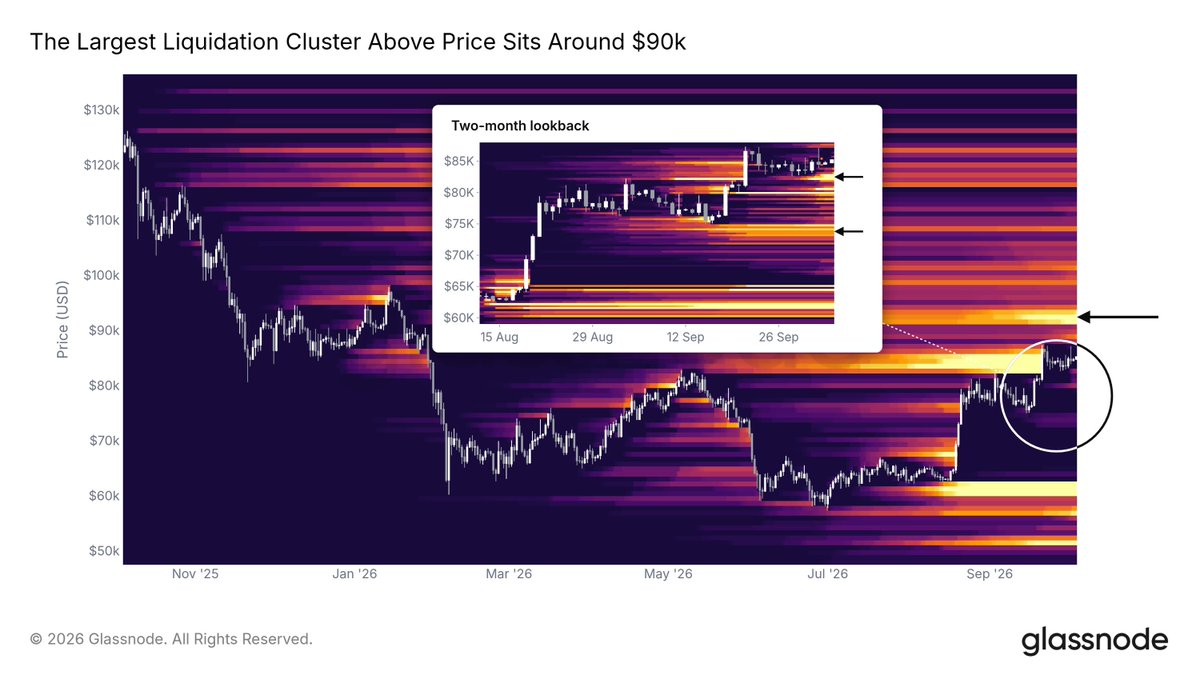
Bitcoin is trading in a tight range near the mid-$80,000s, with traders focused on whether early-October momentum can carry into the upper end of the range. Cointelegraph cited Glassnode data showing Bitcoin’s biggest short-liquidation cluster near $90,000, a level that could force leveraged shorts to buy back if reached.
That backdrop comes as multiple market dashboards and recent reporting show BTC repeatedly probing the $87,000 area without holding above the 2026 yearly open at $87,570. Glassnode’s weekly market pulse also showed futures open interest easing to $36.6 billion and options open interest falling to $36.0 billion, suggesting leverage cooled after the latest breakout attempt.
For markets, the significance is less about a single headline price and more about how positioning could interact with thin liquidity and nearby technical levels. The main transmission channels are BTC spot trading, perpetual futures, and crypto exchanges where liquidation-driven moves can accelerate short-term volatility.
A separate seasonal note is drawing attention too: Cointelegraph said Bitcoin has closed October in the green 77% of the time. That statistic is historical context rather than a forecast, but it helps explain why traders are watching the month’s opening moves closely.
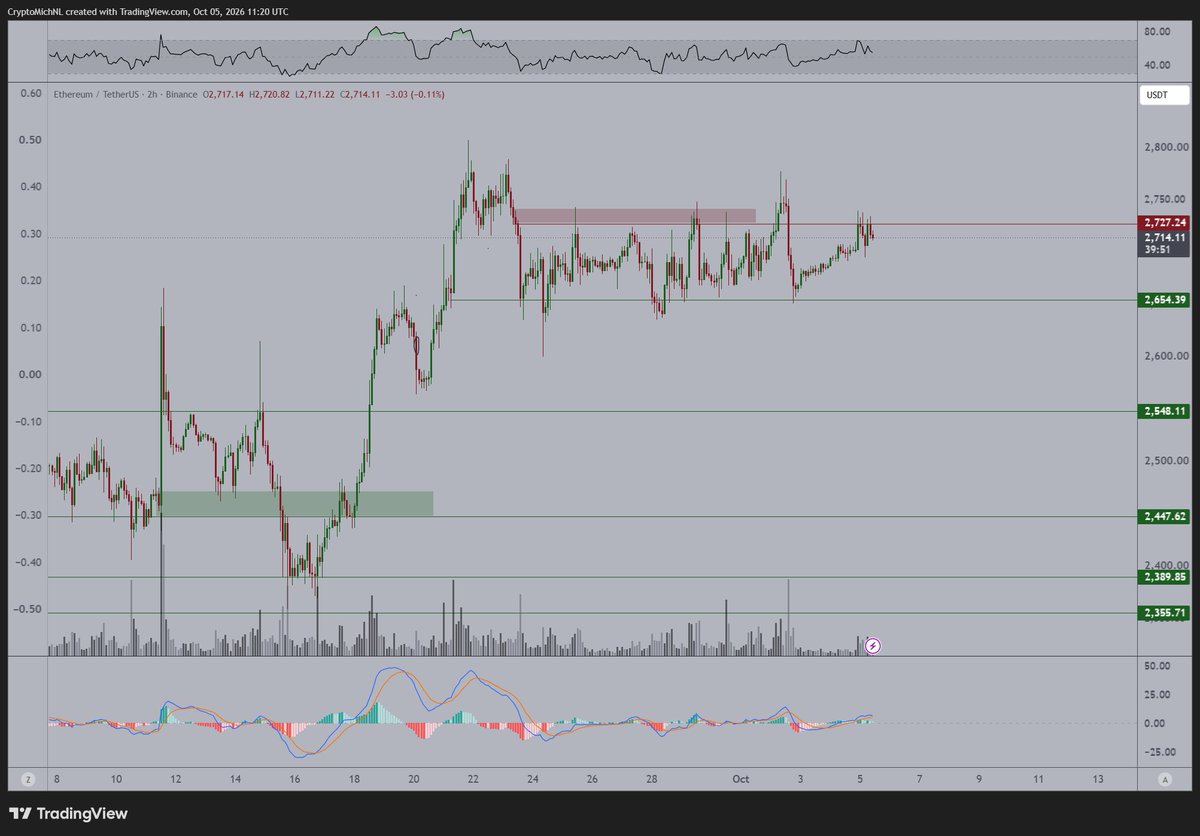
The latest X chatter is focused on whether Ethereum is approaching a pivotal technical level. Several traders say ETH is pressing into the $2,800 area, and that a weekly close above it would be needed to build stronger momentum.
The broader backdrop is less one-sided than the social posts suggest. Recent market data showed U.S. spot Ethereum ETFs posting a $17.3 million net outflow on Oct. 2, after about $690 million of inflows in the week of Sept. 21, underscoring how uneven fund flows have been.
For related names, heightened ETH activity can matter for crypto trading platforms such as HOOD because it may lift trading interest and volumes. But the immediate market debate remains centered on whether spot demand and positioning can support a move through resistance.
So far, this is still a sentiment-driven discussion rather than a fresh corporate or regulatory announcement. The key question is whether buyers can keep ETH firm near the $2,800 zone and avoid another fade below support.
X chatter over the weekend centered on one message: the Nasdaq 100 ETF QQQ ended last week at a record closing high. Independent market coverage confirms the move, with QQQ finishing Friday at 749.58, up about 1.0%, and holding above its short-term trend lines.
The broader setup is more nuanced. A weaker-than-expected US jobs report helped push the Nasdaq 100 to a record, but Treasury yields later reversed higher, making the rate-cut narrative less linear than traders first assumed. At the same time, market breadth improved from the prior session yet remained weak by most measures.
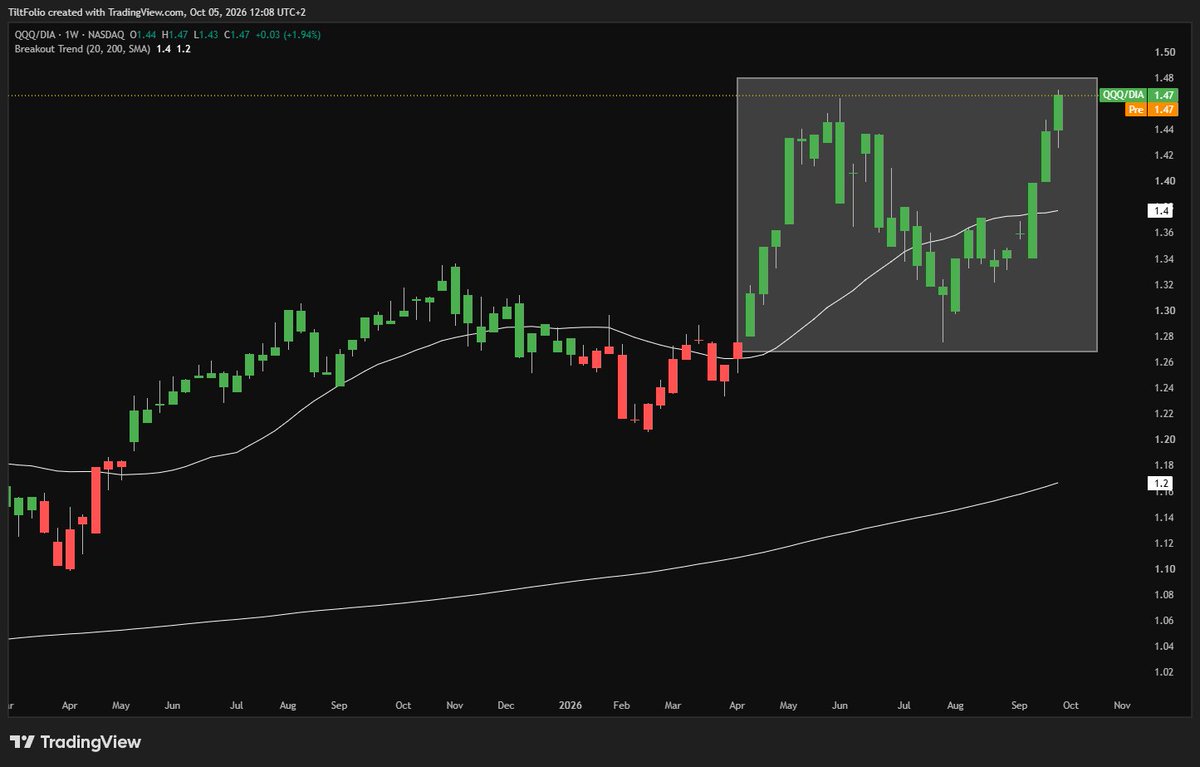
That matters for SPY, QQQ and IWM. QQQ remains the strongest of the major ETFs, SPY is technically constructive, and small caps continue to lag, suggesting the rally is still being carried by a narrow group of large-cap leaders rather than by broad participation.
In short, this is a confirmation of strength at the index level, not a clean all-clear for the entire market. The tape is still being led by tech-heavy benchmarks even as internals only partially recover.
How this story unfolded
2026-08-077 posts · 5 authors
Analysts flagged the QQQ/SPY ratio above its Dot-com peak since 2023, a $420.6M dark pool SPY buy appeared, and Nasdaq-100 technicals showed trend divergence.
Markets
Tech share of the S&P 500 hits a record as buy ratings peak
A record-high concentration in technology and record buy ratings underscore how much the index now leans on a few mega-cap names.
X signals show the ratio of technology stocks to the S&P 500 is at an all-time high, while about 60% of S&P 500 constituents now carry Buy ratings from Wall Street, also a record. Yahoo Finance cites consensus expectations for 29.5% year-over-year S&P 500 earnings growth in Q3.
The broader backdrop has been building for months. Reuters reported in June that the S&P 500 technology sector had climbed above 39% of the benchmark’s market value, above the dot-com-era peak, and Investing.com recently said the top 10 S&P 500 names now account for roughly 38% to 40% of the index. The Motley Fool also noted that the S&P 500 Shiller CAPE ratio has moved above 40.
That level of concentration puts extra weight on a small group of large-cap leaders, including Nvidia, Apple, Microsoft, Broadcom and Micron. Any earnings miss or cautious guidance from those names can have an outsized effect on the index.
The signal does not point to a single event so much as a crowded setup: optimism is already broad, concentration is high, and valuations are rich. The key issue for the market is whether earnings can keep up with expectations.
X-signals pointed to a lower Nasdaq 100 valuation, and Macrotrends puts Nasdaq’s P/E ratio at 23.66 on Sept. 14, 2026, down from above 28 a year earlier. That confirms a meaningful compression in valuation even as large-cap leadership remains intact.
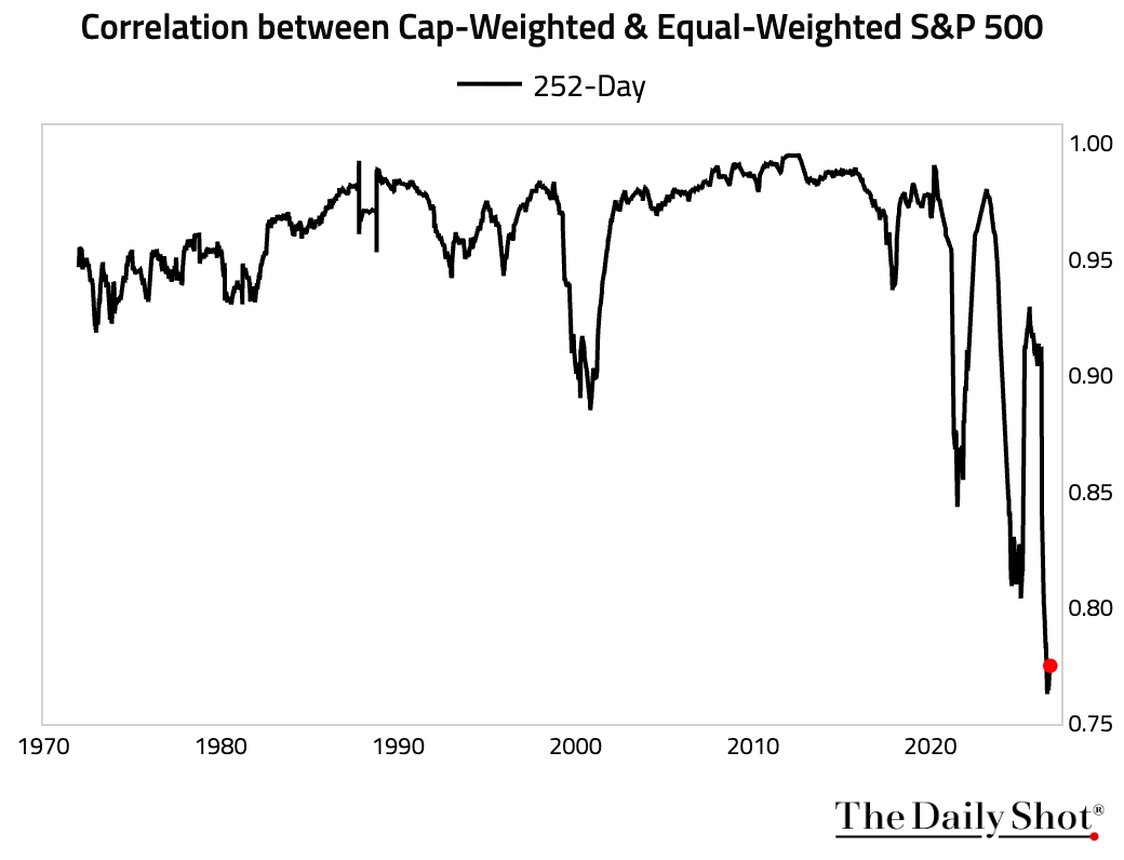
At the same time, the equal-weight S&P 500 ETF RSP continues to lag the cap-weighted SPY. Quantlake shows the RSP/SPY ratio near a full-history low as of Oct. 2, 2026, with the 3-year correlation down to 0.74, highlighting a sharply more fragmented market beneath headline index levels.
The market impact is visible in breadth statistics: Financial Post says roughly 60% of S&P 500 constituents are down more than 20% from their individual highs. Morningstar also noted that the equal-weight S&P 500 was about 6% below its recent peak, while SPY’s top 10 holdings account for 39.0% of assets versus 2.6% for RSP.
Taken together, the data describe a market led by a small group of megacaps rather than broad participation. The reports cite market-data providers and media analysis; no company-specific response is involved in this broad-market setup.
How this story unfolded
2026-08-124 posts · 4 authors
AI infrastructure and memory sectors rallied, with market focus shifting to PPI after CPI, as profit-taking hit previously leading sectors.
Markets
U.S. stock futures mixed as yields stay elevated and Fed pause bets hold
Markets are balancing a softer jobs report against stubborn bond yields and oil prices that keep inflation concerns alive
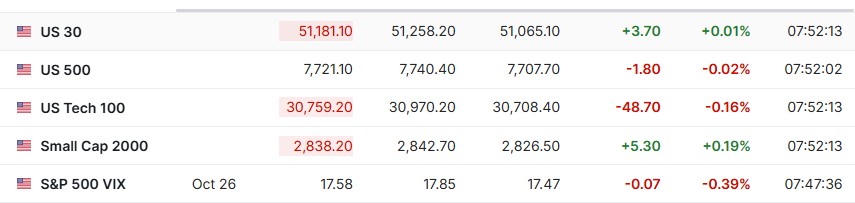
U.S. stock index futures were mixed to softer in premarket trade on Monday as investors weighed elevated Treasury yields against growing expectations that the Federal Reserve will keep rates unchanged this month. Reuters reported that Nasdaq 100 futures were down about 0.25%, while S&P 500 and Dow futures were also slightly lower.
The latest jobs data gave markets a fresh reason to dial back tightening fears: U.S. employers added just 29,000 jobs in September, below the 90,000 economists expected, while the unemployment rate rose to 4.2% from 4.1%. The CME FedWatch tool showed traders pricing roughly an 80% chance the Fed leaves rates steady at this month’s meeting.
Bond yields remain the bigger drag on risk appetite. The 10-year Treasury yield was last around 5.27%-5.28%, near multi-year highs, while Brent crude hovered around the $100-a-barrel mark, keeping inflation worries in focus.
Tech shares remained the main pressure point in premarket trading, with Intel falling more than 4% and Micron also weaker, even as Nvidia edged higher. For investors, the combination of sticky yields and firm oil prices leaves rate-sensitive sectors and major equity benchmarks vulnerable to intraday swings as earnings season gets underway.
Eurozone investor confidence fell in October as the Sentix index dropped to 2.7 from 5.1 in September, missing the market forecast. Sentix said the current conditions gauge stayed unchanged at -3.3, while the expectations component slid five points to 8.8.
The survey tracks sentiment among analysts and institutional investors. Reuters reported the October reading was below expectations of 5.0 and came after September’s four-year high, underscoring a softer outlook after several months of improvement.
For markets, the print is mainly relevant for the euro, rate expectations and broader European risk sentiment rather than for a single stock. Reuters also noted Germany’s current situation improved to -14.5, its best since May 2023, while expectations eased to 8.0; French fiscal concerns and higher bond yields were cited as a headwind.
The Sentix poll covered 1,030 investors, including 218 institutional respondents, and was conducted from October 1 to 3.
Cenovus Energy said Monday it has entered into a definitive agreement to acquire Athabasca Oil in a cash-and-stock transaction with an implied enterprise value of C$5.7 billion. Under the terms, Athabasca holders may elect to receive C$12 in cash per share, 0.264 Cenovus share, or a mix of the two.
The deal adds about 45,000 barrels of oil equivalent per day to Cenovus’s portfolio and reinforces its oil sands strategy in Canada. Cenovus said it sees a path to increase thermal production to 115,000 barrels per day by 2032 and expects about C$85 million in annual corporate and commercial synergies.
For investors, the main listed name is Cenovus (CVE), while Athabasca Oil (ATH) is the acquired asset. Cenovus said the cash portion will be funded with cash on hand and short-term borrowing, and it expects year-end 2026 pro forma net debt of C$5.0 billion to C$5.5 billion, based on strip pricing.
The boards of both companies unanimously approved the deal, and Athabasca’s directors and executives agreed to support it. Cenovus said it expects closing in December 2026, subject to shareholder and regulatory approvals.
Intel shares moved lower after social-media comments from Elon Musk suggested Taiwan Semiconductor could be involved in the proposed Terafab chip project. Several outlets framed the move as a fresh setback for Intel.
The discussion matters because Terafab has been part of the market’s read on Intel’s foundry turnaround. Any change in the project’s partner mix would force investors to reassess Intel’s ability to win outside manufacturing support.
Shares of Intel fell in the early session, with reports citing declines of about 3% to 4%. Taiwan Semiconductor also re-entered the market conversation, though the price reaction highlighted in the materials is centered on Intel.
No formal response from the parties was included in the provided materials. The current signal remains a market-moving remark rather than a confirmed deal update.
Lumentum said on Monday it will report fiscal first-quarter 2027 results on Nov. 5. The update arrives as optical networking shares remain bid in premarket trading, keeping the name near the center of the AI interconnect trade.
The broader backdrop is still the same: investors are focused on CPO, silicon photonics and high-speed optical modules tied to AI infrastructure buildouts. Recent market coverage also noted that Lumentum has been trading close to all-time highs, reflecting strong demand expectations.
In premarket action, Lumentum traded higher alongside peers including Coherent, Applied Optoelectronics and Credo, underscoring ongoing rotation into the light-communications theme. Today’s fresh catalyst is the earnings calendar, which gives the market a concrete next checkpoint for the stock.
No new company guidance accompanied the date announcement. For now, the move is best read as sector momentum plus a nearer earnings date, rather than any confirmed change in fundamentals.
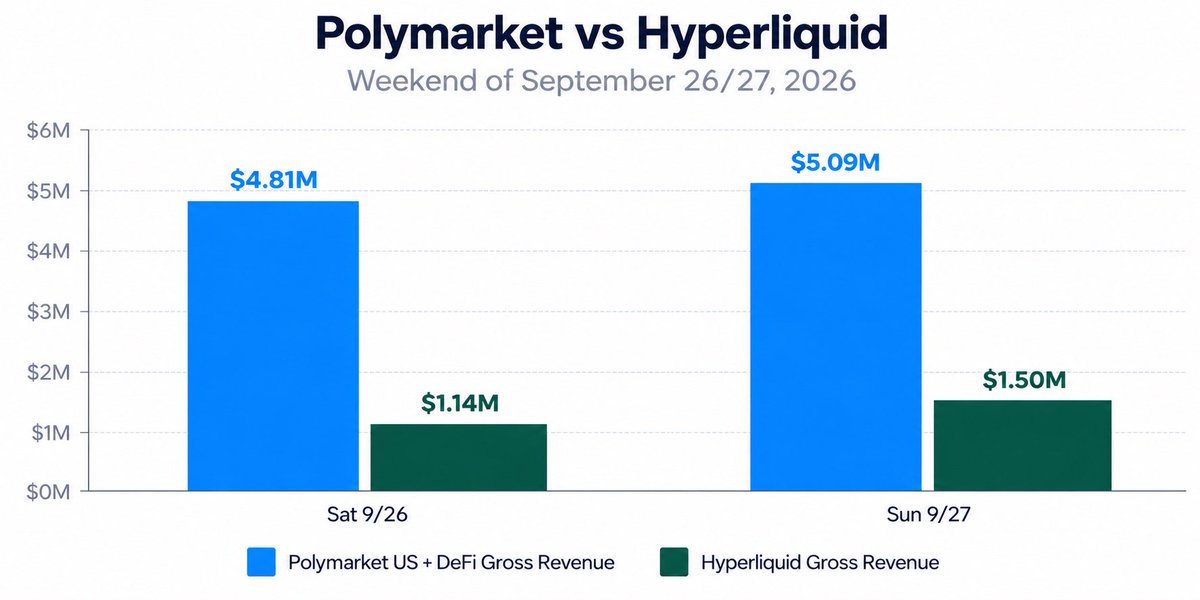
Posts circulating on X said Polymarket generated $9.9 million in revenue over the weekend of Sept. 26-27, compared with $2.64 million for Hyperliquid. The same posts framed that as Polymarket doing roughly 3.75 times more weekend revenue than its rival.
For context, third-party reporting this month cited DefiLlama-tracked 2026 cumulative protocol revenue of about $117.85 million for Polymarket, while CoinGecko-based coverage put Hyperliquid’s 2026 revenue at $429.04 million through Sept. 15. The numbers come from different methodologies, so they should not be treated as directly comparable.
The comparison matters because both platforms sit at the center of a broader market debate over how crypto-native products monetize. Hyperliquid’s HYPE token has been reported around a $20.9 billion market capitalization in recent coverage, while Polymarket still has no public token, keeping token speculation in the background.
Neither Polymarket nor Hyperliquid has issued a formal statement confirming the weekend figures in the X posts. For now, the episode is best read as a fresh market signal around revenue visibility, not as a verified earnings release from either company.
Fresh X chatter put Nu Holdings back in view after fromvalue said $NU is its second-largest position and suggested a positive day ahead. The post is a sentiment signal rather than company news, but it adds to the recent attention around the stock.
Recent coverage has already framed NU around a sharp pullback and renewed valuation debate. Invezz reported that Goldman Sachs remains bullish, noting the stock had fallen from $18.95 in January to about $13.43.
Benzinga also said NU shares were trading higher on Monday in a move tied to Brazil’s first-round vote outcome. Taken together, the materials point to a sentiment-driven update around NU, with no new corporate announcement in the provided sources.
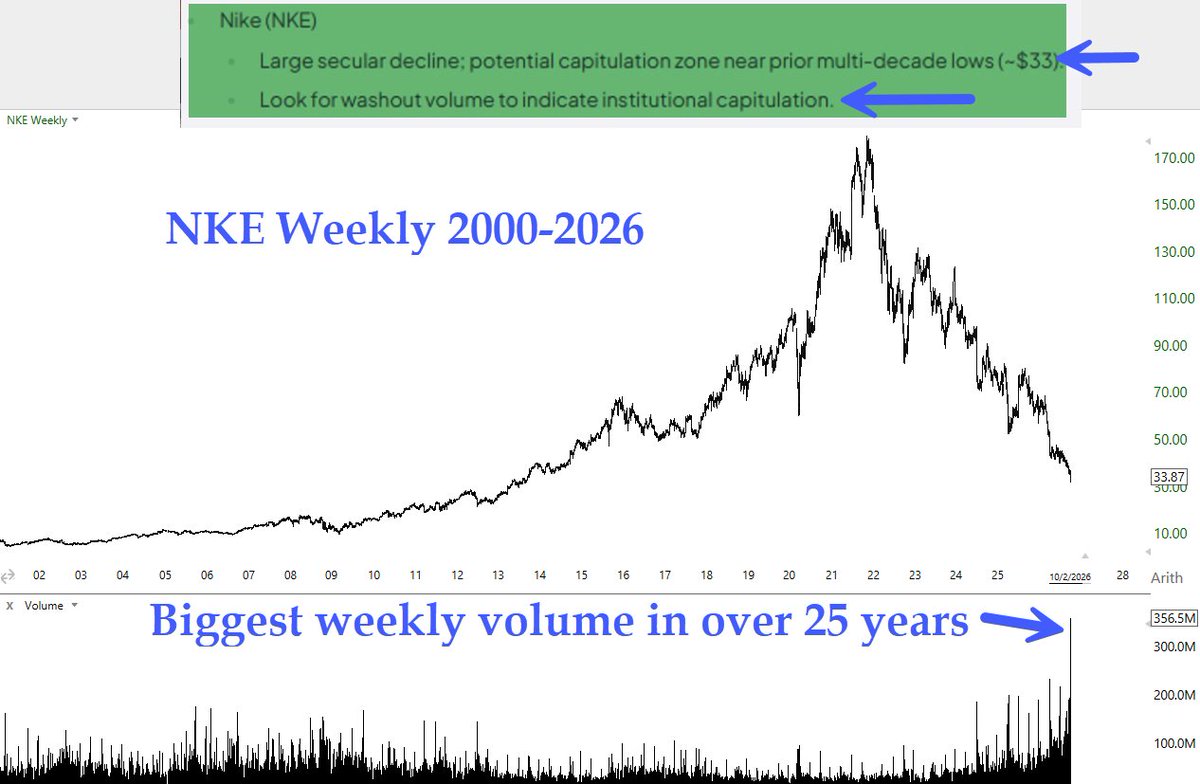
The same X stream mentioned UNH and NKE, but the strongest cross-source alignment is on NU. That makes Nu Holdings the primary ticker for this recap.
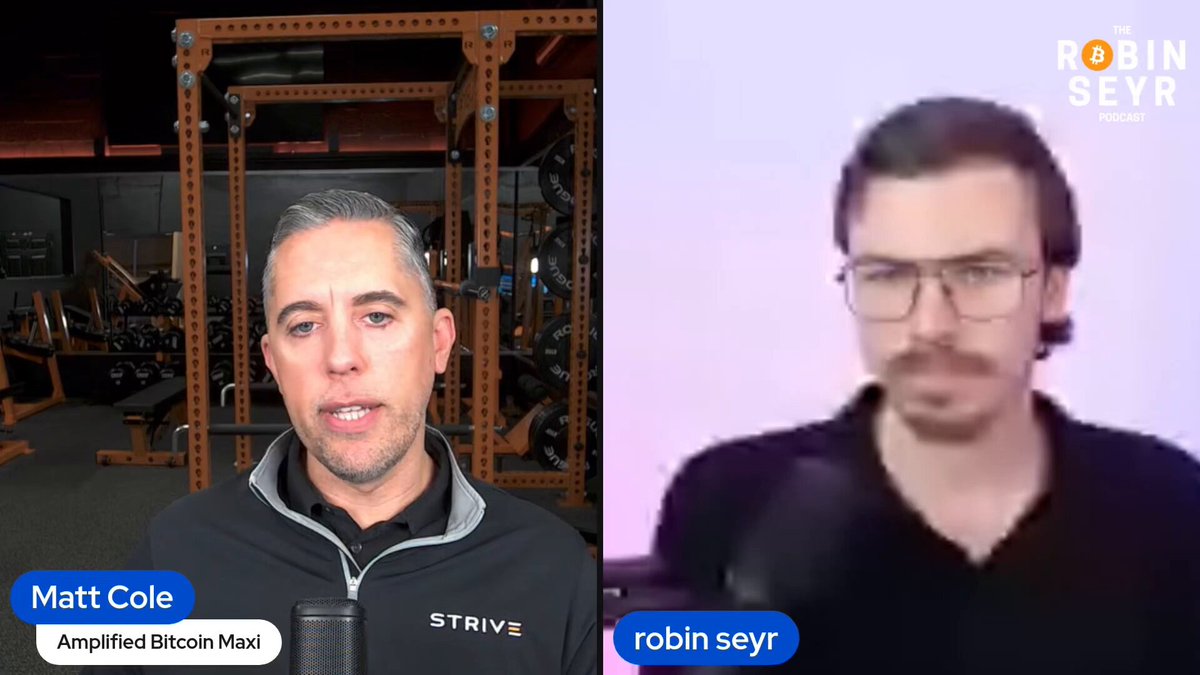
In a newly surfaced debate clip, Strive CEO Matt Cole said he believes $ASST will be “the fastest horse at least through 2030” and argued that the industry should work together to build Digital Credit into a massive asset class. The remarks came in the context of a discussion with Robin Seyr that was reposted on X today.
Cole’s comments extend his recent push for higher “amplification” in Bitcoin treasury-style capital structures. He has repeatedly argued that competition among issuers can accelerate product innovation and improve the return profile of common equity.
For markets, the immediate relevance is the continued investor attention around ASST’s Bitcoin-treasury narrative and related products such as SATA. The message also keeps ASST in comparison with larger peers including Strategy (MSTR), whose own Bitcoin-finance model remains a reference point for the sector.
No new filing or earnings release accompanied the clip, so the development is primarily a fresh public stance rather than a fresh corporate action. Even so, the statement may shape sentiment around ASST and its capital-structure strategy.
Traders said caution was right but not bearish, with semis, software, and genomics hot; some saw a contrarian rebound setup and an attempted gamma squeeze on QQQ.
2026-09-2217 posts · 15 authors
QQQ was on track for its first green September in a midterm year since 2010, SpaceX's index weight rose to 2.82% in rebalance, and historical data showed a 27.3% average one-year gain.
2026-09-2318 posts · 13 authors
QQQ hit its highest closing price ever, small caps underperformed QQQ by the largest margin in history, and the index was up 21.7% year-to-date.
2026-10-044 posts · 4 authors
Semiconductor ETFs outperformed QQQ with a 212.9% one-year gain vs 34%, analysts said 5.3% yields were breaking the market unseen in indices, and QQQ closed at another record high.
2026-10-053 posts · 3 authors
An AI-generated portfolio heavy in Nvidia and Microsoft aimed to beat QQQ, weekly outlook remained bullish, and QQQ's relative strength vs the Dow hit a record high.