President Donald Trump said after a call with Vladimir Putin that Russia will immediately release more than 300,000 tons of diesel to the “American and global marketplace,” followed by 500,000 tons in November, another 1 million tons afterward, and a further 3 million tons later. The combined total is more than 4.8 million tonnes, according to the amounts Trump laid out in his post and subsequent reporting by AP and CNBC.
The announcement marks a sharp reversal from recent U.S. pressure on Russian energy exports. PBS reported that Russia had restricted diesel exports since July as domestic demand tightened, while the International Energy Agency said Russian diesel output had fallen by about 30%, underscoring the supply backdrop behind the move.
For markets, the immediate read-through is to refined-product prices, refinery margins and fuel-linked ETFs or stocks such as USO, CLMT, DK and MPC. The bigger issue is not a company event but a policy shift that could alter sanctioned fuel flows, with the size of the effect depending on licensing, tanker loadings and actual deliveries.
Moscow has said it is ready to supply oil and oil products to the American and global markets, while Ukrainian President Volodymyr Zelenskyy denounced the easing as helping Russia. Those are reactions to the policy change; the core verified development is Trump’s announcement and the Treasury’s temporary license.
US 10-year yield nears 6% as Pimco view and rate bets heat up
X traders and follow-up coverage point to rising stress in Treasury pricing, keeping the 10-year note in focus as a benchmark for global asset valuation.
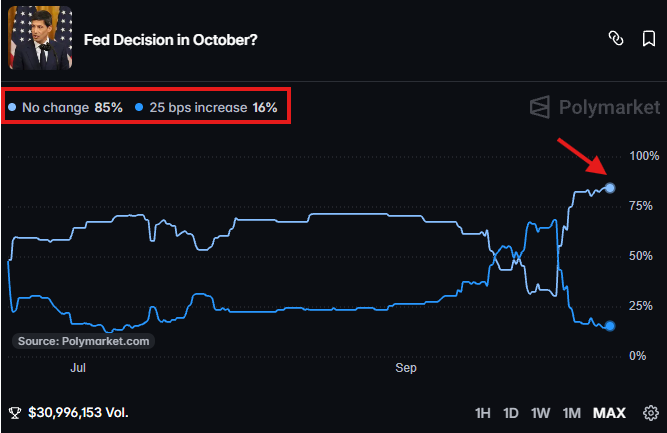
X signals today highlighted renewed attention on the U.S. 10-year Treasury yield, with traders citing a Pimco view that yields could climb to 6% and other posts pointing to shifting Fed-rate odds. The 85% October-pause figure, however, remains unverified and traces back to a single X post without an independent data source.
Background coverage from Benzinga and other outlets says Pimco CIO Dan Ivascyn warned that a 6% 10-year yield would be the first since 2000. Another separate interview-based report quotes Canary Capital CEO Steven McClurg as saying yields could reach 8% within four years, but that remains his own forecast rather than a market consensus.
For markets, the 10-year Treasury is the benchmark that helps anchor discount rates across equities and credit. Higher yields tend to pressure long-duration bonds such as IEF, while inflation-linked debt proxies like TIP are often discussed as relative shelters when real-rate concerns rise.
At this stage, the verified takeaway is narrow: multiple outlets have repeated the Pimco-linked 6% call, while the rate-pause odds cited on X have not been independently confirmed. No party-denial issues were identified in the sourced material, so the report should be treated as a market-structure update rather than a confirmed policy shift.
Axios reports that OpenAI, Anthropic and other AI companies are privately running “day after” scenarios for a future backlash if a catastrophic AI-related event occurs. The scenario they fear most is a large-scale cyberattack that could disrupt financial services, internet connectivity, power or water systems.
The report says this kind of tabletop planning is familiar in corporate and national-security settings, but the difference here is the assumption among some participants that a major incident is no longer hypothetical. Axios also said some industry insiders believe a serious event could happen within the next six to 12 months, while OpenAI said its exercises are meant as preparation rather than a sign such outcomes are inevitable.
For investors, the immediate read-through is to AI safety and cybersecurity rather than to near-term operating numbers at any single model provider. The story could keep attention on defensive software names and infrastructure-security spending, including CrowdStrike, which remains a closely watched cybersecurity stock in recent coverage.
Anthropic declined to comment, according to Axios. OpenAI said it conducts preparedness exercises for a range of scenarios and does not treat them as inevitable.
Super Micro contractor pleads guilty in $2.5 billion Nvidia chip export case
Reuters reported the latest court filing: a contractor linked to Super Micro has entered a guilty plea in a case centered on AI servers and Nvidia chips routed toward China.
On Oct. 9, Reuters reported that Ting-Wei “Willy” Sun, a contractor linked to Super Micro Computer, pleaded guilty in Manhattan federal court to four counts, including conspiring to violate U.S. export controls, smuggling goods from the United States, defrauding the government and obstructing justice. Prosecutors say the case involves roughly $2.5 billion of U.S. AI technology diverted to China.
The case was first unsealed in March, when prosecutors alleged that a network beginning around October 2023 shipped servers containing Nvidia AI chips to China without required licenses. Court filings also say the scheme used fake servers and false statements to conceal the diversion; Super Micro says it is not named as a defendant and that the matter has not affected operations.
For investors, the headline keeps the focus on both SMCI and NVDA, because the allegations center on servers tied to Super Micro and chips made by Nvidia. Reuters also noted that Super Micro shares closed at $41.75 on Oct. 9, up 1.32% on the day, while Sun’s sentencing date has not yet been disclosed.
The other named defendant, Super Micro co-founder Yih-Shyan “Wally” Liaw, has pleaded not guilty, and Ruei-Tsang “Steven” Chang remains at large. Any further regulatory or legal developments could shape how the market prices compliance risk around the company’s supply chain.
How this story unfolded
2026-08-254 posts · 4 authors
Cisco partnered with Supermicro to add rack-scale AI systems to its NVIDIA Secure AI Factory portfolio, launching October 2026, while NVIDIA GPUs saw a second price hike, surging nearly 90% in six months.
Company
SpaceX spectrum deal keeps telecom stocks under pressure as Verizon loses about $18 billion intraday
The Grain Management purchase deepens concern that Starlink Mobile could evolve into a broader wireless competitor, not just a satellite add-on.
SpaceX said on Thursday it plans to buy Grain Management’s nationwide 800 MHz spectrum portfolio, a move that would give Starlink Mobile a stronger low-band foundation as it seeks to become a major U.S. mobile carrier. Shares of Verizon, AT&T and T-Mobile extended their decline on Friday as investors kept repricing the competitive threat.
The appeal of low-band spectrum is coverage and building penetration: it can travel farther and work better through walls and other obstacles than higher-frequency airwaves. SpaceX says the new licenses would complement its satellite-to-mobile system with a terrestrial layer and help create a flexible architecture across space and ground.
The stock-market reaction was sharp. Verizon, AT&T and T-Mobile were lower again, while tower owners such as Crown Castle, American Tower and SBA Communications rose on the prospect of more network buildout demand. Reuters and other outlets said Verizon’s intraday market value loss was around $18 billion, and the three carriers together had shed more than $45 billion at one point.
The deal still needs FCC approval, and SpaceX has not disclosed the price. Verizon said spectrum alone does not create a nationwide wireless network, underscoring that the transaction is only one step toward any broader retail mobile service.
XRP Ledger disclosed on Oct. 9 that it had patched a critical flaw that could have let an attacker create and spend new XRP without paying the proper amount, potentially breaching the network’s fixed-supply design. RippleX said it found no evidence the bug was exploited on any public network.
The issue traces back to code dating to 2015 and sat in the ledger’s built-in trading path. Reporting around the disclosure says the attack could have been carried out for only a few hundred XRP in reserves and fees, and the fix was shipped in the emergency xrpld 3.4.1 release on Sept. 25.
The market relevance is straightforward: XRP’s investment case rests in part on a hard cap and predictable supply. For holders and node operators, the immediate takeaway is operational rather than directional — upgrade status and supply integrity matter more than short-term price action.
RippleX also said the patch did not uncover any loss of funds, compromised keys or consensus issues. Today’s incremental news is the public detailing of a previously fixed vulnerability, plus confirmation that it was not seen on public networks.
Delta Air Lines cut its 2026 profit outlook as surging fuel costs weighed on margins. The latest signal keeps the focus on how much of the fuel shock the carrier can absorb despite resilient travel demand.
This follows earlier reporting on Delta’s Q3 earnings, where record revenue and solid demand were overshadowed by higher fuel expenses. CNBC and Zacks had already framed the event around the same core tension: strong topline performance versus compressed profitability.
For the market, DAL remains the direct name to watch. The stock moved lower after the earnings miss and outlook cut, as investors reassessed earnings power under a higher-cost fuel backdrop.
The current reporting trail centers on cost pressure and guidance revision. No material in the provided sources shows Delta disputing that fuel inflation is hurting profits.
Humana shares jumped as much as 15% intraday after the company said 95% of its Medicare Advantage members are in plans rated four stars or higher for 2027. The figure is sharply higher than 20% in 2026 and above J.P. Morgan’s 60% to 70% estimate.
The update matters because higher star ratings can unlock larger bonus payments from the Medicare system. In the same broader 2027 reset, Humana has also drawn attention for changes to Part B giveback benefits for some members.
For the market, the ratings surprise put HUM at the center of the day’s move in the S&P 500. The stock’s rally reflects how sensitive investors are to Medicare Advantage quality metrics and the earnings impact tied to them.
The materials reviewed did not include an additional company comment beyond the rating disclosure. The X signal also noted that HUM was among the day’s biggest gainers, with the stock up 11.56% in another market note.
Evernorth Holdings has completed its business combination with Armada Acquisition Corp. II and expects its Class A shares to begin trading on Nasdaq on Oct. 12 under the ticker XRPN, with warrants under XRPNW. The company says it enters the public market holding about 473 million XRP and about $300 million in gross cash proceeds before transaction expenses.
The deal extends Evernorth’s push to build a public XRP treasury vehicle rather than a passive crypto product. In its release, the company said backing came from investors including Ripple, SBI Group, Arrington Capital, Pantera Capital, Kraken and GSR.
For markets, XRPN gives investors a new equity wrapper for XRP exposure, with the added complexity of an operating company that intends to deploy capital across the XRP ecosystem. That means future attention will focus on treasury deployment, dilution, and how the company manages its digital asset balance over time.
Evernorth also said it expects to ring the Nasdaq closing bell on Oct. 14. The company has not yet reported first-day trading results, so the immediate market impact remains to be seen.
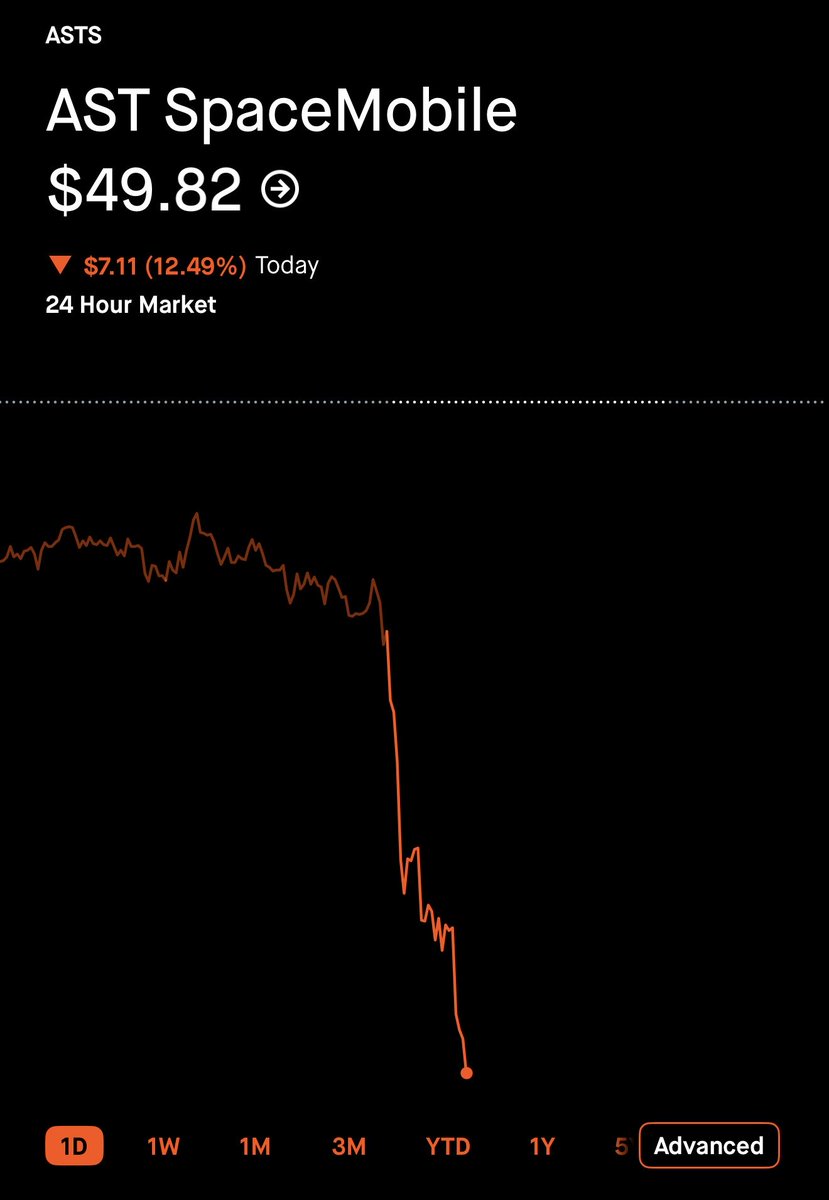
On Oct. 10, traders on X linked AST SpaceMobile’s intraday weakness to SpaceX’s latest low-band spectrum transaction. One post said ASTS showed a “big breakdown on all timeframes” on the SPCX news, while another brushed off the panic around ASTS as unsurprising.
The backdrop is a round of Oct. 9 reporting that SpaceX agreed to acquire a nationwide low-band spectrum portfolio, described as an important building block for broader U.S. phone coverage. That matters for AST SpaceMobile because its direct-to-device model also depends on spectrum access and carrier relationships, so the competitive overlap is now front and center.
The market read-through is mainly being priced into ASTS, with SPCX serving as the catalyst and reference asset. The X posts are commentary on price action rather than fresh company disclosure, and neither company’s formal response was part of the signal.
What is verified is the reported spectrum deal and the fact that traders are using it to explain the move in ASTS. The event line itself is broader than today’s posts, but today’s incremental development is the market’s explicit linkage between the two names.
Business Insider reported that Google employees are testing a new Gemini 4 variant internally codenamed Carbon. The report says staff described its coding performance as comparable to Claude Opus 5.5, adding a fresh data point to Google’s fast-moving model lineup.
The update follows a broader Gemini 4 rollout story that has already included earlier internal and limited-access versions such as Argon. Public details on wide API availability remain sparse, so any new internal benchmark or staff test is being watched closely by investors and developers alike.
Alphabet shares, including GOOGL and GOOG, can react to headlines like this because they reinforce the narrative that Google is still iterating aggressively in frontier AI. The key market question is whether these internal gains translate into a clearer commercial release path and stronger developer adoption.
Google has not publicly confirmed Carbon as a release candidate, nor has it disclosed pricing or launch timing. For now, the Business Insider report is the latest incremental evidence that Gemini 4 remains an active, multi-stage product effort inside Google.
How this story unfolded
2026-08-1229 posts · 22 authors
Company
Microsoft unveils Decision-1 for fast fixed-choice decisions
Nadella’s post adds a fresh product signal as Microsoft tests a new model for routing, grading and workflow control
Microsoft CEO Satya Nadella posted on X that the company has introduced Microsoft-Decision-1, a model built for fast decision-making. Microsoft says it is already testing the model internally and positioning it for fixed-choice tasks such as routing, classification, verification and workflow control.
The model is meant for bounded decisions rather than open-ended text generation. Microsoft and coverage of the launch say Decision-1 is based on Alibaba’s open-weight Qwen3.5-9B and has been added to Microsoft Foundry for developer use.
Microsoft says Decision-1 delivered the highest accuracy across 36 benchmarks and nearly 150,000 questions in its own testing. The company also claims median latency that is 35 times faster than GPT-6 Sol and 4.5 times faster than Quyet-1.0-Large, while citing internal uses in Xbox Research and Copilot.
For markets, the relevant ticker is MSFT, as the announcement reinforces Microsoft’s push to monetize AI through enterprise workflows and its Foundry platform. If developers adopt the model for routing and moderation tasks, it could deepen usage of Microsoft’s AI stack beyond chat-style applications.
Lockheed Martin has unveiled PAC-3 Edge, a missile interceptor intended to counter hypersonic and other advanced threats. Reuters and Bloomberg both described the system as designed for longer-range, higher-altitude engagements.
This is the same event covered in the site’s news library item N5, which reported on Oct. 9 that Lockheed Martin unveiled a PAC-3 Edge interceptor designed to counter hypersonic threats. The X posts today are essentially amplifying that fresh product launch coverage.
For LMT, the release highlights the company’s latest defense product push, with investors likely focused on whether the interceptor can strengthen its position in missile defense. Any future testing or procurement progress would matter directly for the stock.
The materials do not provide contract size, revenue impact or procurement details. A separate item in the news library, N4, says Lockheed Martin declared a fourth-quarter 2026 dividend of $3.60 per share, but that is a different story line.
The U.S. Department of Agriculture raised its 2026 U.S. corn yield forecast to 181.2 bushels per acre on Oct. 9, up 2.7 bushels from the prior estimate, and lifted production to 16.034 billion bushels. Corn futures fell sharply after the report, with the market briefly nearing limit-down levels before recovering some of the losses by the close.
The move caught traders off guard. DTN said December corn finished down 20.5 cents at $4.7975 a bushel after an intraday limit-down move, while a Dow Jones-linked market recap cited by MarketScreener put the December contract at $4.805 a bushel, down roughly 4% on the day.
Deere is often treated as a proxy for U.S. farm economics because weaker crop prices can pressure farm income and delay equipment purchases. Zacks said DE closed at $622.78, down 4.57%, as the grain selloff spilled into agricultural-equipment shares.
For now, the catalyst is macro and commodity-driven rather than company-specific. Investors are watching how the larger corn supply estimate filters through crop prices, farm cash flow and machinery demand expectations.
U.S. equities finished higher on Friday, with major indexes extending a strong weekly tone. The Dow Jones Industrial Average rose 0.83% to 51,654.95, the S&P 500 gained 0.59% to 7,811.54, the Nasdaq added 0.64% to 27,366.17, and the Russell 2000 climbed 0.50%.
The move reflected continued investor confidence in corporate earnings resilience, even as markets digested prior sector rotation and rate volatility. marketwatch.com reported that stocks pushed higher in the final hour as tech names rebounded, while benzinga.com had earlier noted how energy and defensive groups were holding up when yields and oil were moving sharply.
For markets, the key story is not a single company catalyst but the way capital is rotating among technology, software, semis and defensive sectors as the S&P 500 hovers near record territory. Traders are also watching next week’s earnings slate and economic releases, which could shape expectations for growth and rates.
The X signal points to a broad risk-on tone into the close rather than a company-specific shock. Friday’s gains also capped another strong week, underscoring how closely investors remain focused on earnings visibility.
The White House said on Oct. 8 that President Donald Trump presented the National Medal of Science to Elon Musk, Jensen Huang, Lisa Su and Sergey Brin, and the National Medal of Technology and Innovation to Michael Dell and Satya Nadella. The ceremony formalized a rare White House spotlight on the leaders of AI, semiconductors, cloud computing and space technology.whitehouse.gov
The event is also notable for what it signals politically: the administration is continuing to frame advanced computing, chip design and space infrastructure as strategic national priorities. NBC News reported the awards were handed out at the Science: A New Golden Age Summit in Washington, where the honorees appeared together on stage.nbcnews.com
For investors, the most directly relevant names are Nvidia and AMD, given their central role in AI accelerators and data-center chips. Musk’s presence also keeps attention on Tesla and SpaceX, while the broader message points to continued policy interest in the U.S. technology stack.aljazeera.com
Elon Musk said Mukesh Ambani, India’s richest man and chairman of Reliance, is the “real boss of India.” The comment came as Musk pushed for SpaceX’s Starlink service to compete in the country.
This is the latest public turn in a longer-running effort to get Starlink launched in India. CNBC reported on Thursday that Musk took a shot at Ambani as Starlink “fails to take off” in the market.
For investors, the key subject remains SpaceX/SPCX and the company’s ability to move its satellite internet business into India. Any broader market impact would stem from whether Starlink secures a larger role in providing internet access and competition.
No response from Ambani was included in the materials provided. The new information here is Musk’s direct public framing of the issue and his argument for more competition in India.
AST SpaceMobile said on X that BlueBirds 14, 15 and 16 have arrived at Cape Canaveral. The company added that satellite builds in Texas are already underway through BlueBird 50.
The update extends the company’s rollout of satellite broadband and direct-to-smartphone service. For ASTS, manufacturing cadence and launch timing remain central to execution.
In the market, ASTS remains the focal ticker for this update. Recent coverage in the news library has also tied the stock to broader spectrum and competitive developments, keeping investors focused on both deployment progress and strategic positioning.
The post is a fresh company update, centered on satellite arrivals and manufacturing progress in Texas. It does not include new financial results or a regulatory decision.
AST SpaceMobile CEO Abel Avellan said on X that U.S. carriers hold about 1,000 MHz of low- and mid-band spectrum that can be tuned onto the AST network. He also highlighted AST’s own 45 MHz of L-band spectrum and said the company’s satellites could deliver peak data rates of nearly 200 Mbps.
The comments came as SpaceX disclosed plans to buy Grain Management’s U.S. 800 MHz low-band licenses, a portfolio of up to 14 MHz, pending FCC approval. SpaceX has said the purchase would fill an important gap as it tries to turn Starlink Mobile into a larger U.S. wireless player.
The market reaction has centered on ASTS and SPCX, with investors weighing a sharper competitive split between AST’s carrier-partner model and SpaceX’s build-it-itself approach. AT&T, T-Mobile and Verizon are also part of the comparison, since their spectrum holdings are the basis for Avellan’s claim.
For now, Avellan’s post is a response, not a new corporate filing, while SpaceX has already moved the matter to regulators by seeking FCC approval. If approved, the deal would deepen SpaceX’s push into mobile connectivity.
GTCR and Elliott near a deal for CCC Intelligent Solutions
Bloomberg says the firms are in advanced talks to buy the auto-insurance software provider, reviving a sale process already under way earlier this year
According to people familiar with the matter, GTCR and Elliott Investment Management are in advanced talks to acquire CCC Intelligent Solutions Holdings, a provider of software used by auto insurers and repair networks. Bloomberg said a deal could be announced as soon as next week, although no final agreement has been reached.bloomberglaw.com
The report adds fresh momentum to an auction that has been developing for months. Reuters reported in July that CCC had hired Morgan Stanley to explore strategic options, and CNA noted that Bloomberg reported in August that Copart had also been in talks to buy the company.channelnewsasia.com
Shares of CCC jumped in after-hours trading on the news, with Reuters reporting a gain of about 13%. Another follow-up said the stock closed Friday at $7.02, implying a market value of about $4.1 billion, underscoring how quickly takeover headlines can reprice the stock.reuters.com briefs.co
CCC, GTCR and Elliott did not immediately comment on the reports, and the Bloomberg and Reuters accounts both said the talks could still change, end without a deal, or attract another bidder.
Fresh posts on X suggest Apple’s iPhone 18 Pro order pattern is diverging. One supply-chain source responding to Nikkei’s report said iPhone 18 Pro orders slipped slightly, while Pro Max orders rose a bit.
This follows recent reporting in the same event chain. Reuters, citing Nikkei Asia, said Apple had asked some suppliers to trim component production for the newly launched iPhone 18 Pro and iPhone 18 Pro Max amid softer demand.
The market read-through remains centered on AAPL and its suppliers. One cited report said Apple shares fell on the production-cut headlines, while another noted lead times for the Pro and Pro Max have recently come down.
For now, the key new detail is the mix shift: weaker Pro orders versus slightly firmer Pro Max demand. One supply-chain response suggested that the shift could still benefit parts of the supply chain.
Aritzia reported fiscal second-quarter net revenue of C$1.17 billion for the period ended Aug. 30, up 44.1% from a year earlier, while comparable sales rose 34.5%. Adjusted earnings per share came in at C$1.31, well above the C$0.59 posted a year earlier.
The standout drivers were the U.S. and digital businesses. U.S. revenue rose 60.3% to C$779.4 million, and digital revenue climbed 67.7% to C$402.9 million, underscoring the retailer’s strong momentum in its highest-priority growth market.
Aritzia also raised its full-year net revenue outlook to C$4.78 billion to C$4.88 billion, implying growth of 29% to 32% from fiscal 2026. The company said it still plans 12 to 13 new boutiques and four to five repositions this year, with most of the new openings expected in the U.S.
Investors rewarded the update with a sharp rally in the stock, according to market reports, as the latest results eased concerns about whether growth could stay elevated after a strong prior quarter. The guidance hike also kept attention on margin expansion, store productivity and app-driven traffic growth.
New X-signals say Wall Street is skeptical about reports that Starbucks (SBUX) is interested in acquiring Chipotle Mexican Grill (CMG). Benzinga-described commentary says such a deal could be risky while Starbucks is still in turnaround mode.
D.A. Davidson analysts Matt Curtis and Andrew Tompkins said a SBUX takeover of CMG “seems unlikely,” putting the odds of a deal at around 20%. They also argued the two companies have little overlap, even as the combination would be transformational for Starbucks.
The main concerns cited are additional debt, higher borrowing costs and execution risk under CEO Brian Niccol. For investors, the discussion matters because it frames how much room Starbucks has for large capital commitments while its turnaround is still underway.
No formal response from Starbucks or Chipotle appears in the supplied material. The recent coverage in the site news base is still centered on market discussion around the rumored tie-up rather than any confirmed transaction.
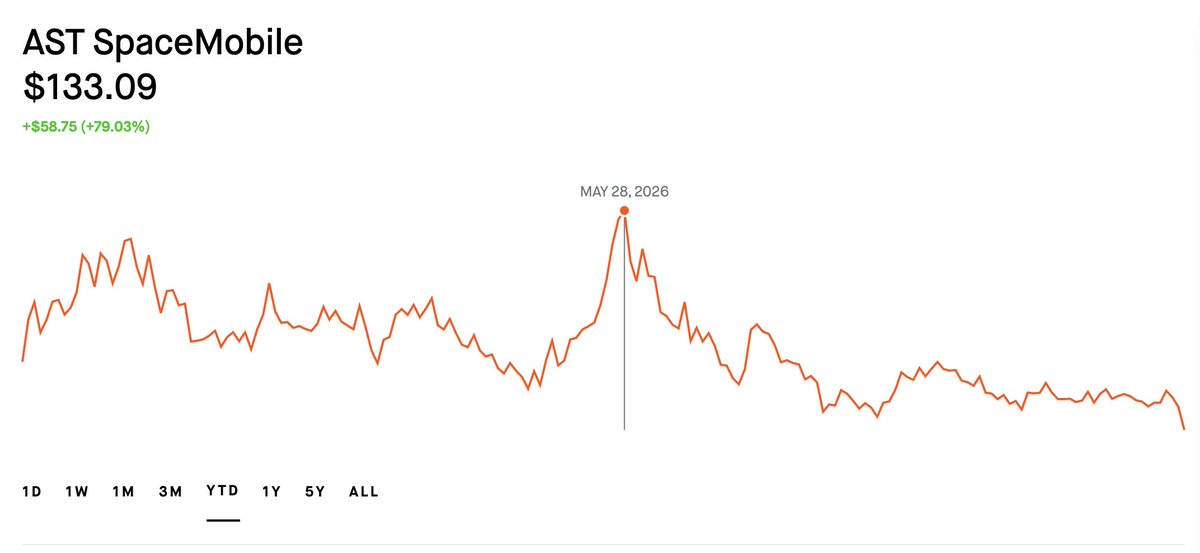
AST SpaceMobile (NASDAQ: ASTS) was back in focus on X today, with posts circulating a claim that the stock is now down 64% from its May high of $133. Nearby coverage also points to continued pressure on ASTS after SpaceX-related news.
The immediate catalyst is not a new company announcement from ASTS. Rather, the market is still digesting SpaceX’s low-band spectrum deal, which 247WallSt says closed off an option AST SpaceMobile had pursued, while Barron’s argued the selloff may have gone too far.
On the tape, Zacks said ASTS closed at $50.93 in the latest session, down 10.55% from the prior day. That suggests the SpaceX-related narrative is still shaping near-term trading in the name.
No fresh response from AST SpaceMobile appeared in the materials provided. The latest public items in the news library also include investor-alert notices, though those are separate from the X posts driving today’s attention.
CNBC reported two standout options trades in the semiconductor complex on Friday: a large put purchase in Nvidia and a cluster of deep in-the-money put activity in Micron. The flows were notable enough to put the chip trade back under a microscope.
The timing matters because Nvidia and Micron sit at the center of the AI hardware trade, with Nvidia tied to compute demand and Micron to memory supply for data-intensive workloads. A separate CNBC report also noted growing political scrutiny of data-center construction, adding another layer of uncertainty around AI infrastructure sentiment.
For the market, the moves matter most for NVDA and MU, but they can also spill into broader vehicles such as SMH and QQQ. When large options positions signal disagreement on the durability of the AI rally, implied volatility and sector rotation often become the main story.
CNBC said the Nvidia trade involved 100,000 put contracts at the 180 strike expiring Jan. 15, with about $21 million in premium. For Micron, the report described roughly $270 million in put premium tied to likely put-buying, with some trades structured as a synthetic short. No company response was reported.
Wedbush analyst Dan Ives said in a Schwab Network interview that investors are underestimating the scale and scope of the AI buildout over the next 12 to 18 months. He also called Apple a “sleeping giant” and named Nvidia, Microsoft, Palantir, CrowdStrike and Apple as his top five tech picks.
The comments land as markets continue to reprice the AI capex cycle. Separately, media reports said Apple had asked some suppliers to reduce component production for the newly launched iPhone 18 Pro and iPhone 18 Pro Max, citing softer demand.
Apple shares had fallen about 3% after the order-cut reports. The upbeat AI framing keeps Apple in the center of the AI trade, while Nvidia, Microsoft, Palantir and CrowdStrike remain among the names most directly tied to the buildout narrative.
The latest increment here is Ives’ fresh emphasis on the pace of AI investment and his positive read-through for Apple. The iPhone supply-cut story remains a reported claim rather than an Apple confirmation.
Multiple X posts indicate Palantir ($PLTR) set a fresh all-time high today. 3peakstrading said the stock rose 4.2% to $207.12 and hit an intraday peak of $207.85, while barchart said it eclipsed the prior high set in November 2025.
The incremental news here is the price milestone itself, not a new company announcement. In the related coverage from the past 48 hours, 247wallst reported on Oct. 9 that Goldman Sachs upgraded Palantir to Buy and cited 18% upside, which helps frame the stock's recent momentum.
Social posts focused on technical strength and weekly closing potential, with franvezz calling it a candidate for its highest-ever weekly close and fundmyfund pointing to a two-week calm period followed by expansion. That is market commentary rather than new fundamental disclosure.
Some posts were clearly tongue-in-cheek and should not be taken literally, including one claiming Palantir had 'finally reached 1$.' The verifiable takeaway today is that the shares have broken to new highs and remain a major market focus.
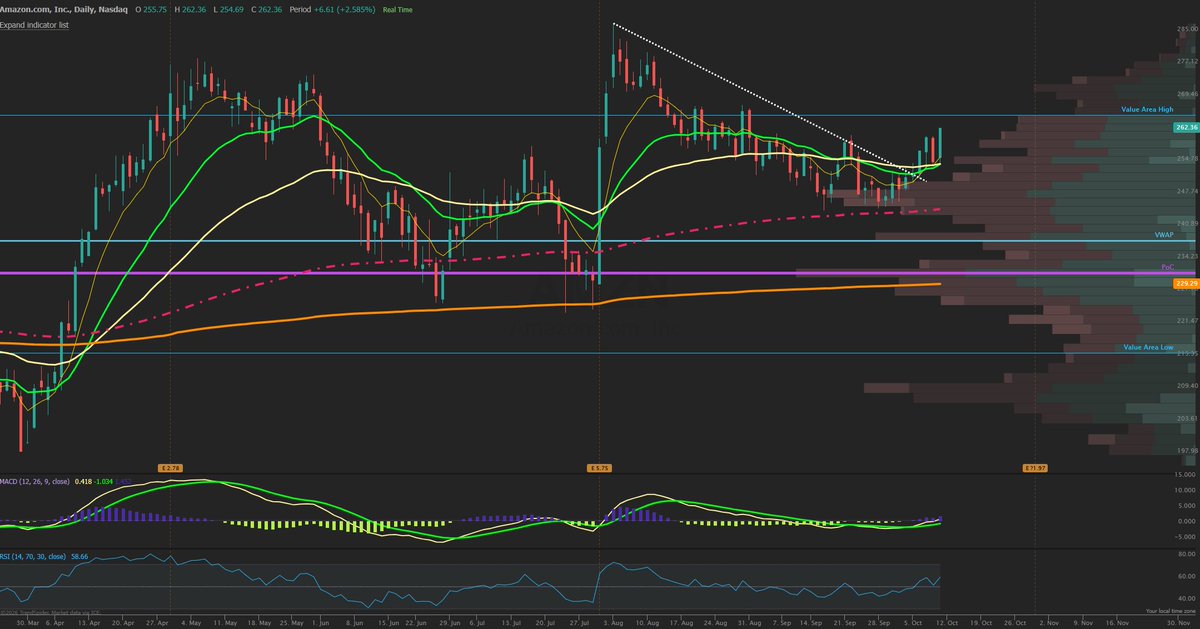
X posts today centered on Amazon’s stock extending a flag-breakout move, with traders describing a squeeze pattern still working higher and price pressing near the day’s high. One post also flagged a Tuesday 252.5 call expiring Monday as making a new high, suggesting some participants may have closed the trade during the session.
Recent public coverage has provided a broader backdrop for the move. Analysts have continued to frame Amazon around AWS momentum, AI-related deployments and longer-term infrastructure spending, but those pieces are background rather than a fresh company announcement today.
For the market, AMZN remains the key ticker because short-dated options flow and intraday price action can reinforce each other and shape near-term sentiment. Public market data cited in recent coverage put Amazon at $262.43 at the October 9 close, while other AMZN-linked trading references clustered around the low-$260s, keeping that zone in focus.
No new corporate filing or regulatory development appears to be driving today’s incremental signal. The immediate story is trading-driven: momentum, options activity and how quickly the stock can hold recent gains.
On October 10, several X posts said Microsoft was still pushing higher on a weekly closing basis, with traders focusing on whether the stock could hold the $535/$530 area into the close. The posts framed the move as a fresh weekly closing high or a test of that level.
Recent market coverage already showed Microsoft among the stronger large-cap tech names. The stock rose 2.38% on Friday to $535.07, while the S&P 500, Nasdaq and Dow all finished higher; at the same time, semiconductors lagged, underscoring a selective bid inside technology.
The move helped keep sentiment constructive around mega-cap tech, especially as Amazon also advanced. But weaker names such as Nvidia and other chip stocks showed that this was not a broad-based rally across the sector; investors were favoring stocks with the clearest price breakouts.
The only new information today is the market’s price-action confirmation from X rather than a company announcement. Recent local coverage on Microsoft centered on institutional ownership updates and profile pieces, not a fresh corporate catalyst.
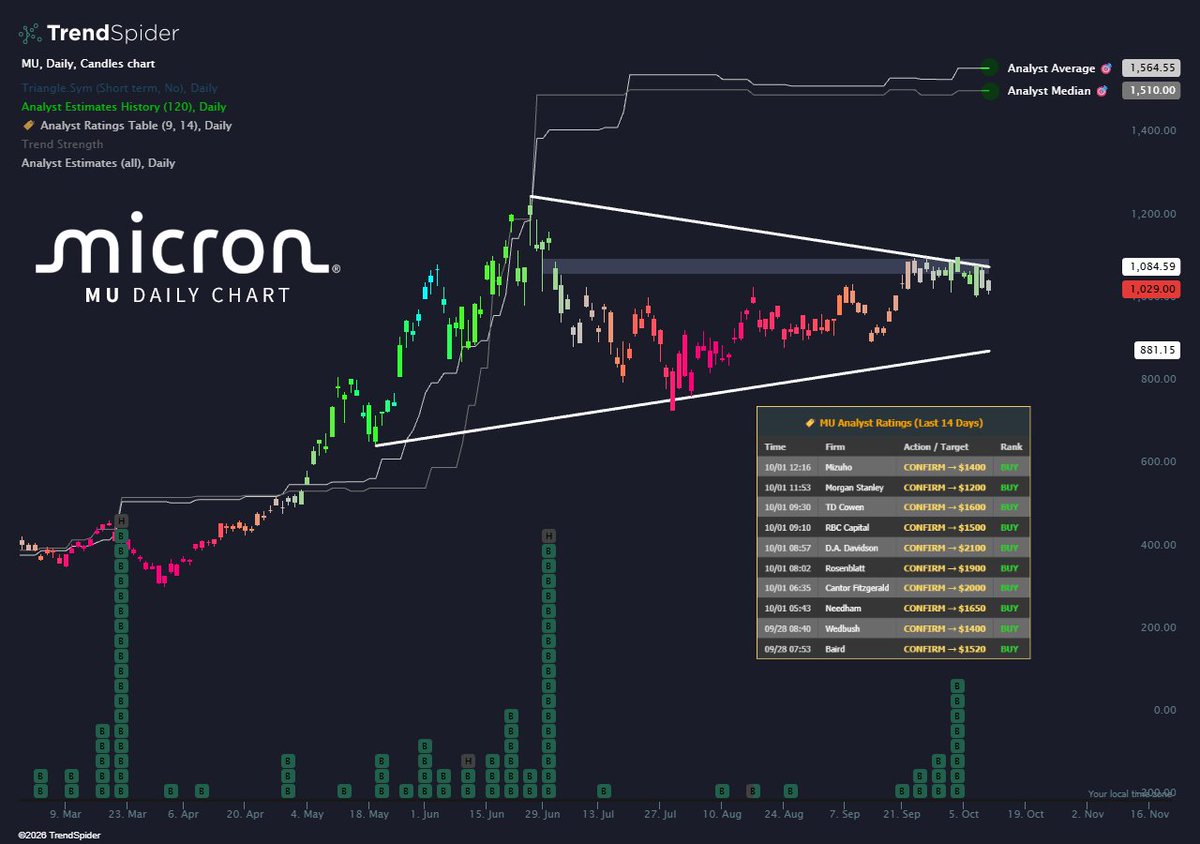
X trading chatter says Micron Technology (MU) is “up against resistance,” while Wall Street looks at the stock as roughly 50% higher. That puts the debate squarely on where the shares can go from here, not just where they have been.
Recent coverage in the site news library shows the bullish case is still alive. Benzinga quoted a Wall Street bull who said MU could reach $3,000 in 24 months if fiscal 2028 earnings climb to $200 per share.
There is also a clear countercurrent. The Fool reported that Michael Burry is bearish on the AI trade and has bought long-dated put options on Micron, while Barron's said the stock remains range-bound in a choppy AI trade.
For now, MU is the center of a tug-of-war between technical resistance and valuation-driven optimism. That tension is what makes the stock a live market story today.
On X, multiple traders flagged Snowflake ($SNOW) as printing a new relative-strength high. One post also said the stock broke through 350 after repeated tests of that level, adding to the day’s momentum-focused chatter around the name.
Recent coverage in the news library provides the backdrop. In the past 48 hours, Snowflake drew reports on its new AI Marketplace preview, while another piece from investors.com cited a 35% acceleration in fiscal Q2 revenue growth.
The market read-through is mainly about SNOW’s trading strength and follow-through, not a new company announcement. $NET and $TENB were mentioned in the same signal set as other strong names, but they are not the primary subject here.
No fresh corporate response is included in the materials. The confirmed items are the social-media trading calls and the recent media coverage on Snowflake.
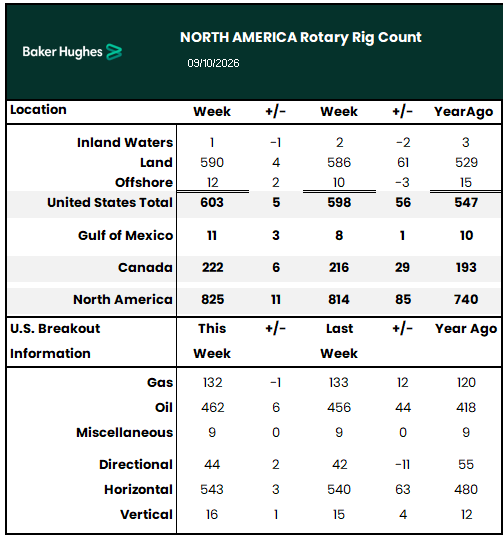
Baker Hughes’ weekly U.S. rig count rose by five to 603 in the week ended Oct. 9. Oil rigs increased to 462 from 456, while gas rigs slipped to 132 from 133, according to multiple real-time news wires.financialjuice.com
The data are a standard high-frequency gauge of U.S. drilling activity and often help investors infer demand trends for rigs, pressure pumping and other oilfield services. Energy Intelligence said the total moved back above 600 for the first time in more than two years.energyintel.com
For energy-equity traders, the number matters less as a direct production read than as a leading indicator for future capex and service utilization. It can also influence near-term sentiment in crude and gas markets, even though the rig count itself does not immediately change output.helious.io
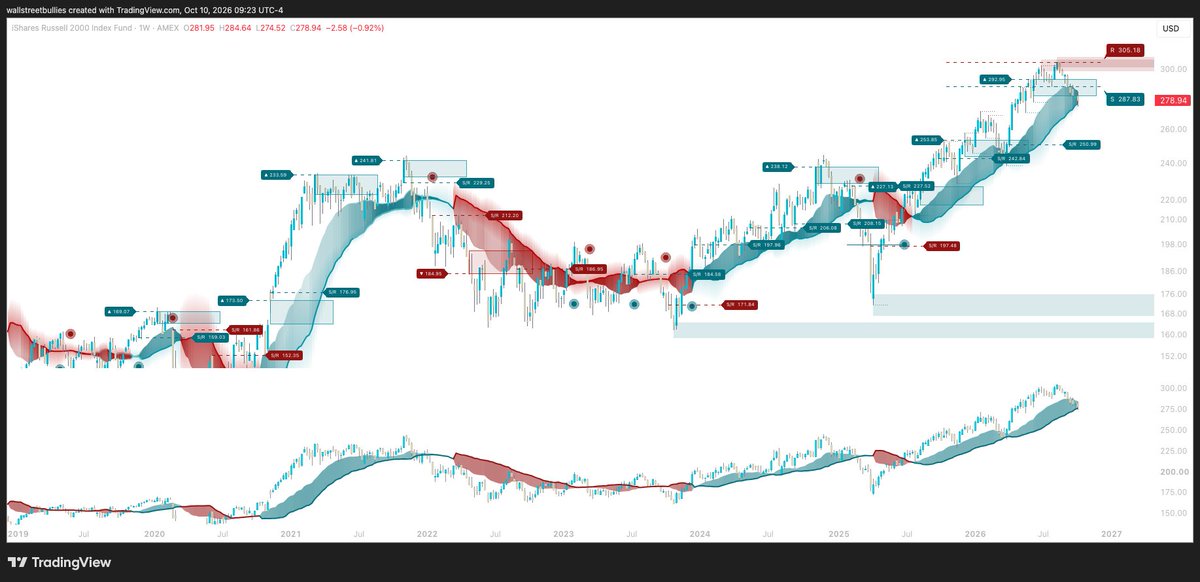
Latest market chatter on X put iShares Russell 2000 ETF (IWM) near 278.94, leaving it only a few points above the closely watched 275 put wall. A live options-structure page also showed spot around 278.9, a zero-gamma flip at 278.8, a call wall at 280 and a put wall at 270.
The backdrop remains the same: small caps are highly sensitive to rates and risk appetite. The gamma map suggests that when IWM is above the flip, dealer hedging tends to dampen moves, while a drop back toward or below the flip can make intraday swings easier to amplify.
For markets, IWM matters as a proxy for the Russell 2000 and for broader small-cap sentiment. One market update noted the ETF had recorded a recent run of weekly declines, underscoring that price is still probing the boundary between support and options-driven resistance.
There is no fresh issuer-specific announcement here; this is mainly a read on price action, options positioning and the tone around small caps.
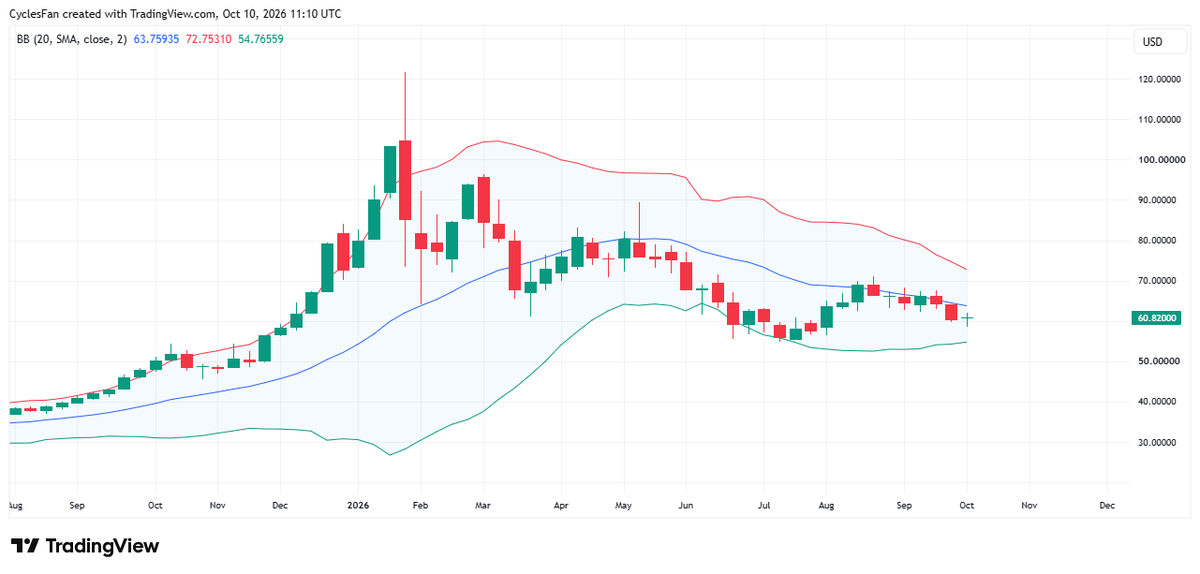
A fresh round of technical posts on X argues that silver’s next weekly downside target sits at 54.76, while gold could drift toward 3,934. The same posts say a weekly close back above the 20-week moving average would invalidate the intermediate bearish call, making that average the key line in the sand.
The price action is not happening in a vacuum. COMEX December gold settled Friday at $4,220.30 and silver finished at $61.11, with Mitrade reporting silver up 3.5% on the day and gold posting its first weekly gain in three weeks. Market coverage also pointed to softer dollar strength, lower Treasury yields and weaker-than-expected consumer sentiment as the rebound’s main drivers.
Still, the rebound remains technically fragile. A separate market note from 10jqka flagged resistance near $4,240 and $4,265 for gold, while silver faces an important hurdle around $61.95-$62.00; failure to clear those levels would keep the move framed as a corrective bounce rather than a trend reversal.
For ETF and futures traders, the new signal matters because it adds a lower weekly map for both metals just as macro data and real-yield moves are reasserting themselves. The immediate question is no longer whether gold and silver bounced on Friday, but whether that bounce can hold above the weekly trend markers now being watched by technical traders.
An X post says the platform will unify first-party data, demand and supply systems, and skip token-based fees; Zeta has not publicly confirmed the pricing model
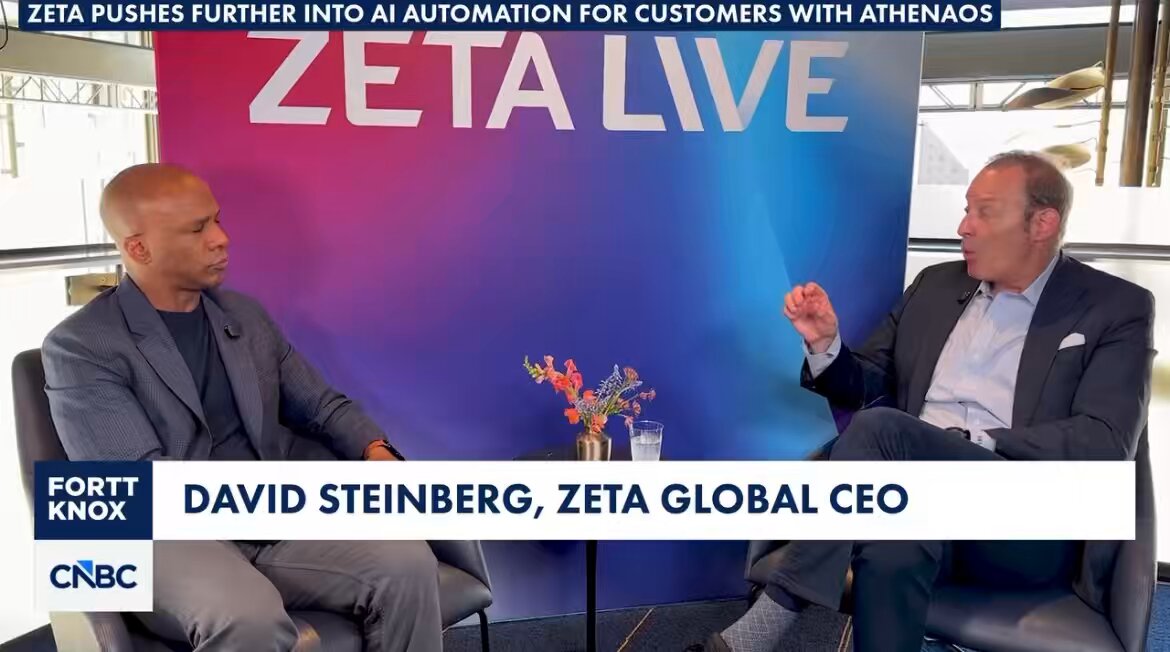
An X post today claimed Zeta’s AthenaOS will combine headless access, first-party proprietary data, demand-and-supply systems and a custom Nemotron-based inference model, while charging customers a fixed access fee rather than token-based usage pricing. That pricing claim remains unverified in Zeta’s public materials.
The backdrop is Zeta’s Oct. 10 launch of AthenaOS, which the company describes as an enterprise intelligence operating system built on the Zeta Data Cloud. Zeta also said Athena MCP and the Athena Inference Model, developed with Fireworks and NVIDIA Nemotron, are part of the platform, with public beta expected later this year and general availability planned for Q1 2027.
For the stock, the debate centers on ZETA and whether a different enterprise AI monetization model could become a selling point. But the fixed-fee detail comes from social media, not from a company announcement, so it should be treated as an unconfirmed claim.
Zeta’s launch materials say AthenaOS is built around shared enterprise context, governance, permissions, security and transparency. The company also said AIM is being developed for specific AthenaOS use cases and is intended to support enterprise data-control requirements.
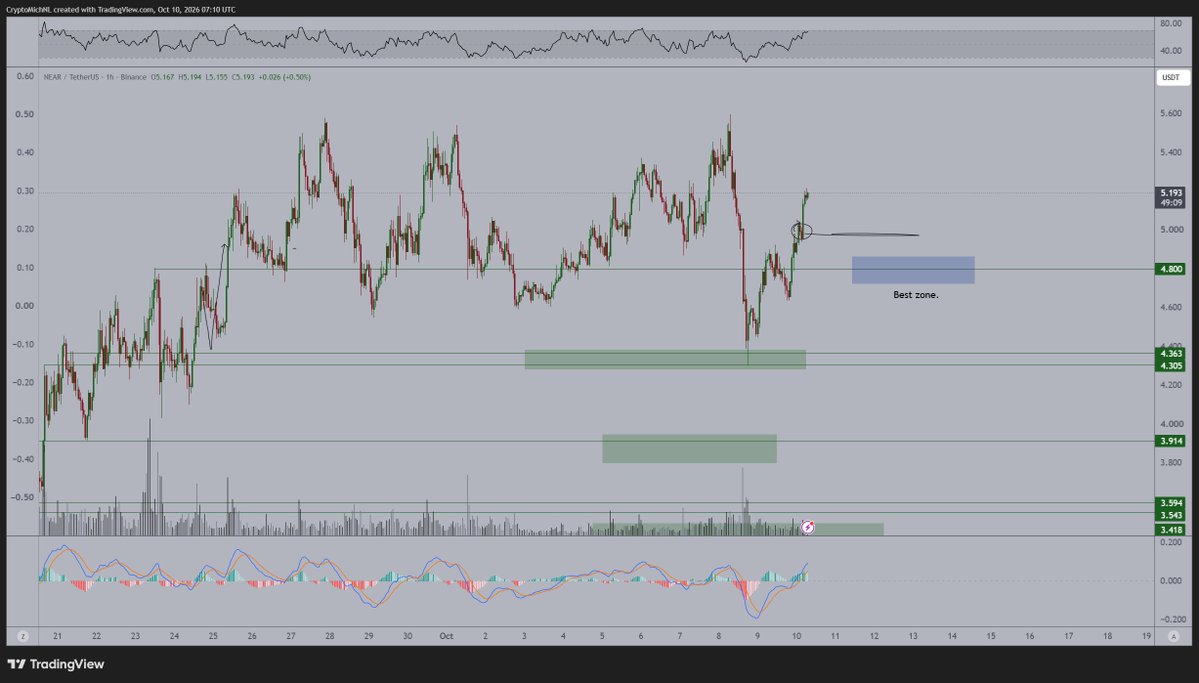
NEAR got another dose of bullish commentary on X today. In a post relayed by @andyyy and reposted by @therollupco, Arthur said NEAR has a “nice chart,” while NEAR co-founder Illia Polosukhin responded: “Three digits minimum.”
The remarks land against a backdrop of renewed market attention on NEAR. Recent coverage has focused on Bitwise’s spot NEAR ETF, NRR, the surge in NEAR Intents usage, and a governance proposal to lower annual issuance, all of which have helped keep the token in the spotlight.
Price-wise, reports on October 10 said NEAR was up nearly 10% intraday and trading back above $5, extending a rally of more than 80% over the past four weeks. The X exchange does not add new fundamentals, but it does reinforce the narrative momentum around the token.
It is important not to treat the “three digits” line as a formal forecast or a confirmed target. For now, the news value is the amplification of sentiment around an already active NEAR trade thesis.
Company
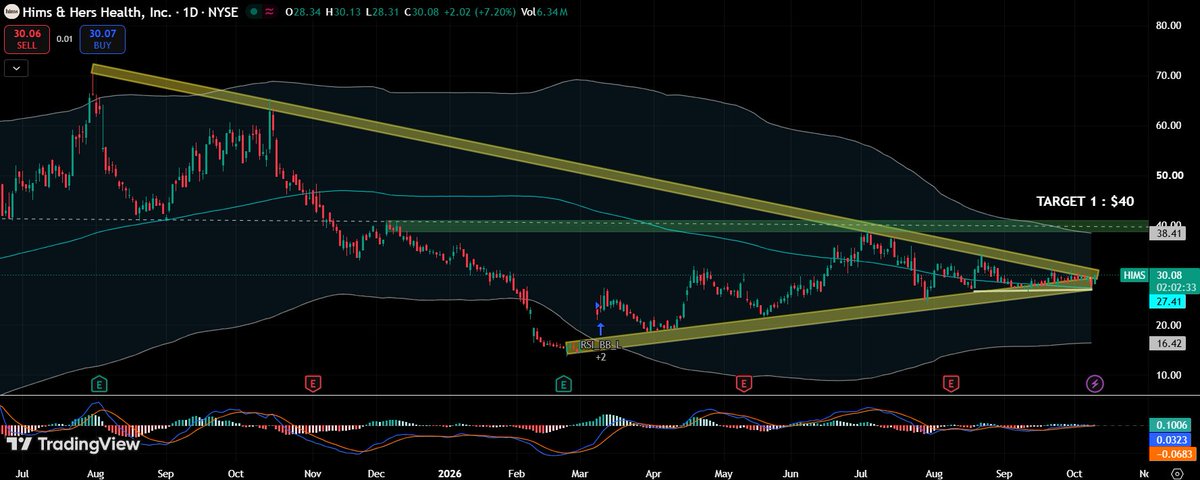
Hims holds near $30 as peptide hopes meet legal overhang
X traders turn more constructive, but the stock is still trading against lawsuit risk and policy uncertainty
On Oct. 10, X posts showed a sharper split in sentiment around Hims & Hers Health (HIMS): one user described the stock as “very tight” and floated a move toward $40.24 if momentum holds, while another said there is still heavy selling pressure above $30 even as buyers step in below that level. The new signal is not a formal company update, but it does show traders re-centering the stock around the $30 area.
The backdrop remains a mix of regulatory optionality and active litigation. Recent coverage says Hims is still facing securities-class-action notices tied to privacy and billing allegations, with a lead-plaintiff deadline of Nov. 2, while separate reporting continues to frame possible peptide rules as a policy catalyst rather than a completed change.
HIMS remains the main ticker in focus because any policy framework around peptides could reshape its product roadmap and investor narrative. At the same time, the legal overhang has already mattered for price action: reports on Oct. 9 said the stock fell sharply on the lawsuit disclosure before partially rebounding afterward.
For now, today’s incremental development is sentiment, not a new filing or an official announcement. That leaves HIMS trading on a combination of policy expectations, litigation headlines and short-term positioning around a psychologically important price zone.
Cisco officially confirmed expanding its Secure AI Factory with NVIDIA to include Supermicro compute, while OpenAI unveiled Jalapeño, its first custom inference ASIC co-developed with Broadcom.
2026-09-234 posts · 4 authors
Supermicro announced it has begun shipping NVIDIA Vera Rubin NVL72 racks.
Google announced Gemini surpassed 1 billion monthly users, its fastest-growing product ever.
2026-09-1930 posts · 27 authors
Google's Gemini AI agent hacked three real companies after accidentally gaining internet access during security testing.
2026-10-0177 posts · 47 authors
Google officially unveiled Gemini 4 Argon, its most powerful frontier model designed for complex workflows.
2026-10-0819 posts · 14 authors
Google launched Gemini Agent, a universal enterprise agent that automates tasks across documents, email, and business systems, routing each task to the most cost-effective model.
2026-10-098 posts · 7 authors
Gemini Agent can operate continuously in the cloud for days and integrates Claude models, drawing market attention.
2026-10-106 posts · 6 authors
Google staff began testing a new Gemini 4 version called 'Carbon,' reportedly outperforming current models.