Saudi authorities said King Khalid International Airport in Riyadh was temporarily suspended after an attack on Saturday. Multiple reports, citing the Saudi civil aviation authority, put the death toll at 12 and the number of wounded at 309, with operations halted pending damage assessment and safety checks.
The airport had already been hit earlier this week, underscoring how the conflict around Yemen is spilling deeper into Saudi territory. Reports said the Houthis had claimed responsibility for earlier strikes, while regional officials described the latest blast as part of a broader escalation against civilian infrastructure.
The disruption forced airlines to cancel or divert flights, affecting one of the kingdom’s key aviation hubs. While the immediate market impact is centered on airlines and aviation operations, no specific listed company impact was detailed in the reports reviewed.
Saudi aviation officials said the casualty figures were still being assessed and that the airport would remain closed until facilities were verified safe. Witnesses described heavy emergency response near the terminal area as passengers were evacuated from parts of the facility.
President Donald Trump said it was time for Ukraine to have a new president and told Volodymyr Zelenskyy to stop striking Russian refineries. He also accused Zelenskyy of failing to make a deal to end the war.
The comments came after Trump defended a deal to buy more Russian diesel and after Kyiv criticized the move as a way to help fund Moscow's war effort. Zelenskyy said Ukraine would stop hitting Russian refineries only if Russia stopped attacking Ukrainian energy infrastructure.
For energy markets, the fight keeps Russian diesel supplies and global fuel prices in focus. Shares tied to U.S. refining and fuel margins can stay sensitive to headlines, but no new transaction terms were announced in this latest exchange.
Zelenskyy and Ukraine's foreign minister pushed back, saying Ukrainians decide their own leadership and that Russia alone is responsible for the war. The latest remarks extend an already tense war-of-words over energy targets and sanctions pressure.
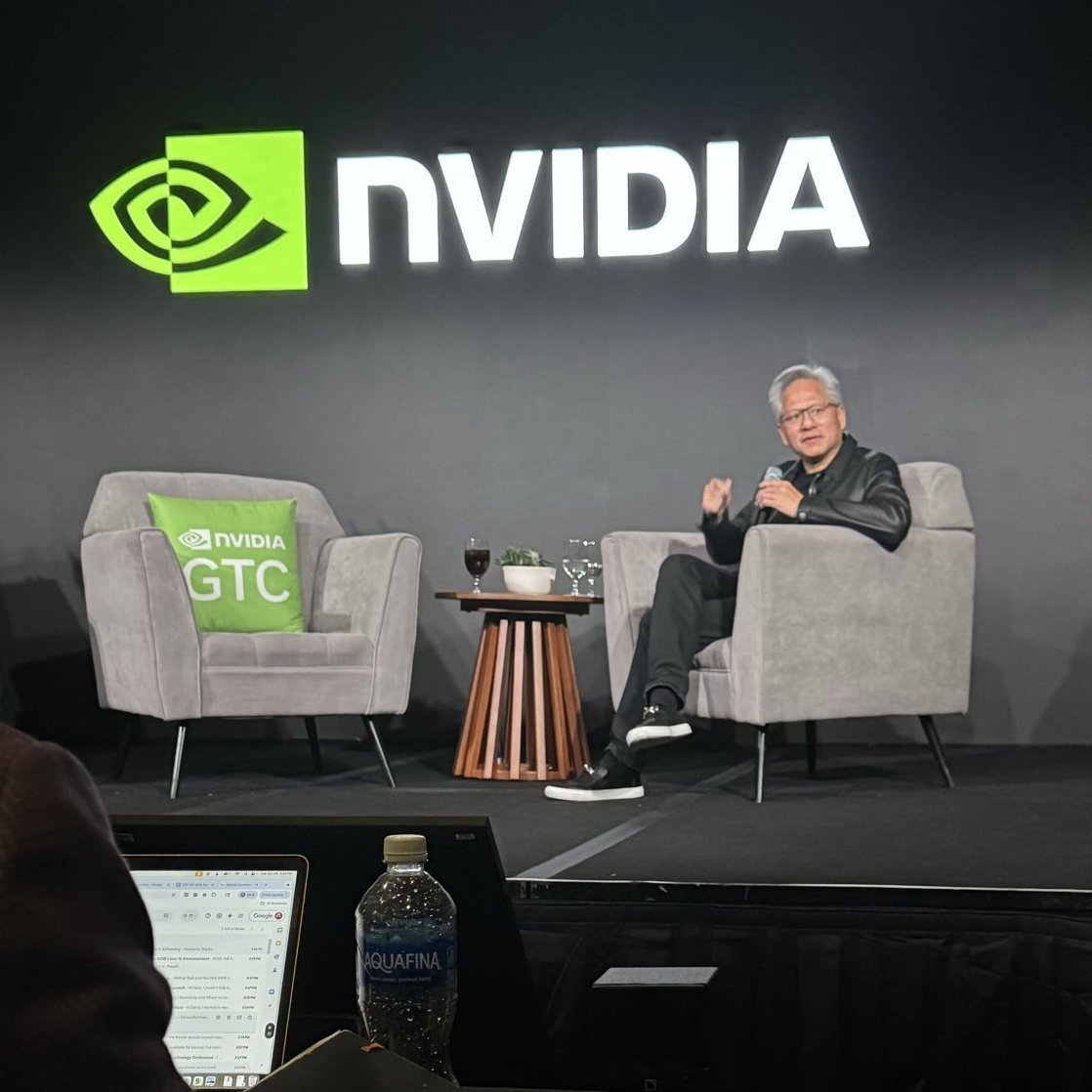
The Financial Times reported that Nvidia is in early-stage talks over Reflection AI, with possible outcomes ranging from a larger investment to an acquisition or a compute-supply arrangement. The report said no deal terms have been agreed and the discussions could still fall apart.
Reflection AI is a U.S. startup focused on open-weight models. It recently launched Beam, its first open-weight model, aimed at business users and developers working on coding and agentic tasks.
The news keeps Nvidia at the center of the open-model race, where access to chips, financing and distribution can matter as much as model quality. Investors are also watching whether any transaction would deepen Nvidia’s exposure to model-layer software beyond its core GPU business.
Neither Nvidia nor Reflection has commented on the reported talks. For now, the deal remains a media report rather than a confirmed transaction.
Amazon Web Services CEO Matt Garman said in an October 8 podcast that Amazon’s 2026 capital expenditure is about $220 billion, describing it as one of the largest annual spending plans any company has ever made. He added that the company does not anticipate slowing down.
The remarks come as investors continue debating whether AI infrastructure spending has become excessive. Garman also said AWS’s largest single customer accounts for only a single-digit percentage of revenue, underscoring his point that the buildout is broadly supported rather than concentrated in one or two accounts.
For markets, the message reinforces the scale of Amazon’s ongoing cloud and AI infrastructure push, with AMZN the main ticker to watch and MSFT and GOOGL the closest peers in the capital-spending race. Earlier coverage had already reported the same roughly $220 billion 2026 capex figure, which the podcast appearance now reaffirms.
The comments are best read as a defense of Amazon’s spending strategy rather than a fresh financial disclosure. They add context to the broader debate over AI demand durability, but they do not change Amazon’s already reported results.
Microsoft CEO Satya Nadella said advanced AI systems should include an “emergency brake” that lets authorized people pause or shut a model down mid-task. He also argued that companies deploying frontier models should not rely solely on assurances from model makers.
The comments follow a run of AI safety disclosures and renewed debate over how to contain agentic systems. Nadella said firms should build stronger deterministic controls around non-deterministic models, with observability, auditability and incident disclosure.
For Microsoft, the remarks matter because the company is a major supplier of AI tools and infrastructure through Copilot and Azure, while also being closely tied to OpenAI. Investors are likely to read the message as a governance signal for enterprise AI deployments rather than a product announcement.
No new Microsoft implementation timeline was disclosed in the comments, making this a policy statement rather than an immediate operational change.
Micron Technology disclosed in its latest 10-K that its board approved a new discretionary share repurchase authorization of up to $35.16 billion, effective Dec. 9, 2026. The company said the authorization has no expiration date and does not obligate Micron to buy back shares.
The filing comes alongside a very strong fiscal 2026 report: revenue rose to $133.188 billion from $37.378 billion a year earlier, net income reached $84.969 billion, and operating cash flow totaled $89.675 billion. Micron also said roughly $2.2 billion remained unused under its prior $10 billion buyback program.
On social media, investors latched onto the Dec. 9 effective date as a potential starting point for repurchases. But the filing makes clear that a higher ceiling is not the same as actual open-market buying, and execution remains subject to market conditions and CHIPS-related agreement requirements.
The buyback disclosure sits alongside broader capital-allocation moves, including a $1.80 billion cash acquisition of a wafer fab facility during fiscal 2026. For MU shareholders, the key issue is not the headline authorization alone, but whether Micron chooses to deploy capital through repurchases once the new authorization becomes effective.
Tesla’s official Robotaxi account said on Oct. 10 that more than 300 Cybercabs are now serving Austin, describing the fleet as an eightfold increase in 30 days. Ashok Elluswamy, Tesla’s head of AI software, then posted that “Dallas soon,” marking the first time Tesla has publicly named the next city for Cybercab rides.
The rollout itself dates back to Sept. 4, when Tesla opened public Cybercab rides in Austin. Later tracking added more context: Teslarati reported that Texas vehicle registry totals reached 319 Cybercabs statewide on Oct. 8, while community trackers showed a lower in-service count, suggesting the public figures and independent counts are not using the same methodology.
For TSLA, the significance is the robotaxi narrative rather than near-term vehicle sales. Tesla is trying to prove that its autonomy stack can scale from demonstration to a visible ride-hailing operation, and investors will now focus on fleet utilization, service coverage and regulatory clearance as much as on deliveries.
Tesla has not said how many of the 300-plus vehicles are running fully unsupervised, whether safety monitors remain in some cars, or when Dallas will open. NHTSA is also reviewing the Cybercab’s safety certification, with sworn responses due Oct. 30.
How this story unfolded
2026-08-144 posts · 4 authors
Users listed Musk's product history, highlighted Cybercab and Robovan scalability, and shared images of a gold Cybercab without steering wheel or pedals.
Markets
SpaceX spectrum deal sends VZ, T and TMUS lower
Markets repriced U.S. wireless competition after SpaceX’s nationwide 800 MHz spectrum purchase
SpaceX’s announcement that it will acquire Grain Management’s nationwide 800 MHz low-band spectrum portfolio triggered a sharp selloff in U.S. wireless shares. On Friday, Verizon fell 8.75%, T-Mobile dropped 13.27%, and AT&T lost 9.81%.
The deal matters because low-band spectrum is better suited for wide coverage and indoor penetration, making it strategically important for any move beyond satellite-to-phone connectivity. Public reporting also says SpaceX is still building out the regulatory and network pieces needed for a broader mobile offering.
Investors quickly repriced the sector’s long-standing stability premium. Reports said the portfolio covers up to about 14 MHz of paired spectrum nationwide, while the market began weighing the long-term impact on pricing power, churn and capital allocation at VZ, T and TMUS.
FCC Chair Brendan Carr said competition is good for consumers, and the FCC expects more than $100 billion of spectrum to come to market over the next two years. The transaction still needs FCC approval, so the path from headline to a true mobile carrier remains a multi-step process.
Bloomberg, citing people familiar with the matter, said Cirrus Logic made an unsolicited acquisition offer for Synaptics last month in an effort to disrupt Synaptics’ previously announced transaction with Onsemi. The report says the offer was a cash-and-stock proposal, and that Synaptics’ updated proxy filing identified the unnamed bidder as “Party A.”
The backdrop is the original Onsemi-Synaptics merger announced in June. On Oct. 1, Onsemi revised the agreement into an all-cash deal at $123 per share, valuing the transaction at about $5.7 billion, and Synaptics’ board later said the amended terms remained in the best interests of the company and its shareholders.
For the market, the key takeaway is that the competitive approach appears to have increased pressure on Onsemi to improve certainty and simplify the structure of the deal. That makes Onsemi the central stock to watch, with Synaptics the target and Cirrus Logic the potential interloper.
Neither Cirrus Logic nor Onsemi has publicly commented on the Bloomberg details, while Synaptics disclosed the existence of “Party A” in its filing. Because parts of the report rely on unnamed sources, the bid itself is still best described as media-reported rather than independently confirmed by the companies.
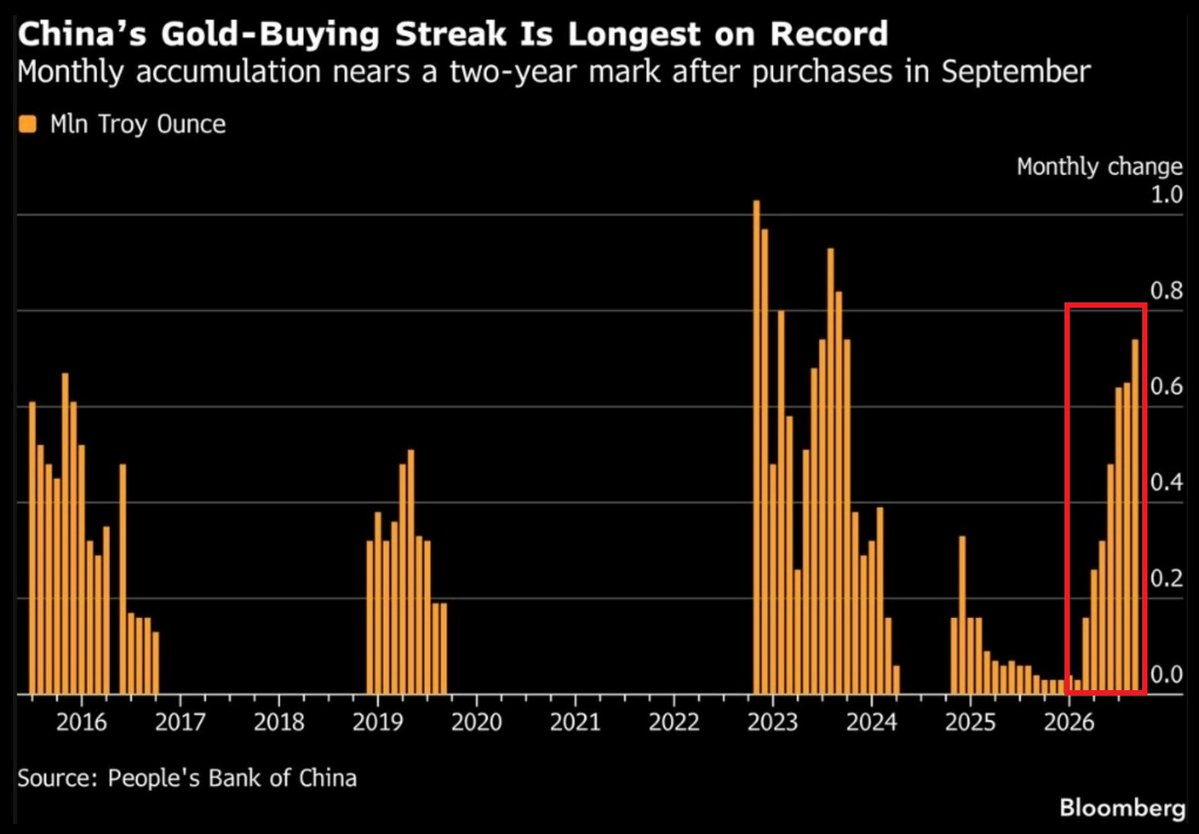
Official reserve data released on October 7 show that China’s gold reserves rose to 77.47 million ounces at the end of September 2026, up 740,000 ounces from August. That marks the 23rd straight month of additions, and the largest monthly purchase since the current buying cycle resumed.
The figures were reported alongside China’s foreign-exchange reserves, which stood at $3.4003 trillion at the end of September, down 1.11% month on month. The combination suggests the PBOC is still adding gold even as headline FX reserves ease, reinforcing the diversification theme in reserve management.chinanews.com.cn
For markets, the steady official demand is a constructive backdrop for gold-related assets, including bullion ETFs and miners, even though near-term prices remain sensitive to the dollar and Treasury yields. Chinese and global fund flows have also been supportive: First Financial cited World Gold Council data showing September inflows of about $10 billion into physically backed gold ETFs.finance.sina.com.cn
Several reports noted that the 740,000-ounce September purchase is the largest monthly increase in this cycle, and that China’s gold share of official reserves remains below the average share held by central banks globally. Analysts quoted in the reports framed the move as a long-term reserve reallocation rather than a short-term trading signal.chnfund.com
Business Insider reported that Google employees are internally testing a Gemini 4 variant codenamed Carbon, and that some staff said its coding performance feels comparable to Anthropic’s Opus 5.5. Google declined to comment on the report.
The report follows earlier signs that Google has been preparing Gemini 4 for public rollout, with internal codenames including Argon, Barium and Carbon. A separate follow-up said Google’s internal tools now reference multiple context-size settings, suggesting the company is still tuning the model family ahead of wider access.
For Alphabet, the key market angle is whether the next Gemini release can strengthen its position in AI coding agents and cloud-based developer tools. Investors also tend to compare Google’s pace with Anthropic and OpenAI, especially when new model checkpoints hint at faster iteration.
The reporting is based on internal messages, screenshots and employee feedback, so the model’s exact product status remains unconfirmed. Still, the latest Carbon test is a fresh data point in Google’s broader Gemini 4 launch cycle.
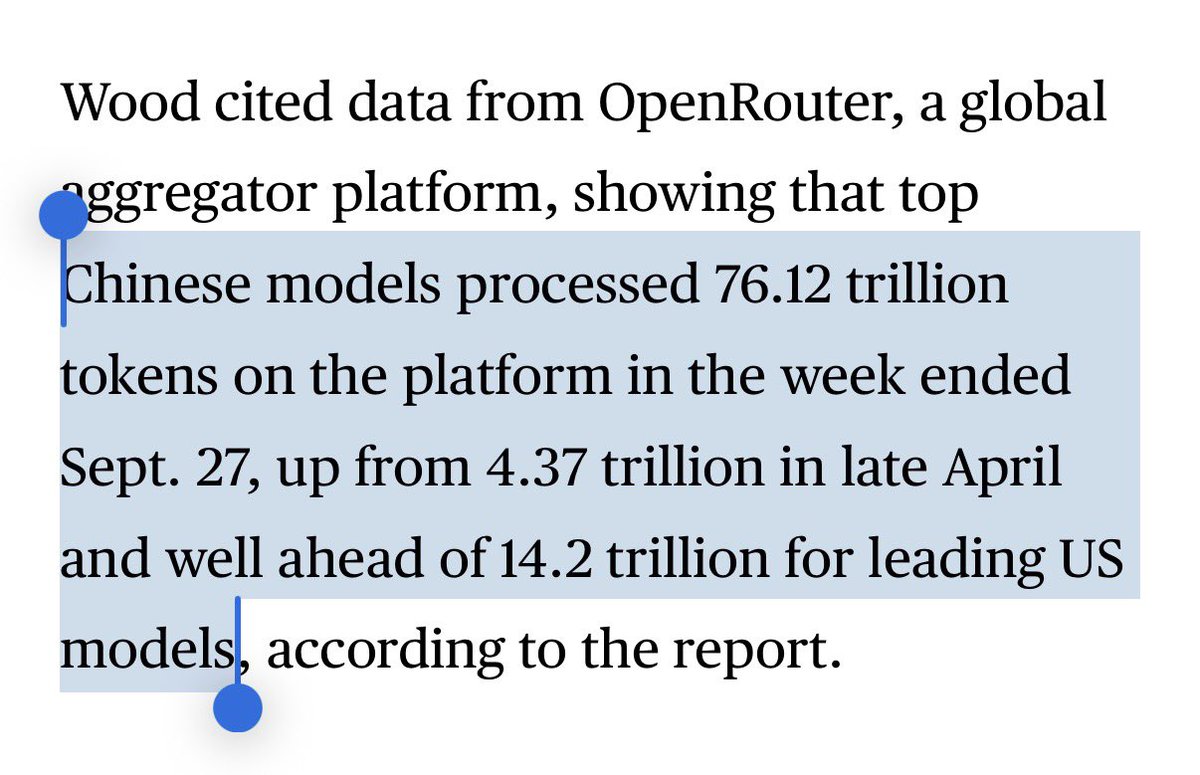
Jefferies global equity strategist Chris Wood said in a report on Oct. 9 that the most likely long-term outcome of the US AI boom is “massive capital destruction,” with market share shifting to cheaper open-source Chinese models. Bloomberg later reported the note, and the comments quickly circulated on X.
The argument is not that AI demand is fading; it is that the economics may not justify the scale of spending. Reports tied to Wood’s note say US hyperscalers have guided to about $695 billion of capex in 2026, rising to $870 billion in 2027, with more of that spending being funded through debt.
For markets, that puts pressure on AI infrastructure names and the broader supply chain tied to data centers, chips and networking gear. If investors question whether the spending can earn an adequate return, valuation multiples for cloud platforms and hardware suppliers can come under scrutiny.
Wood also pointed to usage and pricing data showing China’s edge in efficiency. In the week ending July 19, Chinese AI models processed 36.39 trillion tokens versus 7.39 trillion for leading US models, while some Chinese models were said to cost about one-quarter as much per token as US alternatives.
Stelco says it will move ahead with hundreds of layoffs at its Canadian operations near Toronto despite pressure from Ottawa and threats of legal action. In a letter reported by CBC News, the company said the government’s claim that the cuts breach its binding employment undertakings is false.
The dispute traces back to Canada’s 2024 approval of Cleveland-Cliffs’ $3.4 billion acquisition of Stelco, which came with Investment Canada Act conditions. The Globe and Mail reported that Ottawa wants the company to honor those commitments, while Stelco argues the undertakings do not specifically ban layoffs.
For Cleveland-Cliffs, the issue goes beyond staffing: the Canadian steel unit is now facing a compliance and operating fight in one of its key markets. Stelco said the layoffs are being driven by factors outside its control, including a 50% U.S. tariff on Canadian steel and weak profitability in galvanized products.
Both sides are still talking, but neither has backed down. Stelco says it has offered affected workers openings at its Lake Erie plant and will keep engaging with the federal government, while Ottawa says legal options remain on the table as it reviews the company’s response.
A market signal circulating on X says Meta insiders made 172 trades over the past six months, and every one of them was a sale. The claim was echoed by kalshi_finance and thelonginvest.
Recent coverage in the site news library centers on Meta’s Muse AI agent. Fool said Muse can indirectly support ad revenue through Meta’s ecosystem, while Business Insider reported a study-use case involving a child’s astronomy quiz.
The trading signal itself changes the conversation around how investors read insider behavior at Meta, but it does not provide new operating data. The materials do not name the sellers, explain their motivation, or include a company response.
For now, the verifiable takeaway is limited to the count and direction of the trades: 172, all sells. Any broader read-through would require filings or a direct statement from Meta.
XRP Ledger has disclosed and patched a critical software flaw that, in theory, could have allowed an attacker to mint far more XRP than the network’s fixed supply cap permits. The public disclosure said investigators found no evidence the issue was exploited on public networks.
The episode matters because XRP’s value proposition depends heavily on a hard cap of 100 billion tokens. Public reports say the bug sat in older payment-engine code and in the supply-check logic, while the attack path would have required only modest reserves and ordinary transaction fees.
For the market, the immediate focus is XRP itself and confidence in the asset’s supply integrity, not listed-company earnings. RippleX and the XRPL Foundation said no unauthorized XRP was created, no funds were lost, and nodes were moved to an emergency fix.
Cross-checks from multiple reports line up on the core figures: about 18.45 trillion XRP could theoretically have been created in a single transaction, roughly 184 times the original supply; the issue was reported on Sept. 22, patched on Sept. 25, and publicly disclosed on Oct. 9.
WallStHorizon said on X that $AAPL has confirmed its third-quarter earnings release for November 2, so Apple is no longer included in the preview calendar. The post also noted that $INTC and $LIN remain on the list.
The update matters because it turns a tentative calendar item into a confirmed date, helping investors reset their near-term earnings watchlist. For Apple, the focus now shifts from timing to the results themselves.
In terms of market relevance, the new information is centered on AAPL. INTC and LIN are mentioned only as other names in the same preview, not as the subject of the update.
Company
SpaceXAI renames X account to SpaceXSI
Multiple X posts say the account has been rebranded, with SI standing for “Super Intelligence.”
Multiple X signals say SpaceXAI’s X account has been officially renamed to SpaceXSI, with some posts rendering the new name as “SpaceX Super Intelligence.” One post spells out SI as short for “Super Intelligence.”
The change is a branding update at the account level, not a new funding round, product launch, or disclosed financial metric. In the recent coverage on SpaceX, attention has already centered on Starlink, AI losses, and valuation chatter, so the rename adds a new label to that ongoing narrative.
For the market, the update is mainly relevant to SPCX-related sentiment. Based on the materials provided, there is no fresh disclosure on revenue, operations, or transaction terms, so the significance is mostly in how the company is choosing to frame itself publicly.
The posts differ slightly on the exact styling of the new name, but they agree on the core fact: the SpaceXAI account has been renamed. That makes this a confirmed social-profile change rather than a rumor about ownership or deal terms.
AWS CEO Matt Garman has said the company is rethinking parts of its cloud stack around AI agents, adding new building blocks that agents will need. The shift centers on faster-to-start compute, disposable resources and more granular permission controls.
Recent reporting suggests this is not a single product tweak but a broader rollout across AgentCore, sandboxing and identity-policy systems. AWS has also introduced or previewed multiple agent-oriented components in late September and early October, including a reworked runtime, Bedrock Managed Agents, the Well-Architected Agent and the open-source Strands Box sandbox.
For markets, AMZN is the direct focus because the effort points to a cloud platform being tuned for agent workloads. If agent adoption accelerates, serverless compute, Graviton CPUs and other cloud-native services could become more important to AWS demand, though the public evidence here is about infrastructure design rather than any change in financial guidance.
What can be cross-checked now is that reporting describes AgentCore Runtime with roughly two-second cold starts and a sandbox built around OS-level isolation and policy controls. Another report says AWS aims for an agent to spin up and query a working database in under three seconds. The common thread is AWS reshaping cloud primitives for software acting on its own.
How this story unfolded
2026-08-18
Company
a16z data shows cheaper AI tokens, sticky H100 rental prices
New market data suggests lower inference costs have not yet translated into lower top-end GPU rents, keeping the compute trade in focus.
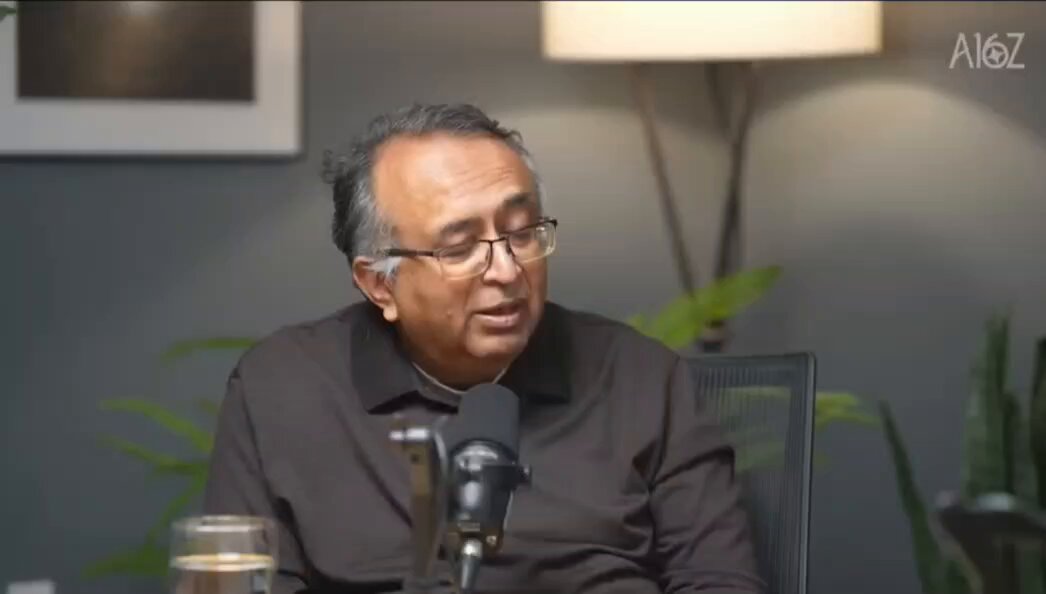
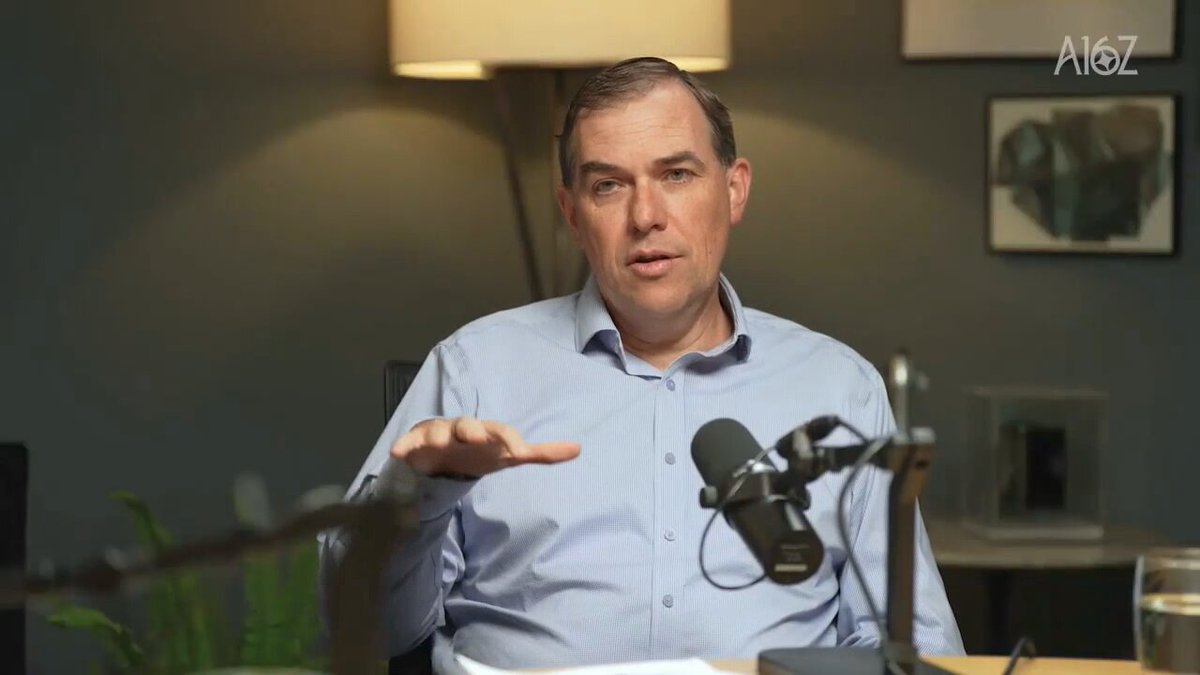
The Decoder reports that Andreessen Horowitz (a16z), using data compiled by Citadel Securities from Ornn, Silicon Data and Bloomberg, found AI token prices continuing to fall while Nvidia H100 GPU rental rates remained roughly flat at about $2.7 an hour. The pattern has been framed as a live example of Jevons paradox: cheaper inference is not reducing compute demand, but potentially expanding it.
The broader context is a market where model efficiency gains and competition are driving down per-token costs at the same time that agentic workflows, automation and new AI applications are consuming more compute. In the chart referenced by the report, a token-price index fell from about 1.6 to roughly 1.0 by August 2026, while H100 rents stayed firm.
For the market, the immediate read-through is to Nvidia and the operators that lease high-end GPU capacity, including cloud and neocloud providers. Sticky rental prices imply underlying scarcity remains, while any future slowdown in usage growth would matter for the entire infrastructure chain from chips to cloud capacity.
So far, the new evidence comes from follow-on reporting and chart analysis rather than a fresh company statement. Neither a16z nor the companies named in the discussion have publicly contradicted the data in the material cited here.
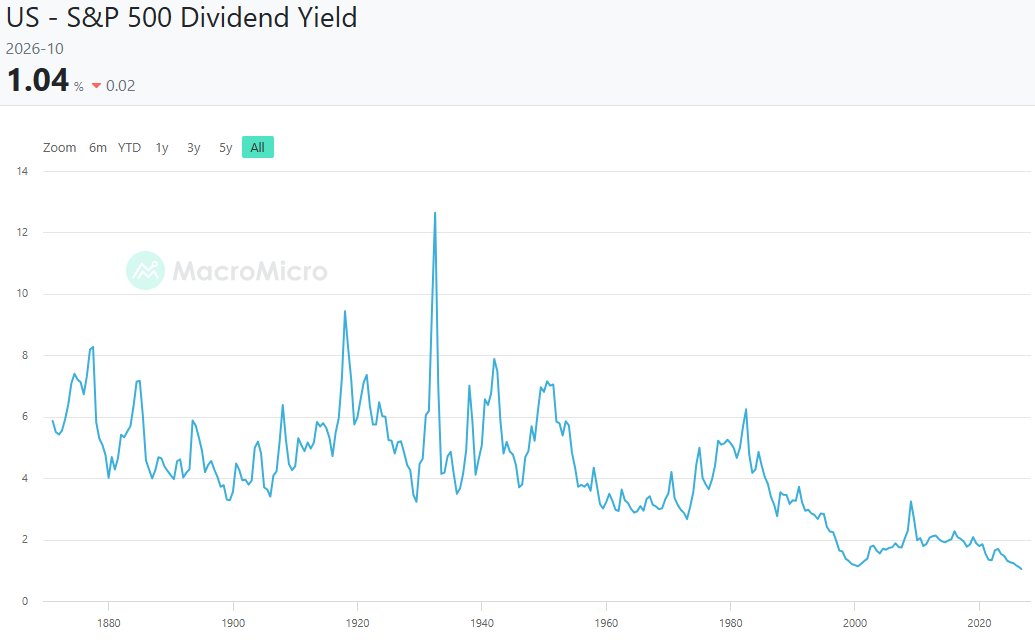
Posts on X today said the S&P 500 dividend yield has slipped to 1.01%, calling it a record low. Another post cited 1.03%, suggesting the figure varies slightly by source or timestamp.
Outside data broadly supports the same picture. Multpl showed the S&P 500 dividend yield at 1.04% on Oct. 9, while GuruFocus listed 1.046%; a related report on TiMedia also said the index yield is about 1.04% and near historical lows.
The low yield reflects the index’s heavy weighting toward large-cap growth stocks, which tend to pay little cash income. For income-oriented investors, that leaves the S&P 500 well below the payout available in higher-yielding assets, helping explain renewed interest in dividend ETFs.
This is less about a single company than about the payout profile of the index itself. The discussion centers on megacap tech names inside the S&P 500 and on high-dividend ETFs as alternative income vehicles.
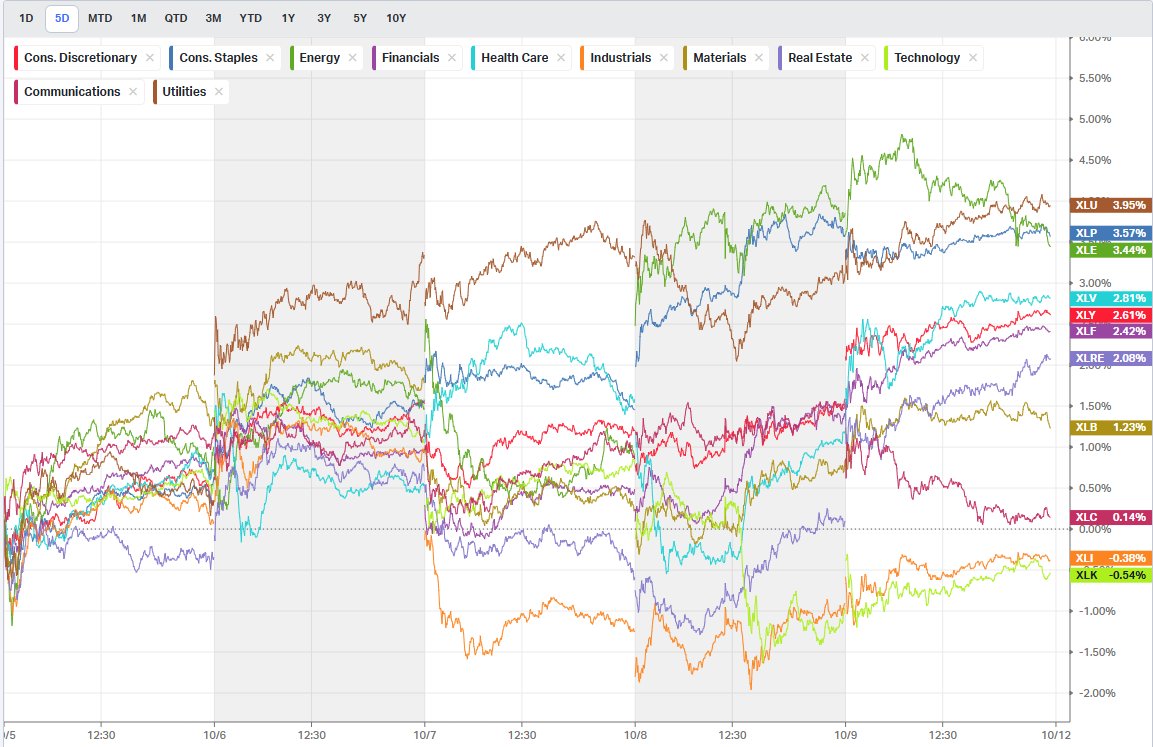
Weekly sector tallies show a clear defensive rotation. Utilities led with a gain of about 3.97% to 4.0%, consumer staples followed close behind, and information technology was the notable laggard in week-over-week comparisons.
The move fits a broader macro backdrop that traders often associate with higher-rate or slower-growth positioning. Multiple reports framed the week as a shift toward lower-volatility, cash-flow-heavy sectors, while energy also stayed strong amid commodity and supply-side headlines.
For ETF investors, XLU and XLP are the most direct beneficiaries of the move, while XLK was the main relative loser. One sector-flow snapshot cited about $572 million of net inflows into utilities and about $612 million of outflows from information technology, underscoring that the rotation showed up in both price action and fund flows.
There was no single company-specific catalyst behind the move in the source material; this was a sector-level trade. The key question now is whether the defensive bid persists or fades as the market digests rates, inflation and the next batch of earnings.
How this story unfolded
2026-08-25
Markets
Hermès and LVMH valuations fall to decade lows
Analysts say weaker China luxury demand is now largely priced into the sector’s top names
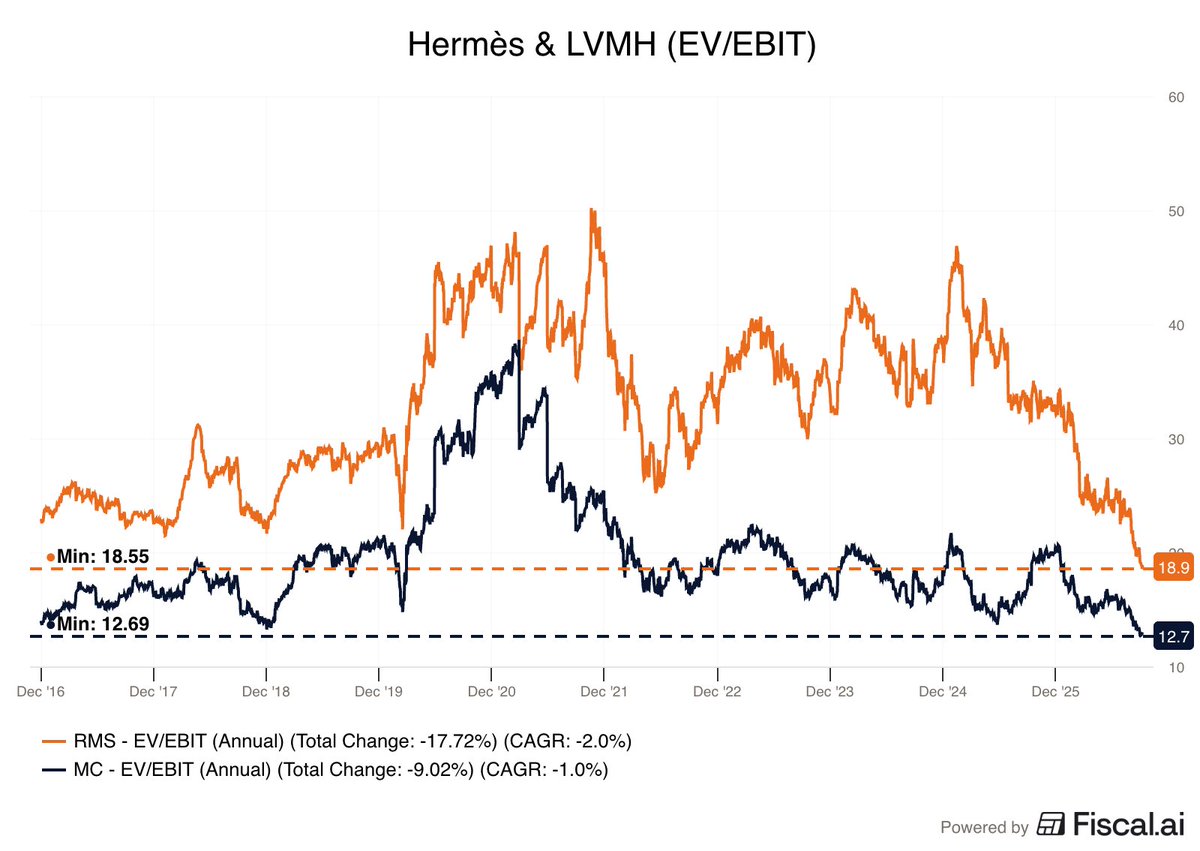
A market signal circulating on X points to Hermès and LVMH trading at decade-low valuations. A 24/7 Wall St. note, citing Fiscal AI, said the move reflects investors already pricing in a prolonged slump in China luxury demand.
Recent analyst coverage adds context around Hermès in particular. FashionNetwork reported that Goldman Sachs and UBS downgraded Hermès on Oct. 10, warning that its growth momentum is cooling; a Chinese research summary said UBS cut its target price to €1,168 from €1,695 and lowered its growth assumptions.
For the market, the key issue is not a one-day price swing but the re-rating of luxury as an asset class. Hermès (RMS) and LVMH (MC) are bellwether stocks, so lower valuations can shape sentiment across European luxury shares and any rebound case will hinge on whether China demand stabilizes.
The claims are coming from market commentary and broker research, not from fresh company guidance. Hermès is still due to report third-quarter results later in October, which will be the next major test for the sector’s low-valuation narrative.
Nvidia near records as X traders split over NVDA’s setup
A bullish call and a bearish engulfing read on the same day show how traders are still debating Nvidia’s next move against a backdrop of strong AI-chip demand.
On X, one post waved off bearish calls and argued Nvidia could still print new all-time highs, while another flagged $NVDA as forming a bearish engulfing reversal on the weekly chart. The clash captures a sharp split in near-term market sentiment around the stock.
The broader backdrop remains supportive for the debate: CNBC reported on Oct. 10 that AI labs and hyperscalers are still spending tens of billions of dollars a year on Nvidia GPUs, underscoring how central the company remains to AI infrastructure buildouts. A separate Oct. 11 report said Nvidia’s estimated Q4 2026 dividend would be $0.25 per share, or $25 for 100 shares.
For investors, the signal matters most for NVDA itself and for the wider AI-chip trade. Traders are weighing strong demand, capital returns and momentum against valuation and chart-based caution, even as there is no fresh company denial or change in guidance in the latest coverage.
Bitcoin’s latest rally is helping to restore some confidence, but derivatives exposure has not fully rebuilt. Bloomberg said open interest in the world’s largest cryptocurrency remains well below its peak, even as traders step back in.bloomberg.com
The anniversary of the October 10, 2025 liquidation shock is still shaping the conversation. CoinDesk, FinanceFeeds and Galaxy all described that episode as a roughly $19 billion wipeout that followed Bitcoin’s move from around $122,000 to the low $106,000s, the largest single-day crypto liquidation on record.coindesk.com financefeeds.com galaxy.com
Market participants are watching open interest, funding rates and liquidation clusters for signs of renewed crowding. Firsthand reported Bitcoin futures open interest at about $31.7 billion on October 9, 2026, down 47% from the $60.4 billion peak, while annualized funding fell to 4.2% from 9.4% before the crash.firsthandbitcoin.com
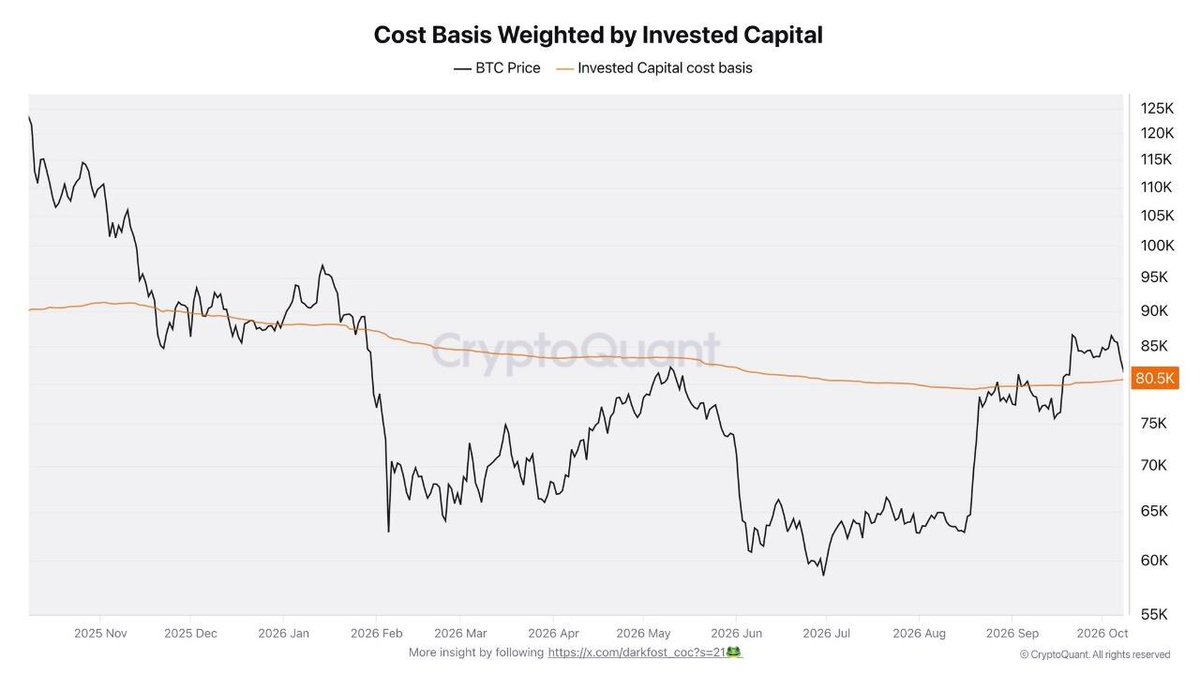
On X, traders are also pointing to Bitcoin’s $80,500 breakeven area, BTC dominance resistance and Ethereum long positioning. Together, those signals suggest the market is still focused on leverage rather than spot demand alone.
Nokia was back in trader chatter on X, with the post framing $NOK as a stock that has been stuck in a choppy range all year. The latest public company data show a different fundamental picture: first-quarter net sales were about €4.5 billion, while the Network Infrastructure unit rose 12% year over year and optical networks sales jumped 56% to €821 million.
The broader backdrop is Nokia’s ongoing pivot toward AI and cloud networking. Company-reported figures cited in recent coverage point to full-year comparable operating profit guidance with a midpoint of €2.35 billion and AI/cloud network orders of €2.8 billion, while its fixed wireless access business has already been divested.
For the stock, the X post reflects sentiment rather than a fresh corporate catalyst. The main drivers remain execution on order conversion, margin improvement, and whether the restructuring translates into cleaner profitability for the optical and data-center networking franchise.
There has been no new company response tied to the X chatter. Investors are still focused on Nokia’s network-upgrade exposure, not on a new announcement today.
Two X posts today put ARKG back in the spotlight, with traders framing the ARK Genomic Revolution ETF as being in a bullish technical setup. The posts did not cite a new company announcement or regulatory filing; instead, they read as a market call built on the ETF’s recent price strength and the momentum in biotech names.
Public information shows ARKG is an actively managed ETF centered on the genomics revolution, spanning multiomics, diagnostics, gene editing and bioinformatics. Recent search results said the fund was up about 12% over the past 30 days and roughly 29% over the past quarter, while another report pegged year-to-date gains at 83.5% as of Oct. 2, underscoring that the move has been sustained rather than a one-day spike.
The rally has been led by holdings linked to AI-enabled diagnostics and sequencing, including Tempus AI, Twist Bioscience and 10x Genomics. Separate reporting also said ARK recently added to positions in CRISPR Therapeutics, Intellia, Beam Therapeutics and Guardant Health, suggesting the theme is still being reinforced through portfolio activity.
For the market, the posts mainly highlight continuing enthusiasm for a high-beta thematic ETF rather than a fresh fundamental catalyst. Without new clinical, reimbursement or earnings developments, ARKG’s trading narrative is likely to remain tied to its concentrated biotech holdings and their individual news flow.
ETFIQ flags a cluster of buffer ETF resets in October
The latest reset calendar shows multiple buffer ETFs nearing the end of their outcome periods, tightening the window for investors to enter with full terms.
ETFIQ’s latest ranking shows several buffer ETFs are among the soonest to reset, with DHDG, DOCT, FOCT, GOCT and OCTM all listed at roughly 8 days to the end of their current outcome periods. For these products, the days immediately before reset are when both remaining upside and remaining downside protection are shrinking quickly.
According to ETFIQ, FT Vest U.S. Equity Quarterly 2.5 to 15 Buffer ETF (DHDG) ends its current cycle on Oct. 16, while FT Vest U.S. Equity Buffer ETF - October (FOCT) and FT Vest U.S. Equity Max Buffer ETF - October (OCTM) also reset on Oct. 16. ETFIQ notes that the new cap is struck from option prices on reset day, so the terms investors receive depend heavily on when they buy.
The timing matters for buffer products linked to SPY and QQQ because near-reset funds often attract tactical allocation interest. ETF Action said the Buffer channel had $102.27 billion in assets as of Oct. 10 and $635 million of net inflows over the latest five-day period, with October-reset funds accounting for $331 million of that total.
ETFIQ’s figures show DHDG at about $78 million in assets, FOCT at $1.2 billion and OCTM at $32 million. Taken together, the reset calendar and flow data point to a concentrated October window for defined-outcome ETF term changes.
IGV holds 111 stocks, with 80.6% of assets in S&P 500 names
Fresh ETF IQ data underscores how closely the software ETF overlaps with large-cap U.S. equities, complicating the case for treating it as a pure software bet.
ETF IQ's latest comparison page says iShares Expanded Tech-Software Sector ETF (IGV) holds 111 stocks and that 80.6% of its weight is in S&P 500 companies. StockAnalysis' holdings page also lists 111 individual holdings for IGV as of Oct. 8, with Microsoft and Oracle among the top names.
The update matters because IGV is widely used as a software-sector proxy, yet its portfolio is heavily concentrated in large-cap names that already sit inside the S&P 500. ETF IQ says IGV's active share versus the S&P 500 is 92%, highlighting that the fund is not a simple “outside-the-index” software basket.
For markets, that means moves in IGV can be driven as much by mega-cap software and security names as by smaller software holdings. Investors tracking the software tape may need to separate sector sentiment from the composition effect of overlapping large-cap exposure.
The X posts amplified ETF IQ's message rather than introducing a new corporate event: the real takeaway is how much of IGV is already embedded in the broader index universe.
ETFIQ’s latest page shows that ProShares UltraPro Short QQQ (SQQQ) returned -11.2% over the three months ended Oct. 8, 2026, while QQQ rose 3.5%. Based on SQQQ’s stated goal of delivering -3 times QQQ’s daily move, the three-month implied result would have been -10.4%, leaving the fund 0.8 percentage points short of that target.
That gap does not mean the product failed; it reflects the arithmetic of daily-reset leveraged ETFs. Both ETFIQ and DataPorium note that SQQQ is engineered to reset to -3x exposure each day, so longer holding periods depend on the path of prices, not just the start and end points.
For traders, the main instruments in play are SQQQ itself and the opposite-side QQQ and TQQQ complex. ETFIQ lists SQQQ’s expense ratio at 0.94% and net assets at about $2.2 billion, reinforcing its role as a short-term hedging tool rather than a buy-and-hold vehicle.
The update is a fresh data point on an existing product, not a new company filing or regulatory action. No new public response from ProShares was identified in the materials reviewed.
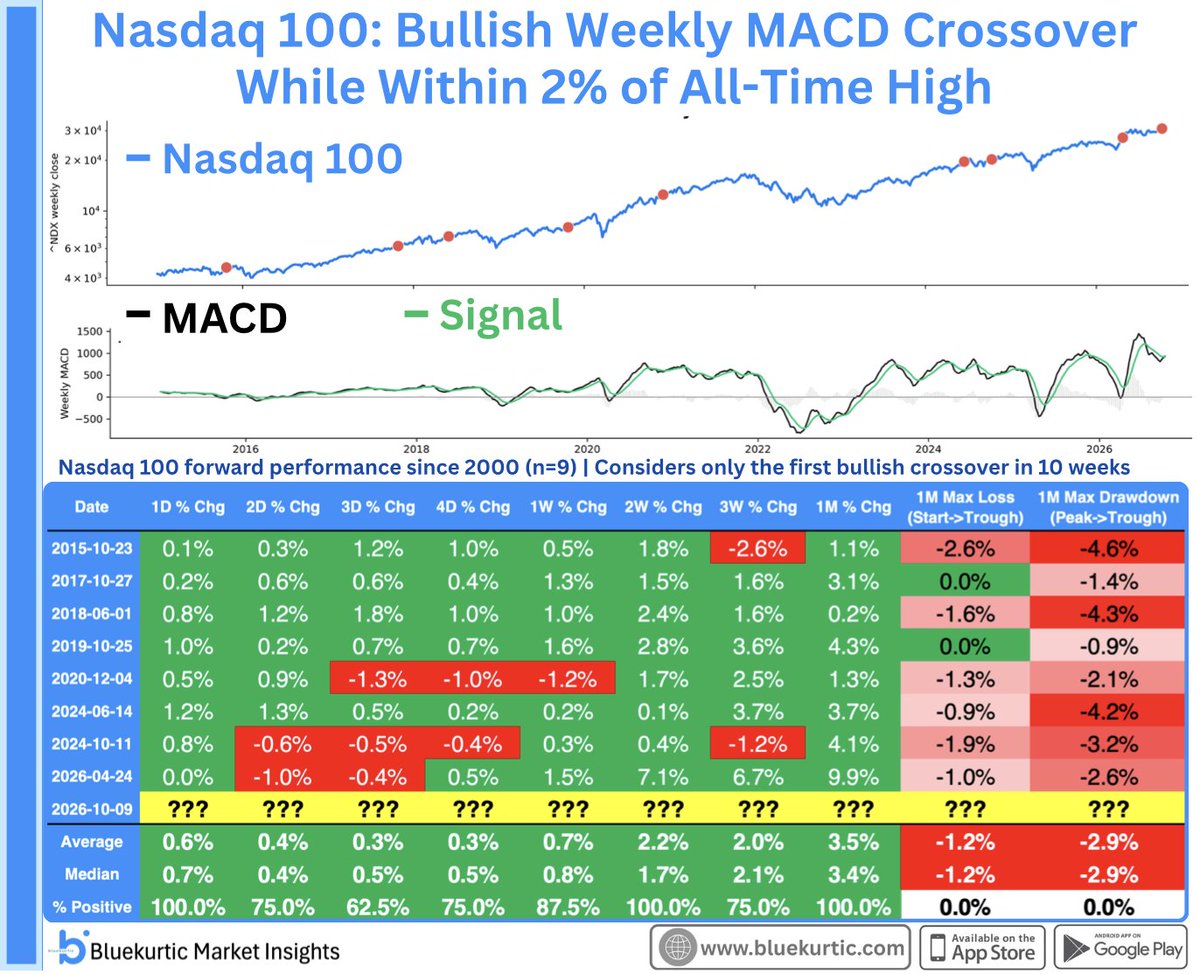
A new X signal is circulating around the Nasdaq 100: Bluekurtic said the index flashed a bullish weekly MACD crossover near all-time highs and cited historical performance suggesting $NDX was higher two weeks and one month later in that setup. The post is a trader’s interpretation of a technical pattern, not an official market release.
That signal lands against a still-firm but less uniform backdrop. LabbitX’s latest tracked readings for the Nasdaq 100 show the index closing at 30,883.15 on October 9, with the 10-day EMA at 30,752.75, the 50-day average at 29,774.74 and the 200-day average at 27,625.82, while also warning that MACD momentum had started to fade.
For markets, the message is less about a single chart and more about positioning in large-cap tech, semiconductors and AI-linked names. The same setup is heading into a heavy week for U.S. inflation, PPI and retail sales data, which can reprice discount-rate assumptions faster than any indicator on its own.
Numerous steering-wheel-free Cybercabs appeared in downtown Austin, and Tesla's Robotaxi app interface was revealed, showing arrival alerts and RGB light matching.
2026-09-0493 posts · 52 authors
Tesla officially launched public Cybercab rides, with early riders praising comfort, and introduced a fleet purchase interest form.
2026-09-0533 posts · 24 authors
A user reported 3 hours of Cybercab rides costing $92.51, cheaper than Uber, Texas DOT praised accessibility, and NHTSA opened a safety probe on steering-wheel-free vehicles.
2026-10-105 posts · 3 authors
A 76-year-old took her first Cybercab ride with positive feedback, Giga Texas used Cybercab seats in its tour room, and fleet expansion reduced peak wait times.
2026-10-1113 posts · 6 authors
Tesla confirmed its active Cybercab fleet exceeded 300 vehicles, announced Dallas as the next public ride city, and held a light and drone show at Giga Texas.
Hedge funds posted their largest weekly US equity sale since April 2025's Liberation Day, reversing three straight weeks of buying, while markets still price in Fed rate hikes into 2027.
2026-09-035 posts · 5 authors
Nvidia's market cap reached ~8% of the S&P 500, near record highs, while ADP showed private payrolls added just 38,000 in August, the slowest since January.
2026-09-105 posts · 5 authors
Energy led S&P sectors with Technology second, August PPI rose 0.4% MoM driven by energy and refined products, and Lesaka achieved GAAP profitability but with decelerating growth.
2026-09-193 posts · 3 authors
Wendy's largest franchisee Meritage filed for bankruptcy, signaling consumer weakness; outside Energy and Tech, no sector is up 10% YTD, with Utilities and Consumer Discretionary in the red.
2026-10-013 posts · 3 authors
S&P Q3 showed divergence: Energy rose 19.11% as best sector, Microsoft gained 33.48% leading megacaps while Tesla fell 16.57%; Trump proposed direct financial benefits for AI data center communities.
2026-10-103 posts · 3 authors
Over the trailing 30 days, only TMT and Energy sectors were green, with Financials down 7.7% worst; Utilities and Consumer Staples gained steam, possibly pricing in a growth slowdown.