President Donald Trump said on Sunday that Russia and Ukraine had agreed to an immediate energy ceasefire, describing it as a halt to attacks on energy infrastructure. Volodymyr Zelenskyy said the announcement was new to him and said Kyiv was waiting for further details from Washington.
The claim matters because energy infrastructure has been a central target in the war, with strikes on power plants, refineries and transmission assets affecting winter supplies and wartime resilience. Bloomberg, CNBC and The Guardian all reported that Trump made the announcement on social media without offering operational specifics, while Zelenskyy said Ukraine would support de-escalation if Russia did the same.
For markets, any reduction in attacks on energy assets would be relevant to European gas, power and shipping risk premia, but the reported deal remains unconfirmed by Moscow and should not be treated as a completed ceasefire. Ukrainian reports cited by the coverage said energy sites in Kyiv and Kharkiv were struck shortly after Trump’s announcement, underscoring how fragile the situation remains.
Russia had not publicly confirmed the arrangement at the time of the reports. Zelenskyy said Ukraine was ready to support an energy ceasefire, but only if Russia also stopped attacking Ukraine’s energy infrastructure.
How this story unfolded
2026-09-13
Markets
Physical Brent tops $154 as spot premium hits record
Middle East shipping risks are forcing buyers to pay up for immediate crude delivery, widening the spot-futures gap.
Market signals on Monday showed Dated Brent trading above $154 a barrel, while the spread between physical Brent and futures widened beyond $50, both record levels. Nikkei Asia said the Dated Brent benchmark reached the highest level since LSEG began compiling the series in 1991.
The move reflects mounting concern over crude flows through the Strait of Hormuz and heightened disruption risk along Red Sea shipping routes. Market commentary cited by Yonhap Infomax said buyers are rushing to secure immediate barrels as tanker availability tightens and transport uncertainty rises.
The pricing shift matters for oil-linked equities and the broader energy complex because it lifts near-term feedstock costs and can reshape margins across refiners, airlines and shipping-related names. Brent futures remained just above $100 a barrel in the same reports, underscoring how much stronger the physical market has become than paper contracts.
Analysts quoted in the coverage described the market as favoring sellers of prompt crude, though no official source in the reporting disputed the record spot price or the widening spread.
Microsoft CEO Satya Nadella said on X that advanced AI systems should be designed with the same suspicion applied to insider threats, including an “emergency brake” that lets authorized staff pause or shut down a model mid-task. He also argued for model diversity, tamper-proof human-readable logs, independent controls and continuous verification.
The comments build on Microsoft’s earlier AI safety work. Media reports cited Microsoft AI research guidance released on Sept. 14 that limits how the company develops its most advanced models, underscoring a broader push to make safety and governance part of deployment rather than an afterthought.
For investors, the immediate relevance is Microsoft’s own AI stack, including Copilot, Azure AI and enterprise model deployment. The message is less about earnings and more about operational risk management, while also setting a benchmark other AI platforms may be measured against.
The latest increment is Nadella’s Oct. 10 X post, which multiple outlets summarized over the weekend. In those remarks, he said systems should assume compromise from the start and be built for containment and incident disclosure when things go wrong.
The key increment from today’s social signals is a tightly packed U.S. macro calendar: September CPI on Wednesday, September PPI on Thursday, plus Fed Chair Warsh’s remarks at an IMF-related event later in the week. Those are the main near-term catalysts traders are watching now.
The Street’s week-ahead note matches that setup, adding Wednesday’s Beige Book and Tuesday’s OPEC monthly report to the schedule.thestreet.com With inflation data and energy supply commentary arriving in the same week, rate expectations could be re-tested quickly.
The week also opens third-quarter earnings season, led by JPMorgan, Goldman Sachs, Wells Fargo and Citigroup, followed by other major financials.thestreet.com That puts banks and other rate-sensitive sectors in focus alongside Treasuries, as markets reassess the policy path.
For now, the story is still macro rather than company-specific. Investors will be comparing the CPI and PPI prints with the OPEC report and the Fed’s messaging to see whether the current pricing of policy remains intact.
Microsoft said on Oct. 12 that it will scale its Maia family to multi-gigawatt deployments starting next calendar year and make the chips its primary inference system for products and services. The company also unveiled Maia 300 and said the new chip is designed to improve inference efficiency at larger scale.
The announcement extends a strategy Microsoft had already signaled publicly. In cnbc.com, Microsoft CTO Kevin Scott said the company ultimately wants to rely mainly on its own chips in data centers; earlier coverage from abmedia.io and cnyes.com also pointed to Maia 300 production and capacity planning.
For investors, the move underscores Microsoft's effort to reduce dependence on Nvidia accelerators and build more of its own AI stack inside Azure. The update also keeps Microsoft, Nvidia, AMD and TSMC in focus as the company outlined Maia 300 specs including 13.8 petaops at FP4, 288GB of HBM4 and 950W power draw.
Microsoft did not provide fresh detail on third-party access in the latest remarks. The company framed Maia as a long-term infrastructure bet aimed first at its own inference workloads and then at broader deployment.
IREN is reportedly in a multiyear cloud computing agreement with Anthropic, according to The Information as relayed in multiple X posts. The deal was previously unannounced and is said to expand Anthropic’s AI infrastructure network.
The report follows IREN’s August disclosure that it had signed a contract with an unnamed “leading frontier AI lab.” The new coverage suggests Anthropic may be that customer, but IREN has not confirmed the connection.
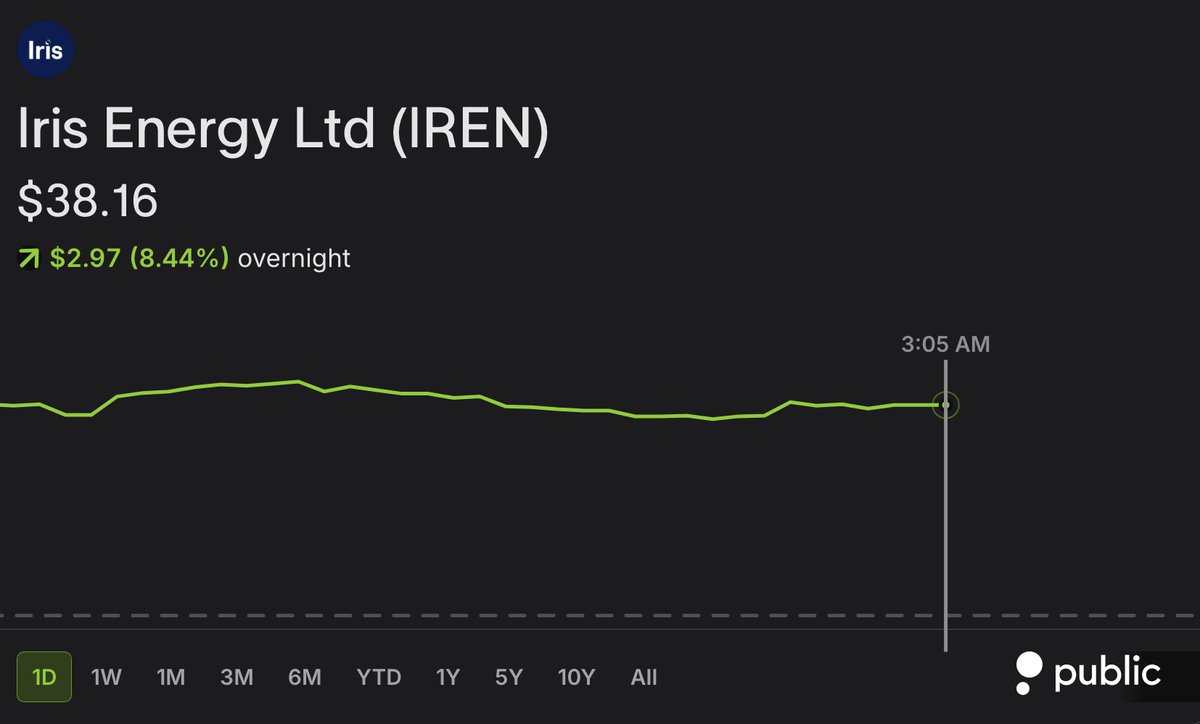
The stock reacted sharply to the news, with X posts saying $IREN rose roughly 5% to nearly 8%. The market focus is on what another major AI customer could mean for IREN’s growing infrastructure business.
Neither pricing nor computing capacity has been disclosed in the materials cited. So far, the event remains a reported deal rather than a confirmed announcement from either company.
How this story unfolded
2026-08-173 posts · 3 authors
Market chatter centered on SPCX potentially reaching $2T valuation, an Anthropic CEO-researcher-investor debate on AI's future, and OABI's licensing deal with Lilly.
Company
Nvidia in early talks over Reflection AI deal
FT says the chipmaker is weighing an acquisition, acqui-hire or larger investment in the $25 billion open-weight startup.
Nvidia is in early talks with Reflection AI about a potential acquisition, acqui-hire, or further investment, according to the Financial Times as relayed in the X signals. Reflection AI is a U.S. startup last valued at $25 billion.
Reflection AI was founded by former Google DeepMind researchers who worked on Gemini. The company builds open-weight AI models aimed at competing with cheaper Chinese alternatives, and Nvidia already reportedly has about $800 million invested in it.
The move matters for Nvidia not only as a possible ownership shift, but also because of Reflection AI’s customer ties. The X signal says Reflection signed a deal worth more than $1 billion with NBIS in July for GB300 capacity, which could make the startup a more strategically important asset.
The reports describe the discussion as early-stage, with no final structure disclosed. No direct response from Nvidia or Reflection AI was included in the provided material.
Multiple X posts and our news library point to the same story: Amazon is reportedly in talks to acquire AI startup Decart in a deal valued at about $7 billion. The reporting attributes the update to The Wall Street Journal, while noting the talks could still fall apart or face competition from another bidder.
According to WSJ, Decart makes software that helps developers switch between different AI chips. One social post also claimed the startup previously improved real-time video performance, but that detail is only a social-media claim in the provided materials and should not be treated as verified fact.
If the deal advances, investors will likely read it as Amazon adding software expertise around its Trainium strategy and broader AI infrastructure push. AMZN is the only clear core ticker in the materials; the rest of the market impact is indirect and not tied to a separate listed target in the provided sources.
For now, the key point is that the story remains a reported negotiation, not a closed transaction. The news library’s corroborating reports are all dated Oct. 11, making today’s X activity a renewed signal on an already circulating deal discussion rather than a fresh announcement.
Broadcom CEO Hock Tan said on Monday in Singapore that many AI investors are acting like casino gamblers and do not fully understand what they are backing. He also argued that enterprises are wasting money on AI tokens while experimenting, without necessarily learning much from the spend.
Tan’s comments extend his latest view of the AI buildout: after shortages in wafers, memory and power begin to ease, access to capital could become the bigger bottleneck. Reuters reported that he pointed to Anthropic and OpenAI as examples of frontier labs that have shown the ability to generate meaningful revenue, even as training costs remain heavy.
For Broadcom, the debate matters because the company is deeply tied to AI infrastructure spending through chips and networking gear. The capital question is also getting attention around other tech names as large financing packages and acquisitions keep the AI supply chain expanding.
Tan’s remarks are a fresh public read on the industry, not a change in company guidance. Investors will keep watching AI capex, financing structures and model monetization to gauge how long the spending cycle can keep running.
The company’s latest weekly update shows continued BTC accumulation alongside a large preferred-stock buyback, with USD reserves still above $4.88 billion
Strategy said it bought 250 bitcoin during the week of Oct. 5 to Oct. 11 for about $21.5 million, at an average price of $86,194 per coin. In the same period, it repurchased 1,932,145 shares of STRC preferred stock for about $192.4 million.
The figures come from the company’s weekly capital-markets update and extend Strategy’s ongoing balance-sheet management playbook. Strategy also disclosed total bitcoin holdings of 848,250 BTC, with an aggregate purchase cost of about $64.0 billion and an average cost of $75,444 per coin.
Funding for the bitcoin purchase came mainly from sales of MSTR common stock under the ATM program, plus $0.5 million from USD cash. As of Oct. 11, the company said its USD reserve stood at $4.88 billion and USD cash at $640.5 million.
The update matters for MSTR and STRC because both securities sit at the center of Strategy’s capital structure and investor trading activity. As the largest corporate bitcoin holder, the company’s weekly purchases and repurchases often shape near-term attention across the stock and its preferred shares.
Tesla robotaxis face U.S. safety probe over school-zone speeding claims
NHTSA is reviewing allegations that Tesla’s driverless taxis exceeded posted limits near schools, adding a new regulatory wrinkle to its autonomous ride-hailing push.
Tesla is under scrutiny from U.S. auto-safety regulators over allegations that its robotaxis sped in school zones. Bloomberg said the National Highway Traffic Safety Administration is evaluating claims involving Cybercab and Model Y vehicles, while Business Insider said an unnamed petitioner made the allegation.
The case matters because it touches Tesla’s driverless-taxi rollout and the safety credentials of its autonomous driving technology. School-zone speed compliance is a particularly sensitive area and can draw heightened regulatory attention.
Tesla is the clear market focus because it is the named subject of the review and the allegations involve its robotaxi program. The reports add a regulatory issue to a stock that investors already watch closely for autonomous-driving execution, but no company response was included in the provided material.
No Tesla response was included in the source reports. The review is described as ongoing.
Company
Intel, Qualcomm said to lift CPU prices; AMD may follow
Supply-chain reports point to fresh pricing pressure in PC chips as advanced-node and packaging costs climb
Taiwan’s Commercial Times, citing supply-chain sources, reported that Intel has raised prices across several PC processor lines starting Sept. 1. High-end Panther Lake models were said to rise 15% to 20%, while Meteor Lake and Arrow Lake were up about 5% to 10%. Qualcomm was also reported to have lifted pricing for Snapdragon X and X2 Elite PC platforms by roughly 10% starting in October, while AMD is said to be preparing a price move of its own, though details remain unconfirmed.
The backdrop is a broader cost push across the PC chip stack. The report says Panther Lake’s high-end GPU tile is manufactured by TSMC on N3E, and Qualcomm’s PC platforms rely increasingly on advanced nodes and packaging, allowing foundry and integration costs to pass through into chip prices.
For the market, the message matters because Intel, Qualcomm and AMD all sit at key points in the PC processor supply chain. If the higher pricing sticks, PC makers and system vendors could face tighter margins and higher procurement costs; the names in focus are INTC, QCOM and AMD. AMD’s move remains only reported, not confirmed.
Neither Intel nor Qualcomm issued a formal response in the cited report, and AMD’s price adjustment has not been officially detailed. The latest update is best read as a supply-chain pricing signal rather than a confirmed across-the-board list-price change.
Standard Chartered launches RLUSD custody and advances LMAX collateral plan
Institutional clients can access RLUSD custody through the bank’s DIFC branch, while the collateral integration remains subject to final documentation and testing.
Standard Chartered said on Monday that it has launched institutional custody for Ripple USD (RLUSD) on the XRP Ledger, with the service available through its DIFC branch in Dubai, which is regulated by the Dubai Financial Services Authority. The bank also said it is working with Ripple and LMAX Group to enable RLUSD as eligible collateral for selected LMAX products under its collateral mirroring model.
The collaboration is the latest step in a longer-running relationship between Standard Chartered and Ripple, but the bank stressed that the planned collateral capabilities still depend on final documentation, successful testing, applicable laws and regulations, internal approvals and jurisdictional readiness. The Block likewise reported that no launch date for the collateral use case has been announced.
For markets, the key takeaway is institutional plumbing: custody, collateral and capital efficiency rather than spot trading. If implemented, the setup would tie together a regulated bank custodian, a stablecoin issuer and an institutional trading venue, making RLUSD and the XRP Ledger more relevant to professional digital-asset workflows.
Standard Chartered’s announcement also highlights the bank’s broader digital-asset push, but the immediate confirmed development is the live custody offering. The collateral leg remains a planned integration, not a completed launch.
Taiwan Semiconductor Manufacturing Co. is set to hold its third-quarter earnings call on Thursday, with the market expecting net profit to rise 65% year on year to T$746.3 billion, extending its streak of record results. Management will also update fourth-quarter and full-year guidance.
According to Reuters, investors are closely watching demand for AI chipmaking capacity and CoWoS advanced packaging, which remain central to TSMC’s role in the AI supply chain. The company already reported a 50% increase in third-quarter revenue last week, a new record.
The other big focus is capital spending and overseas expansion. TSMC lifted its 2026 capex outlook to $60 billion-$64 billion in July and has said it is investing $265 billion in Arizona; those details matter for semiconductor equipment names and AI-server-linked stocks.
So far, there has been no new company statement contradicting the market’s view that AI-related demand remains robust. Any fresh guidance on advanced nodes, packaging capacity or overseas fabs could set the tone for the broader chip sector.
AMD unveiled Helios at Advancing AI 2026, and multiple reports say the rack design can scale to as many as 32,768 Zen 6 “Venice” cores in a CPU-only configuration. The X signal centers on Helios as a rack-scale system built for AI agents, not just another GPU launch.
The launch fits AMD’s broader message that AI demand is shifting from training to inference and agentic workloads. In AMD’s own materials, Helios is presented as a full-stack platform spanning EPYC CPUs, Instinct GPUs, networking and ROCm software, with open-standards positioning aimed at large-scale deployments.
For the market, the update matters because it broadens the AI infrastructure trade to include server CPUs and rack systems, not only accelerators. That puts AMD’s ecosystem partners and server vendors such as DELL, HPE, CSCO and SMCI back in focus as investors assess who benefits from higher AI server density.
One point remains unverified from the social posts: the claimed “token router” that sends requests to the most cost-effective model. AMD’s public launch materials reviewed here do not confirm that feature in those terms, so it should be treated as unconfirmed for now.
How this story unfolded
Company
IonQ to buy Elisity in all-stock deal worth up to $1.3 billion
The quantum company is adding zero-trust security capabilities as it broadens its enterprise offering.
IonQ has agreed to acquire cybersecurity firm Elisity in an all-stock transaction valued at up to $1.3 billion. Business Wire said the two companies have entered into a definitive agreement.
The deal links IonQ’s quantum platform with Elisity’s network security software. Elisity’s platform is designed to control which devices can communicate across corporate networks and to help prevent hackers and ransomware from spreading.
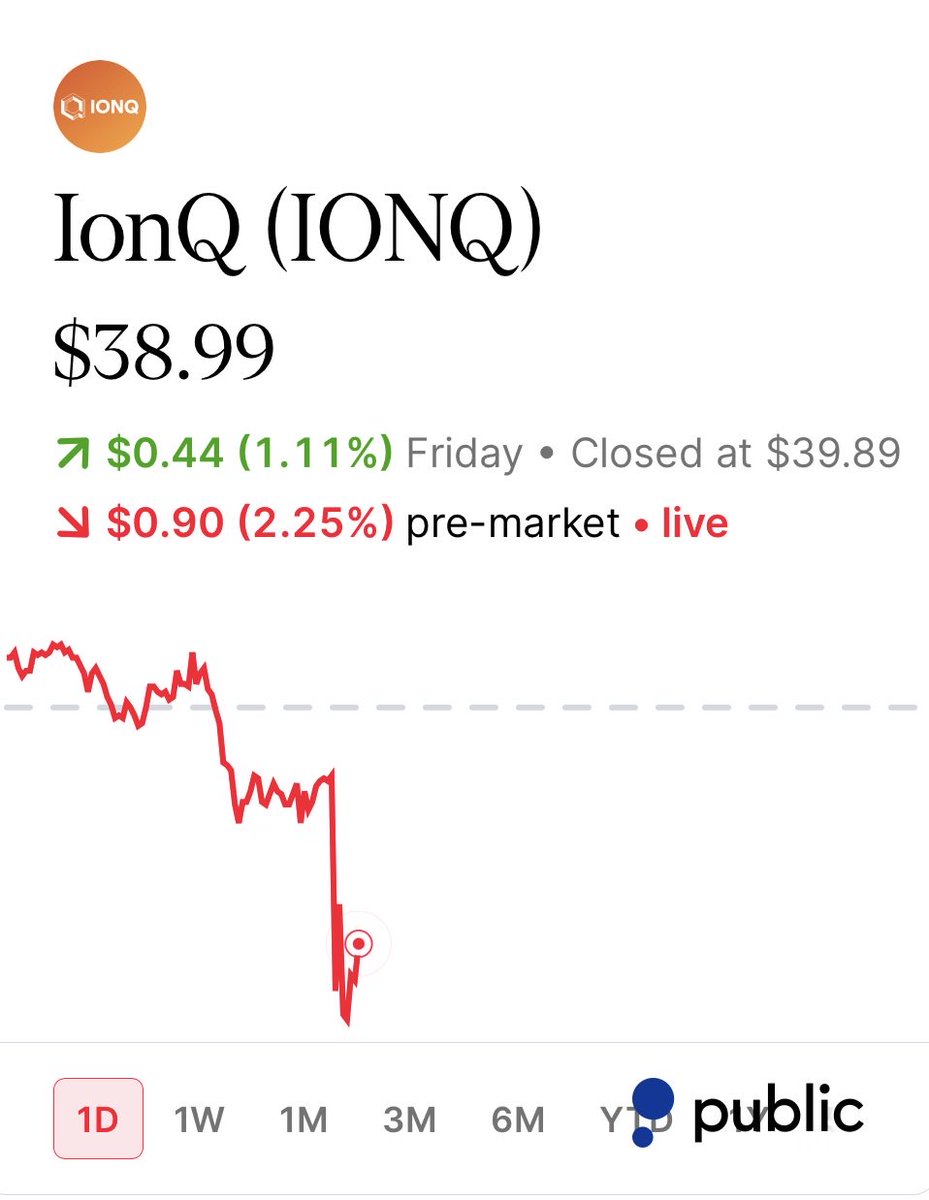
In the market, Proactive Investors reported IonQ shares fell 5% after the announcement. Investors appeared to be weighing the strategic expansion against execution risk and integration complexity.
X posts on the same topic also cited Bloomberg and WSJ coverage, but the company announcement in N2 is the clearest source for the transaction details.
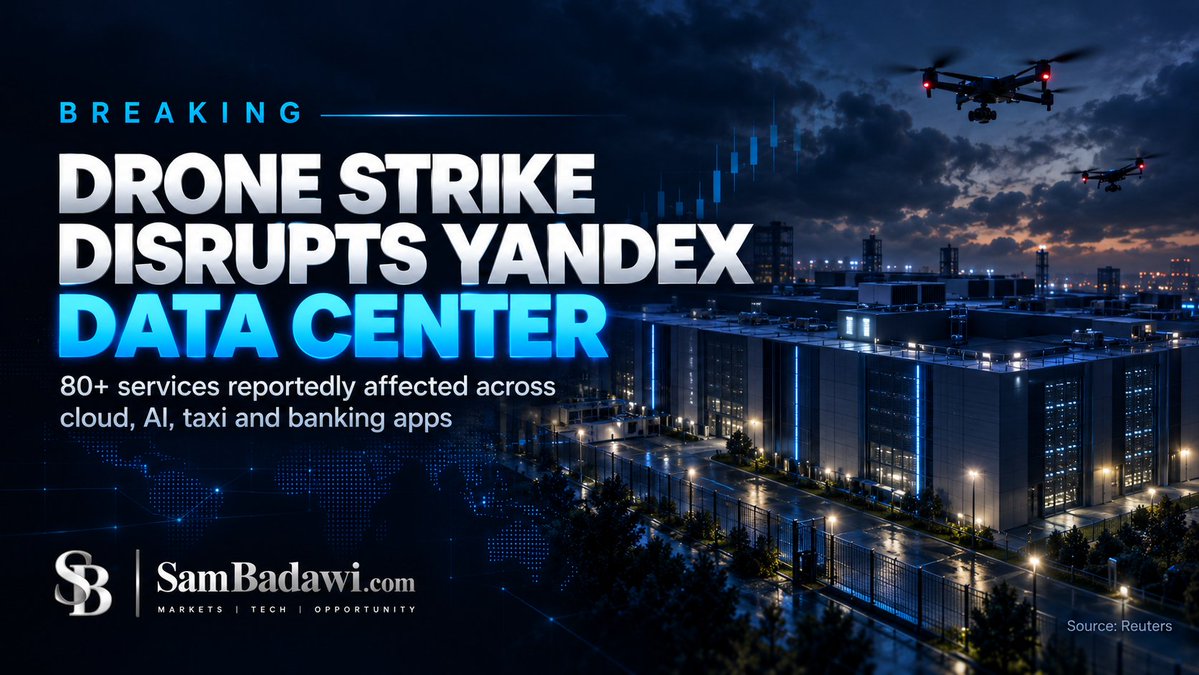
Bloomberg said Ukraine’s drone strikes hit another Yandex data center, disrupting ride-hailing, navigation and payment services for users in Russia. Follow-up reporting said this was the third Yandex data center damaged in four days and that more than 80 cloud services were affected.
The latest outage follows earlier hits on Yandex facilities in Sasovo, Kaluga and Vladimir. Prior reports said the disruptions reached YandexGPT API, cloud infrastructure and consumer apps, while the company said services were gradually coming back online.
For investors, the focus is on Yandex’s cloud footprint and the resilience of Russia’s digital payments and mobility ecosystem. Separate reporting also pointed to a sharp drop in automated traffic from Yandex’s network on Cloudflare Radar, though that measure tracks bot requests only and does not capture total business activity.
Ukraine has not officially confirmed the strikes, and Yandex has not given a repair timeline. Reports of outages at banking apps and retail platforms remain user-reported and were not independently confirmed by those companies.
Evernorth Holdings began trading on Nasdaq today under the ticker XRPN after completing its business combination with Armada Acquisition Corp. II. The company disclosed that it holds about 473 million XRP as it enters the public markets.
The underlying merger closed on Oct. 9, but today marks the first trading session for the listed company. Nasdaq and the company both framed Evernorth as a digital asset treasury vehicle built to provide institutional access to the XRP economy.
For investors, XRPN creates an equity-market route to XRP exposure rather than direct token ownership. Evernorth also said it raised about $300 million in gross cash proceeds, before transaction expenses, to support its treasury strategy and ecosystem deployment plans.
Evernorth said backers include Arrington Capital, SBI Group, Ripple, Pantera Capital, Kraken and GSR. The company plans to allocate capital across infrastructure, tokenized assets and on-chain credit use cases within the XRP ecosystem.
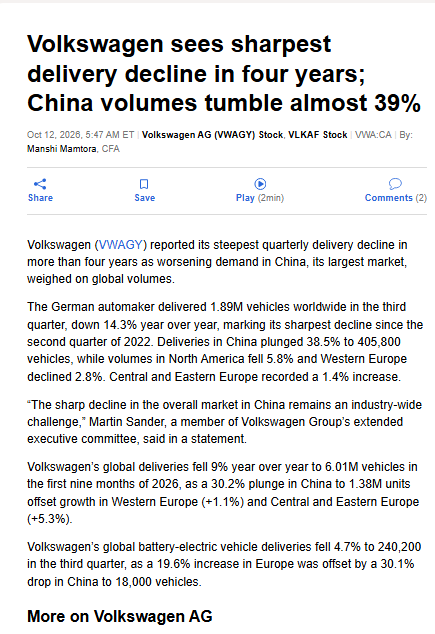
Volkswagen said group vehicle deliveries fell 14% year on year. Reuters and The Wall Street Journal both tie the decline to continued weakness in China demand.
The update extends the broader story around Volkswagen’s efforts to simplify and transform its business. Our news library noted a day earlier that CEO Oliver Blume framed the company’s transformation as a historic company-wide program to reduce complexity.
For markets, the print is relevant because it speaks directly to the pace of deliveries across Volkswagen’s brand portfolio, including VW, Audi and Porsche. The material does not provide enough detail to infer the earnings or share-price impact from this update alone.
No separate rebuttal from Volkswagen is included in the material. The reporting consensus in the signal points to China weakness as the key explanation for the decline.
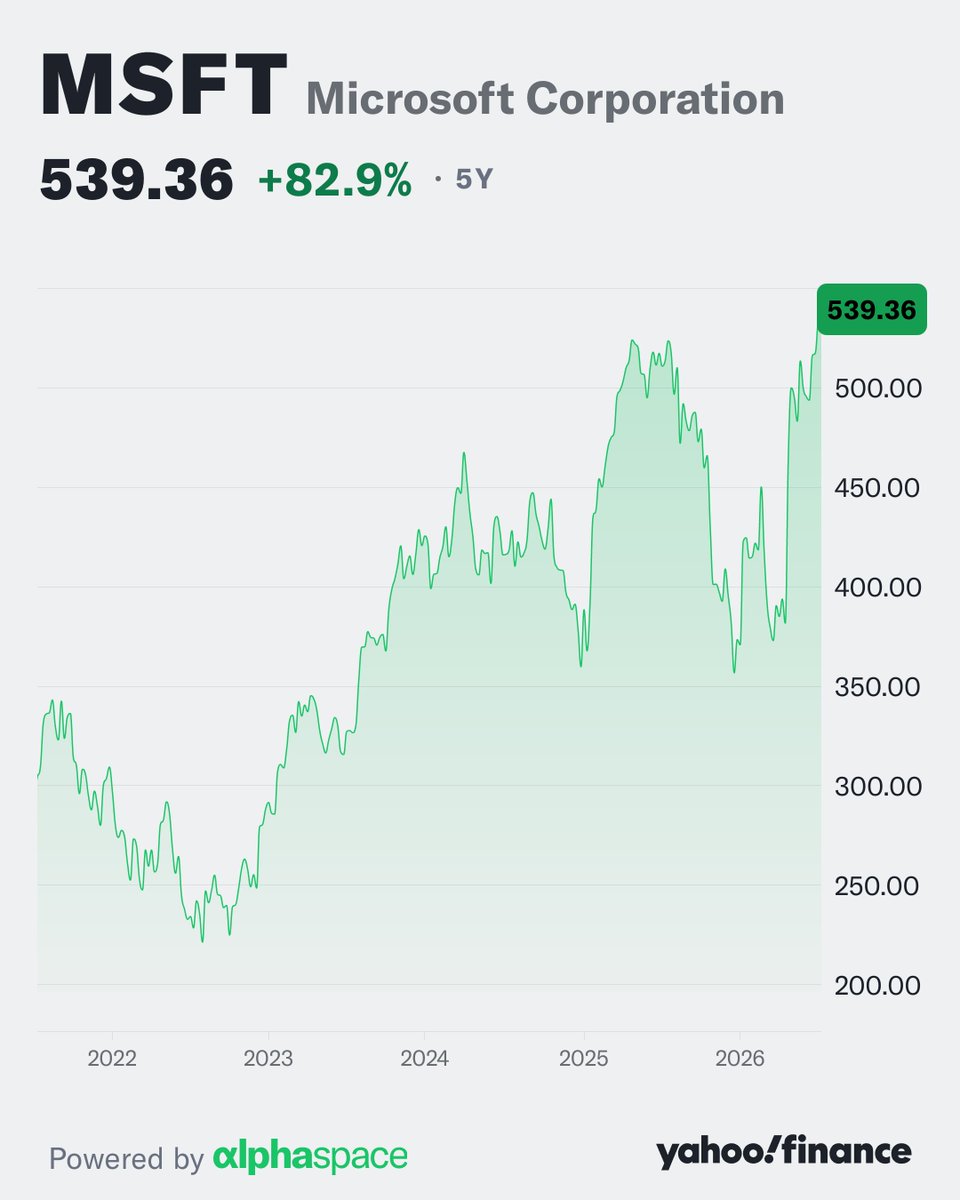
Barclays kept Microsoft at Buy and raised its price target to $600 from $512. Separately, market reports said Microsoft has climbed back above a $4 trillion market capitalization.
The move comes against a backdrop of continued attention on Azure and Copilot, the company’s key AI-linked growth drivers. Recent public reports said Microsoft posted $90 billion in fiscal fourth-quarter revenue, Azure growth accelerated to 43% year over year, and Microsoft 365 Copilot surpassed 30 million paid seats.
For the stock, target-price revisions tend to keep Microsoft at the center of large-cap tech trading and analyst flow. The key debate remains whether AI spending can keep translating into revenue growth and operating leverage.
There is still a split view across Wall Street: one firm reportedly downgraded Microsoft to Neutral with a $515 target, while another recently raised its target to $665. That underscores how investors remain focused on the pace and durability of AI monetization rather than on the stock’s near-term move.
The Wall Street Journal first reported that Amazon is in talks to acquire AI startup Decart for about $7 billion, and several outlets followed up over the weekend citing the same figure. Amazon has not publicly confirmed the deal.
Decart’s software helps developers switch more easily between different AI chips, which ties the reported transaction to Amazon’s cloud business and its broader AI infrastructure push. The reporting frames the talks as part of the intensifying race for AI infrastructure assets.
For the market, the immediate read-through is to AMZN and the wider AI stack: cloud names, semiconductor suppliers, and software companies exposed to chip portability and infrastructure demand. The X signal reflects traders treating this as a fresh M&A angle rather than a completed transaction.
The key number verified across reports is the roughly $7 billion price tag, first published by WSJ and then echoed by PYMNTS and Invezz. Because the deal is still only reported as being in talks, the valuation and final terms remain unconfirmed.
Starbucks says it is not buying Chipotle and is not considering an acquisition of the fast-casual chain. CNBC quoted a Starbucks spokesperson saying, “Starbucks is not buying Chipotle.”
The denial comes after several days of takeover speculation surrounding the two companies. Coverage in our newsroom over the past 48 hours showed the market had been trading on the possibility of a Starbucks-Chipotle deal.
Chipotle shares moved lower after the denial; the X signal said CMG was down nearly 5%. The reaction suggests traders were repricing a rumor that had become a live catalyst for the stock.
Barron’s also reported that Starbucks wanted to make clear it is not buying Chipotle. No deal has been announced by either company.
Deutsche Bank upgraded AST SpaceMobile (NASDAQ: ASTS) to Buy from Hold and kept its price target at $93. The firm said Friday’s roughly 10% selloff was misguided.
The call comes amid market debate after SpaceX bought 800 MHz spectrum. Deutsche Bank said ASTS’s Ligado spectrum rights are worth about $19 billion versus an enterprise value of about $23 billion, implying the rest of the business is being underpriced.
ASTS was already trading firmer today in separate coverage after its next BlueBird satellites arrived at Cape Canaveral. Related reporting has also noted the company is still working toward its near-term satellite deployment goals.
For investors, the move highlights a valuation re-rating argument rather than any new operating disclosure. SpaceX’s spectrum deal remains part of the backdrop, but Deutsche Bank argued it does not make SpaceX more competitive in a way that changes the ASTS story.
Evercore ISI initiated coverage of Robinhood Markets with an Outperform rating and a $130 price target. CNBC reported that the firm sees Robinhood as a compelling long-term story despite its underperformance this year.
The bull case centers on Robinhood’s product flywheel, more than 20% deposit growth, cost discipline, and expansion into digital assets, prediction markets and tokenized assets. The view also points to user growth and business diversification as supports for future performance.
The call is likely to keep HOOD in focus as investors weigh whether new products can translate into durable revenue rather than just headlines. The market will be watching product adoption, deposit trends and monetization in upcoming updates.
No fresh company response was cited in the reports reviewed. For now, the initiation adds another positive analyst data point to the stock’s narrative.
Goldman Sachs now expects U.S. companies to raise $600 billion through stock offerings in 2027, according to a note cited by several reports. The forecast breaks down into about $175 billion from IPOs and roughly $425 billion from follow-on offerings, convertibles and SPACs.
The call comes after a strong year for equity issuance. Goldman is said to estimate that U.S. companies have already raised about $431 billion in 2026, up 98% year over year, and that full-year issuance could reach a record $675 billion, topping the prior high of $540 billion set in 2021.
Goldman also flagged a second supply wave: about $1.7 trillion of shares could become tradable in 2027 as lockups expire. Even so, the bank said roughly $1.7 trillion in buybacks next year, plus investor demand, should help absorb the extra supply.
For investors, the issue is less about a single stock and more about market breadth and financing conditions. AI-linked follow-on issuance has been a major driver this year, and large-cap cloud spenders such as Amazon, Alphabet, Meta, Microsoft and Oracle remain central to the capital-spending backdrop.
Ondas and Palantir have announced Regna AI, a new company aimed at sovereign AI use cases. Multiple X posts say Regna AI launches as a wholly owned Ondas unit, while Palantir provides the AIP-based training stack and infrastructure.
According to the launch description, Regna AI will develop custom AI models for governments and defense customers that can run on their own systems. The stated use cases include drones, stratospheric balloons, ground vehicles, and surface vessels.
The announcement puts both ONDS and PLTR in focus. Ondas is the owner and initial corporate home for Regna AI, while Palantir is positioned as the platform and infrastructure provider behind the effort.
Market chatter on X said ONDS rose more than 5% in premarket trading after the news. That reaction reflects how traders are treating the partnership as a fresh catalyst for both names, especially given the sovereign-AI framing.
Qualcomm CEO Cristiano Amon said at Snapdragon Summit that some AI companies want smartphones capable of running 100-billion-parameter models continuously by 2028. He added that Qualcomm’s latest Snapdragon chips top out at about 30 billion parameters today.
The key issue is less model size than memory capacity. Posts reacting to the comments framed RAM supply as the real constraint, while Qualcomm is also said to be working on technology that loads model parameters from flash storage to support larger on-device models.
For investors, QCOM is the direct name in focus because the comments came from its chief executive and point to the company’s mobile AI roadmap. MU is being watched as a proxy for the memory side of the equation, especially as recent coverage has kept Micron’s AI cycle and valuation in view.
This is still a forward-looking description of what handset AI could require, not a shipped product announcement. The new information is the specific 2028 target and the scale gap Qualcomm says it must bridge from today’s chip capability.
Google has officially introduced the Fitbit Edge at $179.99, with sales set to begin on Oct. 27. The device is positioned for users who want notifications and health monitoring without committing to a larger smartwatch.
Google’s blog says the tracker supports more than 50 exercise modes, automatically recognizes up to 100 workouts, includes precision GPS, and delivers up to seven days of battery life. The Verge reported additional hardware details, including ECG, skin temperature, SpO2 and optical heart-rate sensors, while noting the lack of a microphone, speaker and NFC payments.
The launch further segments Google’s wearables lineup, sitting above Fitbit Air and below Pixel Watch 5, and effectively gives the company a refreshed answer to the aging Charge 6. For GOOGL, the key question is whether a modestly priced tracker can drive more premium health software usage; AAPL is mainly part of the competitive backdrop in wearables.
Google also said buyers will receive three months of Google Health Premium. Ars Technica reported the subscription costs $10 per month and is required for the AI health coaching features.
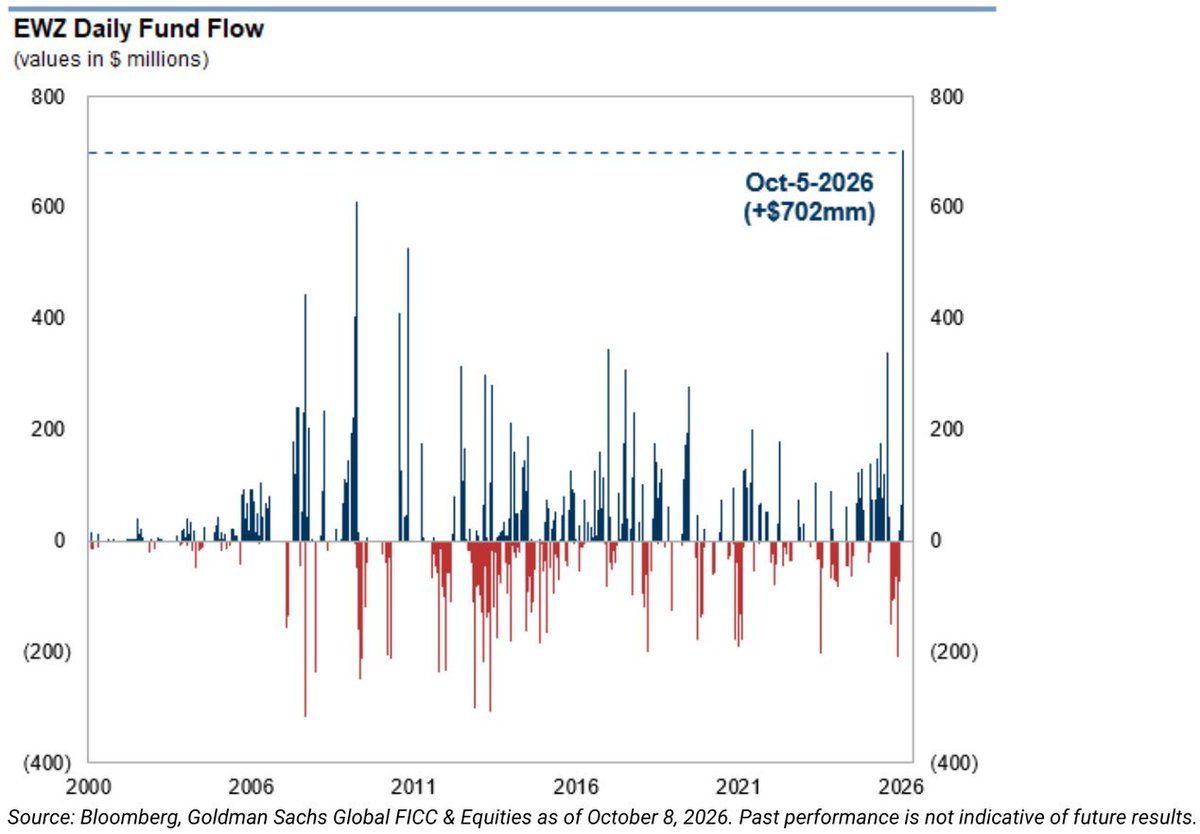
iShares MSCI Brazil ETF (EWZ) recorded about $702 million in net inflows last week, the largest weekly inflow in the fund’s history. The figure was first surfaced in a market signal on X and then cross-checked against ETF flow data and Brazilian media coverage.
The inflow comes shortly after the first-round result of Brazil’s presidential election, which had already triggered record foreign buying in Brazilian local shares. That backdrop suggests global investors are still re-pricing Brazil exposure rather than treating the move as a one-day event.
For markets, EWZ is the main US-listed vehicle for taking Brazil exposure, so a surge in flows often amplifies trading in banks, consumer names and other heavyweights linked to the local equity market. In that sense, the fund’s flow data provides a useful read-through on offshore risk appetite for Brazil.
No fresh company response was reported with the flow update. EWZ is managed by BlackRock and tracks the MSCI Brazil 25/50 Index, making it a closely watched gauge of foreign demand for Brazilian stocks.
How this story unfolded
2026-08-153 posts · 3 authors
Druckenmiller disclosed Q2 holdings led by Natera and TSMC, while Brazil saw $2.6B foreign outflows.
Markets🔥Developing
Bitcoin Claws Back Above $84,000 as ETF Outflows Persist
BTC’s rebound came after a sharp pullback, with fresh price data and derivatives liquidations offering context for the move.
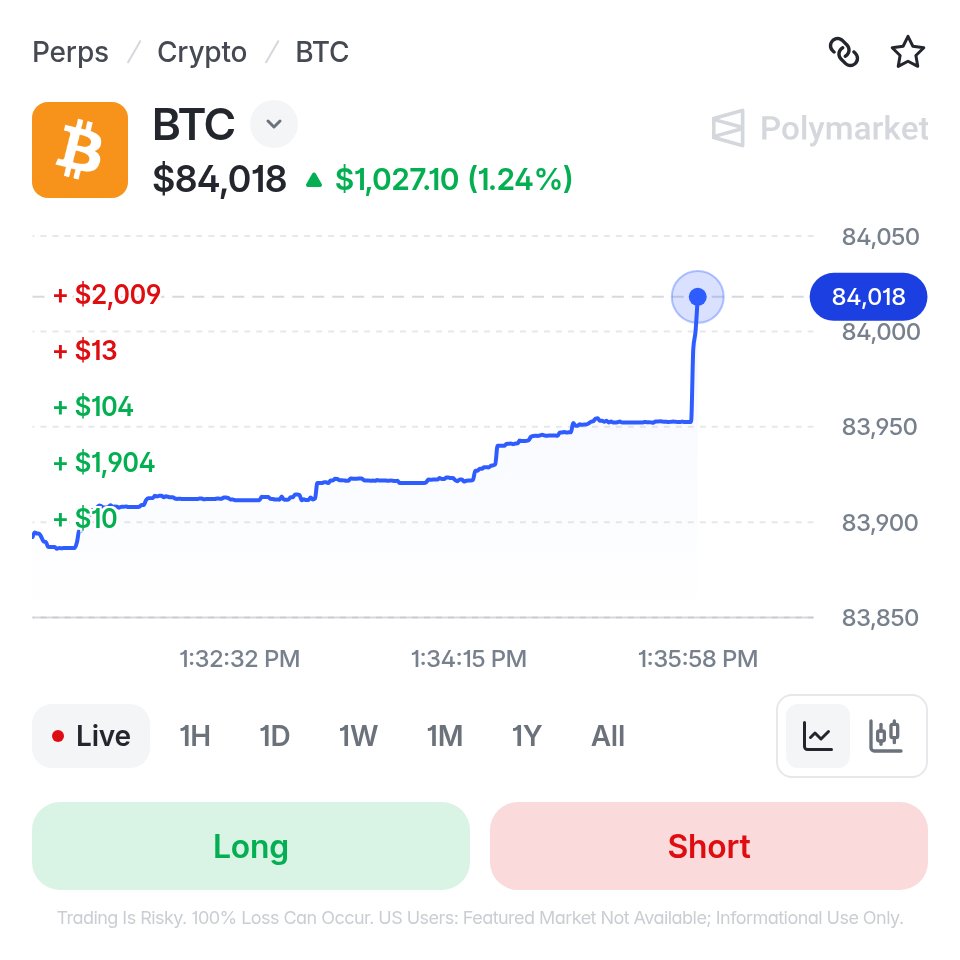
Bitcoin moved back above $84,000 on October 12. CoinGecko data showed BTC at $84,024.57 around 04:55 UTC, up 1.3% in 24 hours, with an intraday range of $82,894.31 to $84,071.89.cryptotimes.io
The rebound follows a steep drawdown earlier in the week. Bitfinex said BTC fell from an October 2 high of $87,197 to a low of $80,347 on October 8, while U.S. spot bitcoin ETFs recorded $678.9 million in net outflows for the week before turning to a modest $21.1 million inflow on October 9.blog.bitfinex.com
Derivatives data also pointed to short covering. CoinGlass figures cited by CryptoTimes showed roughly $46.68 million in bitcoin liquidations over the 24 hours to about 05:30 UTC on October 12, including about $39.61 million in shorts and $7.06 million in longs.cryptotimes.io
On X, traders focused on whether BTC can hold the reclaimed level and build on the recent weekly close. For now, the key takeaway is that price has returned to a watched zone, but ETF flows remain mixed and do not yet confirm a durable shift in demand.
How this story unfolded
2026-08-135 posts · 5 authors
Switzerland's largest bank UBS disclosed holding $83.2 million in BlackRock's Bitcoin ETF.
Company
CXMT says 4F² DRAM is advancing, targets year-end server memory
The Chinese memory maker disclosed a denser architecture and a 2026 year-end plan, signaling a push from consumer memory into server DRAM
China’s CXMT said it has made progress on a denser, more efficient 4F² DRAM architecture based on proprietary vertical-transistor technology. The company also said it plans to introduce DDR5 server memory built on the design by the end of 2026, while the final specifications and launch timing remain undisclosed.
The update matches earlier reporting that CXMT is aiming at server DRAM after years of focusing on consumer memory. TrendForce said the company is betting on 4F² technology to enter a market dominated by Samsung and SK hynix.
For Micron and other memory makers, the disclosure adds another sign of intensifying competition in higher-end memory. The market has already been parsing CXMT’s development push as a factor in the pricing of memory stocks, and the tweet itself grouped $MU and $SNDK around the same theme.
CXMT has not yet provided final specs or an exact release date. At this stage, the confirmed takeaway is the company’s technical progress and its year-end target for server memory, not a commercial launch already in hand.
Blackstone Credit & Insurance said on Oct. 12 that it is leading a $1 billion financing package to support the combination of Leidos’ security enterprise solutions businesses with Analogic. The firm said the combined company will serve airports, ports, borders and other critical infrastructure customers with security imaging and detection capabilities.
The financing follows a business combination that Blackstone said closed earlier this month. In its announcement, Blackstone also said Leidos generated about $17.2 billion in revenue for fiscal 2026 ended Jan. 2, and that Analogic is headquartered in Salem, New Hampshire, with a portfolio spanning imaging, detection and automation technologies.
For investors, the main listed-name reference point is Leidos, traded on the NYSE under LDOS. Blackstone said it is serving as lead lender and joint lead arranger, alongside HPS, Bank of America and Wells Fargo, underscoring the scale of the private-credit support behind the transaction.
No party publicly challenged the financing terms in the materials reviewed. The latest update is the financing announcement itself, while the underlying business combination had already been completed earlier this month.
Delta Air Lines said it will push back the start of its planned nonstop service from Atlanta to Riyadh, Saudi Arabia, to March 2027. Multiple reports linked the change to security concerns after drone and cruise missile attacks were detected by the country on Monday.
The route had been among Delta’s notable international additions, and the delay underscores how rapidly changing conditions in the Middle East can affect long-haul airline network plans. CNBC reported that the FAA has warned U.S. airlines about safety risks flying in or near Saudi Arabia after attacks on one of the country’s biggest airports.
For the market, the key ticker is DAL, as the decision directly affects Delta’s expansion timetable and the visibility of its overseas growth strategy. The company has not denied the delay, and the reporting is consistent across wire services.
Delta said it remains in close contact with relevant government and aviation partners, including Saudia and Riyadh Air. That suggests the route’s timing will continue to depend on safety conditions and aviation coordination.
Tesla investor Ross Gerber said the Roadster may end up with a production run of only a few hundred cars. He also called the proposed hovering feature a “gimmick,” arguing Tesla should focus on speed, range and self-driving instead.
The comment adds to ongoing investor debate around Tesla’s product mix and execution. Recent coverage in our news base has highlighted margins as a key issue for TSLA investors, while Jefferies on October 12 lifted its price target to $400 and kept a Neutral rating.
If the Roadster remains a low-volume halo car, investors are likely to keep weighing its branding value against its contribution to Tesla’s broader business. The latest remarks mainly matter because they frame how some shareholders view Tesla’s technology priorities.
Gerber’s remarks do not amount to a denial that the Roadster exists; rather, they challenge the car’s feature set and implied scale. No contemporaneous response from Tesla appears in the provided material.
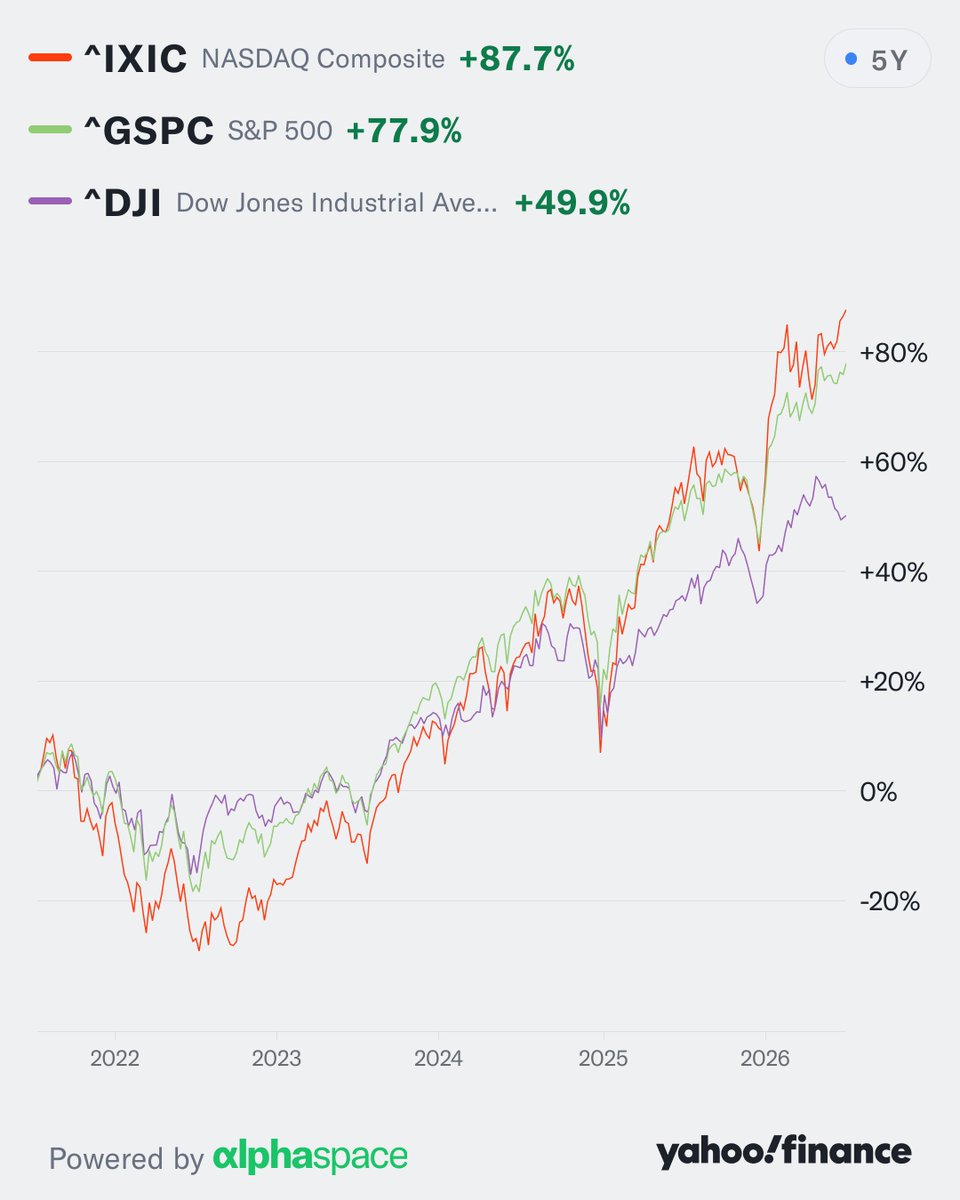
On Oct. 12, the bull market that began on Oct. 12, 2022, reached its fourth anniversary, prompting fresh chart-driven commentary from strategist Ryan Detrick and others. Multiple X posts and follow-up coverage point to roughly 120% cumulative gains over the four-year run.
The backdrop matters because this rally has been powered by a mix of AI infrastructure spending, resilient earnings and a still-expanding set of leadership names. Carson Group’s historical review says every bull market that made it to four years over the past 50 years went on to last at least five years, which is why the fifth year is drawing attention.
For markets, the question is less about celebration than about valuation support. Coverage cited a forward P/E move from around 22x to 19x in 2026, while sector leadership has remained concentrated in technology and communication services, with XLK and XLC notably outperforming the broader market.
That does not make this a forecast. It simply frames the current debate: whether higher Treasury yields, policy uncertainty and the payback from AI spending can still be absorbed by earnings growth as this bull market enters its fifth year.
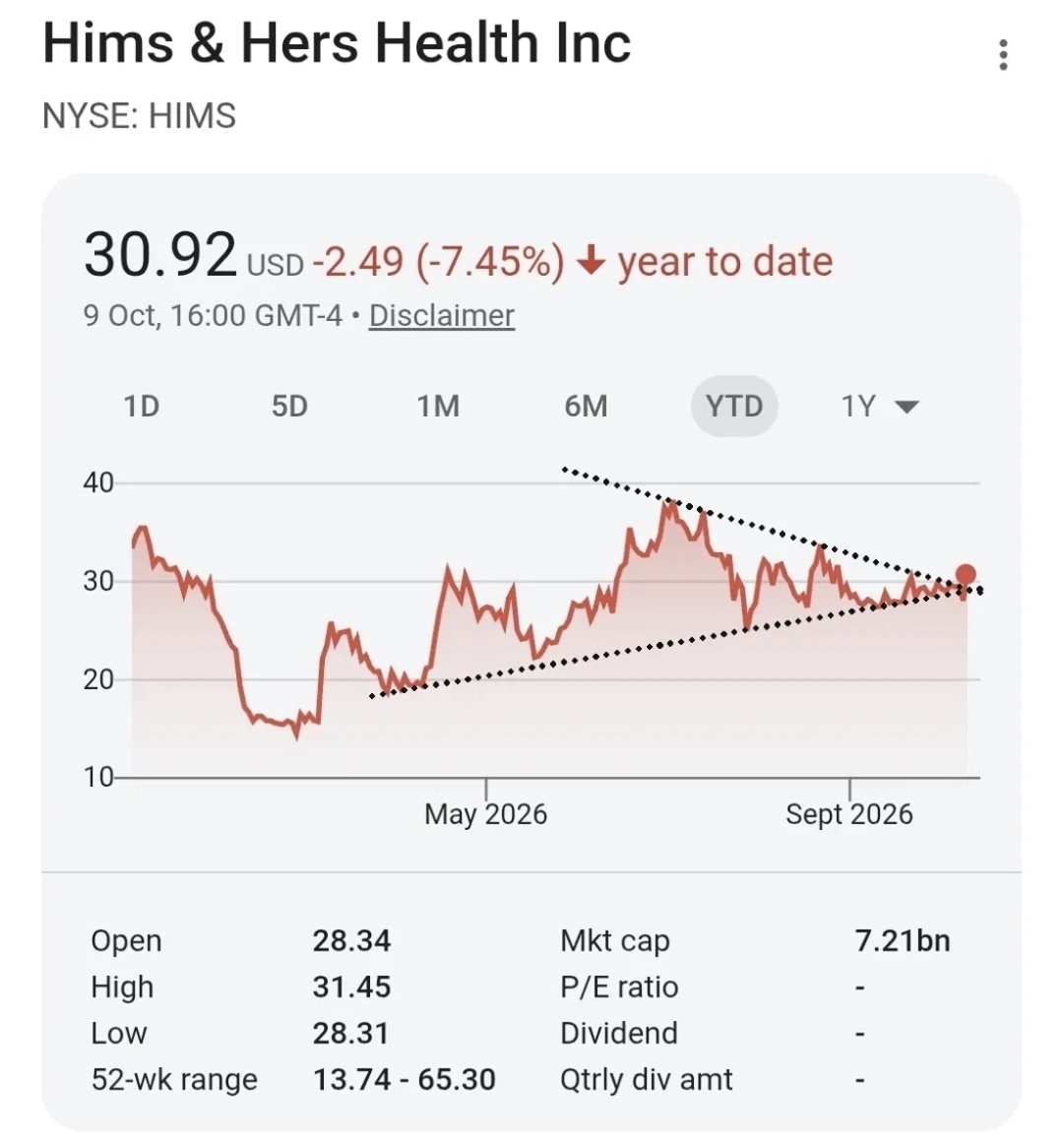
X users are turning their attention to HIMS, describing the stock as tightly coiled and pointing to a close near the 50 EMA and VPOC. Several posts frame $30 as the key level to watch, alongside the possibility of a squeeze if buyers regain the VPOC with conviction.
The newsroom feed over the past 48 hours does not show a matching new company announcement tied to that trading chatter. What it does show is follow-up coverage from October 10 and 11 on securities-class-action counsel notices involving Hims & Hers Health.
For the market, the conversation centers on volatility, technical levels and the potential impact of elevated short interest. In other words, this is a sentiment-driven tape read rather than a fresh fundamental update.
With no independently verifiable new corporate catalyst in the provided sources, the safest read is that HIMS is being watched as a momentum name. The X posts highlight a trader focus, not a confirmed event development.
Sui Foundation said it will invest $30 million in DATA Network and bring its Trace provenance protocol onto the Sui blockchain. The partnership also makes Walrus the default storage layer for DATA Foundation applications, while DATA Network’s independent chain will be retired.
The move comes as AI developers increasingly need rights-cleared training data with provenance that legal and procurement teams can verify. The Block and Daily Hodl both reported that Trace has logged more than 250 million contributions or receipts since launching in June, underscoring the scale of the network being moved over.
For markets, the announcement extends the AI infrastructure narrative around SUI and could keep attention on the token as an ecosystem play. A separate 247WallSt report in the past 48 hours noted Sui had risen 48% over the last month, but today’s news is about the strategic migration and investment rather than any price call.
The existing DATA token is set to migrate to Sui on a one-to-one basis, and the current network will continue operating until the transition is completed. The companies said a detailed timeline will be published before the upgrade.
IREN's CCO hinted its unnamed frontier AI lab is Anthropic or OpenAI, while analysts uncovered a $1.73B unaccounted contract in its backlog.
2026-09-149 posts · 9 authors
IREN's CEO argued scaling current AI capabilities alone demands years of compute; Anthropic secured ~$517B in compute contracts over 11 months, with WULF capturing $19B.
2026-09-188 posts · 7 authors
Nvidia positioned as core AI cloud supplier, IREN linked to Anthropic; both labs seek 20-30MW data centers, with Northland initiating IREN at Outperform.
2026-09-273 posts · 3 authors
Nvidia CEO cited $100B+ AI ecosystem investment; IREN eyes 2027's 15GW shortfall; Nscale filed S-1 with $88B of $103B contracts from Anthropic and Microsoft.
2026-10-1228 posts · 24 authors
IREN reportedly signed a multi-year cloud deal with Anthropic, potentially confirming the unnamed frontier lab's identity, with speculation of 50MW B300 capacity.
Meta is expected to rely on Nvidia's Blackwell/Rubin and AMD's Helios racks in 2026 while accelerating custom MTIA chips in 2027; AMD acquires Taalas to reduce HBM dependence.
2026-08-264 posts · 4 authors
UBS projects AMD revenue could 5x to ~$227B by 2030 with 45% EBIT margins; Helios rack outperforms Nvidia's VR200 NVL72 on most nameplate specs at Hot Chips.
2026-09-3010 posts · 10 authors
HPE secures a $1.2B Vultr order for AMD Helios AI racks, its first for the platform, and raises FY27 networking guidance; AI demand outpaces capacity.
2026-10-017 posts · 7 authors
AMD reveals Helios TH6 scale-up switch design publicly, featuring Broadcom Ethernet retimers; each rack includes 6 Tomahawk trays, highlighting copper density challenges.
2026-10-075 posts · 3 authors
AMD CEO Lisa Su in Taipei says chip supply will substantially increase in 2027; CBRS CS-4 is positioned for ultra-fast AI inference, not as a competitor killer.
2026-10-085 posts · 5 authors
Channel checks indicate Marvell and AMD collaborate on scale-up, testing next-gen Helios rack with Marvell 6.4T NPO engines; Lisa Su in Seoul seeks 3-5 year memory partnerships with Samsung and SK hynix.
2026-10-122 posts · 2 authors
AMD unveils Helion, a 32,768-core rack-scale platform for AI agents; Wolfe breaks down Helios supply chain, with CLS getting the largest share and Arista more than HPE/Juniper.