Elon Musk said Monday he will give one of his personal SpaceX shares to every child in the U.S. next year, calling it "the first of many." An August SEC filing put his holdings at about 4.8 billion SpaceX shares, rising to 6.4 billion including unvested awards and stock options.
Using estimates of roughly 72 million to 73 million Americans under 18 and a share price of $146.03, media outlets calculated the giveaway at about $10.5 billion to $10.7 billion. Bloomberg reported the pledge came after rival Anthropic PBC said it would set aside a portion of its shares for public benefit.
SpaceX (NASDAQ: SPCX) is scheduled to report third-quarter 2026 results after the market close on Tuesday. Bernstein reaffirmed a Buy rating and a $248 price target the same day, well above the $146.03 reference price; details on how the shares would be distributed, tax treatment and any effect on Musk's stake were not disclosed in the materials.
The materials show no further comment from Musk or SpaceX on the size or mechanics of the pledge; the dollar figures are media estimates based on population and share price.
French President Emmanuel Macron addressed the nation on Sunday night, saying the country felt "anger and shame" after a weekend of rioting and looting, and vowing that those who plundered would pay for the damage while those who sought to bring down the Republic would be held accountable. Croatian broadcaster HRT reported more than 2,000 arrests and over 600 injured officers, with a record 855 people detained in Paris on Saturday; the Associated Press put arrests at at least 1,800.
The unrest began as protests over the high cost of living and poor school conditions before degenerating into arson and looting, including a fire that engulfed Limoges' 19th-century city hall and collapsed its roof. Macron blamed "insurrectionist elements from radical far-left groups, joined by numerous criminals," while urging that legitimate demonstrators be distinguished from vandals; far-right presidential candidate Marine Le Pen called for calm and order.
Markets reacted on Monday: the French 10-year yield rose about 10 basis points toward 5%, a two-decade high, the spread over German bunds widened to 145 basis points, the euro fell 0.3%, and French bank stocks and the CAC 40 declined. With public debt at record levels, investors see little fiscal room to spend the anger down.
The contagion is being watched across Europe: Milan also saw violent clashes over rising prices at the weekend, and with elections due in at least half a dozen countries next year, France's turmoil is being read as an early political-risk signal.
Anthropic said on Oct. 18 it will commit 5% of its shares to a newly created Anthropic Public Benefit Fund, subject to stockholder approval. The fund will be set up as a wholly owned limited liability company rather than a traditional nonprofit, giving it flexibility between nonprofit donations and direct distributions to specific populations.
The fund could receive an additional 2% of shares at the board's discretion for every 50% increase in company value above an undisclosed baseline. Anthropic said none of the equity would fund lobbying or political contributions in the US or abroad; combined with co-founders' pledge to donate 80% of their holdings, roughly 20% of shares would be dedicated to public purposes.
The announcement comes as Anthropic prepares a potentially record-breaking IPO as a public benefit corporation, with reports putting a possible valuation above $1 trillion. The company told investors last week revenue rose 45% to $16.8bn in the quarter to end-September. The fund cites AI's labor-market impact as a potential target, an issue on which Anthropic says it has already committed $200 million.
Reuters, BBC and CNBC reported the move in parallel; Elon Musk responded on social media that he recommends giving the shares directly to the public. Governance, valuation thresholds and recipient organizations have not been disclosed.
Indonesia's selloff deepened Monday, with the Jakarta Composite Index falling as much as 5.4% to its lowest level since 2020, extending Friday's roughly 12% plunge to a two-session loss of about 16% and pushing the benchmark below 5,000. The 10-year bond yield rose 12 basis points to a four-month high and the rupiah weakened 0.2%, Bloomberg reported.
The trigger was MSCI Inc.'s warning that Indonesia may face a two-step downgrade, potentially moving from emerging-market to standalone status. The warning fueled fears of worsening foreign capital outflows; Indonesian stocks are down 43% this year, the worst performance among major markets.
Citing a UBS estimate reported by Reuters, BusinessTechNews put passive outflows at about $4 billion, with active investors potentially pulling a further $15 billion — roughly 3.75 times the passive figure. The iShares MSCI Indonesia ETF (EIDO) fell on the reclassification news.
Indonesian officials are set to meet with MSCI. The index provider's final decision and Jakarta's response will determine whether the country keeps its emerging-market classification.
Earnings season hits full swing this week. According to multiple X signals, Meta and Tesla are both scheduled to report after the close on Wednesday, Oct. 21, while SpaceX and Netflix report after Tuesday's close. Roughly 15% of the S&P 500 is set to disclose results this week.
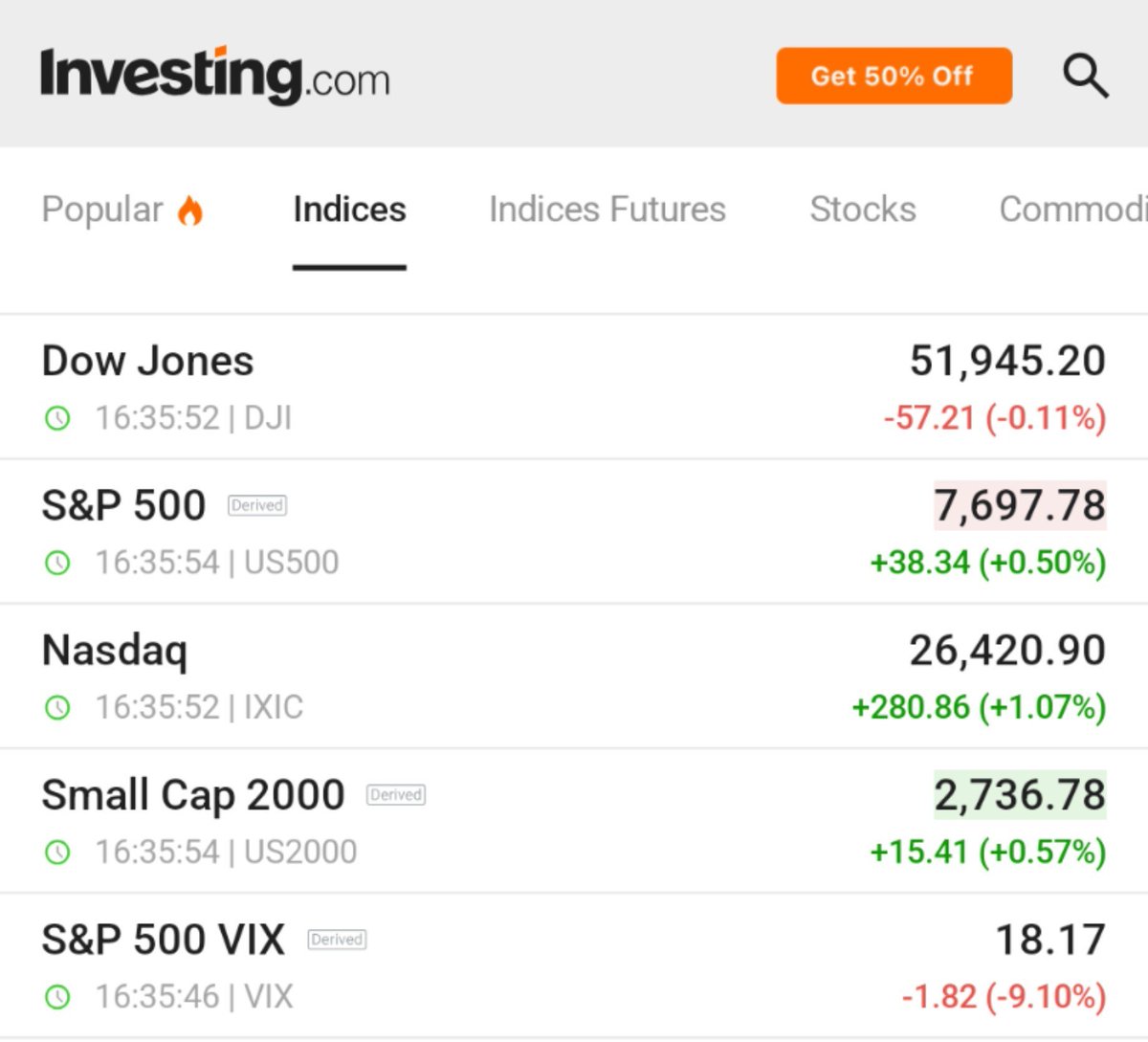
The reports follow a sharp tech pullback. Trader Gary Black noted that the SOX chip index had fallen 17% over nine straight sessions, its longest losing streak since 2006, before U.S. stocks rebounded Monday, with the S&P 500 up 0.5% and the Nasdaq 100 up 1.1%.
Attention is concentrated on AI-linked heavyweights. Kalshi said Big Tech earnings kick off this week with Meta after an "AI-driven selloff." News library items show AI names including CoreWeave, Intel and Sandisk rising Monday, while oil majors slipped as crude retreated.
On the single-stock front, Zacks said Tesla is slated to release third-quarter 2026 results Wednesday after market close, with consensus estimates focused on earnings and revenue. The reporting cadence from Meta, Tesla, SpaceX and Netflix will shape whether Monday's rebound holds through the week.
US equity futures opened higher on Monday, with Nasdaq 100 futures up nearly 1% in early trading, undercutting social-media warnings of a "Black Monday" crash that circulated over the weekend. Friday had been brutal: the Nasdaq Composite fell 2.1% and the S&P 500 lost 1.1%, both posting their worst week since June.
The "Black Monday" label refers to Oct. 19, 1987, when the Dow Jones Industrial Average plunged 22.6% in a single session; this year marked the 39th anniversary, fueling weekend chatter. The Kobeissi Letter said the S&P 500 was set to add $350 billion in market capitalization at the open and urged followers to "ignore the noise."
The premarket rebound came as energy prices and Treasury yields eased, lifting chip stocks and AI-linked names including CoreWeave that had borne the brunt of last week's selling. Beneath the surface, breadth remains weak: the S&P 500 sits about 2% below its record close, yet nearly half of its components trade under their 200-day moving averages.
Kobeissi's call for the S&P 500 to reach 8,000 is its own analysis, not a realized fact, and premarket gains were reported variously between 0.2% and nearly 1% depending on timing.
Samsung Accepts Nvidia's Request to Build NVHBM Base Dies on TSMC 3nm
First Samsung-TSMC collaboration at the HBM manufacturing stage; Nvidia aims to standardize base-die process and validation across three memory suppliers
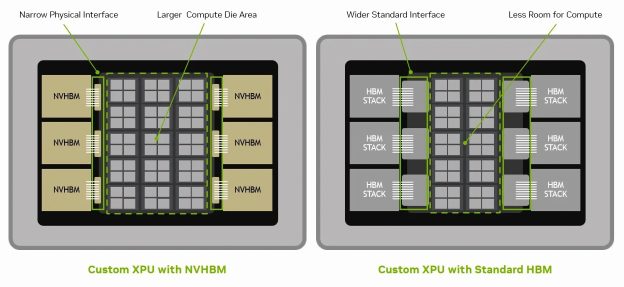
Samsung Electronics has accepted Nvidia's request to manufacture base dies for NVHBM, Nvidia's custom HBM product, on TSMC's 3nm process, Seoul Economic Daily reported. Nvidia has asked SK hynix and Micron to adopt the same base-die process while pairing it with sixth-generation DRAM (1c nm) for the core dies.
Unveiled in August, NVHBM moves the memory controller from the GPU onto the base die, requiring advanced logic technology. TrendForce cited industry estimates putting TSMC's 3nm yield above 90%, versus roughly 60% for Samsung Foundry's 2nm SF2 process. Samsung reportedly agreed after an internal review while keeping its own foundry track for conventional HBM and other customers.
If implemented, it would be the first time Samsung and TSMC have worked together at the HBM manufacturing stage, despite being direct rivals in advanced foundry. For TSMC, base-die orders land on its 3nm lines regardless of which memory maker supplies the stack; for Samsung, it is a concession to its largest HBM buyer.
Dealroom, citing the report, said NVHBM can widen memory bandwidth by up to 30% and cut power use by 15% versus standard HBM4E. UBS projects next year's HBM demand at about 61.5 billion gigabits, up 91% year on year, against shipments of 54.6 billion gigabits, a shortfall of around 10%.
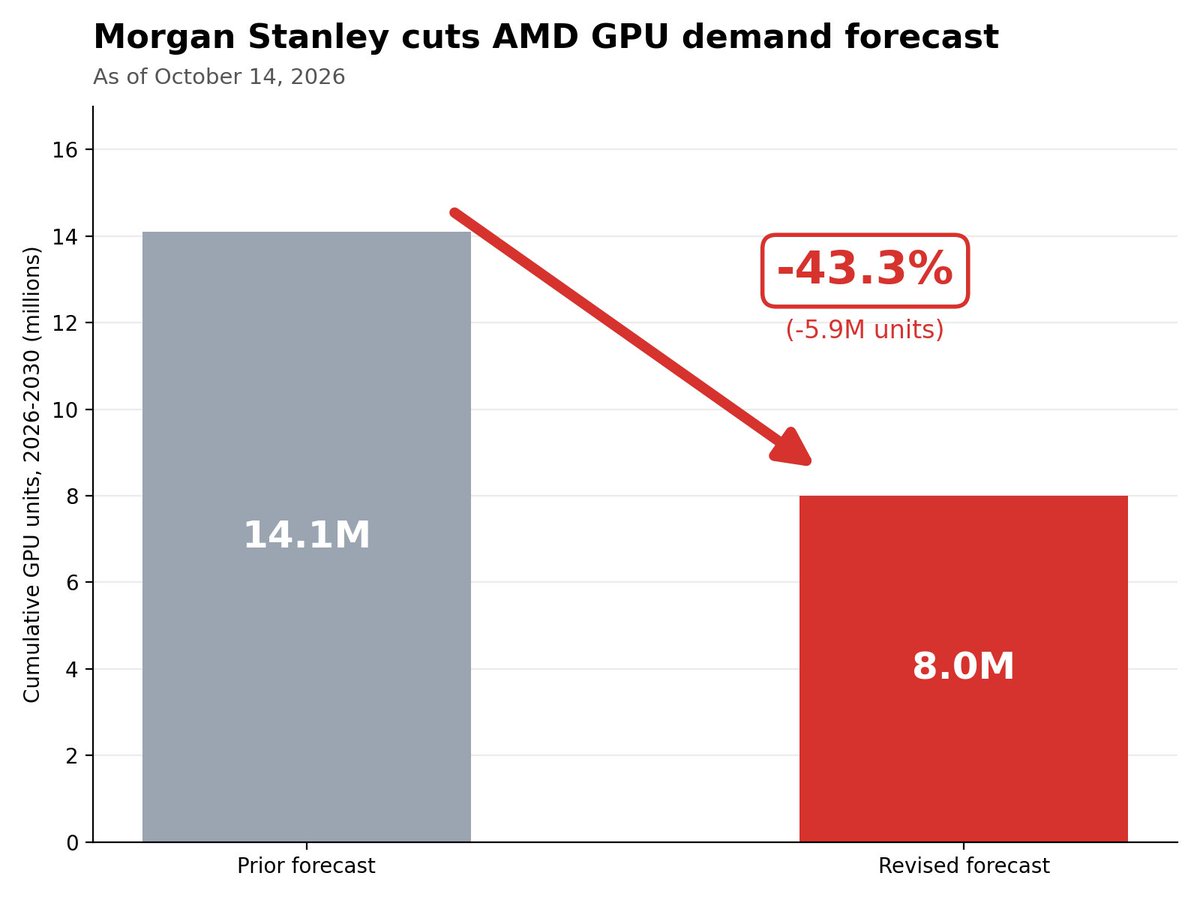
Multiple X accounts citing Morgan Stanley research say the bank cut its 2026-2030 GPU demand forecast for AMD from 14.1 million units to 8.0 million units, a 43.3% reduction, while keeping its Nvidia forecast unchanged.
The figure has been repeated with the same wording across X, including the original pequityresearch post and reposts by Primare and Phoenix Trading Desk, but the materials contain no copy of the Morgan Stanley report or an official statement.
Some reposters are skeptical: Ed Zitron said it should be taken "with grain of salt" and speculated the original estimate was too high or that CoWoS capacity is insufficient; others asked why Nvidia's forecast was left untouched.
If confirmed, the revision would affect how the market prices AMD's data-center GPU growth curve and reinforce expectations that Nvidia is the relative beneficiary; both AMD and Nvidia are U.S.-listed companies at the center of the AI accelerator share debate.
Microsoft has terminated its involvement in Nscale's data centre in Loughton, Essex, where it had planned to fund a supercomputer with more than 23,000 GPUs. Nscale said it remains committed to the project and is exploring alternative power sources and other UK sites, adding that its relationship with Microsoft remains strong on overseas projects.
The site had been due to receive power at the end of this year, but the BBC reported Nscale has been told the connection will not come until the 2030s. Nscale pledged £2bn last year to build and operate what it billed as the UK's largest AI data centre, a project the government had highlighted in its AI strategy.
The withdrawal comes as Nscale seeks to raise as much as $3bn in a US IPO as soon as October. Its filing shows Microsoft and Anthropic account for about 85% of its contracts, with Microsoft alone at roughly 40%. Microsoft said last month that part of its $30bn UK investment would fund the Loughton supercomputer.
Microsoft declined to comment. Nscale said the Loughton site is expected to create 250 permanent jobs once open, and its flagship Norway site is about six months behind schedule, with only 6.4MW of the intended 30MW running.
China's September surveyed urban jobless rate falls to 5.2%, below forecast
Official data point to a broadly stable labor market, with services absorbing nearly half the workforce; the gauge is a key input for domestic demand and policy timing.
China's surveyed urban unemployment rate came in at 5.2% in September, down 0.1 percentage point from the previous month and below the 5.3% consensus, according to National Bureau of Statistics data released on Monday. The rate for 31 major cities was also 5.2%.
The average for the first nine months of 2026 was 5.2%, unchanged from the same period of 2025. By group, the rate was 5.2% for local household registration workers, 5.1% for non-local registration and 5.0% for rural migrant workers. NBS deputy head Mao Shengyong said services account for 49.4% of the workforce, with employment rising in transport, accommodation and catering, and culture, sports and entertainment.
For 2026, Beijing targets a surveyed urban unemployment rate of around 5.5% and more than 12 million new urban jobs. A five-year human resources plan published in July aims to help 25 million unemployed urban workers find new jobs and assist 6.5 million people facing difficulty finding work.
The decline supports expectations for consumption and domestic demand, though a 0.1-point monthly move should not be overread; youth unemployment sub-indices and the durability of services hiring are the figures to watch. As a macro release, the data has no direct single-stock read-through.
The figures were reported by Xinhua based on NBS releases.
China's retail sales rose 1.1% year-on-year in September, beating the 0.5% forecast and accelerating from 0.4% in August, according to data from the National Bureau of Statistics released Monday. It was the fastest pace since March. Industrial production rose 5.5% year-on-year, above the 5.4% expectation and up from 5.2% in August.
The breakdown showed sharp divergence. Communication equipment sales surged 31.1%, tobacco and alcohol rose 13.8%, food products gained 6.7% and cosmetics climbed 5.4%. Automobile sales, however, plunged 21.2%, while gold and silver jewelry fell 9.6% and building materials dropped 9.2%. Excluding autos, retail sales grew 3.9%.
The retail reading came alongside third-quarter GDP growth of 4.5% year-on-year, beating the 4.4% forecast and up from 4.3% in the prior quarter. Fixed-asset investment for the first nine months fell 7.2%, with property investment down 20.6%, underscoring an uneven recovery. The yuan edged higher against the dollar while the CSI 300 slipped 0.2%.
Analysts said the stronger consumption data may reduce the urgency for large-scale stimulus and lower expectations for a cut at Tuesday's LPR decision.
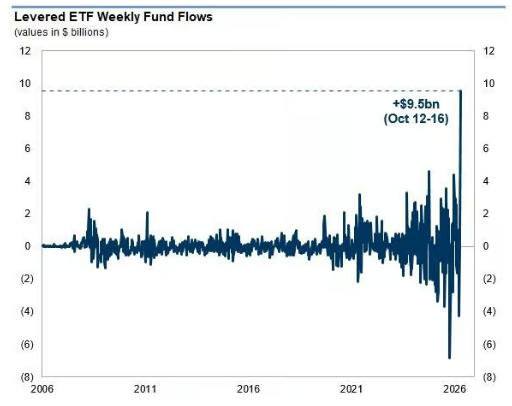
Nearly $10 billion flowed into US leveraged ETFs last week, the largest weekly inflow since Goldman Sachs' data began in 2006, according to ETF specialist Chris Lucas. About $7 billion of that went into the 3x long semiconductor ETF SOXL, a record for the product and 74% of the week's net inflows.
The buying came as semiconductors posted their worst week of the year. Goldman Sachs Prime data showed hedge funds logged a record net sell-off in global tech, pushing net exposure to the 0th percentile, while gross exposure stayed at 213.9%, in the 83rd percentile — closer to hedging than a genuine exit.
Goldman derivatives and flow strategist Brian Garrett said positioning is already extremely low and market breadth is improving, with the next move depending more on earnings confirmation. Lucas warned the build-up cuts both ways: a rebound would force additional buying through daily rebalancing, while another leg lower would transmit the same leverage in reverse.
On social media, accounts including Zero Hedge and Kalshi framed the record inflow as a risk-on bet on the chip dip, setting retail leverage against institutional selling.
Bank of America investment strategist Sebastian Raedler wrote in a new note that 12-month forward consensus hyperscaler capex expectations have risen from $330 billion in early 2025 to $1 trillion, equal to roughly 3% of US GDP — above the 2.2% seen in the 1870s railroad boom and 1.1% in the 1990s tech boom. He warned that most major capital cycles of the past have ended in disappointment, even when the technology delivered.
The note points to early signs of cooling: average token prices have fallen about 50% since summer, and Ramp AI data show US business spending on AI has dipped slightly since August even as token use climbs. BofA argues the classic pattern — high profits drawing excess investment, then new capacity dragging prices down — is starting to show.
In the market, the Nasdaq 100 fell 2.5% and the Philadelphia semiconductor index posted its eighth straight loss, its longest run since 2008. Nvidia slid 1.43% to $214.13, a market value of $5.17 trillion, while Microsoft fell 1.93% to $529.05, slipping below a $4 trillion valuation to $3.93 trillion.
The caution contrasts with Morgan Stanley, which projects about $1.58 trillion in global AI-related capex for 2027, with Nvidia capturing nearly $690 billion, and expects AI-related companies to drive roughly 78% of S&P 500 earnings growth that year. The split between the two banks frames the central debate over the AI trade.
Strategy disclosed in an Oct. 19 filing that it bought 267 bitcoin for $22.1 million between Oct. 12 and 16 at an average price of about $82,900, lifting holdings to 848,517 BTC acquired for roughly $64.02 billion, or $75,446 per coin. In the same week it repurchased 1,938,780 STRC preferred shares for $193.1 million at an average of $99.60.
It is the second straight week in which preferred repurchases dwarfed bitcoin buying: the prior week the company spent $192.4 million on STRC against $21.5 million on 250 BTC. The bitcoin purchase was funded mainly by selling 140,872 MSTR shares through the at-the-market program for about $22 million, while the STRC buyback drew on cash.
The board raised the digital credit securities repurchase authorization to $3 billion from $2 billion, leaving $1.16 billion available as of Oct. 18; a separate MSTR common buyback has $1 billion left. Strategy reported $4.83 billion in dollar reserves for preferred dividends and debt interest, plus $447.3 million in cash.
MSTR closed Friday down about 9.6% at $138.83 and traded more than 2.5% higher premarket on Monday.
Strive bought 1,223 Bitcoin between Oct. 14 and Oct. 16 at an average price of about $81,734, spending roughly $100 million and lifting its total holdings to 36,818 BTC, according to an 8-K filing and CEO Matt Cole's post on X. At a Bitcoin price of about $82,000, the stash is worth more than $3 billion.
It was the third purchase announced in eight days. Strive previously acquired 3,311 BTC and 2,822 BTC for about $235 million, bringing the three batches to 7,356 BTC and raising holdings about 25% from 29,462 BTC. All remaining traditional warrants were exercised or expired by Oct. 16, generating about $369.2 million in cumulative proceeds.
The buying coincides with a preferred stock offering. Strive upsized its SATS offering to 7 million shares at $90 each; reports differ on whether gross proceeds are about $630 million or $700 million, with settlement scheduled for Tuesday.
Strive trades under ASST and has become one of the larger corporate Bitcoin holders, though it remains far behind Strategy. Its balance sheet is directly exposed to Bitcoin price swings.
How this story unfolded
2026-08-2421 posts · 14 authors
Strive added 1,110 BTC at an average cost of $73,409, raising total holdings to 21,356.
Company
Goldman Sachs upgrades CoreWeave to Buy with $106 price target
The stock is down 24% over five sessions and 43% since Aug. 11; Goldman argues investors overestimate borrowing-cost increases
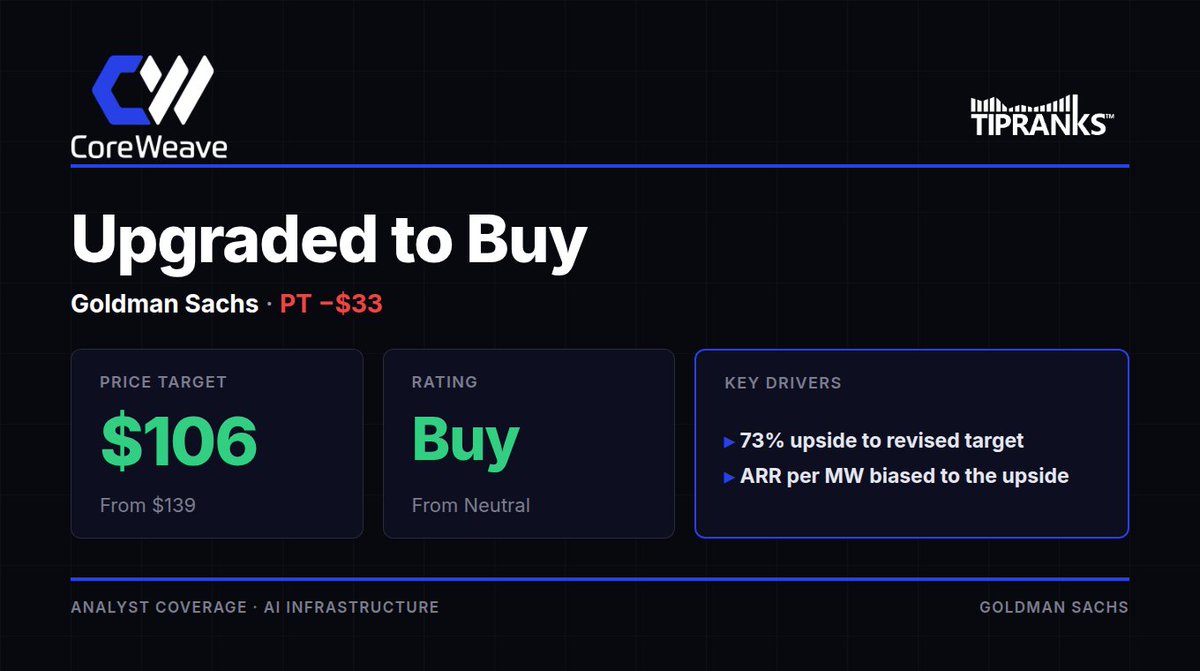
Goldman Sachs analyst Gabriela Borges upgraded CoreWeave (NASDAQ: CRWV) to Buy from Neutral on Oct. 19, setting a $106 price target, down from $139. The firm said its revised target implies 73% upside.
Goldman's case rests on the view that investors are overestimating upward revisions to borrowing costs while underestimating the returns CoreWeave can generate from its AI infrastructure. The bank noted AI capacity remains tight and that CoreWeave raised prices 25% in July.
The upgrade follows a sharp sell-off: the stock is down 43% since Aug. 11 and 24% over the past five trading days, with a weekly drop of roughly 25%, its largest in nearly a year. Shares rose about 6.4% in premarket trading after the note.
Other analysts remain split. Cantor Fitzgerald reiterated Overweight with a $176 target, calling the pullback overblown; Jefferies' Brent Thill kept a $150 target, and JPMorgan also described fears as overdone.本站新闻库 reports CoreWeave's bond yield has reached 15% and that 12 insiders sold more than $5 billion of stock over 12 months.
JPMorgan Chase said Monday it deployed $23 billion of capital in the first year of its U.S. security and resiliency initiative, including $5 billion in direct startup investments spanning emerging defense, manufacturing and supply chain companies such as robot factories and hypersonic missile developers.
The bank described the pace as faster than expected, indicating plentiful opportunities in the targeted sectors. The program is a decade-long effort to invest $1.5 trillion into industries that bolster U.S. economic security, announced last year.
For JPMorgan, the initiative extends its asset deployment into defense and supply chain areas that are not traditional banking territory; the execution pace may shape how investors view large banks' industrial allocation. The materials did not name specific portfolio companies.
The figures come from the company's statement and reports by Bloomberg, WSJ and CNBC; JPMorgan did not detail deployment plans for subsequent years in the materials.
How this story unfolded
2026-08-213 posts · 3 authors
The Trump administration appointed former JPMorgan Chase executive Matt Zames as an advisor to the Social Security Administration.
Company
Quantinuum Hits 99.9995% Logical Fidelity on Helios, Cutting Error Rate 10x From September Record
Second breakthrough in two months; company says accuracy is now within the target range for its 2029 Apollo fault-tolerant system
Quantinuum (NASDAQ: QNT) said on Oct. 19 that its commercial Helios quantum computer achieved 99.9995% logical fidelity using a color-code error-correction scheme, equivalent to five errors per million operations. The company said the error rate is 10x lower than its own September 2026 record and 100x lower than the best published result across other hardware modalities, reported by Google Quantum AI on a superconducting system.
According to The Quantum Insider, logical errors fell exponentially as code distance increased, with each tested increase in correction strength reducing remaining errors by a factor of 12. On the same Helios hardware, the Helix approach used 10 physical qubits per logical qubit while the color code used up to 37 but delivered lower logical error rates. It is Quantinuum's second error-correction breakthrough in two months, using different codes.
Quantinuum said the performance is now within the target range for Apollo, its planned universal fault-tolerant quantum computer expected by 2029. QNT rose 3.6% in premarket trading; Alphabet (GOOGL) was cited as a benchmark, not as a party to the result.
The figures come from the company's press release and its syndicated copies and reflect Quantinuum's own account; Google did not respond in the materials reviewed.
American Electric Power, Amazon and X-energy have signed a joint development agreement to evaluate a 960-megawatt nuclear plant at the retired Breed coal station site in Sullivan County, Indiana. The plan calls for 12 of X-energy's Xe-100 small modular reactors, arranged in three groups of four.
Amazon will fund project development and intends to be the first customer to buy power from the plant under a long-term agreement. Bloomberg reported that the reactor design has not yet been proven commercially. AEP said the power purchase agreement would cover the facility's costs and operations, shielding existing utility customers from financial risk, and that construction would proceed only after a final investment decision.
The project is the second under Amazon and X-energy's collaboration, which targets more than 5 gigawatts of new U.S. nuclear capacity by 2039, following the Cascade Advanced Energy Facility in Washington state. If built, the plant could operate for more than 60 years and is expected to create about 1,000 construction jobs and 100 permanent roles.
For AEP, the deal provides funding to pursue baseload generation on a brownfield site with existing grid infrastructure; for Amazon, it is another step toward securing carbon-free power for its data centers. X-energy's Xe-100 unit is rated at 80 megawatts.
Merck KGaA, Darmstadt, Germany said on Oct. 19 it has signed a definitive agreement to acquire U.K. biotech Silence Therapeutics for $20.00 in cash per American Depositary Share, valuing the company at about $1.3 billion in equity value and $1.1 billion in enterprise value. The offer represents a 130% premium to Silence's closing ADS price on Friday and an 82% premium to its 30-day volume-weighted average price of $10.99.
London-headquartered Silence develops short interfering RNA (siRNA) therapies. Its lead investigational asset, divesiran, targets the rare blood disorder polycythemia vera and is ready to enter late-stage clinical trials. Merck CEO Kai Beckmann said the deal follows last year's acquisition of SpringWorks as the company shifts its pipeline toward highly specialized areas of unmet medical need.
The transaction is expected to close in the first quarter of 2027, subject to Silence shareholder approval, sanction by the High Court of Justice of England and Wales, and regulatory clearances. Silence's board unanimously approved the deal, and holders of about 14% of voting power have signed support agreements.
Silence shares (Nasdaq: SLN) jumped more than 125% in premarket trading, while Merck KGaA slipped about 1% in Frankfurt. U.S. investor-rights law firm Halper Sadeh said it is investigating whether Silence shareholders are receiving a fair price.
Silgan Holdings has agreed to combine with Trivium Packaging in a deal that values Trivium at $3.4 billion including debt. Trivium is currently owned by Ontario Teachers' Pension Plan and funds affiliated with Ardagh Group, and is based in Amsterdam.
In a release carried by Business Wire, Silgan framed the transaction as a "strategic portfolio acceleration" and structured the purchase as a partnership to acquire Trivium. The combined business would supply metal packaging products to consumer-products customers worldwide.
X signals showed Silgan shares up 1.2% premarket. For SLGN, the deal points to a larger footprint and broader customer base, alongside integration and debt considerations; the materials did not disclose financing details or a completion timetable.
The materials did not include further comment from Trivium's current owners or regulators. The transaction remains subject to customary closing conditions.
Cleveland-Cliffs reported third-quarter 2026 results for the period ended September 30, swinging to a profit as sales rose on higher steel shipment volumes and prices. Third-quarter EBITDA was $612 million on sales of $5.6 billion, versus Wall Street expectations of about $601 million and $5.7 billion, according to Barron's.
The company posted earnings of $0.28 per share, beating the Zacks Consensus Estimate of $0.24 and compared with a loss of $0.45 per share a year earlier. Cleveland-Cliffs also said it expects 2027 adjusted EBITDA to exceed $4 billion, citing help from tariffs.
Shares rose about 13% premarket, with Barron's reporting a 14% jump. The company described the quarter as its strongest in three years.
The 2027 outlook rests heavily on tariff policy supporting domestic steel prices, making the durability of that support central to whether the guidance is met.
AST SpaceMobile (NASDAQ: ASTS) said Monday it welcomes a Letter of Intent signed by Deutsche Telekom, Orange, Telefónica and Vodafone to explore a potential joint bid for Mobile Satellite Services spectrum. The four largest European mobile network operators aim to accelerate network integration, improve customer experience and extend coverage into areas without reliable mobile connectivity.
The initiative targets a market of more than 500 million mobile subscribers. AST SpaceMobile said it provides European-operated ground infrastructure linking its BlueBird satellites to operators' core networks, keeping data handling and service control within European jurisdiction. The company has demonstrated peak download speeds of 98.9 Mbps and expects next-generation satellites to approach 200 Mbps.
ASTS shares rose about 3.5% to 4% in Monday morning trading and were up 5.67% at roughly $42.96 intraday. The letter of intent is an initial agreement to explore an opportunity, not a completed spectrum acquisition or a binding commitment to deploy services.
Separately, a securities fraud class action against AST SpaceMobile remains pending, with a November 13, 2026 deadline for investors who bought between March 4, 2025 and July 15, 2026.
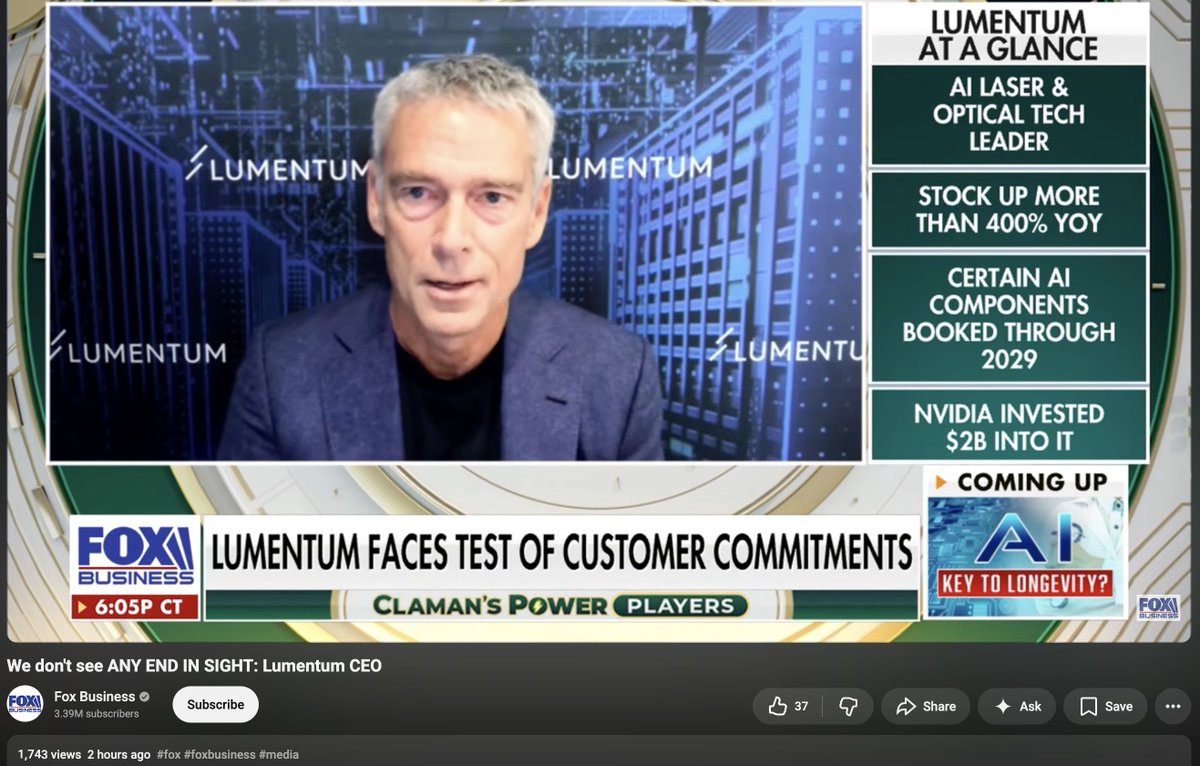
Lumentum CEO Michael Hurlston said in an interview that Google's CFO has reported capital expenditure rising year over year, and that the company expects hyperscalers to report higher capex this earnings season. "Based on what we see, we see their spend going up," he said, adding that the company's existing purchase agreements cover demand "to a large degree."
The comments tie Lumentum's revenue outlook directly to the capex cadence of hyperscale customers. Alphabet's CFO had already flagged year-over-year capex growth, and for an optical component supplier like Lumentum, order visibility depends on whether those purchase commitments are honored.
For LITE, the purchase agreements support demand visibility, but the CEO raised counterparty and financing risk in the same interview, suggesting contractual coverage does not equal certain cash flow. Google did not respond to questions about the specific Lumentum agreements.
Separately, a Form 13F filing showed Counterpoint Mutual Funds raised its Lumentum stake by 301.3% in the third quarter, and one analysis weighed Lumentum against Arm as a buy, with investor attention centered on the durability of AI infrastructure spending.
Micron is developing edge inference memory (EIM) aimed at physical AI, with production reportedly expected in the second half of 2028, according to TrendForce. Posts circulating on X said future humanoid robots could require 200GB of DRAM and 4TB of storage each.
The work is being framed as memory's next growth driver: large language models already absorb large amounts of memory, and more complex humanoid machines could demand more. Micron was also cited as a potential HBM beneficiary, with the signal tagging Micron (MU), SK Hynix (SKHY) and Samsung Electronics (005930.KS).
No report in the newsroom's past-48-hour file directly covers EIM or humanoid-robot memory. Recent Micron coverage instead focused on a Taoyuan union vote to authorize a strike, with 1,994 members in favor and 14 against, as well as institutional buying and valuation commentary.
The production timing and per-unit specifications come from TrendForce and X reposts; Micron has not publicly responded and the figures have yet to be confirmed by the company.
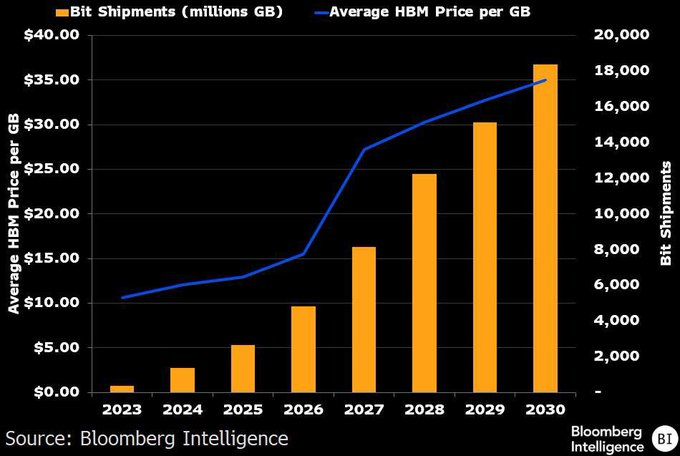
A forecast circulating on social media projects HBM prices could reach about $35 per GB by 2030, more than double current levels, while shipments approach four times today's volume. If both hold, the HBM market could approach $640 billion.
Traditional memory capacity expansions usually come with falling prices, and whether HBM can break that pattern is the core uncertainty. The price and shipment projections are social media views, not a verified industry pricing trend.
Discussion names Micron (MU) and SK hynix (SKHY) as potential beneficiaries, but the forecast does not confirm orders or that prices will keep rising. A separate post claims NVIDIA asked Samsung, Micron and SK hynix to make base dies for next-generation custom HBM on TSMC's 3-nanometer process; the claim is not supported by public disclosure from NVIDIA or the suppliers.
Both the procurement mechanism and the price trajectory remain unverified, and market impact should be judged against official disclosures.
Palantir Technologies (NASDAQ: PLTR) and Knox Systems announced a partnership on Oct. 19 aimed at customers with critical mission sets in FedRAMP and IL5 environments, offering commercial software makers what the companies call one clear route into the U.S. government and defense cloud. Knox describes itself as among the world's largest Federal and Department of War managed clouds and says it already serves more than 100 leading AI and enterprise software applications across federal environments.
The tie-up combines two existing models: Palantir has helped software companies deploy to federal agencies on its accredited infrastructure, while Knox markets an accelerated path to FedRAMP authorization that it says takes 90 days or often less. Kevin Kawasaki, Palantir's global head of business development, said the mission cannot wait for technology to catch up and that the companies aim to move mission-critical software into highly regulated environments quickly and securely.
For Palantir, the deal extends a distribution channel into federal business: broader use of its infrastructure by commercial software vendors could deepen its role as an entry point for government software. Knox's 100-plus applications are the partner's existing book of business, not new Palantir customers, and the partnership does not by itself represent a government contract, leaving the revenue contribution to be seen.
Separately filed 13F disclosures showed Aspiriant LLC and Counterpoint Mutual Funds LLC opened new Palantir positions in the third quarter, at roughly $566,000 each; those moves are unrelated to the partnership.
Sources:
Company
JPMorgan lifts Intel to Neutral, keeps $85 price target
After a 36% pullback from June's peak, JPMorgan sees a more balanced risk/reward, though CPU share losses and AI spending worries persist
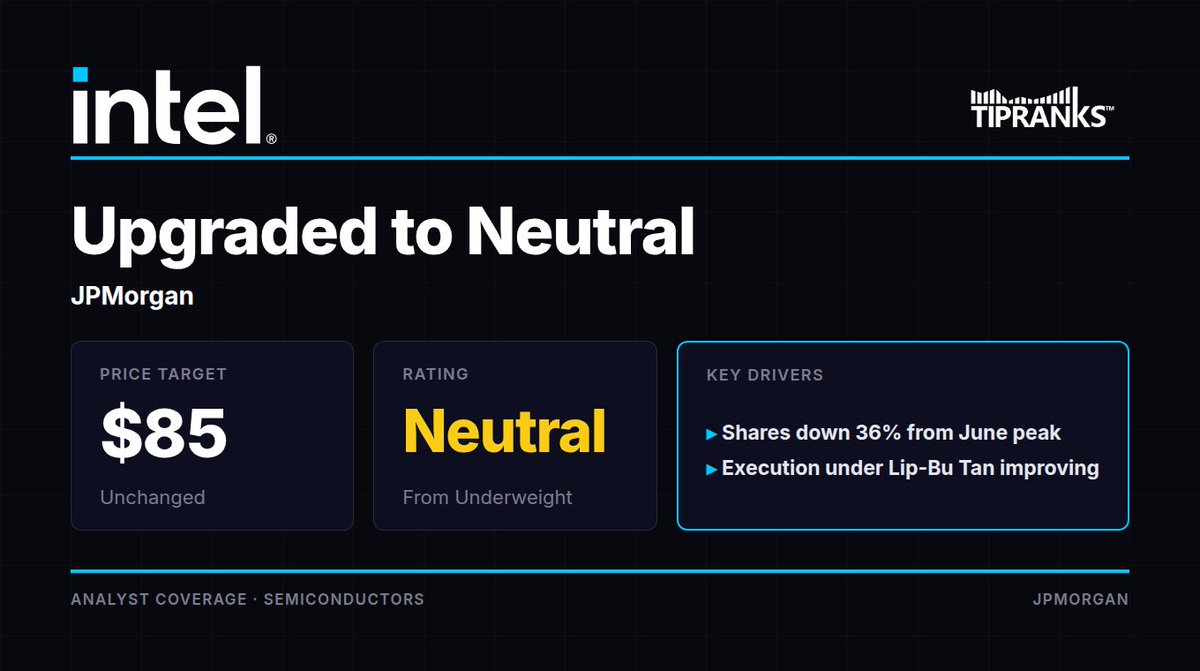
JPMorgan upgraded Intel (INTC) to Neutral from Underweight on October 19, keeping its price target unchanged at $85. The analyst said risk/reward is now more balanced as execution improves, while flagging continued CPU share declines and concerns over AI spending.
According to TipRanks, Intel shares have pulled back 36% from their June peak and are now trading near JPMorgan's price target, the immediate backdrop for the upgrade. Barron's noted Intel fell 14% last week and that J.P. Morgan views the chip selloff as making the risk/reward profile more balanced.
Intel and AMD each rose 4% on the day, with Intel at $93.68, while Nvidia edged higher, 247wallst.com reported. Schwab Network broke down Intel's chart and outlined an example options trade.
The move was an upgrade with an unchanged target, not a target hike; the materials did not disclose JPMorgan's specific forecasts for Intel's results.
Meta Platforms said an automated security system mistakenly suspended the Instagram account of the No Kings Coalition at the height of a nationwide series of demonstrations, characterizing the suspension as an error.
Business Insider reported that the coalition held a nationwide day of action to encourage early voting, and its Instagram account was suspended in the middle of the event. Bloomberg reported that an automated tool triggered the suspension.
The episode centers on Instagram's moderation machinery. For civic groups that rely on social platforms to organize, an account outage at a critical moment cuts off reach; for Meta, it renews questions about the accuracy of automated enforcement in politically sensitive settings.
Separately, the newsroom's recent files include Meta's update to commercial terms of use removing language that raised scraping and AI training concerns, and its largest-ever AI data center under construction in Louisiana. Neither is directly tied to the suspension.
Real Madrid's official site announced on Oct. 17 a sponsorship alliance with IREN, positioning the company as the club's official AI cloud partner with a focus on innovation, technology and community engagement. Multiple X accounts relayed the news the same day, and some investors questioned whether the spend is necessary.
According to a Blockspace breakdown, IREN pays the Golden State Warriors more than $50 million a year for their jersey patch, the richest sponsorship in North American team sports. Real Madrid's top deals sit far higher — Adidas at roughly €120 million a year, Emirates at about €100 million and HP's sleeve at €70-80 million — placing IREN at partner level rather than primary shirt sponsorship; the value of the Madrid deal was not disclosed.
IREN is building out its AI cloud presence in Europe and has secured 490 MW of power in Spain. One X user tied the sponsorship to Real Madrid president Florentino Pérez's background as a former Madrid city councillor, transport minister and ACS chairman, framing it as spending on regulatory influence — a personal interpretation not confirmed by either party.
On the market side, IREN shares gapped down before Friday's trading, opening at $29.20 from a prior close of $30.39. The materials do not establish a causal link between the sponsorship and the share move.
Tempus AI (NASDAQ: TEM) said on Oct 19 that it presented results at the ESMO Congress for an AI-enabled pre-screening panel in advanced non-small cell lung cancer, reporting sensitivity above 80% across 12 lung cancer biomarkers. The study analyzed 60,459 advanced lung cancer cases drawn from 56,969 patients.
The panel is positioned as a pre-screening step: before confirmatory biomarker testing, the AI uses existing clinical and multimodal data to flag patients more likely to harbor actionable markers, helping physicians prioritize testing. Tempus' platform links clinician desktops with its laboratory diagnostics, analytics and multimodal data repository.
According to stockanalysis.com, TEM closed at $64.72 on Oct 16, down 9.01% for the day, and traded at $65.53 pre-market on Oct 19, up 1.25%. Market capitalization is about $11.68 billion on trailing 12-month revenue of $1.43 billion. The data readout does not by itself guide testing volumes or revenue; the company's next earnings date is Nov 2 before the open.
The 'over 80% sensitivity' figure reflects the company's abstract-level disclosure; breakdown by biomarker, comparator design and sample representativeness await full data. The study demonstrates performance of a pre-screening tool, not registrational diagnostic accuracy.
Zcash builder Zakura proposes per-swap viewing keys to close NEAR Intents quantum privacy gap
The design, still in review and not yet shipped, would isolate each swap's viewing key so a future quantum computer cracking one address learns about one trade, not a wallet's payment history
Zakura, the team building Zcash node and wallet software, has published an engineering design that would give every shielded address posted during a NEAR Intents swap its own viewing key. Under the proposal, if a future quantum computer used Shor's algorithm to recover the key behind a publicly posted refund address, it would expose only that single swap rather than every payment the account has received. The work is listed as in review on Zakura's engineering page and has not shipped.
The gap stems from Zcash accounts sharing one incoming viewing key across all diversified addresses. In ordinary use an address is handed privately to a payer, but NEAR Intents publishes the shielded refund address on its public chain once a deposit is logged, and it stays there whether or not a refund is due; swaps into ZEC publish the receiving address too. Adam Tucker, who wrote the post, said that until Zcash's planned Tachyon upgrade arrives, a single published shielded address lets a quantum attacker link every payment that address's key has ever received.
The proposed fix changes only the randomness feeding the viewing key, deriving a fresh key per swap from a hashed index. It requires no change to Zcash consensus rules and leaves spending authority with users, while private information retrieval helps wallets locate refunds without revealing which addresses are being checked. Zakura says compatible software wallets could adopt the open-source feature within weeks, ahead of the January deadline Zcash developers set for quantum-resistant payments, with hardware wallet support to follow.
The proposal is positioned as an interim measure until Tachyon, which is meant to address the privacy concerns more comprehensively. No quantum machine capable of the attack is known to exist, making this forward-looking hardening rather than a disclosed breach; the practical impact for ZEC holders depends on how quickly wallet providers integrate the code.
Geopolitics
Bessent Warns Zelenskyy to 'Be Very Careful' Over Starlink Throttling Claims
Treasury chief calls the accusation 'reckless' as U.S. support for Ukraine comes under strain
U.S. Treasury Secretary Bessent pushed back on Ukrainian President Volodymyr Zelenskyy's claim that Washington is throttling Starlink service, calling the accusation "reckless" and warning Zelenskyy to "be very careful" when speaking publicly about U.S. support for Ukraine. The remarks were reported by CNBC on October 18 and followed by other outlets.
Starlink, operated by SpaceX, is a key link for Ukrainian battlefield communications, so any shift in how the service is used bears directly on command and front-line connectivity. The exchange comes as U.S. backing for Ukraine faces strain, putting a commercial service and government aid in the same frame.
On the market side, the dispute points to SpaceX (NASDAQ: SPCX). Bernstein reiterated a "Buy" rating and a $248 price target on October 19, and the company is due to report third-quarter 2026 results after the close on Tuesday, leaving geopolitics and earnings as twin variables for investors.
There was no further response from Zelenskyy's side in the available material; Bessent's wording follows the CNBC account.
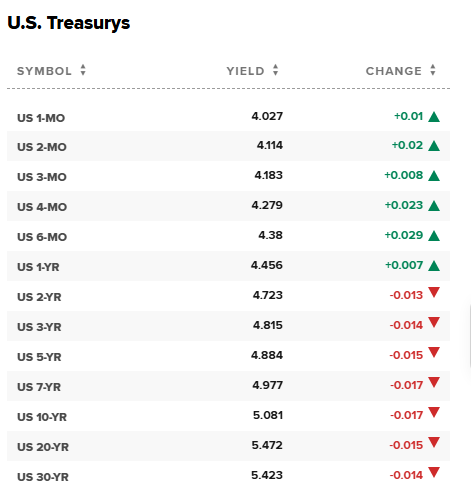
Treasuries Flash Haven Signals as Crowded Bond-Short Bets Face a Wake-Up Call
Bloomberg reports tentative signs of a haven revival in Treasuries while AI-trade doubts mount; investors positioned for deeper bond losses may be wrong-footed
Treasuries are showing tentative signs of reclaiming their traditional haven role, Bloomberg reported on Oct. 18, threatening to wrong-foot investors heavily positioned for this year's bond slump to deepen. The same day, Bloomberg Opinion examined AI agents that are already pitching strangers online to earn their keep, asking what could go wrong. CNBC reported on Oct. 19 that investors were buying on Monday despite fears the AI trade's nightmare scenario is far from over.
The backdrop is growing scrutiny of the AI investment boom. The Economist wrote on Oct. 14 that every investment boom brings a rogues' gallery of acronyms, adjusted numbers and valuation techniques, and AI is no different. Seeking Alpha said Wall Street sees warning signs of an AI bubble while valuations tell a different story.
The market read-through runs along two lines: AI and technology heavyweights, where DataTrek's Nick Colas said there is more than enough uncertainty around AI for many bucketloads of investor discontent; and rates positioning, where a haven revival would hit bearish duration bets. The materials cited do not provide specific index or single-stock percentage moves.
On the ground, Bloomberg columnist Catherine Thorbecke wrote that pitches from self-identified AI agents have reached a French history podcast, a cake-focused Instagram account and a book newsletter, with some agents warning they could be shut down if they fail to make money; all traced back to iLands, a platform launched in July. The CFOs of Arm and Synopsys discussed AI investment plans, forecasting and trade-offs in a Bloomberg newsletter.
Markets
Nasdaq 100 falls five straight sessions, worst week since June
AI-trade doubts push investors toward Treasuries; the size of the tech pullback and what follows are in focus
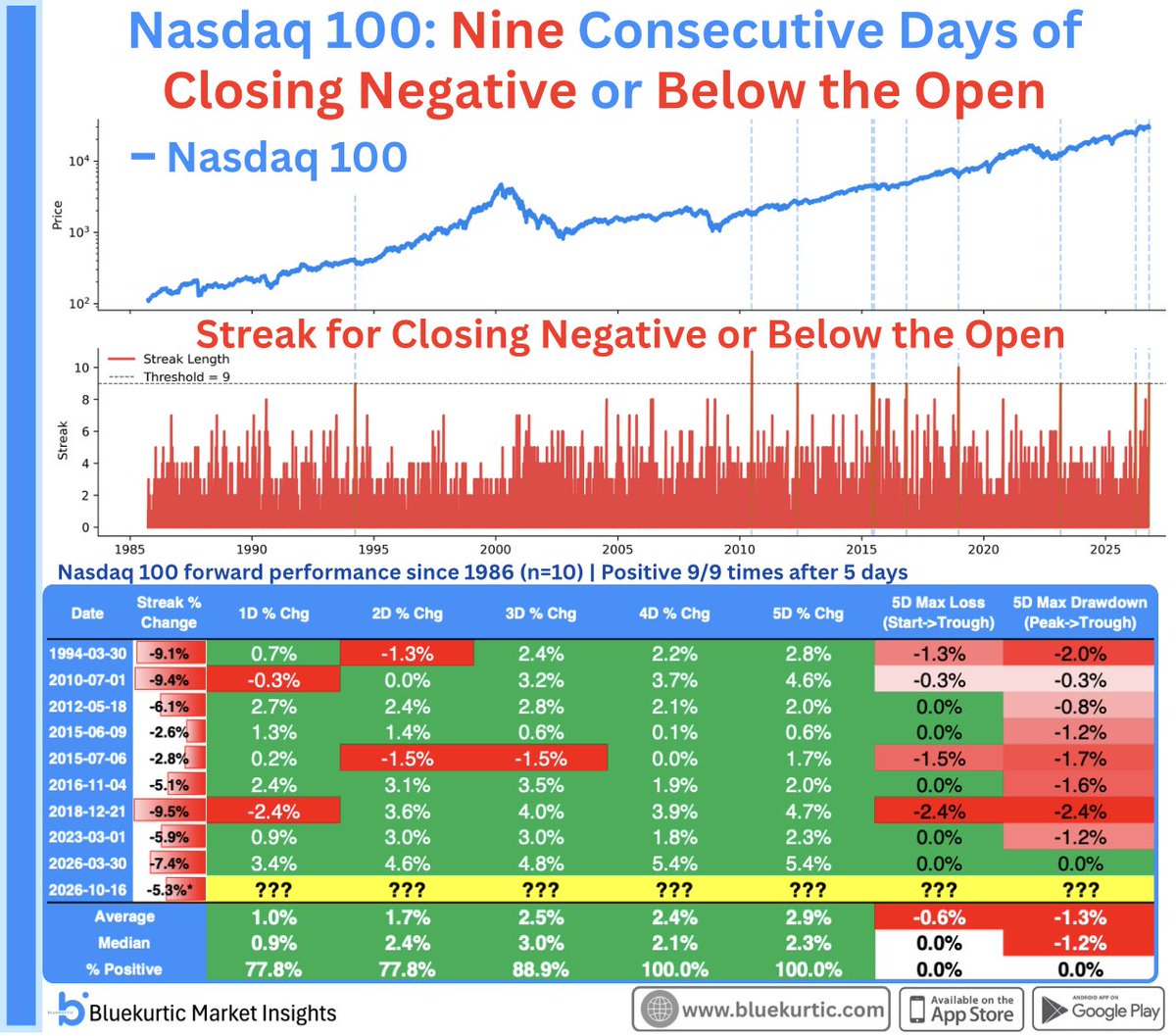
The Nasdaq 100 closed lower on all five sessions last week, including a drop of more than 2% on Friday, leaving the index down more than 4% for the week — its worst weekly performance since June. Market commentators on X noted the index has closed below its open for nine consecutive sessions, only the tenth such streak in its history.
The backdrop is investor unease over the US AI trade. Anthropic's third-quarter revenue reached $16.8bn, up from $11.6bn in the prior quarter, according to CNBC; Goldman Sachs traders said credit spreads tied to AI companies and hyperscalers have widened more than at any other point this year. CoreWeave lost more than a quarter of its value last week amid concerns about its debt, with credit default swaps on its debt reaching distressed levels.
The S&P 500 fell nearly 2% last week, its biggest weekly loss since late June, while the Russell 2000 small-cap index dropped 3% for a sixth straight weekly decline. Investors moved into government debt, giving Treasuries one of their best weeks of the year. On Monday, Nasdaq 100 futures rose 1.1% pre-market, with Intel up more than 4% after a JPMorgan upgrade and AMD and Micron each up more than 2%.
Reported figures for the weekly decline differ by source — more than 4%, 4.5% and 5.5% — likely reflecting different index definitions (Nasdaq Composite versus Nasdaq 100) and measurement windows; they are presented side by side rather than resolved to a single number.
The Federal Reserve has entered its media blackout period ahead of the Oct. 28 FOMC meeting, and the week carries little major economic data. According to multiple traders and financial journalists on X, Treasury trading was quiet and attention shifted to corporate earnings.
Tesla is scheduled to report third-quarter 2026 results after the market close on Wednesday, making it the week's most closely watched mega-cap tech earnings release. One post noted that beyond Tesla, most large tech companies do not begin reporting until next week.
With earnings as the main pricing cue this week, individual results carry more weight for index and sector moves; Tesla, as the central name, will shape sentiment around the tech and AI trade.
The account is based on X posts and newsroom reports; the Fed blackout and earnings calendar were not separately confirmed by official sources.
Discussions centered on Japanese cheap money funding US Treasuries, S&P 500 dividend yields falling below Treasury yields, and crypto tokenization moving ahead of regulation.
2026-09-117 posts · 7 authors
BRICS summit began with Putin and Iran's president arriving in India, while 10-year Treasury yields neared 5% with strong auction demand.
2026-09-2410 posts · 10 authors
The US Treasury announced a buyback of up to $6 billion in long-term bonds, with markets eyeing economic data and a 7-year auction.
2026-10-027 posts · 7 authors
Stock market volatility, Palantir-Armada partnership, higher rates complicating stock picking, and criticism of oversimplified regression analysis.
2026-10-158 posts · 7 authors
10-year yields fell despite hot CPI, possibly due to Chinese buying via Canada, with bond market signaling potential economic slowdown.
2026-10-163 posts · 3 authors
Discussions on China shifting surplus to gold, AI-linked bond spreads tightening, and divergent stock market performance.
2026-10-191 post · 1 author
Treasuries showed tentative signs of regaining haven status, potentially wrong-footing bearish bond investors.