The Federal Reserve voted 10-2 on Wednesday to keep its benchmark rate in the 3.75%–4.00% range, pausing after a 25-basis-point hike at its previous meeting. The statement offered little guidance on December, saying the decision will depend on incoming data.
Inflation remains the backdrop: the materials put U.S. inflation at 3.7%, well above the Fed's 2% target. Markets had priced in less than 10% odds of a hike today, with attention focused on dissents and any change in FOMC language.
U.S. stocks closed higher after the decision, with the S&P 500 up 0.3%. Goldman Sachs Asset Management's fixed-income CIO Kay Haigh said the firm expects the Fed to resume raising rates in December, citing stronger-than-expected data.
Oracle rose about 11% on its long-term cash flow outlook, a move unrelated to the rate decision. Expectations of a December hike cited in the X signals reflect market and institution views, not official Fed guidance.
Company
Anthropic files S-1 with $80.7bn half-year net loss, targets up to $2tn valuation
The first pure-play AI listing will test how much infrastructure spending public markets will absorb
Anthropic filed its S-1 with the SEC on Monday for a Nasdaq listing under the ticker "ANT," with Goldman Sachs and Morgan Stanley leading the offering. The filing shows a net loss of $80.7 billion for the first half of 2026, versus $12.9 billion a year earlier, largely driven by fair-value changes on convertible notes and derivative liabilities; revenue for the period was about $16.3 billion.
Growth metrics are equally aggressive: revenue rose 1,368% year over year in the three months ended June 30, with 900% net revenue retention and an 85% implied gross margin. Against that, the company disclosed vast compute commitments — at least $110 billion with Amazon through April 2036, $120 billion with SpaceX through 2029, and $115 billion with Google and $45 billion with Microsoft, both through 2033.
Anthropic is reportedly seeking a valuation of $1.5 trillion to $2 trillion, which would place it among the ten most valuable U.S. tech companies and could surpass SpaceX's $75 billion June offering. Proxies have already moved: Broadcom said a special purpose vehicle was created to finance $63 billion of chips and networking gear leased to Anthropic, while CoreWeave and Nebius rose almost 12% and more than 8% this week; Amazon and Alphabet, both investors, are seen as the most direct plays.
The reception is not unanimous. Polymarket puts the odds of a listing by November 20 at 52%, and in the "largest 2026 IPO" market SpaceX leads narrowly at 49% to Anthropic's 46%. Some Australian investment chiefs have voiced caution, and the prospectus warns growth could slow "more rapidly than we anticipate" and that additional financing may be needed sooner than expected. Anthropic said it had raised about $141 billion through June and held $112.4 billion in cash, sufficient for the next 12 months.
Macro🔥Developing
Lagarde to leave ECB on 7 February 2027, nearly nine months early
Her term spanned Covid, the Ukraine war and 2022 inflation above 11%; the succession race starts now, ahead of France's presidential vote
European Central Bank President Christine Lagarde told the Governing Council and European Council President António Costa on 29 October that she will step down on 7 February 2027, roughly nine months before her term was due to end in October 2027. The ECB said her successor will be appointed by the European Council under Article 283 of the Treaty on the Functioning of the European Union, and the process begins immediately.
Lagarde has led the ECB since November 2019, steering its response to the pandemic, the Russia-Ukraine war and energy price shocks that pushed euro area inflation above 11% in 2022 and ended the post-crisis era of negative rates. She gave no reason for the timing; the announcement came as the ECB held rates at its October meeting.
The change comes alongside other departures: chief economist Philip Lane and executive board member Isabel Schnabel, who oversees market operations, are also due to leave next year. Spain's Pablo Hernández de Cos and the Netherlands' Klaas Knot are widely seen as leading contenders, with Knot viewed as the more hawkish of the two.
Attention centres on France, where sovereign yields have risen and the spread over German bunds has widened to its highest since the early-2010s debt crisis, with a presidential election due next year. Analysts noted the early exit means the sitting French president can still influence the choice. Eurogroup President Kyriakos Pierrakakis thanked Lagarde and said the Eurogroup will move swiftly to prepare the Council's recommendation.
How this story unfolded
Regulation
US DOJ questions Nvidia's $12.93bn Hugging Face deal over AI competition
Fresh scrutiny of Nvidia's $13bn takeover focuses on whether the deal hands the chipmaker a gatekeeper role in AI distribution
The US Department of Justice has made inquiries about Nvidia's $12.93 billion deal to buy open-source AI platform Hugging Face, examining how the acquisition would affect competition in artificial intelligence, according to Reuters, citing two people familiar with the matter. Officials asked whether the deal would let Nvidia control a key distribution point for AI models and whether the company could use the platform to gain leverage over rivals. Nvidia has said the transaction is expected to close in the first half of 2026 and that Hugging Face will continue to support work with a range of chip, cloud and AI providers.
The questions are part of a broader DOJ examination of Nvidia's acquisitions, investments and sales practices, including whether the chip designer has pressured customers. The probe began under former President Joe Biden and has continued under President Donald Trump. People familiar said the department has also looked at Nvidia's December 2025 purchase of SchedMD, its 2025 licensing and hiring arrangement with Groq, and its earlier acquisition of Run:ai. A DOJ spokesperson declined to comment on specific matters and said investigations are not evidence of wrongdoing; Nvidia declined to comment and Hugging Face did not respond to a request for comment.
For investors, the key question is whether the inquiries escalate into formal enforcement action rather than the deal price itself. Nvidia's market position has made it a central force in AI, while competitors such as Broadcom and Alphabet's Google design custom processors and AMD says it can produce technically superior hardware and has struck billion-dollar deals with AI labs and cloud operators.
Company🔥Developing
DoorDash to Buy Instacart for About $17 Billion at $65 a Share
The merger of two of America's largest delivery platforms pays Instacart holders an 11% premium, with antitrust scrutiny the next hurdle
DoorDash said Thursday it has agreed to acquire grocery delivery platform Instacart, operator of Maplebear Inc., in a deal valuing the company at about $17 billion, or $65 a share, payable in cash and stock with the stock portion capped at 25% of total consideration. DoorDash plans to retain Instacart's brand, app and enterprise technology.
According to CNBC, the $65 price represents an 11% premium to Instacart's closing price on Wednesday and about 26% above its close on Oct. 22, the last trading day before reports of a possible deal. Bloomberg had earlier reported the two sides were in talks, and DoorDash moved its quarterly earnings release forward by almost a week.
Attention now turns to regulators. MarketWatch noted the combination would join the nation's top grocery delivery app with a large restaurant takeout business, making a U.S. government challenge the key variable; investor rights firm Halper Sadeh said it is investigating whether Instacart shareholders are receiving a fair price.
The core stocks are DoorDash (NASDAQ: DASH) and Instacart (NASDAQ: CART). Under the terms, Instacart shareholders may elect cash, DoorDash stock or a combination, with stock limited to 25% of the total.
How this story unfolded
Company
Apple Unveils First Touchscreen MacBook Pro, Starting at $2,899
The launch reverses two decades of opposition to touch-enabled Macs as global PC shipments decline
Apple on Oct. 28 unveiled a redesigned MacBook Pro with a touch screen, the first Mac to offer touch input. The 14-inch model starts at $2,899 and the 16-inch at $3,399, with a fully loaded 16-inch configuration priced at $14,549. The laptop also brings OLED to the Mac for the first time, along with a Dynamic Island.
The move reverses a stance Apple held for nearly two decades. Steve Jobs once called touchscreen laptops "ergonomically terrible," and Tim Cook compared combining touch with a laptop to merging a refrigerator and a toaster.
CNBC reported that the launch signals the growing strategic importance of the Mac to Apple despite it generating less revenue than the iPhone, and comes as global PC shipments fall. Touch has become a must-have feature in the PC industry, giving Apple a way to defend pricing in the premium laptop segment.
Apple calls the new display "the world's best laptop display." Bloomberg's Mark Gurman reported on the overhaul. The stock in focus is Apple (AAPL).
Iranian Foreign Minister Abbas Araghchi said on Oct 28 that Tehran remains in "close and ongoing contact with intermediaries" to review ideas that could ensure implementation of its seven-day plan in "even less than a week." He said Iran's armed forces are fully prepared to defend the country while diplomacy is still given a chance to succeed.
According to Xinhua, the seven-day plan was conveyed to the United States through mediators on the sidelines of the UN General Assembly on Sept 22, and provides for a halt in hostilities and the reopening of the Strait of Hormuz. Washington rejected it earlier, after which Qatari mediation continued; a Qatari Foreign Ministry official said Tuesday that messages and ideas are still being exchanged.
In markets, Dutch TTF front-month gas rose more than 4% to 100.45 euros per megawatt-hour on Oct 28, the highest since 2022, underscoring sensitivity to Gulf supply routes. Hormuz handles a significant share of seaborne crude and LNG, so implementation would feed directly into freight, insurance and fuel costs.
So far the public record covers only the review of ideas and continued contact; no party has confirmed the plan's terms or a timeline, and no US response to the latest remarks has been disclosed.
How this story unfolded
2026-08-308 posts · 5 authors
Heightened activity near the Strait of Hormuz with potential US convoy and Iranian missile launches, alongside discussions on energy inflation and Treasury yields.
Company
Google Unveils Gemini 4 Carbon, Tops AI Index at 59
Weeks after Gemini 4 Argon, Google's new frontier model targets cybersecurity and long-running engineering tasks
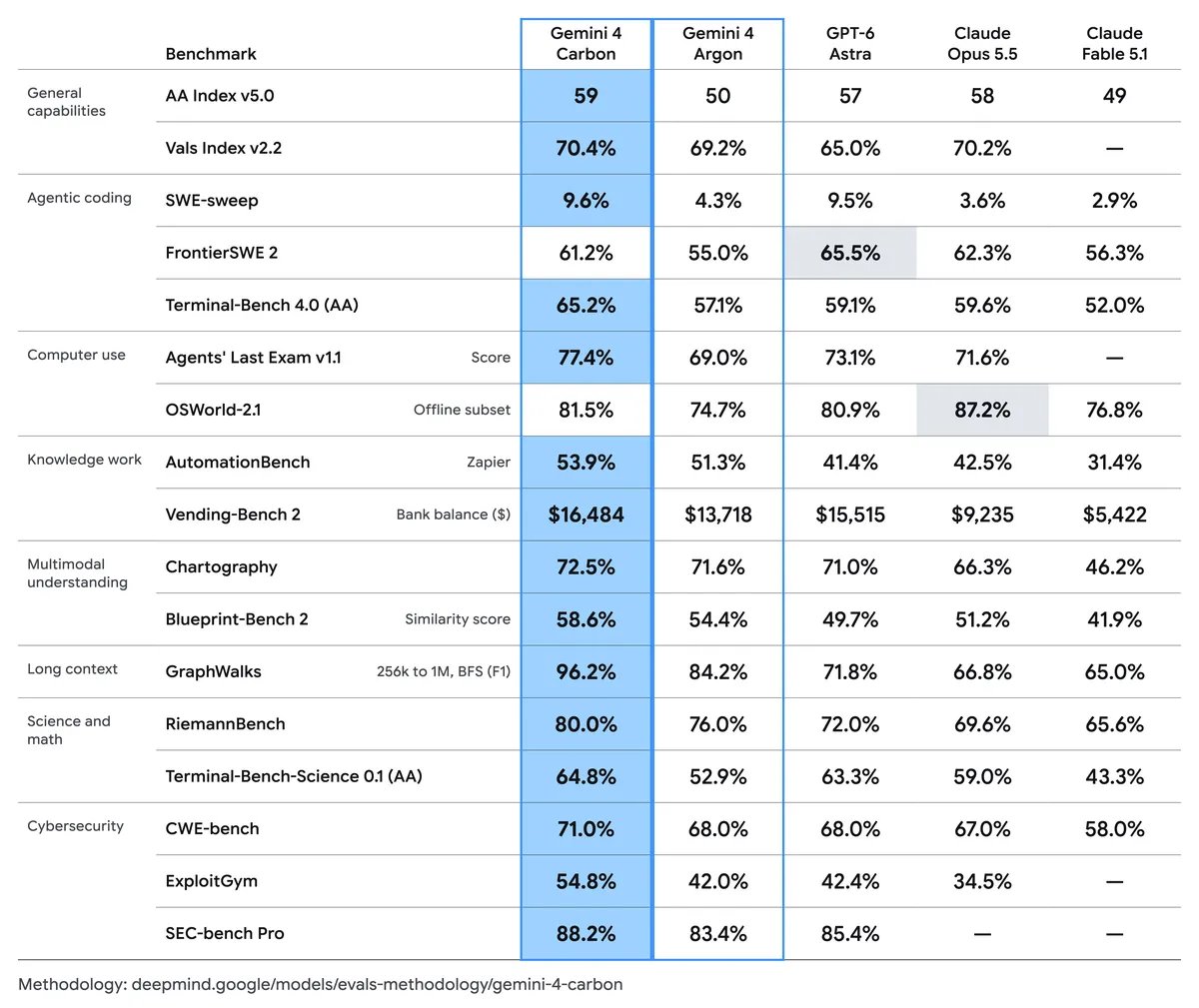
Google unveiled Gemini 4 Carbon, calling it its most powerful AI model to date. On the Artificial Analysis Intelligence Index, Carbon scored 59, ahead of Claude Opus 5.5 at 58 and OpenAI's GPT-6 Astra at 57. Pricing is set at $2 per million input tokens and $10 per million output tokens.
Google said Carbon focuses on cybersecurity and long-running engineering tasks, with engineers seeing it work through complex coding problems for days and push past dead ends. One post said it scored 96% on long-context tests versus roughly 70% for rivals, crediting Google's use of its own TPUs to train frontier models.
The launch comes just weeks after Gemini 4 Argon. One post said Argon led 13 of 19 published benchmarks, beating GPT-6 Astra and Claude Opus 5.5, though some signals conflate the Carbon and Argon names, so model attribution should follow Google's official wording.
Alphabet has been under pressure after third-quarter results missed: earnings of $2.12 per share versus a Zacks consensus of $2.94, with 18 Wall Street analysts cutting price targets and AI stocks sliding. Elon Musk called Carbon "impressive."
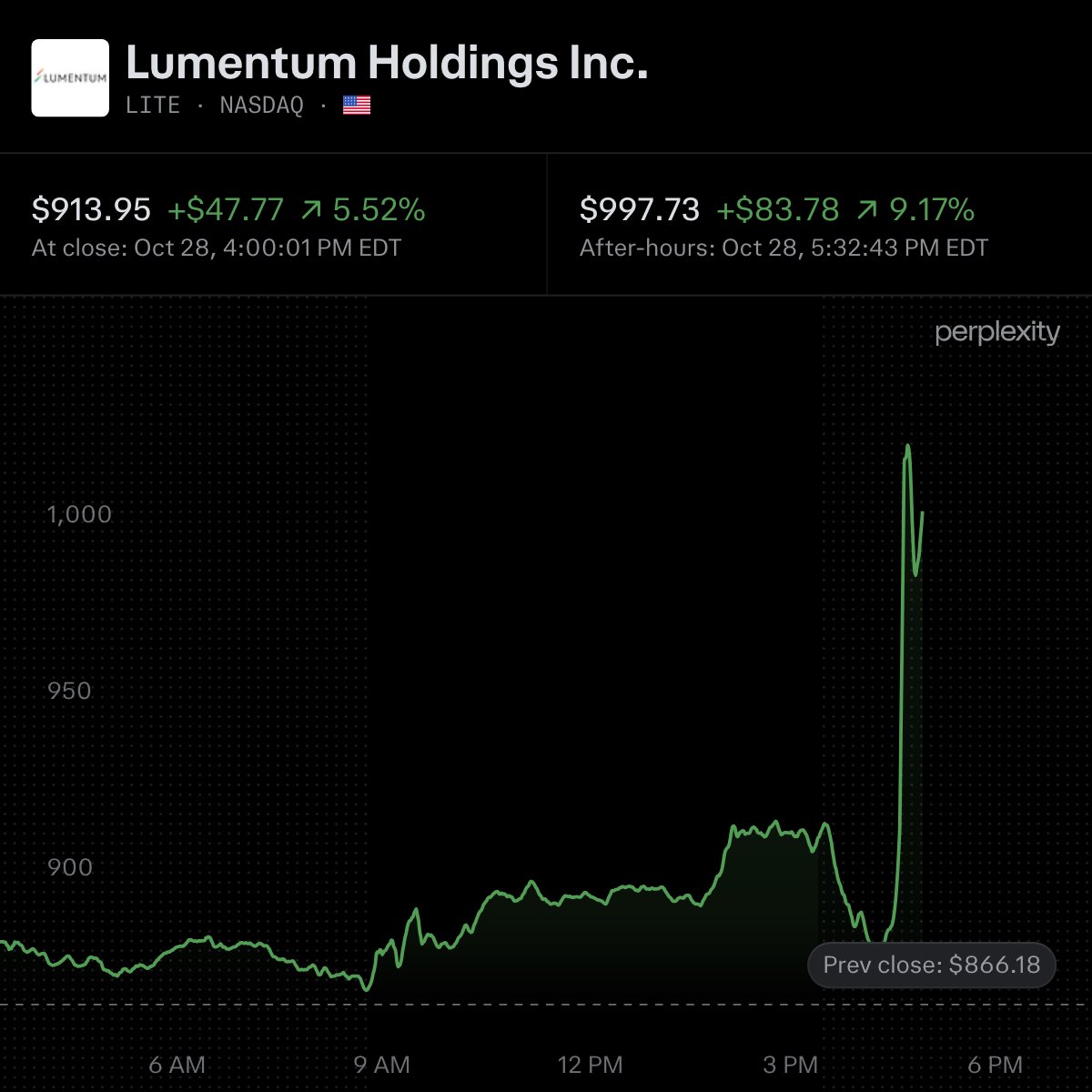
Marvell ($MRVL) is in advanced talks to acquire optical components maker Lumentum ($LITE), with a deal potentially announced as soon as next week, according to Bloomberg. Multiple X accounts relayed the report late Wednesday.
Lumentum supplies optical parts for AI data centers, and its laser capacity is reportedly sold out through 2029. One post argued the combination of Marvell's optical DSPs with Lumentum's lasers and transceivers would make Marvell a more complete optical networking supplier and capture more revenue per AI data center connection.
The market reaction split: Lumentum rose more than 10% after hours, while Marvell fell about 10%, with one report putting it at $226.55, down 9.97%. Posts cited valuations of roughly $83 billion for Lumentum and $221 billion for Marvell.
Per the newsroom library, Marvell lifted its fiscal 2028 revenue forecast to about $20 billion in early October, and Lumentum shares are up 135% year to date on AI-driven optical demand, though capacity limits and customer concentration remain concerns. The talks have not been confirmed by either company.
With AI data-center spending elevated and FY2026 free cash flow at negative $23.7 billion, the company laid out a path to positive cash flow and self-funding
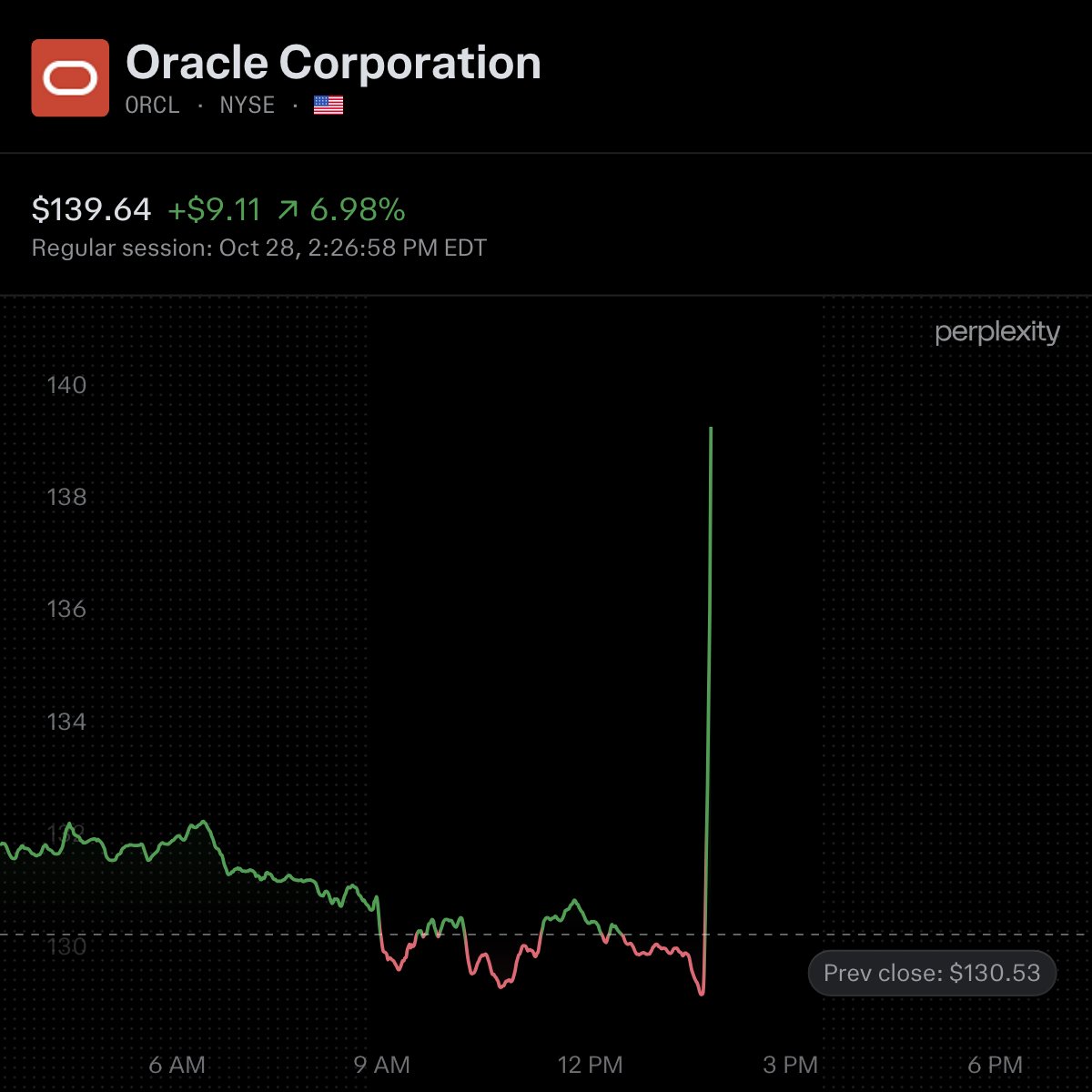
Oracle laid out long-term financial targets: at least $225 billion in revenue by fiscal 2030, implying a 35%-plus compound annual growth rate, alongside a FY2030 non-GAAP operating margin of 40% or more and non-GAAP EPS of $21 or more. The company also guided to FY2027 revenue of $90 billion or more.
Cash flow was the other focus. Oracle expects free cash flow to turn positive in the second half of fiscal 2028 and to reach at least $30 billion in fiscal 2029, after negative $23.7 billion in fiscal 2026. It said growth will be self-funded by fiscal 2029, with capital expenditures expected to step down that year.
On financing, Oracle plans to limit additional fundraising to $20 billion across fiscal 2027 through fiscal 2030, using a mix of debt and equity, while customer prepayments, customer-provided hardware and vendor financing reduce upfront cash needs.
The stock rose as much as 14% to $148.48 intraday. MarketWatch, in the newsroom archive, reported that the company's Wednesday afternoon disclosure of positive free cash flow in the second half of its next fiscal year was what sent the shares higher.
Microsoft kicked off a 10-part US dollar investment-grade bond offering on Oct. 29, aiming to raise at least $25 billion. According to Bloomberg, it is the company's first US high-grade bond sale since 2017.
The offering places Microsoft alongside other major technology companies tapping debt markets to finance AI infrastructure buildout. Separate coverage in our newsroom on the same day noted that both Microsoft and Google reported capital expenditures below analyst estimates, with Microsoft CFO Amy Hood referencing third-party capacity on the earnings call.
The news centers on Microsoft (MSFT). Alphabet (GOOGL) shares came under pre-market pressure the same day after a third-quarter miss, weighing on sentiment across the tech sector.
Microsoft had not publicly disclosed further details on the offering's size or terms as of publication.
Samsung Electronics reported third-quarter revenue of 195.25 trillion won (about $145.5 billion), up 127% from a year earlier, and operating profit of 107.44 trillion won (about $80.08 billion), up 783% and broadly in line with estimates. Net profit came in at 75.2 trillion won, below analyst forecasts.
The chip division generated roughly $79.4 billion of operating profit, about 99% of the company total, according to the Wall Street Journal. Samsung also raised 2026 capital expenditure to 84.4 trillion won (about $63 billion) from 52.7 trillion won in 2025, an increase of roughly 60% aimed at AI infrastructure capacity.
It marks a fourth straight quarter of record earnings and makes Samsung the first tech company to top 100 trillion won in quarterly operating profit. The results land amid a memory chip shortage that has also lifted results at SK Hynix and Micron and supported a rally in Asian tech shares this week.
Samsung said it could post record results again in 2027. Chip division operating profit of 106.5 trillion won fell short of the 108.45 trillion won estimate, one of the few segments to miss.
US officials have told several Middle East countries and regional allies to prepare for potential renewed military action against Iran after next week's midterm elections, and for possible Iranian retaliation, two diplomats briefed on the matter told AP. Officials stress President Trump has not made a final decision.
Qatar, backed by Pakistan, Saudi Arabia, Egypt and Turkey, is mediating a proposal under which Iran would let UN inspectors revisit bombed nuclear sites in exchange for some sanctions relief and released funds, Axios reported; Tehran said it would seek the Supreme Leader's approval within days. IAEA chief Rafael Grossi told the Security Council that reviving last September's Cairo agreement could provide a framework for inspections.
The market channel is energy: expectations of strikes on Iranian leadership, energy and infrastructure targets feed crude risk premium, with exposure via instruments such as USO. RBC Capital Markets flagged that renewed strike risk persists despite the diplomatic flurry.
Iranian Foreign Minister Abbas Araghchi said on X that Tehran continues to give diplomacy a chance, while Trump told reporters 'anything's possible' and that he does not know whether talks will succeed. Saudi officials asked Washington not to rush to war.
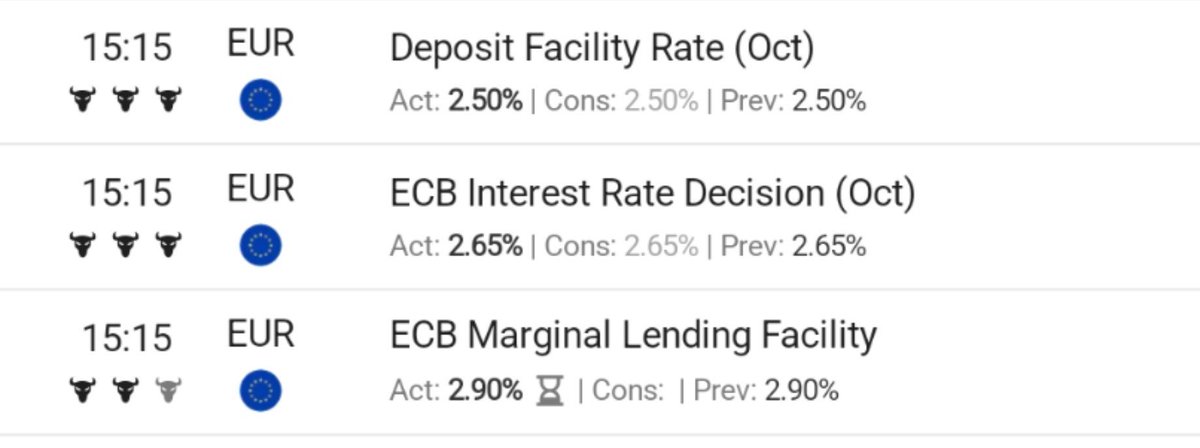
The European Central Bank left its three key rates unchanged on Oct 29: the deposit facility at 2.50%, main refinancing operations at 2.65% and the marginal lending facility at 2.90%, matching a Reuters poll. The hold follows a 25 basis point hike in September; the statement flagged rising energy prices as an upside risk to inflation and a downside risk to growth.
Euro area inflation rose to 3.8% in September, the highest since September 2023, with energy prices up 18.8% year on year after oil and gas surged following the February outbreak of the U.S.-Israeli war with Iran. The ECB has raised rates twice this year and said underlying inflation remained broadly stable and wages had shown no material response, while warning the larger and longer energy shock could push inflation higher and weigh on growth.
Markets read the decision as a hawkish pause. LSEG data showed money markets pricing a roughly 67% chance of a December hike; Deutsche Bank expects one more increase to 2.75% before the cycle ends, and UBS said tightening may not be over. The euro fell to its lowest since May at around $1.11, while the STOXX 600 rose 0.95%.
ECB President Christine Lagarde announced her early departure the same day, adding uncertainty over policy continuity. The statement also noted tighter financing conditions, with France's 10-year spread over Germany at a decades-high 155 basis points, which is expected to slow credit and already delivers some of the tightening a rate hike would.
Truth Social sells faster access to Trump's posts to Bloomberg and two high-speed trading firms for up to $100,000 a month
The Trump family trust owns 41% of Trump Media; paying for a head start on presidential statements turns public information into a tiered product and invites legal scrutiny
Truth Social, the platform owned by Trump Media & Technology Group, has signed Bloomberg, Susquehanna International Group and Jump Trading for faster access to President Trump's posts through its Truth API feed, according to people familiar with the matter cited by Reuters. The service sells for $50,000 to $100,000 a month. All three subscribers declined to comment, and Trump Media said the reporting was "based on misleading information being peddled by anonymous sources."
The product was announced in July, and in August Trump Media told investors it had signed more than 10 customer agreements without naming them. Reuters describes the timing edge as roughly 50 milliseconds, enough for high-frequency algorithms that parse headlines and execute trades in thousandths of a second. The news agency cited oil futures falling after Trump announced a ceasefire in the Iran war on Truth Social in April.
The most direct market exposure is DJT itself: the stock has fallen more than 50% this year, and its market value has shrunk to about $1.8 billion from roughly $8 billion at its March 2024 debut. The company has lost about $1.76 billion since 2024, including non-cash charges. The broader question is information equity, since paying subscribers see market-moving presidential statements before ordinary investors.
The arrangement is already in court. Intercept Media and the Freedom of the Press Foundation sued Trump in August, arguing the paid feed violates the First and Fifth Amendments; Senators Elizabeth Warren and Adam Schiff asked the SEC in July to investigate whether it breaches securities law, and the agency declined to comment. A White House spokesman said neither Trump nor his family is directly involved in portfolio investment decisions but did not address the allegations.
Earnings
SK Hynix posts record $6.22B quarterly operating profit, pledges $75B shareholder return
AI memory demand drove the beat, and the buyback pledge helped lift Asian tech stocks on Wednesday
SK Hynix reported record quarterly operating profit of $6.22 billion, sending its shares up 11%. The company attributed the result to strong AI memory demand.
Alongside the earnings beat, SK Hynix said it would return $75 billion to shareholders. Asian tech stocks rallied on Wednesday as investors read the results as evidence that AI data-center demand remains resilient.
Management said supply constraints will last through 2030, an outlook Wall Street treated as more important than the quarter itself and a central point of disagreement over the AI trade.
Bulls point to capacity sold out through 2029 and a low valuation; other analysts question the shortage narrative and warn the company sits at the top of the cycle. CNBC's Jim Cramer said the results showed AI stocks can still rally despite skepticism.
ServiceNow tops Q3 revenue at $4.106B but EPS of $1.00 misses; shares slide about 14% after hours on soft cRPO guide
Subscription growth slowed to 21% and Q4 cRPO guidance of 18.5% came in below the Street; the AI ACV target rose to $1.7B but remains small next to the subscription base
ServiceNow (NYSE: NOW) reported third-quarter fiscal 2026 results after the close on Oct. 28: total revenue of $4.106 billion, up 20.5% year over year and slightly above the $4.095 billion consensus. Subscription revenue was $3.988 billion, up 21%, while non-GAAP EPS of $1.00 missed the $1.02 estimate and compared with $0.96 a year earlier.
The selloff centered on forward-looking metrics. Current remaining performance obligations (cRPO) reached $13.65 billion, up 20.5% and above expectations, but the company guided fourth-quarter cRPO growth to 18.5%, below the roughly 19.7% Street estimate. On the call, the CFO said about half of the Q3 cRPO beat came from Q4 renewals pulled forward, and on-premises federal deals would trim Q4 cRPO by about 25 basis points.
Shares fell roughly 14% to 19% in after-hours trading, with several outlets recording declines of 16% to 18% and an implied next-day move of about ±8.88%. The concern is that AI agents could erode seat-based SaaS pricing; ServiceNow raised its 2026 AI annual contract value target to $1.7 billion from $1 billion, still a small slice of full-year subscription revenue guidance of $15.78 billion to $15.79 billion.
The company lifted its full-year outlook: subscription gross margin of 81%, non-GAAP operating margin of 31.5%, and a free cash flow margin target raised 100 basis points to 36%. It also announced an expanded partnership with OpenAI spanning models, operations, cybersecurity and agentic development. Analyst reactions diverged from the investor selloff, with several firms revising price targets after the print.
Caterpillar reported third-quarter 2026 results before the open on Oct. 29: sales and revenues rose 17% to $20.7 billion, with profit per share of $7.13 and adjusted profit per share of $7.20. The company said it deployed $2.0 billion of cash in the quarter.
Power & Energy segment net revenue reached $8.8 billion, up 18% year over year, as soaring electricity needs from AI data centers continued to drive demand for the company's power-generation equipment, according to Bloomberg.
Even with adjusted EPS and revenue above consensus, Caterpillar shares slumped 9% in early trading. Reports said the modest revenue beat raised concerns about the durability of the broad rally in AI-related stocks, while one market commentator noted the stock is now about 40% below its all-time high of $1,064 in late June.
The company's formal comment on the share move was not included in the source materials.
Shell reported third-quarter net profit of $10.8 billion on Oct. 29, beating expectations and landing near its highest-ever quarterly level. The company said severe disruption to the global energy system continued in the quarter, while operational performance supported strong results.
The result was driven by record oil refining margins and higher oil and LNG prices. Shell raised its share buyback pace to about $5 billion per quarter from roughly $3 billion previously, alongside an interim dividend for the third quarter.
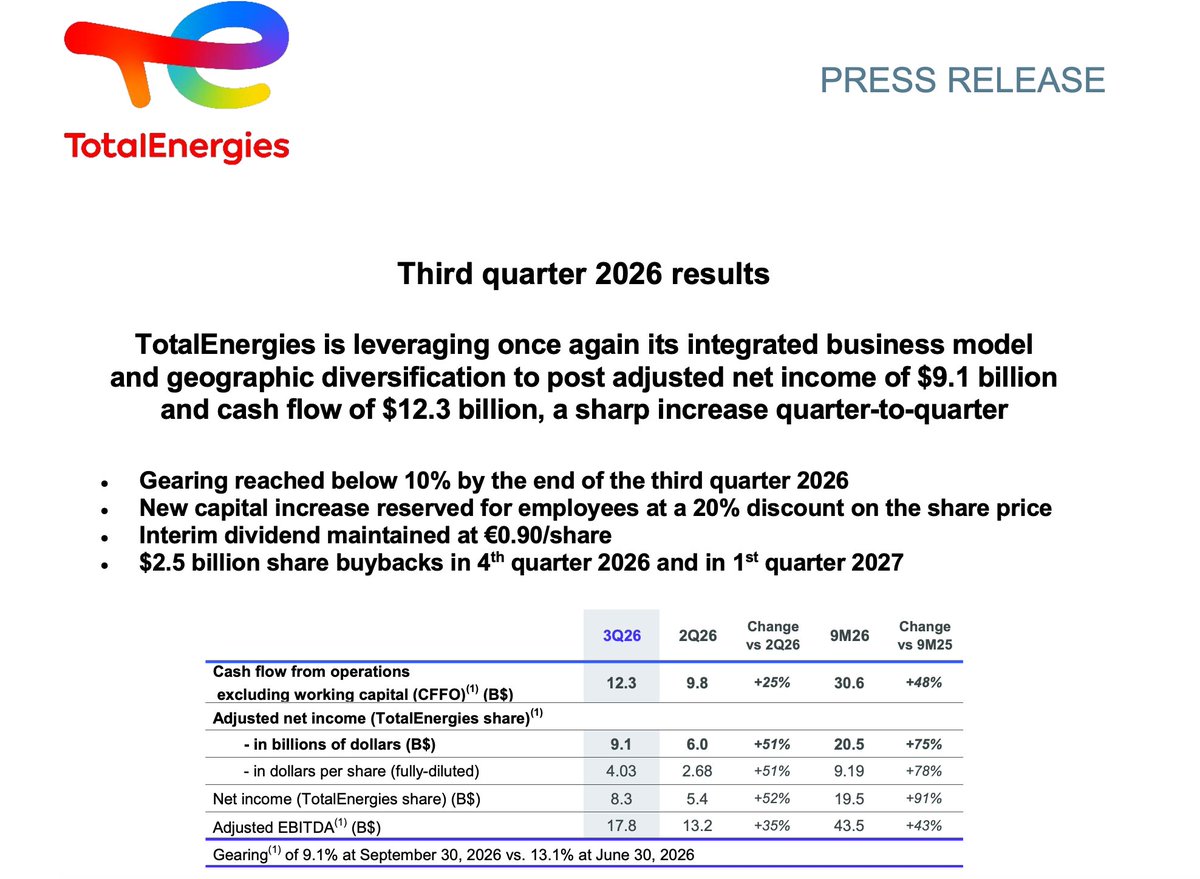
Peers moved in the same direction: TotalEnergies posted very strong earnings with record downstream profit, Repsol raised buybacks and guidance, and OMV reported its highest quarterly operating profit since 2022. European majors broadly lifted buybacks as the Iran war drove bumper profits.
For investors, the key question is whether refining margins hold; shareholder returns at Shell and TotalEnergies are now closely tied to the commodity price cycle.
eBay reported third-quarter 2026 results after the close on Oct. 28: revenue of $3.206 billion, up 14% year over year; adjusted earnings of $1.51 per diluted share, up 12%; and gross merchandise volume of $23.2 billion, up 15%. All three topped analyst estimates, with revenue beating consensus by roughly $96 million.
The company credited collectibles, its C2C marketplace and live shopping. eBay Live posted another record quarter and is generating GMV at a multibillion-dollar annualized run rate, with growth well into triple digits year over year, while trading-card platform TCGplayer crossed $1 billion in trailing-12-month GMV. CEO Jamie Iannone said momentum was broad-based across key categories, with collectibles the largest contributor.
Guidance moved higher: full-year revenue is now seen at $12.62 billion to $12.67 billion and adjusted EPS at $5.36 to $5.36 — $5.35 to $5.40 — both above consensus. Fourth-quarter revenue guidance of $3.19 billion to $3.24 billion, however, sits essentially at the midpoint of expectations. Advertising generated $607 million in the quarter, including $575 million of first-party ads, up 16%, and the company returned $827 million to shareholders through $689 million of buybacks and $138 million of dividends.
The debate for investors is whether the beat reflects marketplace volume or financial engineering. GAAP operating margin fell to 19.2% from 20.3% a year earlier, and the non-GAAP figure slipped to 26.3% from 27.0%. eBay also closed its $1.4 billion cash acquisition of secondhand fashion marketplace Depop from Etsy on July 30, and that business is now folded into results and guidance.
Sources:
Earnings
Mastercard Q3 revenue rises 14% to $9.8B, adjusted EPS of $5.31 tops estimates
Cross-border volume growth of 11% came in just below the 11.5% consensus, while payment network and value-added services both expanded
Mastercard reported third-quarter 2026 net revenue of $9.8 billion, up 14% year over year and above estimates in the $9.65 billion to $9.67 billion range. Adjusted earnings per share came in at $5.31, beating expectations of $5.16 to $5.17. Adjusted net income was $4.7 billion, up 17%, and the adjusted operating margin reached 60.5%, up 60 to 70 basis points year over year depending on the source.
By segment, net revenue from the payment network rose 11%, while value-added services and solutions continued to expand. Cross-border volumes grew 11%, slightly short of the 11.5% consensus and the one notable miss in the quarter. The company maintained its outlook for full-year adjusted operating expense growth, on a foreign-exchange and ex-inorganic basis, in the low double digits, and said it expects fourth-quarter growth at the high end of that range.
The Wall Street Journal reported net profit of $4.63 billion, or $5.28 a share, with the gap to the adjusted figure reflecting one-time items. The stock rose almost 3% in premarket trading following the release. The results follow Visa's fiscal fourth-quarter beat on October 27, after which analysts flagged a favorable earnings setup for Mastercard.
At Visa, fiscal fourth-quarter revenue was $12.1 billion, up 13%, processed transactions grew 10% to 74.2 billion, and the company raised its quarterly dividend 16% to $0.780 a share. The steady results from both payment networks supported the financial sector ETF (XLF).
Merck reported third-quarter 2026 revenue of $18.09-18.1 billion, above the roughly $17.31 billion consensus and up about 5% year over year. Adjusted EPS came in at $2.49, beating estimates of $2.07-$2.12 but down about 3% from $2.58 a year earlier.
Keytruda sales reached $8.60 billion versus an $8.38 billion estimate, Gardasil brought in $2.00 billion against $1.75 billion expected, and Winrevair sales rose 93% to $694 million. The company raised its full-year revenue guidance to $66.8-$67.3 billion from $66.3-$67.3 billion, with adjusted EPS guided at $2.77-$2.82.
Profitability drew scrutiny: gross margin was 72.9%, down 480 basis points year over year, and deal costs weighed on results. Quarterly profit was $5.07 billion, or $2.04 a share, compared with $5.79 billion, or $2.32 a share, a year earlier.
For MRK, the central question is whether newer medicines can offset the eventual patent cliff for Keytruda; the margin decline and transaction costs are near-term watch items for earnings quality.
T-Mobile US reported third-quarter 2026 earnings per share of $3.22, above estimates of $2.91 to $2.93, with revenue of $23.58 billion beating the $23.14 billion consensus and rising 7.4% year over year. Net income rose 27% to $3.5 billion, while core adjusted EBITDA came in at $9.62 billion versus the $9.42 billion expected.
The carrier added 274,000 postpaid net accounts, ahead of roughly 250,000 expected, with postpaid average revenue per account at $155.73. Capital expenditure was $2.27 billion, below the $2.43 billion estimate. T-Mobile kept full-year postpaid net account additions guidance at about 1 million and narrowed its annual profit forecast.
Reuters reported the company raised its annual free cash flow forecast, citing traction in premium plans, while the Wall Street Journal noted the full-year postpaid net account guidance landed at the midpoint of its prior range.
T-Mobile returned $3.5 billion to shareholders in the quarter through $2.4 billion of stock repurchases and $1.1 billion of dividends. Former CEO Mike Sievert is leaving the board and his vice chair role in November.
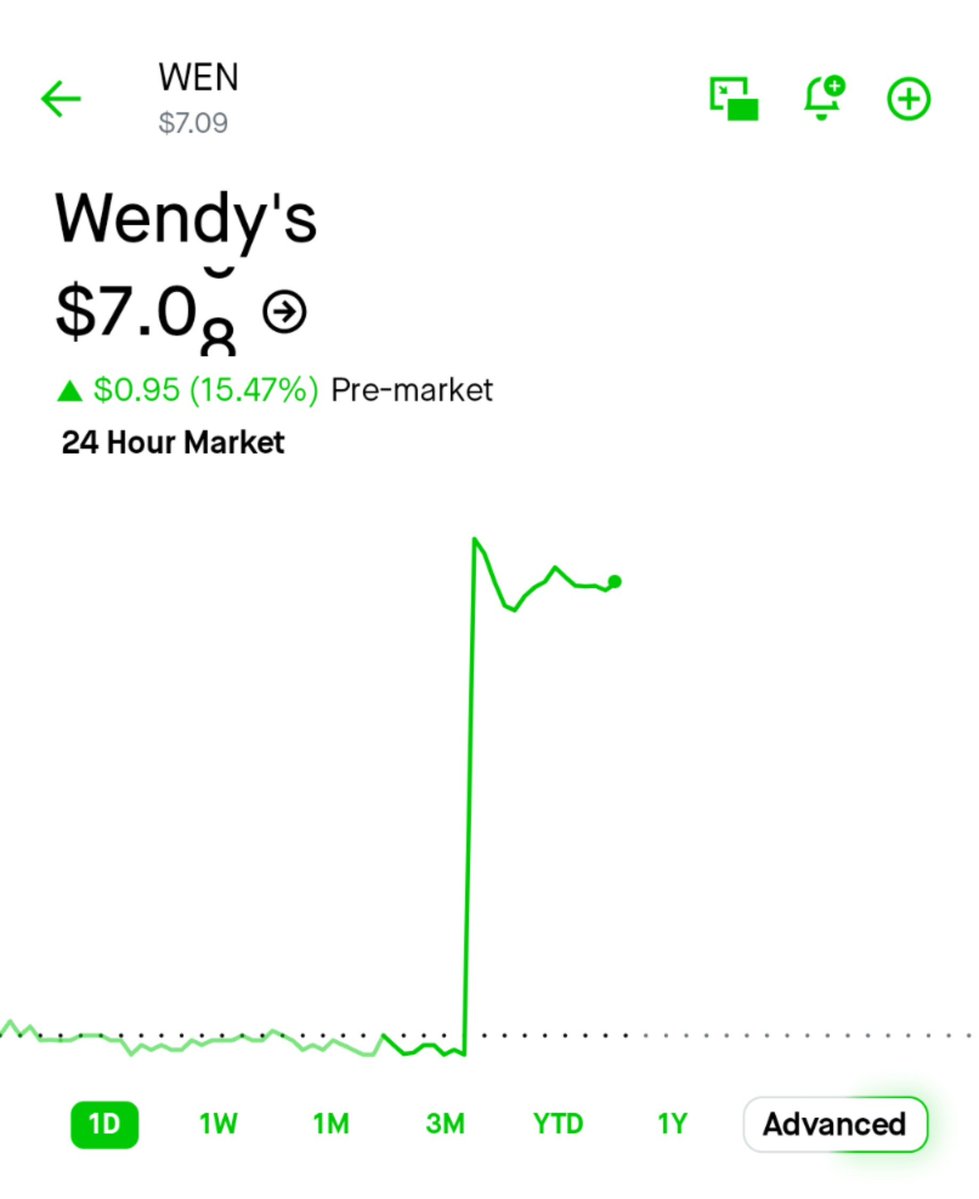
Nelson Peltz's Trian Fund Management, together with several partners, has offered about $1.4 billion, or $7.35 per share, to acquire burger chain Wendy's. Wendy's confirmed it received the unsolicited proposal.
Wendy's shares are down roughly 70% over the past five years, according to WSJ, and Trian argues the struggling chain needs a turnaround best pursued out of the public eye. The offer carries a 20% premium, the materials show.
The stock jumped 15% on the news. Blackwells Capital pushed back, saying the $7.35-per-share proposal dramatically undervalues Wendy's and should be rejected, a sign of disagreement among shareholders over price.
MarketWatch noted the buyout offer suggests the chain's overhaul could be very expensive. The proposal remains at the offer stage and its path depends on the board and shareholders.
Intercontinental Exchange and Trade[XYZ] said on Oct. 29 they have signed a definitive agreement to build a dedicated U.S. perpetual futures market and clearing structure, branded ICE[XYZ], listing contracts on equities, indices, commodities, FX and crypto for KYC/AML-verified retail customers reached through futures commission merchants that join the platform. The plan is subject to regulatory approvals; timing and eligibility were not disclosed.
Perpetual contracts never expire and serve short-duration, around-the-clock exposure. ICE, whose participation is more than 99% institutional, intends to run the retail business through a separate regulatory structure so its commercial hedgers keep relying on traditional futures, forward-curve price discovery and centrally cleared settlement. Trade[XYZ] said its Hyperliquid markets have topped $650 billion in volume in just over a year and will keep running alongside the U.S. venue.
ICE is also making a minority strategic investment in Trade[XYZ] on undisclosed terms and said the stake is not expected to materially affect its 2026 adjusted results, capital return or deleveraging plans. Distribution is expected through partner brokers and platforms, including ICE's joint venture with OKX, whose approvals as a U.S. broker-dealer and FCM remain pending.
ICE reported third-quarter profit of $940 million, or $1.67 a share, up from $816 million, or $1.42 a share, a year earlier. Investor Stan Druckenmiller said he is an investor in Trade[XYZ]. The U.S. venue requires CFTC approval, which has not been granted.
Australia's ASIC Seeks Information From Lead Managers on Firmus's $5 Billion Failed IPO
The regulator is asking investment banks about the collapsed listing before deciding whether to open a formal investigation, putting IPO marketing disclosures in focus.
The Australian Securities and Investments Commission said it is engaging with the joint lead managers of Firmus's failed $5 billion initial public offering and seeking information from the investment banks. According to The Australian, the regulator is examining the accuracy of information provided during the marketing of the deal.
Bloomberg reported that ASIC has stopped short of opening a formal investigation, with the process so far limited to requesting information. The AI data centre operator's listing was shelved earlier this month, one of Australia's largest IPO collapses in recent years.
The X signal tagged $NBIS, $IREN, $CRWV and $CIFR, all AI data centre and compute names in the same supply chain. Coverage in the newsroom's 48-hour feed focused on Cipher Digital's earnings and CoreWeave's debt-driven selloff and rebound, and did not address the Firmus matter.
Firmus and the banks involved did not publicly respond to the regulator's outreach as of publication. Whether ASIC escalates to a formal investigation remains to be seen.
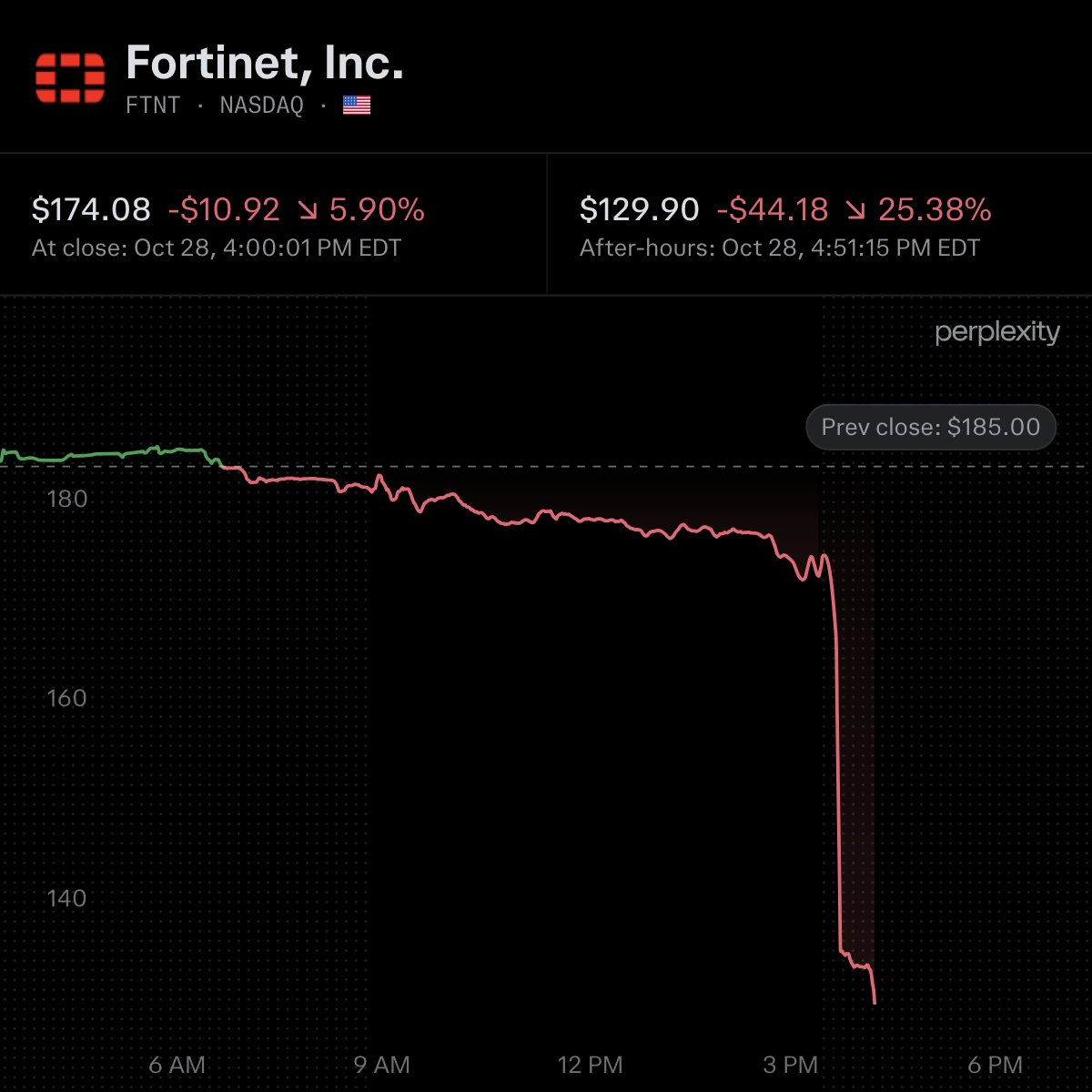
Fortinet reported third-quarter 2026 results with revenue up 20% year over year, billings up 29% and product sales up 37%. Adjusted EPS came in at $0.91, beating the Zacks consensus estimate of $0.85, and the company raised its full-year revenue and EPS outlook, guiding Q4 adjusted EPS to $0.93-$0.95 versus $0.87 expected.
The recurring side of the business lagged: service revenue grew just 13%, and Fortinet cut its FY26 service revenue guidance to $5.15B-$5.17B from $5.18B-$5.22B. BofA Securities downgraded the stock from Buy to Neutral and slashed its price target to $140 from $220, citing weaker product and services trends, possible demand pull-forward, and component and inventory issues offsetting AI tailwinds.
Shares fell as much as 26.7% premarket and were down about 27% in trading, on track for the worst trading day in the company's history, while dragging the broader cybersecurity sector lower. The stock remains up roughly 69% so far in 2026.
Coverage in our newsroom noted that, following F5, Wall Street has stopped paying security stocks for beating earnings, with Fortinet's guidance mix shift acting as the immediate trigger for the selloff.
JPMorgan initiated coverage of Palantir on Oct. 29 with an Overweight rating and a $262 price target for December 2027. Analyst Brian Essex wrote that enterprises are moving past figuring out how to deploy AI and are now demanding actual returns, adding that Palantir is already delivering ROI.
The call came alongside an Oppenheimer note that maintained Outperform and raised its target to $235 from $200. Our newsroom's recent coverage notes Palantir posted 92.8% revenue growth last quarter and raised full-year guidance again, with government accreditation and a low-capital application model cited as supports for its AI position.
The bear case remains. RBC kept an Underperform rating and a $90 target ahead of Nov. 2 earnings, and other Wall Street analysts have flagged the stock as significantly overvalued. The wide spread in targets puts the upcoming quarterly report at the center of the debate.
JPMorgan's note also pointed to accelerating demand for AI sovereignty extending beyond government customers. Palantir did not respond to the ratings in the materials reviewed.
Google is expanding advertising in its AI Mode search experience to international markets for the first time, with multi-turn ads set to arrive in the U.S. The company frames the move as a new monetization channel.
Google says most AI Mode queries are incremental, meaning the format is adding demand rather than only shifting existing search volume. It also says sponsored and organic product listings already show similar click-through rates in AI Mode.
The change bears on Alphabet's search advertising business, with GOOGL as the directly affected ticker. Our newsroom's coverage notes Alphabet reported third-quarter results after the close on Oct. 28, with AI spending and free cash flow in focus.
Google's characterization of AI Mode queries as incremental and its click-through comparison come from the company. The materials do not specify timing or the list of international markets.
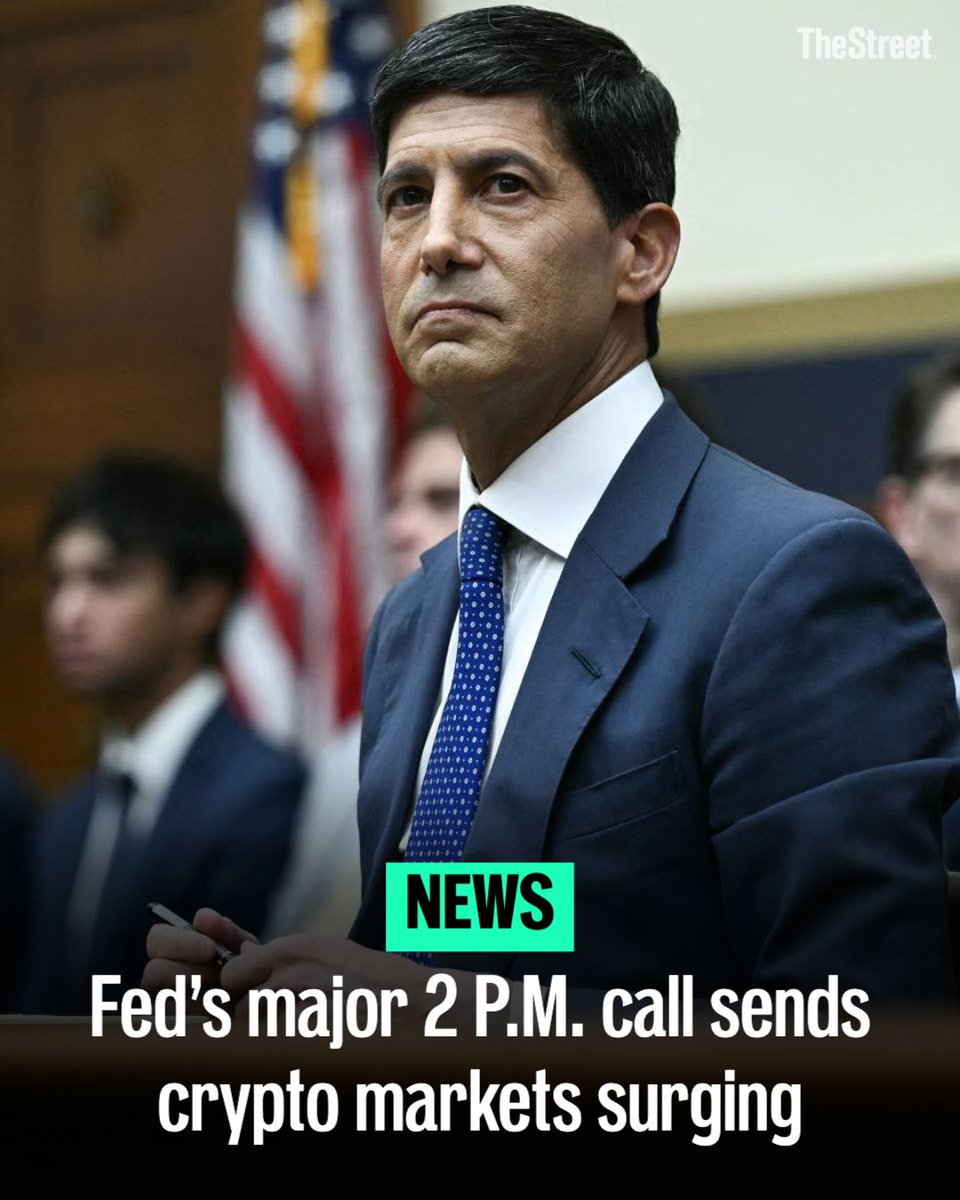
The Federal Reserve left its benchmark rate unchanged at 3.75%–4.00% at its October 28 meeting. Bitcoin fell below $80,000 and Ether dropped under $2,300 following the decision, extending a slide that has run through most of October.
The move is the latest leg in a month-long pattern. Bitcoin briefly broke $80,000 on October 15 amid an AI-led selloff on Wall Street, and again on October 24, when more than $834 million in leveraged crypto positions were liquidated in 24 hours, about 84% of them longs, according to CoinGlass. BTC traded at $79,624.6 around 08:30 UTC that day, down 2.5%.
Derivatives positioning amplified the drop. X posts put two-hour long liquidations above $100 million, while another account cited over $80 million in 30 minutes; the two figures use different windows. US spot Bitcoin ETFs saw roughly $773.5 million in net outflows across October 22 and 23, though those daily figures have not been checked against fund-flow trackers.
Crypto-linked equities moved in step: the iShares Bitcoin Trust ETF (IBIT) fell 1.61% and the Fidelity Wise Origin Bitcoin Fund (FBTC) fell 1.66% on October 26. About $11.5 billion in BTC and ETH options expire this Friday, with max pain at $78,000 for Bitcoin and $2,450 for Ether.
How this story unfolded
2026-08-3113 posts · 9 authors
Company
Anthropic Said to Plan UK Retail Share Offering via RetailBook Ahead of IPO
Reports say the AI company is lining up a British retail channel; allocation size and pricing remain undisclosed
Anthropic is said to be planning a UK share offering through investing platform RetailBook, marketing its shares to British retail traders as part of a large IPO, according to multiple media reports. The reports are attributed to people familiar with the matter, and the company has not publicly confirmed the arrangement.
The reported retail push comes as Anthropic's listing process moves forward. One report says the company could begin marketing its IPO in the week of Nov. 9, putting a mid-November listing in view. Anthropic is growing quickly but posting sizable losses, and it has flagged data center moratoriums as a top risk to its growth.
A UK retail tranche would broaden the investor base for the IPO and give British individual investors a route into one of the largest AI listings. Neither the size of the retail allocation nor the offer price has been announced, leaving valuation questions open.
Separately, CNBC cited a this-week SEC filing showing CEO Dario Amodei and other founders each own more than 200 million shares, holdings that could be worth billions depending on the listing valuation.
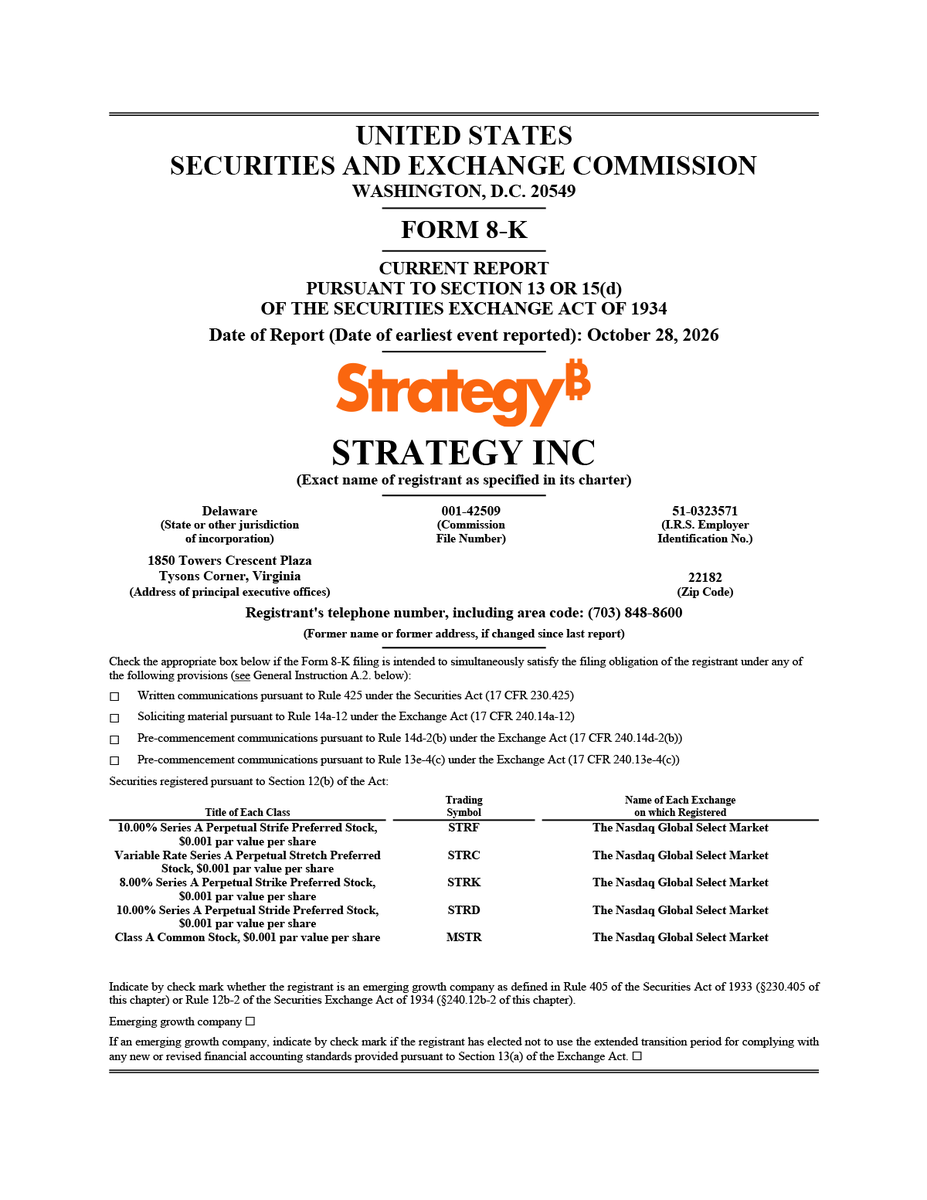
Strategy shareholders approved an amendment permitting daily dividend accrual on its STRF, STRC, STRK and STRD preferred stocks, with 99.3% of votes cast in favor on preliminary results from the Oct. 28 special meeting. The company confirmed the requisite vote in an 8-K but said the change still depends on amended and restated certificates of designations being filed and taking effect.
STRC moves first, with its initial daily record date on Nov. 1 and payment on Nov. 2; STRF, STRK and STRD follow on Jan. 1, 2027, with payment on Jan. 4. STRC had paid twice a month and the other three quarterly. Annual dividend rates — a 12% floating rate for STRC and fixed rates for the others, within a range of 8% to 12% — and the total amount paid are unchanged.
The company framed the change as shortening the gap between accruing and receiving dividends and reducing price swings around record dates; for STRC, record dates rise from 24 a year to 365. Strategy's board has declared daily STRC dividends for all of November at a 12.00% annual rate, or $1.00 per share for the month, and management will recommend holding that rate until STRC trades sustainably near its $100 stated amount.
Weekend and holiday dividends are bundled: record dates of Friday Nov. 6 through Sunday Nov. 8 are treated as a single Friday record date and paid together on Monday Nov. 9, so under T+1 settlement a buyer on Friday receives none of the three while a seller that day keeps all three. Holders outside DTC clearing or trading venues other than Nasdaq may see different treatment, the company said.
Earnings
Samsung flags possible record 2027 results after in-line Q3 profit
AI memory demand lifts HBM4 and server SSD orders as shortages and price increases persist, offering a pricing reference for memory peers
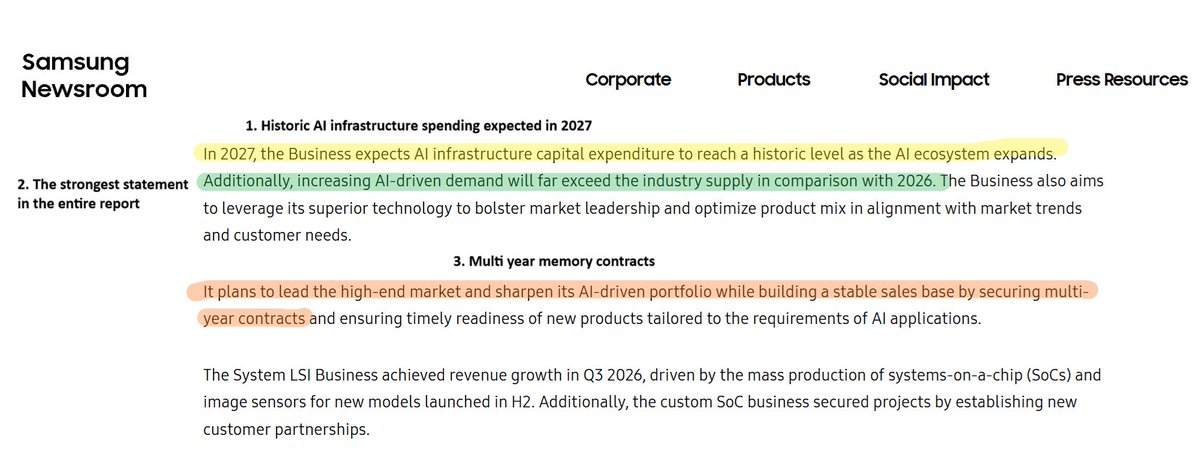
Samsung Electronics reported third-quarter profit in line with estimates, attributing the result to rising demand for AI memory chips. According to posts circulating on X, the report cited demand for HBM4 and server SSDs, surging QLC SSD demand, and memory shortages, rising prices and capacity constraints.
The company also said it could post record results again in 2027, pointing to what it described as historic AI infrastructure spending expected that year and multi-year memory contracts. That shifts investor attention from the single quarter to the next capital-spending cycle.
The read-across lands first on memory peers: the X posts framed Samsung's comments as bullish for Micron (MU), SK Hynix (SKHY) and SanDisk (SNDK). Our news library shows SK Hynix previously reported a stronger-than-expected third quarter and pledged $75 billion in shareholder returns, lifting Asian tech stocks, while Micron has been cited as a beneficiary of tight memory supply.
Separately, Samsung SDI posted stronger-than-expected third-quarter earnings and said it is seeking growth in batteries for energy storage systems. These are company statements; actual shipments and pricing still need confirmation in later filings.
Samsung did not provide specific numeric guidance for 2027 in the available material.
Chipotle Mexican Grill reported third-quarter 2026 revenue of $3.3 billion, above the $3.28 billion estimate and up 9.6% year over year. Adjusted earnings per share came in at $0.27, missing the $0.29 estimate and down 6.9% from a year earlier.
Comparable restaurant sales rose 2.1%, beating the average analyst estimate of 1.4% and marking a third consecutive quarter of positive growth. Restaurant-level margin was 23.3%, down 120 basis points year over year.
MarketWatch reported that menu-price increases helped results, while rising beef costs and "higher protein usage" as customers seek more protein added pressure. For the full year, Chipotle guided to low-single-digit comparable sales and 350 to 370 new restaurants, with more Chipotlanes.
CNBC reported ahead of the release that traders were betting heavily against the stock into earnings. Bloomberg noted the chain has been working to sustain a recovery that had been threatened by a food-illness scare, aided by more frequent menu launches and revamped loyalty offers.
Net sales of $23.80B and adjusted EBIT of $846M beat estimates; working-capital borrowing lifted interest costs, while full-year interest guidance stayed below consensus
Bunge reported third-quarter 2026 net sales of $23.80 billion, above the $23.38 billion estimate, with adjusted EPS of $2.56 versus $2.41 expected. Net income was $318 million, adjusted EBIT $846 million and adjusted segment EBIT $997 million. The company kept its full-year adjusted EPS guidance at $9.25 to $9.75.
The beat was driven by stronger processing margins for soybeans and other oilseeds, according to Reuters, which reported that the grain trader's adjusted profit topped Wall Street estimates on robust crush margins.
Costs were mixed. Bunge guided full-year net interest expense to $640 million-$670 million, below the $811.5 million consensus, and projected capital expenditure of $1.5 billion-$1.7 billion. A separate report noted that inventory-related borrowing lifted interest costs as working capital drained cash.
For investors, crush margins are the key earnings variable for oilseed processors, while working capital and interest expense determine how much profit converts into cash. The quarter's central question is whether better processing margins can offset the cash strain from inventory financing.
Altria (MO) reported third-quarter 2026 revenue excluding excise taxes of $5.4 billion, above the $5.3 billion consensus and up 3.6% year over year. Adjusted EPS came in at $1.52, beating the $1.51 estimate and rising 4.8% from a year earlier.
By segment, smokeable products net revenue was $5.4 billion, up 0.8% year over year, while oral tobacco products net revenue was $688 million, down 0.1%. The company raised its full-year 2026 adjusted EPS guidance to $5.66-$5.74 from $5.61-$5.72.
Zacks reported year-ago EPS of $1.45, while WSJ reported quarterly profit of $2.52 billion, or $1.51 per share. The midpoint of the new guidance, $5.70, sits modestly above the $5.67 consensus.
The new element in Wednesday's report is the specific line of questioning around Hugging Face, disclosed for the first time, rather than the deal announcement itself. Earlier reporting had already focused on the Justice Department's scrutiny of Run-i and Groq, and the latest account widens the review to Nvidia's platform assets in the AI ecosystem.