Binance confirmed a security incident with an estimated total impact of about $6.3 billion, saying roughly $3 billion of the stolen funds has been frozen onchain. The exchange suspended all deposits and withdrawals and said it will cover every loss through its SAFU fund and company funds.
TRM Labs said about $6.36 billion began moving out of Binance wallets across ten blockchains at 20:05 UTC on October 29, most of it within roughly 20 minutes, and attributed the raid to North Korea-linked TraderTraitor. Binance's initial investigation pointed to a compromised DevOps engineer's laptop that gave an attacker access to a service container and allowed unauthorized withdrawal transactions, though it later reported additional points of breach and called it a complex attack.
Tether froze about $971 million in USDT and Circle about $823 million in USDC. Bitcoin fell below $77,000 and ether below $2,200 after the disclosure.
CEO Richard Teng said user money is safe and Binance is covering every loss, while co-founder Changpeng Zhao thanked Tether and Circle for the rapid freezes. Binance said it is working with law enforcement to identify the attackers and will publish an updated Proof of Reserves after remediation.
Binance Confirms $6.3B Hack, Freezes About $3B as Bitcoin Slips Below $78K
One of the largest exchange breaches on record unfolded in roughly 20 minutes; Binance says it has set aside more than $6.34B of company funds to cover losses
Binance confirmed on Oct. 30 that about $6.3 billion in assets moved through wallets connected to its systems in a span of roughly 20 minutes starting at 4 p.m. ET Thursday. The exchange said it has frozen about $3 billion of the stolen assets and set aside more than $6.34 billion in company funds to make users whole, including $5 billion already held in the affected tokens and the remainder to be bought in the market and over the counter.
The company initially pointed to a compromised DevOps engineer's laptop, then said on X that its investigation had uncovered "additional points of breach." Co-CEO Richard Teng said the incident was not a single "one-click" action, that no individual had been attributed responsibility, and that investigators found no evidence of a private-key leak. Chainalysis and TRM Labs both attributed the attack with high confidence to the North Korea-linked TraderTraitor group; Binance said it has not yet identified the attackers.
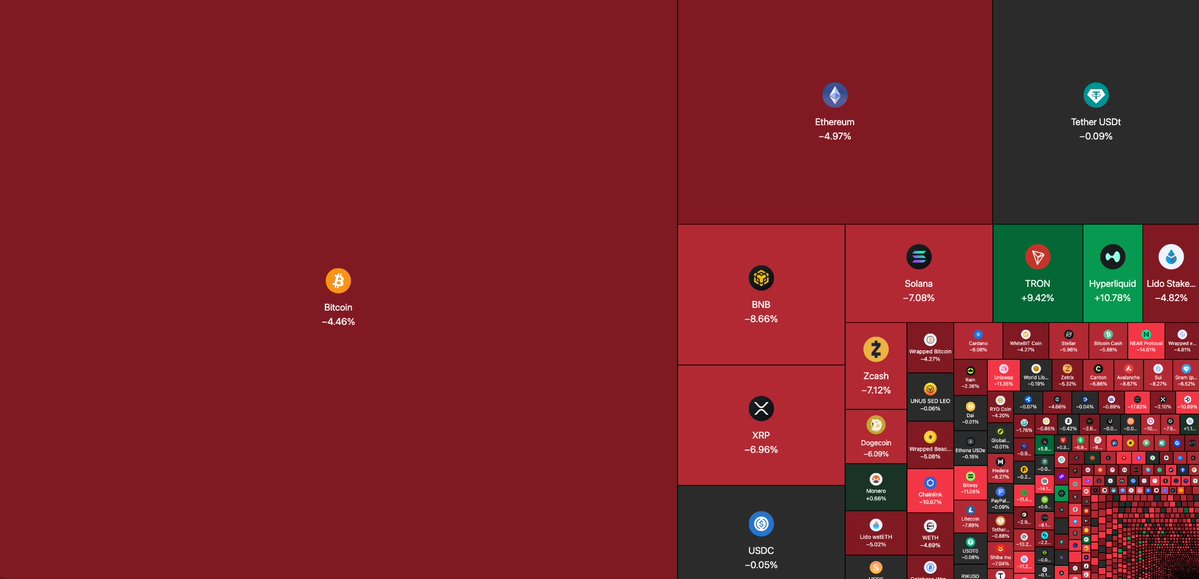
Bitcoin fell to a low near $76,320-$77,739, down roughly 4%-5% over 24 hours, while BNB dropped about 8% and Ether about 5.7%. Liquidations topped $1.54 billion across crypto in 24 hours, with longs accounting for about $1.29 billion, or more than 80%. U.S. spot bitcoin ETFs recorded $292 million in net outflows over the 30 days to Oct. 26, their first negative 30-day stretch since late July.
Binance said losses will be covered by its SAFU fund and corporate reserves, with withdrawals expected to resume within about 45 hours and deposits unaffected. TRM Labs estimates $2.4 billion in bitcoin and ether may never be recovered. The scale has drawn comparisons to FTX, though this incident stems from an external cyberattack rather than business failure.
Alphabet (GOOGL) closed down about 12% at $285.65 on Thursday, shedding roughly $500 billion in market value in its worst single-day loss since going public. CNBC and The Wall Street Journal both called it the ugliest day ever for the shares; Forbes described it as the second-largest one-day market-cap loss in history.
The trigger was the company's third-quarter results. Search growth slowed while the company kept up heavy AI infrastructure spending, and investors began questioning the payback period on that investment. According to Benzinga, management attributed part of the Search slowdown to currency swings and European customs issues.
The selloff spread across tech. Yahoo Finance noted that only Nvidia has ever lost more market value in a single session, while the WSJ reported the stock fell below its "death cross.
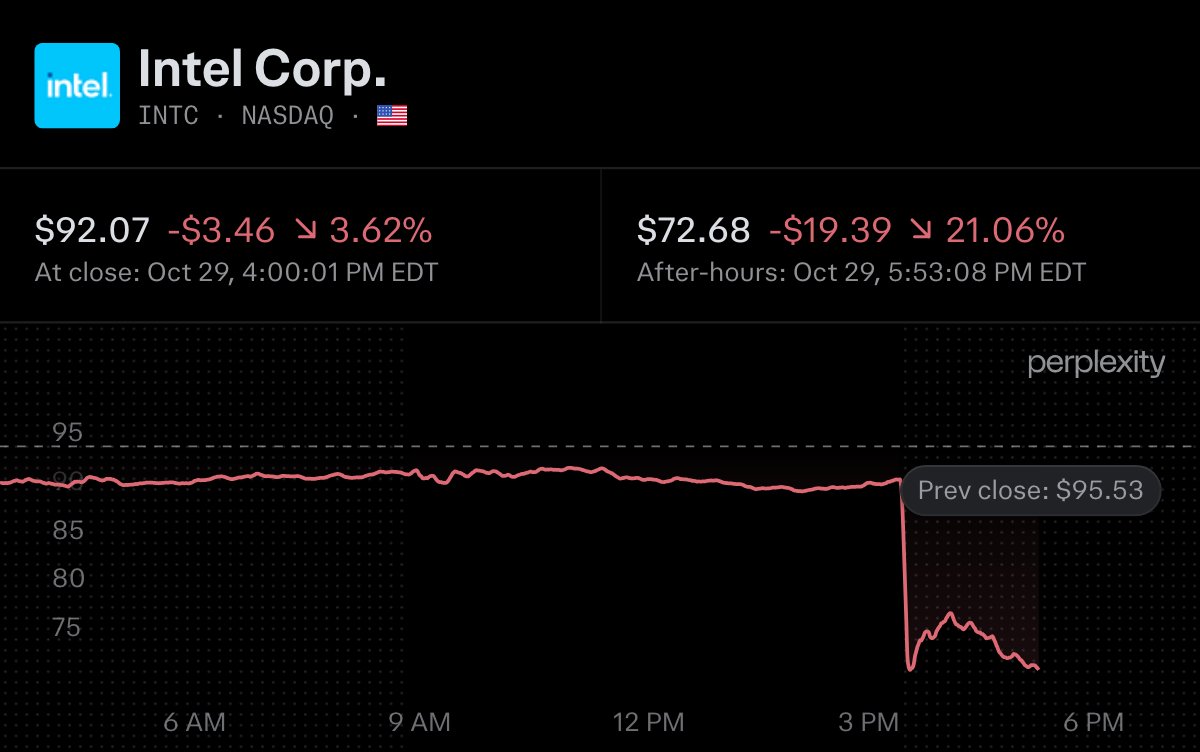
Intel reported third-quarter adjusted EPS of $0.52 versus the $0.40 consensus and sales of $16.513 billion against $16.467 billion expected. The beat was wiped out by fourth-quarter guidance: adjusted EPS of -$0.25 versus $0.43 expected, and sales of $15.5 billion versus $17 billion.
CNBC reported that Intel blamed a PC slowdown it expects to persist at least through the first half of 2027. Data center revenue grew roughly 80% and the company expects server CPU unit growth of more than 30% in both 2026 and 2027, but the costly manufacturing turnaround and weak PC business dominated the narrative.
The stock fell more than 20% after hours and was on pace to open down about 25%, per CNBC. From a $92.08 close, shares are down roughly 53% from the June 30 record high, a loss of about $400 billion in market value.
The U.S. government bought 433.3 million Intel shares at $20.47 on August 22, 2025 for about $8.9 billion; at roughly $74 after hours that position remains profitable but far less so. Amazon also fell after revenue of $201.9 billion missed the $202.3 billion estimate and free cash flow was negative for a second straight quarter.
Amazon reported third-quarter revenue of $201.9 billion, short of estimates in the $202.1 billion to $202.3 billion range, with EPS of $1.89 versus expectations of $1.96 to $2.01. Zacks noted EPS was $1.95 a year earlier.
AWS was the bright spot: revenue of $46.0 billion rose 39% year over year and beat estimates of $44.9 billion to $45.4 billion, while operating income of $28.1 billion also topped forecasts. CNBC said the cloud unit's acceleration followed similar growth at Google and Microsoft.
Capital expenditure reached $77.3 billion, far above the $57.47 billion estimate. Amazon said it still expects about $220 billion in cash capex for 2026, with spending to rise "meaningfully more" in 2027, while free cash flow was negative $34.8 billion.
Fourth-quarter revenue guidance of $240 billion to $247 billion straddles the roughly $244.5 billion estimate, but operating income guidance of $28.5 billion to $33.5 billion came in below the $33.1 billion consensus. The CEO said customers are consuming new capacity almost as quickly as Amazon installs it.
Lagarde to Step Down as ECB President on 7 February 2027
She will leave nearly nine months before her term ends on 31 October 2027, saying she can no longer remain neutral; the succession process began on 29 October
European Central Bank President Christine Lagarde informed the Governing Council and European Council President António Costa on 29 October that she will step down on 7 February 2027, nearly nine months before her term was due to end on 31 October 2027. The ECB confirmed the move in a statement, and Costa said the process to appoint her successor would be initiated the same day and proceed without delay.
Explaining the early exit in Frankfurt, Lagarde said: “I don't think that I can remain neutral.” She described neutrality as the price of central bank independence and said she wanted the freedom to speak on matters beyond monetary policy. The announcement came as the ECB left its key rates unchanged, with the deposit rate at 2.5%, though Lagarde said the Governing Council had seriously debated a hike and that the direction of travel was “quite clear” ahead of December unless major developments intervened.
Euro-area inflation rose to 3.8% in September, with energy prices up 18.9% year on year, while the average 10-year government bond yield in the bloc has risen by around 35 basis points since the September projections' cut-off date. France's 10-year yield briefly topped 5% last week, the first time since 2002, widening its spread over German Bunds. Analysts said the leadership change adds uncertainty to the monetary policy outlook already clouded by inflation and fiscal stress.
Euro-area leaders will meet in Brussels on 26-27 November to discuss the succession, according to Bloomberg. Matthew Ryan, head of market strategy at Ebury, named former Dutch central bank chief Klaas Knot and Bank for International Settlements head Pablo Hernández de Cos as frontrunners. Lagarde will chair two more meetings, in December and February.
Trump Hints at Fresh Iran Strike After Midterms as Oil Nears Six-Month High
Crude is set for a fourth straight monthly gain; traders are building long-term positions ahead of a possible resumption of U.S. military action against Iran
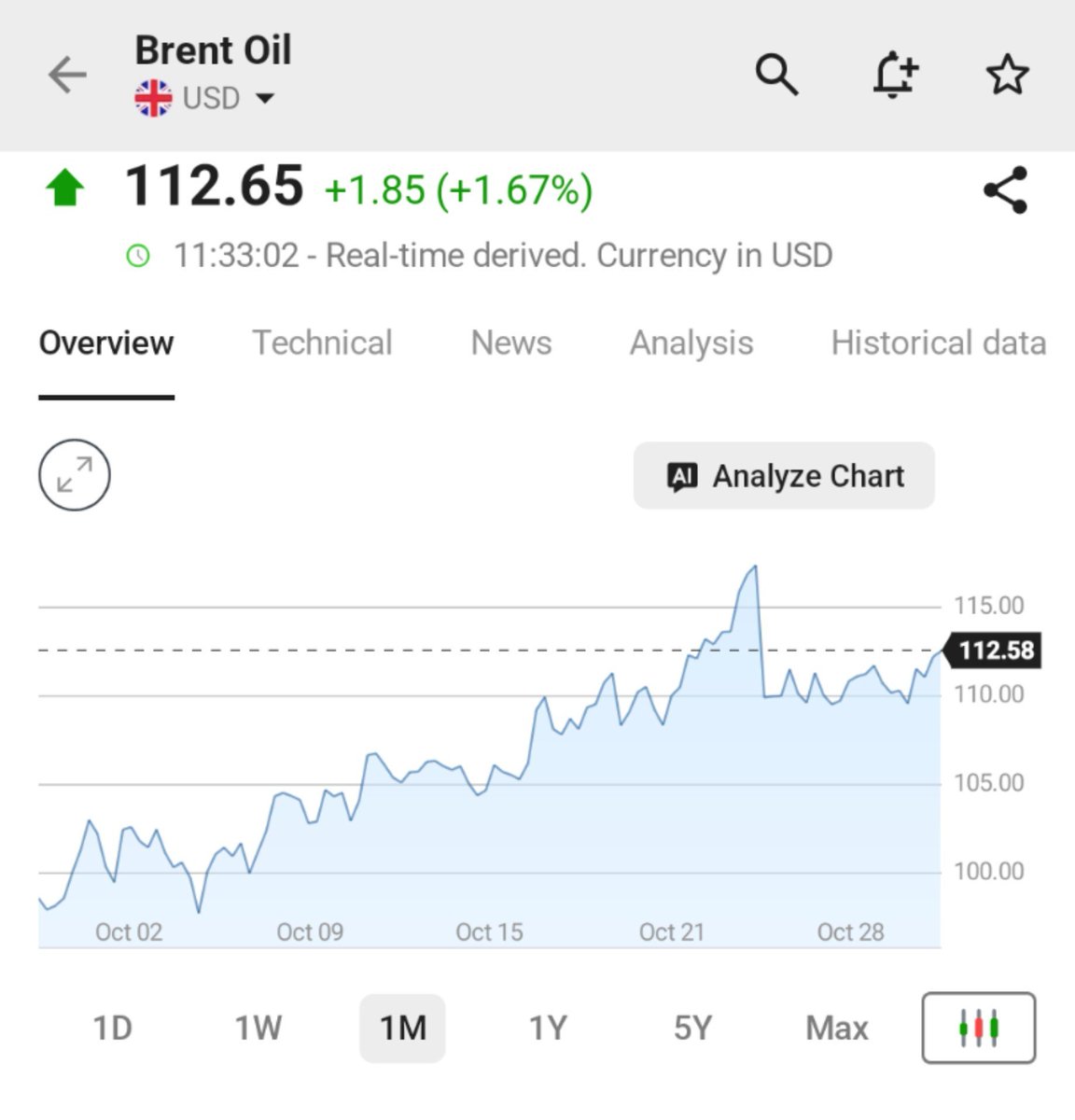
Oil prices are on track to rise for a fourth straight month amid fears the U.S. could resume attacks on Iran, Reuters reported. Kpler oil analyst Naveen Das told Reuters that traders are taking long-term positions, anticipating further supply swings.
Investing.com reported that oil rose near a six-month high as Trump weighed military options against Iran. According to The Economist, Trump has hinted he might strike Iran again after next week's midterms, and oil markets are waiting to see if he does.
ANZ said oil-market balances are now more fragile than at the start of the Middle East conflict, and any flareup after the U.S. midterm elections will push prices higher. The bank raised its oil-price forecast as the market tightens on the Iran war.
The Street reported that U.S. drumbeating about resuming fighting against Iran boosted energy markets, while efforts are growing to convince Iran to negotiate more seriously. Geopolitical risk is rising and supply chains are under pressure.
Company
DoorDash to buy Instacart for $17 billion, or $65 a share
The cash-and-stock deal carries a 26% premium and awaits regulatory approval, with closing targeted for late 2027 or early 2028
DoorDash said Thursday it will acquire grocery delivery rival Instacart for roughly $17 billion, or $65 per share, in a cash-and-stock deal. The price represents a 26% premium to Instacart's Oct. 22 close, and Instacart holders may elect cash or DoorDash stock.
The combination joins two major players in delivery, further consolidating the app market. DoorDash brings logistics while Instacart contributes retailer technology and retail media, which the pair frame as an answer for local grocers facing Amazon and Walmart.
The transaction is expected to close in late 2027 or the first half of 2028, pending approvals. DoorDash also reported third-quarter earnings that beat estimates, lifting its stock, while investor rights firms are investigating whether the buyout values Instacart fairly.
Regulatory review is the key variable ahead, and gig workers could see changes to their working conditions under the deal.
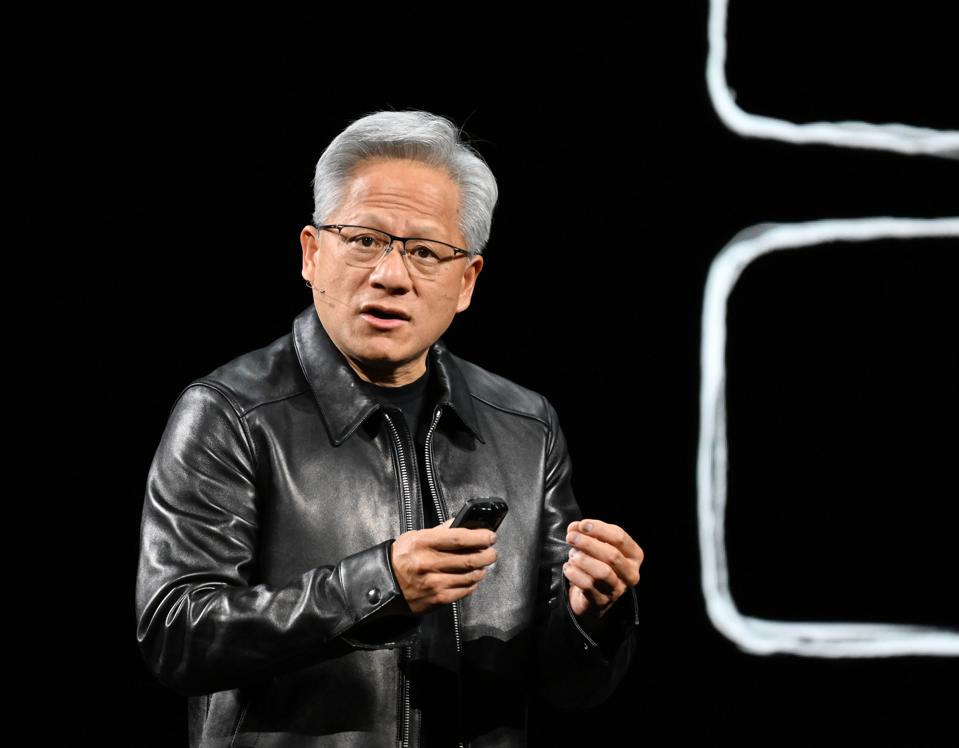
Nvidia CEO Jensen Huang said the company's dealings with Singapore-based AI firm Megaspeed International were "normal and not unusual," and that Megaspeed did not divert its chips to China. Nvidia said allegations of illegal diversion were "investigated and debunked," adding that the company and U.S. authorities reviewed GPU deployments to check for diversion.
The New York Times reported that Alice Huang, a Megaspeed executive with close ties to Huang, was alleged to be a Chinese intelligence asset passing information to Beijing. The Wall Street Journal reported that investigators believed she was recruited based on her relationship with Jensen Huang.
The report puts Nvidia (NVDA) and its AI chip export-compliance narrative in focus, with Megaspeed as a customer under scrutiny over whether GPUs reached China through third parties. Huang's remarks seek to separate the company's transactions from the diversion allegations, while the investigation and reporting continue.
Separately, reports said President Trump was briefed on the alleged China spy plot involving Jensen Huang. Those accounts come from media reports; the diversion allegations have been denied by the company.
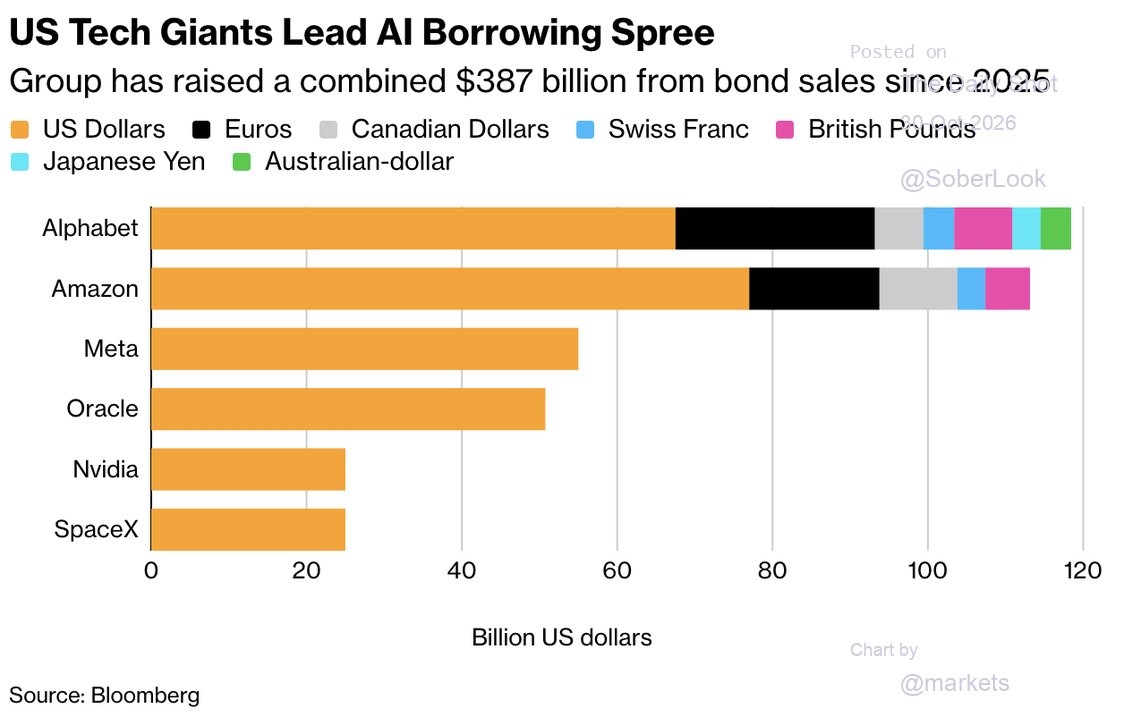
Microsoft is selling US investment-grade bonds for the first time since 2017, targeting at least $25 billion, according to X signals citing reports. The offering spans 10 tranches from 2 to 40 years, with initial pricing around 50 basis points over Treasuries on the 2-year and about 135 basis points on the 40-year.
The company's previous comparable sale raised $17 billion. The deal places Microsoft in a broader borrowing wave: US tech giants have raised a combined $387 billion from bond sales since 2025, per an X signal.
Investor scrutiny of AI-linked debt is the subtext. MarketWatch said investors are getting pickier about the AI debt binge; Microsoft is one of only two AAA-rated companies in the US, a rating that may help contain borrowing costs.
The sale contrasts with Microsoft's latest earnings, where capex guidance, along with Google's, fell short of analyst estimates, per the newsroom. Follow-through on how proceeds are deployed will be the next checkpoint.
France's GDP fell 0.1% in the third quarter from the previous three months, statistics agency INSEE said on Oct 30, missing analysts' expectations of a 0.1% gain in a Reuters poll. Exports dropped 1.7%, led by a 9.1% decline in transport equipment with aerospace the main negative driver, while investment fell 0.6%, the third consecutive quarterly decline.
Eurostat reported the 21-nation euro area grew 0.4% in Q3, above the 0.2% forecast but slower than the 0.6% pace in Q2. Germany expanded 0.2%, Italy was flat, Spain grew 0.6% and Ireland 5.5%. French harmonized inflation rose to 3.8% year on year in October, the highest since late 2023 and above the 3.6% forecast.
French 10-year bond yields rose 6 basis points to 4.944% after the data, underperforming the rest of the bloc. Finance Minister Roland Lescure said the economy was at a standstill due to an unprecedented combination of external and internal shocks.
The European Central Bank held rates steady on Thursday but flagged energy-driven inflation risks from the Iran war, with markets pricing a possible December hike. Analysts pointed to France's political and budget uncertainty, rising borrowing costs and weak consumer confidence as key downside risks for the fourth quarter.
BP reported third-quarter underlying replacement cost profit of $8.5 billion on October 30, nearly quadrupling from a year earlier. The company uses that measure as its performance benchmark.
The jump follows a global surge in diesel prices. CNBC reported that Ukraine and Iran have bombed refineries in Russia and the Middle East, tightening product supply, and that U.S. refiners have ramped up production to capture high international diesel prices.
ExxonMobil reported adjusted earnings of $17.5 billion and adjusted EPS of $4.23, beating expectations of $4.08. Chevron posted EPS of $5.28, topping the Zacks consensus of $4.78 and up from $1.85 a year ago. CNBC had flagged ahead of the results that Big Oil earnings were set to surge while cautioning investors.
Cnooc posted slightly higher third-quarter profit, citing supply disruptions in the Persian Gulf, and improved profits at China's state-owned oil majors may help them meet Beijing's energy security demands.
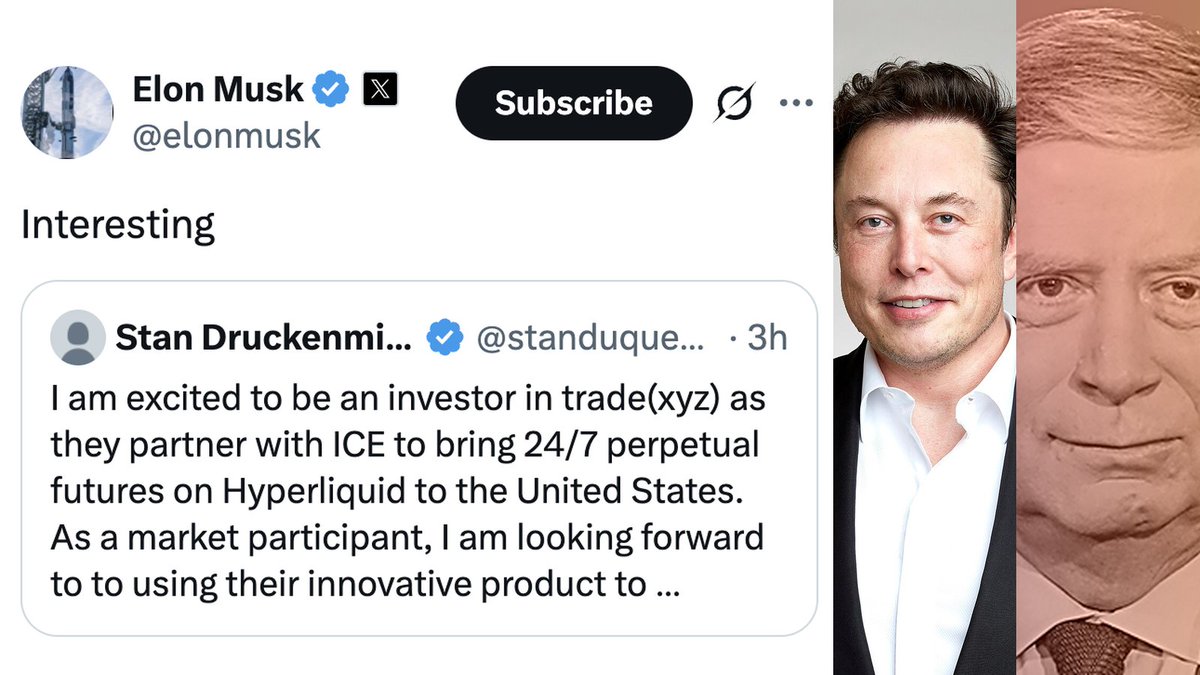
Billionaire investor Stanley Druckenmiller used his first-ever post on X on Oct. 29 to say he is an investor in Trade[XYZ], a major developer of perpetual futures markets on the Hyperliquid exchange, and that he looks forward to using the platform to improve his investment process.
The post landed the same day Intercontinental Exchange, parent of the New York Stock Exchange, announced a partnership with Trade[XYZ] to build a regulated U.S. venue for perpetual futures across crypto, equities, commodities and currencies. ICE will operate the exchange and clearing infrastructure and take a minority stake in Trade[XYZ]; financial terms were not disclosed, and the venue needs CFTC approval with no launch date set.
,Druckenmiller's statement was confirmed to media by his representatives. Elon Musk replied "Interesting" to the post, widening its reach. Separately, a Duquesne Family Office SEC filing showed 2.94 million shares of Nasdaq-listed Hyperliquid Strategies (PURR) valued at about $23.15 million as of June 30 — an indirect HYPE exposure rather than a disclosed direct token holding.
In the market, Hyperliquid Strategies shares rose as much as 19% to a three-week high, with more than 111,000 options changing hands, about six times the 30-day average. Reports put HYPE's gain for the day at roughly 16% to 20%. ICE also reported third-quarter net income of $940 million, or $1.67 a share, up from $816 million, or $1.42 a share, a year earlier.
Amazon CEO Andy Jassy said AWS expects revenue growth above 40% in both 2027 and 2028, even though the cloud unit already generates more than $100 billion annually. He added that "there has never been a trillion dollar revenue business, and we may have two of them in the next 5-10 years," referring separately to AWS and retail.
The constraint is capacity, not demand: AWS is reportedly sold out into 2028, customers are consuming capacity almost as fast as it comes online, and Jassy said Amazon is installing an AI accelerator roughly every 14 seconds. He said capex will rise "meaningfully more" in 2027 from about $220 billion this year, describing a 10-to-20-year cycle.
The quarter itself was mixed. Amazon reported third-quarter earnings of $1.89 per share, missing the Zacks consensus estimate of $2.01 and down from $1.95 a year earlier, while AWS revenue grew 39% with wider margins. Jassy also said the fulfillment network now has over one million robots and that Amazon is looking to automate the final 100 yards of delivery.
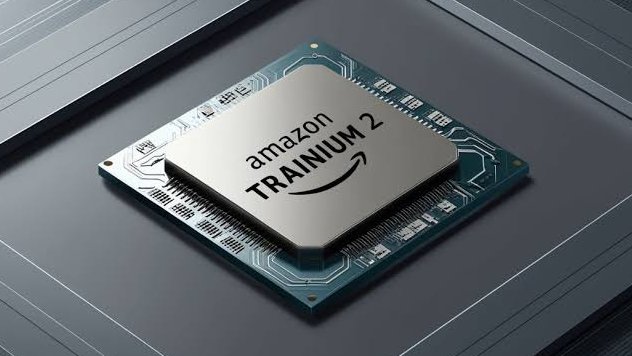
Separately, Amazon plans to start selling Trainium chips outside AWS in late 2027, with Jassy expecting "a very significant business selling chips externally." He said the same chips generate more cash flow inside AWS over five to six years, so Amazon wants to capture both.
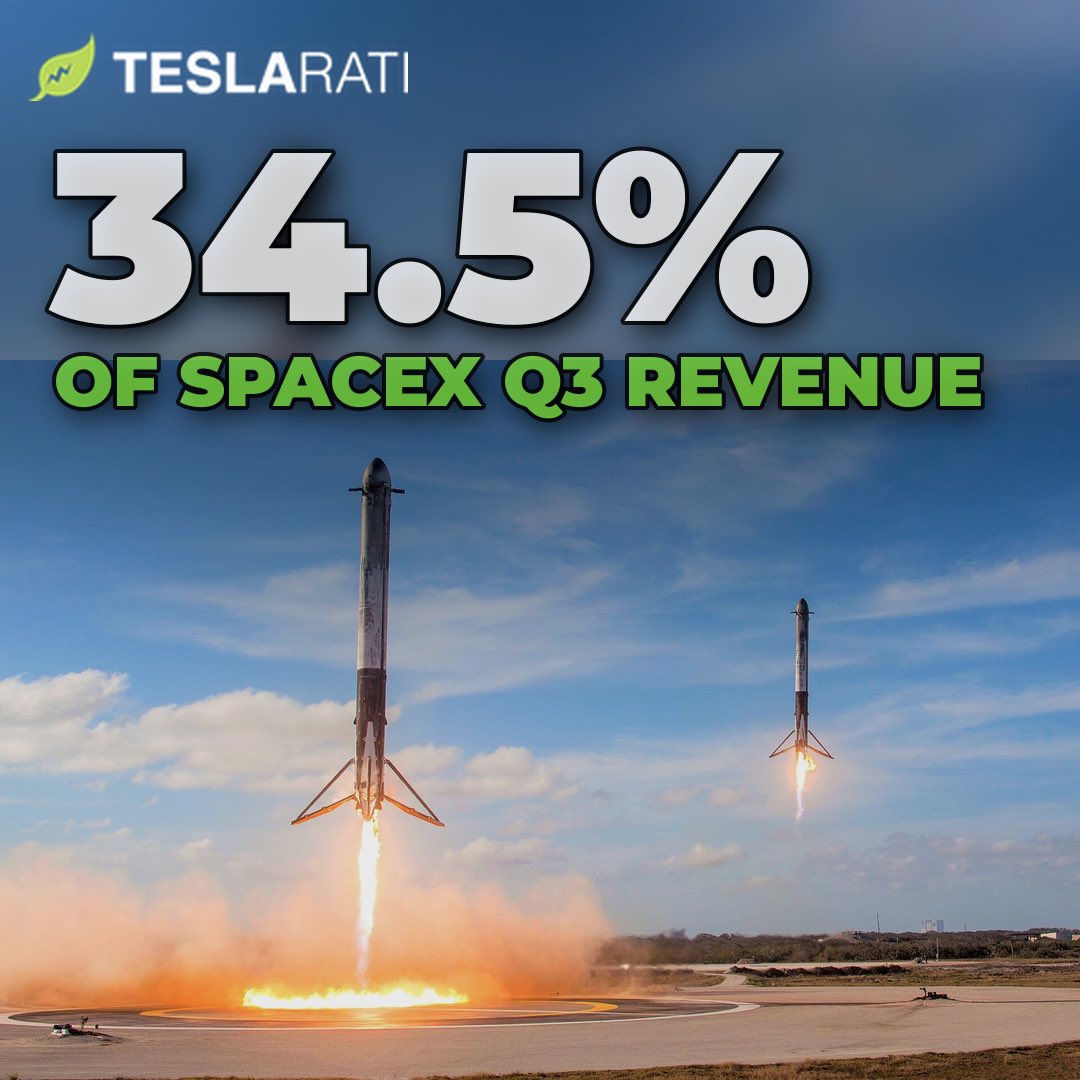
Anthropic has become SpaceX's largest single customer, accounting for 34.5% of revenue in the third quarter of 2026 and overtaking the US federal government, according to Bloomberg, the WSJ and other outlets citing people familiar with the matter. The reports identify Anthropic as "Customer B" in SpaceX's disclosures, renting compute at its Memphis data centers.
The agreement runs up to $120.5 billion through 2029, with monthly payments expected to reach about $3.1 billion from December, though Anthropic can exit after early 2027, the reports said. Seeking Alpha estimated the relationship could annualize near $37.2 billion.
For SpaceX, which is preparing an IPO, a single customer above one-third of revenue ties its top line closely to Anthropic's capital-spending pace. Anthropic is itself moving toward a listing; per our newsroom, it posted a $80.748 billion net loss for the six months to June 30, 2026 on $16.3 billion of revenue, and has flagged data center moratoriums as a top risk.
The customer identity and contract terms come from media reports citing people familiar with the matter; the materials contain no public confirmation from SpaceX or Anthropic.
US stocks fell Thursday, with Alphabet plunging 12% on disappointing sales and dragging the Nasdaq 100 down 1.4%. The S&P 500, Dow Jones Industrial Average and Nasdaq Composite all closed lower as investors digested high-profile earnings and crucial inflation data.
The move came a day after the Federal Reserve held US interest rates steady. Worries that huge and rising AI spending may not deliver sufficient returns pushed money out of tech and into broader equities, with more than 400 S&P 500 stocks advancing.
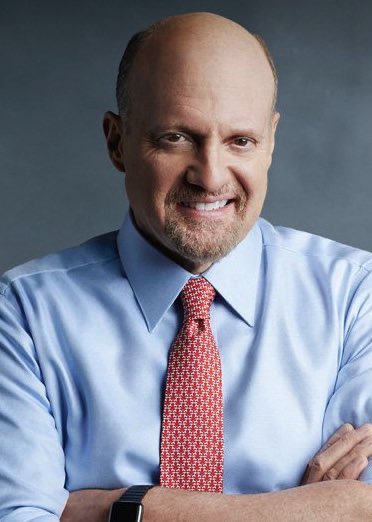
Treasuries rallied on safe-haven demand toward their biggest monthly gain in nearly three years, while the yen was steady. Jim Cramer declared "let things fall" during the tech selloff.
In the domestic news pool, ServiceNow fell nearly 20% at the open after guiding to slower fourth-quarter cRPO growth, joining Alphabet among big stocks moving lower in Thursday's premarket session.
Strategy Posts $21B Q3 Operating Income on $20.9B Bitcoin Paper Gain
Revenue fell 3% to $125.4 million while profit came almost entirely from bitcoin markups; the company also disclosed a CFO transition and up to $30 billion in digital credit capacity.
Strategy reported record third-quarter 2026 operating income of $21 billion and diluted earnings of $44.75 per share, the largest quarter in its history. Almost all of the profit came from a $20.9 billion paper gain on its bitcoin holdings.
Actual revenue fell 3% to $125.4 million, missing Wall Street estimates. The company bought 7,218 BTC in the quarter, down sharply from 85,296 in the second quarter, and sold 5,552 BTC to fund preferred dividends and STRC buybacks.
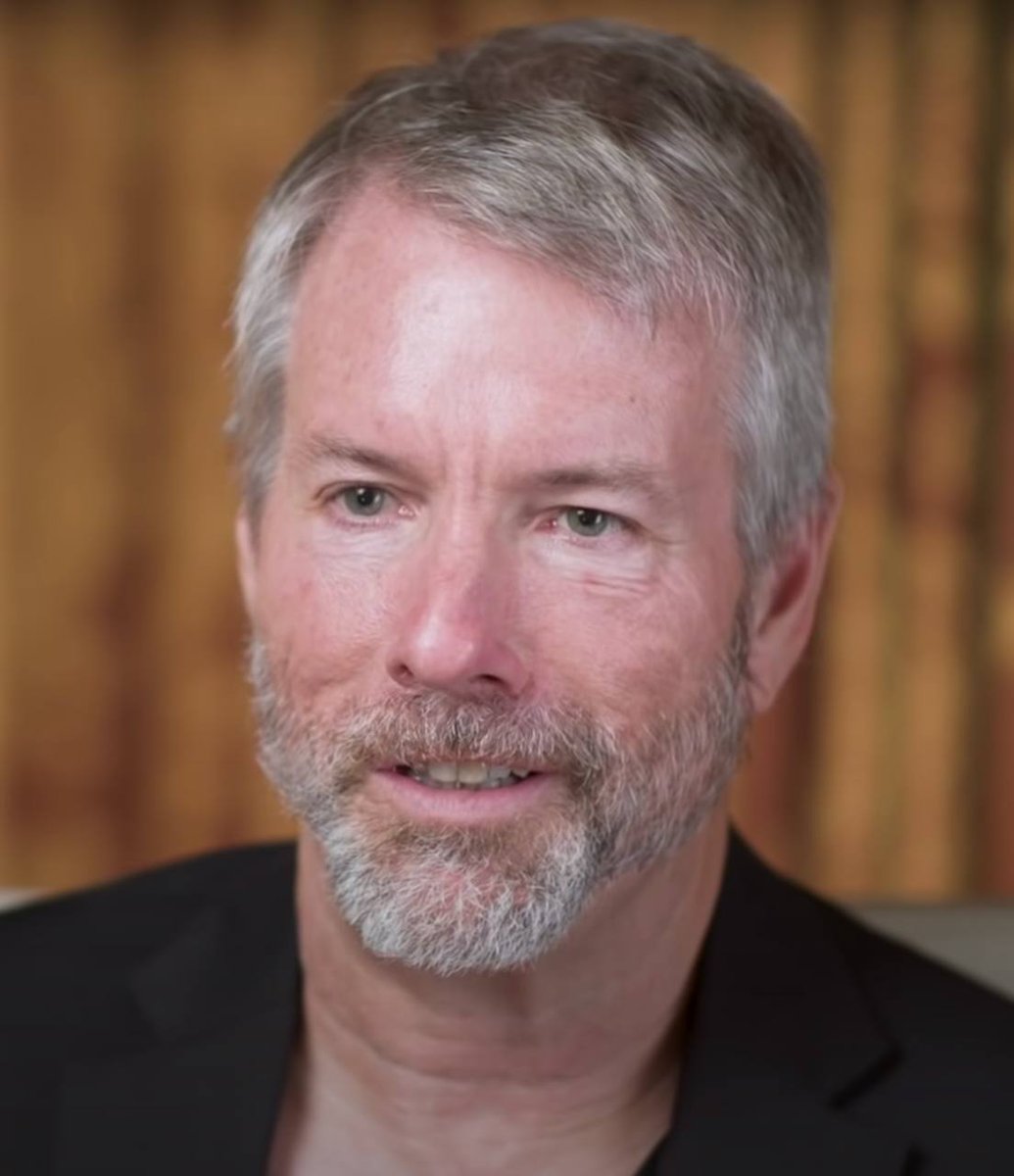
Strategy held 848,517 BTC as of October, up 26% year to date. Executive Chairman Michael Saylor said the company plans to acquire more bitcoin by issuing digital credit, leveraging up to $30 billion in financing capacity.
MSTR shares fell about 7% in Friday premarket trading after the results and a CFO transition announcement. Fool.com noted the company's bitcoin-per-share metric fell 3.7% in the quarter.
Reddit reported third-quarter 2026 revenue of $895 million, up 53% year over year and above the $878.4 million estimate. EPS came in at $1.40, up 75%, and adjusted EBITDA was $402 million, up 70% — all three ahead of expectations.
User metrics lagged: DAUq was 130.3 million, up 12% but below the 133.4 million estimate, while WAUq reached 515.2 million, up 16% versus the 531.1 million expected. ARPU was $6.87, up 36% and above the $6.67 estimate.
The company also issued guidance that fell short of expectations. According to our newsroom's reporting, Reddit is shifting to a logged-in experience as search traffic dries up, adding to concerns about user growth. The stock fell 12% in after-hours trading and extended losses to roughly 23% premarket on October 30.
Benzinga reported that analysts cut their forecasts following the results. Block & Leviton said it is investigating the roughly 23% drop in Reddit shares on October 30 and is inviting investors to contact the firm.
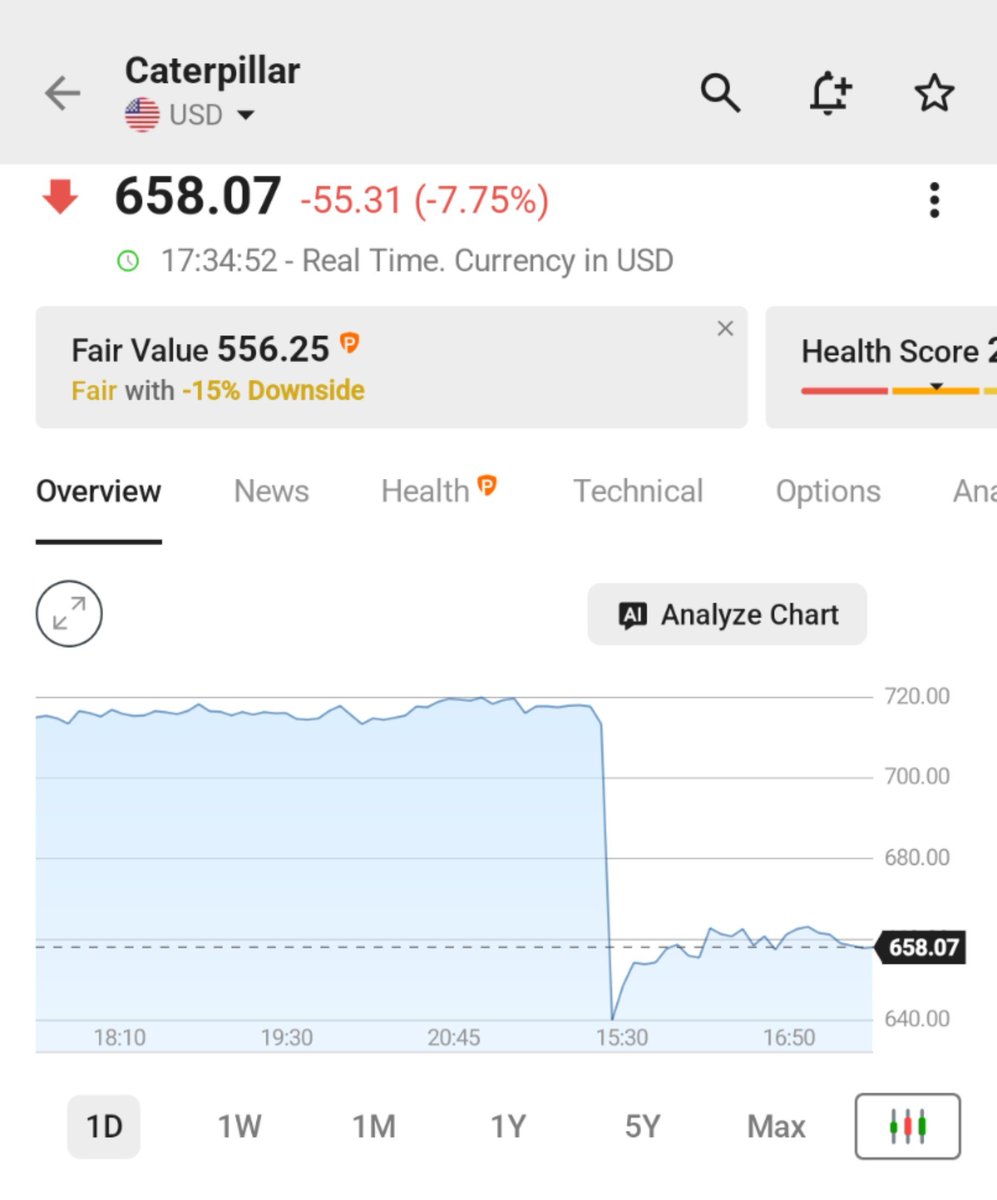
Caterpillar reported third-quarter adjusted earnings of $7.20 per share before the open on October 29, beating the Zacks Consensus Estimate of $7.12, on revenue of $20.68 billion. Higher volume and pricing lifted sales 17.3%, expanded margins and drove record backlog to $78.1 billion.
The stock still fell 12% at the open, with declines during the session reported between 8% and 9.2%. Seeking Alpha attributed the tumble to tariff costs and rising inventories overshadowing the earnings beat.
The drop left shares roughly 40% below their June record. Bespoke noted the stock gained 86% in the first half of 2026, fell 39% in the second half and is now up about 13% year to date.
Zacks had listed CAT among four GARP picks a day before the results, citing its discounted valuation. Investor focus has shifted from the earnings beat to cost pressures and inventory levels.
ExxonMobil (XOM) and Chevron (CVX) have canceled plans for their executives to travel to the UAE for next week's ADIPEC oil conference, citing security concerns, according to multiple reports citing two sources. Reuters reported that those dropping out include ExxonMobil CEO Darren Woods and Chevron upstream president Clay Neff.
ADIPEC, held in Abu Dhabi, is among the largest oil and gas industry gatherings in the Middle East and a regular venue for international oil executives to meet producing-country officials. The simultaneous withdrawal of senior leadership from the two largest U.S. oil companies comes as security conditions in the region tighten and Washington weighs further military action against Iran.
For investors, the move points more to geopolitical risk premium than to company fundamentals. Coverage in our news database shows Chevron shares up nearly 57% in 2026 and ExxonMobil up 55%, with Brent crude near $104 a barrel, meaning high oil prices are already substantially reflected in both companies' valuations.
As of publication, neither ExxonMobil nor Chevron had publicly commented on the specific reasons for the cancellations, and the reports rest on accounts from sources.
Aschenbrenner's Situational Awareness Pitches Clients on Fluidstack Round at $40 Billion Valuation
The hedge fund nearly collapsed on leveraged AI bets three months ago; now it is steering clients into a neocloud deal as debt-heavy peers come under scrutiny
Situational Awareness, the hedge fund founded by Leopold Aschenbrenner, is pitching its clients to invest alongside it in a funding round for AI infrastructure startup Fluidstack that would value the company at $40 billion, Bloomberg reported on Oct. 29, citing people familiar with the matter. The co-investment structure lets clients put money directly into the deal rather than into the fund, and other investors have also been invited into the same round, the people said.
The proposed valuation is more than five times the $7.5 billion mark set in a January round led by Situational Awareness, and roughly double the level of just a few months ago. The fundraising follows a near-death experience for the fund this year, when falling technology stocks triggered margin calls on its leveraged positions and it sold most of its public equity book to Ken Griffin's Citadel at a discount. Its private holdings also include Anthropic and MatX.
Fluidstack sits in the debt-heavy neocloud sector that investors are now scrutinizing. CoreWeave, the segment's most prominent listed player, saw its shares plunge last week and its debt trade at levels signaling distress. Fluidstack has lined up large commitments from AI customers, including a $50 billion US data-center push with Anthropic, and has received billions of dollars in financial backstops from Google for related projects, according to the report.
A Fluidstack co-founder disputed Bloomberg's reporting without elaborating, while a representative for Situational Awareness declined to comment. Listed peers including CoreWeave, Nebius, IREN and Cipher Mining may see sentiment shift depending on how the round is priced and whether it closes.
Company
Cohere said to raise at $20.5 billion valuation, roughly tripling year-ago value
The Canadian AI model maker, backed by Nvidia among others, is raising a large round as capital keeps flowing into enterprise AI
Cohere, the AI model maker, is in the process of raising a large funding round at a $20.5 billion valuation, roughly tripling its value from a year ago, according to Bloomberg. The report said Canada and Nvidia are backing the round.
Cohere focuses on enterprise AI models, setting it apart from consumer-facing model developers. The valuation jump comes as financing competition among AI infrastructure and model companies intensifies globally.
A separate signal the same day said Indian AI infrastructure firm AM Intelligence is seeking as much as $3 billion to fund a previously announced purchase of Nvidia's next-generation chips. Together the reports point to continued funding demand across both AI compute and model layers.
The funding size and valuation were reported by Bloomberg citing sources; the companies have not publicly confirmed final terms.
Earnings
Starbucks Q4 US comparable sales rise 7.7%, international up just 0.9%
Revenue and global comps beat, but international lagged estimates and shares fell after the bell
Starbucks reported fourth-quarter results for the period ended September 2026: adjusted EPS of $0.80 versus an estimated $0.71, net revenue of $9.10 billion versus an estimated $9.23 billion, and an adjusted operating margin of 14% versus an estimated 12.7%. Global comparable sales rose 7.2%, above the 6.23% estimate.
By region, US comparable sales rose 7.7% against a 6.51% estimate, while international comparable sales grew only 0.9%, well short of the 3.36% estimate. The company said it is ahead of schedule for its FY28 financial framework.
Shares moved lower after the bell. CNBC described mixed quarterly results as international cafes underperformed expectations, while Bloomberg said US sales were helped by spruced-up stores and a strong autumn menu, extending the chain's growth run.
It marked the fifth consecutive quarter of better-than-expected same-store sales growth. For FY27, Starbucks guided adjusted EPS of $3.15 to $3.25, above the $3.14 estimate, revenue down about 1% year over year, and North America comparable sales up roughly 4.0%.
General Dynamics reported third-quarter 2026 revenue of $14.57 billion, up 12.9% from a year earlier, with diluted EPS of $4.49, up 15.7%. Operating margin was 10.5%, 20 basis points wider year on year, and operating cash flow of $1.7 billion equaled 139% of net earnings.
Marine Systems led the segments with revenue of $4.96 billion, up 21.1%, and operating earnings of $391 million, up 34.4%. Aerospace revenue rose 9.3% to $3.54 billion with margin expanding to 14.5% from 13.3%; Technologies grew 10.8% to $3.68 billion; Combat Systems revenue rose 6.0% to $2.39 billion while its operating profit slipped 1.5%.
Orders totaled $98.8 billion in the quarter, including $93.8 billion in the defense segments driven by Virginia- and Columbia-class submarine awards and $5 billion in Aerospace. Company-wide book-to-bill was 6.8-to-1, and backlog ended the period at $220.3 billion, up from $136.5 billion three months earlier; total estimated contract value reached $270.7 billion.
The results topped consensus. Reuters, citing LSEG data, put the average analyst estimate at $4.13 per share and $13.73 billion in revenue, and reported shares rose about 4% before the bell. The company paid $429 million in dividends, invested $481 million in capital expenditures and reduced debt by $500 million, ending with $7 billion in total debt and $4.4 billion in cash.
Sanofi reported third-quarter results on Oct. 30 and raised full-year sales and profit guidance for a second consecutive quarter. Quarterly sales came in at €14.44bn against an estimate of €13.31bn, business EPS was €3.55 versus €2.80 expected, and business operating income reached €5.43bn, well above the €4.33bn consensus.
The main driver remains immunology drug Dupixent, whose quarterly net product sales were €5.69bn, ahead of the €5.2bn estimate. Sanofi lifted its 2026 sales growth outlook to a low-teens percentage from a previous 10%. Vaccine sales, however, declined; constant-currency sales grew 14% and profit per share excluding one-offs rose 20%.
The same drug underpins Regeneron's quarter. The U.S. company posted revenue of $5.1bn, up 36% year on year, adjusted EPS of $20.07, up 70%, Dupixent global net sales of $6.5bn, up 35%, and EYLEA HD U.S. net sales of $699m, up 62%. The overlap means Dupixent volume remains the key support for both equities.
The Wall Street Journal reported that Sanofi's CEO is pursuing deals to refill the pipeline ahead of Dupixent's patent expiry. That push, arriving alongside the guidance raise, suggests the durability of the growth story still depends on whether such transactions materialise.
Gilead Sciences reported third-quarter 2026 revenue of $8.3 billion, above the $7.81 billion estimate and up 7% year over year. Adjusted EPS came in at $2.55 versus the $2.19 estimate, up 3%, while GAAP EPS was $1.94 and net income was $2.429 billion. Product sales excluding Veklury were $8.2 billion, up 16%.
By product, Biktarvy sales rose 10% to $4.1 billion, and Descovy sales reached $1.0 billion, ahead of the $904 million estimate and up 49%. The company raised its full-year product sales guidance to $31 billion to $31.3 billion from $30.1 billion to $30.4 billion.
The profit outlook carries acquisition-related charges: the full-year GAAP and adjusted loss per share guidance includes an impact of about $9.88 from acquisitions, with the adjusted EPS range at -$1.2 to -$0.85, according to a livesquawk summary.
The stock was up 5.1% premarket. Reports also noted that a Biktarvy price cut is set to take effect in 2028, a factor investors will weigh against the raised sales range as they assess the mid-term pricing backdrop for the HIV franchise.
Rivian reported third-quarter 2026 revenue of $2.16 billion, beating the $1.99 billion estimate and rising 38% year over year. Adjusted loss per share came in at $0.63 versus an expected $0.84 loss, while gross profit of $176 million and adjusted EBITDA loss of $435 million also topped expectations.
The company raised its full-year delivery guidance to 67,000-70,000 units from 65,000-70,000, and guided full-year adjusted EBITDA to a loss of $1.8 billion to $1.9 billion. The R2 became Rivian's best-selling vehicle in its first full quarter, outselling both the R1 lineup and its commercial vans.
Shares rose roughly 6% to 9% in premarket trading following the beat-and-raise. Still, Benzinga reported that some analysts lowered their forecasts after the results, suggesting questions remain over the path to profitability.
Separately, TechCrunch reported that Rivian and Volkswagen's $5.8 billion joint venture is expanding to include AI assistants.
Mondelez International (MDLZ) reported third-quarter 2026 results: revenue of $9.97 billion, slightly below the $9.98 billion estimate, up 2.3% year over year; adjusted EPS of $0.78, above the $0.71 estimate, up 5.5% year over year on a constant-currency basis. Organic net revenue rose 2.1% year over year, and adjusted gross margin was 34.2%, up 380 basis points year over year.
The company guided fiscal 2026 organic net revenue growth of at least 2% and adjusted EPS growth (constant currency) of flat to positive, and expects 2026 free cash flow of about $3 billion. It also noted a recent agreement to acquire Undercover Snacks.
In premarket trading, MDLZ was up 6.8%. Earlier reports said the company topped profit estimates on easing cost pressures.
Colgate-Palmolive (NYSE:CL) reported third-quarter 2026 net sales of $5.369 billion, up 4.6% year over year and above the $5.334 billion consensus. Adjusted EPS came in at $0.97, up 7%, also ahead of estimates. Organic sales rose 3.6%, including a 0.2% negative impact from lower private label business.
Profitability improved alongside the top line, with adjusted gross margin at 60.3%, up 90 basis points year over year. The company narrowed and raised its full-year net sales growth outlook to 4%-5% from 2%-6%, and expects 2026 base business gross margin to rise with base business EPS growth of 5%-7%.
The mix was uneven: growth was faster in developing markets while the North American business continued to contract, with underlying sales up about 4% overall. For investors, the question is whether pricing and volumes can keep offsetting North America weakness and whether the raised profit plan is delivered.
On consensus figures, Zacks recorded an estimate of $0.92 per share, differing from the $0.93 cited in the X signal; reported sales, EPS and the full-year outlook were consistent across sources.
Eurostat reported on 30 October that the euro area's seasonally adjusted unemployment rate was 6.5% in September 2026, unchanged from August but above the 6.4% forecast and up from 6.3% a year earlier. Some 11.555 million people were unemployed in the bloc, 122,000 more than in August and 420,000 more than a year earlier.
By country, France's rate rose to 6.7% from 6.5% in August and Germany's to 6.5% from 6.4%; the euro area youth unemployment rate was 15.4%, up 0.3 percentage points from August. Separately, Japan's Statistics Bureau said the September jobless rate was 2.4%, below the 2.5% forecast and down 0.1 percentage point from the prior month, while the jobs-to-applicants ratio rose to 1.19 from 1.18, its first increase in three months.
Japan's labour ministry attributed part of the drop in job seekers to heavy rain keeping people away from Hello Work offices, while semiconductor-related hiring picked up, with new manufacturing job openings up 8.2% year on year. The figures are the first labour-market readings since the Bank of Japan left rates unchanged this week.
For markets, the above-forecast euro area reading reinforces the case for soft economic momentum, keeping the euro and European bank shares sensitive to policy signals; Japan's below-forecast jobless rate and firmer openings ratio support the BoJ's view of a tight labour market, shaping pricing for the yen and Japanese bank stocks.
A single options trade worth about $19.6 million in Lumentum puts crossed the tape, according to X account unusual_whales: 1,000 contracts at a $1,050 strike expiring January 2027, all executed at the ask, with the stock around $932 and a breakeven near $854. The trade came a day after Bloomberg reported Marvell was in advanced talks to acquire Lumentum.
Marvell shares fell 9.97% to $226.55 following the report, according to Finbold (N3). Morgan Stanley, cited on X, flagged a potential conflict: Marvell's DSP customer base includes optical module makers that compete directly with Lumentum, which could undercut the supplier-neutral reputation Marvell relies on.
Attention is focused on deal price and dilution. One X user floated a hypothetical 30% premium implying a roughly $108 billion deal, but that figure is third-party speculation, not company disclosure. Lumentum's record cloud transceiver shipments and 1.6T rollout remain the AI-infrastructure growth case (N4).
Neither Marvell nor Lumentum has publicly commented on the options trade or the acquisition report. Coverage still describes talks as advanced, and no deal has been announced.
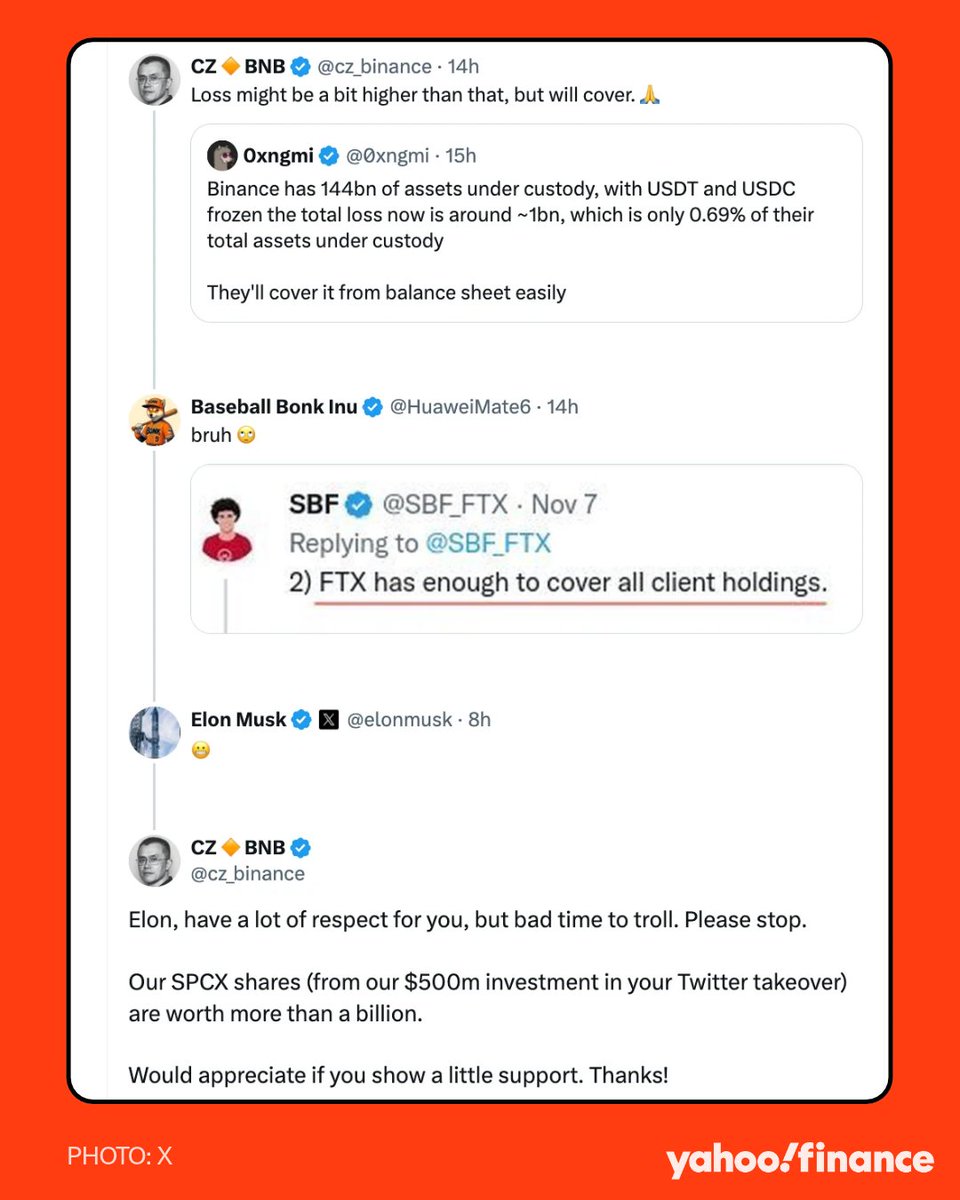
CZ Tells Musk to Stop Trolling, Cites Binance's SpaceX Stake Worth Over $1 Billion
After a $6.3 billion hack, Musk mocked Binance with emojis; CZ pointed to SPCX shares from a $500 million Twitter investment as Yi He said no sale is needed
Binance co-founder Changpeng Zhao publicly asked Elon Musk on Oct. 30 to stop trolling the exchange, writing “bad time to troll. Please stop” and asking for “a little support.” The appeal followed Musk's posts of fire and laughing emojis reacting to the $6.3 billion hack.
Zhao cited Binance's SPCX holding, which he said stems from a $500 million investment in Musk's 2022 Twitter takeover and is now worth more than $1 billion. In a follow-up “rough math” post, he put hack losses at about $6 billion, frozen assets at $3 billion, the SAFU fund at over $1 billion and the remaining gap at roughly $2 billion. Binance separately said it had reserved more than $6.34 billion of company funds, $5 billion of it already held in the affected tokens.
The valuation and ownership link are Zhao's account and were not backed by share documents or sale terms. Co-founder Yi He said annual revenue was sufficient to cover losses, so Binance did not yet need to sell the SpaceX shares. SPCX listed on Nasdaq in June at $135 a share and fell about 10% in the week to Oct. 28, with early investors still subject to staged lockup releases.
Binance froze all deposits and withdrawals after the hack, which investigators suspect was carried out by the North Korean state-sponsored group TraderTraitor; deposits have since been restored. Binance said remaining token purchases would run through market and over-the-counter channels, which could take longer for low-liquidity assets.
Intel CFO Dave Zinsner said 2027 "will not be a year in which we see positive cash flow." The company expects capital spending to rise significantly from $20 billion in 2026 as it ramps Intel 3 and 18A and prepares 14A for production in 2028.
Demand is softening at the same time. CEO Lip-Bu Tan said the PC correction has accelerated over the past two months, and Zinsner said the 2027 plan assumes roughly a 10% decline in PC unit TAM, with industry PC units down about 12% in 2026. Intel guided fourth-quarter revenue to $15 billion-$16 billion, adjusted EPS to $0.25 and adjusted gross margin to 38%, all below estimates.
Server CPUs offer a partial offset: Intel expects industry server CPU units to grow more than 30% in both 2026 and 2027, with supply constrained through 2027 and into 2028. Intel shares fell sharply after the report, joining Amazon in dragging on the tech sector as investors focused on shrinking cash flows.
At least one sector watcher is skeptical of a second-half 2027 PC recovery, arguing that while 2027 may be less negative than 2026, averages still point lower.
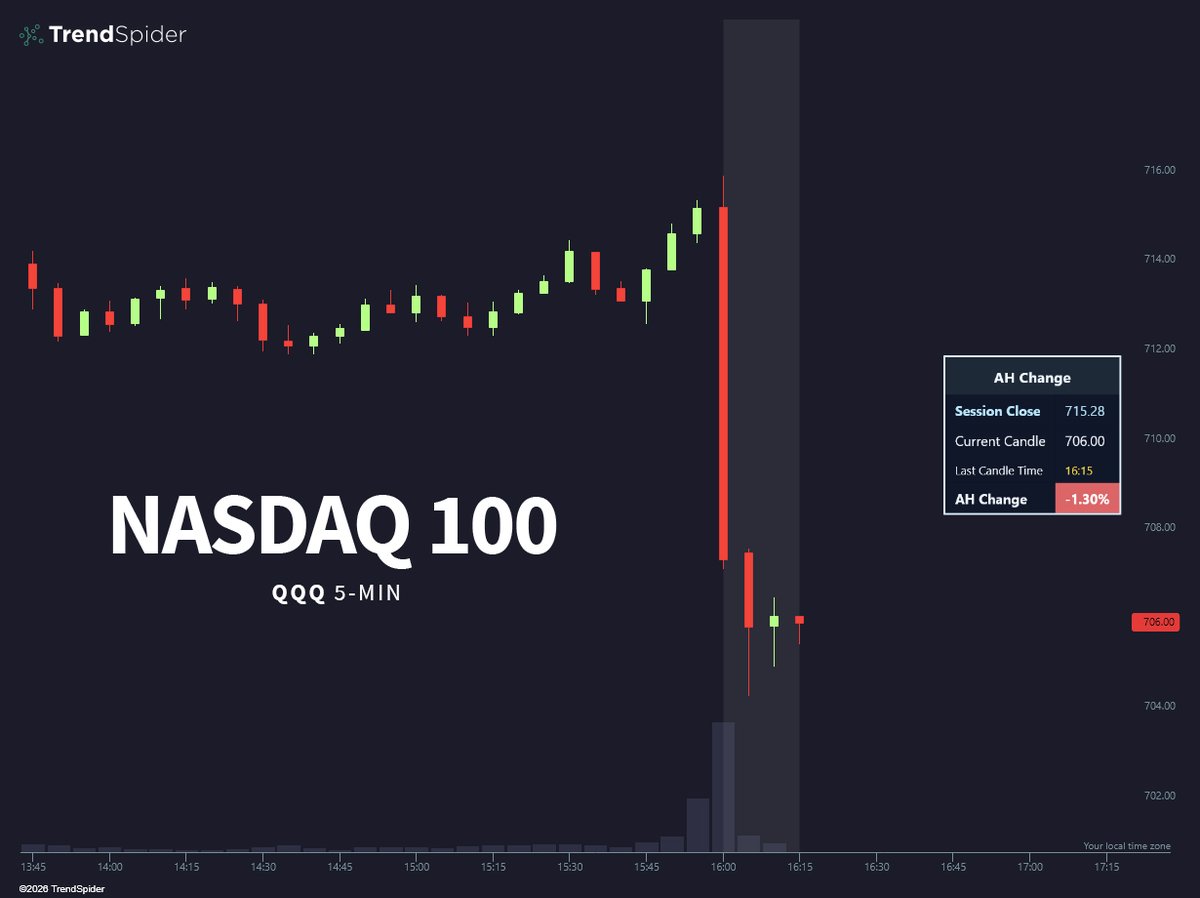
The Nasdaq-100 ETF (QQQ) fell more than 1% in after-hours trading following earnings from Amazon and Intel, dropping nearly 10 points at one stage. Bespoke Investment noted QQQ was set to open below key support at $700.
Amazon reported quarterly earnings of $1.89 per share, missing the Zacks Consensus Estimate of $2.01 and below $1.95 a year earlier. Barron's linked the declines in Amazon and Intel to shrinking cash flows, saying the two were leading drops across the technology sector.
Small caps diverged: the iShares Russell 2000 ETF (IWM) rose 1.1% on the day while QQQ fell 1.2%. Trader reddogt3 flagged $701 as important, with the 200-day moving average near $684 if that fails; Ivanhoff said there was “no widespread panic selling,” calling it “a market of stocks.”
Mike Zaccardi noted Nasdaq-100 futures were in an 8.5% drawdown, describing it as a classic correction ahead of the midterms. Amazon Web Services revenue grew 39%, yet the stock still fell.
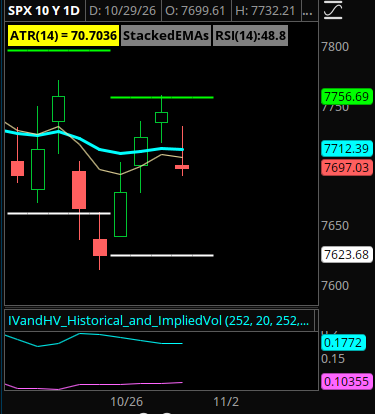
The S&P 500 fell 23.59 points, or 0.36%, to 7,720.39 on Thursday, Oct. 29, 2026, ending a three-day winning streak even though eight of its 11 sectors and roughly 400 members closed higher, according to market data cited by Kalkine.
The divergence stems from the index's market-cap weighting. Alphabet posted its worst day since its 2004 IPO, erasing about $500 billion in market value and dragging communication services to the bottom; ServiceNow, Fortinet and Marvell weighed on technology, while Amazon pulled consumer discretionary lower.
Health care led gains as Eli Lilly closed at a record $1,373.70 and Merck raised its outlook; real estate benefited from lower Treasury yields, and staples and utilities drew defensive demand. NYSE advancers beat decliners 1.95 to 1, with 19 new 52-week highs and six new lows.
Amazon and Intel fell sharply after the bell and Nasdaq-100 futures slid, setting up another session in which a few large names could dominate. Friday brings the Employment Cost Index and earnings from Chevron and AbbVie.
A claim circulating on X that Bloomberg data since 1996 shows all 987 prior sessions with at least 400 gainers closed higher was not independently confirmed in the reporting reviewed.