The US and Iran escalated their confrontation again around the Strait of Hormuz. Iran’s Revolutionary Guard said two tankers struck mines while transiting the waterway and caught fire, while US Central Command said it hit Iranian air defense, communications and radar sites in response to attacks on commercial shipping and US personnel. cnbc.com
The latest clash sits on top of a deteriorating shipping backdrop. Reuters said the renewed fire came after weekend exchanges and earlier attacks on two tankers near Hormuz, the key global oil chokepoint. Iran has also said it struck US-linked sites in Jordan, Bahrain and Iraq, underscoring how the conflict is spreading across the region. reuters.com
Markets are still pricing in disruption risk for crude and shipping. Reuters reported oil rose more than $4 a barrel on Tuesday to a five-week high, so energy equities, tanker operators and oil-linked ETFs such as USO remain the main channels through which traders will watch the fallout. reuters.com
Iran said the tankers were on an “illegal route” and that warnings were ignored; Jordan’s military said it intercepted 10 of 13 missiles and reported no casualties. Those claims were paired with continued US strikes on Iranian military infrastructure, leaving the region on a tighter military and shipping footing. cnbc.com
Dell Technologies reported fiscal Q2 revenue of $46.97 billion, up 58% year over year, with diluted EPS of $6.34 and non-GAAP diluted EPS of $7.04. The company also raised full-year fiscal 2027 revenue guidance to $192 billion and increased its AI-optimized server revenue target to $74 billion.
The key driver was AI infrastructure demand. Dell said it booked $60.9 billion of AI server orders in the quarter, generated $16.4 billion of AI-optimized server revenue, and ended the period with a record $95 billion AI server backlog.
Shares of Dell moved higher after the report, with post-earnings coverage citing gains of roughly 5% to 9%. Investors focused on the combination of a beat-and-raise quarter and the much larger backlog, which points to sustained demand for AI hardware.
Within the Infrastructure Solutions Group, revenue rose 89% to $31.78 billion, including $10.53 billion from traditional servers and networking and $4.85 billion from storage. Management said inference demand is accelerating and enterprise workloads are becoming a major growth engine.
Global long-dated bond yields are climbing again, with the 30-year U.S. Treasury moving back above 5%, while equity markets enter September under pressure. Bloomberg cited JPMorgan’s Grace Peters as saying yields around 5% pose a key risk for global stocks.
The move comes as investors worry about persistent inflation, swelling government deficits and heavy corporate borrowing tied to AI buildouts, all of which have reduced demand for Treasuries. Reuters has also reported that long-dated U.S. yields have surged to levels last seen in 2007, underscoring how quickly borrowing costs have reset.
For equities, higher yields typically hit valuation-sensitive areas first, especially long-duration growth stocks and rate-sensitive defensive shares such as utilities. That makes the current bond selloff a broader market issue, not just a fixed-income story, because it can compress multiples and raise financing costs across sectors.
Sterling and gilt markets are also under strain, adding to fiscal pressure in the UK. With bond yields rising across major markets, investors are increasingly focused on whether stocks can withstand another leg higher in discount rates.
사건 전개
2026-07-15게시물 8개 · 작성자 8명
DTCC announced an October pilot to tokenize stocks and Treasurys with nearly 40 firms, including Microsoft, Circle shares, and QQQ/SPY ETFs.
매크로
US ADP payrolls rise 38,000, missing 47,000 forecast영어 원문
The August private payroll report came in softer than expected, sharpening focus on Friday’s official jobs data and the Fed’s September meeting.
Multiple market wires reported that U.S. private payrolls rose by 38,000 in August, below the 47,000 consensus estimate and down from 44,000 previously. The ADP employment report is released ahead of Friday’s official nonfarm payrolls reading.
Ahead of the release, TMGM cited expectations for a 47,000 gain and noted that a weak ADP print could dent confidence in the upcoming NFP report and feed into September Fed pricing. While ADP is not a perfect leading indicator, it often shapes the tone for the labor-market debate.
The print keeps rates and FX traders focused on how much momentum remains in the U.S. labor market. A softer labor backdrop would tend to support rate-sensitive growth shares, while firmer-than-expected payrolls later in the week would favor sectors that benefit from a higher-for-longer rate setup.
For now, the market is treating the report as an early test of whether payroll growth is merely cooling or slowing enough to matter for policy. The 38,000 reading is still positive, but it landed below consensus and raises the stakes for Friday’s nonfarm release.
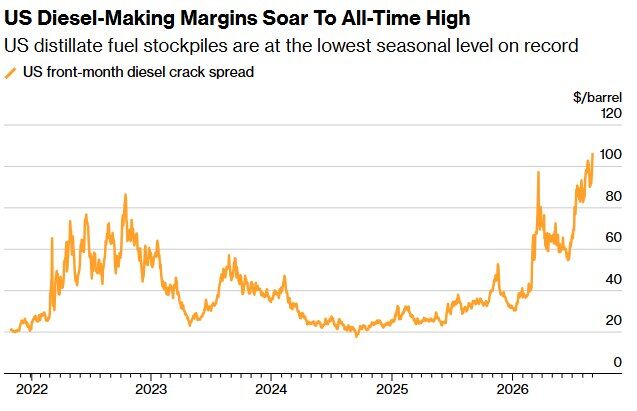
U.S. diesel refining margins surged above $106 a barrel on Tuesday, a record high, while the national average retail diesel price rose to $5.688 a gallon, just shy of April’s peak. Multiple reports point to a market still being squeezed by tight supply and resilient demand.
The backdrop is a series of supply shocks: repeated disruption in the Middle East, shipping risk around the Strait of Hormuz, and ongoing Ukrainian attacks on Russian refineries. In the U.S., elevated refinery runs and solid exports are also drawing down domestic inventories.
The move matters because diesel costs flow quickly into trucking, farming, construction and heating, adding pressure to U.S. inflation. Refiners such as Valero and Marathon Petroleum typically benefit from wider margins, while fuel-sensitive names in logistics, airlines and heavy transport face higher input costs.
So far, there has been no fresh standalone corporate response in the public reporting. The White House previously said President Donald Trump urged refiners in a closed-door meeting to raise diesel and gasoline output to ease pump prices.
사건 전개
2026-07-06게시물 3개 · 작성자 3명
Crude prices returned to pre-war levels while refinery margins rose on tight product supplies and strong summer demand.
기업
Uber cuts 3,300 jobs, trims managers by 20%영어 원문
The ride-hailing company is restructuring to flatten layers and redirect resources toward rides, delivery and robotaxi efforts.
Uber said on Wednesday it will cut about 3,300 jobs, or roughly 10% of its global workforce, in a restructuring aimed at reducing management layers and simplifying its organization. The company also said manager headcount will fall by 20%, with some roles shifting into individual contributor positions.
The move comes after years of rapid expansion that Uber says made the company more complex and harder to run. Reuters reported Uber had about 34,000 employees globally at the end of last year, implying the latest cuts take the company below 30,000 staff.
Investors initially welcomed the announcement, with Uber shares rising about 2% in premarket trading. The company is seeking to reinvest savings into ride-hailing, delivery and autonomous vehicle initiatives, including robotaxi partnerships.
In an internal memo, CEO Dara Khosrowshahi said the overhaul is meant to make Uber “simpler and faster.” Reuters also reported that Uber did not cite AI as the reason for the layoffs, despite broader industry moves to use more automation in operations.
Bloomberg, citing people familiar with the matter, reported that Nvidia is in advanced talks to acquire Hugging Face for about $12.9 billion. The deal could reach roughly $14 billion if employee retention packages are included, and a formal agreement could come as soon as this week.
Hugging Face is widely known as a major platform for open-source AI models and datasets, making it an important layer in the AI developer ecosystem. The reported transaction would extend Nvidia’s reach beyond chips and further into the software stack that supports model development and distribution.
For the market, the headline keeps NVDA at the center of the AI trade as investors assess whether Nvidia is trying to own more of the ecosystem around its accelerators. Shares tied to broader AI infrastructure, including AMZN and GOOGL, may be watched for read-throughs, though neither company is part of the reported transaction.
Neither Nvidia nor Hugging Face has publicly confirmed the talks, so the reported price, structure and timing remain subject to change. For now, the story is best read as a developing deal report rather than a completed acquisition.
사건 전개
기업🔥진행 중
Zuckerberg says countries should not restrict open-weight AI models at G20영어 원문
The comment extends Meta’s open-AI pitch and keeps the focus on regulation, China, and the company’s AI strategy.
Meta CEO Mark Zuckerberg said at a G20 tech meeting that countries should not restrict open-weight AI models. The new remark is being carried by multiple market-wire accounts on X; public reporting that can be independently checked shows a closely related stance from Zuckerberg in which he argued the U.S. should not block Chinese frontier AI models.
The comment fits Meta’s broader push for wider AI distribution. On Aug. 10, Zuckerberg published “The Future for Everyone,” arguing that broader access to AI is the path to a positive AI future, while later reporting also highlighted Meta’s open-weight releases and its use of AI to improve recommendations and advertising across Facebook and Instagram.thestandard.com.hk
For investors, the issue matters because META’s AI story is now tied to both regulation and monetization. The company is spending heavily on AI infrastructure while depending mainly on advertising revenue, so any policy debate over open-weight models is part of the same discussion around how Meta turns AI spending into higher engagement and ad performance.fool.com
Meta has not yet issued a separate formal statement on the G20 remark. The clearest verified context remains Zuckerberg’s recent public advocacy for more open AI access and his earlier warning against curbs on Chinese AI models.restofworld.org
사건 전개
2026-08-10게시물 7개 · 작성자 6명
Meta announced resumption of open-source AI model releases and unveiled new local-run model Muse Glimmer.
규제
Huang urges G20 to avoid AI rules on “theoretical harms” as Lutnick pushes chips영어 원문
At a North Carolina G20 forum, Nvidia’s CEO cast AI as essential infrastructure while U.S. officials pressed a lighter regulatory touch.
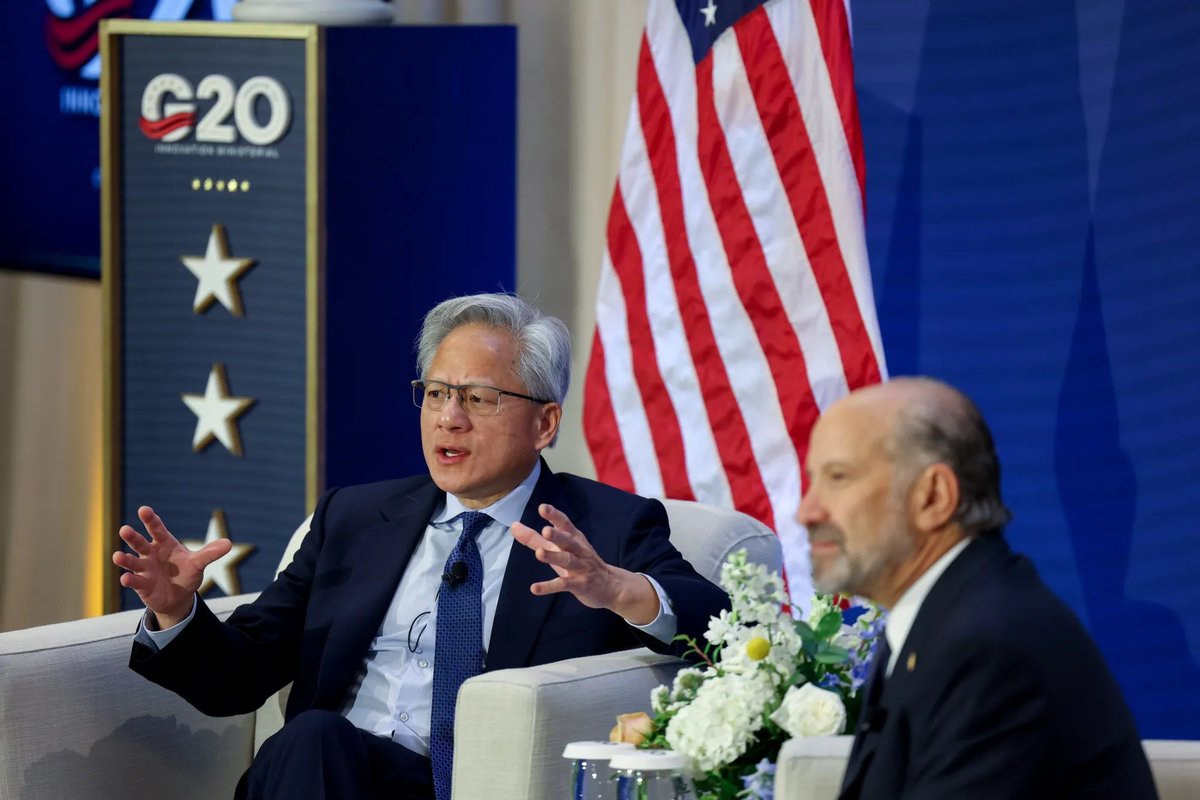
Nvidia CEO Jensen Huang used a G20 innovation meeting in North Carolina on Sept. 2 to argue that governments should not build AI rules around “theoretical harms.” He said AI should be treated as core infrastructure, comparable to water, roads, electricity and the internet.
The event was chaired by U.S. Commerce Secretary Howard Lutnick and White House tech policy chief Michael Kratsios, with delegates from major G20 economies in attendance. Huang also leaned on his “five-layer cake” framework, saying energy, chips, data centers, models, and data and applications form the full AI stack.
For investors, the remarks keep Nvidia and the broader AI infrastructure trade in focus, including data-center builders, power suppliers and semiconductor vendors. The policy backdrop also matters because Lutnick separately signaled that semiconductor tariffs are coming, keeping chip supply chains at the center of Washington’s industrial policy.
Reuters and CNBC both reported Huang’s comments about avoiding rules aimed at “theoretical harms,” while The Hindu and Axios described the U.S. push for a lighter-touch AI regulatory approach at the same meeting. Nvidia’s message was clear: accelerate AI deployment, build out the infrastructure, and regulate for concrete problems rather than abstract ones.
Apple’s new CEO John Ternus sent his first memo to employees on his first day in the role, saying next week’s product launch will be “phenomenal.” Multiple outlets published the memo’s key lines, including his reference to “a huge launch next week” and “incredible products already in the works.”
Ternus, formerly Apple’s hardware engineering chief, represents a more product-centric leadership era for the company. The memo arrives ahead of Apple’s September 9 event, which is expected to be the first major test of the new CEO’s public-facing strategy.
The stock move highlighted in the X signal shows how closely investors are watching Apple’s transition and its next iPhone cycle. AAPL is the clear primary ticker here because both the leadership handoff and launch expectations feed directly into the company’s valuation narrative.
Apple has not disputed the memo’s contents, and the wording was independently reproduced by several media outlets. A separate social-media post from Apple’s marketing chief also pointed to “more to say” on September 9, reinforcing the timeline around the event.
Dell reported fiscal second-quarter revenue of $46.97 billion, up 58% year over year and a record for the company. It also posted record non-GAAP EPS of $7.04 and said AI server orders reached $60.9 billion in the quarter, with AI server revenue of $16.4 billion and backlog ending at $95 billion.
The results add fresh evidence that AI infrastructure spending is still broadening beyond chips into servers, storage, networking and power-related buildouts. Dell COO Jeff Clarke said AI could account for 75% of all data-center demand by 2030, implying 200GW of additional power needs and a market opportunity of more than $1 trillion.
Investors are watching whether Dell can keep converting that backlog into revenue without margin pressure. The company raised full-year FY27 revenue guidance by $25 billion to $192 billion, while traditional servers and networking rose 122% and storage increased 26%, showing the AI cycle is lifting the wider portfolio.
Dell shares traded higher after the report as the market digested the scale of demand and the updated outlook. The key question now is less about whether demand exists than how quickly Dell can turn orders into profitable shipments and services.
Palo Alto Networks CEO Nikesh Arora said AI is pushing both attacks and defenses to machine speed, and that roughly $1 trillion of global cybersecurity infrastructure still needs modernization. He reiterated the point in a CNBC interview and on the company’s earnings call, arguing that systems deployed seven to 10 years ago are not ready for the new threat environment.
The latest update adds fresh scale to that message by tying it to Palo Alto’s fiscal fourth-quarter results. The company said remaining performance obligation topped $20 billion for the first time, ending the year at $21.2 billion, while next-generation security ARR reached $9.1 billion.
Palo Alto also reported fiscal Q4 revenue up 34% year over year to $3.41 billion, above Wall Street expectations. The stock reaction keeps PANW, and peers such as CrowdStrike, in focus as investors reassess whether AI is a headwind for legacy security or a catalyst for a longer replacement cycle.
Arora said Palo Alto has spoken with about 2,000 companies about its Frontier AI Critical Defense Program, which uses advanced models to test defenses, identify vulnerabilities and help customers modernize. The pitch underscores how cyber vendors are trying to turn the AI threat cycle into a sales cycle.
The FDA said it has sent warning letters to 30 telehealth companies over misleading marketing of compounded GLP-1 products. The agency said some promotions imply the products are the same as FDA-approved drugs or obscure who is actually compounding them.
The move extends an enforcement campaign that began in September 2025, when the FDA started targeting direct-to-consumer claims around compounded semaglutide and tirzepatide. The agency has also said that certain GLP-1-related ingredients, including retatrutide and cagrilintide, cannot be legally used in compounding.
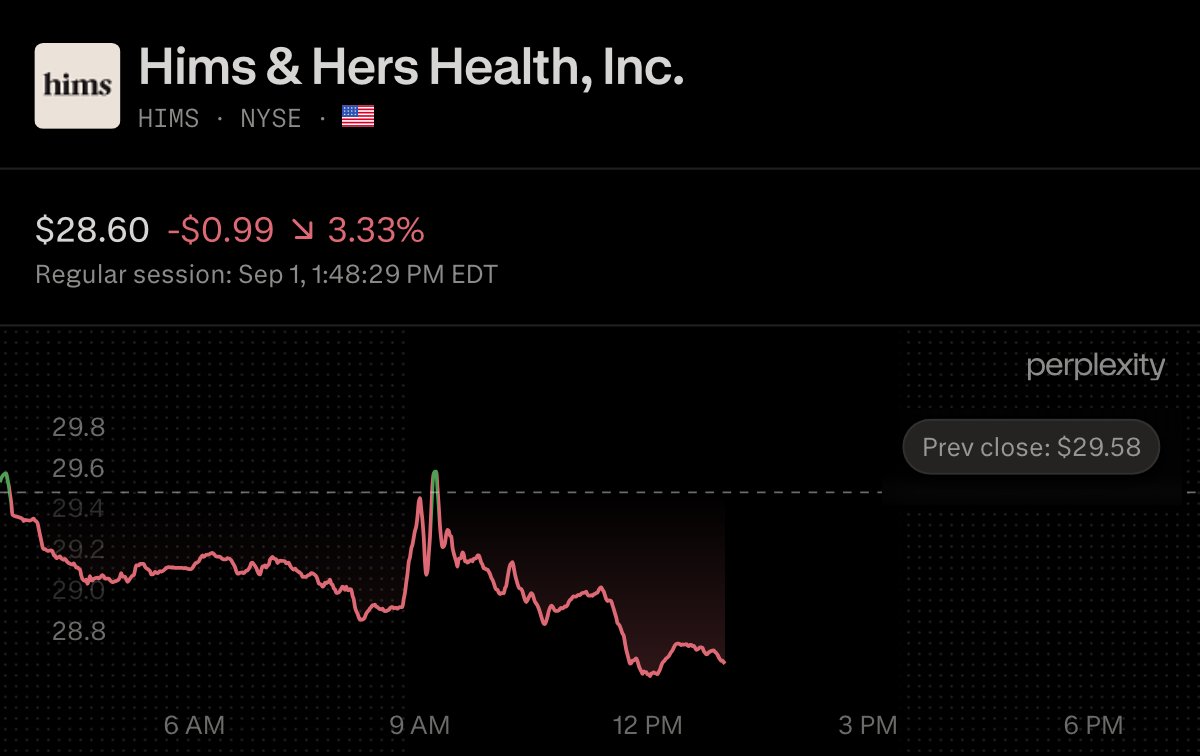
Hims & Hers (HIMS) remains the stock most closely tied to the story after earlier reporting connected it to compounded weight-loss offerings. Novo Nordisk (NVO) and Eli Lilly (LLY) are also relevant because their branded obesity drugs are the benchmark products against which compounded versions are marketed.
The FDA said compounded drugs can still play a role in shortages or unique patient needs, but not as a workaround to the approval process. For telehealth operators, the key risk is now how products are labeled, sourced and described to consumers.
사건 전개
2026-07-05게시물 3개 · 작성자 3명
기업
Chevron to invest $7 billion in Venezuela, output seen rising to 600,000 barrels a day영어 원문
The company confirmed updated joint-venture terms and new acreage in the Orinoco Belt, underscoring a major U.S. oil return to Venezuela.
Chevron said on Wednesday it has reached updated agreements with Venezuela covering its local joint ventures and assigned the company additional acreage in the Orinoco Belt. The company plans to invest more than $7 billion over the next five years and said output could rise to about 600,000 barrels a day.
The move follows earlier reporting that Chevron was nearing a deal to run two large oil fields in Venezuela. It also comes as Washington has been encouraging fresh U.S. energy investment in the country, making Chevron the clearest corporate beneficiary of the latest policy shift.
For investors, the key ticker is CVX. The deal matters because Venezuela remains one of Chevron’s most material non-U.S. upstream positions, and the new terms could support a larger production base and longer-duration capital deployment.
Chevron said the new arrangements are intended to support durable long-term investment and project development. Reuters reported that the company framed the deal as part of its broader portfolio strategy, while the operational backdrop in Venezuela remains politically and legally sensitive.
U.S. forecasters and multiple outlets said Tropical Storm Edouard made landfall along the Gulf Coast on Sept. 1 with maximum sustained winds of about 60 mph. Earlier in the day, the storm was tracked about 30 miles south of Cameron, Louisiana, and roughly 50 miles southeast of Port Arthur, Texas.
The track matters because it cuts across a key corridor for chemicals, natural gas and crude moving through Texas and Louisiana. Forecasters had already warned of 3 to 6 inches of rain along the Texas coast, with isolated totals up to 9 inches, and later reports lifted that to 3 to 7 inches with local maxima of 12 inches, raising the risk of flash flooding in low-lying and urban areas.
The immediate market focus is on Gulf Coast refiners and midstream names such as VLO, MPC and PSX, whose assets, docks and logistics networks can be exposed to storm-related disruptions. Bloomberg and NBC said the storm could interfere with shipping, power supply and energy operations along the coast.
So far, the reporting has centered on official storm-track updates rather than company denials or confirmed facility outages. The next key question is whether ports, refineries or pipeline operations see any forced shutdowns or throughput limits as the system moves inland.
Nike shares kept sliding on Tuesday, with NKE closing around $39.06 and trading near a 12-year low. The move adds a fresh market milestone to a story that has already been building for months.
The latest pressure comes after Nike reported fiscal 2026 revenue of $46.4 billion, with Greater China sales down 11% and broader growth still under strain. Recent coverage also points to inventory cleanup and channel restructuring, both of which may weigh on near-term revenue.
The stock’s weakness is spilling into the broader athletic-apparel trade, with investors comparing Nike’s pace of recovery against rivals and sports retailers. For the market, the key question is less about whether the shares are cheap and more about when earnings and demand stabilize.
Nike had not issued a new company statement tied specifically to the latest share-price move at the time of reporting. Investors are now looking ahead to the next earnings update and any clearer signs of improvement in China.
사건 전개
2026-07-22게시물 8개 · 작성자 7명
Nike announced it will cut off thousands of online distributors in China starting in January and restructure its online presence for a more consistent consumer experience.
TSMC is said to need nearly twice as much chipmaking equipment this quarter as it projected in December. The company is also building and outfitting about 20 factories worldwide, versus a normal pace of roughly five, underscoring how aggressively it is adding advanced capacity.
The update extends a recent run of capital-spending increases at the world’s largest contract chipmaker. TSMC has already raised its 2026 capex guide to $60 billion-$64 billion, and investors have been watching how AI servers, advanced packaging, and 2-nanometer ramps are reshaping equipment demand.semiwiki.com theglobeandmail.com
The stock most directly tied to the story is TSM, while equipment names such as ASML, Applied Materials, and Lam Research are likely to stay in the market’s line of sight. If tool demand remains elevated, the pace of leading-edge fab build-outs will remain a key read-through for the semiconductor equipment group.
TSMC has not publicly added a fresh rebuttal or clarification to this report. The new information is the latest external evidence that the company’s capacity expansion is still being pulled forward by AI-related demand.
MongoDB Q2 revenue rises 30% to $771.8 million, FY27 guide lifted to $3.03 billion영어 원문
The database software maker beat estimates on both revenue and EPS, while Atlas and EA growth kept the market focused on the durability of its AI-linked demand.
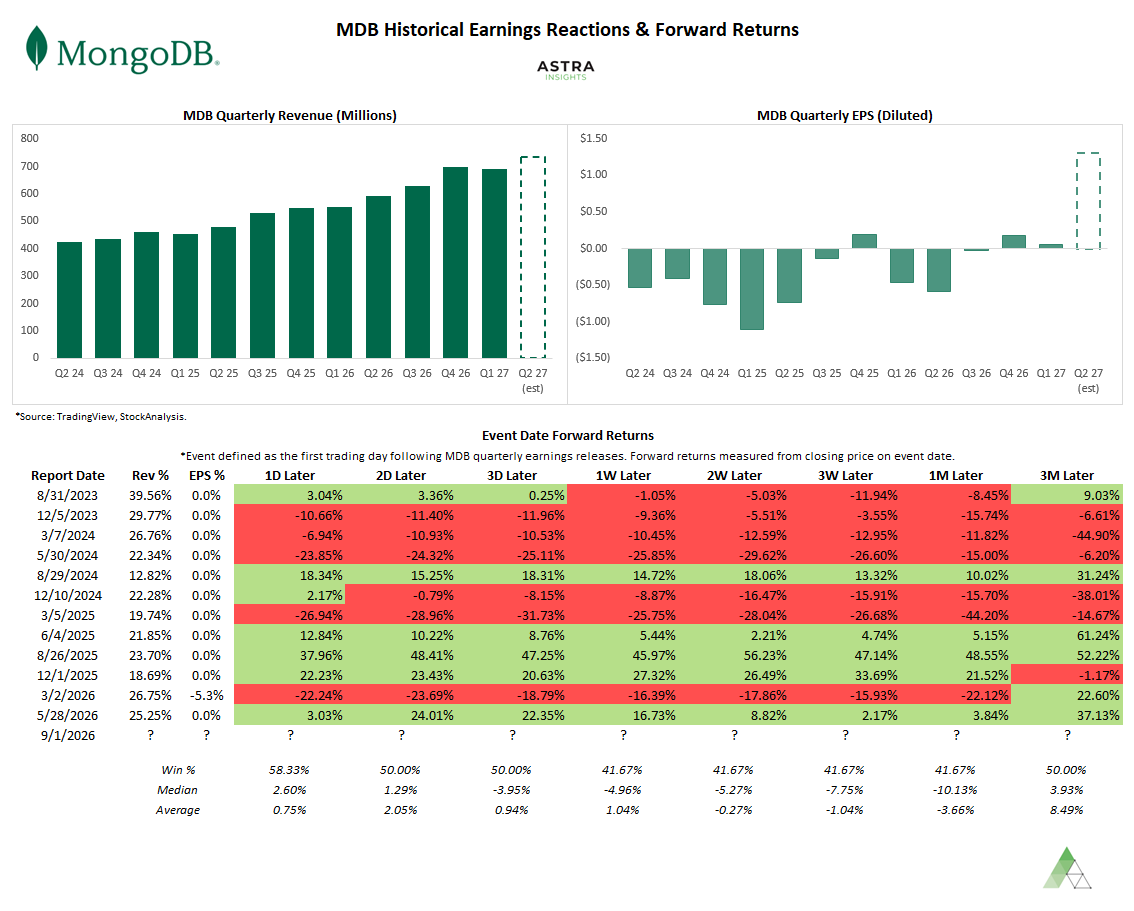
MongoDB reported second-quarter fiscal 2027 revenue of $771.8 million, up 30% from a year earlier and above Wall Street expectations. Adjusted EPS came in at $1.90, also ahead of consensus, while RPO climbed 91% year over year to $1.52 billion and non-GAAP operating margin expanded to 24%.
The quarter extended a string of stronger operating results for the database company. Management said subscription revenue reached $747.1 million, with Atlas and EA/other businesses both contributing to the top-line acceleration, reinforcing the view that demand from cloud and AI workloads remains a key driver.
MongoDB also raised full-year fiscal 2027 guidance, now seeing revenue of $2.99 billion to $3.03 billion and adjusted EPS of $6.39 to $6.58. The company said free cash flow nearly doubled to $137.6 million, while cash and investments stood at about $2.4 billion at quarter-end.
Even with the beat-and-raise report, MDB shares were volatile in premarket/after-hours trading, according to market coverage. Investors appear to be weighing the stronger fundamentals against expectations that the stock had already run hard into earnings and the durability of the growth trajectory ahead.
The quarter topped estimates across revenue and EPS, but a near-line Q3 outlook tempered the initial after-hours move as investors focused on growth durability and the Flex transition.
GitLab reported fiscal second-quarter revenue of $286.3 million for the period ended July 31, 2026, up 21% from a year earlier and ahead of the Street. Adjusted EPS came in at $0.24, also above consensus, and the company lifted full-year revenue guidance to $1.129 billion-$1.133 billion while raising adjusted EPS guidance to $0.85-$0.87.
The update added more than just a beat: management said net ARR grew 42% year over year, total RPO rose 16% to $1.2 billion, and first orders exceeded roughly 1,700 in the quarter. Those figures match the company’s earnings release and call, which framed the quarter as a broad-based demand acceleration.
The stock’s after-hours reaction was mixed because third-quarter revenue guidance of $281 million-$283 million was only roughly in line with expectations, even as the full-year outlook moved higher. For GTLB, the market is now watching whether the Flex transition changes revenue timing and whether AI-linked products can keep expanding usage.
Management said Flex may create near-term noise in reported revenue recognition, but it did not change the company’s underlying investment priorities. The company also highlighted paid consumption run-rate above $40 million, suggesting early traction in newer monetization models.
Credo Technology Group reported fiscal first-quarter 2027 revenue of $479.0 million for the period ended August 1, 2026, up 114.7% from a year earlier. Adjusted diluted EPS came in at $1.20, above the $1.17 consensus estimate, and non-GAAP net income reached $236.3 million.
The company also guided fiscal second-quarter revenue to $525 million to $535 million, above the Street’s roughly $516.9 million estimate. Credo said non-GAAP gross margin should remain in a 67% to 69% range, underscoring continued strength in its high-speed connectivity products for AI data-center buildouts.
The update keeps CRDO in focus among AI-infrastructure names as investors weigh whether hyperscaler demand can sustain the company’s pace of growth. Shares had already been watched closely ahead of earnings, and the latest numbers will likely keep attention on optical revenue expansion and margin durability.
In its release, Credo said first-quarter non-GAAP gross margin was 68.0% and operating expenses were $95.2 million. Management framed the business as benefiting from expanding demand across optics and copper connectivity solutions as AI infrastructure scales.
Multiple reports citing The Wall Street Journal say Google is preparing to release Gemini 3.8 Flash as soon as Wednesday, with the model reportedly codenamed Skimaki. The reports add that Google employees preferred it in internal coding tests run inside Jetski, Google’s in-house coding tool.
The significance is less about a single model launch than about Google’s release rhythm. Gemini 3.7 Flash was released on August 13, and a September 2 launch window would put the two Flash versions about 20 days apart, reinforcing the idea that Google is using the Flash tier for rapid iteration.
For Alphabet, AI-model updates matter because coding capability has become one of the clearest competitive battlegrounds with Anthropic and OpenAI. Traders reacted modestly to the report in after-hours trading, although the exact move varied across secondary market trackers.
Google has not publicly confirmed Gemini 3.8 Flash’s specs, pricing or safety review, so the internal preference test remains an unverified report rather than a formal benchmark result. Another circulating claim says Gemini 4 is still in post-training, but that has not been officially confirmed by Google either.
사건 전개
2026-07-08게시물 3개 · 작성자 3명
Google won a consumer lawsuit over Gemini data tracking and integrated Gemini Omni Flash into Adobe Firefly.
기업
Meta launches Muse Voice Transcribe at $0.18/hour for 25 languages영어 원문
The first real-time audio model from Meta Superintelligence Labs is now in the Model API, adding a monetizable speech workload to Meta’s AI stack.
Meta Superintelligence Labs has launched Muse Voice Transcribe, its first real-time audio perception model. The product is now available through Meta’s Model API and is also being rolled out in Meta AI for Mac and Muse Code.
The release targets one of the hardest parts of speech recognition: streaming transcription with diarization and endpointing. Meta’s developer docs say Muse supports 25 languages with code-switching, speaker labels, partial transcripts and turn-level timestamps, while word-level timestamps and confidence scores are not available.
Meta says the service is priced at $0.18 per hour of audio, which works out to $3 per 1,000 minutes. That puts Muse into the growing market for paid speech APIs alongside products from OpenAI, Google, AssemblyAI and Deepgram, and gives META a new AI workload to monetize beyond text and images.
Meta has not published independent benchmark details or full technical specs for the model. Social posts citing a 70+ language footprint, 20+ speakers and a 3.1% word error rate have not been confirmed in the official materials reviewed here.
S&P Global is exploring a potential separation of Capital IQ Pro, its flagship financial data and research platform, according to Bloomberg and other reports. One option under review is a public listing for the unit, with a possible valuation in the high single-digit billions.
Capital IQ Pro sits at the center of S&P Global Market Intelligence, alongside the company’s ratings and index businesses. The group only completed the spin-off of its Mobility division in July, underscoring an active reshaping of its portfolio.
The report matters for SPGI because data-platform assets often trade at richer multiples than slower-growing core businesses, so any spinout talk can change the sum-of-the-parts view of the company. SPGI shares rose on the report, while investors will watch for board action, banker mandates, or any formal comment from management.
For now, the discussions are still described as early-stage, and there has been no company confirmation of a final plan.
Morgan Stanley upgraded Robinhood Markets to Overweight from Equal-Weight and raised its price target to $150 from $124. The firm said Robinhood’s prediction markets business is emerging as a fresh growth driver. scanx.trade
The call builds on Robinhood’s second-quarter results, when net revenues rose 32% year over year to $1.31 billion. Morgan Stanley highlighted that Robinhood generated $156 million from prediction markets in Q2, with less than 2 million users driving that revenue, underscoring the company’s ability to monetize its existing customer base. diariobitcoin.com scanx.trade
The upgrade adds to a growing market narrative around Robinhood’s expanding product set, including options, subscriptions and prediction markets. Morgan Stanley also projects revenue will grow at a 23% CAGR through 2028 to $8.0 billion, while EBITDA margins expand from 48.0% in 2026 to 53% in 2028. scanx.trade
HOOD is the main stock in focus, and the brokerage’s shares were already reacting to renewed optimism around prediction markets and broader crypto-related sentiment. Robinhood’s own July 29 Q2 release provides the underlying financial backdrop for Morgan Stanley’s revised view. investors.com
Berenberg on Sept. 2 initiated coverage of AST SpaceMobile (ASTS) with a Buy rating and a $92 price target. The bank said ASTS is the only company that has demonstrated true cellular broadband from space to unmodified smartphones.
The note highlighted ASTS’s commercial setup as much as its technology, citing more than 60 mobile network operator partners and coverage of roughly 3 billion subscribers. In Berenberg’s view, the company’s edge comes from the combination of distribution, spectrum access and satellite-network execution.
ASTS drew fresh attention in the market, while Rocket Lab (RKLB) and Planet Labs (PL) were also lifted by the broader space-sector call. The stock has already been trading against a backdrop of BlueBird deployment updates, Japan regulatory progress and debate over how quickly direct-to-device services can scale.
For now, the key new development is the research initiation itself and the price target attached to it. Investors will still be watching for confirmation on deployment cadence, carrier rollouts and any follow-through from the analyst’s commercialization timeline.
Bloomberg reported that Coinbase co-founder Fred Ehrsam is seeking control of at least three oil fields in Venezuela’s Orinoco Belt: Boca, Guico and Guara. According to people familiar with the matter, the blocks are currently operated by Alvorada Heavy Industries Ltda, while U.S. officials are considering whether to revoke those existing contracts.
The talks come as the U.S. works to reshape Venezuela’s oil industry by replacing some Maduro-era operators with Trump-aligned investors. Separate reports say Ehrsam has made multiple trips to Caracas since at least May to explore oil-and-gas opportunities, but no formal agreement has been confirmed publicly.
For Coinbase investors, this is a founder-level geopolitical investment story rather than a corporate operational update. Still, the market may read it as another sign that crypto capital is moving into traditional assets and frontier jurisdictions, which could keep $COIN in trading chatter even without direct business impact.
The latest reports also mention plans by U.S. Energy Secretary Chris Wright to visit Caracas in early September and present as many as 17 oil and gas agreements. For now, the key confirmed takeaway is that negotiations are ongoing and any contract changes remain under review.
GoPro said Tuesday it has entered into a definitive merger agreement with private photonics company Starman Optical in a $285 million all-cash transaction. Under the deal, Starman will own about 90% of the combined company, while GoPro shareholders will receive $1.14 in cash per share and the stock will remain listed on Nasdaq.
The announcement extends GoPro’s recent AI pivot narrative. In the company’s release, CEO Nicholas Woodman said the merger is intended to help GoPro grow across consumer, commercial and defense markets, with a focus on imaging, optics and AI infrastructure.
Shares reacted sharply, with CNBC reporting a 40% close on the day after the announcement. The stock had already been volatile after YouTube creator Markiplier disclosed an 8.5% stake, adding fuel to the rally and drawing in retail traders.
For investors, the move centers on GPRO’s recapitalization, debt reduction and strategic reset rather than a traditional camera business story. Reports also say the deal includes repayment of about $92 million of GoPro debt, though the company has not provided further operating detail.
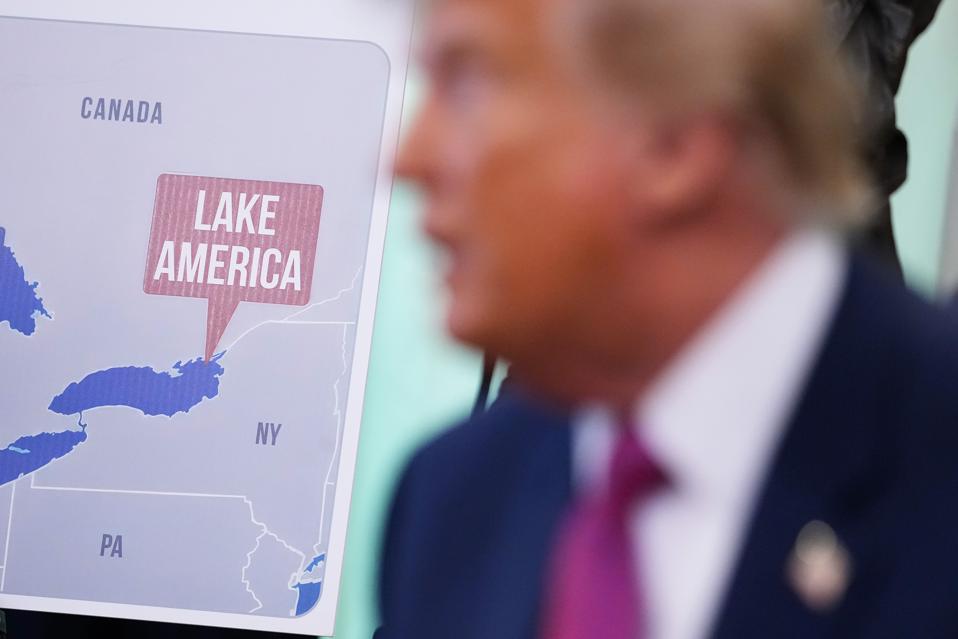
Apple has updated Apple Maps to show Lake Ontario as “Lake America” for U.S. users, while Canadian users continue to see the original name. Multiple outlets reported the change on Sept. 1 as Apple followed the federal naming update.
The rename traces back to President Trump’s executive order signed on Aug. 27, which directed the U.S. naming system to adopt “Lake America.” Google had already made a similar U.S.-only change, underscoring how major platforms are aligning map labels with official U.S. sources.
The backdrop is an intensifying trade dispute between Washington and Ottawa. The Trump administration imposed 50% tariffs on $20 billion of Canadian goods, and Canada said it would respond with dollar-for-dollar counter-tariffs.
For Apple, the issue is not a business forecast but a regional content and compliance decision that affects how AAPL is displayed to users in different countries. The mixed treatment across Apple, Google and MapQuest also shows how mapping services can become a visible extension of geopolitical conflict.
사건 전개
2026-07-24게시물 3개 · 작성자 3명
Intel reported Q2 revenue of $16.1B beating estimates, raised target price to $136, and highlighted accelerating foundry progress.
매크로
Trump pressures refiners as VLO hits $362.79 and MPC up 813.86%영어 원문
The White House push for higher gasoline and diesel output puts refinery capacity, crack spreads and fuel prices back in focus.
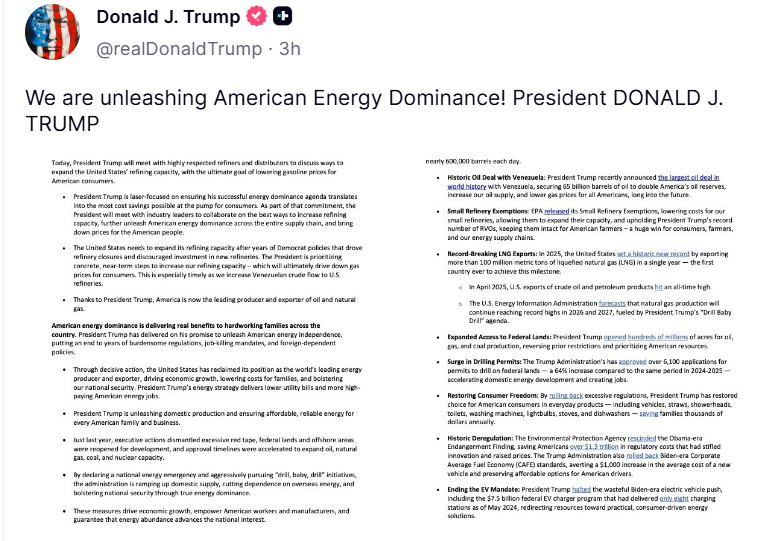
President Donald Trump met with U.S. refiners and fuel distributors on Tuesday and pressed them to boost gasoline and diesel output, while asking what it would take to expand refining capacity. A White House official said the discussion touched on faster permitting, regulatory changes and new investment.
The push comes with U.S. fuel prices still elevated. In the week ended Aug. 24, retail gasoline averaged $4.085 a gallon and diesel $5.652 a gallon, according to EIA-linked reporting, with diesel at a four-year high.
The move has kept the market focused on refinery utilization, distillate margins and the policy backdrop for Valero, Marathon Petroleum, Phillips 66 and HF Sinclair. Valero recently touched a fresh 52-week high of $362.79, while Marathon Petroleum’s stock has compounded sharply over the past decade.
Industry commentary remains cautious on the idea of building new refineries. Reporting noted that refinery ownership can be profitable in the U.S., but constructing a new plant is difficult, underscoring the execution risk behind any near-term capacity expansion plan.
Dell posts $47B in Q2 revenue, $95B AI backlog, and a record-low 8% expense-rate outlook영어 원문
Management said AI demand is broadening beyond neoclouds into sovereign and enterprise customers, while upgrade cycles lengthen for price-sensitive buyers.
Dell reported fiscal second-quarter revenue of $47.0 billion, a record, alongside record non-GAAP EPS of $7.04. The company said its AI server business produced $60.9 billion in orders, $16.4 billion in revenue, and a $95 billion backlog at quarter-end.
The key new takeaway from management is margin discipline: full-year operating expenses are now expected to run at about 8% of revenue, the lowest rate in Dell’s 42-year history. Dell also said demand is broadening from neoclouds and sovereign customers into enterprise accounts, while more price-sensitive customers are extending refresh cycles.
The update keeps Dell at the center of the AI infrastructure trade, with investors watching DELL as well as server, storage, networking, and data-center supply-chain names. Dell also raised its full-year revenue guide to $192.0 billion, reinforcing attention on order conversion, supply constraints, and the pace of AI deployment.
On the call, management said demand continues to outpace supply and pointed to constraints in DRAM, NAND, CPUs, optical components, and power racks. Rather than signaling a slowdown, Dell framed those bottlenecks as evidence of how quickly AI infrastructure is scaling across its portfolio.
U.S. stocks started September on a softer note, and the X feed was full of traders calling out a familiar seasonal pattern. Posts singled out names such as IREN and AXTI as selling pressure hit AI-linked shares, while QQQ was also flagged for an early decline on the first trading day of the month.
IREN remains one of the most closely watched names in the AI infrastructure trade. Zacks reported on Sept. 1 that the company is planning $2.5 billion to $3 billion in capex for its AI cloud expansion, backed by $1.4 billion in existing funding, while Seeking Alpha articles on Sept. 1 and Sept. 2 referenced roughly $4 billion in contracted ARR and progress in the company’s AI pivot.
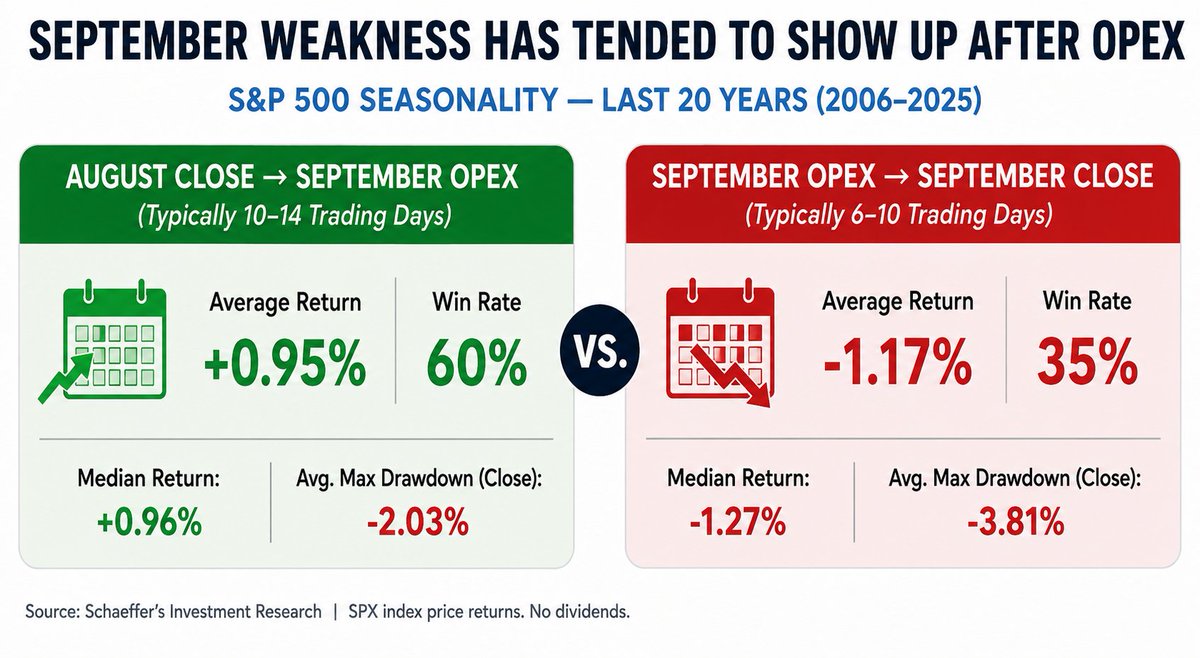
The market reaction matters because IREN has become a proxy for whether investors will keep paying for aggressive AI buildouts. Broader coverage this week has also emphasized that September is historically a weak month for equities, especially for high-valuation growth stocks that are sensitive to rates and positioning.
No fresh company response was included in the social posts cited here. What is clear from the cross-checks is that the first-session weakness is being framed as part of a broader rotation out of AI-related shares and into more defensive areas of the market.
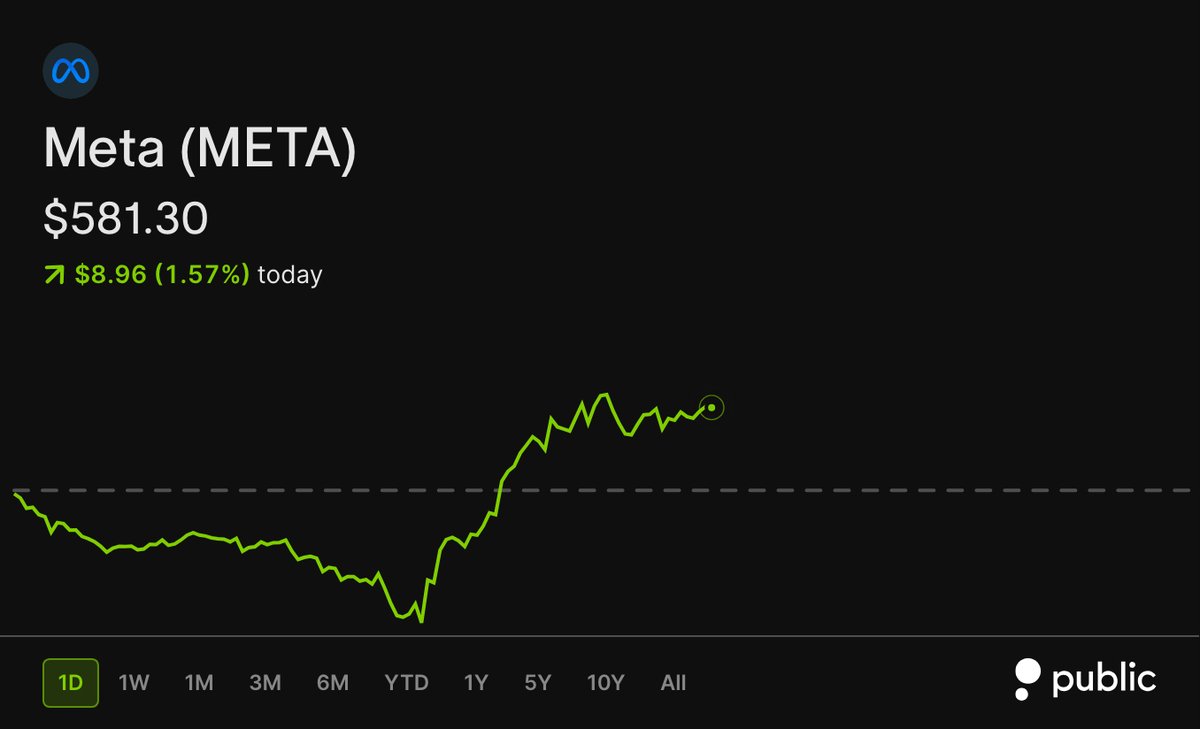
X signals showed Alphabet (GOOGL) nearing only its third close below the 200-day moving average in more than a year, while Meta (META) rose 1.6% against a 1.3% drop in QQQ. The move reflects a live market setup rather than any fresh company announcement.
The broader backdrop is a softer risk appetite: the Fear & Greed Index was back at 44 out of 100, a “Fear” reading. In that setting, market participants are watching whether leadership in large-cap tech is narrowing or rotating.
For portfolio flows, the gap matters because GOOGL and META are key weights in major tech benchmarks, and their relative strength can sway index-tracking products. Traders also referenced inverse ETFs such as TSLQ and METQ as hedging tools, though that does not imply a directional call.
The most verifiable new information today is the price action and technical commentary itself. Barchart’s market snapshot also showed the major U.S. indexes higher on the session, underscoring that the move is about internal tech dispersion rather than a broad market selloff.
시장
Dow drops 418.97 points as WTI climbs to $91.60 and oil shocks markets영어 원문
Rising energy prices and higher yields hit equities across the US and Asia at the start of September
US stocks opened September lower, with the Dow falling 418.97 points to 52,766.93, the S&P 500 down 54.67 points and the Nasdaq off 271.11 points. West Texas Intermediate crude rose to $91.60 a barrel and Brent climbed to $96.45.
The move came as investors priced in a faster policy-tightening path from central banks, with the latest jump in oil feeding renewed inflation worries. Bond yields also climbed to multi-decade highs in several major markets.
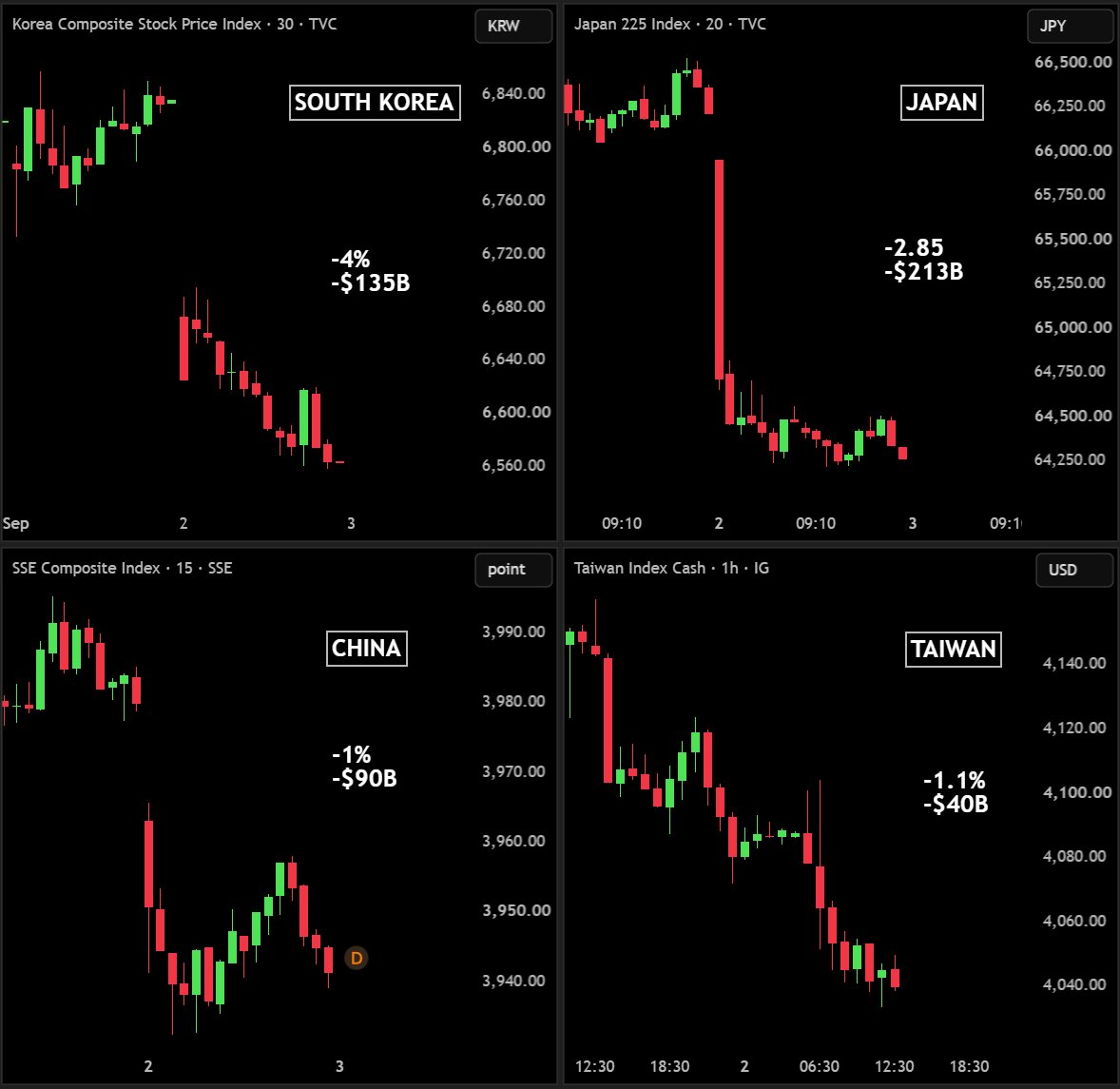
Energy shares were helped by the firmer crude prices, while high-duration technology names came under pressure. Asian markets broadly followed Wall Street lower, with Japan, Hong Kong and Seoul all weaker in the session.
Traders are now focused on upcoming US jobs and inflation data, which could either reinforce or challenge the current rate-hike bets. No separate official response was reported in the linked coverage.
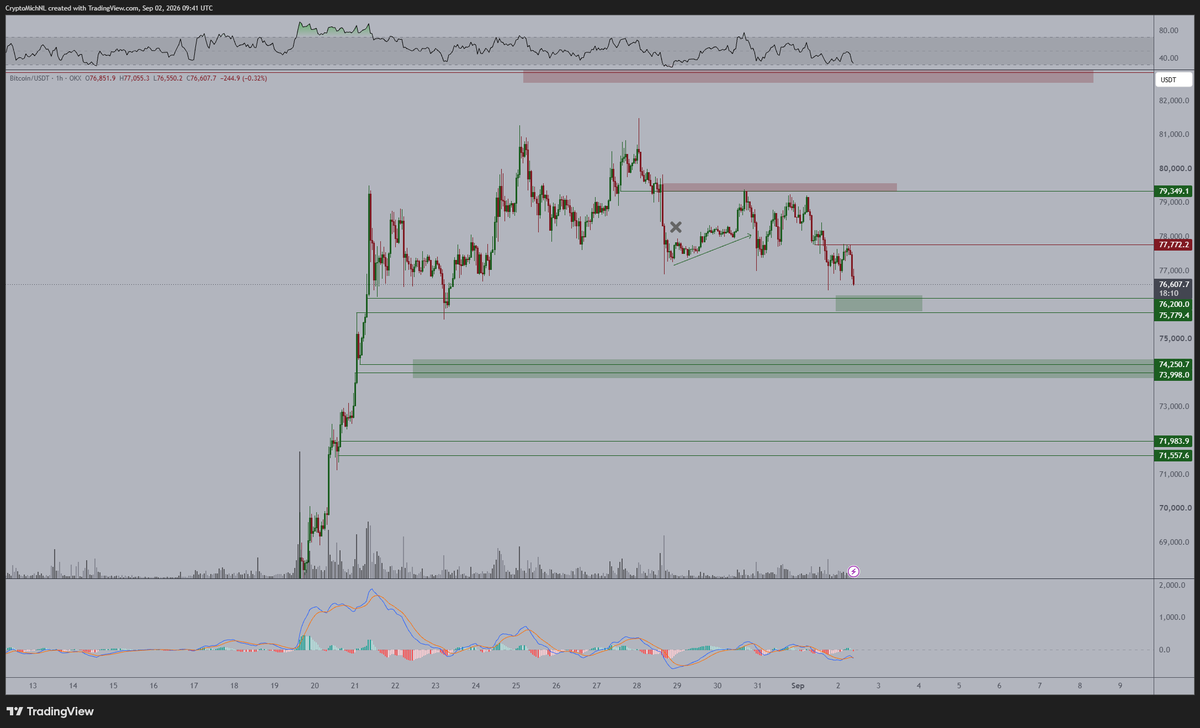
Multiple X posts from trader Michaël van de Poppe suggest Bitcoin may have swept local lows and could eventually break higher, with $82,700 cited as the next upside level. He also said BTC was clearly rejected around $77,700 and could retest the $76,400 area, with $76,200 seen as a nearby zone to watch.
The backdrop remains a broad tug-of-war between risk appetite and macro/geopolitical noise. Recent market coverage has described Bitcoin as trading around the $77,000-$80,000 area, where repeated attempts to extend the rally have met supply and forced traders to focus on liquidity-driven price action.
The immediate market implication is for high-beta crypto names and crypto-linked equities such as Coinbase (COIN). When BTC is range-bound, trading activity, derivatives positioning and altcoin relative strength all become more important for sentiment than a single directional break.
It is worth noting that the specific price levels in the X posts are trader views, not official benchmarks. We treat them as market commentary, not as settled fact, and use them only to frame the current debate over support and resistance.
X trading chatter showed SpaceX-linked SPCX logging an eighth straight green session and moving back toward its IPO volume-weighted average price. Separate market posts also said the S&P 500 had gone 20 sessions without a +/-1% day, underscoring a calm broader tape.
The rebound sits on top of a stronger August for SpaceX. Recent coverage said the stock had been recovering after an earnings-supported reversal, while other reporting noted that the IPO had earlier pulled capital away from smaller space names.
For the market, the move matters most for space-sector relatives and thematic flows. Redwire (RDW) has already been cited as one of the stocks that lagged after SpaceX’s debut, and traders are still watching whether capital continues rotating within space and other high-beta groups.
The “8 straight green days” and “back toward IPO aVWAP” claims come from today’s X signals, while the roughly 32% month-to-date gain and the IPO price reference can be cross-checked in recent coverage. No company statement was included in the signal set.
사건 전개
2026-07-05게시물 4개 · 작성자 4명
매크로
Spain August jobless claims rise 44.4K, topping forecasts of 15.4K영어 원문
Seasonal summer layoffs remained evident, even as net employment growth stayed positive in the latest monthly reading
Spain’s registered unemployment rose by 44,419 in August, well above the 15,400 increase expected by economists. At the same time, monthly employment net change came in at 83.8K versus 79.6K previously, according to the X signal.
The release fits Spain’s typical late-summer pattern, when tourism-related hiring fades and some education contracts end. Cross-check reporting also showed Social Security contributors fell by 162,840 in August, while unemployment stood at 2.356 million, the lowest August reading since 2007.
For markets, this is primarily a macro FX and Europe-growth input rather than a stock-specific event. The euro can react to shifts in expectations for Spanish and broader euro-area activity, while domestic cyclical shares may also be watched for sensitivity to labor-market and demand trends.
The key message from the new data is that unemployment rose more than forecast, but employment creation remained positive. Investors will likely look to upcoming regional and euro-area indicators for confirmation of whether the August move was purely seasonal or more persistent.
France’s budget deficit stood at €145.9 billion at the end of July, according to data published by the French finance ministry and reported by Reuters. That compares with €106.8 billion in the same period a year earlier, underscoring a wider year-to-date fiscal shortfall.boursorama.com
The figure is a cumulative seven-month reading, not a single-month print. France’s official budget monthly report showed the state budget balance at -€93.3 billion at end-May 2026, versus -€94.0 billion a year earlier, suggesting the deterioration accelerated later in the summer.budget.gouv.fr
For markets, the data matter because they feed into expectations for French government borrowing needs, sovereign spreads and the tone around euro-area fiscal risk. Traders often watch the CAC 40’s banks, insurers and rate-sensitive sectors when French fiscal headlines land, even though today’s update contains no new policy response from Paris.fxstreet.com
No official rebuttal or revision was included in the materials reviewed. The new print is a data update, not a policy announcement.
The Mortgage Bankers Association said U.S. mortgage applications rose 0.8% in the week ended Aug. 28, reversing a 1% decline the prior week. At the same time, the average contract rate on 30-year fixed mortgages edged up to 6.79% from 6.78%.cnbc.com tradingeconomics.com
The details point to a still-fragile housing-finance backdrop. Purchase applications gained 2%, while refinance demand slipped 1% to 2% depending on the survey series cited, and ARM usage climbed to about 8%, its highest level in five weeks.cnbc.com housingwire.com
For markets, the read-through matters for homebuilders, mortgage lenders and housing-related financials because higher rates keep affordability tight and limit refinancing activity. MBA also noted that the 30-year rate had already risen to 6.78% in the prior week, highlighting how demand remains stuck near multi-week highs in borrowing costs.housingwire.com
The latest print suggests mortgage demand is stabilizing only marginally, with lower-rate ARMs attracting more borrowers while conventional refinance incentives remain weak.
사건 전개
2026-07-08게시물 7개 · 작성자 7명
MBA mortgage applications fell 2.2%, with FOMC minutes and other key events scheduled.
2026-07-15게시물 7개 · 작성자 7명
MBA data showed 30-year mortgage rate rose to 6.65%, with PPI and Fed speeches on the calendar.
DTCC officially launched the institutional pilot, with JPMorgan, BlackRock, and Goldman trading tokenized stocks, ETFs, and Treasurys; full commercial launch set for October.
2026-07-21게시물 7개 · 작성자 6명
JPMorgan CEO Jamie Dimon said he wouldn't buy stocks or long-dated Treasurys at current prices, citing underestimated geopolitical and fiscal risks.
2026-08-20게시물 8개 · 작성자 8명
JPMorgan criticized Bessent's expanded Treasury buybacks as lacking credibility, addressing liquidity rather than underlying fiscal issues.
2026-08-21게시물 3개 · 작성자 3명
JPMorgan warned of a potential autumn selloff, echoing 2000 AI bubble concerns; 30-year Treasury yield rebounded to 5.27% after buyback news.
2026-08-25게시물 3개 · 작성자 3명
Bessent announced a 'zero leakage' Iran sanctions strategy targeting digital assets; 30-year Treasury yield broke 5.3%, highest since 2007.
2026-09-02게시물 1개 · 작성자 1명
JPMorgan said a 5% 10-year Treasury yield could trigger a stock selloff, with a possible 5%-8% correction.
Nike shares fell below $40 to $39.41, a nearly 12-year low, while Chinese rival Qiaodan expanded to around 6,000 stores, intensifying competitive pressure.
2026-09-02게시물 1개 · 작성자 1명
Nike shares dropped nearly 40% this year to their lowest since 2014, with fiscal 2026 revenue of $46.4 billion down 2%, digital sales down 12%, and China revenue down 11%.
Discussions centered on SpaceX's IPO pricing outperforming legacy underwriters and options market warnings about unsustainable tech and AI trade volatility.
2026-07-16게시물 70개 · 작성자 59명
SpaceX stock fell below its IPO price for the first time, with $1.25 trillion wiped from its market cap in 29 days.
2026-07-28게시물 28개 · 작성자 26명
Despite Starship's successful splashdown, SpaceX stock dropped further, while markets reacted to semiconductor declines and AI financing concerns.
2026-08-21게시물 46개 · 작성자 35명
Anthropic plans to file for IPO by end of August, expecting to match or exceed SpaceX's record $86.2 billion raise.
2026-09-01게시물 7개 · 작성자 6명
Goldman Sachs sees AI capex peaking in H1 2028, while Anthropic's IPO details emerged, including $86 billion raise and lock-up arrangements.
2026-09-02게시물 3개 · 작성자 3명
Seraphim launched a space-focused ETF, with commentary on how the SpaceX IPO impacted the sector and exposed weaker theses.