Trump says U.S. weighs buying sizable Bitcoin as White House pushes CLARITY Act
The president floated the idea at an Aug. 19 White House crypto summit, keeping the focus on policy and a possible shift from holding to accumulating bitcoin.
President Donald Trump said at a White House meeting on Aug. 19 that the U.S. is considering buying a “sizable” amount of Bitcoin and other cryptocurrencies. He did not announce a purchase program, timeline or funding plan, saying he would rely on recommendations from SEC Chair Paul Atkins and other officials.
The comments came during a summit with crypto executives, market participants and federal regulators. Trump also said his administration had ended the “war on crypto” and urged Congress to advance the CLARITY Act, a market-structure bill meant to clarify the roles of the SEC and CFTC.
Crypto markets reacted to the latest policy signals, with Bitcoin reportedly climbing above $68,000 and Hyperliquid’s HYPE token jumping after Trump’s remarks. For the industry, the bigger question is whether the U.S. merely keeps discussing a strategic bitcoin reserve or moves toward open-market accumulation.
So far, the White House has offered no concrete buying plan. The event added fresh political momentum to the legislative push, but the bill still faces Senate hurdles before any broader regulatory framework becomes law.
President Donald Trump said the U.S. is launching what he called the “most crushing economic operation ever taken against a country” on Iran, warning that any country doing business with Tehran could face “tremendous economic consequences.” The remarks mark a fresh public escalation in the U.S. pressure campaign on Iran.
The move comes on top of a naval blockade of the Strait of Hormuz and signals that Washington may lean further into financial and trade restrictions. ABC News, the New York Times and AP have all reported that additional sanctions are being discussed, while Trump has recently said he is “not in a hurry” to settle the dispute.
For markets, the Strait of Hormuz remains the key flashpoint. AP said the waterway has carried roughly 20% of global oil supplies, so any tighter squeeze on shipping or sanctions on Iran-linked trade could keep energy, tanker and insurance names in focus.
ABC reported that U.S. officials are considering steps against larger Chinese banks that facilitate Iranian oil trade, though no final decision has been announced. Iranian officials have said publicly that Washington and Tehran are not negotiating.
The U.S. Treasury said Wednesday it will more than double the size of its debt buybacks, with the focus on longer-dated bonds. The announcement quickly pushed Treasury yields lower and lifted gold, silver and bitcoin in the same session.
The move comes after long-dated U.S. yields climbed toward multi-year highs, reviving concern about the government’s borrowing costs. Traders interpreted the buyback expansion as an effort to steady the long end of the curve rather than a routine cash-management tweak.
Markets reacted across asset classes: bonds rallied, the dollar weakened, and higher-duration assets and precious metals caught a bid. Bond ETFs and long-duration holdings were among the most sensitive to the shift in rates.
CNBC said the expanded buybacks underscore strain in the government debt market, while Bloomberg described the step as a surprise bid to contain long-term borrowing costs. Treasury has not framed the move as a policy pivot beyond the larger repurchase plan.
Moderna shares surged as much as 177% on Wednesday, pushing the company’s market value higher by about $30 billion at one point. The move followed late-stage data from intismeran, its personalized mRNA cancer therapy developed with Merck, which showed reduced recurrence and spread in high-risk melanoma patients.
The trial studied patients with resected stage IIB, IIC, III or IV cutaneous melanoma and tested intismeran together with Merck’s Keytruda. Moderna and Merck said the combination was the first in this adjuvant melanoma setting to show statistically significant and clinically meaningful improvements in recurrence-free survival and distant metastasis-free survival versus Keytruda alone.
The rally lifted the Nasdaq biotech index to a record high, while Merck also climbed and U.S.-listed BioNTech and Novavax moved higher. Investors have been looking for signs that Moderna’s mRNA platform can generate meaningful value beyond COVID vaccines, and the melanoma readout is now being viewed as a key proof point.
Merck and Moderna said the INTerpath-001 study enrolled 1,137 patients and will continue to follow secondary endpoints including overall survival. The companies also said they plan to present the data at an upcoming medical meeting and engage U.S. regulators on filing plans for intismeran autogene with Keytruda.
Bitcoin climbed to around $71,000 intraday on Aug. 19, extending a fast rebound that caught heavily positioned bears offside. CoinGlass-based tallies cited by multiple outlets showed more than $1 billion in short liquidations within an hour and roughly $3 billion in total crypto liquidations over the day.
The move followed the U.S. Treasury’s decision to at least double the size of liquidity-support buybacks in the 10-year to 30-year coupon sectors. The announcement came after long-dated Treasury yields had pushed to multiyear highs, which had tightened financial conditions and weighed on risk assets.
Crypto-related equities also moved higher, with Coinbase and Strategy among the names traders watched most closely as bitcoin accelerated. Spot bitcoin ETFs also saw fresh inflows, helping reinforce the rally in both the token and linked equities.
While market participants framed the spike as a short squeeze, the Treasury action itself was the hard catalyst, not a forecast. The key issue now is whether the stronger price action is backed by sustained demand rather than forced covering alone.
Marvell Technology disclosed in an August 18 SEC filing that it issued Google a warrant to buy up to 58,970,907 shares at $206.58 each, giving the search giant a potential $12.2 billion equity stake. The filing says the commercial agreement was signed on July 29 and the warrant runs through August 18, 2033. sec.gov
The agreement covers a broad set of custom silicon products that attach to Google’s TPU ecosystem, including AI inference accelerators, storage controllers, network interface controllers, memory interface controllers and near-memory compute. Reuters reported that, if Google meets the purchase targets embedded in the arrangement, the partnership could translate into about $120 billion of revenue for Marvell through fiscal 2033. reuters.com
Shares of Marvell jumped on the news, with Reuters citing an intraday gain of nearly 8% and CNBC saying the stock rallied close to 10% at one point. Broadcom, which has long been Google’s main custom-chip partner, fell about 5% in the same session, while Alphabet traded little changed. cnbc.com reuters.com
The filing is important because it turns a chip-supply partnership into a quantified equity-and-orders structure, giving the market a clearer benchmark for the size of Google’s TPU-related spending plans. It also signals that Google’s custom silicon supply base is widening, even as Broadcom remains a major incumbent in the segment. sec.gov
Bloomberg reported on Aug. 20 that Meta has quietly become one of Microsoft’s largest AI customers, spending hundreds of millions of dollars a year on Azure AI services. The report says Meta is processing trillions of tokens a week through Azure Foundry and using OpenAI models to evaluate its own AI outputs.
The update adds a new layer to Meta’s evolving AI infrastructure strategy. Recent reporting has shown the company exploring ways to monetize its own compute buildout, even as it continues to rely heavily on outside cloud capacity for training, inference and model evaluation.
For investors, the setup keeps Microsoft, Meta and the broader AI cloud stack in focus. More Azure demand from Meta would support Microsoft’s cloud narrative, while Meta’s dependence on external compute underscores the scale of its AI spending and the challenge of turning that investment into revenue.
Neither company has publicly detailed the full scope or term of the arrangement in response to the new report. The key takeaway is that Meta remains both a potential AI cloud seller and a major AI cloud customer at the same time.
Stripe said it has agreed to acquire OpenRouter, a model gateway that routes token traffic across more than 400 models from over 80 providers. The company did not disclose terms in its announcement.
The deal had already been reported by several outlets last week, with CNBC and other reports citing people familiar with the matter saying the price was above $7 billion. Stripe’s own statement focuses on OpenRouter’s role in helping businesses optimize model choice, speed and cost.
For Stripe, the purchase extends its push beyond payments into AI infrastructure, building on products such as Token Billing. OpenRouter has also been used by companies including NVIDIA, Zoom and Lovable, underscoring demand for neutral model-routing layers.
Neither company disclosed when the transaction will close. OpenRouter said joining Stripe should help it accelerate its mission of supporting a multi-model AI ecosystem.
How this story unfolded
2026-07-2414 posts · 11 authors
Reports emerged that Stripe is in talks to acquire AI model marketplace OpenRouter, potentially for up to $10 billion.
2026-08-17
Company
OpenAI says it could go public in 2027 as ARR tops $40 billion
A more explicit internal IPO signal adds fresh context to OpenAI’s late-stage private-market push and its push to retain talent
OpenAI CFO Sarah Friar reportedly told employees the company could be a public company in 2027, or sooner if growth keeps accelerating. The remark, relayed by multiple media reports, is the clearest internal timeline signal yet from the ChatGPT maker.
The update comes on top of a string of prior disclosures. CNBC reported in late June that OpenAI had confidentially filed with the SEC, in late July that its annualized recurring revenue in July topped the entire second quarter, and on Aug. 10 that it completed roughly $7 billion in secondary share sales at an $852 billion valuation.
For investors, the timing matters because OpenAI sits at the center of several listed-company narratives, including Microsoft and the broader AI infrastructure trade. A firmer IPO outlook also keeps attention on how quickly enterprise demand can support the company’s heavy compute spending.
OpenAI has not publicly set a definitive listing date. The latest comments should be read as an internal planning signal rather than a formal filing update.
Company
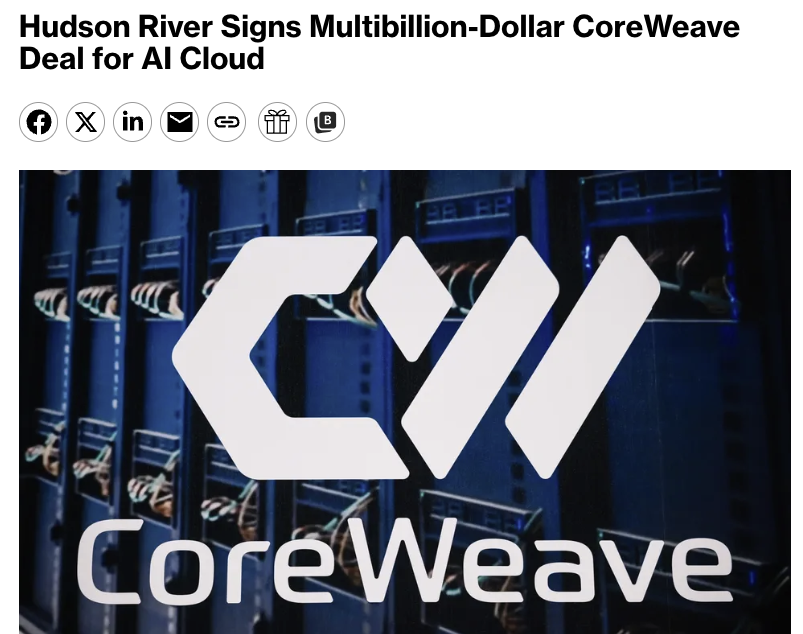
CoreWeave, HRT strike multibillion-dollar AI cloud deal with Vera Rubin access
The new trading-firm win expands CoreWeave’s reach into finance and gives Nvidia’s next GPU platform an early customer.
CoreWeave said it has signed a multi-year AI cloud agreement with Hudson River Trading, one of the world’s best-known quantitative trading firms. HRT will use CoreWeave for trading research and model development and will get early broad access to Nvidia’s upcoming Vera Rubin platform.
The deal adds to CoreWeave’s recent run of large AI infrastructure wins. The company previously disclosed a roughly $21 billion long-term order from Meta and a multi-year agreement with Anthropic, underscoring how demand for compute remains central to AI model training and inference.Reuters StockTitan
Shares of CoreWeave were down about 0.3% premarket, suggesting investors were treating the news as incremental rather than transformative. The partnership also gives Nvidia another early adopter for Vera Rubin, reinforcing expectations that next-generation accelerators will be tightly tied to large external AI workloads.
Neither company disclosed full financial terms beyond descriptions such as “multibillion-dollar” and multi-year. The deal is framed as a compute and research collaboration, not a one-off hardware sale.
Walmart Q2 EPS tops at $0.81 as U.S. comps rise just 2.6%, Q3 outlook at $0.62-$0.64
The retailer beat on earnings but missed on U.S. sales growth and issued lighter third-quarter profit guidance, underscoring pressure on U.S. consumers.
Walmart reported adjusted earnings per share of $0.81 on revenue of $187.9 billion in the second quarter, but U.S. comparable sales rose only 2.6%, below the 3.7% consensus estimate. The company also guided third-quarter adjusted EPS to $0.62 to $0.64, versus the $0.68 expected by analysts.
Management said consumers remain stretched, with higher gasoline prices still weighing on spending patterns. The company also pointed to lower pharmacy pricing as an additional drag, while continuing to lean on its low-price strategy and higher-margin businesses to offset cost pressure.
Shares of WMT eased after the report as investors focused on the slowdown in U.S. comp sales and the softer near-term profit outlook. The print also matters for other retail names such as Target and Amazon, since Walmart is often treated as a read-through on the health of the U.S. consumer.
Walmart did not change its longer-term message, but the quarter highlights the gap between top-line resilience and margin pressure. For the market, the key question is whether fuel, logistics and other input costs remain high enough to limit how much pricing power the retailer can pass through.
Micron adds $10 billion research hub as U.S. investment plan reaches $250 billion
The Boise-based lab widens Micron’s U.S. push beyond manufacturing into long-horizon memory and packaging R&D, underscoring how AI demand is reshaping the company’s capital map.
Micron Technology said on Thursday it will invest $10 billion to launch Micron Research Labs in Boise, Idaho, a long-term U.S. research hub focused on advanced memory, compute architectures, packaging, and future semiconductor manufacturing. The company framed the project as a new pillar in its domestic technology buildout.
The announcement comes on top of Micron’s previously disclosed plan to raise its U.S. investment to $250 billion through 2035. Recent company updates have also highlighted construction progress in New York and the broader expansion of its U.S. manufacturing footprint.
For investors, the latest step keeps MU at the center of the AI-memory trade, where capital spending, supply-chain localization and future DRAM demand are all tightly linked. Nearby market chatter also notes that Duquesne Family Office exited its Micron stake in the second quarter, adding a separate institutional-flow angle to the stock’s narrative.
Micron has not yet broken out a year-by-year spending schedule for the new research lab. The $10 billion figure refers to the research platform, while the $250 billion figure covers the company’s total planned U.S. investment through 2035.
SK hynix and its labor union are close to a tentative agreement that would pay 60% of employee bonuses in company stock and 40% in cash, according to Korean media reports on Aug. 20. The union is expected to hold a vote soon at an emergency delegates’ meeting.
The talks come as the chipmaker’s earnings and cash generation have surged on demand for high-bandwidth memory used in AI systems. Earlier reporting said first-half operating profit reached 98.1529 trillion won, while a simple application of the 10% profit-sharing rule would imply a bonus pool of 9.8153 trillion won.
The compensation debate is landing alongside a massive 40 trillion won share-buyback program unveiled by SK hynix this week. Investors are watching whether the company’s more aggressive capital-return stance and a stock-based bonus structure become a template for the broader Korean chip sector.
The union had previously pushed back against a heavier stock component and lock-up restrictions, arguing they would shift market risk onto workers. Final wording has not been disclosed yet, and the company has said more details will be shared after the internal union process is completed.
Yonhap reported that South Korean President Lee met SK Group Chairman Chey Tae-won on Thursday. The meeting comes as investors continue to digest SK hynix’s newly announced 40 trillion won share buyback and cancellation program.
Earlier this week, SK hynix said it would repurchase and retire 40.00434 trillion won, or about $28.8 billion, of treasury shares, the largest such program ever by a listed South Korean company. The chipmaker also lifted its 2025-2027 capital-return target to more than 50% of cumulative free cash flow.
The stock-return plan has kept attention on Korea’s major memory makers, especially SK hynix and Samsung Electronics, as the AI memory cycle remains a key driver of earnings and capital allocation. SK hynix also said it may announce more shareholder-return measures around its third-quarter results in October.
The public record does not specify what Lee and Chey discussed. But the timing underscores how corporate capital returns, chip investment, and government policy are increasingly linked in South Korea’s semiconductor sector.
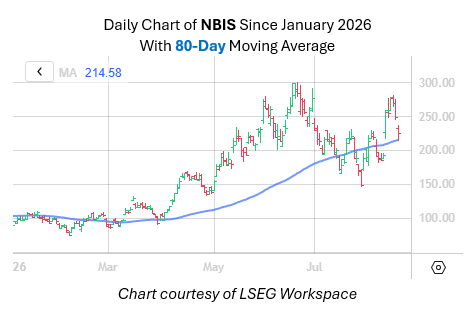
Nebius Group said on August 19 that it priced an upsized $5.0 billion private offering of convertible senior notes, split between $3.0 billion of 0.50% notes due 2030 and $2.0 billion of 4.50% notes due 2034. The company expects the notes to settle on or about August 24, subject to customary closing conditions.
The financing was paired with separate exchange agreements for a limited number of holders of Nebius’s existing 2029 and 2031 convertibles. In those transactions, the company said it will exchange $400 million of 2029 notes and $400 million of 2031 notes for roughly 15.8 million Class A shares, depending on each holder’s negotiated terms.
Nebius said it intends to use the proceeds for data-center construction and build-out, full-stack AI cloud development, expansion of its data-center footprint, GPU procurement and general corporate purposes. The deal was upsized from an earlier $4.5 billion proposal announced one day before pricing.
NBIS traded sharply lower on the announcement before stabilizing around the low-$200s. Investors are focused on how the new notes, plus the exchange transactions, could affect dilution and the company’s capital structure as it ramps spending.
Robinhood CEO Vlad Tenev said tokenization is already expanding access to U.S. assets in more than 120 countries, while U.S. investors are being left behind. The comments add fresh momentum to the company’s push into onchain stock exposure, stablecoin lending and agentic trading.
The backdrop is Robinhood’s early-July launch of Robinhood Chain mainnet and Stock Tokens in the Robinhood Wallet across more than 120 countries, subject to jurisdiction. The company also began rolling out Robinhood Earn in the U.S. and said it now serves nearly 28 million customers across 38 countries and three continents.
For markets, the key ticker is Robinhood (HOOD), alongside crypto trading infrastructure and tokenization-related names. The pitch centers on around-the-clock trading, instant settlement and cross-border distribution of U.S. assets, which could keep tokenized equities and DeFi rails in the spotlight.
Robinhood has framed tokenization as a core part of its long-term product strategy, not a one-off launch. Tenev has recently described it as an early-stage “supercycle,” reinforcing the company’s push to tie traditional finance to blockchain-based market access.
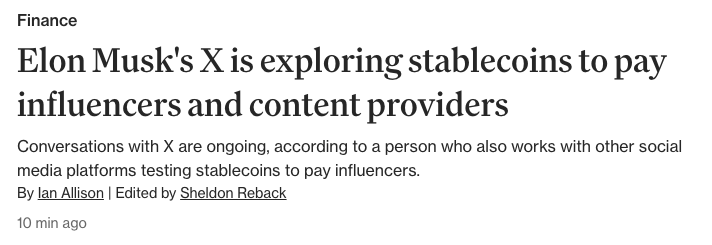
CoinDesk reported that Elon Musk’s X is exploring stablecoin payments for content creators and influencers, including Circle’s USDC. The discussion comes as the platform rewires how it pays creators.
X has already said it will retire its current Creator Revenue Sharing program on Sept. 7 and launch Original Content Rewards on Sept. 8. Under the new rules, creators need at least 500 verified followers and 500,000 qualifying Home Timeline impressions over the prior 90 days.
The shift matters for the broader creator economy because it changes both the eligibility bar and the kind of content the platform wants to reward. Circle is the most obvious market-linked name here, although X has only been reported to be exploring the option, not finalizing it.
X has not publicly confirmed a stablecoin payout rollout or disclosed timing, partners or rollout markets. For now, the new information is the reported exploration itself, layered onto an already announced overhaul of creator monetization.
Amazon Prime Air targets nearly 500 U.S. cities as 30-minute drone delivery reaches 11 sites
The company says its drone network will scale from 11 operating locations to a far wider U.S. footprint by year-end, sharpening competition in fast delivery.
Amazon said on Aug. 19 that Prime Air will expand drone delivery to nearly 500 U.S. cities and towns by the end of 2026, up from its current footprint of 11 operating locations. The company says the service can deliver eligible packages in as fast as 30 minutes, with Prime members getting free delivery on orders of $50 or more.
The expansion builds on a rollout that already spans seven states and includes markets such as Arizona, Florida, Kansas, Louisiana, Michigan, Nebraska and Texas. Amazon also said it has FAA Part 135 certification, and that its drones use a Detect-and-Avoid system to monitor airspace and make real-time safety decisions.
For Amazon, the move strengthens the case that drone delivery can become part of its broader logistics network and a potential lever for faster fulfillment. Investors will also be watching the competitive backdrop, where Alphabet’s Wing, Walmart, DoorDash and Zipline are all vying for share in the same last-mile space.
The announcement comes with familiar community concerns around noise, privacy and safety, but Amazon is pitching the program as a scaled, low-cost service for suburban areas rather than a niche experiment. Reports from CNBC, The Verge and ABC News broadly matched Amazon’s figures and launch timeline.
Nvidia is reportedly in discussions to invest in Mercor as part of a new funding round that could value the AI data supplier at about $200 billion, according to a report cited widely across financial news accounts on X. The reported move would add another layer to Nvidia’s push deeper into the AI training-data stack.
Mercor is based in San Francisco and provides expert sourcing, evaluation, and talent-matching services for AI labs and companies. Public company profiles differ on its cumulative funding total: one database lists about $483.6 million, while another puts the figure at roughly $558.6 million, underscoring that the startup’s financing history has not been consistently reported across sources.
The broader backdrop is Nvidia’s expanding involvement in the ecosystem around model training and post-training. X posts about the Mercor deal also said Nvidia spent tens of millions of dollars with Mercor last quarter to help build Nemotron, but that spending figure has not been officially confirmed and should be treated as market chatter unless disclosed by the companies.
For markets, the story matters because it links NVDA to the fast-growing data-labeling and expert-evaluation segment that supports frontier AI models. Any confirmed equity investment could also lift attention on Mercor as a supplier in the AI training chain, alongside other companies tied to model data, evaluation, and compute infrastructure.
YouTube offers creators millions to block Netflix deals
The latest move uses temporary exclusivity incentives to keep top channels from drifting to Netflix, underscoring how creator talent has become a frontline battleground.
Bloomberg reported on Aug. 19 that YouTube is offering popular channels millions of dollars if they upload exclusively to the platform for a set period and stay away from Netflix. The move marks a fresh escalation in the competition for creator-led video content.
The contest has been building for months. Previous reporting showed Netflix striking deals with YouTube-born names including Ms. Rachel, Mark Rober, Rhett & Link and other creator brands, while YouTube has publicly defended its model as the place where creators can scale audiences and businesses.
For Alphabet, the wager is about protecting YouTube’s scale, ad reach and creator ecosystem. For Netflix, the battle raises the cost of landing creator hits and may force the streamer to keep widening its partnerships beyond traditional film and TV.
The latest Bloomberg report says the incentives are temporary and tied to exclusivity, but it does not disclose the full list of channels or contract terms. Neither company has provided a full public comment confirming the details of the arrangement.
How this story unfolded
2026-06-25
Regulation🔥Developing
S&P lifts Micron to BBB+ on stronger near-term demand confidence
The upgrade adds fresh confirmation to the AI-memory theme and could matter for funding costs and sentiment
S&P Global Ratings upgraded Micron Technology’s long-term issuer rating to BBB+ from BBB, while keeping the outlook positive, citing higher confidence in near-term demand. The move marks another step up after S&P had already lifted Micron to BBB earlier this year.
The backdrop is a market that has increasingly treated Micron as a key AI-memory beneficiary. Investors have focused on tight HBM supply, stronger pricing, and the possibility that AI demand is making memory more durable than in past cycles.
The rating action may also spill over to peers and suppliers across the semiconductor chain, including SK hynix, Samsung Electronics, and equipment names tied to memory-capacity expansion. For Micron, the bigger implication is sentiment: better credit quality can reinforce the case for lower funding risk and a stronger investment narrative.
Micron has not announced any new operating guidance in connection with the rating move. S&P’s message is centered on demand visibility, not on a blanket endorsement of the entire chip sector.
How this story unfolded
2026-06-243 posts · 3 authors
US tech and AI chip stocks led gains while a sell-off hit, with SK Hynix proposing a Nasdaq ADR listing.
2026-06-255 posts · 5 authors
Micron raised capex guidance and surged, stabilizing markets after the AI-driven sell-off.
Earnings
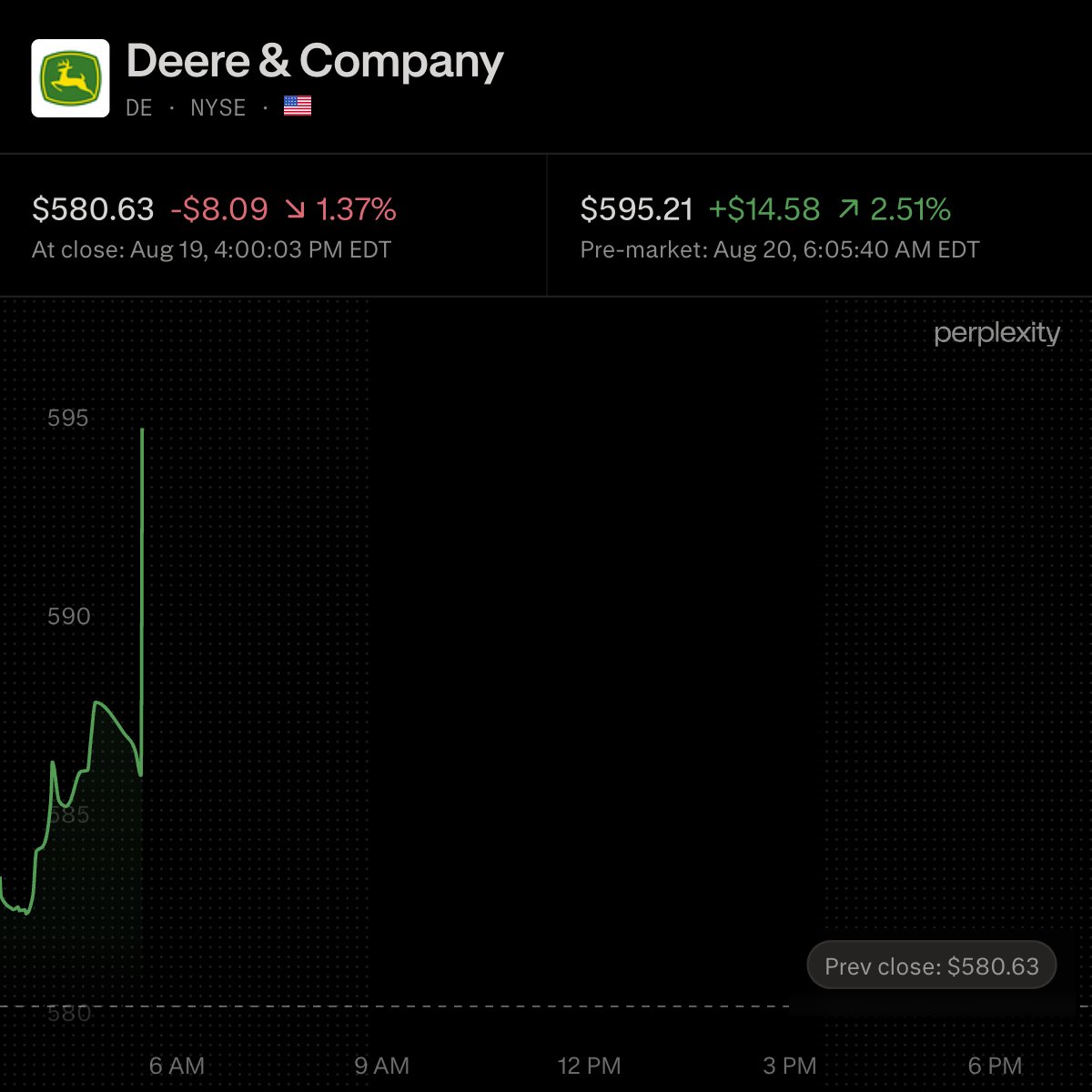
Deere posts $5.10 EPS on $11.0B revenue, lifts FY2026 profit floor to $4.75B
The company says agriculture is stabilizing, keeping the spotlight on how quickly the farm-equipment cycle can recover into 2027.
Deere reported fiscal third-quarter adjusted earnings of $5.10 per share on revenue of about $11.0 billion, both ahead of Wall Street expectations. The company also raised the low end of its fiscal 2026 net income outlook to $4.75 billion from $4.5 billion.
The update comes as the farm machinery market shows signs of stabilizing after a weak stretch marked by softer farmer spending and inventory digestion. Management has said 2026 may mark the bottom of the current ag equipment cycle, with a more pronounced rebound more likely in 2027.
For investors, the key question is whether Deere’s better-than-expected quarter can support a more durable reset in sentiment around the stock. The market is watching whether recovery signals in agriculture, construction and forestry can translate into a steadier earnings path for the full year.
Zacks had estimated earnings at $4.79 per share, underscoring that Deere delivered a clear beat versus consensus. Shares tied to DE are likely to stay focused on guidance, order trends and used-equipment inventories rather than the headline quarter alone.
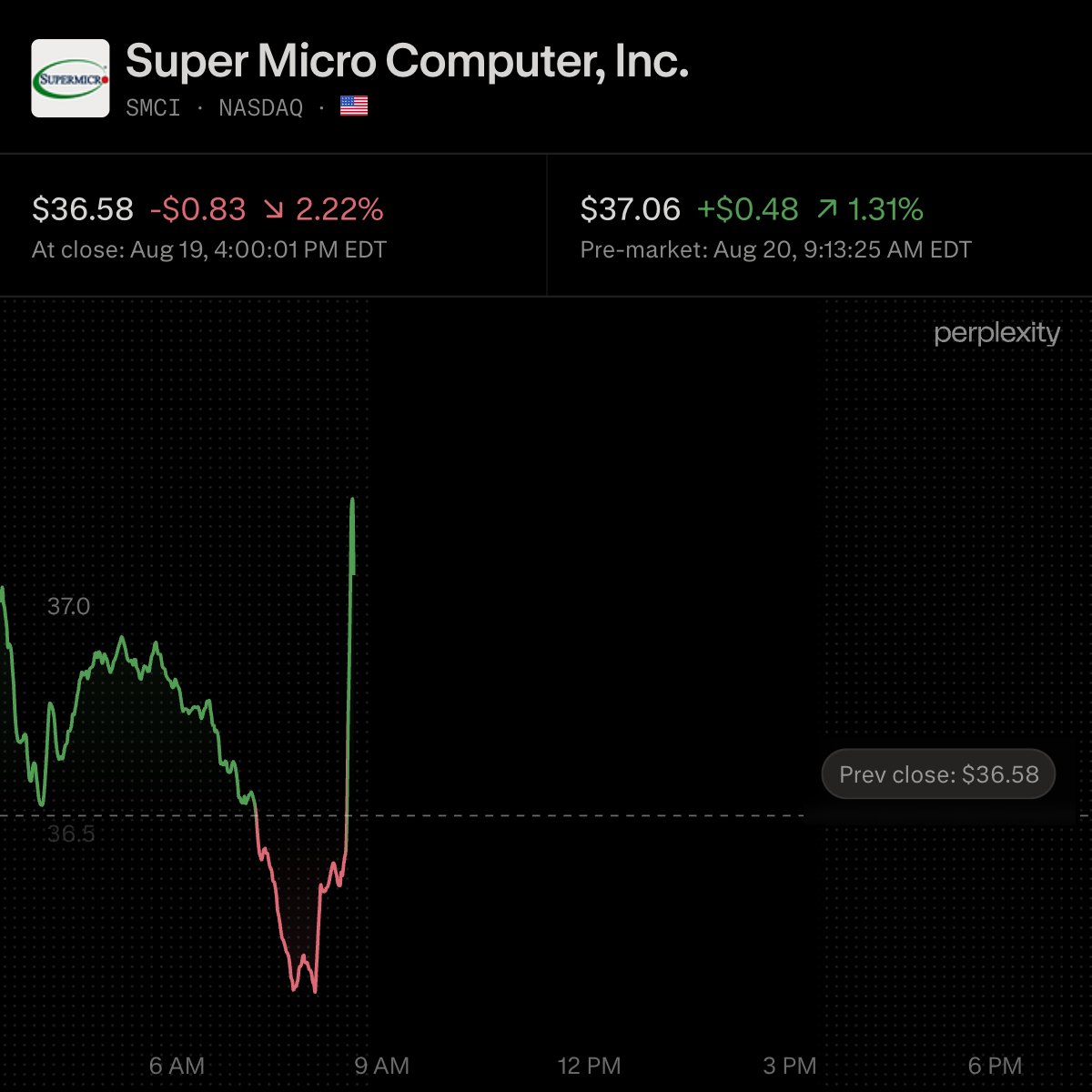
Super Micro Computer said its independent investigation has concluded and found no evidence that current senior management knew about an export-diversion scheme tied to two former employees and one contractor. The company also said the review found no direct sales of restricted products to known restricted parties and no impact on prior financial statements.
The case traces back to a March 2026 federal indictment. Supermicro disclosed in April that an independent board-led investigation was underway and that the three individuals were no longer affiliated with the company; Supermicro itself was not named as a defendant.
For investors, the update keeps the focus on governance and compliance rather than a fresh accounting hit. Supermicro remains closely watched as a key AI-server supplier, with the stock often trading around news tied to Nvidia-linked infrastructure demand and export-control risk.
Supermicro said it has tightened export controls and compliance processes. The company had previously said the board’s independent directors were working with outside counsel, forensic consultants and the auditor on the review.
Samsung Electronics is expected to unveil a shareholder-return plan as soon as Aug. 21, with reports ranging from more than KRW 100 trillion to as much as KRW 150 trillion. That translates to roughly $72 billion to $108 billion, depending on the final figure and exchange rate used.
The reports land after Samsung’s first-quarter guidance showed consolidated sales of about KRW 133 trillion and operating profit of about KRW 57.2 trillion, underscoring the company’s improving earnings backdrop. The details matter because the board is still being described as weighing dividends, special cash payouts and other capital-return tools.
If confirmed, the package would sharpen comparisons with SK Hynix, which has also been using shareholder returns to signal confidence in the memory cycle. It would also ripple through Samsung shares and other Korea-listed chip names as investors reassess cash deployment versus reinvestment.
For now, the only hard numbers come from the guidance and the reported return-package range. The final structure has not been formally announced, so the latest coverage should be treated as a developing story rather than a completed corporate action.
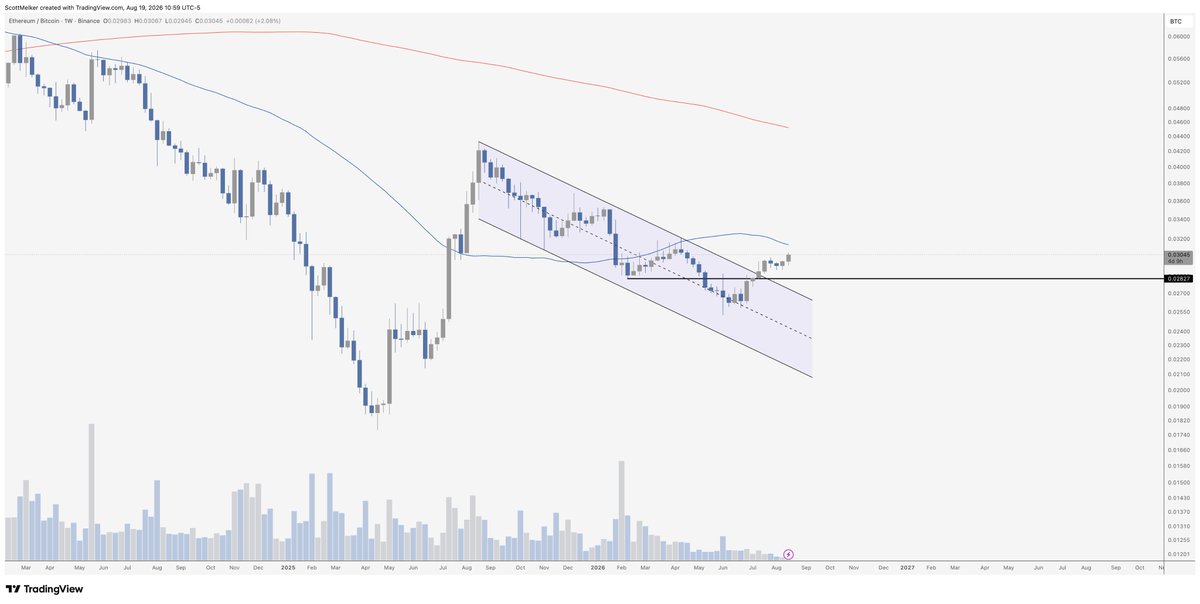
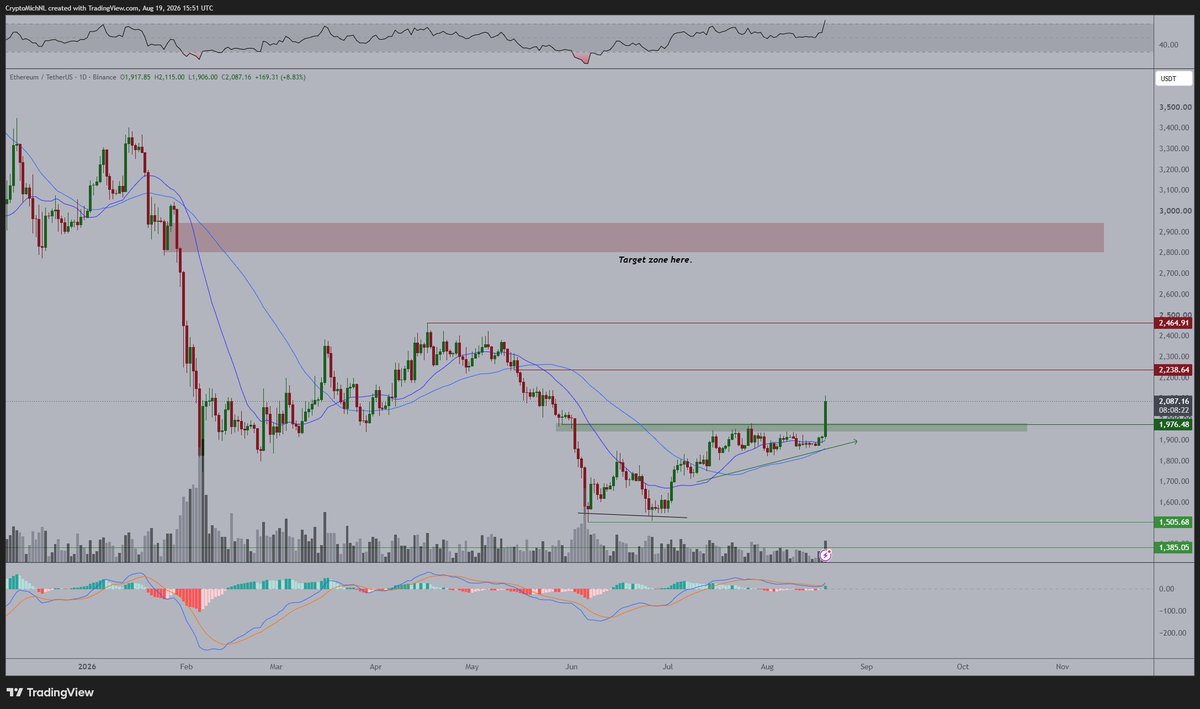
Today’s X posts centered on Ether’s long-term chart structure. Scott Melker said ETH’s setup looks better than Bitcoin’s, while The Long Invest framed the 200-week moving average as the key line to flip into support, with a $2,500 target in view. Several traders also pointed to improving ETH dominance on higher time frames, shifting the conversation from short-term noise to trend confirmation.
That discussion lands against a stronger price backdrop. TradingKey reported ETH at $2,248.71 on Aug. 20, up 19.36% over seven days, while FXStreet and CoinGape said Ether had moved above $2,000 as Treasury buyback plans, ETF inflows and short-covering improved liquidity conditions. tradingkey.com fxstreet.com coingape.com
For markets, ETH strength tends to ripple through spot, ETF and derivatives positioning. If traders continue to treat the 200-week average as support, Ether-linked assets and higher-beta crypto names could stay in focus; for now, though, the X signal is mainly about a technical regime shift, not a fresh fundamental announcement.
The reported ETF and price figures support the idea that Ether has regained momentum, but the $2,500 target remains a trader view rather than a confirmed outcome. The key variables going forward are ETF net flows, macro liquidity and whether ETH can hold above its newly watched moving-average band.
Ethereum climbed back above $2,000 on Aug. 19 and touched an intraday high of $2,112, according to market reports. On X today, several crypto traders described the move as a breakout that is still consolidating, while flagging $2,250, $2,465 and roughly $2,500 as the next reference levels.
The backdrop was the U.S. Treasury’s announcement that it would double long-dated bond buybacks to $4 billion, a move that coincided with a broad crypto rally. Earlier reporting had shown ETH repeatedly failing to hold above $1,900 since Aug. 8, making the latest move a notable reclaim of the area around the 200-day moving average.
The rally also lifted other major altcoins, including SOL and XRP, and briefly pushed the altcoin market cap above $1 trillion, according to published market coverage. Traders are now watching the $2,002 200-day SMA, the $2,100 area, and resistance near $2,260 to $2,400 to gauge whether the advance can extend.
There has been no fresh official response that changes the market narrative. For now, the new incremental signal is the shift in trader commentary from a simple reclaim of $2,000 to a debate over where the next supply zone begins.
Germany’s producer prices rose 3.0% year on year in July and 1.1% month on month, according to Destatis on August 20. Both readings came in above expectations and marked a sharp acceleration from June, when PPI was up 1.8% YoY and down 0.3% MoM.destatis.de
The rebound was driven mainly by intermediate goods and energy. Destatis said intermediate goods prices climbed 5.4% from a year earlier, while energy prices increased 3.8%, underscoring renewed cost pressure at the factory-gate level.destatis.de
Because producer prices tend to lead consumer inflation, the release is likely to feed into euro-area inflation expectations and ECB policy calculations. It also matters for German industrial, chemical and energy-linked companies, where pricing power and input costs are closely watched.destatis.de
The data extend June’s 1.8% YoY reading and reinforce the view that upstream price pressures have firmed again rather than continued to ease. Market summaries from Trading Economics and XTB reflected the same official release and cited the stronger-than-expected July print.tradingeconomics.com
How this story unfolded
2026-06-245 posts · 5 authors
US media reported US-Iranian rhetoric disrupting peace talks, while UK, France, and Germany's Taiwan offices issued a joint statement condemning actions threatening regional stability and shipping safety.
Macro
Foreign investors sell ¥1.25 trillion in Japanese bonds, buy ¥621.2 billion in stocks
Japan’s weekly flow data show a sharp split between debt and equity allocations, with overseas investors rotating out of bonds and into shares.
Japan’s Ministry of Finance said foreign investors were net sellers of Japanese bonds by ¥1.2499 trillion in the week to Aug. 8, while they bought ¥621.2 billion worth of Japanese stocks. In the same period, Japanese investors bought ¥1.1351 trillion of foreign bonds and ¥1.3913 trillion of foreign equities.
The weekly securities report is watched as a gauge of cross-border portfolio demand. Flows can be volatile from week to week, but the latest print shows a clear divergence between bond and equity preferences among overseas investors.
For the Japanese equity market, the foreign buying is a supportive flow signal for major benchmarks and large-cap sectors. For the bond market, the heavy foreign selling points to renewed pressure in JGB trading and adds to the market’s focus on duration exposure.
The prior week showed foreign investors as net sellers of both Japanese stocks and bonds, with the bond outflow revised to ¥56.7 billion and stock outflows at ¥368.6 billion. The latest data therefore mark a sharp week-on-week shift in positioning.
Australia’s consumer inflation expectations rose to 4.9% in August from 4.7% in July, according to the latest survey reading published today. The 0.2 percentage-point pickup is the newest data point in the series.
The move comes after ANZ-Roy Morgan had reported a 5.9% reading in late July, while its weekly consumer confidence release showed inflation expectations still around 5.5% in early August. That keeps the household inflation pulse elevated even as markets weigh the Reserve Bank of Australia’s next steps.
The data matters for the Australian dollar, rate expectations and interest-rate-sensitive sectors such as banks, property and retail. Traders will watch whether the RBA treats the rise as noise or as evidence that price pressures are proving sticky.
No denial from the survey providers was visible in the public signal, and the reported August figure stands as the latest official reading in the series.
The Philadelphia Fed's August manufacturing business outlook survey rose to 47.4 from 41.4 in July, far above the 24.8-25 consensus. Within the report, new orders came in at 30.1, employment at 27.9, prices paid at 40.9, and the future general activity index surged to 73.6.
The survey is one of the Federal Reserve's key regional gauges for manufacturing in the Third District, which covers Delaware, southern New Jersey and eastern and central Pennsylvania. Readings above zero indicate expansion, so the August print points to broad-based growth and a much stronger six-month outlook.
For markets, the stronger-than-expected reading can reinforce the view that U.S. manufacturing remains resilient, with potential implications for the dollar, rate expectations and industrial stocks. Investors will also watch whether upcoming national data confirm the same mix of growth and still-elevated price pressures.
The Philadelphia Fed's release and market data services both showed the same core message: activity accelerated in August, while price measures remained elevated despite moderating from July.
How this story unfolded
2026-06-233 posts · 3 authors
Philadelphia Fed non-manufacturing index fell to -25.8 in June, missing estimates.
2026-07-164 posts · 4 authors
Philly Fed manufacturing index surged to 41.4 in July, highest since November 2021.
Webull reported second-quarter 2026 revenue of $198.8 million, up 51% year over year, while adjusted EPS came in at $0.12 and beat Wall Street expectations. The company also said adjusted operating profit reached $62.6 million, with a 31.5% margin.
The results were powered by stronger trading activity: trading-related revenue rose to $147.7 million, equity notional volume climbed to $279 billion, and options contracts volume reached 213 million. Customer assets totaled $28.5 billion, up 79% from a year earlier.
After the release, Webull shares traded higher in after-hours action as investors parsed the company’s latest growth metrics and profitability trend. The update also highlighted continued international expansion and broader product investment, including AI tools and institutional offerings.
Webull said the quarter benefited from updated active-trader functionality, global expansion and other strategic initiatives. Those comments came in the company’s earnings release and reflect management’s view of the business, not an outside estimate.
Walmart’s CEO said the company is still seeing growth from wealthier customers, matching today’s X signal from multiple wire-style accounts. The message reinforces a theme that has been central to the retailer’s recent results: higher-income households are becoming a more important driver of traffic and sales.
The comment builds on earlier earnings-call remarks in which Walmart said households earning more than $100,000 generated most of its share gains. That backdrop matters because the company is also facing a more stretched lower-income consumer, making the mix shift toward affluent shoppers strategically significant.
For markets, the read-through is mainly to Walmart and other big-box retailers. If the affluent-customer trend holds, investors are likely to keep focusing on Walmart’s e-commerce growth, assortment expansion and margin resilience, while comparing it with peers such as Target and Costco.
Benzinga’s preview had Wall Street expecting second-quarter revenue around $186.8 billion and EPS of $0.74. The latest comments do not change those estimates directly, but they add context for how investors may interpret the print and the stock’s reaction.
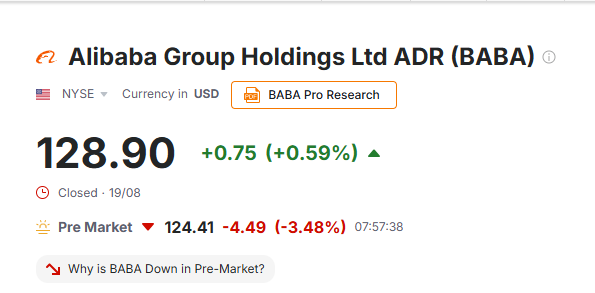
Alibaba Q2 cloud revenue rises 45% as AI spending weighs on profit
The latest quarter shows cloud growth still accelerating, but heavier AI investment is keeping earnings under pressure. Investors are watching whether revenue momentum can keep up with the spending.
Alibaba reported its June-quarter 2026 results on Aug. 20, saying cloud revenue rose 45% year over year. The company also said increased AI infrastructure spending continued to weigh on profitability, matching the mixed read-through flagged by market wires.
The update extends a broader pattern: Alibaba has been pouring money into AI infrastructure, model development and cloud products to turn AI demand into revenue. Reuters previously reported that over the past four quarters the company had cumulatively invested more than RMB 100 billion in AI infrastructure and AI product R&D.
In the market, the earnings release matters for Alibaba’s U.S.-listed BABA shares and for Hong Kong-listed Alibaba stock, which often trade on the same growth-versus-margin debate. Investors are focusing on whether cloud momentum can remain strong enough to offset the earnings drag from AI capex.
Alibaba disclosed the results through Business Wire, while media previews had framed the quarter as a test of whether cloud acceleration could justify the company’s heavy spending. The key question now is less about the AI strategy itself than how quickly it can translate into durable profit recovery.
Advance Auto Parts reported second-quarter adjusted EPS of $1.03, well ahead of the $0.81 consensus, while comparable-store sales fell 0.5%. Management said DIY demand weakened late in the quarter, even as the Pro channel delivered low-single-digit growth.
The company framed the quarter as one of improving profitability amid a tougher demand backdrop. It said tighter household budgets weighed on DIY spending, and it also cut its store-opening plan for the year to 30 to 35 from 40 to 45.
Investors focused on the sales miss rather than the earnings beat, sending AAP down more than 15% in premarket trading. AutoZone (AZO) was also weaker, underscoring concern that consumer pressure could be hitting the auto-parts space more broadly.
Advance Auto Parts reaffirmed its full-year sales and margin guidance and raised adjusted EPS guidance to $2.60 to $3.10, citing higher pre-tax interest income. The company also said it returned to positive year-to-date free cash flow in the first half of 2026.
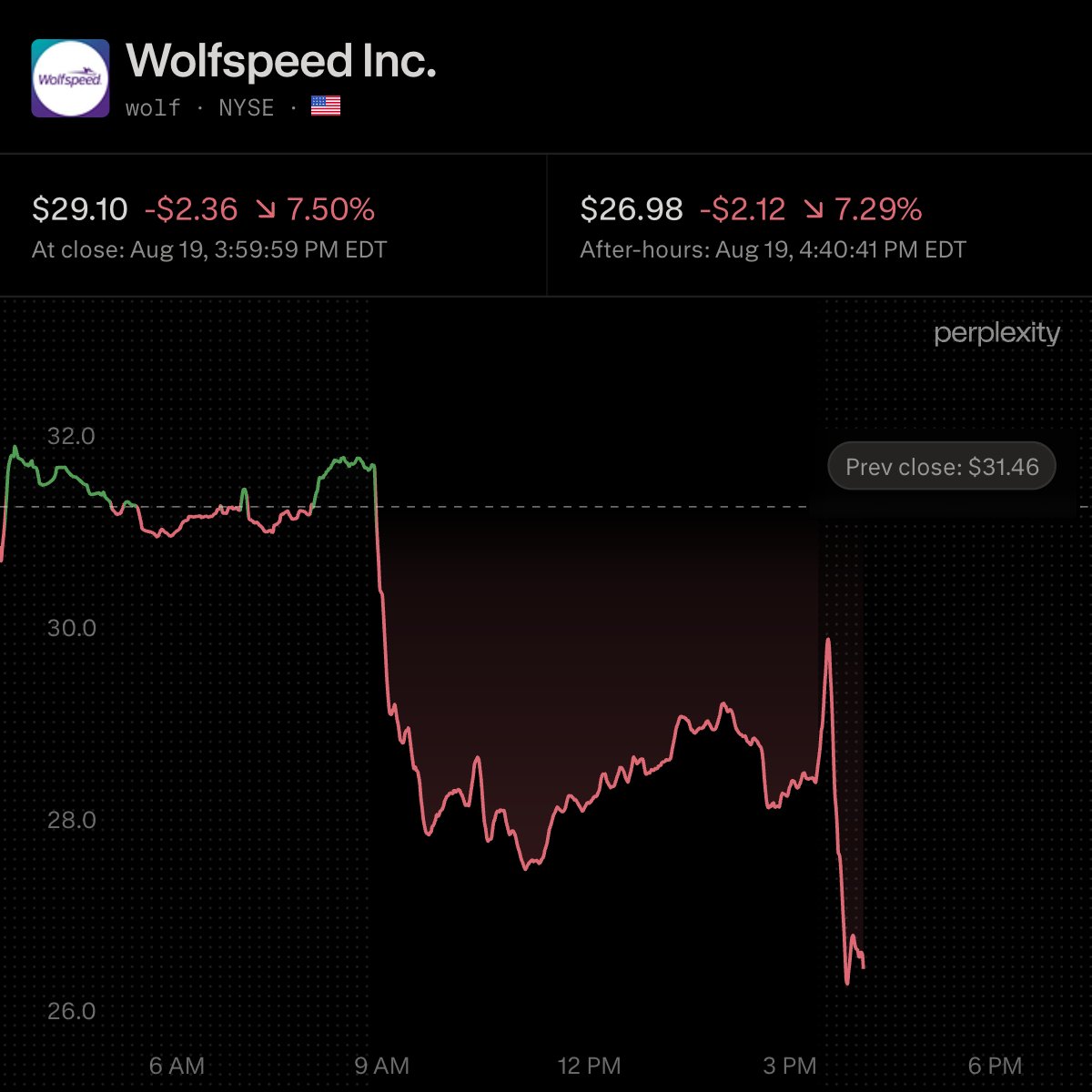
Wolfspeed posts $149.6 million in Q4 revenue, as AI data-center sales doubled but loss widened to $145 million
The chipmaker guided Q1 revenue to $140 million-$160 million and said non-GAAP gross margin should stay negative, with $1.1 billion in cash and short-term investments.
Wolfspeed reported fourth-quarter fiscal 2026 revenue of $149.6 million, roughly in line with the midpoint of its guidance, while GAAP net loss came in at $145 million and adjusted EBITDA was negative $62 million. The company also said AI data-center revenue more than doubled year over year in fiscal 2026 and rose about 20% sequentially in the quarter.
The report comes as Wolfspeed continues to reshape its capital structure and push deeper into AI data-center power applications. It also launched a fifth-generation SiC MOSFET and opened a dedicated data-center solutions team in Silicon Valley to support that business line.
Investors are still focused on margin pressure and cash burn. Wolfspeed said operating cash flow was negative $54 million in the quarter, ended with about $1.1 billion in cash, cash equivalents and short-term investments, and projected first-quarter revenue of $140 million to $160 million with non-GAAP gross margin still expected to remain negative.
Shares of WOLF came under pressure after the results, reflecting concern that the company’s AI growth is not yet enough to offset weak profitability in its core business. The stock reaction also centered on the gap between improving end-market traction and continued losses.
After an internal Apple video leaked, speculation surfaced that camera-equipped AirPods might arrive sooner. Bloomberg now reports the launch plan is still aimed at 2027, despite the leak and the renewed attention around the product. The cameras are described as AI-input sensors for context, not as photo or video cameras.
The product has been rumored since 2024 and has been tied to Apple’s broader push into AI hardware. Recent follow-up reports on August 19 suggested the earbuds were moving through testing and could have been seen as a nearer-term launch candidate, but Bloomberg’s latest update says the company’s roadmap has not changed.
For investors, the update mainly shapes the narrative around Apple’s wearables and its AI hardware strategy rather than any near-term revenue impact. Apple shares, the AirPods franchise, and suppliers tied to acoustic components and sensors remain the groups most likely to be watched, though the product is still pre-commercial.
Apple has not issued a fresh formal product announcement around the leaked footage. For now, Bloomberg says the camera-equipped AirPods remain scheduled for 2027.
How this story unfolded
2026-06-263 posts · 3 authors
Apple raised prices on multiple products due to memory costs, Meta's Kylie Jenner collab earbuds sold out in NYC, and Zuckerberg criticized Apple's lack of innovation.
Company
Unitree says humanoid robots could hit a 2-10 year ‘ChatGPT moment’ as 5,500-unit output is cited
Wang Xingxing framed mass adoption around 80% task success in unfamiliar settings, keeping the focus on software and deployment hurdles
Unitree founder Wang Xingxing said humanoid robots could reach a mass-market inflection point in roughly two to 10 years if manufacturers can solve the issues that still limit their usefulness. He described the milestone as a robot being able to complete about 80% of assigned tasks in unfamiliar environments using voice or text commands.
The remarks build on Unitree’s broader pitch that embodied AI still needs major gains in generalization and human-like efficiency. In recent coverage, the company was also reported to have shipped more than 5,500 humanoid robots in 2025, while its post-listing valuation was cited at about 340 billion yuan, underscoring how fast investor attention has shifted to the sector.
For the market, the takeaway is less about a near-term breakthrough than about which suppliers and platform names can benefit as robot production scales. U.S.-listed indie Semiconductor (INDI) has already drawn interest as investors look for exposure to Unitree’s supply chain, while the bigger question remains whether humanoid robots can move from demos and research labs into repeatable commercial work.
Wang’s comments are an industry view rather than a guaranteed rollout schedule. Unitree continues to frame software, data and real-world generalization as the key constraints that must be solved before humanoids can be deployed at scale in homes or factories.
Bloomberg reported that SpaceX approached AI coding startup Cognition about a potential acquisition, according to people familiar with the matter. Cognition did not engage with the takeover approach, the report said, and the two companies are still discussing possible cooperation.
The new report follows SpaceX’s $60 billion acquisition of Cursor, another AI coding startup, completed in August. It suggests Musk’s company is still building out its AI coding push even after that major deal.
For investors, the news keeps attention on SpaceX’s SPXC shares and the broader AI coding group, including Cursor and Cognition. Bloomberg said the move is part of SpaceX’s effort to gain ground in the AI race against companies such as OpenAI and Anthropic.
Neither SpaceX nor Cognition had publicly added details beyond the Bloomberg account at the time of reporting. The key update is the reported outreach to Cognition, not a signed transaction.
SUI became the focus of a fresh trading update today after Michaël van de Poppe described the sub-$0.65 area as a strong accumulation zone. A Blockchain.News post said the token had rebounded to about $0.69, with $0.75, $0.80 and potentially $1.00 now on traders’ radar if consolidation holds.blockchain.news
Background checks show the larger setup remains mixed. A separate market analysis on August 19 put SUI around $0.66 and below its daily EMA20 at $0.68, EMA50 at $0.71 and EMA200 at $0.97, while a TradingView-syndicated report said 24-hour volume jumped 140% to $230 million even as monthly DEX volume fell from $22 billion in October 2025 to $886 million in July.en.cryptonomist.ch tradingview.com
That puts the market in a tension between a short-term technical bounce and weaker network activity. The price action matters not only for SUI spot traders, but also for sentiment across Sui-linked tokens and the broader altcoin tape.
A separate market signal also flagged SPY, with Barchart listing the ETF near $769.06 and X chatter saying it failed to close above its 8-day exponential moving average for a second straight session. The move ties into a broader risk tone as rates resumed climbing.barchart.com
Lyntris fell 11% in its New York trading debut after the defense-technology company and some of its shareholders raised $297.5 million in a downsized initial public offering. The stock opened below the $17.50 offer price, underscoring a soft first day for the new listing.
The company priced 17 million shares on Aug. 18, below the marketed range of $19 to $22. According to the prospectus and pricing release, 5.7 million shares were sold by Lyntris and 11.3 million by existing stockholders, so most of the deal was secondary stock.
Reuters and Bloomberg Law reported the debut left Lyntris with a market value of roughly $1.68 billion to $1.78 billion, depending on the share count used. Lyntris makes sensor, antenna and software systems for military use, making the IPO a closely watched test for defense-tech valuations.
In its filing, Lyntris said net proceeds would be used partly to repay about $60 million under a revolving credit facility, with the rest for general corporate purposes. The company also said the use-of-proceeds language and trading timetable were subject to customary closing conditions and other risks.
Stripe finalized an agreement to acquire OpenRouter for over $7 billion, more than 5x its valuation from three months prior.
2026-08-186 posts · 6 authors
Deal breakdown revealed founders receiving ~$3.5-4.0 billion, with investors like a16z seeing 100x+ returns and an IRR exceeding 15,000%.
2026-08-2011 posts · 10 authors
Axios reported Stripe's net revenue and free cash flow growing nearly twice as fast as Adyen, with the acquisition strengthening its AI infrastructure position.
Posts highlighted the largest currency reserve rankings, NAND flash spot prices surging over 670%, and a map of each country's top export.
2026-07-143 posts · 3 authors
US renewed strikes on Iran with tanker attack in Hormuz killing one, Lenovo first used YMTC SSDs in laptops outside China, and Goldman positioned as a diversified toll collector on AI capex.
2026-07-163 posts · 3 authors
TSMC beat Q2 revenue guidance with 40% growth outlook, Uber agreed to buy Delivery Hero for $14.8B, and a column warned Europe risks becoming an open-air museum.
2026-08-183 posts · 3 authors
Posts listed countries' water areas, a briefing noted 30-year Treasuries at 5.33% and Hormuz open only on Iran's terms, while Klarna's profitability surged but European volume was cut.
2026-08-205 posts · 3 authors
Germany's July PPI rose 1.1% m/m and 3.0% y/y, both well above forecasts and prior readings.