The U.S. Labor Department said Wednesday that the consumer price index rose 3.7% in September from a year earlier, up from 3.4% in August and slightly above economists’ 3.6% forecast. On a monthly basis, CPI increased 0.6%, the biggest gain in five months, while core CPI climbed to 2.6% year over year.
Energy was the main driver. Reuters reported gasoline prices rose 7.1% in September, while ABC News, citing the Bureau of Labor Statistics, said gasoline rose 9.1% on the month and accounted for more than half of the overall increase.
The data matter because they can shift expectations for the Federal Reserve’s next moves. Reuters said rate futures priced up the odds of another hike, and Treasury yields moved higher after the release, pressuring rate-sensitive assets.
No alternative official reading was provided to contradict the Labor Department’s figures. The key takeaway is that September inflation came in hotter than expected, with both headline and core prices firming.
Netflix said it will cut about 1,000 jobs, or roughly 6% of its workforce. Multiple posts citing WSJ describe it as the company’s largest layoff round since 2022.
The move lands one week before Netflix reports earnings. That timing matters because the recent news flow around NFLX has centered on slower growth and weaker customer engagement, the same issues highlighted in the reporting summarized on X.
For markets, the direct read-through is to NFLX itself and to how the company frames costs on the upcoming call. Site coverage notes Netflix stock is down 42% over the past year, while another recent piece cites a 25% year-to-date decline, underscoring how closely investors are watching the turnaround story.
The posts also indicate the cuts will mainly affect product, engineering, legal, and HR teams. No broader company response beyond the reported layoff plan is included in the source material.
Ukrainian presidential adviser Serhiy Beskrestnov said SpaceX has imposed a speed-based restriction on Starlink terminals used by Ukraine's military, disrupting several missions. Multiple outlets reported that terminals can lose connectivity when moved at high speed.
The latest reports build on an earlier chain of battlefield incidents in which Starlink-linked drones and terminals became part of the war in occupied Ukraine. Prior coverage said the emergency limit was designed to curb use by fast-moving strike drones, with the cutoff estimated around 75-90 km/h.
For investors, the episode highlights the dual-use risk profile of Starlink and the operational control SpaceX can exert over terminals. It also puts renewed focus on the company's defense-adjacent business, spectrum strategy, and the governance of terminal authorization in conflict zones.
Ukraine has confirmed the restriction and said military activity has been affected. SpaceX has not issued a standalone public explanation for the latest reported changes, while previous coverage framed the measure as a temporary counter-drone response rather than a blanket limit on civilian service.
How this story unfolded
2026-08-179 posts · 8 authors
Airtel Africa and SpaceX launched Starlink Mobile in the DRC, the first commercial deployment in Africa; UBS reiterated a Buy rating on SpaceX with a $210 price target.
Regulation
SpaceX Starbase plan faces FAA review for 456 launches a year
FAA opens environmental review of SpaceX’s proposed Starbase expansion; current cap remains 25 launches annually
The Federal Aviation Administration on Oct. 14 said it is beginning a programmatic environmental impact statement for SpaceX’s proposed expansion of Starship-Super Heavy operations at Starbase in South Texas. The agency said the plan under review could allow up to 456 annual launches and 912 annual landings at the site.
That is well above SpaceX’s current FAA authorization of 25 annual launches and 50 total landings. The proposal also includes expanded landing and expenditure locations, with the environmental review set to cover issues ranging from noise and air quality to wildlife, coastal resources and water use.
For investors and the broader space industry, the filing is a fresh signpost for how quickly SpaceX may scale Starship operations if regulatory hurdles are cleared. But the FAA notice is only the start of the review process; it does not approve the higher cadence.
SpaceX did not provide an immediate public response in the FAA notice. The public comment period runs through Nov. 30, 2026, and a draft PEIS will be released later for review.
Apple introduced a new smart home device called HomeView at an event in New York. Multiple reports say the product is priced at $299 and is built around Siri AI, with control features for cameras, thermostats and other household devices.
The pitch is to make Apple’s voice assistant and home controls feel like a larger-screen extension of the iPhone. Coverage also says HomeView can handle calendars, reminders, music playback, FaceTime calls and intercom functions.
For investors, the product matters because it puts Apple in more direct competition with Amazon and Google in the smart-home market. The Newsroom item N1 also describes the $299 HomeView display as a direct challenge to Google and Amazon for dominance in the home.
There has been no public denial from Apple in the supplied material. The current signal is an official product launch and follow-up coverage, while the broader execution and adoption story remains to be seen.
Nvidia CEO Jensen Huang said the company plans to announce another $2 billion in European AI investments within the next week, adding to the $8 billion it has invested in the region over the past year. He made the remarks at an event in Paris.
Huang also named four French startups receiving fresh backing: Doctolib, Genesis AI, Pigment and Entalpic. The comments come as he continues a Europe tour that includes London and Berlin, underscoring Nvidia’s push to deepen its footprint in the region’s AI ecosystem.
For NVDA, the move extends a broader strategy of equity investment and infrastructure support around AI adoption. The startup bets also put names like Doctolib on investors’ radar, while Huang again argued that open models can help Europe narrow the gap in AI development.
The company has not disclosed the full structure of the new $2 billion plan or the size of any individual stakes. So far, the announcement is a plan rather than a completed transaction report.
Google launched Gemini 4 Argon on Oct. 13 and made it available to developers, enterprises and paying users across its AI stack. The starting price is $2 per million input tokens and $10 per million output tokens, with cached input discounted by 95%.
The release is more than a model refresh. Google says Argon is built for complex work in coding, finance, law, cybersecurity and science, and claims it ranks first on the Vals Index. VentureBeat reported that the promotional pricing ends Nov. 30, after which standard rates rise to $4 per million input tokens and $20 per million output tokens on Dec. 1.
For Alphabet, the launch is a bid to strengthen its position in frontier AI after months of intense competition. NVIDIA is also in the frame: Google said Argon helped speed up Gemma 4 E2B inference on an A100 GPU from about 37,900 to more than 108,000 tokens per second, underscoring how model-side gains still depend on high-performance compute.
Google had first opened limited testing to trusted cybersecurity defenders on Sept. 30. Reuters confirmed the broader global rollout, the pricing structure and access for paid users on the same day as the launch.
How this story unfolded
2026-10-0166 posts · 50 authors
Company
Character.AI files for Chapter 11, plans to sell some assets for $20 million
The AI companion startup’s bankruptcy filing puts its IP and litigation exposure in focus, with Disney named in the bidding process.
Multiple outlets reported that Character.AI has filed for Chapter 11 bankruptcy protection and agreed to sell some of its assets for $20 million. Reuters, CNBC and WSJ all carried the news on Tuesday.
CNBC said the company cited costs and litigation in its filing. Forbes reported that Character.AI also received a $20 million opening offer from Disney to license some of its intellectual property.
The deal and the bankruptcy both center on Character.AI and Disney, with the latter previously accusing the startup of unauthorized use of copyrighted characters. Because the reported transaction appears limited to certain assets or a non-exclusive license, the market focus is on the scope of the sale rather than a full-company takeover.
WSJ and Reuters described the filing as Chapter 11 proceedings, while the reports differed on whether Disney’s bid covered a license or broader assets. No formal Disney statement is included in the provided material.
Earnings
JPMorgan and Goldman diverge as big-bank earnings season gets tested
JPMorgan, Wells Fargo and Citigroup have started to frame the bank reporting season, with traders watching how rates and trading desks shape the rest of the quarter.
Wall Street’s big-bank earnings season is rolling on, and today’s X signal centers on $C, $JPM and $WFC as investors digest a fresh round of quarterly results. The opening stretch of bank reports has already shown a clear split between firms with stronger trading and fee businesses and those more exposed to fixed-income weakness.
Reuters reported that Citi’s third-quarter profit jumped 40% on stronger investment banking, services and wealth revenue. Other coverage showed Goldman Sachs benefiting from a 72% surge in equities-trading revenue, while JPMorgan and Wells Fargo faced pressure from softer fixed-income trading.
The market has not rewarded good headlines uniformly. Bank shares have reacted unevenly because investors are looking past the headline beats and focusing on bond-market volatility, persistent high rates and what that means for the next quarter.
As the rest of the big-bank calendar unfolds, traders will keep using these results as a read-through on deal activity, trading conditions and credit demand across the sector.
Morgan Stanley reported third-quarter 2026 earnings per share of $3.03, ahead of the $3.01 estimate. Revenue came in at $20.34 billion versus $19.89 billion expected, while net income was $4.90 billion.
By segment, equities trading revenue reached $5.80 billion, topping the $4.90 billion estimate. FICC trading revenue was $2.01 billion, below the $2.22 billion estimate, and wealth-management net revenue was $9.07 billion versus $9.11 billion expected.
The results matter most for Morgan Stanley itself, but they also feed into how investors value other large investment banks with exposure to trading and wealth management. Several reports highlighted the strength in equities and the record level of new money flowing into the wealth arm.
The latest information in the material comes from the company’s earnings release and subsequent media reports. No additional company response beyond the reported results is included here.
BlackRock reported third-quarter adjusted earnings per share of $15.93, ahead of estimates of $14.15 and $14.30. Revenue came in at $7.75 billion, also above expectations, while net income rose to $1.659 billion, or $10.57 a share, from $1.32 billion and $8.43 a year earlier.
The company said net inflows reached $205.47 billion in the quarter, lifting assets under management to a record $15.49 trillion. Reuters-linked and other wire reports cited demand for capital as a continuing tailwind for the firm.
The figures matter for BLK because inflows and AUM are key drivers of fee revenue at a global asset manager. Zacks and Proactive Investors both published follow-up coverage confirming the earnings beat and the roughly $205 billion inflow figure.
No conflicting denial appears in the material provided. For now, investors are focused on whether BlackRock can keep converting record-scale inflows into stronger fee income and profit growth.
The U.S. Treasury said it has fined Bank of America $1.2 billion over anti-money-laundering and sanctions violations. According to the signal material, the bank admitted willfully violating Bank Secrecy Act rules and failing to timely report more than $5 billion in suspicious transactions.
This is landing alongside Bank of America’s latest quarterly report. Reuters, MarketWatch and Proactive Investors all point to the $1.2 billion regulatory penalty as a drag on profit, making the compliance issue immediately visible in the bank’s earnings.
The market reaction in the X signals centers on BAC itself, with one post saying the stock was down 8.3% and that the move was its biggest drop since April 2025. Another cited a near-5% drop in premarket trading.
No separate denial or conflicting company response is included in the provided material. On the reporting side, the key takeaway is that the fine is now part of the earnings story, not just a standalone regulatory headline.
A Delaware jury on Tuesday found that Arm Holdings breached a licensing agreement with Qualcomm and intentionally interfered with Qualcomm’s business relationship with Meta Platforms. The panel awarded Qualcomm only nominal damages of $2, with an additional $1 on each of two interference claims.
The case is the latest turn in a long-running dispute that has deepened since SoftBank took control of Arm in 2016 and Arm moved further toward selling chips of its own. Reuters reported that the jury also found Arm failed to provide software patches and tools for its designs, while siding with Arm on five other breach allegations.
The immediate market reaction was modest but clear: Reuters said Arm fell about 1% and Qualcomm rose about 1% after the verdict. The larger financial issue now shifts to US District Judge Maryellen Noreika, who must decide remaining disputes, including whether Qualcomm can stop paying royalties to Arm for five years under a clause Qualcomm says could be worth billions.
Both companies framed the outcome as partial vindication. Qualcomm said the jury found Arm had breached its long-standing Architectural License Agreement and disrupted its business, while Arm argued the $2 award showed the merit of its defense.
GlobalFoundries said on Oct. 14 that it has been selected to serve as the technology provider and operator for two new semiconductor fabs at its Malta, New York site. The project sits under a U.S.-Japan initiative with funding of up to $21 billion, with Japan providing the capital.
The company said the first phase calls for roughly $10 billion to build a new 300mm fab expected to come online in 2029. A second phase of about $10 billion would fund another fab, while the first plant is expected to add about 900,000 300mm wafers of annual U.S. capacity when fully operational.
GlobalFoundries also said it reached a separate agreement with the U.S. Commerce Department to reallocate $955 million of an existing CHIPS Act award toward silicon photonics, silicon-germanium and advanced packaging. The department will receive an equity stake of about 4% in GF.
The disclosure gives fresh confirmation to a deal first reported earlier as part of the broader U.S.-Japan trade and investment framework. Shares in GFS moved higher in premarket trading, and the company said initial customers for the New York factories include Apple and Renesas Electronics.
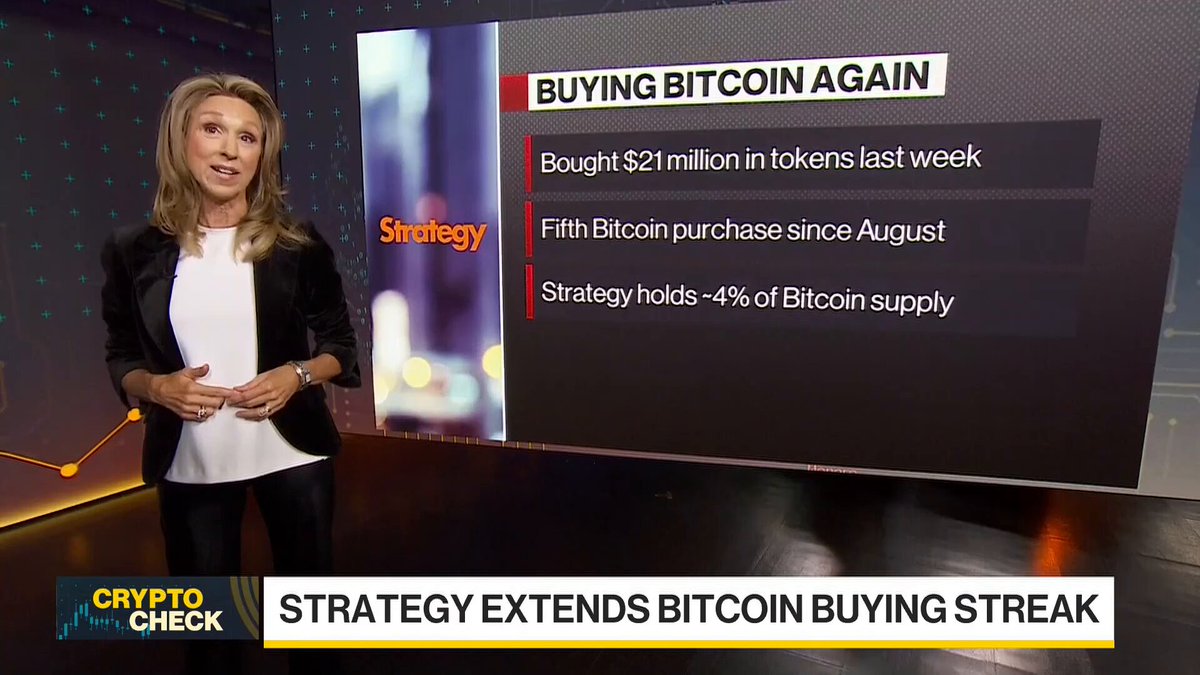
Strategy Chairman Michael Saylor said Bitcoin’s bear market is over and that he expects the cryptocurrency to move back above $100,000. He said Bitcoin bottomed just below $60,000.
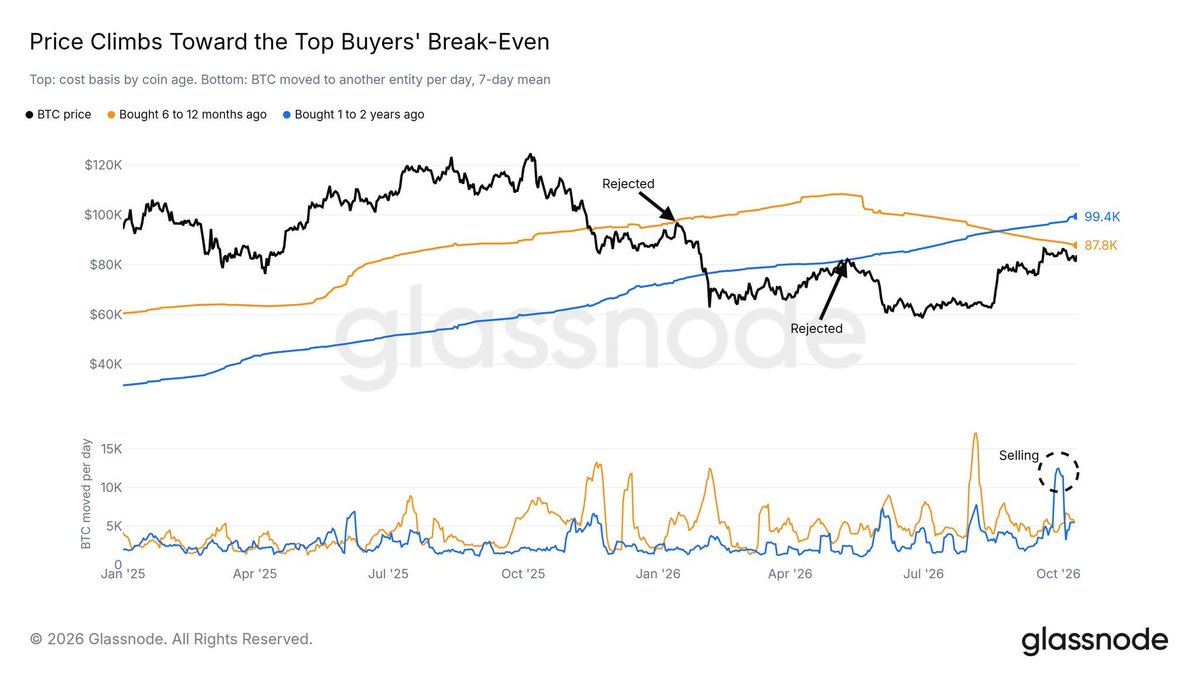
The latest batch of market signals points to firmer sentiment. CryptoQuant said large holders have resumed accumulation after more than a year of selling, while Glassnode data shows buyers from 6 to 12 months ago are nearing an $87,800 breakeven level.
Bitcoin is trading near $83,000 and is up 6.53% over the past month, according to the signals. Polymarket puts the odds of Bitcoin reaching $100,000 by Dec. 31, 2026, at 28%, while Kalshi assigns a 30% chance of a new all-time high within the next year.
Saylor and Strategy remain central to the bullish narrative. Cointelegraph quoted Saylor as saying Strategy expects to keep increasing its Bitcoin holdings over time and that Bitcoin is back in a bull market.
Bank of America’s latest Global Fund Manager Survey found that 37% of respondents would consider rotating from stocks into bonds only when the U.S. 10-year Treasury yield reaches 6%. Another 14% pointed to 6.5%, while 19% said yields are already high enough to prompt a shift.
The reading underscores how far long-end yields have already risen without triggering a broad bond-buying rush. CNBC reported that the 10-year Treasury yield touched a 24-year high of 5.365% last week before easing to around 5.21%, while a separate market write-up summarized BofA’s threshold at 5.9%.
The signal matters most for rate-sensitive parts of the equity market, including long-duration growth stocks, technology, real estate and utilities, because a higher risk-free rate compresses valuation multiples. On the bond side, a move toward 6% would likely keep the long end of the curve at the center of allocation debates.
For now, the survey is best read as a positioning gauge rather than a forecast. It shows where investors say stocks stop looking preferable relative to Treasuries, not where they think yields must go next.
Market chatter on Oct. 14 showed Citigroup shifting its Federal Reserve view to a 25-basis-point rate hike in December 2026, from an earlier call for no change this year. The move marks a notable hawkish turn in the bank’s policy outlook.
The backdrop is a more uncertain rate environment after the Fed’s first move since 2023 in September, alongside a flurry of speeches and data that have kept investors guessing about the next step. Reuters had also reported in June that Citi pushed back its expected first cut to October from September, highlighting how quickly the firm’s calls have been changing.
The read-through matters for Citi shares, ticker C, and for other rate-sensitive banks as investors reassess margin, funding and credit assumptions. Citi’s own third-quarter results earlier this week showed stronger profit and revenue, which has sharpened focus on how banks may fare if policy stays tighter for longer.
For now, the new view appears to come from market wires rather than a standalone Citi filing or Fed statement. Any official confirmation or revised Fed guidance would be the key follow-up to watch.
The Mortgage Bankers Association said the average contract rate on 30-year fixed mortgages rose to 7.5% in the week ended Oct. 9, up from 7.49% a week earlier, while total mortgage applications fell 2.7%. Purchase applications dropped 4% on the week and refinance applications eased 0.4%.
The latest print extends a run of weak housing demand as borrowing costs remain elevated. MBA economist Joel Kan said borrowers are leaning more heavily on adjustable-rate loans to lower monthly payments; the ARM share climbed to 10.5%, the highest since October 2025.
For markets, the weekly survey is a read-through for U.S. housing activity and rate-sensitive names rather than a standalone catalyst. It tends to confirm the direction of mortgage-rate moves, especially when higher yields are already pressuring affordability.
MBA also said the average 30-year fixed rate for conforming loans increased to 7.5%, with points at 0.83; the FHA 30-year rate rose to 7.19%, and the 5/1 ARM rate climbed to 6.54%.
The Justice Department said on Oct. 13 that CVS Pharmacy and related entities agreed to pay $315 million to resolve allegations that they illegally filled opioid and other controlled-substance prescriptions and then billed federal health care programs for many of those prescriptions. The department said the claims are allegations only, and CVS did not admit wrongdoing.
The case traces back to a federal civil complaint filed in December 2024 in Rhode Island. DOJ said the prescriptions included excessive opioid quantities, early refills, and so-called “trinity” combinations, and that some were written by prescribers the government described as pill mills. justice.gov
For CVS Health, the immediate issue is legal and compliance risk, not demand. As part of the agreement with DEA, CVS must add safeguards including a hotline, proactive monitoring of dispensing patterns, and a process to evaluate suspicious prescribers, which could raise ongoing compliance costs. apnews.com
The settlement primarily matters for CVS Health (NYSE: CVS), whose pharmacy operations sit at the center of the allegations. Investors will likely focus on whether the new controls and the cash payment change the business’s regulatory profile and operating flexibility. wsj.com
Michael Saylor, founder and executive chairman of Strategy, said in a Bloomberg interview that Bitcoin is in the early stage of a bull market. He added that the asset has rebounded from below its 200-week moving average and is now trading at roughly a 25% premium to that average.
Saylor framed the move as part of a broader shift driven by a friendlier regulatory backdrop, accelerating bank adoption and the expansion of tokenized securities and digital asset markets. The comments surfaced through Bloomberg’s interview and were quickly amplified across crypto-focused accounts on X.
For markets, the remarks reinforce Strategy’s role as the clearest public-market proxy for bullish Bitcoin conviction. They also keep attention on Bitcoin-linked equities and on financial infrastructure names that could benefit if bank custody and credit activity around Bitcoin continues to grow.
At this stage, the news flow is a fresh public statement rather than a new purchase announcement or policy change. Bloomberg’s reporting and multiple X reposts align on the main themes, but the claim remains Saylor’s view rather than an official market event.
GameStop CEO Ryan Cohen disclosed another purchase of 844,130 shares of GME at prices between $26.75 and $27 apiece, for roughly $22.6 million. The filing lifted his stake in the company to 9.1%, according to the materials provided.
This is the latest step in a buying streak that has been building over the past several weeks. The news library says multiple outlets continued to follow the story on Oct. 13 and Oct. 14, with Barron's noting Cohen now owns more than 42 million shares overall.
The market reaction has centered on GME itself. The supplied reports say options activity is heating up, with 7-day net premium at a 52-week high, and Benzinga reported the stock moved higher after the disclosure.
No separate company response is included in the provided materials. The available coverage keeps the focus on Cohen's continued accumulation and the ownership stake it pushes higher.
How this story unfolded
2026-09-1117 posts · 17 authors
GameStop CEO Ryan Cohen purchased 1 million shares at $20.38 each, totaling about $20.4 million.
2026-09-2221 posts · 15 authors
Markets
42 AI stocks are driving most of the S&P 500’s gains
JPMorgan-linked data points to a narrower U.S. market as chip weakness and record-high index levels pull in opposite directions.
JPMorgan-linked data show that 42 AI-related stocks have driven about 67% of the S&P 500’s price gains since January 2024, 58% of its earnings growth, and 81% of its capex and R&D growth. At the same time, the index sits near record highs even as roughly 60% of its constituents are more than 20% below their own peaks.
The backdrop is an increasingly AI-centered investment cycle. Michael Cembalest’s latest note says technology now accounts for roughly one-third of U.S. real GDP growth, while data centers and power are among the few construction categories still rising materially.
In the market, semiconductor shares have stayed under pressure, reinforcing the contrast between a handful of mega-cap winners and the rest of the tape. Investors are watching whether earnings and spending from AI leaders such as Nvidia, Broadcom and Microsoft keep the index’s gains concentrated or allow breadth to improve.
For now, the message is less about a broad market breakout than about concentration. The S&P 500 is being carried by a small cluster of AI-linked names, and that makes their earnings and capex cadence especially important for the tape.
Geopolitics
Trump says Greenland resource exploration is set to begin, but Nuuk pushes back
The president touted oil, gas and minerals activity on the island; Greenland says it is still far from “massive” exploration
President Donald Trump said on Oct. 14 that “massive” oil, gas and mineral exploration is getting ready to begin in Greenland, calling the island important to U.S. security. He did not name any companies, projects or launch date.
Greenland’s government pushed back quickly, saying there are U.S. companies active on the island but that the territory is still far away from the kind of “massive” exploration Trump described. CNN quoted Greenland’s deputy mining minister as saying there are smaller explorations underway, but they could take years to become operational.
The statement came weeks after the U.S., Denmark and Greenland signed a new security agreement that broadened the American military footprint and also referenced minerals cooperation. AP noted that Greenland’s harsh climate and limited infrastructure have long stymied extraction efforts, with no project advancing beyond the exploratory stage.
For markets, the headline is more relevant as a geopolitical and resource-policy signal than as a confirmed operating catalyst. No company, permit or project timeline has been identified, so any direct equity read-through remains unconfirmed for now.
ASML on Wednesday raised the low end of its 2026 sales outlook to a range of €44 billion to €45 billion after reporting third-quarter results. The company also said some customers are already expressing interest in placing orders for 2029 and 2030.
The update underscores how AI-related capital spending continues to drive demand for advanced chipmaking tools. ASML said planned supply for 2027 and 2028 will not fully meet customer demand, and it is exploring ways to expand 2028 capacity beyond the 30% increase it had previously guided.
ASML reported third-quarter net sales of €11.66 billion and net profit of €4.96 billion, both above consensus estimates cited by market reports. In Europe, the stock rose in early trading, while broader semiconductor and tech sentiment improved on the stronger outlook.
Chief Executive Christophe Fouquet said customers are raising short- and medium-term equipment demand forecasts, driven by the size and duration of AI investments. ASML also said China is still expected to account for about 20% of its business this year.
Google opens Play Store to private AI-built Android apps
Personal apps made in Google AI Studio can now be launched privately through Google Play, with no paid developer account required for eligible U.S. users.
Google said Android users can now create apps in Google AI Studio and launch them privately through Google Play as a “personal library” on their own devices. The apps are not listed in the public store, and eligible users can do so with a standard Google account rather than a paid developer account.
The feature extends Google’s vibe-coding push that began in May, but moves the workflow closer to app distribution inside Play Store. Google and multiple reports, including Bloomberg and TechCrunch, said the rollout starts on October 13 in the U.S. and other select markets for users 18 and older.
For Alphabet, the update tightens the link between AI app creation and Android distribution, potentially making Google Play a stickier product for builders experimenting with personal software. GOOGL is the primary stock tied to the announcement, though the update is a product feature release rather than a financial event.
Google also said users will be able to share personal apps with a small circle of friends and family in coming months, while public release would require moving to a full developer account and passing the usual trust-and-safety review. Private apps remain separate from the public catalog.
Elon Musk posted that Micron has been “reasonable” on future memory prices, while other suppliers have been “extortionate.” The new information in today’s signal is the explicit split he drew between Micron and rival vendors.
The comment lands in an already tense memory-chip backdrop. Our newsroom’s last 48-hour coverage has tracked fresh debate over CXMT’s competitive progress and analyst commentary on Micron, Samsung Electronics and SK Hynix.
For the market, the post points first to Micron and also to the rival suppliers named in the discussion. Investors are likely to focus on whether pricing discipline translates into stickier customer relationships and longer-term supply commitments.
What can be verified from the materials is Musk’s positive view of Micron’s pricing and his negative characterization of other vendors. No response from the companies on that pricing claim was included in the provided signal set.
On Tuesday, Vice President JD Vance said the Trump administration will work with Delek US Holdings to expand its refinery in Tyler, Texas, using the Defense Production Act. Vance said the project is intended to add “millions of gallons” of commercial-grade and military-spec fuel, though neither the White House nor Delek disclosed the funding size or the expected increase in capacity.
The announcement lands amid a broader push by the White House to address fuel prices and energy supply. Reuters reported the Tyler refinery currently processes about 74,000 barrels per day, while Tyler Morning Telegraph cited company information saying Delek’s refining assets have a combined nameplate crude throughput capacity of 302,000 barrels per day.
For markets, the immediate focal point is Delek US Holdings, which would be the direct operator involved in the expansion. Investors will likely watch for any capital commitment, permitting milestones and the eventual effect on throughput and utilization across the company’s refining system.
As of now, neither Delek nor the White House has said how much federal funding may be allocated or when the expansion might be completed. The move follows a series of energy-related actions by the Trump administration aimed at increasing fuel availability and lowering costs.
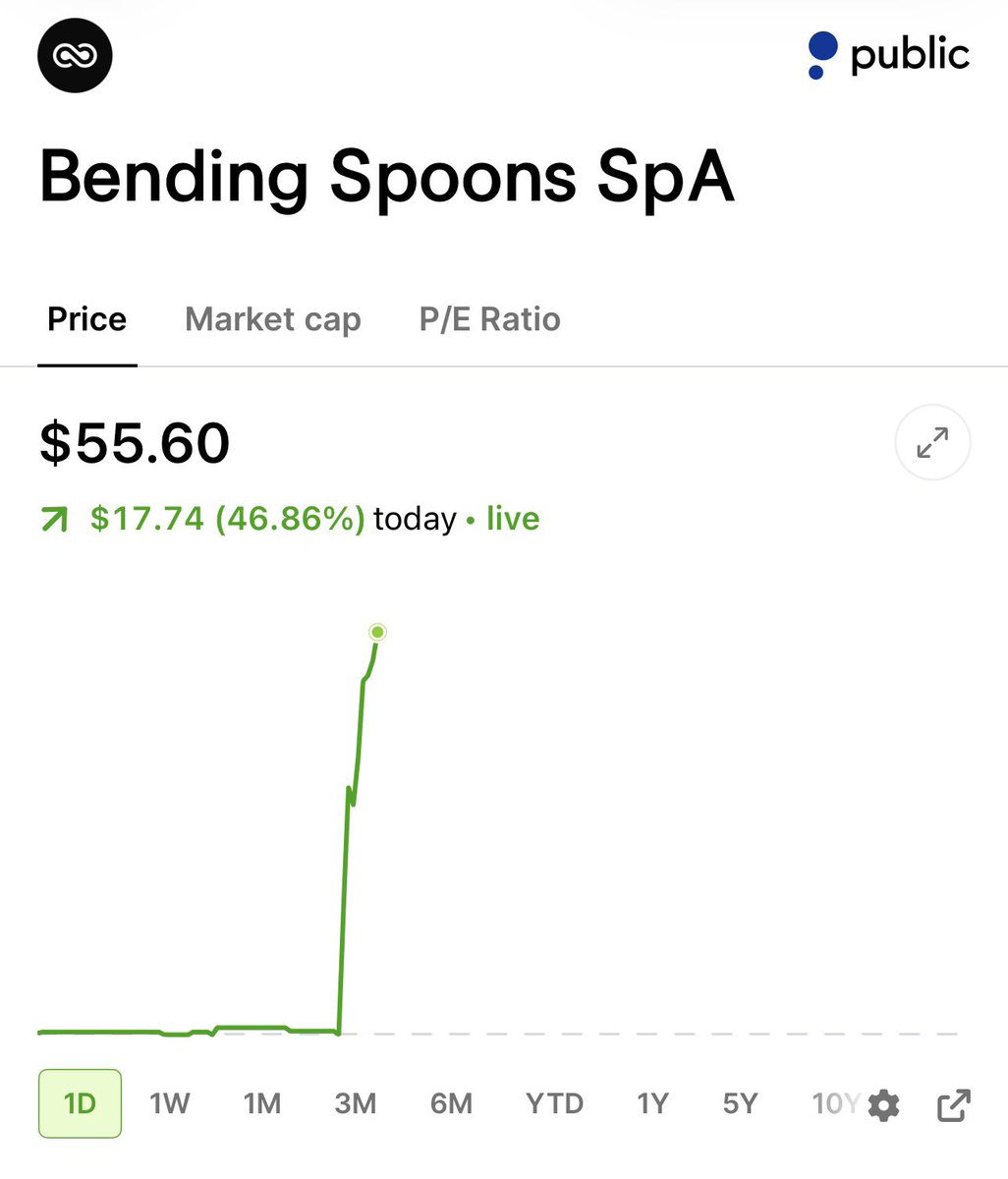
Bending Spoons said it has secured an additional $330 million investment from Berkshire Hathaway in a private placement at $33 a share. The deal lifts Berkshire’s ownership in the company to 4%.
The new commitment extends a relationship that began when Berkshire put $600 million into Bending Spoons at its July U.S. listing. Bending Spoons has spent more than a decade buying and restructuring digital businesses, including AOL, Vimeo, Evernote and WeTransfer.
Shares of Bending Spoons surged as much as 55% intraday on the news before trimming gains, underscoring investor enthusiasm for the company’s capital base and acquisition strategy. For Berkshire, the move deepens exposure to a technology roll-up platform rather than a traditional software name.
Bending Spoons said the transaction remains subject to customary closing conditions and that additional details will be filed with the SEC on Form 6-K. The company said the fresh capital should improve financial flexibility for future acquisitions.
How this story unfolded
2026-08-154 posts · 3 authors
Berkshire Hathaway's Q2 13F showed increased stakes in Alphabet, Delta, and others, with Constellation Brands fully exited.
Company
Strive adds 2,822 Bitcoin, lifts treasury to 35,595 BTC
The company also disclosed warrant exercises and fresh gross proceeds as it expands its Bitcoin treasury
Strive said it bought another 2,822 Bitcoin for $235 million through Tuesday, lifting its total holdings to 35,595 BTC. CEO Matt Cole posted the update on X and said 13.7 million of 15.3 million remaining warrants had been exercised, generating $369 million in gross proceeds.
The latest filing comes just a day after Strive disclosed a separate Oct. 5-9 purchase of 3,311 BTC at an average price of about $84,500. Together, the disclosures show the company continuing to scale its Bitcoin treasury at a pace that has pushed it into the upper tier of public-company holders.
For markets, the main ticker in focus is ASST, while comparisons with MARA Holdings have intensified after Strive’s latest accumulation. The funding mix also matters: warrant exercises are helping finance the buys, which keeps investors focused on dilution, liquidity and the company’s capital strategy.
Strive has not disputed the figures. At roughly $82,000 per Bitcoin, its treasury would be valued at about $2.9 billion, underscoring how quickly the position has grown in the past two months.
Six Flags said it will temporarily close 10 rides across its theme parks, including one involved in Monday’s fatal accident. The company’s response comes after a series of incidents at its facilities.
According to the site’s news library, the fatal event took place at Six Flags Over Georgia near Atlanta, where a 42-year-old man died on the Goliath coaster. Police are investigating the cause, and Six Flags later shut down similar roller coasters at multiple parks.
The stock reaction has been sharp. Coverage in the site’s library says FUN fell after the accident, with one report putting the share price around $9.91 and another at $9.98.
Six Flags has not provided additional details in the social post material beyond the temporary ride closures. The incident remains under investigation.
The integration lets developers build in-app XRPL wallets for XRP and RLUSD, widening the network’s push into stablecoin payments and agentic commerce.
Ripple said it has partnered with Stripe-owned Privy to add XRP Ledger support to Privy’s embedded wallet infrastructure. Developers will be able to create and manage XRPL wallets inside their apps, sign transactions, and support XRP, RLUSD and other assets on the network.
Privy said the XRPL has more than 8 million funded accounts and over $1 trillion in value moved across the network. The companies also framed the deal around agentic commerce, with AI agents able to hold funds and make payments, while future features such as policy controls and gas sponsorship are planned.
The market impact is primarily on XRP’s ecosystem and on RLUSD adoption, rather than on listed equities. Ripple has also said XRPL has processed about 14 million AI agent payments, roughly 25% of network activity, though that figure comes from Ripple’s own disclosure and has not been independently audited.
Privy said users can still export private keys and seed phrases, preserving portability. The partnership is aimed at making it easier for fintechs and payment companies to launch stablecoin products on XRPL without building wallet infrastructure from scratch.
Applied Materials unveiled longer-term targets at its 2026 SEMICON West investor breakfast, including a 54% non-GAAP gross margin and a 40% operating margin by 2030. The company also said it plans to return 80% to 100% of free cash flow to shareholders over that period.
The roadmap is anchored by service revenue and manufacturing investment. Applied expects service revenue to grow more than 20% in 2026 and to top $12 billion by 2030, while more than doubling R&D lab and manufacturing capacity by 2030.
For the market, the update matters most to AMAT and the broader semiconductor equipment group. A larger recurring service base and higher margin targets suggest the company is aiming to make its earnings profile less dependent on the cycle.
The materials provided do not show any denial or correction from the company. Related coverage in the news library points to the same SEMICON West presentation as the source of the new guidance.
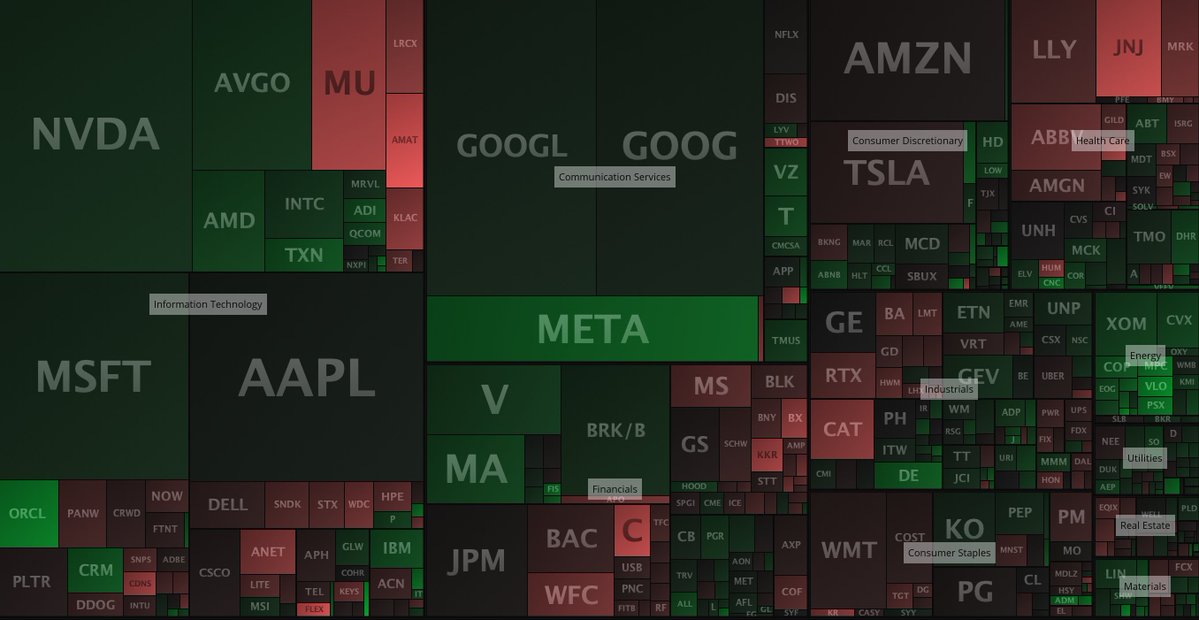
U.S. stocks ended lower on Tuesday, with the Nasdaq Composite down 0.15% to 27,204.38, the S&P 500 slipping 0.02% to 7,805.45 and the Dow falling about 181 points to 51,670.10. The session was shaped by a combination of big-bank earnings and renewed pressure on chipmakers.
The broader backdrop included reports that Samsung Electronics and SK Hynix weakened after CXMT highlighted progress on a more efficient memory-cell design. That development fed through to U.S. semiconductor shares, adding another layer of pressure to a market already digesting earnings.
Micron fell between 3.6% and 4.9% in the reports, while Applied Materials dropped 6.5% to 6.7%. Bank results were mixed, with JPMorgan, Goldman Sachs and Wells Fargo moving in different directions as investors parsed the numbers.
The selloff points to a market still rotating between financials, AI infrastructure names and memory-related chip stocks. For now, the weakness looks concentrated in specific segments rather than a broad market shock.
State Street Corp. reported third-quarter 2026 results, with revenue of $4.004 billion versus the $4.028 billion estimate. Adjusted EPS came in at $3.69, above the $3.67 consensus and up 33% year over year.
Fee revenue totaled $3.14 billion, below the $3.2 billion estimate. Servicing revenue was $1.49 billion versus $1.52 billion expected, while management fees rose 20.0% year over year to $797 million.
Net interest income came in at $864 million, above the $857.91 million estimate. The company also said it sees full-year fee revenue up about 13% to 14% year over year and net interest income up about 15% to 16%.
OpenOutcrier said STT traded down 8.3% premarket after the release, citing the fee revenue miss. Business Wire and Zacks both confirmed the quarterly earnings release and the EPS beat.
UnitedHealth Group raised its full-year profit outlook after reporting third-quarter results. Bloomberg TV said the company now expects adjusted earnings per share of at least $20.50 for 2026.
The new guidance extends the recent stream of updates around the company’s earnings and medical-cost trends. A Zacks note on the same earnings report pointed investors to key quarterly metrics, while Benzinga highlighted management’s view that Medicaid margins will bottom in 2026.
The market reaction has centered on UNH’s combination of an earnings beat, controlled medical costs and a higher outlook. MarketWatch, IBD Investors and Seeking Alpha all framed the story around those same three pieces.
The materials do not include additional breakdowns or outside responses beyond the company’s revised guidance.
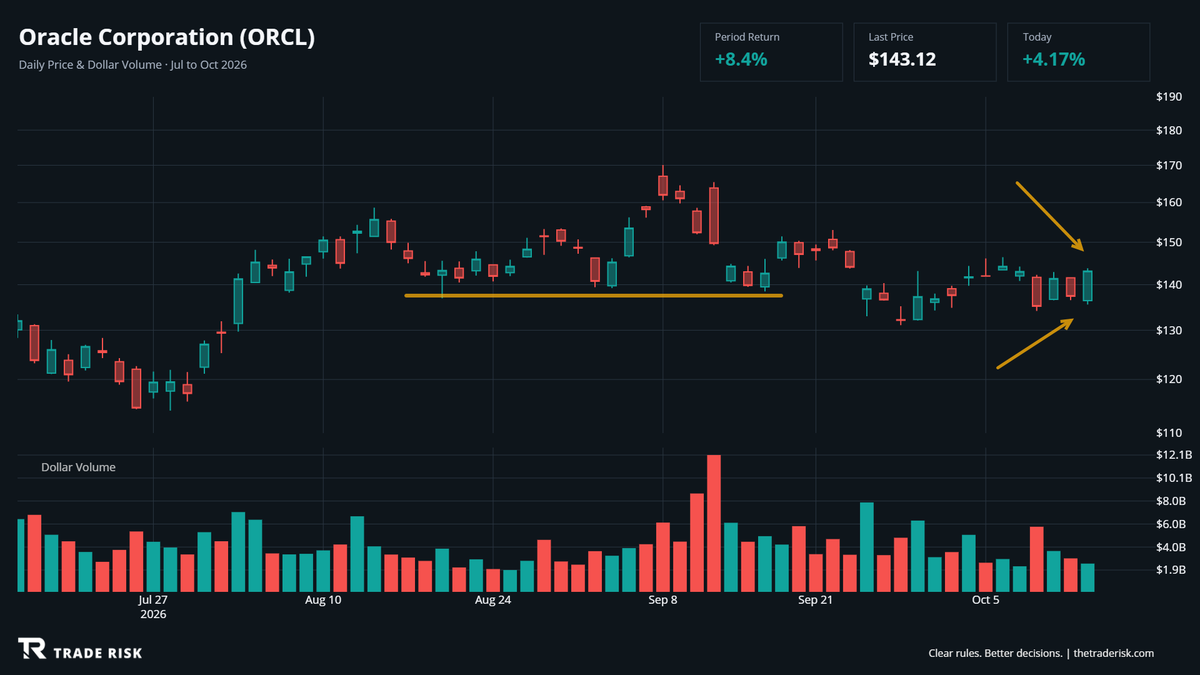
Oracle was a focus on X today as traders pointed to a short-term recovery in ORCL. One post said subscribers who bought the stock in stages at $137 and $135 had already seen gains, while another argued the shares printed a bullish engulfing session and would look more constructive if they finish above $146 this week.
The trading talk comes against a backdrop of continued scrutiny around Oracle’s AI infrastructure buildout, including financing, credit, and power-supply questions. Recent reporting has also highlighted Oracle’s proposed electricity arrangement for Project Jupiter in New Mexico, underscoring how execution risks around data-center expansion remain front and center.
For the market, ORCL remains a sentiment-sensitive name in cloud and AI infrastructure. Short-term price action may help the stock stabilize, but investors are still weighing the cost and reliability of the company’s expansion plans rather than any fresh fundamental announcement today.
There has been no new company response tied to the X posts themselves. The next catalyst is likely to be whether Oracle can keep clearing operational hurdles on power, financing, and delivery timelines.
Hedge fund veteran Paul Tudor Jones said in a CNBC interview that 2027 could be “very challenging” for equities, adding that the market still feels like 1999. He described the current backdrop as a two-speed market, with AI beneficiaries moving in one direction and the rest of the market in another.
He argued that the bigger issue is stock supply: larger tech IPOs, secondary sales and post-listing unlocks could add pressure just as corporate buybacks and M&A stop providing the same cushion. He also tied the setup to heavy financing needs around AI buildouts.
The comments matter most for AI-heavy growth names and the broader Nasdaq-100 and semiconductor complex, with SpaceX repeatedly cited as part of the financing story. If the expected offerings materialize, investors will watch whether new share supply outpaces demand from buybacks and strategic buying.
So far, however, the planned AI listings Jones referenced have not been formally filed, and the call is aimed at 2027 rather than the immediate trading backdrop. That makes the thesis a longer-dated supply story, not a claim about a near-term market break.
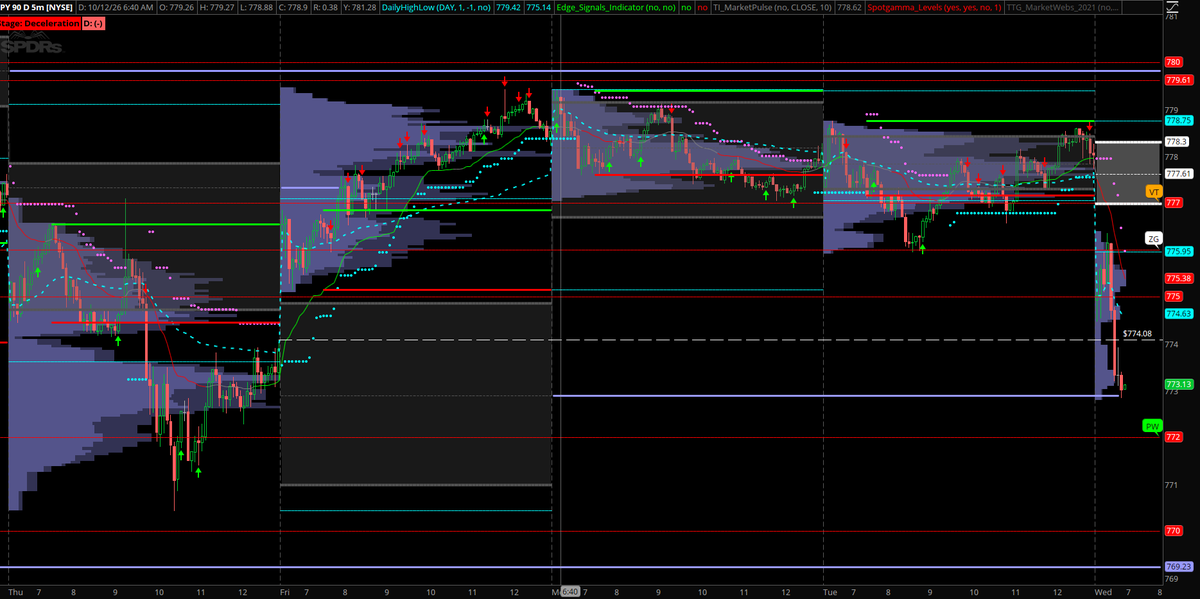
X signals on Oct. 14 show SPY regaining the 777 area after an intraday dip, while traders now point to a new, large 785 call wall and a 772 put wall. ES_F-related posts also flag 7840, 7825, 7800 and 7780 as key short-term support levels.
The setup builds on the prior session’s close, when DarkFlow Signals had SPY at 777.95 with a 780 call wall, a 772 put wall and a gamma flip at 777.65. Tickmill’s S&P 500 futures map likewise shows a tight dealer-sensitive range, including a gamma flip at 7841 and daily support/resistance bands around 7835/7825.
For the market, this matters for SPY, ES_F and other broad index products because options positioning can shape intraday liquidity and volatility. If the 785 call wall continues to hold, price action may remain compressed; if SPY slips back through 777 toward 772, traders will likely refocus on nearby support and liquidity pockets.
So far, the tape is showing a tug-of-war between upside call-wall resistance and downside support around 777 and below. The posts line up with third-party market-level data, but no fresh official announcement or issuer-specific catalyst has surfaced.
JPMorgan Chase CEO Jamie Dimon said the bank is not using external AI agents to access customer accounts. Multiple reports said the bank is blocking outside AI agents and building defensive tools to reduce client and bank risk.
The remarks extend the banking industry’s debate over where generative AI should stop at the customer perimeter. Forbes quoted Dimon warning that there could be thousands of rogue agents and that customers should understand the risks before granting AI access to personal data.
For the market, the immediate focus is JPMorgan’s approach to digital security and AI permissions rather than a broad sector call. The bank’s latest earnings coverage in the site newsroom provides the backdrop for the comments, which arrived as part of post-earnings discussion.
There is also a clear distinction in the source material between external access and internal deployment. The Valueist says JPMorgan is actively deploying agentic AI internally, while Dimon’s comments are about preventing outside agents from reaching customer accounts.
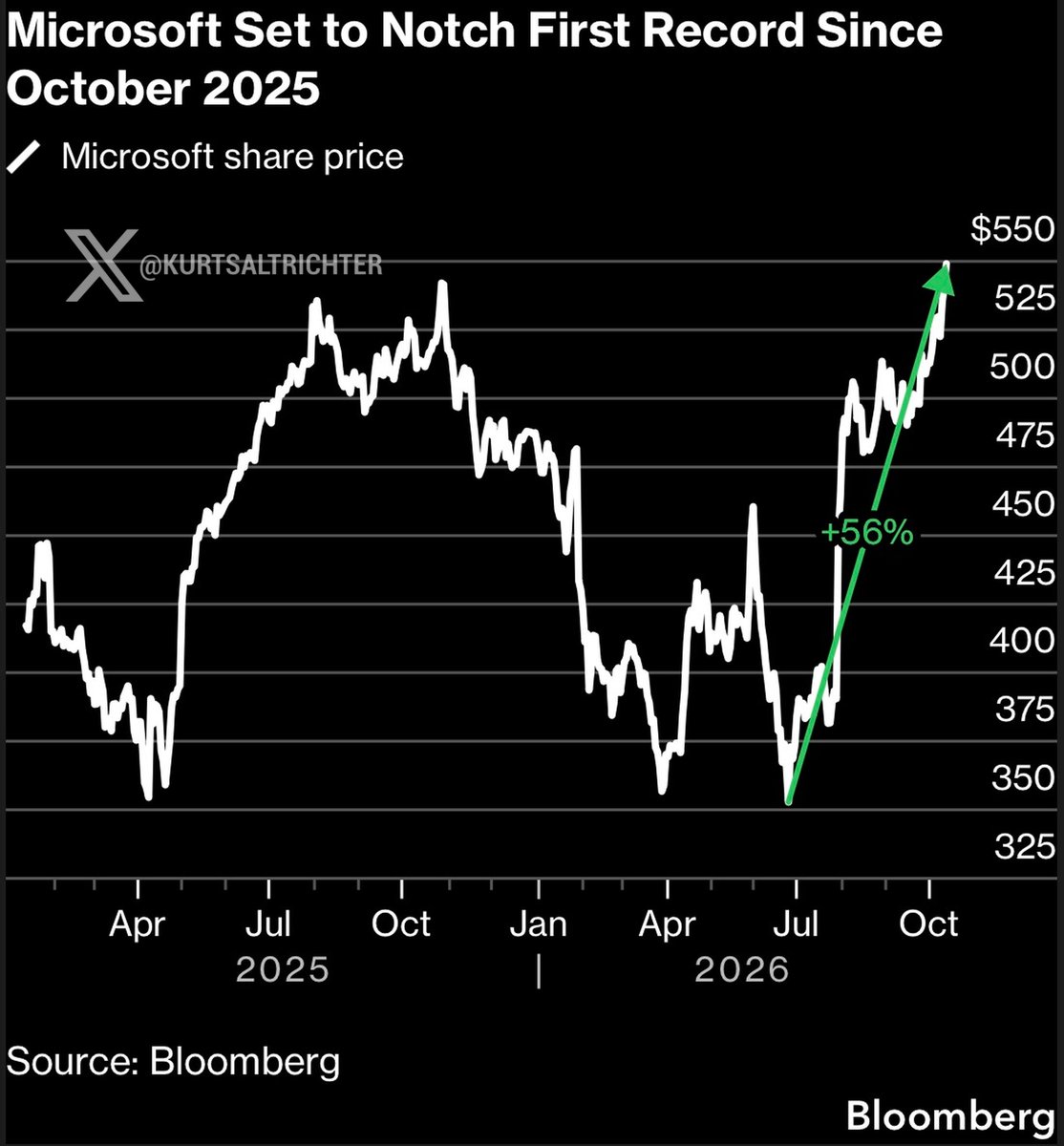
Microsoft shares are on pace to close at their first record in nearly a year, extending a four-month rally that has gathered pace. Market chatter in the X signal also said the company’s market capitalization is back above $4 trillion.
The move comes after a steep rebound from the June and July lows. Commentators on X said Microsoft has risen 55% since June lows and 56% from its July low, with the broader AI trade concentrated in a handful of megacap names.
Barclays raised its price target on Microsoft to $600 from $512, citing the company’s current software lineup. The bank said it expects Microsoft to show stronger differentiation in software by the end of the quarter.
The stock’s advance has made it one of the key lifts in the mega-cap complex. No direct company response was included in the provided material.
SpaceX deployed Starlink V3 satellites and made contact; during Starship's 14th flight, one Raptor vacuum engine shut down early, yet the vehicle achieved its planned suborbital trajectory.
2026-10-0956 posts · 42 authors
SpaceX announced an agreement to acquire a nationwide low-band spectrum license portfolio, aiming to make Starlink a major US mobile carrier, causing AT&T, Verizon, and T-Mobile stocks to drop over 7%.
2026-10-1027 posts · 24 authors
AT&T, Verizon, and T-Mobile stocks continued to plunge, falling 11-13%; T-Mobile's CTO commented that the spectrum is the 'last critical piece' needed to compete with national carriers.
2026-10-135 posts · 5 authors
Eleven Starlink communication antennas were set on fire at a secret site near Sofia, Bulgaria; SpaceX launched 27 new Starlink satellites via Falcon 9 from California; Piper downgraded AST.
2026-10-1412 posts · 10 authors
Ukrainian officials and military units said SpaceX imposed new speed limits on Starlink terminals, disrupting drone attacks over Russian-occupied Ukraine, and accused the company of failing to warn in advance.
Google officially unveiled Gemini 4 Argon, a frontier model for complex workflows and deep reasoning, with initial rollout to cyber defenders.
2026-10-029 posts · 9 authors
General public release of Gemini 4 Argon was postponed, while AI giants were noted to have launched at least nine new models, with markets eyeing payroll data.
2026-10-104 posts · 3 authors
Reports emerged that Google employees are testing a model superior to Gemini 4 Argon, comparing it to Claude Opus 5.5.
2026-10-1420 posts · 17 authors
Google globally launched Gemini 4 Argon for developers and enterprises via paid API, announced by CEO and DeepMind head.