South Korea’s KOSPI triggered a level 1 circuit breaker on Thursday after sliding more than 8% during the session. Reuters said the benchmark fell as much as 9.29% intraday before closing at 5,554.22, down 7.57% from the previous session.
The selloff was led by heavyweight chipmakers, with Samsung Electronics and SK hynix under heavy pressure. Market participants cited concerns about the durability of the AI investment boom and a hotter-than-expected U.S. inflation reading that reinforced bets on further rate hikes.
The rout also spilled into the tech-heavy KOSDAQ, which was halted earlier in the day. Yonhap said KOSDAQ hit a 1st-stage circuit breaker at 12:23 p.m. after falling 8.01%, while KOSPI’s halt followed at 12:38 p.m.
Under Korea Exchange rules, a level 1 circuit breaker is triggered when the benchmark falls 8% or more for one minute. The halt lasts 20 minutes, followed by a 10-minute single-price auction after trading resumes.
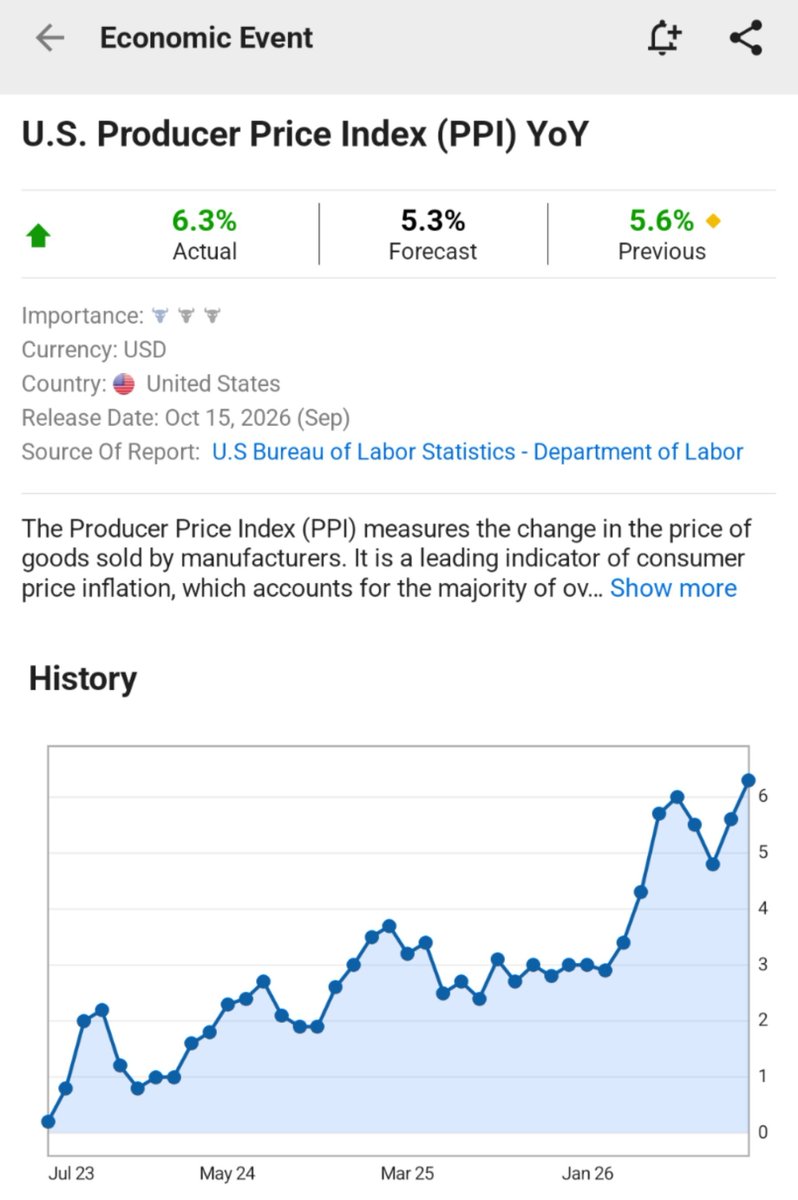
The U.S. Bureau of Labor Statistics said Thursday that the Producer Price Index for final demand rose 6.3% from a year earlier in September, above economists’ 5.3% estimate. On a monthly basis, PPI increased 1.3%, well ahead of the 0.5% consensus forecast. Core PPI rose 5.0% year over year and 0.7% month over month.
The report adds to evidence that inflation pressure is not confined to consumers. Reuters said September’s increase was the largest in the PPI since March 2022, while the 12-month gain was the biggest since December 2022.
Energy was a major driver: final-demand goods prices climbed 2.6%, with energy up 10.8% and gasoline up 20.3%. Services prices also rose 0.8%, a sign that pipeline cost pressure is broadening beyond fuel.
Investors are now parsing the data for what it means for the Federal Reserve’s near-term stance. Rate-sensitive assets, long-duration Treasuries, and sectors exposed to freight, fuel, and input costs tend to react most to hotter wholesale inflation prints.
Anthropic told investors that third-quarter 2026 revenue reached $16.8 billion and that it was profitable on an adjusted basis. The figures were disclosed in pre-IPO presentations and reported by several outlets citing people familiar with the matter.
The update comes after a year of rapid scaling that has already pushed Anthropic into the center of the AI valuation debate. Reuters reported that first-quarter revenue was about $4.7 billion and second-quarter revenue about $11.6 billion, underscoring how quickly the company has expanded before any public listing.
Investors are watching whether that pace can support the company’s reported valuation ambitions ahead of an expected IPO. The disclosure also matters for Alphabet and Amazon, given Anthropic’s dependence on cloud services, compute infrastructure and other AI spending partners.
Anthropic has not yet released a full public filing confirming the revenue methodology, so the market is still working from investor-day disclosures. That leaves questions about whether the figure is gross or net revenue and how much margin detail will ultimately appear in formal IPO documents.
Taiwan Semiconductor Manufacturing Co. reported third-quarter net profit of NT$763.1 billion, up 68.7% from a year earlier. Third-quarter operating margin came in at 58.7%, above prior guidance of 58%, and free cash flow rose to NT$476.56 billion.
The quarter also beat expectations on the top and bottom lines. Multiple signals put Q3 revenue at about $46.7 billion to $46.72 billion and EPS at $4.60, both ahead of estimates; advanced nodes at 7nm and below accounted for 79% of wafer revenue.
TSMC also issued fourth-quarter guidance calling for revenue of $52.30 billion to $54.30 billion and operating margin of 56.5% to 58.5%. Market coverage suggests investors are focusing on both the earnings beat and the updated outlook.
Shares of TSM fell as much as nearly 4% in early trading in one market signal, showing that the stock reaction was not purely about the beat. Broader reporting framed the results as another sign that AI-related demand remains supportive for the company’s business.
Apple closed above a $5 trillion market capitalization for the first time, according to multiple posts circulating on X and a Wall Street Journal report. The key detail is the closing basis: the stock ended the session above the threshold, not merely intraday.
In the site’s news library, WSJ had already published “Apple Closes Above the $5 Trillion Mark” on October 14, indicating this is a confirmed market milestone rather than a rumor. A Yahoo Finance repost also says AAPL crossed the $5 trillion market cap again since late July.
For investors, the move matters less as a single print and more as a reference point for megacap tech valuation. Barron’s framed it against a softer broader tech tape, suggesting Apple’s scale is again becoming a market-wide benchmark.
No fresh company statement was included in the cited materials. Based on the available signals, the discussion now centers on whether Apple can sustain that valuation line in subsequent trading sessions.
Nvidia CEO Jensen Huang said the company would stop supplying chips to a customer building unsafe AI software, according to Bloomberg and CNBC reporting. He also argued that current concerns around AI are part of the industry’s growing pains rather than a crisis.
The comments matter because Nvidia sits at the center of the AI hardware supply chain and can influence what gets built through access to compute. Huang also called for the U.S. and China to work together on AI safety, underscoring how the issue is moving from policy debate into operational enforcement.
For markets, the statement reinforces Nvidia’s position as a gatekeeper in the AI infrastructure buildout and keeps attention on how it manages customer screening, compliance and supply discipline. Any shift in those policies can matter not just for NVDA, but also for the broader AI data-center and server ecosystem.
The report remains media-sourced for now, and no contrary denial from Nvidia was identified in the materials reviewed. If the company later formalizes such a policy, that would provide a clearer read on how far the supply-chain enforcement will go.
OpenAI said in a brief filed in the Apple v. OpenAI lawsuit that a former employee who later joined Apple sent more than 100 files about an unreleased OpenAI product to personal accounts. The filing also says the leaked material included detailed device images, engineering data, supplier information and manufacturing data.
The dispute is part of the ongoing trade-secret fight between Apple and OpenAI. Bloomberg reported that the two companies were headed to court for the first high-stakes hearing in the case, where Apple alleges OpenAI used former employees to obtain confidential hardware designs and technology.
For investors, the immediate relevance is to AAPL, which is now tied to a headline legal battle over alleged misuse of confidential information. The latest detail comes from OpenAI’s court brief, so it should be read as a litigation claim rather than a settled finding.
OpenAI also said Apple has not assured it is not in possession of, and has not used, OpenAI confidential data. Apple’s full response was not included in the materials provided here.
Elon Musk posted that they may should start a competitor to Amazon. The comment was quickly echoed by multiple X accounts, making it today’s new public signal around AMZN.
The timing lands alongside a cluster of recent Amazon coverage in the newsroom database, including AI-cloud commentary and Amazon’s new Bee personal AI devices. That context helps explain why the remark is drawing attention beyond a casual throwaway line.
For markets, AMZN is the direct ticker in focus because Amazon was named explicitly. Any broader pricing of the comment will likely depend on whether Musk later sketches a real product, service, or business model.
No response from Amazon is included in the provided material. On the evidence available here, this should be treated as a fresh remark rather than an established corporate move.
GlobalFoundries to Build Two New York Fabs With Up to $21 Billion From Japan
The latest signal adds details on funding, U.S. equity participation and job creation. It extends a deal first reported on Oct. 14 around the Malta, New York campus.
Multiple signals say GlobalFoundries will build two new semiconductor manufacturing facilities in Malta, New York, with funding from Japan of up to $21 billion. They also say the U.S. Commerce Department will take about a 4% stake in the company.
Our news library shows the same event was already reported on Oct. 14, when GlobalFoundries was said to have been selected to operate two new 300-millimeter fabs at its Malta campus under a U.S.-Japan initiative. Today’s X signal mainly adds scale, job estimates and the equity detail.
GFS is the key ticker here because the project directly affects its manufacturing footprint, financing mix and government involvement. The signal says the plan could create 27,000 construction and supply-chain jobs and more than 1,000 manufacturing jobs, which helps explain the market’s focus on the stock.
There is one point of inconsistency across the materials: some posts mention up to $20 billion, while others and the news library repeatedly cite up to $21 billion. On the available record, the $21 billion figure is the more widely supported one; the customer list and execution timeline remain only partially described.
Mastercard and BVNK on Thursday launched Mastercard Global Money Platform, a single-integration layer that combines Mastercard’s payments network with BVNK’s stablecoin infrastructure. The platform is designed to let banks, fintechs and enterprises embed multi-currency accounts, real-time conversion, stablecoin-linked cards and local bank payouts.
The launch is Mastercard’s first major integration of BVNK since its August 2026 acquisition of the company. Mastercard said the platform taps into Mastercard Move, which reaches more than 17 billion endpoints, while card issuing is available in 130-plus countries and broader currency coverage is expected in 2027.
For Mastercard, the move extends its payment rails deeper into stablecoin use cases; for BVNK, it puts its infrastructure into products offered by banks and digital platforms. Early partners named in the launch include Nuvei, Marqeta, Ontop, Bolt Group and Almond FinTech.
BVNK said the platform is available now. Mastercard added that the product fits its broader multi-money strategy and could support future use cases including tokenized deposits and agentic commerce.
BlackRock CEO Larry Fink said the United States could fall into a recession if data center construction is stopped. Multiple X posts pointed to the same warning, and CNBC reported his comment that a data center moratorium could trigger a recession.
The remarks came just after BlackRock released a strong quarterly report. News in the site’s recent coverage showed earnings per share of $15.93 and net inflows of $205 billion, drawing fresh attention to Fink’s views on capital allocation and financing conditions.
Fink also said private capital needs to be unlocked to help the U.S. economy grow at 3%, while rising U.S. debt and government borrowing are putting more pressure on available funding. That ties data center investment directly to the broader debate over AI infrastructure and macro liquidity.
For markets, the immediate focus is the BLK narrative rather than a direct financial impact. As the world’s largest asset manager, BlackRock’s stance on capital spending and funding supply can influence how investors frame the outlook for AI infrastructure, cloud demand, and related capital goods.
Memory shares came under renewed pressure on Thursday as investors digested two overlapping concerns: China’s rising memory-chip competition and a South Korean column warning of a possible 2029 supply glut. CNBC said the market reaction has been especially sharp in SK Hynix, Samsung and Micron.
The South Korean newspaper column, as translated by CNBC, argued that new capacity could flood the memory market in 2029 and leave Korea only two to three years to cultivate new growth industries. It is a market view rather than an industry consensus, but it has become a fresh narrative weighing on sentiment.
The selloff has been broad. Over the past five trading days, SK Hynix fell 26%, Samsung dropped 22% and Micron declined about 11%, according to CNBC. The move reflects concern that China’s CXMT could eventually compete more aggressively in server memory while the current AI-driven shortage may not last indefinitely.
Counterpoint Research, cited by CNBC, sees DRAM prices in 2028 about 23% below 2027 levels, yet still roughly 230% above 2025. That suggests investors are still trying to price a cycle that remains tight for now, even as longer-dated oversupply fears build.
Netflix said on Wednesday it will lay off roughly 6% of its employees, or nearly 1,000 workers. CNBC said the cuts will mainly hit product, tech, legal and HR teams.
Multiple reports tied the move to slower growth at the streaming company. Bloomberg and the Wall Street Journal also described the action as Netflix’s biggest layoff round since 2022.
The news puts the focus squarely on NFLX, with shares already under pressure this year. Benzinga said the stock is down about 20% year to date, while Morning Brew cited declines of 13.9% over 1 month, 34.6% over 6 months and 42.8% over 12 months.
Bloomberg also reported that Netflix let go of several high-profile film and television executives the same day. Taken together, the reports point to a broader reshaping of the company’s organization ahead of earnings.
Multiple X posts say Apple is preparing to bring Apple Intelligence to mainland China in December, with the rollout tied to an iOS 27.3 update. The reporting says this would be Apple Intelligence’s first appearance in China.
The new detail matters because Apple’s AI features have reportedly been kept out of China for a long time by regulatory delays. That makes the timing itself the key incremental development, rather than a fresh product debut elsewhere.
The posts also say the initial package would include the AI features first launched in the US, while excluding the new Siri AI. One thread adds that the guardrails are being built with Alibaba, which keeps Apple and Alibaba at the center of the story.
Apple has not been quoted directly in the provided material, so the item remains a report-driven development. For now, the main ticker is AAPL, with BABA relevant only as a possible partner in the compliance layer.
SK Hynix ties China tool approval to new U.S. NAND plant
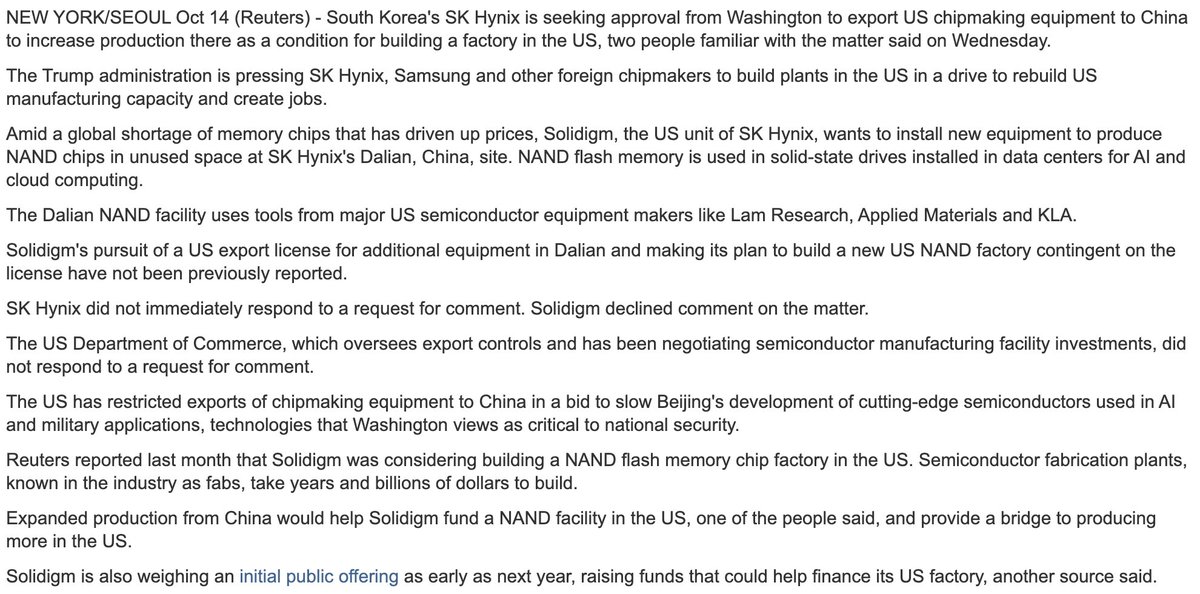
Reuters says the chipmaker is seeking permission to ship more U.S. tools to China while negotiating a new American factory, spotlighting a delicate policy trade-off.
Reuters reported that SK Hynix is seeking U.S. approval to export additional American-made chipmaking equipment to its China facility, linking the request to plans for a new NAND flash plant in the United States. The discussions center on equipment for an unused section of its Dalian site, known as Mod B.
The report comes against a tighter U.S. stance on semiconductor tool exports to China. Reuters previously said Washington granted Samsung Electronics and SK Hynix annual 2026 licenses in December 2025 after revoking broader waiver-style exemptions earlier in the year.
SK Hynix shares in Seoul came under pressure on the news, while the broader memory-chip trade also remained volatile. Investors are watching whether the arrangement lets the company keep Chinese output running while advancing domestic U.S. manufacturing.
SK Hynix told Reuters that equipment installation at Mod B has been carried out in close consultation with and under authorization from the U.S. government, while denying any capacity-expansion intent at the site. The company’s broader capital-allocation plans now appear increasingly tied to both U.S. and China operating constraints.
CoreWeave CEO Michael Intrator said he remains confident in the company’s business model, funding, sales and backlog, and that its contracted backlog more than supports its debt obligations. The remarks were shared in a memo to employees.
The message lands amid renewed scrutiny of CoreWeave’s financing structure and the broader AI spending trade. Reuters reported on Oct. 14 that Intrator used a similar memo to reassure staff, framing the company’s backlog as a key defense against market concerns.
The market response has been weak. X posts cited CRWV down about 15% on the day, while multiple reports pointed to pressure in the company’s bonds and rising interest costs relative to revenue.
Intrator’s comments are an attempt to reassure employees and investors, but they are still company-side statements rather than a fresh financial release. The event remains centered on CoreWeave’s ability to convert contracted demand into enough cash flow to service its obligations.
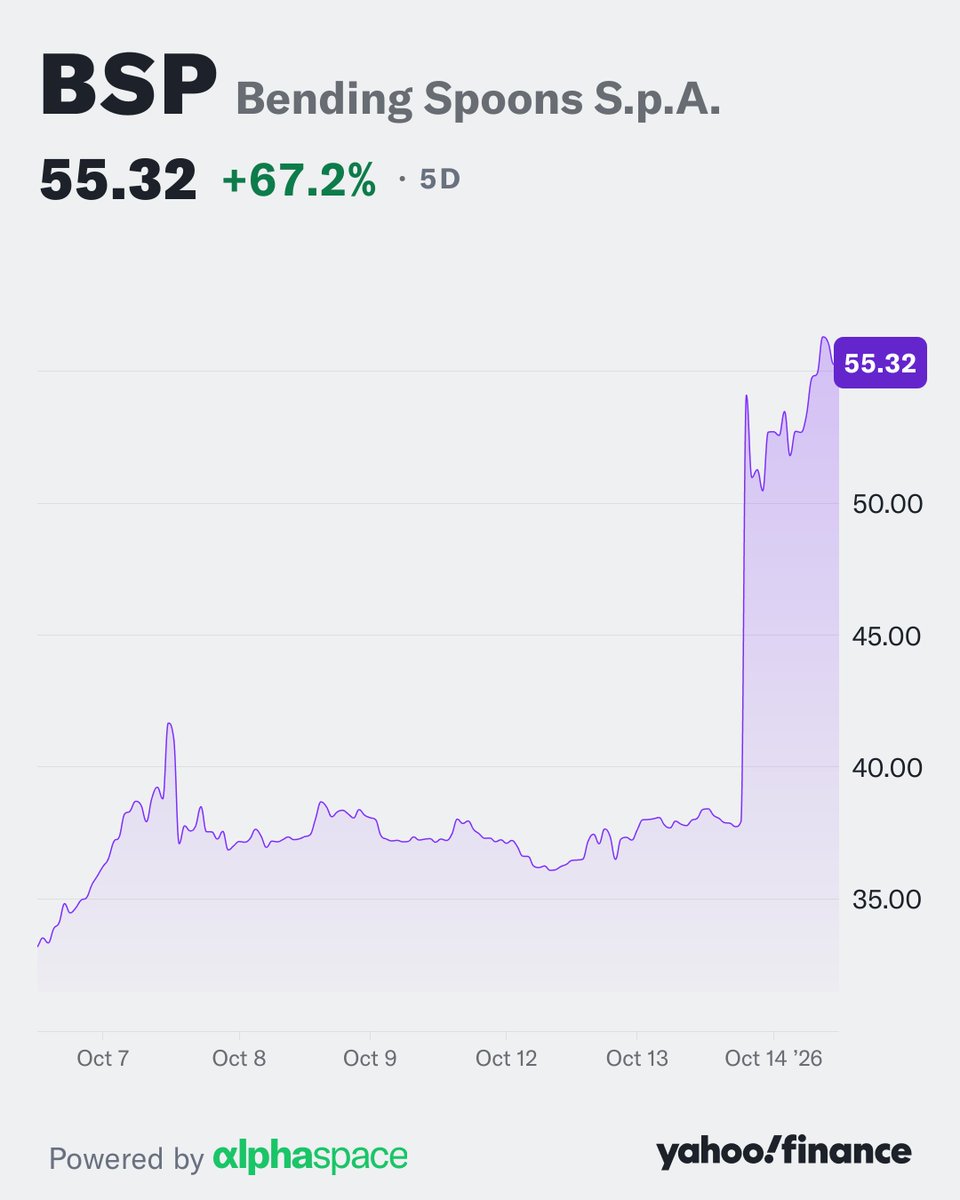
Berkshire Hathaway has agreed to invest an additional $330 million in Bending Spoons, according to multiple reports. The new round lifts Berkshire’s stake in the Italian technology company to 4%.
This is the latest step in a financing relationship that began earlier this year. The site’s news database says Berkshire had already invested $600 million during Bending Spoons’ IPO in July, making today’s update a follow-on development rather than a standalone event.
The stock moved sharply higher on the news. Gurufocus reported a 41.44% gain and said shares were trading at $53.5 at the time of its report, while other market-watch headlines also tied the move to Berkshire’s added backing.
The fresh detail in today’s signal is the size of the new commitment and the updated ownership level. No denial from either side appears in the provided material, and the deal has been widely repeated across market news wires.
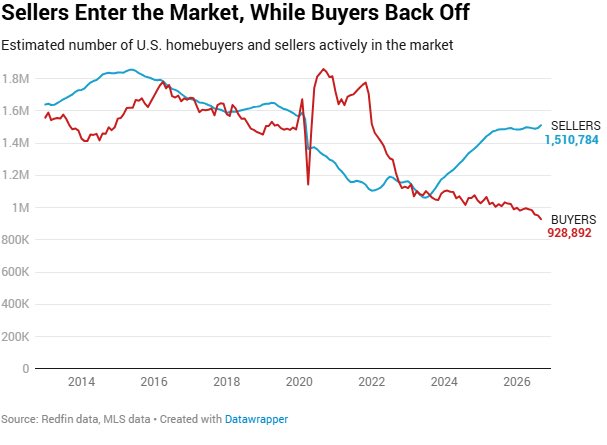
Redfin’s latest report says U.S. home sellers outnumbered buyers by 62.6% in September, the widest gap in its records going back to 2013. The brokerage estimated 928,892 buyers in the market versus 1,510,784 sellers.
The imbalance points to cooling demand rather than a sudden collapse in supply. Redfin said high mortgage rates and still-elevated home prices have pushed many would-be buyers to the sidelines.
For housing-linked names and ETFs, the data matters because weaker demand can affect transaction volume, inventory clearance and pricing power. Redfin also said 41 of the 50 largest U.S. metro areas were buyer’s markets, underscoring how broad the shift has become.
The numbers have been echoed by multiple outlets, and the core figures are consistent across reports. This is a follow-on news item from Redfin’s October 14 September market update; today’s new angle is the rapid spread of the record-gap reading across social and financial media.
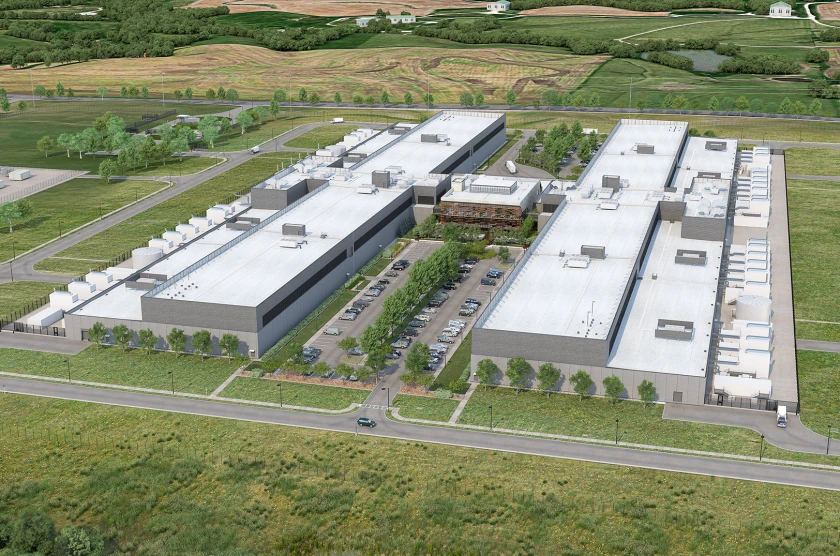
Digital Realty is offering every household in De Soto, Kansas, $1,000 a year for 10 years in the form of utility and/or property-tax relief, a move aimed at easing local opposition to its planned data center. The package is being framed as a $20 million community investment fund, according to multiple reports.
The project is tied to Astra Enterprise Park in De Soto, where the data center site is expected to span about 1,400 acres. Local coverage says the company has prepared roughly 300 acres for the first phase, while the broader development still awaits full approval.
For investors, the key issue is execution risk around local permitting and community acceptance rather than an immediate change to Digital Realty’s operating portfolio. Reports also say the city is helping administer the relief payments, and the money is not coming from De Soto’s general revenue fund.
Digital Realty said the commitment is meant to deliver tangible benefits to residents and reflect a broader approach to responsible development. De Soto’s mayor said the plan builds on long-term redevelopment work at the site by investing directly in people who live in the city.
Australia’s unemployment rate rose to 4.7% in September, according to the Australian Bureau of Statistics, above the 4.6% forecast. Employment fell by 39,300 to 14,782,700, while full-time jobs increased by 34,400 and part-time roles declined by 73,700.
The release adds to signs that the labour market is easing. ABS said the participation rate slipped to 66.8%, while the trend unemployment rate stayed at 4.6%, suggesting the monthly figures were weaker than the underlying trend but still consistent with a softer jobs backdrop.
Markets quickly refocused on the Reserve Bank of Australia. Reuters reported that traders lifted the implied odds of the RBA holding rates at 4.6% in November after the data, as a weaker employment print reduces pressure for another immediate hike.
ABS said the September survey covered the two weeks from 30 August to 12 September and cautioned against over-interpreting month-to-month moves. ABC News quoted economists saying the result points to a cooling labour market, though inflation remains the other key variable for policy.
Gartner said 80% of neocloud providers are expected to cease operating independently by 2030. In the same research, the firm warned that AI infrastructure spending is scaling so quickly that data-center owners will need much higher cumulative revenue to justify the announced capex and financing burden.
The backdrop is the industry’s shift into an extremely capital-intensive phase, with investors reassessing whether standalone AI cloud operators can raise enough funding and keep utilization high enough to support returns. Gartner’s framing also points to potential asset write-down risk if revenues lag the buildout.
Public markets have already started to react to the sector’s economics, with names such as Nebius, IREN and CoreWeave drawing attention as representative neocloud operators. Their stock moves in recent sessions suggest traders are increasingly treating Gartner’s research as a valuation risk signal.
The available facts here come from Gartner’s published research and follow-on reporting; there has not been a common company-by-company response to the forecast. For now, the message is best read as a sector-level warning on capital intensity and consolidation rather than a statement about any single firm’s operating results.
The Wall Street Journal reported that Sachin Katti, OpenAI’s head of computing capacity, is set to leave the company next month after roughly a year in the role. The report said OpenAI planned to brief employees internally first.
Katti joined OpenAI in late 2025 to help streamline the Stargate data center buildout and expand the company’s computing supply. Subsequent reporting linked him to partnerships with SoftBank, Oracle and Amazon Web Services, as well as a 10-gigawatt data center lease with SB Energy.
The leadership change matters because compute access sits at the center of OpenAI’s model training and deployment plans. According to the report, former xAI executive Uday Ruddarraju will take over the computing strategy group and report to OpenAI President Greg Brockman.
OpenAI has not publicly detailed the departure beyond the reporting, so the key facts currently come from the WSJ follow-up and prior company-linked coverage. Intel had previously confirmed Katti left the chipmaker in November 2025 to join OpenAI.
How this story unfolded
2026-09-166 posts · 5 authors
OpenAI executives stressed compute demand, while NVIDIA and OpenAI showcased Rubin platform performance gains.
Macro
API reports 11.12 million-barrel U.S. crude draw, Cushing adds 1.823 million
The weekly data came in far stronger than expected, with crude and product inventories moving in mixed directions ahead of the EIA release.
The American Petroleum Institute said U.S. crude inventories fell by 11.12 million barrels in the week ended Oct. 9, far larger than the 1.9 million-barrel build expected by the market. Cushing inventories rose by 1.823 million barrels, while gasoline stocks increased by 1.1 million barrels and distillate stocks fell by 1.5 million barrels.
The latest print followed a 2.09 million-barrel crude draw in the prior week and an 866,000-barrel increase at Cushing. API figures are closely watched because they often arrive before the Energy Information Administration’s official weekly supply report.
A draw of this size can sharpen attention on near-term supply conditions, although the rise at Cushing and the split in product stocks point to a more mixed read-through for refiners and traders. The release is relevant for crude benchmarks, integrated oil producers, refiners and energy ETFs.
Bank of America shares are now more than 20% below their August peak, putting the stock into bear-market territory. The move extends Wednesday’s post-earnings drop, which followed a $1.2 billion regulatory penalty and a weaker-than-expected quarter.
The broader backdrop is a selloff across U.S. banks. The KBW Nasdaq Bank Index has fallen about 16% from its peak, and several large banks are down more than 20%, with analysts pointing to rising bond yields, trading pressure and valuation repricing rather than a broad credit crisis.
For BAC, third-quarter net income fell 17% year over year to $6.9 billion on revenue of about $30.1 billion. Fixed-income trading revenue slid 17% to $2.55 billion, while equities trading rose 10% to $2.51 billion but still came in below estimates.
The latest move also kept pressure on the broader market tone, with the Nasdaq 100 sliding and bank shares underperforming. CNBC reported that CEO Brian Moynihan said he would not speculate on the timing of regulatory remediation, adding that the bank is working through the issues.
Markets🔥Developing
Russell 2000 falls below its 200-day average as small caps slide into correction
The small-cap benchmark is under technical pressure as hotter inflation and rate expectations keep weighing on the group
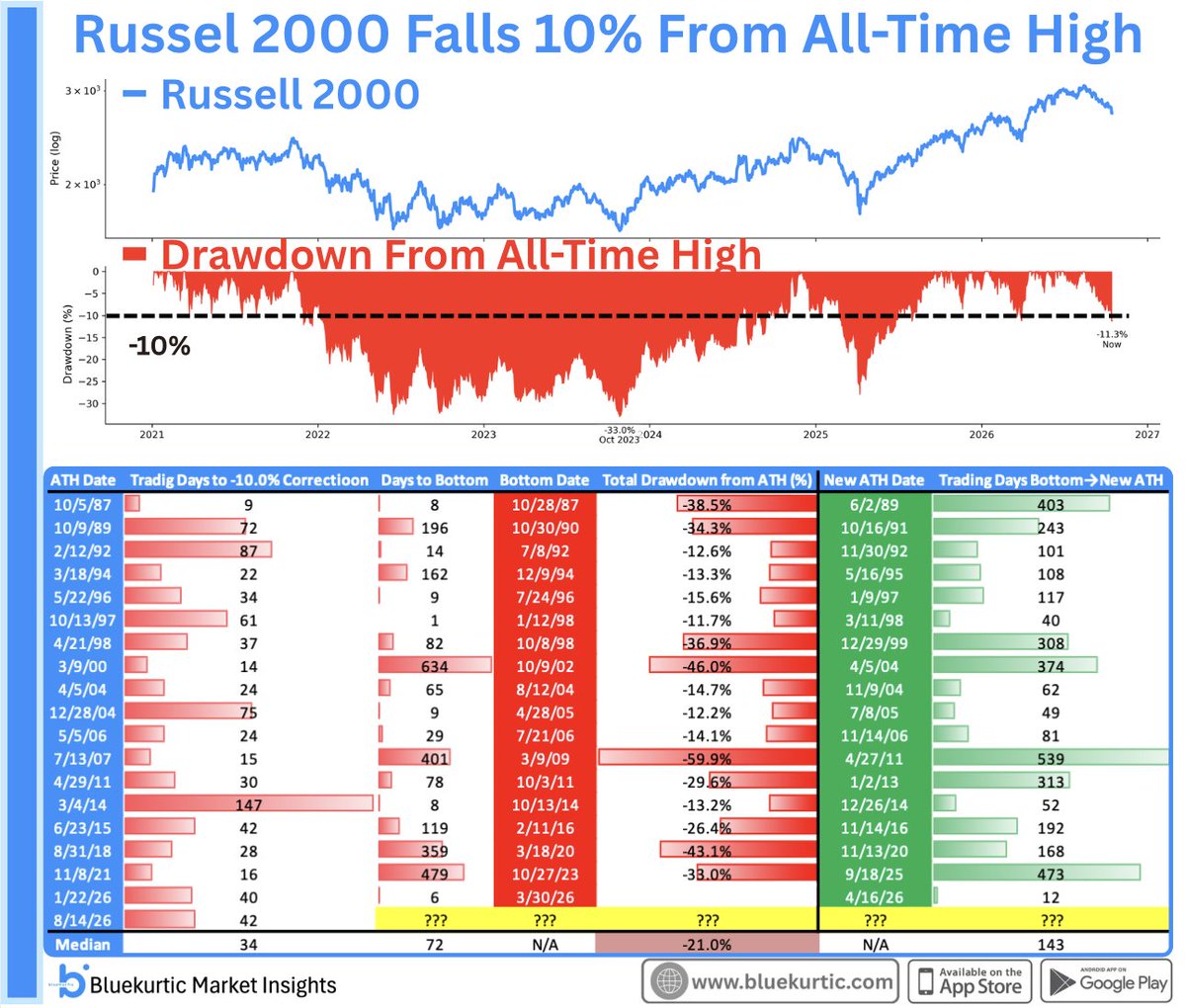
U.S. small caps extended their slide on Wednesday, with the iShares Russell 2000 ETF (IWM) closing at $271.37 and dropping below its 200-day moving average. CNBC said the Russell 2000 finished the day 11% below its Aug. 14 record close, while Seeking Alpha reported that IWM traded at $271.45, its lowest level since May 19.
The move comes as investors digest hotter-than-expected inflation data and a growing view that the Federal Reserve may need to hike again before year-end. Investing.com said the Russell 2000’s 120-session correlation with daily changes in 2-year, 5-year and 10-year Treasury yields sits among the most negative 1% of readings since 2003, underscoring how sensitive small caps have become to borrowing-cost pressure.
That matters because small-cap companies tend to rely more heavily on financing and floating-rate debt than larger peers. CNBC also cited BCA Research saying labor quality and inflation remain the top concerns among small-business owners, while financing costs have not yet become the No. 1 issue — suggesting the rate impact may still be working through with a lag.
For traders, the key focus is now on whether IWM can stabilize around major moving-average support or whether the selling extends. The backdrop remains the same: inflation, Treasury yields and energy prices are driving the macro debate around small caps.
How this story unfolded
2026-08-17
Markets
Hot CPI knocks tech and chips as rate-cut bets fade
U.S. inflation came in a touch firm, pushing the dollar higher and hitting AI-heavy equities hardest.
U.S. stocks extended their post-CPI selloff on Oct. 15 after September consumer prices came in slightly hotter than expected, with tech and chip shares leading the decline. Reuters and other market reports described a broad risk-off move as investors reassessed the path for Federal Reserve policy.reuters.com
The market had been positioned around expectations for September headline CPI at 3.6% year over year and 0.6% month over month, with core CPI seen at 2.5% y/y and 0.2% m/m. A print above those expectations intensified concern that the Fed may have to stay restrictive for longer, especially with core inflation seen as the more important signal for policy.forex.com
That shift hit the most valuation-sensitive corners of the market, particularly AI-linked and semiconductor names, while the dollar firmed and broader risk appetite weakened. Saxo noted that the CPI release was reinforcing the dollar’s strength even before the data, and the hotter read appeared to validate that setup.home.saxo
For now, the move is best understood as a repricing of inflation and rate expectations rather than a company-specific shock. Traders are watching whether the initial post-data drop in tech can stabilize as the market digests the core details and the next Fed signals.
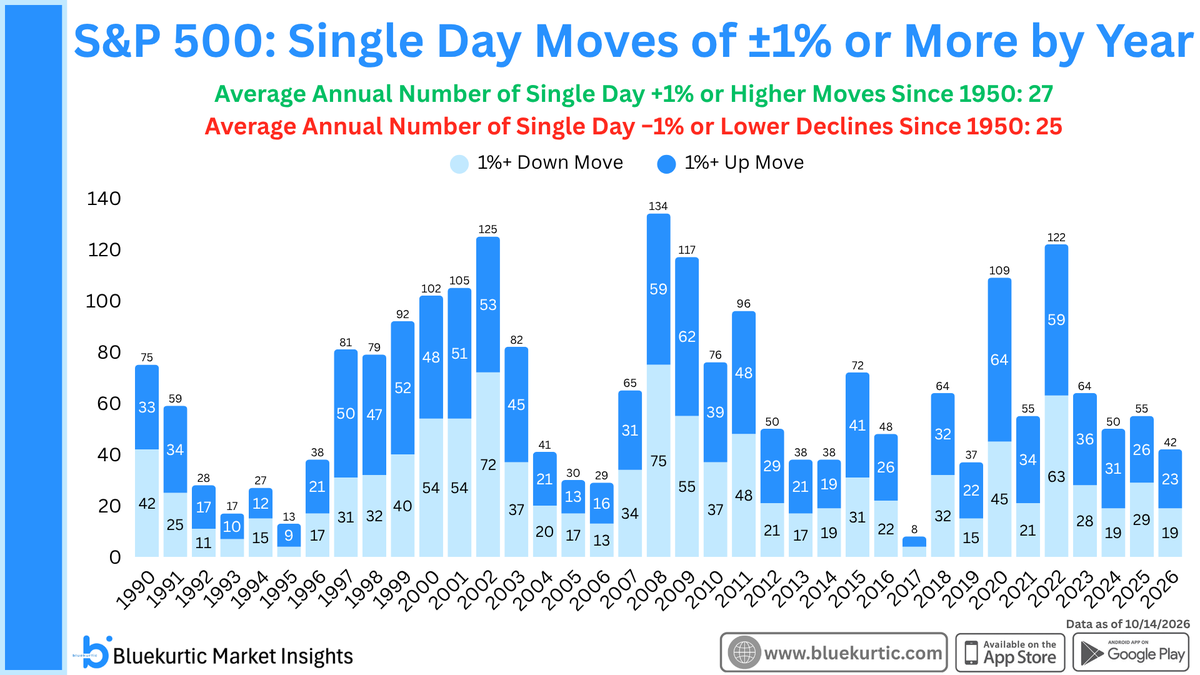
On Oct. 14, multiple reports said the S&P 500’s longest spell without a 1% daily drop since 2020 had come to an end, after 53 straight trading sessions without such a decline. Traders and market-data accounts on X echoed the move, saying the index or the SPY ETF had finally posted a 1% pullback after the unusually calm run.
The shift comes as enthusiasm around the artificial-intelligence trade shows signs of fatigue and Treasury yields remain elevated. X posts also flagged the 10-year yield at 5.28% last week, its highest since 2002, underscoring a growing gap between what equities are pricing and what bonds are pricing.
Intraday market data showed the S&P 500 still near record territory even as volatility picked up: Markets Insider put the index at 7,693.92, down 0.32%, while Google Finance showed 7,704.54, down 0.19%. That suggests the move was a sharp reset in sentiment rather than a wholesale break in the broader uptrend.
For stocks, the backdrop matters most for crowded AI and other high-multiple names, where even modest swings can trigger larger rotations. The latest move is better read as a return of normal market turbulence than as a company-specific shock.
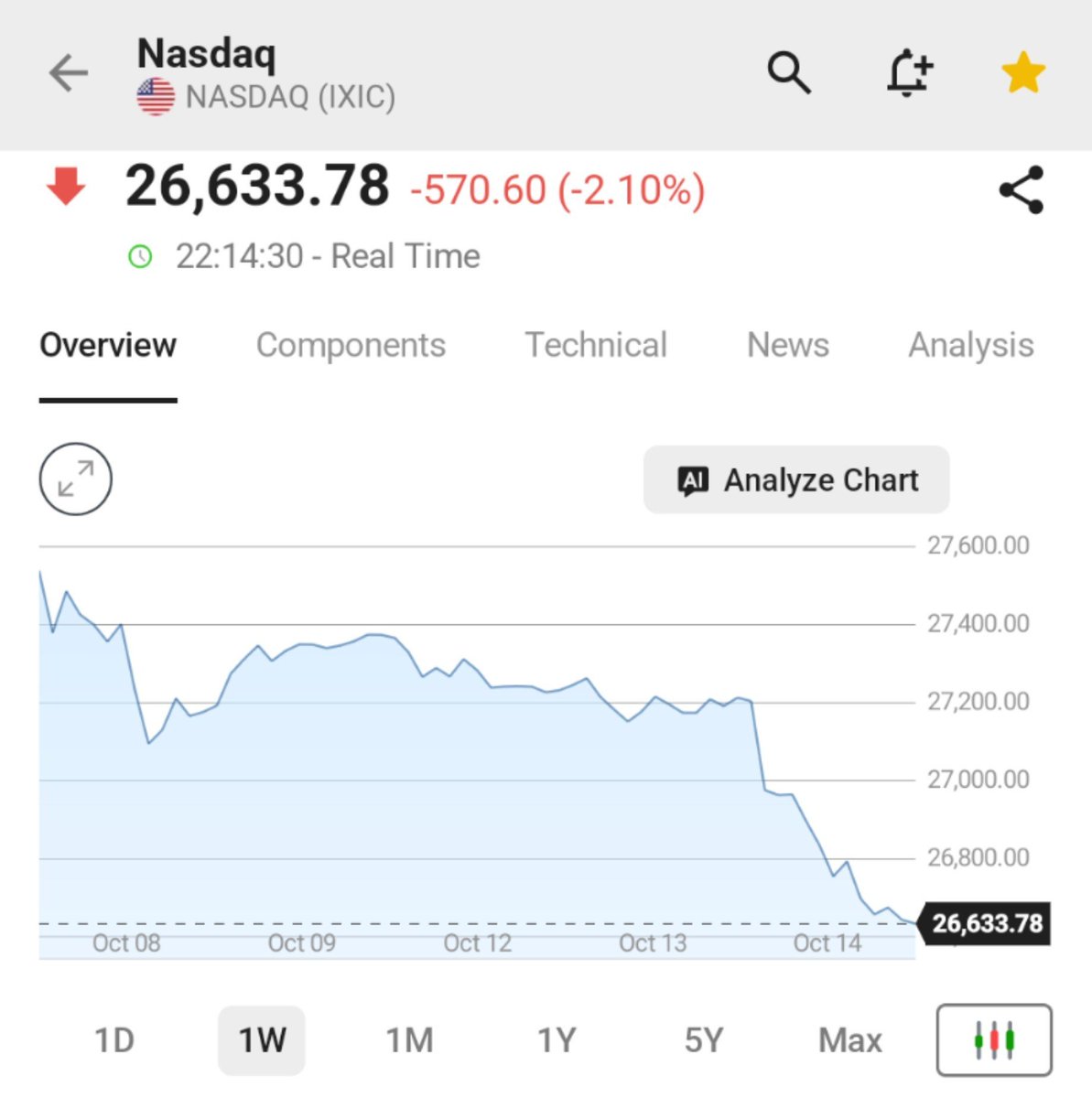
U.S. equities sold off intraday on Thursday, with multiple trading signals on X showing the SPY and QQQ down sharply before recovering some ground into the close. The VIX moved above 16, suggesting traders were paying up for protection as volatility picked up.
The broader backdrop remains a choppy tech-led tape. A Wall Street live update said worries around heavy AI borrowing are still weighing on sentiment, while CoreWeave remained under pressure and overseas chip-heavy markets such as South Korea and Japan also weakened.
Traders on X framed the move as an options-expiry positioning shakeout rather than the start of a fresh downtrend. Several posts pointed to the SPX testing the lower end of this week’s expected move, with 16 on the VIX seen as a key line to watch.
For now, the move appears driven by positioning and hedging flows more than by a single corporate catalyst. Whether the pressure sticks will depend on how investors reprice tech risk and volatility after the close.
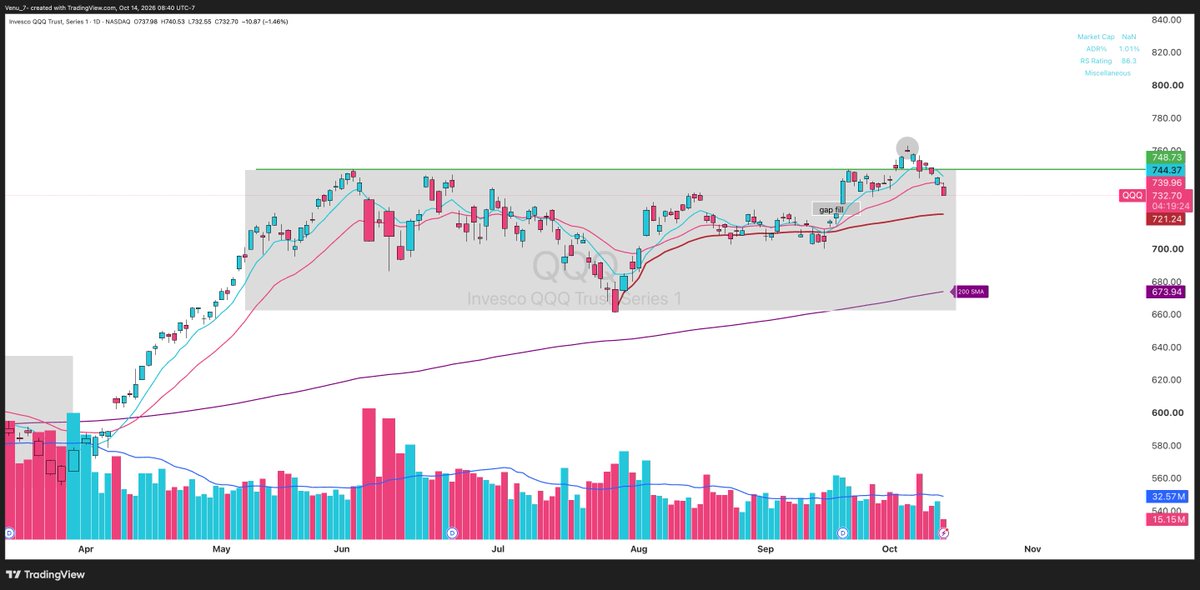
X signals showed $QQQ stalling near 730 before retesting the 50-day line around 726 and bouncing. Another post said the ETF had initially held a pivot above the 9/28 low, but the tape remained choppy afterward.
The thread centered on a tug-of-war between an overhead unfilled gap, nearby support, and the 21EMA/50EMA zone. One trader also described an opening-range breakdown, underscoring how quickly intraday momentum turned.
For the market, $QQQ is a direct barometer for U.S. tech sentiment, and one post noted $AAPL was holding up relatively well during the pullback. Continued trading around these levels could keep pressure on index-linked positioning and short-term risk appetite.
No company statement or official response appeared in the source materials; the signal set was entirely trader commentary on price action.
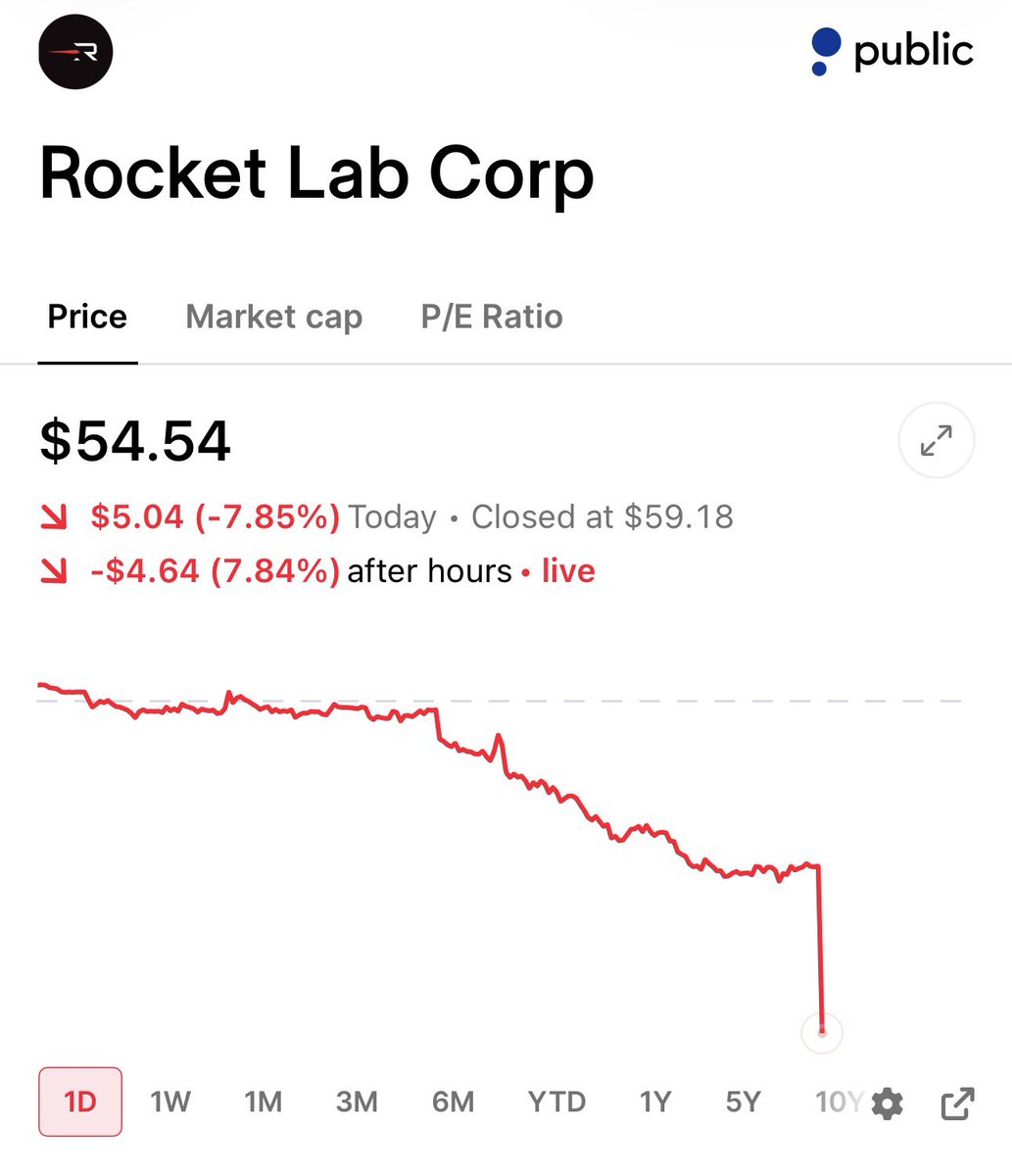
Rocket Lab said the inaugural launch of its Neutron rocket has been pushed to 2027. Multiple X posts and the company update point to the same delay, marking another change to the vehicle’s launch schedule.
Neutron is Rocket Lab’s larger, more powerful rocket and a key part of its push into the medium-lift launch market. The timing matters because the program is central to the company’s next phase of growth and launch capability.
Shares reacted lower after the update. Reuters said RKLB fell about 6% in extended trading, while 247WallSt reported a roughly 10% after-hours drop; one X post also cited an 8% plunge.
Cantor Fitzgerald said the delay is disappointing but does not materially change its long-term thesis, while keeping an Overweight rating and a $122 price target.
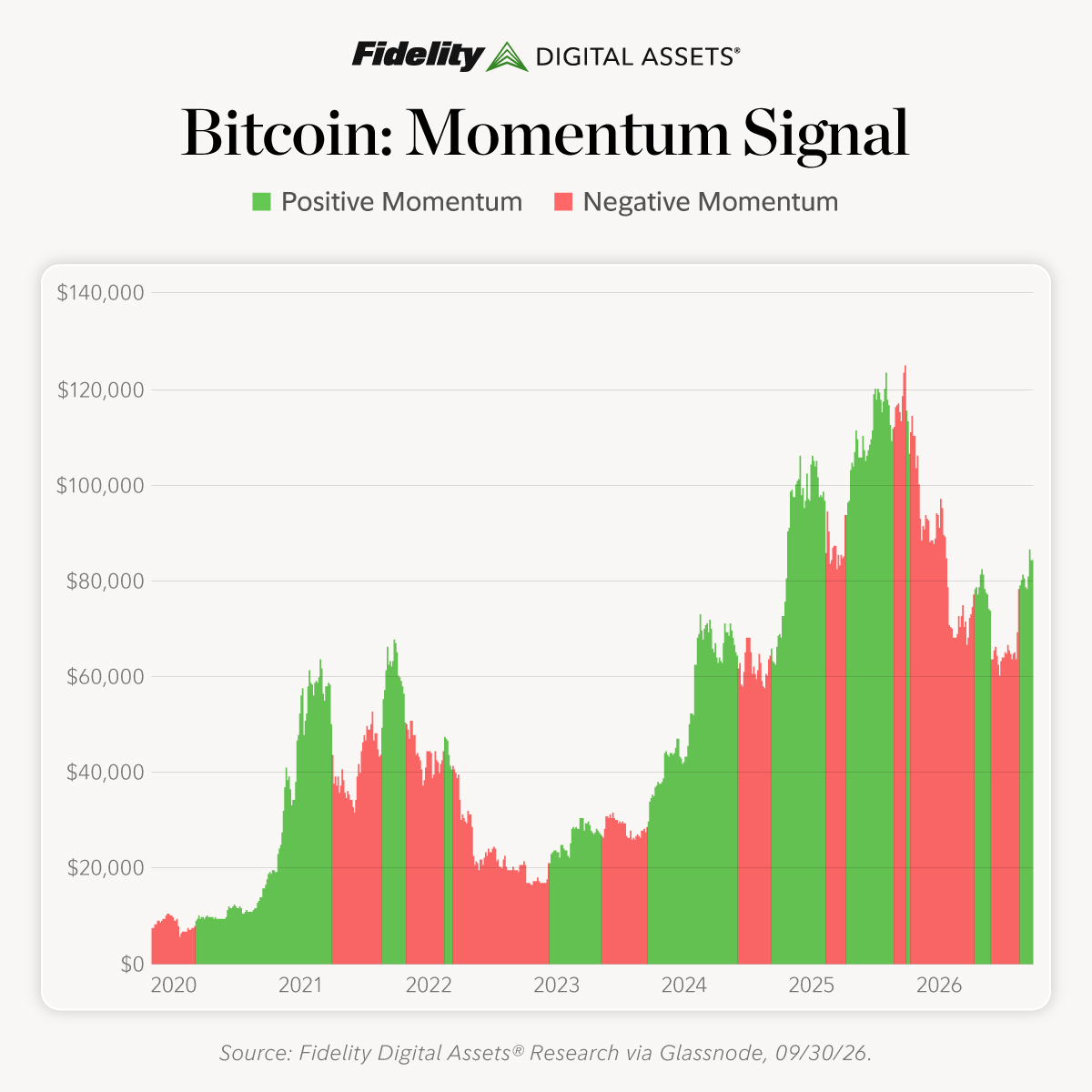
On X today, Saifedean Ammous argued that Bitcoin’s declining volatility should make it more attractive to serious institutional allocators. He said the asset is becoming less volatile over time, which in his view strengthens the case for larger capital allocations.
The comments extend Ammous’s long-running thesis that Bitcoin is monetizing and becoming more useful as a monetary asset. Background reporting also notes that he links the trend to greater market depth and Bitcoin’s comparison with gold as the volatility benchmark.approx.org
The market backdrop is still choppy: CoinDesk reported Bitcoin briefly slipping below $80,000 before rebounding to roughly $81,000, with traders watching the $80,000-$81,200 zone as support.coindesk.com That makes volatility itself the story for allocators, because BTC’s risk profile remains tightly linked to whether it is treated as a speculative trade or a reserve-style holding.
For crypto markets, the debate matters because institutional demand often depends on whether an asset’s drawdowns are becoming easier to model and tolerate. Today’s signal is therefore less about a new event than a fresh public push behind a familiar thesis that could influence positioning across spot BTC, ETFs and treasury-buying firms.
The U.S. Securities and Exchange Commission on Oct. 13 approved Cboe Exchange’s rule change to list binary options tied to key performance indicators reported by public companies. The products will be cash-settled, European-style options traded on a securities exchange, according to the SEC order.
The filing covers a wide set of issuers, including Apple, AMD, Alphabet, Amazon, Meta, Microsoft, Nvidia and Tesla, with reference metrics ranging from revenue and earnings per share to segment-level sales and business operating measures. SEC Chairman Paul Atkins said the approval speaks only to these exchange-listed securities products and does not foreclose CFTC jurisdiction over similar contracts structured differently.
The move pushes event-driven trading further into the mainstream securities framework and raises the prospect that Robinhood could be the first retail broker to offer access. It also sharpens attention on the regulatory line between exchange-traded securities products and CFTC-regulated prediction markets.
SEC documents and the chairman’s statement confirm the approval, but no launch date has been announced. For now, the key takeaway is that Cboe has won what appears to be the first U.S. exchange approval for KPI-linked binary options on public companies.
Meta says it has hit the AI frontier as Muse models arrive
Zuckerberg’s latest remarks add a fresh signal to Meta’s push into frontier AI, with new model releases and benchmark chatter drawing investor attention.
Meta CEO Mark Zuckerberg told the Financial Times that the two new models Meta released this week, Muse Wonder and Muse Wonder Full, put the company at the AI “frontier.” That is the key new development in the latest wave of Meta AI coverage.
Recent follow-up reporting has added more context. Business Wire reported that Muse Wonder scored 83.2% on the DualEntry Accounting AI Benchmark, tying for second place among 57 models tested, while Benzinga said Guggenheim sees Meta narrowing the gap with Anthropic in the AI race.
The market reaction is being shaped by whether Meta’s heavy AI spending can now be tied to visible product progress. TheStreet said early data show Meta’s Muse app retaining users nearly as well as ChatGPT, reinforcing the view that the company’s AI push is moving from investment story to execution story.
For now, the confirmed facts are the new model releases, Zuckerberg’s “frontier” comment, and the third-party benchmark and app-readout chatter around them. Investors are focusing on META as the core name in this development, with Anthropic serving as the main competitive reference point in the surrounding coverage.
Charles Schwab reported third-quarter 2026 results with record core net new assets of $190.4 billion. The company also posted adjusted earnings of $1.69 per share and revenue of $7.17 billion.
The update underscores the firm’s continued ability to gather assets and keep clients active. Schwab said total client assets reached $13.33 trillion, daily average trades rose to 10.69 million, and new brokerage accounts totaled 1.2 million.
Investors are likely to focus on asset gathering and trading activity in SCHW after the release. Net interest revenue came in at $3.48 billion, while the large net new asset figure remained the standout metric in the report.
Schwab management said clients opened 1.2 million new brokerage accounts during the quarter and entrusted the firm with $190.4 billion in core net new assets. Multiple news reports and the company release confirmed the same figures.
U.S. Bancorp reported third-quarter 2026 adjusted EPS of $1.34, above the $1.32 consensus estimate. Revenue came in at $7.97 billion versus expectations of $8.01 billion, while net interest income on an FTE basis was $4.49 billion.
The update also showed noninterest income of $3.48 billion, up 13.1% year over year, and capital markets revenue of $640 million, up 69.3% from a year earlier. The bank said its Basel III CET1 ratio was 10.8% and net charge-offs were $523 million.
Zacks also reported that USB topped quarterly earnings estimates with EPS of $1.34 versus $1.32 expected, reinforcing the same earnings print from the company’s third-quarter release. The figures point to a quarter where profitability held up better than the revenue line.
For investors, the report keeps attention on USB’s revenue growth, net interest income trend and capital strength. The stock may react most to the slight revenue miss and the better-than-expected earnings print in the same release.
Ericsson reported third-quarter results that came in ahead of market expectations. According to data cited by Livesquawk, net sales reached SEK 59.478 billion and adjusted EBIT was SEK 9.757 billion, both above estimates. Reuters also said the company’s third-quarter core profit declined less than expected.
The company said demand for mobile network equipment remained solid in its core markets. It also flagged that the RAN market was flat and that geopolitical uncertainty remained elevated.
Investors are focusing on Ericsson’s warning that component costs will pressure gross margin next year. That message was echoed in same-day follow-up coverage from Bloomberg and The Wall Street Journal.
Ericsson also guided fourth-quarter Networks sales growth and Cloud Software and Services sales growth to be broadly in line with three-year average seasonality. The remarks frame the quarter as a beat on execution, but with cost pressure still in view.
The UK’s visible trade deficit narrowed to £18.007 billion in August, from a revised £20.965 billion in July, the Office for National Statistics said on Wednesday. Excluding precious metals, the goods trade deficit came in at £19.839 billion, better than the £21.9 billion consensus cited in market wires.
On the month, goods imports fell 2.3% to £54.2 billion while goods exports declined 3.1% to £34.4 billion. The ONS said the move was driven by weaker imports from non-EU countries and softer exports to the EU, with aircraft, ships and machinery-related flows weighing on the data.
The release gives traders a fresh read on UK external demand and import appetite, which can feed into sterling pricing and rate expectations. It also lands alongside HMRC’s separate overseas trade-in-goods release for August.
Three-month data to August showed the goods trade deficit widening to £59.1 billion, while the combined goods-and-services deficit widened to £8.0 billion, underscoring that volatility remains high in UK trade figures.
Taiwanese President Lai Ching-te urged Micron Technology and its workers to negotiate sincerely over a bonus scheme dispute, speaking at the opening of a new Micron packaging facility. The message came as the possibility of a strike drew attention around the company’s Taiwan operations.
The event lands against a backdrop of tight memory-chip supply and a broader market debate over Micron’s pricing power and AI-driven demand. Recent coverage in the site’s news library focused on Micron’s stock, industry selloff concerns, and competition from China’s CXMT, but not on this labor dispute.
If a strike were to materialize, the market would focus on Micron’s packaging and supply-chain continuity in Taiwan, because the X signal says the dispute could threaten memory-chip supplies amid a severe shortage. The premarket reaction cited in the signal points to MU down 4.4%.
No separate denial or official response from Micron was included in the material. As presented in the signal and recent coverage, the labor talks now sit alongside supply risks in the same memory-chip story line.