Brent crude rose above $112 a barrel on Thursday, its highest level since May, gaining more than 2% on the day. The move followed deadly attacks in Saudi Arabia, including a drone strike on an Aramco field, alongside attacks on a tanker near the Strait of Hormuz.
Reports say the U.S. is deploying additional warships and that Israel is preparing potential strikes on Iran. Trump told reporters there are no negotiations with Iran and that "we are going to have something one way or the other that'll happen fairly soon." NBC reported that Washington has pulled some troops and diplomats from Middle East posts.
Higher crude prices support oil exploration and services names while pressuring fuel-intensive sectors such as airlines and chemicals. Brent is up 62% from its July lows, according to the materials, and Kepler data show Gulf exports have returned to pre-war levels even as delivered Brent trades near $140.
The prior session already saw prices climb on Hormuz shipping risks and attacks on Saudi facilities, with WTI rejected near $100. Traders are focused on how little inventory buffer remains to absorb any supply disruption.
Elon Musk wants to combine Tesla and SpaceX in a deal valued at about $3.7 trillion and is pushing to get it done before Trump leaves office, according to Bloomberg. Multiple accounts on X relayed the same report, with livesquawk framing it as Musk trying to lock in his Tesla-SpaceX vision before Trump's exit.
One X account said the two companies are targeting a merger announcement in the first half of 2027 and aim to complete the transaction during Trump's current administration, adding that the combined company would carry an implied market value. That detail comes from a single account and is not corroborated in the materials available here.
In the newsroom's own feed, Constellation Research founder Ray Wang made the case for a merger, saying that "almost everything Elon Musk touches" grows 10x and more, and arguing the combination would benefit SpaceX shareholders over the long run.
The same batch of signals said Musk is spending roughly $369 million to support Republicans in the US midterms, reporting that surfaced alongside the merger story. Neither company has confirmed the combination.
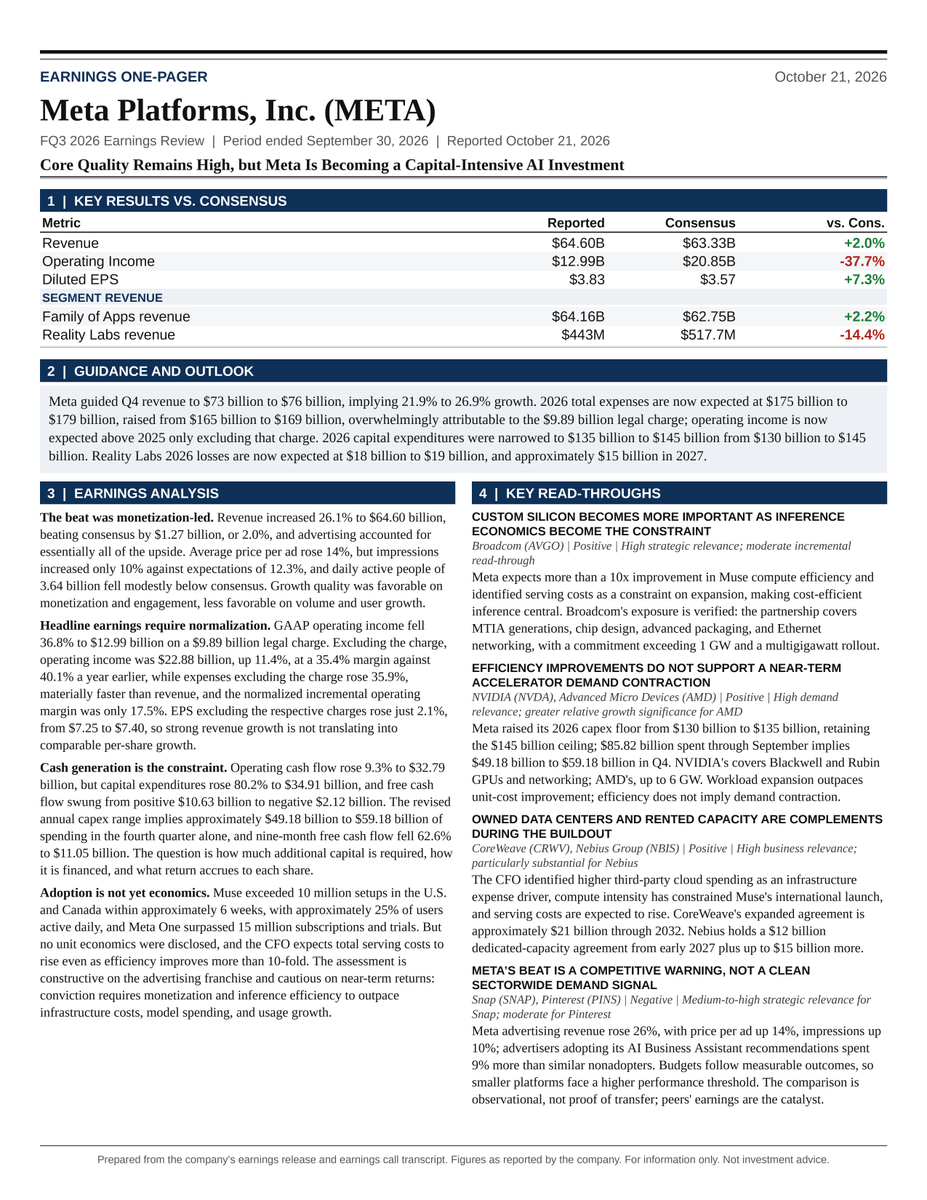
Meta reported third-quarter 2026 revenue of $64.6 billion, up 26% year over year and above the $63.4 billion consensus, with ad revenue of $63.1 billion as average price per ad rose 14%. GAAP EPS came in at $3.83, dragged down by an $18.59 billion teen-health litigation settlement and a related $9.89 billion charge; adjusted EPS was $7.40.
Free cash flow was negative $2.12 billion, the first negative quarter since the company's 2012 IPO, compared with positive $10.63 billion a year earlier. Operating cash flow of $32.79 billion was outpaced by $33.94 billion of property and equipment purchases, and Meta narrowed its 2026 capex outlook to $135 billion-$145 billion.
Shares fell as much as 6.6% to $651.05 in Thursday morning trading even as several analysts raised price targets. Meta held $82.45 billion in cash and securities against $80.92 billion in long-term debt, and Bloomberg reported plans for a new class of non-voting shares to fund AI spending without diluting Mark Zuckerberg's control.
Reality Labs lost another $4.1 billion in the quarter, bringing cumulative losses since 2020 to $92 billion. The debate now centers on whether the AI buildout generates returns before financing costs rise.
Tesla reported third-quarter 2026 results after the bell on Wednesday: adjusted EPS of $0.48 beat estimates of $0.44-$0.45, while revenue of $28.05B came in just below the $28.06B-$28.13B consensus and was roughly flat year over year. Gross margin rose to 19.6%, about 1.8 percentage points above the 17.8% expected.
Profitability was mixed. GAAP net income was $787M, down about 43% from $1.37B a year earlier, and operating income fell to $718M from $1.62B as operating expenses rose to $4.78B from $3.43B. Free cash flow was positive $1.53B against analyst forecasts of an outflow of roughly $4.9B.
By segment, automotive revenue of $20.56B beat expectations but declined year over year, while energy generation and storage revenue of $2.88B fell well short of the roughly $3.9B expected. Energy storage deployments reached 13.7GWh, up about 10% year over year but below analyst estimates; paid FSD subscribers topped 1.7 million, up about 67%.
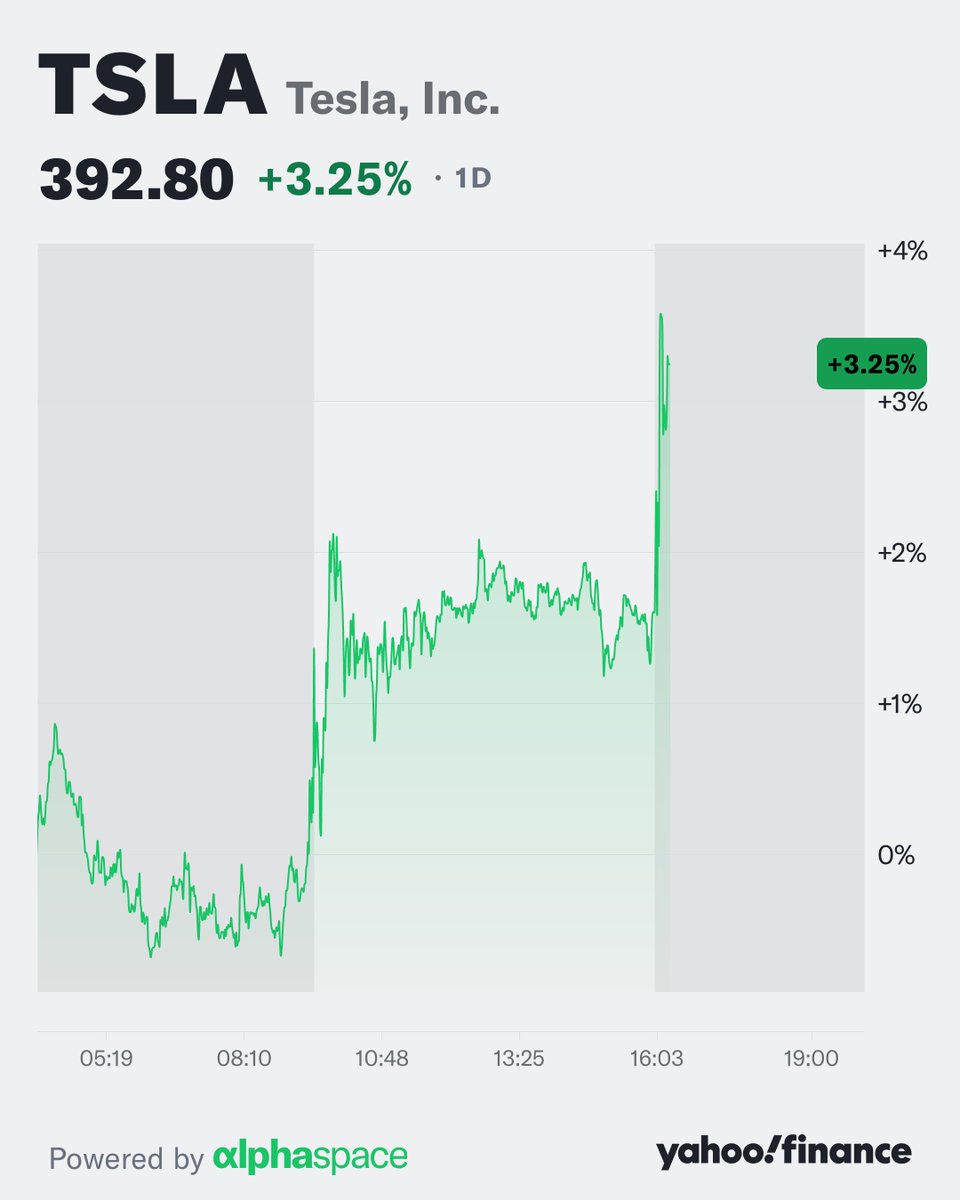
Tesla shares closed at $386.47 on Oct. 21, up 3.41%, before falling more than 3% in extended trading. Options traders had priced a move of about 4.8% either way. The quarter is being read as a margin and cash flow story rather than a growth story, with management commentary on volumes, autonomy and capex likely to drive the reaction.
State Department spokesperson Tommy Pigott said on Oct. 21 that a Reuters report on an ordered departure from U.S. embassies across the Gulf was "inaccurate," stating the order applies only to U.S. government personnel and family members at the mission in Saudi Arabia. Reuters had reported, citing three U.S. officials, that the department was preparing to issue an ordered departure covering some personnel and families at embassies across the Gulf region, citing a possible resumption of hostilities with the Iran-aligned Houthis in Yemen.
The U.S. Embassy in Riyadh issued a security alert on Oct. 21 about possible further Houthi attacks on Saudi Arabia. Saudi Arabia said its air defense intercepted a drone targeting Aramco's Shaybah oilfield that day, with falling debris killing two people and injuring two others, according to the energy ministry.
For energy traders, Gulf evacuation headlines are typically read as a supply-risk signal, with oil-linked instruments such as USO the direct watch point. The spokesperson's clarification narrows the reported scope from multiple Gulf embassies to the Saudi mission, changing the boundary of that risk pricing.
Accounts diverge: Pigott disputed the scope of the Reuters report, and President Donald Trump said he was not aware of a departure of personnel from Saudi Arabia. Agence France-Presse separately reported, citing a diplomatic source, that the U.S. ordered families of embassy staff in the UAE, Jordan, Qatar and Bahrain to leave, a claim not confirmed by the State Department.
SpaceX reported third-quarter results that surpassed analysts' estimates, but said it was investing aggressively, signaling more borrowing could be ahead. Its bonds weakened Wednesday and a credit-risk gauge worsened.
The stock $SPCX rose more than 10% during the session. SpaceX's AI segment turned profitable in the third quarter, and Elon Musk said compute demand still exceeds capacity, with plans to split compute between internal uses and outside customers.
The read-across lifted AI hardware stocks, which clawed back about $274 billion after a $1.6 trillion month-long rout, according to Benzinga. US futures climbed Wednesday as SpaceX and Super Micro Computer results bolstered bullish sentiment on the AI trade.
Not everyone framed it as unqualified good news: Zerohedge summed up Wall Street's cheer as "spend now, monetize later" while citing 2027 capex estimates approaching $300 billion, and Seeking Alpha flagged spending and a Tesla merger as concerns.
SpaceX (SPCX) reported a profit in its second earnings release as a public company, with sizable AI-related revenue and revenue and EPS both ahead of expectations — its first profitable quarter since going public.
The company has said it plans to split compute between internal use and outside customers, and Elon Musk said on the earnings call that AI rivals are clamoring to rent SpaceX's compute.
SPCX shares jumped on the results and helped lift other AI-related names; market commentary flagged GOOGL as lagging the AI rally, while AT&T reportedly fell despite an earnings beat, with SpaceX cited as the reason.
Analysts issued a wave of price target updates, and one widely shared view said the most bullish detail was Musk's claim that new AI compute deployments pay back in under a year.
Major U.S. banks including Morgan Stanley, Bank of America, JPMorgan and Wells Fargo have detected unauthorized third-party AI agents operating inside customer accounts, with some agents attempting actions that appear independent of user instructions, Axios reported, citing sources.
In most cases an agent or AI assistant accessed a person's account with the user's permission and login credentials — activity that still violates most banks' rules requiring customers to log in themselves. Morgan Stanley has begun blocking third-party agents from its platforms, and a Chase spokesperson said customers should not share usernames and passwords with anyone.
Bank executives described the situation as horrifying, fearing what agents with purchase or fund-transfer authority might do. Lenders say they cannot reliably distinguish a human from an unauthorized bot, or tell whether an agent was approved by the user, pushing them to block the technology and rewrite terms of service.
The restrictions follow earlier Financial Times reporting that Citigroup, Bank of America, JPMorgan and Charles Schwab had imposed or announced limits on unauthorized AI agents, citing fraud, customer protection and uncertainty over liability when automated transactions go wrong. The banks did not provide further detail on specific cases.
President Trump said on social media that companies building large data centers in the US should generate their own electricity and pay a "dividend" to host communities to win support. According to Kalshi, he said large data centers "are mandated by me to make their own electricity" and floated payments of $10,000 to $15,000 to residents, adding that the companies "got plenty of money."
The remarks come as communities push back on new data centers over rising power bills. BlackRock CEO Larry Fink warned that a moratorium on data center construction could push the US economy into recession.
The market read-through centers on the AI infrastructure chain. CoreWeave (CRWV) has been a focal point of Wall Street disagreement over AI debt, with analyst targets ranging from $39 to $150; self-generation and community payments, if implemented, would raise operating costs and reshape power procurement and site selection.
Trump's comments have not yet been formalized into rules, leaving unclear how companies would comply with the self-generation and dividend requirements. The debate is intertwined with the data center issue in the midterm elections, and policy details bear watching.
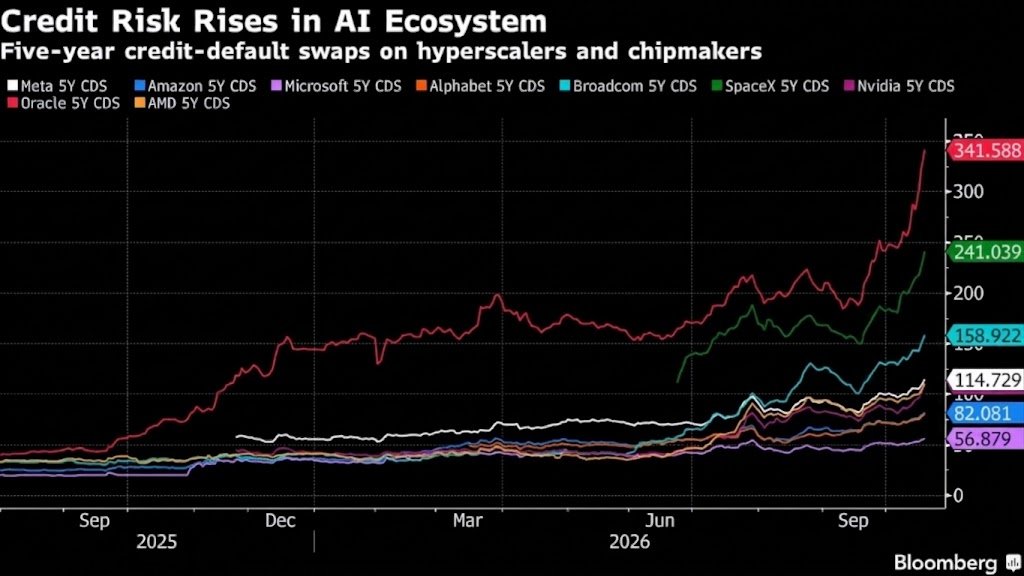
Market wires including firstsquawk, livesquawk and MarketWatch reported that Meta's credit risk gauge reached a fresh high on its AI investment and spending plans, with the stock touching premarket lows.
The signal comes as Meta keeps expanding AI infrastructure spending. MarketWatch framed the situation as reviving a financial-crisis playbook, pointing to investor attention on debt-funded capex at large technology companies.
Aptus Capital Advisors portfolio manager David Wagner said in an interview that concerns about Meta's rising debt are overblown, arguing hyperscalers' debt coverage remains strong.
Separately, a New Mexico judge imposed a $25 billion penalty on Meta, according to a report in the site's news library; that regulatory matter is distinct from the credit-risk signal.
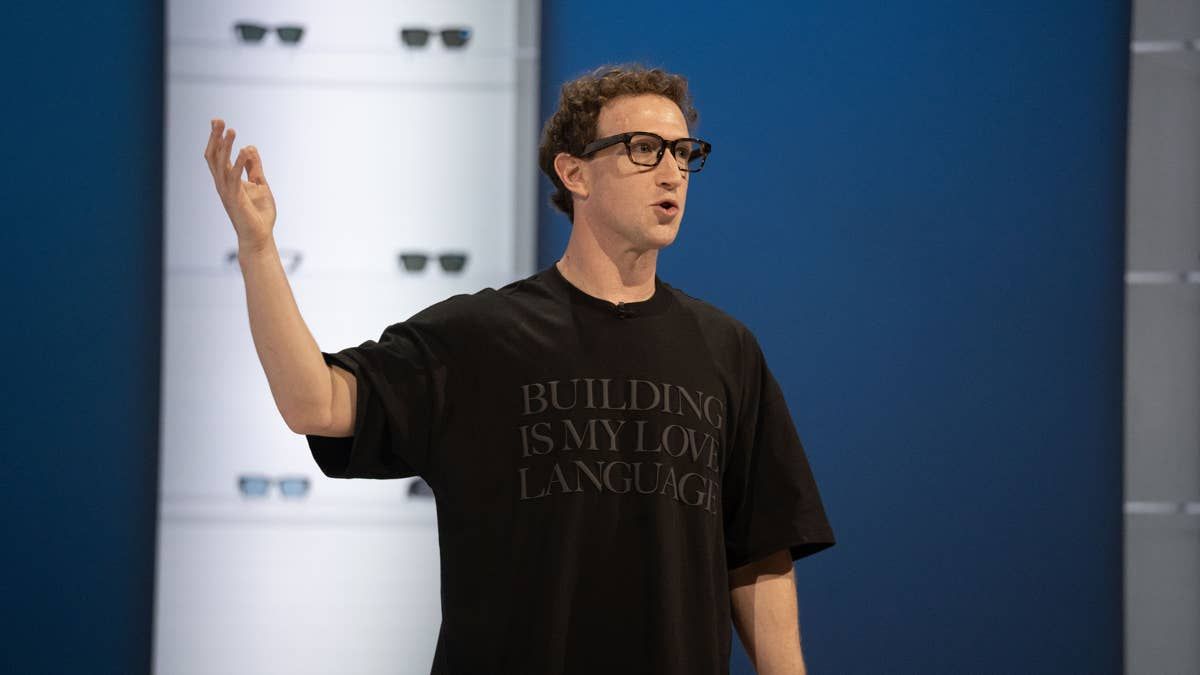
Meta CEO Mark Zuckerberg said the company's first frontier model, Muse, could eventually generate higher revenue per user than its family of apps, including Facebook and Instagram. He noted that existing family-of-apps users already generate several hundred dollars annually and said he expects Muse to reach an even higher level over time.
Shopping is Muse's biggest use case so far, with more than a quarter of active users engaging in shopping and an average purchase size above $200, Zuckerberg said. First-week volumes exceeded expectations to the point that Meta asked Stripe to raise credit limits. He acknowledged Muse remains expensive to run but expects compute cost efficiency to improve more than 10-fold over the next year, partly by using spare compute Meta already owns.
Subscriptions are another lever: Muse comes to Meta smart glasses next month, and Zuckerberg expects paid subscriptions to increase. He said devices are priced not for large hardware profit but to build a large software and superintelligence business on top of them over time.
The comments came during Meta's quarterly update, where Zuckerberg said the company hit major milestones toward delivering personal superintelligence. If Muse's per-user economics materialize, it would give META a new commerce business alongside its advertising platform; Anthropic's launch of the personal agent Claude Duet shows competition for consumer AI entry points is intensifying.
Meta CEO Mark Zuckerberg said the company expects to improve Muse's compute cost-efficiency by more than 10x over the next year as it builds toward serving over a billion AI users. The guidance landed just before Meta's quarterly earnings release, framing the AI product's economics ahead of the report.
Muse is Meta's AI agent, competing in the personal-agent field alongside OpenAI's Dots and Anthropic's Claude Duet. Meta also cited a user survey estimating at least 500 million self-identified small businesses use its family of apps to reach customers and generate revenue, a base Muse could help acquire customers and operate more efficiently.
Investors are focused on monetization. Commentary flagged that Muse user growth is largely priced in and that the market cares about turning AI compute into profit, while how Muse gets monetized remains vague; another view suggested Meta may take a cut of shopping transactions Muse facilitates. Meta's stock and capex guidance are the key items to watch in the earnings report.
Separately, a New Mexico judge hit Meta with a $25 billion penalty, naming Zuckerberg and Sandberg personally. That ruling runs alongside the Muse cost-efficiency message as a distinct thread for the company.
American Airlines reported third-quarter 2026 revenue of $16.34 billion, up 19.3% year over year and above the $16.21 billion estimate, with an adjusted loss of $0.28 per share versus the $0.36 loss expected. Passenger revenue came in at $14.90 billion on 80.68 billion available seat miles, while load factor of 83.4% fell short of the 84.6% estimate.
Fuel was the main drag: expense rose 67.5% year over year to $4.64 billion. The carrier guided full-year adjusted loss per share to $1.00–$1.60, compared with the $0.94 loss consensus, and fourth-quarter adjusted loss per share to $0.50–$1.10 versus the $0.47 loss expected.
Southwest Airlines cut its full-year profit guidance the same week, also citing higher fuel costs. Bloomberg reported that persistently high jet fuel prices are squeezing profits across the US airline industry, and American's wide fourth-quarter loss range underscores how hard it is for carriers to map out performance.
CEO Robert Isom said on CNBC that rising fuel costs are the main issue. Despite record revenue, the stock struggled on the day, with Barron's noting the carrier picked a bad day to report.
Lockheed Martin reported third-quarter 2026 net sales of $20.71 billion, up 11% year over year and above the roughly $20.47 billion consensus, with earnings per share of $7.97 versus $6.95 a year earlier. Operating profit was $2.44 billion at an 11.8% margin, down from 12.3% a year earlier.
Aeronautics net sales came in at $8.21 billion, ahead of the $8.08 billion estimate, with 43 F-35 deliveries in the quarter. Backlog reached $291.98 billion, above the $231.53 billion estimate, and The Wall Street Journal said it set a record.
The company raised its full-year guidance to GAAP EPS of about $30.35 to $30.75 and net sales of $80.00 billion to $82.00 billion. Reuters attributed the improved results to ramped-up missile and jet production.
Lockheed shares rose almost 4% in premarket trading after the report. The move came as major technology names including Tesla, Nvidia, Alphabet, Amazon, Meta and Microsoft traded lower premarket, pointing to a rotation toward defense earnings visibility.
IBM reported third-quarter 2026 revenue of $17.1 billion, above the $16.83 billion consensus and up 5% year over year. Adjusted earnings per share came in at $2.95, beating the $2.86 estimate and rising 11% from a year earlier.
Software revenue was $7.8 billion, up 8% and above the $7.64 billion expected, while consulting revenue of $5.34 billion fell slightly short of the $5.39 billion estimate. Mainframe sales dropped 20%, though the company said its weakest business is stabilizing.
IBM raised its full-year free cash flow outlook, now expecting growth of more than $1 billion year over year, and kept its constant-currency revenue growth guidance at 4% to 5%. The stock rose roughly 5% to nearly 10% in after-hours trading.
CEO Krishna cited traction in 'Super Intelligence' in the results. Earlier coverage noted IBM had promised delayed deals would close and software growth would accelerate in the second half, making this quarter's software performance an early test of that pledge.
Nvidia CEO Jensen Huang said at GTC Berlin that demand from neoclouds is "off the charts" but capital is scarce. "Demand is really high, they just need working capital," he said, calling neoclouds a "good investment."
Huang also said the scale of computing production is "unheard of ever, unimaginable," and that AI agents are sending token use and GPU demand through the roof. In the same interview he said the AI selloff will pass and investors should buy the dip.
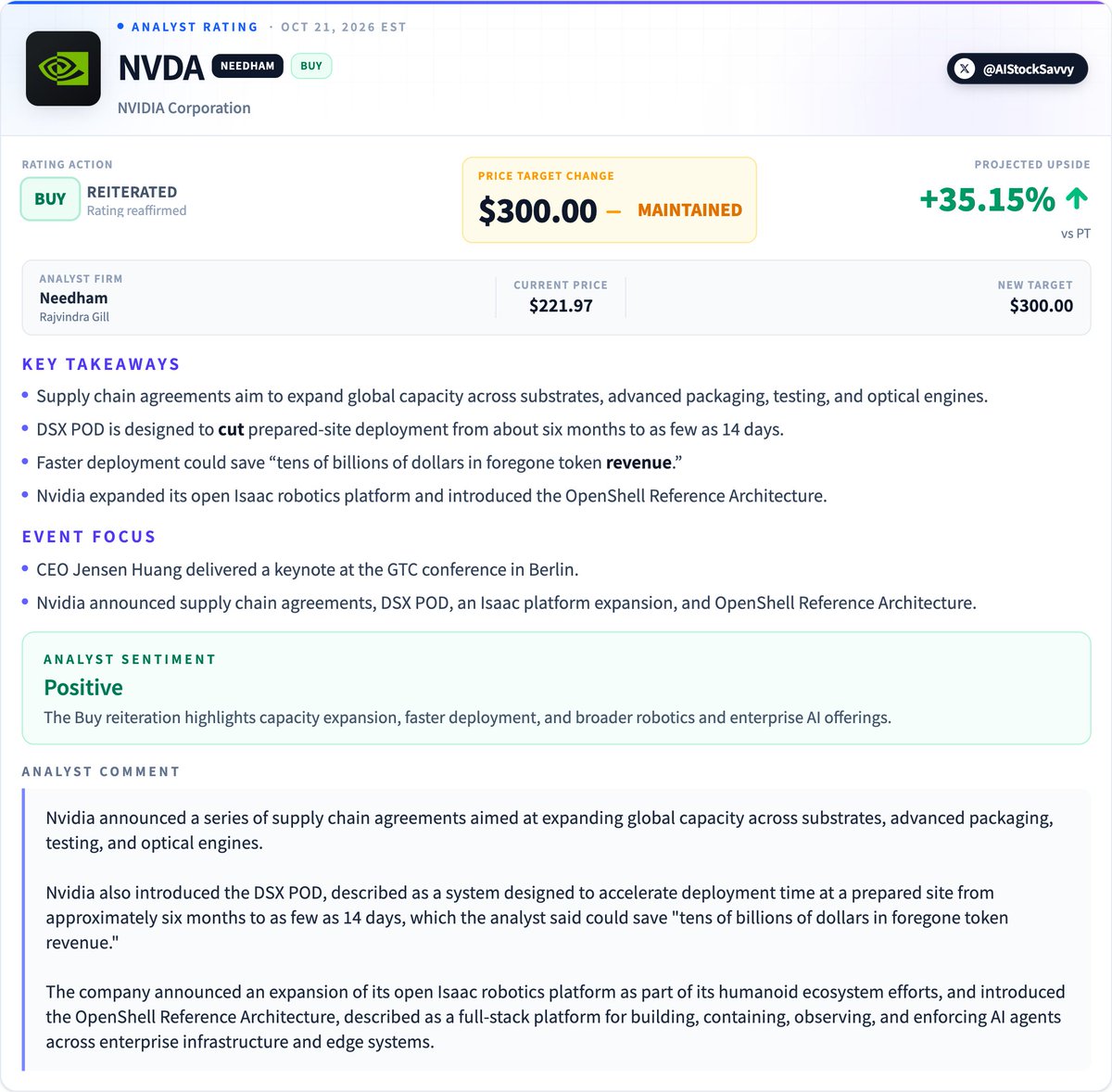
The remarks come amid an AI stock pullback and frame the neocloud bottleneck as financing rather than orders. Needham reiterated a Buy rating on Nvidia with a $300 price target, while Gene Munster said the stock remains underappreciated after GTC Berlin.
Newsroom reports from the same period show Absolute Security, Agility Robotics, Alpha Compute and Amadeus all expanding Nvidia collaborations around GTC Berlin.
US spot Bitcoin ETFs took in $528.4 million in net inflows on Oct. 21, bringing the week's total to roughly $1.07 billion after just three trading days. BTC, ETH, SOL and XRP spot ETFs all recorded net inflows that day, with ETH at $14.96 million, SOL at $585.3K and XRP at $708.52K.
Santiment data showed crypto derivatives open interest rising alongside the price recovery, reaching $23.4 billion for BTC, $15.5 billion for ETH and $2.7 billion for SOL. One trader noted BTC up 2.78% with open interest up 5.5%, warning that long leverage is building rapidly.
On the equity side, bitcoin treasury company Strive (ASST) was among the day's top gainers, climbing to $30.8, its highest since Oct. 2 and a 335% gain from its low this year. The build-up in leveraged positions makes the market more sensitive to whether spot demand holds.
Market commentary also pointed to BTC-focused perpetual preferred stocks having accumulated more than 135,000 BTC as a new source of demand, while the US Treasury's plan to buy back up to $750 million in longer-term debt was read by some crypto accounts as a macro liquidity signal.
Around Oct 21, several outlets converged on the idea that the AI trade is at an inflection point. CNBC noted that the ratio of the VanEck Semiconductor ETF to both the S&P 500 and Nasdaq-100 peaked around June 1 and is now sitting on support; Bloomberg said investors are becoming more discerning, with megacap AI winners rising even as distress builds in the riskiest corner of the debt market.
Bloomberg Opinion's @tomwblack said SpaceX's AI revenue surge comes from renting out excess computing capacity rather than adoption of its main AI product, Grok. Separately, Bloomberg reported that Apollo Fund is pitching New York Yankees financing as "AI-resilient leisure" as private-credit managers try to distance themselves from software loans.
Other signals: Bloomberg said companies have postponed more than $5 billion in US and European debt sales this month amid alarm over rising rates, resurgent inflation and potential cracks in the AI boom; Wall Street bank executives are budgeting for surging computing costs. A second CNBC piece said the expanding AI trade is turning safety stocks into a "Texas hedge."
The Economist said investors on the whole are not yet panicking about the AI debt binge, though dangers lurk, and reported that financial firms are racing to create instruments to trade processing power, framing AI compute as the "new oil." None of the reports drew a directional conclusion.
How this story unfolded
Earnings
P&G tops Q1 estimates with $23.28B net sales, raises commodity cost hit to about $1.4B
Revenue and core EPS beat consensus, but the projected full-year profit drag from higher commodity costs widened from the prior estimate
Procter & Gamble reported fiscal 2027 first-quarter net sales of $23.28 billion, up 4% year over year and above estimates of roughly $22.79 billion to $22.82 billion. Core EPS came in at $2.00 versus estimates of $1.88 to $1.89, and organic sales rose 4%.
By segment, beauty organic sales grew 5.4%, grooming 4.5%, fabric and home care 4.8%, and baby, feminine and family care 3%, all ahead of consensus. Core gross margin was 50.0%, down 150 basis points year over year.
The company also raised its estimate of the commodity-related hit to fiscal 2027 profit to about $1.4 billion from a previous $1 billion, the main negative in the report.
Barron's attributed part of the guidance boost to the Thorne acquisition. The focus after the release is the gap between the revenue beat and the larger cost headwind.
Texas Instruments reported third-quarter 2026 revenue of $6.06 billion, above the $5.93 billion estimate, and earnings of $2.62 per share, above the $2.42 estimate. Analog revenue was $4.91 billion, also ahead of the $4.73 billion estimate.
Operating profit was $2.87 billion and free cash flow $2.96 billion, both above estimates, while capital expenditure of $463 million came in below the $650.6 million estimate. The company cited demand from automotive and industrial customers.
For the fourth quarter, Texas Instruments guided revenue to $5.80 billion-$6.30 billion, with a midpoint above the $5.73 billion estimate, and EPS to $2.45-$2.79. The company noted that quarterly EPS included a one-cent reduction not in its original guidance.
As the largest maker of analog and embedded processing chips, Texas Instruments' outlook is watched as a gauge of industrial and automotive chip demand. The beat-and-raise results may shape expectations for peers in the analog chip space.
Spotify reported third-quarter 2026 results on October 22: revenue of €4,969 million, up 16% year over year but just below the €4.98 billion estimate; diluted EPS of €2.48, down 24% year over year; and operating income of €672 million, up 15% but also slightly short of expectations. Gross margin was 33.0%, up 136 basis points year over year.
User metrics beat: total premium subscribers reached 306 million versus the 305.15 million estimate, monthly active users came in at 788 million, roughly in line, and net subscriber additions of 6 million topped the 5 million expected. The company expects 316 million paid subscribers by year-end, above Wall Street's 314.7 million estimate.
For the fourth quarter, Spotify guided revenue of €5.2 billion (estimate €5.23 billion) and operating income of €820 million, above analyst expectations. Reuters reported the company is betting on AI-powered features to drive user growth.
The stock rose about 5% in premarket trading, with some reports citing gains of up to 10%. Note a currency discrepancy in coverage: some English-language outlets reported EPS of $2.85 and sales of $5.719 billion, alongside the euro figures of €2.48 and €4.969 billion.
Nokia reported third-quarter 2026 net sales of €5,154 million, up 10% year on year, and comparable operating profit of €605 million, ahead of the €442 million estimate. Comparable EPS was €0.09, up 50% year on year, while comparable gross margin slipped 20 basis points to 44.6%.
Growth came mainly from network infrastructure. The Wall Street Journal reported that sales in the unit housing AI and data-center networking technology rose 17% on year, driven by AI and cloud customers in the Americas. Bloomberg attributed the profit beat to rising demand for data-center networking equipment.
Despite the beat, Nokia shares fell about 5% in premarket trading. One X account noted the stock is down nearly 47% from its recent highs but still up 43% year to date.
The Bank of Korea unanimously left its seven-day repurchase rate at 3% on Thursday, matching all 24 forecasts in a Bloomberg survey. The decision followed quarter-point increases in July and August, the BOK's first consecutive hikes in more than three years.
The central bank said growth this year and next would be "considerably higher" than previous projections, with inflation still around 3% and financial stability risks persisting. Governor Shin Hyun Song reiterated the need to maintain a tightening stance and said the won remains undervalued relative to historical levels.
The policy-sensitive three-year yield reversed an earlier decline to trade 2 basis points higher at 3.84%, the Kospi fell more than 2%, and the won gained 0.3% to around 1,323 per dollar. The swaps market continues to price more than one 25-basis-point hike over the next six months.
The hawkish tone contrasts with global bond markets, where BMO said U.S. Treasury yields could break out of a narrow range around the Fed's Oct. 28 meeting and 10-year yields hover near 5%.
Nebius (Nasdaq: NBIS) said it secured a $3.5 billion senior secured credit facility from Citigroup to fund its global AI data center expansion and GPU purchases. The facility matures in 364 days, with interest starting at SOFR + 2.75% and potentially rising to SOFR + 3.50%.
The company pointed to more than $40 billion in long-term customer commitments, including Meta and Microsoft, as support for the buildout. Our news library notes Nebius revenue grew 454% year over year in Q2 2026, with total customer commitments above $40 billion, while capital expenditures still far outweigh sales.
Shares fell 3.4% in premarket trading following the announcement. Investors have been scrutinizing the neocloud business model, even as Nebius' chief revenue officer told CNBC that AI computing prices are continuing to rise and running ahead of expectations.
The structure is worth noting: one-year debt is being raised against multi-year data center and GPU investments, while the long-term contract revenue backing repayment has yet to convert into cash flow. Nebius also recently introduced public live spot pricing for GPU compute to improve cost transparency.
Fireblocks Denies Axios Report of $2.5B Visa Acquisition Talks
Axios said Visa was in late-stage talks to buy the crypto custodian for about $2.5 billion; Fireblocks called the report untrue and Visa declined to comment.
Axios reported that Visa was in talks to acquire crypto custody firm Fireblocks for around $2.5 billion, a figure that spread quickly across financial accounts on X.
Fireblocks told Cointelegraph the report was "news to us, and not true at present time." Visa declined to comment on rumors or speculation, leaving the two sides at odds over the claim.
A deal of that size would mark a major push by Visa into crypto infrastructure. Fireblocks says it serves more than 2,000 clients, including BNY and Revolut, and is an NYDFS-regulated qualified custodian.
Visa shares edged up about 0.1% in premarket trading after closing at a 52-week high of $408.59 a day earlier. With the company denying the report, the acquisition talk cannot be treated as fact.
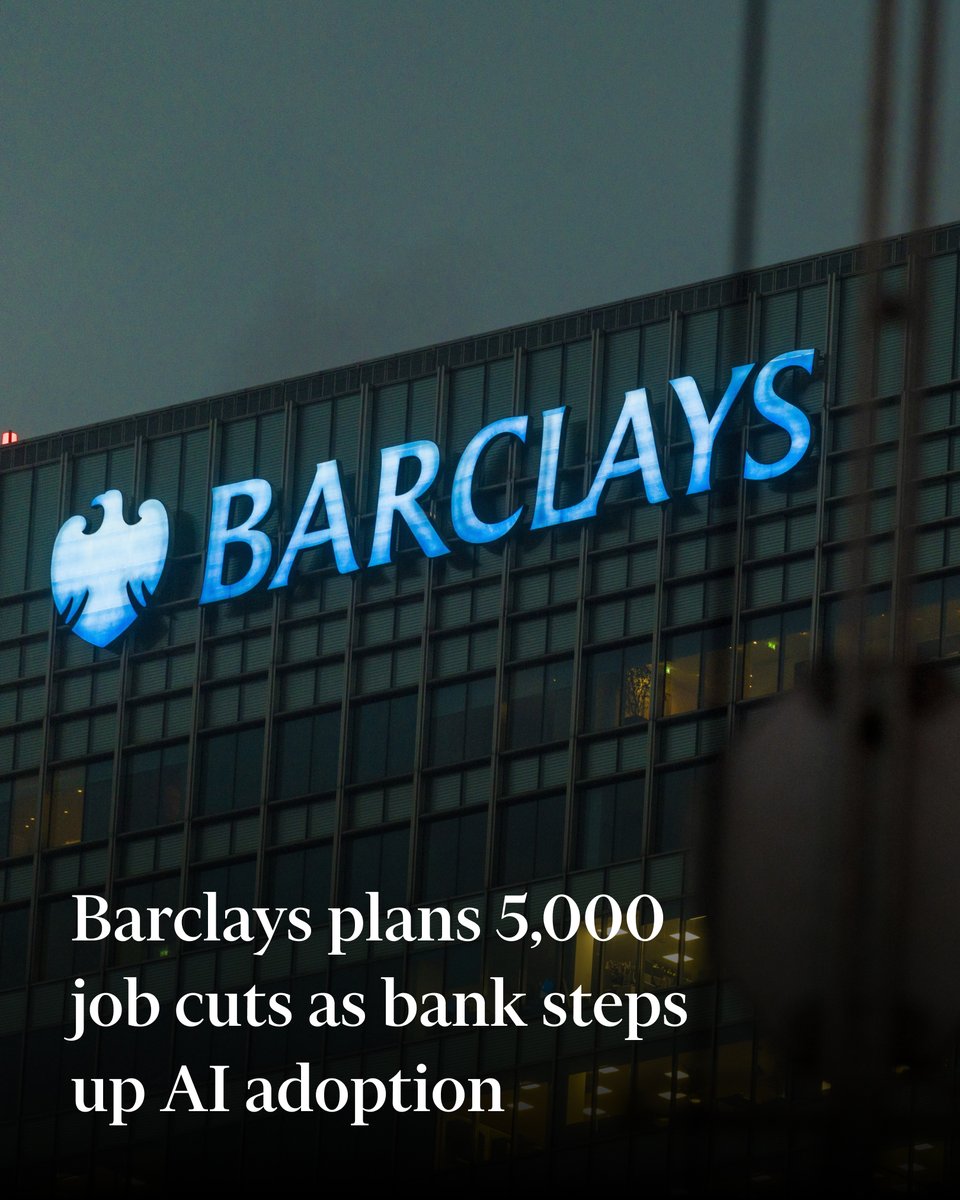
Barclays to cut 5,000 jobs, about 5% of staff, as AI takes on cost-cutting role
The UK bank disclosed the reduction alongside third-quarter results, with developers bearing the brunt; AI-driven headcount cuts are spreading across banking
Barclays said on Oct. 22 it will cut 5,000 jobs, roughly 5% of its full-time workforce, as it leans on artificial intelligence to reduce costs and improve efficiency. According to the Financial Times, developers bear the brunt of the cuts, which form part of a broader cost-reduction drive.
The announcement came alongside the bank's third-quarter earnings presentation. Newsroom reports show Barclays also unveiled a new £500 million share buyback and reported a 12% rise in third-quarter pretax profit to £2.3 billion, while a separate report said pretax profit missed estimates on fixed-income weakness.
On the same day, Westpac said it is cutting another 140 roles, in a report linking the move to Australia's weak housing market and greater use of AI. For Barclays, the job cuts landed alongside earnings figures, with investors weighing whether cost savings can offset weaker fixed-income revenue.
Barclays cited AI as one source of efficiency; the materials did not disclose a detailed timetable or the breakdown of cuts by division.
Yardeni's AI bubble meter reads 83 on conditions, 34 on triggers
The firm says the bubble exists but is not about to burst; the only trigger flashing is a 115-basis-point rise in the two-year Treasury yield from its December low
Yardeni Research introduced an "AI Bubble Meter" in a note Wednesday, with two dials tracking whether a bubble exists and whether the forces that ended past booms are underway. The Conditions dial reads 83 out of 100 and the Triggers dial reads 34, leading the firm to conclude there is a bubble but it is not about to burst.
The Conditions dial draws on the setups that preceded the 1999-2000 tech bust and the 2006-2007 housing bust, while the Triggers dial tracks a credit boom and a sustained rise in the cost of capital. Yardeni said one trigger has kicked in, with the two-year Treasury yield up 115 basis points from its December low, though credit is not stretched outside AI-related areas of the economy.
The firm said that since 1965, quarters with high Conditions and low Triggers readings were followed by an S&P 500 bear market within two years only 9% of the time, with a median inflation-adjusted gain of 18.3% over the following two years. When both dials read high, the odds of a bear market rose to 42%, with a median loss of 12.5%.
Separate market commentary in the same batch noted that the 10 largest S&P 500 stocks now account for 40% of the index and 37% of its earnings, leaving the benchmark increasingly dependent on a few companies. Yardeni said the Triggers dial is the one to watch, since risks rise if it starts moving toward High.
Sens. Richard Blumenthal (D., Conn.) and Josh Hawley (R., Mo.) have sent a letter to Alphabet and Google CEO Sundar Pichai seeking answers on the company's push of AI products into schools, with a Nov. 2 deadline for a response. The senators said they hold "grave concern" that Google's "aggressive push of A.I. products to children in schools is threatening the academic success and overall wellbeing of an entire generation."
The letter cites a September Wall Street Journal investigation drawing on more than 60 conversations with educators, school officials, parents, students and clinicians, which found that many students had grown academically and emotionally reliant on Google's AI tools. It also recounts a Maryland high school student who treated the chatbot as a confidante and was hospitalized at a psychiatric facility twice. The senators asked what Google knows about potential harm to children, why AI features were made the default on school devices, which concerns districts and parents have raised, and what promotions the company has used to expand school adoption.
The inquiry bears on Alphabet's (GOOGL) education channel but carries no financial penalty or operational sanction, limiting near-term stock impact. Its significance lies in bringing classroom AI product design and default settings under congressional scrutiny; any escalation to hearings or legislation could affect the pace of Google's education rollout.
Google has not publicly responded to the letter. The senators wrote that "Google is forcing their A.I. products into classrooms across America, and children are paying the price," warning against repeating the mistakes of social media platforms that put profit ahead of young people's interests.
CoreWeave's bonds stopped falling after SpaceX reported results, though investors are still demanding roughly three times the yield on U.S. Treasuries, according to Benzinga. The company's stock and debt had both come under pressure amid mounting concerns over AI-related borrowing.
Signals circulating on X said the implied probability of CoreWeave filing for bankruptcy by Dec. 31, 2028 fell sharply following SpaceX's earnings. CNBC and openoutcrier, however, reported that spiking bond yields and a sinking stock continue to erode market confidence in the company.
Wall Street remains split: Benzinga reported analyst targets ranging from $39 to $150, while fool.com warned that the bond market is flagging a real risk and that strong demand does not equal strong shareholder returns.
Separately, CoreWeave launched its Zero Trust AI Framework on Oct. 21, emphasizing customer control over access to models, data and runtime environments. The announcement did not shift the market's focus on the company's debt profile.
SoFi Technologies said Thursday it launched SoFi Earn (SOFIE), which it describes as the first and only tokenized deposit issued by a U.S. national bank for consumers. Each SOFIE represents $1 on deposit at SoFi Bank, earns 4.40% APY and is FDIC-insured up to applicable limits; holders can convert it 1:1 into the company's SoFiUSD stablecoin to buy crypto in the SoFi app or move funds over blockchain rails around the clock.
SoFi said no other nationally chartered U.S. bank has previously offered tokenized deposits directly to individual customers. The product is the company's fifth crypto offering in under a year, following its return to crypto trading in late 2025. SoFi cited Federal Reserve research estimating roughly $64 billion, or about 21% of the stablecoin market, sits idle in inactive wallets.
The structure sits alongside regulatory limits: Yahoo Finance reported that the Office of the Comptroller of the Currency finalized its GENIUS Act rule for stablecoin issuers a day earlier, keeping the ban on issuers paying interest directly to holders. SOFIE pays interest on the bank deposit, not the stablecoin, and SoFiUSD is not an FDIC-insured deposit.
For comparison, JPMorgan extended its JPM Coin deposit token to Ethereum earlier this week, but only for institutional clients. SOFIE is rolling out to SoFi Crypto members through November as a separate deposit account. SoFi shares have been volatile ahead of earnings, according to Benzinga, after sliding to a 52-week low.
Tesla reported third-quarter adjusted earnings of $0.48 per share after the bell on Wednesday, beating the $0.44 consensus, on revenue of $28.05 billion that topped the $27.78 billion Zacks estimate. Free cash flow and capital spending both came in ahead of Wall Street forecasts, and auto gross margin excluding EV credits rose to 18.1%, above analyst projections.
Operational disclosures added to the beat: FSD subscriptions climbed 67% year over year to 1.74 million, the robotaxi fleet has logged 2 million unsupervised miles, and Optimus robot production has begun at the Fremont plant. Management targets 400 megawatts of training compute by year-end.
The stock touched $395 in extended trading, a three-month high, after a roughly 50-point run over the past week heading into the print. Traders flagged $400 as a heavy gamma zone that could prove difficult to clear; premium sellers were said to have fared well.
Meta rose nearly 4% after hours on its own beat, with Tesla up about 2%, lifting sentiment across mega-cap tech. Analyst Ray Wang separately floated a Tesla-SpaceX merger case, an opinion rather than a company statement.
Micron president and chief technology and products officer Scott DeBoer said on an Oct. 21 technology briefing that 4F-squared DRAM is not on the company's current roadmap, after more than two decades of evaluation concluded it offers no viable scaling path and carries higher manufacturing complexity and migration cost. Micron will extend its 6F-squared architecture and develop next-generation 3D DRAM as the longer-term alternative.
The remarks follow Chinese memory maker CXMT's announcement earlier this month of progress on a 4F-squared cell architecture. According to TrendForce citing Nikkei, DeBoer argued that DRAM bit density is primarily set by capacitor pitch rather than cell architecture alone, limiting 4F-squared's density benefit over 6F-squared.
The disclosure lands amid heightened sensitivity in memory stocks: CXMT's advance had earlier weighed on Samsung, SK Hynix and Micron shares, and Micron's stance is being read as a response to the architecture-race narrative. Micron gave no timeline for 3D DRAM production, leaving roadmap uncertainty to be tested at later milestones.
Micron also said its 1-delta DRAM and G11 NAND nodes are slated to begin ramping in the second half of 2027, and introduced a vertical HBM product line. How those plans materialize remains a key checkpoint for gauging its leading-edge competitiveness.
Robinhood Markets has secured approval from the Dubai Financial Services Authority to launch a retail investing platform in the Middle East, offering trading and custody across stocks, ETFs and crypto assets. The company plans to start the business next year from a new base in Dubai, with reports pointing to a 2027 launch.
The approval extends a push beyond Robinhood's core US brokerage, where analysts have been assessing growth from newer product lines. The Dubai licence marks the company's first retail investing foothold in the Middle East.
For HOOD, the Middle East is incremental to the story rather than a near-term earnings driver, but the licence gives it a regulated entry point for future users and assets and a test of whether its valuation can move beyond the US brokerage cycle.
Robinhood and Dubai authorities have not offered further detail on the launch timetable; the product scope and custody arrangements follow the DFSA approval.
Honeywell Technologies (NASDAQ: HON) reported third-quarter 2026 sales of $4.99 billion, up about 1.3% year over year and slightly below the $5 billion consensus. Adjusted EPS came in at $2.27, beating the $2.17 estimate and up 34% year over year. Organic sales rose 7%, and segment margin reached 21.3%, up 370 basis points.
By segment, Building Automation revenue was $2.02 billion, up 7.6% year over year, while Industrial Automation revenue was $1.12 billion. The company raised its full-year outlook: organic sales growth is now guided to 4%-5% from 3%-4%, and free cash flow to about $2.1 billion from about $2 billion.
The results mark the company's first quarterly report since becoming a standalone company. CEO Vimal Kapur called the results strong, and the stock rose following the release.
Full-year revenue guidance is $20.00 billion to $20.10 billion, slightly below the $20.13 billion consensus, with adjusted EPS guided to $8.40-$8.45.
Japanese investors sold a net ¥161.6 billion ($1.02 billion) of foreign long-term bonds in the week to October 17, a fifth consecutive week of net selling and the longest such streak in four years, Ministry of Finance data showed on October 22. They also bought a net ¥128.3 billion of overseas equities.
The five-week run has pulled about ¥3.43 trillion out of foreign long-term debt, lifting year-to-date net sales to ¥5.18 trillion, the largest for the comparable period since 2022. The shift comes as the benchmark 10-year JGB yield has climbed more than 80 basis points this year, though safe-haven buying has since pulled it back from a three-decade high touched in October.
On the other side of the ledger, foreign investors bought a net ¥1.4542 trillion of Japanese long-term bonds, a third straight week of net purchases, but sold a net ¥66.5 billion of Japanese stocks after the prior week's ¥3.5455 trillion buying spree. Japanese life insurers, which manage about $2.5 trillion in assets with roughly a quarter held overseas, are due to outline investment plans this week.
The pace of Japanese selling slowed as the 10-year US Treasury yield retreated about 27 basis points from a 24-1/2-year high of 5.3645% earlier this month. Domestic banks have led this year's disposals, while life insurers have signalled plans to maintain or increase domestic bond purchases in the second half of the fiscal year.
How this story unfolded
2026-08-247 posts · 5 authors
Japan's nominal JGB yield surpassed its dividend yield.
Company
Intel Marks Ohio Fab Construction Milestone, at Least Five Years Behind Schedule
Tool installation begins at Arizona Fab 62 as Ohio site advances; Intel frames the expansion as a sign of demand
Intel said on Oct. 21 that it has begun installing manufacturing equipment at Fab 62 in Arizona and reached a construction milestone at its newest site in Ohio, touting progress on a long-delayed U.S. factory expansion.
CNBC reported that the Ohio fab is at least five years behind schedule. The site is central to Intel's push to expand domestic manufacturing, a project that has slipped repeatedly.
Tom's Hardware reported that Intel also confirmed High-NA EUV will be used for high-volume manufacturing in 2028. The equipment installation and process roadmap are seen as checkpoints for whether the company's capacity spending translates into output; the stock in question is Intel (INTC).
The update came from Intel itself; the materials reviewed did not disclose production start dates or capacity figures.
Meta and Tesla Post Q3 Results After the Bell; Tesla Backlog Hits Four-Year High on FSD
Both tech giants report the same afternoon, with Tesla's FSD-driven backlog and rising auto margins in focus alongside Meta's AI spending and debt debate
Meta Platforms and Tesla both released fiscal third-quarter 2026 results after the U.S. close on October 22, with Meta scheduled for 4:01 p.m. ET and Tesla between 4:05 and 4:15 p.m. ET. Both companies held earnings calls and have published call transcripts.
On Tesla, the earnings call summary said FSD drove the vehicle backlog to a four-year high while automotive margins rose, the operating signal drawing the most attention from the quarter.
For Meta, discussion centered on AI capital spending and debt levels. Aptus Capital Advisors portfolio manager David Wagner argued that concerns about Meta's rising debt are overblown, saying hyperscaler debt coverage remains strong.
Separately, a New Mexico judge imposed a $25 billion penalty on Meta, naming Mark Zuckerberg and Sheryl Sandberg personally and exceeding the 2019 FTC settlement in scale, adding a second risk thread for Meta on the same day.
Netflix plans to release 30 films in theaters in 2027, according to CNBC, a marked shift from the company's earlier, limited theatrical experiments. Putting a release count into an annual plan makes windowing and scheduling the new variables for its film business.
The move comes as Netflix faces growth pressure. Its third-quarter 2026 results beat Wall Street estimates on both earnings and revenue, yet the stock fell 6% after hours, and Bernstein analysts cautioned the strategy could take years to pay off, according to Finbold. Separate commentary flagged difficulty attracting new subscribers and lifting engagement.
The Economist's same-day piece points to YouTube's rise as shifting the ground under streamers. For NFLX, theatrical expansion is both a way to monetize films differently and an attempt to differentiate against free video platforms in the fight for viewing time; financial details have not been disclosed.
The stock has hit a two-year low, with congressional trading and new institutional positions drawing attention. Only the release count is verifiable so far; box-office and licensing expectations remain undisclosed.
SpaceXAI announced plans to deploy Nvidia Vera CPUs and Vera Rubin systems to expand Grok's AI infrastructure, with its first Starmind satellite slated to use an optimized version in orbit.
2026-08-2520 posts · 18 authors
Grok was reported to sell 3,000 Starlink kits weekly and resolve over 15,000 customer support and sales calls daily, while market discussions touched on Iran sanctions strategy.
2026-09-2219 posts · 19 authors
Grok 4.7 was unveiled with twice the speed and half the price of comparable models, with Nvidia officially congratulating and supporting the release.
2026-10-0110 posts · 10 authors
SpaceXAI released Grokipedia v0.3 with improved visuals and was reportedly considering a four-tier subscription plan, including a $100 Ultra package.
2026-10-2122 posts · 18 authors
SpaceX reported Q3 revenue of $14.58 billion, up 161% year-over-year, and announced Grok Bot reached 800,000 paid weekly users.
2026-10-228 posts · 8 authors
Elon Musk said Grok could use most of SpaceX's superintelligence compute, and the company launched a partner network with over 130 companies in early access.