Brent tops $115 as Iran says it is prepared for warfare
Seven tankers hit in the Strait of Hormuz and reported strikes on Saudi Arabia's Shaybah field lift oil to a five-month high less than two weeks before US midterms
Brent crude rose above $115 on Friday, trading at $115.08 after touching $115.84, a five-month high, extending Thursday's 4% rally. CNBC reported US oil holding above $100 as Iran said it was prepared for warfare, while First Squawk put Brent up 4% at $113.17/bbl and WTI up 2.4% at $99.47.
The backdrop is an escalating Middle East conflict: seven oil tankers caught fire or were damaged in the Strait of Hormuz overnight, according to Fast Company, which said Tehran blamed Iran or naval mines. Reports circulating on X also cited Houthi strikes on Saudi Arabia's Shaybah oil field, a claim not independently confirmed in the newsroom's source library. US embassy personnel were ordered to leave some posts.
The oil move is feeding inflation fears with US midterm elections less than two weeks away. Zacks flagged BNO, XLE and OIH as oil ETFs to watch as prices topped $110 amid falling US inventories, while analyst Staunovo noted oil and gas shares have rallied this year on war-driven crude prices even as Wall Street traders expect a pullback.
Supply signals are mixed. Kpler's Matt Stanley said Middle East crude flows have largely recovered to pre-war levels but oil products remain 50% below them, and Citi said near-term oil risks remain skewed to the upside despite recovering Gulf exports. One trader noted dated Brent has fallen from about $135 in early October to around $118, narrowing its gap to futures from roughly $30 to under $10.
President Trump called Elon Musk on Wednesday and asked him to lift restrictions on Ukraine's military-grade Starlink service, Starshield, the Wall Street Journal reported. Trump said Thursday that Musk "put it back," while declining to confirm the call directly.
Ukraine disputed that account. Defence ministry sources told the BBC there was "currently no confirmation that these restrictions have been lifted," with drones still losing connection above 161 km/h (about 100 mph); the Journal reported Friday that Starshield links continued to fail at high speeds across most of the country. Musk has denied ordering the slowdown and said Starshield is controlled by the US military.
The dispute centers on the battlefield value of the network. Ukraine uses both civilian Starlink and the more secure Starshield for real-time drone targeting and interceptor operations, and one soldier told the BBC there is "simply no alternative." CNBC noted the clash has accelerated demand for Starlink alternatives, of which few exist, highlighting the risk of relying on a single satellite communications provider.
The White House has repeatedly denied deliberately limiting Ukraine's service. Zelensky said earlier Thursday that speeds had not been fully restored and that he was awaiting a response from Secretary of State Marco Rubio within 48 hours. The episode comes amid tension between Trump and Zelensky over Ukrainian strikes on Russian oil infrastructure.
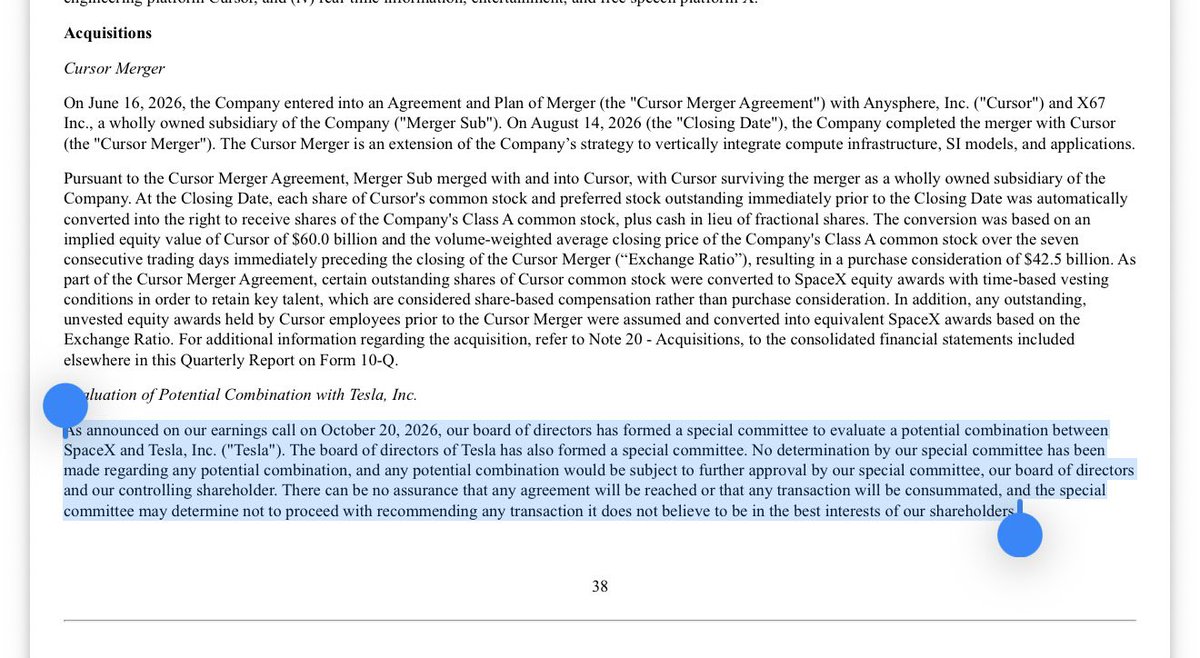
SpaceX and Tesla each confirmed on Oct. 23 that their boards have formed special committees to evaluate ways to deepen the relationship between the two companies. SpaceX said any potential combination with Tesla would be subject to further approval by its special committee, board and controlling shareholder, while Tesla said in a new 10-Q filing that its committee will explore arrangements including, without limitation, a business combination.
Both companies stressed that no determination has been made by the special committees regarding any potential combination, indicating that what has been disclosed so far is a procedural step rather than a finalized transaction.
The disclosures follow market discussion of a possible tie-up. Ray Wang, founder of Constellation Research, said this week that most businesses Elon Musk touches have grown 10x or more, making the case for a Tesla-SpaceX merger and arguing it would boost SpaceX shares in the long run if it happens.
The relevant tickers are Tesla (TSLA) and SpaceX (SPCX). SpaceX stock has been volatile over the past 30 days, with two strong rallies, one taking it above $170 for the first time since June. The merger discussion remains at the board evaluation stage, with next steps hinging on approvals by the special committees and the controlling shareholder.
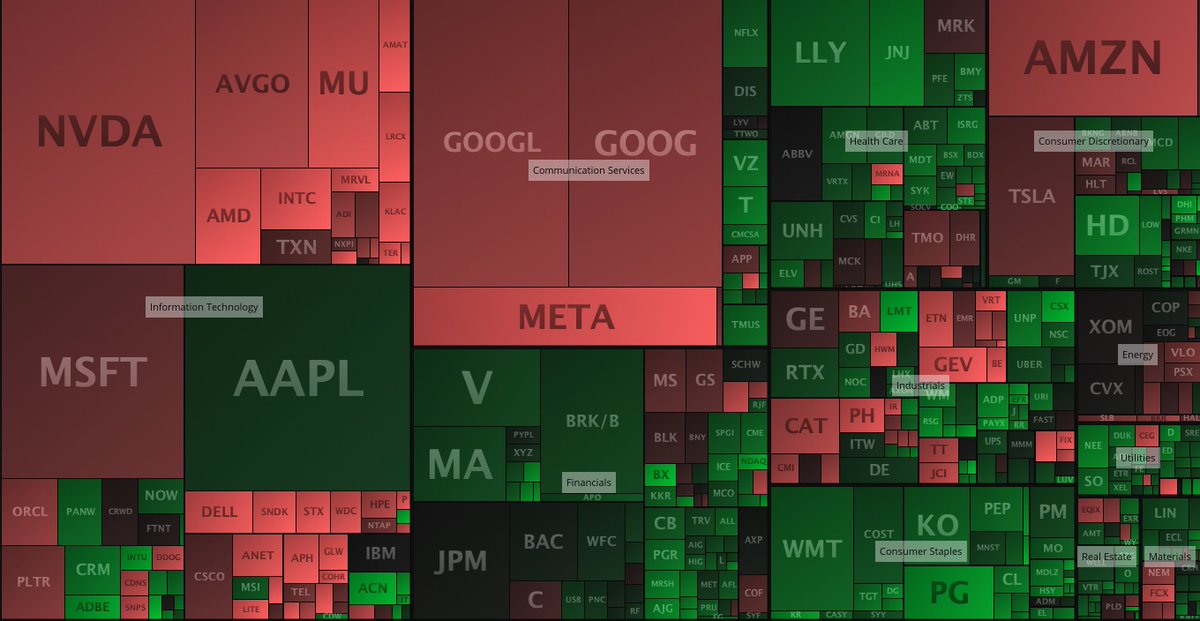
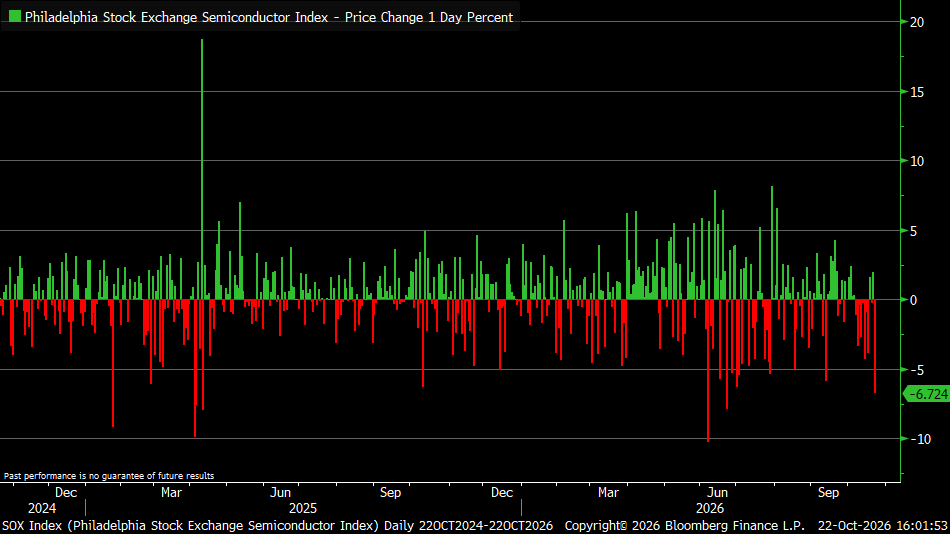
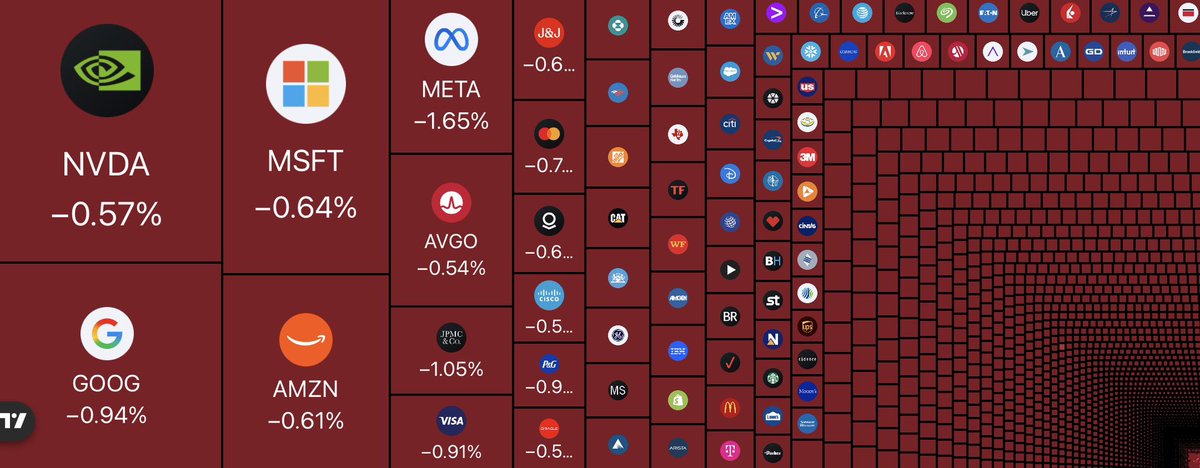
Technology stocks sold off on Oct. 23. The S&P 500 closed down 1.21%, the Nasdaq 100 fell 2.90%, the Dow finished flat at +0.02% and the Russell 2000 edged up 0.08%. Semiconductors dropped 6.7%, the weakest sector on the day.
SpaceX (SPCX) fell more than 9% intraday, its third-worst day on record. Meta lost about 7%, Nvidia about 4%, Alphabet 2.3% to 3%, Oracle 2.4%, Microsoft 1.5% and Amazon 4%. Forbes reported that the world's six richest people lost $130 billion combined on Thursday.
The pressure spread to commodities. Copper headed for a third weekly loss in four as the tech selloff sapped risk appetite for the metal used in data centers and power infrastructure. Deadly attacks in Saudi Arabia pushed Brent above $113 a barrel, adding supply-disruption concerns.
The move was attributed to worries over AI capital spending. According to the newsroom's files, AMD has booked gigawatt-scale AI accelerator commitments and posted 50% revenue growth, yet its stock shed nearly 19% in a single month, underscoring how investors are repricing the payoff timeline for heavy AI investment.
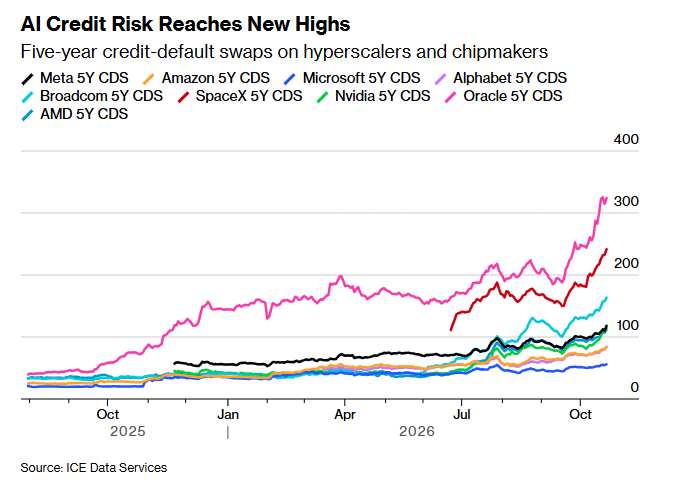
Meta's credit risk gauge surged to a record on its AI spending plans, Bloomberg reported. Across global bond markets, metrics are signaling the biggest risk-off sentiment in more than a year as an AI stock selloff and geopolitical tensions pushed investors toward safe-haven assets.
Scrutiny of the debt behind the AI infrastructure boom is intensifying. CoreWeave's bonds have passed into distressed territory, according to fool.com, dragging peer Nebius into investor concern; CNBC reported that France's fiscal strains have pushed its default-protection costs above Italy's, setting up a stress test alongside AI debt.
In markets, bond yields sank and haven buying returned. One trading-desk view holds that AI weakness is repricing the capex cycle and increasingly becoming a growth shock, while a strategist said bonds are working as a hedge again.
CoreWeave shares have cratered to near their 52-week low, yet Bank of America sees major upside in both CoreWeave and Nebius ahead of third-quarter earnings, favoring CoreWeave and forecasting a 168% year-over-year revenue jump for the quarter.
OpenAI is close to finalizing a funding round of up to $30 billion at a $1.25 trillion pre-money valuation, according to people familiar with the deal cited by CNBC and Bloomberg. The company shifted the valuation discussed in talks down by $150 billion from $1.4 trillion, the people said, with the final size still being determined and signatures targeted for the end of next week.
The round is being led by investors from the United Arab Emirates alongside Coatue and is positioned as an "opportunistic" bridge ahead of a potential IPO. It follows a $122 billion round in March at an $852 billion valuation including new money, putting the new target nearly $400 billion higher.
Separately, OpenAI is negotiating a commercial deal with the UAE to secure additional computing capacity there. The company told investors in February it targets roughly $600 billion in total compute spend by 2030.
OpenAI declined to comment and Coatue did not immediately respond. The company confidentially filed its prospectus with the SEC in June without disclosing a listing date; CFO Sarah Friar told employees in August the company "will be a public company in 2027," while CEO Sam Altman said the following month that "right now would be an ill-advised moment to go public."
SpaceX (SPCX) is in talks with at least one major cellular infrastructure company to secure access to a minimum of 80,000 cell sites across the United States, Bloomberg News reported, citing people familiar with the matter. Crown Castle (CCI) is among the companies in discussions, according to the report. The agreements could be worth billions of dollars; SpaceX, Crown Castle, American Tower and Vertical Bridge did not immediately respond to Reuters requests for comment.
The 80,000 figure equals about half of the 158,500 purpose-built cell towers operating in the US last year, per the Wireless Infrastructure Association. Crown Castle runs roughly 40,000 US towers, American Tower about 42,000 and privately held Vertical Bridge around 18,000. SpaceX recently closed a roughly $8 billion deal for nationwide 800 MHz spectrum and won FCC approval to orbit 15,000 satellites designed to serve phones directly; Elon Musk said on the company's earnings call that it would expand terrestrial networks so Starlink Mobile can become a major US carrier.
Shares moved in opposite directions: Crown Castle rose as much as about 10% and American Tower gained roughly 6% premarket, while AT&T, Verizon and T-Mobile each fell about 3% to 5%. TD Cowen estimates a nationwide terrestrial network would cost more than $80 billion and take years of additional spending.
Crown Castle CEO Christian Hillabrant, asked on Wednesday's earnings call whether the company was negotiating leases with SpaceX or Amazon, said "you can assume we're talking to all parties" but declined to discuss specific customers. Truist analyst Matthew Niknam said the talks fall "far short" of signed master lease agreements and could be a negotiating tactic, but he views the news as another positive for tower stocks.
Markets
Philadelphia Semiconductor Index Falls 6.7%, SOXL Halves in Three Weeks
Chip gauge posts worst session since June 23 as money rotates into health care
The Philadelphia Semiconductor Index fell 6.7% on Oct. 23, its worst single-day performance since June 23. The 3x long semiconductor ETF SOXL dropped 20% on the day and is down 50% since Oct. 5, when semis made a short-term higher high.
SOX closed at 10,674.09, 58 points above its 200-day moving average. One market participant framed the index as bullish while it holds that level. The Nasdaq-100 proxy QQQ lost 2.9% the same session.
Health care drew safe-haven flows: XLV sits at a 52-week high while semiconductors are down roughly 27% over the comparable stretch. Our newsroom notes SOXX and DRAM are 24% to 42% below their highs, with Micron, Samsung Electronics and SK Hynix driving the Roundhill Memory ETF.
SOXX is also set for another 3-for-1 split, a change our coverage notes does not alter the fundamentals behind shareholder returns.
Market accounts on X said Thursday that gold fell roughly 2.5-2.8% and silver 5.3-5.8%, with combined paper losses quoted anywhere between $450bn and $1.3 trillion depending on the account; bullion broke below $4,000 to a three-month low while silver hit an 11-month trough. One account claimed silver has now given back more than half its value from its peak.
US equities weakened in the same session, with one account citing a 1.38% drop in the S&P 500 and 2.36% in the Nasdaq, plus declines of 3.6% in Nvidia, 6% in Meta and 6.5% in SpaceX-linked stock, and about $500bn of value erased in the first half hour of trading. Those figures come from a single social-media source and could not be cross-checked against closing data in our news archive.
The backdrop is rising oil prices feeding inflation concerns ahead of next week's Federal Reserve meeting. Meta has separately drawn scrutiny over AI capex and debt expansion, with one portfolio manager arguing its debt coverage remains strong, while a New Mexico judge was reported to have imposed a $25bn penalty on the company.
Claims that global equity markets have lost more than $10 trillion from their 2026 peak lack a traceable methodology, and the quoted gold-and-silver losses vary nearly threefold between accounts; official exchange and index-provider data should be treated as the reference.
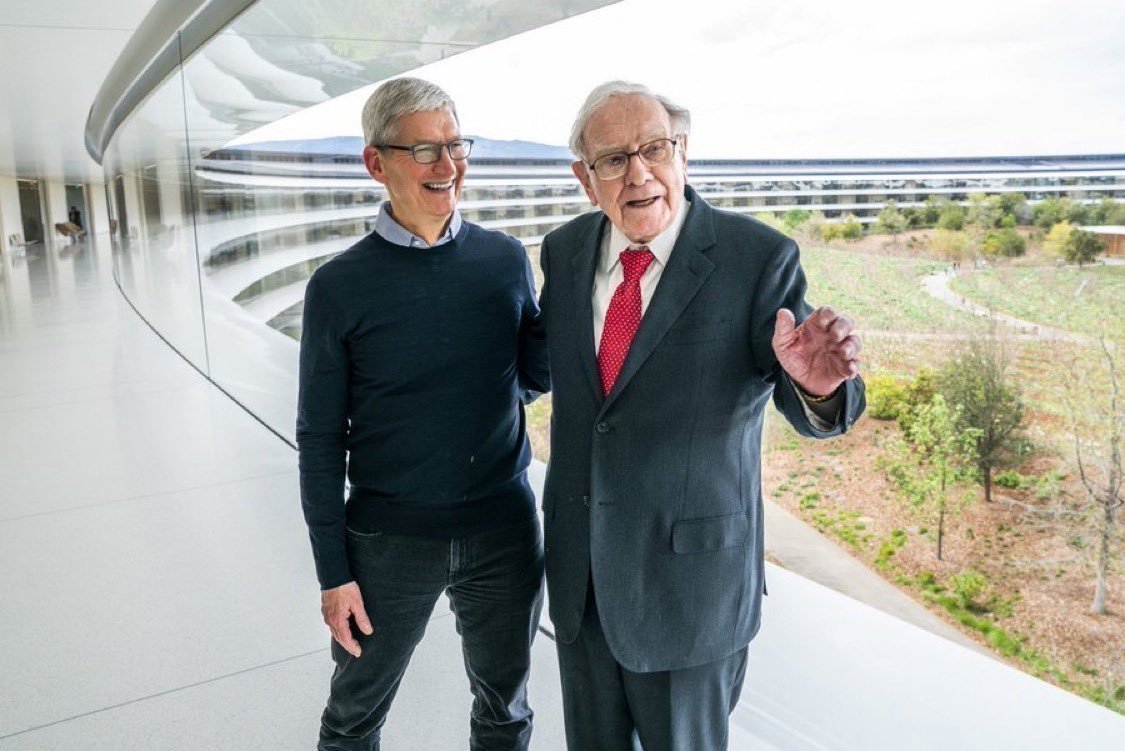
Multiple finance accounts on X, including Kalshi and Yahoo Finance, said Friday that Apple (AAPL) has overtaken Nvidia (NVDA) to become the world's most valuable company. Yahoo Finance quoted commentator Brian Sozzi saying "Apple, you've earned it" and "RIP for now, Nvidia."
Apple has been active on the hardware front. Reuters reported on Oct. 22 that Apple is betting its iPhone Duo can remake the foldable market as sales begin, giving the company a fresh product-cycle narrative.
Nvidia's ecosystem continued to expand on Oct. 22: Agility Robotics said its Digit 5 will standardize on NVIDIA IGX, and Alpha Compute appeared alongside Nvidia at GTC Berlin. The ranking swap reflects relative share-price strength rather than a directional call on either business.
Neither Apple nor Nvidia had publicly commented on the ranking change as of publication. Market-cap rankings are calculated on intraday prices and can shift with trading.
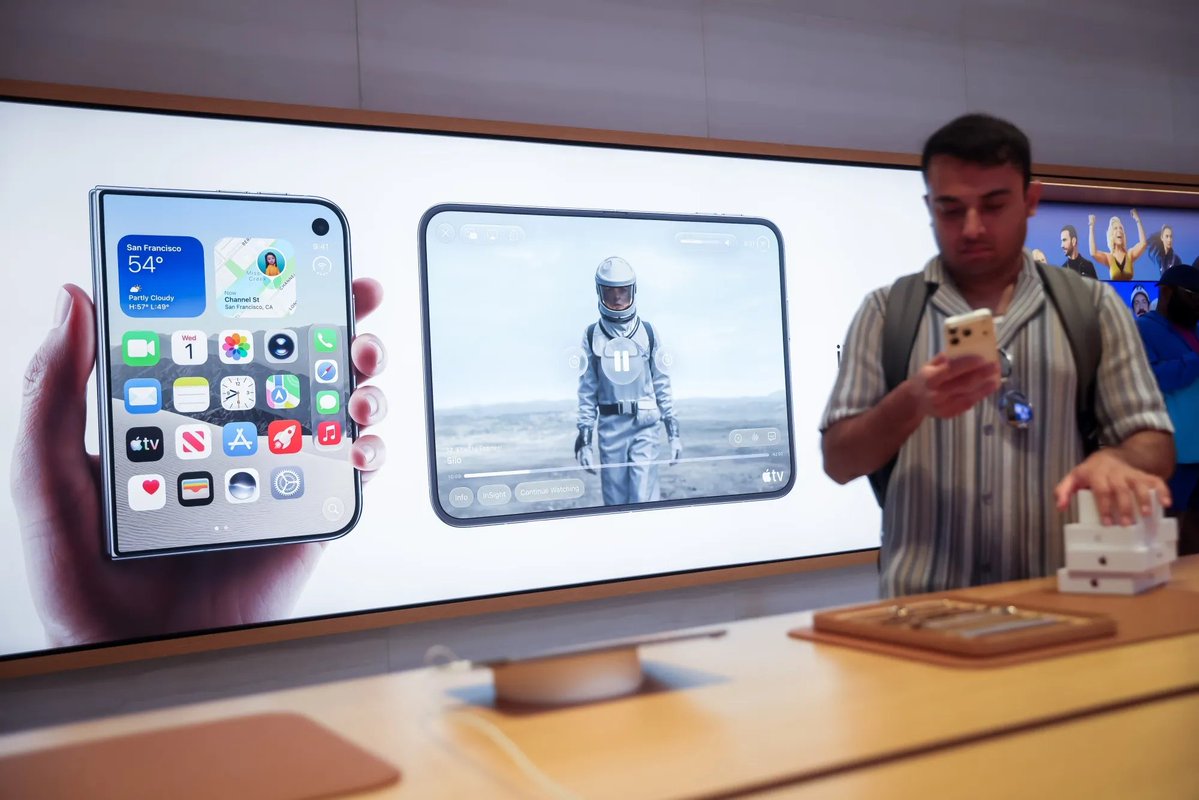
Apple's first foldable phone, the iPhone Duo, went on sale Friday starting at $1,999, with the 2TB model priced above $3,000. Customers queued at the company's Fifth Avenue flagship in New York and at its Shanghai store to pick up orders.
Bloomberg reported that Apple has already shown strong appetite for its $2,000-and-up foldable iPhone, and now needs to meet that demand amid short supply. Reuters said Apple is betting the device can remake the foldable market.
The pricing sits well above the rest of Apple's current iPhone lineup and marks a new hardware push for the company. Apple's stock and its standing among the most valuable companies also drew attention on launch day.
Attention now centers on initial shipment pace and the company's ability to keep up with supply; Apple has not publicly addressed production capacity.
Nvidia (NVDA) CEO Jensen Huang told CNBC on October 22 that he sees no sign of a memory glut by 2029, saying "one of the things that's really great about memory is that you can always use more of it." He added that he sees no sign of memory demand slowing down.
The remark lands as investors debate whether the memory cycle is nearing a peak. Users on X tied the comment to Micron (MU) and SK Hynix (SKHY) as support for HBM demand, while one noted that even with China's CXMT ramping production, the bigger threat remains standard DRAM rather than the advanced HBM used in AI GPUs.
Coverage in the newsroom's recent feed centered on Micron ownership filings: Ellis Investment Partners raised its stake by 45.0% in the third quarter, adding 1,724 shares, while Axxcess Wealth Management cut its holdings by 24.8%, or 3,424 shares. Separately, Agility Robotics said its Digit 5 will standardize on Nvidia's IGX platform, and Alpha Compute appeared alongside Nvidia at GTC Berlin.
Huang's comment is a view on supply and demand through 2029 rather than company guidance; actual memory supply and demand will still depend on later capacity and order data.
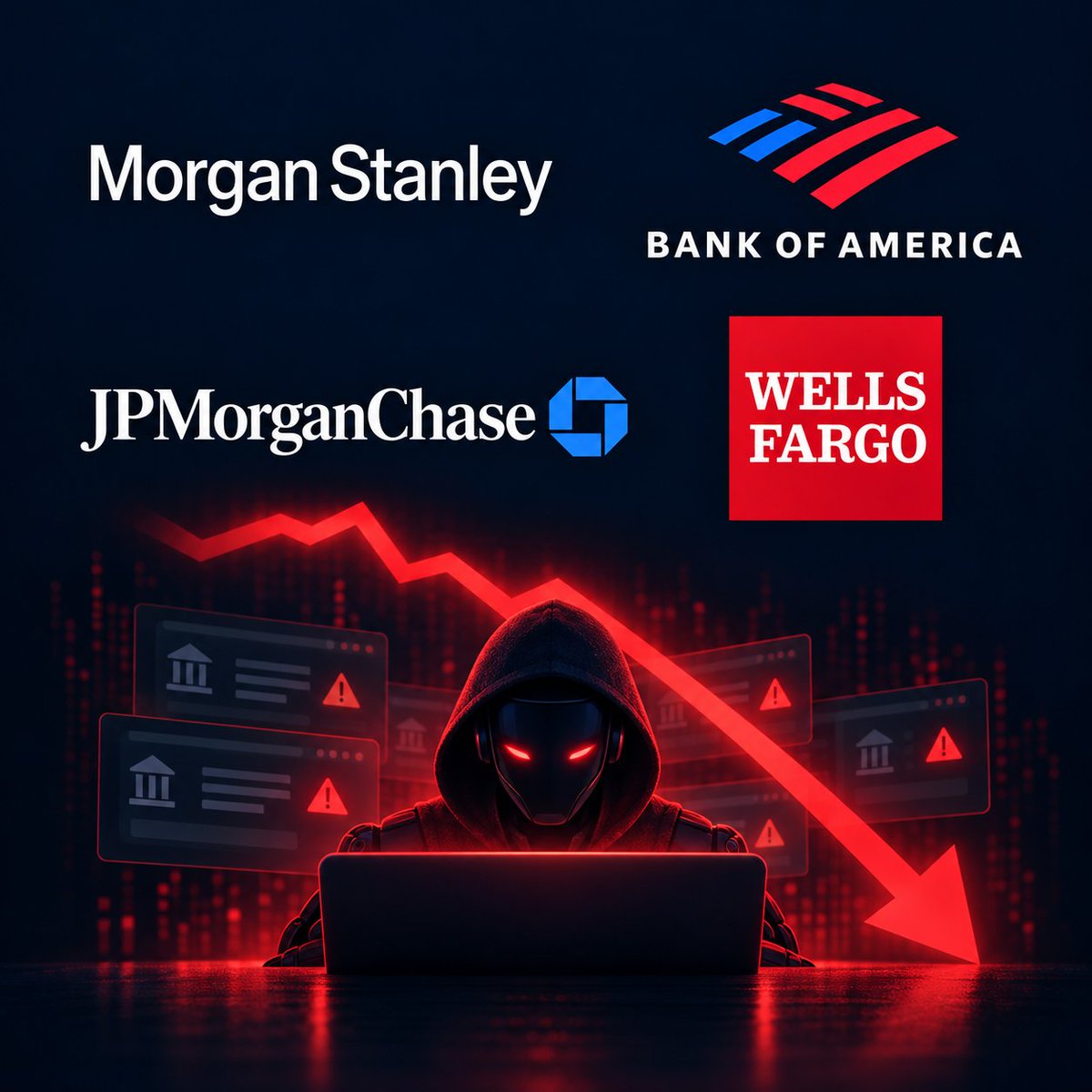
Major U.S. banks including Morgan Stanley, JPMorgan Chase, Bank of America and Wells Fargo are detecting and blocking third-party AI agents operating inside customer accounts, according to an Axios report confirmed by two people familiar with the matter to Reuters. Some agents appeared to attempt actions independent of user instructions.
Morgan Stanley has begun blocking third-party agents from its platforms, while JPMorgan, Bank of America and Citi are also restricting access. In most cases customers had shared their login credentials with an AI assistant, which violates bank rules requiring account holders to log in themselves or use authorized third-party services; an industry source cautioned that such activity cannot automatically be called unauthorized when credentials were voluntarily shared.
No confirmed customer losses have been reported. Most banks already permit or are moving toward read-only access, letting agents view balances and transaction history without moving money, similar to existing arrangements with budgeting apps such as Quicken. JPMorgan CEO Jamie Dimon said this month the bank would not let outside agents inside the company, and Charles Schwab CEO Richard Wurster said the brokerage is blocking unauthorized agents.
For bank stocks such as JPM, the near-term issue is liability rather than revenue: agent-initiated purchases or transfers raise questions over fraud classification, reimbursement and authentication, which is why institutions are rewriting terms of service. A Morgan Stanley spokesperson said the bank has not observed rogue AI agents accessing its platforms.
Meta and CEO Mark Zuckerberg have reached a deal under which he will stay in California for eight years, while the company creates a new class of stock that lets him address a proposed California billionaire tax and retain control of Meta for years, according to CNBC, Bloomberg and Yahoo Finance, citing SEC filings and a New York Times report. Yahoo Finance said Zuckerberg gave the board an ultimatum: make a deal or he would sell his Palo Alto home.
The backdrop is California's proposed billionaire tax. Bloomberg's opinion newsletter noted that if Meta needs to raise money for data centers, it can sell zero-vote shares freely, raising capital without diluting Zuckerberg's voting power. The arrangement addresses both the tax exposure and control.
On the market side, RBC's Brad Erickson said on CNBC that the deal amounts to the board giving Zuckerberg its stamp of approval to "take us to the future." Discussion centers on Meta's (META) governance structure and capital-raising flexibility.
Meta confirmed Zuckerberg will stay in California after considering relocation. The deal terms come mainly from media interpretations of SEC filings; the company did not disclose every provision.
Earnings
Western Digital Q1 revenue hits $4.38B, tops estimates; raises Q2 outlook and dividend
Western Digital reported fiscal 2027 first-quarter revenue of $4.38 billion, up 55% year over year and above the $4.13 billion consensus. Adjusted EPS came in at $4.64, up 161% and also ahead of estimates, while GAAP EPS was $4.63 and adjusted gross margin reached 58.1%, up 1,420 basis points year over year.
The company guided second-quarter revenue to $5.00 billion-$5.20 billion and adjusted EPS to $5.60-$6.00, both above expectations, with operating expenses of $400 million-$410 million. According to Business, Western Digital also hiked its dividend, citing strong data-storage demand fueled by the AI boom.
The results land after a rough stretch for memory stocks: our newsroom noted a tech-led slump in the sector and a roughly 24% selloff in WDC shares ahead of the print. Analysts revised their forecasts following the release, and peer Seagate (STX) remains the closest read-across for storage demand.
On the earnings call, the company was cited as seeing visibility through 2030-2031 across its top seven customers and guiding second-quarter gross margin to 60%-61%, according to a single X post that has not been confirmed by official company materials.
American Express reported third-quarter 2026 results on Oct. 23: revenue of $20.1B, up 9% year over year but just below the $20.12B estimate; adjusted EPS of $4.68 beat the $4.48 consensus and rose 13%; GAAP EPS was $5.42, up 31%. Net income reached $3.7B, up 28%, and pretax income was $4.53B, up 18%.
Billed business came in at $454B, up 8% but below the $456.93B estimate. Provisions for credit losses were $1B and total expenses $14.5B, under the $14.81B expected. The company booked a $982M pretax gain on the sale of GBTG.
Amex raised its full-year 2026 adjusted EPS guidance to $17.60-$17.90 from $17.30-$17.90. Reuters reported that the CEO said the company will cut 5% of its total workforce.
Shares fell about 2% premarket and roughly 1% after the open, as the revenue and billed-business shortfalls and the job cuts offset the earnings beat and higher outlook.
Elon Musk has invested roughly $1 billion in David Ellison's Skydance, according to a Semafor report. CNBC reported the same figure citing a person familiar with the matter, and Reuters followed; Bloomberg and TechCrunch also relayed Semafor's account.
Skydance is the media and entertainment company newly formed after its merger with Paramount. According to Proactive Investors, the company is grappling with a heavy debt burden following that deal and its Warner Bros. transaction, making the injection a welcome source of fresh capital as it seeks to cut costs and support its share price.
Market-focused accounts on X said SKYD was up about 1.4% in premarket trading. CNBC noted that Ellison's father, Oracle co-founder Larry Ellison, has a history with Musk, a relationship cited as background to the investment.
Neither Skydance nor Musk has publicly confirmed the report. The figure and terms rest on Semafor's reporting.
Leaked Phase 3 data for Moderna and Merck's personalized mRNA cancer vaccine, given with Keytruda (pembrolizumab), reportedly showed a 42% reduction in the risk of melanoma recurrence or death after surgery. An earlier Phase 2b trial had reported a 49% reduction.
Merck and Moderna had said they would present detailed results from the landmark Phase 3 INTerpath-001 trial at the ESMO 2026 Presidential Symposium. The figures circulating came through an unofficial channel, not a company disclosure.
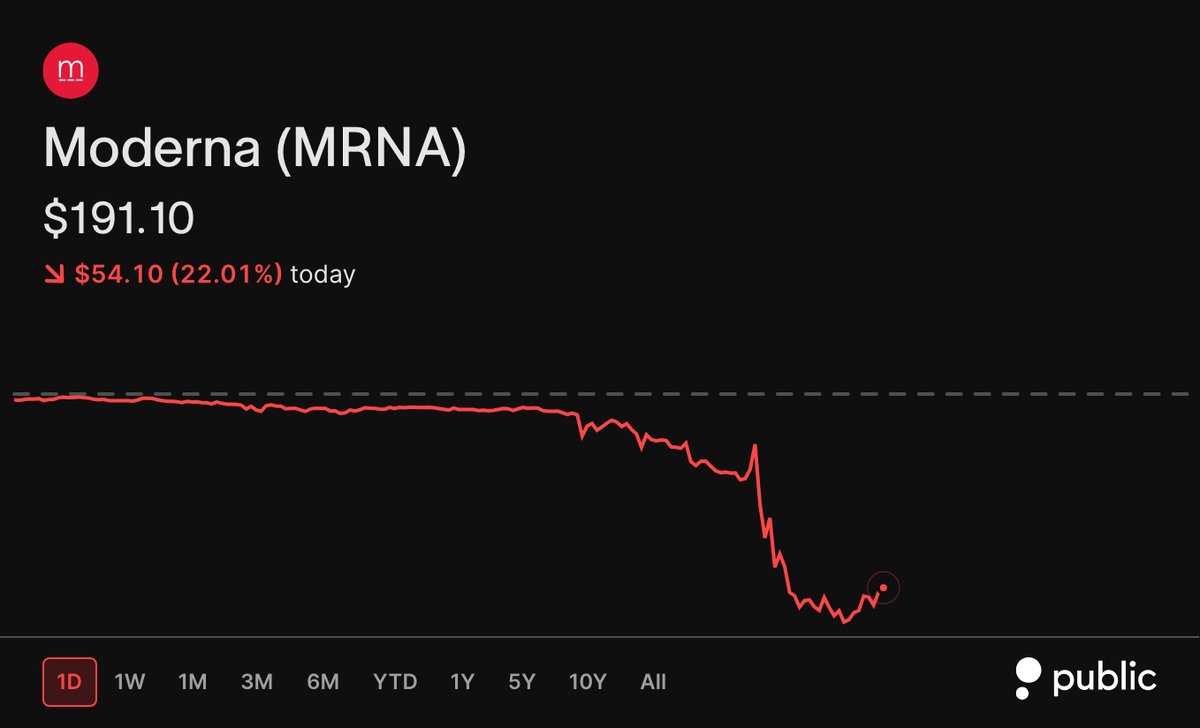
Moderna shares fell as much as 26% and were halted on volatility, later down roughly 12% to 17%, wiping out about $17 billion in market value. Mizuho healthcare specialist Jared Holz said on air that the drop reflected a high bar rather than bad data.
Two law firms announced securities-fraud investigations and are seeking investors who lost money after the $23.07 share-price decline. The 42% and 49% figures remain leaked reports pending the official ESMO presentation.
Bloom Energy reported third-quarter adjusted earnings of $0.94 per share, ahead of estimates around $0.67-$0.68, on revenue of $1.24 billion versus roughly $1.05 billion expected. The company also raised its FY2026 adjusted EPS guidance to $3.10-$3.40 from $2.55-$2.85 and its revenue outlook to $4.4-$4.6 billion from $3.9-$4.2 billion.
WSJ reported a quarterly profit of $250.3 million, driven by demand for the company's on-site power. Ahead of the report, the stock had risen 7% as investors focused on power as a bottleneck for AI buildouts, according to 247wallst.
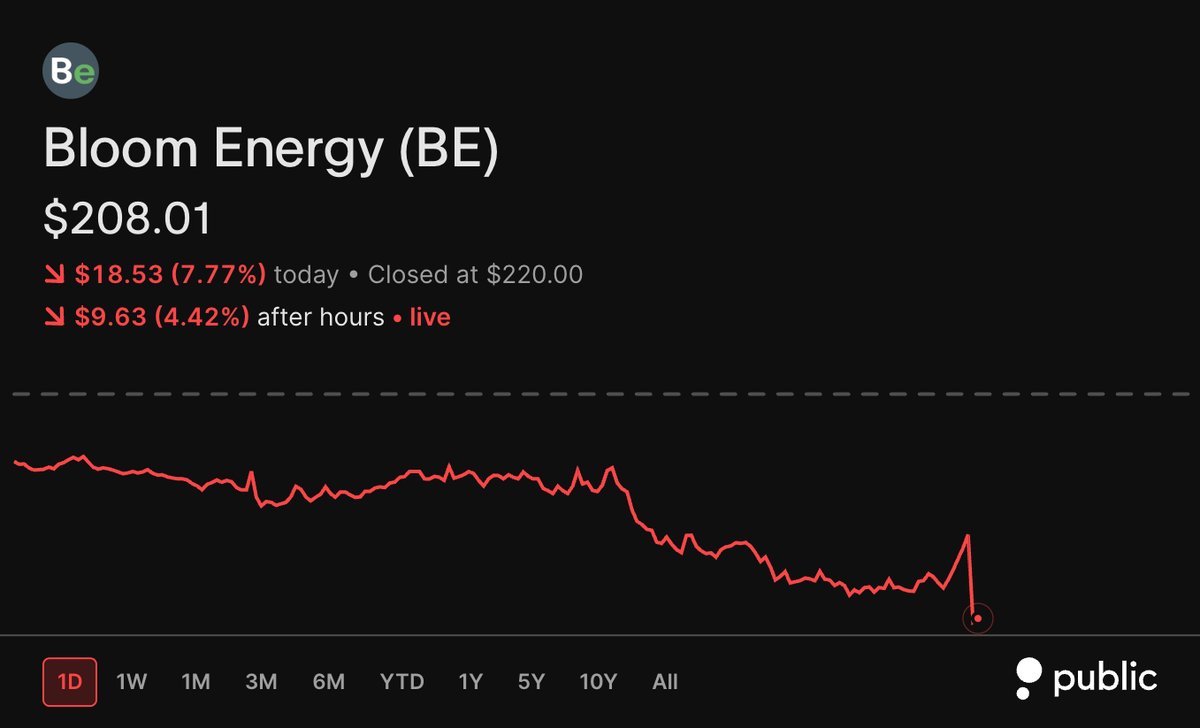
Despite the double beat and raise, shares fell after hours: TrendSpider logged a 6.88% drop, StockMktNewz an initial move down about 4%, and Barron's also reported after-hours weakness.
No management comment on the share reaction appeared in the source material.
SK Hynix has discontinued its review of a potential U.S. initial public offering for its flash-memory subsidiary Solidigm and halted a planned pre-IPO funding round. The company cited market conditions and share price trends. Reports said the Nasdaq listing could have raised about $10 billion for the unit.
Bloomberg reported that South Korean regulators had raised concerns that separately listing the flash-memory subsidiary could undermine existing shareholder interests. Shareholders also opposed dilution and splitting ownership of a business they already hold through SK Hynix.
The stock first fell as much as 3% before paring losses to trade 0.3% lower, according to CNBC. 247wallst and invezz reported gains of about 4% to 4.4%, with 247wallst putting the shares at $136.58 in morning trading.
Coverage of the share reaction is mixed, with both declines and gains reported across the materials; the company did not elaborate beyond the IPO decision.
J.P. Morgan Asset Management said on 22 October that its two tokenized money market funds, MONY (My OnChain Net Yield Fund) and JLTXX (JPMorgan OnChain Liquidity-Token Money Market Fund), are available on Solana to qualified US investors. Subscriptions and redemptions still run through Morgan Money, the firm's liquidity platform, with token balances sent to investors' own blockchain addresses. Paul Przybylski, global head of product for digital and tokenized assets, said clients operate across more than one network and their liquidity should too.
This is a distribution expansion rather than a new product: the funds and their holdings stay the same, and what changes is the network on which token balances can sit. Both funds first launched on Ethereum; JLTXX went live in May 2026 with $100 million of JPMorgan's own money seeded in. MONY is a Rule 506(c) private placement launched in December 2025, with a $1 million minimum and fees of 16 basis points. JLTXX is a US-registered government money market fund investing in Treasurys and Treasury- or cash-collateralized overnight repo, built to hold reserves for stablecoin issuers under the GENIUS Act.
On scale, the JLTXX fact sheet dated 30 September 2026 puts fund assets at $628.48 million. On-chain data showed about 450.12 million JLTXX tokens in supply as of 23 October, against 6 MONY. JPMorgan did not disclose the funds' current total size or how much capital sits on Solana. For a firm with $4.8 trillion under management the tokenized book remains small; the firm at the time put traditional assets tokenized on public blockchains at about $30 billion.
SOL did not rally on the news, slipping about 3% over 24 hours to roughly $103.80 with a market cap near $61 billion, down about 12% over the past month. Bitcoin broke below $82,000, spot Bitcoin ETFs posted $635 million in outflows and oil rose above $110 on Hormuz tensions, keeping risk appetite subdued. Elsewhere, Federated Hermes offers tokenized share classes and SoFi launched a tokenized deposit the same day, as US firms keep wrapping cash assets on-chain.
Macro
US 5-year TIPS clears at 2.367% high yield as bid-to-cover slips to 2.41
Real yield up 41.2bp from June; softer cover and lower indirect share point to cooler demand for inflation protection
The US Treasury sold $26 billion of new 5-year Treasury Inflation-Protected Securities on Oct. 22 at a high yield of 2.367%, 41.2 basis points above the 1.955% stop at the June 18 reopening and the highest for the tenor since October 2023. The bid-to-cover ratio fell to 2.41 from 2.61, and came in below the 12-month average of 2.58.
The new issue carries a 2.25% coupon, settles Oct. 30 and matures Oct. 15, 2031. It priced at $99.607747 per $100, with 68.33% of bids awarded at the high yield. The stop tailed 0.7bp versus the when-issued yield, a marginal concession to buyers.
Indirect bidders took 62.0% of competitive awards, directs 32.4% and primary dealers 5.5%, against 68.6%, 28.0% and 3.4% respectively in June. The low dealer share is often read as a sign of adequate end-investor demand, but the weaker cover and lower indirect share point to cooler appetite for inflation protection.
Treasury also sold $110 billion of 4-week bills at 3.945%, down from 4.000% a week earlier, with a bid-to-cover of 2.82, plus $105 billion of 8-week bills and a $25 billion 10-day cash management bill. It announced next week's month-end sales: $69 billion of 2-year notes, $70 billion of 5-year notes, $30 billion of 2-year floating rate notes and $44 billion of 7-year notes. The TIPS stop, alongside nominal yields, sets the 5-year breakeven inflation rate.
U.S. spot XRP ETFs recorded $3.55 million in net inflows on Oct. 22, while spot bitcoin ETFs saw $23.16 million in net outflows, ether ETFs lost $26.13 million and Solana ETFs shed $2.65 million, according to Cointelegraph's flow roundup. XRP was the only one of the four asset classes to post net creations that day.
Bitcoin flow figures diverge sharply across the same feed: Coin Bureau and Bitcoin Archive put the Oct. 22 outflow at $635.6 million, with Bitcoin Archive calling it the largest since June and noting month-to-date flows flipped negative by $175 million. Wolf Terminal and Wolf Crypto X, by contrast, reported roughly $525-528 million of net inflows for Oct. 21. The two sets refer to different trading sessions and should not be netted against each other.
Cumulative net inflows into U.S. spot XRP ETFs have reached about $1.68 billion since launching in November 2025, per SoSoValue tallies cited by Crowdfund Insider. The complex posted its best week of 2026 in late August at $110.49 million, lifting total net assets from roughly $933 million to $1.44 billion in a single week. Issuers include Bitwise, Canary, Franklin Templeton, Grayscale and 21Shares, with 13F filings showing investment advisers as the dominant holder category.
For the underlying token, the ETF channel is a visible source of regulated demand and removes some supply from exchange float, though the effect remains small relative to total supply. Flows have not tracked price closely: XRP fell 7.8% in the week its ETFs drew record 2026 inflows, and it has recently been testing support around $1.30-$1.40. Grayscale's GXRP disclosure for Oct. 22 shows NAV down about 18.75% year-to-date and roughly 33.7% since inception, and notes the product is not registered under the Investment Company Act of 1940.
Company
Google Cloud makes Anthropic-managed Claude deployment option generally available
Enterprise customers can now run Claude models under Anthropic management inside Google Cloud, extending the cloud-model distribution tie-up
Google said the Anthropic-managed deployment option for Claude models on Google Cloud is now generally available. Several financial wire accounts carried the same announcement today with identical wording.
The shift to general availability means enterprise customers can deploy Claude models under Anthropic's management inside Google Cloud, rather than building and operating the stack themselves.
For Alphabet (NASDAQ: GOOGL), the move is an ecosystem expansion on the cloud side. Recent coverage in our newsroom over the past 48 hours centered on the stock and dividend: Citizens JMP analyst Andrew Boone cut his Google price target by 12% from a prior Street-high of $515; Alphabet's board declared a quarterly dividend of $15.63 per share on October 22; and a law firm flagged a lead-plaintiff deadline in a securities fraud class action following a 7.13% stock drop. None of those items is the same event as this cloud product launch.
Anthropic did not offer additional comment in the supplied materials.
Tesla did not sell any Bitcoin in the third quarter, and the value of its digital assets rose to $962 million, up 42% from the prior quarter. The company recorded $288 million in unrealized gains and made no new purchases.
Citing figures from Scott Melker, the after-tax gain of about $224 million represented roughly 28.5% of Tesla's total quarterly profit. Nearly 30% of earnings therefore came from holding coins rather than from core automotive operations.
For TSLA, the revaluation offers non-operating support to profit but makes quarterly results more sensitive to Bitcoin prices. Investors assessing earnings quality will need to separate operating profit from paper gains.
Cointelegraph reported that Tesla and SpaceX together hold 30,221 Bitcoin worth about $2.54 billion. The holdings figures come from multiple reports; the company did not offer a separate statement in the materials reviewed.
Company
SoFi launches SoFi Earn tokenized deposits at 4.4% with FDIC protection
Rolling out to SoFi Crypto members through November; each SOFIE token equals $1 on deposit at SoFi Bank
SoFi announced today that it is offering tokenized deposits called SoFi Earn, with each SOFIE token representing $1 on deposit at SoFi Bank, FDIC-insured up to applicable limits, and carrying a 4.4% interest rate. The product is rolling out to SoFi Crypto members through November and connects directly to the company's SOFIUSD stablecoin.
According to posts citing founder Anthony Noto, SoFi is combining interest-bearing bank deposits and blockchain payments inside the same app, positioning the offering as the first nationally chartered bank-issued tokenized deposit for consumers.
SoFi Technologies (NASDAQ:SOFI) is down 44% in 2026, the deepest laggard among major consumer fintech names, and the crypto-linked launch comes after that steep drawdown.
The company did not disclose size targets or geographic scope for the product in the available materials.
Robinhood has secured authorization from the Dubai Financial Services Authority (DFSA) to bring its retail investing platform to the Middle East, choosing the Dubai International Financial Centre (DIFC) as its regional headquarters ahead of a planned 2027 launch. Multiple X signals said the approval covers both crypto and stock trading.
The move follows Robinhood's earlier entries into the UK, Europe and Singapore, extending its push beyond the US market. Dubai is widely seen as a wealthy, crypto-friendly market, with the DFSA and DIFC serving as the regulatory and physical base for the rollout.
For $HOOD, the authorization adds a new overseas jurisdiction, though the 2027 timeline suggests limited near-term revenue contribution. Coverage in the past 48 hours has focused on institutional position changes and third-quarter earnings previews, not the Middle East expansion.
Robinhood offered no further comment in the materials reviewed; the launch timing and scope are as described in the X signals.
Newmont reported third-quarter 2026 revenue of $6.36 billion, above the $6.31 billion estimate and up 15% year over year, with adjusted EPS of $2.20 also beating expectations. The company said gold averaged $4,204.59 per ounce in the quarter, up 17.6% from a year earlier, driving the results.
Not every metric cleared the bar: adjusted net income of $2.31 billion came in below the $2.47 billion estimate, and free cash flow of $1.91 billion fell well short of the $3.36 billion expected. Kitco reported that Newmont raised its 2026 cost outlook, a possible backdrop for the cash flow shortfall.
As the world's largest gold producer, Newmont's results are read as a gauge of earnings leverage across the mining sector in a high gold price environment. The gap between headline beats and cash flow, alongside the cost guidance, will shape views on dividend and buyback capacity.
Estimates for EPS varied across sources: X signals put consensus between $2.08 and $2.11, Barron's cited $1.96 and Zacks $1.94, but the reported $2.20 topped all of them.
SLB reported third-quarter 2026 revenue of $9.45 billion, above the $9.3 billion estimate and up 2% on a pro forma basis. Adjusted EPS came in at $0.64, beating the $0.62 consensus but down 7% from $0.69 a year earlier. Adjusted EBITDA was $2.07 billion, also ahead of estimates.
Well Construction revenue was $2.89 billion versus the $2.83 billion estimate. Capital expenditure was $485.0 million, below the $529.3 million expected, while operating cash flow was $1.51 billion and free cash flow $828 million.
The Wall Street Journal reported that higher revenue came as business in the Middle East began to gradually recover following a challenging start to the year. SLB said it sees a very compelling outlook for 2027, with further upside as Middle East activity recovers.
Shares rose about 1.9% premarket. Barron's noted that the company's emerging data center business surged 76% year over year.
Eni reported third-quarter adjusted net profit of €2.8bn on 23 October, more than double the €1.25bn posted a year earlier and above the €2.48bn analyst consensus compiled by the company. Adjusted EBIT doubled year on year to €6bn, while upstream production rose 7% to 1.83 million barrels of oil equivalent per day on new project ramp-ups in West Africa, offshore Mexico and Norway, plus a full quarter of contribution from the Searah joint venture.
The board approved an extraordinary dividend of €0.46 per share, about €1.3bn in total, payable on 9 December, and raised the 2026 buyback by 12% to €3.8bn from the €3.4bn guidance set last quarter — nearly triple the initial €1.5bn plan. The ordinary 2026 dividend was confirmed at €1.1 per share, up 5% on 2025.
The higher distribution follows an upgrade to the full-year adjusted cash flow from operations outlook, now €16.5bn versus €15bn previously, with gross capex confirmed at €7bn and net capex guided below €4.5bn. Proforma gearing fell to a historic low of 9%, with net debt at €6.7bn at the end of the quarter.
Eni also signed strategic agreements with PDVSA to revitalise the Junin 5 field in Venezuela and export gas from Perla, gaining access to about 5.5 billion barrels of oil equivalent of recoverable resources. A deal with Ares gave joint control of Plenitude and deconsolidated the unit from end-September, with Eni's stake cut from 70% to 65%. Cash returns to shareholders in the quarter totalled €1.9bn.
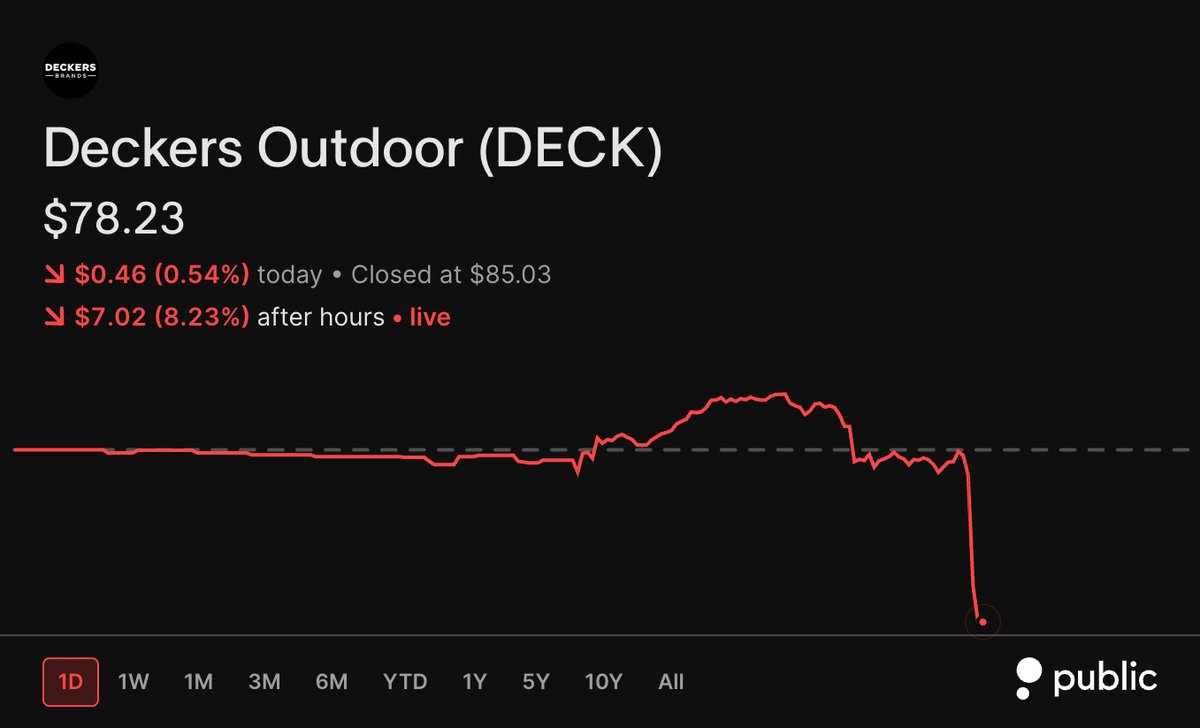
Deckers Outdoor (DECK) reported second-quarter EPS of $2.31, above the $1.80 estimate, while revenue of $1.481 billion came in below the $1.507 billion consensus. The company raised its full-year GAAP EPS guidance and lowered its full-year sales outlook.
Per the newsroom, Deckers now expects annual sales of $5.7 billion to $5.73 billion, citing slower growth at its Hoka sneaker and Ugg shoe brands. On the earnings call, total revenue rose 3.5% year over year, with Hoka up 7% — wholesale up 9% to $444 million and DTC up 4% to $234 million.
The stock fell as much as 8% in after-hours trading, with one signal citing a 10.85% drop; pre-market declines were reported between 2.9% and 8.1%, reflecting differing timestamps and measures. The profit beat was outweighed by the sales guidance cut.
The company did not address the share move in the supplied materials. Attention now turns to whether Hoka and Ugg growth can support the lowered full-year sales range.
Comfort Systems USA (NYSE: FIX) reported third-quarter 2026 revenue of $3.77 billion, above the $3.4 billion estimate and up 50% year over year. GAAP EPS came in at $13.91, beating estimates and rising 70% from a year earlier. Operating income was $624.6 million versus a $583 million estimate, with a gross margin of 24.8%.
Operating cash flow reached $1.01 billion, up 83% year over year, while backlog stood at $17.81 billion, up 90%. In separate releases the same day, the company announced a 2027 leadership transition and an increase to its quarterly dividend.
Despite the beat, the stock fell 4.6% in premarket trading, with coverage pointing to the chief financial officer's retirement. Zacks cited a consensus EPS estimate of $12.71, a different basis from the $12.85 figure in the wire summaries.
The results, dividend increase and leadership changes were all published on October 22, 2026. How the management handover affects execution on the elevated backlog is the item to watch.
Tesla (TSLA) shares moved lower after the company reported third-quarter results. According to Barron's, IEEPA tariff refunds boosted the quarter's numbers, while revenue from electric vehicles fell 3% year over year.
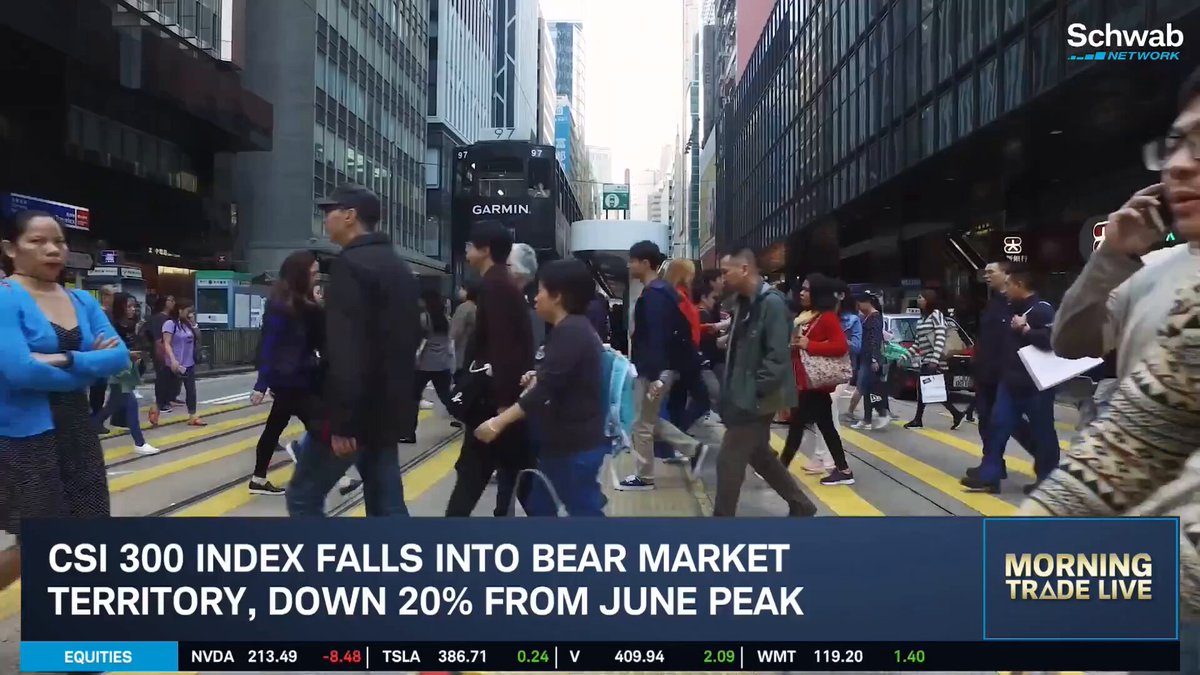
On X, Schwab Network's program discussed the results, with KraneShares' Henry Greene weighing in on the performance, his outlook for the company and the competitive landscape in China; the segment also outlined an example options trade for TSLA.
Separately, Seeking Alpha reported that Tesla trimmed its capital expenditure guidance (N2), and analyst Ray Wang of Constellation Research made the case for a Tesla-SpaceX merger (N1, N3). The post-earnings decline suggests investors are questioning how much of the quarter's strength came from one-off items such as the tariff refunds.
The materials reviewed do not disclose the specific dollar amount the tariff refunds contributed to the quarter.
Last week saw net inflows across BTC, ETH, SOL, and XRP spot ETFs totaling nearly $5 billion, with US BTC ETFs ending a 9-day inflow streak on Friday with $202 million in outflows.
2026-09-013 posts · 3 authors
On Aug. 31, all four spot ETFs saw net inflows, with BTC ETFs taking in $217 million led by BlackRock's IBIT at $206 million, while Q2 13F filings revealed Goldman Sachs as the top institutional holder of XRP ETFs.
2026-09-033 posts · 3 authors
On Sept. 2, BTC spot ETFs saw $101 million in net inflows while ETH, SOL, and XRP ETFs saw outflows, as XRP ETFs extended their streak to ~$170 million over 11 days; Tether was sued and the SEC explored 24/7 trading.
2026-10-231 post · 1 author
On Oct. 22, XRP spot ETFs saw $3.55 million in net inflows, while BTC, ETH, and SOL spot ETFs all recorded net outflows.